


 Скачать презентацию Introduction to Phylum Arthropoda Dr Vera Krischik Department
34cb19d5f6c9f3d0db8afb4c84b11736.ppt
- Количество слайдов: 70
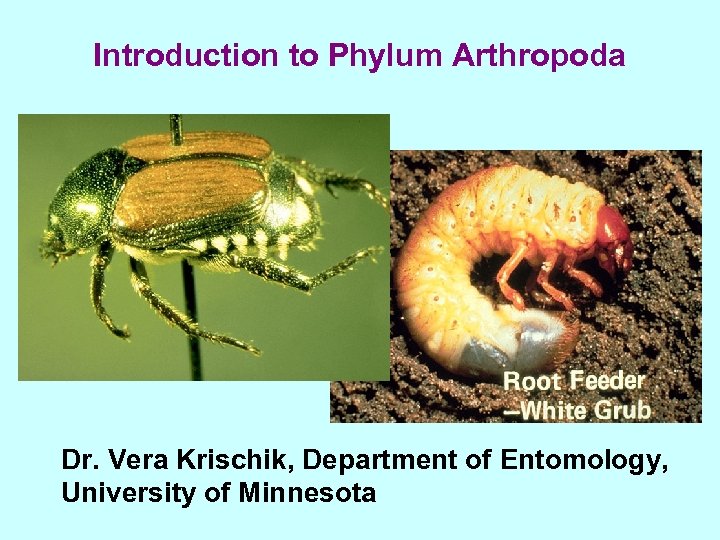 Introduction to Phylum Arthropoda Dr. Vera Krischik, Department of Entomology, University of Minnesota
 Phylum Arthropoda • • • Segmented body. Paired segmented appendages. Bilateral symmetry. Chitinous exoskeleton. Tubular alimentary canal with mouth and anus. Open circulatory system, a tubular dorsal blood vessel. Body cavity or coelom. Nervous system of anterior ganglia and paired nerve cords. Striated muscles in skeletal system. Respiration by gills, tracheae, or spiracle.
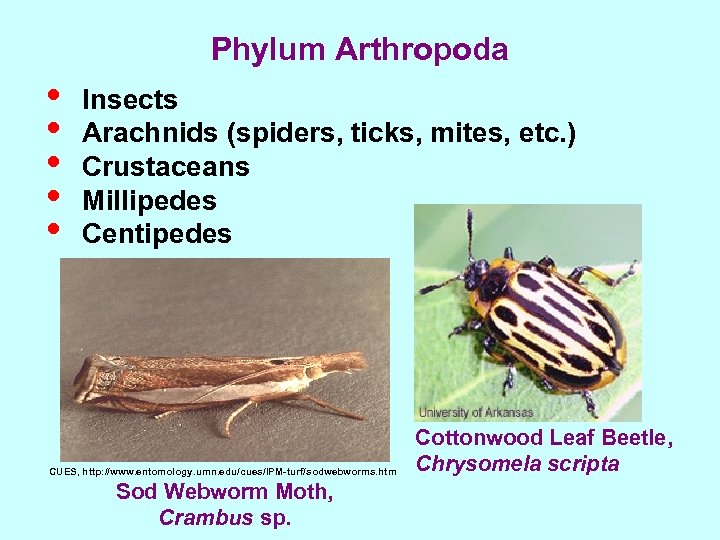 Phylum Arthropoda • • • Insects Arachnids (spiders, ticks, mites, etc. ) Crustaceans Millipedes Centipedes CUES, http: //www. entomology. umn. edu/cues/IPM-turf/sodwebworms. htm Sod Webworm Moth, Crambus sp. Cottonwood Leaf Beetle, Chrysomela scripta
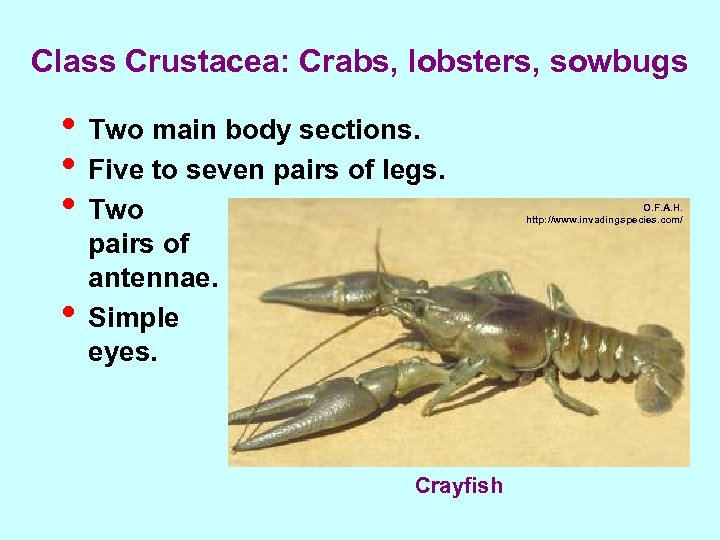 Class Crustacea: Crabs, lobsters, sowbugs • Two main body sections. • Five to seven pairs of legs. • Two • pairs of antennae. Simple eyes. Crayfish O. F. A. H. http: //www. invadingspecies. com/
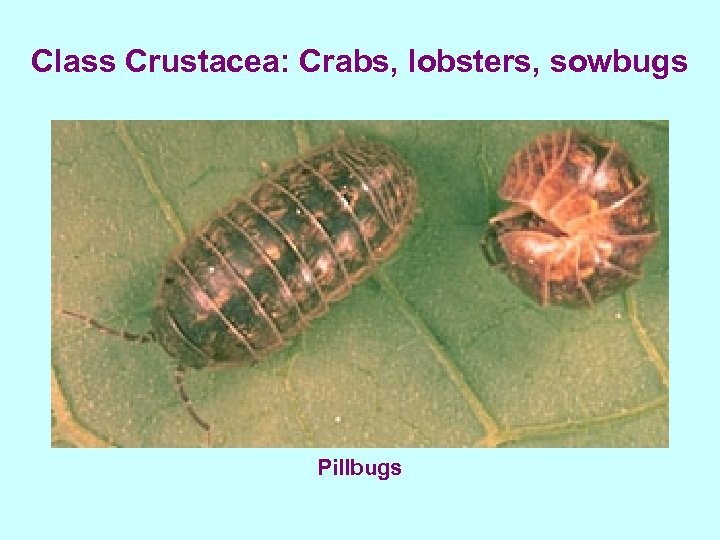 Class Crustacea: Crabs, lobsters, sowbugs Pillbugs
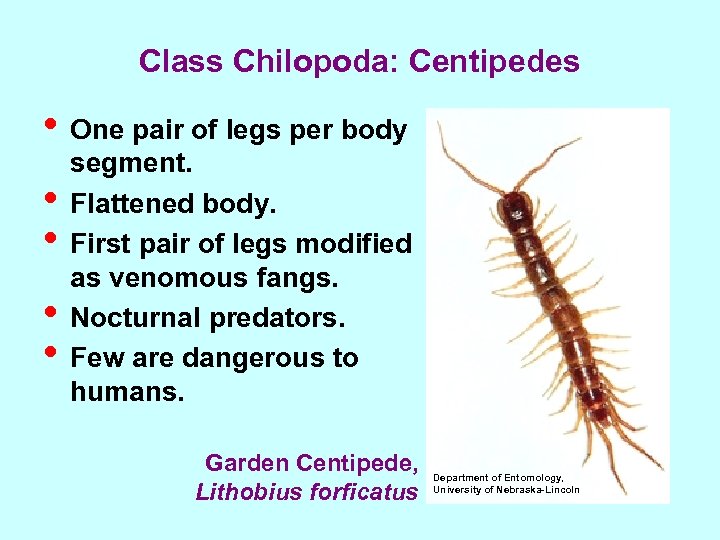 Class Chilopoda: Centipedes • One pair of legs per body • • segment. Flattened body. First pair of legs modified as venomous fangs. Nocturnal predators. Few are dangerous to humans. Garden Centipede, Lithobius forficatus Department of Entomology, University of Nebraska-Lincoln
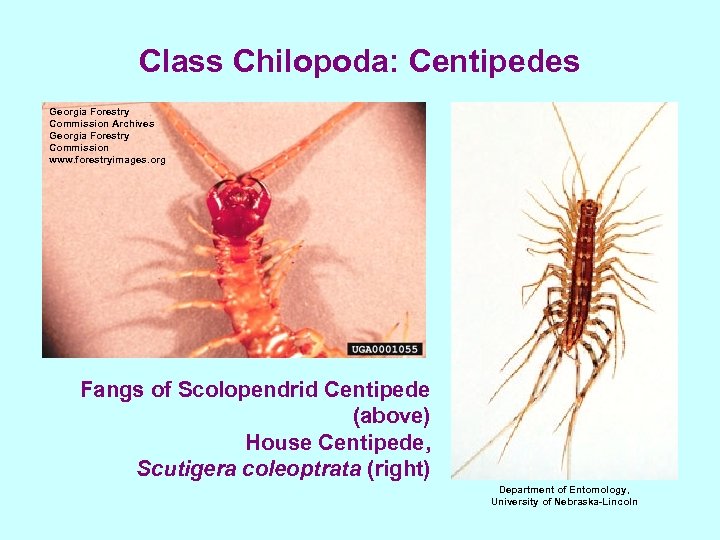 Class Chilopoda: Centipedes Georgia Forestry Commission Archives Georgia Forestry Commission www. forestryimages. org Fangs of Scolopendrid Centipede (above) House Centipede, Scutigera coleoptrata (right) Department of Entomology, University of Nebraska-Lincoln
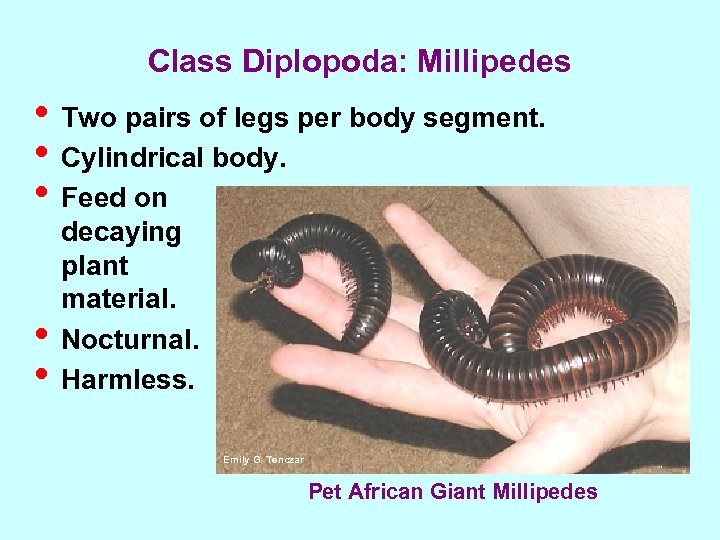 Class Diplopoda: Millipedes • Two pairs of legs per body segment. • Cylindrical body. • Feed on • • decaying plant material. Nocturnal. Harmless. Emily G. Tenczar Pet African Giant Millipedes
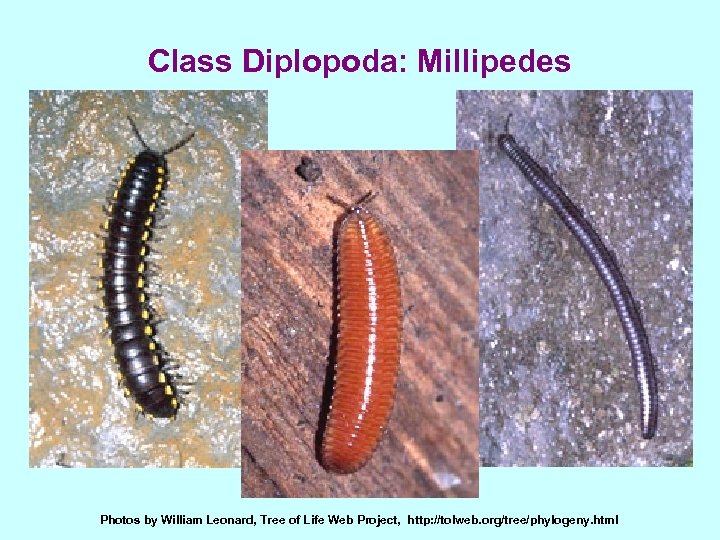 Class Diplopoda: Millipedes Photos by William Leonard, Tree of Life Web Project, http: //tolweb. org/tree/phylogeny. html
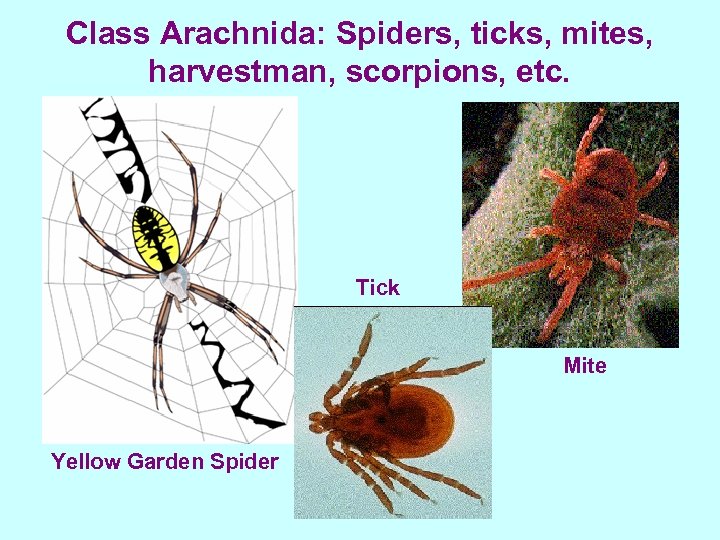 Class Arachnida: Spiders, ticks, mites, harvestman, scorpions, etc. Tick Mite Yellow Garden Spider
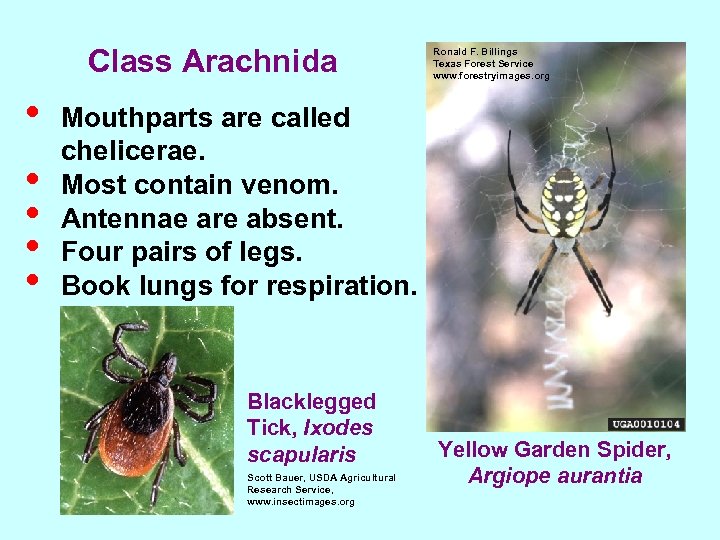 Class Arachnida • • • Ronald F. Billings Texas Forest Service www. forestryimages. org Mouthparts are called chelicerae. Most contain venom. Antennae are absent. Four pairs of legs. Book lungs for respiration. Blacklegged Tick, Ixodes scapularis Scott Bauer, USDA Agricultural Research Service, www. insectimages. org Yellow Garden Spider, Argiope aurantia
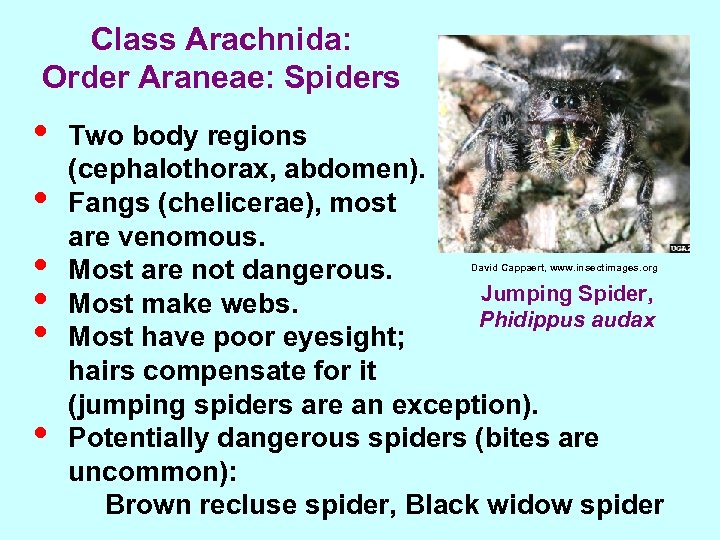 Class Arachnida: Order Araneae: Spiders • • • Two body regions (cephalothorax, abdomen). Fangs (chelicerae), most are venomous. Most are not dangerous. Jumping Spider, Most make webs. Phidippus audax Most have poor eyesight; hairs compensate for it (jumping spiders are an exception). Potentially dangerous spiders (bites are uncommon): Brown recluse spider, Black widow spider David Cappaert, www. insectimages. org
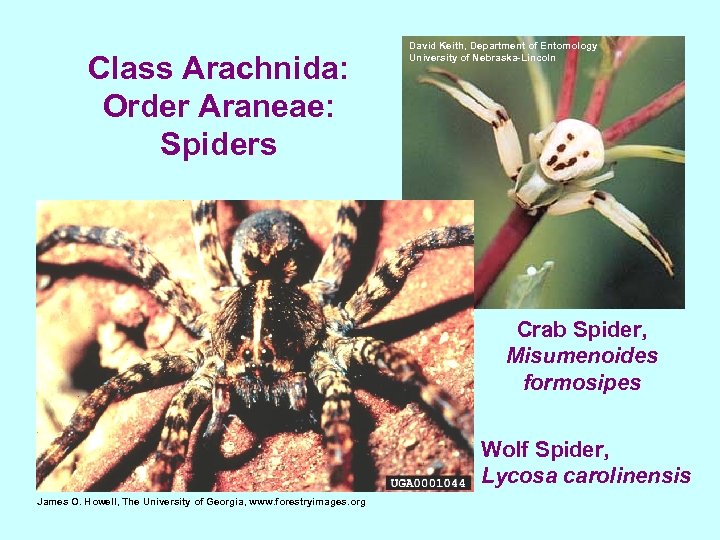 Class Arachnida: Order Araneae: Spiders David Keith, Department of Entomology University of Nebraska-Lincoln Crab Spider, Misumenoides formosipes Wolf Spider, Lycosa carolinensis James O. Howell, The University of Georgia, www. forestryimages. org
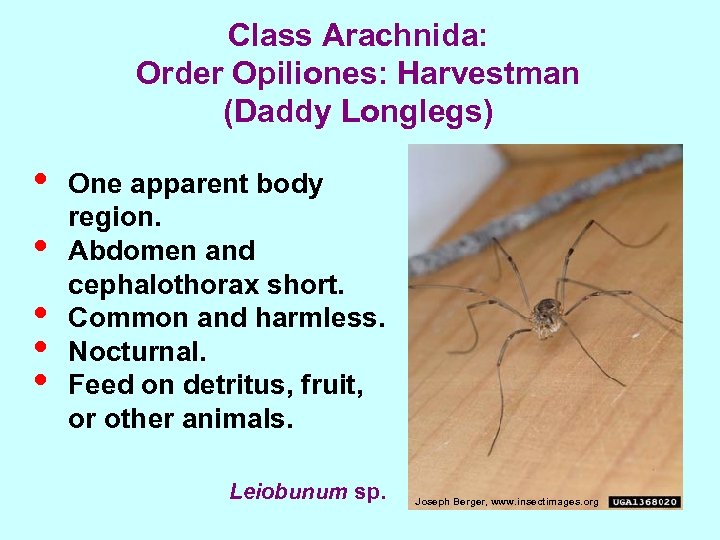 Class Arachnida: Order Opiliones: Harvestman (Daddy Longlegs) • • • One apparent body region. Abdomen and cephalothorax short. Common and harmless. Nocturnal. Feed on detritus, fruit, or other animals. Leiobunum sp. Joseph Berger, www. insectimages. org
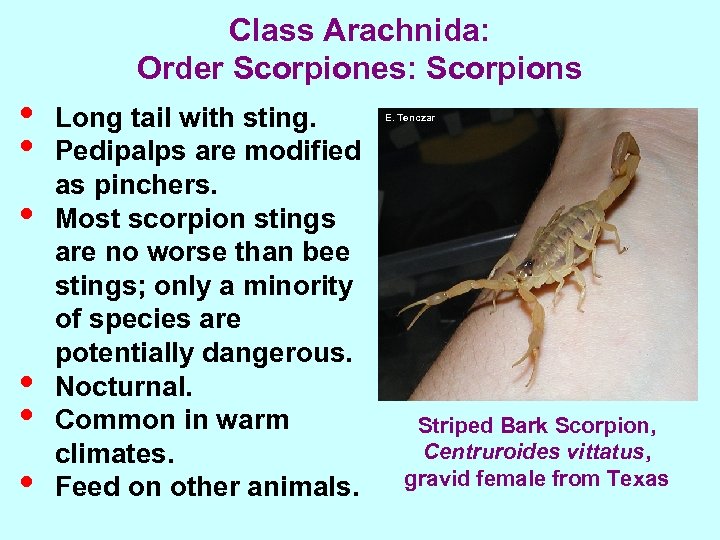 Class Arachnida: Order Scorpiones: Scorpions • • • Long tail with sting. Pedipalps are modified as pinchers. Most scorpion stings are no worse than bee stings; only a minority of species are potentially dangerous. Nocturnal. Common in warm climates. Feed on other animals. E. Tenczar Striped Bark Scorpion, Centruroides vittatus, gravid female from Texas
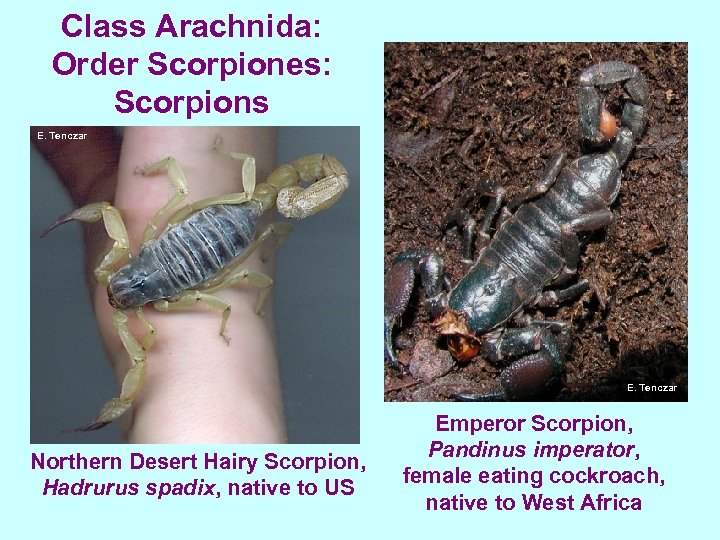 Class Arachnida: Order Scorpiones: Scorpions E. Tenczar Northern Desert Hairy Scorpion, Hadrurus spadix, native to US Emperor Scorpion, Pandinus imperator, female eating cockroach, native to West Africa
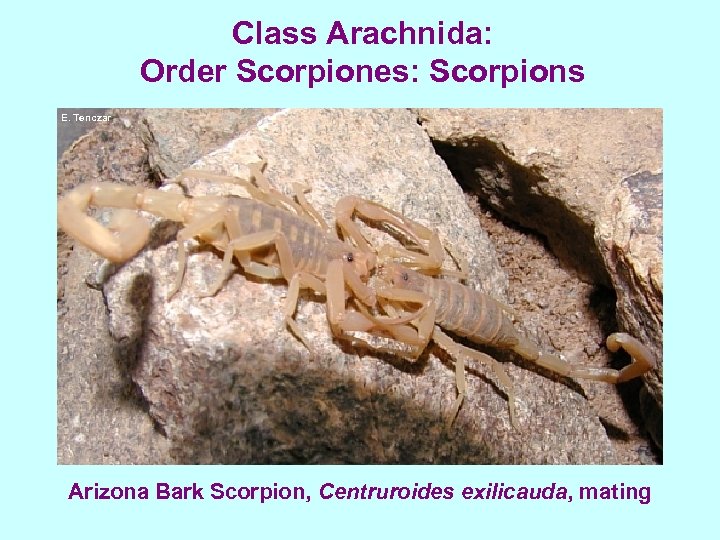 Class Arachnida: Order Scorpiones: Scorpions E. Tenczar Arizona Bark Scorpion, Centruroides exilicauda, mating
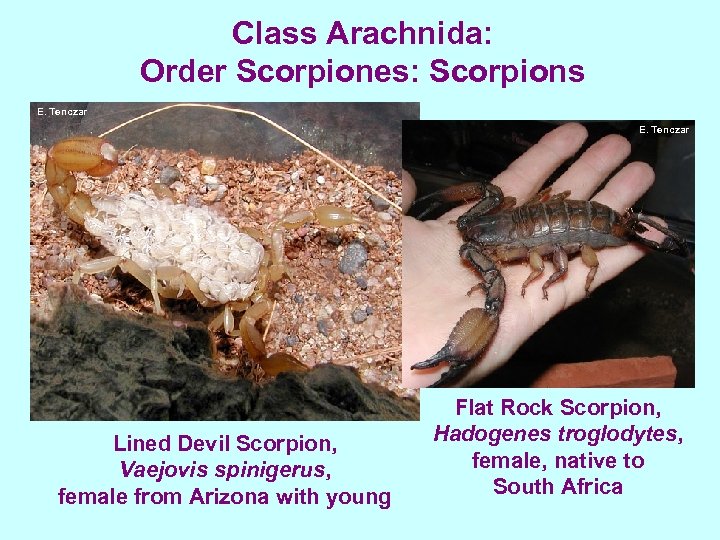 Class Arachnida: Order Scorpiones: Scorpions E. Tenczar Lined Devil Scorpion, Vaejovis spinigerus, female from Arizona with young Flat Rock Scorpion, Hadogenes troglodytes, female, native to South Africa
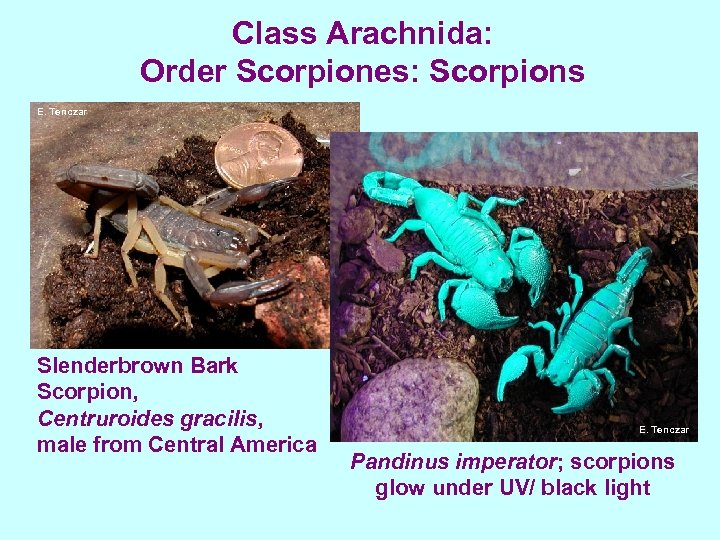 Class Arachnida: Order Scorpiones: Scorpions E. Tenczar Slenderbrown Bark Scorpion, Centruroides gracilis, male from Central America E. Tenczar Pandinus imperator; scorpions glow under UV/ black light
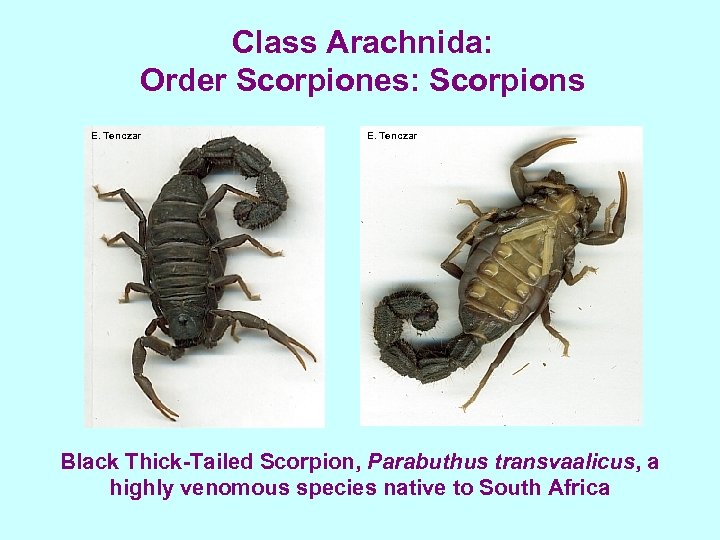 Class Arachnida: Order Scorpiones: Scorpions E. Tenczar Black Thick-Tailed Scorpion, Parabuthus transvaalicus, a highly venomous species native to South Africa
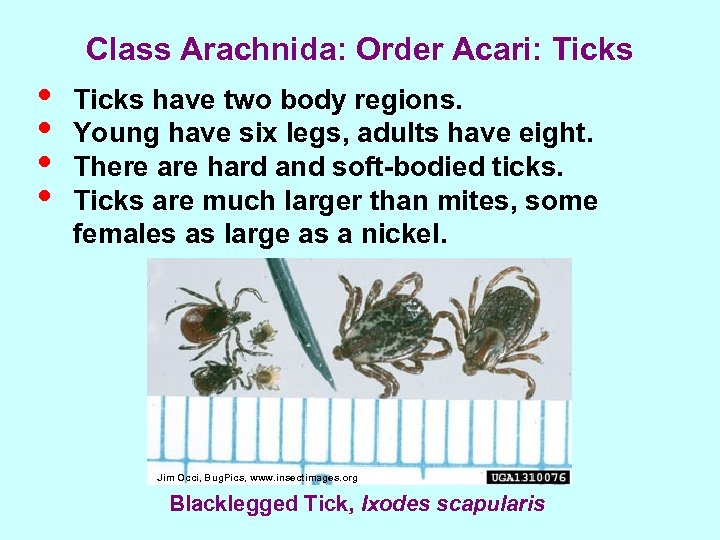 Class Arachnida: Order Acari: Ticks • • Ticks have two body regions. Young have six legs, adults have eight. There are hard and soft-bodied ticks. Ticks are much larger than mites, some females as large as a nickel. Jim Occi, Bug. Pics, www. insectimages. org Blacklegged Tick, Ixodes scapularis
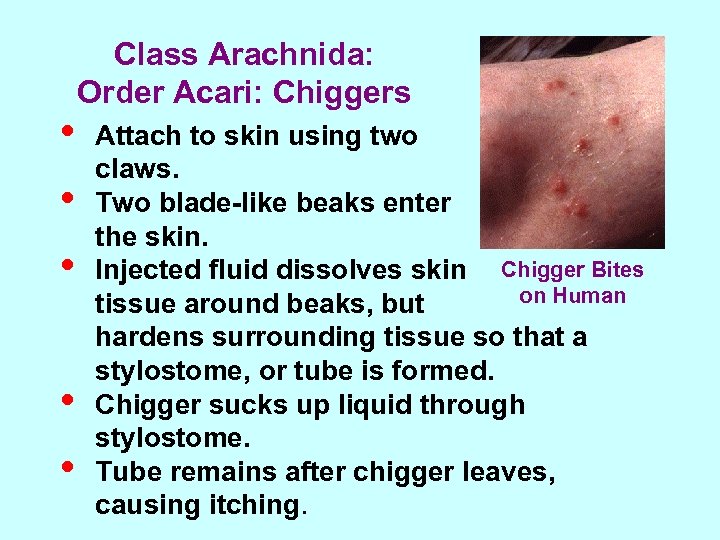 • • • Class Arachnida: Order Acari: Chiggers Attach to skin using two claws. Two blade-like beaks enter the skin. Injected fluid dissolves skin Chigger Bites on Human tissue around beaks, but hardens surrounding tissue so that a stylostome, or tube is formed. Chigger sucks up liquid through stylostome. Tube remains after chigger leaves, causing itching.
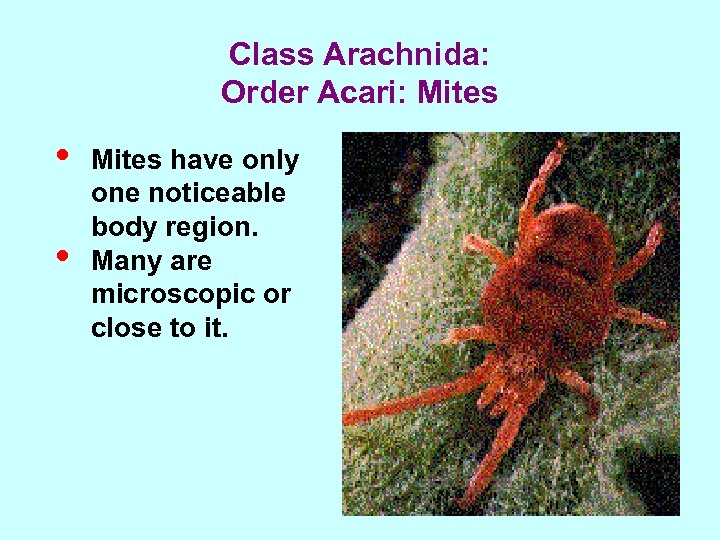 Class Arachnida: Order Acari: Mites • • Mites have only one noticeable body region. Many are microscopic or close to it.
 Mites • Egg, larva, protonymph, deutonymph, adult. • Four pair legs; three pairs on larvae. • Two body segments: head, thorax. • Chelicerae: fangs like spiders. • Suck cells. • Cause chlorosis; yellowing of foliage. • Transmit disease. • Diagnostics: chlorosis, webbing, rusetting, galls.
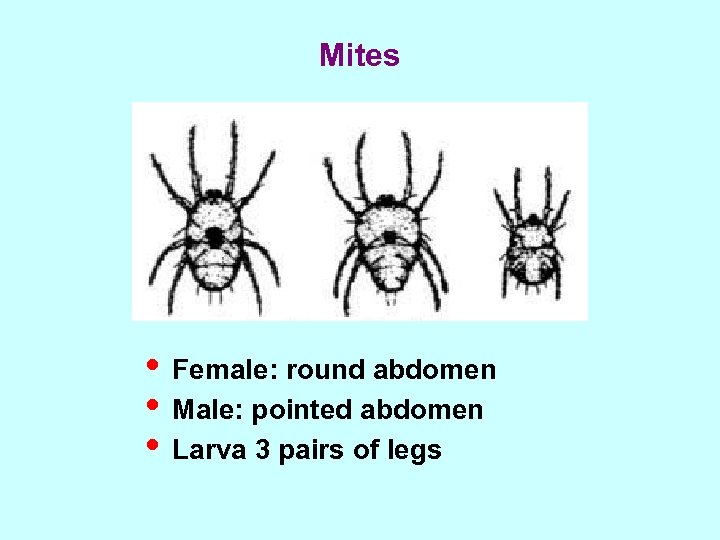 Mites • Female: round abdomen • Male: pointed abdomen • Larva 3 pairs of legs
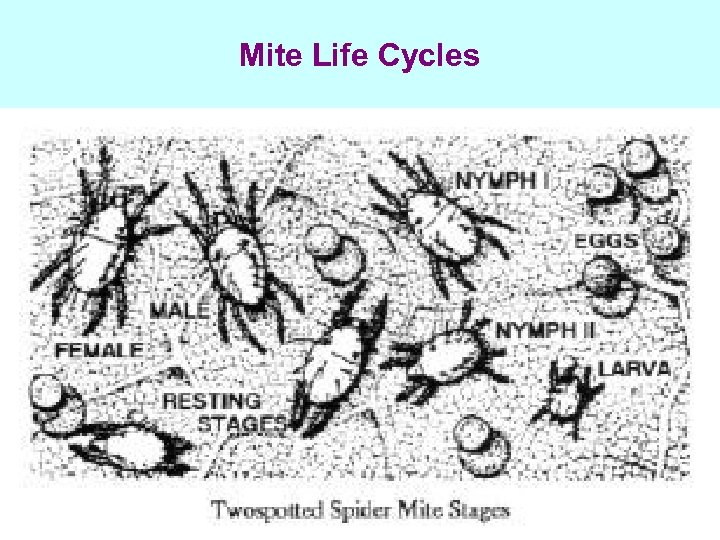 Mite Life Cycles
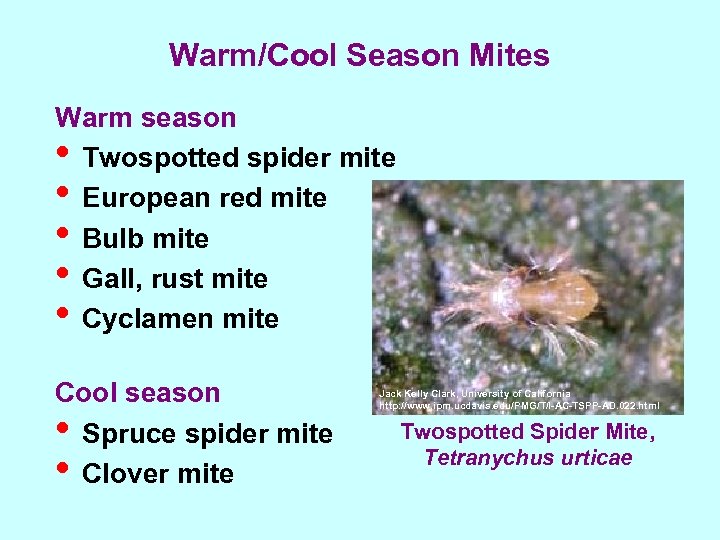 Warm/Cool Season Mites Warm season • Twospotted spider mite • European red mite • Bulb mite • Gall, rust mite • Cyclamen mite Cool season • Spruce spider mite • Clover mite Jack Kelly Clark, University of California http: //www. ipm. ucdavis. edu/PMG/T/I-AC-TSPP-AD. 022. html Twospotted Spider Mite, Tetranychus urticae
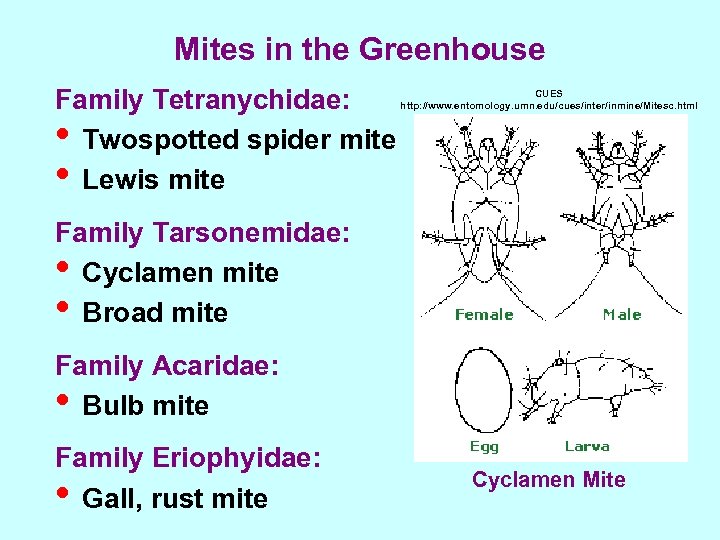 Mites in the Greenhouse Family Tetranychidae: • Twospotted spider mite • Lewis mite CUES http: //www. entomology. umn. edu/cues/inter/inmine/Mitesc. html Family Tarsonemidae: • Cyclamen mite • Broad mite Family Acaridae: • Bulb mite Family Eriophyidae: • Gall, rust mite Cyclamen Mite
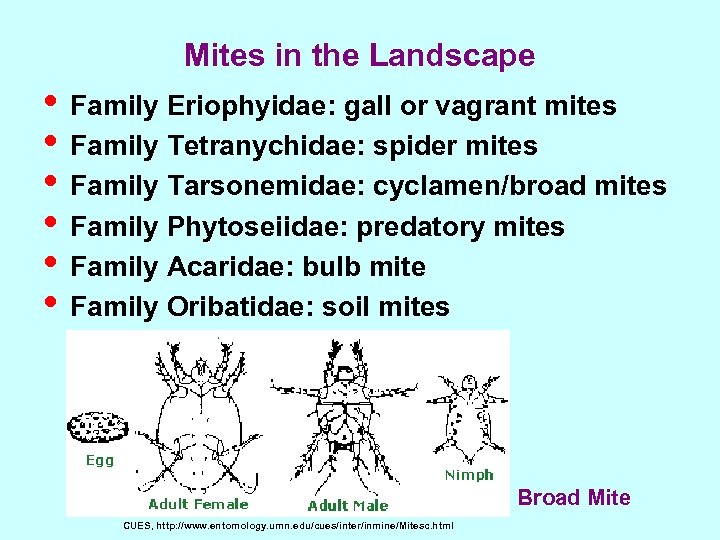 Mites in the Landscape • Family Eriophyidae: gall or vagrant mites • Family Tetranychidae: spider mites • Family Tarsonemidae: cyclamen/broad mites • Family Phytoseiidae: predatory mites • Family Acaridae: bulb mite • Family Oribatidae: soil mites Broad Mite CUES, http: //www. entomology. umn. edu/cues/inter/inmine/Mitesc. html
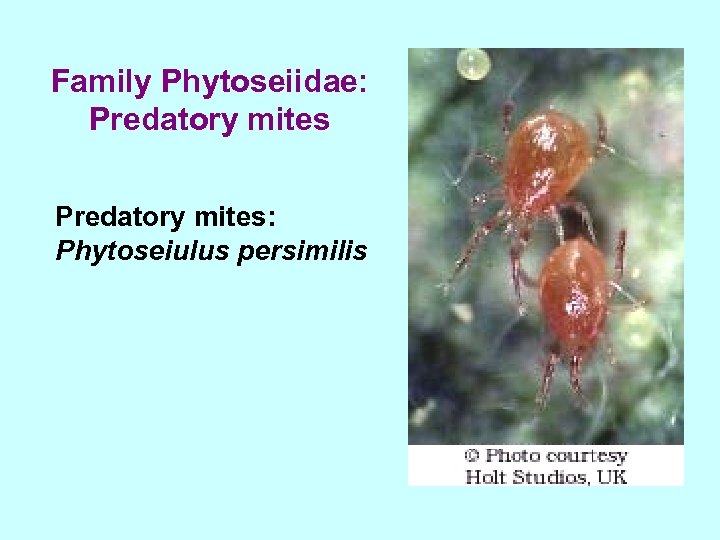 Family Phytoseiidae: Predatory mites: Phytoseiulus persimilis
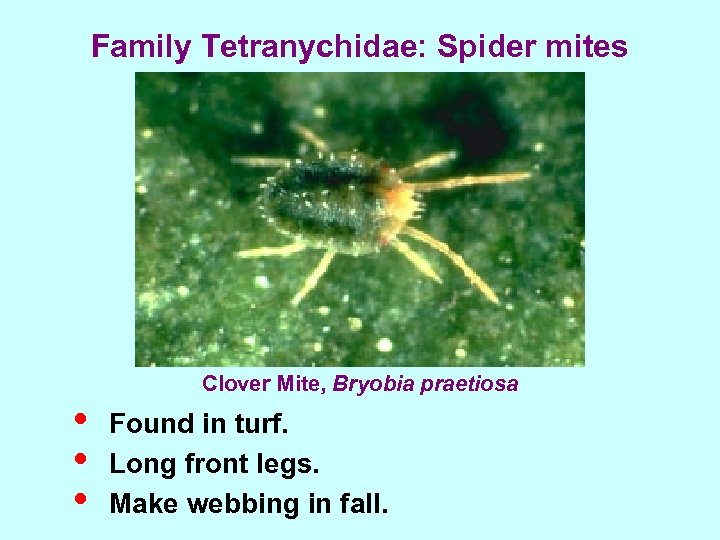 Family Tetranychidae: Spider mites • • • Clover Mite, Bryobia praetiosa Found in turf. Long front legs. Make webbing in fall.
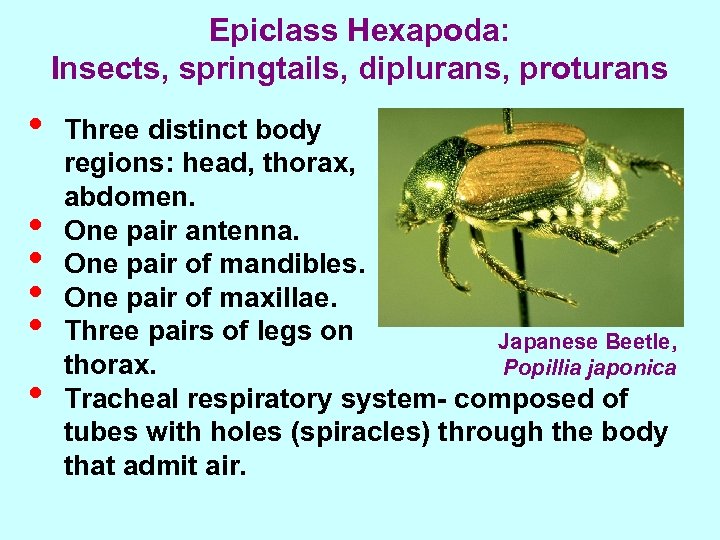 Epiclass Hexapoda: Insects, springtails, diplurans, proturans • • • Three distinct body regions: head, thorax, abdomen. One pair antenna. One pair of mandibles. One pair of maxillae. Three pairs of legs on Japanese Beetle, thorax. Popillia japonica Tracheal respiratory system- composed of tubes with holes (spiracles) through the body that admit air.
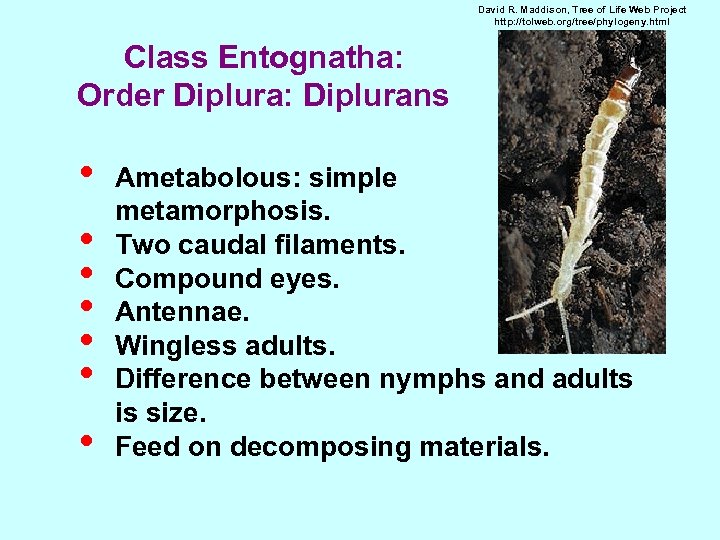 David R. Maddison, Tree of Life Web Project http: //tolweb. org/tree/phylogeny. html Class Entognatha: Order Diplura: Diplurans • • Ametabolous: simple metamorphosis. Two caudal filaments. Compound eyes. Antennae. Wingless adults. Difference between nymphs and adults is size. Feed on decomposing materials.
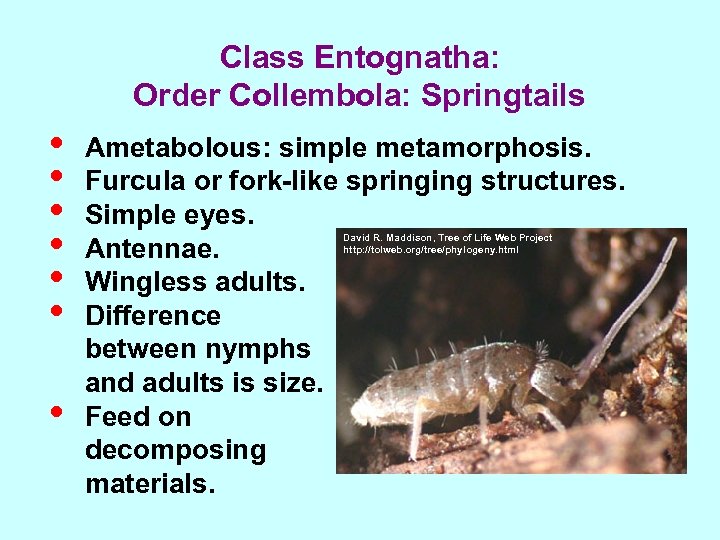 Class Entognatha: Order Collembola: Springtails • • Ametabolous: simple metamorphosis. Furcula or fork-like springing structures. Simple eyes. Antennae. Wingless adults. Difference between nymphs and adults is size. Feed on decomposing materials. David R. Maddison, Tree of Life Web Project http: //tolweb. org/tree/phylogeny. html
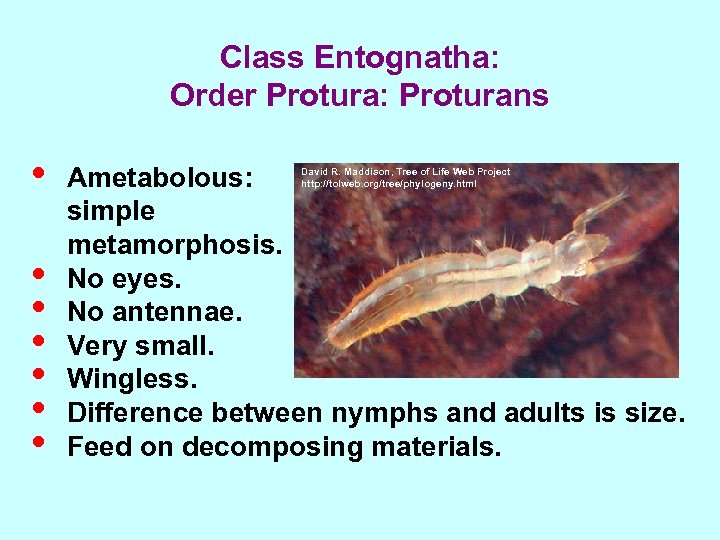 Class Entognatha: Order Protura: Proturans • • Ametabolous: simple metamorphosis. No eyes. No antennae. Very small. Wingless. Difference between nymphs and adults is size. Feed on decomposing materials. David R. Maddison, Tree of Life Web Project http: //tolweb. org/tree/phylogeny. html
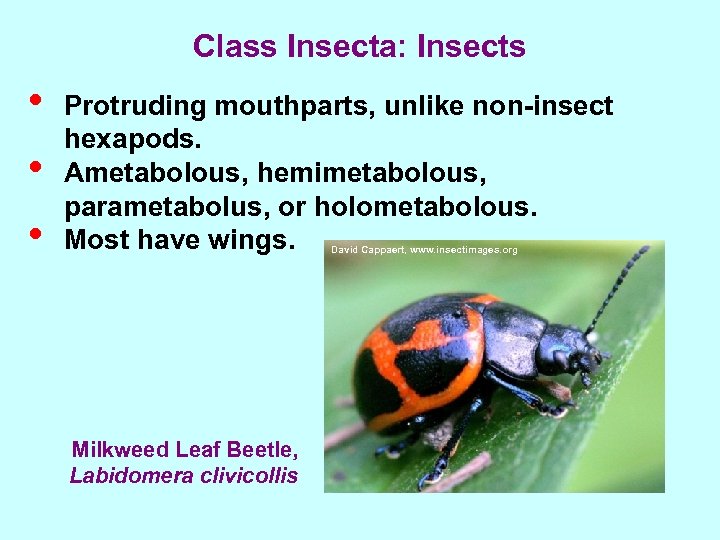 Class Insecta: Insects • • • Protruding mouthparts, unlike non-insect hexapods. Ametabolous, hemimetabolous, parametabolus, or holometabolous. Most have wings. David Cappaert, www. insectimages. org Milkweed Leaf Beetle, Labidomera clivicollis
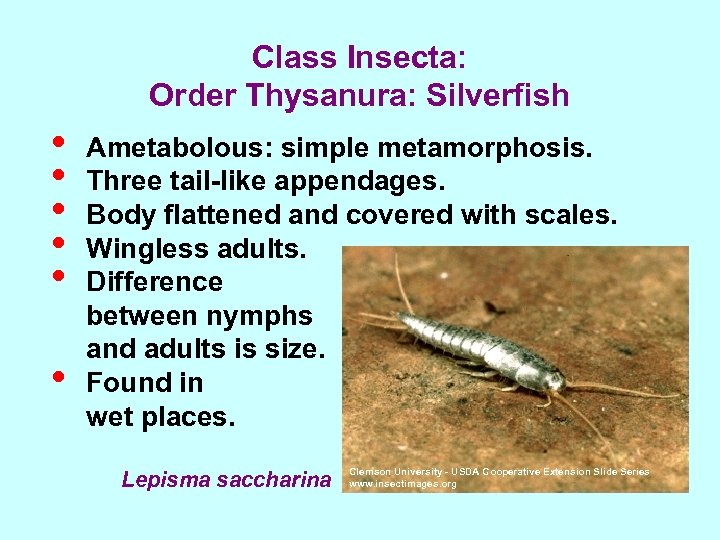 Class Insecta: Order Thysanura: Silverfish • • • Ametabolous: simple metamorphosis. Three tail-like appendages. Body flattened and covered with scales. Wingless adults. Difference between nymphs and adults is size. Found in wet places. Lepisma saccharina Clemson University - USDA Cooperative Extension Slide Series www. insectimages. org
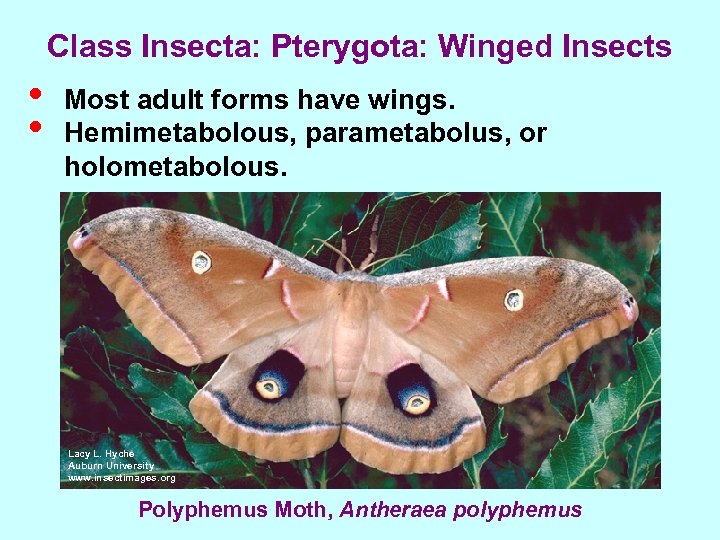 Class Insecta: Pterygota: Winged Insects • • Most adult forms have wings. Hemimetabolous, parametabolus, or holometabolous. Lacy L. Hyche Auburn University www. insectimages. org Polyphemus Moth, Antheraea polyphemus
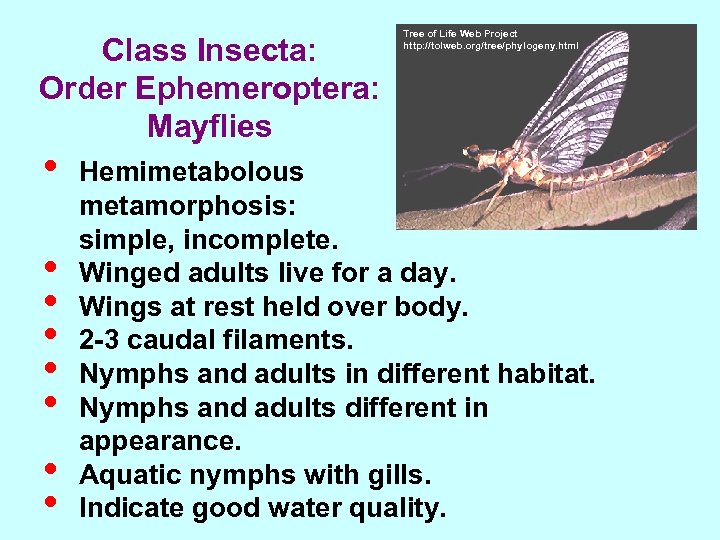 Class Insecta: Order Ephemeroptera: Mayflies • • Tree of Life Web Project http: //tolweb. org/tree/phylogeny. html Hemimetabolous metamorphosis: simple, incomplete. Winged adults live for a day. Wings at rest held over body. 2 -3 caudal filaments. Nymphs and adults in different habitat. Nymphs and adults different in appearance. Aquatic nymphs with gills. Indicate good water quality.
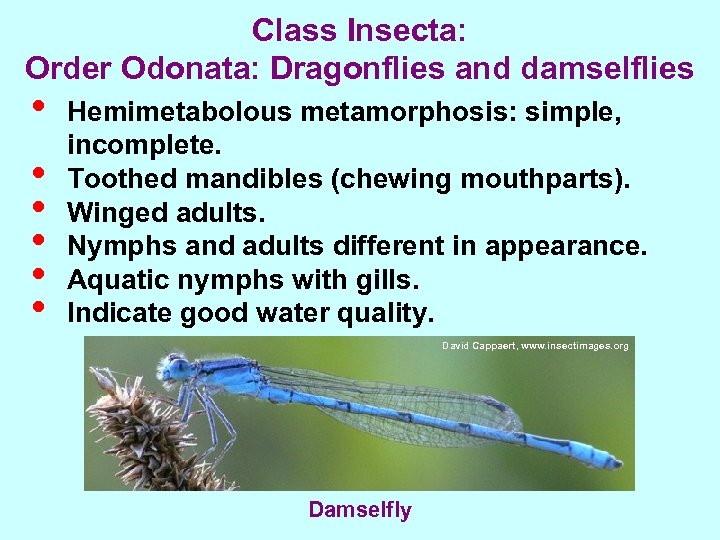 Class Insecta: Order Odonata: Dragonflies and damselflies • • • Hemimetabolous metamorphosis: simple, incomplete. Toothed mandibles (chewing mouthparts). Winged adults. Nymphs and adults different in appearance. Aquatic nymphs with gills. Indicate good water quality. David Cappaert, www. insectimages. org Damselfly
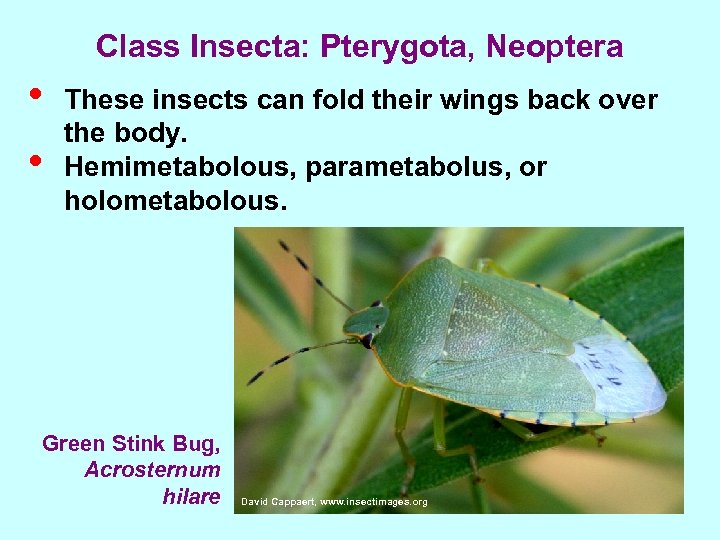 Class Insecta: Pterygota, Neoptera • • These insects can fold their wings back over the body. Hemimetabolous, parametabolus, or holometabolous. Green Stink Bug, Acrosternum hilare David Cappaert, www. insectimages. org
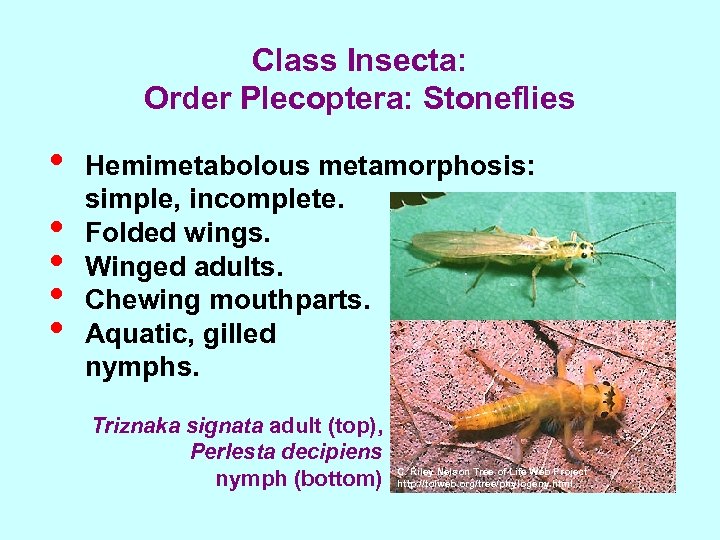 Class Insecta: Order Plecoptera: Stoneflies • • • Hemimetabolous metamorphosis: simple, incomplete. Folded wings. Winged adults. Chewing mouthparts. Aquatic, gilled nymphs. Triznaka signata adult (top), Perlesta decipiens nymph (bottom) C. Riley Nelson Tree of Life Web Project http: //tolweb. org/tree/phylogeny. html
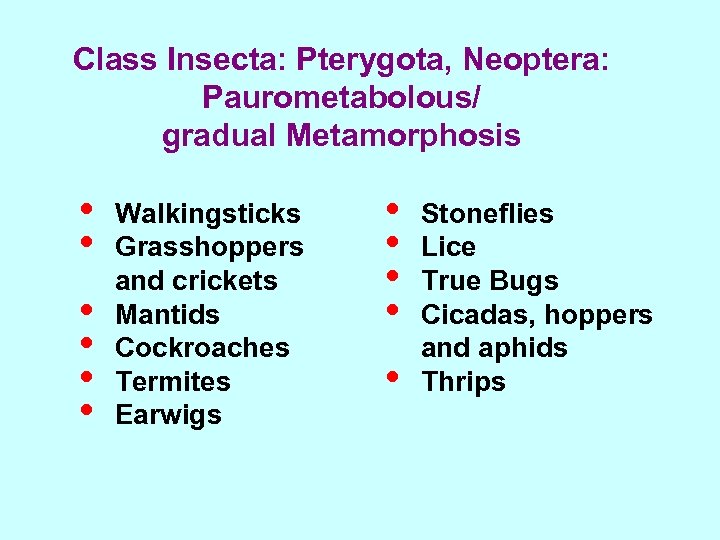 Class Insecta: Pterygota, Neoptera: Paurometabolous/ gradual Metamorphosis • • • Walkingsticks Grasshoppers and crickets Mantids Cockroaches Termites Earwigs • • • Stoneflies Lice True Bugs Cicadas, hoppers and aphids Thrips
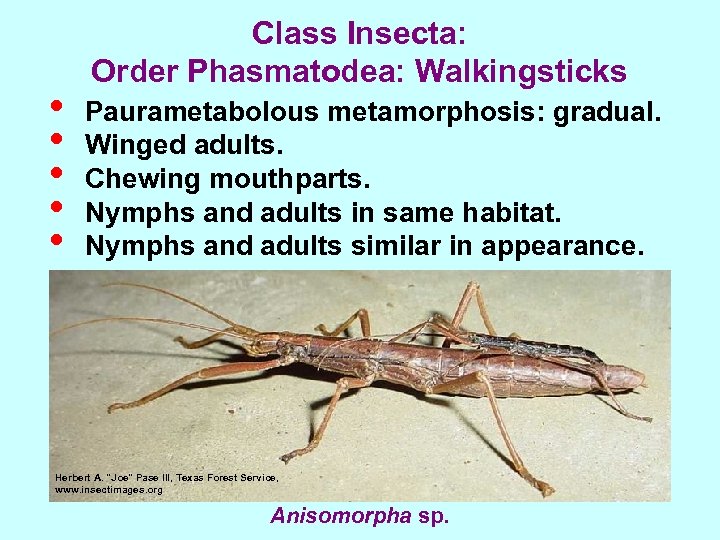 • • • Class Insecta: Order Phasmatodea: Walkingsticks Paurametabolous metamorphosis: gradual. Winged adults. Chewing mouthparts. Nymphs and adults in same habitat. Nymphs and adults similar in appearance. Herbert A. "Joe" Pase III, Texas Forest Service, www. insectimages. org Anisomorpha sp.
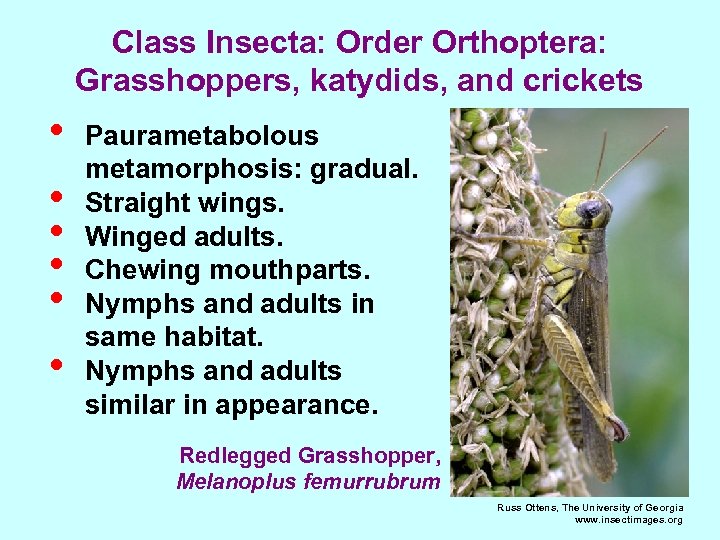 Class Insecta: Order Orthoptera: Grasshoppers, katydids, and crickets • • • Paurametabolous metamorphosis: gradual. Straight wings. Winged adults. Chewing mouthparts. Nymphs and adults in same habitat. Nymphs and adults similar in appearance. Redlegged Grasshopper, Melanoplus femurrubrum Russ Ottens, The University of Georgia www. insectimages. org
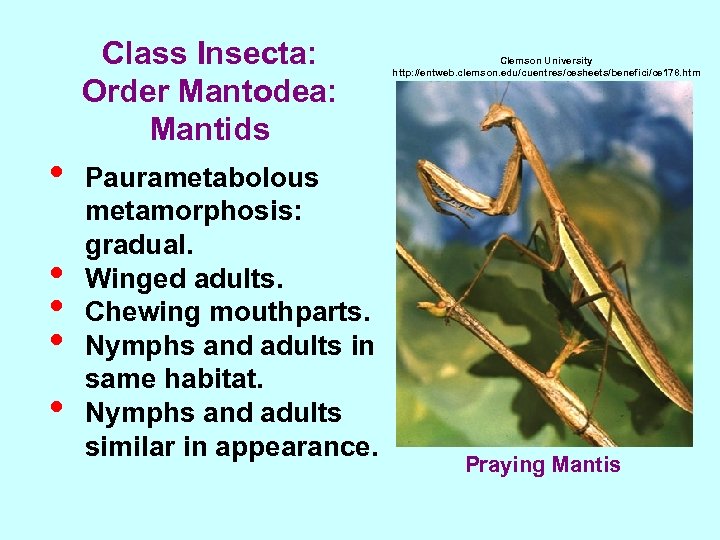 Class Insecta: Order Mantodea: Mantids • • • Paurametabolous metamorphosis: gradual. Winged adults. Chewing mouthparts. Nymphs and adults in same habitat. Nymphs and adults similar in appearance. Clemson University http: //entweb. clemson. edu/cuentres/cesheets/benefici/ce 178. htm Praying Mantis
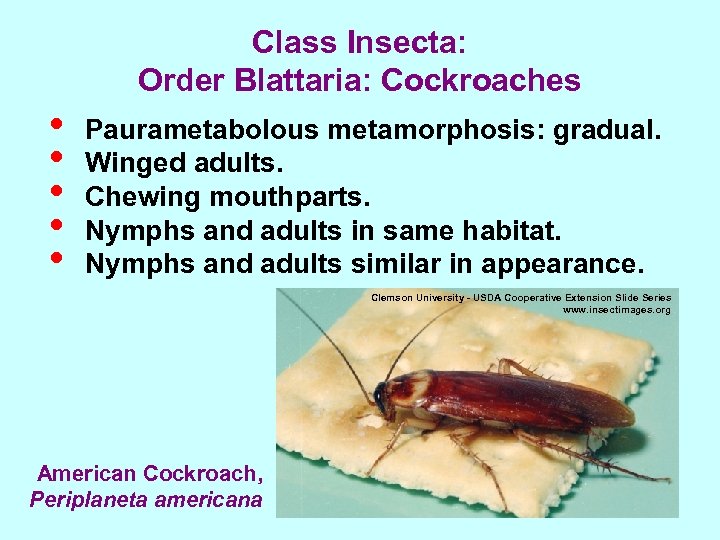 Class Insecta: Order Blattaria: Cockroaches • • • Paurametabolous metamorphosis: gradual. Winged adults. Chewing mouthparts. Nymphs and adults in same habitat. Nymphs and adults similar in appearance. Clemson University - USDA Cooperative Extension Slide Series www. insectimages. org American Cockroach, Periplaneta americana
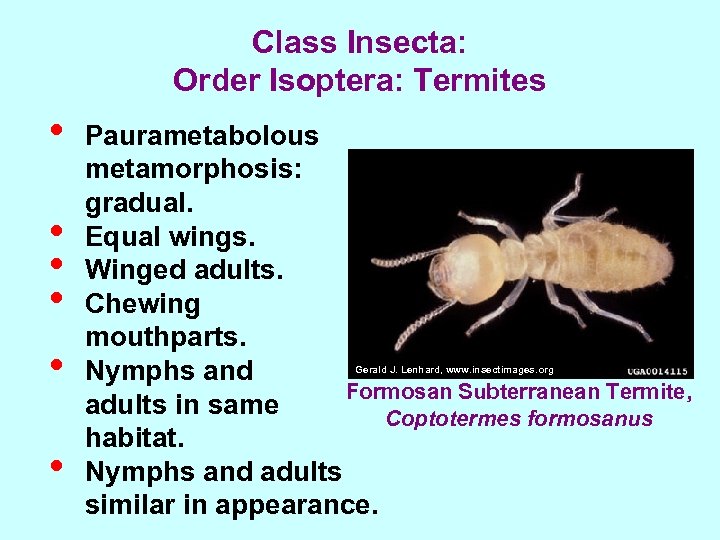 Class Insecta: Order Isoptera: Termites • • • Paurametabolous metamorphosis: gradual. Equal wings. Winged adults. Chewing mouthparts. Nymphs and Formosan Subterranean Termite, adults in same Coptotermes formosanus habitat. Nymphs and adults similar in appearance. Gerald J. Lenhard, www. insectimages. org
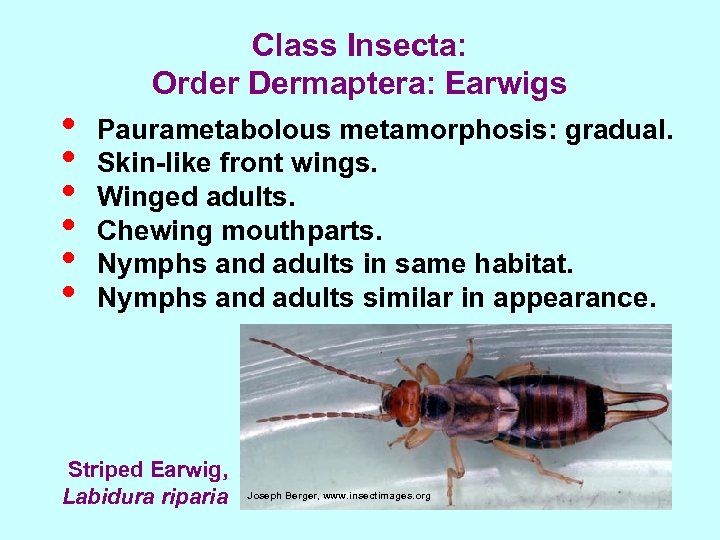 • • • Class Insecta: Order Dermaptera: Earwigs Paurametabolous metamorphosis: gradual. Skin-like front wings. Winged adults. Chewing mouthparts. Nymphs and adults in same habitat. Nymphs and adults similar in appearance. Striped Earwig, Labidura riparia Joseph Berger, www. insectimages. org
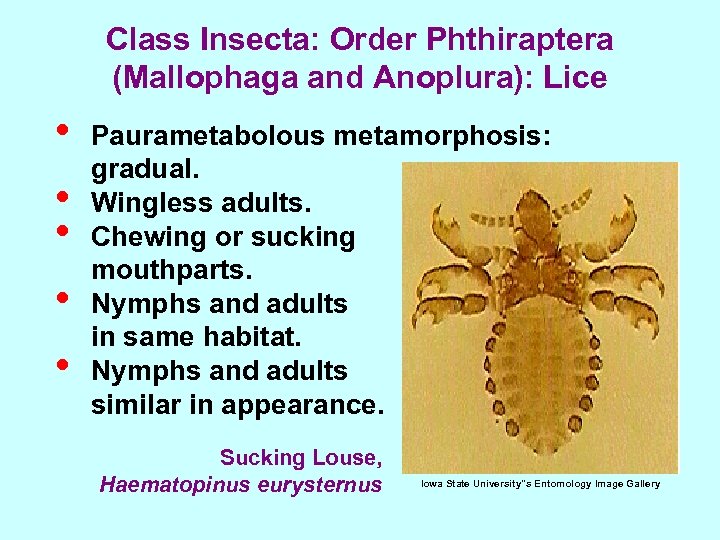 Class Insecta: Order Phthiraptera (Mallophaga and Anoplura): Lice • • • Paurametabolous metamorphosis: gradual. Wingless adults. Chewing or sucking mouthparts. Nymphs and adults in same habitat. Nymphs and adults similar in appearance. Sucking Louse, Haematopinus eurysternus Iowa State University''s Entomology Image Gallery
 Class Insecta: Order Hemiptera: Suborder Heteroptera: True bugs Suborder Sternorrhyncha: Aphids, whiteflies, scales Suborder Auchenorrhyncha: Cicadas, hoppers • • • Paurametabolous metamorphosis: gradual. Usually winged adults. Sucking mouthparts. Nymphs and adults in same habitat. Nymphs and adults similar in appearance. Sternorrhyncha and Auchenorrhyncha used to be classified in Order Homoptera.
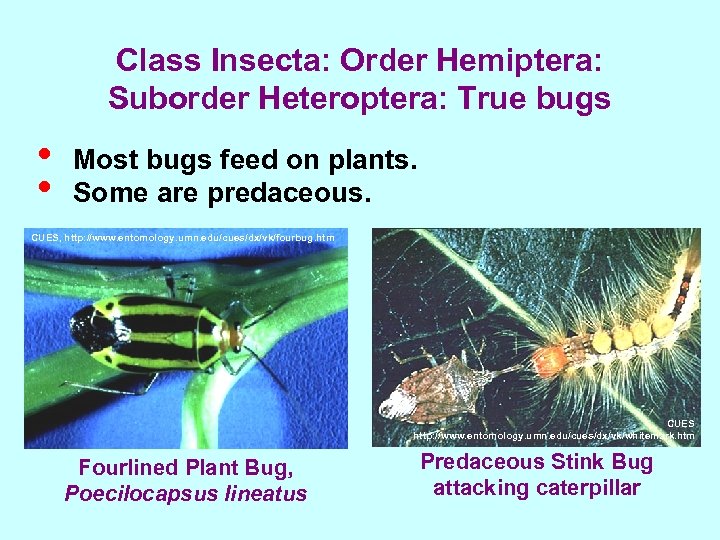 Class Insecta: Order Hemiptera: Suborder Heteroptera: True bugs • • Most bugs feed on plants. Some are predaceous. CUES, http: //www. entomology. umn. edu/cues/dx/vk/fourbug. htm CUES http: //www. entomology. umn. edu/cues/dx/vk/whitemark. htm Fourlined Plant Bug, Poecilocapsus lineatus Predaceous Stink Bug attacking caterpillar
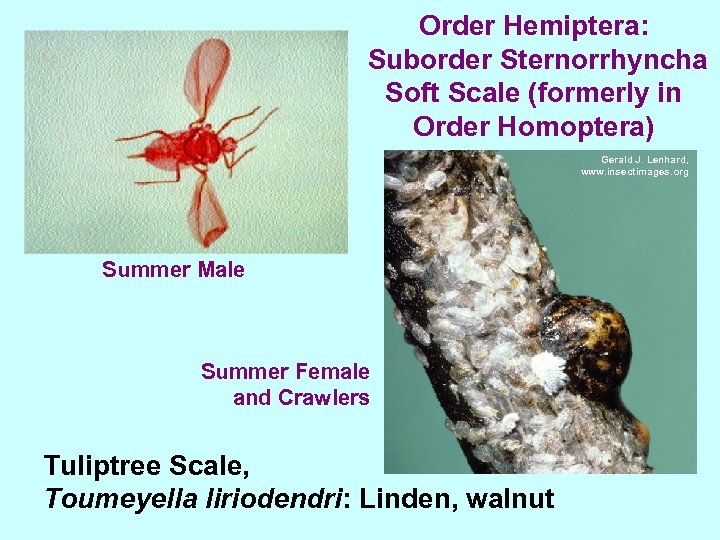 Order Hemiptera: Suborder Sternorrhyncha Soft Scale (formerly in Order Homoptera) Gerald J. Lenhard, www. insectimages. org Summer Male Summer Female and Crawlers Tuliptree Scale, Toumeyella liriodendri: Linden, walnut
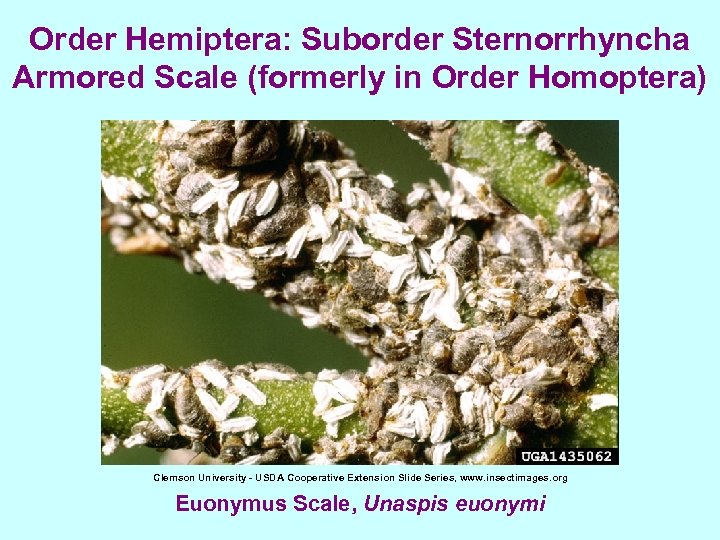 Order Hemiptera: Suborder Sternorrhyncha Armored Scale (formerly in Order Homoptera) Clemson University - USDA Cooperative Extension Slide Series, www. insectimages. org Euonymus Scale, Unaspis euonymi
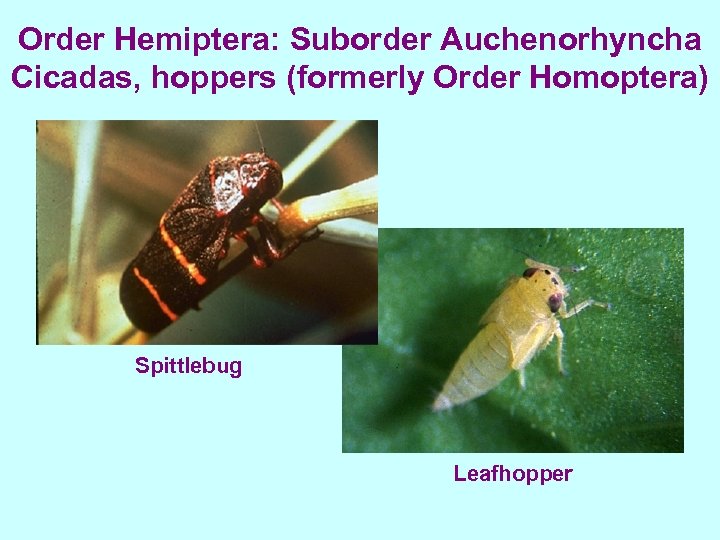 Order Hemiptera: Suborder Auchenorhyncha Cicadas, hoppers (formerly Order Homoptera) Spittlebug Leafhopper
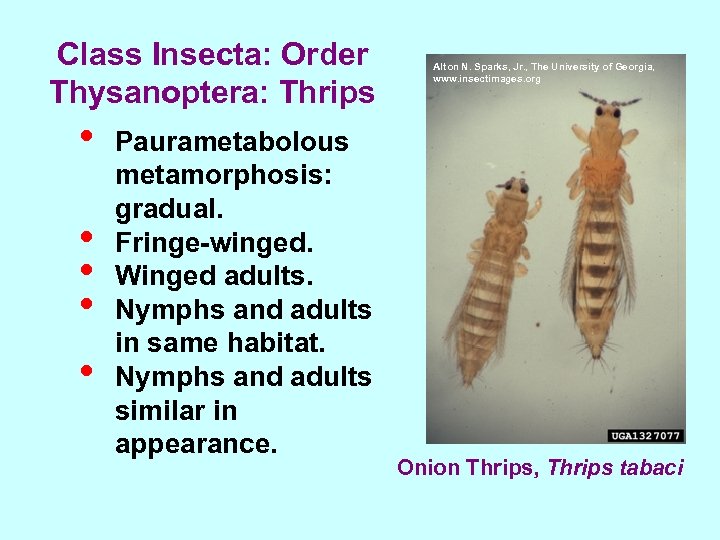 Class Insecta: Order Thysanoptera: Thrips • • • Paurametabolous metamorphosis: gradual. Fringe-winged. Winged adults. Nymphs and adults in same habitat. Nymphs and adults similar in appearance. Alton N. Sparks, Jr. , The University of Georgia, www. insectimages. org Onion Thrips, Thrips tabaci
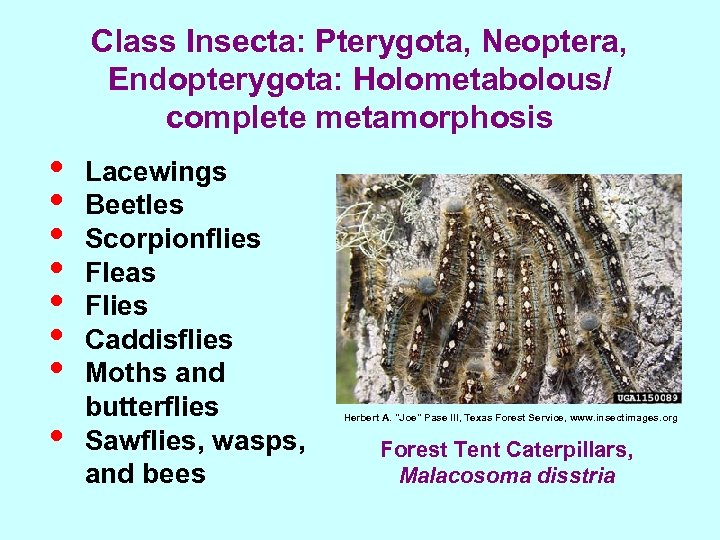 Class Insecta: Pterygota, Neoptera, Endopterygota: Holometabolous/ complete metamorphosis • • Lacewings Beetles Scorpionflies Fleas Flies Caddisflies Moths and butterflies Sawflies, wasps, and bees Herbert A. "Joe" Pase III, Texas Forest Service, www. insectimages. org Forest Tent Caterpillars, Malacosoma disstria
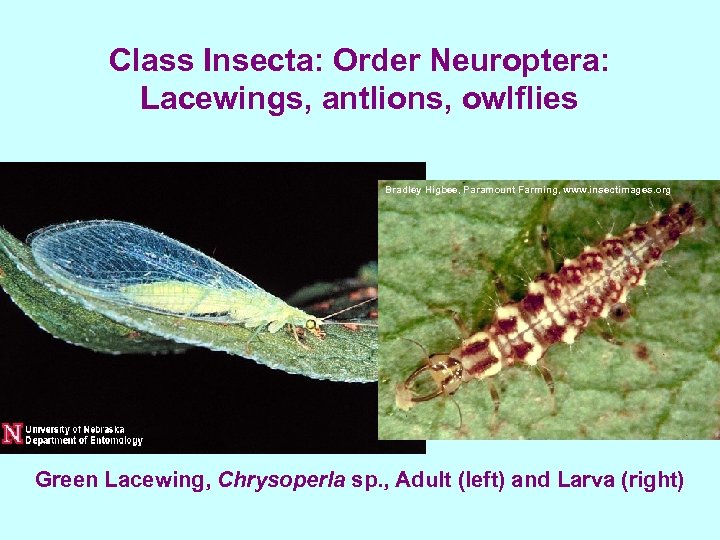 Class Insecta: Order Neuroptera: Lacewings, antlions, owlflies Bradley Higbee, Paramount Farming, www. insectimages. org Green Lacewing, Chrysoperla sp. , Adult (left) and Larva (right)
 Class Insecta: Order Neuroptera: Lacewings, antlions, owlflies • • Holometabolous metamorphosis: complete. Nerve-winged. Winged adults. Chewing mouthparts. Larvae and adults sometimes in same habitat. Some larvae are aquatic. Larvae and adults not similar in appearance.
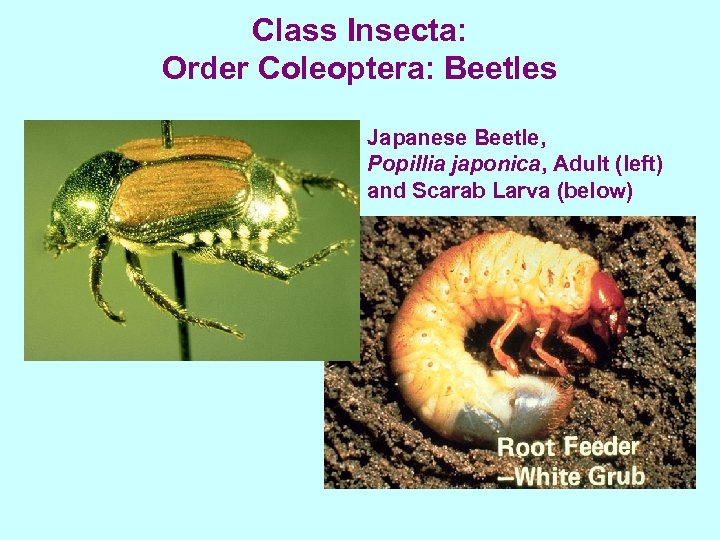 Class Insecta: Order Coleoptera: Beetles Japanese Beetle, Popillia japonica, Adult (left) and Scarab Larva (below)
 Class Insecta: Order Coleoptera: Beetles • • • Holometabolous metamorphosis: complete. Hardened forewings (elytra). Winged adults. Chewing mouthparts. Larvae and adults in same habitat. Larvae and adults not similar in appearance.
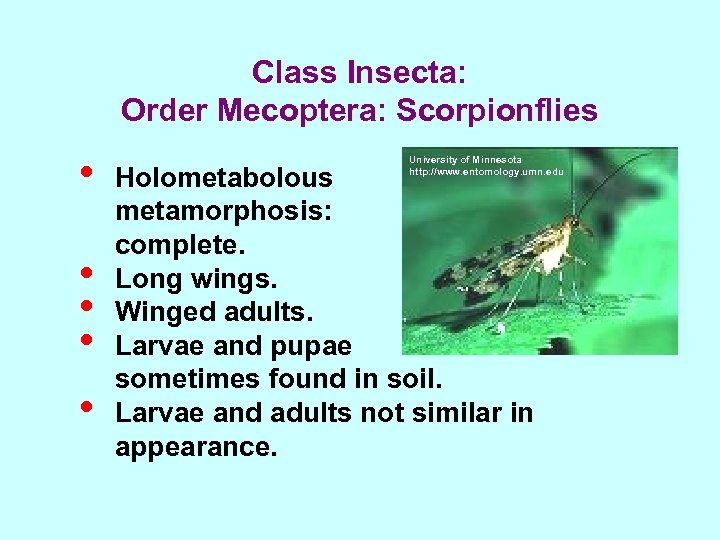 Class Insecta: Order Mecoptera: Scorpionflies • • • University of Minnesota http: //www. entomology. umn. edu Holometabolous metamorphosis: complete. Long wings. Winged adults. Larvae and pupae sometimes found in soil. Larvae and adults not similar in appearance.
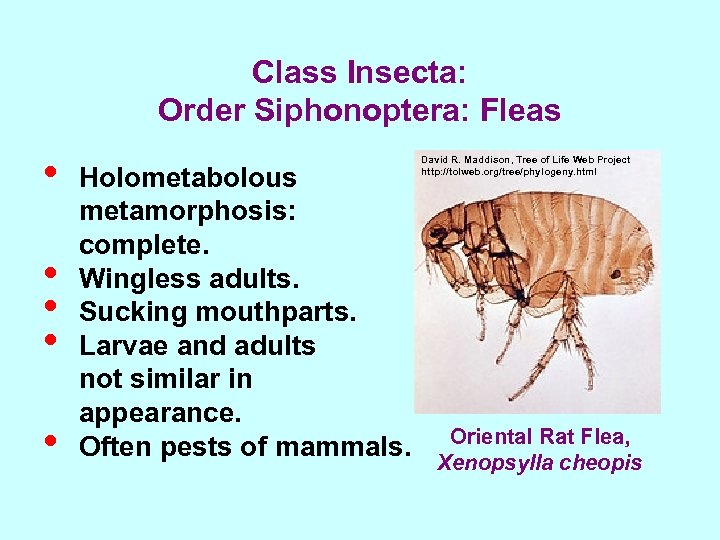 Class Insecta: Order Siphonoptera: Fleas • • • Holometabolous metamorphosis: complete. Wingless adults. Sucking mouthparts. Larvae and adults not similar in appearance. Often pests of mammals. David R. Maddison, Tree of Life Web Project http: //tolweb. org/tree/phylogeny. html Oriental Rat Flea, Xenopsylla cheopis
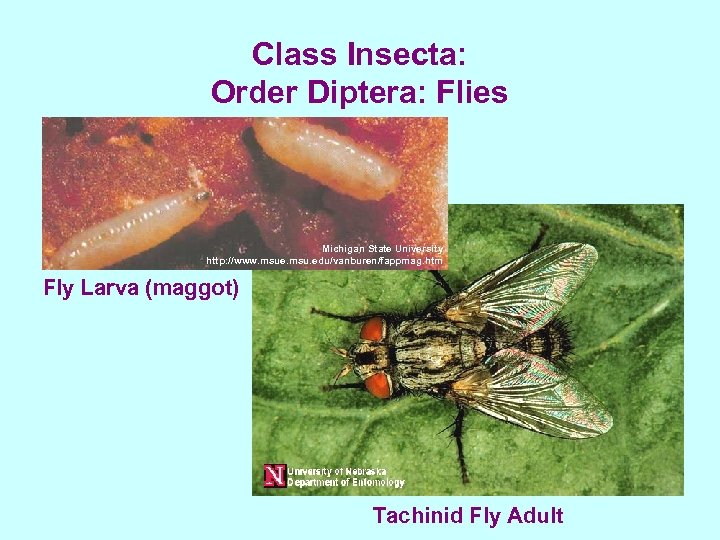 Class Insecta: Order Diptera: Flies Michigan State University http: //www. msue. msu. edu/vanburen/fappmag. htm Fly Larva (maggot) Tachinid Fly Adult
 Class Insecta: Order Diptera: Flies • • Holometabolous metamorphosis: complete. Winged adults. 2 nd pair of wings are halteres. Larvae and adults often in same habitat. Larvae and adults not similar in appearance. Some spread diseases to humans and livestock. Some are parasitoids.
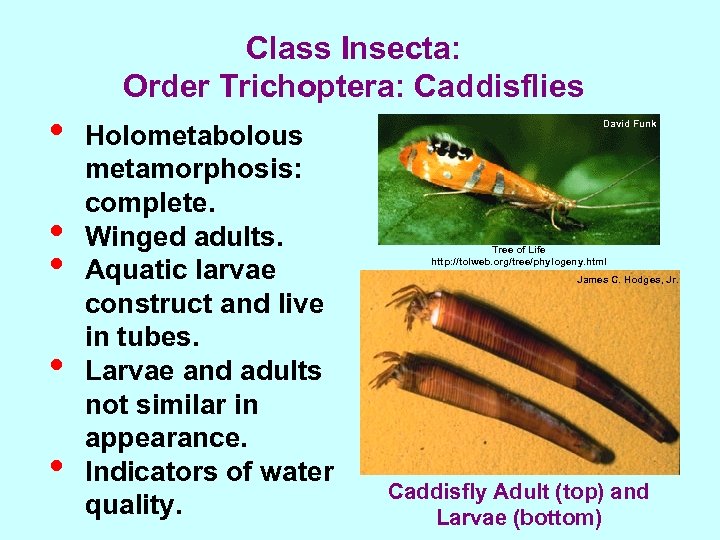 Class Insecta: Order Trichoptera: Caddisflies • • • Holometabolous metamorphosis: complete. Winged adults. Aquatic larvae construct and live in tubes. Larvae and adults not similar in appearance. Indicators of water quality. David Funk Tree of Life http: //tolweb. org/tree/phylogeny. html James C. Hodges, Jr. Caddisfly Adult (top) and Larvae (bottom)
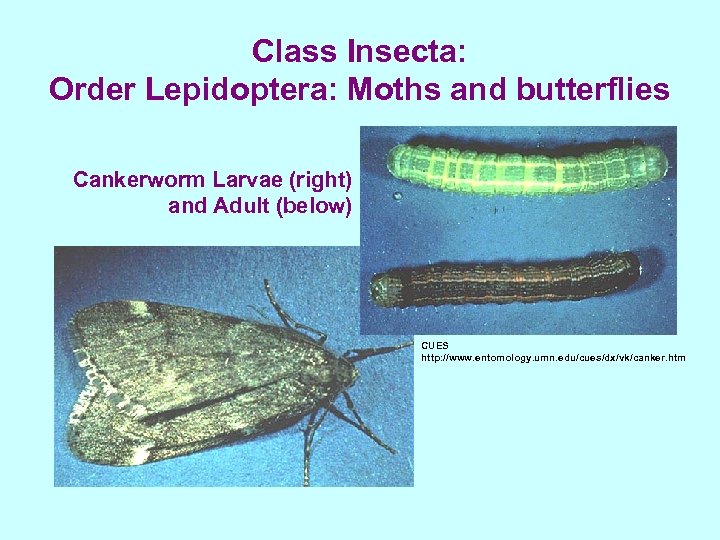 Class Insecta: Order Lepidoptera: Moths and butterflies Cankerworm Larvae (right) and Adult (below) CUES http: //www. entomology. umn. edu/cues/dx/vk/canker. htm
 Class Insecta: Order Lepidoptera: Moths and butterflies • • • Holometabolous metamorphosis: complete. Winged adults. Larvae and adults not similar in appearance. Most larvae feed on plant tissue. Many moths are pests; most butterflies are not.
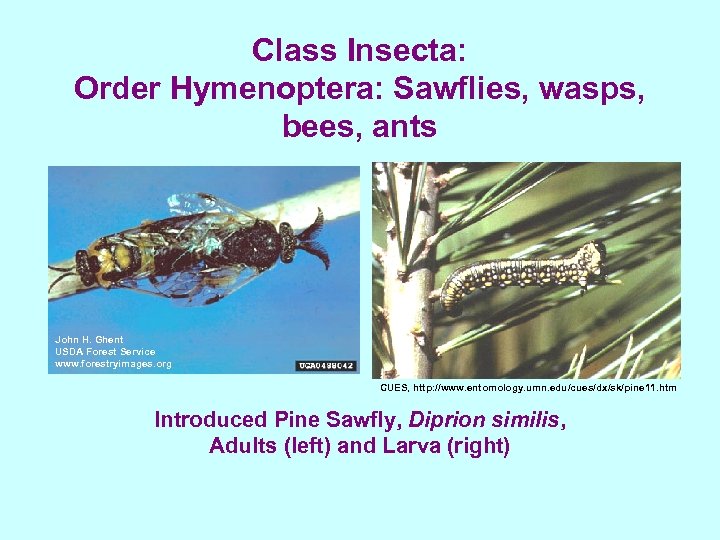 Class Insecta: Order Hymenoptera: Sawflies, wasps, bees, ants John H. Ghent USDA Forest Service www. forestryimages. org CUES, http: //www. entomology. umn. edu/cues/dx/sk/pine 11. htm Introduced Pine Sawfly, Diprion similis, Adults (left) and Larva (right)
 Class Insecta: Order Hymenoptera: Sawflies, wasps, bees, ants • • Holometabolous metamorphosis: complete. Membranous wings. Winged adults. Larvae and adults not similar in appearance. Sawflies are phytophagous. Some wasps are parasitoids. Many wasps, bees, and all ants are social.