


 Скачать презентацию Introduction to Patient Safety Research Presentation 10 —
f643f5710858371315edac0e3b5cdcc1.ppt
- Количество слайдов: 20
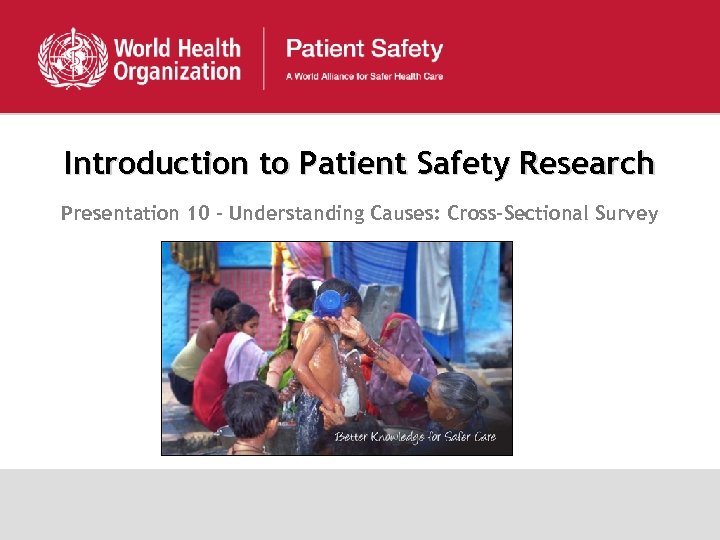 Introduction to Patient Safety Research Presentation 10 - Understanding Causes: Cross-Sectional Survey
 2: Introduction: Study Details § Full Reference § Wu AW, Folkman S, Mc. Phee SJ, Lo B. Do house officers learn from their mistakes? JAMA, 1991, 265: 2089 -2094 Link to Abstract (HTML) Link to Full Text Not currently available online Presentation # - Understanding Causes: Cross-Sectional Survey
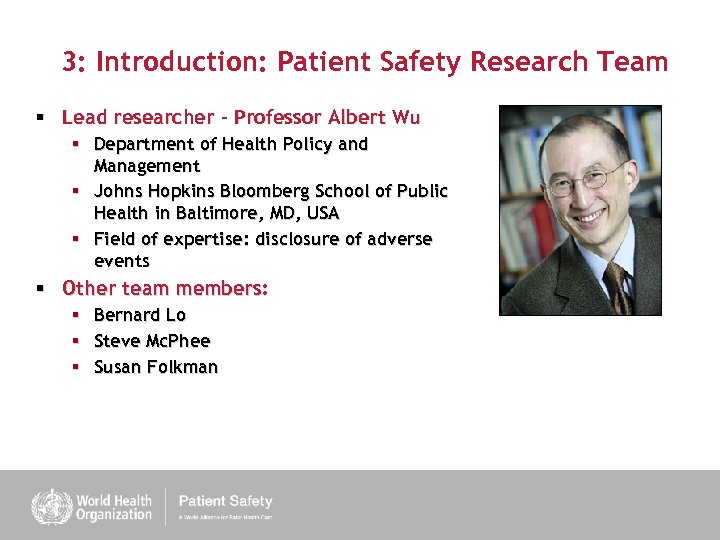 3: Introduction: Patient Safety Research Team § Lead researcher - Professor Albert Wu § Department of Health Policy and Management § Johns Hopkins Bloomberg School of Public Health in Baltimore, MD, USA § Field of expertise: disclosure of adverse events § Other team members: § Bernard Lo § Steve Mc. Phee § Susan Folkman Presentation # - Understanding Causes: Cross-Sectional Survey
 4: Background: Opening Points § Mistakes are inevitable in medicine § Physicians in training are relatively inexperienced and care for acutely ill hospitalized patients § Physicians who err are sometimes pigeonholed as incompetent and deviant § Institutional culture may obstruct learning from mistakes Presentation # - Understanding Causes: Cross-Sectional Survey
 5: Background: Study Rationale § Idea for study came after observing on several occasions that medical errors made by house officers, when they arose, were handled poorly by almost everyone concerned § Physicians-in-training (medical students and house officers) frequently experience errors, some of which harm patients § Incidents can be traumatic to trainees § Little is known about: § What happens to the patient? § What happens to the house officer? How do they cope? § Do house officers learn from their mistakes? Presentation # - Understanding Causes: Cross-Sectional Survey
 6: Background: Choosing the Team § Prof. Wu first proposed the research topic to his advisors and sought potential "mentors" to advise and assist him § Although it was initially unclear what expertise would be needed for the study, selected team achieved a good complement of expertise § Funding § Provided through the Dr. Wu's fellowship training program Presentation # - Understanding Causes: Cross-Sectional Survey
 7: Methods: Study Objectives § Objective: § To understand how medical house officers handle medical errors the experience during their training § Research questions: § § § Do House Officers (HO) make mistakes in patient care? What factors contribute to the incidents? Who do they tell about the incidents? How do they cope? Do the change their practice as a result of the mistakes? Presentation # - Understanding Causes: Cross-Sectional Survey
 8: Methods: Study Design § Design: cross-sectional survey § Confidential, anonymous survey of physicians using free text and fixed response questions § Procedures: • Survey mailed out and mailed back • If no reply, two reminder postcards sent § Design chosen to provide both in depth responses and enough responses to test the outlined hypotheses § Other self-report methods which could have been used: § § Semi-structured interviews Small group discussions Focus groups One-to-one interviews Presentation # - Understanding Causes: Cross-Sectional Survey
 9: Methods: Population and Setting § Setting: three large academic medical centers § Population: house officers in residency training programs in internal medicine § Of all house officers contacted, 114 responded, representing a response rate of about 45% § All respondents reported a mistake Presentation # - Understanding Causes: Cross-Sectional Survey
 10: Methods: Data Collection § Study developed a survey to be mailed out to house officers and mailed back once completed. Survey included: § Free text description: “most significant mistake and response to it” § Fixed response questions using adjective rating response scales § Validated scales from “Ways of Coping” instrument § Survey package was distributed to universe of house officers in three residency training programs § Package included a pen and a self-addressed postage paid return envelope § Response postcards included a section to indicate that either the survey had been returned or that the recipient wished not to be bothered by any further contacts § Two rounds of reminder postcards and a second survey package were sent if there was no reply to the first mailed contact Presentation # - Understanding Causes: Cross-Sectional Survey
 11: Methods: Data Analysis and Interpretation § Calculated § Descriptive analysis of frequencies of responses § Bivariate and multivariable regression analysis to identify predictors of constructive and defensive changes in practice Presentation # - Understanding Causes: Cross-Sectional Survey
 12: Results: Key Findings § Serious adverse outcome found in 90% of cases, death in 31% § A number of responses to mistakes by house officers identified: § § § Remorse Fear and/or anger Guilt Isolation Feelings of inadequacy § 54% of respondents had discussed the mistake with a supervising physician § Only 24% had told the patients or families Presentation # - Understanding Causes: Cross-Sectional Survey
 13: Results: Changes in Practice § Constructive changes were more likely in house officers who accepted responsibility and discussed it § Constructive changes were less likely if they attributed the mistake to job overload § Defensive changes were more likely if house officer felt the institution was judgmental Presentation # - Understanding Causes: Cross-Sectional Survey
 14: Conclusion: Main Points § Physicians in training frequently experience mistakes that harm patients § Mistakes included all aspects of clinical work § Supervising physicians and patients are often not told about mistakes § Overwork and judgmental attitudes by hospitals discourage learning § Educators should encourage house officers to accept responsibility and to discuss their mistakes Presentation # - Understanding Causes: Cross-Sectional Survey
 15: Conclusion: Study Impact § Academic impact § Study was published in a top journal and was cited numerous times by other academic studies, continuing to this day § Policy impact § Helped to influence thinking and policy about disclosure of adverse events § Practice impact § The paper is widely distributed by medical educators to medical students and other physicians in training Presentation # - Understanding Causes: Cross-Sectional Survey
 16: Conclusion: Practical Considerations § Study duration § 18 months § Cost § Approximately $3000 USD § Additional resources § Computer access and statistical software § Required competencies § Clinical, ethical, survey and measurement knowledge and experience § Ethical approval § Took one month to obtain Presentation # - Understanding Causes: Cross-Sectional Survey
 17: Author Reflections: Lessons and Advice § If the authors could redo one thing differently they would include questions about barriers to disclosure in their survey § Lessons learned: § Physicians are often reluctant to respond to surveys - plan ahead to achieve adequate response rate § Survey questions may not “work”- always pilot tests before starting § Previously validated scales are much easier to use and interpret – try to minimize writing of brand new questions § Free text responses are difficult to analyze Presentation # - Understanding Causes: Cross-Sectional Survey
 18: Author Reflections: Overcoming Barriers § Challenge § Achieving an acceptable response rate to the survey regarding this controversial topics was one of the main challenges of this study § Solution § A partial solution developed was to use multiple reminders including postcards to indicate that “I have responded by returning a completed survey, or do not want to be bothered with further reminders” Presentation # - Understanding Causes: Cross-Sectional Survey
 19: Author Reflections: Developing Countries § Surveys of physicians and other clinicians are relatively convenient and can provide useful information about system flaws and potential solutions § This type of study could be replicated in house officer training programs in developing or transitional countries to uncover local setting-sensitive and culturally relevant findings Presentation # - Understanding Causes: Cross-Sectional Survey
 20: Additional References § Wu AW, Folkman S, Mc. Phee SJ, Lo B. Do house officers learn from their mistakes? JAMA. 1991; 265: 2089 -94. § Folkman S, Lazarus RS. The relationship between coping and emotion: implications for theory and research. Soc Sci Med. 1988; 26: 309 -17. § Fowler FJ. Survey Research Methods. Sage Publications 2001. Presentation # - Understanding Causes: Cross-Sectional Survey