


 Скачать презентацию Introduction to Marketing University of Chicago Marketing Management
353f5df0cb371e3801282f0d3596269c.ppt
- Количество слайдов: 23

 Introduction to Marketing University of Chicago Marketing Management
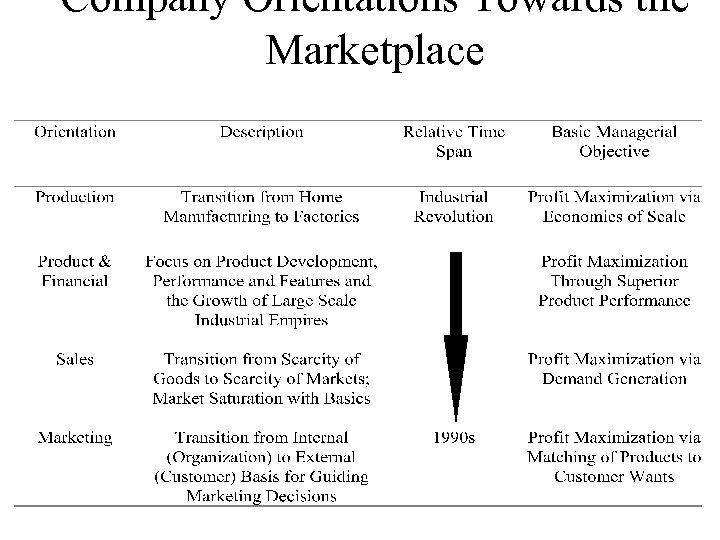 Company Orientations Towards the Marketplace
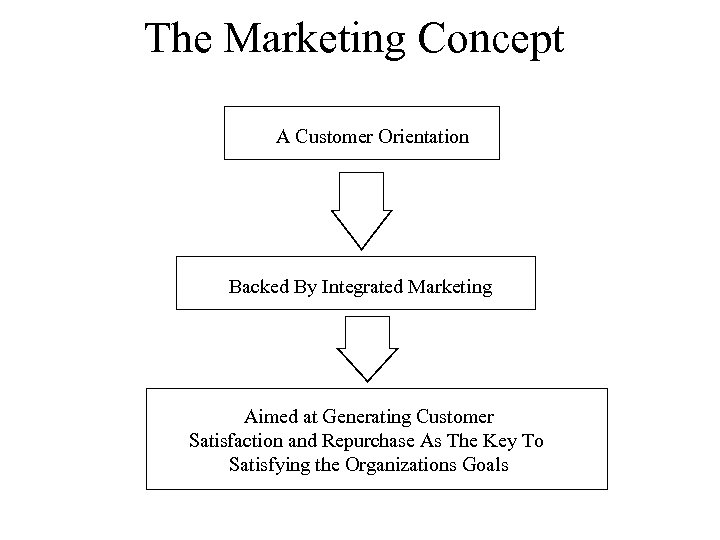 The Marketing Concept A Customer Orientation Backed By Integrated Marketing Aimed at Generating Customer Satisfaction and Repurchase As The Key To Satisfying the Organizations Goals
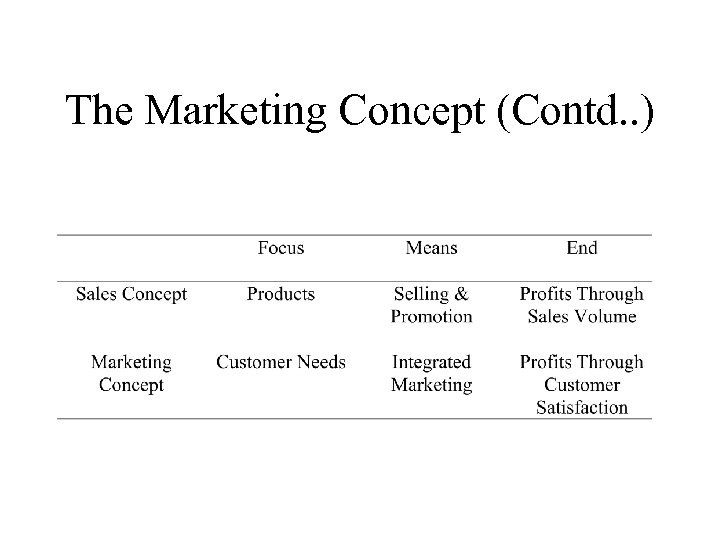 The Marketing Concept (Contd. . )
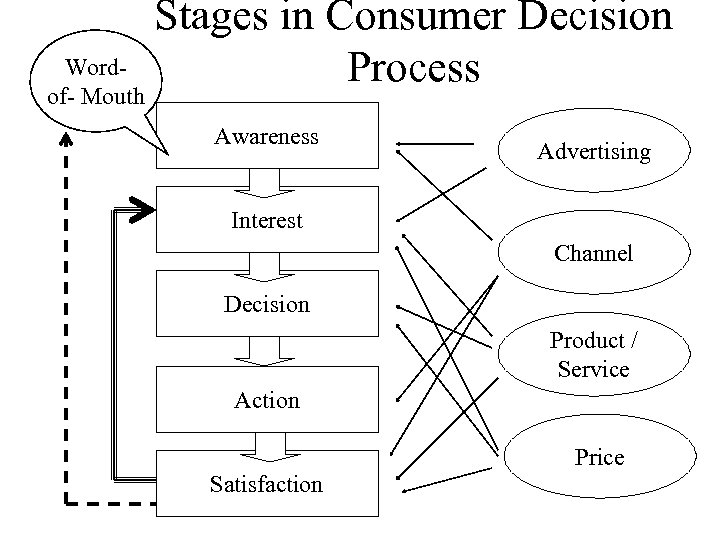 Wordof- Mouth Stages in Consumer Decision Process Awareness Advertising Interest Channel Decision Product / Service Action Price Satisfaction
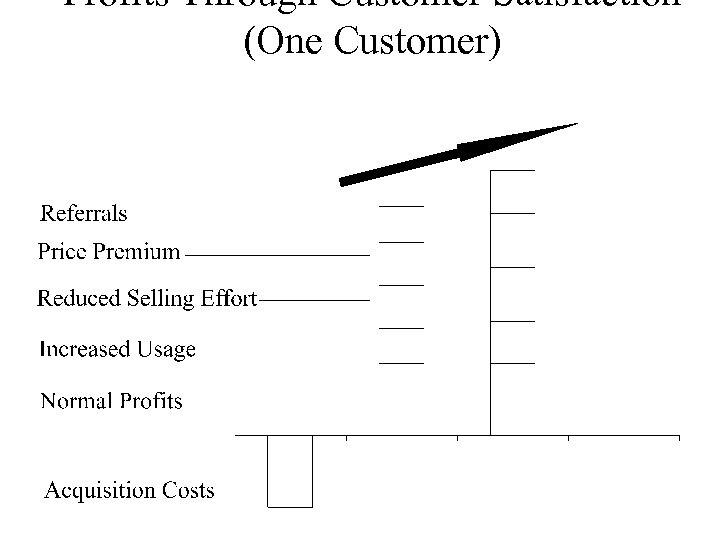 Profits Through Customer Satisfaction (One Customer)
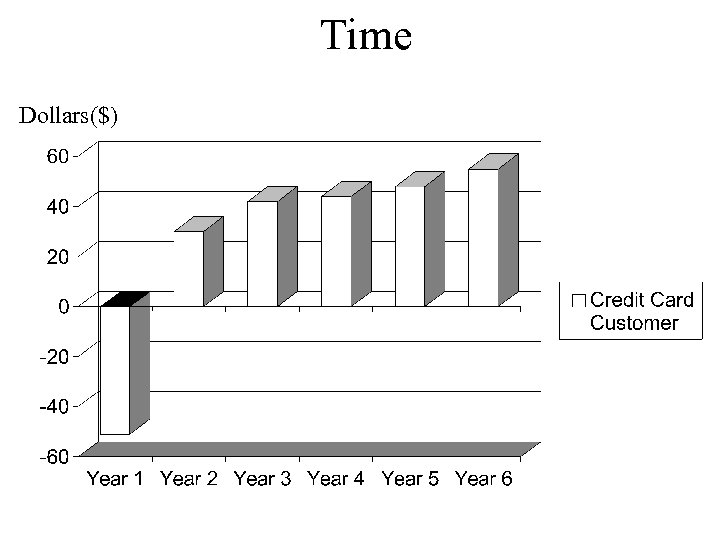 Time Dollars($)
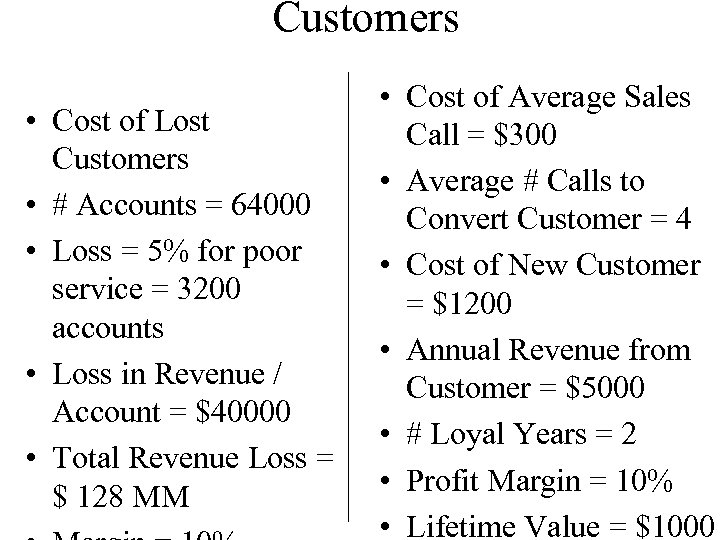 Customers • Cost of Lost Customers • # Accounts = 64000 • Loss = 5% for poor service = 3200 accounts • Loss in Revenue / Account = $40000 • Total Revenue Loss = $ 128 MM • Cost of Average Sales Call = $300 • Average # Calls to Convert Customer = 4 • Cost of New Customer = $1200 • Annual Revenue from Customer = $5000 • # Loyal Years = 2 • Profit Margin = 10% • Lifetime Value = $1000
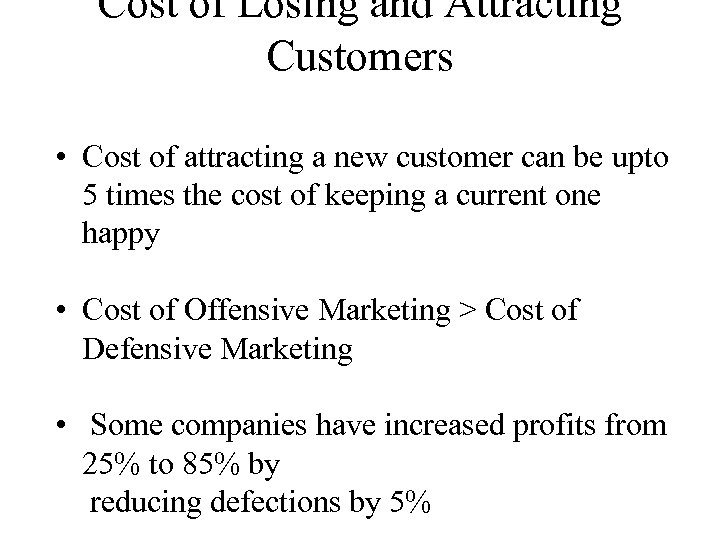 Cost of Losing and Attracting Customers • Cost of attracting a new customer can be upto 5 times the cost of keeping a current one happy • Cost of Offensive Marketing > Cost of Defensive Marketing • Some companies have increased profits from 25% to 85% by reducing defections by 5%
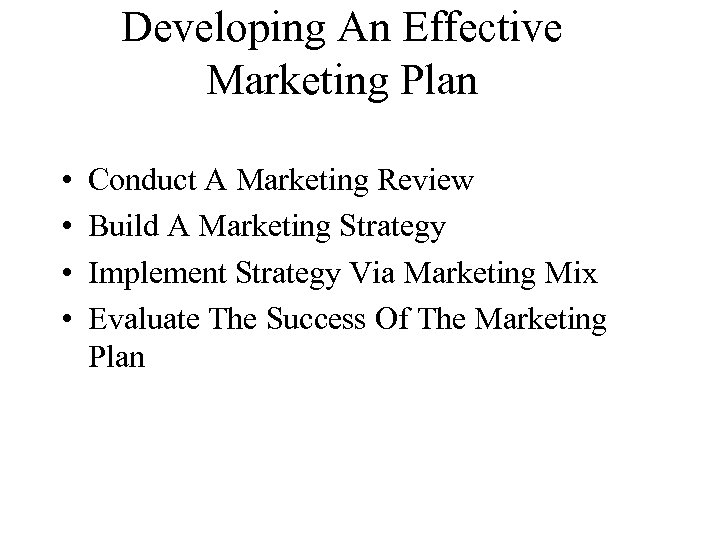 Developing An Effective Marketing Plan • • Conduct A Marketing Review Build A Marketing Strategy Implement Strategy Via Marketing Mix Evaluate The Success Of The Marketing Plan
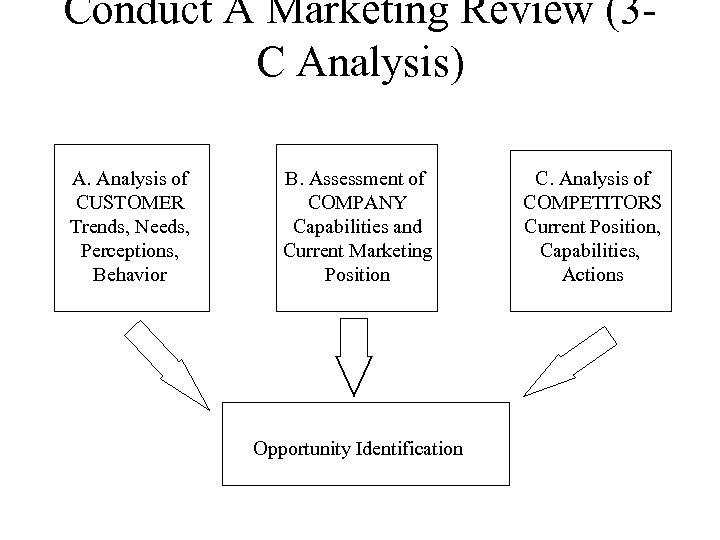 Conduct A Marketing Review (3 C Analysis) A. Analysis of CUSTOMER Trends, Needs, Perceptions, Behavior B. Assessment of COMPANY Capabilities and Current Marketing Position Opportunity Identification C. Analysis of COMPETITORS Current Position, Capabilities, Actions
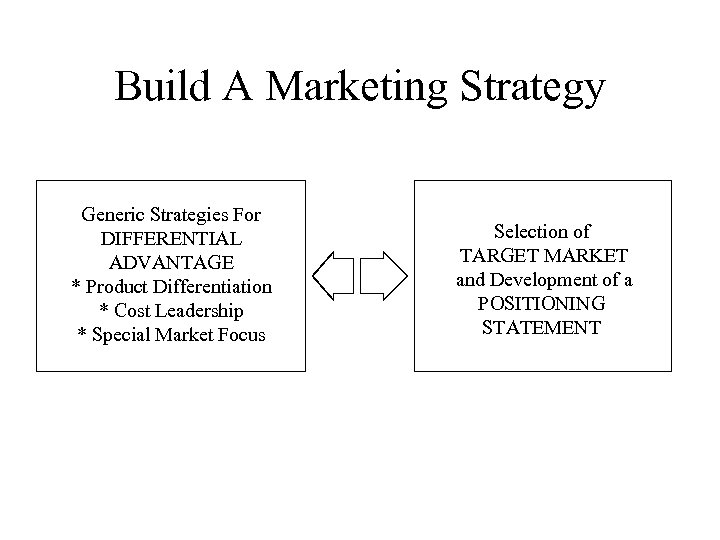 Build A Marketing Strategy Generic Strategies For DIFFERENTIAL ADVANTAGE * Product Differentiation * Cost Leadership * Special Market Focus Selection of TARGET MARKET and Development of a POSITIONING STATEMENT
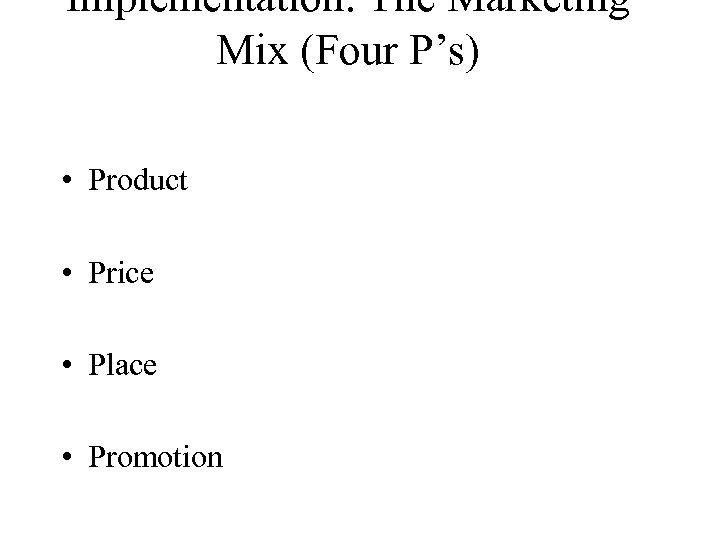 Implementation: The Marketing Mix (Four P’s) • Product • Price • Place • Promotion
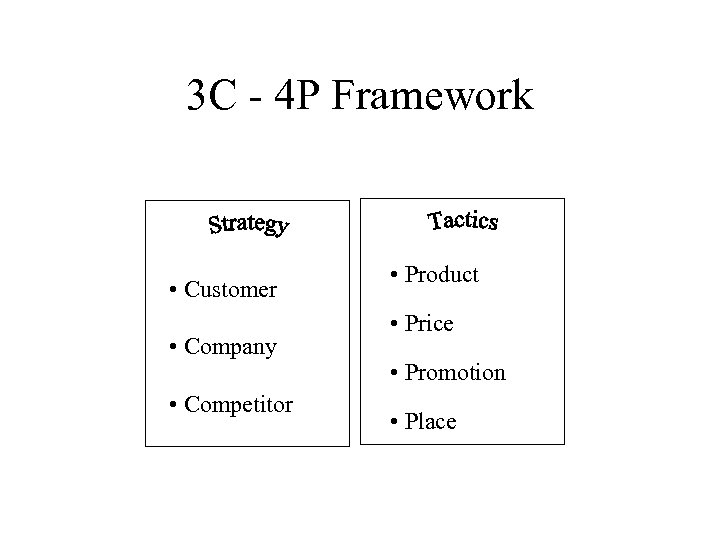 3 C - 4 P Framework • Customer • Company • Competitor • Product • Price • Promotion • Place
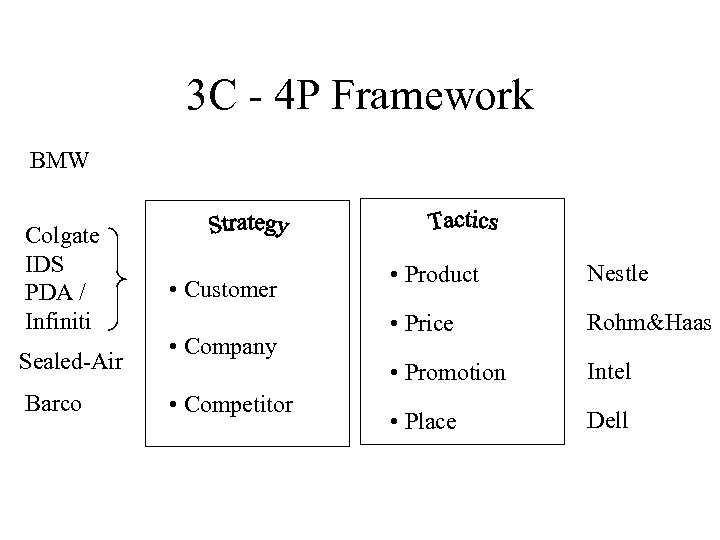 3 C - 4 P Framework BMW Colgate IDS PDA / Infiniti Sealed-Air Barco • Customer • Company • Competitor • Product Nestle • Price Rohm&Haas • Promotion Intel • Place Dell
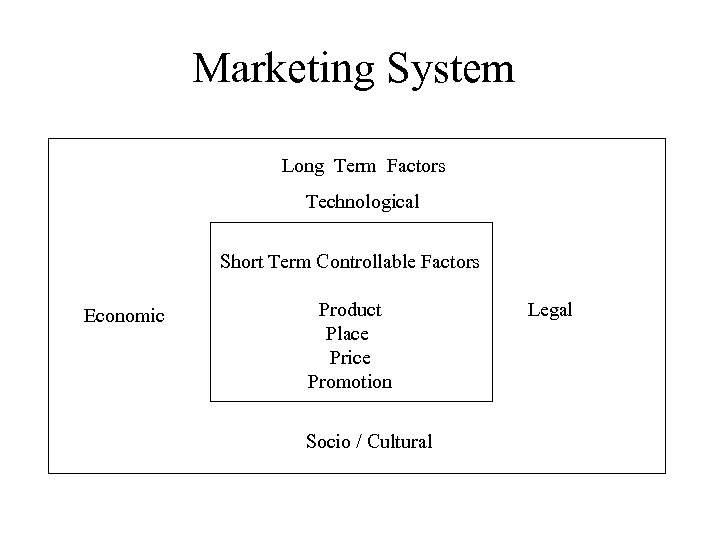 Marketing System Long Term Factors Technological Short Term Controllable Factors Economic Product Place Price Promotion Socio / Cultural Legal
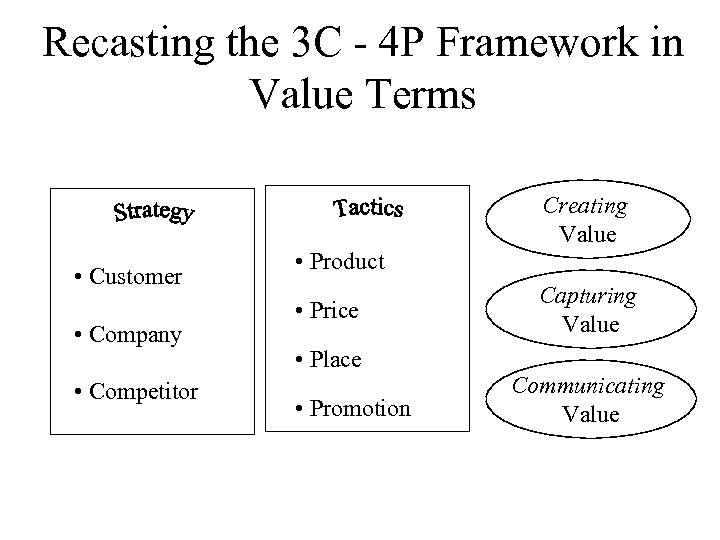 Recasting the 3 C - 4 P Framework in Value Terms Creating Value • Customer • Company • Competitor • Product • Price • Place • Promotion Capturing Value Communicating Value
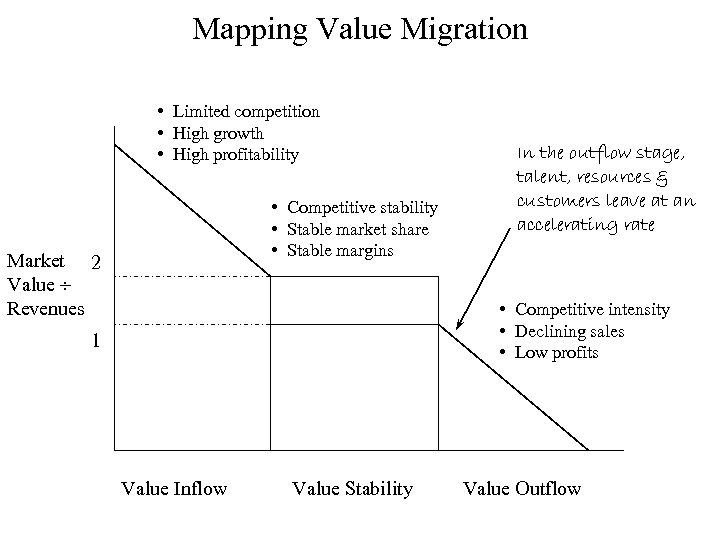 Mapping Value Migration • Limited competition • High growth • High profitability • Competitive stability • Stable market share • Stable margins Market 2 Value ¸ Revenues In the outflow stage, talent, resources & customers leave at an accelerating rate • Competitive intensity • Declining sales • Low profits 1 Value Inflow Value Stability Value Outflow
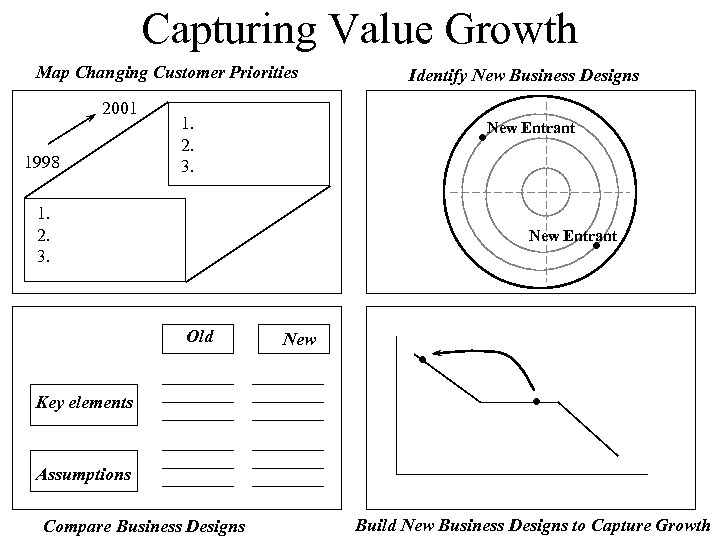 Capturing Value Growth Map Changing Customer Priorities 2001 1998 Identify New Business Designs . 1. 2. 3. New Entrant Old Key elements New . . Assumptions Compare Business Designs Build New Business Designs to Capture Growth
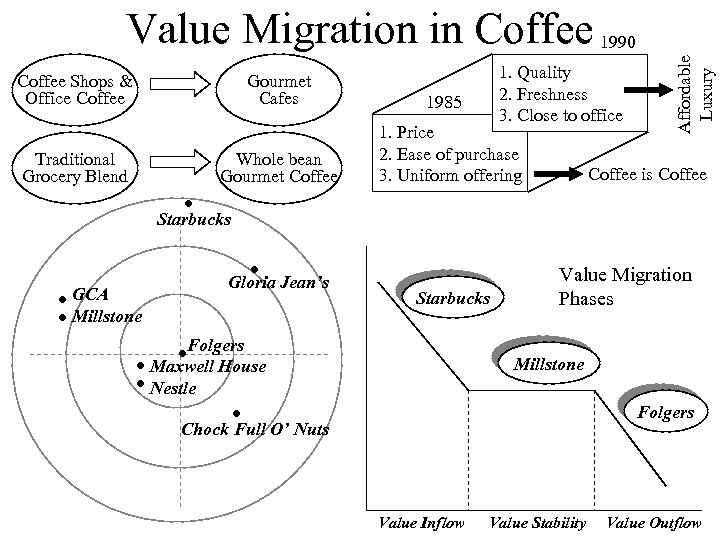 Coffee Shops & Office Coffee Gourmet Cafes Traditional Grocery Blend . Whole bean Gourmet Coffee Starbucks . . GCA Millstone 1985 1. Price 2. Ease of purchase 3. Uniform offering . Gloria Jean’s . . 1. Quality 2. Freshness 3. Close to office Starbucks Folgers Maxwell House Nestle Affordable Luxury Value Migration in Coffee 1990 Coffee is Coffee Value Migration Phases Millstone Folgers Chock Full O’ Nuts Value Inflow Value Stability Value Outflow
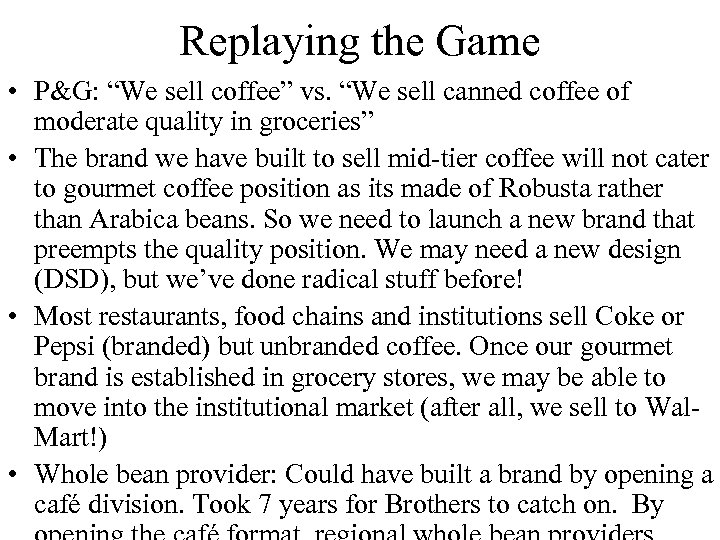 Replaying the Game • P&G: “We sell coffee” vs. “We sell canned coffee of moderate quality in groceries” • The brand we have built to sell mid-tier coffee will not cater to gourmet coffee position as its made of Robusta rather than Arabica beans. So we need to launch a new brand that preempts the quality position. We may need a new design (DSD), but we’ve done radical stuff before! • Most restaurants, food chains and institutions sell Coke or Pepsi (branded) but unbranded coffee. Once our gourmet brand is established in grocery stores, we may be able to move into the institutional market (after all, we sell to Wal. Mart!) • Whole bean provider: Could have built a brand by opening a café division. Took 7 years for Brothers to catch on. By