


 Скачать презентацию Introduction to Instruments FUJI DRI-CHEM 4000 i Scil
17ce038580e43107da24f57cb242e408.ppt
- Количество слайдов: 25
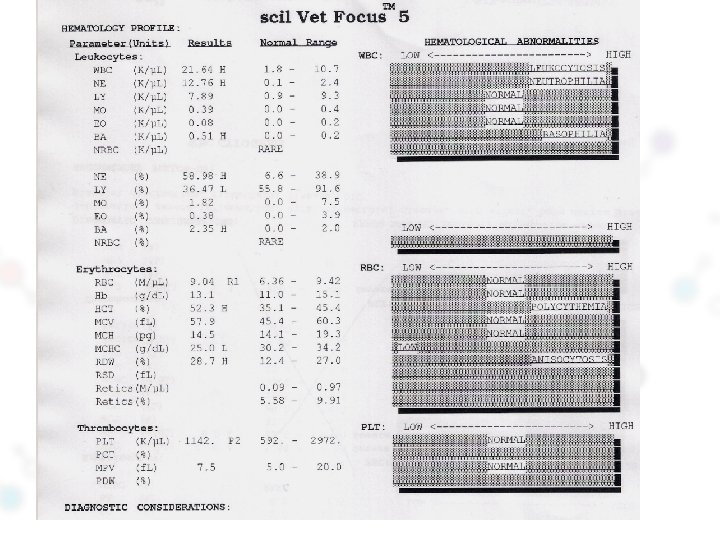
 Introduction to Instruments FUJI DRI-CHEM 4000 i Scil Vet Focus 5 Cryostat for Frozen Sections 2010/12/06 Speaker:Le-Shi Tsai
 Notice for the use of animal center Instrument • Please attend illustration meeting before you begin operating instruments. If you do not participate in the illustration meeting , you may NOT use the instrument. (The meeting will be held 2 -3 times per semester, and please pay attention to the animal center announcement. ) • Please fill the registration forms 1 or 2 days prior to use the instrument to facilitate preparation.
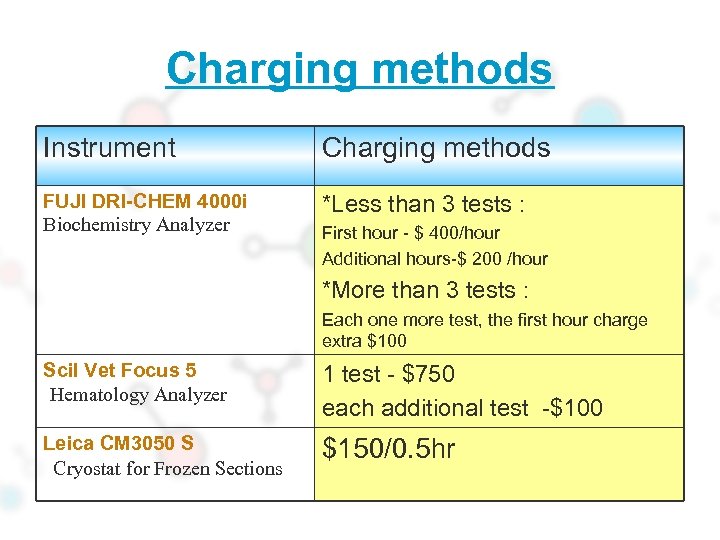 Charging methods Instrument Charging methods FUJI DRI-CHEM 4000 i Biochemistry Analyzer *Less than 3 tests : First hour - $ 400/hour Additional hours-$ 200 /hour *More than 3 tests : Each one more test, the first hour charge extra $100 Scil Vet Focus 5 Hematology Analyzer 1 test - $750 each additional test -$100 Leica CM 3050 S Cryostat for Frozen Sections $150/0. 5 hr
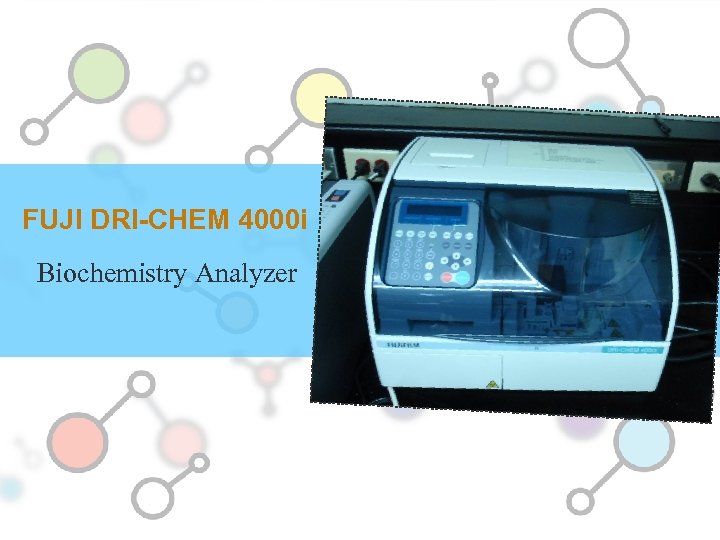 FUJI DRI-CHEM 4000 i Biochemistry Analyzer
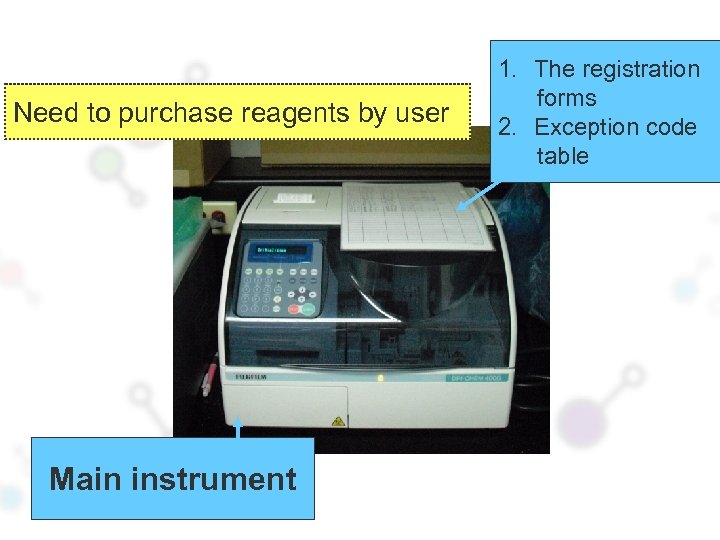 Need to purchase reagents by user Main instrument 1. The registration forms 2. Exception code table
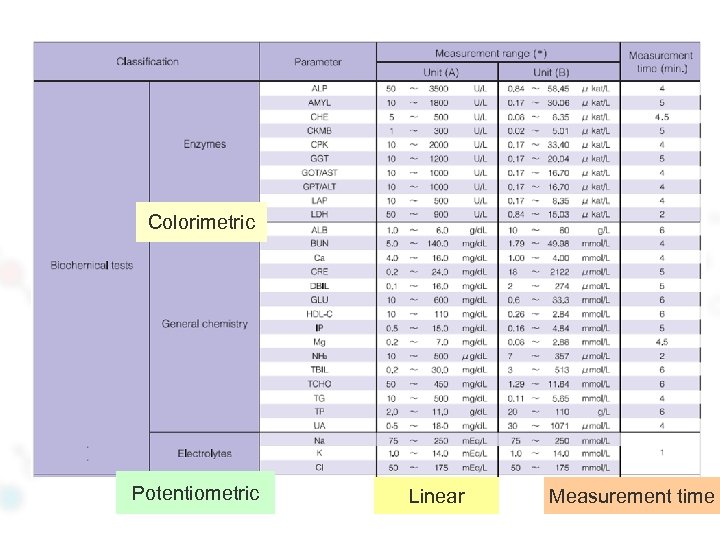 Colorimetric Potentiometric Linear Measurement time
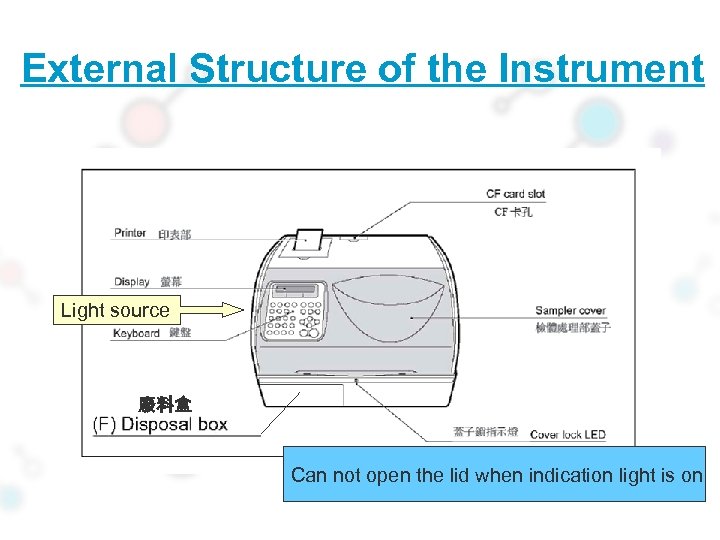 External Structure of the Instrument Light source 廢料盒 Can not open the lid when indication light is on
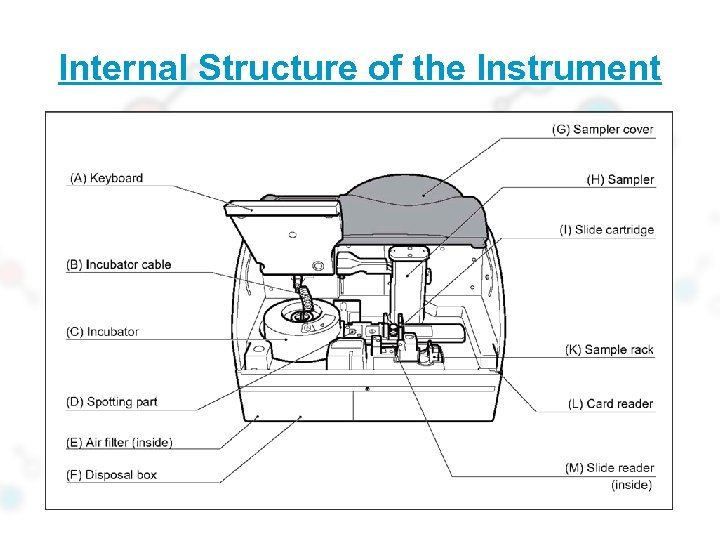 Internal Structure of the Instrument
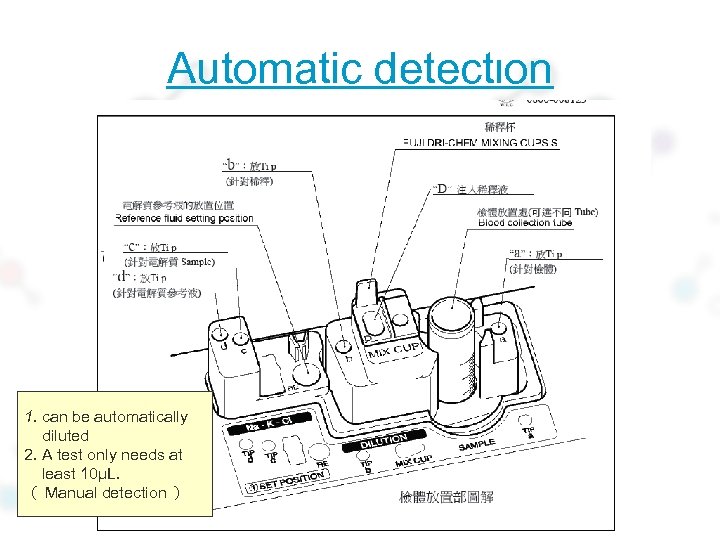 Automatic detection 1. can be automatically diluted 2. A test only needs at least 10μL. ( Manual detection )
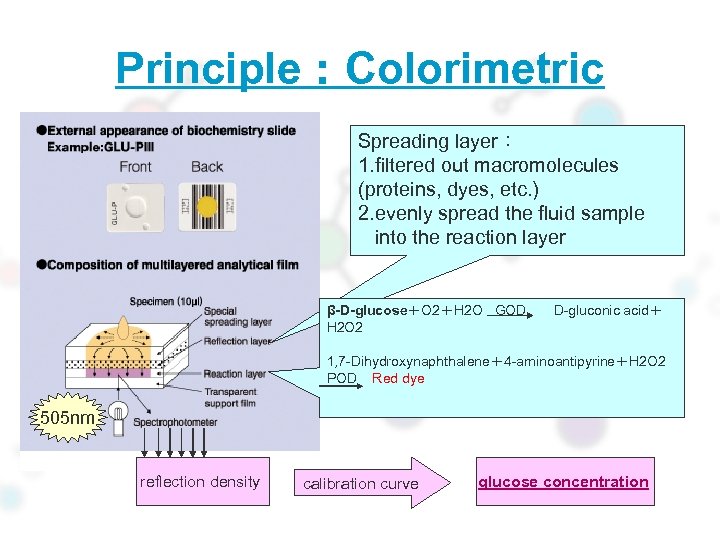 Principle:Colorimetric Spreading layer: 1. filtered out macromolecules (proteins, dyes, etc. ) 2. evenly spread the fluid sample into the reaction layer β-D-glucose+O 2+H 2 O GOD H 2 O 2 D-gluconic acid+ 1, 7 -Dihydroxynaphthalene+4 -aminoantipyrine+H 2 O 2 POD Red dye 505 nm reflection density calibration curve glucose concentration
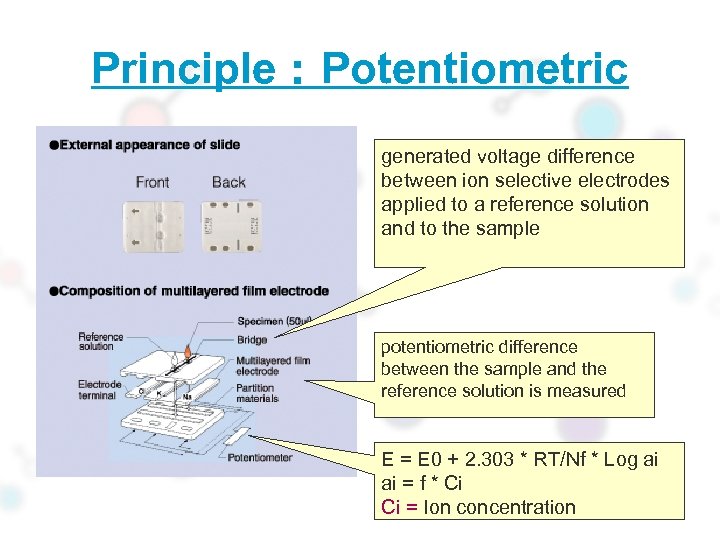 Principle:Potentiometric generated voltage difference between ion selective electrodes applied to a reference solution and to the sample potentiometric difference between the sample and the reference solution is measured E = E 0 + 2. 303 * RT/Nf * Log ai ai = f * Ci Ci = Ion concentration
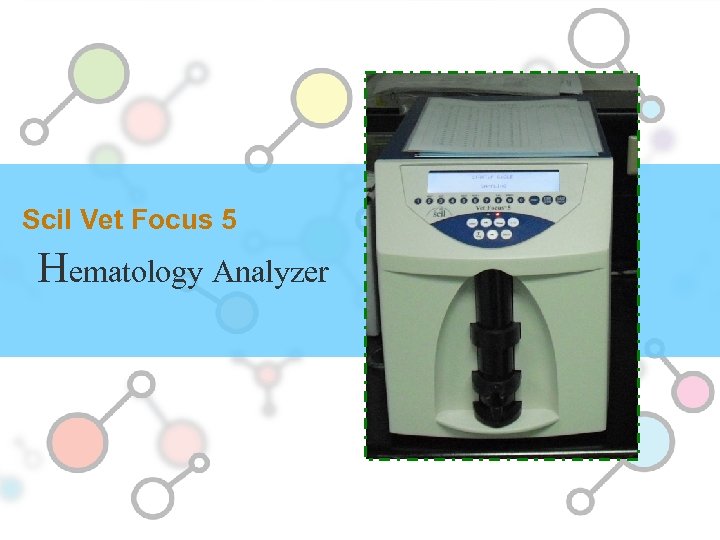 Scil Vet Focus 5 Hematology Analyzer
 Introduction to Instrument • The following animals can be detected: dog、 rat、 pig、rabbit、mouse、 G. pig • The following items can be detected: WBC、DC、RBC、HGB、HCT、MCV、 MCH、MCHC、RDW、Retics、PLT、 MPV、PCT Slide 002
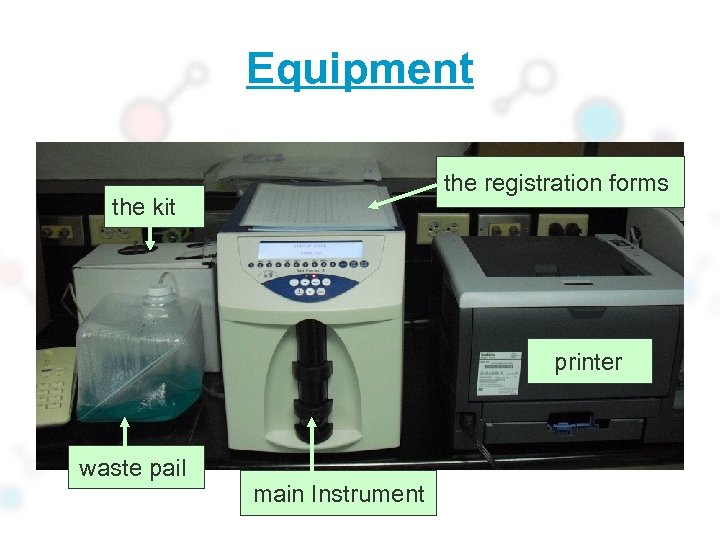 Equipment the registration forms the kit printer waste pail main Instrument
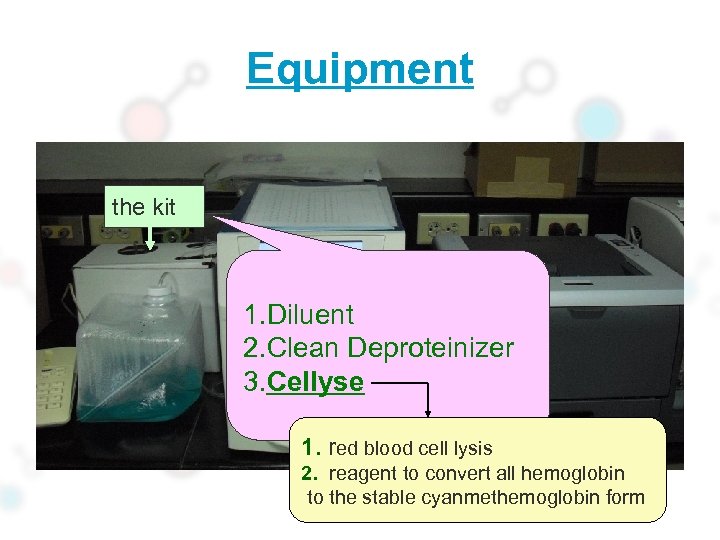 Equipment the kit 1. Diluent 2. Clean Deproteinizer 3. Cellyse 1. red blood cell lysis 2. reagent to convert all hemoglobin to the stable cyanmethemoglobin form
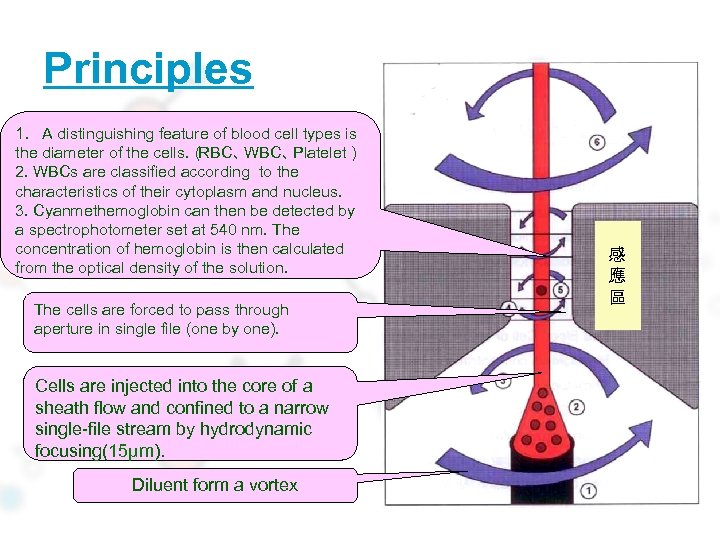 Principles 1. A distinguishing feature of blood cell types is the diameter of the cells. ( RBC、 WBC、 Platelet) 2. WBCs are classified according to the characteristics of their cytoplasm and nucleus. 3. Cyanmethemoglobin can then be detected by a spectrophotometer set at 540 nm. The concentration of hemoglobin is then calculated from the optical density of the solution. The cells are forced to pass through aperture in single file (one by one). Cells are injected into the core of a sheath flow and confined to a narrow single-file stream by hydrodynamic focusing(15μm). Diluent form a vortex 感 應 區
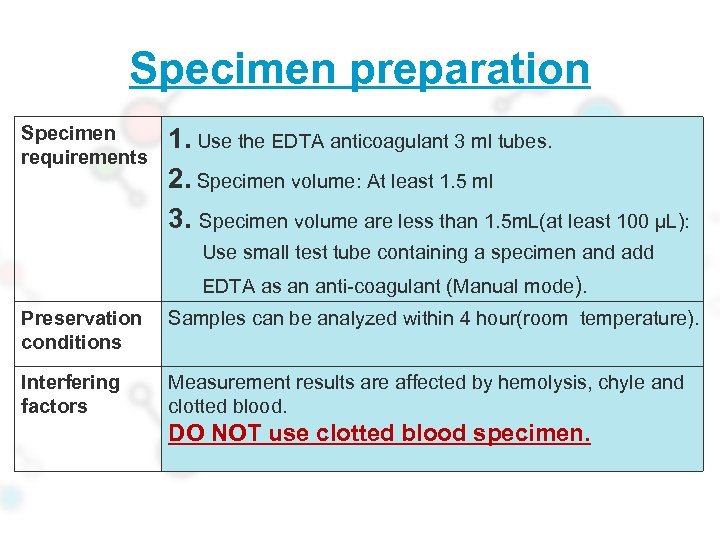 Specimen preparation Specimen requirements 1. Use the EDTA anticoagulant 3 ml tubes. 2. Specimen volume: At least 1. 5 ml 3. Specimen volume are less than 1. 5 m. L(at least 100 μL): Use small test tube containing a specimen and add EDTA as an anti-coagulant (Manual mode). Preservation conditions Samples can be analyzed within 4 hour(room temperature). Interfering factors Measurement results are affected by hemolysis, chyle and clotted blood. DO NOT use clotted blood specimen.
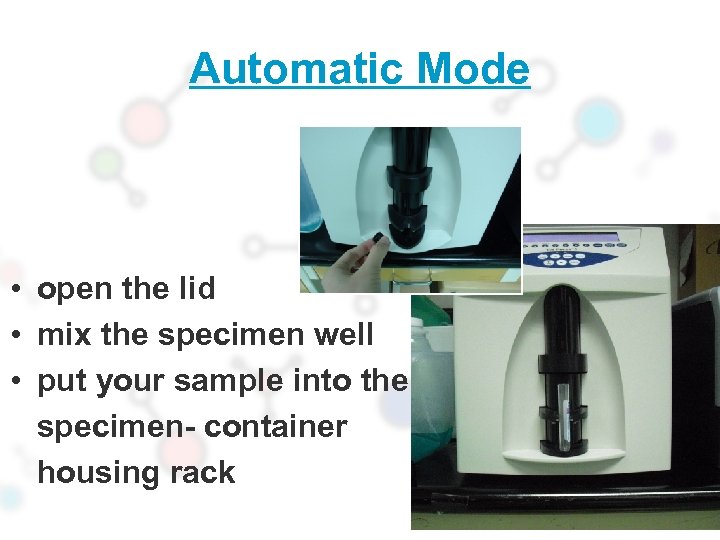 Automatic Mode • open the lid • mix the specimen well • put your sample into the specimen- container housing rack
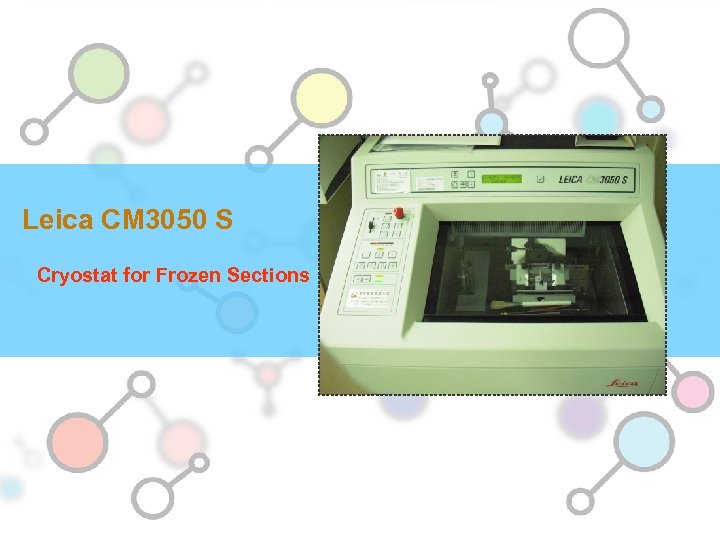 Leica CM 3050 S Cryostat for Frozen Sections
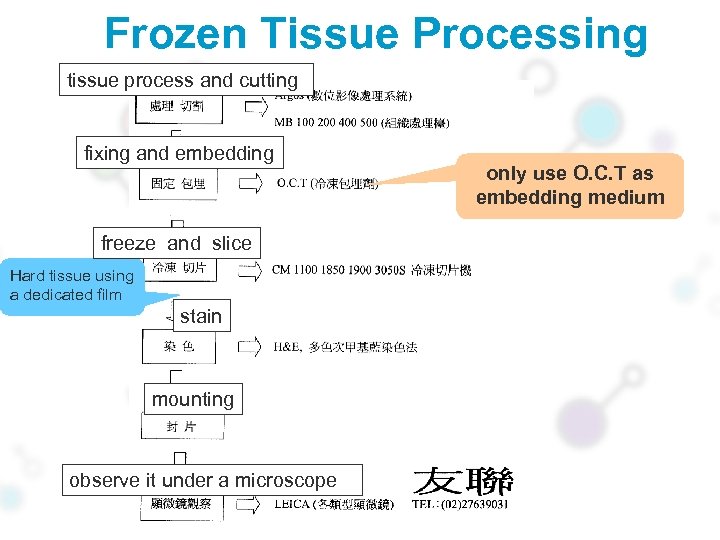 Frozen Tissue Processing tissue process and cutting fixing and embedding freeze and slice Hard tissue using a dedicated film stain mounting observe it under a microscope only use O. C. T as embedding medium
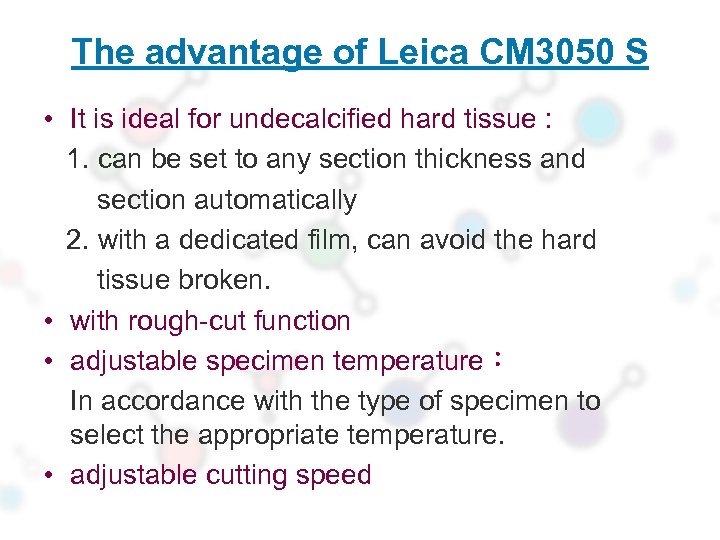 The advantage of Leica CM 3050 S • It is ideal for undecalcified hard tissue : 1. can be set to any section thickness and section automatically 2. with a dedicated film, can avoid the hard tissue broken. • with rough-cut function • adjustable specimen temperature: In accordance with the type of specimen to select the appropriate temperature. • adjustable cutting speed
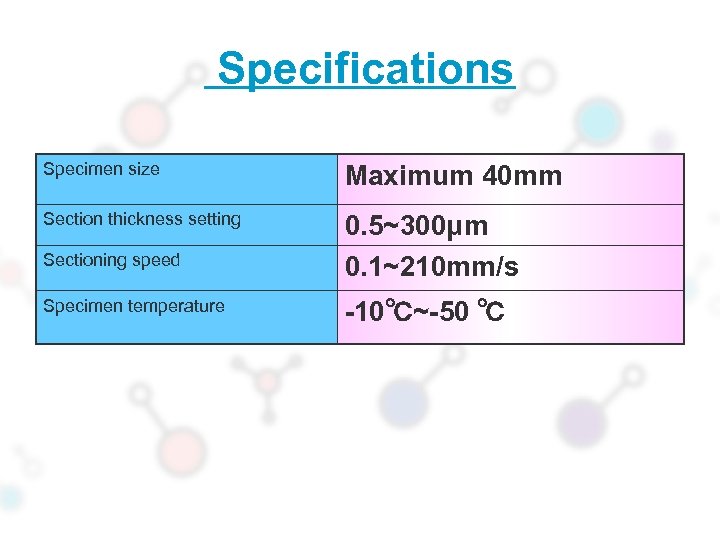 Specifications Specimen size Maximum 40 mm Section thickness setting 0. 5~300μm 0. 1~210 mm/s Sectioning speed Specimen temperature -10℃~-50 ℃
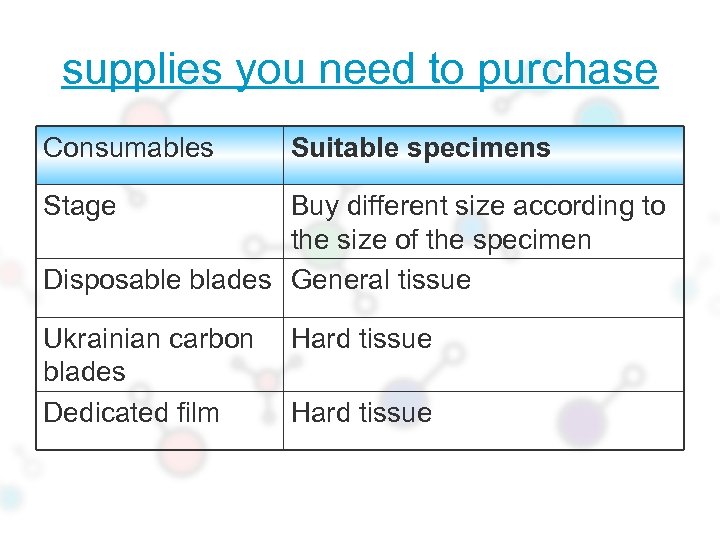 supplies you need to purchase Consumables Suitable specimens Stage Buy different size according to the size of the specimen Disposable blades General tissue Ukrainian carbon blades Dedicated film Hard tissue
 Thanks for your attention