 Скачать презентацию Introduction to DNS and its vulnarabilities Olaf M
0b516fd84d0a06de5376d2751c60eeef.ppt
- Количество слайдов: 72



Introduction to DNS and its vulnarabilities Olaf M. Kolkman olaf@nlnetlabs. nl © 2006 -2012 NLnet Labs, Licensed under a Creative Commons Attribution 3. 0 Unported Licens
DNS has a distributed nature • Authoritative servers all provide part of the name space • User devices query a local server that maintains a cache • For better performance • For scalability of the system as a whole © 2006 -2012 NLnet Labs, Licensed under a Creative Commons Attribution 3. 0 Unported Licens
Terminology • • • Authoritative Nameserver: Maintains an authoritative copy of the data. Recursive Nameserver: Contacts Authoritative servers to compose an answer for stub resolvers. Also called Caching Nameserver or Cache Stub Resolver: fires off queries to preconfigured addresses and expects an answer. Usually implemented in OS library • gethostbyname() © 2006 -2012 NLnet Labs, Licensed under a Creative Commons Attribution 3. 0 Unported Licens
Animation © 2006 -2012 NLnet Labs, Licensed under a Creative Commons Attribution 3. 0 Unported Licens
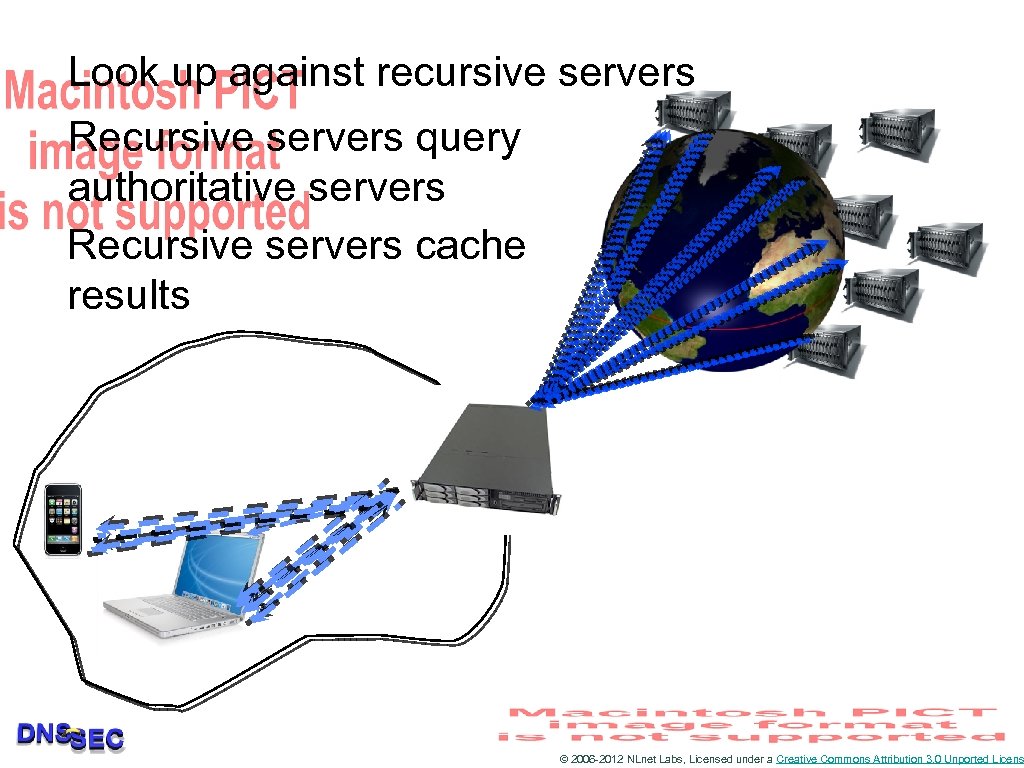
Look up against recursive servers Recursive servers query authoritative servers Recursive servers cache results © 2006 -2012 NLnet Labs, Licensed under a Creative Commons Attribution 3. 0 Unported Licens
When do you use the DNS • Anytime that you need to know where the other guy is • DNS is the phone book of the Internet • So it is used when people make a voice over IP call © 2006 -2012 NLnet Labs, Licensed under a Creative Commons Attribution 3. 0 Unported Licens
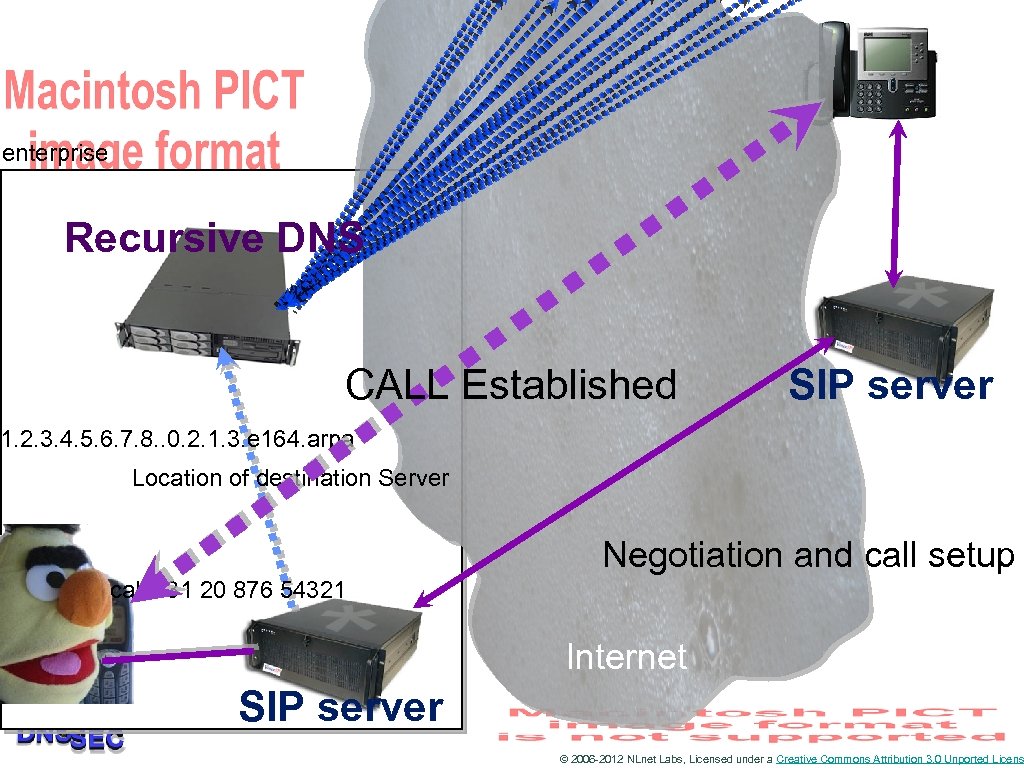
enterprise Recursive DNS CALL Established SIP server 1. 2. 3. 4. 5. 6. 7. 8. . 0. 2. 1. 3. e 164. arpa Location of destination Server Negotiation and call setup call +31 20 876 54321 Internet SIP server © 2006 -2012 NLnet Labs, Licensed under a Creative Commons Attribution 3. 0 Unported Licens
Or they use the DNS when sending MAIL © 2006 -2012 NLnet Labs, Licensed under a Creative Commons Attribution 3. 0 Unported Licens
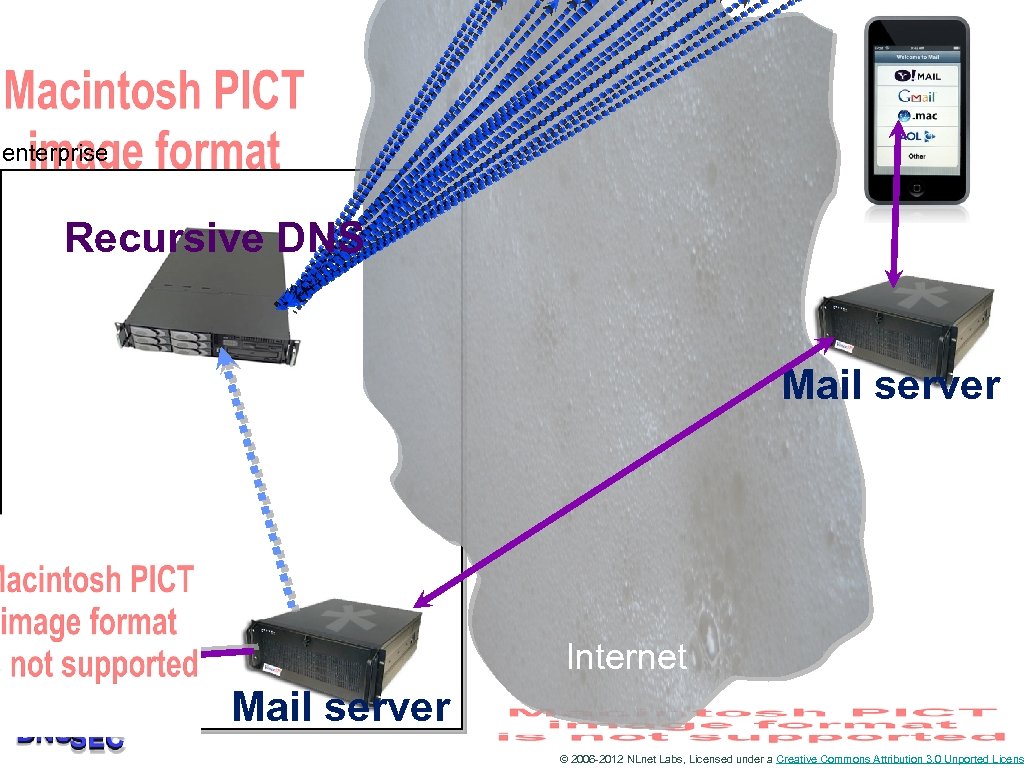
enterprise Recursive DNS Mail server Internet Mail server © 2006 -2012 NLnet Labs, Licensed under a Creative Commons Attribution 3. 0 Unported Licens
Or they use the DNS when browsing the Web © 2006 -2012 NLnet Labs, Licensed under a Creative Commons Attribution 3. 0 Unported Licens
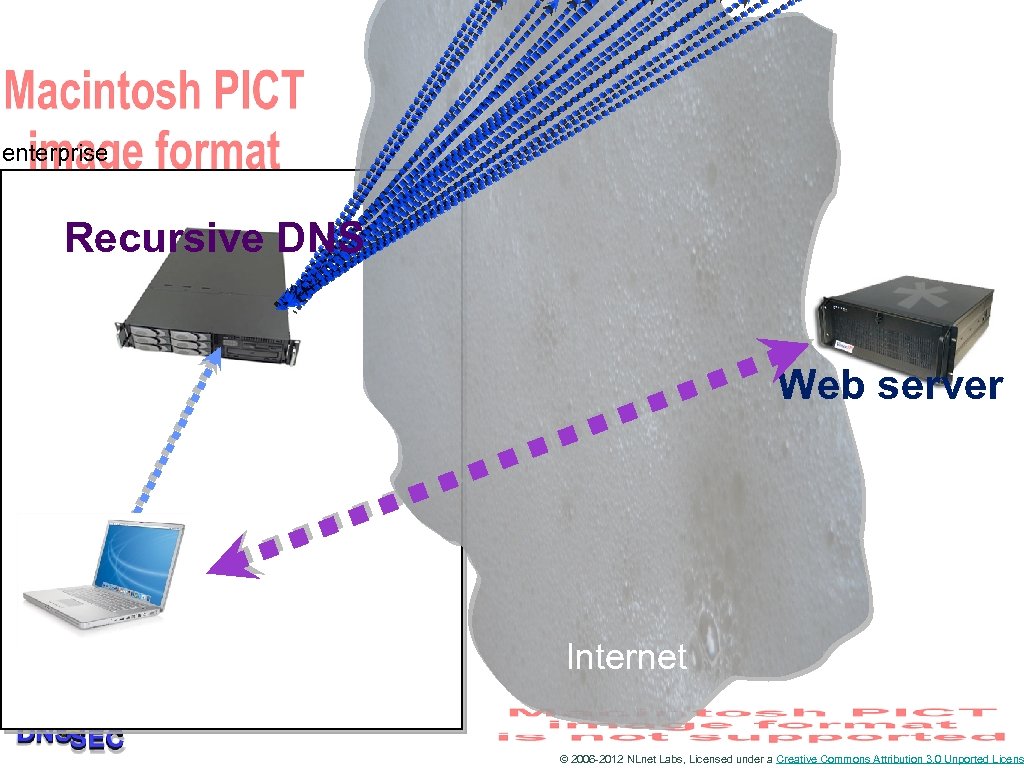
enterprise Recursive DNS Web server Internet © 2006 -2012 NLnet Labs, Licensed under a Creative Commons Attribution 3. 0 Unported Licens
Or they use. Software upgrades the DNS • When downloading • Sharing their agenda • Uploading tax forms • Instant messaging with friends • Connect to their security camera • Figure out the latest news about that merger © 2006 -2012 NLnet Labs, Licensed under a Creative Commons Attribution 3. 0 Unported Licens
So DNS is IMPORTANT • How would an attacker use the DNS for attacks? • By fooling the receiver that a service lies elsewhere Back to our VOIP example © 2006 -2012 NLnet Labs, Licensed under a Creative Commons Attribution 3. 0 Unported Licens
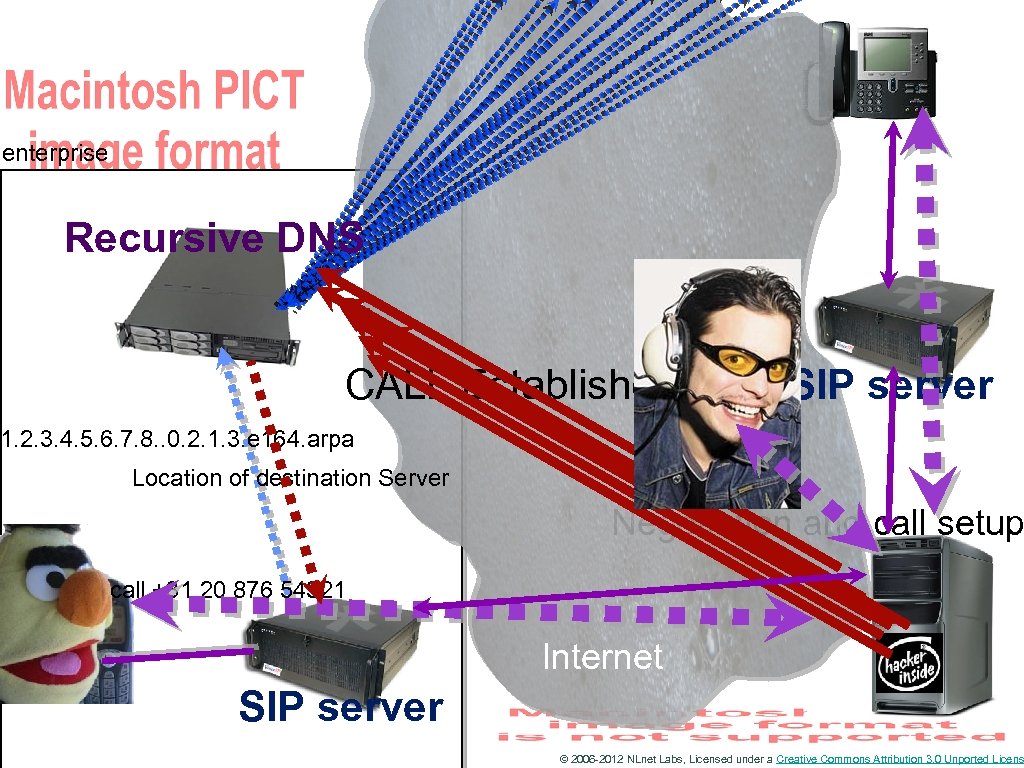
enterprise Recursive DNS CALL Established SIP server 1. 2. 3. 4. 5. 6. 7. 8. . 0. 2. 1. 3. e 164. arpa Location of destination Server Negotiation and call setup call +31 20 876 54321 Internet SIP server © 2006 -2012 NLnet Labs, Licensed under a Creative Commons Attribution 3. 0 Unported Licens
Cache Poisoning • The attack you just saw is called cache poisoning • Inserting false data into the cache of recursive name servers • This form of attack has been known for years • One of the reasons to work on DNSSEC © 2006 -2012 NLnet Labs, Licensed under a Creative Commons Attribution 3. 0 Unported Licens
DNS Architecture and Protocol © 2006 -2012 NLnet Labs, Licensed under a Creative Commons Attribution 3. 0 Unported Licens
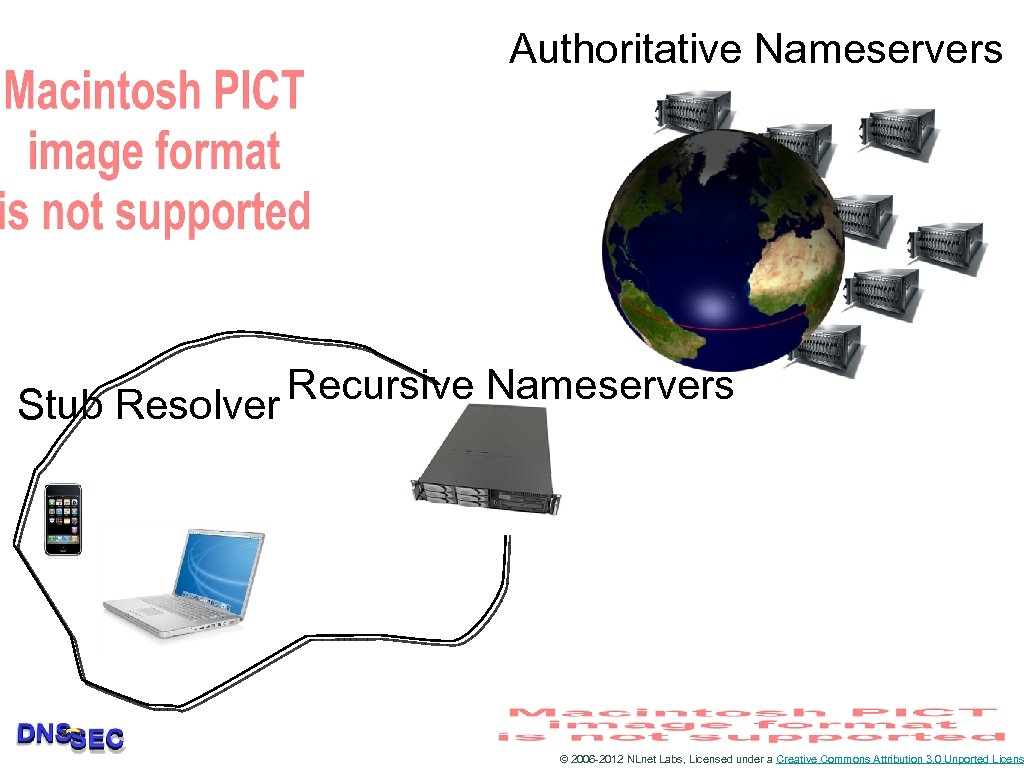
Authoritative Nameservers Recursive Nameservers Stub Resolver © 2006 -2012 NLnet Labs, Licensed under a Creative Commons Attribution 3. 0 Unported Licens
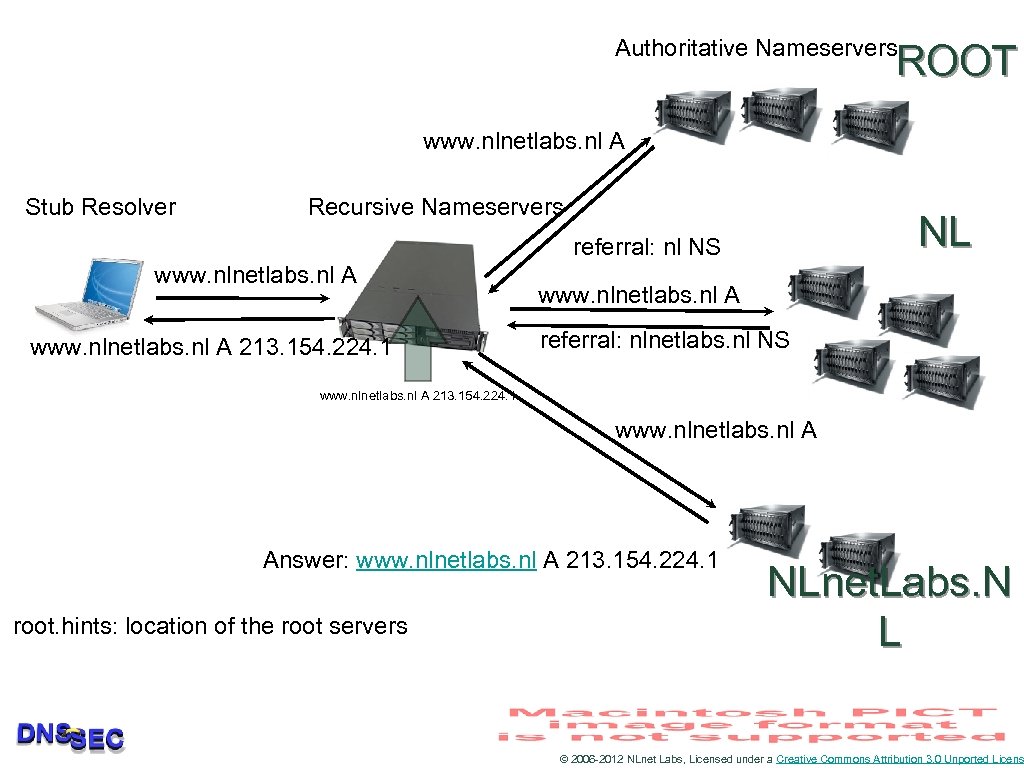
Authoritative Nameservers ROOT www. nlnetlabs. nl A Stub Resolver Recursive Nameservers NL referral: nl NS www. nlnetlabs. nl A 213. 154. 224. 1 www. nlnetlabs. nl A referral: nlnetlabs. nl NS www. nlnetlabs. nl A 213. 154. 224. 1 www. nlnetlabs. nl A Answer: www. nlnetlabs. nl A 213. 154. 224. 1 root. hints: location of the root servers NLnet. Labs. N L © 2006 -2012 NLnet Labs, Licensed under a Creative Commons Attribution 3. 0 Unported Licens
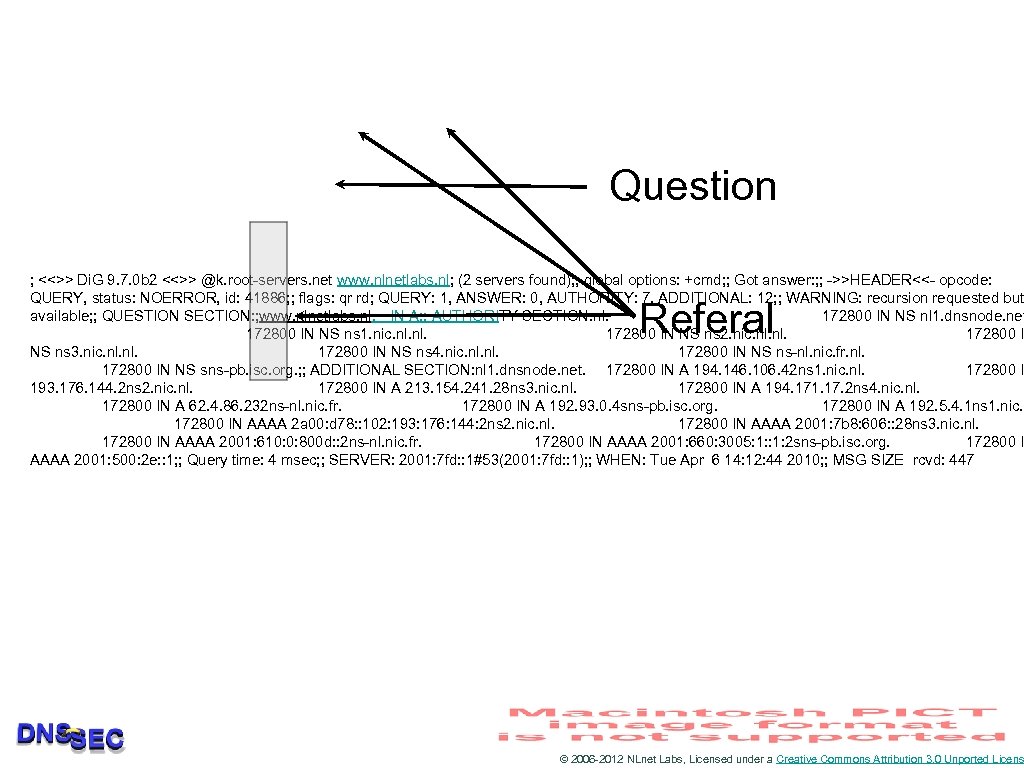
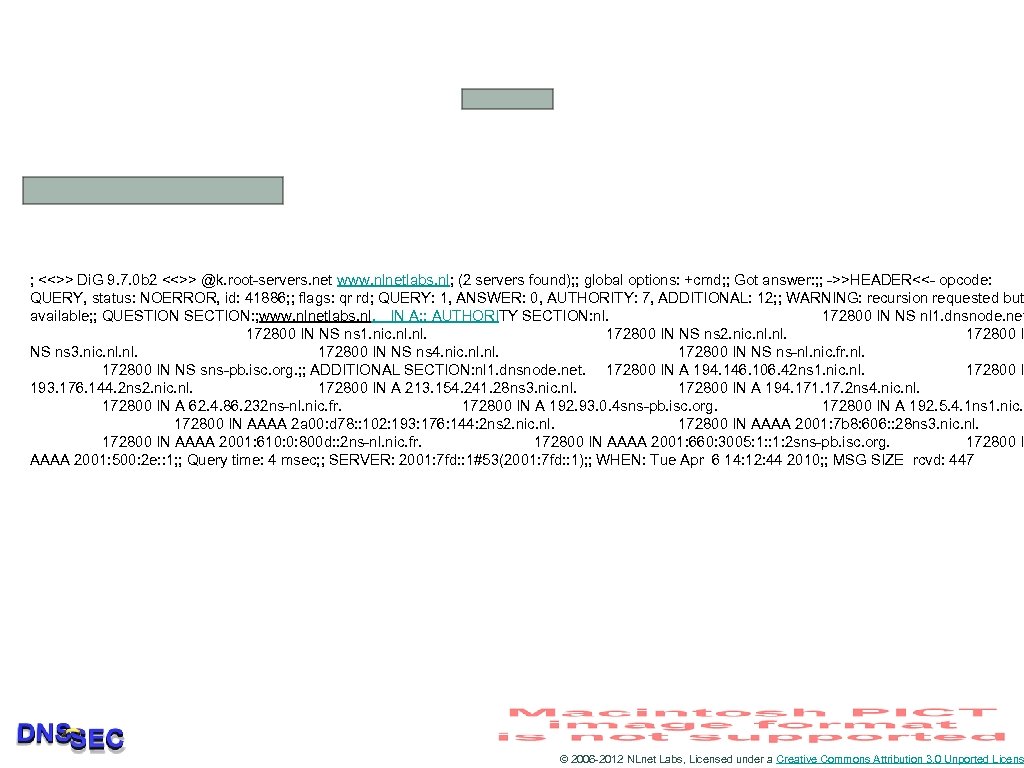
Question ; <<>> Di. G 9. 7. 0 b 2 <<>> @k. root-servers. net www. nlnetlabs. nl; (2 servers found); ; global options: +cmd; ; Got answer: ; ; ->>HEADER<<- opcode: QUERY, status: NOERROR, id: 41886; ; flags: qr rd; QUERY: 1, ANSWER: 0, AUTHORITY: 7, ADDITIONAL: 12; ; WARNING: recursion requested but available; ; QUESTION SECTION: ; www. nlnetlabs. nl. IN A; ; AUTHORITY SECTION: nl. 172800 IN NS nl 1. dnsnode. net 172800 IN NS ns 1. nic. nl. 172800 IN NS ns 2. nic. nl. 172800 I NS ns 3. nic. nl. 172800 IN NS ns 4. nic. nl. 172800 IN NS ns-nl. nic. fr. nl. 172800 IN NS sns-pb. isc. org. ; ; ADDITIONAL SECTION: nl 1. dnsnode. net. 172800 IN A 194. 146. 106. 42 ns 1. nic. nl. 172800 I 193. 176. 144. 2 ns 2. nic. nl. 172800 IN A 213. 154. 241. 28 ns 3. nic. nl. 172800 IN A 194. 171. 17. 2 ns 4. nic. nl. 172800 IN A 62. 4. 86. 232 ns-nl. nic. fr. 172800 IN A 192. 93. 0. 4 sns-pb. isc. org. 172800 IN A 192. 5. 4. 1 ns 1. nic. n 172800 IN AAAA 2 a 00: d 78: : 102: 193: 176: 144: 2 ns 2. nic. nl. 172800 IN AAAA 2001: 7 b 8: 606: : 28 ns 3. nic. nl. 172800 IN AAAA 2001: 610: 0: 800 d: : 2 ns-nl. nic. fr. 172800 IN AAAA 2001: 660: 3005: 1: 2 sns-pb. isc. org. 172800 I AAAA 2001: 500: 2 e: : 1; ; Query time: 4 msec; ; SERVER: 2001: 7 fd: : 1#53(2001: 7 fd: : 1); ; WHEN: Tue Apr 6 14: 12: 44 2010; ; MSG SIZE rcvd: 447 Referal © 2006 -2012 NLnet Labs, Licensed under a Creative Commons Attribution 3. 0 Unported Licens
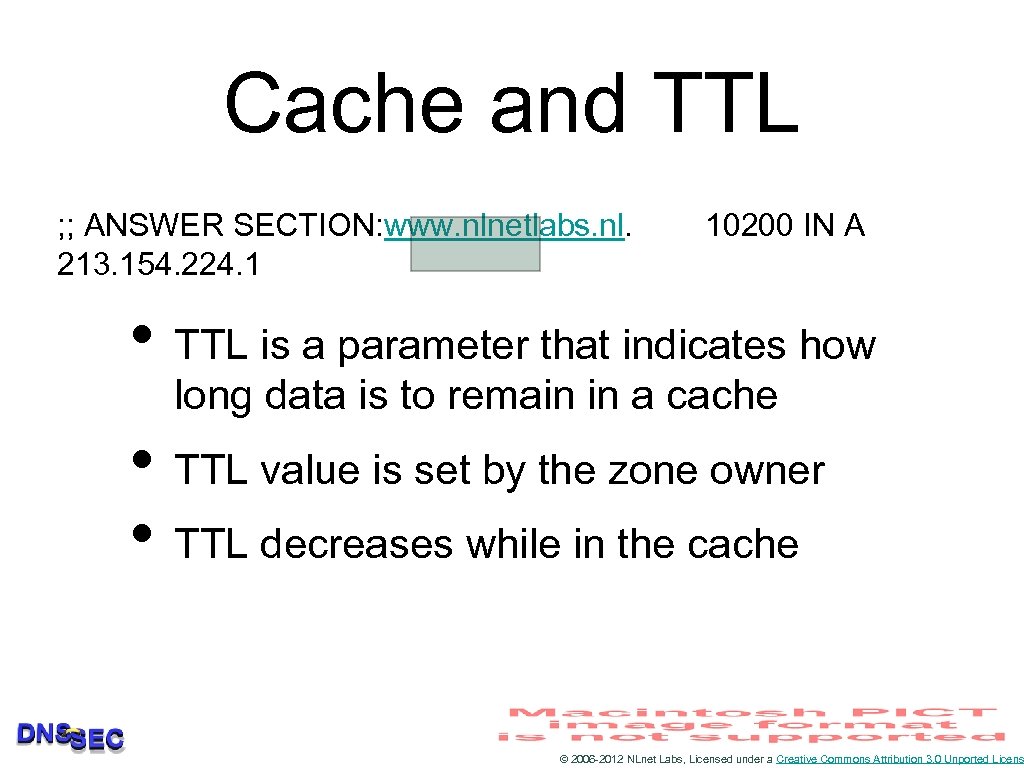
Cache and TTL ; ; ANSWER SECTION: www. nlnetlabs. nl. 213. 154. 224. 1 10200 IN A • TTL is a parameter that indicates how long data is to remain in a cache • TTL value is set by the zone owner • TTL decreases while in the cache © 2006 -2012 NLnet Labs, Licensed under a Creative Commons Attribution 3. 0 Unported Licens
Back to Cache Poisoning © 2006 -2012 NLnet Labs, Licensed under a Creative Commons Attribution 3. 0 Unported Licens
Cache Poison • Attack is based on ‘predicting’ properties • e. g. when asking a question to a female you expect a female voice to answer • If you ask a question with a specific QID you expect that QID in the answer • Cache poisoner will take a wild guess © 2006 -2012 NLnet Labs, Licensed under a Creative Commons Attribution 3. 0 Unported Licens
; <<>> Di. G 9. 7. 0 b 2 <<>> @k. root-servers. net www. nlnetlabs. nl; (2 servers found); ; global options: +cmd; ; Got answer: ; ; ->>HEADER<<- opcode: QUERY, status: NOERROR, id: 41886; ; flags: qr rd; QUERY: 1, ANSWER: 0, AUTHORITY: 7, ADDITIONAL: 12; ; WARNING: recursion requested but available; ; QUESTION SECTION: ; www. nlnetlabs. nl. IN A; ; AUTHORITY SECTION: nl. 172800 IN NS nl 1. dnsnode. net 172800 IN NS ns 1. nic. nl. 172800 IN NS ns 2. nic. nl. 172800 I NS ns 3. nic. nl. 172800 IN NS ns 4. nic. nl. 172800 IN NS ns-nl. nic. fr. nl. 172800 IN NS sns-pb. isc. org. ; ; ADDITIONAL SECTION: nl 1. dnsnode. net. 172800 IN A 194. 146. 106. 42 ns 1. nic. nl. 172800 I 193. 176. 144. 2 ns 2. nic. nl. 172800 IN A 213. 154. 241. 28 ns 3. nic. nl. 172800 IN A 194. 171. 17. 2 ns 4. nic. nl. 172800 IN A 62. 4. 86. 232 ns-nl. nic. fr. 172800 IN A 192. 93. 0. 4 sns-pb. isc. org. 172800 IN A 192. 5. 4. 1 ns 1. nic. n 172800 IN AAAA 2 a 00: d 78: : 102: 193: 176: 144: 2 ns 2. nic. nl. 172800 IN AAAA 2001: 7 b 8: 606: : 28 ns 3. nic. nl. 172800 IN AAAA 2001: 610: 0: 800 d: : 2 ns-nl. nic. fr. 172800 IN AAAA 2001: 660: 3005: 1: 2 sns-pb. isc. org. 172800 I AAAA 2001: 500: 2 e: : 1; ; Query time: 4 msec; ; SERVER: 2001: 7 fd: : 1#53(2001: 7 fd: : 1); ; WHEN: Tue Apr 6 14: 12: 44 2010; ; MSG SIZE rcvd: 447 © 2006 -2012 NLnet Labs, Licensed under a Creative Commons Attribution 3. 0 Unported Licens
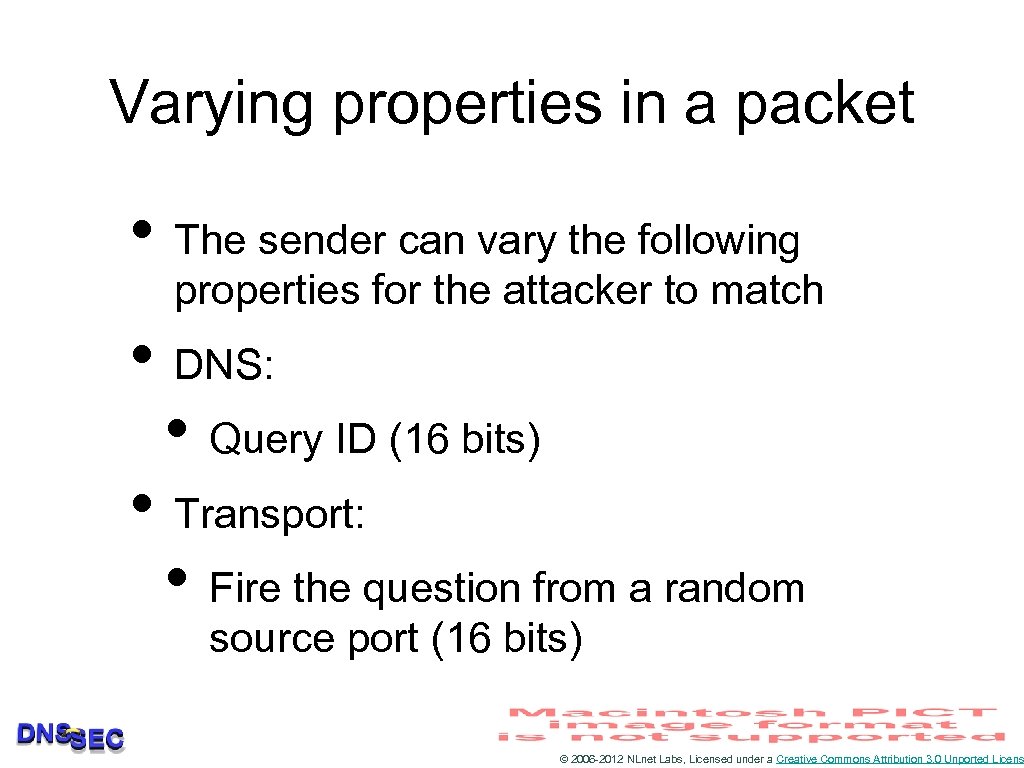
Varying properties in a packet • The sender can vary the following properties for the attacker to match • DNS: • Query ID (16 bits) • Transport: • Fire the question from a random source port (16 bits) © 2006 -2012 NLnet Labs, Licensed under a Creative Commons Attribution 3. 0 Unported Licens
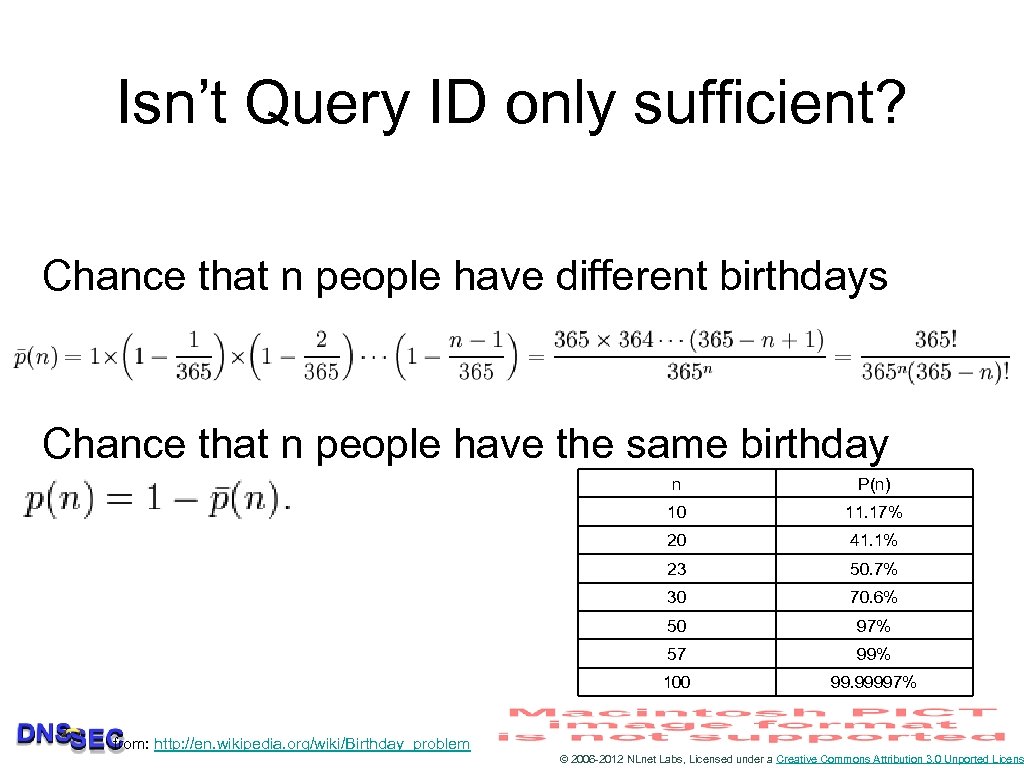
Isn’t Query ID only sufficient? Chance that n people have different birthdays Chance that n people have the same birthday n 10 11. 17% 20 41. 1% 23 50. 7% 30 70. 6% 50 97% 57 99% 100 from: http: //en. wikipedia. org/wiki/Birthday_problem P(n) 99. 99997% © 2006 -2012 NLnet Labs, Licensed under a Creative Commons Attribution 3. 0 Unported Licens
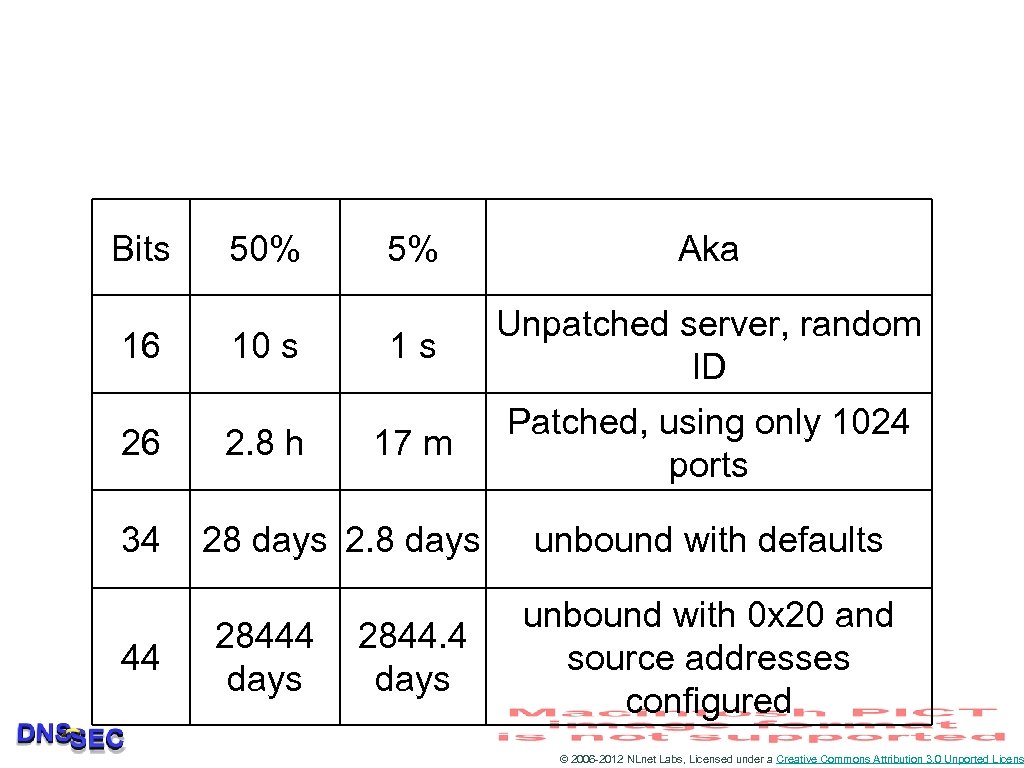
Bits 16 26 34 44 50% 10 s 2. 8 h 5% Aka 1 s Unpatched server, random ID 17 m Patched, using only 1024 ports 28 days 28444 days 2844. 4 days unbound with defaults unbound with 0 x 20 and source addresses configured © 2006 -2012 NLnet Labs, Licensed under a Creative Commons Attribution 3. 0 Unported Licens
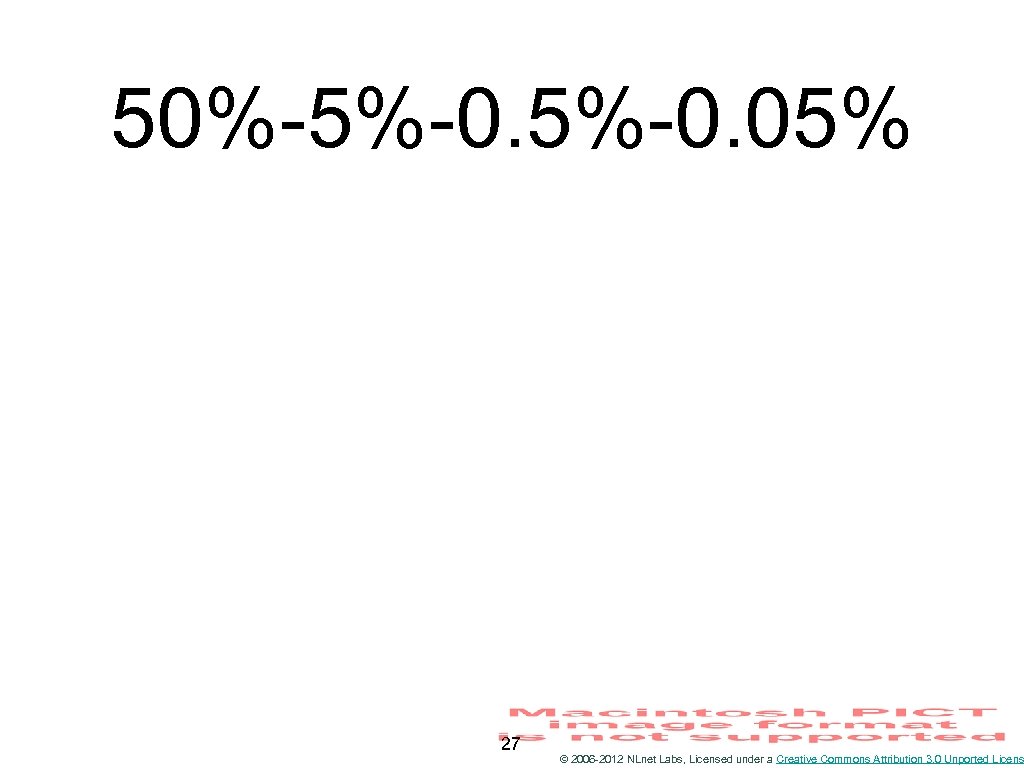
50%-5%-0. 05% 27 © 2006 -2012 NLnet Labs, Licensed under a Creative Commons Attribution 3. 0 Unported Licens
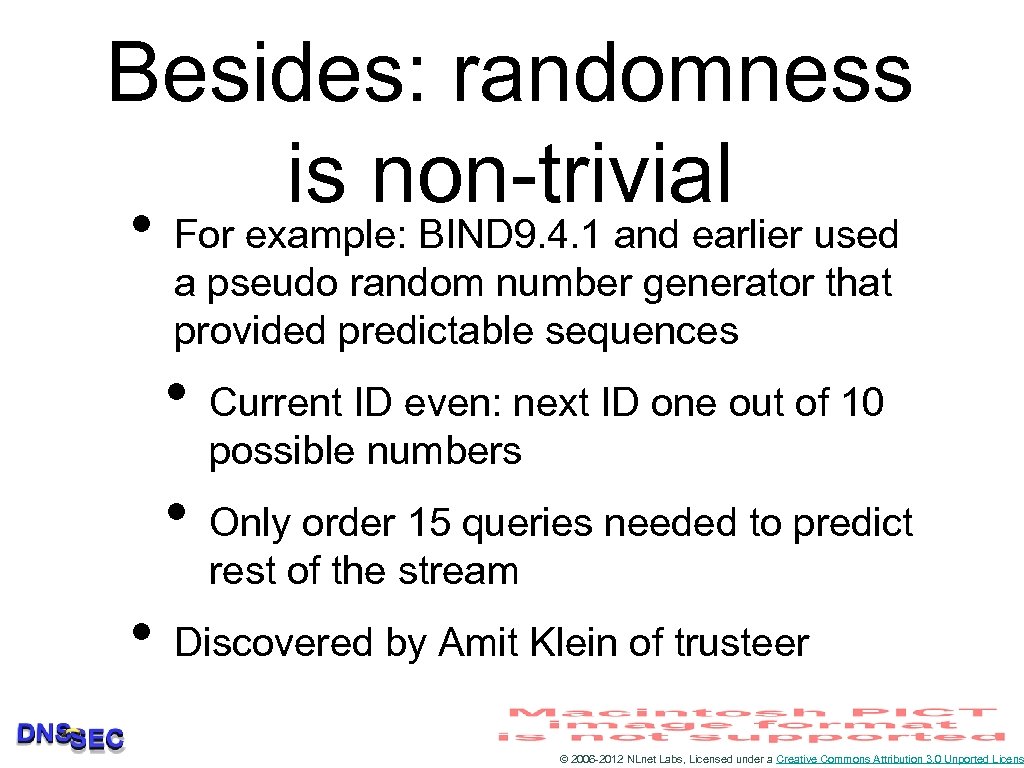
Besides: randomness is non-trivial • For example: BIND 9. 4. 1 and earlier used a pseudo random number generator that provided predictable sequences • • • Current ID even: next ID one out of 10 possible numbers Only order 15 queries needed to predict rest of the stream Discovered by Amit Klein of trusteer © 2006 -2012 NLnet Labs, Licensed under a Creative Commons Attribution 3. 0 Unported Licens
Using all ports, not easy • Some architectures did not use a sufficiently large range of ports • The patches issued as response to the so called Kaminsky attack, early 2008, all had to do with increasing the randomness in port use © 2006 -2012 NLnet Labs, Licensed under a Creative Commons Attribution 3. 0 Unported Licens
Still until 2007 folk seemed happy • Attacker only got one try: • Query for www. onlinebank. example • Bombard with answers hoping for the mala-fide answer to get in first • Wait for timeout of the TTL • Then try again © 2006 -2012 NLnet Labs, Licensed under a Creative Commons Attribution 3. 0 Unported Licens
Kaminsky’s variant • Classic cache poisoning gave you ‘a few tries’ to get in between the outgoing question and incoming answer • Kaminsky came with a scheme where the culprit can keep trying • Surprisingly simple, a wonder nobody thought of the variety before © 2006 -2012 NLnet Labs, Licensed under a Creative Commons Attribution 3. 0 Unported Licens
And how does it work • • • Attacker queries: <randomcruft>. www. importantbank. example respond with fake delegation to: www. importantbank. example with glue There are other varieties too, but this is the one that has no real workaround © 2006 -2012 NLnet Labs, Licensed under a Creative Commons Attribution 3. 0 Unported Licens
problem? © 2006 -2012 NLnet Labs, Licensed under a Creative Commons Attribution 3. 0 Unported Licens
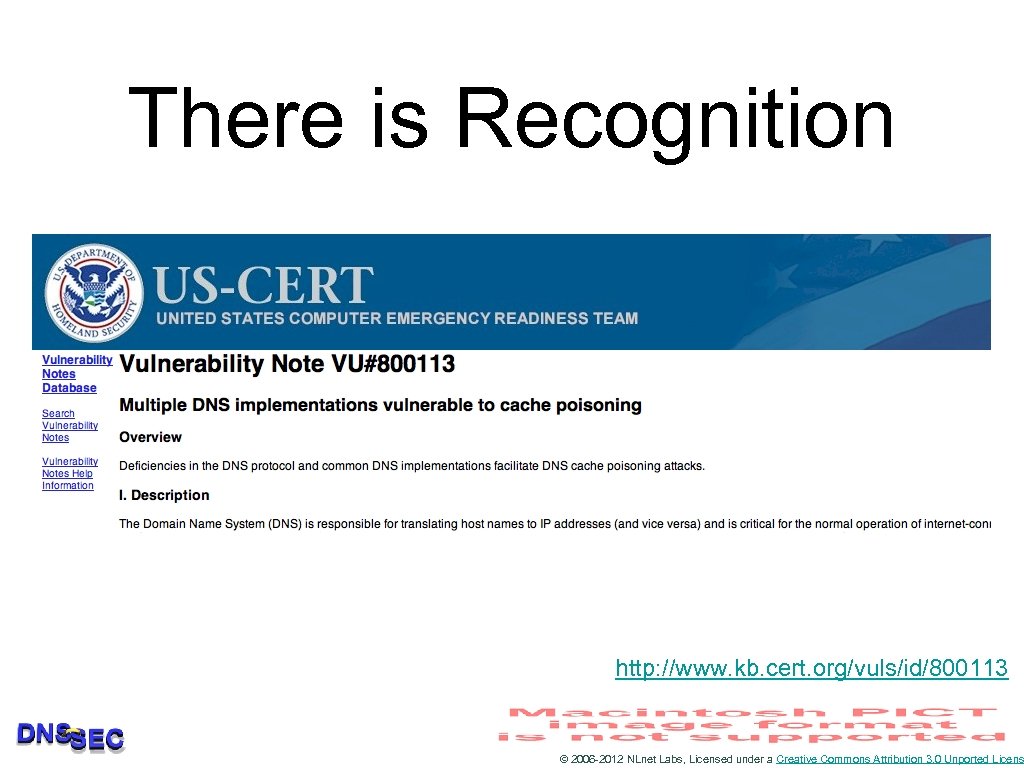
There is Recognition http: //www. kb. cert. org/vuls/id/800113 © 2006 -2012 NLnet Labs, Licensed under a Creative Commons Attribution 3. 0 Unported Licens
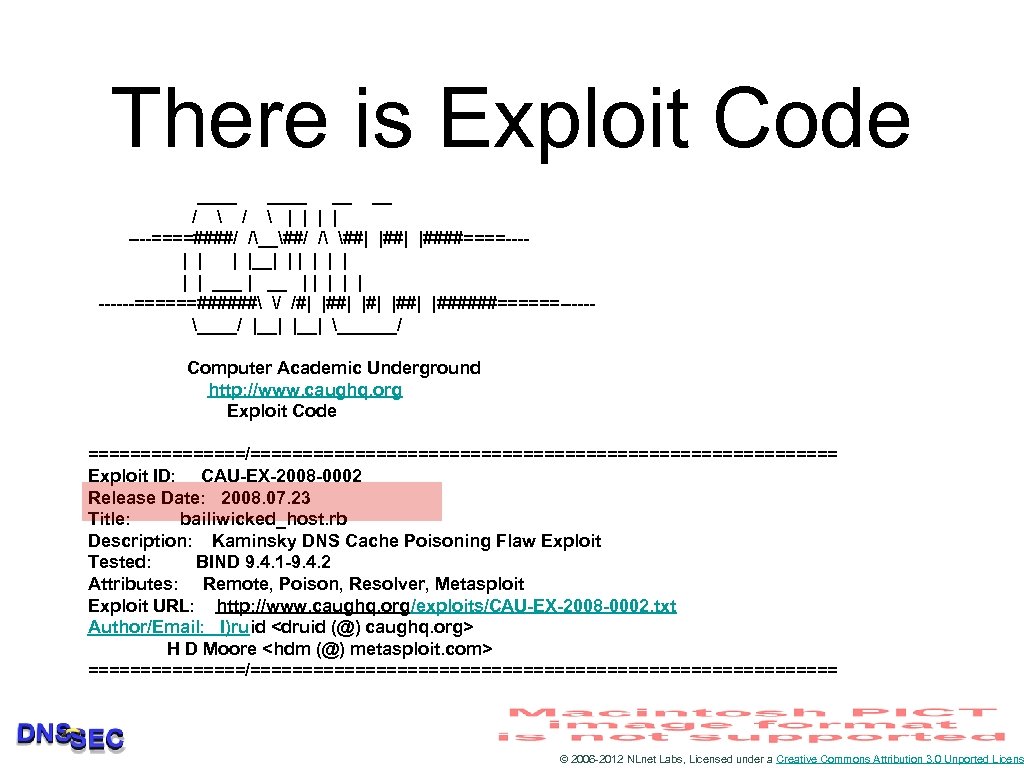
There is Exploit Code ____ __ __ / | | ----====####/ /__##/ / ##| |####====---| | | |__| | | | ___ | | | ------======###### / /#| |##| |######======-----____/ |__| ______/ Computer Academic Underground http: //www. caughq. org Exploit Code ========/============================ Exploit ID: CAU-EX-2008 -0002 Release Date: 2008. 07. 23 Title: bailiwicked_host. rb Description: Kaminsky DNS Cache Poisoning Flaw Exploit Tested: BIND 9. 4. 1 -9. 4. 2 Attributes: Remote, Poison, Resolver, Metasploit Exploit URL: http: //www. caughq. org/exploits/CAU-EX-2008 -0002. txt Author/Email: I)ruid <druid (@) caughq. org> H D Moore <hdm (@) metasploit. com> ========/============================ © 2006 -2012 NLnet Labs, Licensed under a Creative Commons Attribution 3. 0 Unported Licens
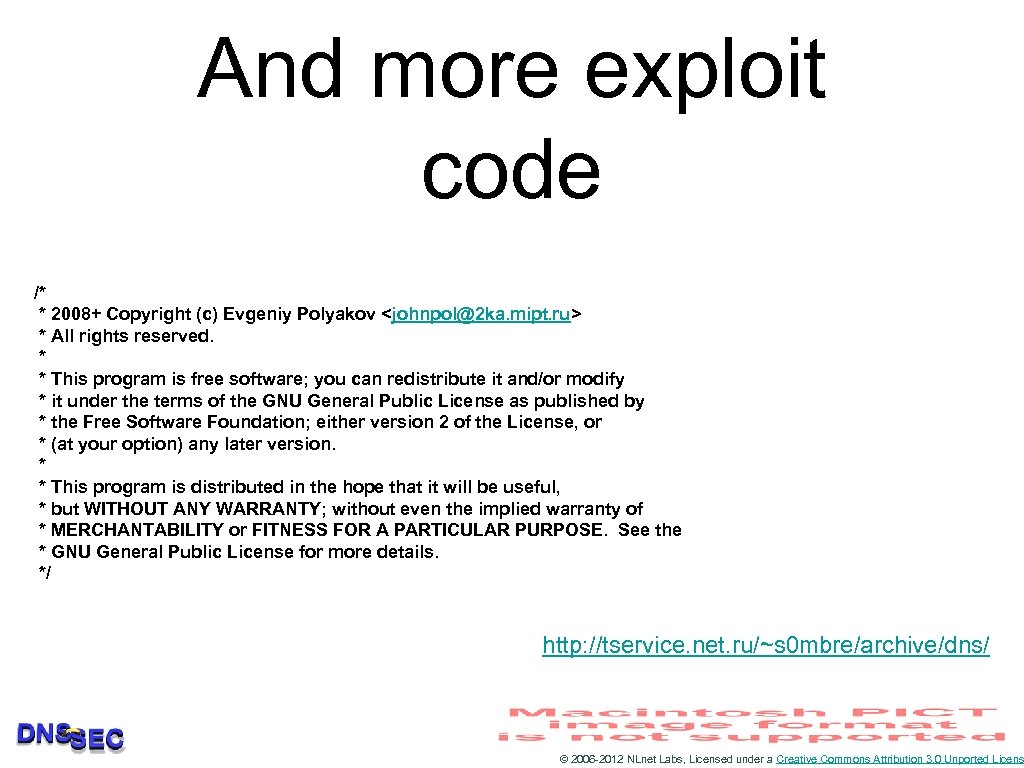
And more exploit code /* * 2008+ Copyright (c) Evgeniy Polyakov <johnpol@2 ka. mipt. ru> * All rights reserved. * * This program is free software; you can redistribute it and/or modify * it under the terms of the GNU General Public License as published by * the Free Software Foundation; either version 2 of the License, or * (at your option) any later version. * * This program is distributed in the hope that it will be useful, * but WITHOUT ANY WARRANTY; without even the implied warranty of * MERCHANTABILITY or FITNESS FOR A PARTICULAR PURPOSE. See the * GNU General Public License for more details. */ http: //tservice. net. ru/~s 0 mbre/archive/dns/ © 2006 -2012 NLnet Labs, Licensed under a Creative Commons Attribution 3. 0 Unported Licens
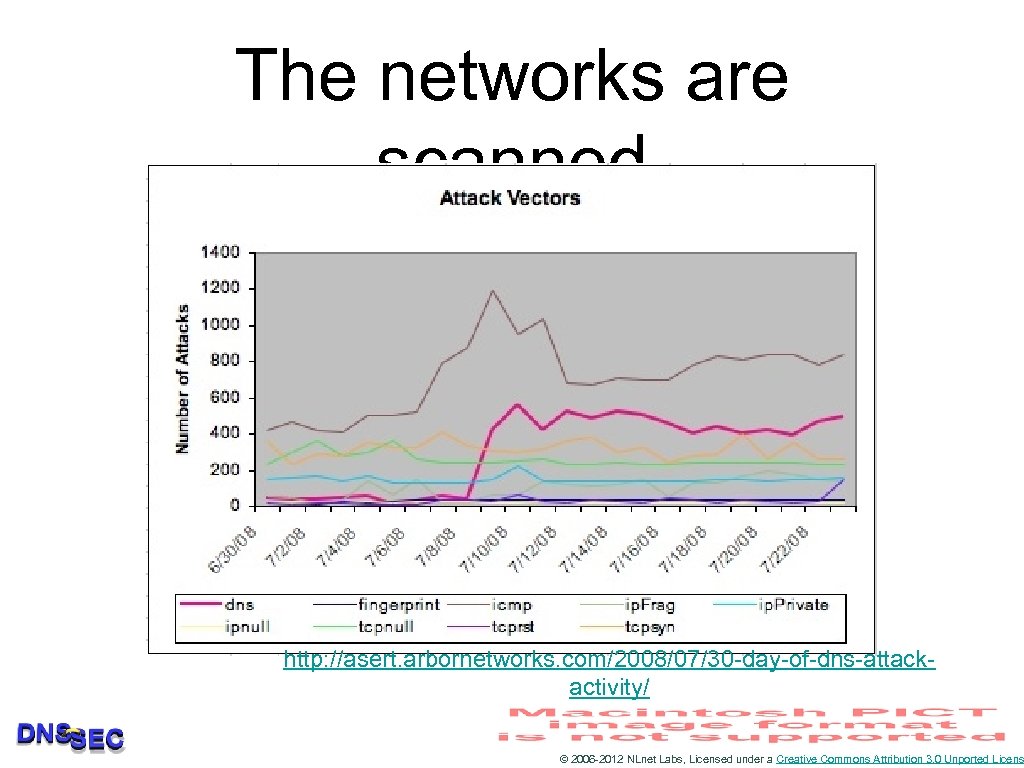
The networks are scanned http: //asert. arbornetworks. com/2008/07/30 -day-of-dns-attackactivity/ © 2006 -2012 NLnet Labs, Licensed under a Creative Commons Attribution 3. 0 Unported Licens
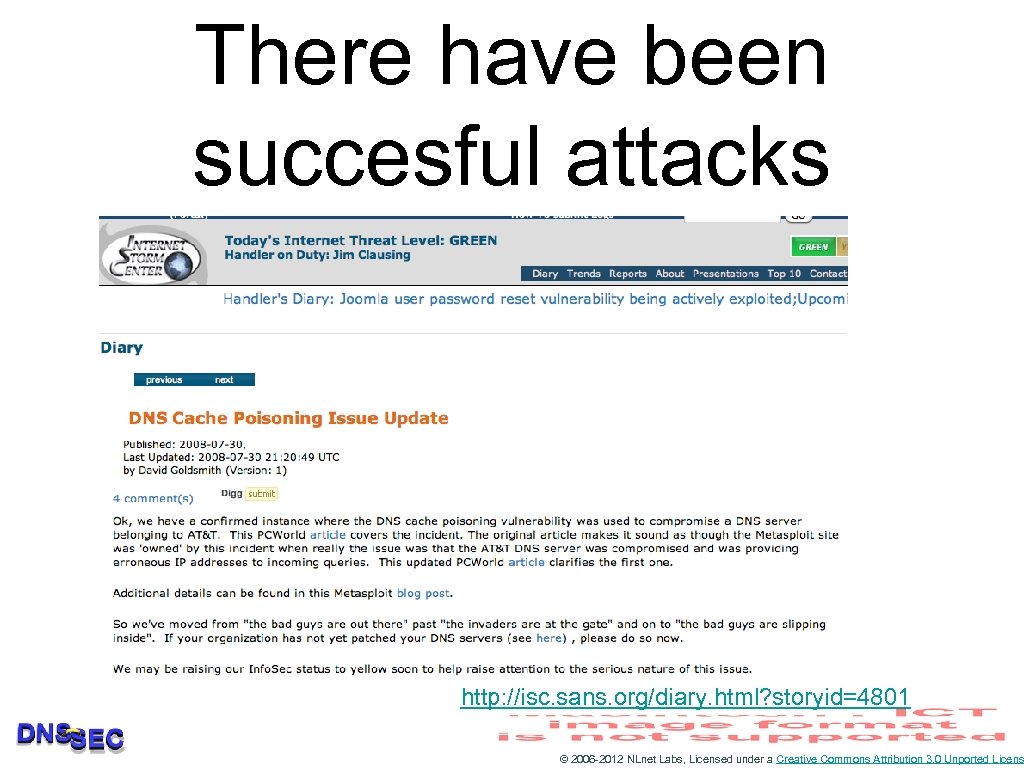
There have been succesful attacks http: //isc. sans. org/diary. html? storyid=4801 © 2006 -2012 NLnet Labs, Licensed under a Creative Commons Attribution 3. 0 Unported Licens
Yes, Problem © 2006 -2012 NLnet Labs, Licensed under a Creative Commons Attribution 3. 0 Unported Licens
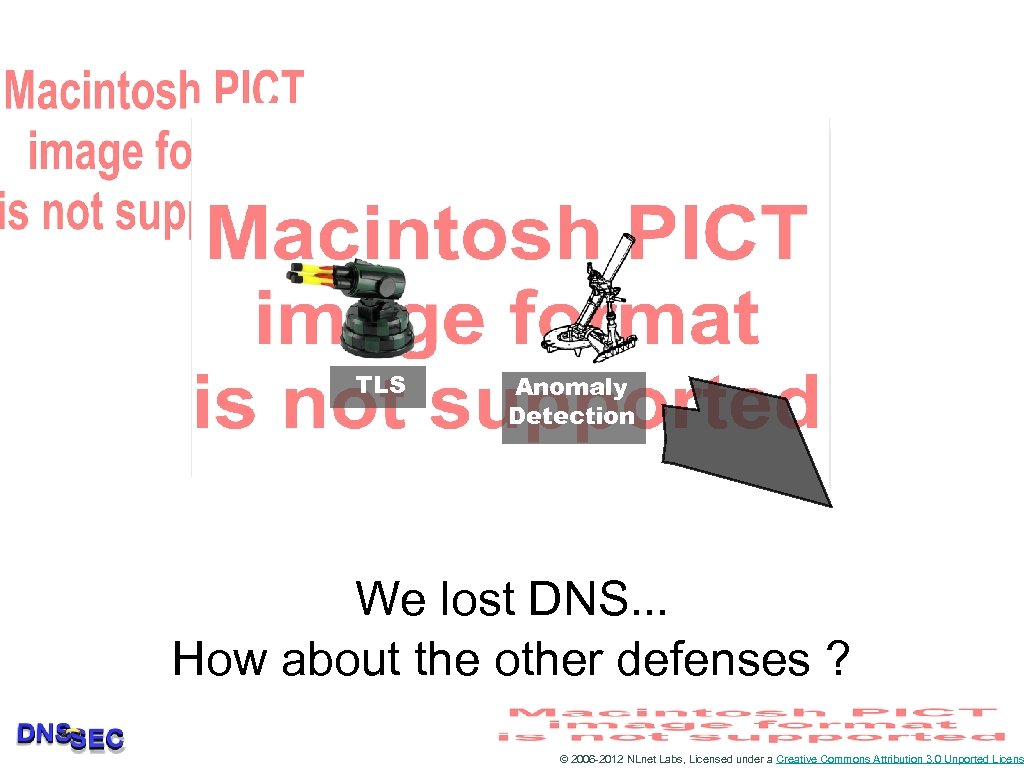
TLS Anomaly Detection We lost DNS. . . How about the other defenses ? © 2006 -2012 NLnet Labs, Licensed under a Creative Commons Attribution 3. 0 Unported Licens
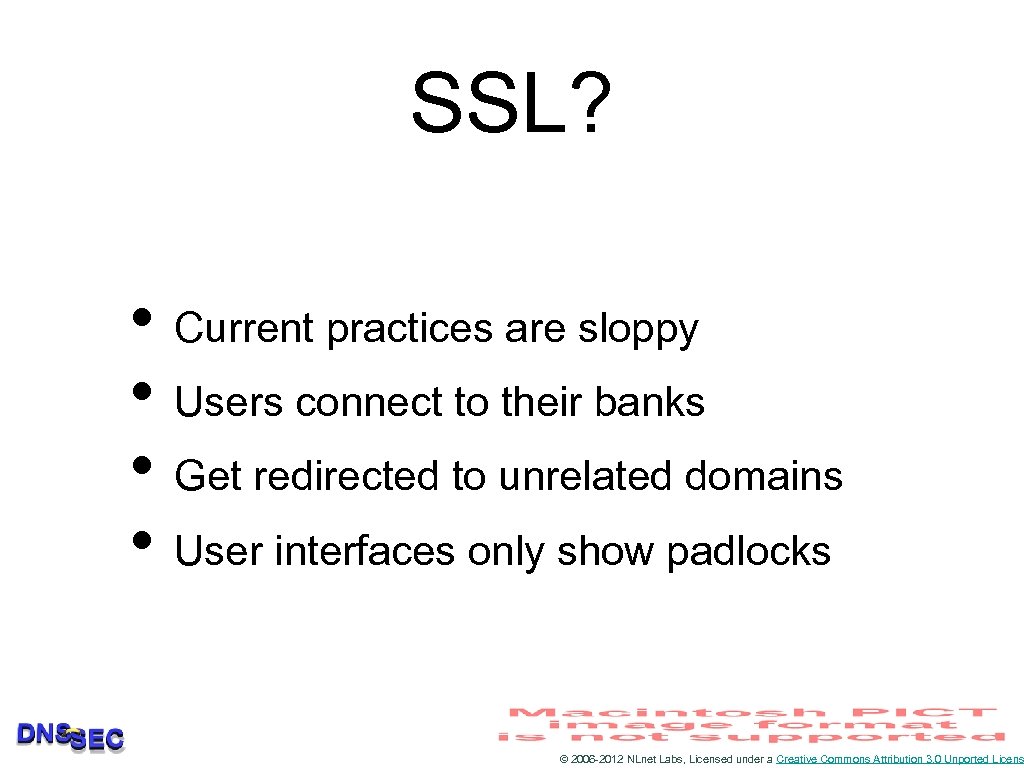
SSL? • Current practices are sloppy • Users connect to their banks • Get redirected to unrelated domains • User interfaces only show padlocks © 2006 -2012 NLnet Labs, Licensed under a Creative Commons Attribution 3. 0 Unported Licens
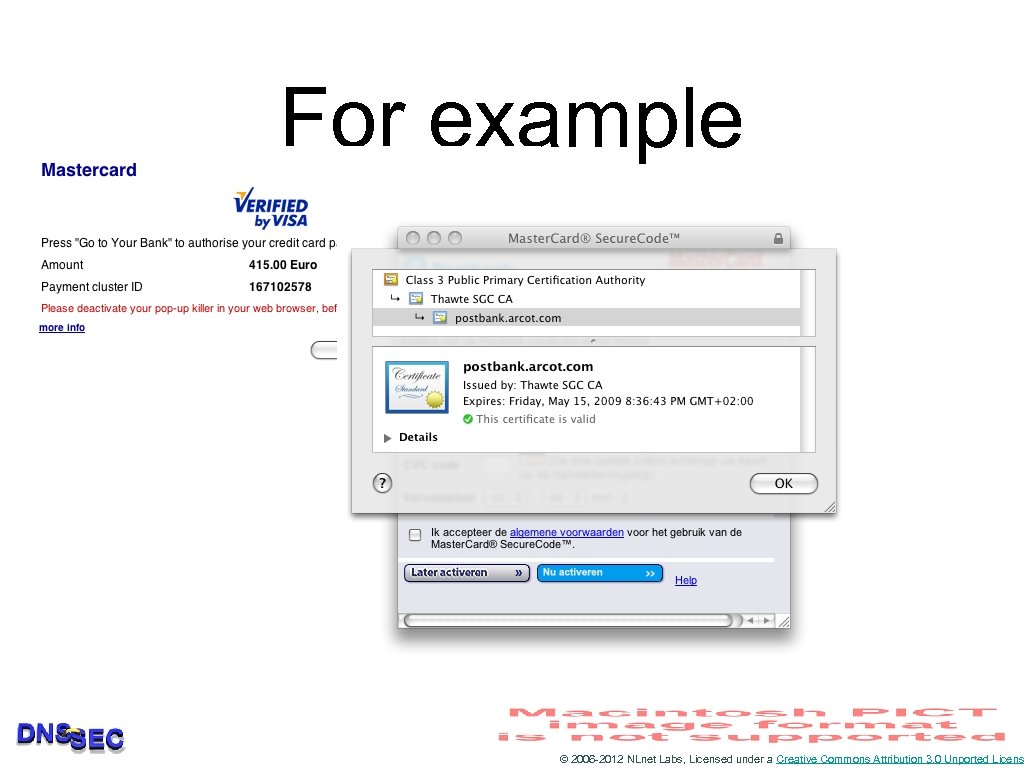
For example © 2006 -2012 NLnet Labs, Licensed under a Creative Commons Attribution 3. 0 Unported Licens
Exploit • Attacker poisons DNS for www. postbank. nl • Fake www. postbank. nl redirects to postbank. webbanksecurity. com • Obtaining the domain name and certificate is trivial for organized criminals • Users are used to these sort of redirections and the domainname looks trustworthy © 2006 -2012 NLnet Labs, Licensed under a Creative Commons Attribution 3. 0 Unported Licens
Things get worse • Fake www. postbank. nl redirects to fake https: //www. postbank. nl • SSL protects agains that? • Not if the attacker has a signed certificate • How would an attacker do that? © 2006 -2012 NLnet Labs, Licensed under a Creative Commons Attribution 3. 0 Unported Licens
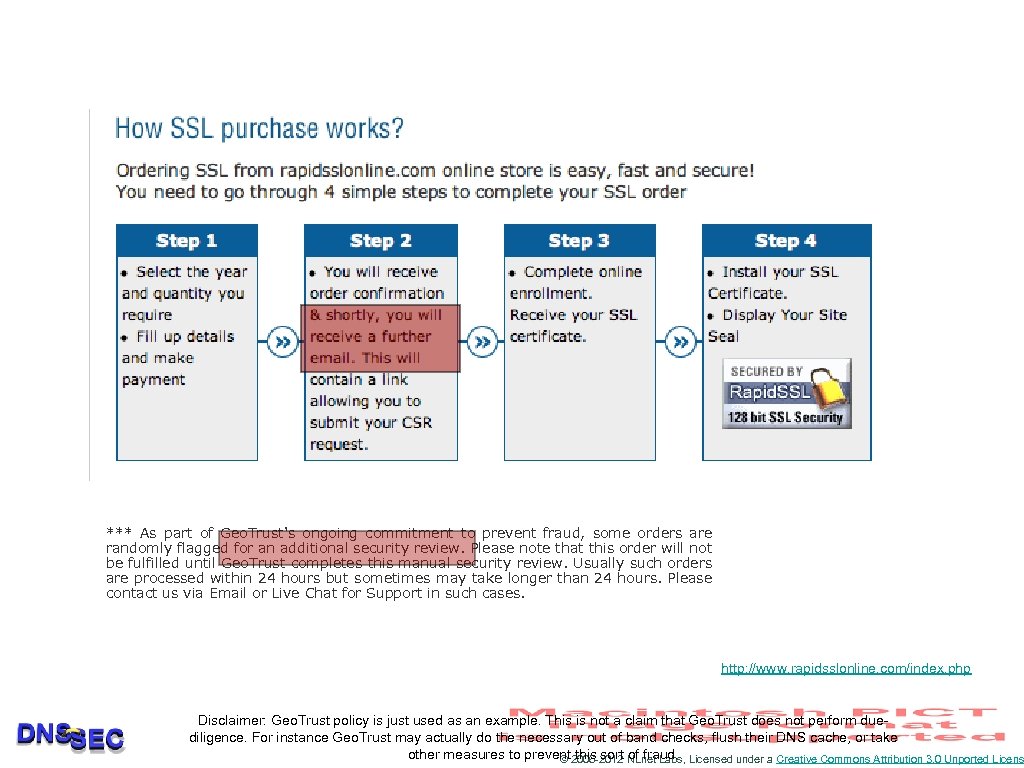
*** As part of Geo. Trust's ongoing commitment to prevent fraud, some orders are randomly flagged for an additional security review. Please note that this order will not be fulfilled until Geo. Trust completes this manual security review. Usually such orders are processed within 24 hours but sometimes may take longer than 24 hours. Please contact us via Email or Live Chat for Support in such cases. http: //www. rapidsslonline. com/index. php Disclaimer: Geo. Trust policy is just used as an example. This is not a claim that Geo. Trust does not perform duediligence. For instance Geo. Trust may actually do the necessary out of band checks, flush their DNS cache, or take other measures to prevent 2006 -2012 NLnet Labs, Licensed under a Creative Commons Attribution 3. 0 Unported Licens © this sort of fraud.
Don’t rely on DNS for the Security review • Don’t get the contact details out of the WHOIS, getting to WHOIS is DNS based • Don’t send confirmation e-mails to typical addresses in the domain • Mail uses the DNS • Don’t try to see if domain already has a SSL certificate installed. That uses the DNS © 2006 -2012 NLnet Labs, Licensed under a Creative Commons Attribution 3. 0 Unported Licens
Lower hanging fruit: email • Just attack e-mail • Eavesdropping on e-mail • Modifying text • Inserting malicious content © 2006 -2012 NLnet Labs, Licensed under a Creative Commons Attribution 3. 0 Unported Licens
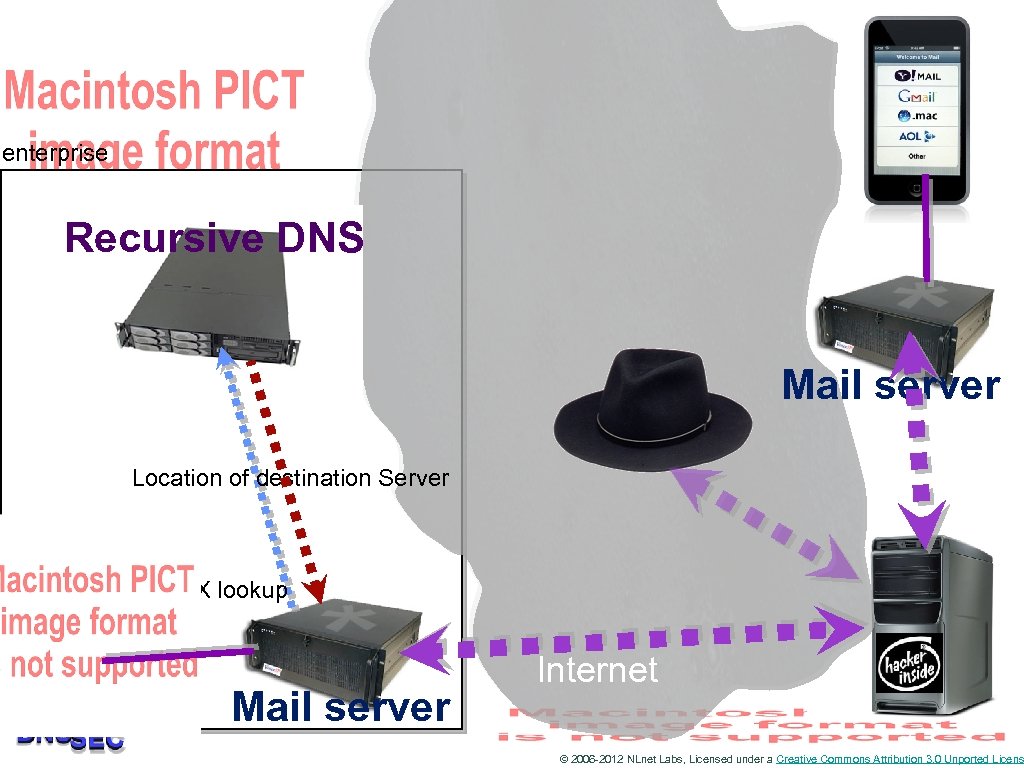
enterprise Recursive DNS Mail server Location of destination Server MX lookup Mail server Internet © 2006 -2012 NLnet Labs, Licensed under a Creative Commons Attribution 3. 0 Unported Licens
Technique to notice these spam recognition attacks • SPF protocol for • Based on. . . DNS • TSL based connections and certification • In practice only used for encryption of the channel • Often misconfigured, or with fallback in place • And remember the problems wrt TLS © 2006 -2012 NLnet Labs, Licensed under a Creative Commons Attribution 3. 0 Unported Licens
EV vs DV • Certificates come in two types: Domain Validation (DV) and Extended Validation (EV) • Cert. Authorities hand out DVs purely on DNS based knowledge • Difference: Green Glow in the browser (assuming UI is available) © 2006 -2012 NLnet Labs, Licensed under a Creative Commons Attribution 3. 0 Unported Licens
Back to the DNS © 2006 -2012 NLnet Labs, Licensed under a Creative Commons Attribution 3. 0 Unported Licens
Is cache poisoning the only vulnerability? © 2006 -2012 NLnet Labs, Licensed under a Creative Commons Attribution 3. 0 Unported Licens
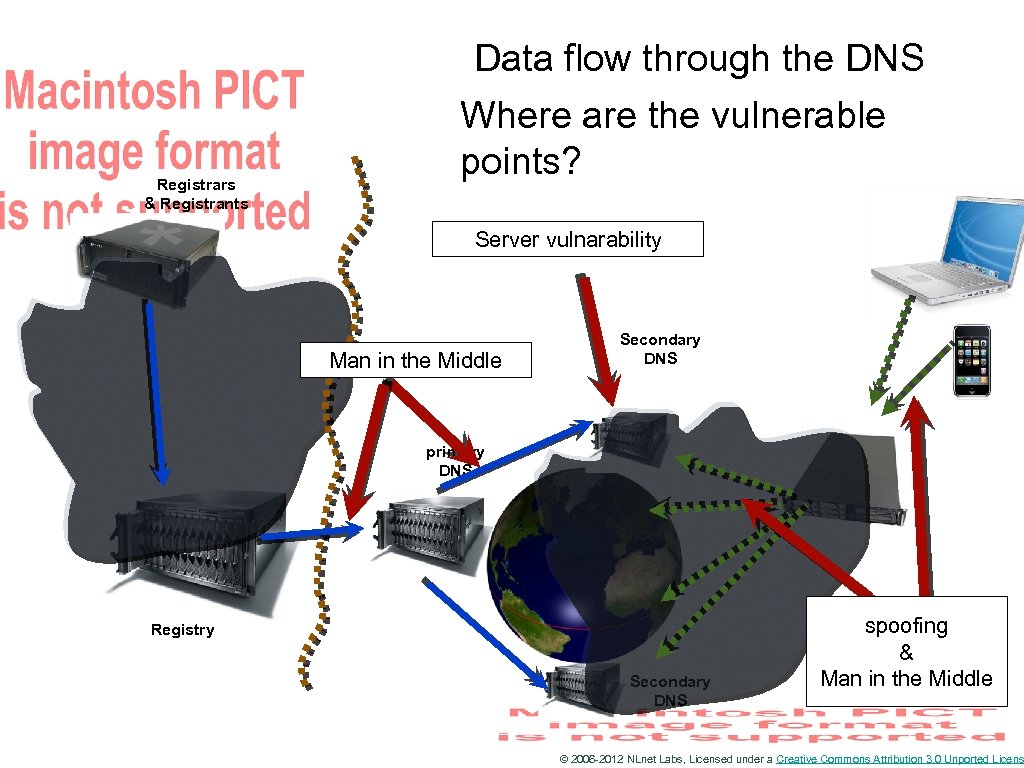
Data flow through the DNS Registrars & Registrants Where are the vulnerable points? Server vulnarability Man in the Middle Secondary DNS primary DNS Registry Secondary DNS spoofing & Man in the Middle © 2006 -2012 NLnet Labs, Licensed under a Creative Commons Attribution 3. 0 Unported Licens
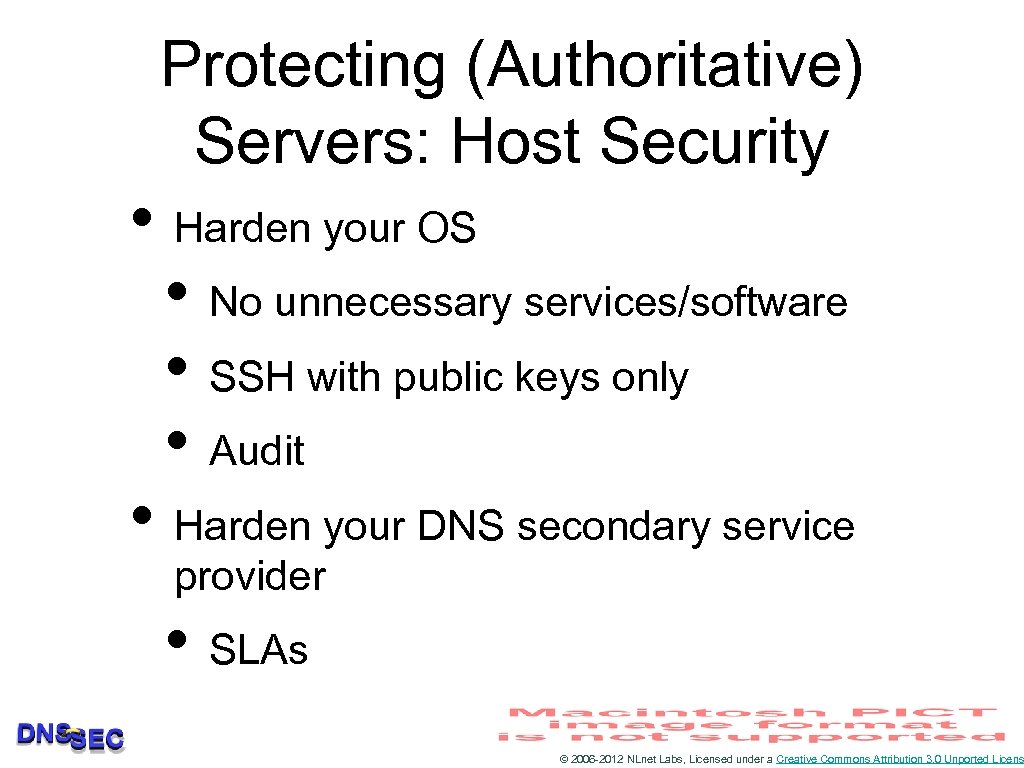
Protecting (Authoritative) Servers: Host Security • Harden your OS • No unnecessary services/software • SSH with public keys only • Audit • Harden your DNS secondary service provider • SLAs © 2006 -2012 NLnet Labs, Licensed under a Creative Commons Attribution 3. 0 Unported Licens
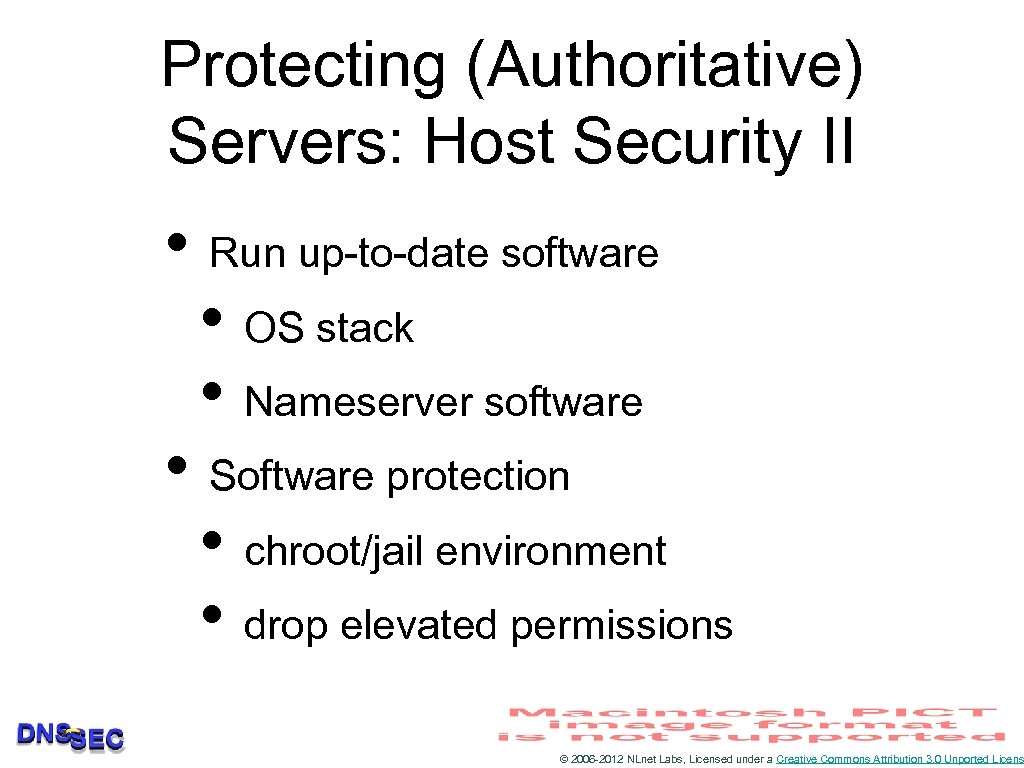
Protecting (Authoritative) Servers: Host Security II • Run up-to-date software • OS stack • Nameserver software • Software protection • chroot/jail environment • drop elevated permissions © 2006 -2012 NLnet Labs, Licensed under a Creative Commons Attribution 3. 0 Unported Licens
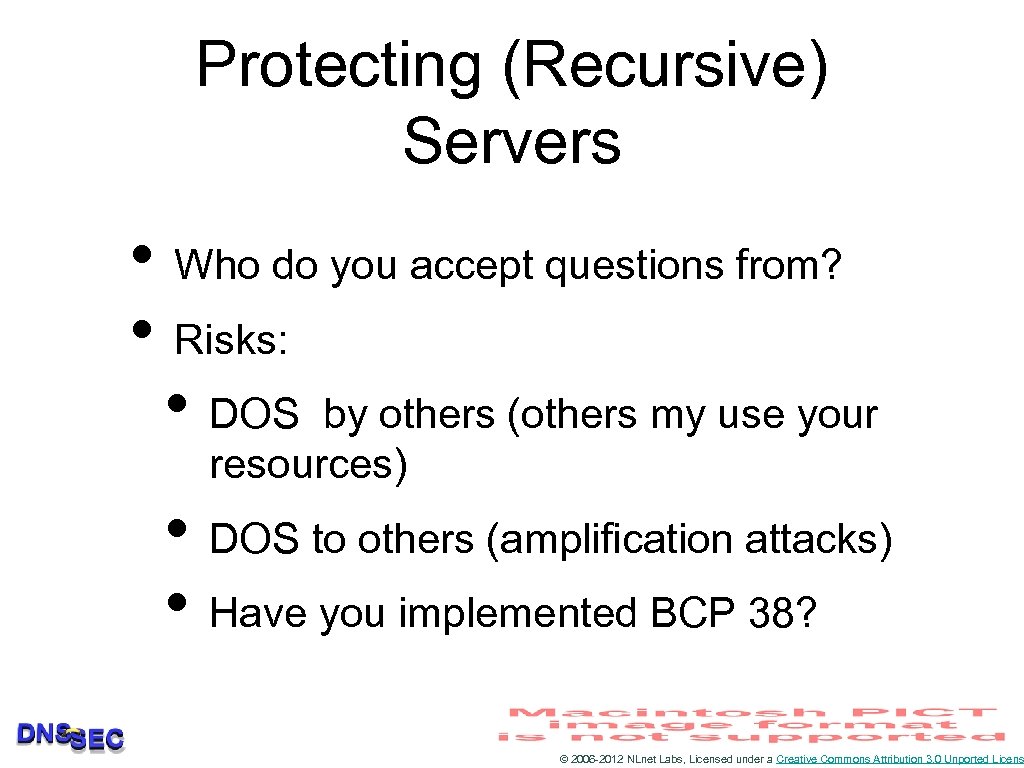
Protecting (Recursive) Servers • Who do you accept questions from? • Risks: • DOS by others (others my use your resources) • DOS to others (amplification attacks) • Have you implemented BCP 38? © 2006 -2012 NLnet Labs, Licensed under a Creative Commons Attribution 3. 0 Unported Licens
Securing Host Communication © 2006 -2012 NLnet Labs, Licensed under a Creative Commons Attribution 3. 0 Unported Licens
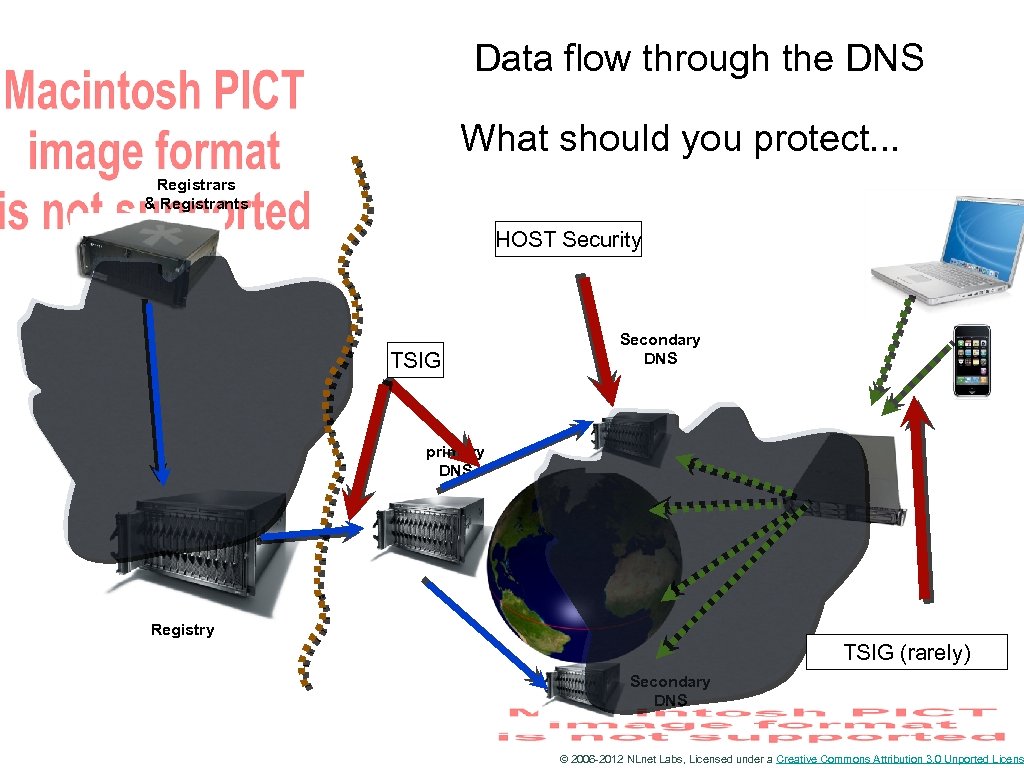
Data flow through the DNS What should you protect. . . Registrars & Registrants HOST Security TSIG Secondary DNS primary DNS Registry TSIG (rarely) Secondary DNS © 2006 -2012 NLnet Labs, Licensed under a Creative Commons Attribution 3. 0 Unported Licens
Transaction Signature: TSIG • TSIG (RFC 2845) –Authorising dynamic updates and zone transfers –Authentication of caching forwarders –Independent from other features of DNSSEC • One-way hash function –DNS question or answer and timestamp • Traffic signed with “shared secret” key • Used in configuration, NOT in zone file © 2006 -2012 NLnet Labs, Licensed under a Creative Commons Attribution 3. 0 Unported Licens
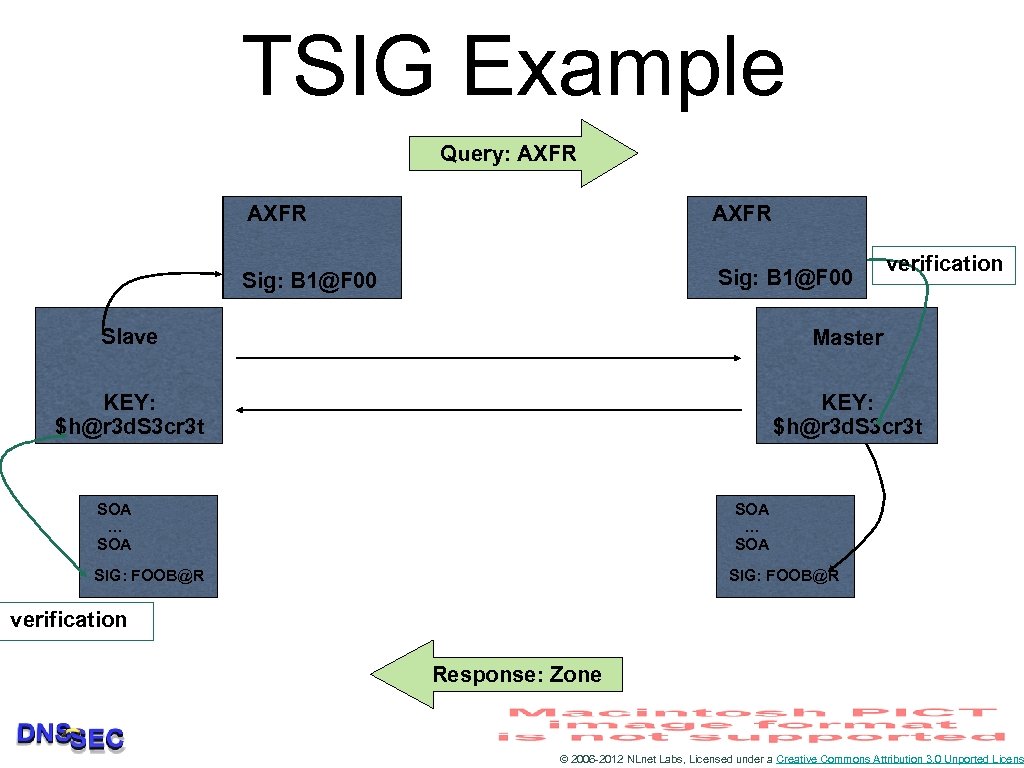
TSIG Example Query: AXFR Sig: B 1@F 00 verification Slave Master KEY: $h@r 3 d. S 3 cr 3 t SOA … SOA SIG: FOOB@R verification Response: Zone © 2006 -2012 NLnet Labs, Licensed under a Creative Commons Attribution 3. 0 Unported Licens
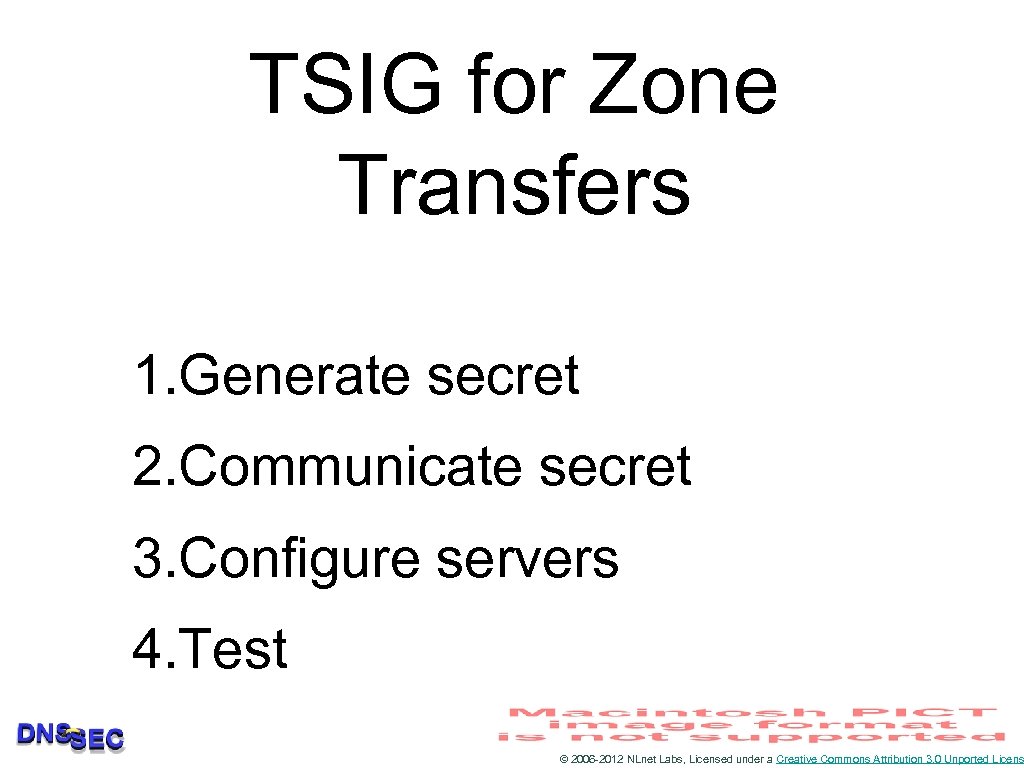
TSIG for Zone Transfers 1. Generate secret 2. Communicate secret 3. Configure servers 4. Test © 2006 -2012 NLnet Labs, Licensed under a Creative Commons Attribution 3. 0 Unported Licens
Importance of the Time Stamp • TSIG/SIG(0) signs a complete DNS request / response with time stamp – To prevent replay attacks – Currently hardcoded at five minutes • Operational problems when comparing times – Make sure your local time zone is properly defined – date -u will give UTC time, easy to compare between the two systems – Use NTP synchronisation! © 2006 -2012 NLnet Labs, Licensed under a Creative Commons Attribution 3. 0 Unported Licens
Authenticating Servers Using SIG(0) • Alternatively, it is possible to use SIG(0) –Not yet widely used –Works well in dynamic update environment • Public key algorithm –Authentication against a public key published in the DNS • SIG(0) specified in RFC 2931 © 2006 -2012 NLnet Labs, Licensed under a Creative Commons Attribution 3. 0 Unported Licens
Cool Application • Use TSIG-ed dynamic updates to configure your laptops name • My laptop is know by the name of aagje. secret-wg. org – http: //ops. ietf. org/dns/dynupd/secure-ddnshowto. html –Mac OS users: there is a bonjour based tool. • www. dns-sd. org © 2006 -2012 NLnet Labs, Licensed under a Creative Commons Attribution 3. 0 Unported Licens
How about Unbound? © 2006 -2012 NLnet Labs, Licensed under a Creative Commons Attribution 3. 0 Unported Licens
Security Choices in Unbound • In general, a modern paranoid resolver • DNSSEC support. • RFC 2181 support completely • Fine grained. Keeps track of where RRSets came from and won't upgrade them into answers. • Does not allow RRSets to be overridden by lower level rrsets © 2006 -2012 NLnet Labs, Licensed under a Creative Commons Attribution 3. 0 Unported Licens
Filtering • • Scrubber: Only in-bailiwick data is accepted in the answer • • The answer section must contain only answer CNAME, DNAME checked that chain is correct • CNAME cut off and only the first CNAME kept • • • Lookup rest yourself do not trust other server DNAME synthesize CNAME by unbound do not trust other server. Also cut off like above. DNAME from cache only used if DNSSEC-secure. © 2006 -2012 NLnet Labs, Licensed under a Creative Commons Attribution 3. 0 Unported Licens
Filtering II • No address records in authority, additional section unless relevant – i. e. mentioned in a NS record in the authority section. • Irrelevant data is removed • When the message only had preliminary parsing and has not yet been copied to the working region of memory © 2006 -2012 NLnet Labs, Licensed under a Creative Commons Attribution 3. 0 Unported Licens
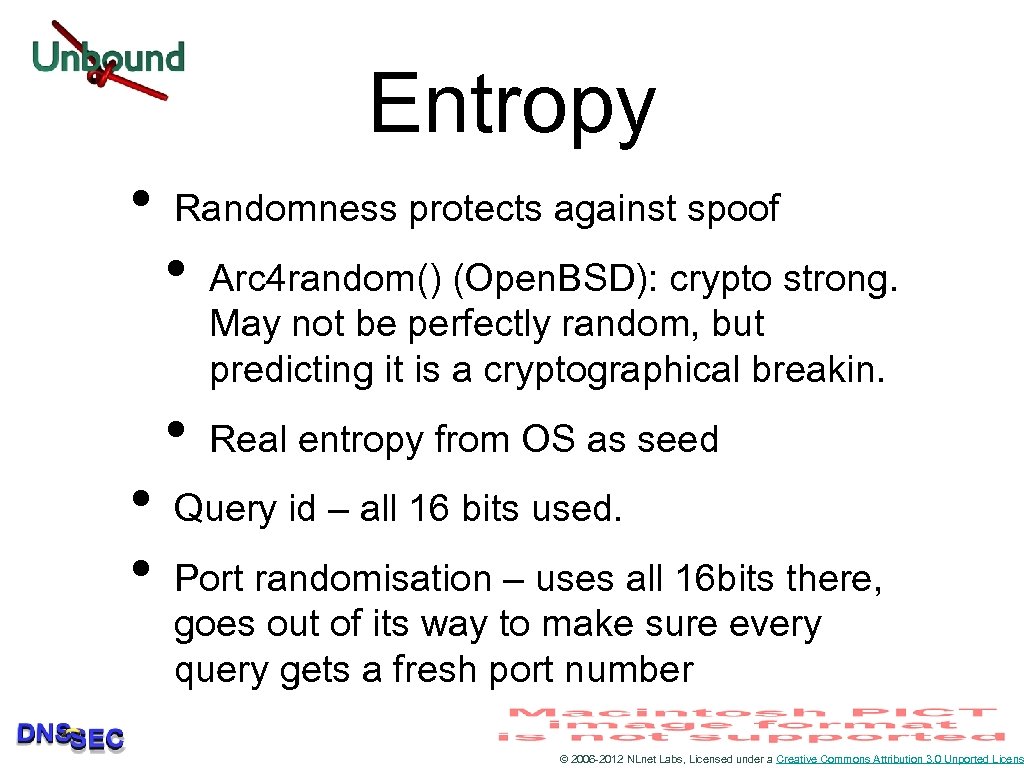
Entropy • • • Randomness protects against spoof • • Arc 4 random() (Open. BSD): crypto strong. May not be perfectly random, but predicting it is a cryptographical breakin. Real entropy from OS as seed Query id – all 16 bits used. Port randomisation – uses all 16 bits there, goes out of its way to make sure every query gets a fresh port number © 2006 -2012 NLnet Labs, Licensed under a Creative Commons Attribution 3. 0 Unported Licens
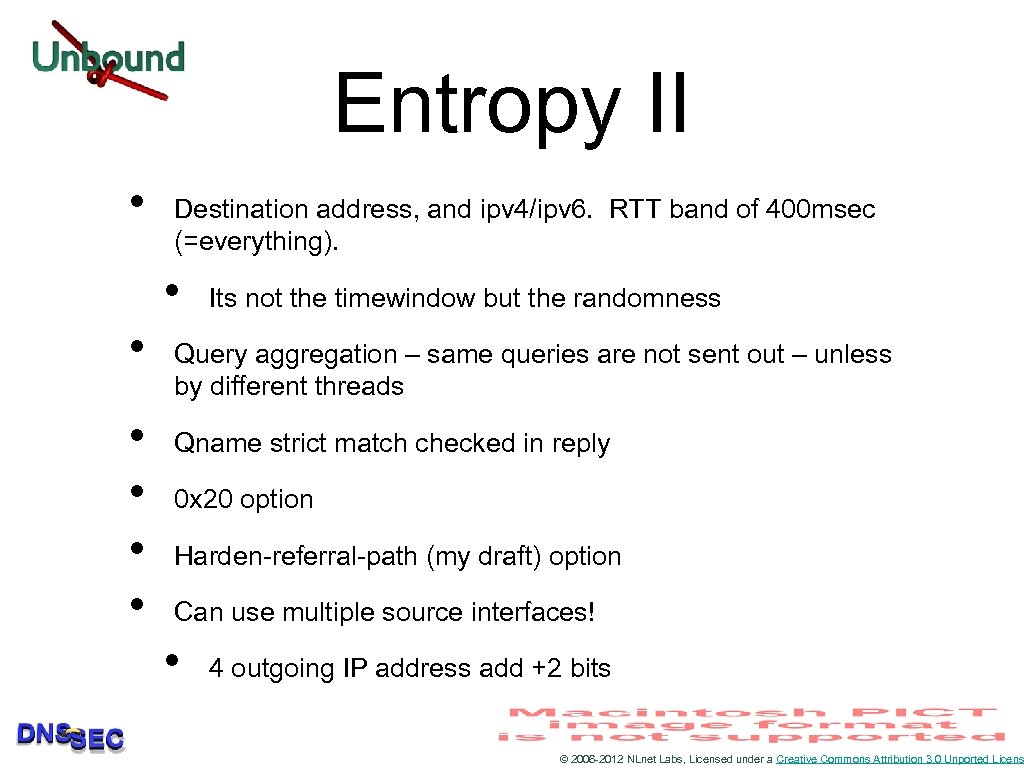
Entropy II • Destination address, and ipv 4/ipv 6. RTT band of 400 msec (=everything). • • • Its not the timewindow but the randomness Query aggregation – same queries are not sent out – unless by different threads Qname strict match checked in reply 0 x 20 option Harden-referral-path (my draft) option Can use multiple source interfaces! • 4 outgoing IP address add +2 bits © 2006 -2012 NLnet Labs, Licensed under a Creative Commons Attribution 3. 0 Unported Licens
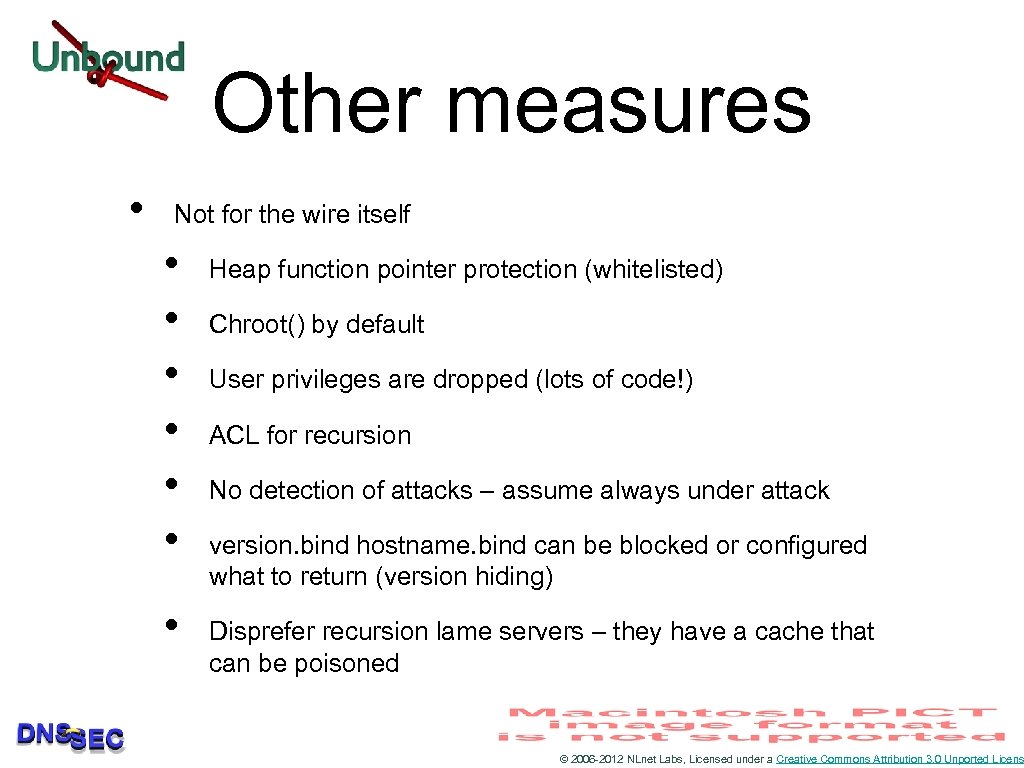
Other measures • Not for the wire itself • • Heap function pointer protection (whitelisted) Chroot() by default User privileges are dropped (lots of code!) ACL for recursion No detection of attacks – assume always under attack version. bind hostname. bind can be blocked or configured what to return (version hiding) Disprefer recursion lame servers – they have a cache that can be poisoned © 2006 -2012 NLnet Labs, Licensed under a Creative Commons Attribution 3. 0 Unported Licens
© 2006 -2012 NLnet Labs, Licensed under a Creative Commons Attribution 3. 0 Unported Licens
Скачать презентацию Introduction to DNS and its vulnarabilities Olaf M
0b516fd84d0a06de5376d2751c60eeef.ppt