 Скачать презентацию Introduction to Business-to-Business B 2 B Marketing
39070e4b2a73e89cd7d78fa78ef14d26.ppt
- Количество слайдов: 14



Introduction to Business-to-Business (B 2 B) Marketing
What Is Marketing? • the process of planning and executing • the conception (product), pricing, promotion, and distribution • of ideas, goods, and services • to create relationships • that satisfy individual and organizational objectives. ”
BUSINESS MARKETING IS • MARKETING OF GOODS AND SERVICES TO: – Companies – Government Bodies – Institutions (i. e. hospitals) – Non-Profit Organizations (i. e. American Red Cross) FOR • USE IN PRODUCING THEIR PRODUCTS AND/OR TO FACILITATE THEIR OPERATIONS
What Distinguishes B 2 B from B 2 C? • B 2 B: goods or services are sold for any use other than personal consumption • Note: It is not the nature of the product; it is the reason for the transaction.
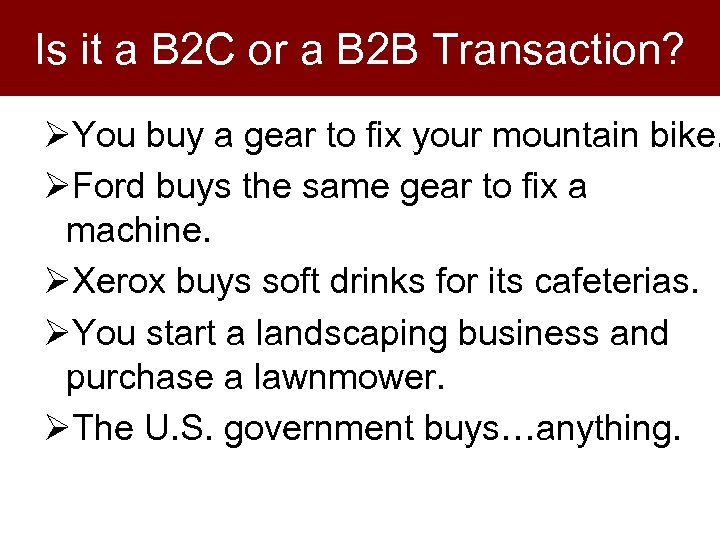
Is it a B 2 C or a B 2 B Transaction? ØYou buy a gear to fix your mountain bike. ØFord buys the same gear to fix a machine. ØXerox buys soft drinks for its cafeterias. ØYou start a landscaping business and purchase a lawnmower. ØThe U. S. government buys…anything.
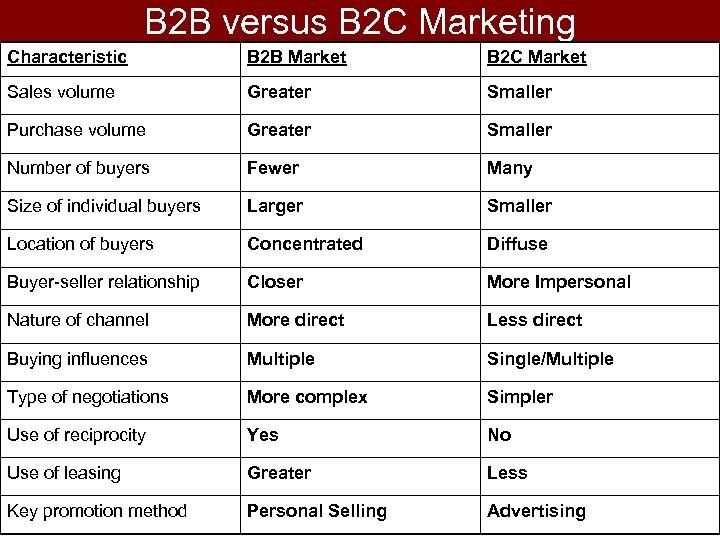
B 2 B versus B 2 C Marketing Characteristic B 2 B Market B 2 C Market Sales volume Greater Smaller Purchase volume Greater Smaller Number of buyers Fewer Many Size of individual buyers Larger Smaller Location of buyers Concentrated Diffuse Buyer-seller relationship Closer More Impersonal Nature of channel More direct Less direct Buying influences Multiple Single/Multiple Type of negotiations More complex Simpler Use of reciprocity Yes No Use of leasing Greater Less Key promotion method Personal Selling Advertising
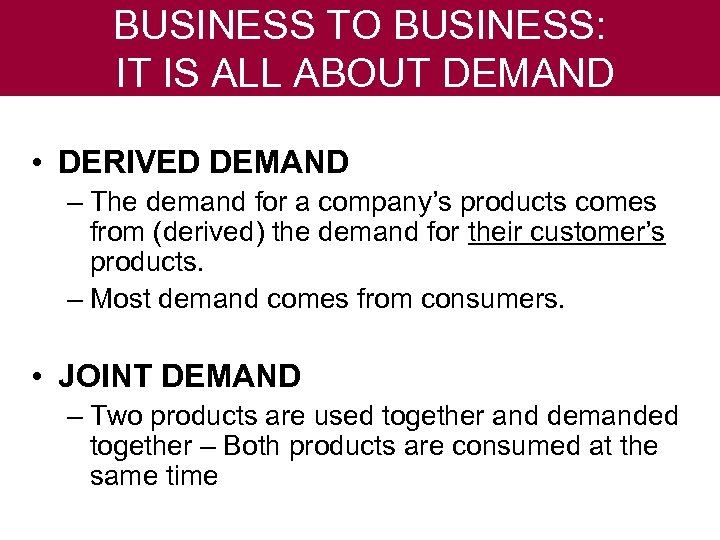
BUSINESS TO BUSINESS: IT IS ALL ABOUT DEMAND • DERIVED DEMAND – The demand for a company’s products comes from (derived) the demand for their customer’s products. – Most demand comes from consumers. • JOINT DEMAND – Two products are used together and demanded together – Both products are consumed at the same time
Other Characteristics of Business Demand • Inelastic Demand • Fluctuating Demand
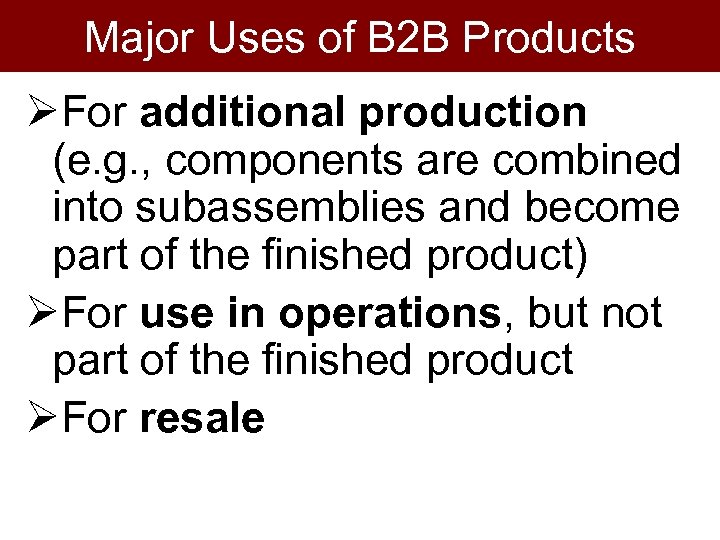
Major Uses of B 2 B Products ØFor additional production (e. g. , components are combined into subassemblies and become part of the finished product) ØFor use in operations, but not part of the finished product ØFor resale
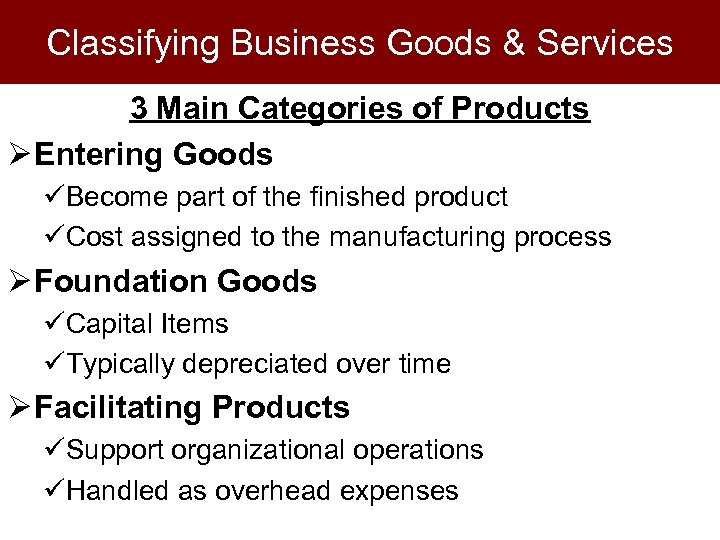
Classifying Business Goods & Services 3 Main Categories of Products Ø Entering Goods üBecome part of the finished product üCost assigned to the manufacturing process Ø Foundation Goods üCapital Items üTypically depreciated over time Ø Facilitating Products üSupport organizational operations üHandled as overhead expenses
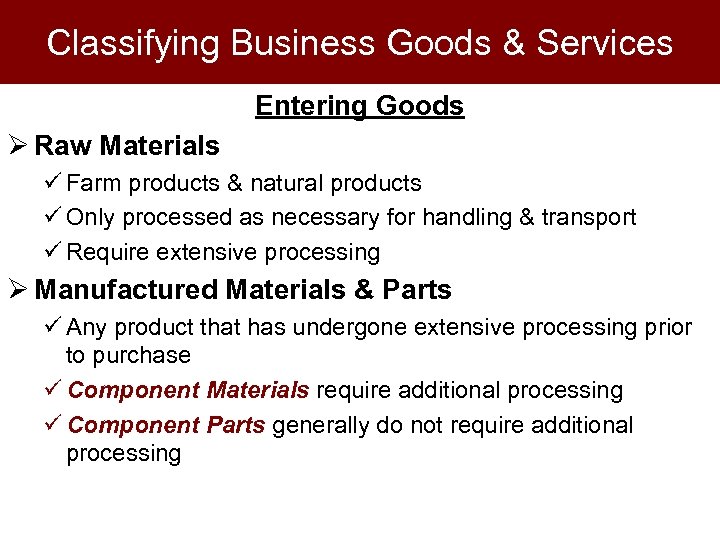
Classifying Business Goods & Services Entering Goods Ø Raw Materials ü Farm products & natural products ü Only processed as necessary for handling & transport ü Require extensive processing Ø Manufactured Materials & Parts ü Any product that has undergone extensive processing prior to purchase ü Component Materials require additional processing ü Component Parts generally do not require additional processing
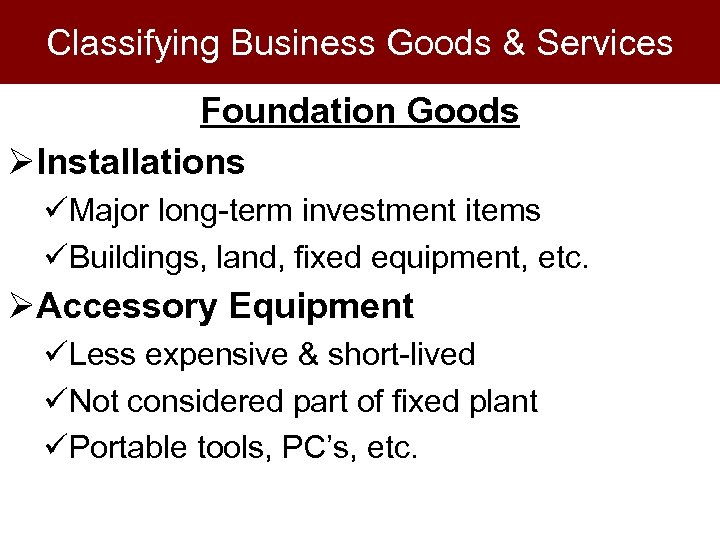
Classifying Business Goods & Services Foundation Goods ØInstallations üMajor long-term investment items üBuildings, land, fixed equipment, etc. ØAccessory Equipment üLess expensive & short-lived üNot considered part of fixed plant üPortable tools, PC’s, etc.
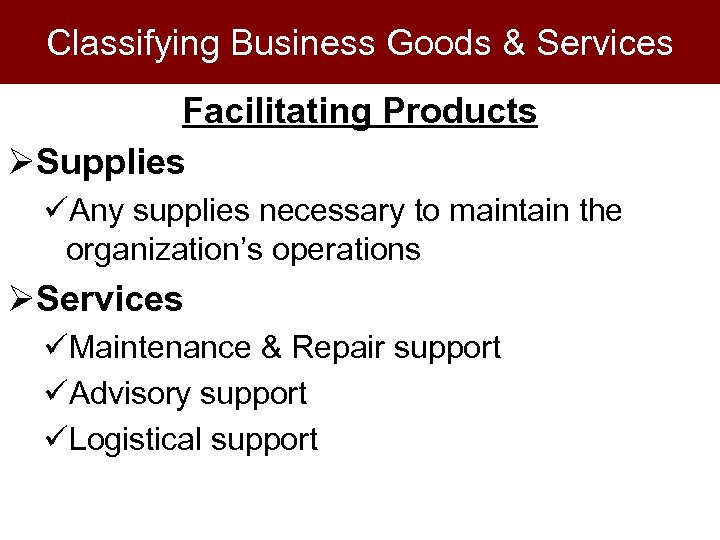
Classifying Business Goods & Services Facilitating Products ØSupplies üAny supplies necessary to maintain the organization’s operations ØServices üMaintenance & Repair support üAdvisory support üLogistical support
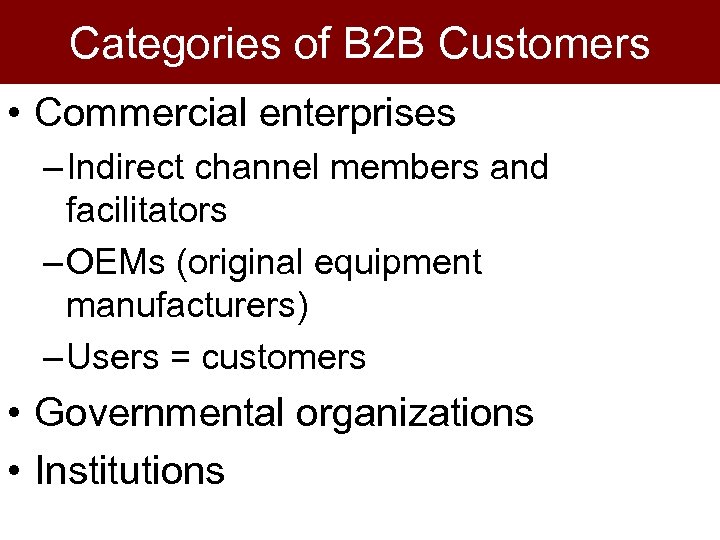
Categories of B 2 B Customers • Commercial enterprises – Indirect channel members and facilitators – OEMs (original equipment manufacturers) – Users = customers • Governmental organizations • Institutions
Скачать презентацию Introduction to Business-to-Business B 2 B Marketing
39070e4b2a73e89cd7d78fa78ef14d26.ppt