 Скачать презентацию Introduction to business First meetings Łukasz Konopielko konop gazeta
Introduction_to_business1REV.pptx
- Количество слайдов: 31



Introduction to business First meetings Łukasz Konopielko konop@gazeta. pl
Organizational issues • Key aims of the course • Meetings organization – joint lectures biweekly plus group biweekly classes • Textbook • Schedule • Requirements and grading • Each student presents case (in group of 3 -4) • From time to time short papers to be submitted during next lecture • Active participation appreciated!
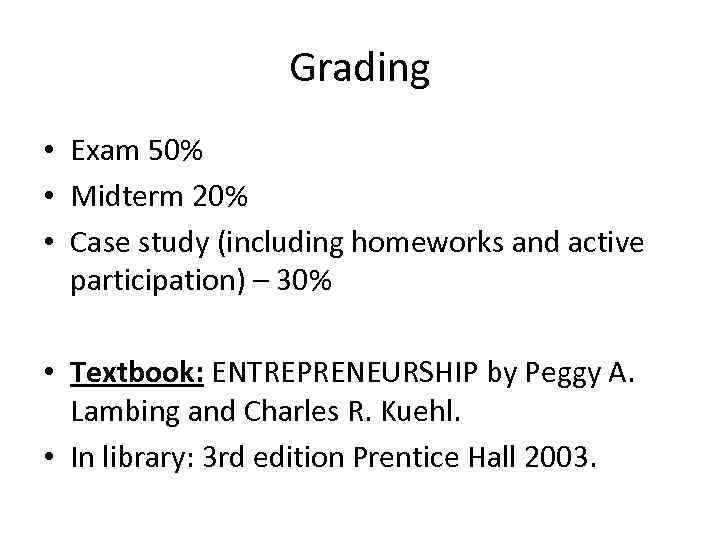
Grading • Exam 50% • Midterm 20% • Case study (including homeworks and active participation) – 30% • Textbook: ENTREPRENEURSHIP by Peggy A. Lambing and Charles R. Kuehl. • In library: 3 rd edition Prentice Hall 2003.
Case study (30% of grade) • Case studies will be appointed, according to language abilities. Additionally, some case studies would be allocated on the base of the field trips (if confirmed). • Deadline for case study paper submission: penultimate class.
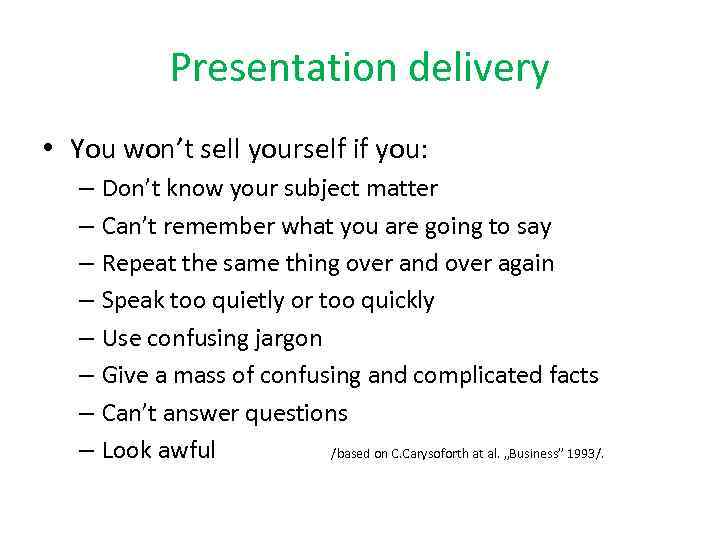
Presentation delivery • You won’t sell yourself if you: – Don’t know your subject matter – Can’t remember what you are going to say – Repeat the same thing over and over again – Speak too quietly or too quickly – Use confusing jargon – Give a mass of confusing and complicated facts – Can’t answer questions – Look awful /based on C. Carysoforth at al. „Business” 1993/.
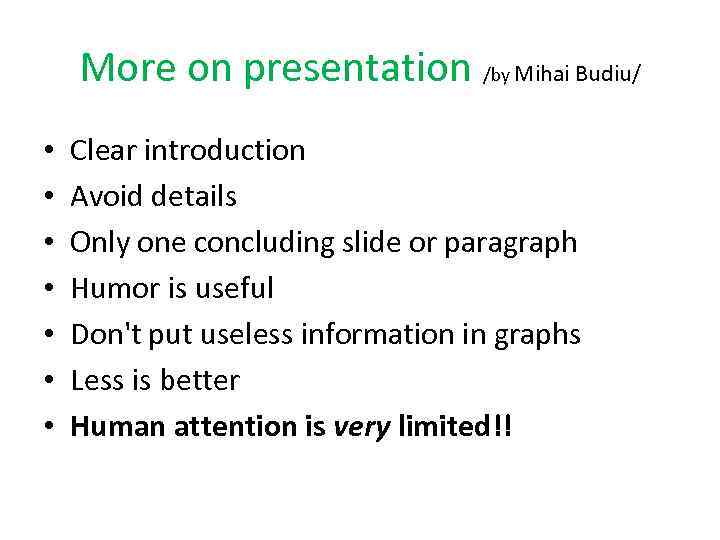
More on presentation /by Mihai Budiu/ • • Clear introduction Avoid details Only one concluding slide or paragraph Humor is useful Don't put useless information in graphs Less is better Human attention is very limited!!
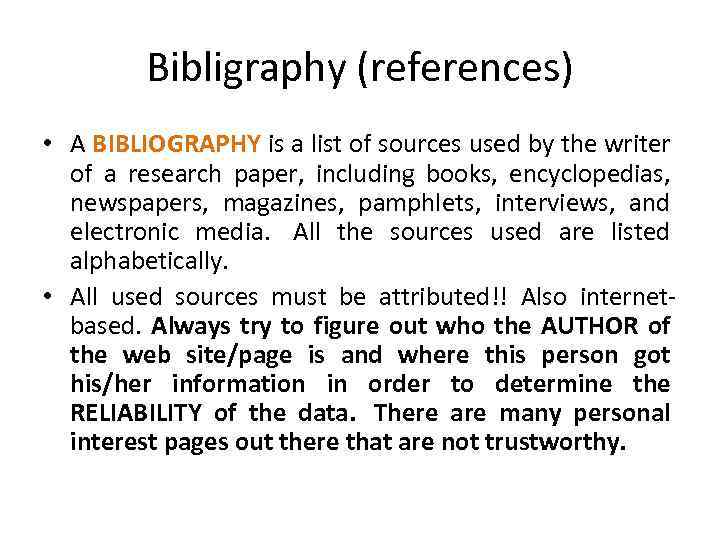
Bibligraphy (references) • A BIBLIOGRAPHY is a list of sources used by the writer of a research paper, including books, encyclopedias, newspapers, magazines, pamphlets, interviews, and electronic media. All the sources used are listed alphabetically. • All used sources must be attributed!! Also internetbased. Always try to figure out who the AUTHOR of the web site/page is and where this person got his/her information in order to determine the RELIABILITY of the data. There are many personal interest pages out there that are not trustworthy.
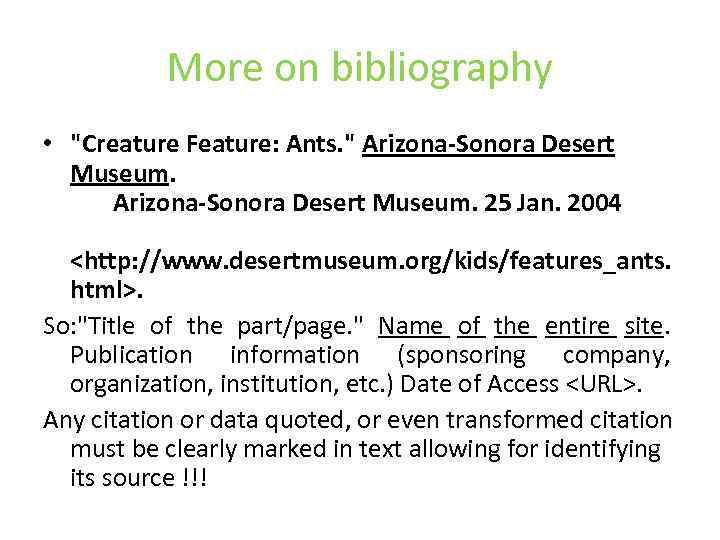
More on bibliography • "Creature Feature: Ants. " Arizona-Sonora Desert Museum. 25 Jan. 2004 <http: //www. desertmuseum. org/kids/features_ants. html>. So: "Title of the part/page. " Name of the entire site. Publication information (sponsoring company, organization, institution, etc. ) Date of Access <URL>. Any citation or data quoted, or even transformed citation must be clearly marked in text allowing for identifying its source !!!
Now get back to business! • Business economics – mainly on FIRMS • Three aspects: – External influences on the firm (business environment) – Internal decision of the firm – The external effects of business making Study of business will involve three types of activity: -description -analysis -recommendations
Industry Structure • 1955—focus on big business • 1955—one small business for every 38 people • 2000—one small business for every 12. 7 people 10
Increasing Number of Small Businesses • Foreign competitors disrupting big corporations • Start of deregulation and return to regulation as an effect of financial crisis 11
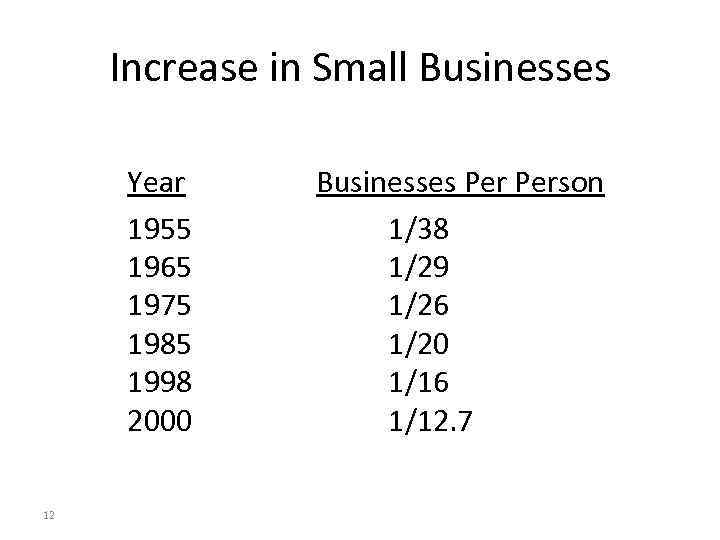
Increase in Small Businesses Year 1955 1965 1975 1985 1998 2000 12 Businesses Person 1/38 1/29 1/26 1/20 1/16 1/12. 7
Downsizing • Firms systematically and substantially reduce the number of people they employ to achieve a reduction in cost • Often the simplest way of cost-saving • Organizational survival or top-management greed? • Flexibility counts 13
Societal Change • End of jobs? • Post-industrial society: a country where large-scale businesses are no longer as important as they were – USA? Europe? 14
Consequences for the Individual • Unemployment or underemployment • Uncertainties and pressures of job insecurity • Inability to plan career and financial fragility – also affecting aggregate demand • Wave of interest in entrepreneurship worldwide 15
Entrepreneurship in a Changing Environment • Changes in Markets – Outsourcing (non-core business is hired/purchased from outside) – Virtual organizations (ad hoc formation for projects, IT development) – Market fragmentation (monopolistic competition, niche specialisation) 16
Competitive Advantages of Small Business • Allows a business to compete effectively • Personal relationship with customer • Ability to innovate (but what is innvovation? ) • Flexibility 17
Entrepreneurial Activities • New concept/new business (innovation? ) • Existing concept/new business • Existing concept/existing business
What is enterprise? • Entereprise is something that many people possess, but they don’t all decide to run their own businesses. It is the ability to come up with and carry out new ideas and new ways of doing things • It often involves making judgments about the risks and rewards of a situation and acting on them.
The Individual • • • Passion for the business Tenacity despite failure Confidence Self-determination Management of risk Seeing changes as opportunities
The Individual (cont. ) • • • Tolerance for ambiguity Initiative and need for achievement Detail orientated and perfectionism Perception of passing time Creativity Ability to see the big picture
The Individual (cont. ) • Motivating Factors – To use personal skills and abilities – To gain control over his/her life – To build something for the family – Because he/she liked the challenge – To live how and where he/she chooses
The Individual (cont. ) • Self-Efficacy – A person’s belief in his or her ability to perform a task – Belief that success as an entrepreneur is possible
Advantages of Entrepreneurship • Autonomy • Challenge of a start-up • Financial control
Disadvantages of Entrepreneurship • Personal sacrifices • Burden of responsibility • Little margin for error
The Entrepreneur and the Business Plan • When writing a business plan, key information will include the entrepreneur’s: – Education – Work experience – Entrepreneurial personality characteristics
The business environment • Political/legal factors • Economic factors (microeconomic and macroeconomic environment) • Social/cultural factors • Technological factors • PEST analysis – political, economic, social and technological. The behavior and performance of firms is affected by the business environment (PEST).
Structure of industry • Three broad categories: – Primary production. The production and extraction of natural resources plus agriculture – Secondary production. The production from manufacturing and construction sectors of the economy – Tertiary production. The production from the service sector of the economy. Simplified distinction: production, agriculture and services
Industry • Group of firms that produce a particular category of product. • Industrial sector – a grouping of industries producing similar products or delivering similar services. • Industrial concentration – the degree to which an industry is dominated by large business enterprises. • How to measure? Share of the 3 (5, 10) largest firms in the industry. Can be misleading… • Better index. Most popular: Herfindahl index
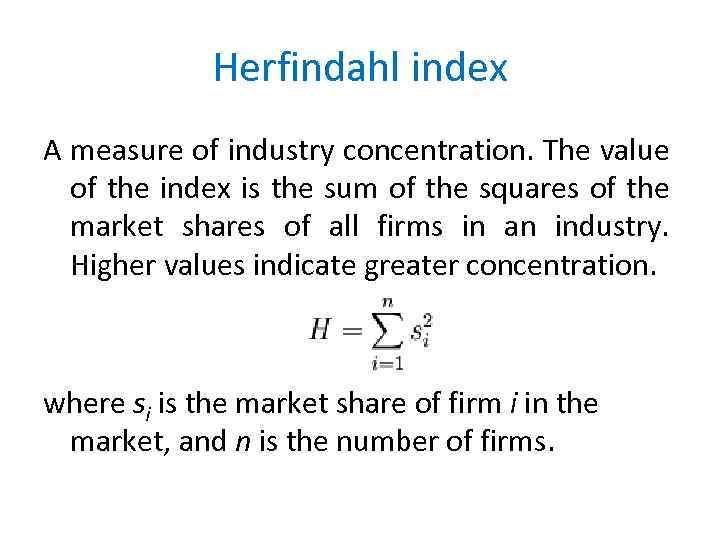
Herfindahl index A measure of industry concentration. The value of the index is the sum of the squares of the market shares of all firms in an industry. Higher values indicate greater concentration. where si is the market share of firm i in the market, and n is the number of firms.
Homework • What are the motives for becoming an entrepreneur? Give as many reasons as you can to explain why people start their own business? Form: list – only bullets without explanation and discussion…
Скачать презентацию Introduction to business First meetings Łukasz Konopielko konop gazeta
Introduction_to_business1REV.pptx