Скачать презентацию Introduction of School Nutri Agent Project Health and
59e8166e7540eaaef59d26eee738fad9.ppt
- Количество слайдов: 166
 Introduction of School ‘Nutri. Agent’ Project Health and Nutrition Know more about Healthy School Lunch Know more about Healthy Snack ‘Nutri. Agent’ Handbook Develop and Implement School Policy on Healthy Eating
 You will be able to… know more about nutrition understand the school lunch / snacks guidelines aware of available resources and support understand the aim of school policy on healthy eating
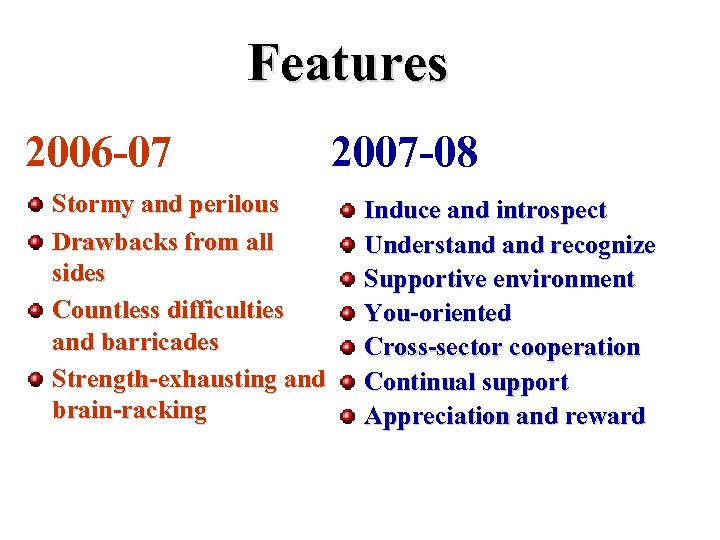 Features 2006 -07 Stormy and perilous Drawbacks from all sides Countless difficulties and barricades Strength-exhausting and brain-racking 2007 -08 Induce and introspect Understand recognize Supportive environment You-oriented Cross-sector cooperation Continual support Appreciation and reward
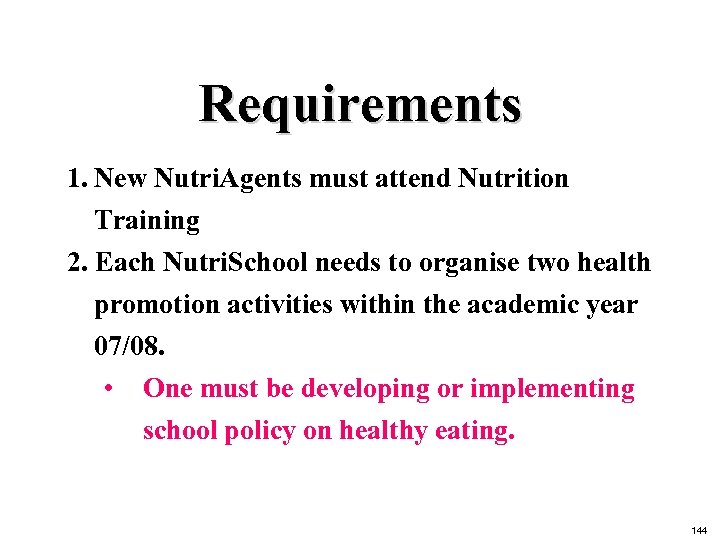 Requirements 1. New Nutri. Agents must attend Nutrition Training 2. Each Nutri. School needs to organise two health promotion activities within the academic year 07/08. • One must be developing or implementing school policy on healthy eating. 144
 You-oriented Support Ø Ø Workshop at school Professional advice Resource available Volunteers’ support
 Topics of Workshop Ø Develop and implement school policy on healthy eating Ø Monitor eating environment at school Ø Selecting school lunch supplier Ø Planning of events on promoting healthy eating Ø Organizing Health Club led by senior primary school students; through peer influence, education, and participation to promote healthy eating
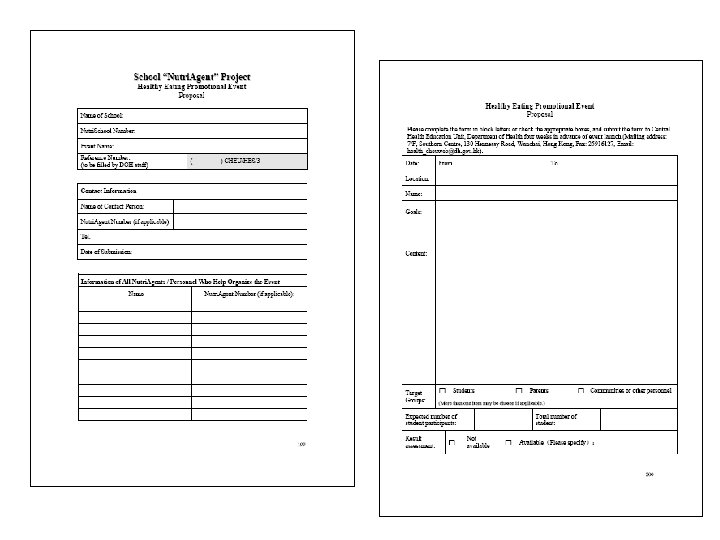
 Documentary Ø Simply submit proposal of activities Ø The proposal should be faxed or e-mailed to Central Health Education Unit (CHEU) four weeks before the activity start
 Evaluation Reports • Submit final report within 2 weeks upon the completion of event, (including receipts, photographs, posters, questionnaires, etc. ) • Mail the Original to HKCC and a copy to DH by fax or e-mail • Reports are requested only subject to activities which required HKCC funding.
 Appreciation, Record and Reward
 Marking and Recording • Marking criteria – Nature (Policy / Environment, continual surveillance, knowledge / concern) – Scale – Effectiveness • Record of scoring – School’s Record – Agent’s Record
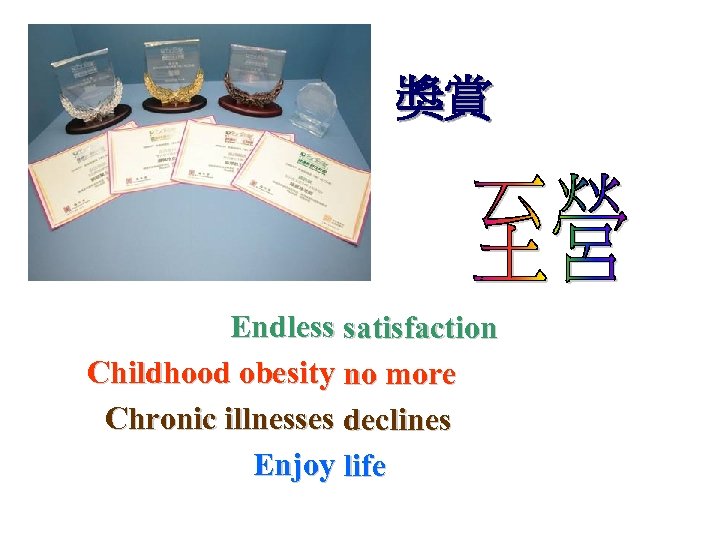 獎賞 Endless satisfaction Childhood obesity no more Chronic illnesses declines Enjoy life
 Background • Three major factors below count 60% (56. 5%) on the death toll* in Hong Kong: – Cancer (32. 4%) – Heart diseases (15. 2%) – Cerebrovascular diseases (8. 9%) • Unhealthy dietary habits Øincrease the risk of chronic illnesses Øcause overweight and obesity *Data of 2005 *
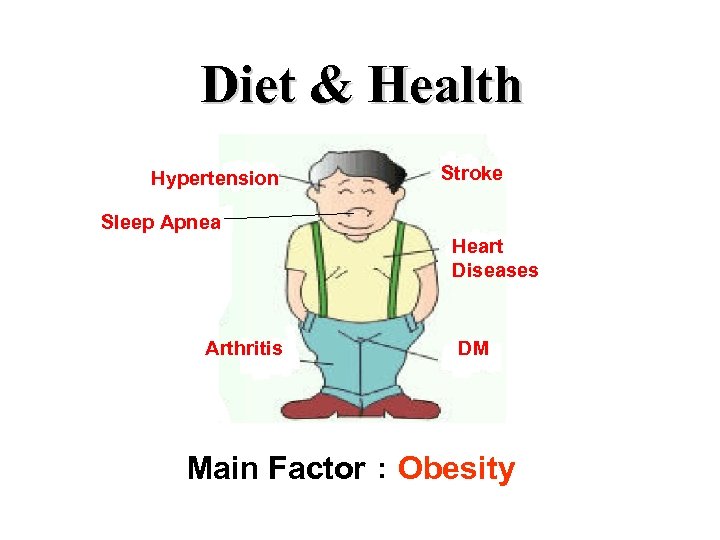 Diet & Health Hypertension Stroke Sleep Apnea Heart Diseases Arthritis DM Main Factor:Obesity
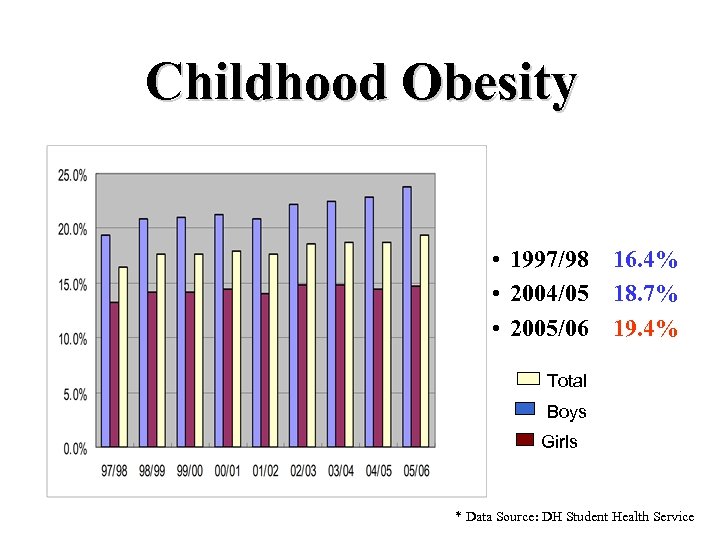 Childhood Obesity • 1997/98 16. 4% • 2004/05 18. 7% • 2005/06 19. 4% Total Boys Girls * Data Source: DH Student Health Service

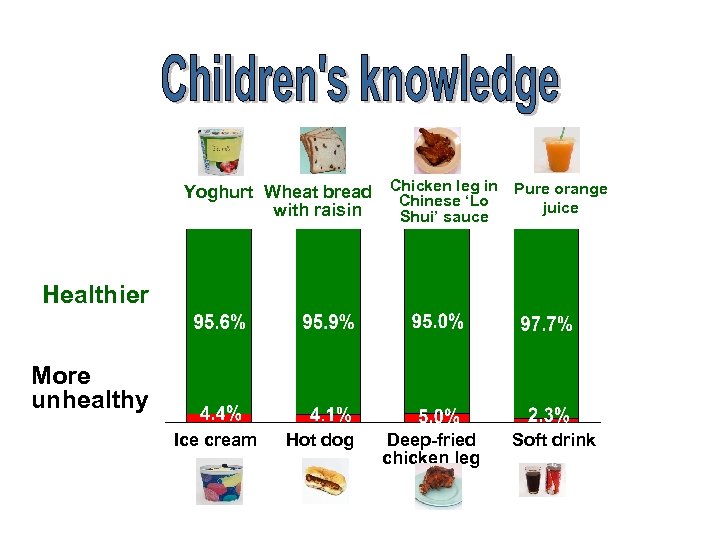 Yoghurt Wheat bread Chicken leg in Pure orange Chinese ‘Lo juice with raisin Shui’ sauce Healthier More unhealthy Ice cream Hot dog Deep-fried chicken leg Soft drink
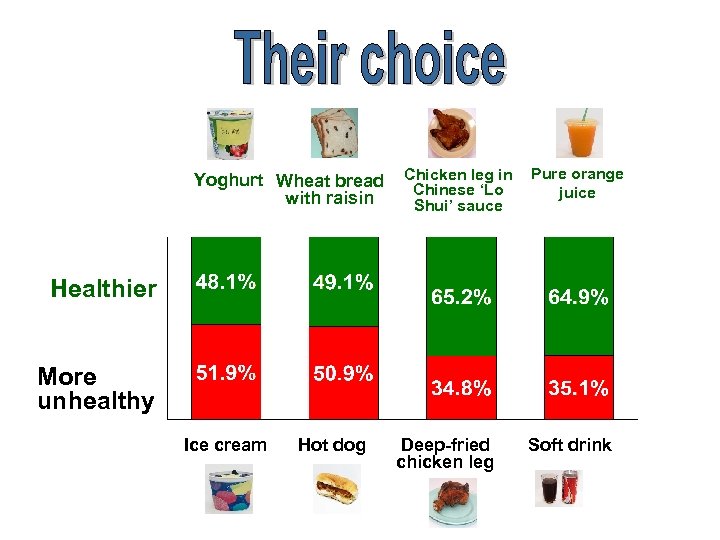 Yoghurt Wheat bread with raisin Chicken leg in Chinese ‘Lo Shui’ sauce Pure orange juice Healthier More unhealthy Ice cream Hot dog Deep-fried chicken leg Soft drink
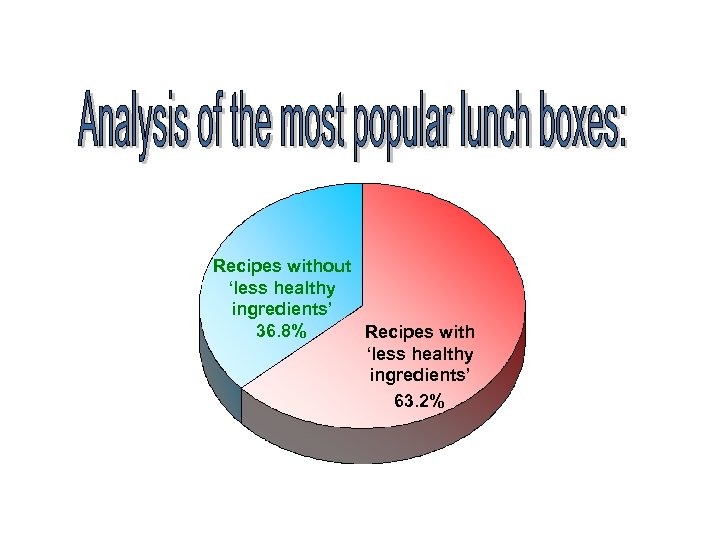 Recipes without ‘less healthy ingredients’ 36. 8% Recipes with ‘less healthy ingredients’ 63. 2%
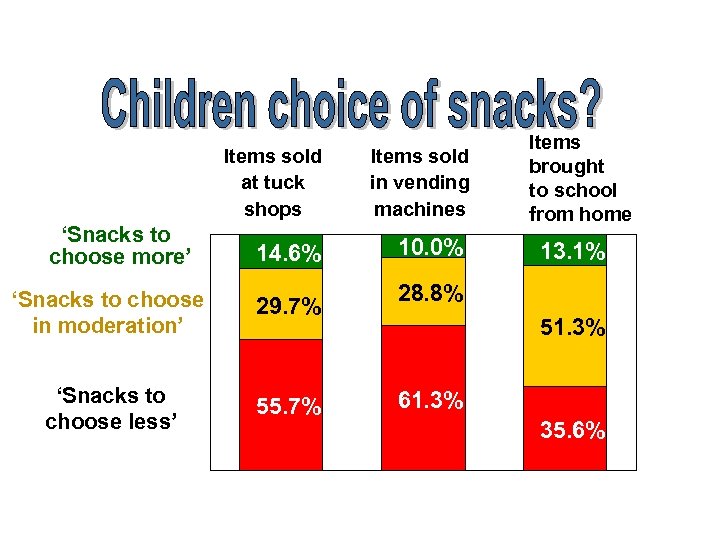 Items sold at tuck shops ‘Snacks to choose more’ 14. 6% ‘Snacks to choose in moderation’ 29. 7% ‘Snacks to choose less’ 55. 7% Items sold in vending machines 10. 0% Items brought to school from home 13. 1% 28. 8% 51. 3% 61. 3% 35. 6%
 Healthy eating habits built up in childhood are more likely to be carried on into adulthood Children generally fail to follow healthy eating principles Studies pointed out that school-based intervention programmes are found with proven effectiveness in promoting healthy dietary habits among schoolchildren
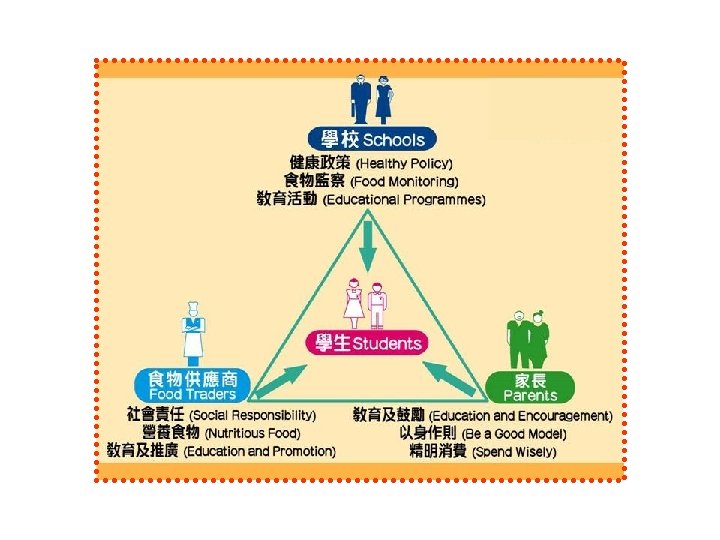
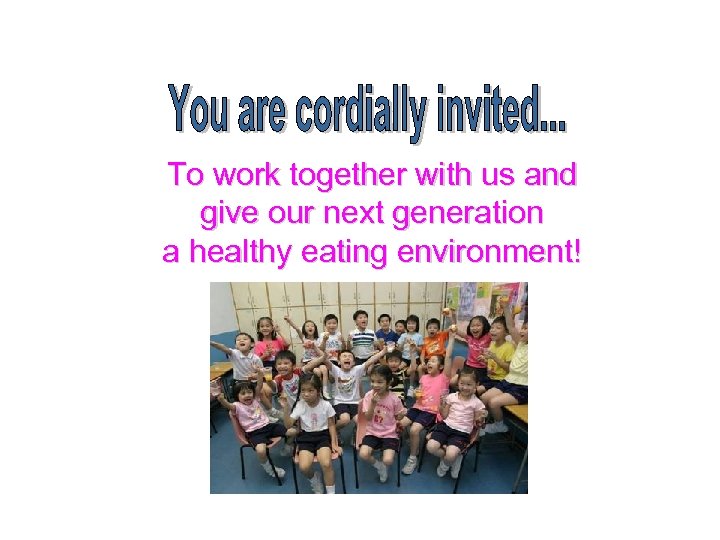 To work together with us and give our next generation a healthy eating environment!
 School ‘Nutri. Agent’ Project Nutritional Training Workshop Nutritional Needs of Schoolchildren

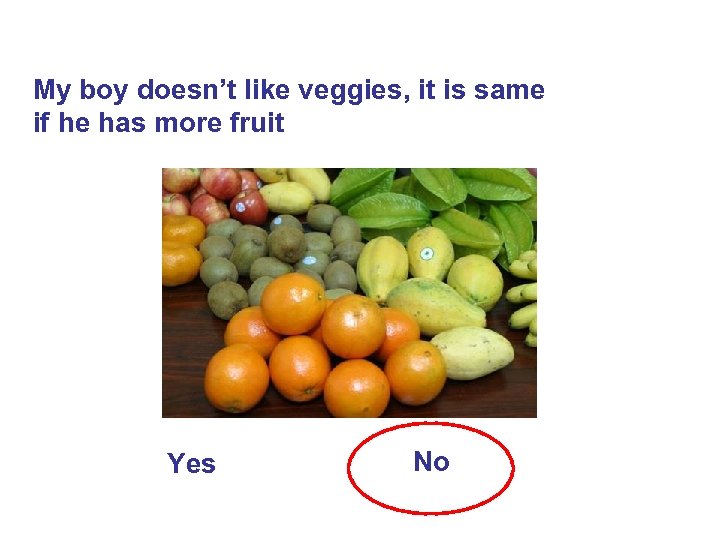 My boy doesn’t like veggies, it is same if he has more fruit Yes No
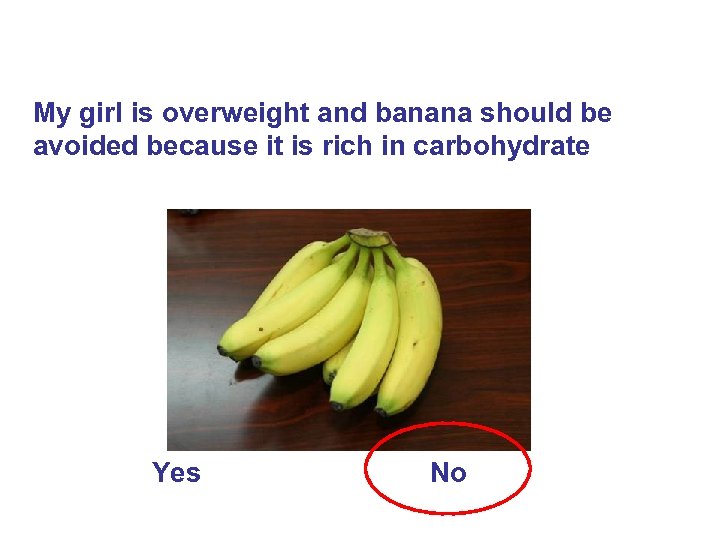 My girl is overweight and banana should be avoided because it is rich in carbohydrate Yes No
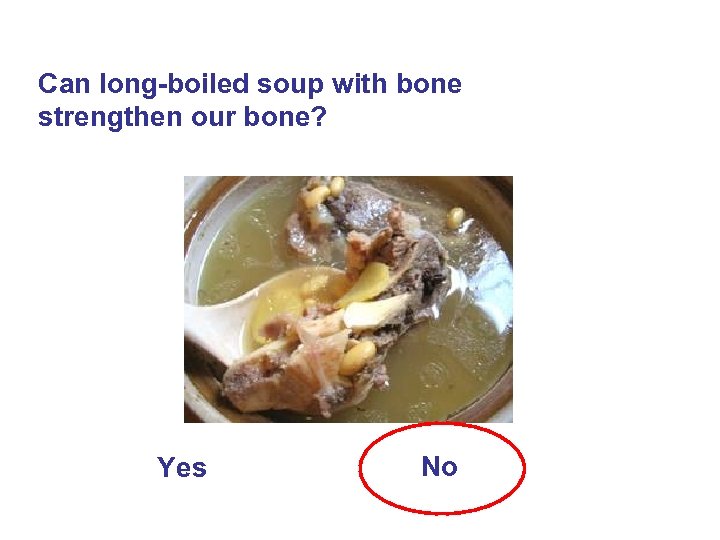 Can long-boiled soup with bone strengthen our bone? Yes No
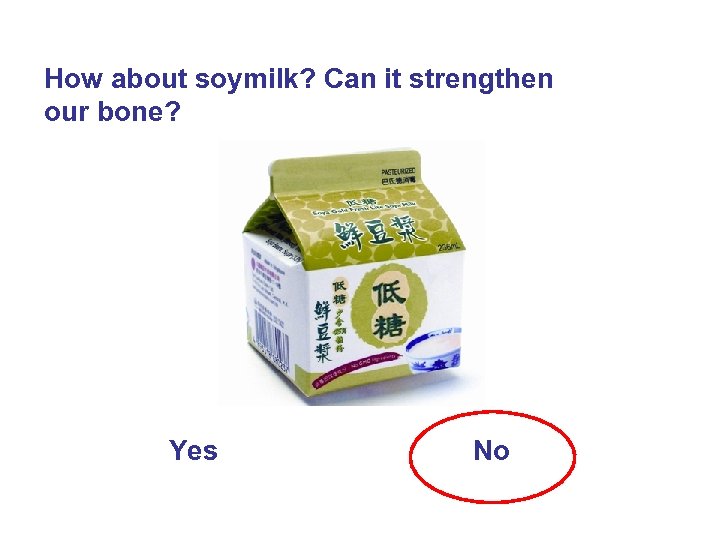 How about soymilk? Can it strengthen our bone? Yes No
 Is frozen meat less nutritious than the fresh one? Yes No
 Lunch
Lunch
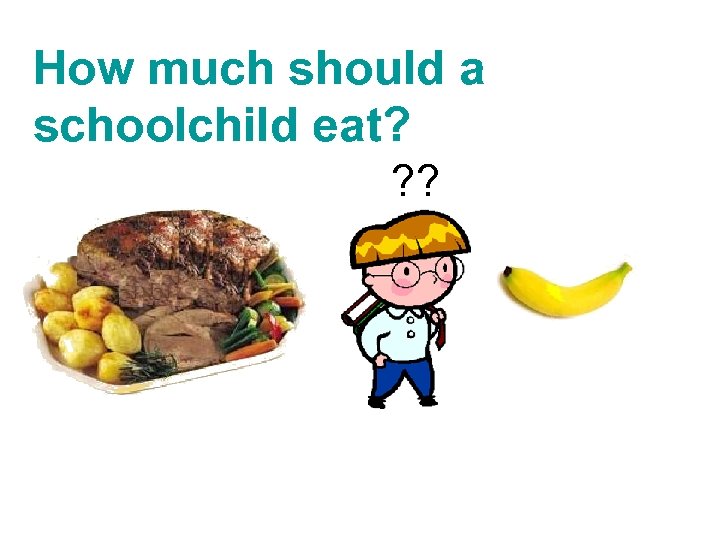 How much should a schoolchild eat? ? ?
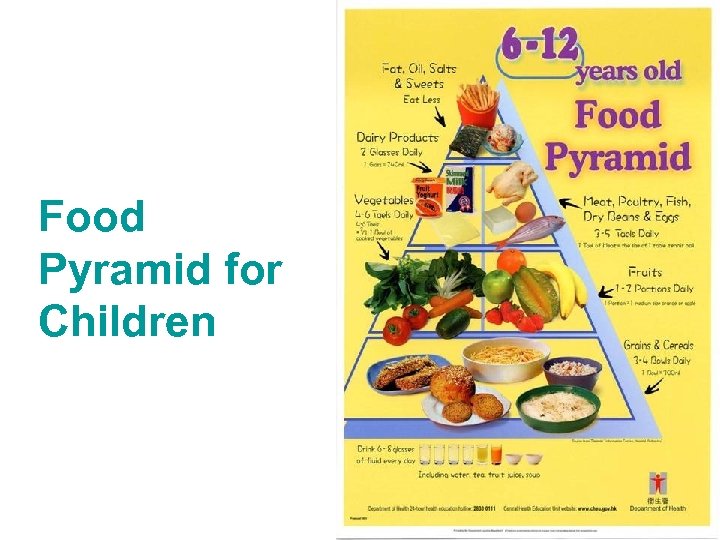 Food Pyramid for Children
 A healthy lunch should… provide schoolchildren with one third of the nutrients they need every day
 Nutritional Guidelines on School Lunch for Primary School Students
 With the guidelines, we hope to… Ø Achieve energy balance Ø Increase intake of fruit & vegetables Ø Reduce total intake of fat, sugar and salt in students’ diet
 About the guidelines: (1) Guidelines on Quantity (2) Guidelines on Quality
 (1) Guidelines on Quantity
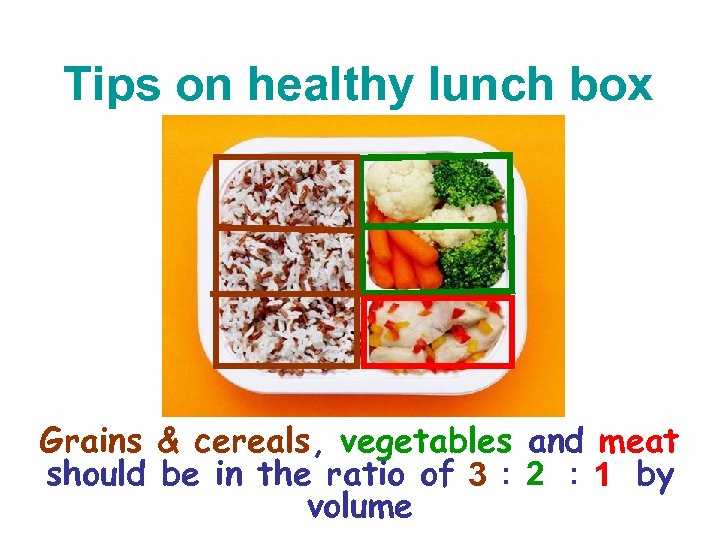 Tips on healthy lunch box Grains & cereals, vegetables and meat should be in the ratio of : : 1 by 3 2 volume
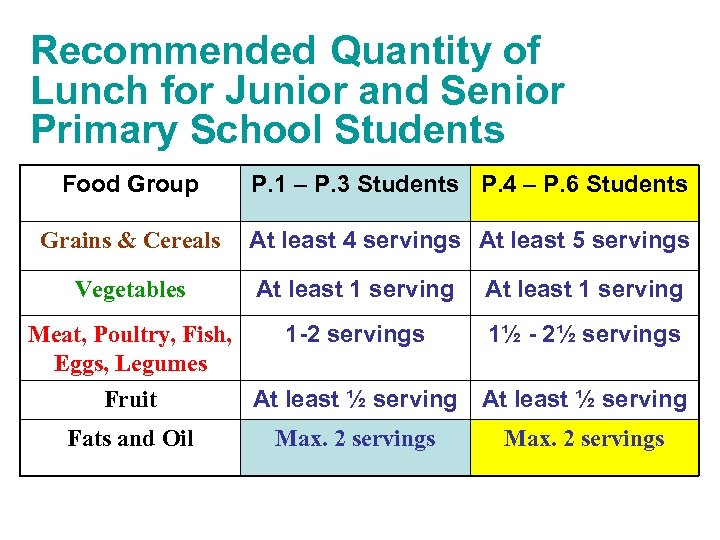 Recommended Quantity of Lunch for Junior and Senior Primary School Students Food Group P. 1 – P. 3 Students P. 4 – P. 6 Students Grains & Cereals At least 4 servings At least 5 servings Vegetables At least 1 serving Meat, Poultry, Fish, 1 -2 servings 1½ - 2½ servings Eggs, Legumes Fruit At least ½ serving Fats and Oil Max. 2 servings
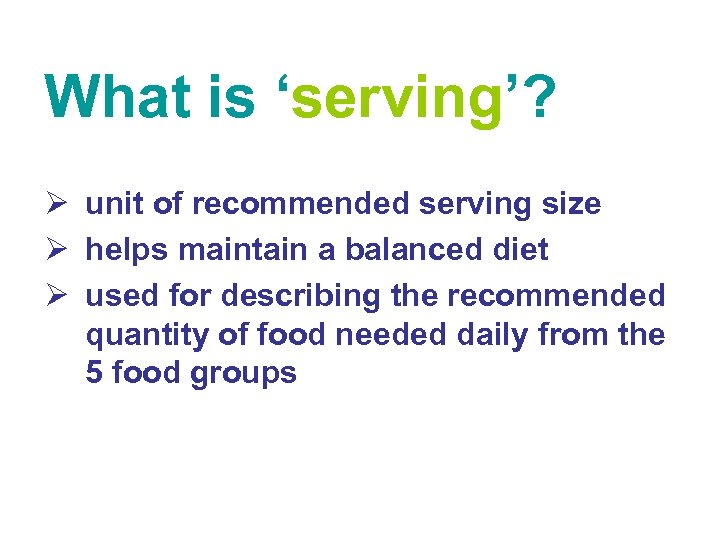 What is ‘serving’? Ø unit of recommended serving size Ø helps maintain a balanced diet Ø used for describing the recommended quantity of food needed daily from the 5 food groups
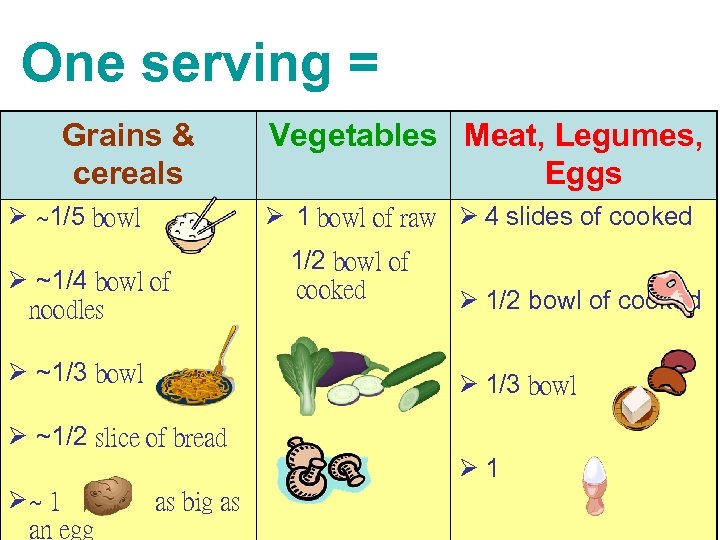 One serving = Grains & cereals Ø ~1/5 bowl Vegetables Meat, Legumes, Eggs Ø 1 bowl of raw Ø 4 slides of cooked Ø ~1/4 bowl of noodles Ø ~1/3 bowl 1/2 bowl of cooked Ø 1/3 bowl Ø ~1/2 slice of bread Ø 1 Ø~ 1 an egg as big as
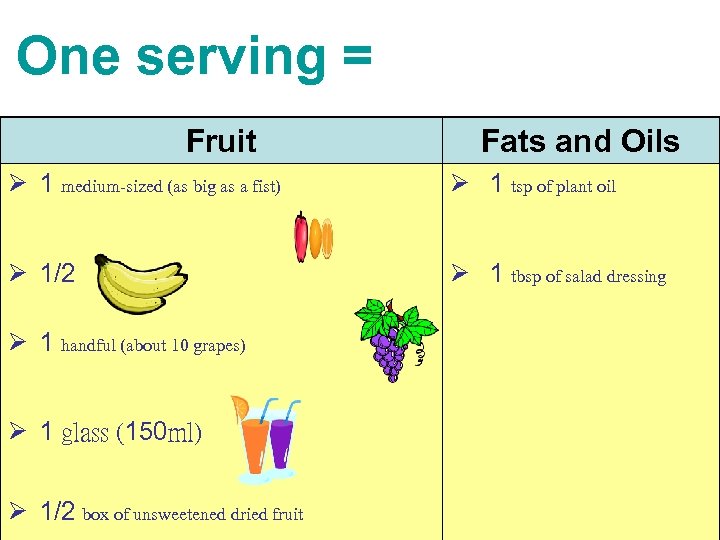 One serving = Fruit Fats and Oils Ø 1 medium-sized (as big as a fist) Ø 1 tsp of plant oil Ø 1/2 Ø 1 tbsp of salad dressing Ø 1 handful (about 10 grapes) Ø 1 glass (150 ml) Ø 1/2 box of unsweetened dried fruit
 (2) Guidelines On Quality
 How to choose ‘quality’ healthy lunch for children?
 Quality Food Ø 3 lows, 1 high: Low-fat, low-sugar, low-salt and high-fibre Ø Types of food in lunch: Ø Encouraged food items Ø Limited food items Ø Strongly discouraged food items
 Encouraged Food Items Ø Natural and fresh Ø ‘ 3 lows, 1 high’ food
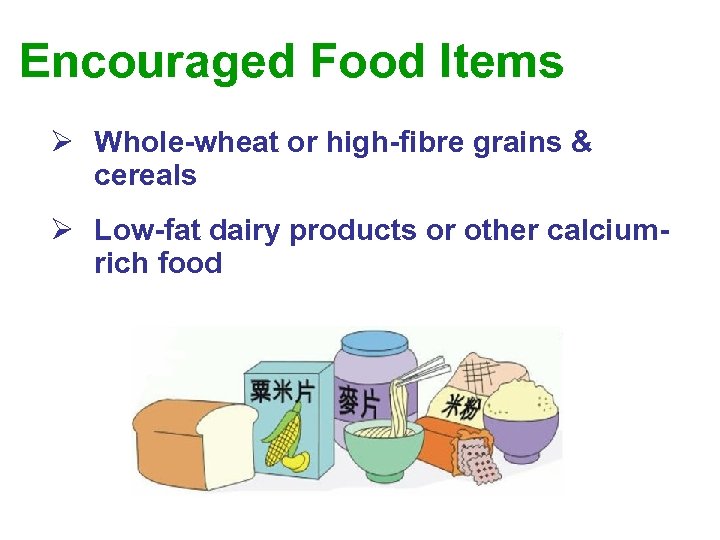 Encouraged Food Items Ø Whole-wheat or high-fibre grains & cereals Ø Low-fat dairy products or other calciumrich food
 Limited Food Items Ø Processed / preserved food or food with added oil, salt or sugar Ø High-salt or high-fat sauce and gravy ≤ 2 days/week
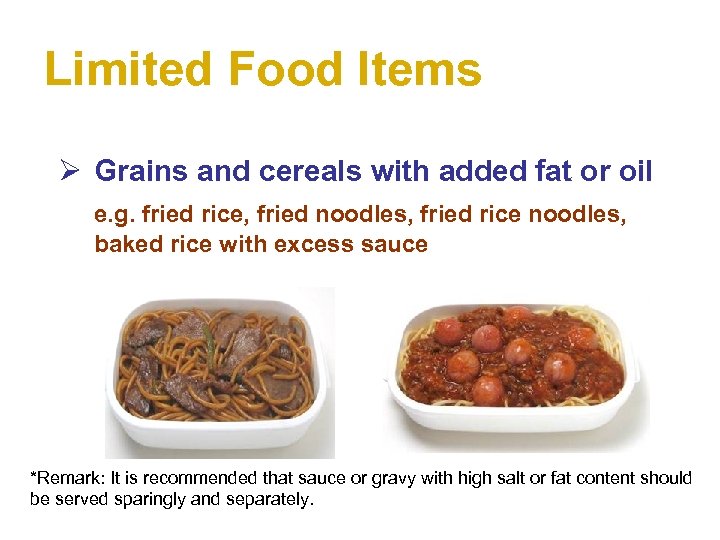 Limited Food Items Ø Grains and cereals with added fat or oil e. g. fried rice, fried noodles, fried rice noodles, baked rice with excess sauce *Remark: It is recommended that sauce or gravy with high salt or fat content should be served sparingly and separately.
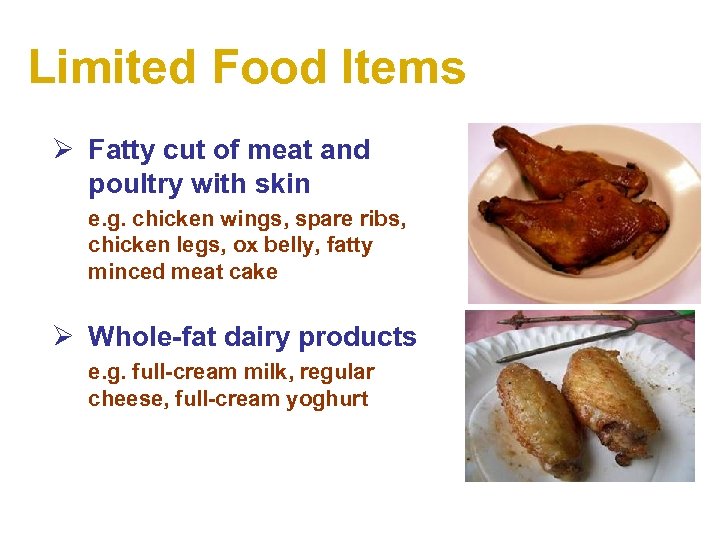 Limited Food Items Ø Fatty cut of meat and poultry with skin e. g. chicken wings, spare ribs, chicken legs, ox belly, fatty minced meat cake Ø Whole-fat dairy products e. g. full-cream milk, regular cheese, full-cream yoghurt
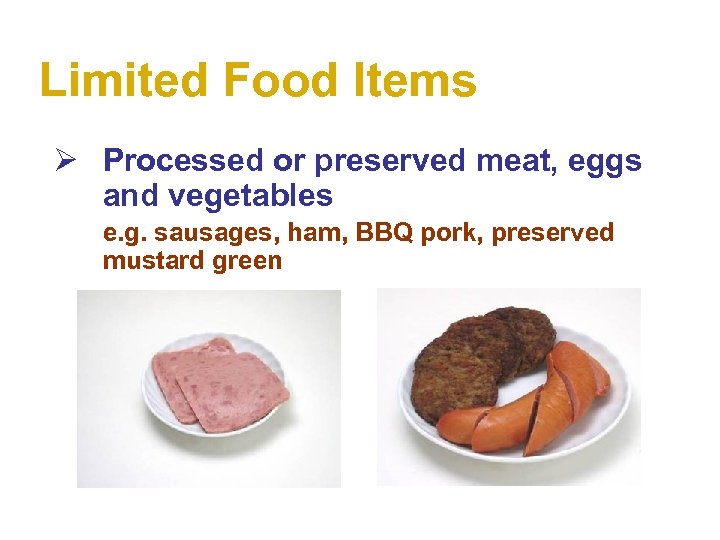 Limited Food Items Ø Processed or preserved meat, eggs and vegetables e. g. sausages, ham, BBQ pork, preserved mustard green
 Strongly Discouraged Food Items Ø Food very high in fat, salt or sugar Ø Food with added animal fat, plant saturated fat and trans fat Say NO!
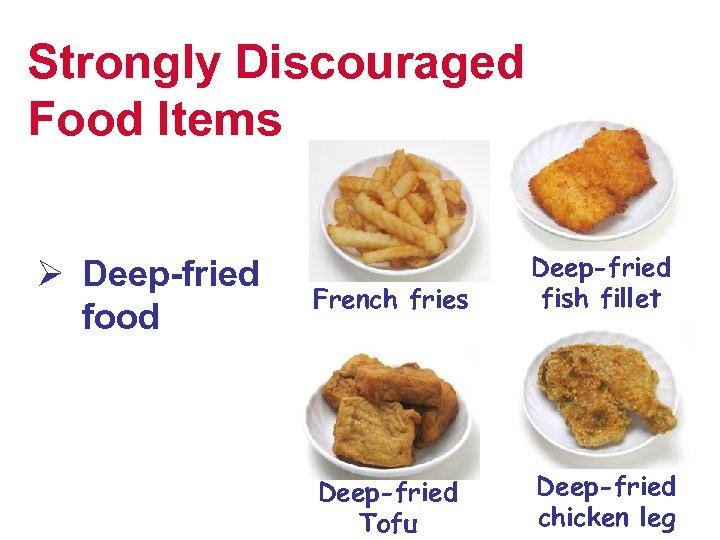 Strongly Discouraged Food Items Ø Deep-fried food French fries Deep-fried fish fillet Deep-fried Tofu Deep-fried chicken leg
 Strongly Discouraged Food Items Ø Food with added animal fat, plant -based saturated fat and hydrogenated fat e. g. lard, chicken oil, butter, coconut oil, palm oil, margarine
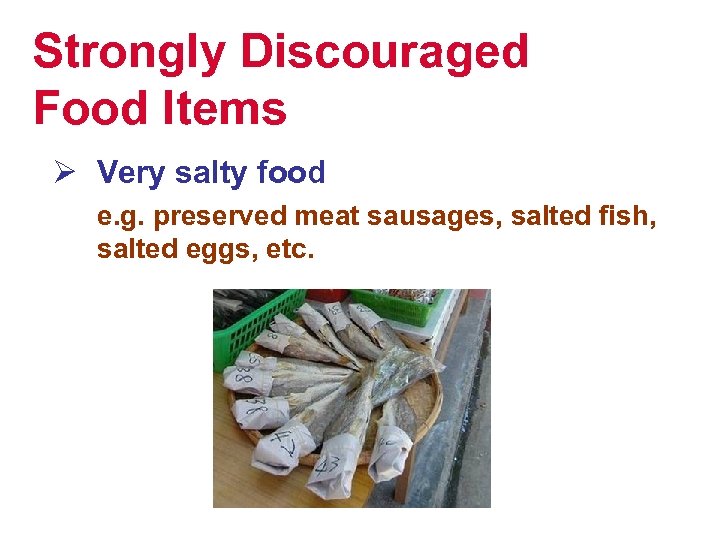 Strongly Discouraged Food Items Ø Very salty food e. g. preserved meat sausages, salted fish, salted eggs, etc.
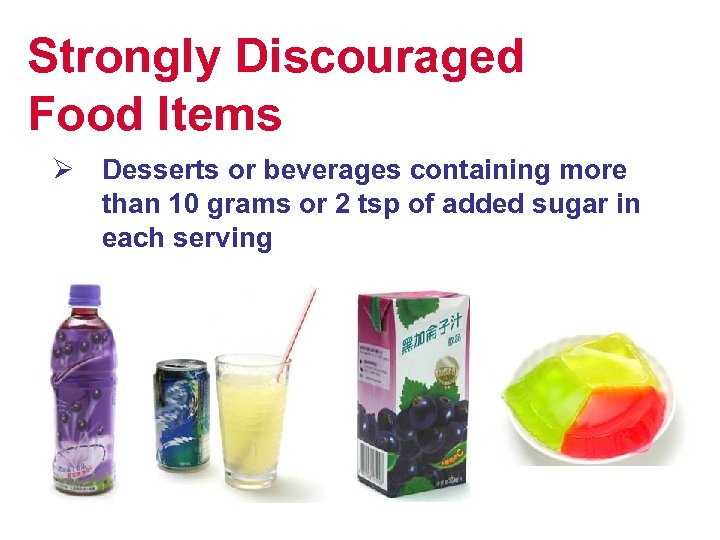 Strongly Discouraged Food Items Ø Desserts or beverages containing more than 10 grams or 2 tsp of added sugar in each serving
 Research Design • Twenty-three primary school, 19 primary school lunch caterer, 78 lunch box for primary 1 -3 schoolchildren • Nutrient analysis was performed by the Centre for Food Safety Ø Energy and 9 nutrients, including carbohydrate, saturated fat, sugar, protein, cholesterol, sodium, total fat, dietary fibre, calcium
 Research Design • The result was compared with the Dietary Referenced Intake recommended by the Chinese Nutrition Society or other international standards
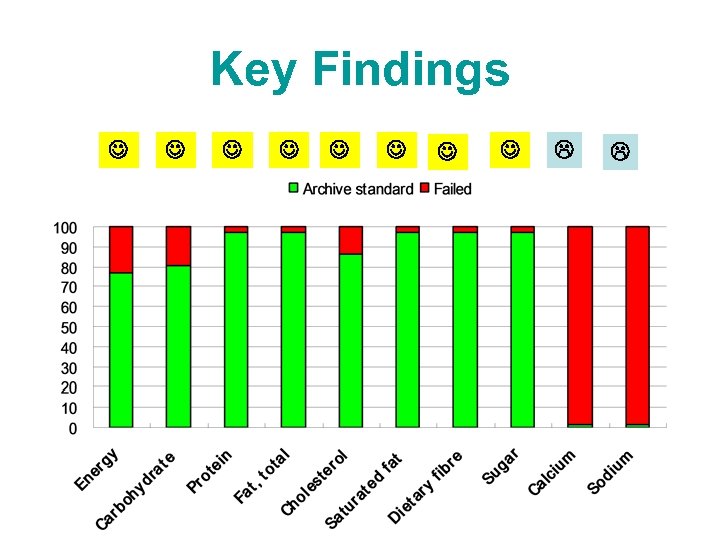 Key Findings
 Suggestion - Calcium • Ensure adequate intake of calcium of children, encourage 2 servings of low-fat, unsweetened dairy products everyday. • When prepare dinner, parents may use calcium-rich foods (e. g. firm tofu, darkgreen vegetables)
 Suggestion - Sodium • Monitor the supply of lunch box which is relatively high in sodium (such as lunch box including preserved foods or a lot of sauce), discuss with lunch caterer regularly for improvement • Request to serve sauce separately from grains and cereals • Encourage children to choose healthy options (e. g. Dietitian’s choice)
 Let’s see whether they are healthy. .
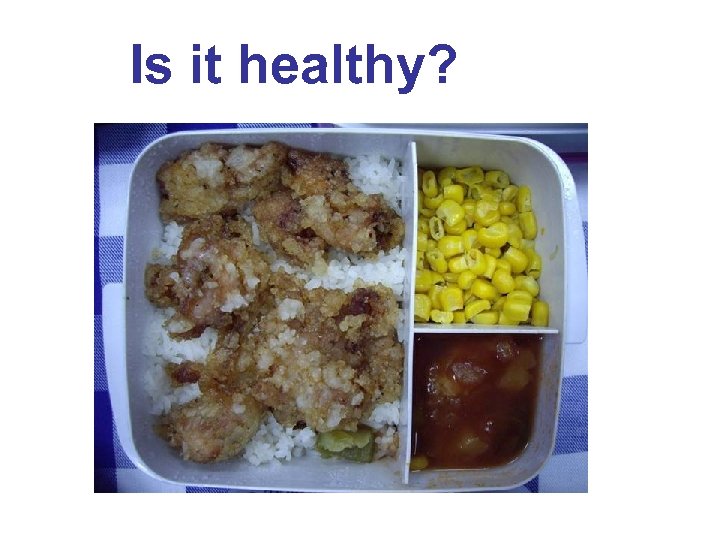 Is it healthy?
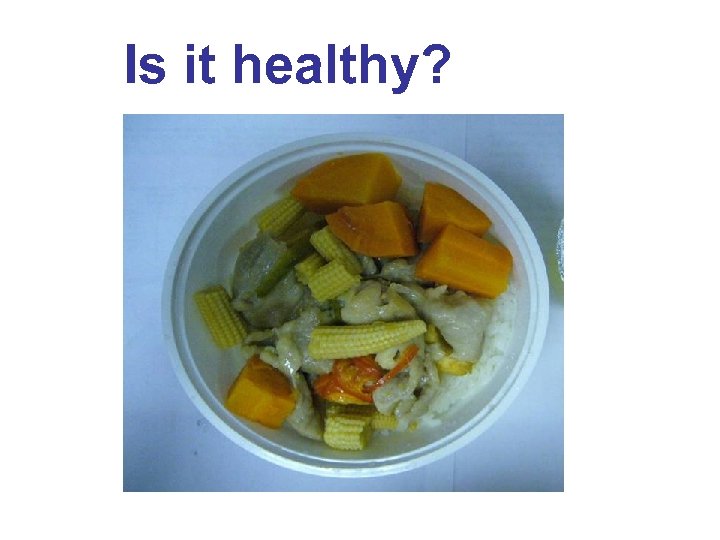 Is it healthy?
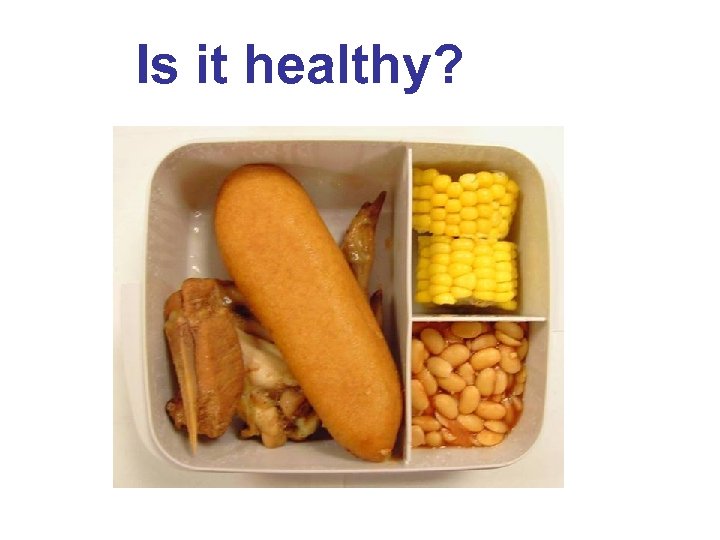 Is it healthy?
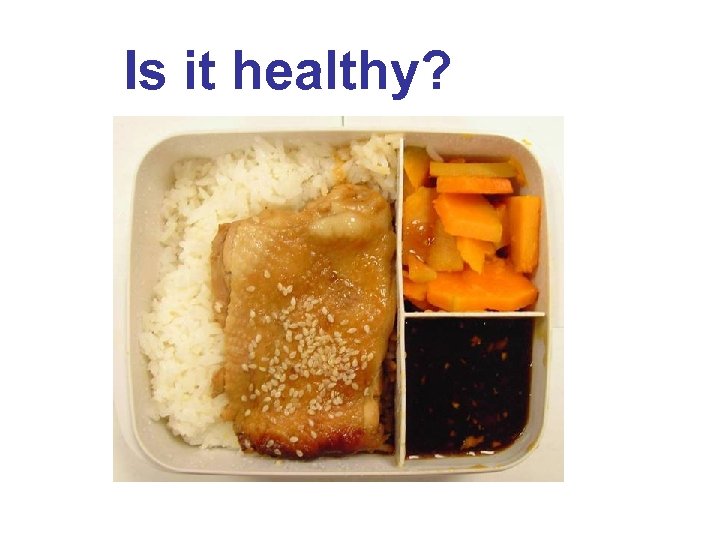 Is it healthy?
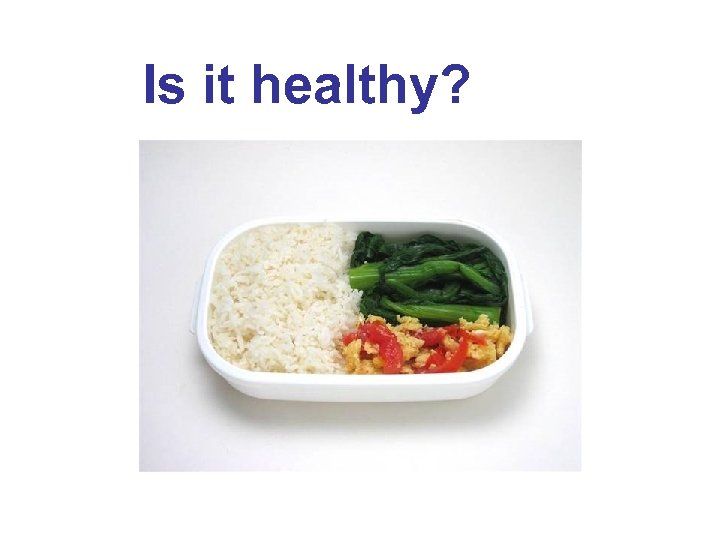 Is it healthy?
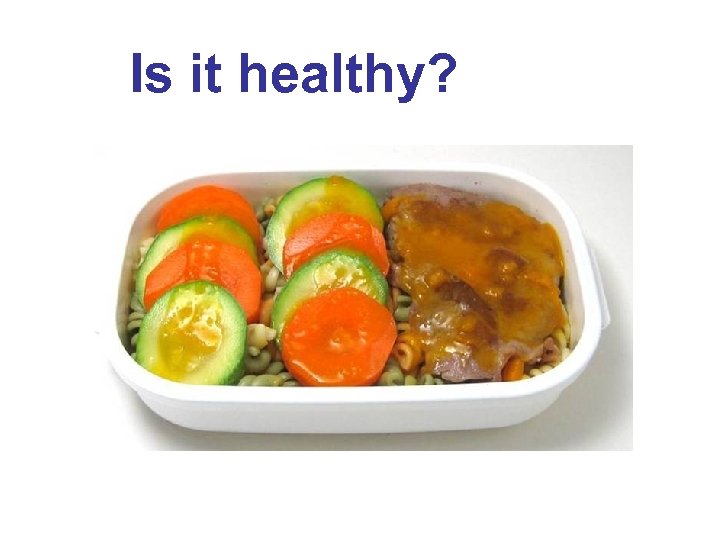 Is it healthy?
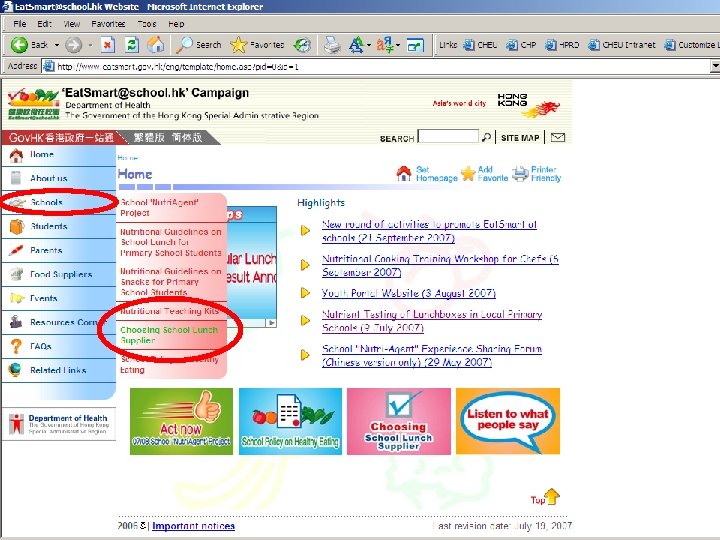
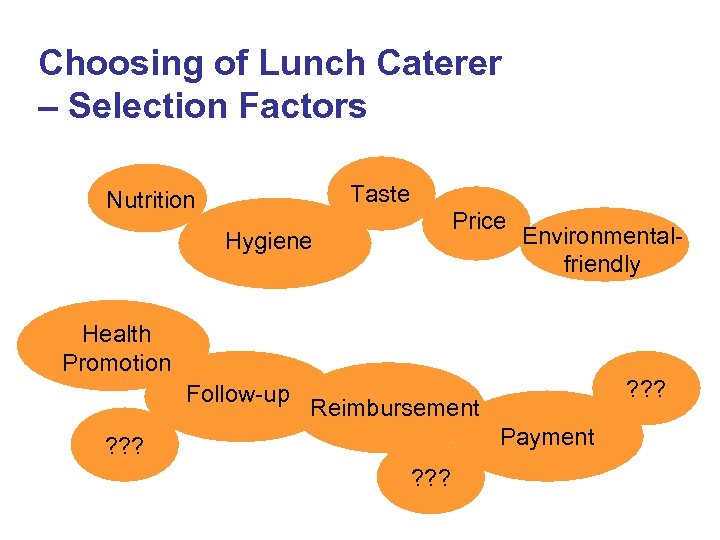 Choosing of Lunch Caterer – Selection Factors Taste Nutrition Price Hygiene Environmentalfriendly Health Promotion Follow-up ? ? ? Reimbursement Payment ? ? ?
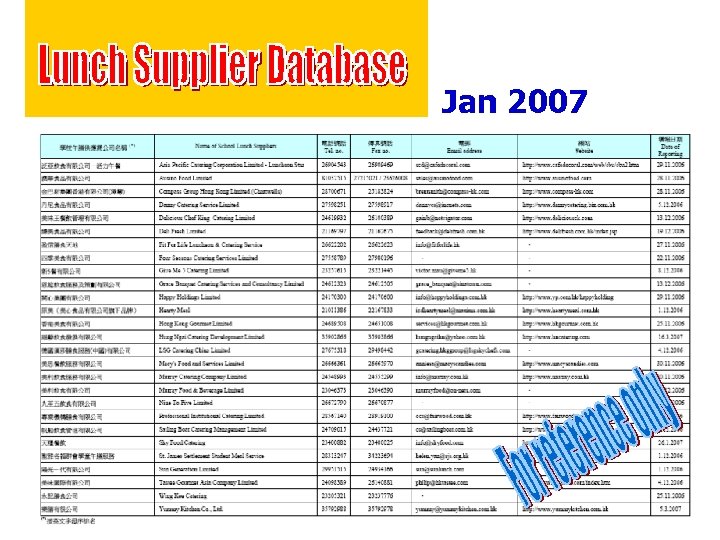 Jan 2007
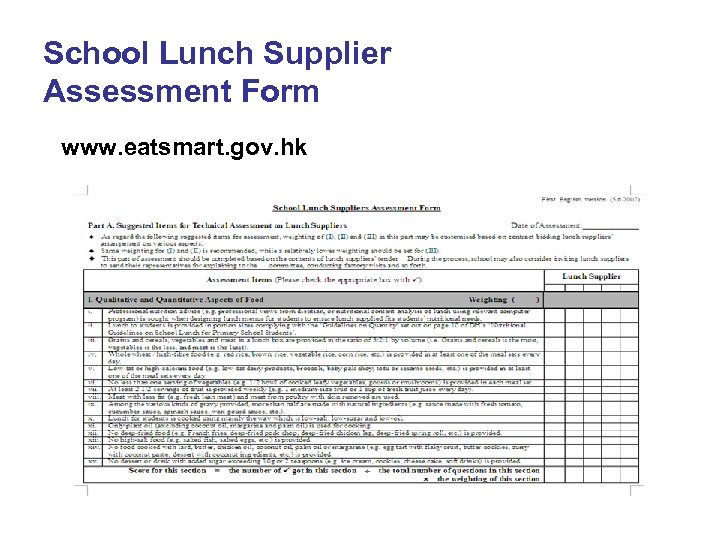 School Lunch Supplier Assessment Form www. eatsmart. gov. hk
 Tools for Lunch Surveillance in Primary Schools
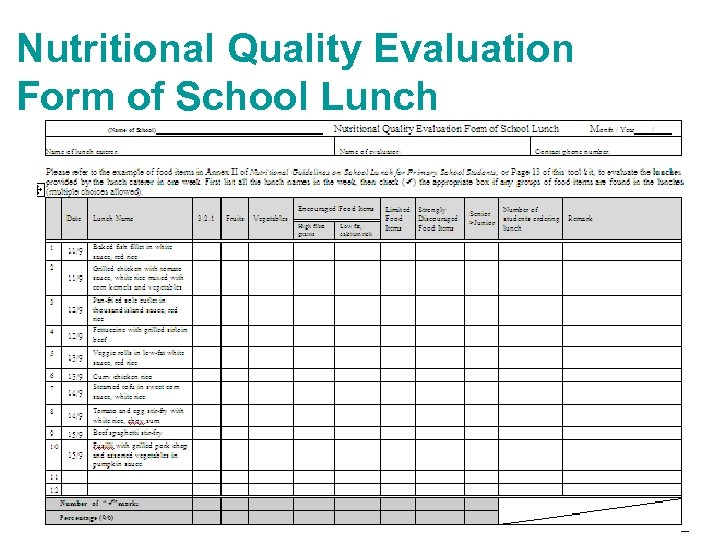 Nutritional Quality Evaluation Form of School Lunch
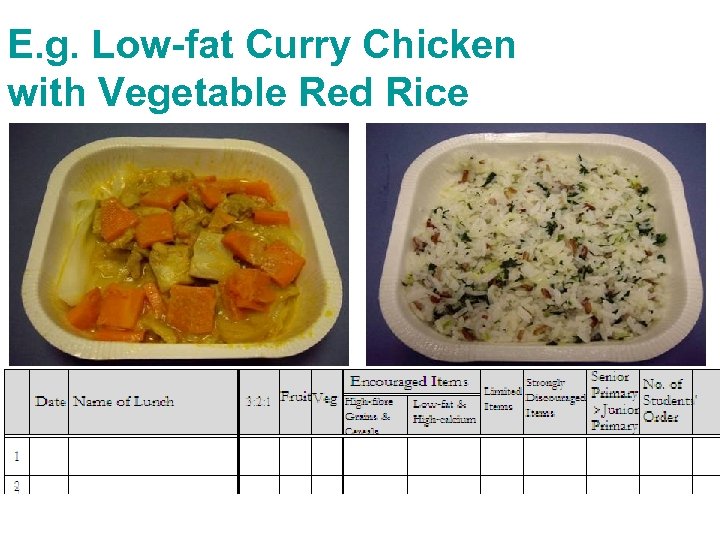 E. g. Low-fat Curry Chicken with Vegetable Red Rice 23/9 Low-fat Curry Chicken with Vegetable Red Rice 362
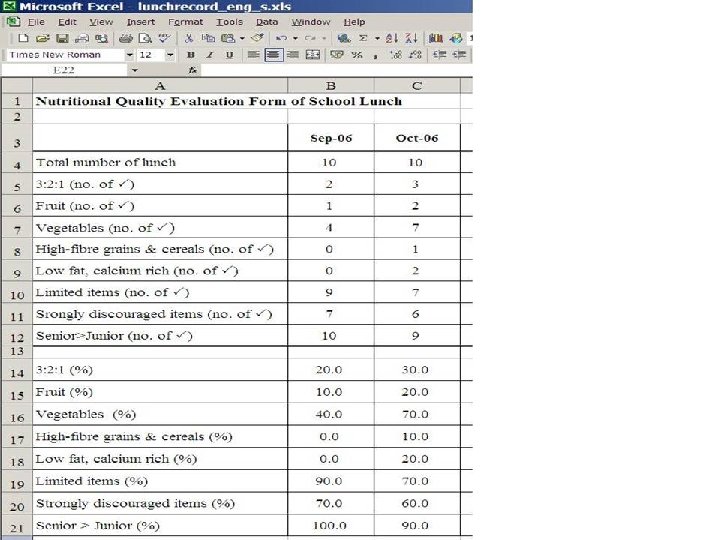
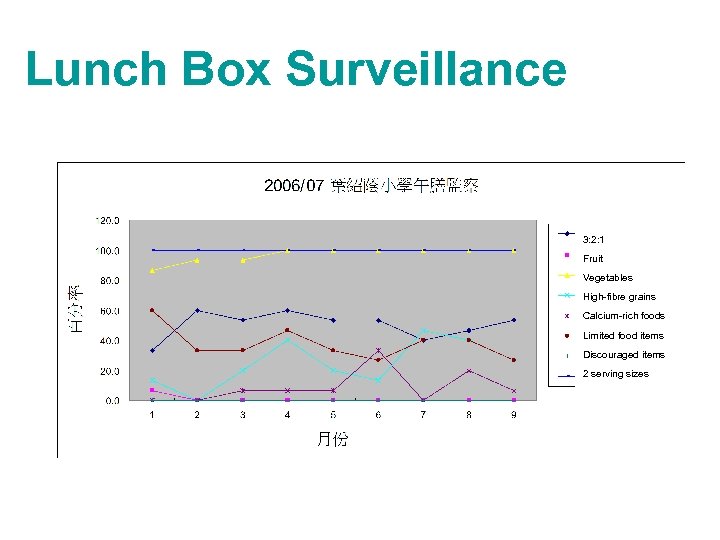 Lunch Box Surveillance 3: 2: 1 Fruit Vegetables High-fibre grains Calcium-rich foods Limited food items Discouraged items 2 serving sizes
 FAQs on Children’s Diet ch un A tl ou b
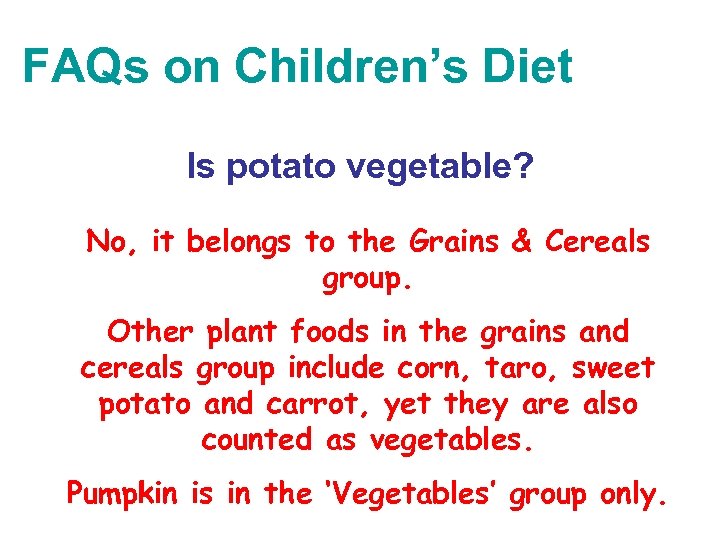 FAQs on Children’s Diet Is potato vegetable? No, it belongs to the Grains & Cereals group. Other plant foods in the grains and cereals group include corn, taro, sweet potato and carrot, yet they are also counted as vegetables. Pumpkin is in the ‘Vegetables’ group only.
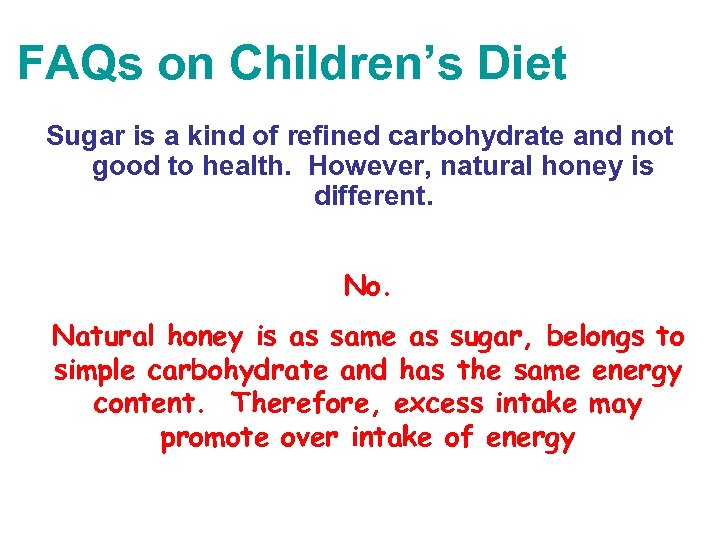 FAQs on Children’s Diet Sugar is a kind of refined carbohydrate and not good to health. However, natural honey is different. No. Natural honey is as same as sugar, belongs to simple carbohydrate and has the same energy content. Therefore, excess intake may promote over intake of energy
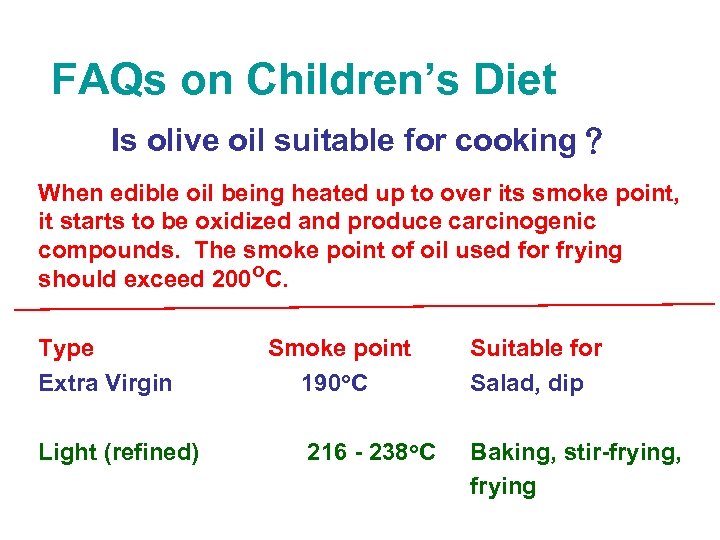 FAQs on Children’s Diet Is olive oil suitable for cooking? When edible oil being heated up to over its smoke point, it starts to be oxidized and produce carcinogenic compounds. The smoke point of oil used for frying should exceed 200 o. C. Type Extra Virgin Light (refined) Smoke point 190 o. C 216 - 238 o. C Suitable for Salad, dip Baking, stir-frying, frying
 Dissemination of Surveillance Results
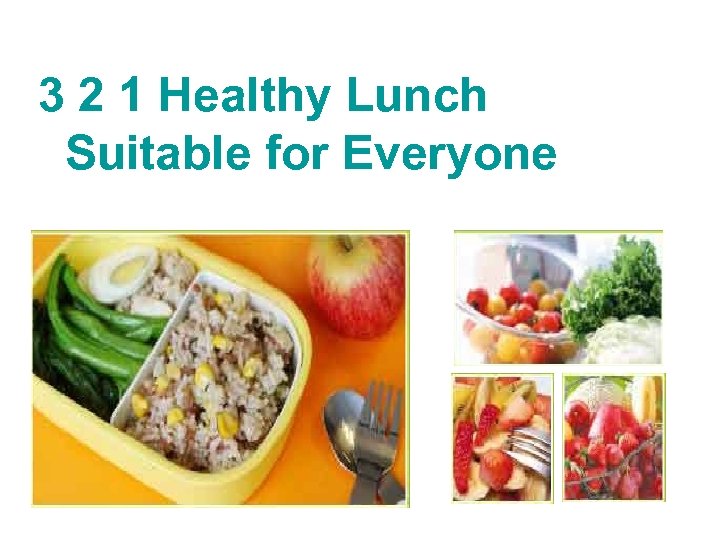 3 2 1 Healthy Lunch Suitable for Everyone
 Snacks
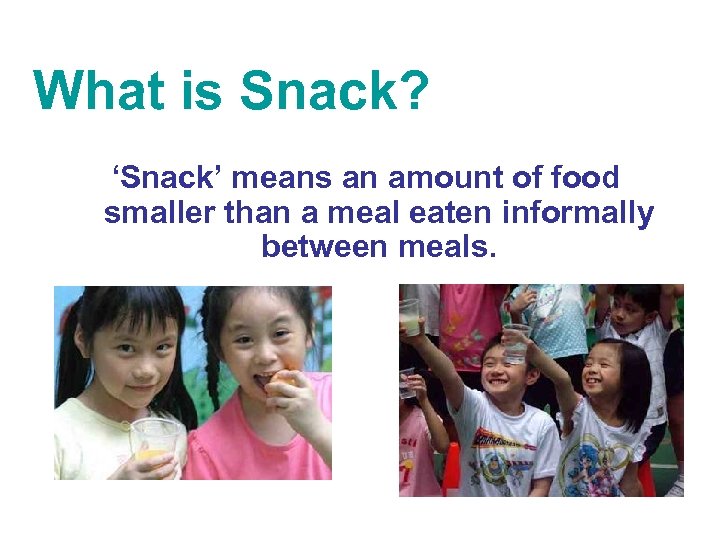 What is Snack? ‘Snack’ means an amount of food smaller than a meal eaten informally between meals.
 Is snack a must? Ø Snack is not main meal Ø Just children eat adequately in a balanced way and don’t feel hungry between main meals Snack is not a must!
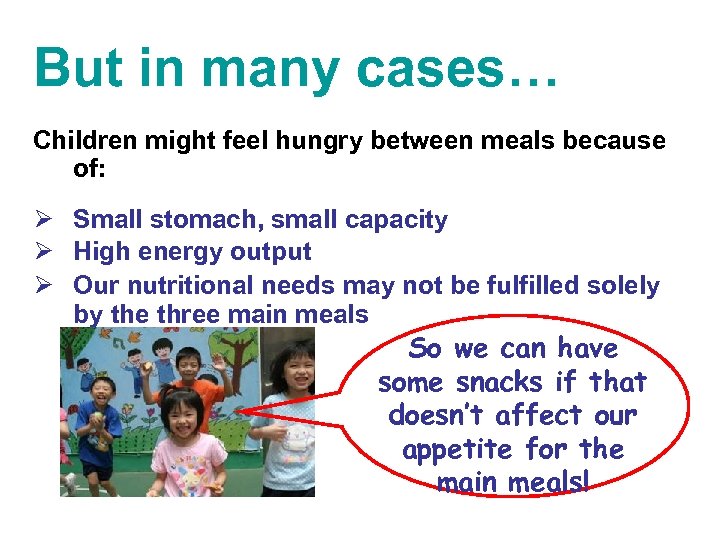 But in many cases… Children might feel hungry between meals because of: Ø Small stomach, small capacity Ø High energy output Ø Our nutritional needs may not be fulfilled solely by the three main meals So we can have some snacks if that doesn’t affect our appetite for the main meals!
 Snack is appropriate if children: Ø feel hungry between main meals; Ø eat snacks at the right time; and Ø eat in small amount which does not spoil their appetite for the main meals Parents may consider giving them some healthy snacks!
 The right time for snacks… There should be at least 1. 5 – 2 hours between snacks and main meals to avoid spoiling children’s appetite for the next meal.
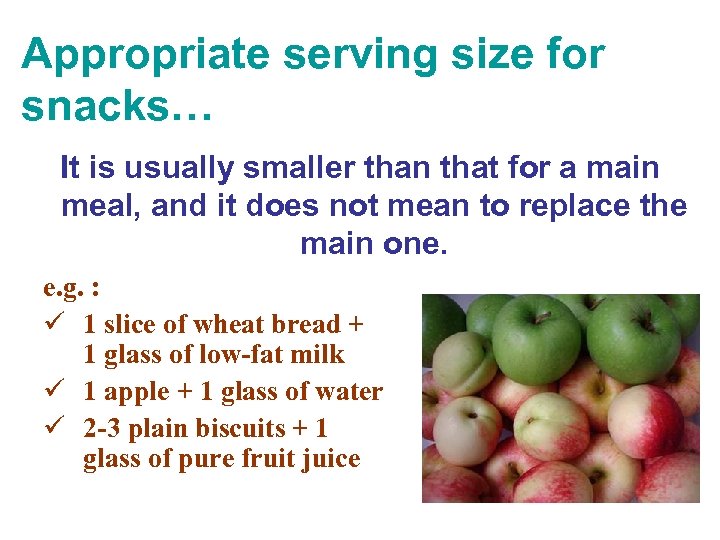 Appropriate serving size for snacks… It is usually smaller than that for a main meal, and it does not mean to replace the main one. e. g. : 1 slice of wheat bread + 1 glass of low-fat milk 1 apple + 1 glass of water 2 -3 plain biscuits + 1 glass of pure fruit juice
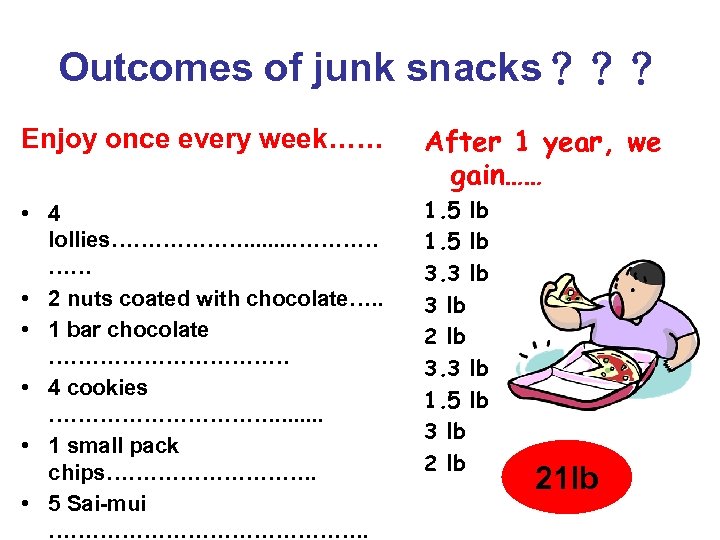 Outcomes of junk snacks??? Enjoy once every week…… After 1 year, we gain…… • 4 lollies………………. . . . ………… …… • 2 nuts coated with chocolate…. . • 1 bar chocolate ……………… • 4 cookies ……………. . • 1 small pack chips……………. . • 5 Sai-mui …………………. . 1. 5 lb 3. 3 lb 2 lb 3. 3 lb 1. 5 lb 3 lb 21 lb
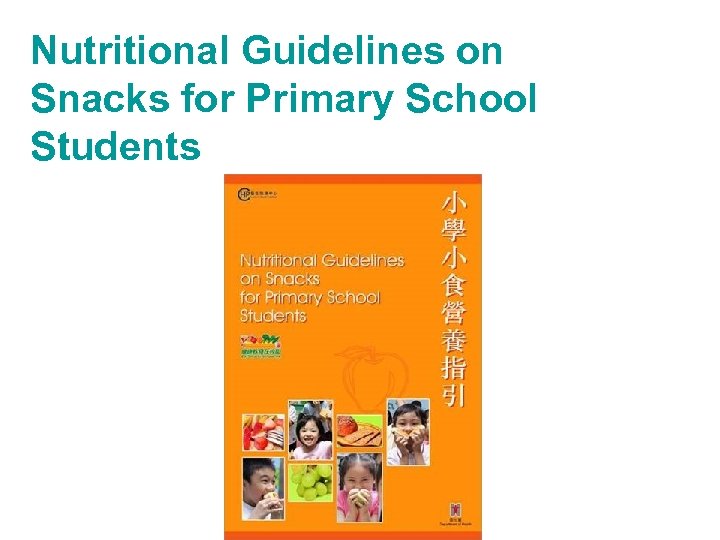 Nutritional Guidelines on Snacks for Primary School Students
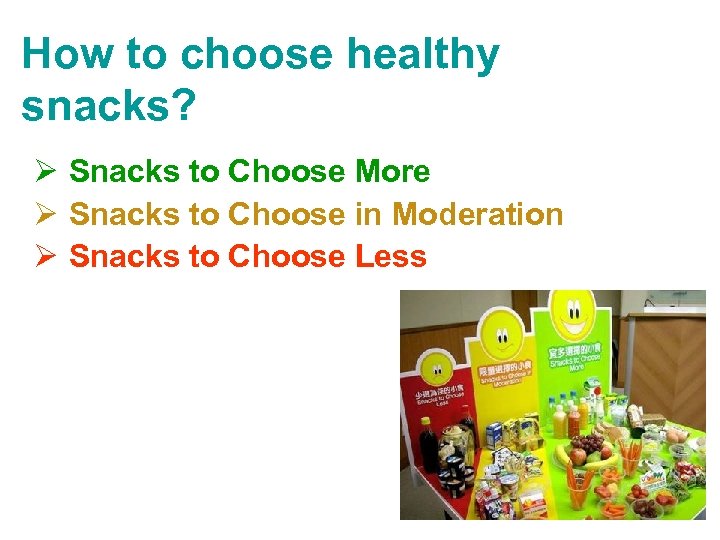 How to choose healthy snacks? Ø Snacks to Choose More Ø Snacks to Choose in Moderation Ø Snacks to Choose Less
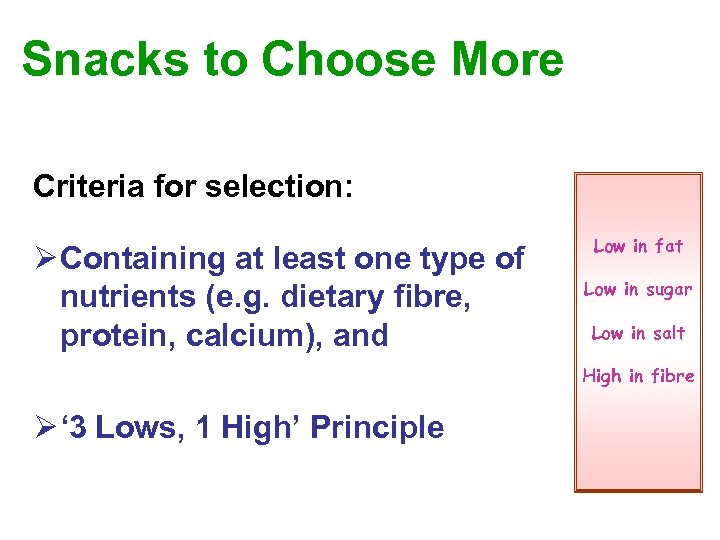 Snacks to Choose More Criteria for selection: Ø Containing at least one type of nutrients (e. g. dietary fibre, protein, calcium), and Low in fat Low in sugar Low in salt High in fibre Ø ‘ 3 Lows, 1 High’ Principle
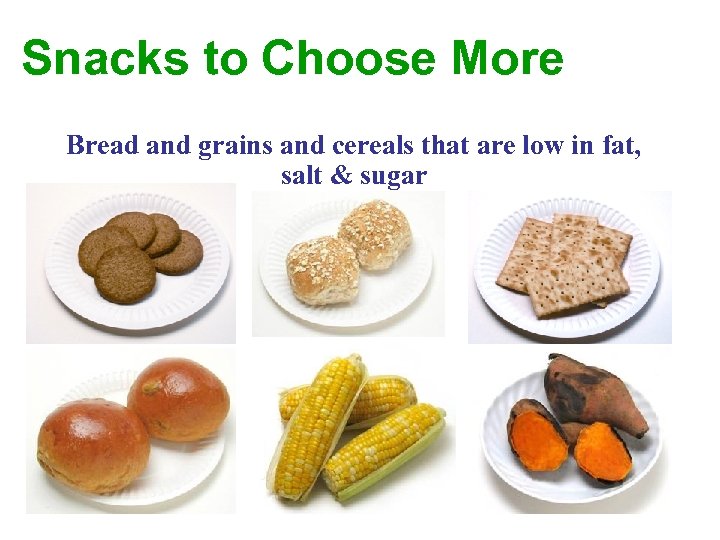 Snacks to Choose More Bread and grains and cereals that are low in fat, salt & sugar
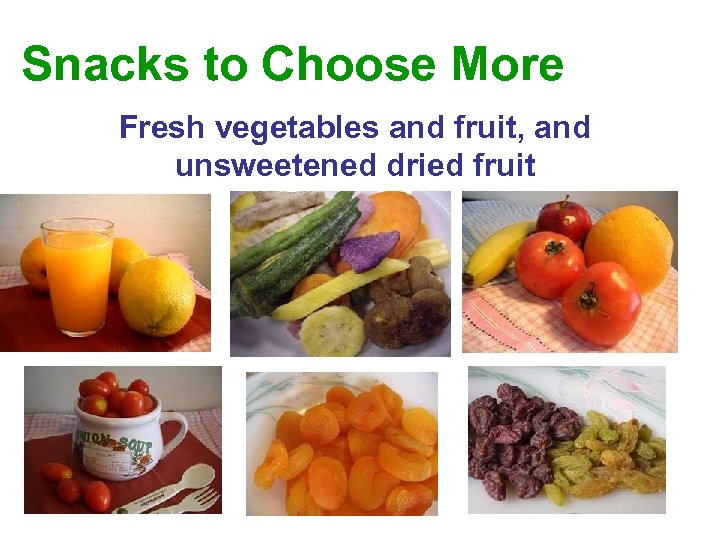 Snacks to Choose More Fresh vegetables and fruit, and unsweetened dried fruit
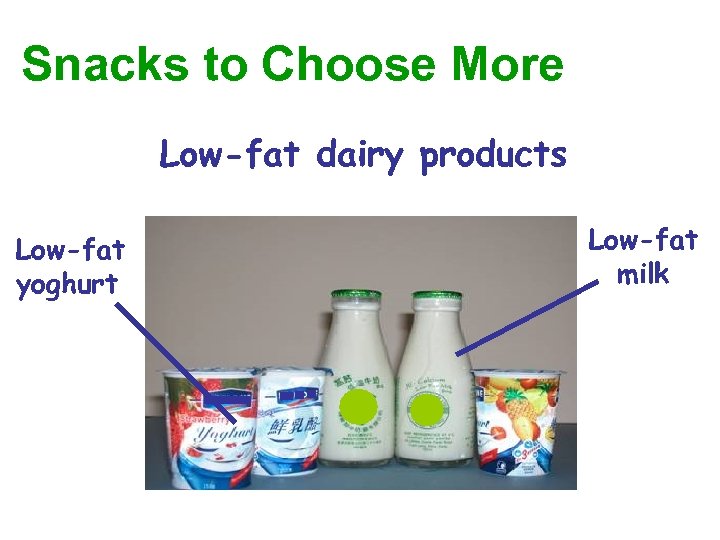 Snacks to Choose More Low-fat dairy products Low-fat yoghurt Low-fat milk
 Snacks to Choose in Moderation Ø containing at least one type of nutrients (e. g. calcium and dietary fibre) Ø but also containing fat and added sugar or salt
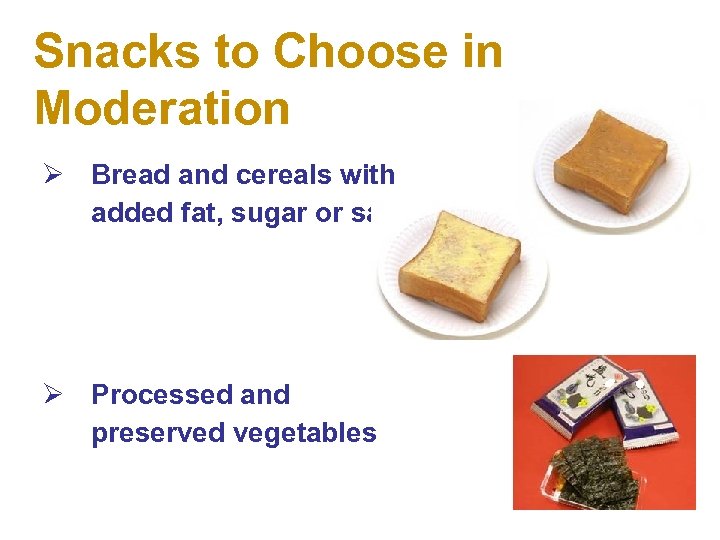 Snacks to Choose in Moderation Ø Bread and cereals with added fat, sugar or salt Ø Processed and preserved vegetables
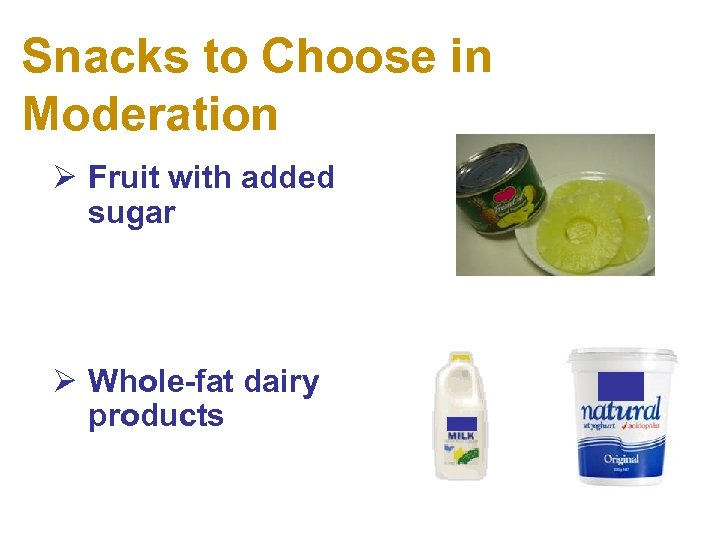 Snacks to Choose in Moderation Ø Fruit with added sugar Ø Whole-fat dairy products
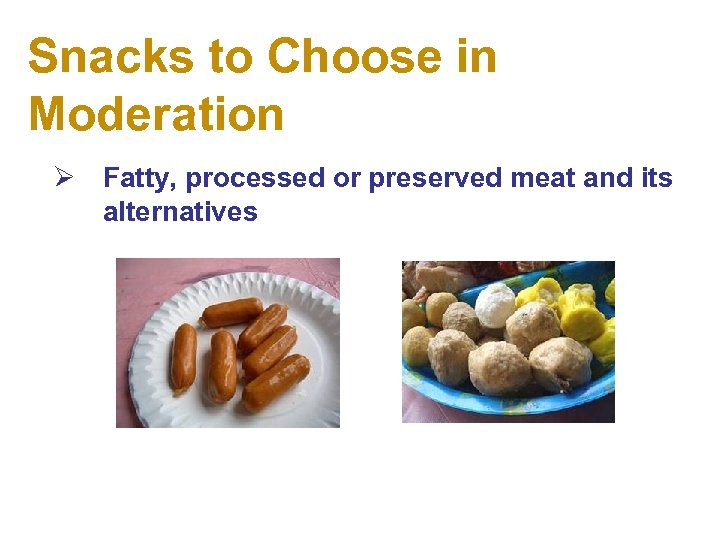 Snacks to Choose in Moderation Ø Fatty, processed or preserved meat and its alternatives
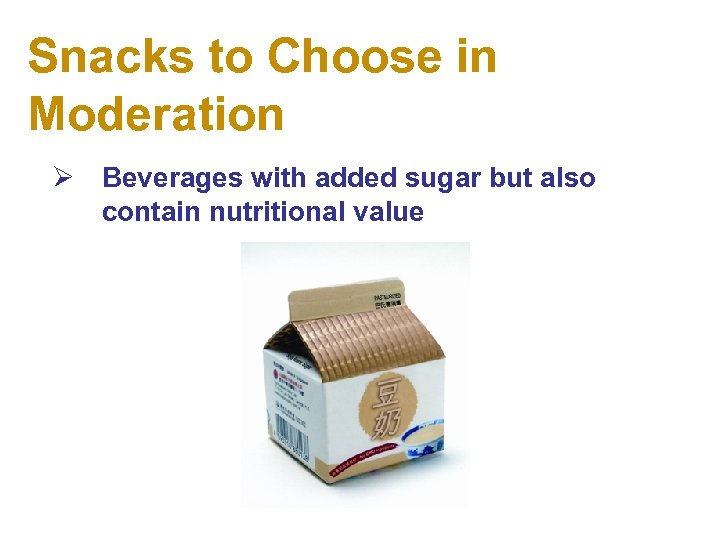 Snacks to Choose in Moderation Ø Beverages with added sugar but also contain nutritional value
 Snacks to Choose Less Ø Food or beverages low in nutritional value but high in fat, sugar and salt Ø Frequent consumption of these snacks may increase the risk of: • • Obesity Heart diseases Diabetes High blood pressure
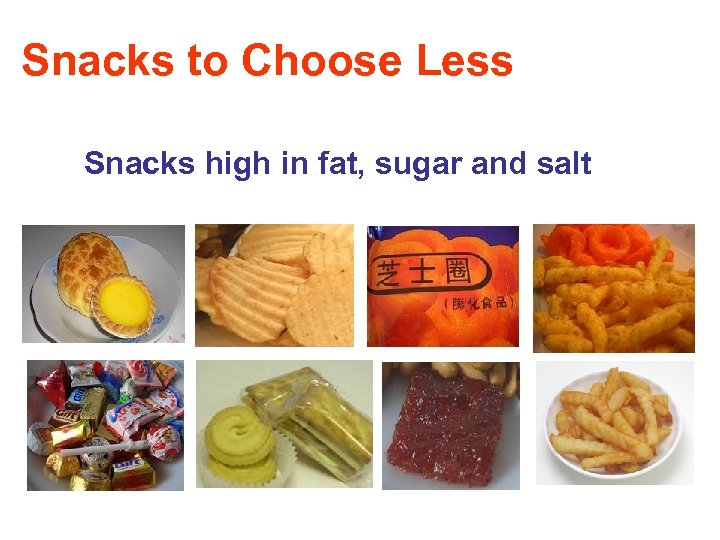 Snacks to Choose Less Snacks high in fat, sugar and salt
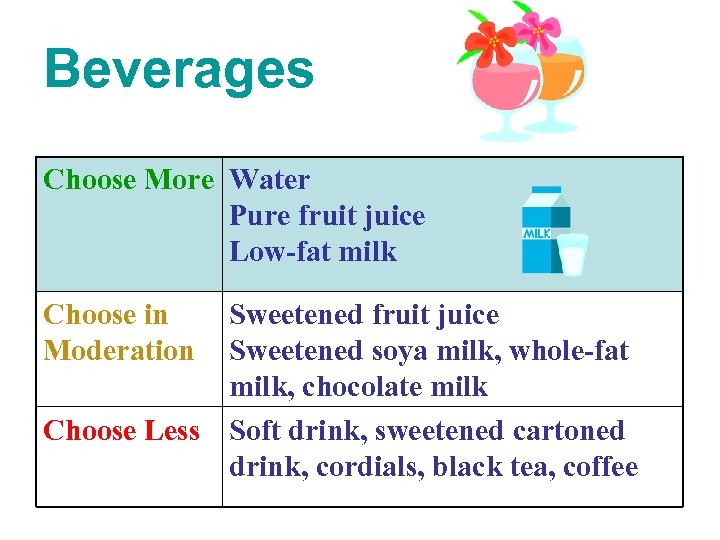 Beverages Choose More Water Pure fruit juice Low-fat milk Choose in Moderation Sweetened fruit juice Sweetened soya milk, whole-fat milk, chocolate milk Choose Less Soft drink, sweetened cartoned drink, cordials, black tea, coffee
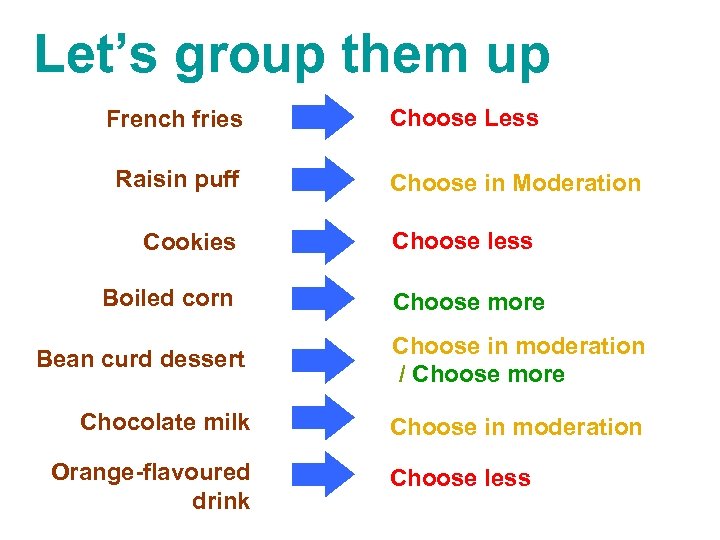 Let’s group them up French fries Raisin puff Cookies Boiled corn Choose Less Choose in Moderation Choose less Choose more Bean curd dessert Choose in moderation / Choose more Chocolate milk Choose in moderation Orange-flavoured drink Choose less
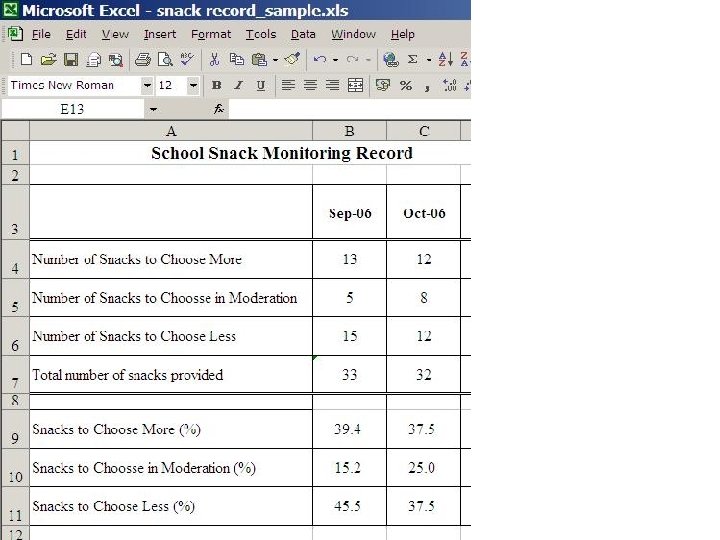
 School Snack Surveillance
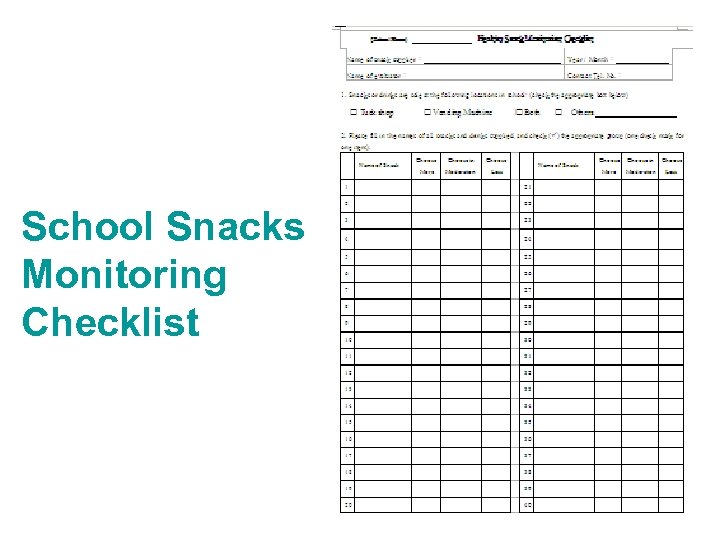 School Snacks Monitoring Checklist
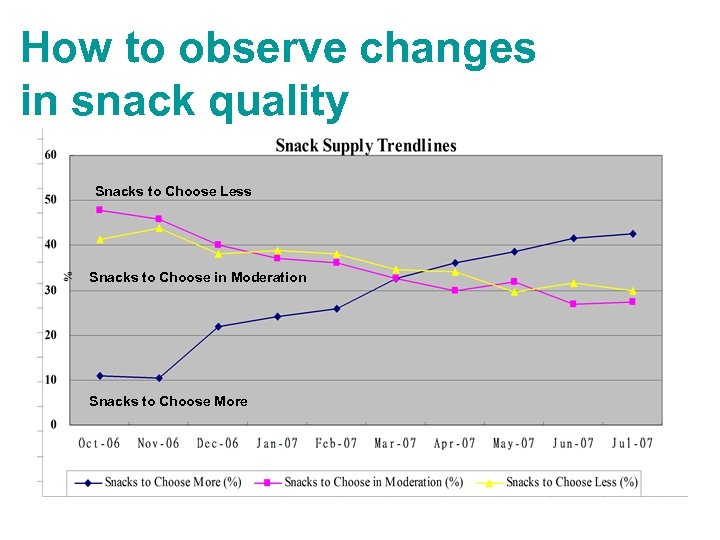 How to observe changes in snack quality Snacks to Choose Less Snacks to Choose in Moderation Snacks to Choose More
 Food Label Reading Source of Information: Food and Environmental Hygiene Department
 What can food labels do? Help consumers: Ø better understand the nutritional value of food Ø compare similar food products Ø make healthier food choices or select suitable food for disease management Food labels can encourage food manufacturers to: Ø improve nutritional content of products
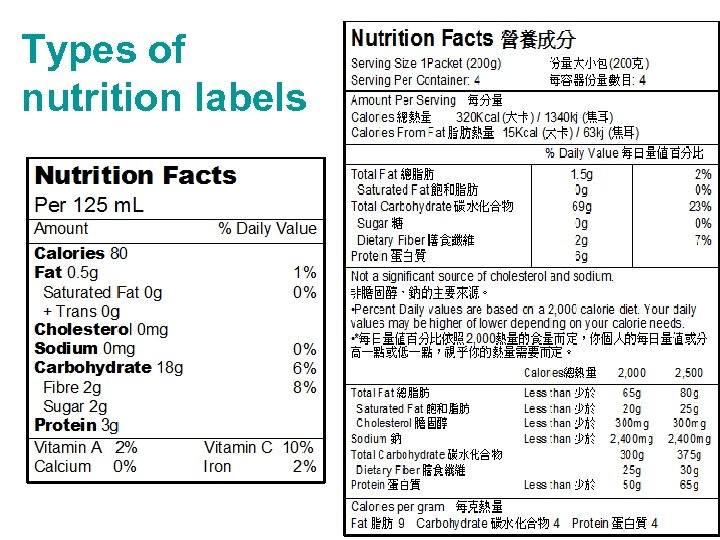 Types of nutrition labels
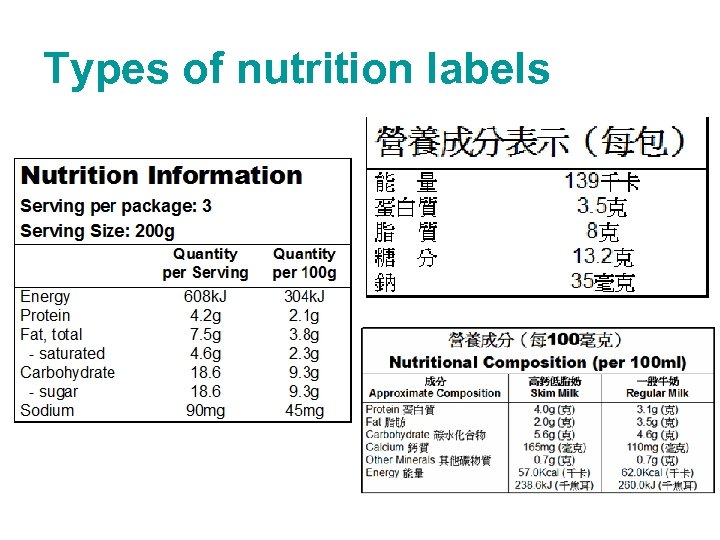 Types of nutrition labels
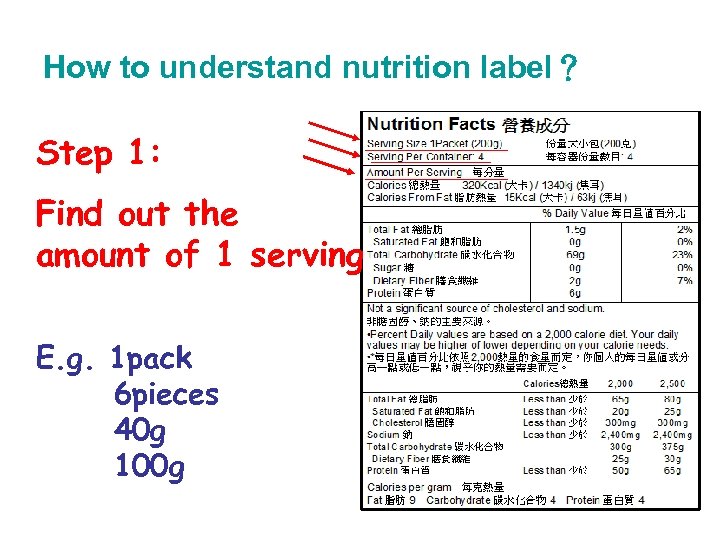 How to understand nutrition label? Step 1: Find out the amount of 1 serving E. g. 1 pack 6 pieces 40 g 100 g
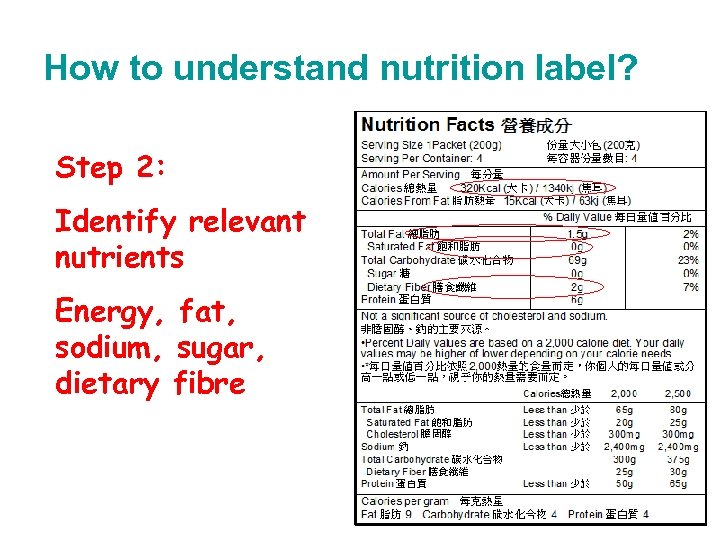 How to understand nutrition label? Step 2: Identify relevant nutrients Energy, fat, sodium, sugar, dietary fibre
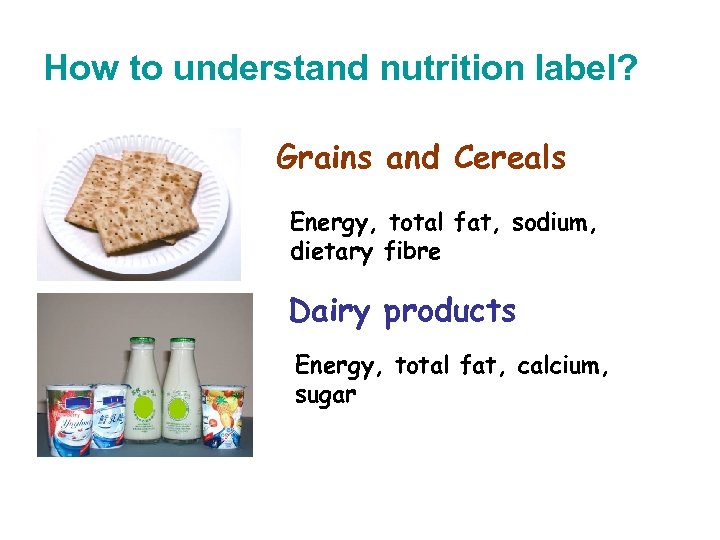 How to understand nutrition label? Grains and Cereals Energy, total fat, sodium, dietary fibre Dairy products Energy, total fat, calcium, sugar
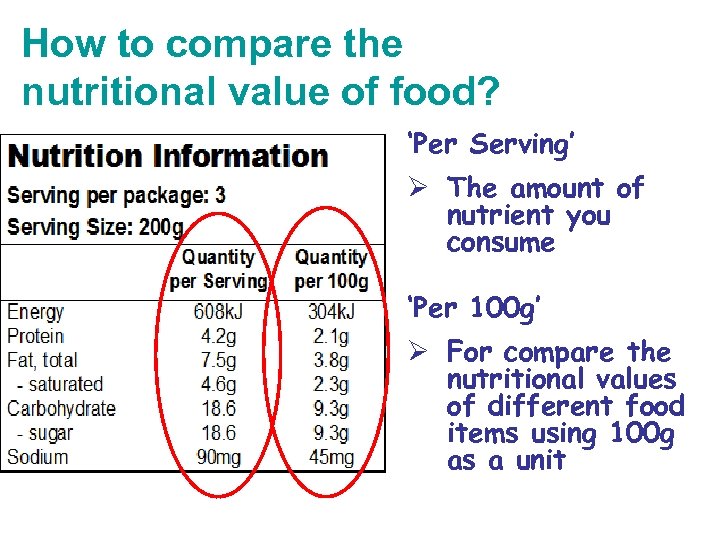 How to compare the nutritional value of food? ‘Per Serving’ Ø The amount of nutrient you consume ‘Per 100 g’ Ø For compare the nutritional values of different food items using 100 g as a unit
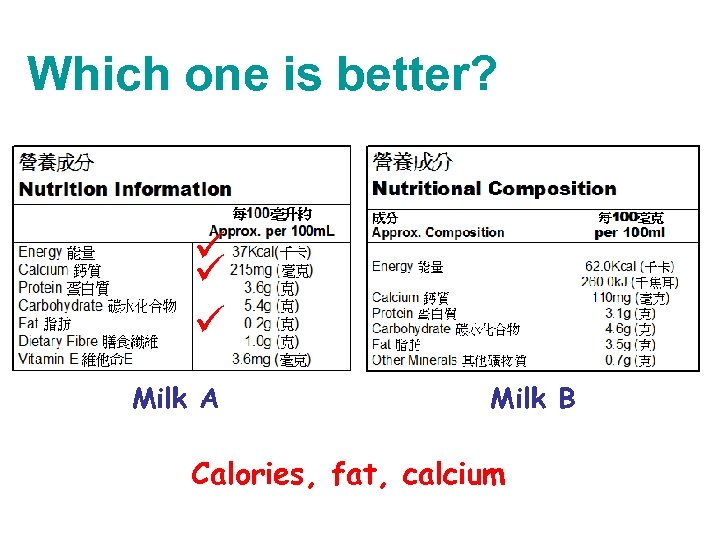 Which one is better? Milk A Milk B Calories, fat, calcium
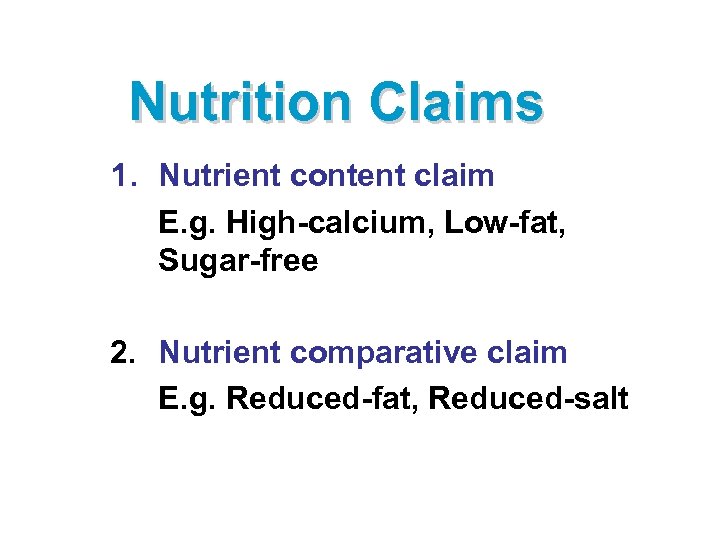 Nutrition Claims 1. Nutrient content claim E. g. High-calcium, Low-fat, Sugar-free 2. Nutrient comparative claim E. g. Reduced-fat, Reduced-salt
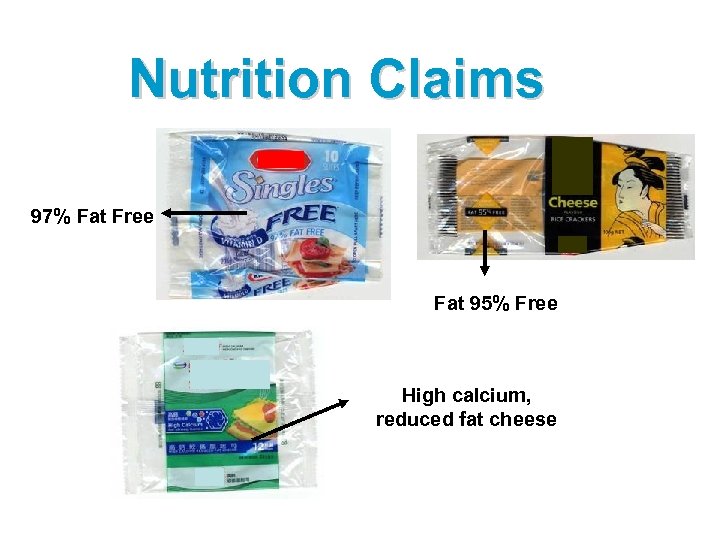 Nutrition Claims 97% Fat Free Fat 95% Free High calcium, reduced fat cheese
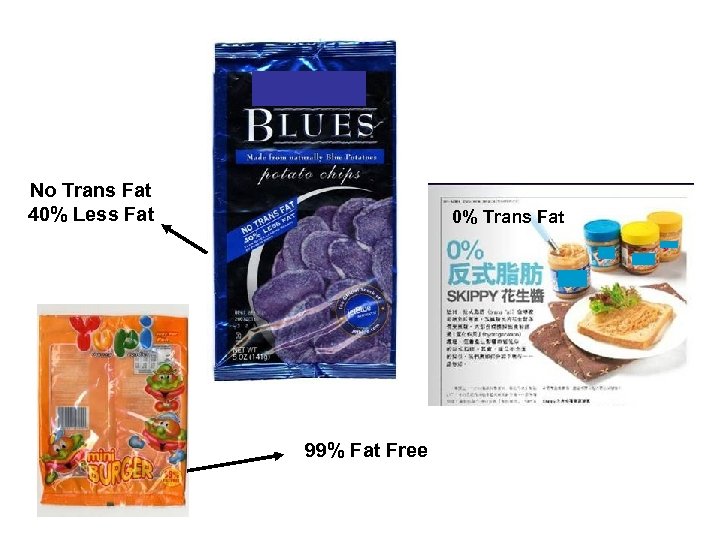 No Trans Fat 40% Less Fat 0% Trans Fat 99% Fat Free

 FAQs on children’s diet ks ac bo A sn ut
 FAQs on children’s diet Is it right for children to skip breakfast to avoid over-eating if they eat snacks during recesses? No. Breakfast is one of the main meals. It should not be skipped. It should mainly consist of grains and cereals (e. g. bread, congee or oatmeal). Skipping breakfast may lead to over -eating at recesses or lunch.
 FAQs on children’s diet Can sports drinks be provided for children instead of water? Sports drinks or electrolyte-charging drinks are specially designed for athletes. Children should not take sports drinks for water to replenish water loss during study or exercise. Rather, plain water is the best refill.
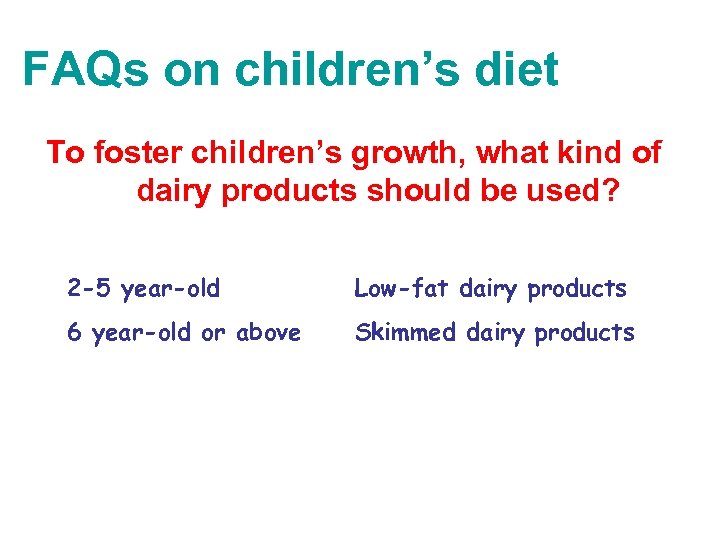 FAQs on children’s diet To foster children’s growth, what kind of dairy products should be used? 2 -5 year-old Low-fat dairy products 6 year-old or above Skimmed dairy products
 Ways to encourage children to eat more healthy food
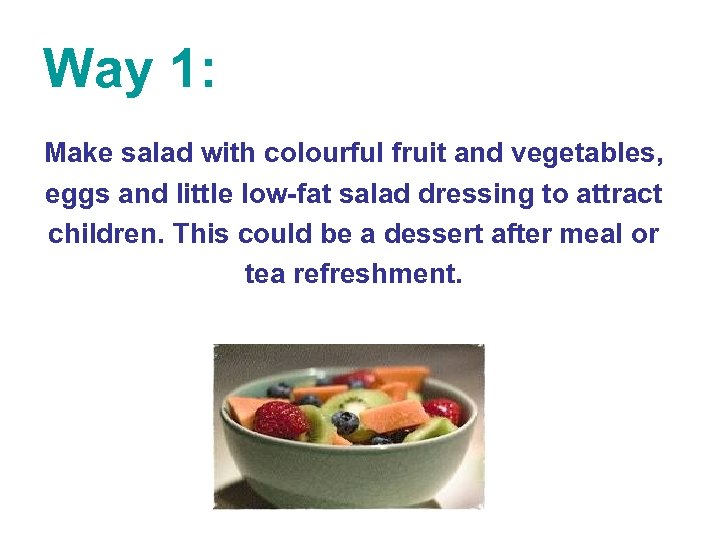 Way 1: Make salad with colourful fruit and vegetables, eggs and little low-fat salad dressing to attract children. This could be a dessert after meal or tea refreshment.
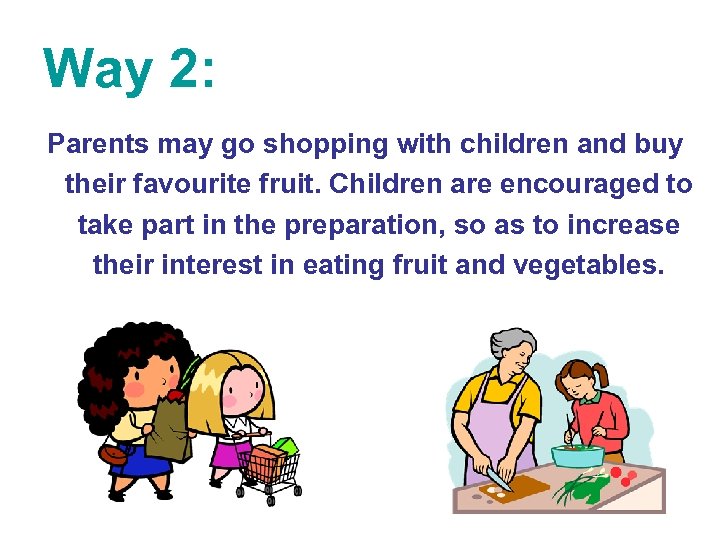 Way 2: Parents may go shopping with children and buy their favourite fruit. Children are encouraged to take part in the preparation, so as to increase their interest in eating fruit and vegetables.
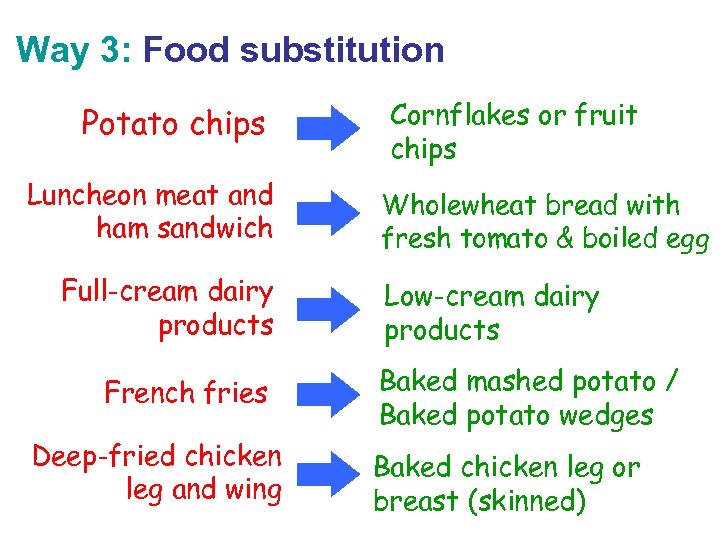 Way 3: Food substitution Potato chips Luncheon meat and ham sandwich Full-cream dairy products French fries Deep-fried chicken leg and wing Cornflakes or fruit chips Wholewheat bread with fresh tomato & boiled egg Low-cream dairy products Baked mashed potato / Baked potato wedges Baked chicken leg or breast (skinned)
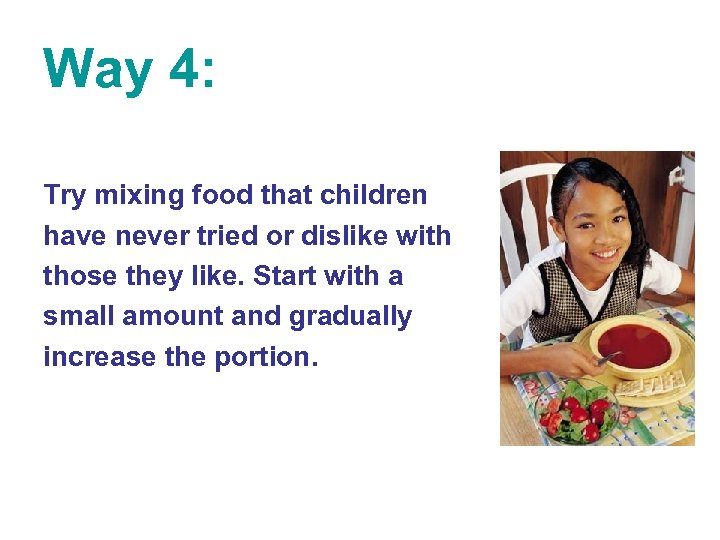 Way 4: Try mixing food that children have never tried or dislike with those they like. Start with a small amount and gradually increase the portion.
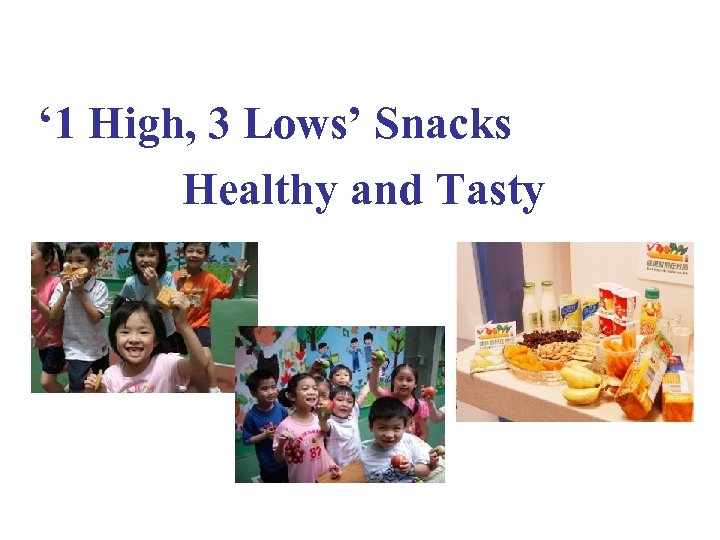 ‘ 1 High, 3 Lows’ Snacks Healthy and Tasty
 Take Home Messages 1. 3: 2: 1 Healthy Lunch 2. “ 3 Low 1 High” Snacks
 Purposes of Producing the Handbook • To provide teaching resources and templates • To assist teachers and parents in running healthy eating activities • To simplify the procedure of organising activities
 Contents of Handbook 1. School Healthy Eating Policy? 2. Surveillance of school eating environment 3. Planning of activities 4. Proposals promoting healthy eating 5. Support, record and reward
 Proposals • 41 proposals available for reference • Two sorts of activities – Policy, surveillance, environment and behaviour – Knowledge, Attitude and Awareness
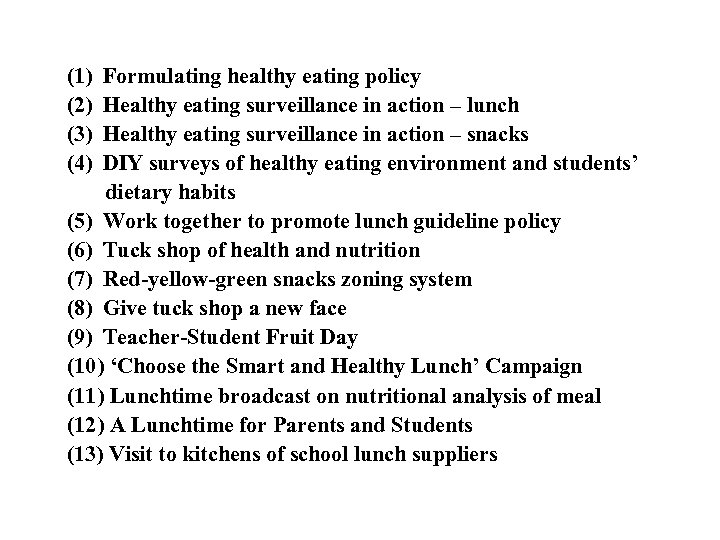 (1) (2) (3) (4) Formulating healthy eating policy Healthy eating surveillance in action – lunch Healthy eating surveillance in action – snacks DIY surveys of healthy eating environment and students’ dietary habits (5) Work together to promote lunch guideline policy (6) Tuck shop of health and nutrition (7) Red-yellow-green snacks zoning system (8) Give tuck shop a new face (9) Teacher-Student Fruit Day (10) ‘Choose the Smart and Healthy Lunch’ Campaign (11) Lunchtime broadcast on nutritional analysis of meal (12) A Lunchtime for Parents and Students (13) Visit to kitchens of school lunch suppliers
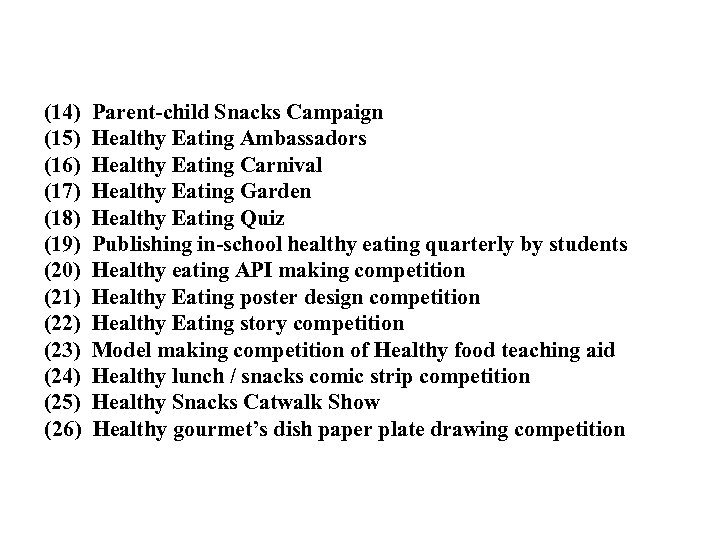 (14) (15) (16) (17) (18) (19) (20) (21) (22) (23) (24) (25) (26) Parent-child Snacks Campaign Healthy Eating Ambassadors Healthy Eating Carnival Healthy Eating Garden Healthy Eating Quiz Publishing in-school healthy eating quarterly by students Healthy eating API making competition Healthy Eating poster design competition Healthy Eating story competition Model making competition of Healthy food teaching aid Healthy lunch / snacks comic strip competition Healthy Snacks Catwalk Show Healthy gourmet’s dish paper plate drawing competition
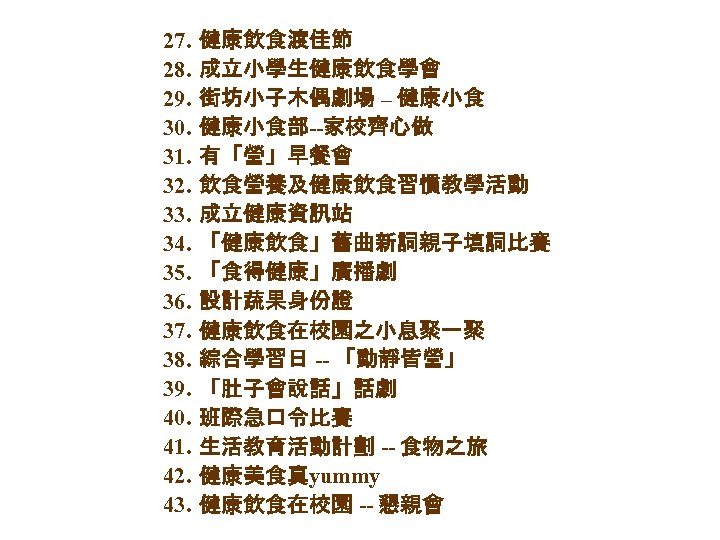 27. 28. 29. 30. 31. 32. 33. 34. 35. 36. 37. 38. 39. 40. 41. 42. 43. 健康飲食渡佳節 成立小學生健康飲食學會 街坊小子木偶劇場 – 健康小食部--家校齊心做 有「營」早餐會 飲食營養及健康飲食習慣教學活動 成立健康資訊站 「健康飲食」舊曲新詞親子填詞比賽 「食得健康」廣播劇 設計蔬果身份證 健康飲食在校園之小息聚一聚 綜合學習日 -- 「動靜皆營」 「肚子會說話」話劇 班際急口令比賽 生活教育活動計劃 -- 食物之旅 健康美食真yummy 健康飲食在校園 -- 懇親會
 Developing Healthy Eating School Policy
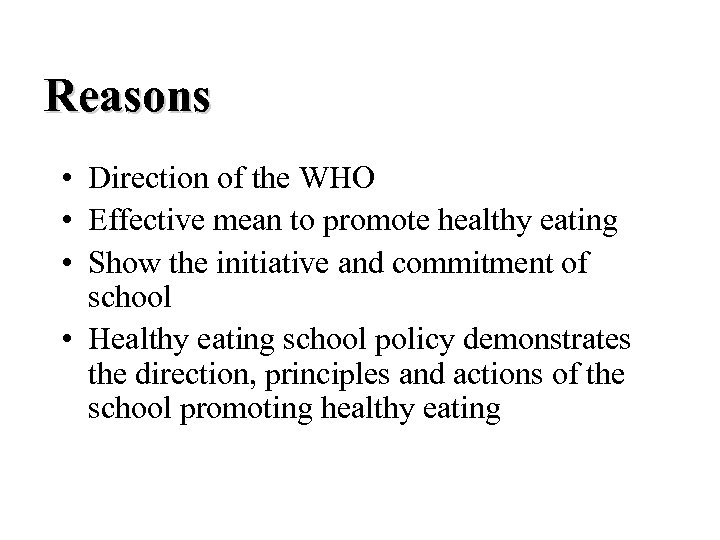 Reasons • Direction of the WHO • Effective mean to promote healthy eating • Show the initiative and commitment of school • Healthy eating school policy demonstrates the direction, principles and actions of the school promoting healthy eating
 Steps • Set up responsible panel / committee • Take reference to relevant information and guidelines • Assess the eating environment in school • Formulate policy • Implement and evaluate the policy
 School Nutri. Agent Project Experience Sharing Baptist Rainbow Primary School
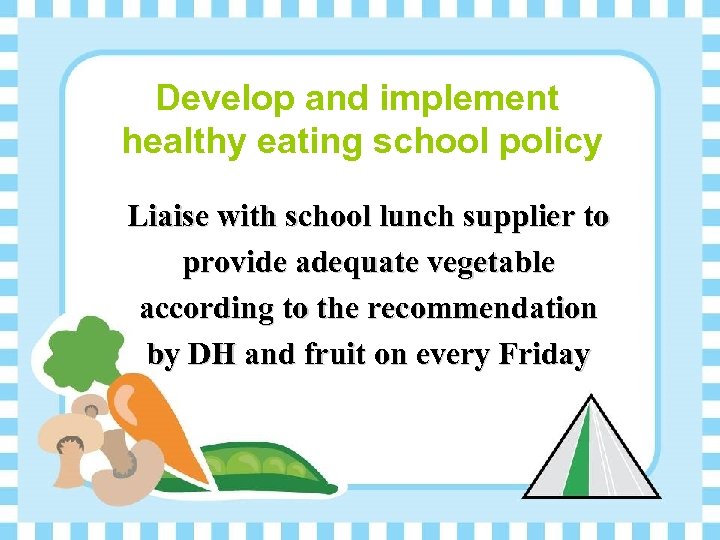 Develop and implement healthy eating school policy Liaise with school lunch supplier to provide adequate vegetable according to the recommendation by DH and fruit on every Friday
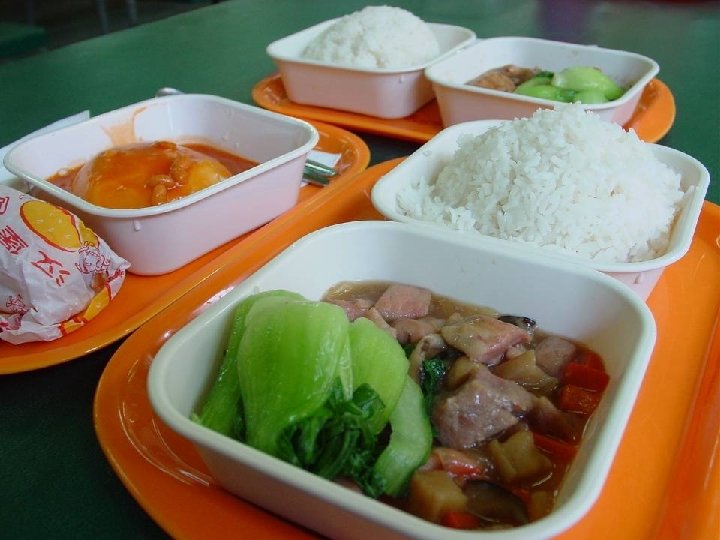
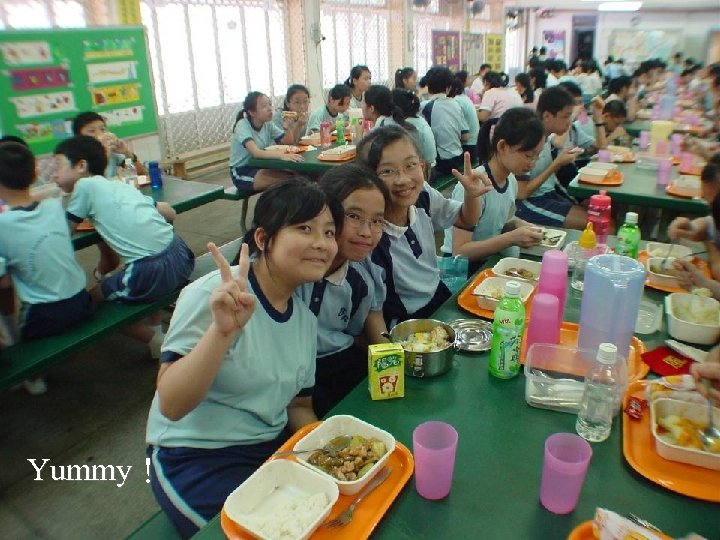 Yummy!
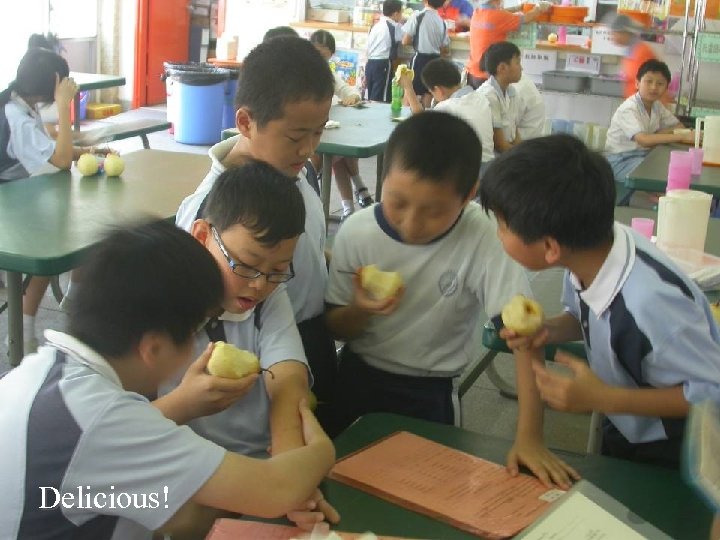 Delicious!
 Develop and implement healthy eating school policy Ø With PTA’s support, negotiated with tuckshop operator to cease the provision of soft drink, chip, crisp and most candies, in exchange, sell more healthy food such as biscuit and corn flakes etc. Ø To promote fruit consumption, sell only fruit during the second recess
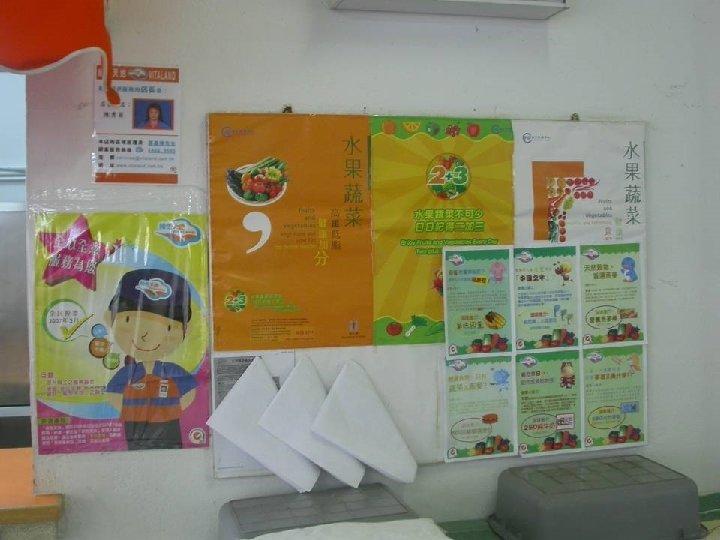
 Educate and promote healthy eating Ø Participated in the ‘ 2 plus 3 a day’ and ‘School Nutri. Agent Project’ organizsed by the DH promoting healthy eating Ø Through health talk and various sorts of activities such as fruit day and incentive program encourage students to cultivate healthy eating habit
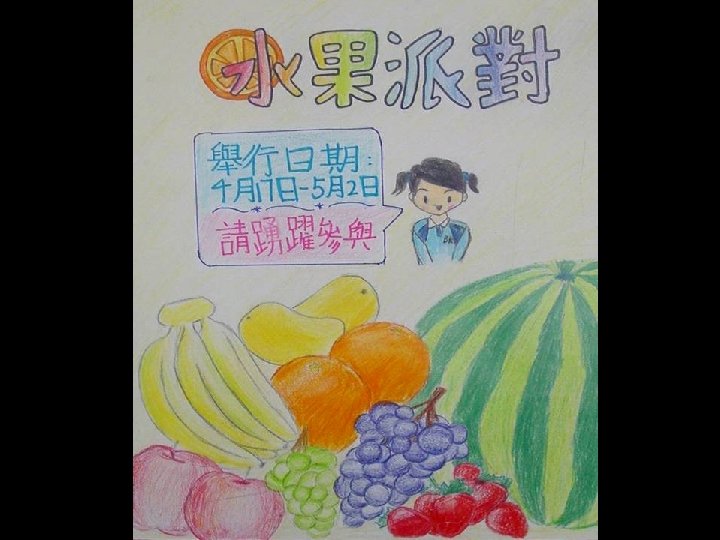
 Educate and promote healthy eating Fruit Party was held to promote fruit consumption among students by making it a joyful act. Contents include poster design, introduction of fruit menus, fruit consumption statistic etc. For those students who have reached certain standard, they would be awarded to join the Fruit Party.
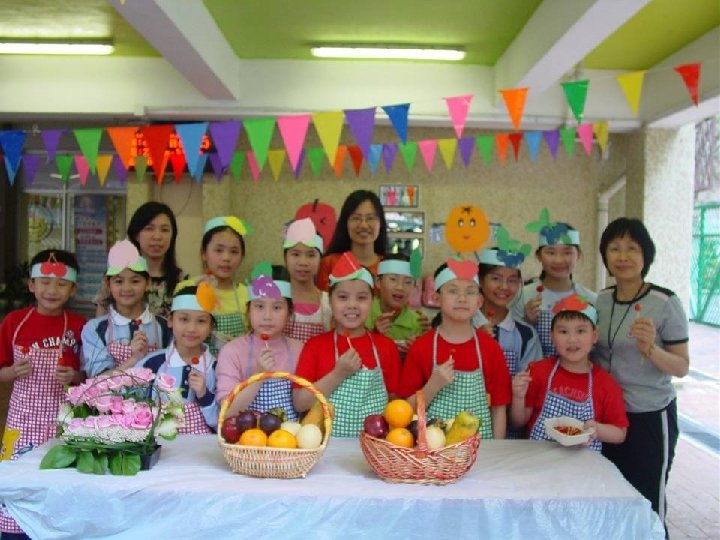
 Evaluation – gradual effect Ø School lunch supplier can follow the recommendation by DH supplying 321 lunch increasing vegetable provision Ø With the support of tuckshop, there is significant increase in fruit consumption among students Ø Students show more concern about green food
 Conclusion – being on the right track • • Clear policy Supportive environment Continuous education Strengthen collaboration Are key strategies on promotion of healthy eating habit