 Скачать презентацию Introduction Lecture-presentation on Basics of Nanochemistry and Nanotechnology
1. Introduction.ppt
- Количество слайдов: 31



Introduction Lecture-presentation on “Basics of Nanochemistry and Nanotechnology” by L. K. Tastanova
Purpose of lecture –presentation: To introduce into the nanotechnology and nanochemistry
Plan of lecture –presentation: 1. Definitions. 2. Basic Types of Nanosized Systems. 3. Future of Nanotechnology and Nanochemistry.
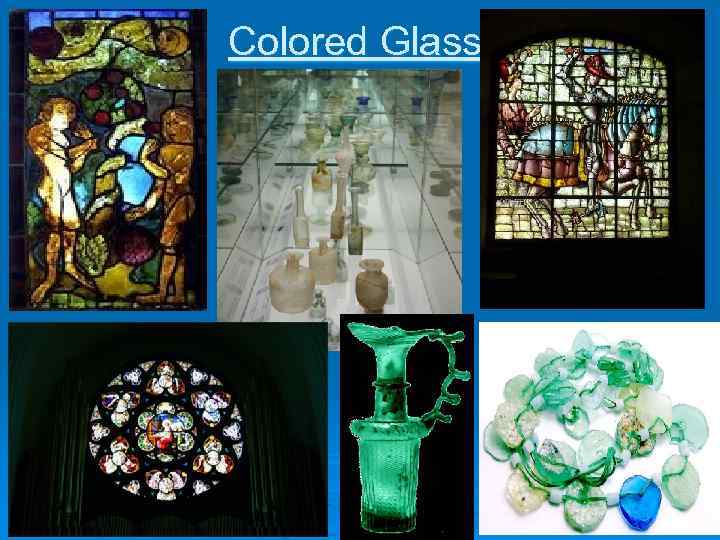
Colored Glass

Ruby Glass
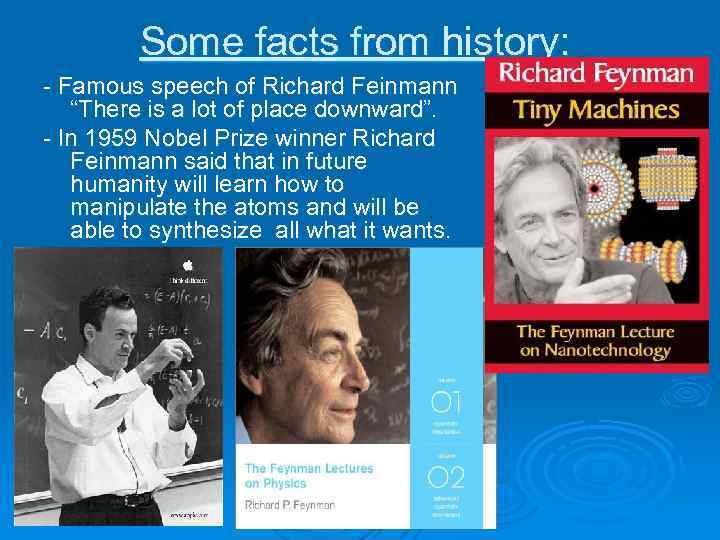
Some facts from history: - Famous speech of Richard Feinmann “There is a lot of place downward”. - In 1959 Nobel Prize winner Richard Feinmann said that in future humanity will learn how to manipulate the atoms and will be able to synthesize all what it wants.
Some facts from history: - First who used the term “nanotechnology” was Norio Taniguty in 1974. - In 1980 th this term was used by Eric K. Dreksler in his books: «Engines of Creation: The Coming Era of Nanotechnology» and «Nanosystems: Molecular Machinery, Manufacturing, and Computation» . - In 1981 Benig and Rorer created tunnel scanning microscope, which made possible to influence substances on atomic level. - In 1990 scientists began to manipulate with single atoms. - In 1994 methods of nanotechnology were used in industry.
1. Definitions. Ø Nanotechnology - research and technology development at the atomic, molecular or macromolecular levels, in the length scale of approximately 1 - 100 nanometer range; creating and using structures, devices and systems that have novel properties and functions because of their small and/or intermediate size; and the ability to control or manipulate on the atomic scale.
1. Definitions. Ø Nanochemistry - a discipline focusing on the unique properties associated with the assembly of atoms or molecules on a nanometer scale. At this scale, new methods of carrying out chemical reactions are possible.
1. Definitions. Ø Nanomaterials - nanosized materials are purposefully made. These are in contrast to incidental and naturally occurring nanosized materials. Ø Nanoparticle - free standing nanosized material, consisting of between tens to thousands of atoms.
1. Definitions. Nanoscience - the interdisciplinary field of science devoted to the advancement of nanotechnology. Nanostructures - structures at the nanoscale; that is, structures of an intermediate size between molecular and microscopic (micrometer-sized) structures.
1. Definitions. According to recommendations of the 7 th International Conference on Nanotechnologies (Wiesbaden, 2004) there are the next types of nanomaterials: Ø nanoporous structures; Ø nanoparticles; Ø nanotubes and nanofibres; Ø nanodispersions; Ø nanostructured surfaces and films; Ø nanocrystals and nanoclusters.
1. Definitions.
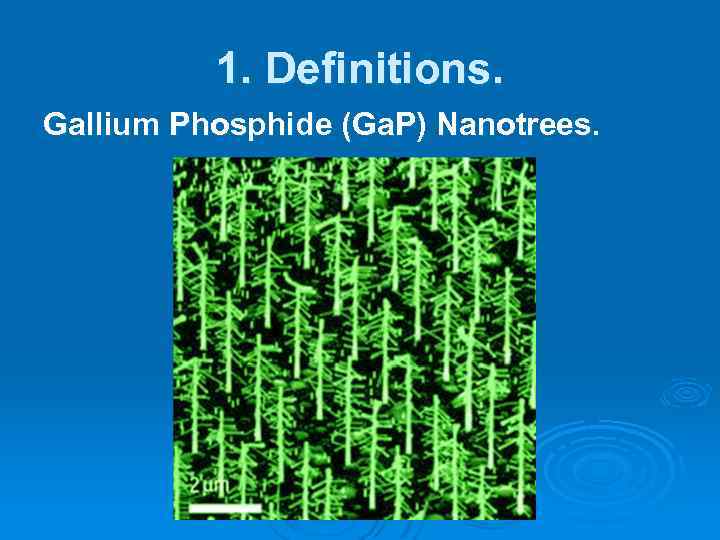
1. Definitions. Gallium Phosphide (Ga. P) Nanotrees.
2. Basic Types of Nanosized Systems. Most current nanomaterials could be organized into four types: - Carbon-based materials Metal-based materials Dendrimers Composites
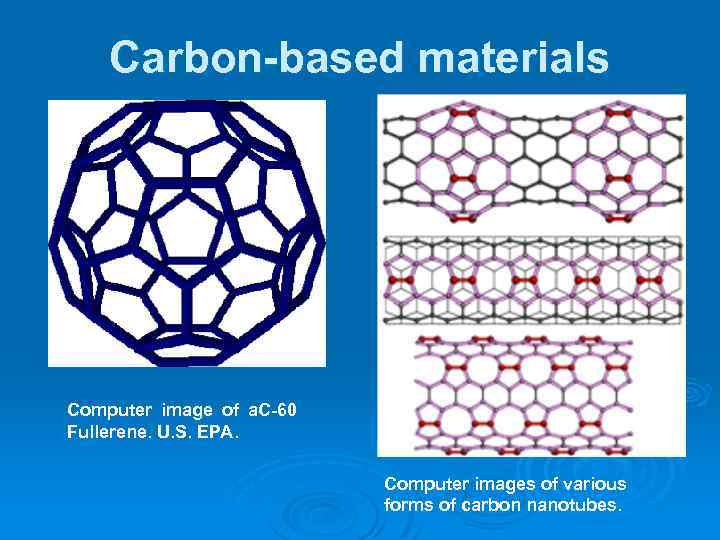
Carbon-based materials Computer image of a. C-60 Fullerene. U. S. EPA. Computer images of various forms of carbon nanotubes.
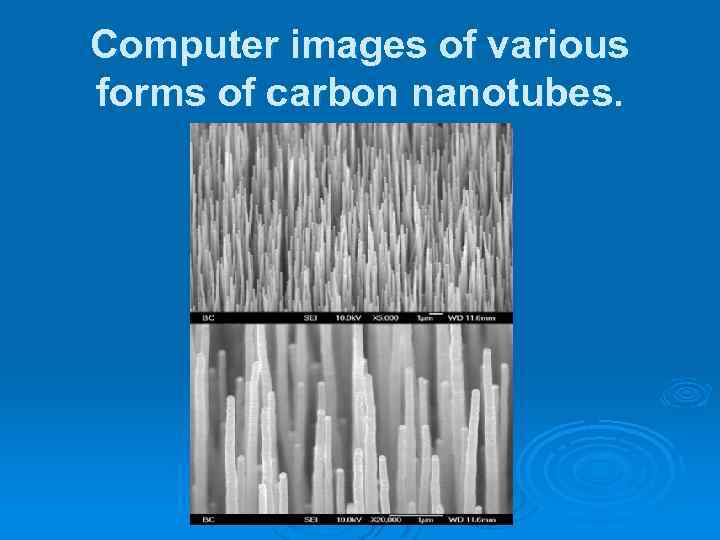
Computer images of various forms of carbon nanotubes.
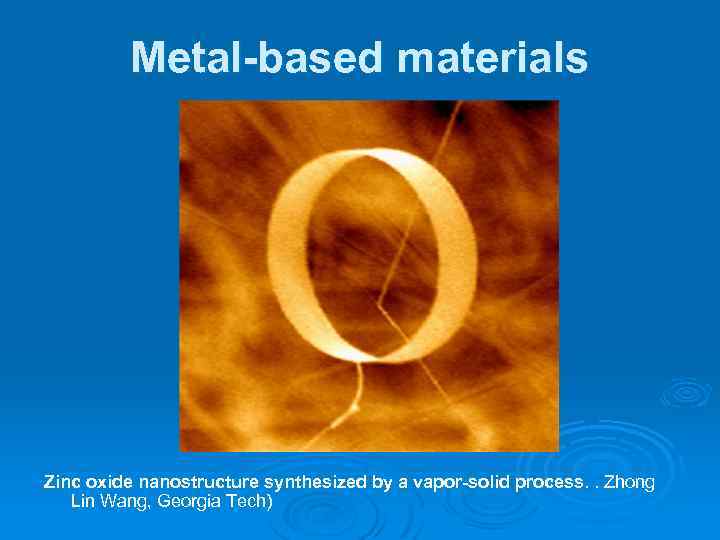
Metal-based materials Zinc oxide nanostructure synthesized by a vapor-solid process. . Zhong Lin Wang, Georgia Tech)
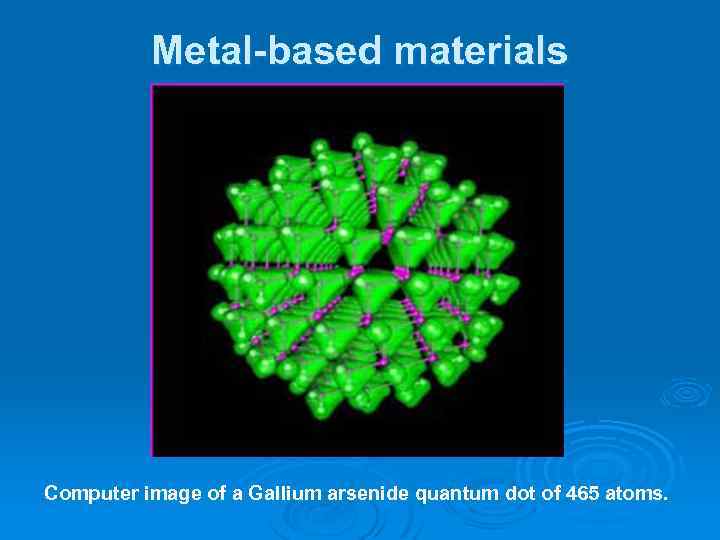
Metal-based materials Computer image of a Gallium arsenide quantum dot of 465 atoms.
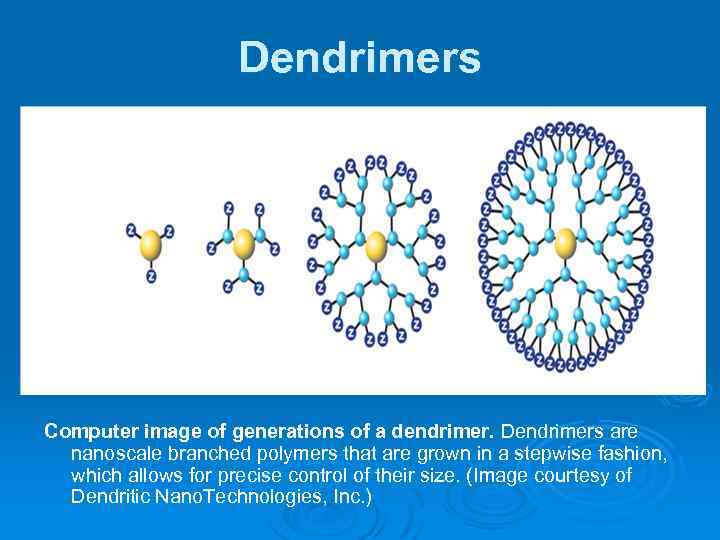
Dendrimers Computer image of generations of a dendrimer. Dendrimers are nanoscale branched polymers that are grown in a stepwise fashion, which allows for precise control of their size. (Image courtesy of Dendritic Nano. Technologies, Inc. )
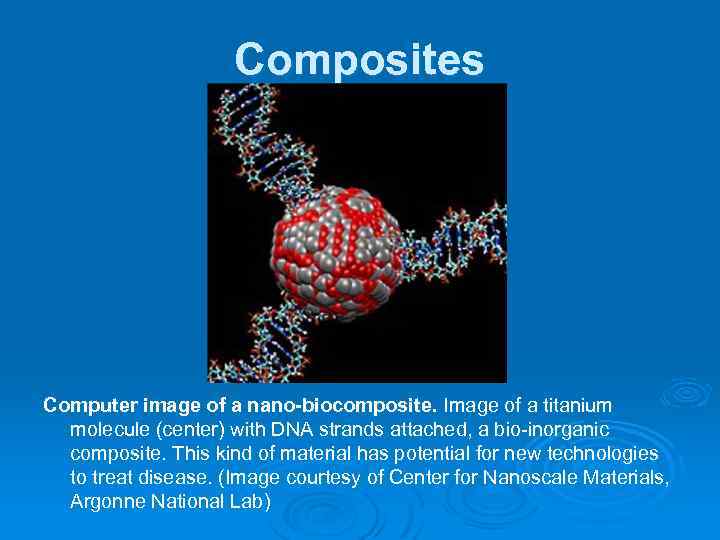
Composites Computer image of a nano-biocomposite. Image of a titanium molecule (center) with DNA strands attached, a bio-inorganic composite. This kind of material has potential for new technologies to treat disease. (Image courtesy of Center for Nanoscale Materials, Argonne National Lab)
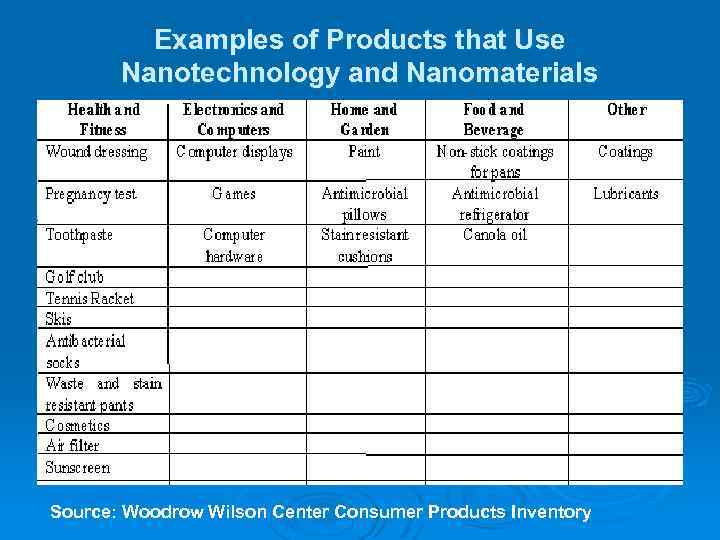
Examples of Products that Use Nanotechnology and Nanomaterials Source: Woodrow Wilson Center Consumer Products Inventory
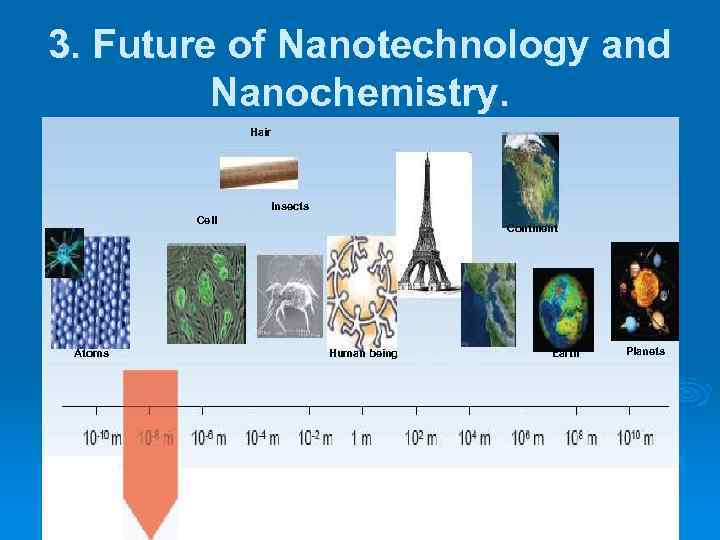
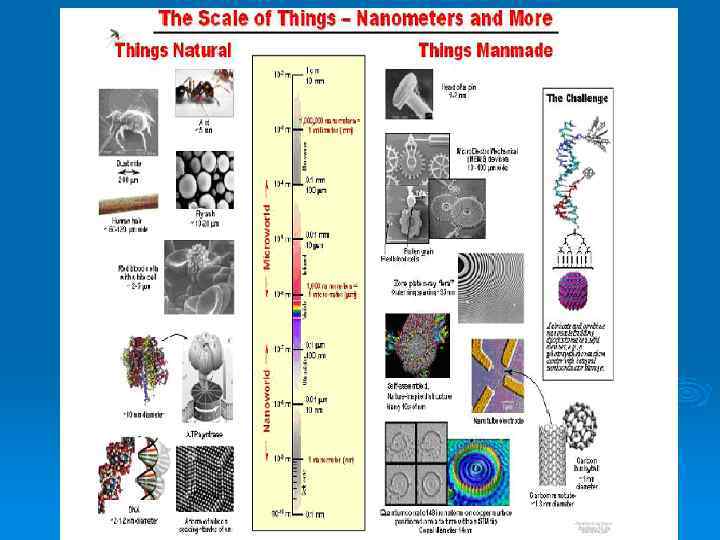
3. Future of Nanotechnology and Nanochemistry. Hair Insects Cell Atoms Continent Human being Earth Planets
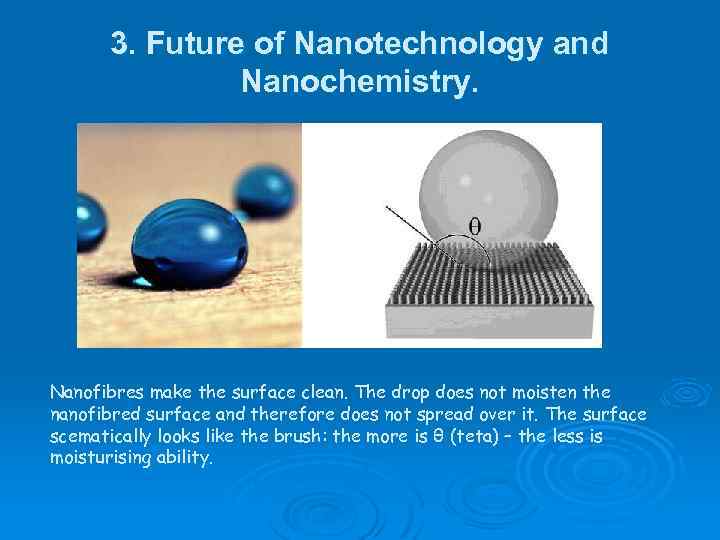
3. Future of Nanotechnology and Nanochemistry. Nanofibres make the surface clean. The drop does not moisten the nanofibred surface and therefore does not spread over it. The surface scematically looks like the brush: the more is θ (teta) – the less is moisturising ability.
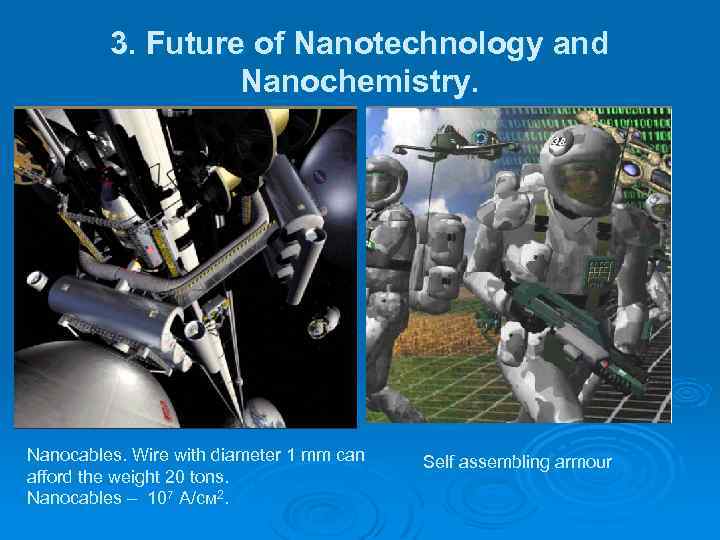
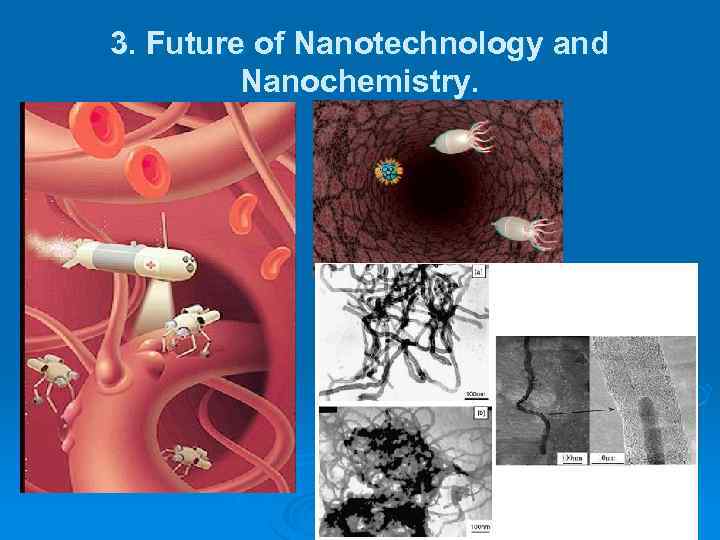
3. Future of Nanotechnology and Nanochemistry. Nanocables. Wire with diameter 1 mm can afford the weight 20 tons. Nanocables – 107 А/см 2. Self assembling armour
3. Future of Nanotechnology and Nanochemistry.
3. Future of Nanotechnology and Nanochemistry. Nanosensors
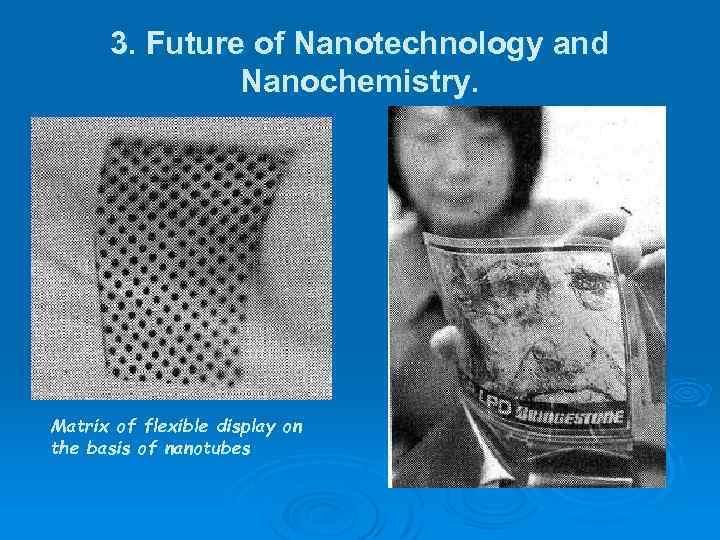
3. Future of Nanotechnology and Nanochemistry. Matrix of flexible display on the basis of nanotubes
3. Future of Nanotechnology and Nanochemistry.
Check Yourself 1. 2. 3. 4. 5. 6. 7. 8. 9. 10. 11. 12. 13. 14. 15. 16. Why ruby glass is golden? What is the connection between “nanotechnology” and Kremlin stars? When the methods later named nanotechnology were mentioned firstly? When the term “nanotechnology” was firstly used? What is nanometer? Define the term “nanotechnology”. Define the term “nanochemistry”. What types of nanomaterials do you know? What is nanocluster? Name the basic types of nanosized systems. Give definition and examples of carbon-based materials. Give definition and examples of metal-based materials. Give definition and examples of dendrimers. Give definition and examples of composites. Where are nanomaterials used? What is the future of nanotechnology?
Literature: 1. Roco M. C. J. Nanoparticle Res. , 2001, v. 3, № 5– 6, 2001, p. 353– 360. 2. NSTC, National Nanotechnology Initiative and Its Implementation Plan, Washington, D. C. , 2000. 3. Societal Implications of Nanoscience and Nanotechnology. Eds. M. C. Roco, W. S. Bainbridgeю Dordrecht: Kluver Acad. Publ. , 2001. 4. NSTC, National Nanotechnology Initiative and Its Implementation Plan, Washington, D. C. , 2002. 5. Gleiter H. Nanostructured materials – State-oftheart and perspectives. // Z/ Metallkunde. , 1995. V. 86. P. 78 -83. 6. Charitidis C. , Logothetidis S. Nanomechanical and nanotribological properties of carbon based films // Thin Solid Films, 2005. V. 482. P. 120– 125.
Скачать презентацию Introduction Lecture-presentation on Basics of Nanochemistry and Nanotechnology
1. Introduction.ppt