 Скачать презентацию Introduction Introduction of Robotics at USP
f5a876a332a5eed171dfdd0e640d2eee.ppt
- Количество слайдов: 28



Introduction • Introduction of Robotics at USP • Importance to the South Pacific • Robotics & Automation Projects at USP • Implications of projects on region • Robotics & Automation Group • Current Project – Collaboration prospects • Constrain Factors • Robotic Frontiers Internationally • Summary 1
Introduction of Robotics at USP • 2001 – Reps from ABU informed USP about the Asia Pacific Robot Contest • Department of Engineering has since represented USP to Japan and Thailand 2
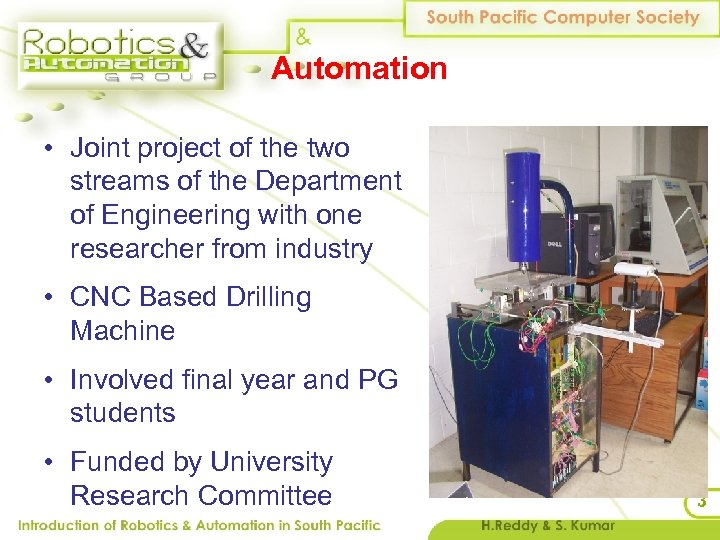
Automation • Joint project of the two streams of the Department of Engineering with one researcher from industry • CNC Based Drilling Machine • Involved final year and PG students • Funded by University Research Committee 3
Importance to Region • Establish a stronger technical base • Save export dollars on purchase of such equipment • Provide employment • Locally trained designers and maintenance personnel • Allows equipment to be tailor made 4
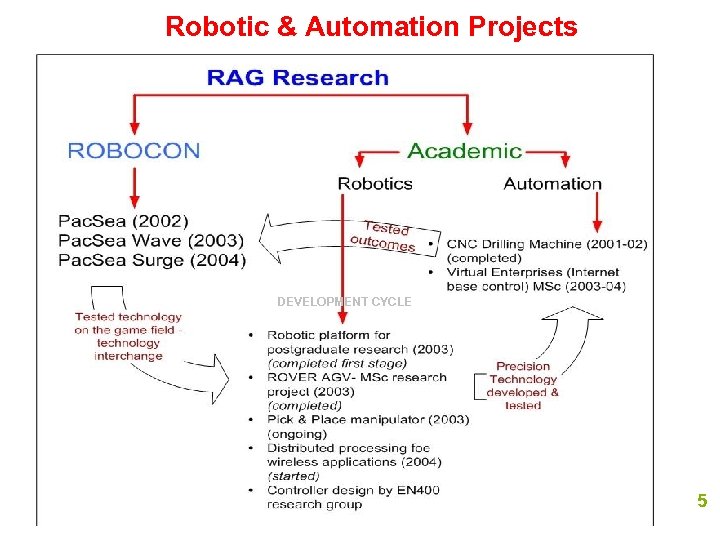
Robotic & Automation Projects DEVELOPMENT CYCLE 5
ROBOCON • Organized by Asia-Pacific Broadcasting Union • It is an intellectual challenging event in which future engineers can realize the importance of thinking originally and making their own machines without being swayed by existing common knowledge. 6
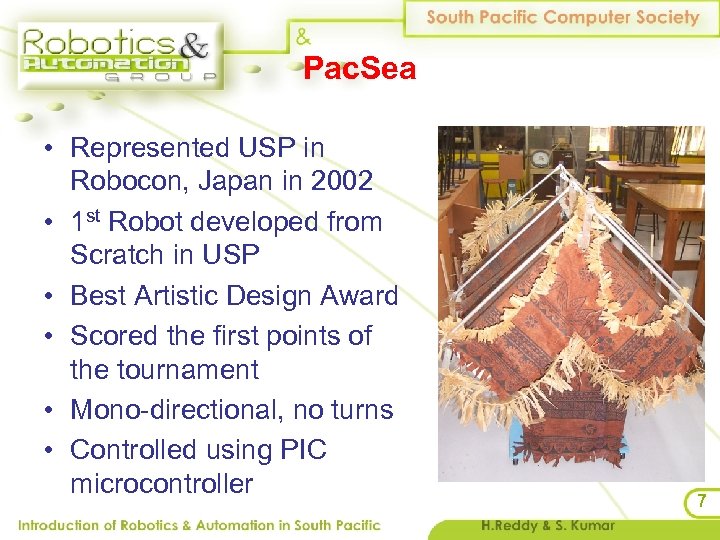
Pac. Sea • Represented USP in Robocon, Japan in 2002 • 1 st Robot developed from Scratch in USP • Best Artistic Design Award • Scored the first points of the tournament • Mono-directional, no turns • Controlled using PIC microcontroller 7
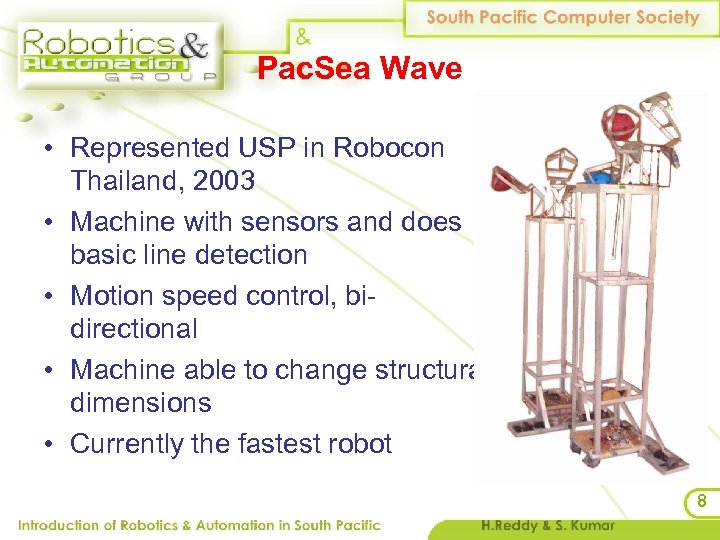
Pac. Sea Wave • Represented USP in Robocon Thailand, 2003 • Machine with sensors and does basic line detection • Motion speed control, bidirectional • Machine able to change structural dimensions • Currently the fastest robot 8
Pac. Sea Surge • Will represent USP in Robocon Korea, 2004 • Still under construction • Total cost of project $16, 000 (projected) • Much more sophisticated mechanisms and electronics • USP sponsorship for $10, 000. 9
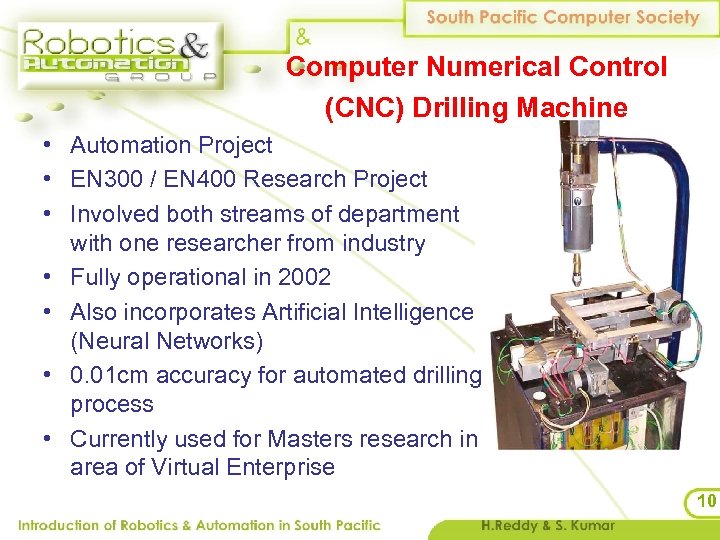
Computer Numerical Control (CNC) Drilling Machine • Automation Project • EN 300 / EN 400 Research Project • Involved both streams of department with one researcher from industry • Fully operational in 2002 • Also incorporates Artificial Intelligence (Neural Networks) • 0. 01 cm accuracy for automated drilling process • Currently used for Masters research in area of Virtual Enterprise 10
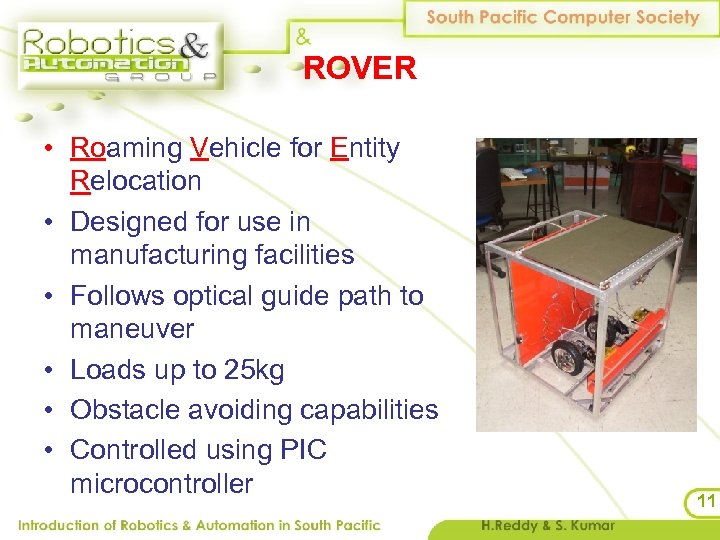
ROVER • Roaming Vehicle for Entity Relocation • Designed for use in manufacturing facilities • Follows optical guide path to maneuver • Loads up to 25 kg • Obstacle avoiding capabilities • Controlled using PIC microcontroller 11
Kinetic Manipulator • Pick and Place Robot • Gripper in front to hold workpiece • Eventually lift completed workpiece from the CNC Drill Machine and load on to ROVER • Research On-going. 12
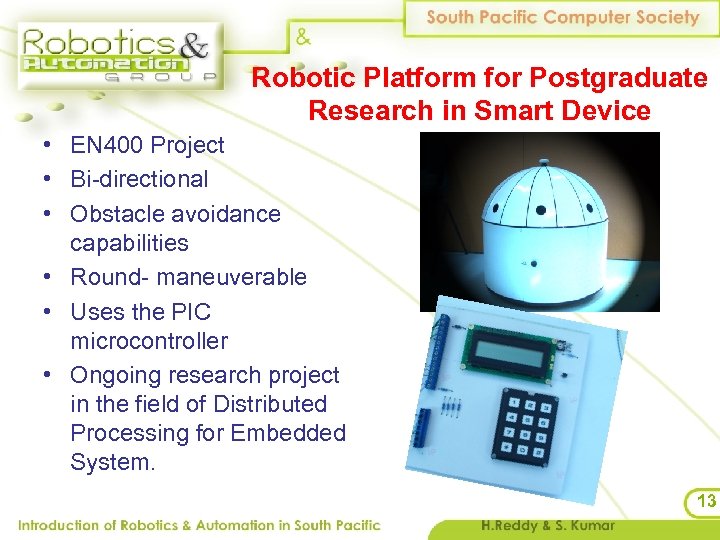
Robotic Platform for Postgraduate Research in Smart Device • EN 400 Project • Bi-directional • Obstacle avoidance capabilities • Round- maneuverable • Uses the PIC microcontroller • Ongoing research project in the field of Distributed Processing for Embedded System. 13
Architecture of Robotic Projects • Mechanical – Structure, Motion and tasks (loading/gripping) • Electronics – Control, sensor and actuator interfaces • Software – Control algorithm (link between sensors and actuators) and path plans 14
Software • Incorporates AI – Optimizing – Path Planning • AI ----- Decision Science – Where Optimizing provides best solutions – Path planning helps execute best solutions • Various other paradigms can be implemented depending on the task at hand. 15
Hardware Implementation • Implemented using 2 methods – Enhanced Parallel Port (EPP) mode • Based on IEEE 1284 Protocol, developed in-house, implemented on the CNC Drilling Machine – PIC Microcontroller • Isolated from PC, Independent memory and CPU, size of a MARS chocolate bar 16
Implications • Capacity building to develop and sustain robotic & automated equipment locally • Trend • • 2001; 1 final year project 2002; 4 final year projects 2003; 10 final year projects 2003; 1 MSc research in Robotics 17
Robotics & Automation Group • Formed in November 2003 to formalise the focus of robotics research activities. • Group is also responsible for organising and administrating the Robocon team and project every year. • Formalize & control the technology development in key areas • Intention is to become the Center for Precision Technology for the industry & the region. 18
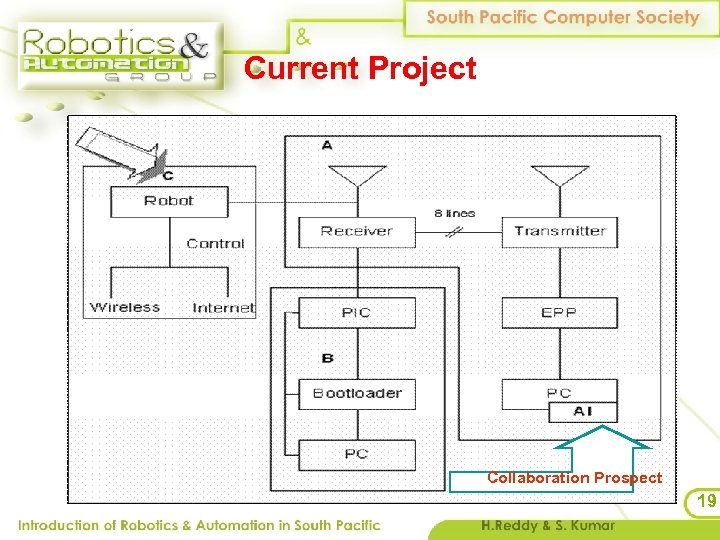
Current Project Collaboration Prospect 19
Constrains • Financial – Limits the number of projects that can be taken up, thereby limiting progress • Uninformed industry about local automation activity & expertise. 20
Robotics Frontiers Internationally • Involvement of Industry and corporate organizations – Sony – Honda (Asimo) – Fujitsu – UC Berkley (exoskeleton) – DARPA’s Unmanned Vehicle Program 21
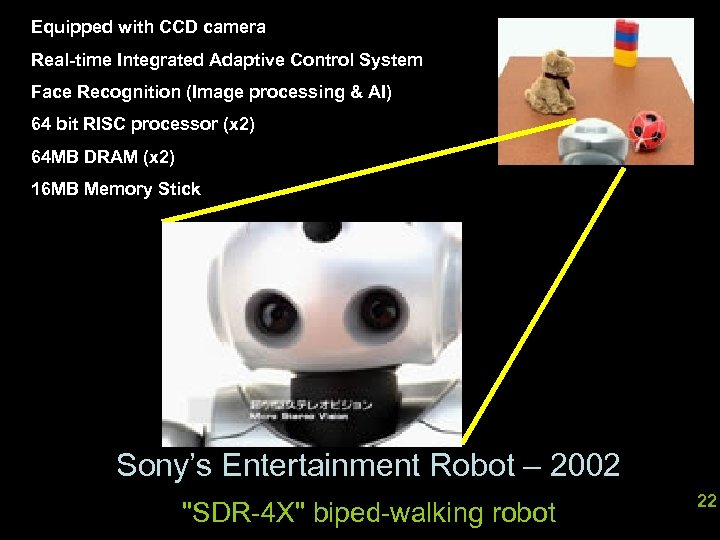
Equipped with CCD camera Real-time Integrated Adaptive Control System Face Recognition (Image processing & AI) 64 bit RISC processor (x 2) 64 MB DRAM (x 2) 16 MB Memory Stick Sony’s Entertainment Robot – 2002 "SDR-4 X" biped-walking robot 22
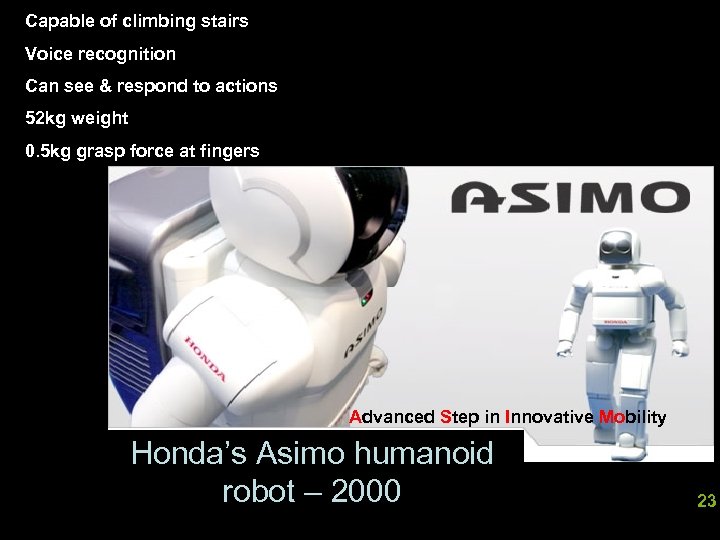
Capable of climbing stairs Voice recognition Can see & respond to actions 52 kg weight 0. 5 kg grasp force at fingers Advanced Step in Innovative Mobility Honda’s Asimo humanoid robot – 2000 23
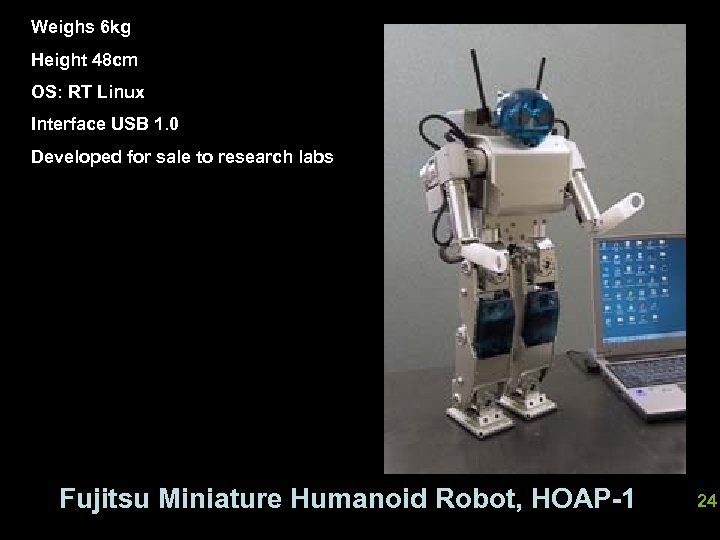
Weighs 6 kg Height 48 cm OS: RT Linux Interface USB 1. 0 Developed for sale to research labs Fujitsu Miniature Humanoid Robot, HOAP-1 24
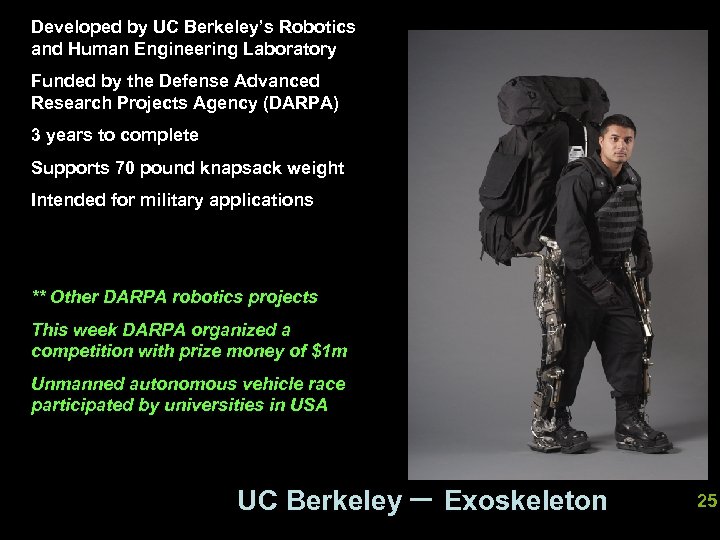
Developed by UC Berkeley’s Robotics and Human Engineering Laboratory Funded by the Defense Advanced Research Projects Agency (DARPA) 3 years to complete Supports 70 pound knapsack weight Intended for military applications ** Other DARPA robotics projects This week DARPA organized a competition with prize money of $1 m Unmanned autonomous vehicle race participated by universities in USA UC Berkeley – Exoskeleton 25
Summary • Since introduced to Robotics 3 years ago, – 13 local people (excluding PG’s) have experience in Robotics – Through ROBOCON, recognized internationally as active in Robotics – 4 Journals and Conference proceedings • More under review • Aim is always to do better. 26
Acknowledgements • • • University Research Committee SPAS USP Planning Office USP Bursary Asia Pacific Broadcasting Union Department of Engineering 27
Скачать презентацию Introduction Introduction of Robotics at USP
f5a876a332a5eed171dfdd0e640d2eee.ppt