 Скачать презентацию Introduction Business Skills for Sport and Fitness Professionals
a475009a5ce5b69fedc049f96a9167ff.ppt
- Количество слайдов: 22



Introduction Business Skills for Sport and Fitness Professionals 1
Fall 2009 Jim Shaw shawja@sympatico. ca Patti-Jo Mc. Lellan Shaw pjmshaw@yorku. ca Office: Stong 324 Office Hour Chapter 2 Tuesday 1: 30 to 2: 30 (by appointment) 2
Class Introductions • Your Name? • Certificate Program you are in? • What do you want to do when you graduate? • Something interesting that happened this summer. • Something that is not on your resume. Chapter 2 3
Business Skills for Sport and Fitness Professionals This course will include theory and detailed practical instruction on key business and organizational processes. These will include Business Planning, Marketing, Financial Management and elements of Risk and Liability in work environments. These areas will be developed as they apply to the recreation/leisure, fitness and sport management industries 1. To develop an understanding of theory, practices and skills that support business development in the fitness, sport and health industry. 2. To develop an understanding of the contemporary processes involved in entrepreneurship, business planning, marketing, finance and managing performance, risk and liability, and the use of the tools that support their application. 3. To participate in learning groups as a means of completing assignments for the course. Chapter 2 4
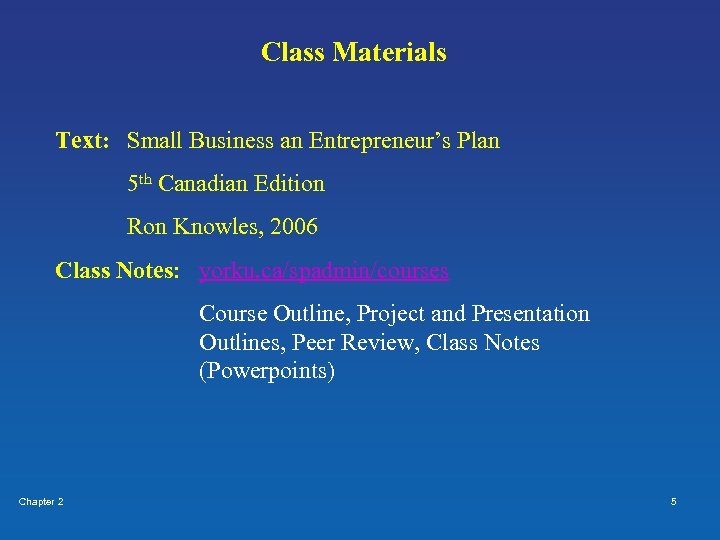
Class Materials Text: Small Business an Entrepreneur’s Plan 5 th Canadian Edition Ron Knowles, 2006 Class Notes: yorku. ca/spadmin/courses Course Outline, Project and Presentation Outlines, Peer Review, Class Notes (Powerpoints) Chapter 2 5
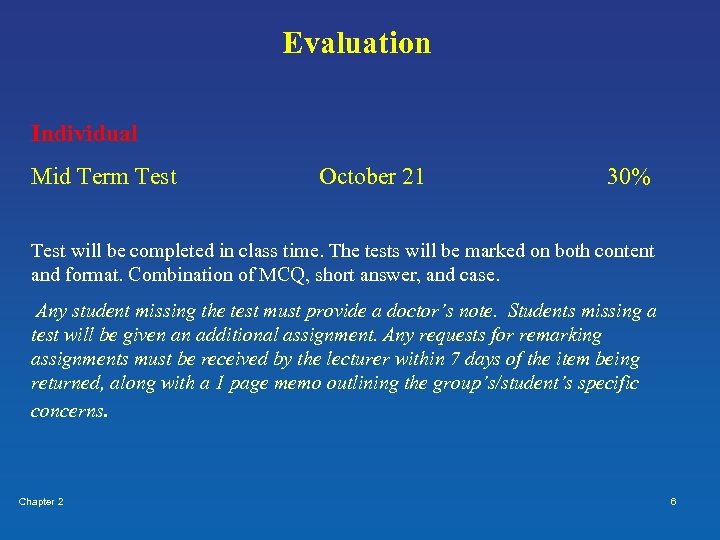
Evaluation Individual Mid Term Test October 21 30% Test will be completed in class time. The tests will be marked on both content and format. Combination of MCQ, short answer, and case. Any student missing the test must provide a doctor’s note. Students missing a test will be given an additional assignment. Any requests for remarking assignments must be received by the lecturer within 7 days of the item being returned, along with a 1 page memo outlining the group’s/student’s specific concerns. Chapter 2 6
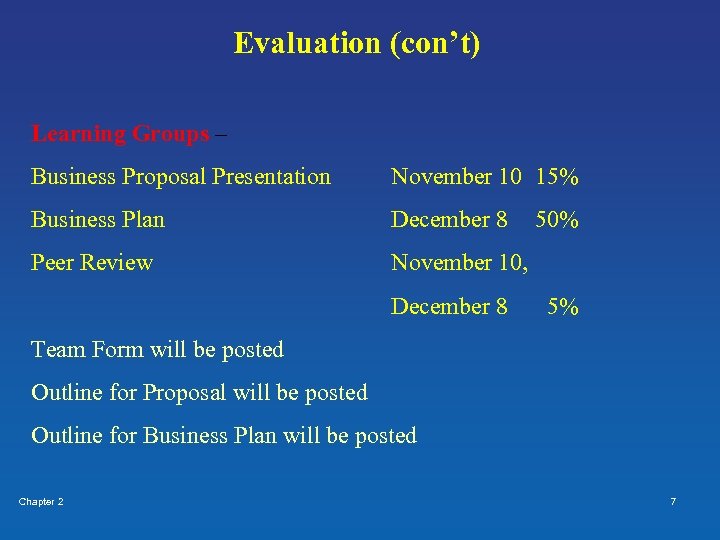
Evaluation (con’t) Learning Groups – Business Proposal Presentation November 10 15% Business Plan December 8 Peer Review November 10, December 8 50% 5% Team Form will be posted Outline for Proposal will be posted Outline for Business Plan will be posted Chapter 2 7

Business Plan Project Theme: “Tweens” – Children between the ages of 9 and 14 “Kidfluence” – The influence kids have over family household purchases. In Canada in 2002 there were approx 2. 5 M “Tweens” (9 -14) who in addition to spending $ 2. 9 Million of their own money, influence another $ 20 Billion in household purchases. www. corusmedia. com/ytv/kidfluence. asp Chapter 2 8
Get to Know a Little About Someone in the Room !!! Chapter 2 9
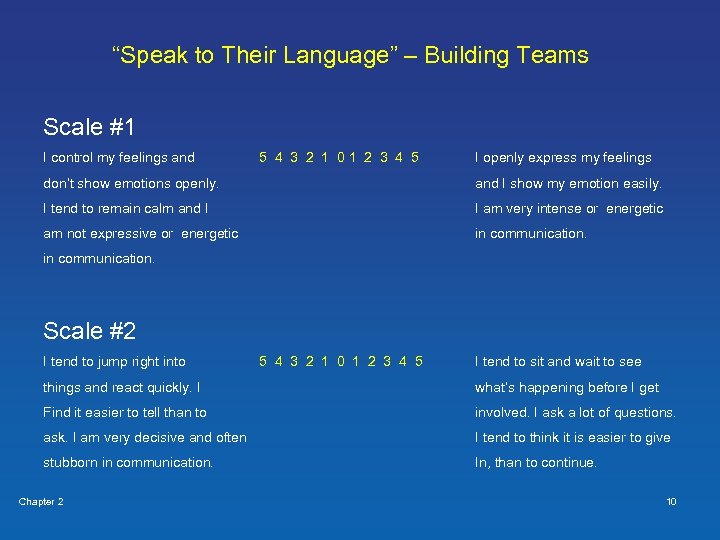
“Speak to Their Language” – Building Teams Scale #1 I control my feelings and 5 4 3 2 1 01 2 3 4 5 I openly express my feelings don’t show emotions openly. and I show my emotion easily. I tend to remain calm and I I am very intense or energetic am not expressive or energetic in communication. Scale #2 I tend to jump right into 5 4 3 2 1 0 1 2 3 4 5 I tend to sit and wait to see things and react quickly. I what’s happening before I get Find it easier to tell than to involved. I ask a lot of questions. ask. I am very decisive and often I tend to think it is easier to give stubborn in communication. In, than to continue. Chapter 2 10
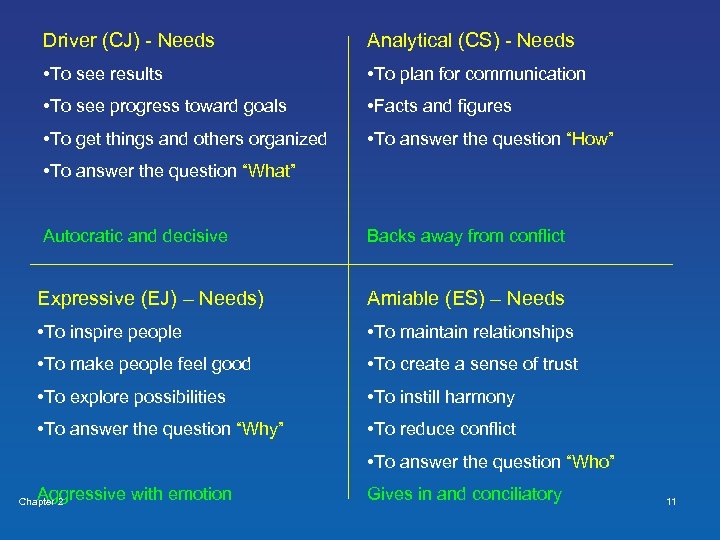
Driver (CJ) - Needs Analytical (CS) - Needs • To see results • To plan for communication • To see progress toward goals • Facts and figures • To get things and others organized • To answer the question “How” • To answer the question “What” Autocratic and decisive Backs away from conflict Expressive (EJ) – Needs) Amiable (ES) – Needs • To inspire people • To maintain relationships • To make people feel good • To create a sense of trust • To explore possibilities • To instill harmony • To answer the question “Why” • To reduce conflict • To answer the question “Who” Aggressive with emotion Chapter 2 Gives in and conciliatory 11
Introduction Where to Start? Chapter 2 12
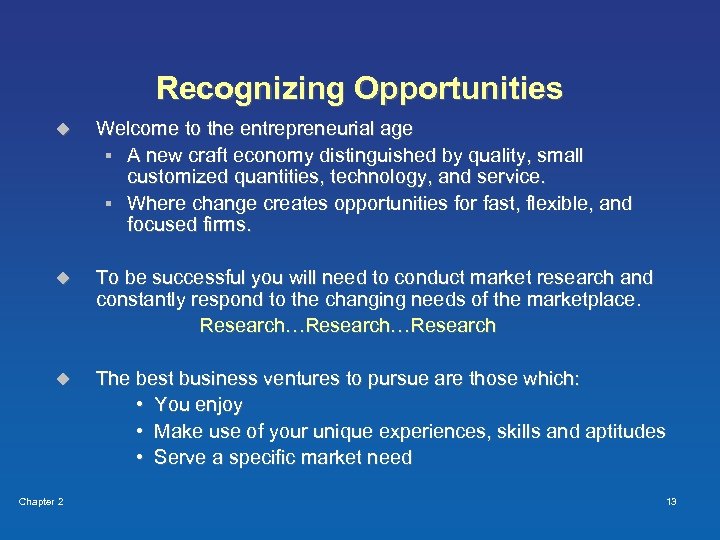
Recognizing Opportunities u Welcome to the entrepreneurial age § A new craft economy distinguished by quality, small customized quantities, technology, and service. § Where change creates opportunities for fast, flexible, and focused firms. u To be successful you will need to conduct market research and constantly respond to the changing needs of the marketplace. Research…Research u The best business ventures to pursue are those which: • You enjoy • Make use of your unique experiences, skills and aptitudes • Serve a specific market need Chapter 2 13
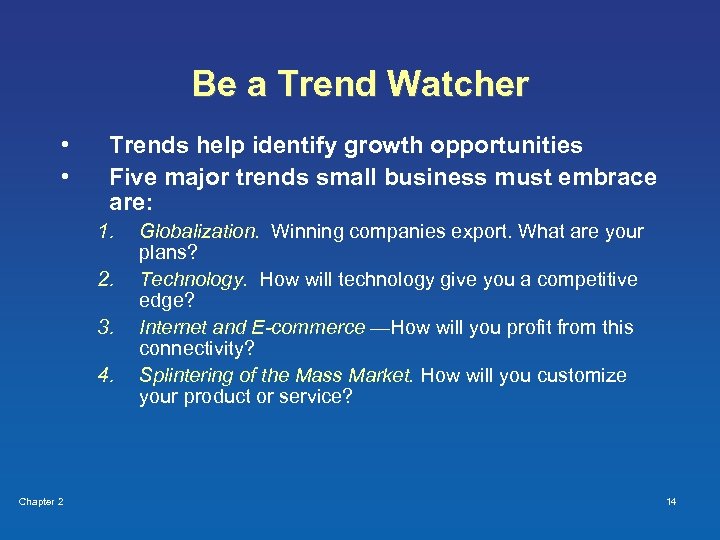
Be a Trend Watcher • • Trends help identify growth opportunities Five major trends small business must embrace are: 1. 2. 3. 4. Chapter 2 Globalization. Winning companies export. What are your plans? Technology. How will technology give you a competitive edge? Internet and E-commerce —How will you profit from this connectivity? Splintering of the Mass Market. How will you customize your product or service? 14
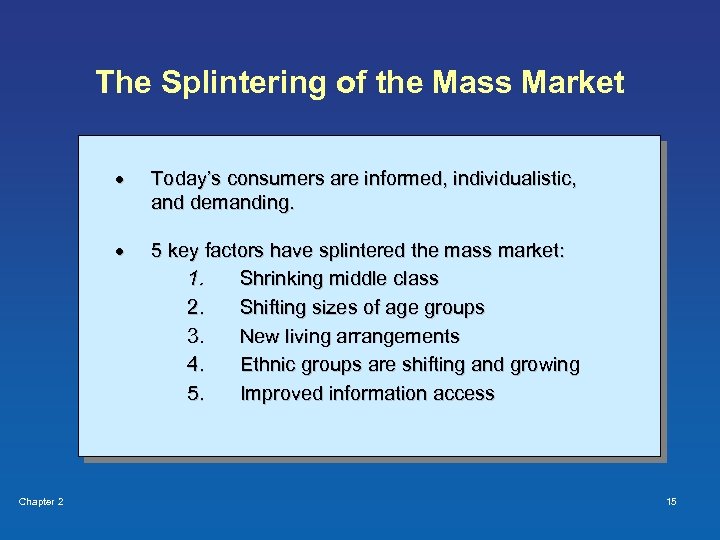
The Splintering of the Mass Market · · Chapter 2 Today’s consumers are informed, individualistic, and demanding. 5 key factors have splintered the mass market: 1. Shrinking middle class 2. Shifting sizes of age groups 3. New living arrangements 4. Ethnic groups are shifting and growing 5. Improved information access 15
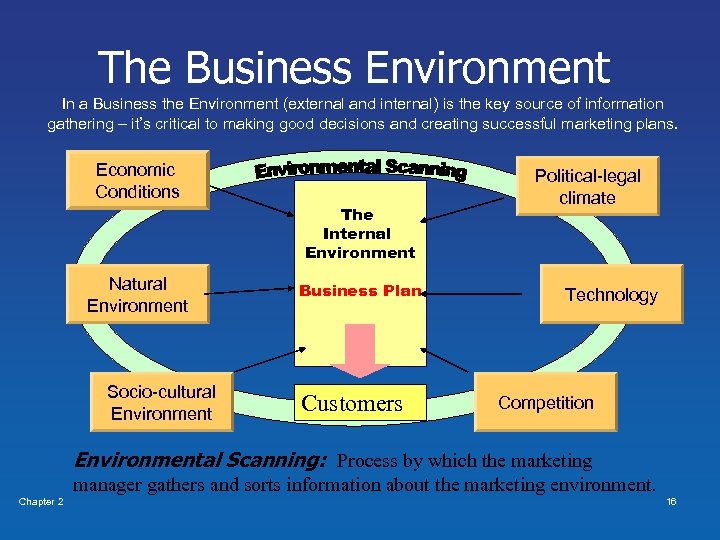
The Business Environment In a Business the Environment (external and internal) is the key source of information gathering – it’s critical to making good decisions and creating successful marketing plans. Economic Conditions The Internal Environment Natural Environment Socio-cultural Environment Business Plan Customers Political-legal climate Technology Competition Environmental Scanning: Process by which the marketing manager gathers and sorts information about the marketing environment. Chapter 2 16
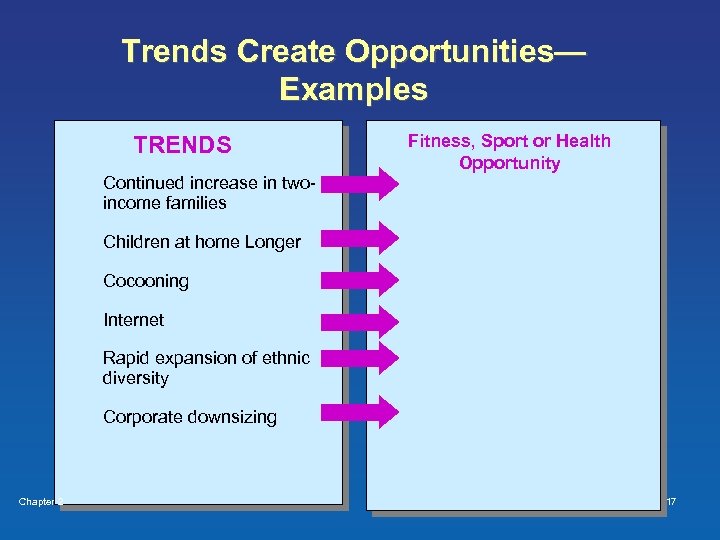
Trends Create Opportunities— Examples TRENDS Fitness, Sport or Health Opportunity Continued increase in twoincome families Children at home Longer Cocooning Internet Rapid expansion of ethnic diversity Corporate downsizing Chapter 2 17
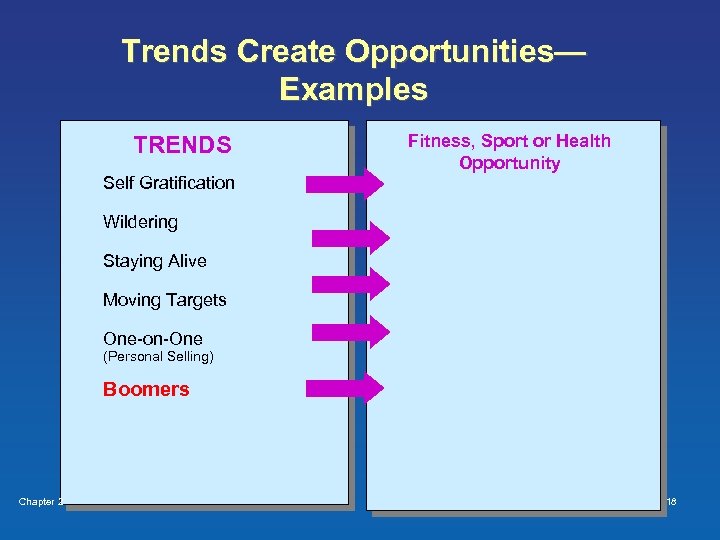
Trends Create Opportunities— Examples TRENDS Fitness, Sport or Health Opportunity Self Gratification Wildering Staying Alive Moving Targets One-on-One (Personal Selling) Boomers Chapter 2 18
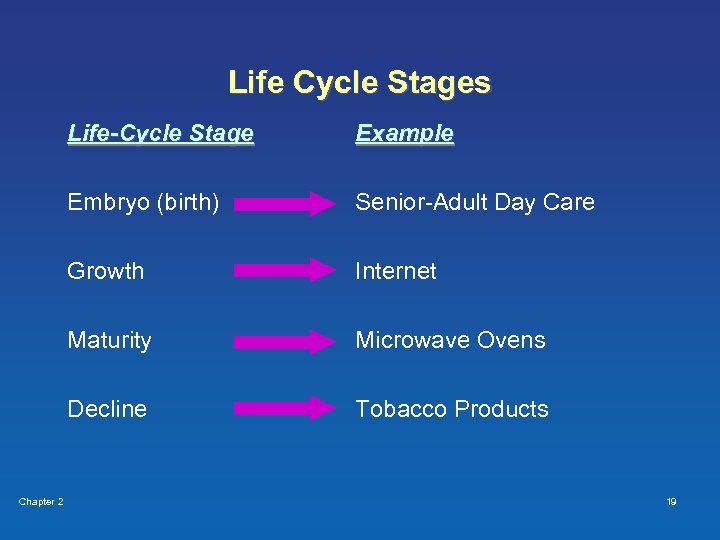
Life Cycle Stages Life-Cycle Stage Embryo (birth) Senior-Adult Day Care Growth Internet Maturity Microwave Ovens Decline Chapter 2 Example Tobacco Products 19

Market Segmentation • Market segmentation involves: Ø Breaking down potential markets into as many similar sub-segments as possible. Ø Identifying opportunity gaps and seeing combinations of gaps that may constitute markets. Ø A good example is shown in Figure 2. 5. Chapter 2 20
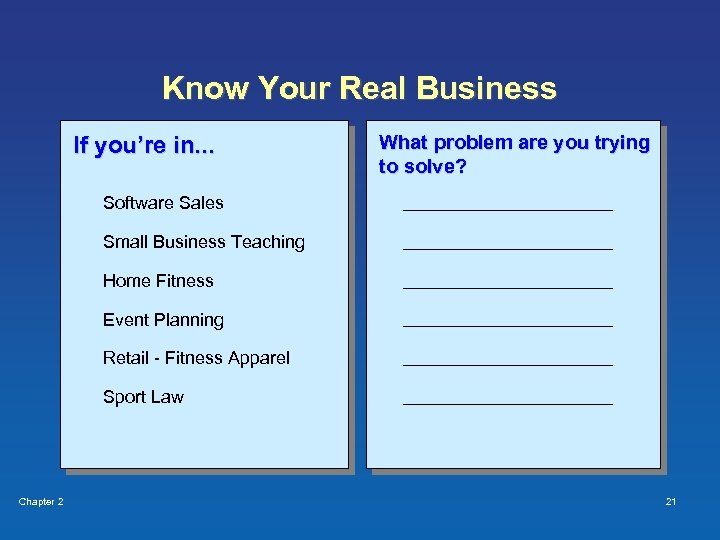
Know Your Real Business If you’re in. . . What problem are you trying to solve? Software Sales Small Business Teaching ___________ Home Fitness ___________ Event Planning ___________ Retail - Fitness Apparel ___________ Sport Law Chapter 2 _____________________ 21
The Business Environment “ The rules have changed. In business it’s information warfare and competitors can use intelligence as a weapons system” G. Dover Chapter 2 22
Скачать презентацию Introduction Business Skills for Sport and Fitness Professionals
a475009a5ce5b69fedc049f96a9167ff.ppt