 Скачать презентацию Introducing the Jet Age the Boeing 707 Barry
4efdee1ce53feefa3d1b9dce2eef8102.ppt
- Количество слайдов: 68



Introducing the Jet Age the Boeing 707 Barry Latter January 2015
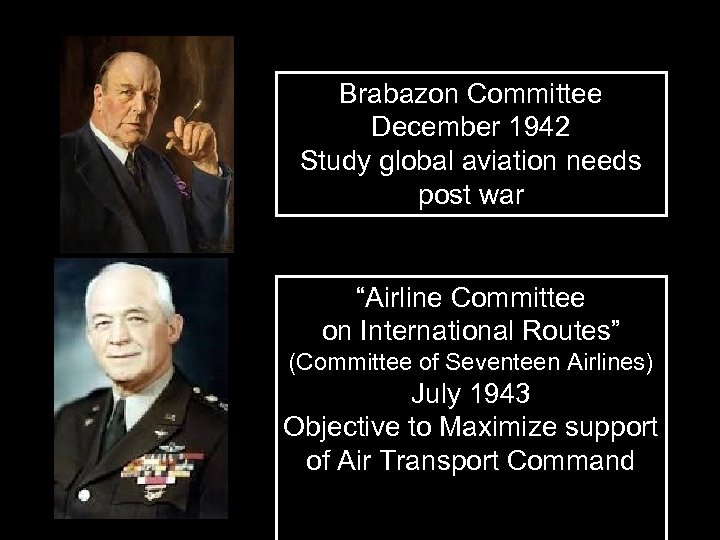
Brabazon Committee December 1942 Study global aviation needs post war “Airline Committee on International Routes” (Committee of Seventeen Airlines) July 1943 Objective to Maximize support of Air Transport Command
Brabazon Committee conclusions: Type I - large transatlantic airliner serving the high-volume routes like London-New York, seating its passengers in luxury for the 12 -hour trip. Type II was a short haul feeder liner intended to replace the Douglas DC-3 and de Havilland Dragon Rapide. Type IIA was a piston-powered aircraft, and the Type IIB would use the new turboprop engine. Type III medium-range aircraft for various routes serving the British Empire. Type IV a jet-powered 100 -seat design. The Type IV would be able to replace the Type III outright.
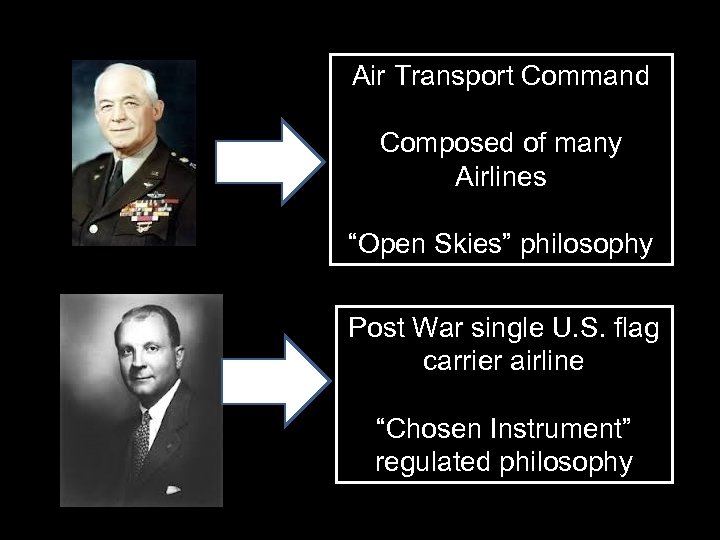
Air Transport Command Composed of many Airlines “Open Skies” philosophy Post War single U. S. flag carrier airline “Chosen Instrument” regulated philosophy
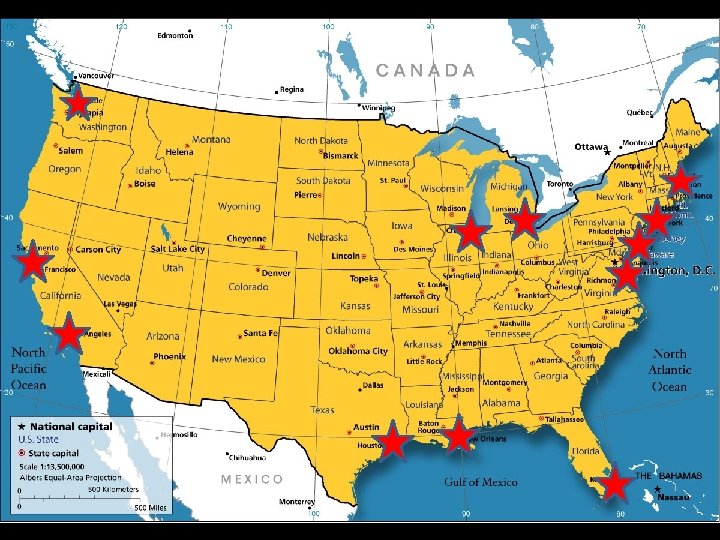
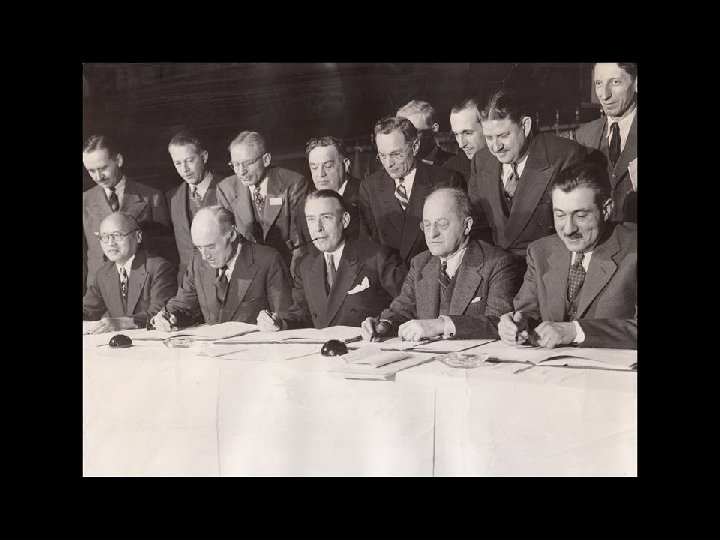
International Civil Aviation Organisation Convened the “Chicago Convention” in December of 1944 Fifty Two nations participated to define the charter of a new body established to guide and develop international civil aviation
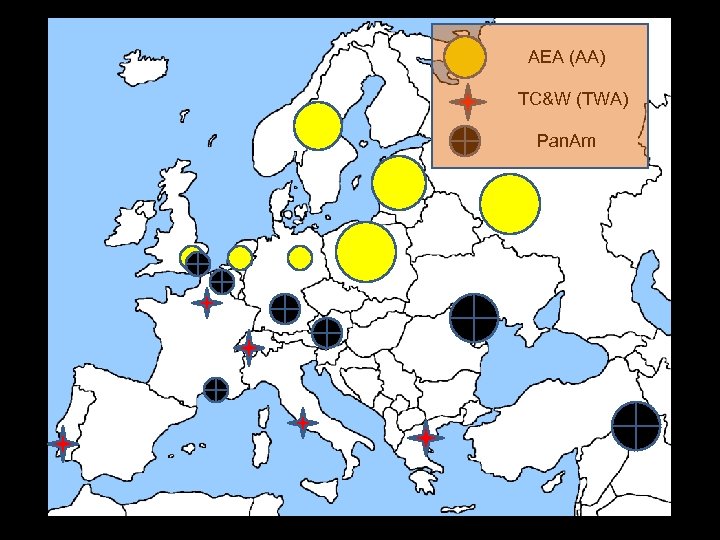
AEA (AA) TC&W (TWA) Pan. Am
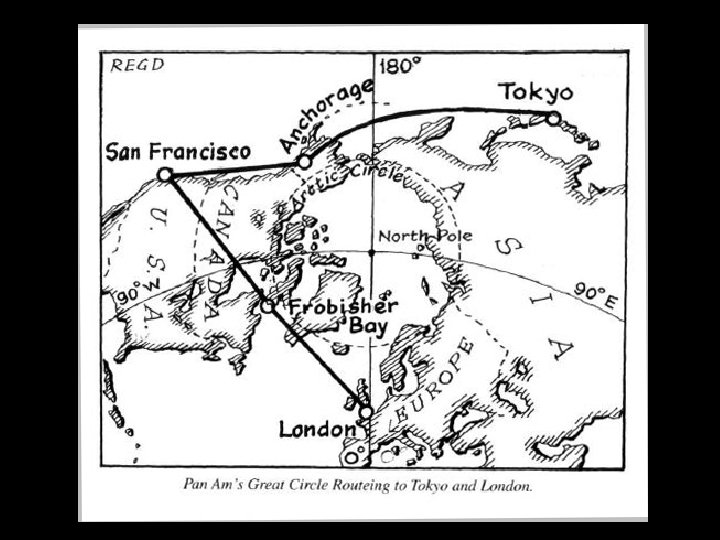
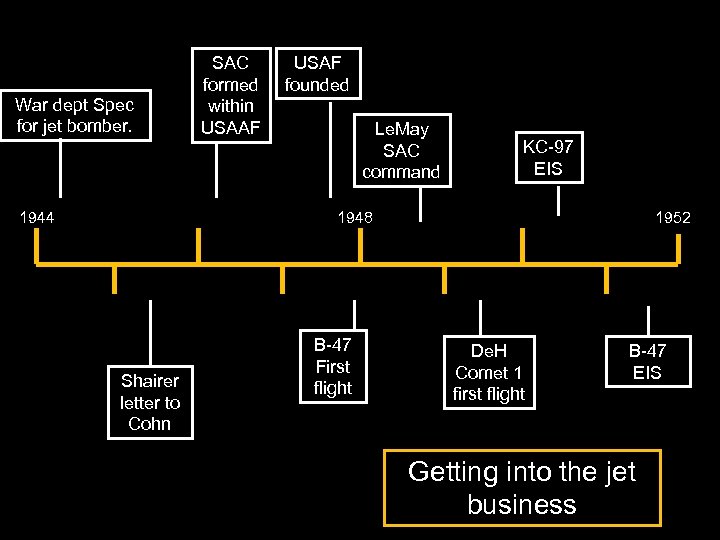
War dept Spec for jet bomber. 1944 SAC formed within USAAF USAF founded Le. May SAC command KC-97 EIS 1948 Shairer letter to Cohn B-47 First flight 1952 De. H Comet 1 first flight B-47 EIS Getting into the jet business
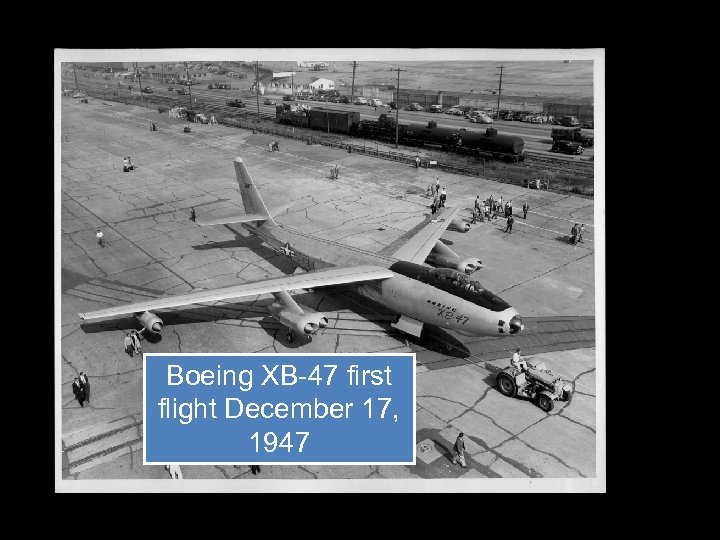
Boeing XB-47 first flight December 17, 1947
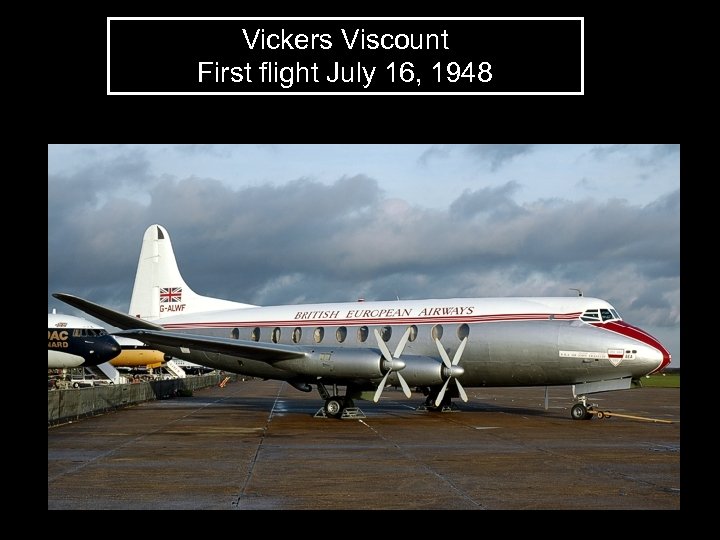
Vickers Viscount First flight July 16, 1948
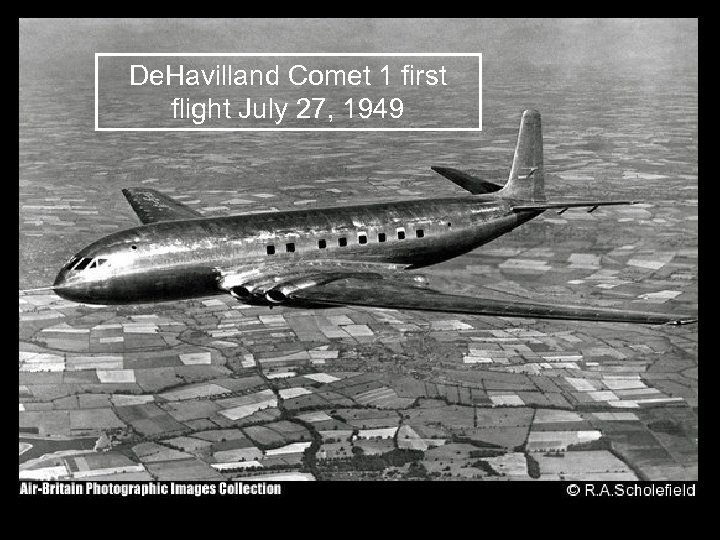
De. Havilland Comet 1 first flight July 27, 1949
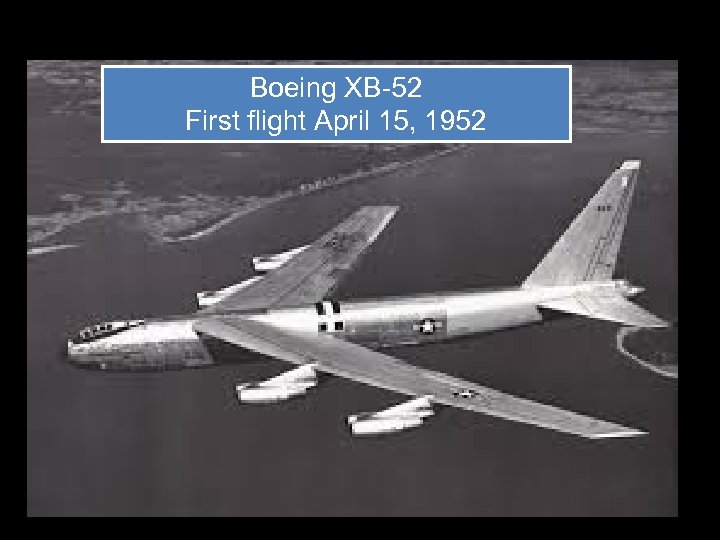
Boeing XB-52 First flight April 15, 1952
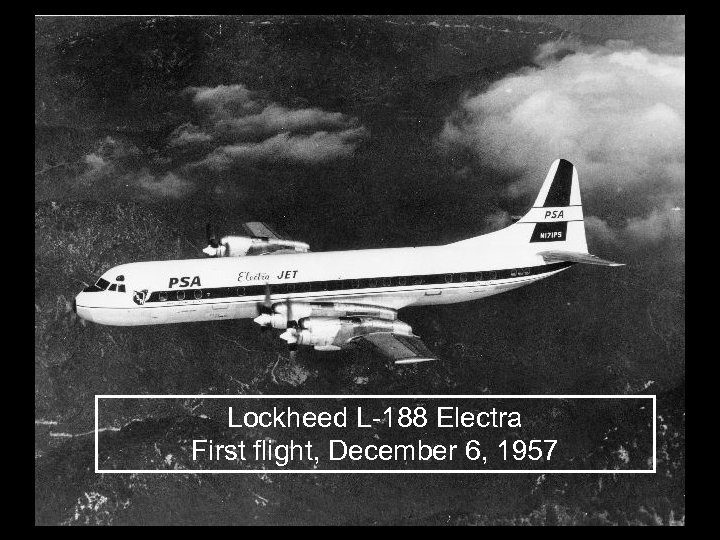
Lockheed L-188 Electra First flight, December 6, 1957
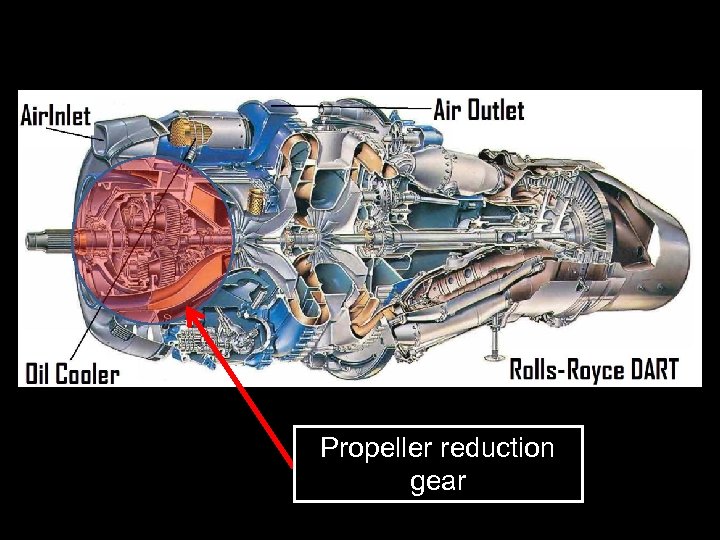
Propeller reduction gear
Jets gained a bad reputation post war! The industry was learning about - Compressibility effects - Metal fatigue - Powered controls/yaw damping - Jet engine handling/surging - Flutter - Take off techniques - Lightning - Cabin Pressurization -Yet Trippe wanted to go for jets out of the box!
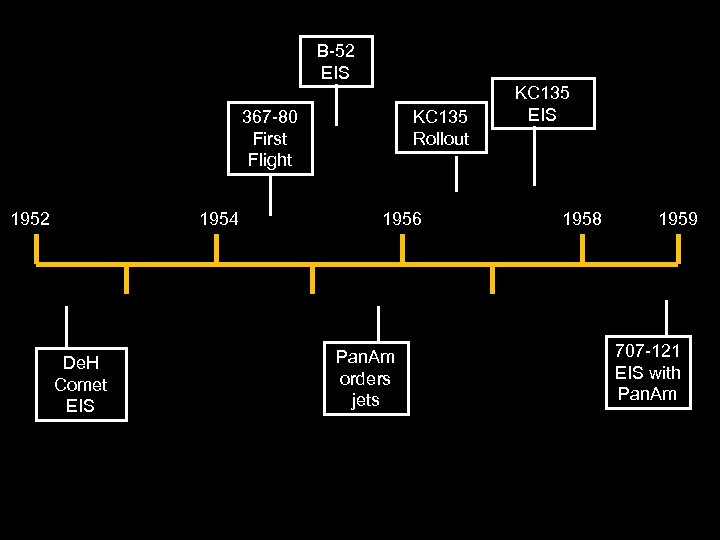
B-52 EIS 367 -80 First Flight 1952 1954 De. H Comet EIS KC 135 Rollout 1956 Pan. Am orders jets KC 135 EIS 1958 1959 707 -121 EIS with Pan. Am
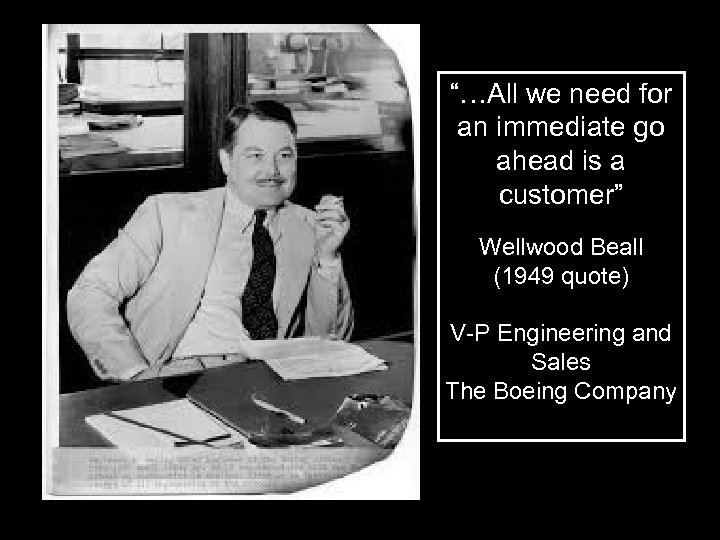
“…All we need for an immediate go ahead is a customer” Wellwood Beall (1949 quote) V-P Engineering and Sales The Boeing Company
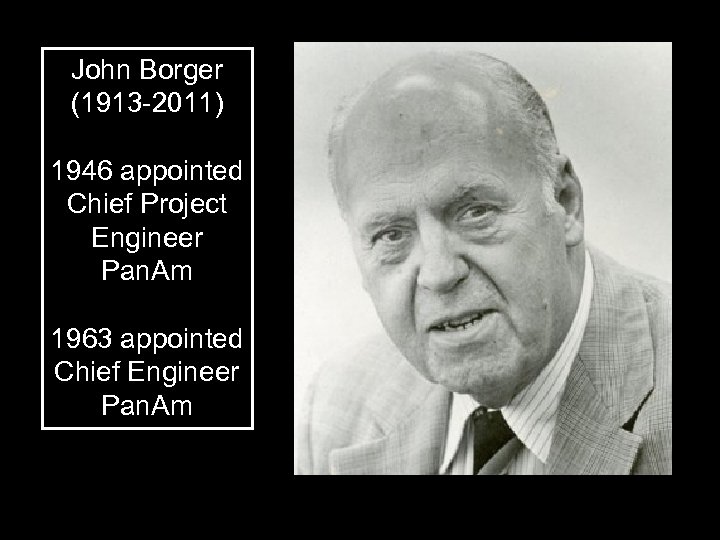
John Borger (1913 -2011) 1946 appointed Chief Project Engineer Pan. Am 1963 appointed Chief Engineer Pan. Am
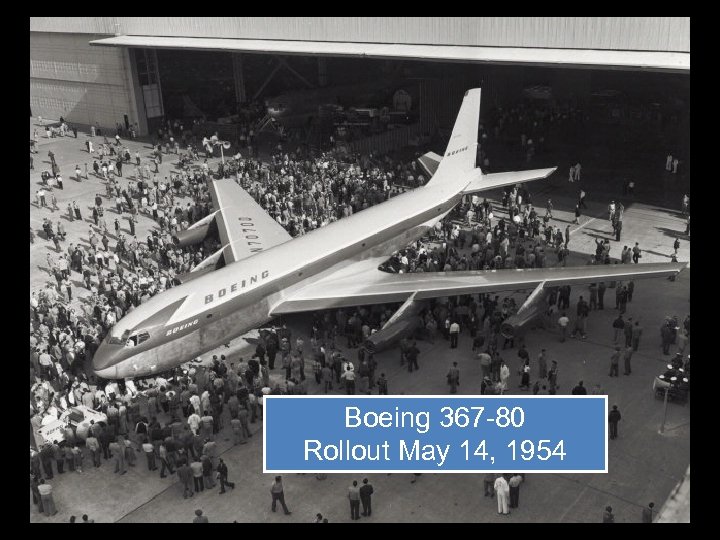
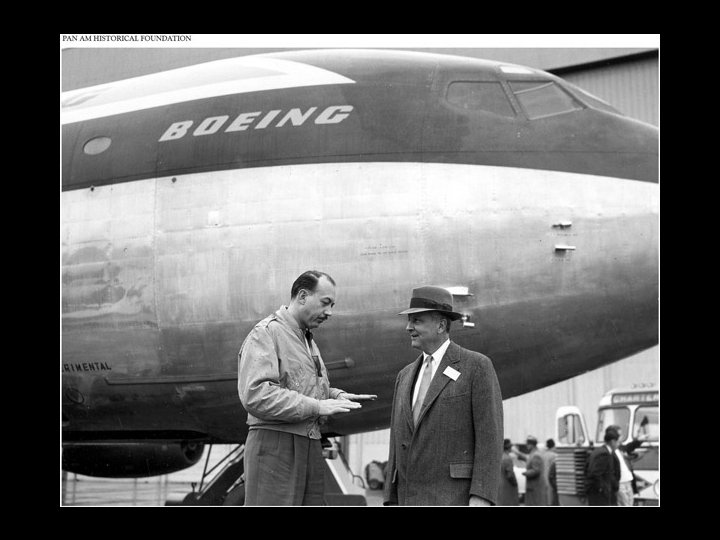
Boeing 367 -80 Rollout May 14, 1954
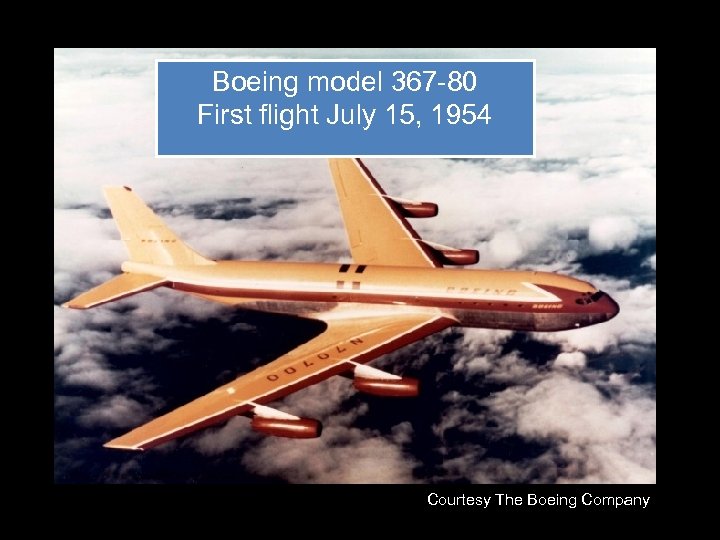
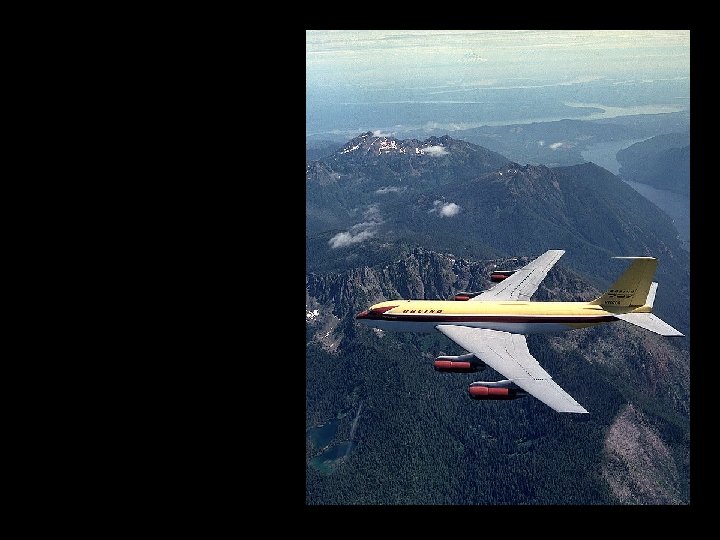
Boeing model 367 -80 First flight July 15, 1954 Courtesy The Boeing Company
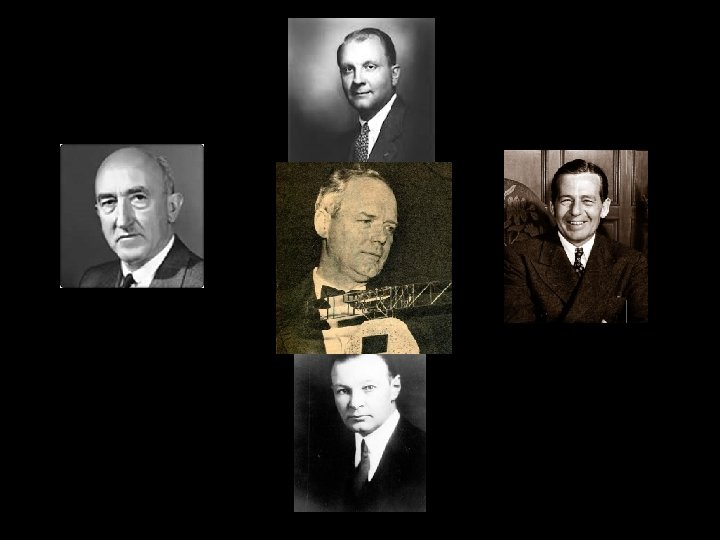
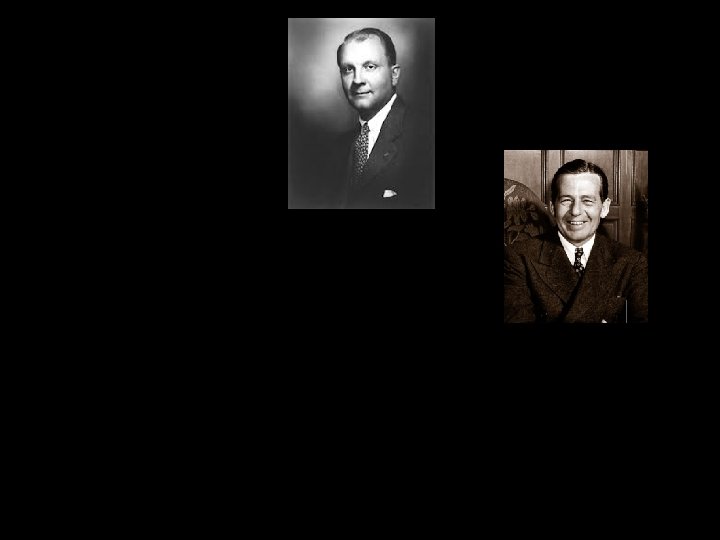
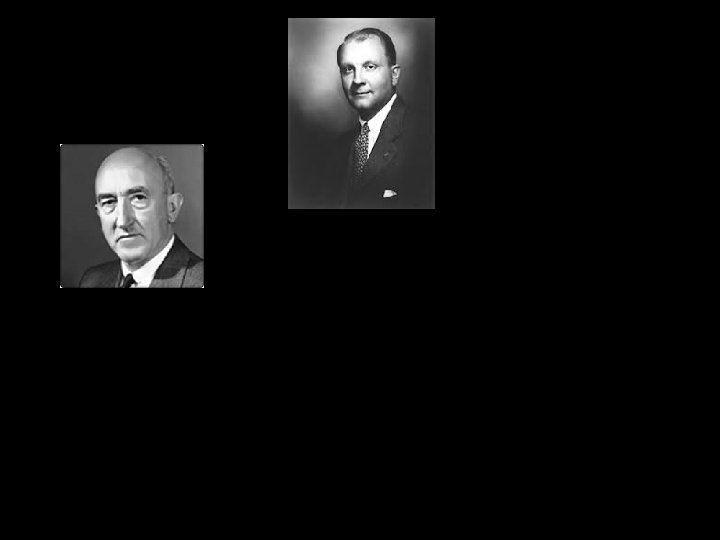
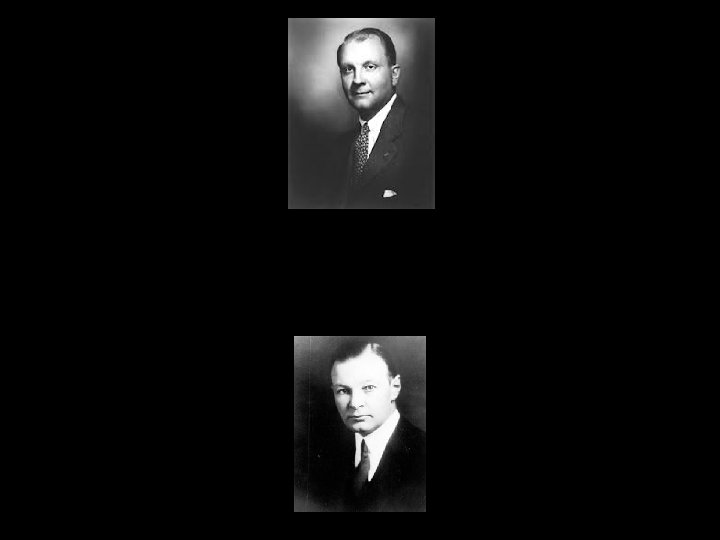
Trippe’s apartment, Gracie Square, Manhattan Cocktail party for IATA delegates Trippe announces purchase of 45 jets
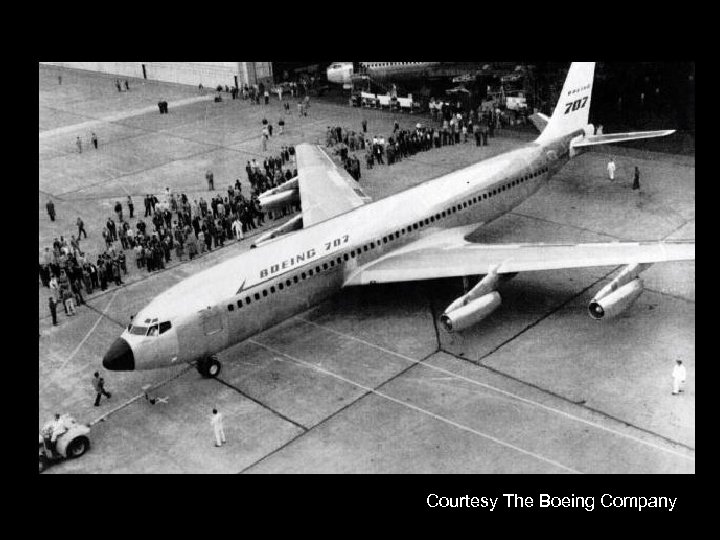
Courtesy The Boeing Company
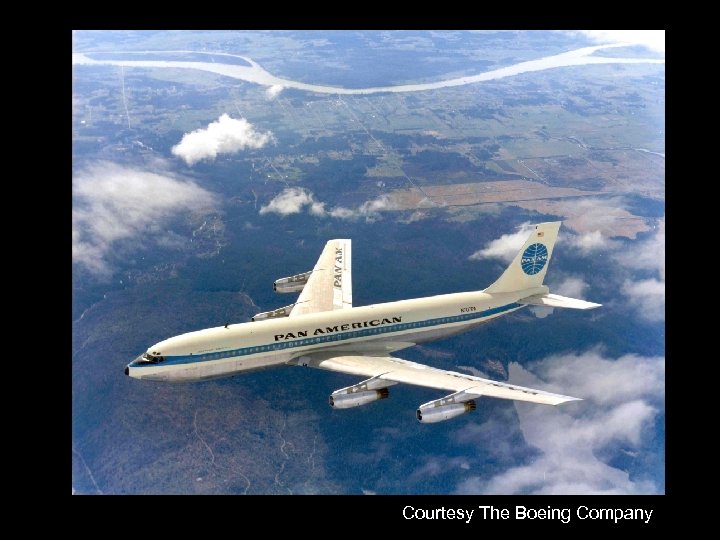
Courtesy The Boeing Company
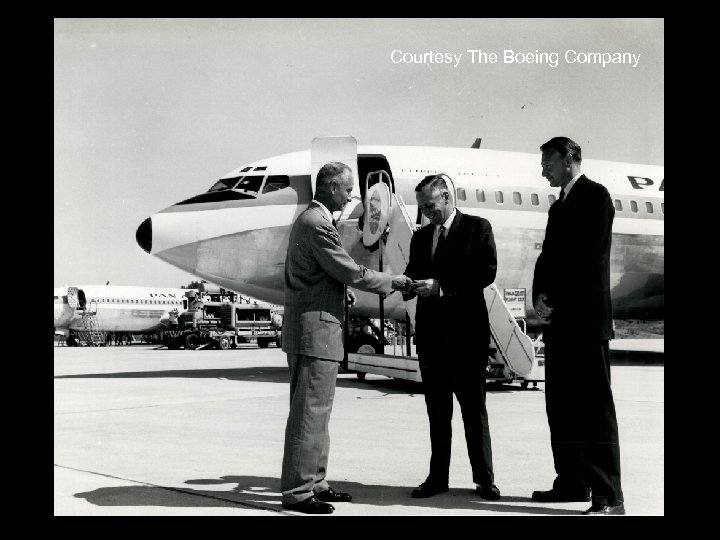
Courtesy The Boeing Company
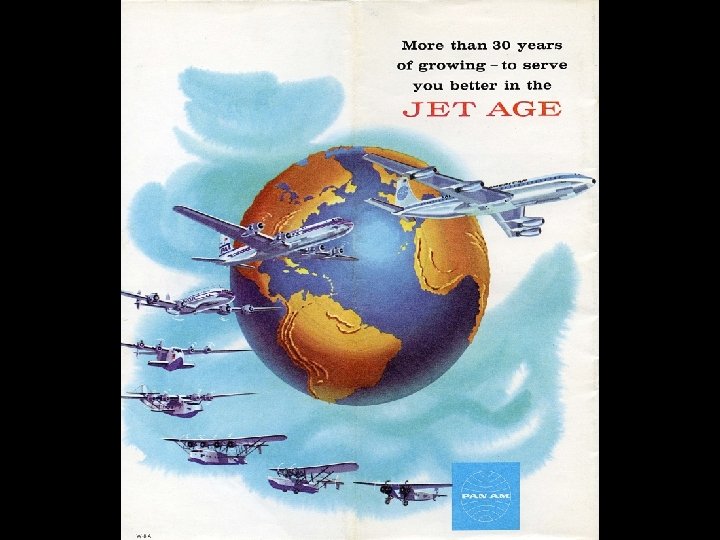
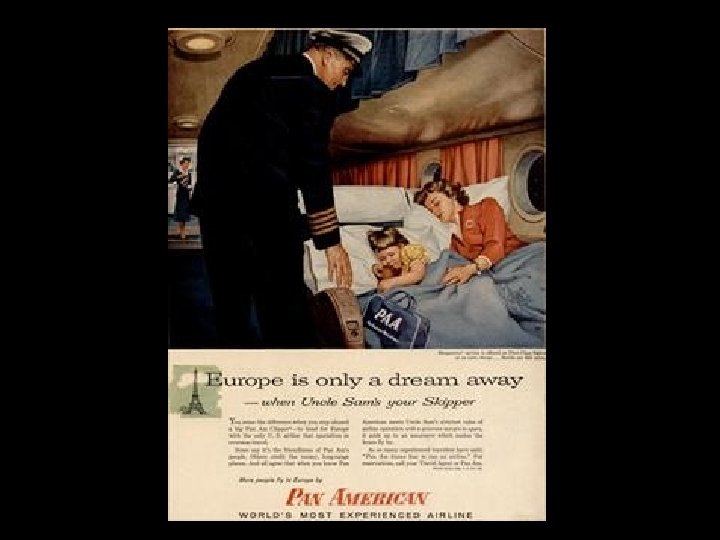
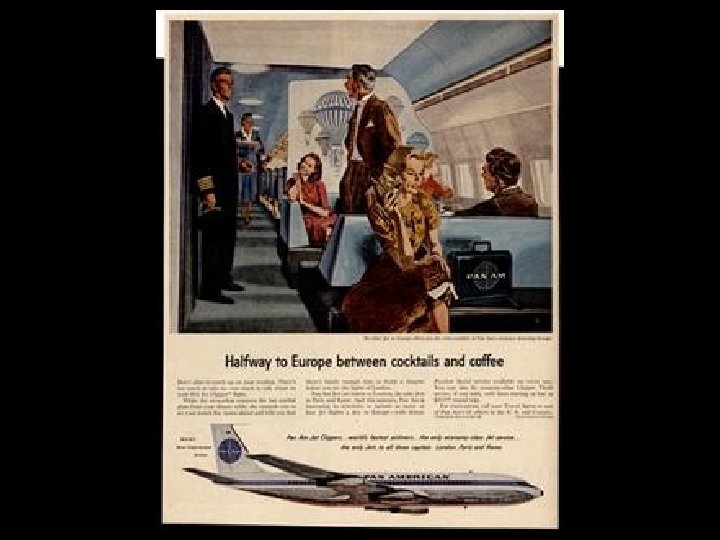
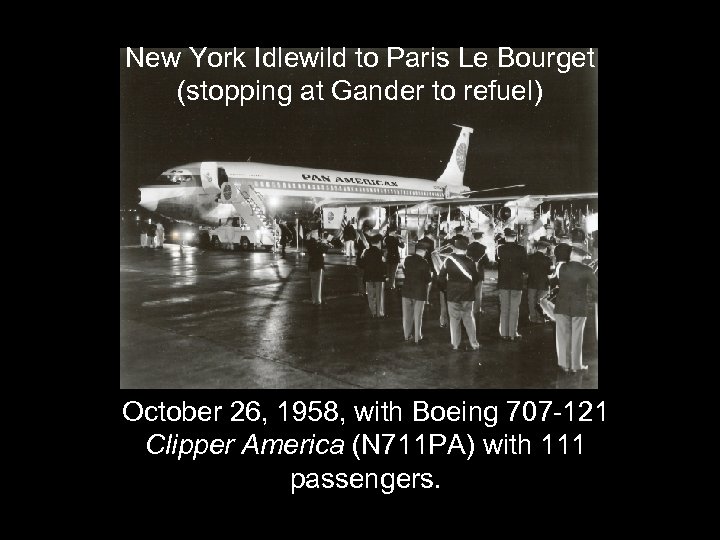
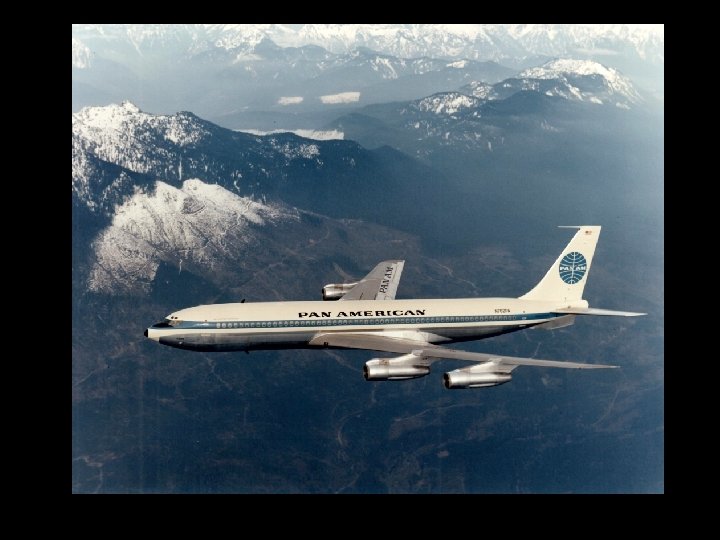
New York Idlewild to Paris Le Bourget (stopping at Gander to refuel) October 26, 1958, with Boeing 707 -121 Clipper America (N 711 PA) with 111 passengers.
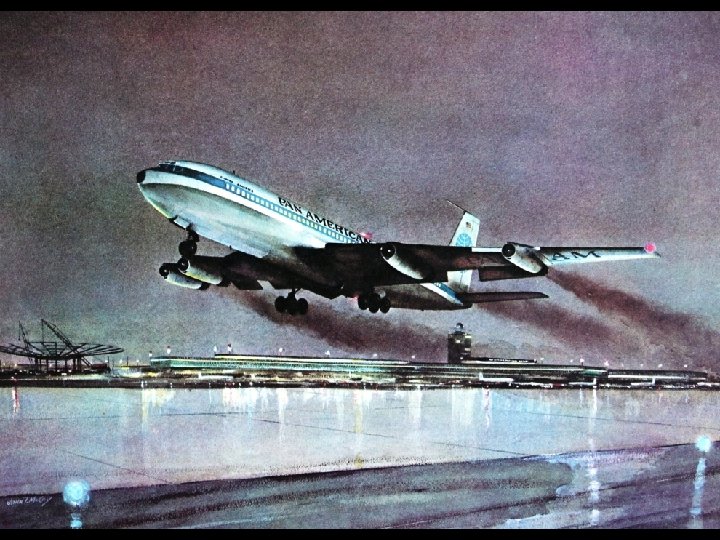
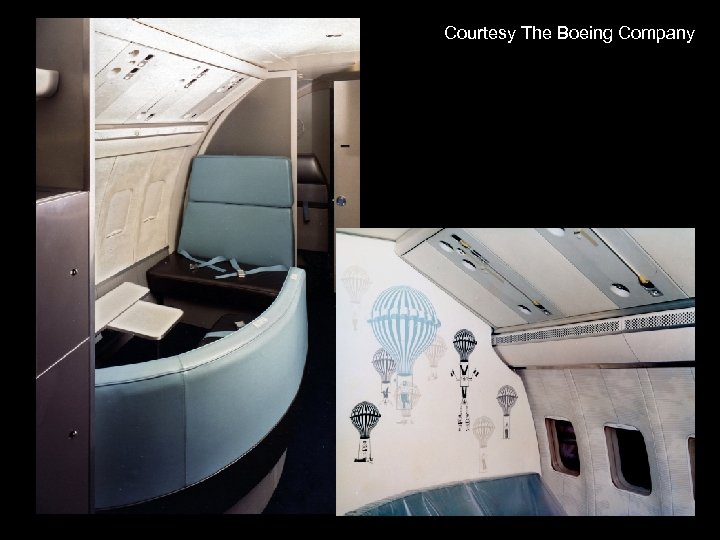
Courtesy The Boeing Company
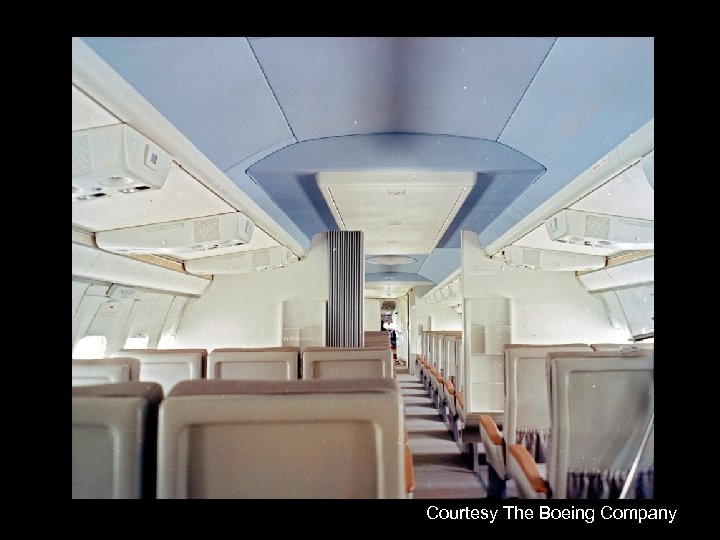
Courtesy The Boeing Company
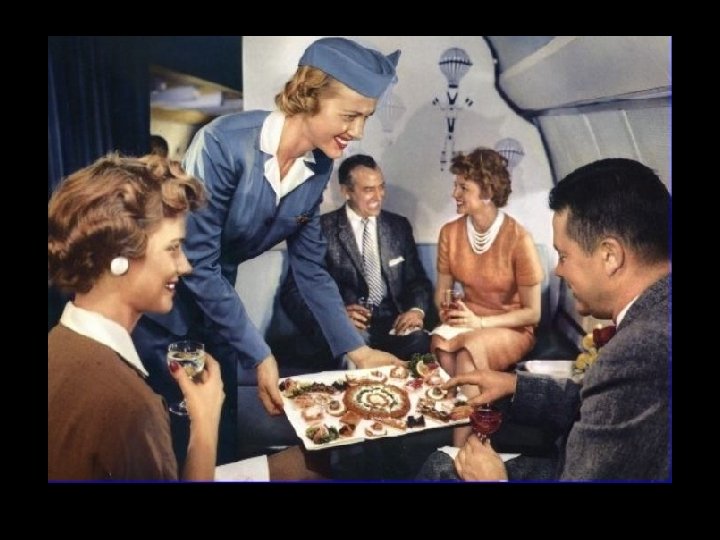
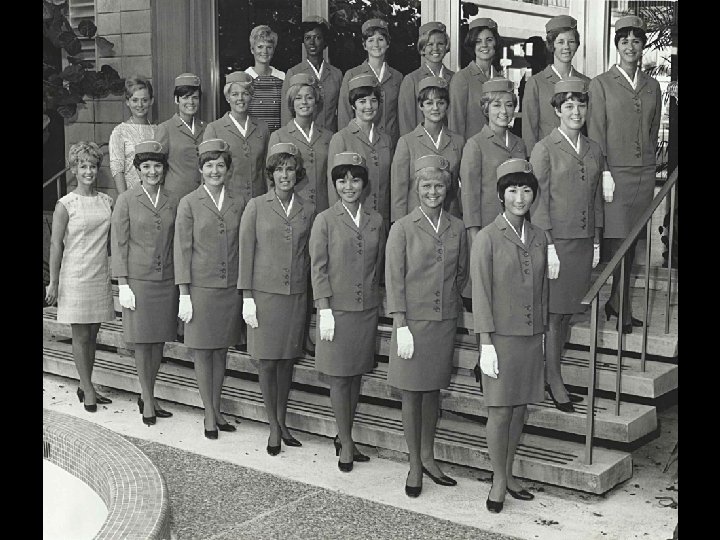
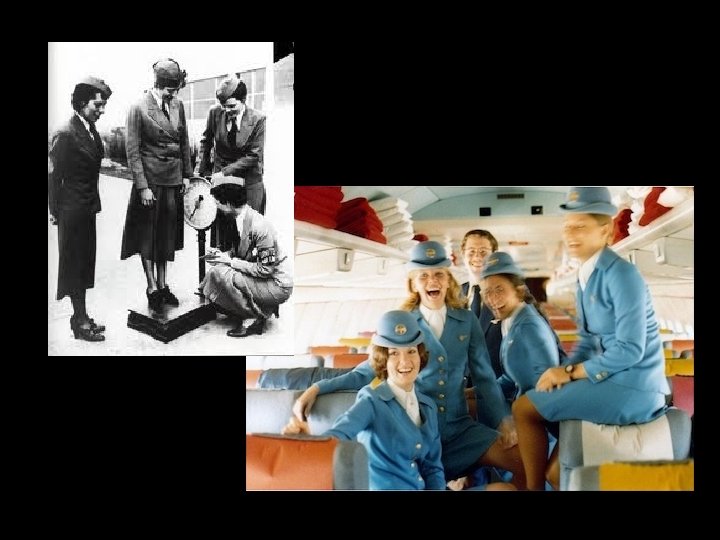
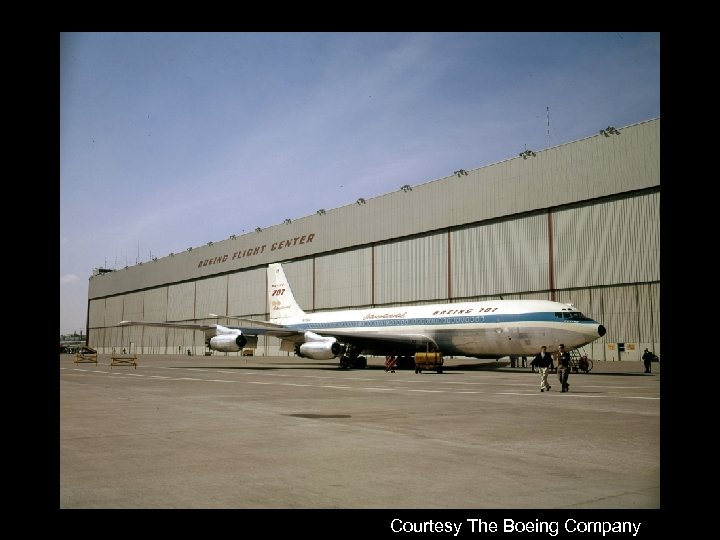
Courtesy The Boeing Company
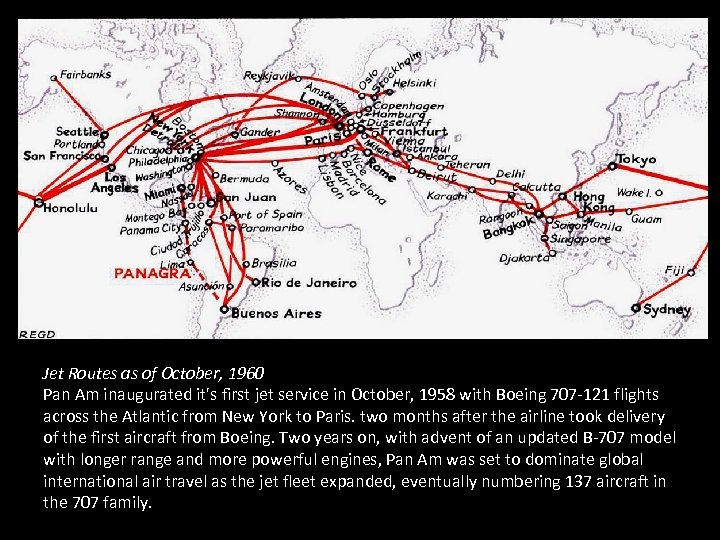
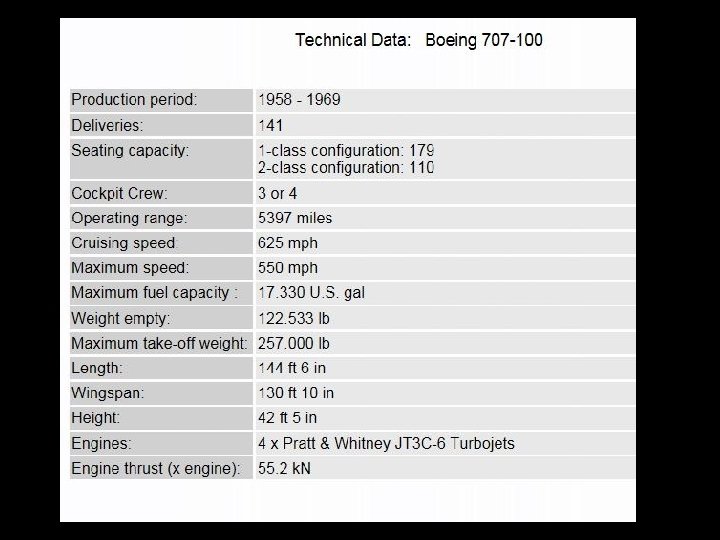
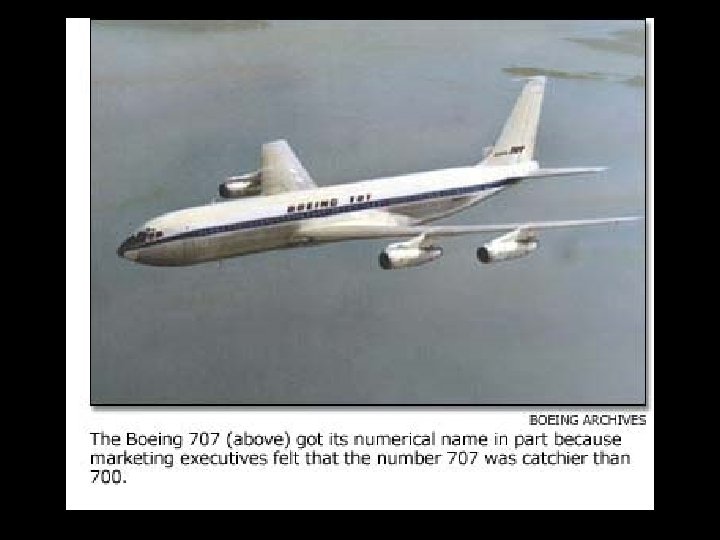
Jet Routes as of October, 1960 Pan Am inaugurated it's first jet service in October, 1958 with Boeing 707 -121 flights across the Atlantic from New York to Paris. two months after the airline took delivery of the first aircraft from Boeing. Two years on, with advent of an updated B-707 model with longer range and more powerful engines, Pan Am was set to dominate global international air travel as the jet fleet expanded, eventually numbering 137 aircraft in the 707 family.



Backup slides
Courtesy The Boeing Company
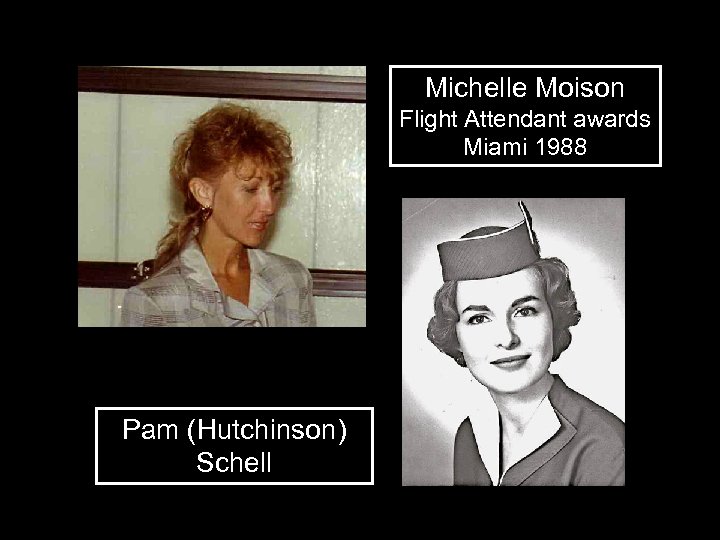
Michelle Moison Flight Attendant awards Miami 1988 Pam (Hutchinson) Schell
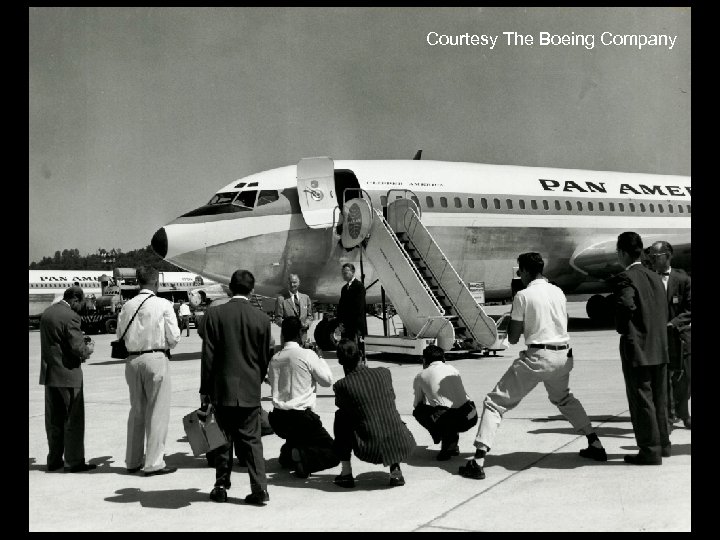
Courtesy The Boeing Company
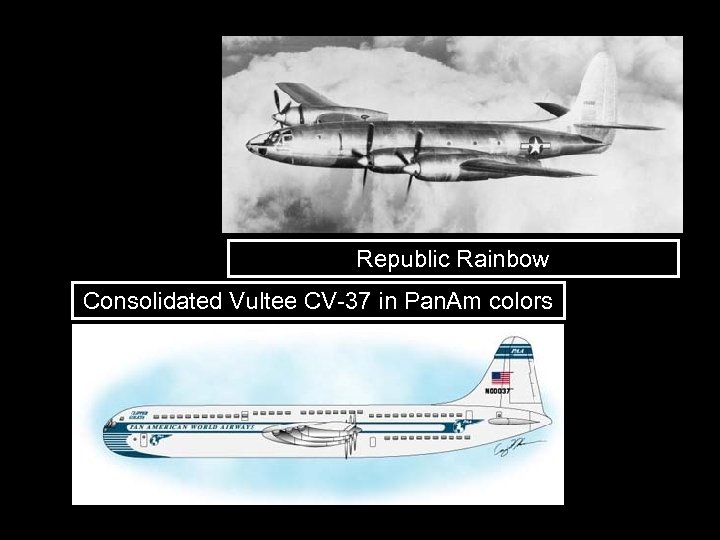
Republic Rainbow Consolidated Vultee CV-37 in Pan. Am colors

Insert Gledhill image
Maneuvering during wartime ……………… 1944 British and US were equally concerned about capturing civilian aviation markets after war. In the US, Asst. Secy. of State Adolph Berle pressuring FDR’s administration to face potential problems. Stokeley Morgan became aviation policy advisor – having fallen out with Trippe. He managed Latin American Div. of Pan. Am for 8 yrs. Relations between RAF and USAAC were not good following arguments about troop transport with Lend. Lease airplanes
Berle persuades USG to convene “Interdepartmental Committee on International Aviation” – Berle chairs! High priority on defining organization for post war air transport. Berle distrusts Trippe! Atlantic Charter defined US and British war aims but advocated open seas, free trade (and essentially, open skies) Implication to Trippe is that USG is out to destroy Pan. Am monopoly. VP Wallace espoused an international peace keeping air force post war (1943)
Clare Boothe Luce advocates protection of America’s heritage in the civil transport market Trippe and Albert Critchley (MD BOAC) meet secretly in Baltimore and work a postwar quid pro quo to share international market for two national flag carriers. Discovery several weeks later just increases suspicion of Trippe and Pan. Am Berle’s committee concludes that American foreign aviation is too big a proposition for any single company Air Transport Command has granted international routes to several US domestic airlines. Cat is out of the bag! Hard to put it back in!
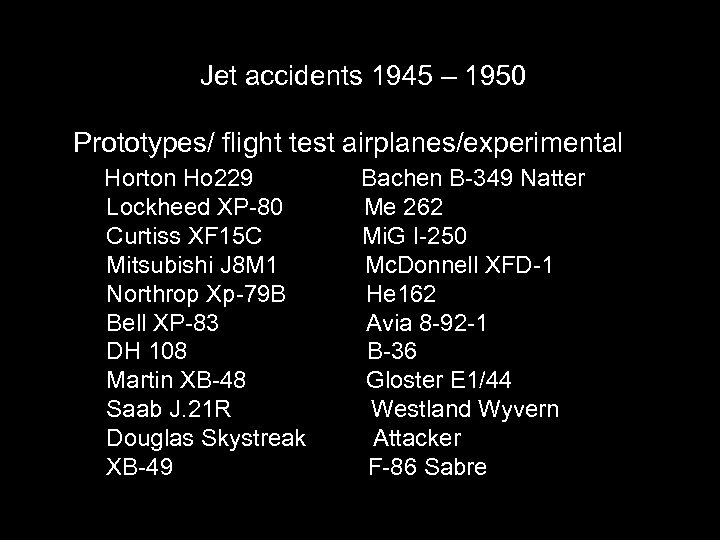
Jet accidents 1945 – 1950 Prototypes/ flight test airplanes/experimental Horton Ho 229 Lockheed XP-80 Curtiss XF 15 C Mitsubishi J 8 M 1 Northrop Xp-79 B Bell XP-83 DH 108 Martin XB-48 Saab J. 21 R Douglas Skystreak XB-49 Bachen B-349 Natter Me 262 Mi. G I-250 Mc. Donnell XFD-1 He 162 Avia 8 -92 -1 B-36 Gloster E 1/44 Westland Wyvern Attacker F-86 Sabre
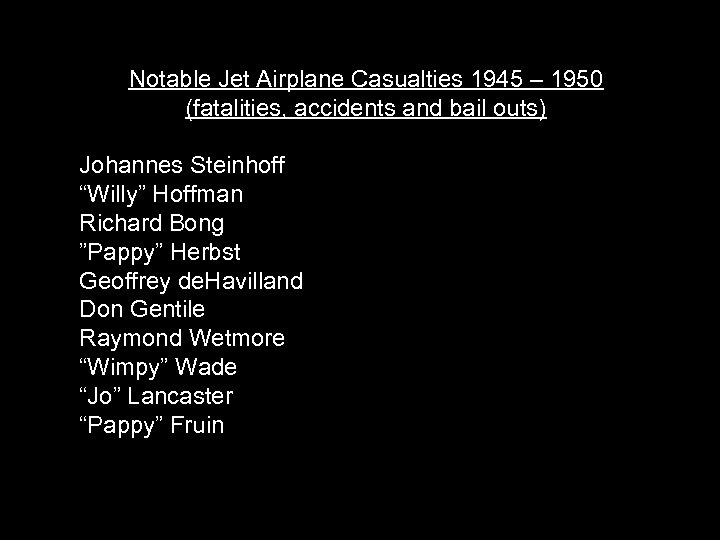
Notable Jet Airplane Casualties 1945 – 1950 (fatalities, accidents and bail outs) Johannes Steinhoff “Willy” Hoffman Richard Bong ”Pappy” Herbst Geoffrey de. Havilland Don Gentile Raymond Wetmore “Wimpy” Wade “Jo” Lancaster “Pappy” Fruin
 Скачать презентацию Introducing the Jet Age the Boeing 707 Barry
4efdee1ce53feefa3d1b9dce2eef8102.ppt