


 Скачать презентацию Intro to PEM Fuel Cells What is
8933ae749ed579c128ae34672d38329f.ppt
- Количество слайдов: 31
 Intro to PEM Fuel Cells
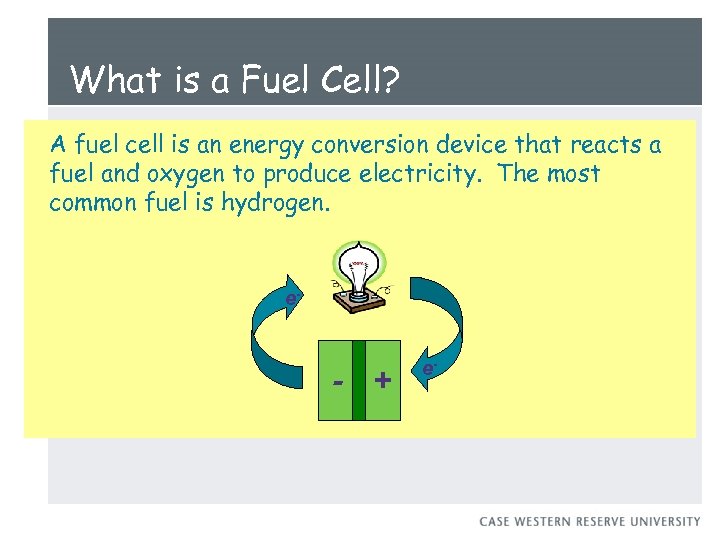 What is a Fuel Cell? A fuel cell is an energy conversion device that reacts a fuel and oxygen to produce electricity. The most common fuel is hydrogen. e- - + e-
 Is a Fuel Cell a Type of Battery? No. Though both produce electricity, they operate in different ways. The reactants that a battery converts into electricity are stored within itself (e. g. battery acid) while the reactants for a fuel cell (e. g. H 2, O 2) are supplied externally.
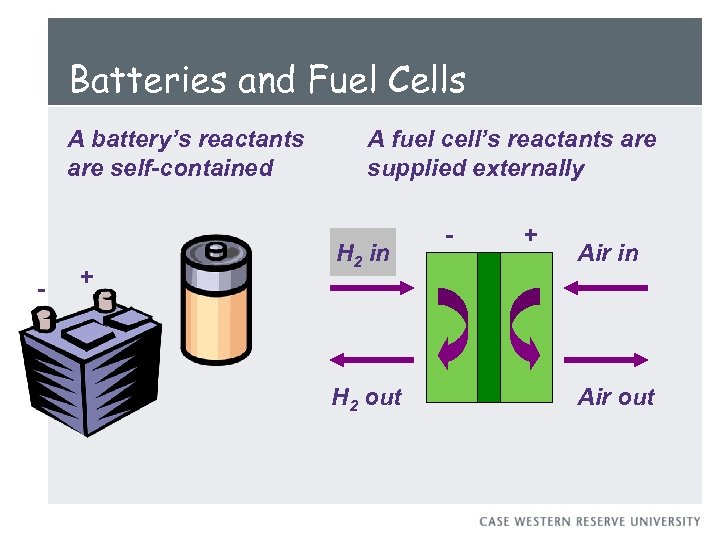 Batteries and Fuel Cells A battery’s reactants are self-contained - + A fuel cell’s reactants are supplied externally H 2 in H 2 out - + Air in Air out
 Fuel Cell Applications Each type of fuel cell is particularly suited to certain applications: • PEM: most versatile, used for portable power, transportation, and stationary power • SOFC: primarily used for stationary power, in development for transportation (e. g. semi trucks) • MCFC: power plants • AFC: power and water production for space vehicles (e. g. Apollo and Space Shuttle spacecrafts), in development for more general use due to breakthroughs in alkaline media • PAFC: stationary power, power plants
 Why Use a Fuel Cell? A fuel cell provides very clean energy virtually emissions-free. In addition to electricity, it produces water and heat. Because the fuel cell’s reactants are supplied externally, there is no charge or discharge period as with a battery. Additionally, very high energy density can be achieved because the fuel cell design is not dependent on reactant storage. (Energy density = lifetime between recharges) A fuel cell can be used repeatedly - there is no package to throw away.
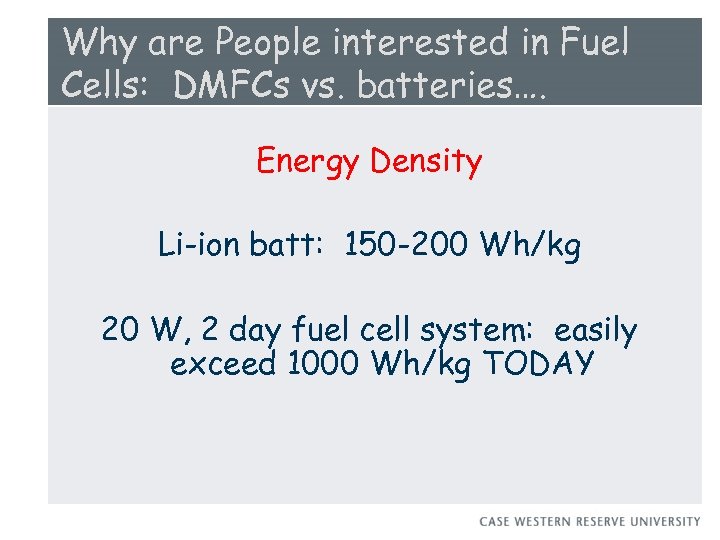 Why are People interested in Fuel Cells: DMFCs vs. batteries…. Energy Density Li-ion batt: 150 -200 Wh/kg 20 W, 2 day fuel cell system: easily exceed 1000 Wh/kg TODAY
 Many Types of Fuel Cells The main fuel cell technologies today are: • PEM (polymer electrolyte membrane fuel cell) • SOFC (solid oxide fuel cell) • MCFC (molten carbonate fuel cell) • AFC (alkaline fuel cell) • PAFC (phosphoric acid fuel cell)
 How are They Different? All fuel cells react a fuel and oxygen to produce electricity, but differ in the medium or “electrolyte” in which these reactions occur. The nature of the electrolyte determines all of the important characteristics of the fuel cell such as its operating temperature, materials of construction and the variety of fuels with which it can be used. • PEM (proton-conducting polymer) • SOFC (oxide ion-conducting ceramic) • MCFC (molten carbonate salt in a ceramic matrix) • AFC (aqueous potassium hydroxide in a matrix) • PAFC (phosphoric acid in a matrix)
 Why Use so Many Types? Each type of fuel cell has particular advantages and disadvantages • PEM: solid construction, low temperature, sensitive to impurities, can only be used with hydrogen or methanol. • SOFC: can be used with many fuels, doesn’t require precious metal catalysts, solid, rugged, very high temperature, expensive materials. • MCFC: can be used with many fuels, efficient, doesn’t require precious metal catalysts, high temperature, very corrosive electrolyte. • AFC: most efficient medium for oxygen reaction - high performance, doesn’t require precious metal catalysts, sensitive to carbon dioxide, caustic medium. • PAFC (phosphoric acid fuel cell): same electrochemical reactions as PEM, but not as sensitive, very corrosive.
 What Types of Fuel are Used? Typical fuel cells run on hydrogen and oxygen, but are “fuel flexible” because many types of fuel (e. g. methane, gasoline) can be reformed to make hydrogen or be used in its place (e. g. methanol in PEM fuel cells). Pure oxygen is rarely used except for special applications. Air is used instead, and is supplied from a pressurized gas cylinder or from the room or outside air via diffusion or a device such as a blower.
 About Hydrogen can be produced in a number of ways, either as a direct byproduct of a reaction or by desorption from a material. In the latter case, the material also acts as a means of storage: • Byproduct: steam reforming of fossil fuels, anaerobic oxidation of bacteria, reaction of chemical hydrides and water • Desorption: metal hydrides, carbon nanotubes • Storage: gas cylinders, tanks, bladders, metal hydrides, carbon nanotubes
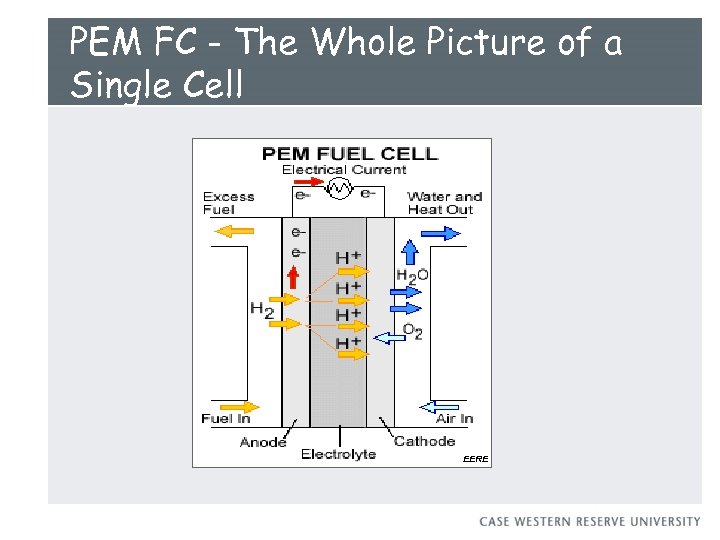 PEM FC - The Whole Picture of a Single Cell EERE
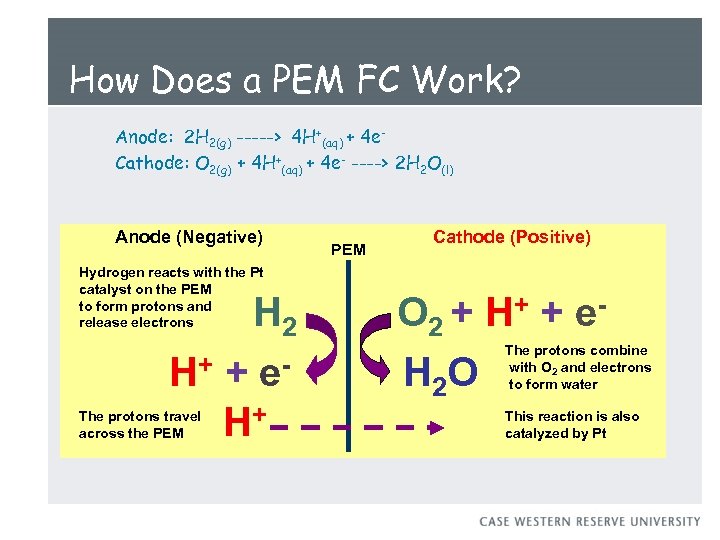 How Does a PEM FC Work? Anode: 2 H 2(g) -----> 4 H+(aq) + 4 e. Cathode: O 2(g) + 4 H+(aq) + 4 e- ----> 2 H 2 O(l) Anode (Negative) Hydrogen reacts with the Pt catalyst on the PEM to form protons and release electrons H 2 H+ + e. H+ The protons travel across the PEM Cathode (Positive) O 2 + H+ + e. H 2 O The protons combine with O 2 and electrons to form water This reaction is also catalyzed by Pt
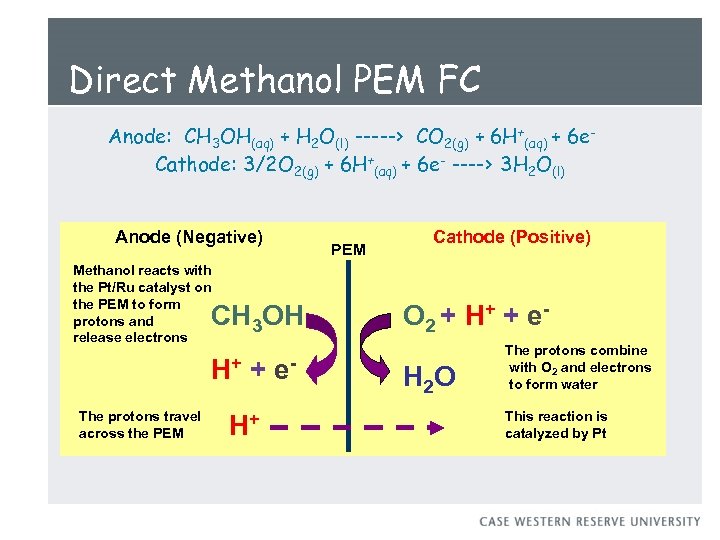 Direct Methanol PEM FC Anode: CH 3 OH(aq) + H 2 O(l) -----> CO 2(g) + 6 H+(aq) + 6 e. Cathode: 3/2 O 2(g) + 6 H+(aq) + 6 e- ----> 3 H 2 O(l) Anode (Negative) Methanol reacts with the Pt/Ru catalyst on the PEM to form protons and release electrons CH 3 OH H+ + e- The protons travel across the PEM H+ PEM Cathode (Positive) O 2 + H+ + e. H 2 O The protons combine with O 2 and electrons to form water This reaction is catalyzed by Pt
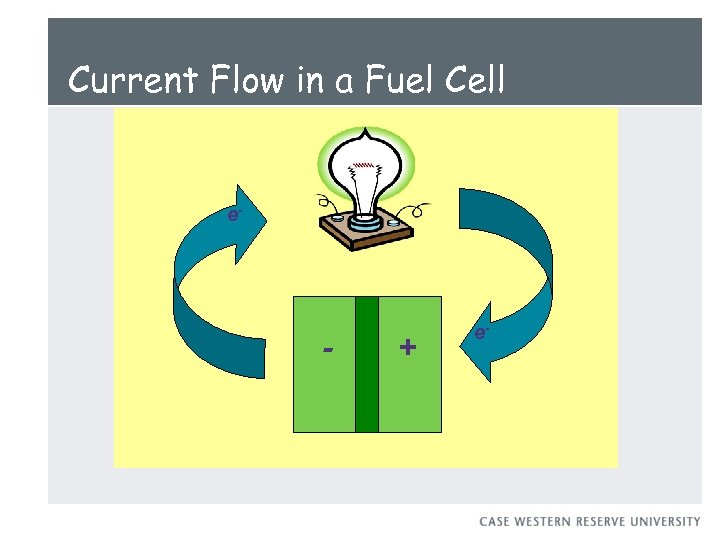 Current Flow in a Fuel Cell e- - + e-
 So what’s happening during operation? We’re feeding in gases (say, hydrogen and air) at some flow rate • Fuel or oxygen utilization {= 1/stoichiometric ratio (usually called ‘stoich’)}: ratio of the moles used per unit time (related to current density by some conversion factors) to the incoming flow rate Gases may be humidified (esp. for single cells)
 So what’s happening during operation? II We’re generating current and product water (that we may have to get rid of!!!) at cathode We’re generating heat (that we may have to get rid of!!!) Fuel converted to protons (go through membranes) and electrons (go through external circuit) at anode • Possibly also produce gas (e. g. DMFC)
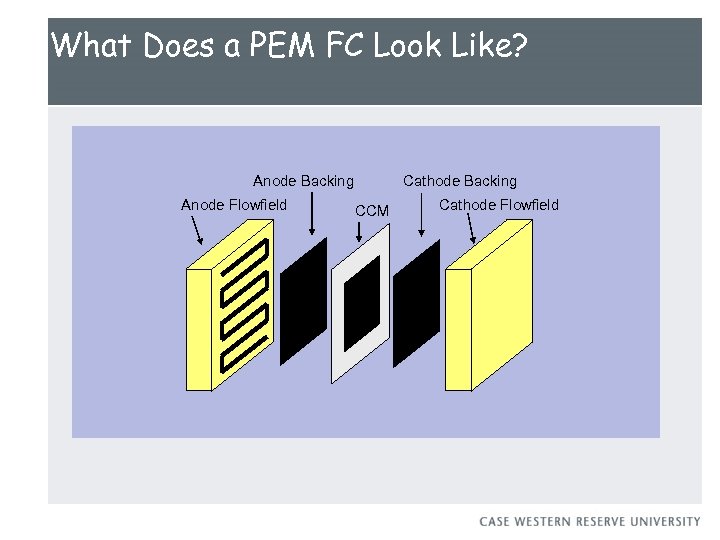 What Does a PEM FC Look Like? Anode Backing Anode Flowfield Cathode Backing CCM Cathode Flowfield
 Fuel Cell Components CCM (Catalyst Coated Membrane): Proton-conducting membrane plus 2 electrodes GDL (Gas Diffusion Layer): Carbon cloth or paper with carbon particle filler and Teflon Bipolar plate: Graphite, carbon composite or metal with machined or stamped ‘flow field’ Gaskets and seals: seals around edge of structure
 Fuel Cell Power • A single fuel cell doesn’t produce enough power for most applications; single cells are “stacked” together to meet power needs. • The voltage of the application will determine the number of cells in a stack; the size of the plates will affect the overall power output • Fuel cells stacks are part of systems with other parts to deliver gases, manage electrical output etc. • Fuel cell systems can operate in the W - MW range.
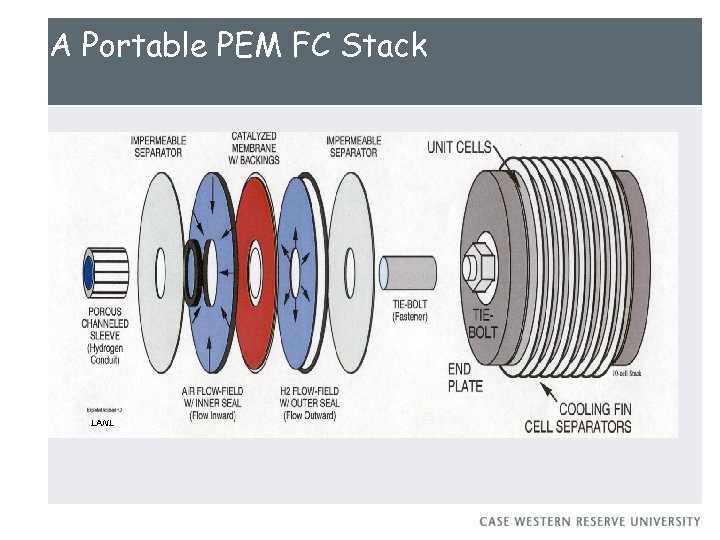 A Portable PEM FC Stack LANL
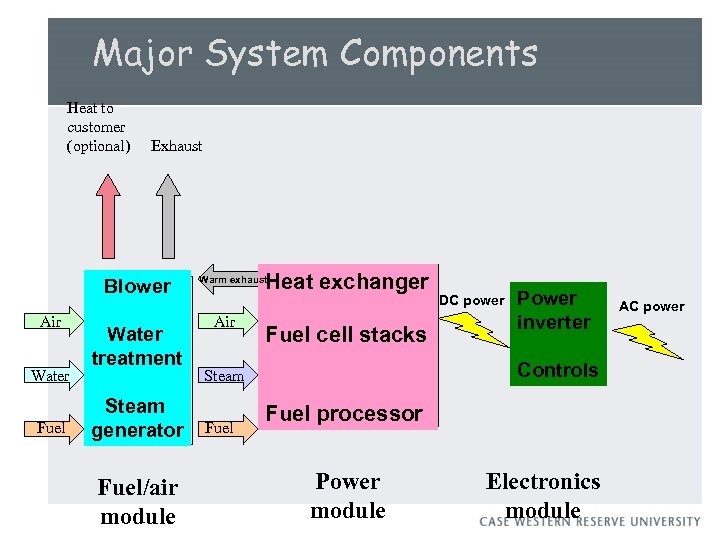 Major System Components Heat to customer (optional) Exhaust Blower Air Water Fuel Water treatment Steam generator Fuel/air module Heat exchanger Warm exhaust Air Fuel cell stacks Power inverter Controls Steam Fuel DC power Fuel processor Power module Electronics module AC power
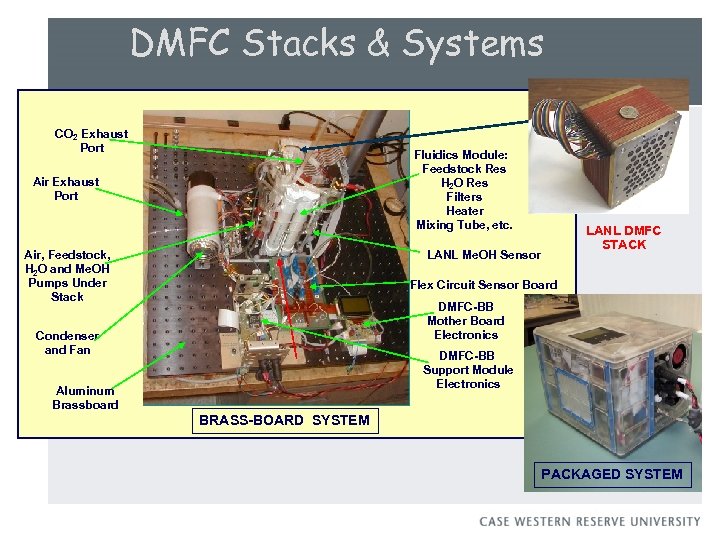 DMFC Stacks & Systems CO 2 Exhaust Port Fluidics Module: Feedstock Res H 2 O Res Filters Heater Mixing Tube, etc. Air Exhaust Port LANL DMFC STACK LANL Me. OH Sensor Air, Feedstock, H 2 O and Me. OH Pumps Under Stack Flex Circuit Sensor Board DMFC-BB Mother Board Electronics Condenser and Fan DMFC-BB Support Module Electronics Aluminum Brassboard BRASS-BOARD SYSTEM PACKAGED SYSTEM
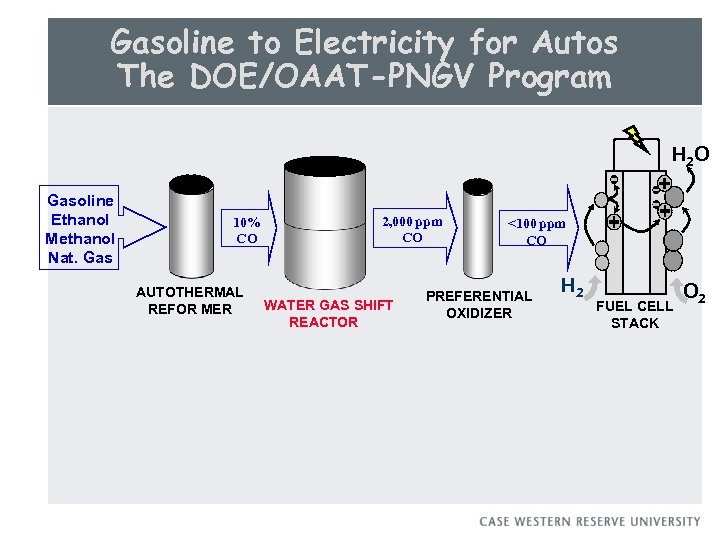 Gasoline to Electricity for Autos The DOE/OAAT-PNGV Program H 2 O Gasoline Ethanol Methanol Nat. Gas 10% CO AUTOTHERMAL REFOR MER 2, 000 ppm CO WATER GAS SHIFT REACTOR <100 ppm CO PREFERENTIAL OXIDIZER H 2 FUEL CELL STACK O 2
 Gaskets and Seals Critical component! Adhesive is good if available Frames may be combined with gaskets Very important that this component be gas tight and not leach anything… May require high temperature stability Should be a good electrical insulator
 Small ‘Battery’ - Fuel Cell 1 W Air-Breather Fuel Cells for Personal Electronics (“Micro” FCs) • Substantial interest in < 2 W systems. • Higher current densities, but higher A/V ratios. • Maximizing active area is key. – Different designs than the larger stacks.
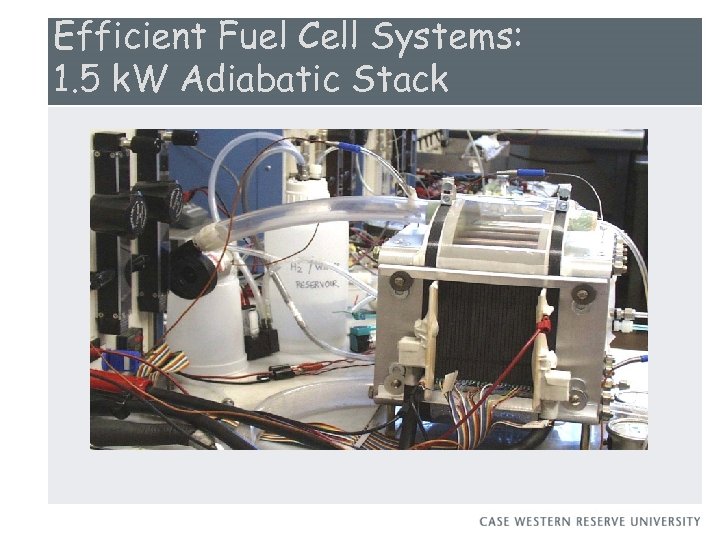 Efficient Fuel Cell Systems: 1. 5 k. W Adiabatic Stack
 Where Can You Buy a Fuel Cell Today? Bad news: Not too many places to buy a fuel cell…. . The Good News: Lots of Opportunity!
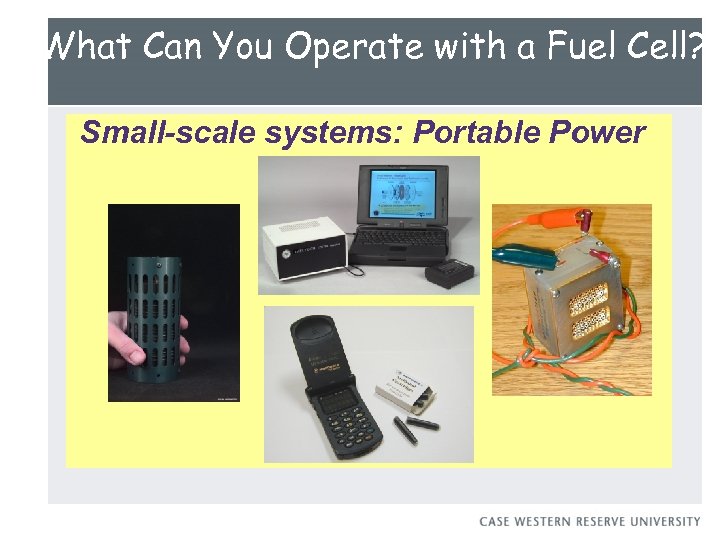 What Can You Operate with a Fuel Cell? Small-scale systems: Portable Power
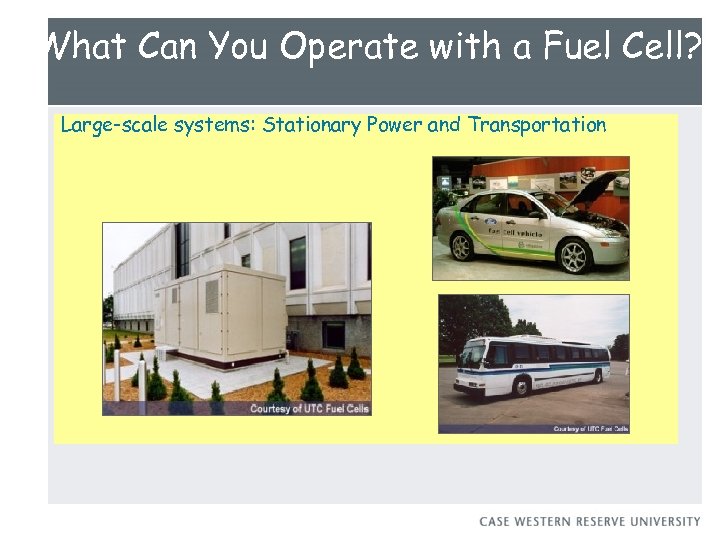 What Can You Operate with a Fuel Cell? Large-scale systems: Stationary Power and Transportation