


 Скачать презентацию Intro to Oligopoly market concentrations A 2
a0d9961c9bbeac11ecf4cbabd4263a7d.ppt
- Количество слайдов: 31
 Intro to Oligopoly & market concentrations A 2 Economics
 Key Issues • Meaning of oligopoly • Examples of oligopoly • Understand the different market concentration ratios
 What is an Oligopoly? • Oligopoly is best defined by the market conduct (behaviour) of firms • A market dominated by a few large firms I. e. “Competition amongst the few” • High level of market concentration – Concentration ratio is the market share of the leading firms • Each firm tends to produce branded / differentiated products ue is ey iss K few! b of aviour eh a
 What is an Oligopoly? • Sets up Barriers to Entry • Aims to create long run supernormal profits • Mutual interdependence between competing firms (important) • Intensive non-price competition is common • Periodic aggressive price wars • Exploitation of economies of scale
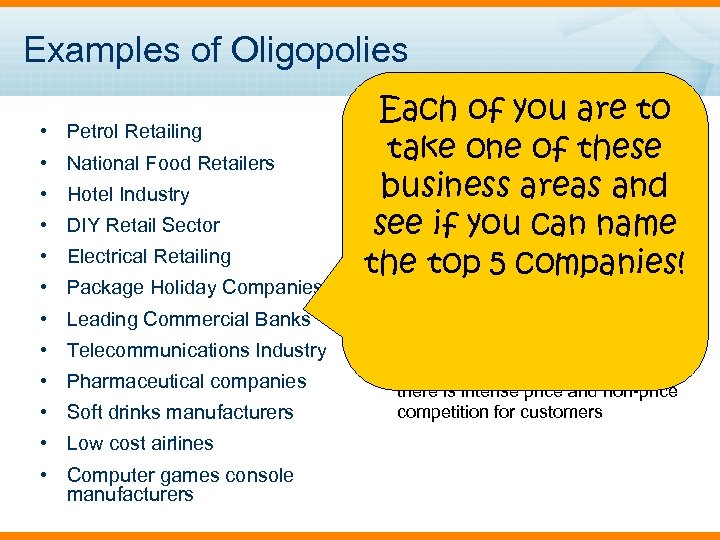 Examples of Oligopolies • Petrol Retailing • National Food Retailers • Hotel Industry • DIY Retail Sector • Electrical Retailing • Package Holiday Companies Each of you are to take one of these business areas and see if you can name the top 5 companies! • Leading Commercial Banks • Telecommunications Industry • Pharmaceutical companies • Soft drinks manufacturers • Low cost airlines • Computer games console manufacturers Orange competes in an oligopoly – there is intense price and non-price competition for customers
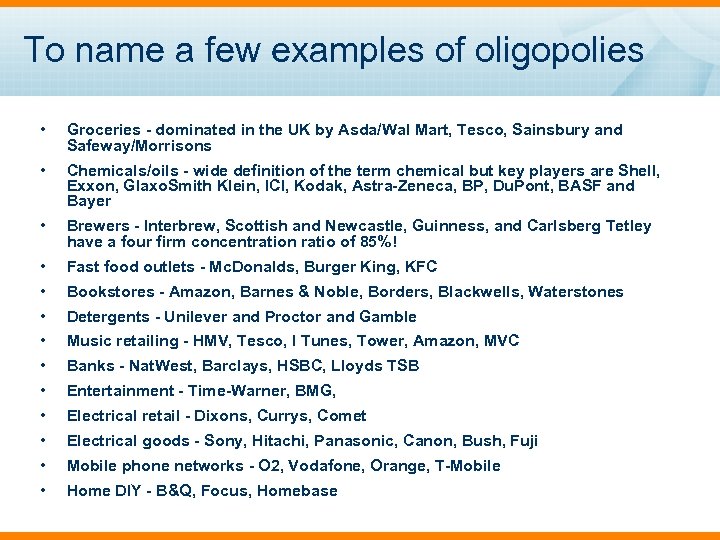 To name a few examples of oligopolies • Groceries - dominated in the UK by Asda/Wal Mart, Tesco, Sainsbury and Safeway/Morrisons • Chemicals/oils - wide definition of the term chemical but key players are Shell, Exxon, Glaxo. Smith Klein, ICI, Kodak, Astra-Zeneca, BP, Du. Pont, BASF and Bayer • Brewers - Interbrew, Scottish and Newcastle, Guinness, and Carlsberg Tetley have a four firm concentration ratio of 85%! • Fast food outlets - Mc. Donalds, Burger King, KFC • Bookstores - Amazon, Barnes & Noble, Borders, Blackwells, Waterstones • Detergents - Unilever and Proctor and Gamble • Music retailing - HMV, Tesco, I Tunes, Tower, Amazon, MVC • Banks - Nat. West, Barclays, HSBC, Lloyds TSB • Entertainment - Time-Warner, BMG, • Electrical retail - Dixons, Currys, Comet • Electrical goods - Sony, Hitachi, Panasonic, Canon, Bush, Fuji • Mobile phone networks - O 2, Vodafone, Orange, T-Mobile • Home DIY - B&Q, Focus, Homebase
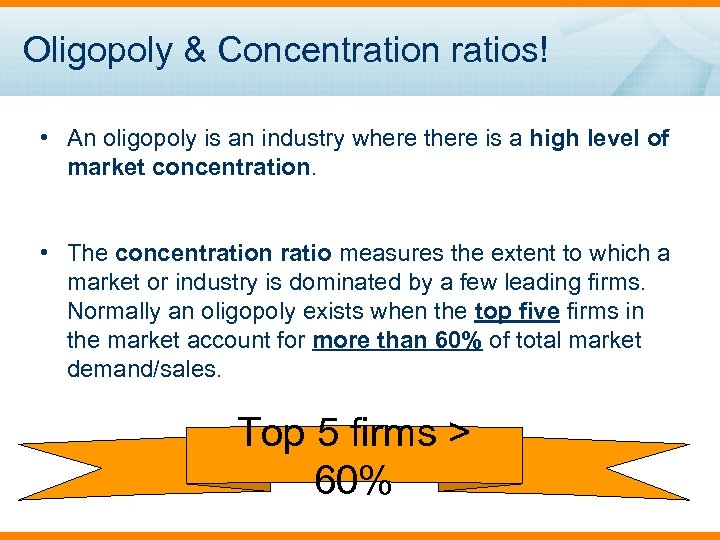 Oligopoly & Concentration ratios! • An oligopoly is an industry where there is a high level of market concentration. • The concentration ratio measures the extent to which a market or industry is dominated by a few leading firms. Normally an oligopoly exists when the top five firms in the market account for more than 60% of total market demand/sales. Top 5 firms > 60%
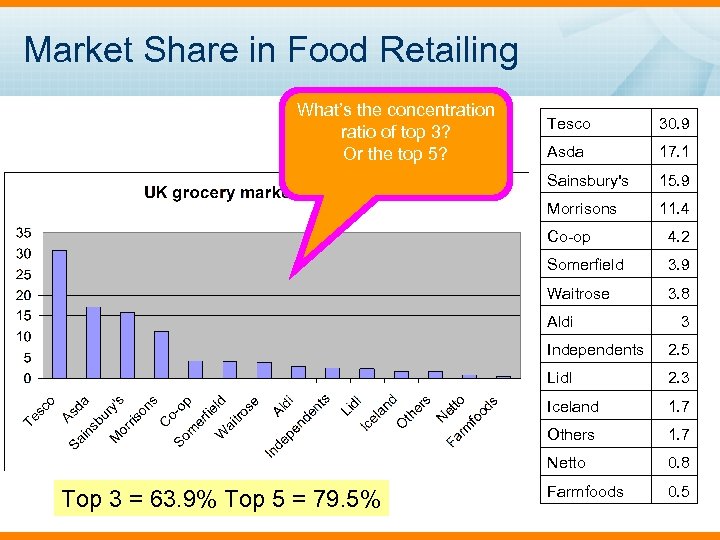 Market Share in Food Retailing What’s the concentration ratio of top 3? Or the top 5? Tesco 30. 9 Asda 17. 1 Sainsbury's 15. 9 Morrisons 11. 4 Co-op 4. 2 Somerfield 3. 9 Waitrose 3. 8 Aldi 3 Independents Lidl 2. 3 Iceland 1. 7 Others 1. 7 Netto Top 3 = 63. 9% Top 5 = 79. 5% 2. 5 0. 8 Farmfoods 0. 5
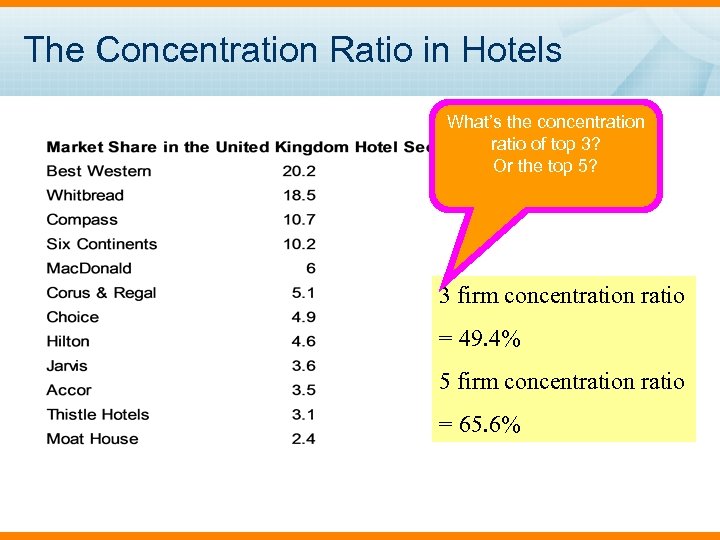 The Concentration Ratio in Hotels What’s the concentration ratio of top 3? Or the top 5? 3 firm concentration ratio = 49. 4% 5 firm concentration ratio = 65. 6%
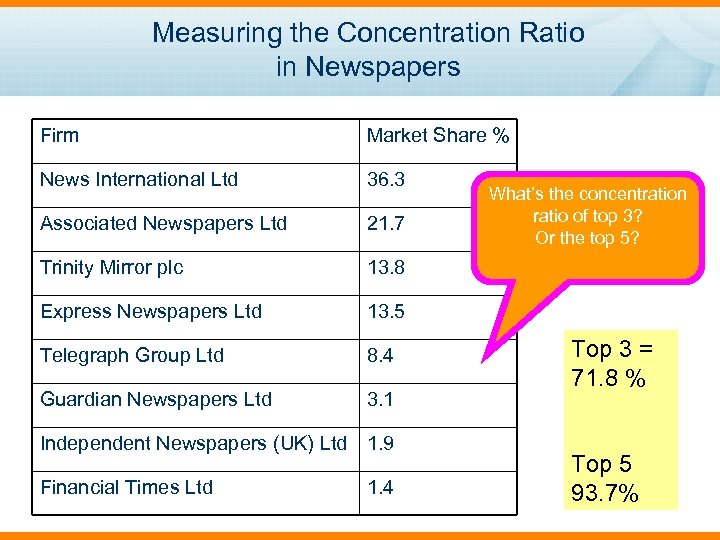 Measuring the Concentration Ratio in Newspapers Firm Market Share % News International Ltd 36. 3 Associated Newspapers Ltd 21. 7 Trinity Mirror plc 13. 8 Express Newspapers Ltd 13. 5 Telegraph Group Ltd 8. 4 Guardian Newspapers Ltd 3. 1 Independent Newspapers (UK) Ltd 1. 9 Financial Times Ltd 1. 4 What’s the concentration ratio of top 3? Or the top 5? Top 3 = 71. 8 % Top 5 93. 7%
 So what’s the problem with a high concentration ratio? You need to think back to arguments against monopolies.
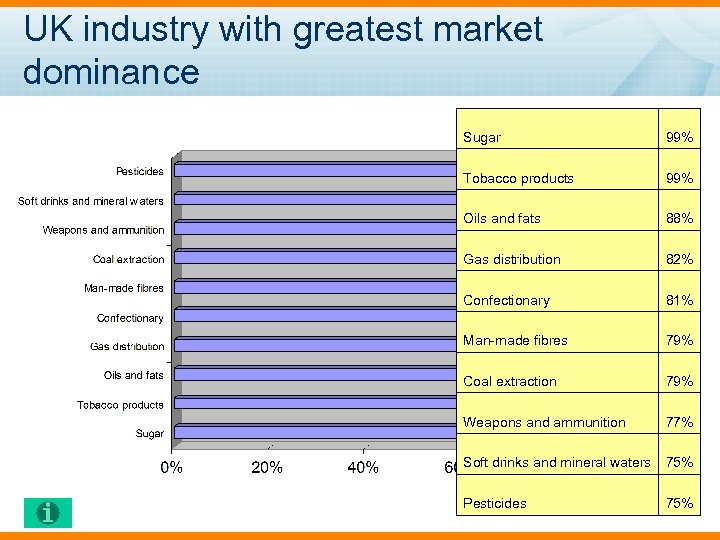 UK industry with greatest market dominance Sugar 99% Tobacco products 99% Oils and fats 88% Gas distribution 82% Confectionary 81% Man-made fibres 79% Coal extraction 79% Weapons and ammunition 77% Soft drinks and mineral waters 75% Pesticides 75%
 Concentration ratio & market share • Market forms can often be classified by their concentration ratio. Listed, in ascending firm size, they are: • Perfect competition, with a very low concentration ratio. • Monopolistic competition, below 60% for the five-firm measurement. • Oligopoly, above 60% for the five-firm measurement. • Monopoly, with a near-100% four-firm measurement.
 Oligopoly power • What harm can it do?
 Is your house loyal to one supermarket? Why? Supermarkets Oligopoly behaviour
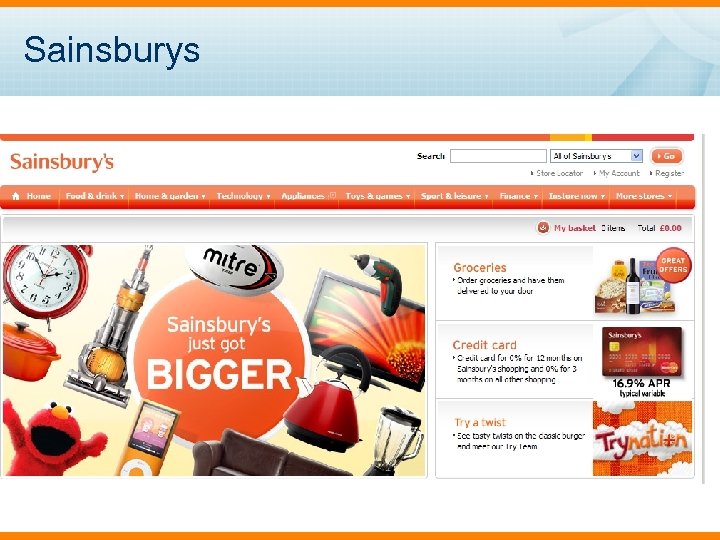
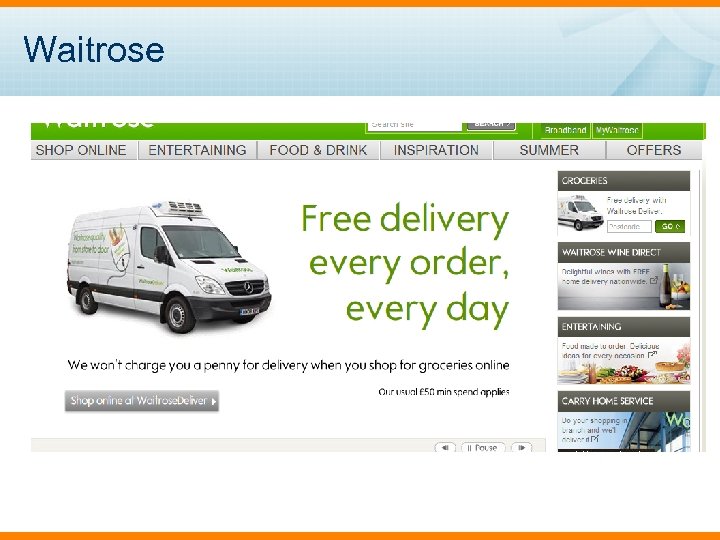
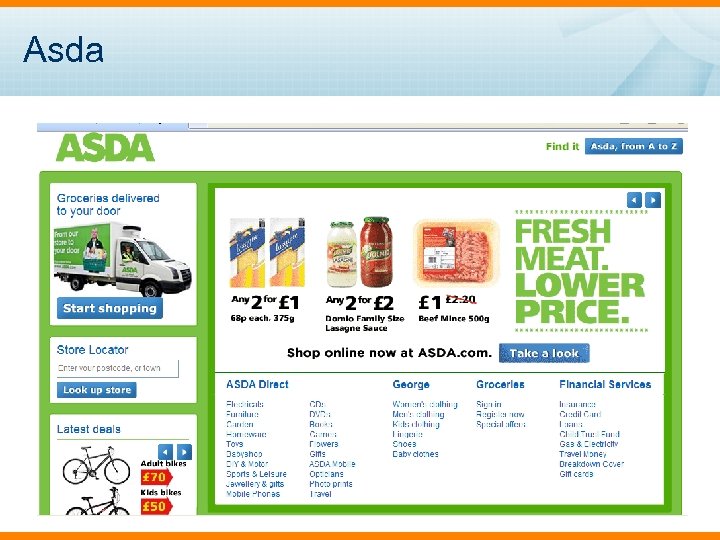
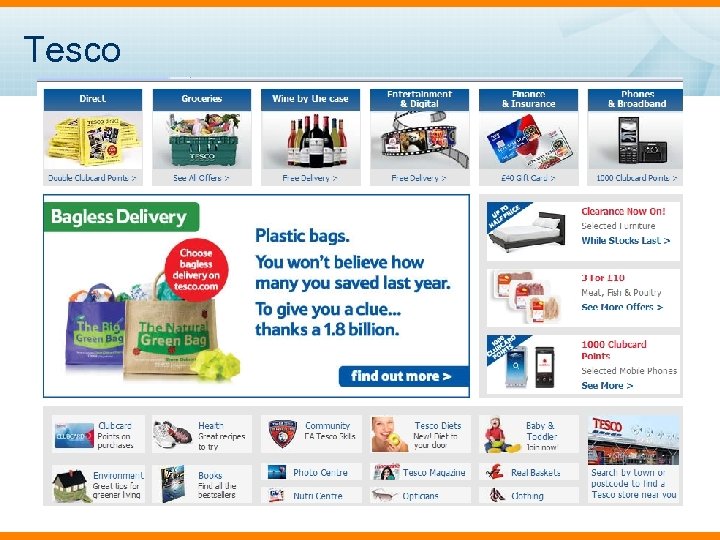
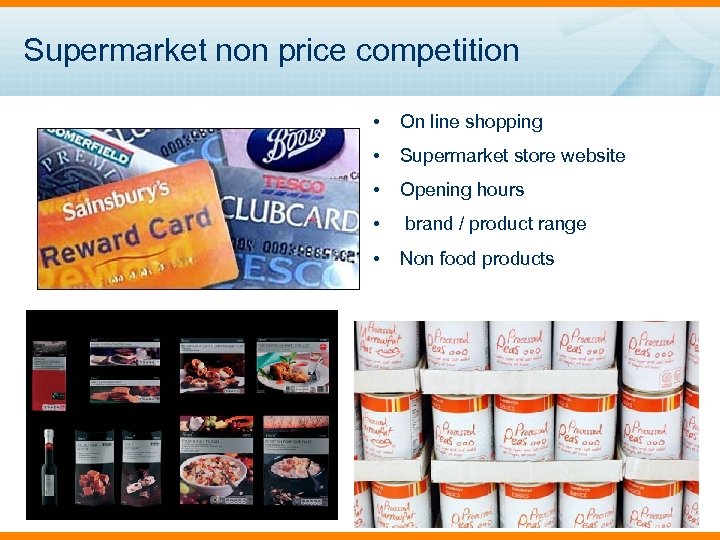 Supermarket non price competition • On line shopping • Supermarket store website • Opening hours • brand / product range • Non food products
 Sainsburys
 Waitrose
 Asda
Asda
 Tesco
Tesco
 So what extras do the supermarket websites offer?
 The main features of Oligopoly behaviour….
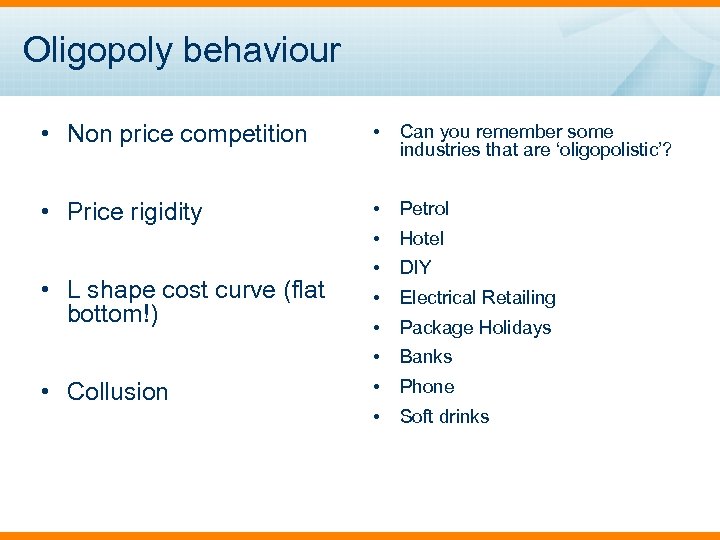 Oligopoly behaviour • Non price competition • Can you remember some industries that are ‘oligopolistic’? • Price rigidity • Petrol • Hotel • DIY • Electrical Retailing • Package Holidays • Banks • Phone • Soft drinks • L shape cost curve (flat bottom!) • Collusion
 Price rigidity… • Despite changes in costs of production, oligopoly prices appear to remain at a constant level • Consider petrol prices…. Very rarely different within a geographical area… collusion or market forces?
 L shape cost curve (flat bottom!) • Draw me a LRAC curve • Do you think that the optimum output is at just one point in output? • Not really a U for oligopolies… it tends to be a |____| shape – due to economies of scale over a wide range of products.
 Formal Collusion – forming a cartel. • Oligopolies do compete against each other - known as non –collusive behaviour. • However, there is an incentive to collude. • Formal collusion - is where firms set up an agreement between each other – they create a cartel!
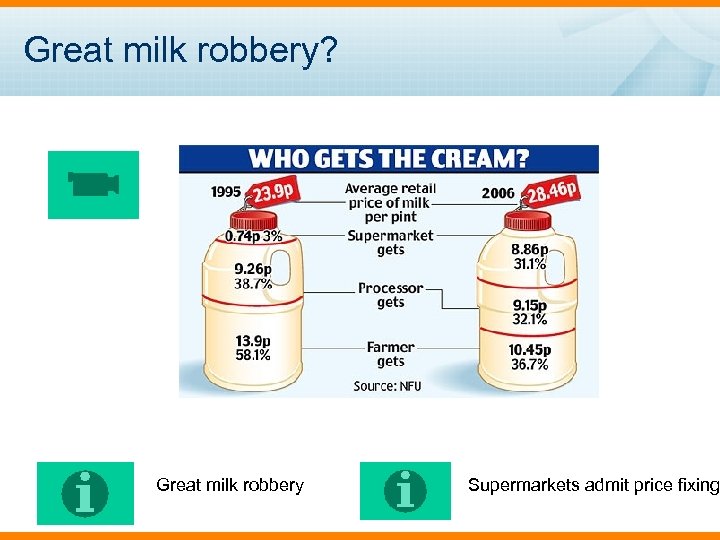 Great milk robbery? Great milk robbery Supermarkets admit price fixing
 Tactic collusion • This is not illegal • It is where competitive firms monitor each other’s behaviour closely and refrain from competing on price. • This is often seen as price leadership where competitors follow the dominant firm’s lead.
 Cartels • Where a few firms dominate they could set an agreement on price, quantities for supply, service standards etc • The collusion restricts output • The collusion raises prices • The collusion raises abnormal profits
 Famous cartels - OPEC • The Organization of the Petroleum Exporting Countries (OPEC) is a permanent intergovernmental organization, currently consisting of 12 oil producing and exporting countries, spread across three continents America, Asia and Africa. • The members are Algeria, Angola, Ecuador, the Islamic Republic of Iran, Iraq, Kuwait, the Socialist People’s Libyan Arab Jamahiriya, Nigeria, Qatar, Saudi Arabia, United Arab Emirates & Venezuela. • The organization’s principal objectives are: • 1. To co-ordinate and unify the petroleum policies of the Member Countries and to determine the best means for safeguarding their individual and collective interests; • 2. To seek ways and means of ensuring the stabilization of prices in international oil markets, with a view to eliminating harmful and unnecessary fluctuations; and • 3. To provide an efficient economic and regular supply of petroleum to consuming nations and a fair return on capital to those investing in the petroleum industry.
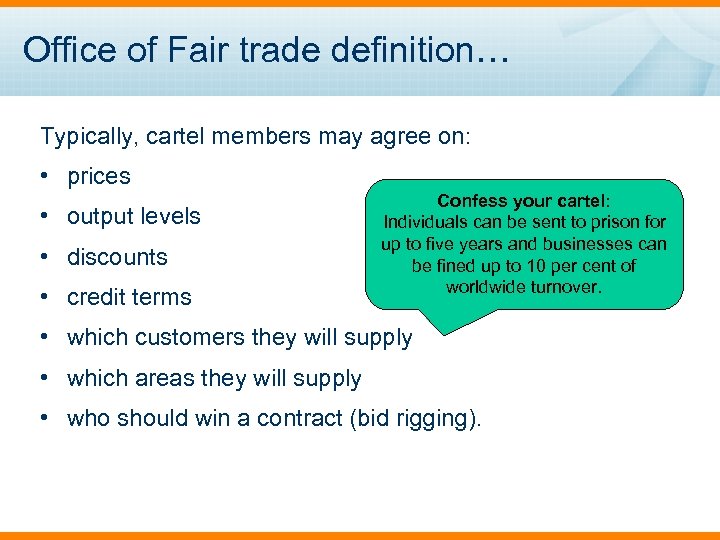 Office of Fair trade definition… Typically, cartel members may agree on: • prices • output levels • discounts • credit terms Confess your cartel: Individuals can be sent to prison for up to five years and businesses can be fined up to 10 per cent of worldwide turnover. • which customers they will supply • which areas they will supply • who should win a contract (bid rigging).