 Скачать презентацию Intro to LIGO Colliding Black Holes Credit National
eda2352d3b46cdf9755a5e5dc7c4d69e.ppt
- Количество слайдов: 42



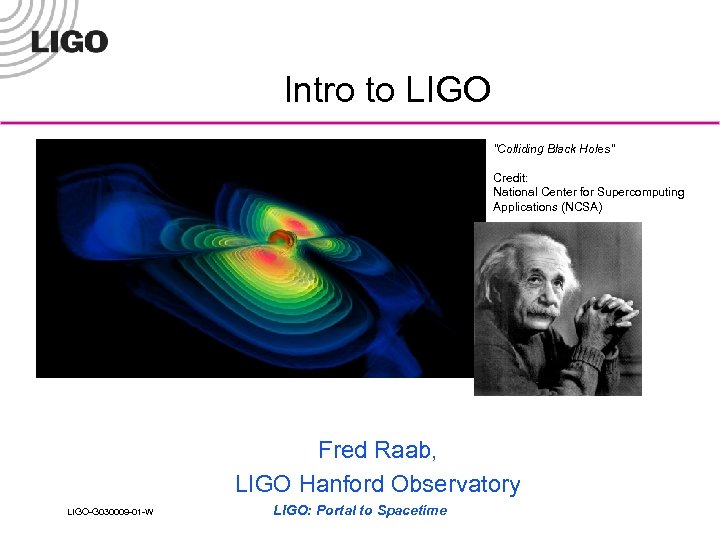
Intro to LIGO "Colliding Black Holes" Credit: National Center for Supercomputing Applications (NCSA) Fred Raab, LIGO Hanford Observatory LIGO-G 030009 -01 -W LIGO: Portal to Spacetime
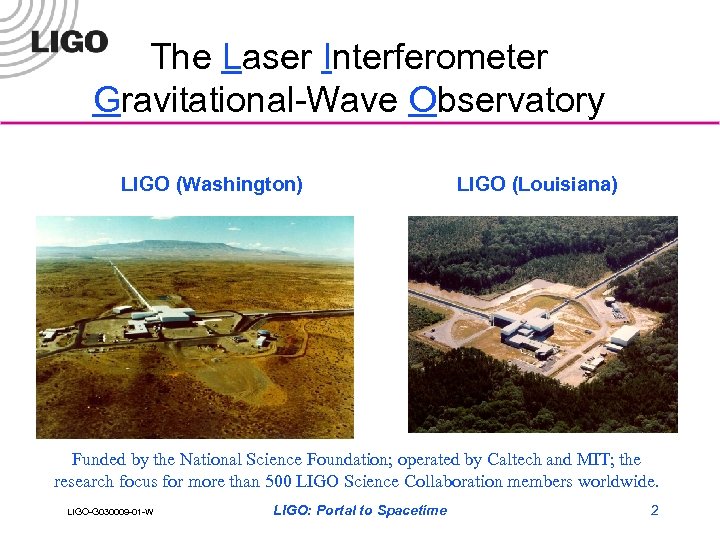
The Laser Interferometer Gravitational-Wave Observatory LIGO (Washington) LIGO (Louisiana) Funded by the National Science Foundation; operated by Caltech and MIT; the research focus for more than 500 LIGO Science Collaboration members worldwide. LIGO-G 030009 -01 -W LIGO: Portal to Spacetime 2
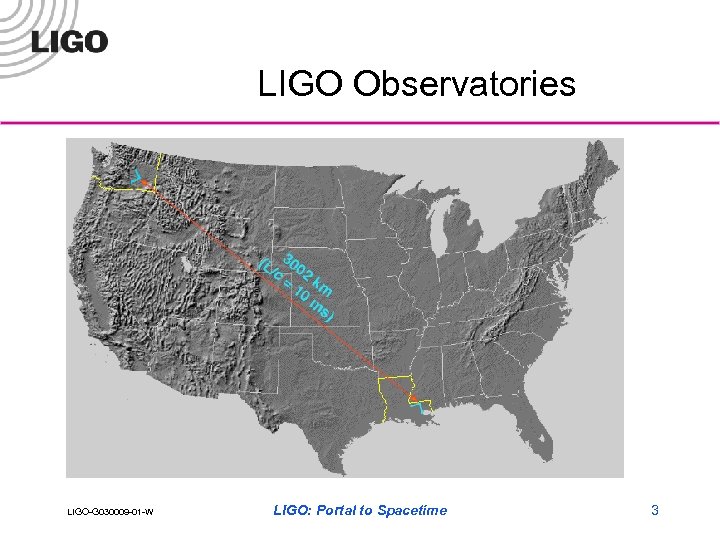
LIGO Observatories LIGO-G 030009 -01 -W LIGO: Portal to Spacetime 3
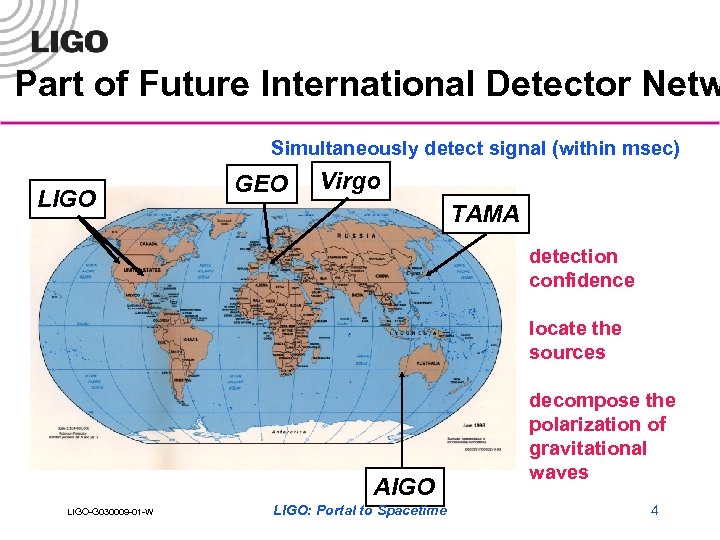
Part of Future International Detector Netw Simultaneously detect signal (within msec) LIGO GEO Virgo TAMA detection confidence locate the sources AIGO LIGO-G 030009 -01 -W LIGO: Portal to Spacetime decompose the polarization of gravitational waves 4
A Slight Problem Regardless of what you see on Star Trek, the vacuum of interstellar space does not transmit conventional sound waves effectively. Don’t worry, we’ll work around that! LIGO-G 030009 -01 -W LIGO: Portal to Spacetime 5
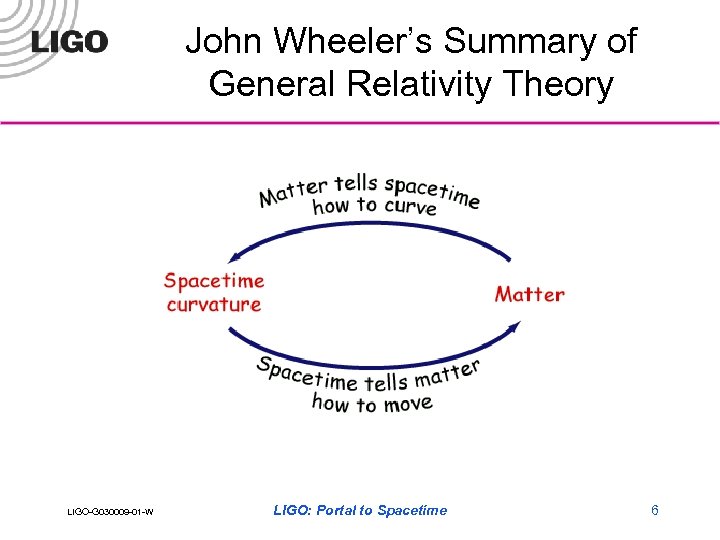
John Wheeler’s Summary of General Relativity Theory LIGO-G 030009 -01 -W LIGO: Portal to Spacetime 6
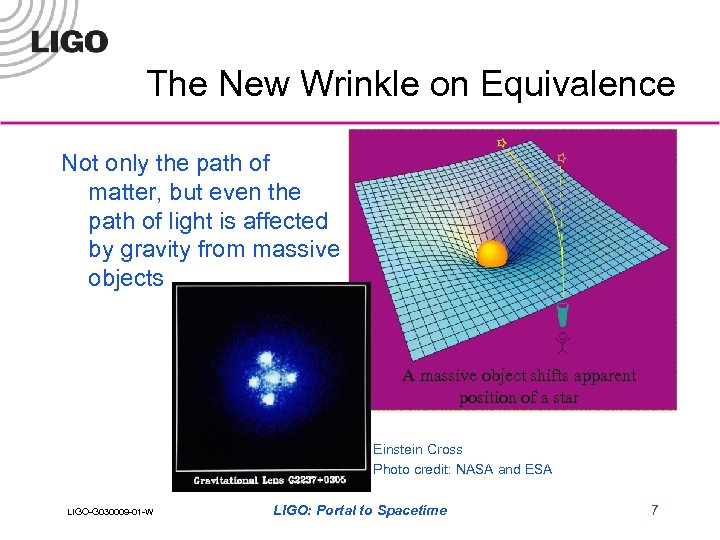
The New Wrinkle on Equivalence Not only the path of matter, but even the path of light is affected by gravity from massive objects A massive object shifts apparent position of a star Einstein Cross Photo credit: NASA and ESA LIGO-G 030009 -01 -W LIGO: Portal to Spacetime 7
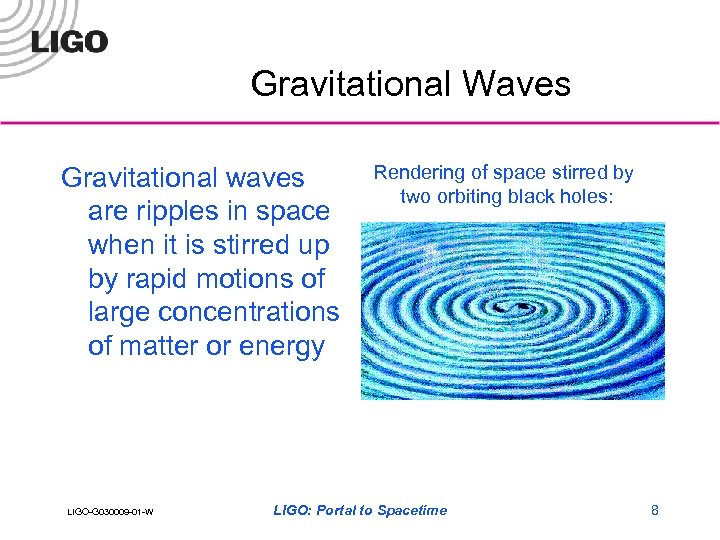
Gravitational Waves Gravitational waves are ripples in space when it is stirred up by rapid motions of large concentrations of matter or energy LIGO-G 030009 -01 -W Rendering of space stirred by two orbiting black holes: LIGO: Portal to Spacetime 8
What Phenomena Do We Expect to Study With LIGO? LIGO-G 030009 -01 -W LIGO: Portal to Spacetime
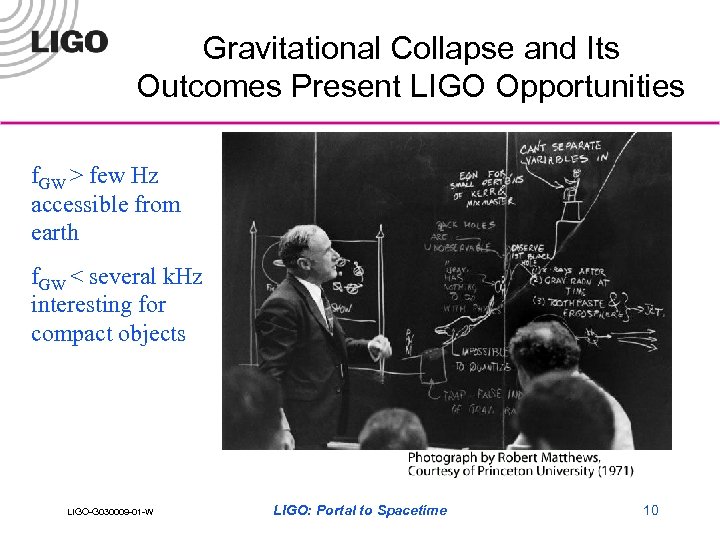
Gravitational Collapse and Its Outcomes Present LIGO Opportunities f. GW > few Hz accessible from earth f. GW < several k. Hz interesting for compact objects LIGO-G 030009 -01 -W LIGO: Portal to Spacetime 10
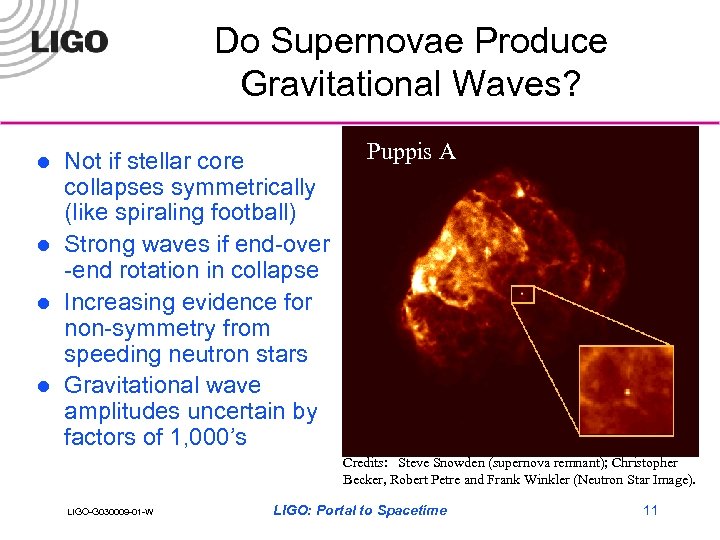
Do Supernovae Produce Gravitational Waves? l l Not if stellar core collapses symmetrically (like spiraling football) Strong waves if end-over -end rotation in collapse Increasing evidence for non-symmetry from speeding neutron stars Gravitational wave amplitudes uncertain by factors of 1, 000’s Puppis A Credits: Steve Snowden (supernova remnant); Christopher Becker, Robert Petre and Frank Winkler (Neutron Star Image). LIGO-G 030009 -01 -W LIGO: Portal to Spacetime 11
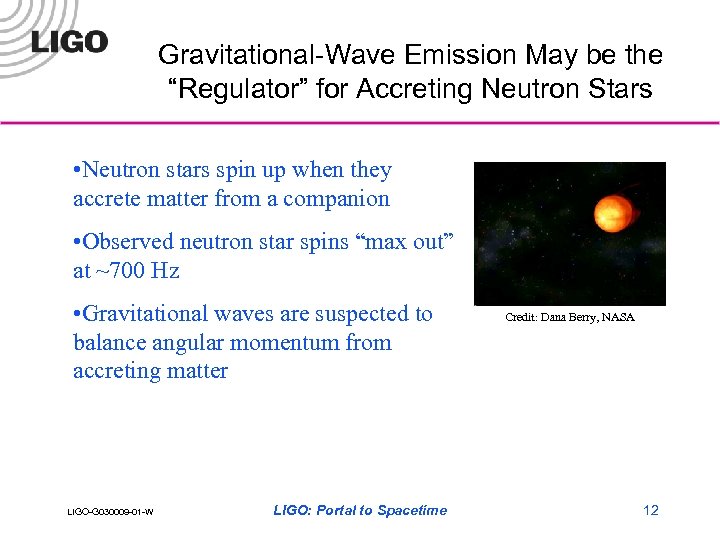
Gravitational-Wave Emission May be the “Regulator” for Accreting Neutron Stars • Neutron stars spin up when they accrete matter from a companion • Observed neutron star spins “max out” at ~700 Hz • Gravitational waves are suspected to balance angular momentum from accreting matter LIGO-G 030009 -01 -W LIGO: Portal to Spacetime Credit: Dana Berry, NASA 12
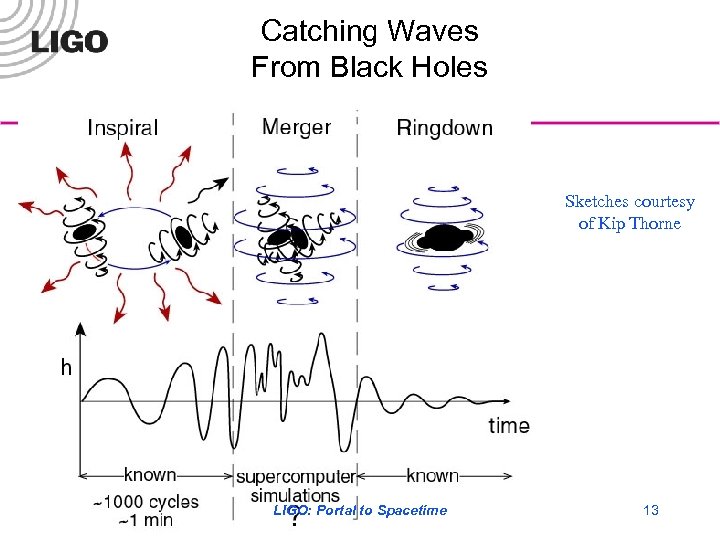
Catching Waves From Black Holes Sketches courtesy of Kip Thorne LIGO-G 030009 -01 -W LIGO: Portal to Spacetime 13
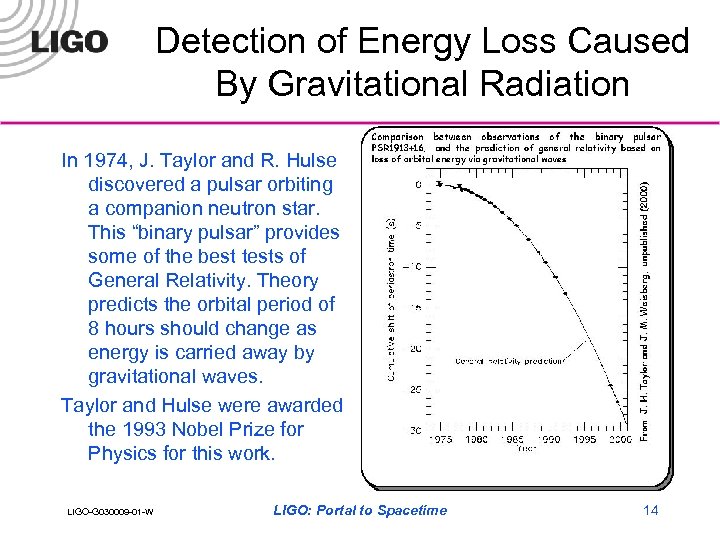
Detection of Energy Loss Caused By Gravitational Radiation In 1974, J. Taylor and R. Hulse discovered a pulsar orbiting a companion neutron star. This “binary pulsar” provides some of the best tests of General Relativity. Theory predicts the orbital period of 8 hours should change as energy is carried away by gravitational waves. Taylor and Hulse were awarded the 1993 Nobel Prize for Physics for this work. LIGO-G 030009 -01 -W LIGO: Portal to Spacetime 14
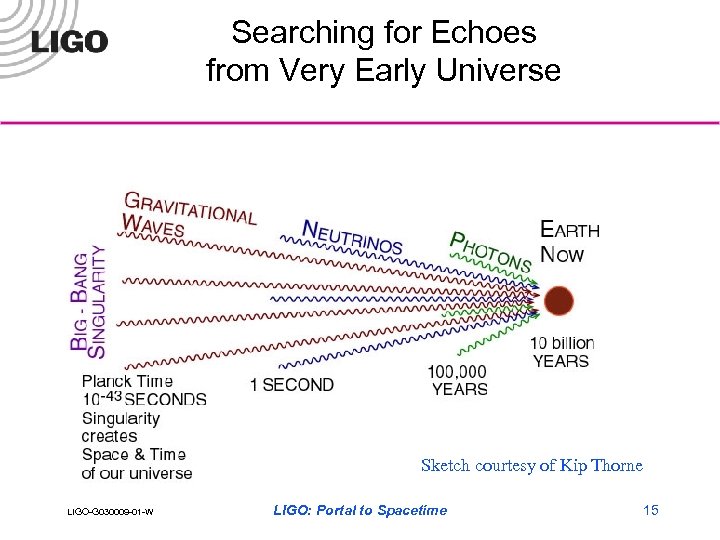
Searching for Echoes from Very Early Universe Sketch courtesy of Kip Thorne LIGO-G 030009 -01 -W LIGO: Portal to Spacetime 15
How does LIGO detect spacetime vibrations? LIGO-G 030009 -01 -W LIGO: Portal to Spacetime
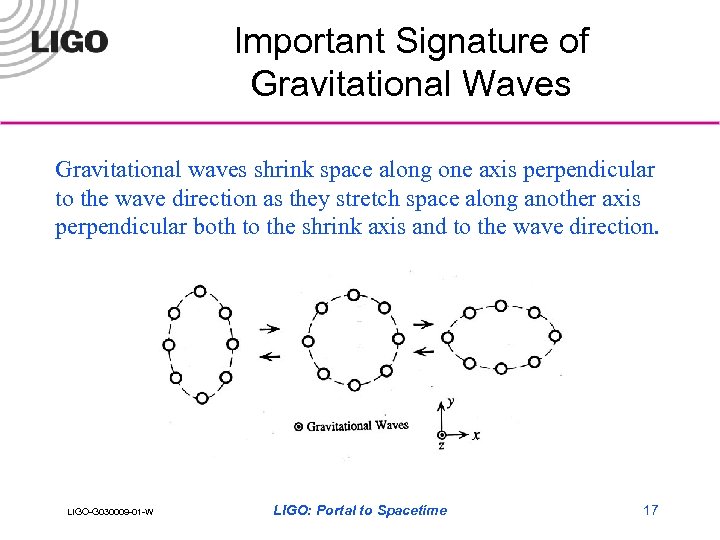
Important Signature of Gravitational Waves Gravitational waves shrink space along one axis perpendicular to the wave direction as they stretch space along another axis perpendicular both to the shrink axis and to the wave direction. LIGO-G 030009 -01 -W LIGO: Portal to Spacetime 17
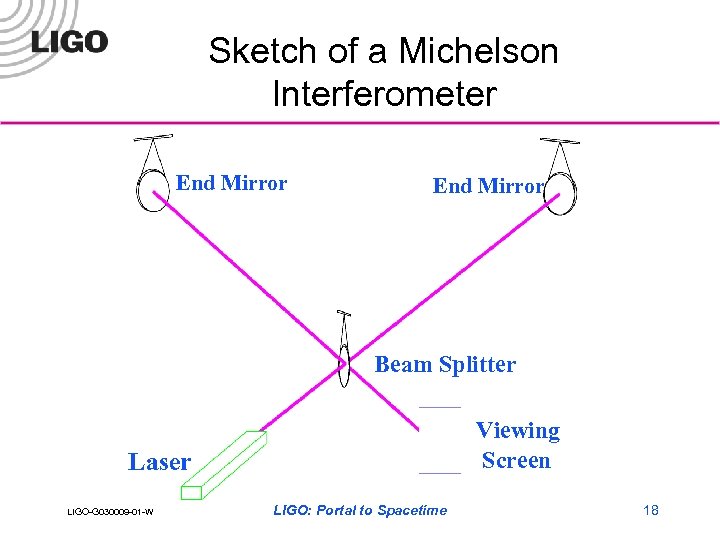
Sketch of a Michelson Interferometer End Mirror Beam Splitter Viewing Screen Laser LIGO-G 030009 -01 -W LIGO: Portal to Spacetime 18
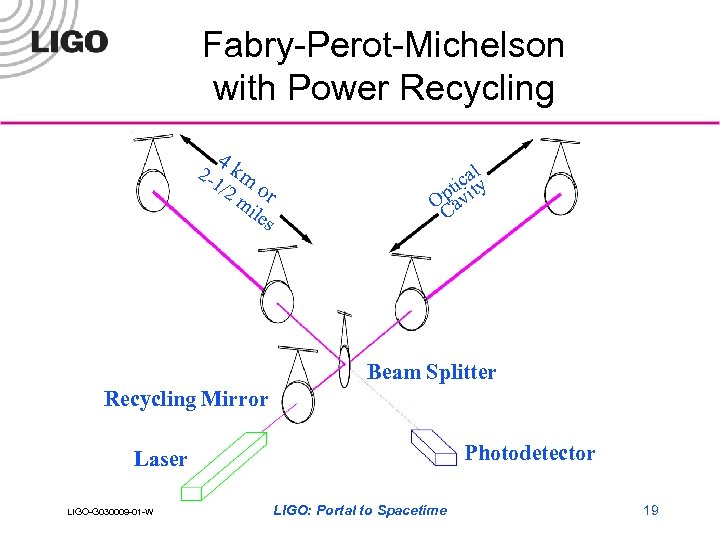
Fabry-Perot-Michelson with Power Recycling 2 - 4 k 1/2 m o mi r les l icaty pt vi O a C Beam Splitter Recycling Mirror Photodetector Laser LIGO-G 030009 -01 -W LIGO: Portal to Spacetime 19
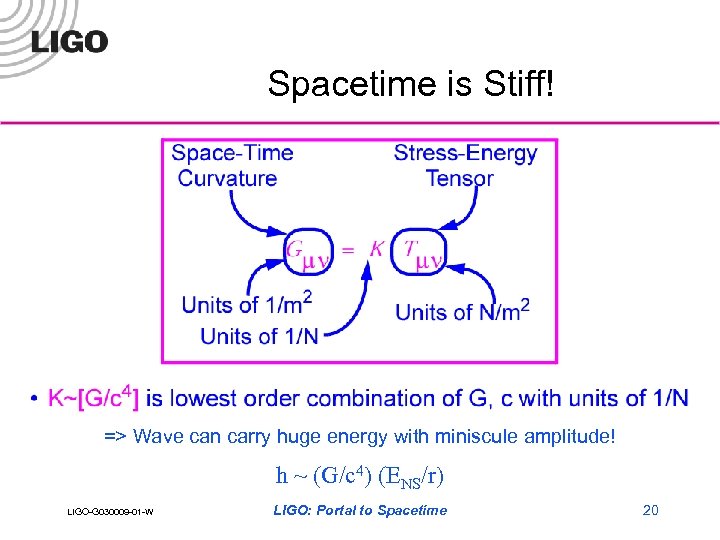
Spacetime is Stiff! => Wave can carry huge energy with miniscule amplitude! h ~ (G/c 4) (ENS/r) LIGO-G 030009 -01 -W LIGO: Portal to Spacetime 20
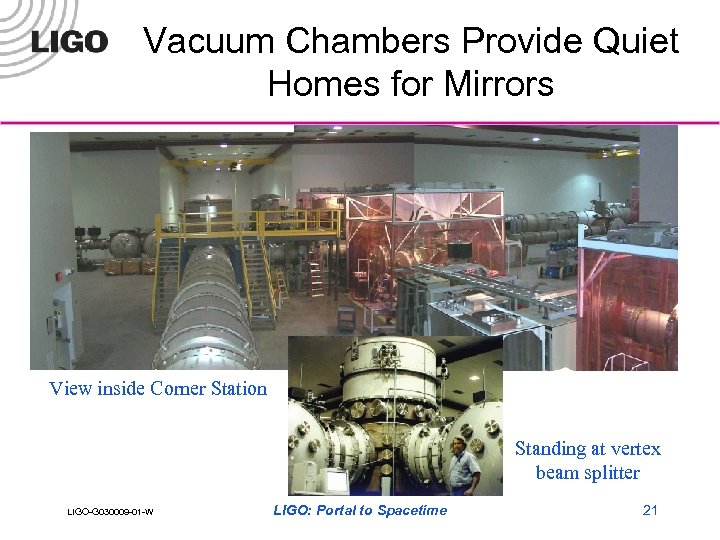
Vacuum Chambers Provide Quiet Homes for Mirrors View inside Corner Station Standing at vertex beam splitter LIGO-G 030009 -01 -W LIGO: Portal to Spacetime 21
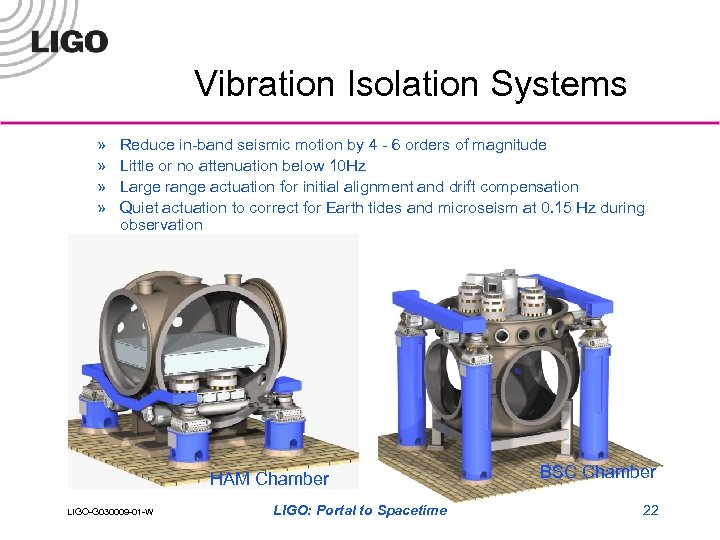
Vibration Isolation Systems » » Reduce in-band seismic motion by 4 - 6 orders of magnitude Little or no attenuation below 10 Hz Large range actuation for initial alignment and drift compensation Quiet actuation to correct for Earth tides and microseism at 0. 15 Hz during observation HAM Chamber LIGO-G 030009 -01 -W LIGO: Portal to Spacetime BSC Chamber 22
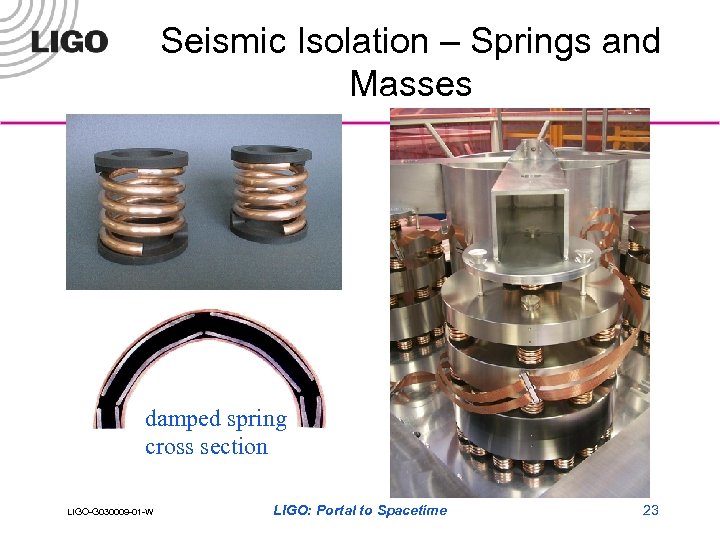
Seismic Isolation – Springs and Masses damped spring cross section LIGO-G 030009 -01 -W LIGO: Portal to Spacetime 23
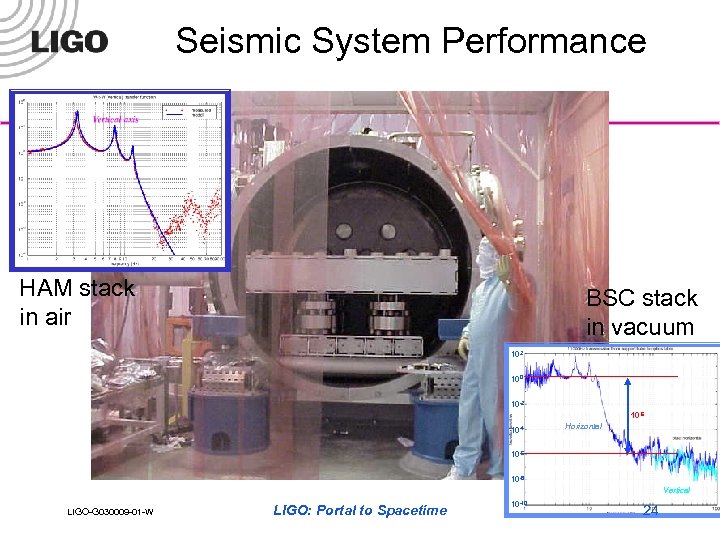
Seismic System Performance HAM stack in air BSC stack in vacuum 102 100 10 -2 10 -6 10 -4 Horizontal 10 -6 10 -8 Vertical LIGO-G 030009 -01 -W LIGO: Portal to Spacetime 10 -10 24
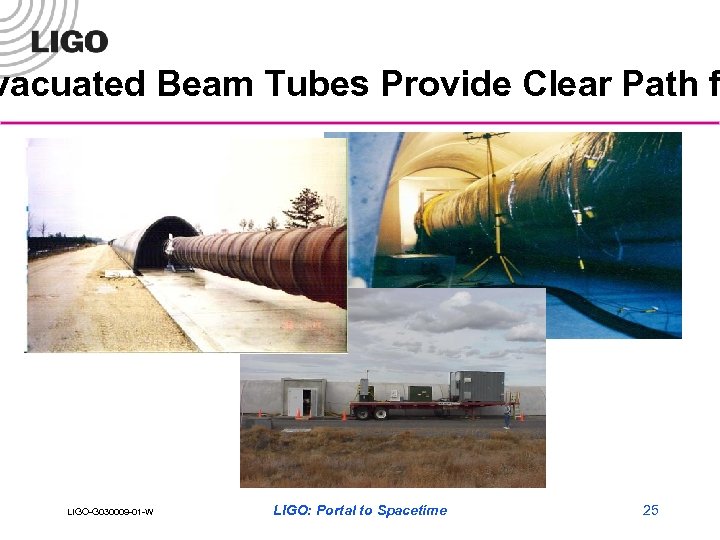
vacuated Beam Tubes Provide Clear Path f LIGO-G 030009 -01 -W LIGO: Portal to Spacetime 25
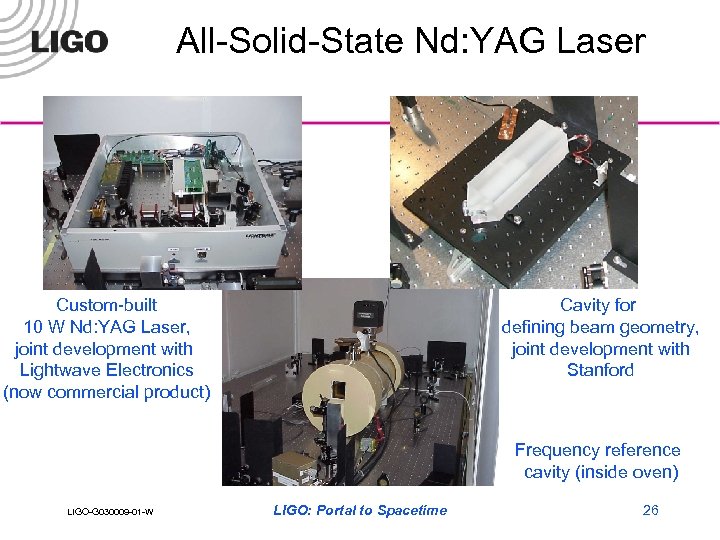
All-Solid-State Nd: YAG Laser Custom-built 10 W Nd: YAG Laser, joint development with Lightwave Electronics (now commercial product) Cavity for defining beam geometry, joint development with Stanford Frequency reference cavity (inside oven) LIGO-G 030009 -01 -W LIGO: Portal to Spacetime 26
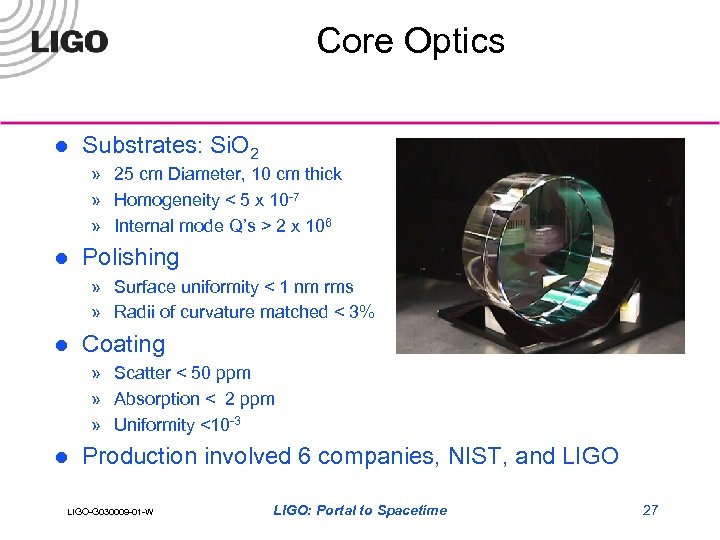
Core Optics l Substrates: Si. O 2 » 25 cm Diameter, 10 cm thick » Homogeneity < 5 x 10 -7 » Internal mode Q’s > 2 x 10⁶ l Polishing » Surface uniformity < 1 nm rms » Radii of curvature matched < 3% l Coating » Scatter < 50 ppm » Absorption < 2 ppm » Uniformity <10 -3 l Production involved 6 companies, NIST, and LIGO-G 030009 -01 -W LIGO: Portal to Spacetime 27
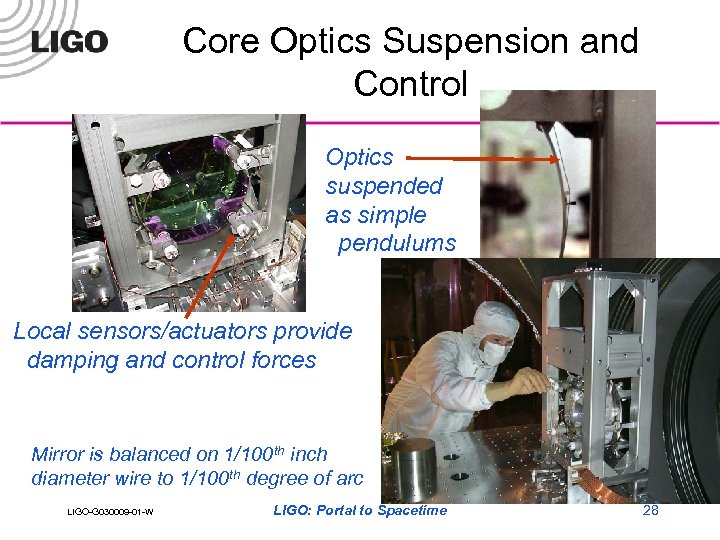
Core Optics Suspension and Control Optics suspended as simple pendulums Local sensors/actuators provide damping and control forces Mirror is balanced on 1/100 th inch diameter wire to 1/100 th degree of arc LIGO-G 030009 -01 -W LIGO: Portal to Spacetime 28
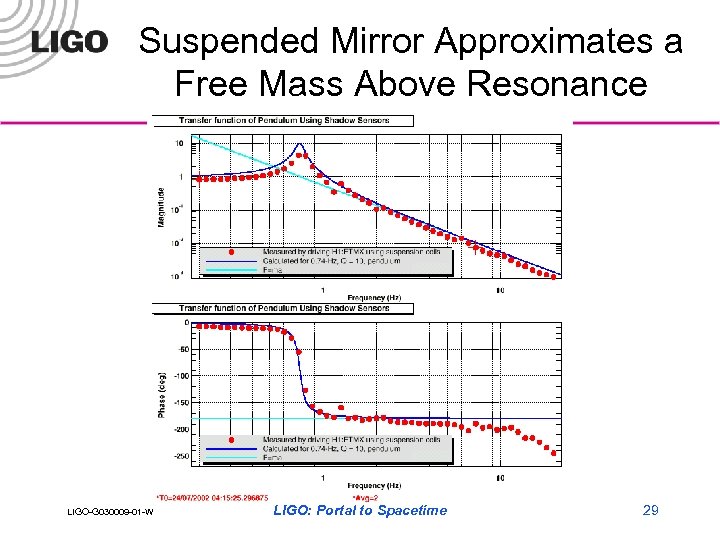
Suspended Mirror Approximates a Free Mass Above Resonance LIGO-G 030009 -01 -W LIGO: Portal to Spacetime 29
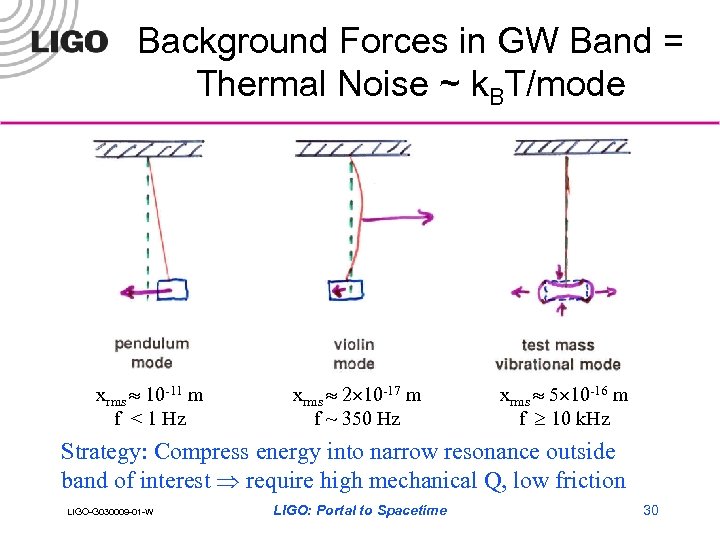
Background Forces in GW Band = Thermal Noise ~ k. BT/mode xrms 10 -11 m f < 1 Hz xrms 2 10 -17 m f ~ 350 Hz xrms 5 10 -16 m f 10 k. Hz Strategy: Compress energy into narrow resonance outside band of interest require high mechanical Q, low friction LIGO-G 030009 -01 -W LIGO: Portal to Spacetime 30
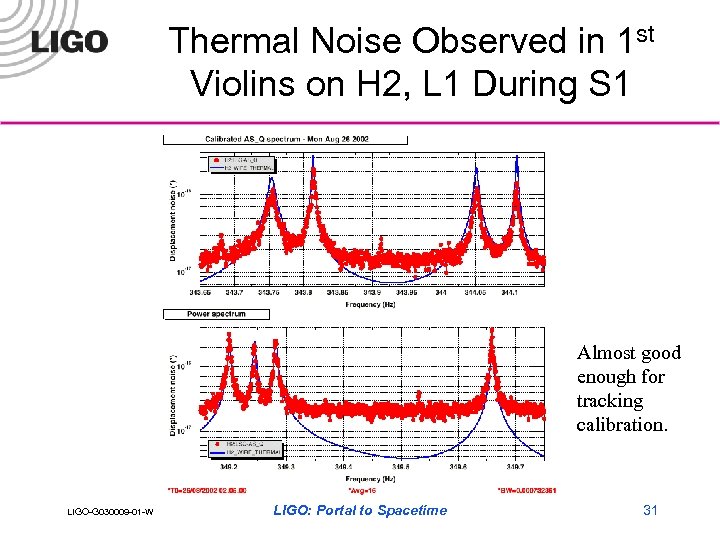
Thermal Noise Observed in 1 st Violins on H 2, L 1 During S 1 Almost good enough for tracking calibration. LIGO-G 030009 -01 -W LIGO: Portal to Spacetime 31
Feedback & Control for Mirrors and Light l Damp suspended mirrors to vibration-isolated tables » 14 mirrors (pos, pit, yaw, side) = 56 loops l Damp mirror angles to lab floor using optical levers » 7 mirrors (pit, yaw) = 14 loops l Pre-stabilized laser » (frequency, intensity, pre-mode-cleaner) = 3 loops l Cavity length control » (mode-cleaner, common-mode frequency, common-arm, differential arm, michelson, power-recycling) = 6 loops l Wave-front sensing/control » 7 mirrors (pit, yaw) = 14 loops l Beam-centering control » 2 arms (pit, yaw) = 4 loops LIGO-G 030009 -01 -W LIGO: Portal to Spacetime 32
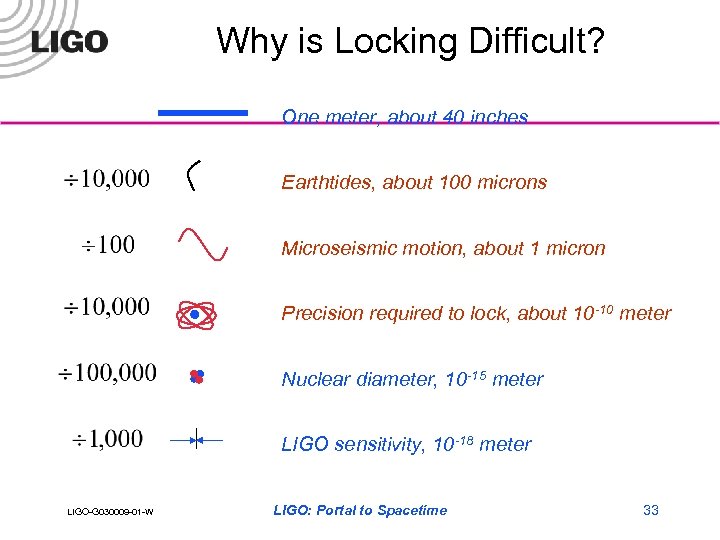
Why is Locking Difficult? One meter, about 40 inches Earthtides, about 100 microns Human hair, about 100 microns Microseismic motion, about micron Wavelength of light, about 11 micron Precision required to lock, about 10 -10 meter Atomic diameter, 10 -10 meter Nuclear diameter, 10 -15 meter LIGO sensitivity, 10 -18 meter LIGO-G 030009 -01 -W LIGO: Portal to Spacetime 33
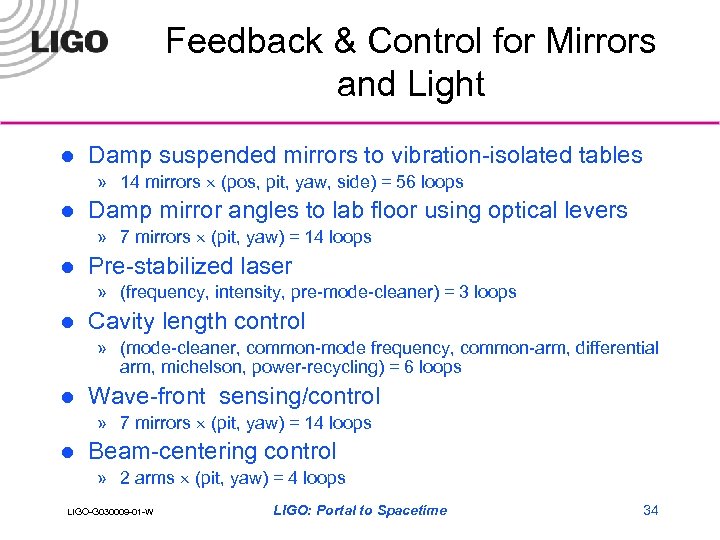
Feedback & Control for Mirrors and Light l Damp suspended mirrors to vibration-isolated tables » 14 mirrors (pos, pit, yaw, side) = 56 loops l Damp mirror angles to lab floor using optical levers » 7 mirrors (pit, yaw) = 14 loops l Pre-stabilized laser » (frequency, intensity, pre-mode-cleaner) = 3 loops l Cavity length control » (mode-cleaner, common-mode frequency, common-arm, differential arm, michelson, power-recycling) = 6 loops l Wave-front sensing/control » 7 mirrors (pit, yaw) = 14 loops l Beam-centering control » 2 arms (pit, yaw) = 4 loops LIGO-G 030009 -01 -W LIGO: Portal to Spacetime 34
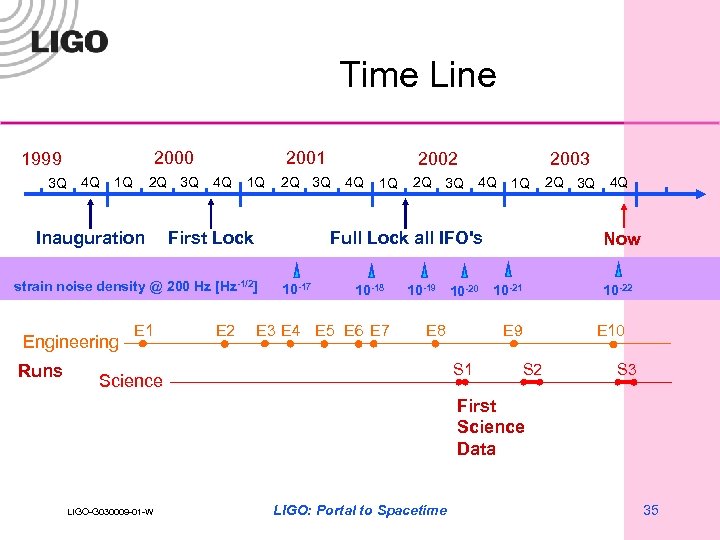
Time Line 2000 1999 3 Q 4 Q 2 Q 3 Q 1 Q Inauguration 2001 4 Q 1 Q Engineering Runs 2 Q 3 Q E 2 4 Q 1 Q 2 Q 3 Q 2003 4 Q 1 Q Full Lock all IFO's First Lock strain noise density @ 200 Hz [Hz-1/2] E 1 2002 10 -17 10 -18 E 3 E 4 E 5 E 6 E 7 10 -19 10 -20 E 8 4 Q Now 10 -21 10 -22 E 9 S 1 Science 2 Q 3 Q S 2 E 10 S 3 First Science Data LIGO-G 030009 -01 -W LIGO: Portal to Spacetime 35
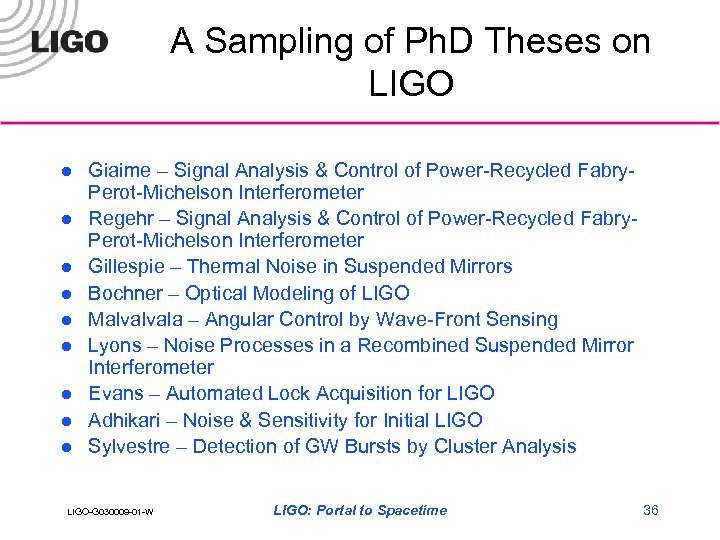
A Sampling of Ph. D Theses on LIGO l l l l l Giaime – Signal Analysis & Control of Power-Recycled Fabry. Perot-Michelson Interferometer Regehr – Signal Analysis & Control of Power-Recycled Fabry. Perot-Michelson Interferometer Gillespie – Thermal Noise in Suspended Mirrors Bochner – Optical Modeling of LIGO Malvalvala – Angular Control by Wave-Front Sensing Lyons – Noise Processes in a Recombined Suspended Mirror Interferometer Evans – Automated Lock Acquisition for LIGO Adhikari – Noise & Sensitivity for Initial LIGO Sylvestre – Detection of GW Bursts by Cluster Analysis LIGO-G 030009 -01 -W LIGO: Portal to Spacetime 36
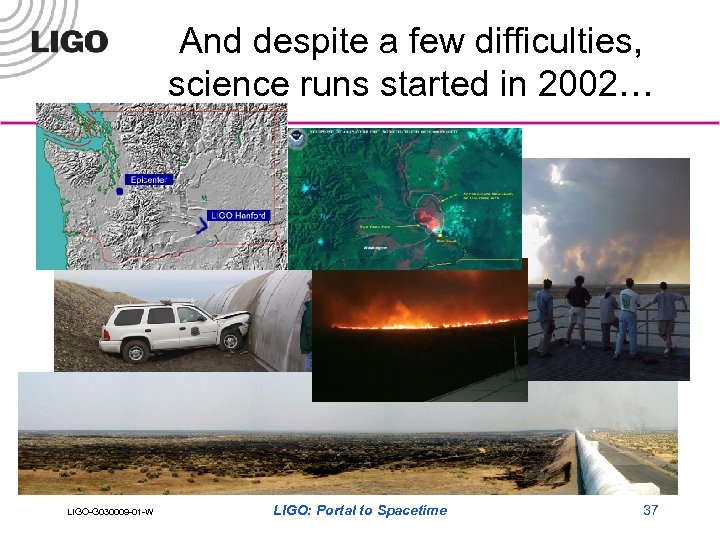
And despite a few difficulties, science runs started in 2002… LIGO-G 030009 -01 -W LIGO: Portal to Spacetime 37
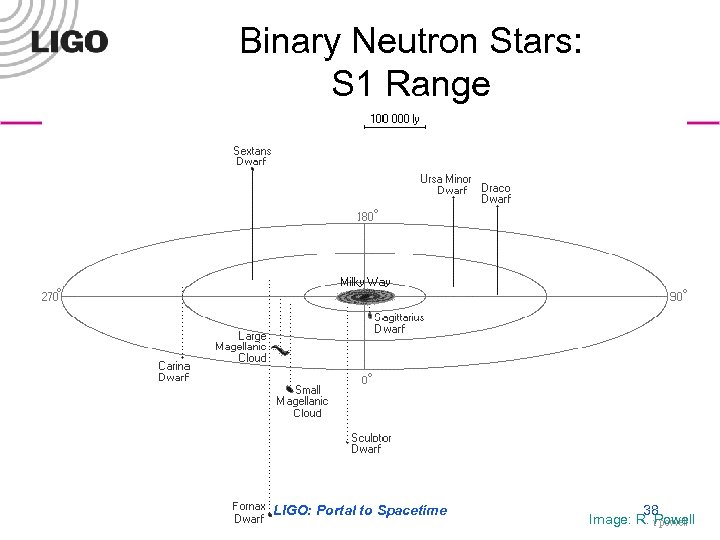
Binary Neutron Stars: S 1 Range LIGO-G 030009 -01 -W LIGO: Portal to Spacetime 38 Image: R. Powell
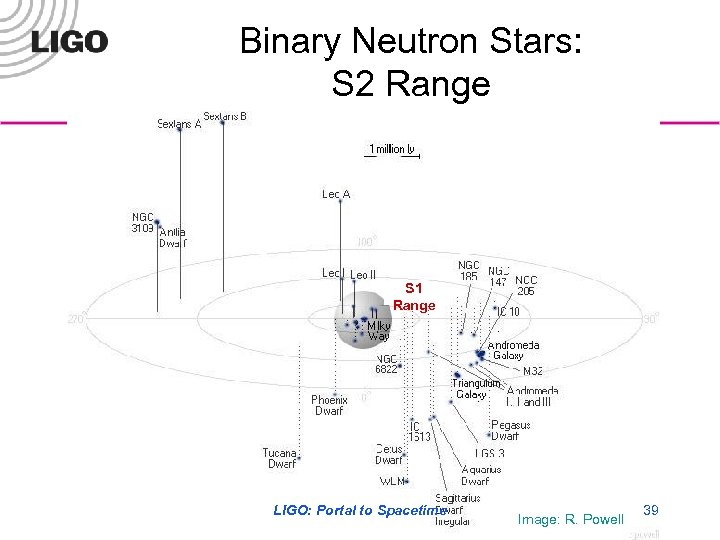
Binary Neutron Stars: S 2 Range S 1 Range LIGO-G 030009 -01 -W LIGO: Portal to Spacetime Image: R. Powell 39
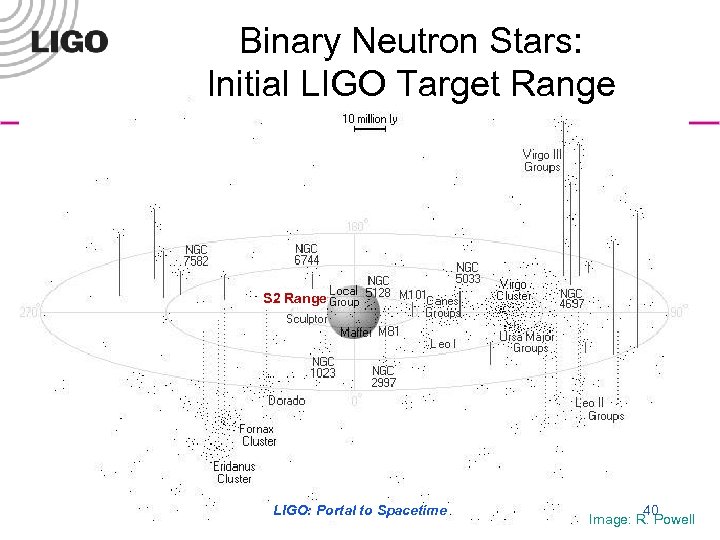
Binary Neutron Stars: Initial LIGO Target Range S 2 Range LIGO-G 030009 -01 -W LIGO: Portal to Spacetime 40 Image: R. Powell
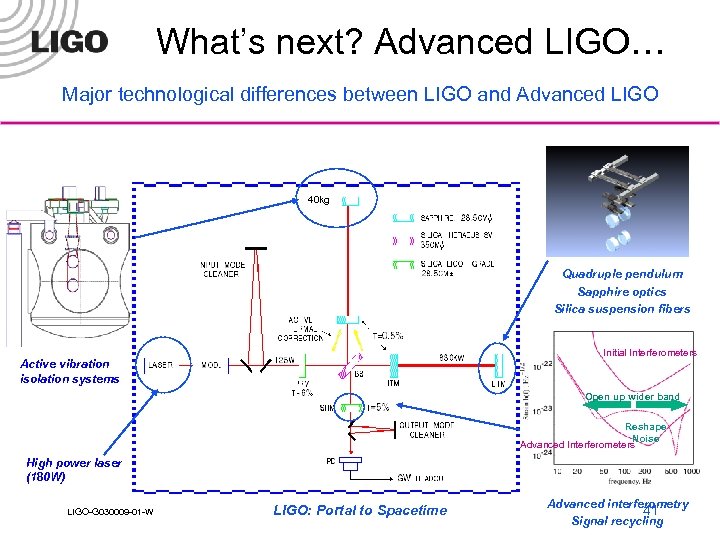
What’s next? Advanced LIGO… Major technological differences between LIGO and Advanced LIGO 40 kg Quadruple pendulum Sapphire optics Silica suspension fibers Initial Interferometers Active vibration isolation systems Open up wider band Reshape Noise Advanced Interferometers High power laser (180 W) LIGO-G 030009 -01 -W LIGO: Portal to Spacetime Advanced interferometry 41 Signal recycling
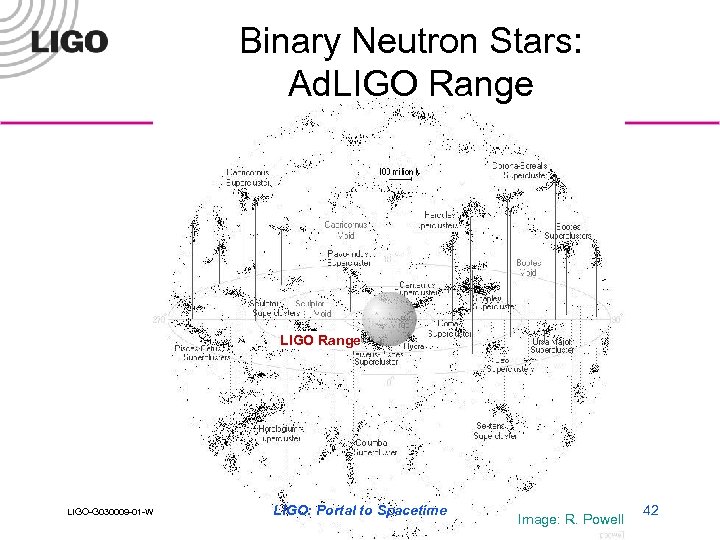
Binary Neutron Stars: Ad. LIGO Range LIGO-G 030009 -01 -W LIGO: Portal to Spacetime Image: R. Powell 42
Скачать презентацию Intro to LIGO Colliding Black Holes Credit National
eda2352d3b46cdf9755a5e5dc7c4d69e.ppt