Скачать презентацию Interventional Management of NSCLC Hiran C Fernando FRCS
35601f75be532300fe7f20bcaad8f23f.ppt
- Количество слайдов: 35
 Interventional Management of NSCLC Hiran C Fernando FRCS Professor and Chief, Division Thoracic Surgery Boston Medical Center
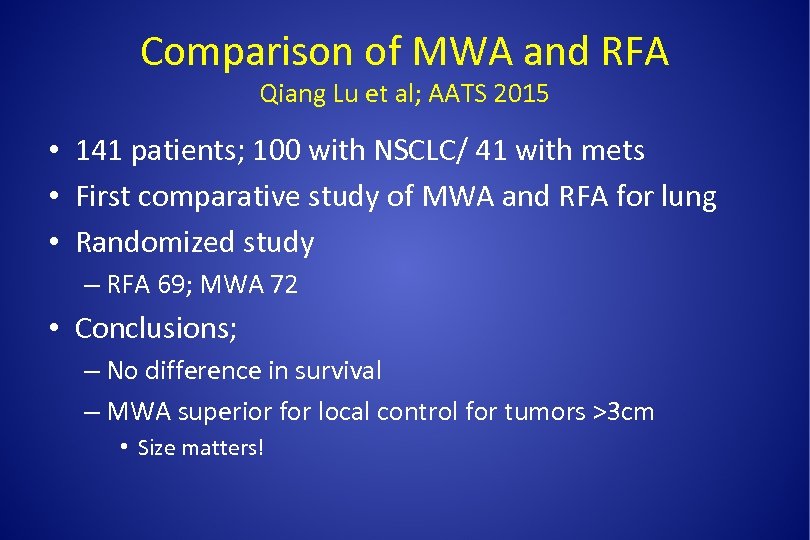 Comparison of MWA and RFA Qiang Lu et al; AATS 2015 • 141 patients; 100 with NSCLC/ 41 with mets • First comparative study of MWA and RFA for lung • Randomized study – RFA 69; MWA 72 • Conclusions; – No difference in survival – MWA superior for local control for tumors >3 cm • Size matters!
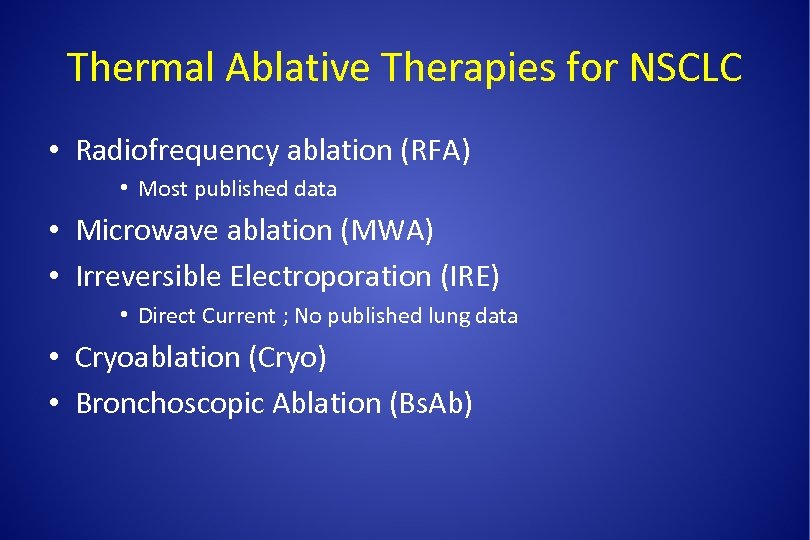 Thermal Ablative Therapies for NSCLC • Radiofrequency ablation (RFA) • Most published data • Microwave ablation (MWA) • Irreversible Electroporation (IRE) • Direct Current ; No published lung data • Cryoablation (Cryo) • Bronchoscopic Ablation (Bs. Ab)
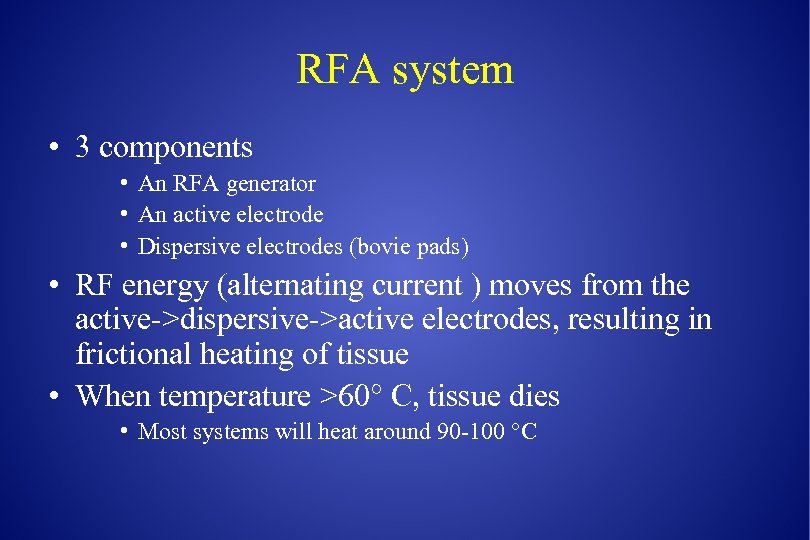 RFA system • 3 components • An RFA generator • An active electrode • Dispersive electrodes (bovie pads) • RF energy (alternating current ) moves from the active->dispersive->active electrodes, resulting in frictional heating of tissue • When temperature >60° C, tissue dies • Most systems will heat around 90 -100 °C
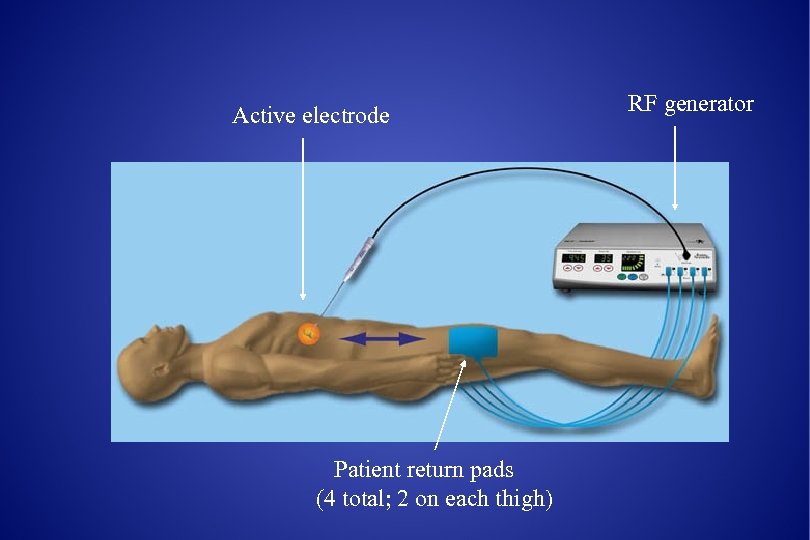 Active electrode Patient return pads (4 total; 2 on each thigh) RF generator
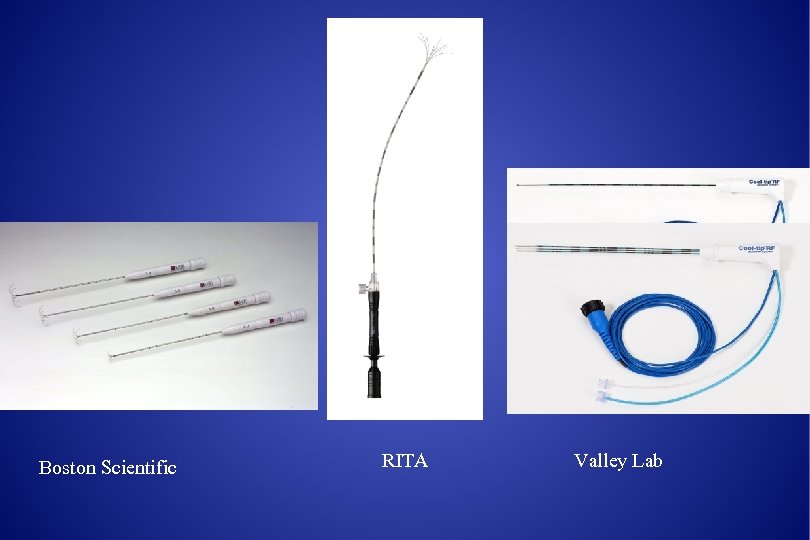 Boston Scientific RITA Valley Lab
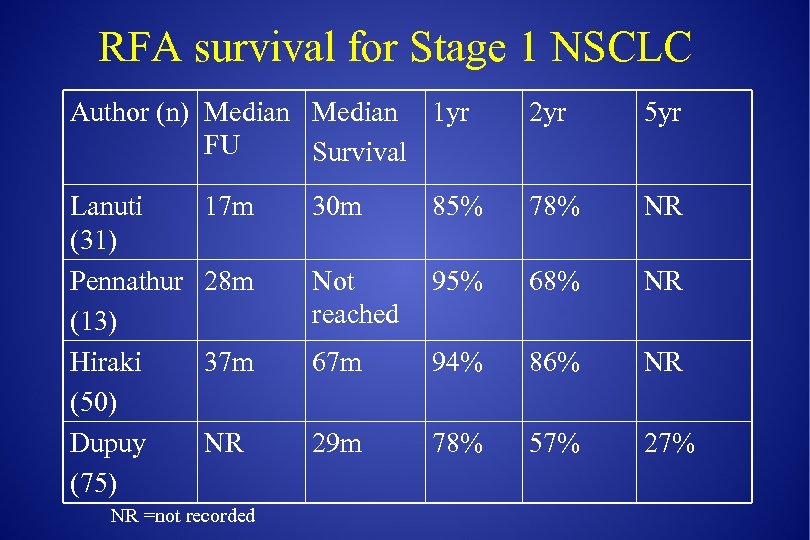 RFA survival for Stage 1 NSCLC Author (n) Median 1 yr FU Survival 2 yr 5 yr Lanuti (31) Pennathur (13) Hiraki (50) Dupuy (75) 17 m 30 m 85% 78% NR 28 m Not reached 95% 68% NR 37 m 67 m 94% 86% NR NR 29 m 78% 57% 27% NR =not recorded
 Percutaneous Thermal Ablation for Stage IA Non-Small Cell Lung Cancer: Long-term Follow-Up Chaitan K. Narsule 1, Divya Nair 1, Avneesh Gupta 2, Roy G. Oommen 3, Michael I. Ebright 4, Virginia R. Litle 1, Hiran C. Fernando 1 1 Division of Thoracic Surgery, Boston University School of Medicine, Boston, MA of Radiology, Boston University School of Medicine, Boston, MA 3 The Thoracic Associates, Stoughton, MA. 4 Division of Thoracic Surgery, Columbia University, New York, NY 2 Department
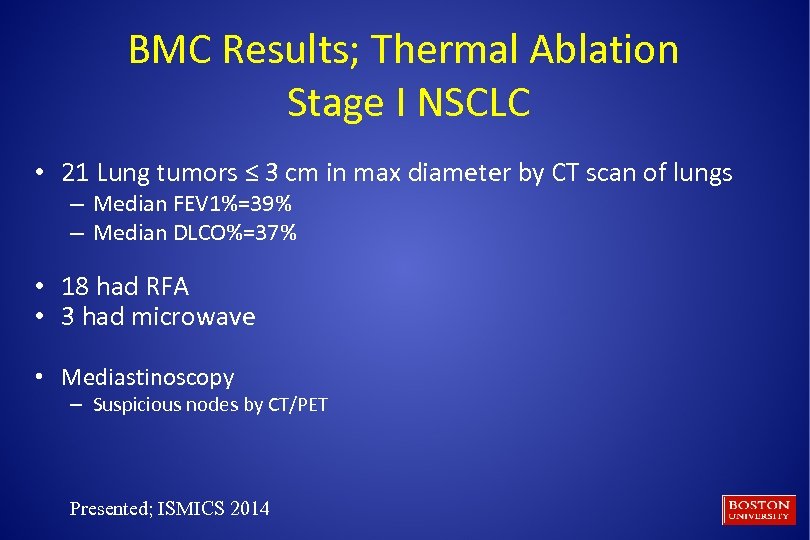 BMC Results; Thermal Ablation Stage I NSCLC • 21 Lung tumors ≤ 3 cm in max diameter by CT scan of lungs – Median FEV 1%=39% – Median DLCO%=37% • 18 had RFA • 3 had microwave • Mediastinoscopy – Suspicious nodes by CT/PET Presented; ISMICS 2014
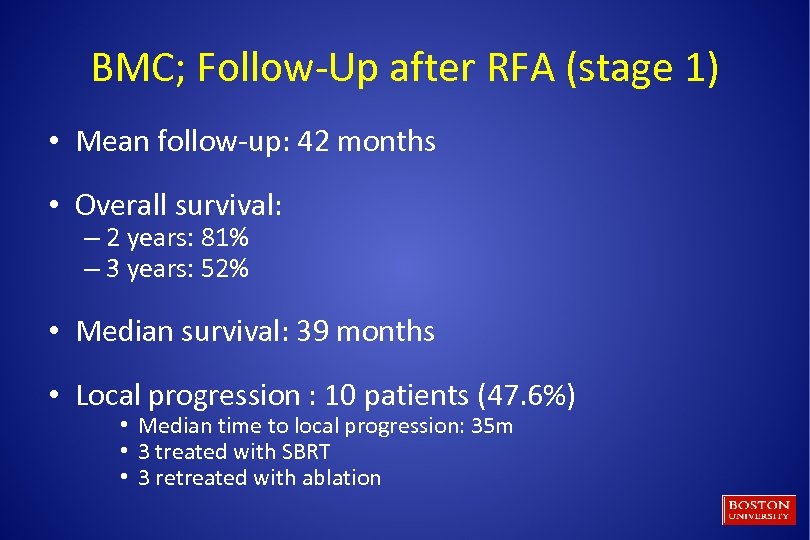 BMC; Follow-Up after RFA (stage 1) • Mean follow-up: 42 months • Overall survival: – 2 years: 81% – 3 years: 52% • Median survival: 39 months • Local progression : 10 patients (47. 6%) • Median time to local progression: 35 m • 3 treated with SBRT • 3 retreated with ablation
 Radiofrequency Ablation of Stage 1 A NSCLC in Medically Inoperable Patients: Results from ACOSOG Z 4033 (Alliance), an NCI Funded Multicenter Trial Damian E. Dupuy 1, Hiran Fernando 2, Shauna Hillman 3, Thomas Ng 1, Angelina D. Tan 3, Jo-Anne Shepard 4, William Rilling 5, Kelvin Hong 6, Joe B. Putnam 7 In Press; Cancer 2015
 Z 4033; Study Design • • • Single arm pilot trial 55 medically inoperable patients Histology confirmed NSCLC
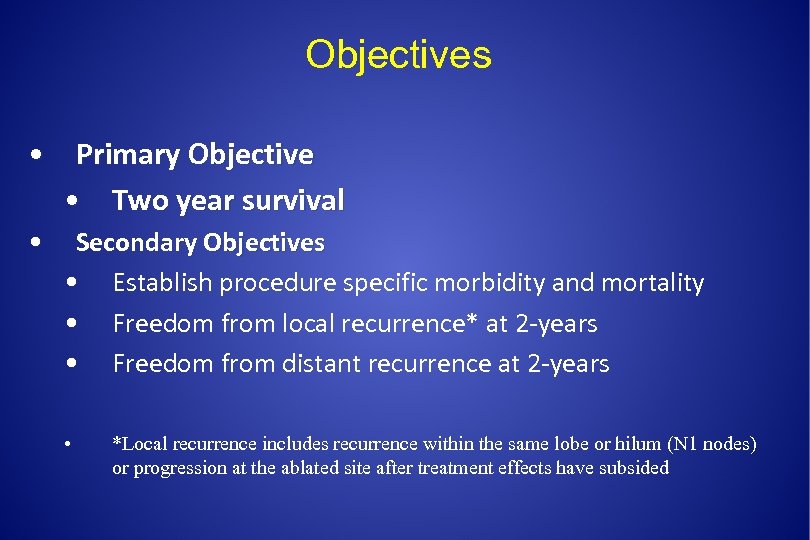 Objectives • Primary Objective • Two year survival • Secondary Objectives • Establish procedure specific morbidity and mortality • Freedom from local recurrence* at 2 -years • Freedom from distant recurrence at 2 -years • *Local recurrence includes recurrence within the same lobe or hilum (N 1 nodes) or progression at the ablated site after treatment effects have subsided
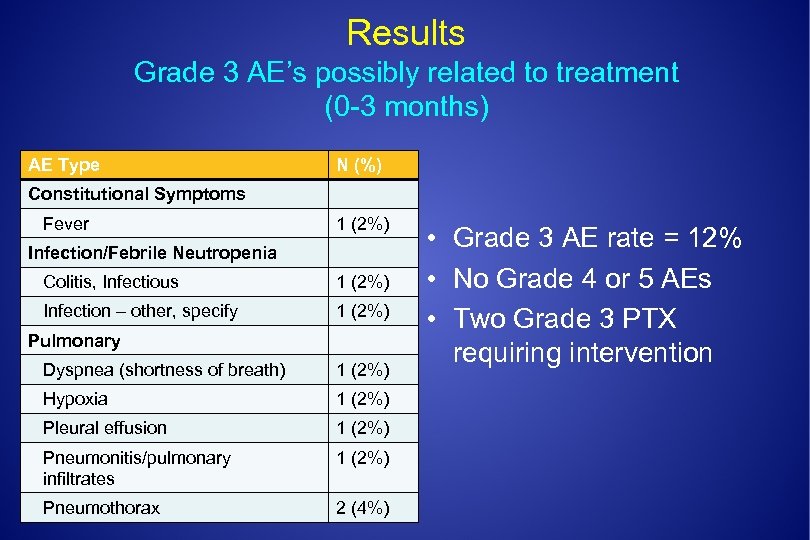 Results Grade 3 AE’s possibly related to treatment (0 -3 months) AE Type N (%) Constitutional Symptoms Fever 1 (2%) Infection/Febrile Neutropenia Colitis, Infectious 1 (2%) Infection – other, specify 1 (2%) Pulmonary Dyspnea (shortness of breath) 1 (2%) Hypoxia 1 (2%) Pleural effusion 1 (2%) Pneumonitis/pulmonary infiltrates 1 (2%) Pneumothorax 2 (4%) • Grade 3 AE rate = 12% • No Grade 4 or 5 AEs • Two Grade 3 PTX requiring intervention
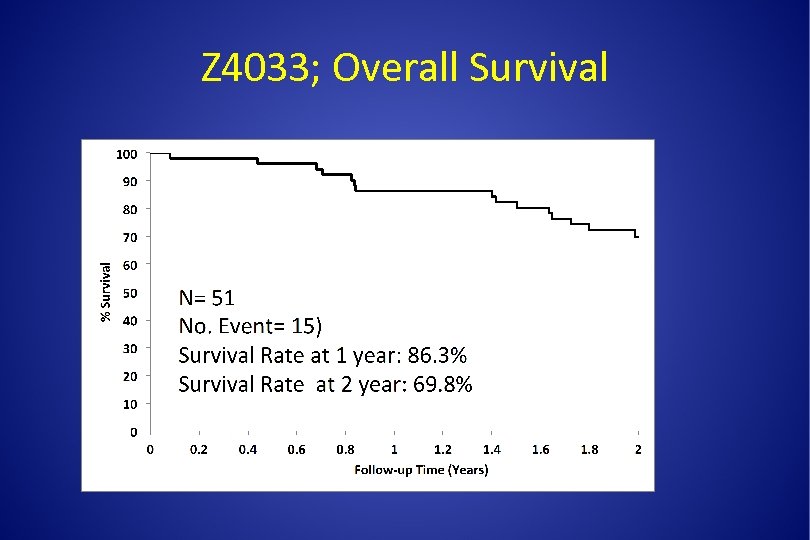 Z 4033; Overall Survival
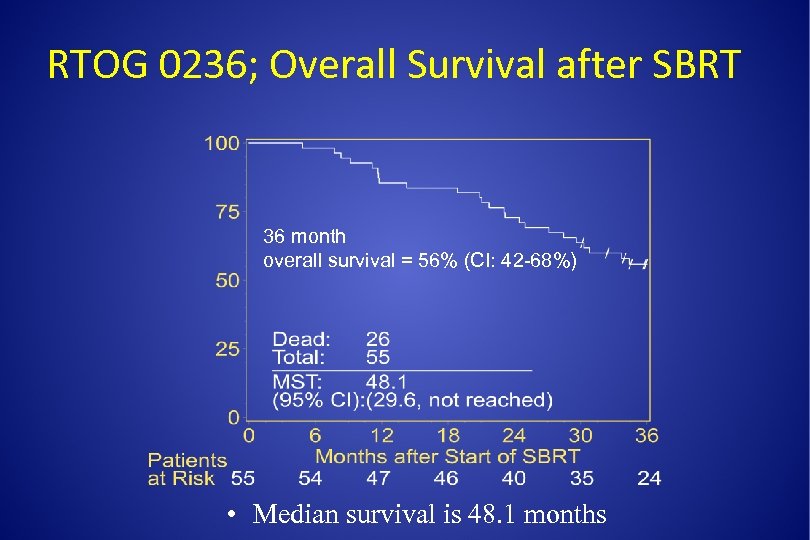 RTOG 0236; Overall Survival after SBRT 36 month overall survival = 56% (CI: 42 -68%) • Median survival is 48. 1 months
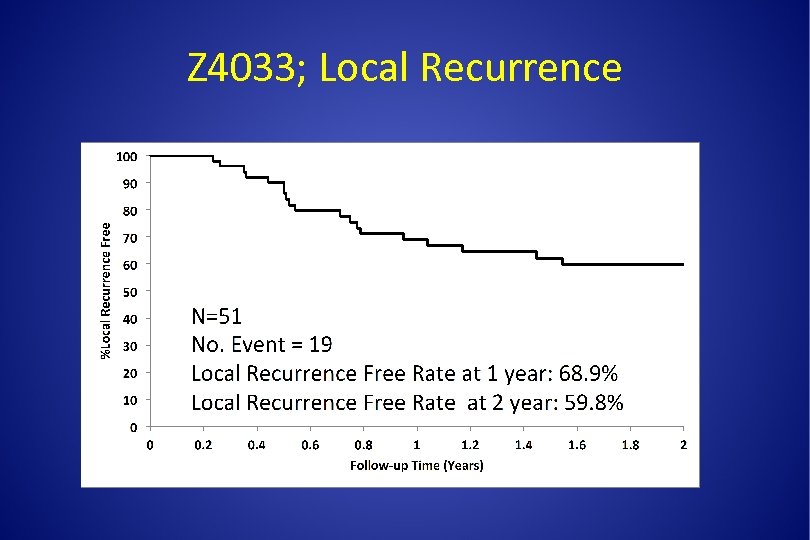 Z 4033; Local Recurrence
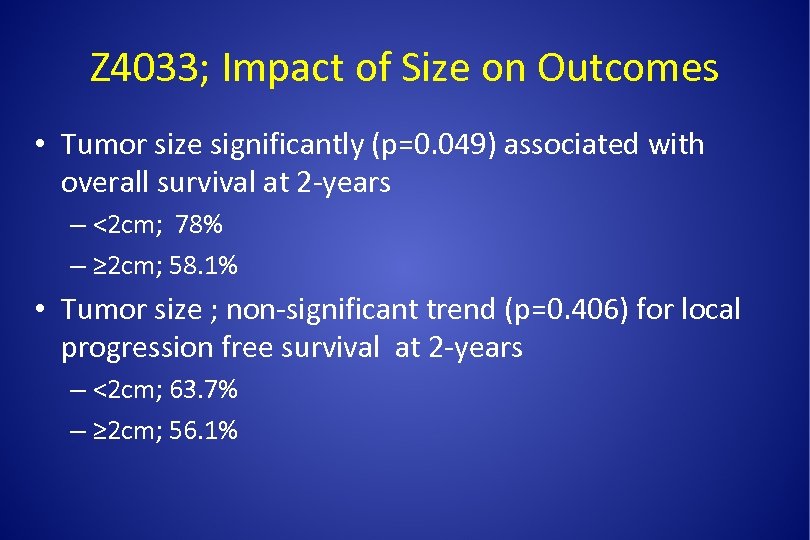 Z 4033; Impact of Size on Outcomes • Tumor size significantly (p=0. 049) associated with overall survival at 2 -years – <2 cm; 78% – ≥ 2 cm; 58. 1% • Tumor size ; non-significant trend (p=0. 406) for local progression free survival at 2 -years – <2 cm; 63. 7% – ≥ 2 cm; 56. 1%
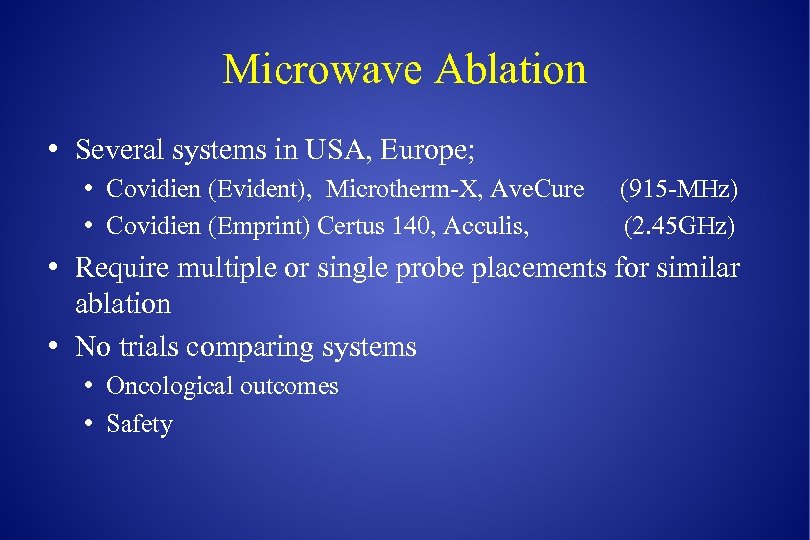 Microwave Ablation • Several systems in USA, Europe; • Covidien (Evident), Microtherm-X, Ave. Cure • Covidien (Emprint) Certus 140, Acculis, (915 -MHz) (2. 45 GHz) • Require multiple or single probe placements for similar ablation • No trials comparing systems • Oncological outcomes • Safety
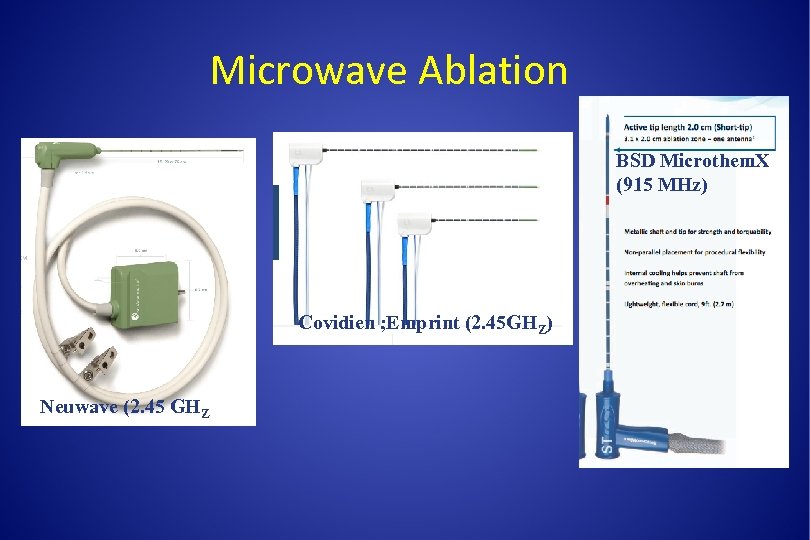 Microwave Ablation BSD Microthem. X (915 MHz) Covidien ; Emprint (2. 45 GHZ) Neuwave (2. 45 GHZ
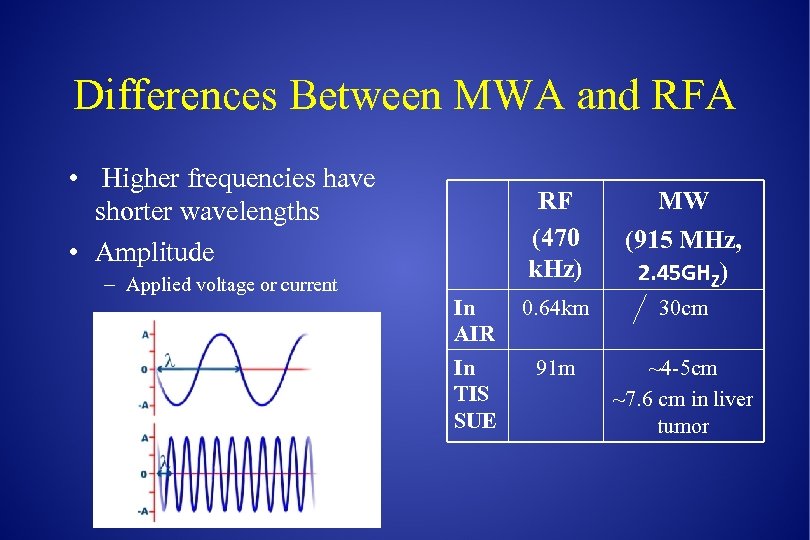 Differences Between MWA and RFA • Higher frequencies have shorter wavelengths • Amplitude – Applied voltage or current RF (470 k. Hz) MW (915 MHz, 2. 45 GHZ) In AIR 0. 64 km 30 cm In TIS SUE 91 m ~4 -5 cm ~7. 6 cm in liver tumor
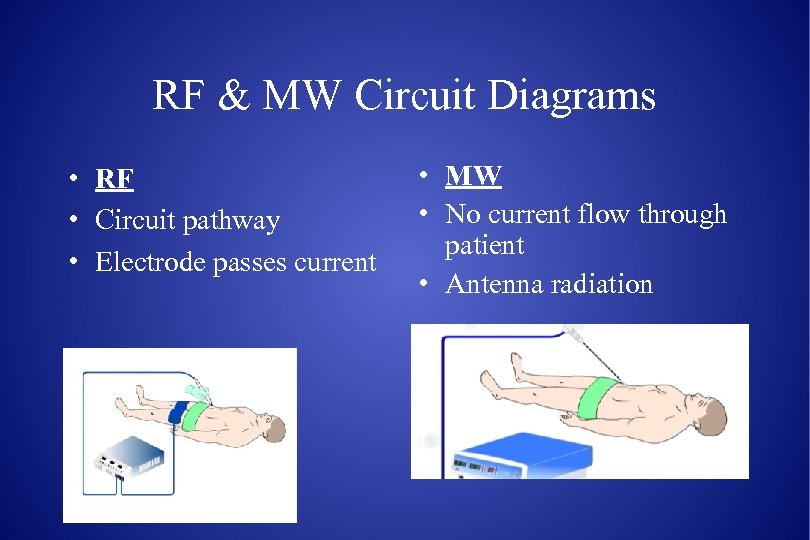 RF & MW Circuit Diagrams • RF • Circuit pathway • Electrode passes current • MW • No current flow through patient • Antenna radiation
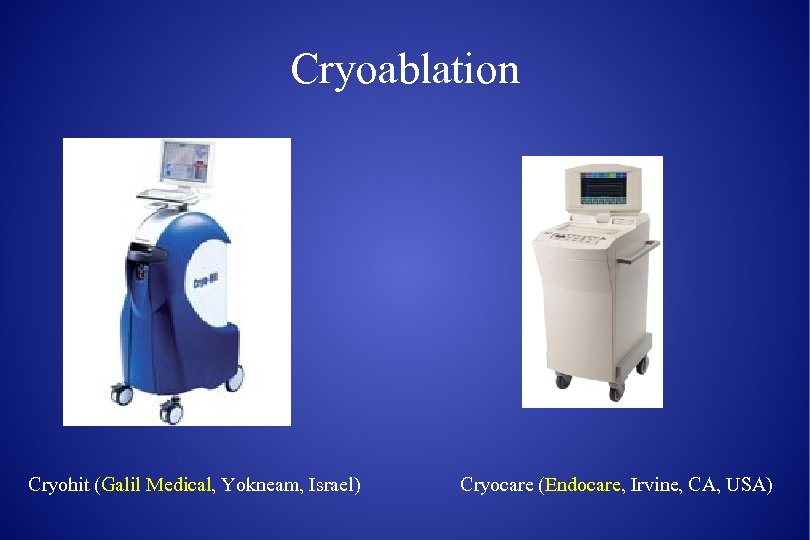 Cryoablation Cryohit (Galil Medical, Yokneam, Israel) Cryocare (Endocare, Irvine, CA, USA)
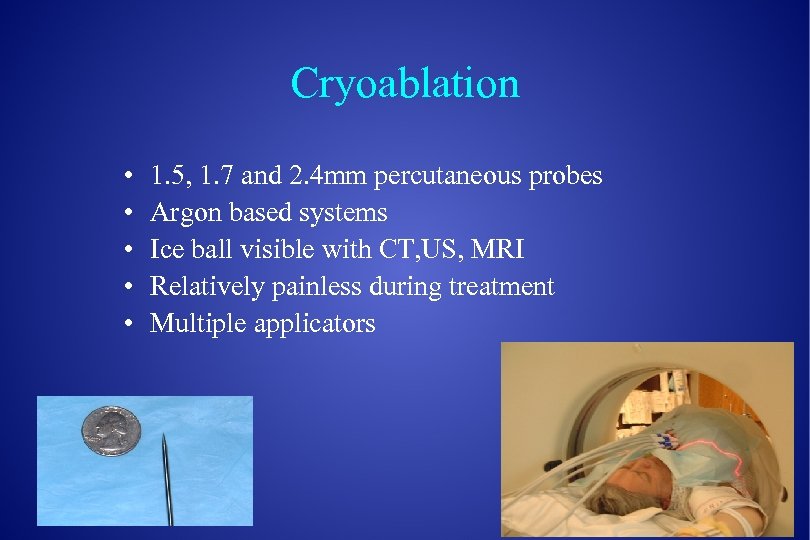 Cryoablation • • • 1. 5, 1. 7 and 2. 4 mm percutaneous probes Argon based systems Ice ball visible with CT, US, MRI Relatively painless during treatment Multiple applicators
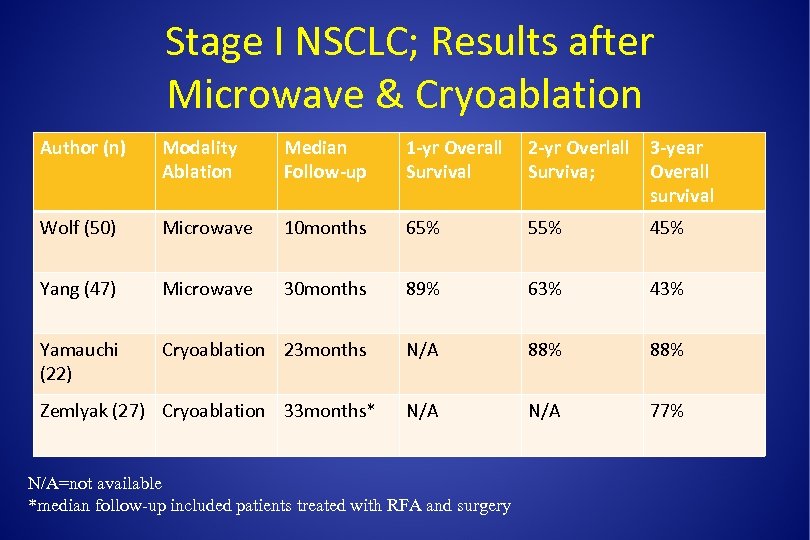 Stage I NSCLC; Results after Microwave & Cryoablation Author (n) Modality Ablation Median Follow-up 1 -yr Overall Survival 2 -yr Overlall 3 -year Surviva; Overall survival Wolf (50) Microwave 10 months 65% 55% 45% Yang (47) Microwave 30 months 89% 63% 43% Yamauchi (22) Cryoablation 23 months N/A 88% N/A 77% Zemlyak (27) Cryoablation 33 months* N/A=not available *median follow-up included patients treated with RFA and surgery
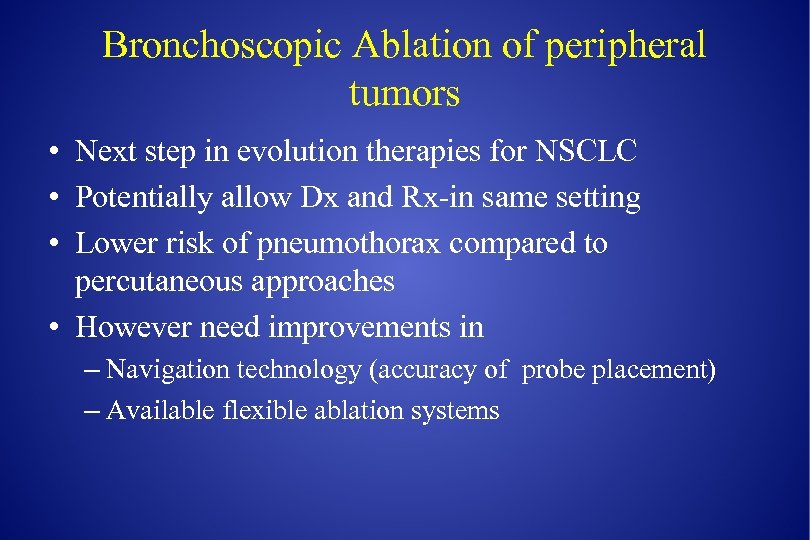 Bronchoscopic Ablation of peripheral tumors • Next step in evolution therapies for NSCLC • Potentially allow Dx and Rx-in same setting • Lower risk of pneumothorax compared to percutaneous approaches • However need improvements in – Navigation technology (accuracy of probe placement) – Available flexible ablation systems
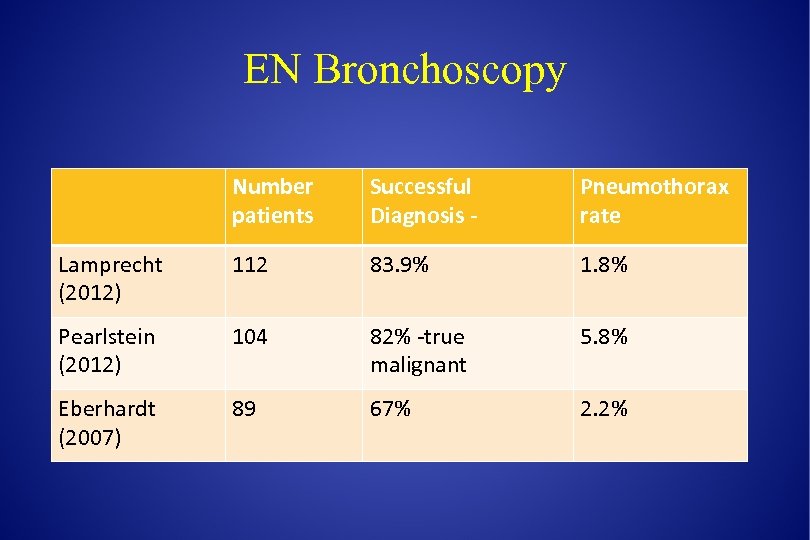 EN Bronchoscopy Number patients Successful Diagnosis - Pneumothorax rate Lamprecht (2012) 112 83. 9% 1. 8% Pearlstein (2012) 104 82% -true malignant 5. 8% Eberhardt (2007) 89 67% 2. 2%
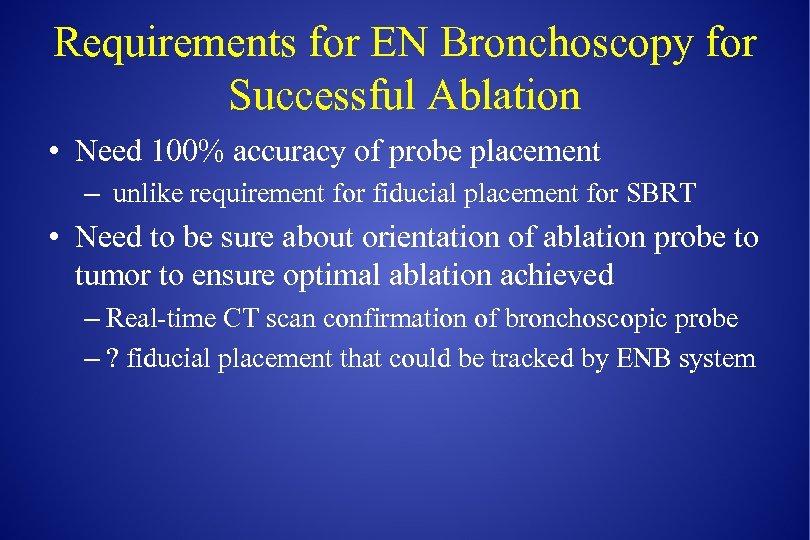 Requirements for EN Bronchoscopy for Successful Ablation • Need 100% accuracy of probe placement – unlike requirement for fiducial placement for SBRT • Need to be sure about orientation of ablation probe to tumor to ensure optimal ablation achieved – Real-time CT scan confirmation of bronchoscopic probe – ? fiducial placement that could be tracked by ENB system
 Bronchoscopic-guided MWA ablation Ferguson J et al. Chest 2013: 144; 37 A • Animal study; • 4 ablations (different power /time settings) • 3 pigs • 12 ablations performed • Neuwave 17 gauge antenna via bronchoscope • Successful oval shaped ablations created (1. 2 -3. 7 cm in short axis)based on power used
 Study 3 Different Bronchoscopic RFA catheters Tanabe T et al. Chest 2010 ; 137(4): 890 -897 • Ten patients c. T 1 N 0 M 0 had bronch ablation prior to planned resection • 3 probe sizes –active tip (5 mm, 8 mm, 10 mm) • Bronch navigation with CT flouroscopy • No complications (no PTX)
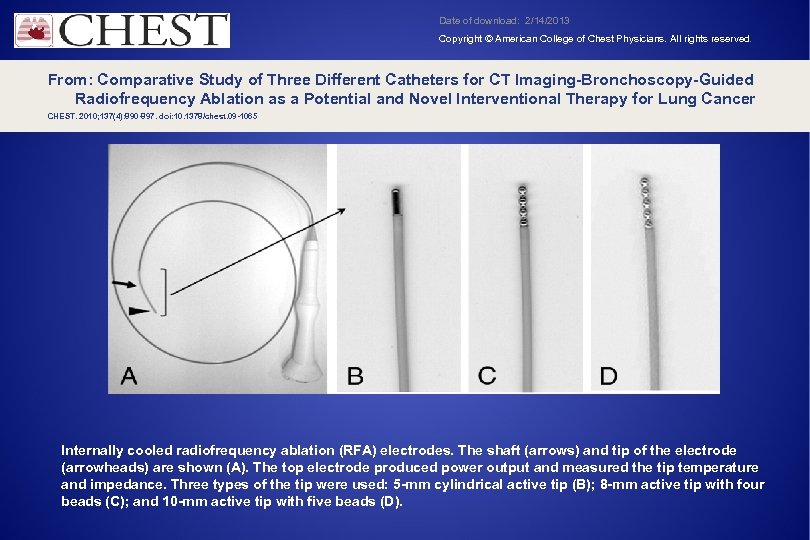 Date of download: 2/14/2013 Copyright © American College of Chest Physicians. All rights reserved. From: Comparative Study of Three Different Catheters for CT Imaging-Bronchoscopy-Guided Radiofrequency Ablation as a Potential and Novel Interventional Therapy for Lung Cancer CHEST. 2010; 137(4): 890 -897. doi: 10. 1378/chest. 09 -1065 Internally cooled radiofrequency ablation (RFA) electrodes. The shaft (arrows) and tip of the electrode (arrowheads) are shown (A). The top electrode produced power output and measured the tip temperature and impedance. Three types of the tip were used: 5 -mm cylindrical active tip (B); 8 -mm active tip with four beads (C); and 10 -mm active tip with five beads (D).
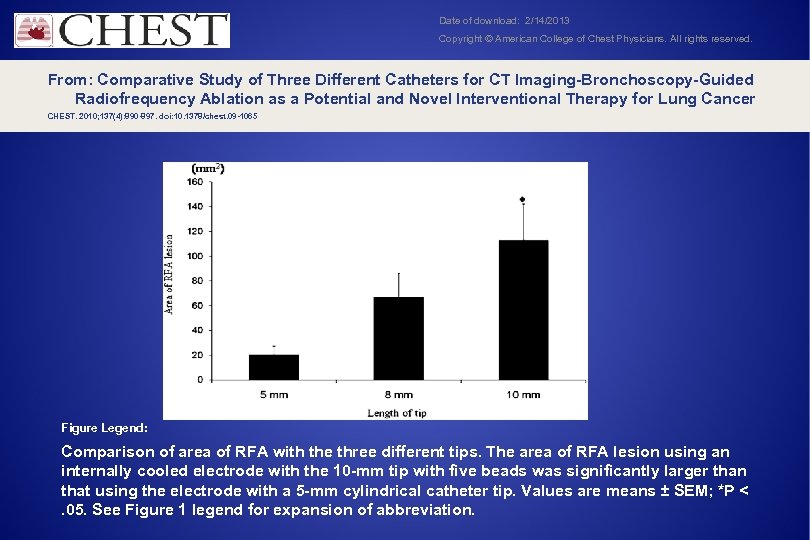 Date of download: 2/14/2013 Copyright © American College of Chest Physicians. All rights reserved. From: Comparative Study of Three Different Catheters for CT Imaging-Bronchoscopy-Guided Radiofrequency Ablation as a Potential and Novel Interventional Therapy for Lung Cancer CHEST. 2010; 137(4): 890 -897. doi: 10. 1378/chest. 09 -1065 Figure Legend: Comparison of area of RFA with the three different tips. The area of RFA lesion using an internally cooled electrode with the 10 -mm tip with five beads was significantly larger than that using the electrode with a 5 -mm cylindrical catheter tip. Values are means ± SEM; *P <. 05. See Figure 1 legend for expansion of abbreviation.
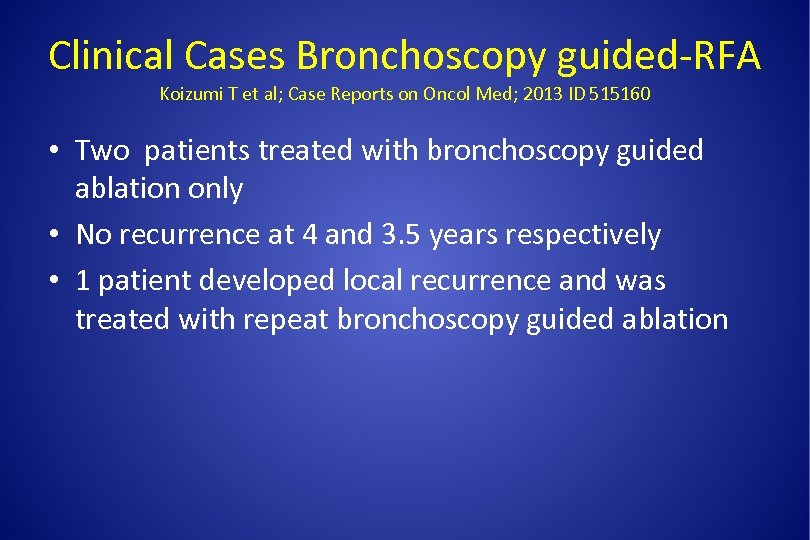 Clinical Cases Bronchoscopy guided-RFA Koizumi T et al; Case Reports on Oncol Med; 2013 ID 515160 • Two patients treated with bronchoscopy guided ablation only • No recurrence at 4 and 3. 5 years respectively • 1 patient developed local recurrence and was treated with repeat bronchoscopy guided ablation
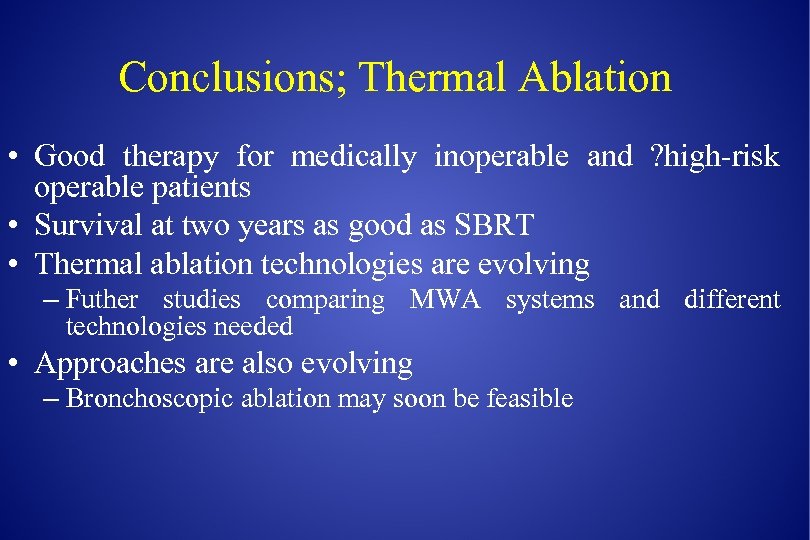 Conclusions; Thermal Ablation • Good therapy for medically inoperable and ? high-risk operable patients • Survival at two years as good as SBRT • Thermal ablation technologies are evolving – Futher studies comparing MWA systems and different technologies needed • Approaches are also evolving – Bronchoscopic ablation may soon be feasible