


 Скачать презентацию INTERSECTING EPIDEMICS IN THE NEW ENGLAND EPICENTER HIV
0eea7d07308108f50f3b0b1e3db79d50.ppt
- Количество слайдов: 18
 INTERSECTING EPIDEMICS IN THE NEW ENGLAND EPICENTER: HIV AND STD AT FENWAY COMMUNITY HEALTH Kenneth H Mayer, Daniel Cohen, Sarit Golub, Wilson Lo, Jerald C Feuer, Stephen Boswell, Fenway Community Health, Boston, MA Yuren Tang, Paul Etkind, MA Dept of Public Health, Boston, MA;
 FENWAY COMMUNITY HEALTH (FCH) • Founded in 1971, FCH serves the regional LGBT community, as well as local elderly, students, and low-income local residents. >7, 000 Clients seen/year. • Largest provider of health care to MSM in New England. • Cachement area includes the Boston neighborhoods of Fenway, Kenmore, Back Bay, and the South End. • Among FCH clients: 80% describe themselves as Caucasian, 6% as African American, 5% as Latino, 4% as Asian, and 4% as other.
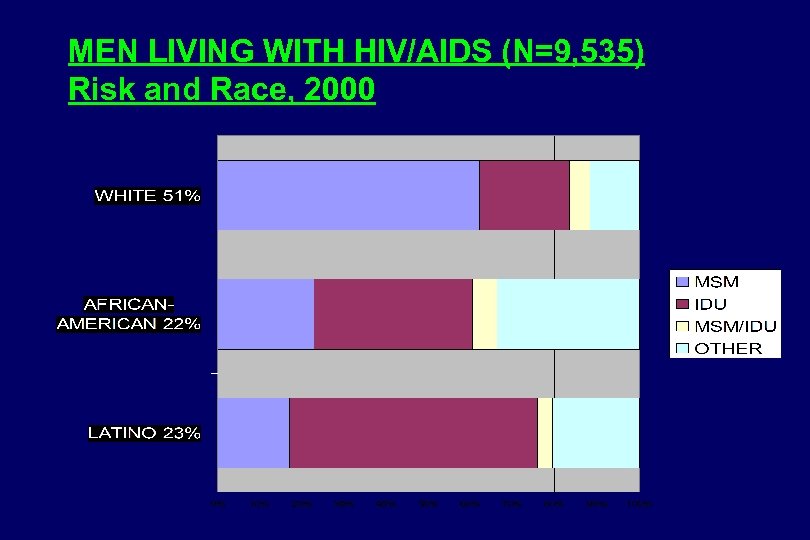 MEN LIVING WITH HIV/AIDS (N=9, 535) Risk and Race, 2000
 Fenway: Gonorrhea Cases by Year
 METHODS • Prior to 1997, a paper record was maintained of all FCH clients who underwent HIV or STD screening, subsequently Logician, an electronic medical record, was used. • STD/HIV data were verified by the Massachusetts Department of Public Health (MDPH) who performed STD screening. • Further analyses in 2000 included selfadministered provider and client interviews.
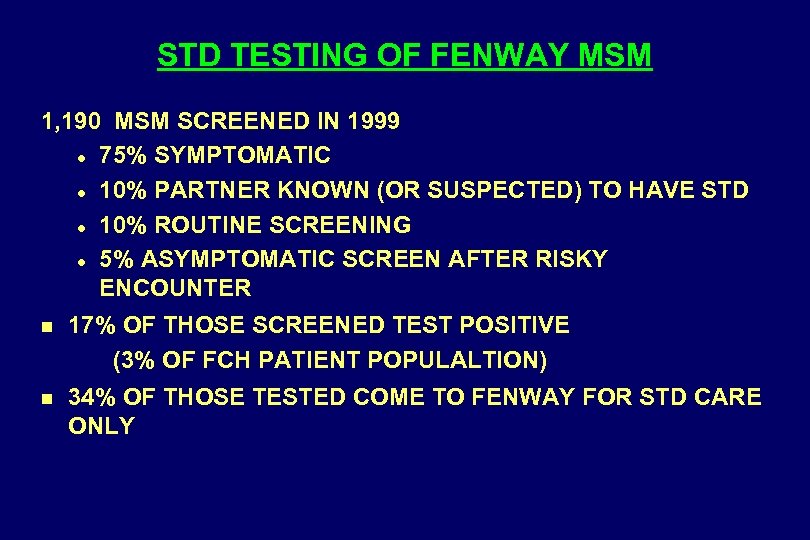 STD TESTING OF FENWAY MSM 1, 190 MSM SCREENED IN 1999 l 75% SYMPTOMATIC l 10% PARTNER KNOWN (OR SUSPECTED) TO HAVE STD l 10% ROUTINE SCREENING l 5% ASYMPTOMATIC SCREEN AFTER RISKY ENCOUNTER n 17% OF THOSE SCREENED TEST POSITIVE (3% OF FCH PATIENT POPULALTION) n 34% OF THOSE TESTED COME TO FENWAY FOR STD CARE ONLY
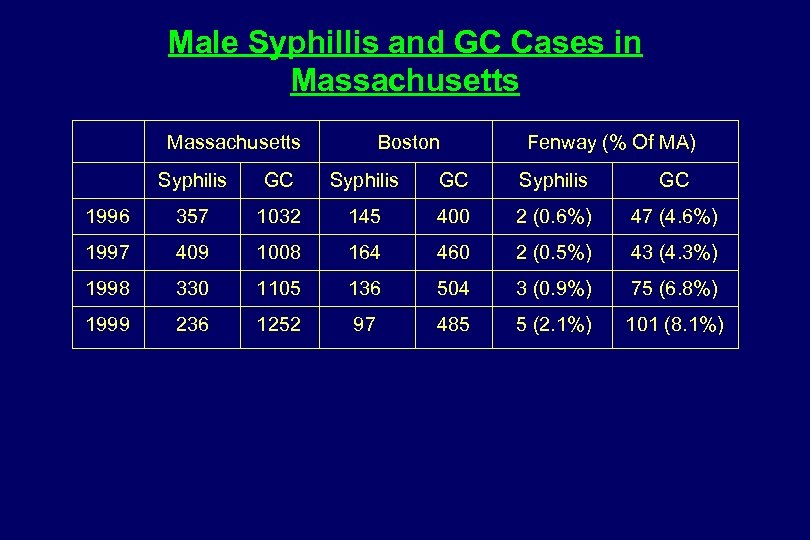 Male Syphillis and GC Cases in Massachusetts Boston Fenway (% Of MA) Syphilis GC 1996 357 1032 145 400 2 (0. 6%) 47 (4. 6%) 1997 409 1008 164 460 2 (0. 5%) 43 (4. 3%) 1998 330 1105 136 504 3 (0. 9%) 75 (6. 8%) 1999 236 1252 97 485 5 (2. 1%) 101 (8. 1%)
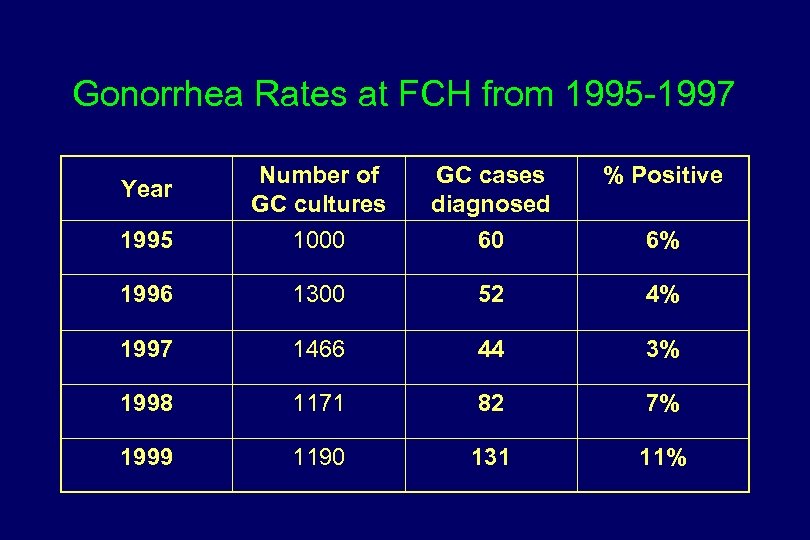 Gonorrhea Rates at FCH from 1995 -1997 Year Number of GC cultures GC cases diagnosed % Positive 1995 1000 60 6% 1996 1300 52 4% 1997 1466 44 3% 1998 1171 82 7% 1999 1190 131 11%
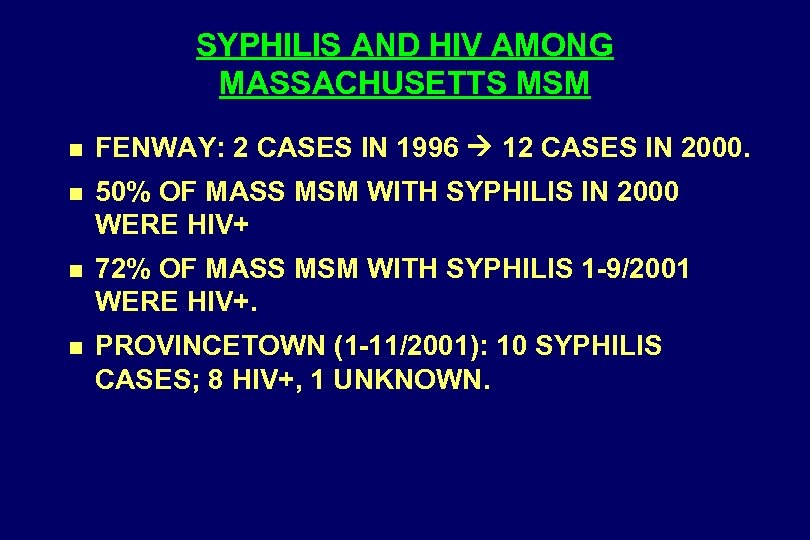 SYPHILIS AND HIV AMONG MASSACHUSETTS MSM n FENWAY: 2 CASES IN 1996 12 CASES IN 2000. n 50% OF MASS MSM WITH SYPHILIS IN 2000 WERE HIV+ n 72% OF MASS MSM WITH SYPHILIS 1 -9/2001 WERE HIV+. n PROVINCETOWN (1 -11/2001): 10 SYPHILIS CASES; 8 HIV+, 1 UNKNOWN.
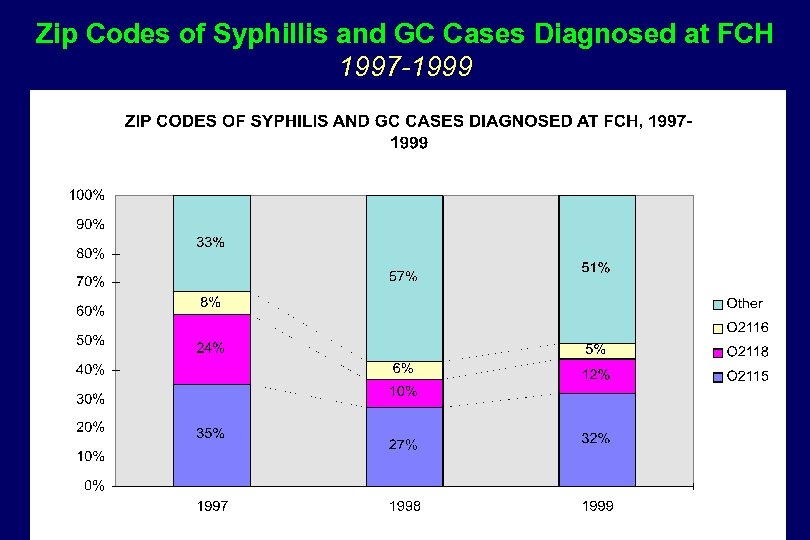 Zip Codes of Syphillis and GC Cases Diagnosed at FCH 1997 -1999
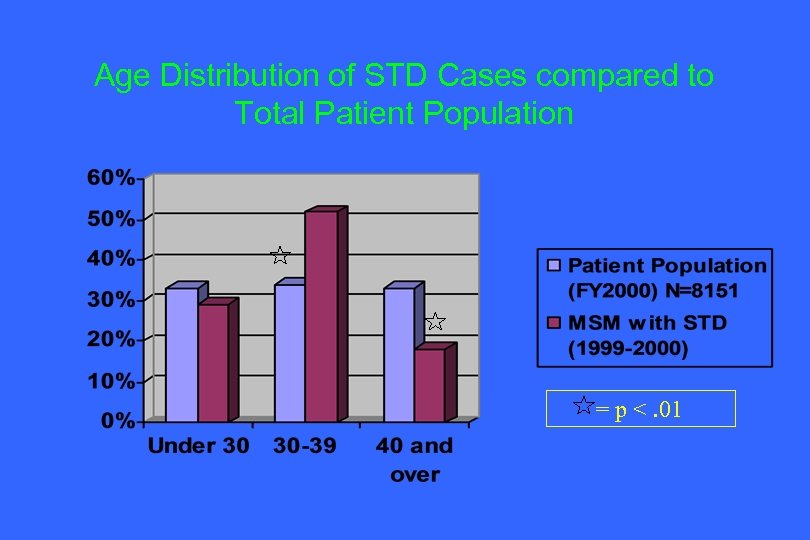 Age Distribution of STD Cases compared to Total Patient Population = p <. 01
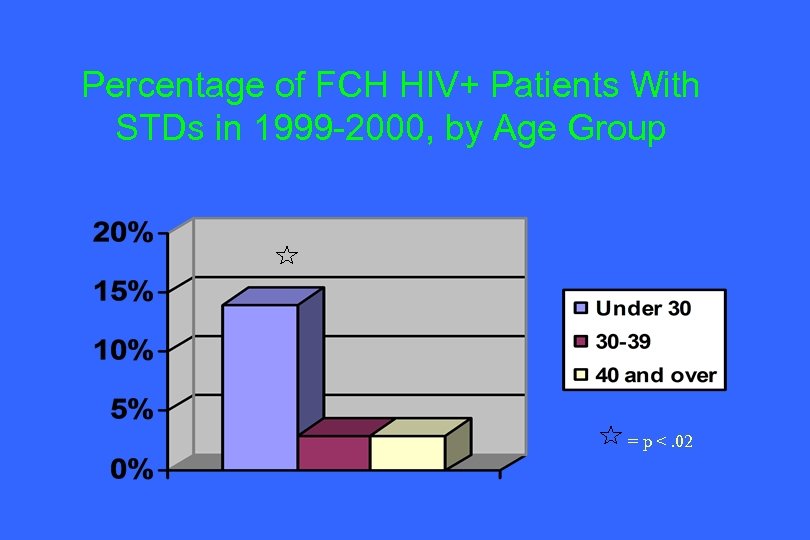 Percentage of FCH HIV+ Patients With STDs in 1999 -2000, by Age Group = p <. 02
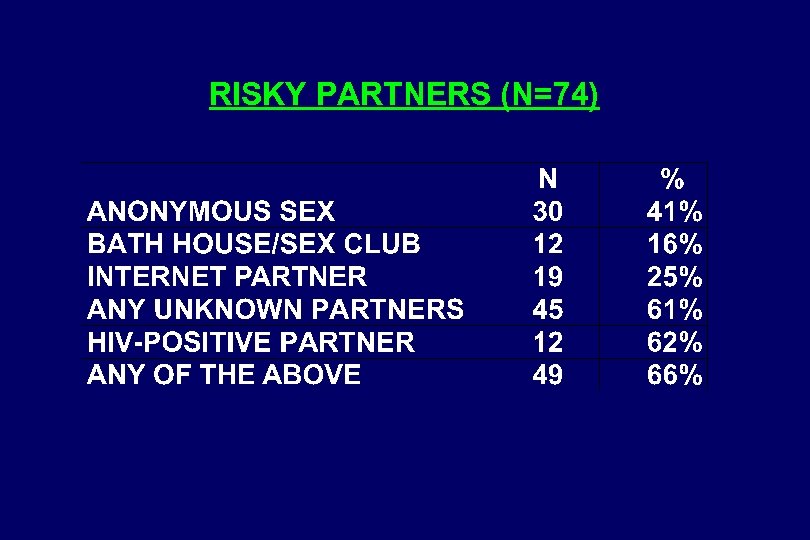 RISKY PARTNERS (N=74)
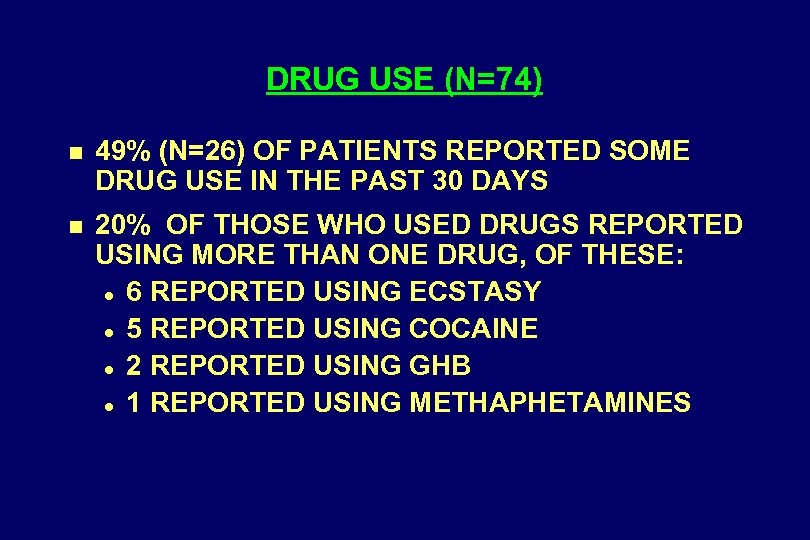 DRUG USE (N=74) n 49% (N=26) OF PATIENTS REPORTED SOME DRUG USE IN THE PAST 30 DAYS n 20% OF THOSE WHO USED DRUGS REPORTED USING MORE THAN ONE DRUG, OF THESE: l 6 REPORTED USING ECSTASY l 5 REPORTED USING COCAINE l 2 REPORTED USING GHB l 1 REPORTED USING METHAPHETAMINES
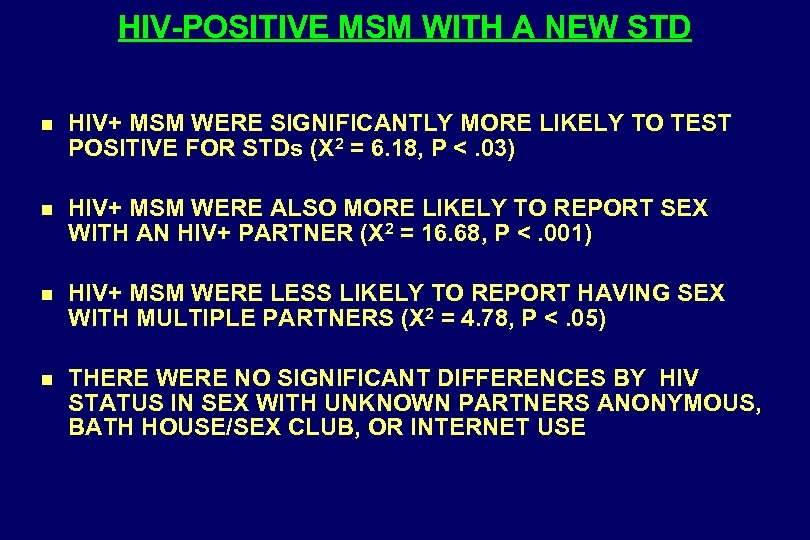 HIV-POSITIVE MSM WITH A NEW STD n HIV+ MSM WERE SIGNIFICANTLY MORE LIKELY TO TEST POSITIVE FOR STDs (X 2 = 6. 18, P <. 03) n HIV+ MSM WERE ALSO MORE LIKELY TO REPORT SEX WITH AN HIV+ PARTNER (X 2 = 16. 68, P <. 001) n HIV+ MSM WERE LESS LIKELY TO REPORT HAVING SEX WITH MULTIPLE PARTNERS (X 2 = 4. 78, P <. 05) n THERE WERE NO SIGNIFICANT DIFFERENCES BY HIV STATUS IN SEX WITH UNKNOWN PARTNERS ANONYMOUS, BATH HOUSE/SEX CLUB, OR INTERNET USE
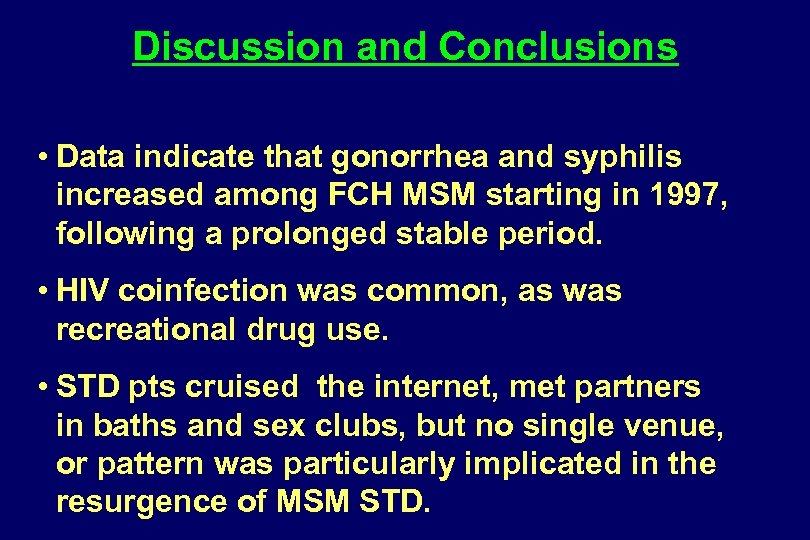 Discussion and Conclusions • Data indicate that gonorrhea and syphilis increased among FCH MSM starting in 1997, following a prolonged stable period. • HIV coinfection was common, as was recreational drug use. • STD pts cruised the internet, met partners in baths and sex clubs, but no single venue, or pattern was particularly implicated in the resurgence of MSM STD.
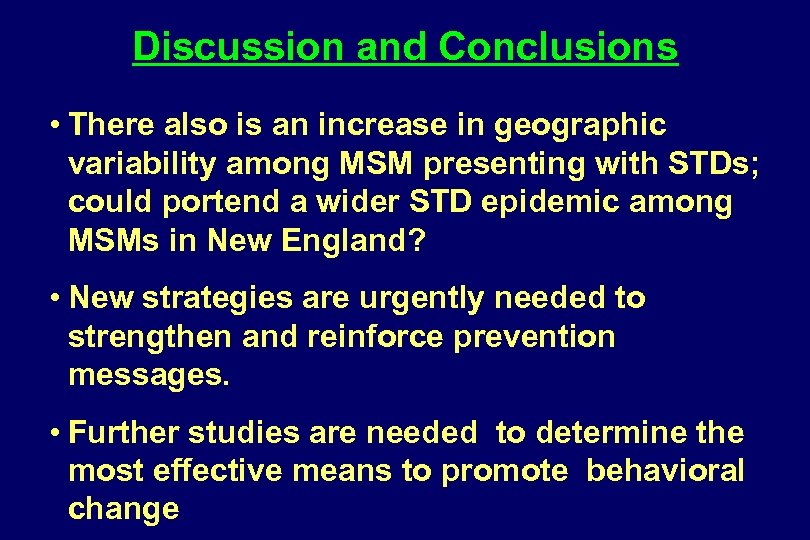 Discussion and Conclusions • There also is an increase in geographic variability among MSM presenting with STDs; could portend a wider STD epidemic among MSMs in New England? • New strategies are urgently needed to strengthen and reinforce prevention messages. • Further studies are needed to determine the most effective means to promote behavioral change
 Acknowledgements Bette Larsen Tom La. Salvia Louise Rice Jonathan Appelbaum Nick Peterson Thanks to Paul Etkind, Abby Averbach, Kevin Cranston and their colleagues in the Massachusetts Department of Public Health for their support