 Скачать презентацию Internet Marketing Web Business Models Do You
f084c666c17a102e53ecd70041659ca6.ppt
- Количество слайдов: 26



Internet Marketing Web Business Models
Do You Yahoo? • For 50% of US Web users: YES!!! • A phenomenal Silicon Valley success story • Yahoo! brand extensions provide value add for users – – – Yahoo! Yahoo! games clubs chat auctions Stores • Yahoo! leverages its brand ability to draw traffic to generate multiple revenue streams
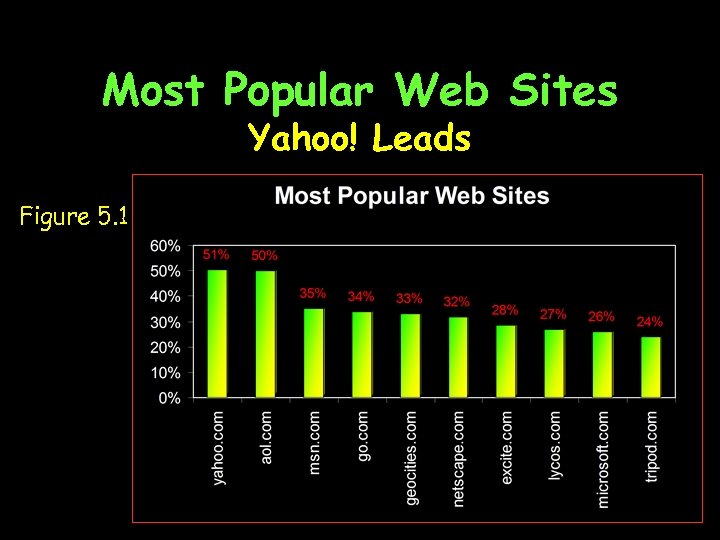
Most Popular Web Sites Yahoo! Leads Figure 5. 1
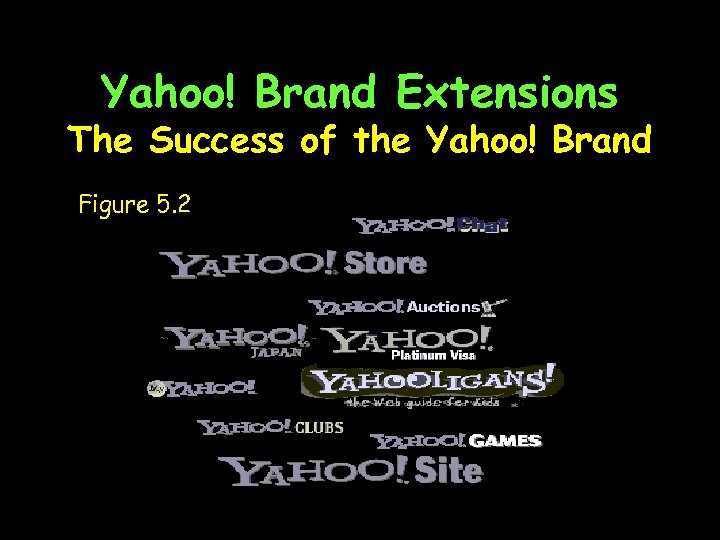
Yahoo! Brand Extensions The Success of the Yahoo! Brand Figure 5. 2
Topics • Web benefits to firms • Closed loop marketing
Web Benefits to Firms • The range of Web benefits – Business models can be based on improvements in product or service – Business models can be based directly on generating revenue • Let’s take a closer look at these broad classes of business models
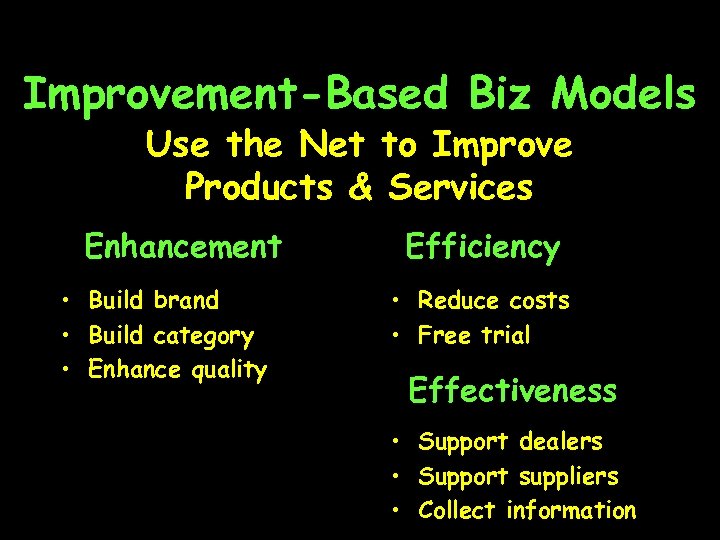
Improvement-Based Biz Models Use the Net to Improve Products & Services Enhancement • Build brand • Build category • Enhance quality Efficiency • Reduce costs • Free trial Effectiveness • Support dealers • Support suppliers • Collect information
Before We Look at Revenue-Based Biz Models Let’s Take A Look At Some Recent Headlines
Headline Name of Publication - Date Insert excerpts from a current article out of the business press (e. g. Wall Street Journal, Wired News, Business 2. 0, or Fast Company) that profiles a company and its business model. I usually take excerpts out of the lead paragraph, and highlight keywords. I’ve found articles on the accumulating losses of a number of e-tailers that provide an interesting introduction to the subject of making money on the Web.
Revenue-Based Biz Models Use the Net to Make Money Provider Pays • • • Sponsorship Alliances Banner advertising Prospect fees Sales commissions
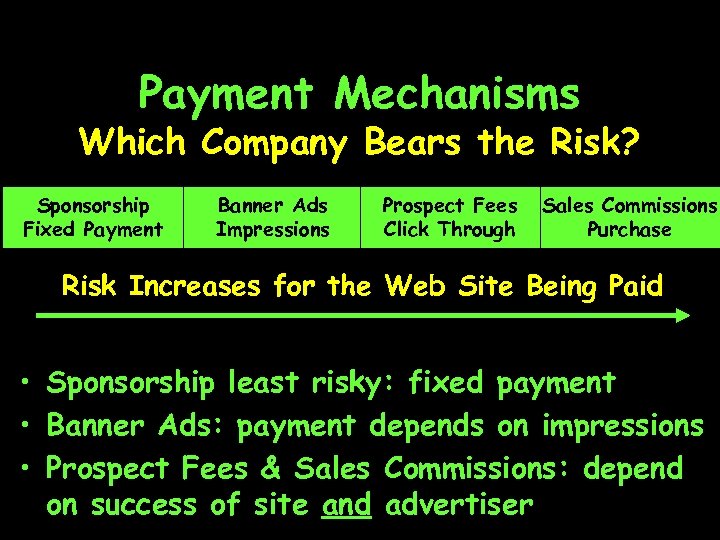
Payment Mechanisms Which Company Bears the Risk? Sponsorship Fixed Payment Banner Ads Impressions Prospect Fees Click Through Sales Commissions Purchase Risk Increases for the Web Site Being Paid • Sponsorship least risky: fixed payment • Banner Ads: payment depends on impressions • Prospect Fees & Sales Commissions: depend on success of site and advertiser
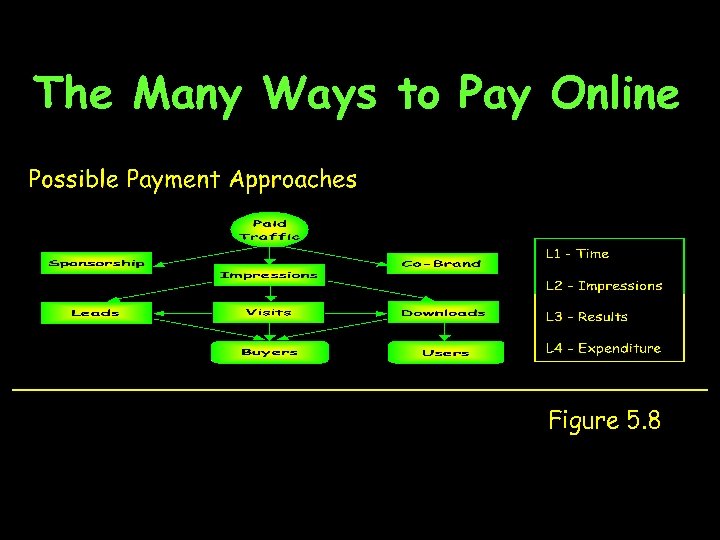
The Many Ways to Pay Online Figure 5. 8
Bargaining Power Determines Who Bears Risk • Powerful sites shift risk to advertisers and demand sponsorships • Powerful advertisers demand accountability and negotiate for prospect fees of a share of transaction revenue
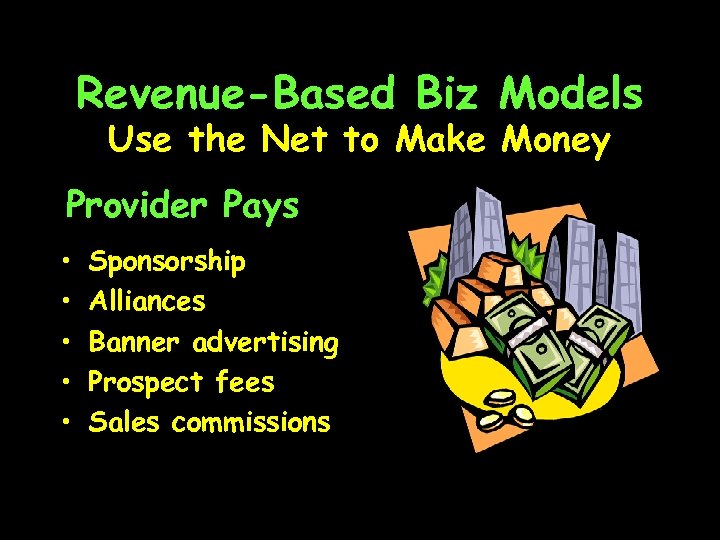
Revenue-Based Biz Models Use the Net to Make Money Provider Pays Customer Pays • • • Sponsorship Alliances Banner advertising Prospect fees Sales commissions Product sales Pay-per-use Subscriptions Bundle sales
Building Value Bundles via Alliances • The Internet makes it easy to bring a wide range of resources together on a single site • Fast, cheap way to build a product or service offering (whole product) • A visit to any search engine illustrates Note: At this point in the lecture, it’s helpful to go to one of the major portals and identify sponsorships, alliances, affiliates, advertisers
Alliances A Marketing Challenge • Screen real-estate: – how big will my logo be? – where will it appear? – exclusive deal? • Revenue sharing • The deal you can make depends on the bargaining position of each partner
Q: Are these Biz Models mutually exclusive? No • Companies try to generate revenues any way they can • Multiple revenue models are combined on the same site
Closed Loop Marketing • Marketing is closed loop when specific customer responses to specific marketing actions can be tracked – For example: if an online ad encourages Web site registration, the campaign is closed loop if users can be tracked from ad exposure to the decision to register • Closed loop marketing leads to rapid learning – Marketers can experiment with prices, ad copy, and product features on selected samples of consumers
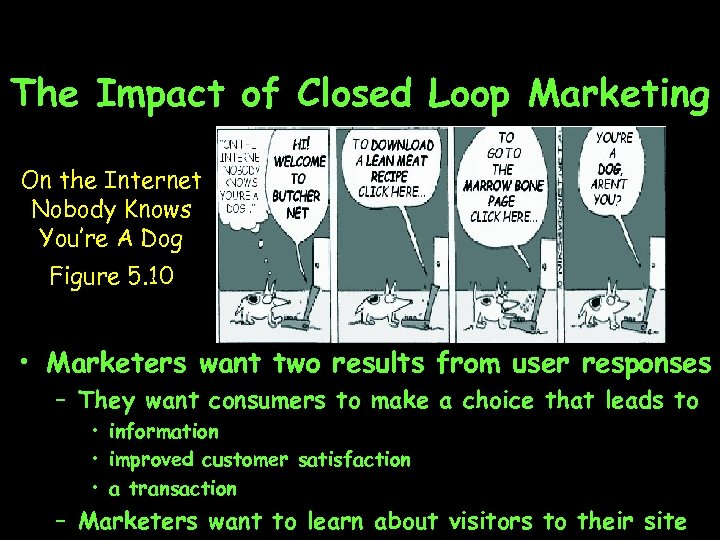
The Impact of Closed Loop Marketing On the Internet Nobody Knows You’re A Dog Figure 5. 10 • Marketers want two results from user responses – They want consumers to make a choice that leads to • information • improved customer satisfaction • a transaction – Marketers want to learn about visitors to their site
Web Chains • A Web chain is a click sequence – Can be as short as a single click – Can be as long as all possible choices on a Web site • Decision points = event nodes • Ending point = result node • Common Web chain starting points – Company homepage – Search engine or portal – Banner ads
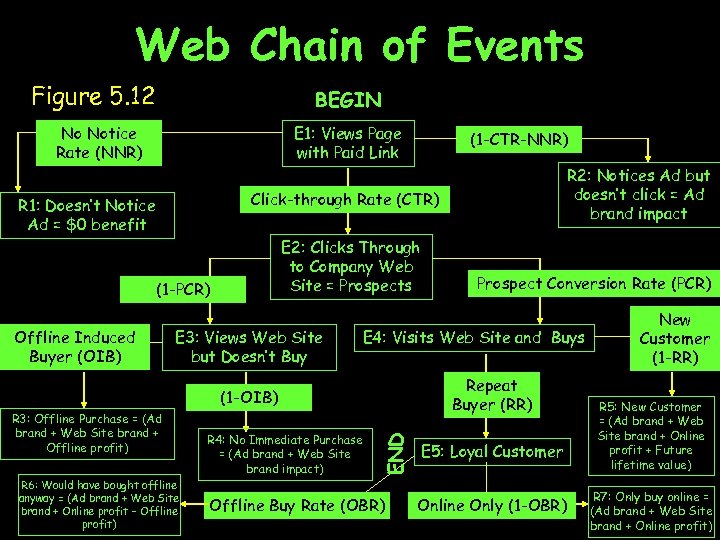
Web Chain of Events Figure 5. 12 BEGIN No Notice Rate (NNR) E 1: Views Page with Paid Link (1 -CTR-NNR) R 2: Notices Ad but doesn’t click = Ad brand impact Click-through Rate (CTR) R 1: Doesn’t Notice Ad = $0 benefit E 2: Clicks Through to Company Web Site = Prospects (1 -PCR) Offline Induced Buyer (OIB) E 3: Views Web Site but Doesn’t Buy E 4: Visits Web Site and Buys Repeat Buyer (RR) R 6: Would have bought offline anyway = (Ad brand + Web Site brand + Online profit – Offline profit) R 4: No Immediate Purchase = (Ad brand + Web Site brand impact) END (1 -OIB) R 3: Offline Purchase = (Ad brand + Web Site brand + Offline profit) Prospect Conversion Rate (PCR) Offline Buy Rate (OBR) E 5: Loyal Customer Online Only (1 -OBR) New Customer (1 -RR) R 5: New Customer = (Ad brand + Web Site brand + Online profit + Future lifetime value) R 7: Only buy online = (Ad brand + Web Site brand + Online profit)
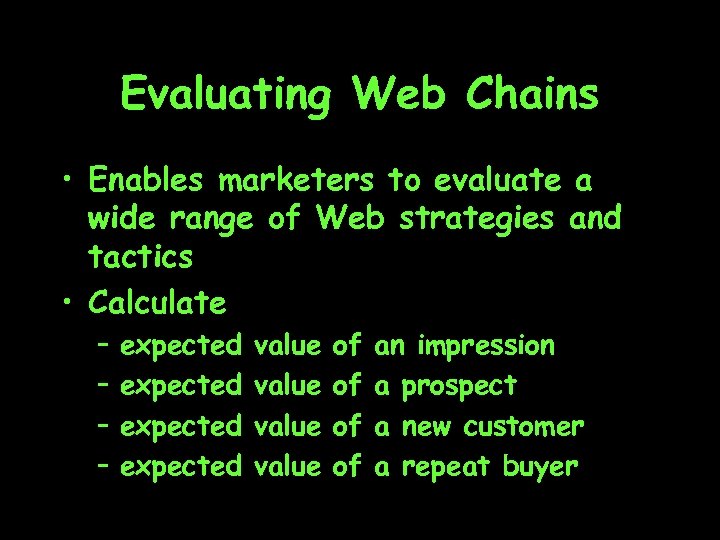
Evaluating Web Chains • Enables marketers to evaluate a wide range of Web strategies and tactics • Calculate – – expected value of of an impression a prospect a new customer a repeat buyer
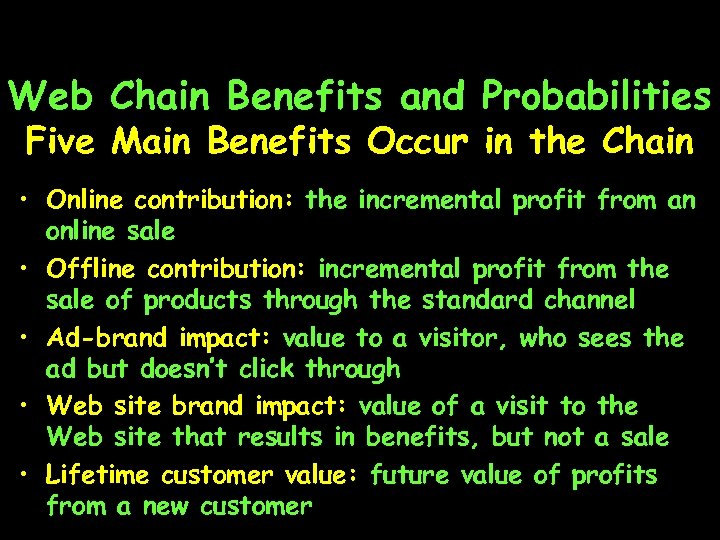
Web Chain Benefits and Probabilities Five Main Benefits Occur in the Chain • Online contribution: the incremental profit from an online sale • Offline contribution: incremental profit from the sale of products through the standard channel • Ad-brand impact: value to a visitor, who sees the ad but doesn’t click through • Web site brand impact: value of a visit to the Web site that results in benefits, but not a sale • Lifetime customer value: future value of profits from a new customer
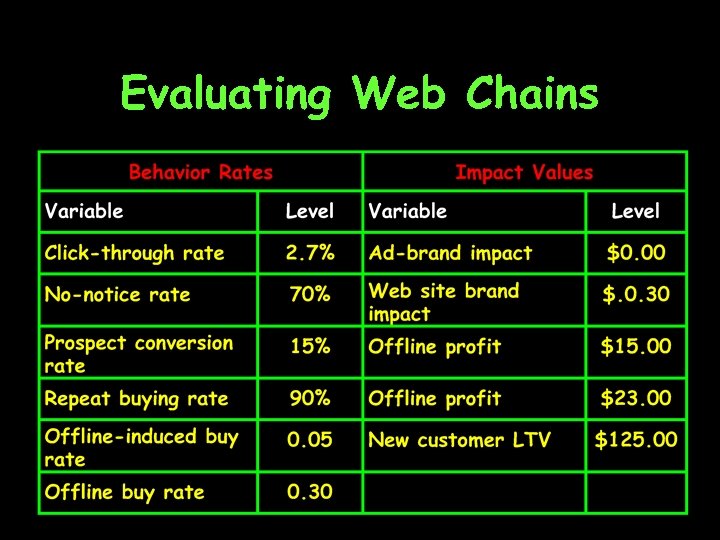
Evaluating Web Chains
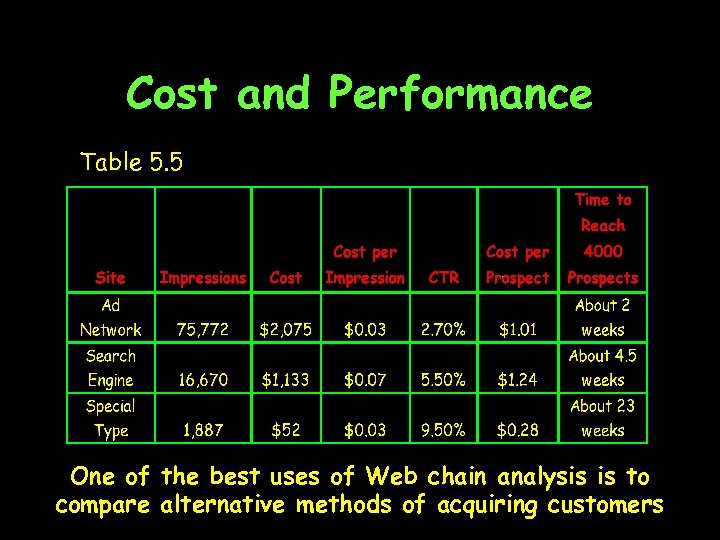
Cost and Performance Table 5. 5 One of the best uses of Web chain analysis is to compare alternative methods of acquiring customers
From Web Chains to Closed Loops • There’s a strong connection between Web chains and closed-loop marketing • A Web chain is closed loop if – the chain extends from the marketing offer to the desired marketing response – Each step is trackable • The Internet can be used to close the loop on traditional media advertising if unique identifiers are included with the ad – Dell newspaper ads contain a unique code
Скачать презентацию Internet Marketing Web Business Models Do You
f084c666c17a102e53ecd70041659ca6.ppt