 Скачать презентацию Internationalization Powered by Local Coordination Glocal — But
e4f0ea13a323f4a4e0e7452d13d15e50.ppt
- Количество слайдов: 46



Internationalization Powered by Local Coordination: Glocal - But How? - International Perspectives -
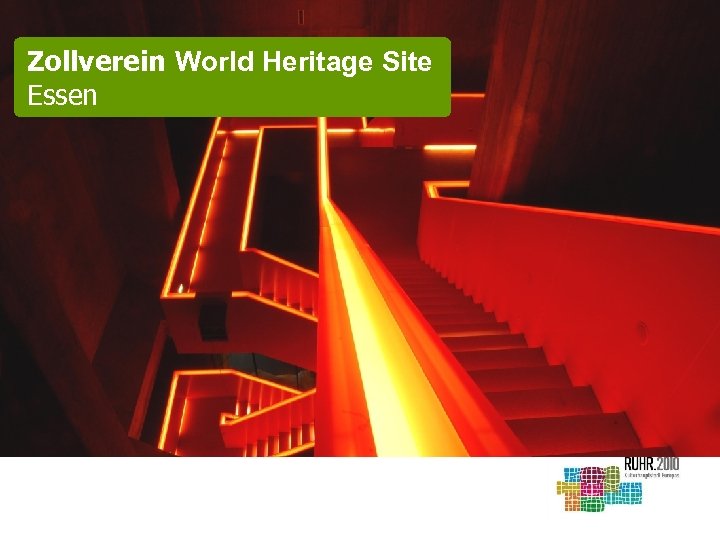
Zollverein World Heritage Site Essen
Topics I. Value of Goods II. Ruhr Metropolis as Case-Study III. Key-Findings on Governance
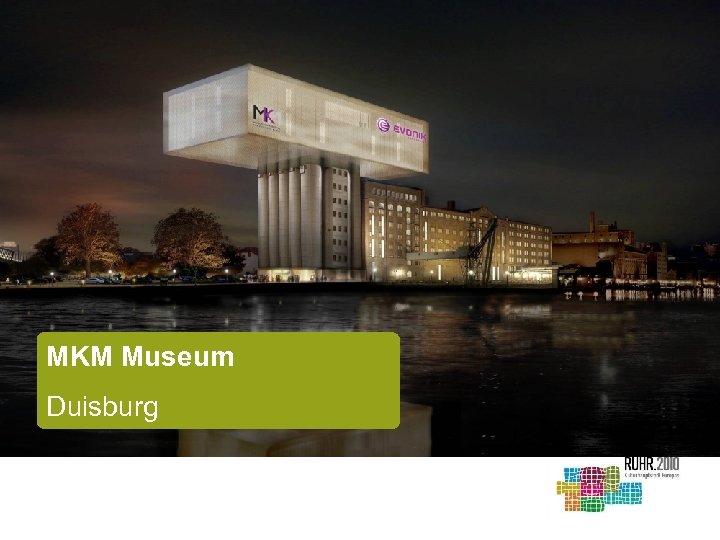
MKM Museum Duisburg
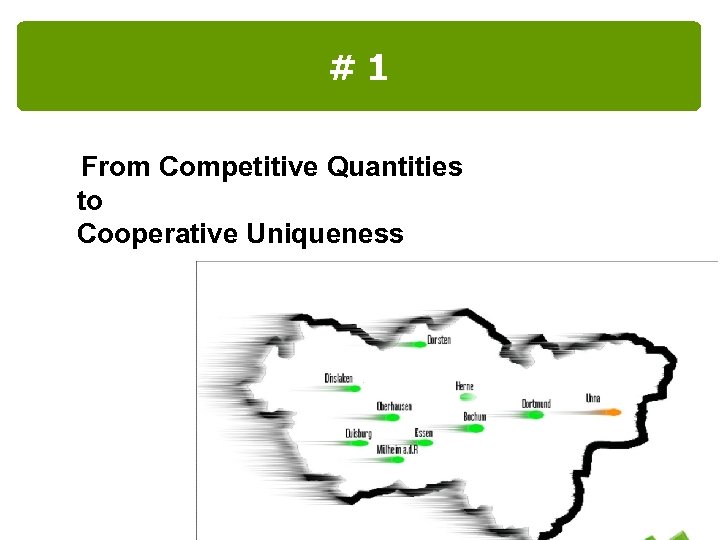
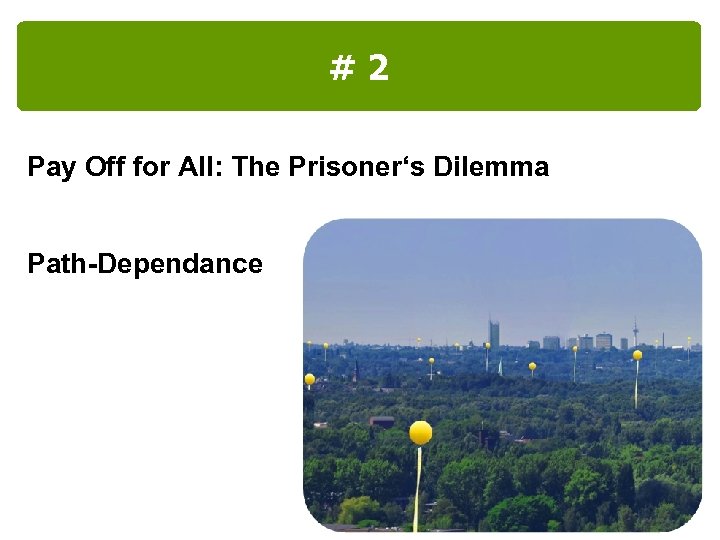
Details I. Value of Goods II. Ruhr Metropolis as Case-Study Developing a Sustainable Strategy Implementing a Coordination Process Realizing Projects Communicating Attractiveness III. Key-Findings on Governance From Competitive Quantities to Cooperative Uniqueness Pay Off for All: The Prisoners Dilemma Path-Dependence-Strategies Managing Skills and Time
The Setting 2010
Europe’s Creative Drivers • • • With the beginning of the 21 st century, Europe’s society, culture and economy entered a second digital revolution – an evolution from an industrial society into a knowledge-based society. Creativity and innovation are increasingly appreciated as independent resources for economic growth, alongside the “classics” land, work force and finance. According to the EU Commission, creative economy became third strongest economic branch in many states of Europe in 2007. In Germany, the first official statistic evaluation of the creative industries was published by the Federal Ministry of Economics in 2009. The cities of Europe are competing for the creative industries: Amsterdam, Barcelona, Istanbul, Milan, London, Berlin – and now the Metropolis Ruhr. The Capitals of Culture embrace the suggestion of RUHR. 2010: they cooperate with 2010 LAB. tv and become attractive partners and communicators in their countries.
Potential: First Mover • Many small businesses do not take advantage of the opportunities presented by the Single European Market, a fact identified as one of the main obstacles for the growth of the creative economy by the EU Commission in 2008. • Within the Single European Market there is as yet no yearly market place representing the creative industries: in this area, the market has failed; demand supply do not find each other or only at high costs. • The EU Commission, DG Enterprise, will start a support programme.
Value of Goods
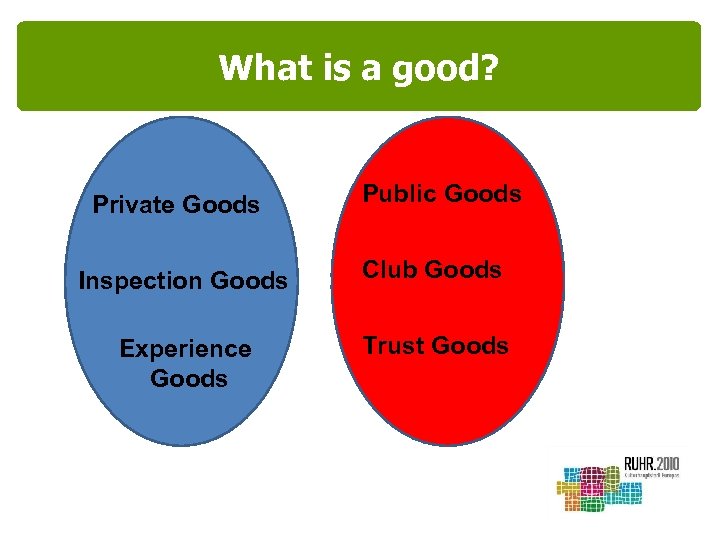
What is a good? Private Goods Public Goods Inspection Goods Club Goods Experience Goods Trust Goods
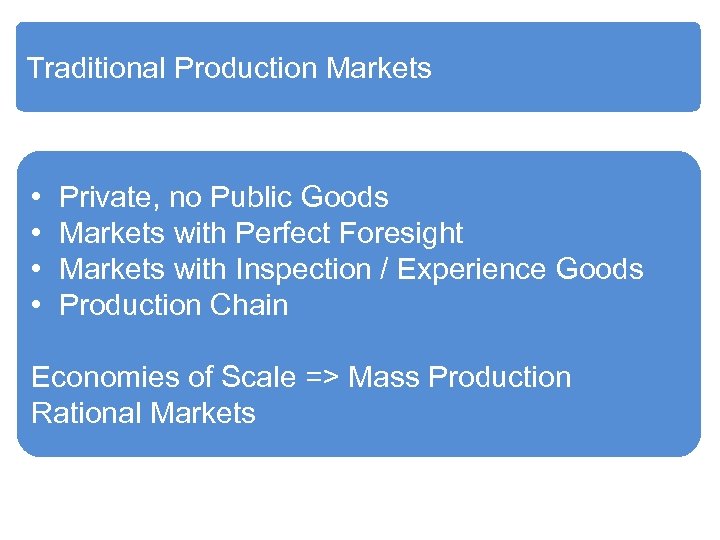
Traditional Production Markets • • Private, no Public Goods Markets with Perfect Foresight Markets with Inspection / Experience Goods Production Chain Creating External Positive Effects Economies of Scale => Mass Production Rational Markets
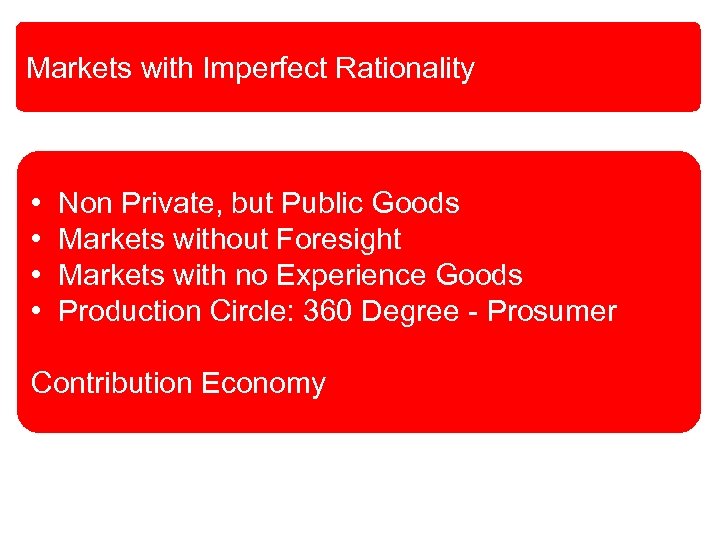
Markets with Imperfect Rationality • • Non Private, but Public Goods Markets without Foresight Markets with no Experience Goods Production Circle: 360 Degree - Prosumer Creating External Positive Effects Contribution Economy
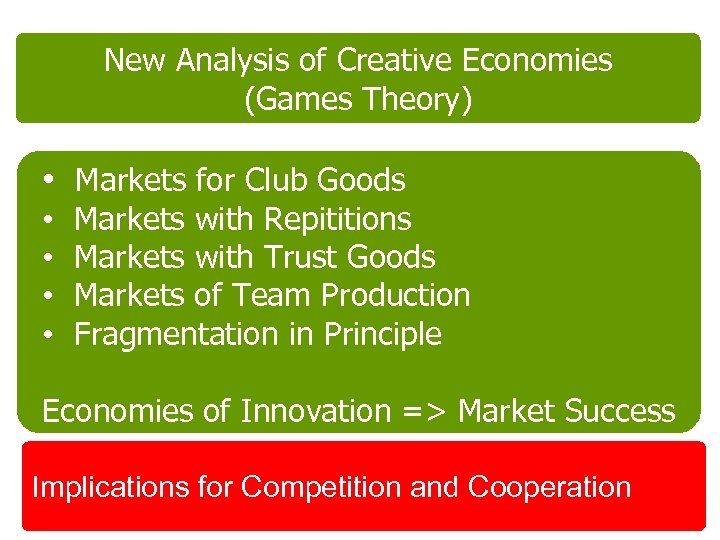
New Analysis of Creative Economies (Games Theory) • Markets for Club Goods • • Markets with Repititions Markets with Trust Goods Markets of Team Production Fragmentation in Principle Creating External Positive Effects Economies of Innovation => Market Success Implications for Competition and Cooperation
Facts and Numbers
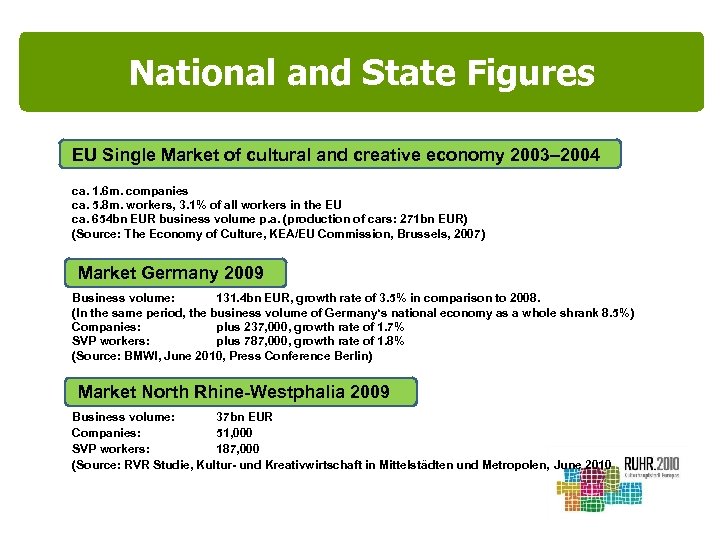
National and State Figures EU Single Market of cultural and creative economy 2003– 2004 ca. 1. 6 m. companies ca. 5. 8 m. workers, 3. 1% of all workers in the EU ca. 654 bn EUR business volume p. a. (production of cars: 271 bn EUR) (Source: The Economy of Culture, KEA/EU Commission, Brussels, 2007) Market Germany 2009 Business volume: 131. 4 bn EUR, growth rate of 3. 5% in comparison to 2008. (In the same period, the business volume of Germany‘s national economy as a whole shrank 8. 5%) Companies: plus 237, 000, growth rate of 1. 7% SVP workers: plus 787, 000, growth rate of 1. 8% (Source: BMWI, June 2010, Press Conference Berlin) Market North Rhine-Westphalia 2009 Business volume: 37 bn EUR Companies: 51, 000 SVP workers: 187, 000 (Source: RVR Studie, Kultur- und Kreativwirtschaft in Mittelstädten und Metropolen, June 2010
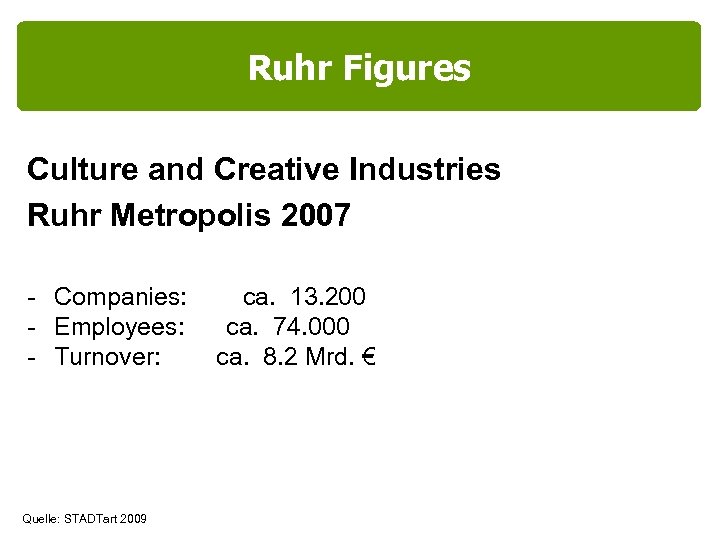
Ruhr Figures Culture and Creative Industries Ruhr Metropolis 2007 - Companies: - Employees: - Turnover: Quelle: STADTart 2009 ca. 13. 200 ca. 74. 000 ca. 8. 2 Mrd. €
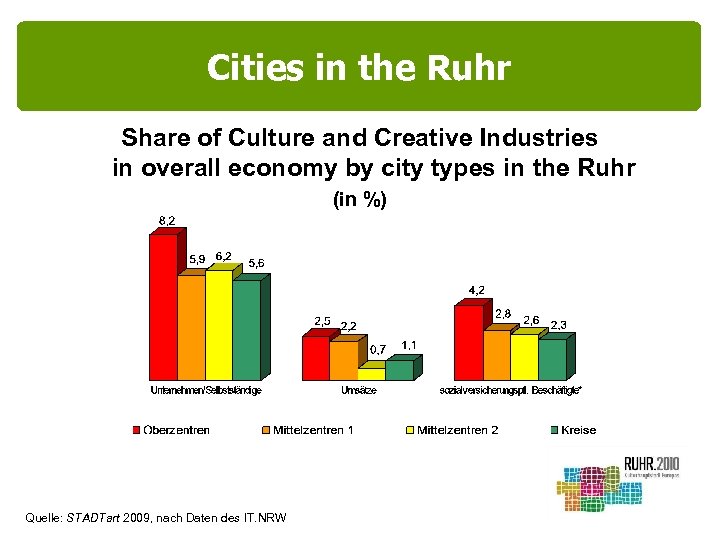
Cities und Fakten in the Ruhr Daten Share of Culture and Creative Industries in overall economy by city types in the Ruhr (in %) Quelle: STADTart 2009, nach Daten des IT. NRW
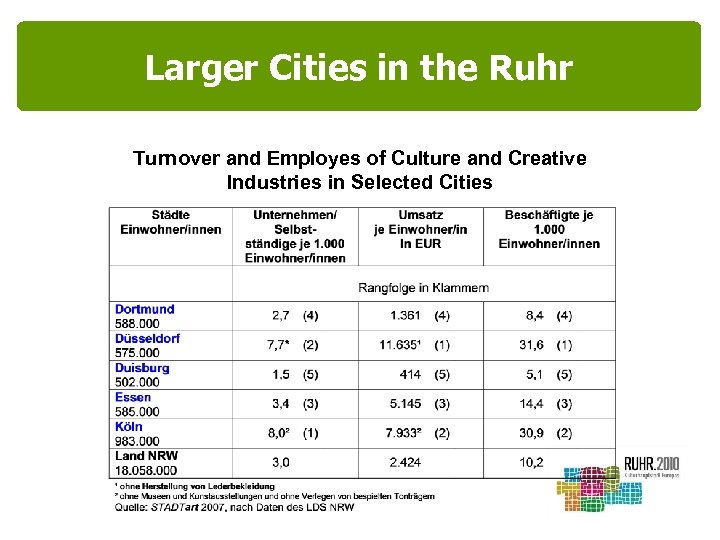
Larger Cities in the Ruhr Daten und Fakten Turnover and Employes of Culture and Creative Industries in Selected Cities
Ruhr Metropolis as Case-Study
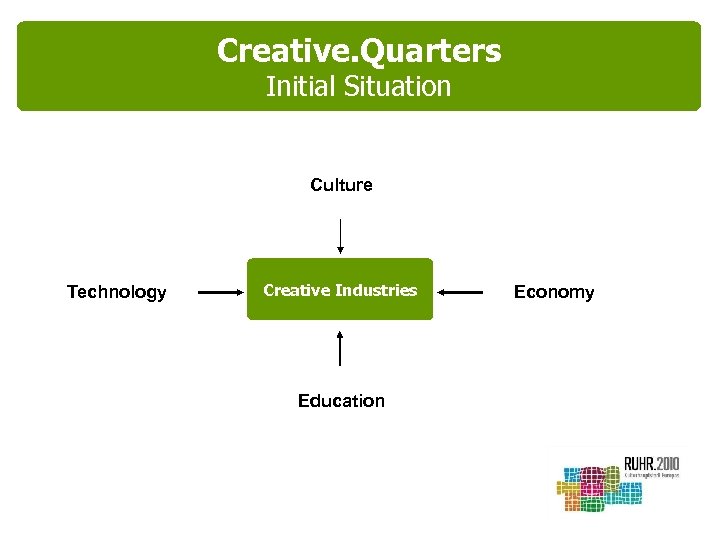
Creative. Quarters Initial Situation Culture Technology Creative Industries Education Economy
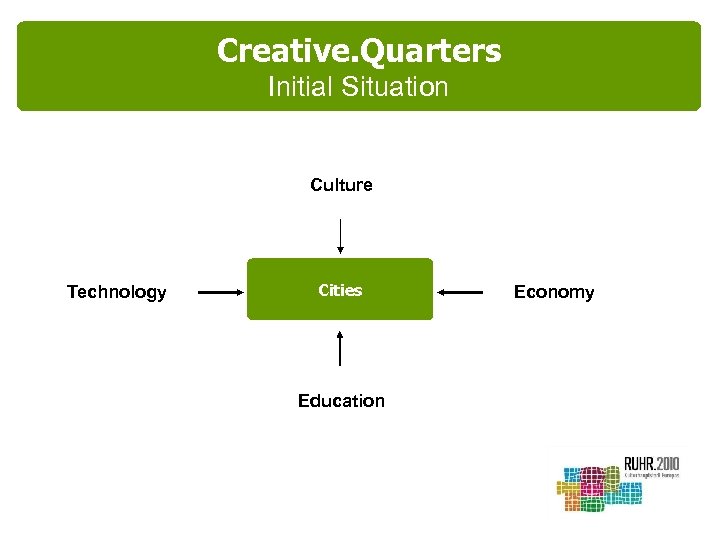
Creative. Quarters Initial Situation Culture Technology Cities Education Economy
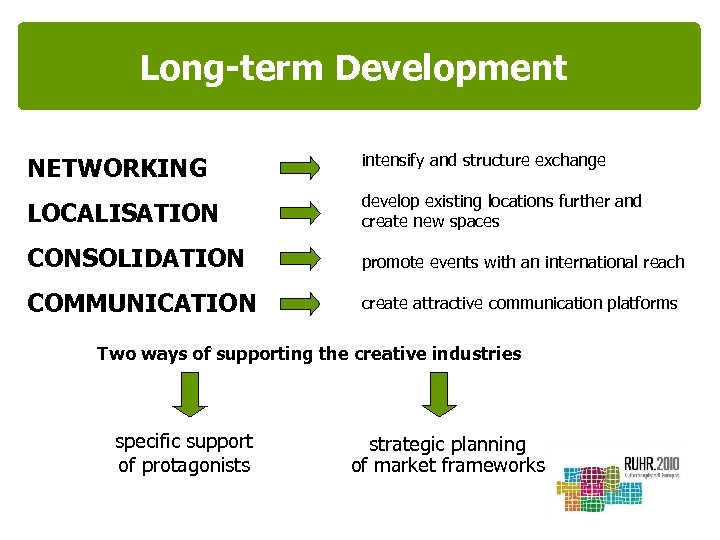
Long-term Development NETWORKING intensify and structure exchange LOCALISATION develop existing locations further and create new spaces CONSOLIDATION promote events with an international reach COMMUNICATION create attractive communication platforms Two ways of supporting the creative industries specific support of protagonists strategic planning of market frameworks
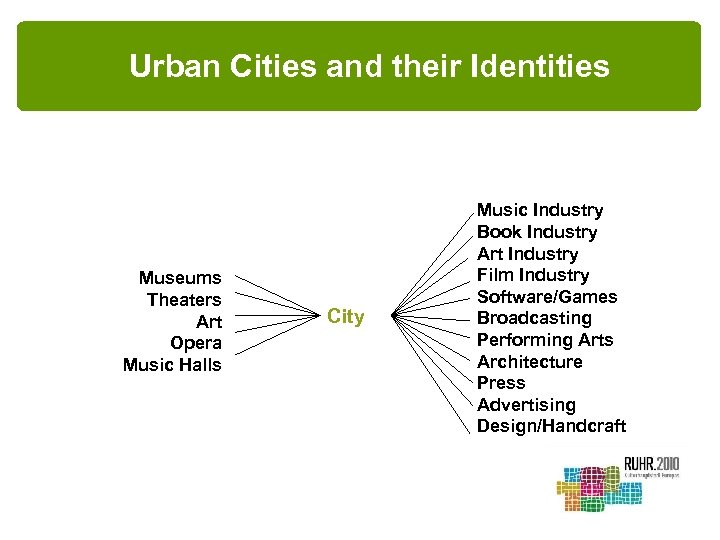
Urban Cities and their Identities Museums Theaters Art Opera Music Halls City Music Industry Book Industry Art Industry Film Industry Software/Games Broadcasting Performing Arts Architecture Press Advertising Design/Handcraft
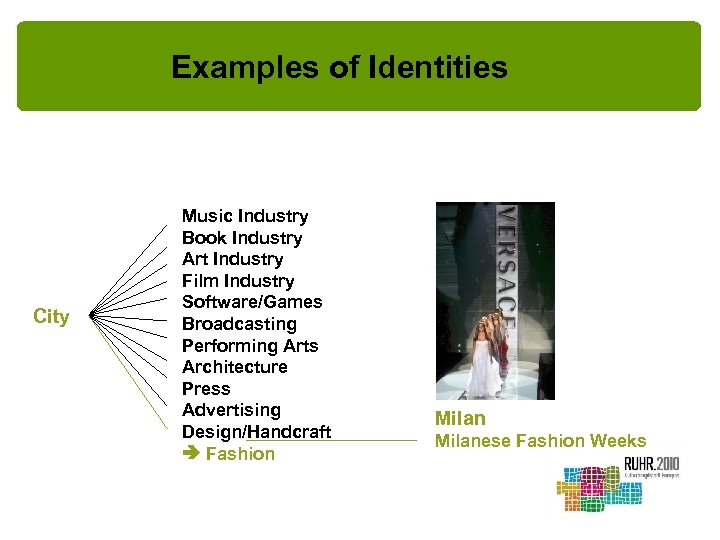
Examples of Identities City Music Industry Book Industry Art Industry Film Industry Software/Games Broadcasting Performing Arts Architecture Press Advertising Design/Handcraft Fashion Milanese Fashion Weeks
NETWORKING Commissions ecce established 5 branch commissions: • central points of contact for local creative people • pass on their interests and ideas to the right addressees Ruhr Music Commission Ruhr Games Commission Ruhr Design Commission Ruhr Film Commission Ruhr
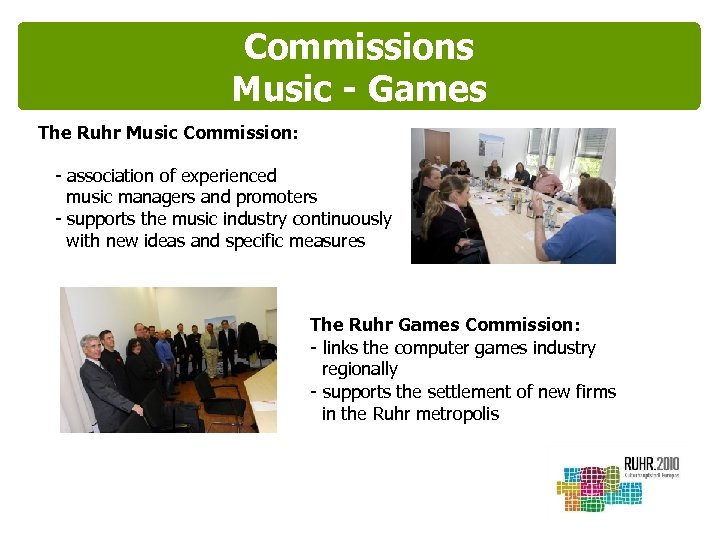
Commissions Music - Games The Ruhr Music Commission: - association of experienced music managers and promoters - supports the music industry continuously with new ideas and specific measures The Ruhr Games Commission: - links the computer games industry regionally - supports the settlement of new firms in the Ruhr metropolis
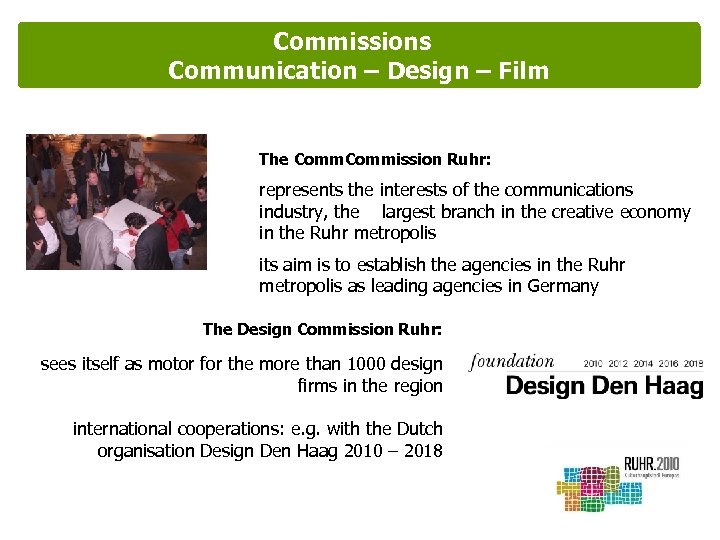
Commissions Communication – Design – Film The Commission Ruhr: represents the interests of the communications industry, the largest branch in the creative economy in the Ruhr metropolis its aim is to establish the agencies in the Ruhr metropolis as leading agencies in Germany The Design Commission Ruhr: sees itself as motor for the more than 1000 design firms in the region international cooperations: e. g. with the Dutch organisation Design Den Haag 2010 – 2018
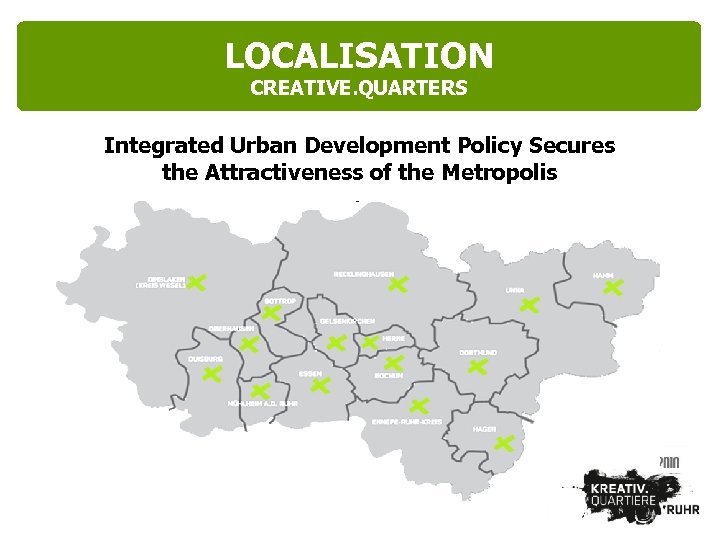
LOCALISATION CREATIVE. QUARTERS Integrated Urban Development Policy Secures the Attractiveness of the Metropolis
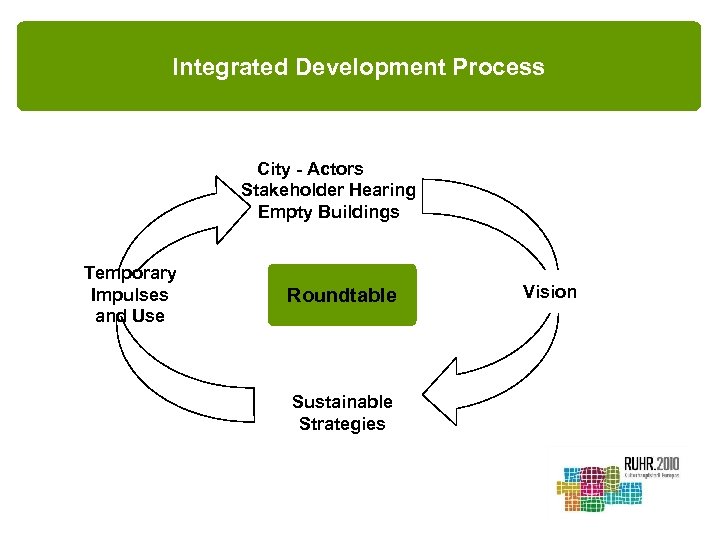
Integrated Development Process City - Actors Stakeholder Hearing Empty Buildings Temporary Impulses and Use Roundtable Sustainable Strategies Vision
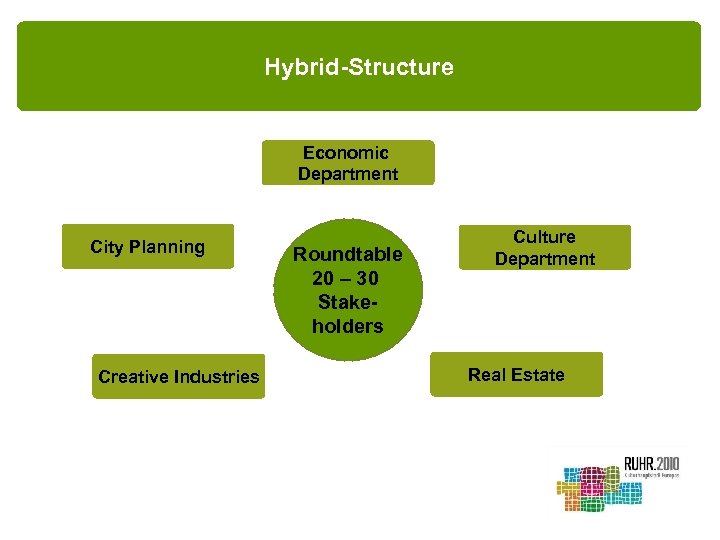
Hybrid-Structure Economic Department City Planning Creative Industries Roundtable 20 – 30 Stakeholders Culture Department Real Estate
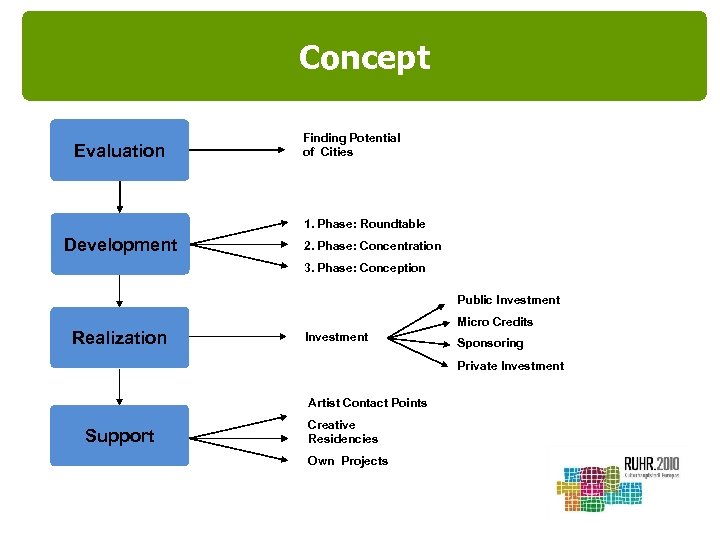
Concept Evaluation Finding Potential of Cities 1. Phase: Roundtable Development 2. Phase: Concentration 3. Phase: Conception Public Investment Realization Micro Credits Investment Sponsoring Private Investment Artist Contact Points Support Creative Residencies Own Projects
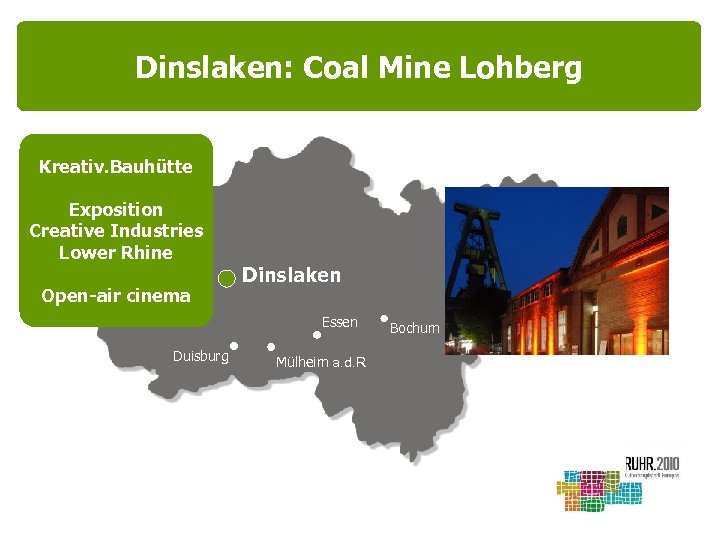
Dinslaken: Coal Mine Lohberg Kreativ. Bauhütte Exposition Creative Industries Lower Rhine Open-air cinema Dinslaken Essen Duisburg Mülheim a. d. R Dortmund Bochum
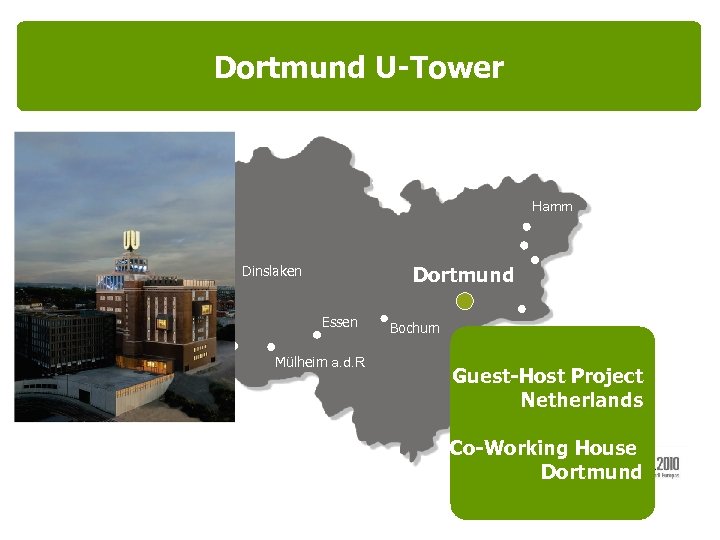
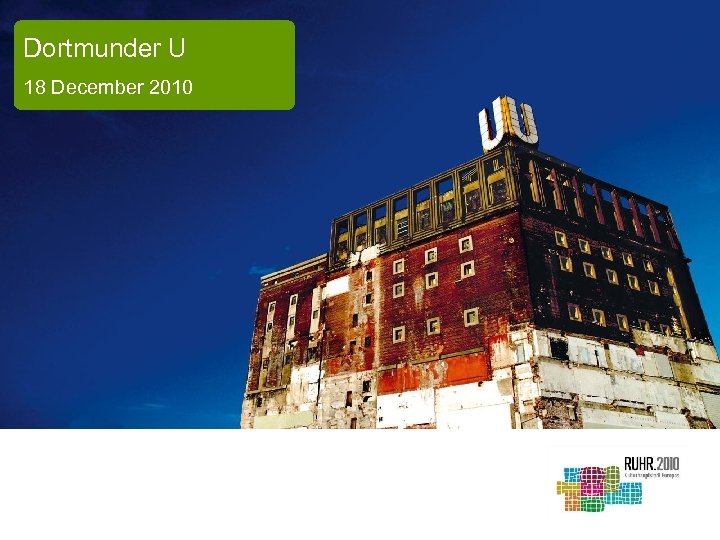
Dortmund U-Tower Hamm Dortmund Dinslaken Essen Duisburg Mülheim a. d. R Unna Bochum Hagen Guest-Host Project Netherlands Co-Working House Dortmund
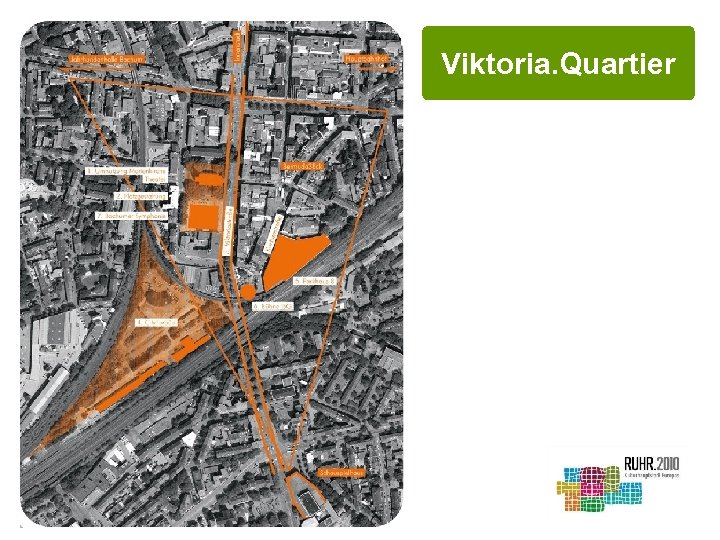
Viktoria. Quartier
COMMUNICATION The first Web. TV for the Creative Economy and Creative Cities of Europe 1. 320 Blogs 500 Videos 125 Podcasts 6 City Channels in Europe
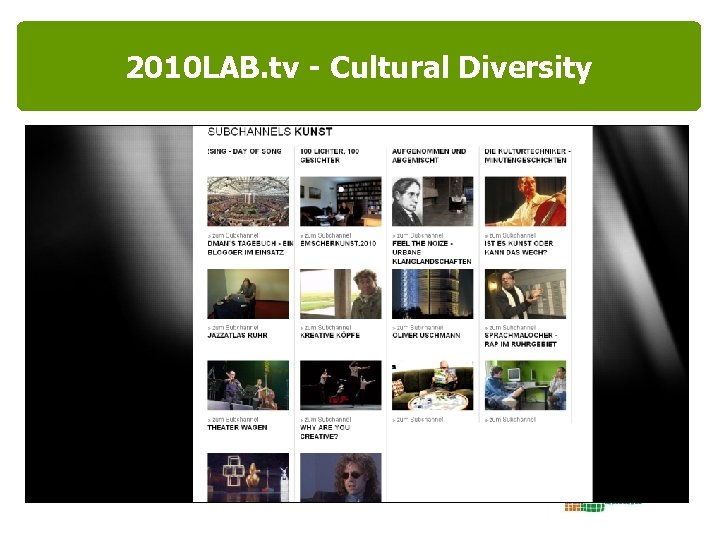
2010 LAB. tv - Cultural Diversity
2010 LAB. tv – The Top of the Market • Interviews on video: Bobby Mc. Ferrin, Richard Florida, José Barroso, Nina Hagen, Danny Boyle, Bernard Stiegler, Charles Landry, Peter Sloterdijk… • Bestselling author: Oliver Uschmann on his own channel • Film series: Palme d‘Or Winner Hermann Vaske: “Why are you creative? ” Steven Spielberg, David Bowie, Franz Beckenbauer, … • „recorded and remixed“: Music in the Ruhr Area with The Killians, Helge Schneider, …
european centre for creative economy ecce – institute Dortmund
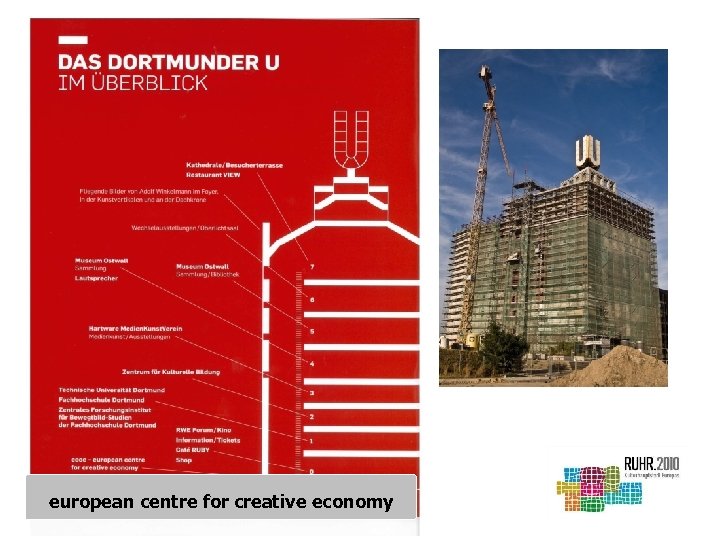
european centre for creative economy
Concept european centre for creative economy • Institute of RUHR. 2010 Gmb. H • based at the Dortmund U - Centre for Art and Creativity • strengthens and develops the CI on a local, national and international level • promotes cross-disciplinary interaction • develops sustainable supporting structures • helps the sectors of culture, business, art, technology, urban development and education develop strategically
Dortmunder U 18 December 2010
Key Findings
#1 From Competitive Quantities to Cooperative Uniqueness
#2 Pay Off for All: The Prisoner‘s Dilemma Path-Dependance
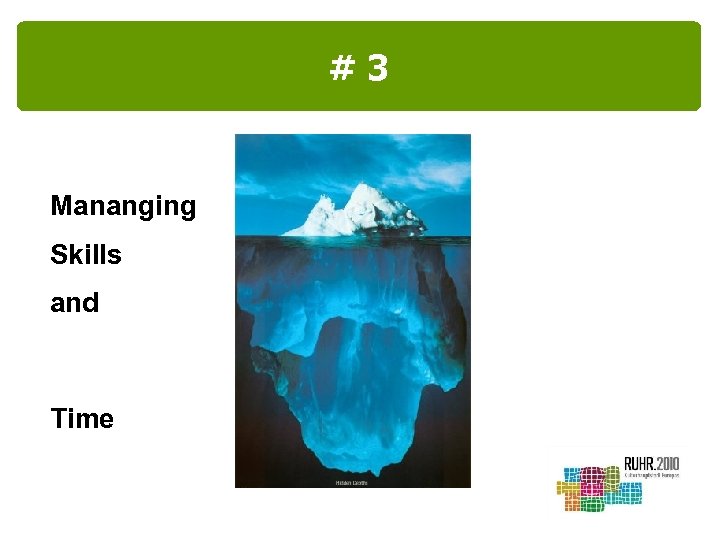
#3 Mananging Skills and Time
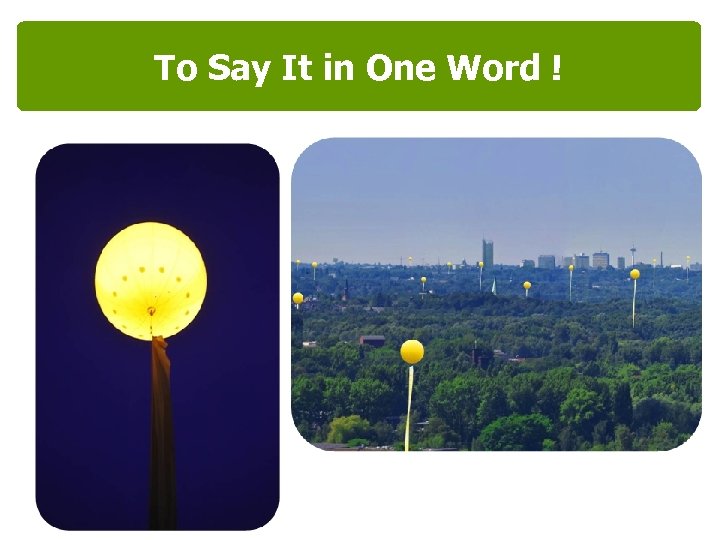
To Say It in One Word !
Скачать презентацию Internationalization Powered by Local Coordination Glocal — But
e4f0ea13a323f4a4e0e7452d13d15e50.ppt