Скачать презентацию Internationalisation is Requisite for the Innovative Development of
e11e2890148cb91005e96a6c0a6ff999.ppt
- Количество слайдов: 28
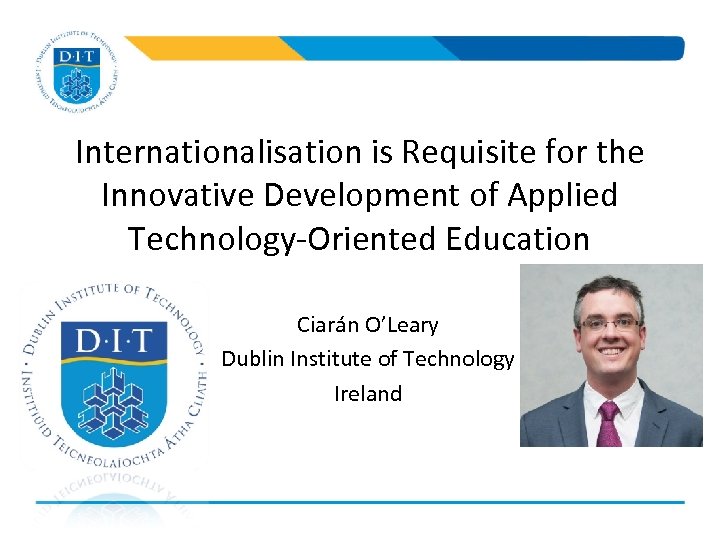 Internationalisation is Requisite for the Innovative Development of Applied Technology-Oriented Education Ciarán O’Leary Dublin Institute of Technology Ireland
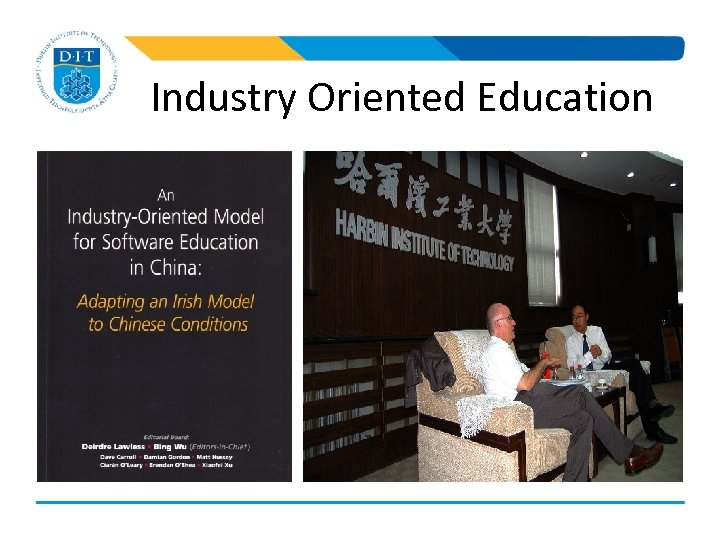 Industry Oriented Education
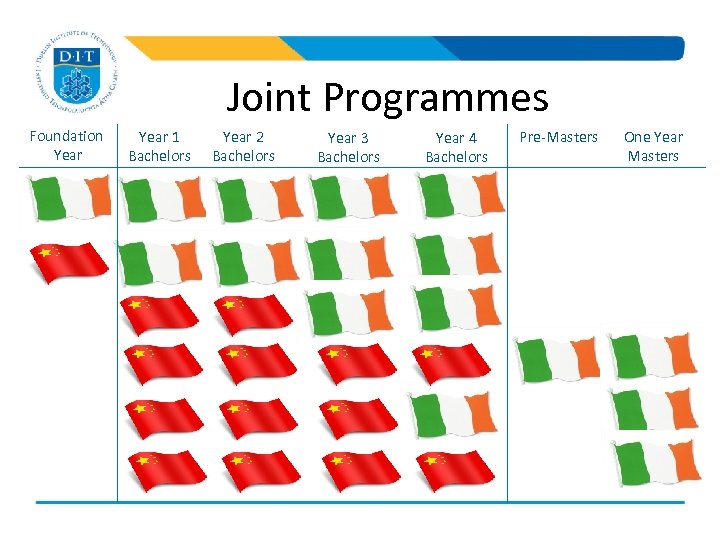 Joint Programmes Foundation Year 1 Bachelors Year 2 Bachelors Year 3 Bachelors Year 4 Bachelors Pre-Masters One Year Masters
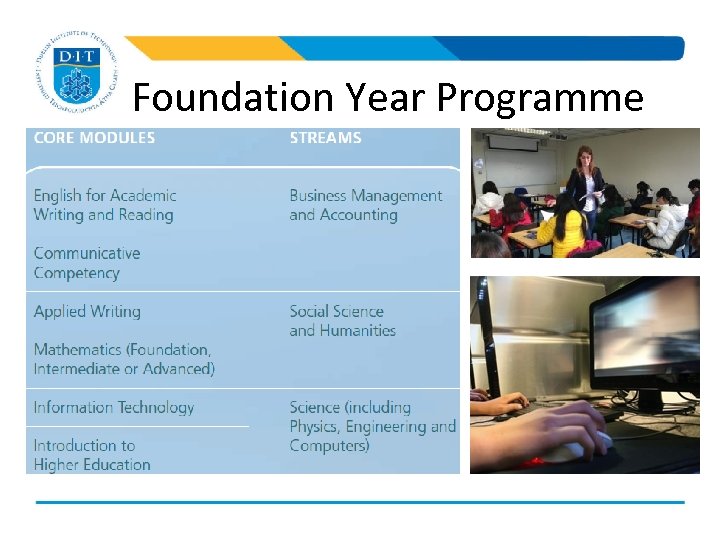 Foundation Year Programme
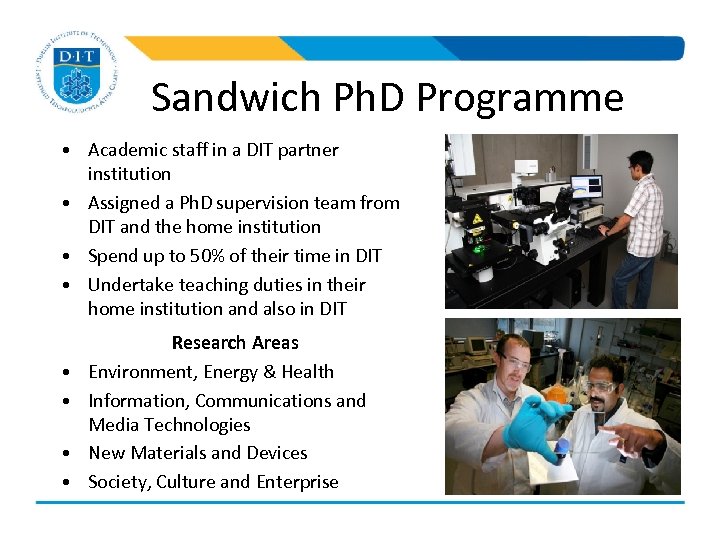 Sandwich Ph. D Programme • Academic staff in a DIT partner institution • Assigned a Ph. D supervision team from DIT and the home institution • Spend up to 50% of their time in DIT • Undertake teaching duties in their home institution and also in DIT • • Research Areas Environment, Energy & Health Information, Communications and Media Technologies New Materials and Devices Society, Culture and Enterprise
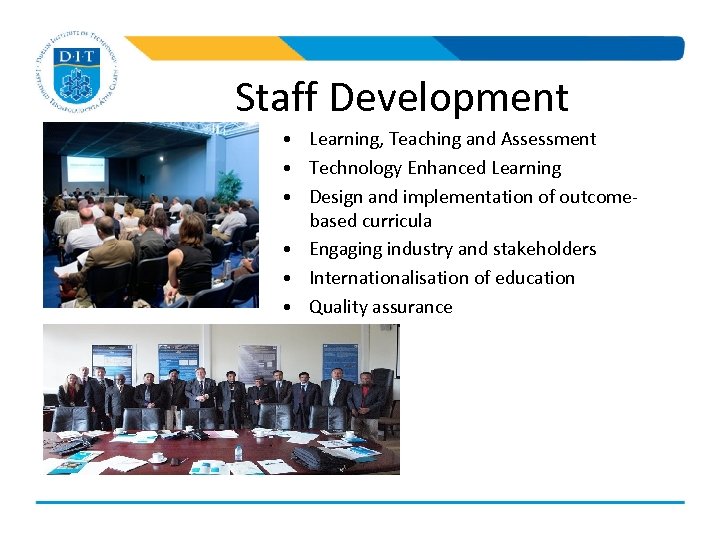 Staff Development • Learning, Teaching and Assessment • Technology Enhanced Learning • Design and implementation of outcomebased curricula • Engaging industry and stakeholders • Internationalisation of education • Quality assurance
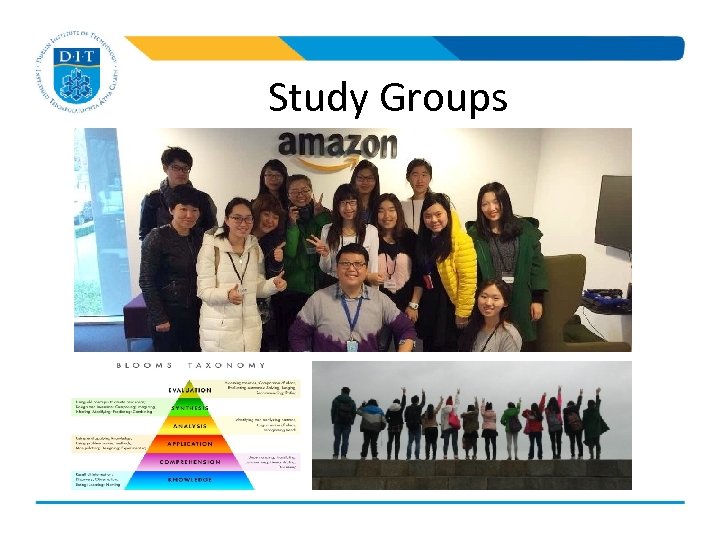 Study Groups
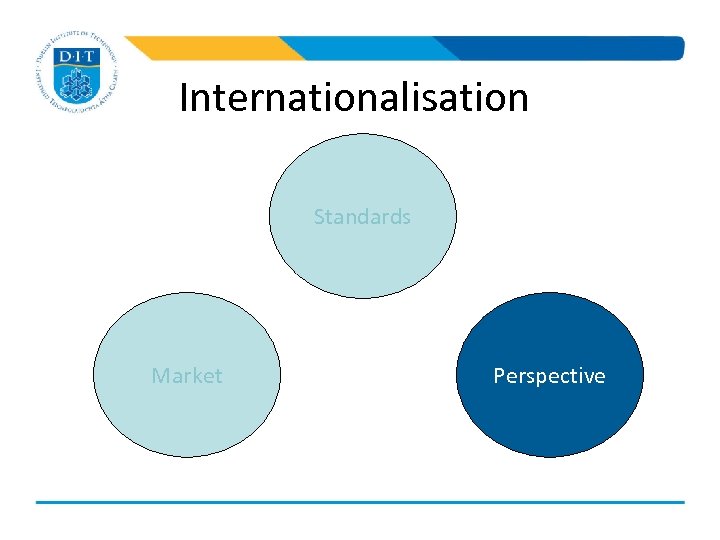
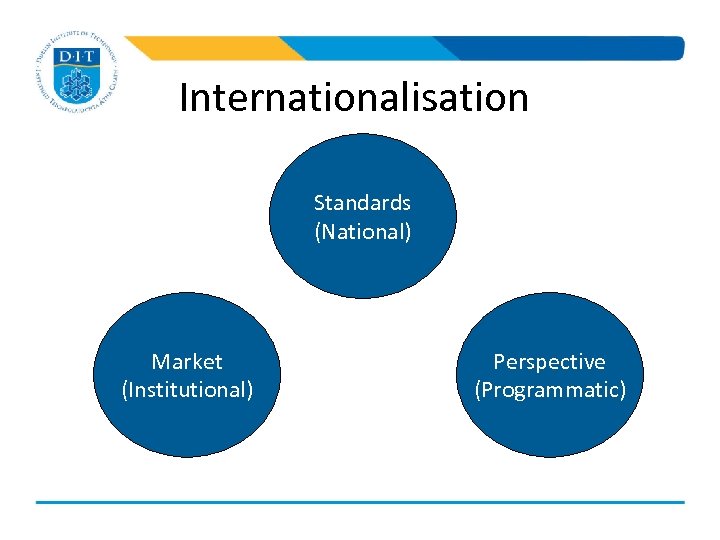 Internationalisation Standards (National) Market (Institutional) Perspective (Programmatic)
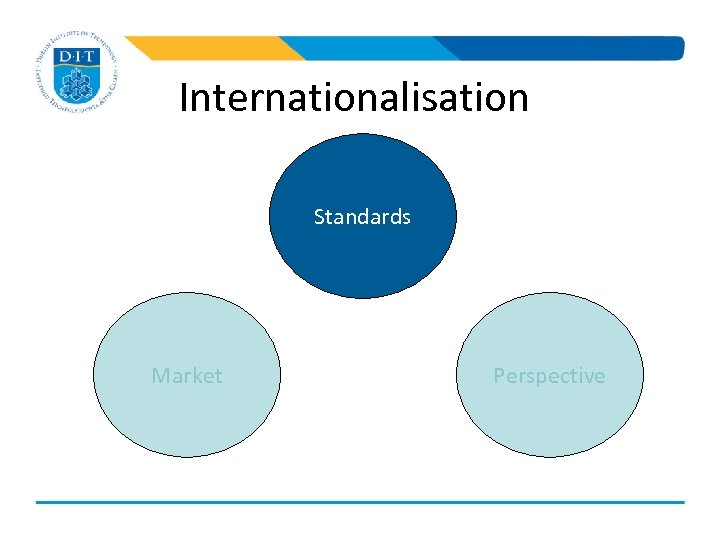 Internationalisation Standards Market Perspective
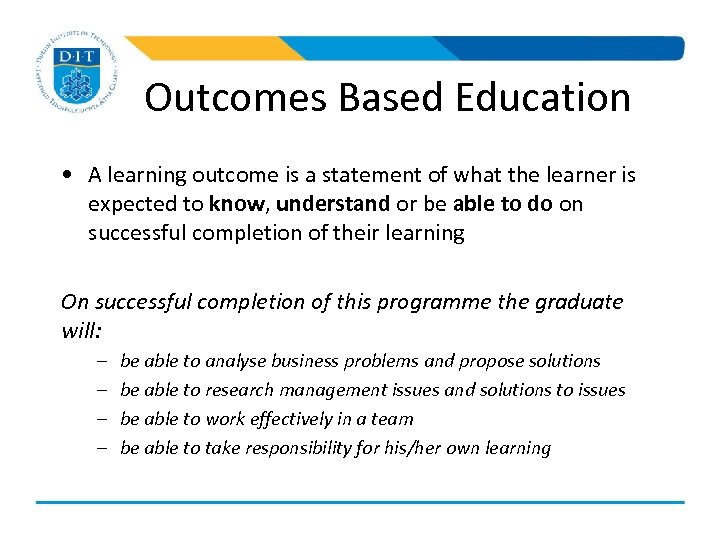 Outcomes Based Education • A learning outcome is a statement of what the learner is expected to know, understand or be able to do on successful completion of their learning On successful completion of this programme the graduate will: – – be able to analyse business problems and propose solutions be able to research management issues and solutions to issues be able to work effectively in a team be able to take responsibility for his/her own learning
 11
11
 12
12
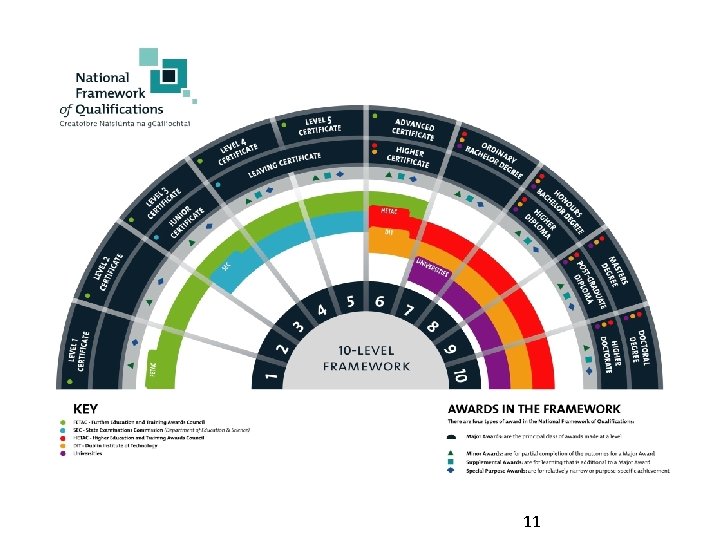
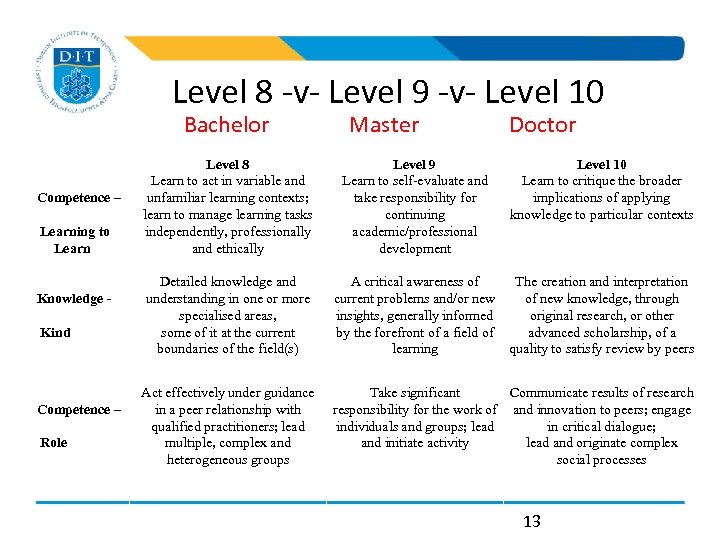 Level 8 -v- Level 9 -v- Level 10 Bachelor Master Level 9 Learn to self-evaluate and take responsibility for continuing academic/professional development Doctor Competence – Learning to Learn Knowledge Kind Level 8 Learn to act in variable and unfamiliar learning contexts; learn to manage learning tasks independently, professionally and ethically Detailed knowledge and understanding in one or more specialised areas, some of it at the current boundaries of the field(s) Level 10 Learn to critique the broader implications of applying knowledge to particular contexts A critical awareness of The creation and interpretation current problems and/or new of new knowledge, through insights, generally informed original research, or other by the forefront of a field of advanced scholarship, of a learning quality to satisfy review by peers Competence – Role Act effectively under guidance in a peer relationship with qualified practitioners; lead multiple, complex and heterogeneous groups Take significant Communicate results of research responsibility for the work of and innovation to peers; engage individuals and groups; lead in critical dialogue; and initiate activity lead and originate complex social processes 13
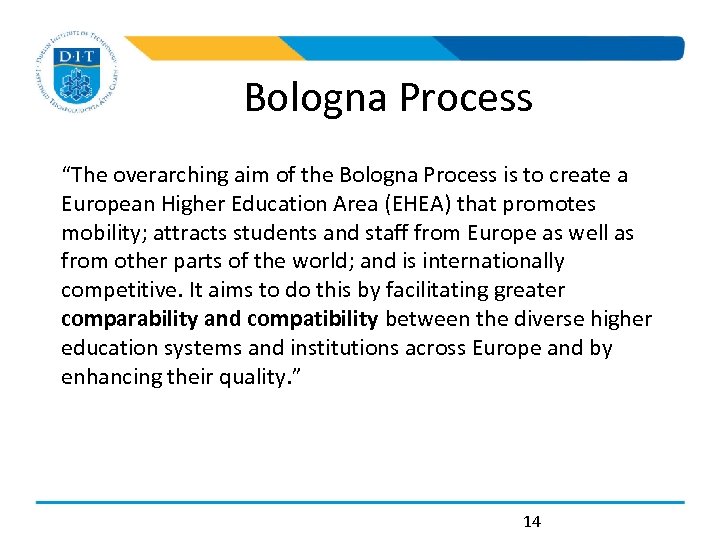 Bologna Process “The overarching aim of the Bologna Process is to create a European Higher Education Area (EHEA) that promotes mobility; attracts students and staff from Europe as well as from other parts of the world; and is internationally competitive. It aims to do this by facilitating greater comparability and compatibility between the diverse higher education systems and institutions across Europe and by enhancing their quality. ” 14
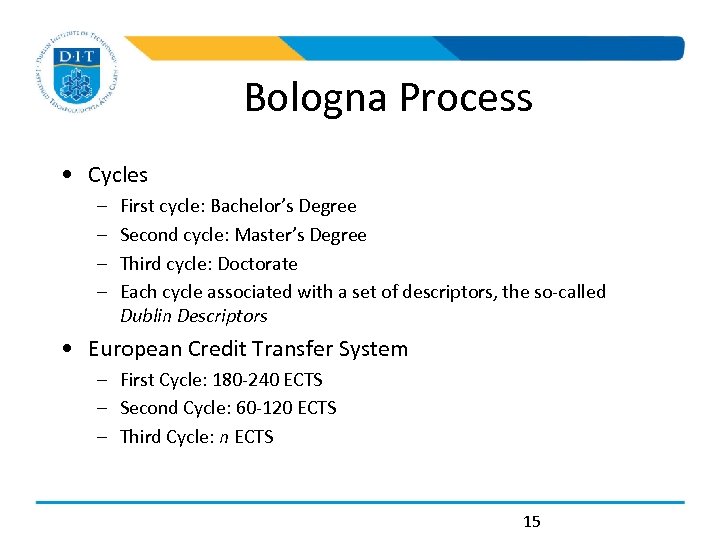 Bologna Process • Cycles – – First cycle: Bachelor’s Degree Second cycle: Master’s Degree Third cycle: Doctorate Each cycle associated with a set of descriptors, the so-called Dublin Descriptors • European Credit Transfer System – First Cycle: 180 -240 ECTS – Second Cycle: 60 -120 ECTS – Third Cycle: n ECTS 15
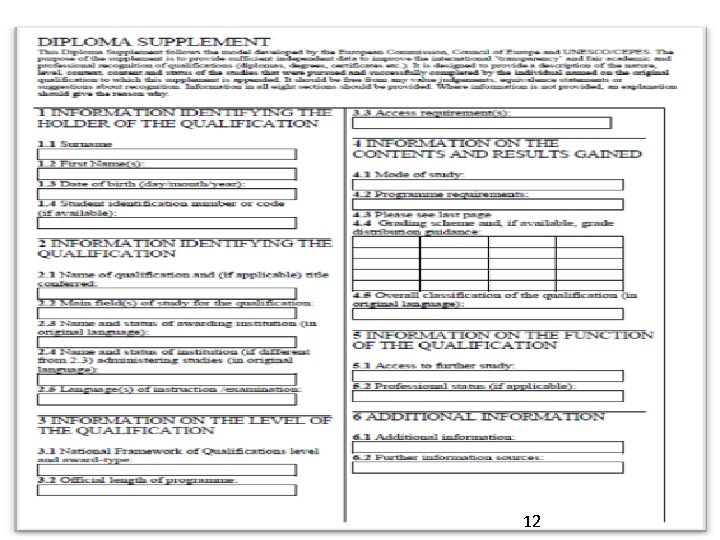
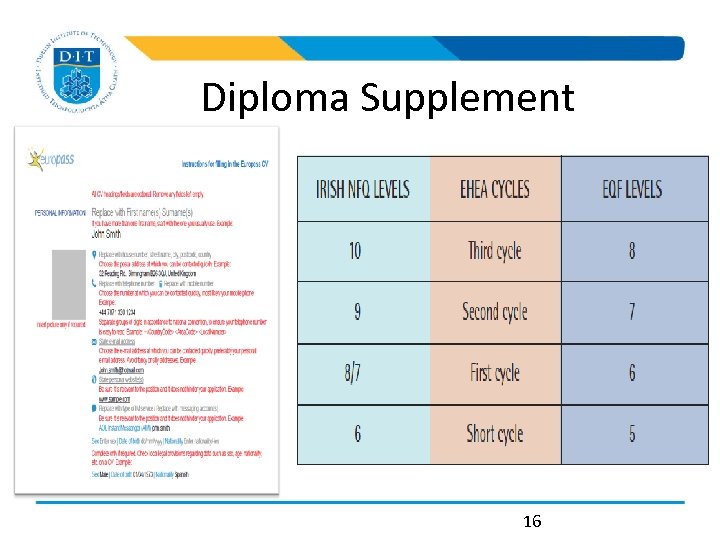 Diploma Supplement 16
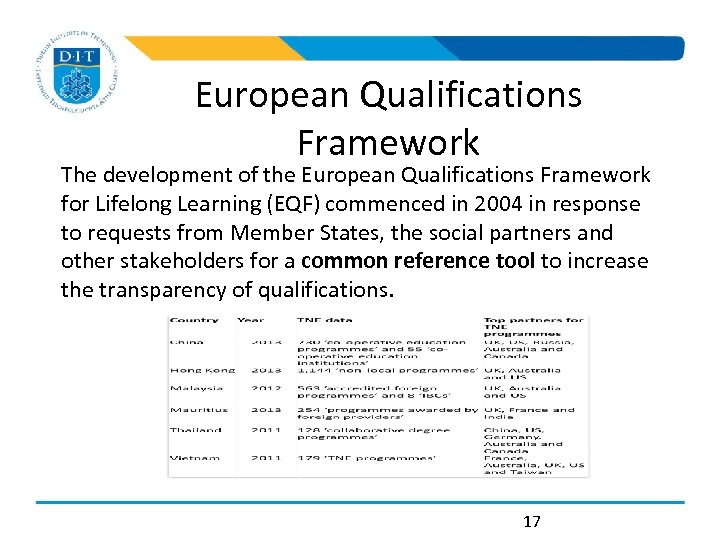 European Qualifications Framework The development of the European Qualifications Framework for Lifelong Learning (EQF) commenced in 2004 in response to requests from Member States, the social partners and other stakeholders for a common reference tool to increase the transparency of qualifications. 17
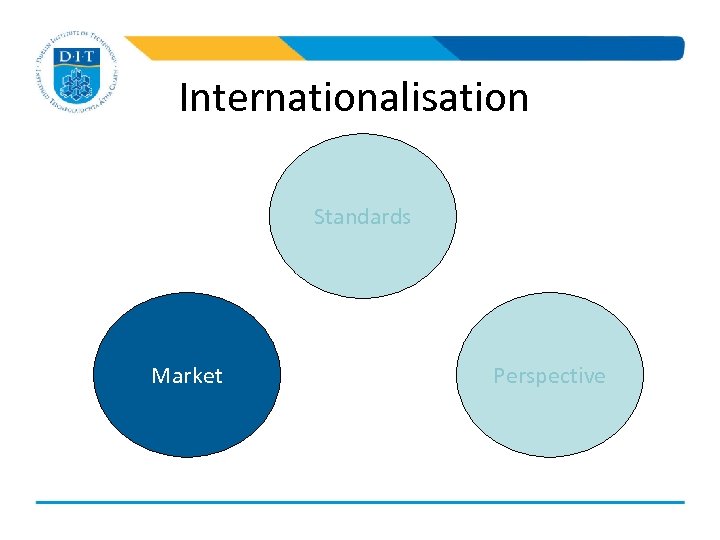 Internationalisation Standards Market Perspective
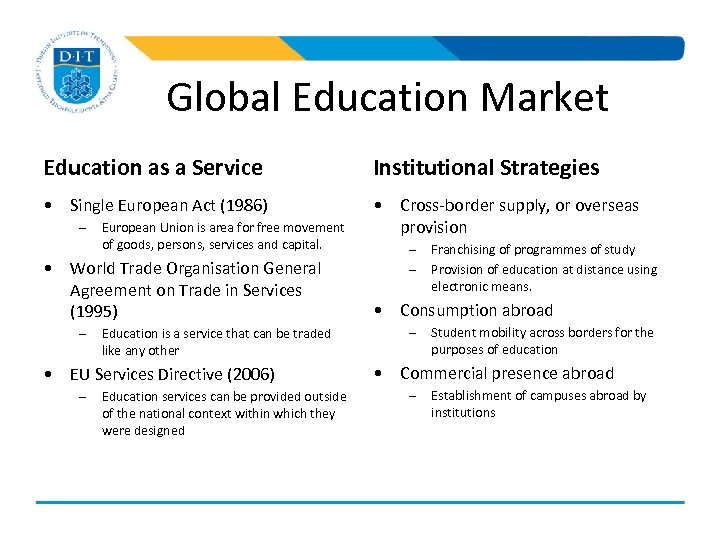 Global Education Market Education as a Service Institutional Strategies • Single European Act (1986) • Cross-border supply, or overseas provision – European Union is area for free movement of goods, persons, services and capital. • World Trade Organisation General Agreement on Trade in Services (1995) – Education is a service that can be traded like any other • EU Services Directive (2006) – Education services can be provided outside of the national context within which they were designed – – Franchising of programmes of study Provision of education at distance using electronic means. • Consumption abroad – Student mobility across borders for the purposes of education • Commercial presence abroad – Establishment of campuses abroad by institutions
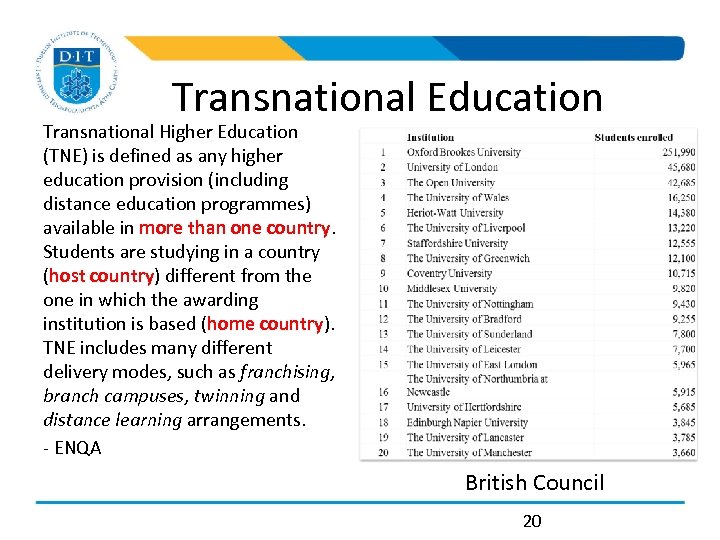 Transnational Education Transnational Higher Education (TNE) is defined as any higher education provision (including distance education programmes) available in more than one country. Students are studying in a country (host country) different from the one in which the awarding institution is based (home country). TNE includes many different delivery modes, such as franchising, branch campuses, twinning and distance learning arrangements. - ENQA British Council 20
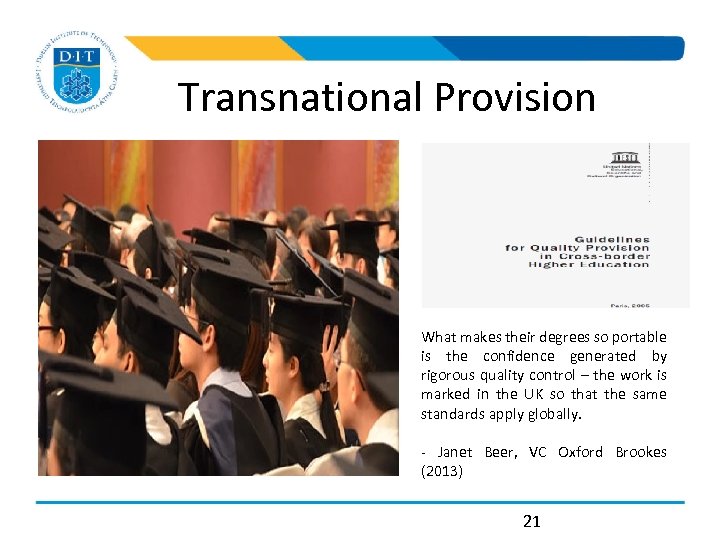 Transnational Provision What makes their degrees so portable is the confidence generated by rigorous quality control – the work is marked in the UK so that the same standards apply globally. - Janet Beer, VC Oxford Brookes (2013) 21
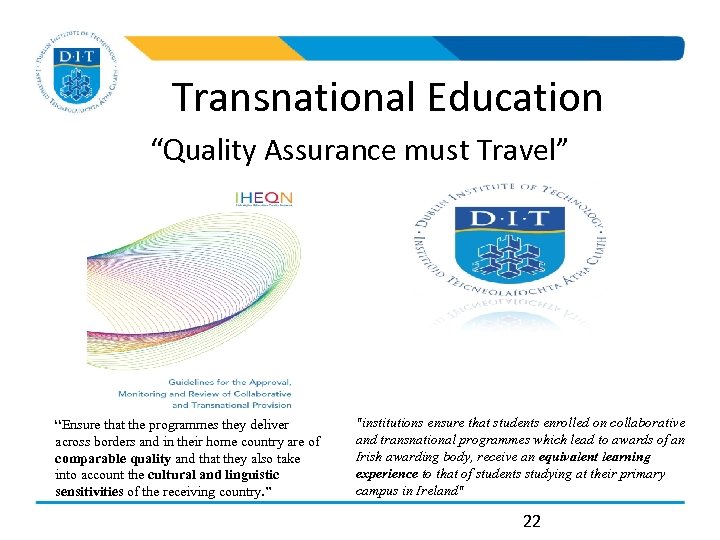 Transnational Education “Quality Assurance must Travel” “Ensure that the programmes they deliver across borders and in their home country are of comparable quality and that they also take into account the cultural and linguistic sensitivities of the receiving country. ” "institutions ensure that students enrolled on collaborative and transnational programmes which lead to awards of an Irish awarding body, receive an equivalent learning experience to that of students studying at their primary campus in Ireland" 22
 Internationalisation Standards Market Perspective
 Global Citizenship • Global citizenship concerns the development of what Schattle (2009) calls “cross-cultural empathy” • A Global Citizen – Is aware of the wider world and has a sense of their own role as a world citizen – Respects and values diversity – Has an understanding of how the world works economically, politically, socially, culturally, technologically and environmentally
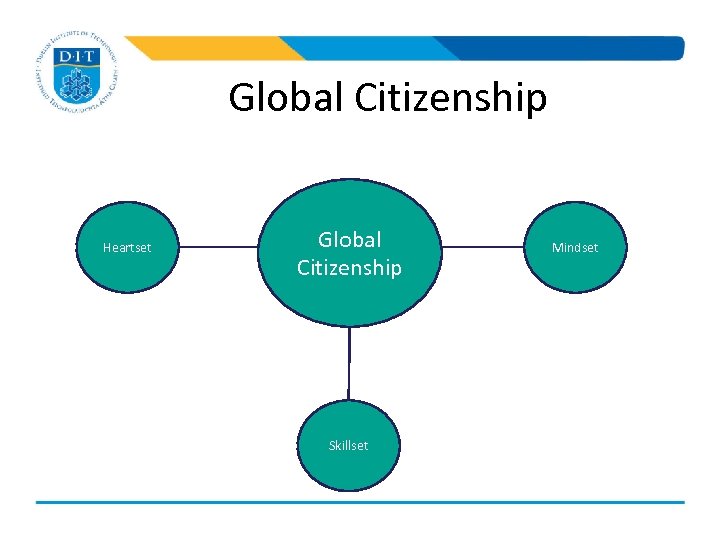 Global Citizenship Heartset Global Citizenship Skillset Mindset
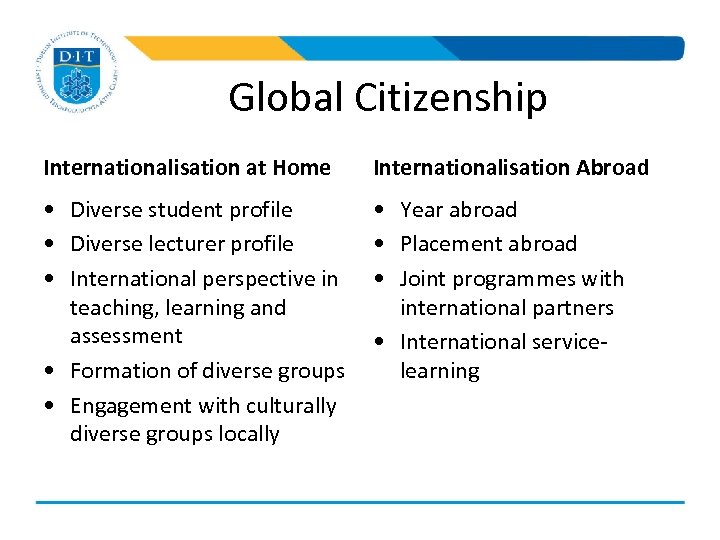 Global Citizenship Internationalisation at Home Internationalisation Abroad • Diverse student profile • Diverse lecturer profile • International perspective in teaching, learning and assessment • Formation of diverse groups • Engagement with culturally diverse groups locally • Year abroad • Placement abroad • Joint programmes with international partners • International servicelearning
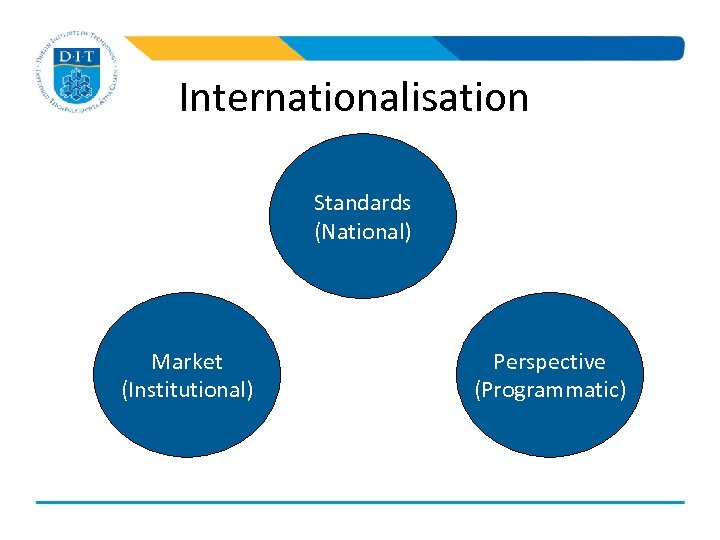 Internationalisation Standards (National) Market (Institutional) Perspective (Programmatic)