 Скачать презентацию International Workshop on Double Beta Decay Search Development
17f1ab68b500da0a87165a15773a9cf7.ppt
- Количество слайдов: 34



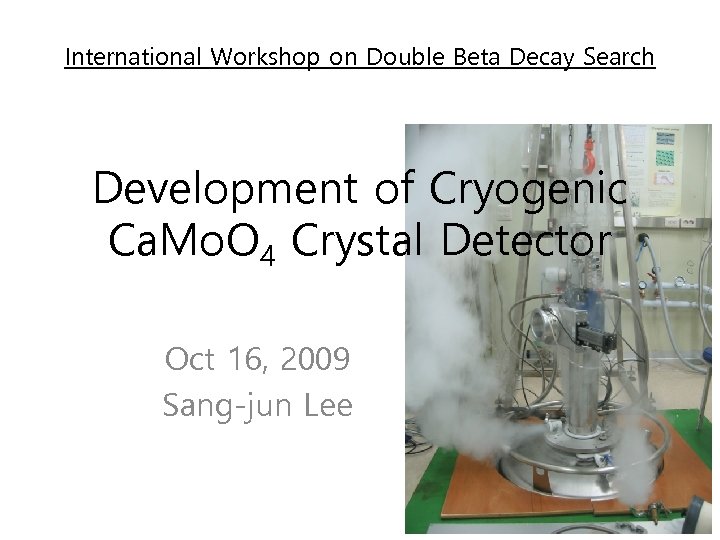
International Workshop on Double Beta Decay Search Development of Cryogenic Ca. Mo. O 4 Crystal Detector Oct 16, 2009 Sang-jun Lee
Ca. Mo. O 4 crystal is a good material to study neutrinoless double beta decay. 1) High transition energy (3, 035 ke. V) of 100 Mo low gamma-background 2) Scintillator active background-rejection 2
Is it a good material for cryogenic measurements as well? 3
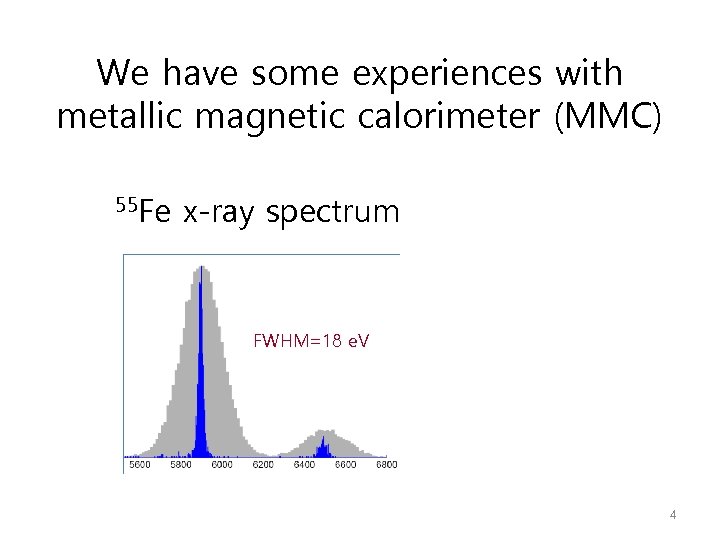
We have some experiences with metallic magnetic calorimeter (MMC) 55 Fe x-ray spectrum FWHM=18 e. V 4
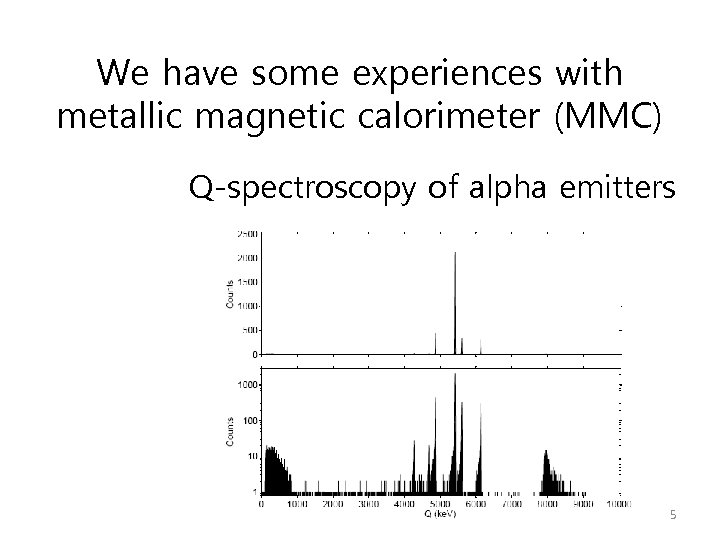
We have some experiences with metallic magnetic calorimeter (MMC) Q-spectroscopy of alpha emitters 5
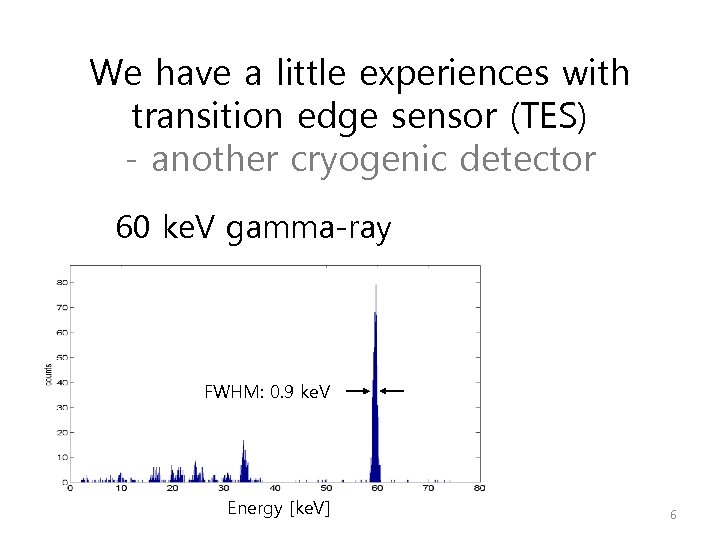
We have a little experiences with transition edge sensor (TES) - another cryogenic detector 60 ke. V gamma-ray FWHM: 0. 9 ke. V Energy [ke. V] 6
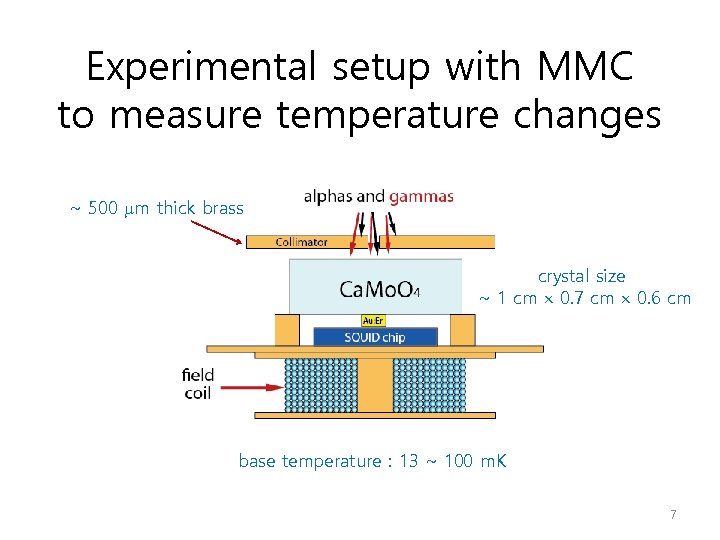
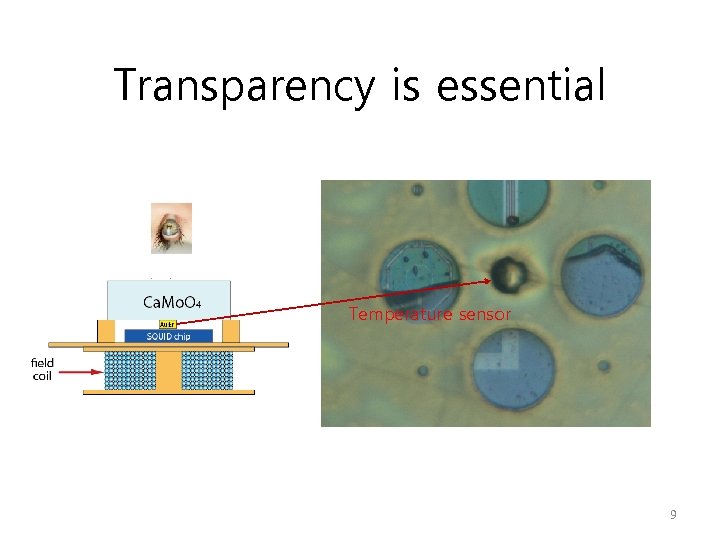
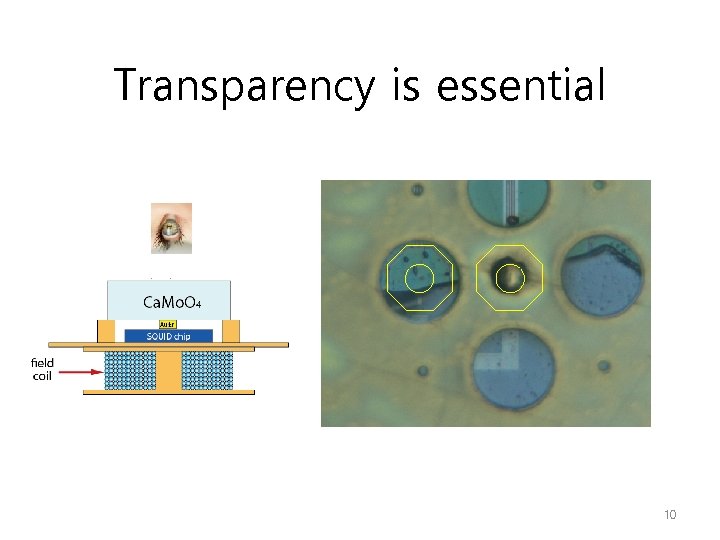
Experimental setup with MMC to measure temperature changes ~ 500 m thick brass crystal size ~ 1 cm 0. 7 cm 0. 6 cm base temperature : 13 ~ 100 m. K 7
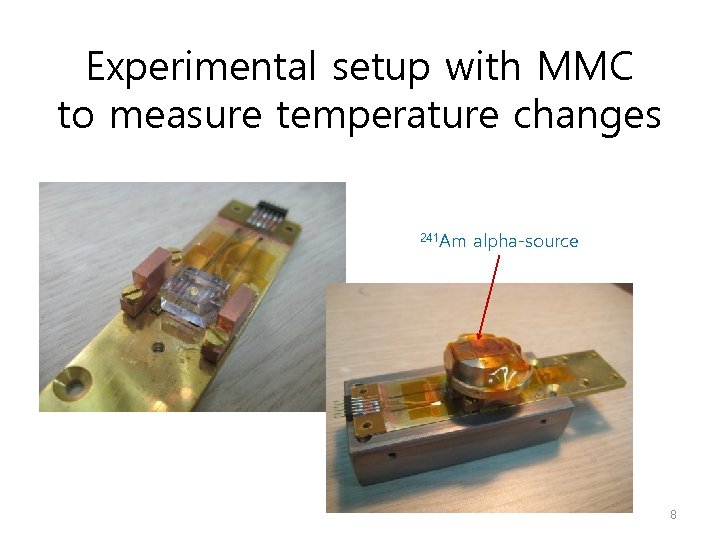
Experimental setup with MMC to measure temperature changes 241 Am alpha-source 8
Transparency is essential Temperature sensor 9
Transparency is essential 10
Full spectrum 11
Full spectrum alpha 12
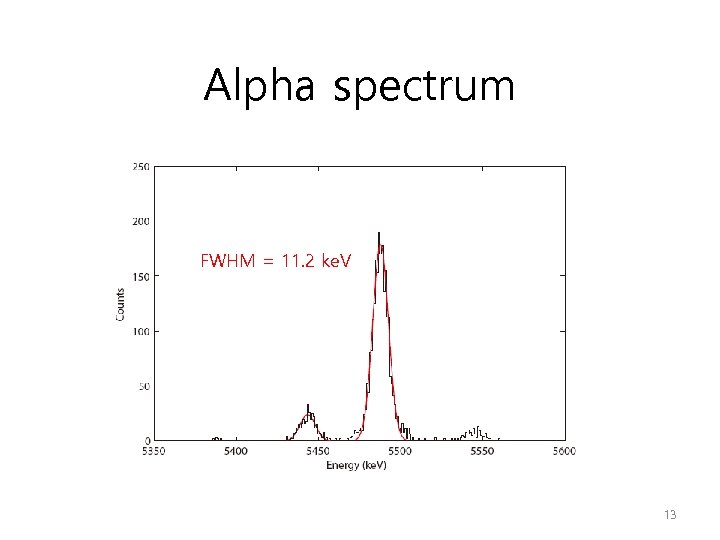
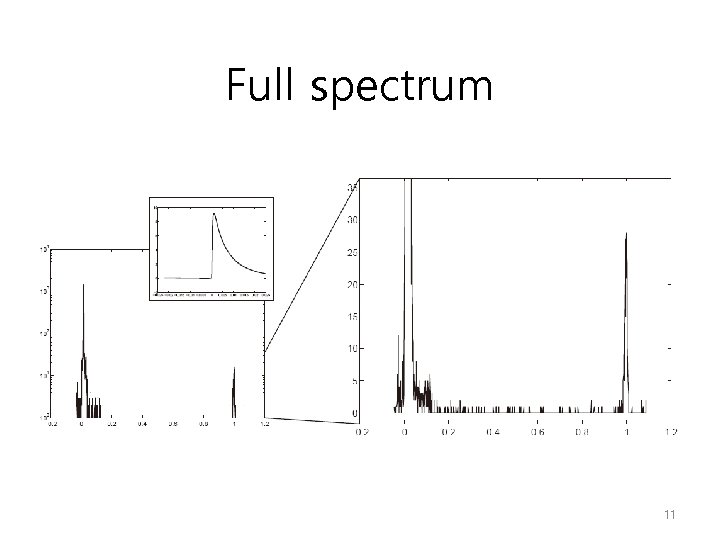
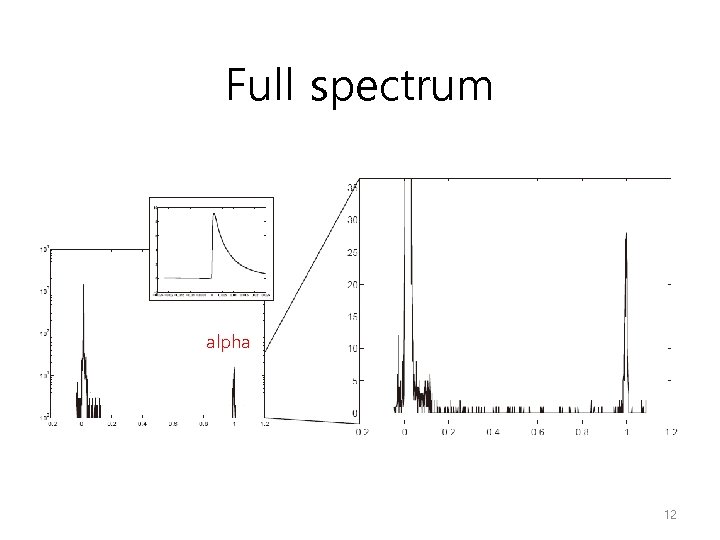
Alpha spectrum FWHM = 11. 2 ke. V 13
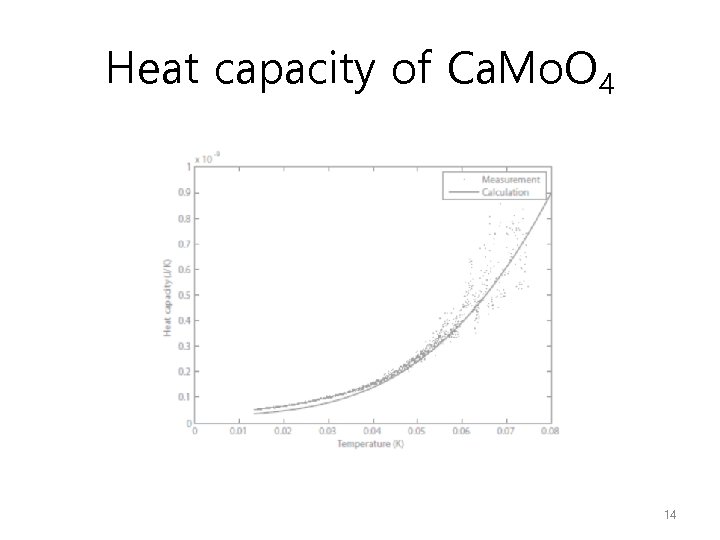
Heat capacity of Ca. Mo. O 4 14
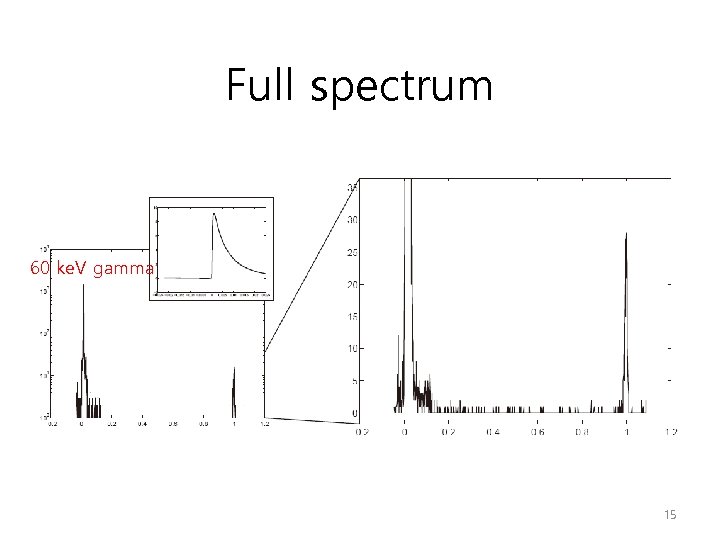
Full spectrum 60 ke. V gamma 15
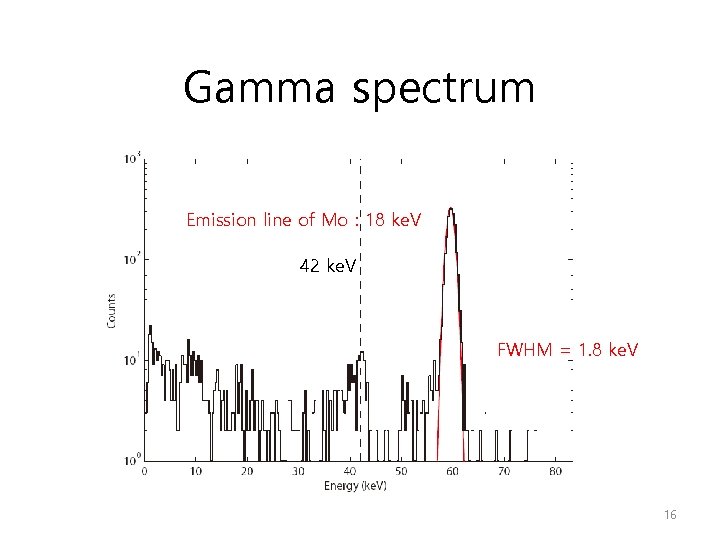
Gamma spectrum Emission line of Mo : 18 ke. V 42 ke. V FWHM = 1. 8 ke. V 16
High energy-resolution and Low energy-threshold 17
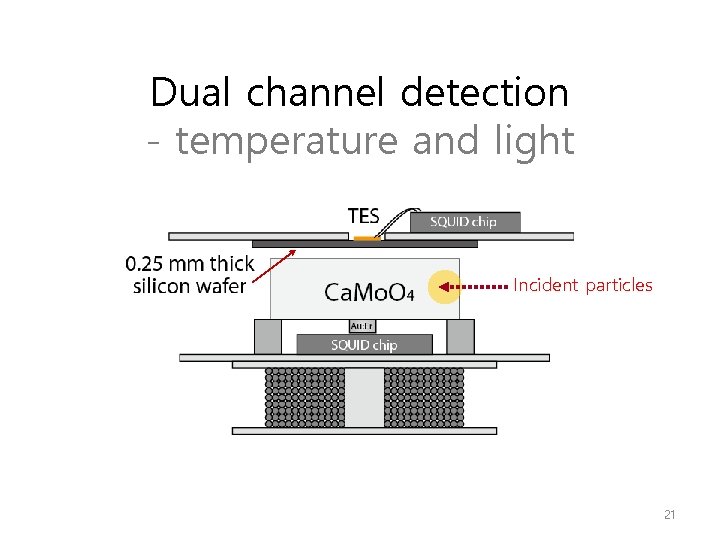
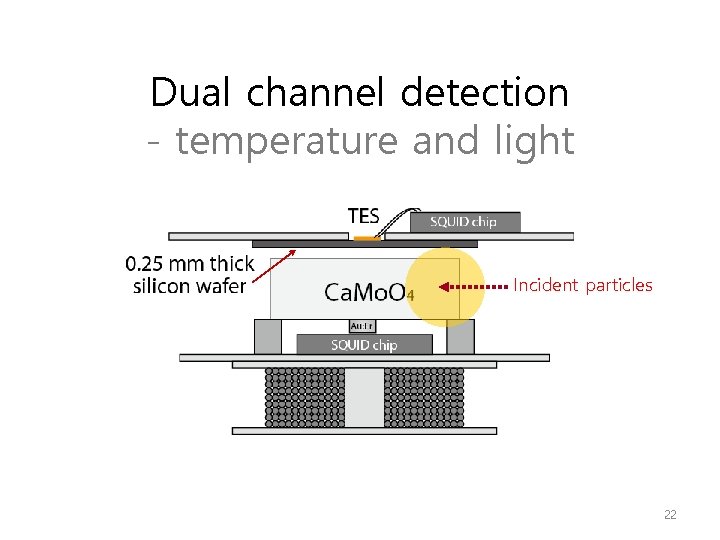
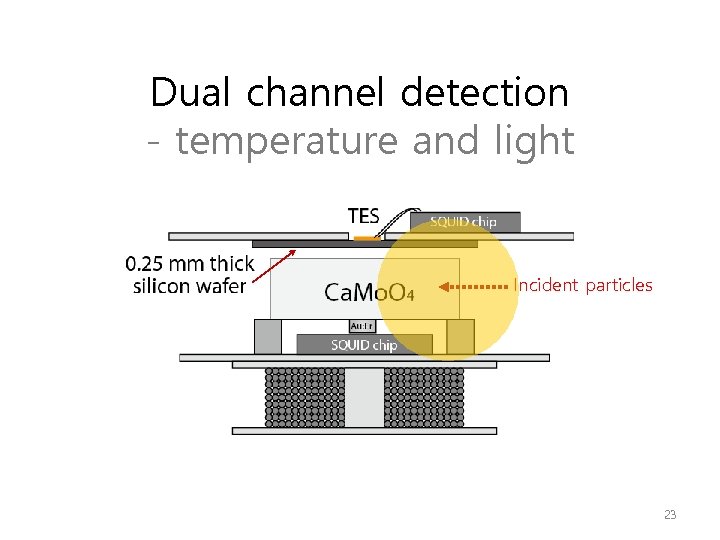
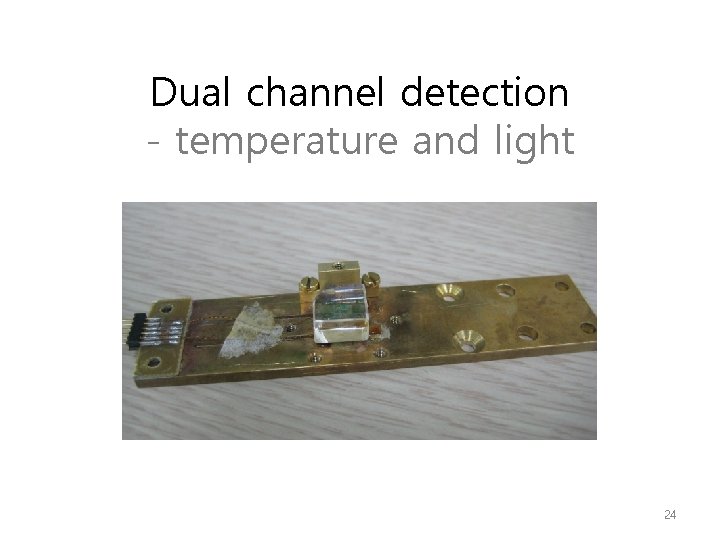
These are what we had done a few months ago. Last week, we added one more thing. - Light detector 18
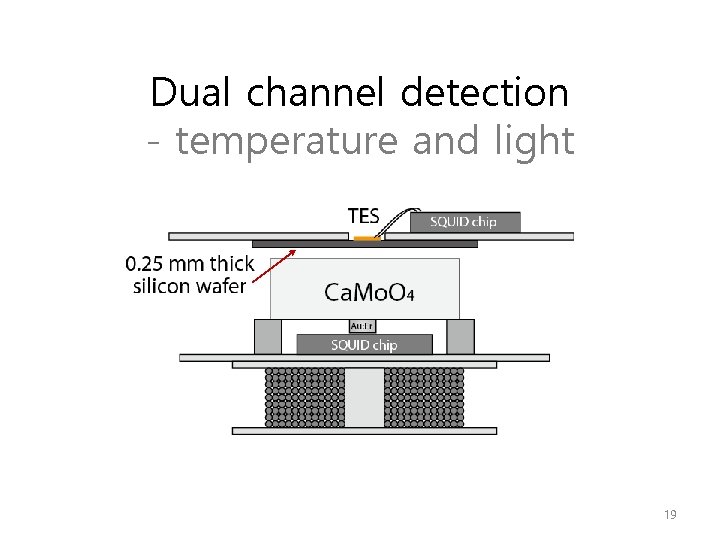
Dual channel detection - temperature and light 19
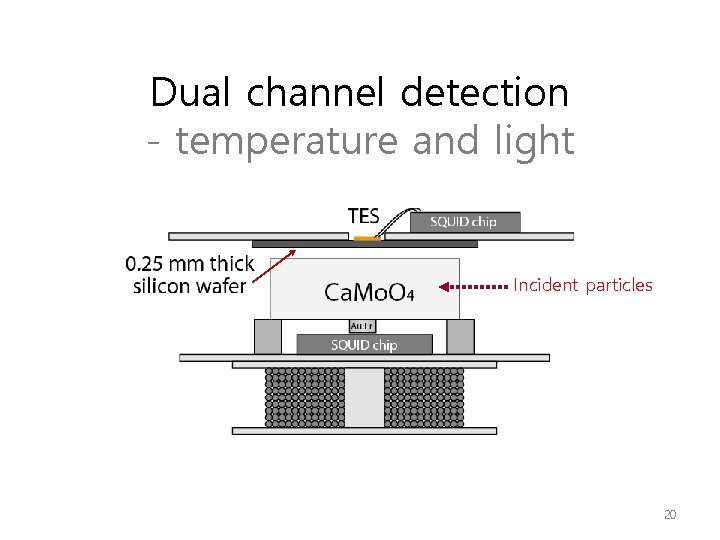
Dual channel detection - temperature and light Incident particles 20
Dual channel detection - temperature and light Incident particles 21
Dual channel detection - temperature and light Incident particles 22
Dual channel detection - temperature and light Incident particles 23
Dual channel detection - temperature and light 24
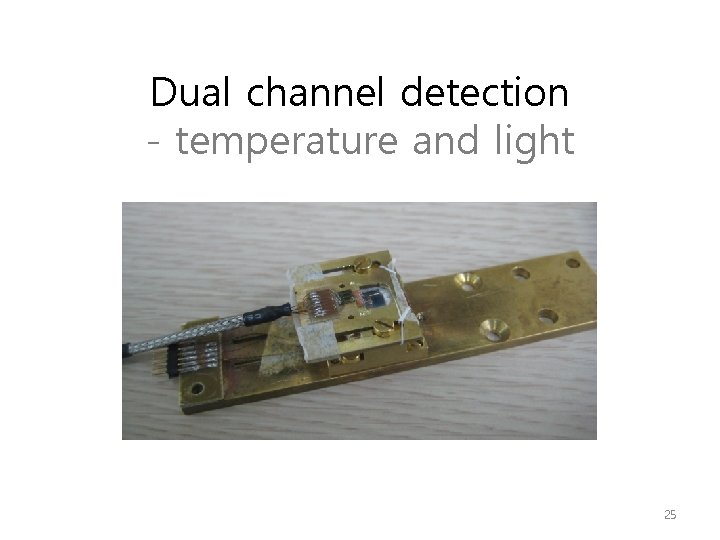
Dual channel detection - temperature and light 25
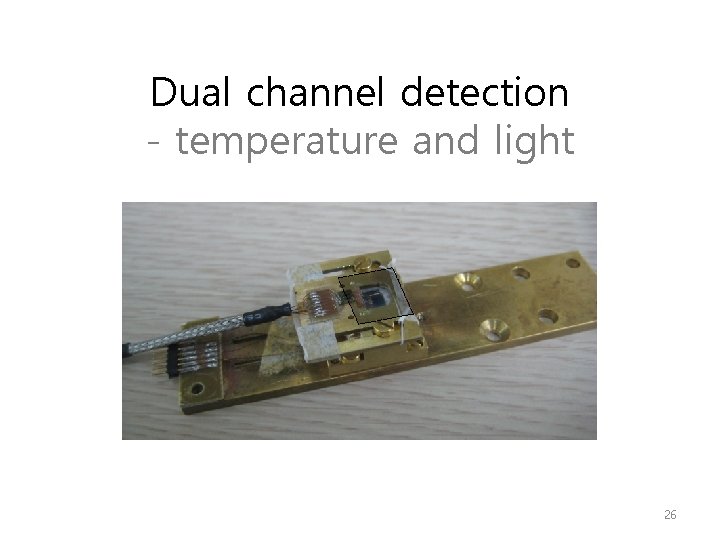
Dual channel detection - temperature and light 26
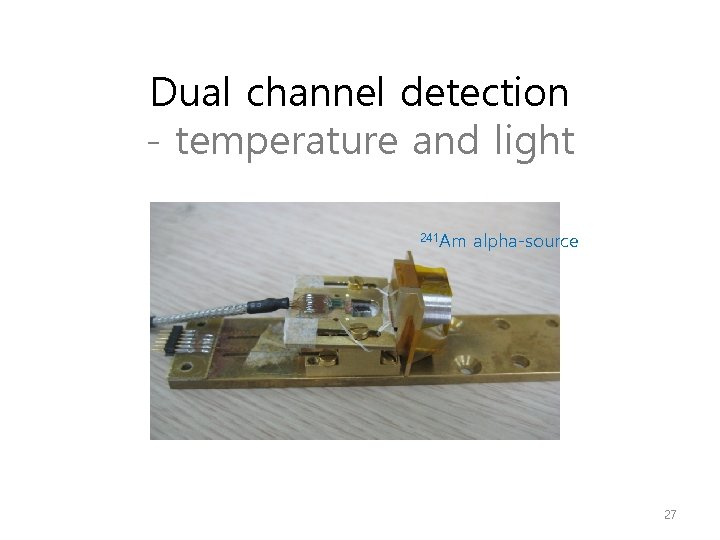
Dual channel detection - temperature and light 241 Am alpha-source 27
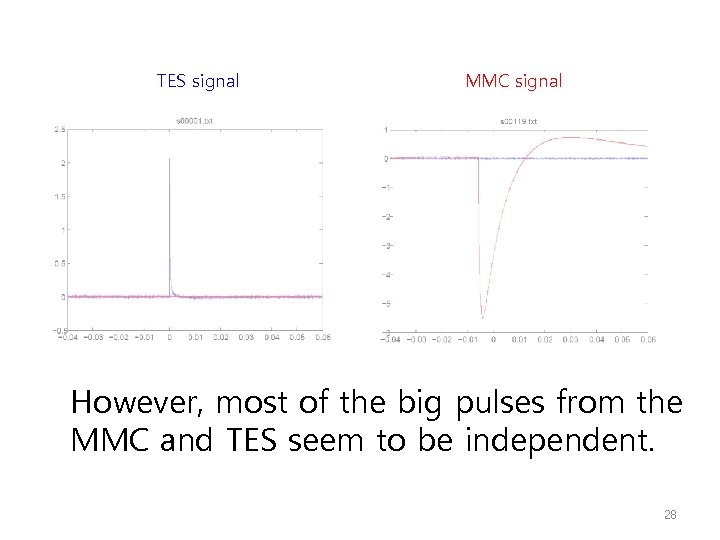
TES signal MMC signal However, most of the big pulses from the MMC and TES seem to be independent. 28
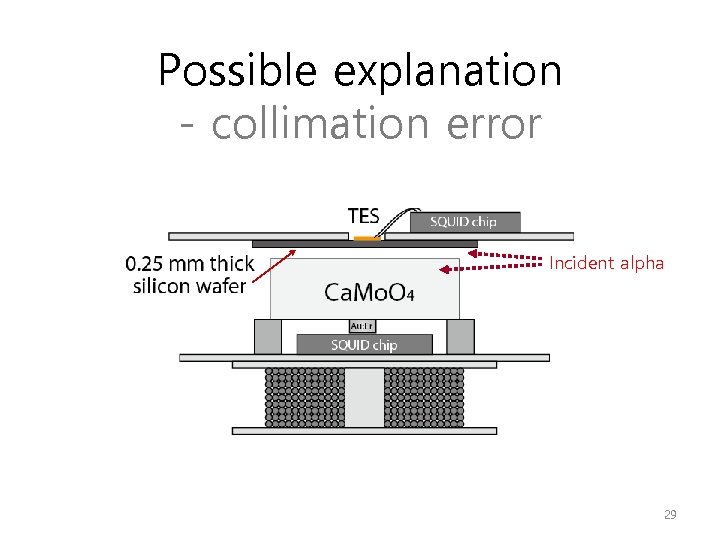
Possible explanation - collimation error Incident alpha 29
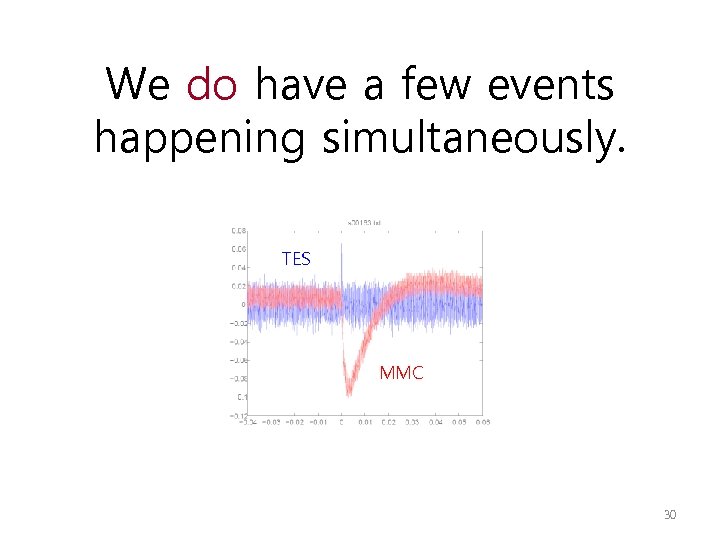
We do have a few events happening simultaneously. TES MMC 30
Anyway, experiment is still going on and we have to further investigate these events. 31
Future plan Fix the collimation problem Fabricate TES with lower Tc House the detector inside a reflecting cavity Use bigger crystal 32
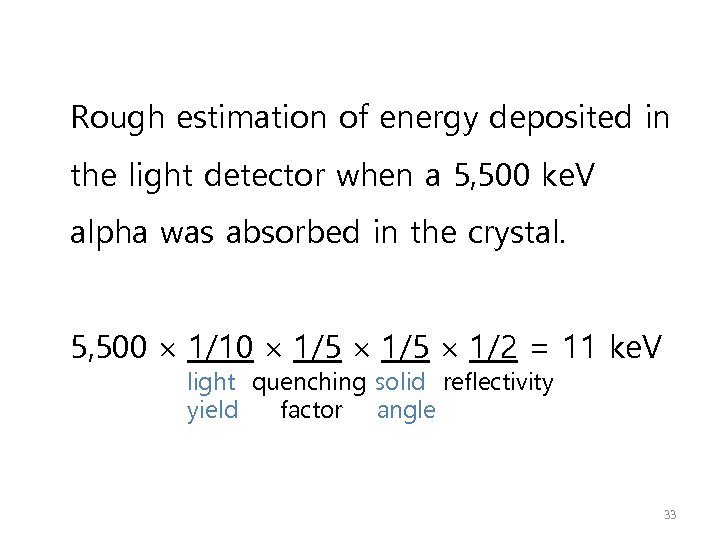
Rough estimation of energy deposited in the light detector when a 5, 500 ke. V alpha was absorbed in the crystal. 5, 500 1/10 1/5 1/2 = 11 ke. V light quenching solid reflectivity yield factor angle 33

Questions or comments? 34
Скачать презентацию International Workshop on Double Beta Decay Search Development
17f1ab68b500da0a87165a15773a9cf7.ppt