 Скачать презентацию International university of informational technologies SOCIAL PROBLEM OF
Social_problem_of_Beijing.pptx
- Количество слайдов: 17



International university of informational technologies SOCIAL PROBLEM OF BEIJING Student: Artykbay Baglan (IS-134 k)
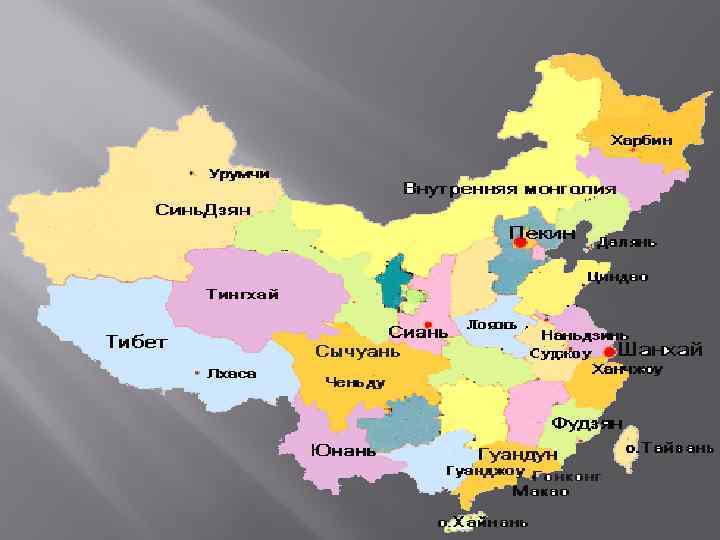
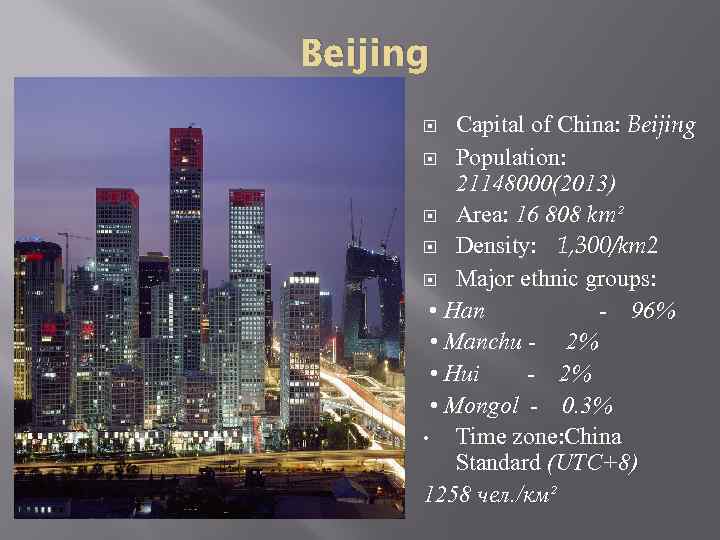
Beijing Capital of China: Beijing Population: 21148000(2013) Area: 16 808 km² Density: 1, 300/km 2 Major ethnic groups: • Han - 96% • Manchu - 2% • Hui - 2% • Mongol - 0. 3% • Time zone: China Standard (UTC+8) 1258 чел. /км²
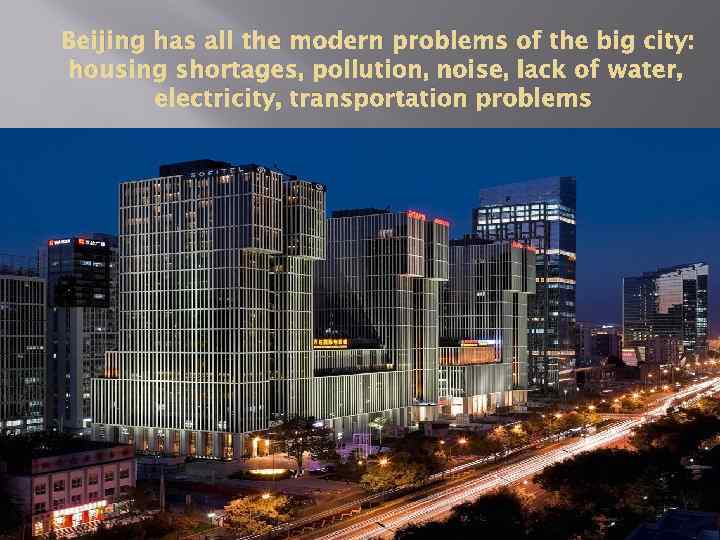
Beijing has all the modern problems of the big city: housing shortages, pollution, noise, lack of water, electricity, transportation problems
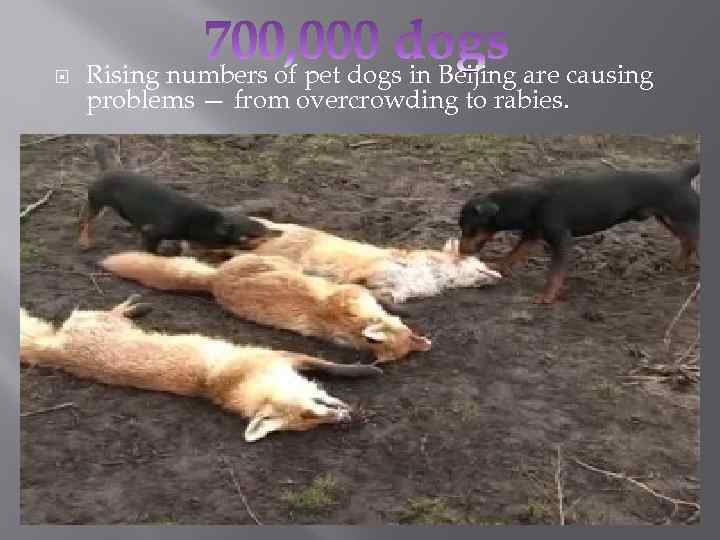
Rising numbers of pet dogs in Beijing are causing problems — from overcrowding to rabies.
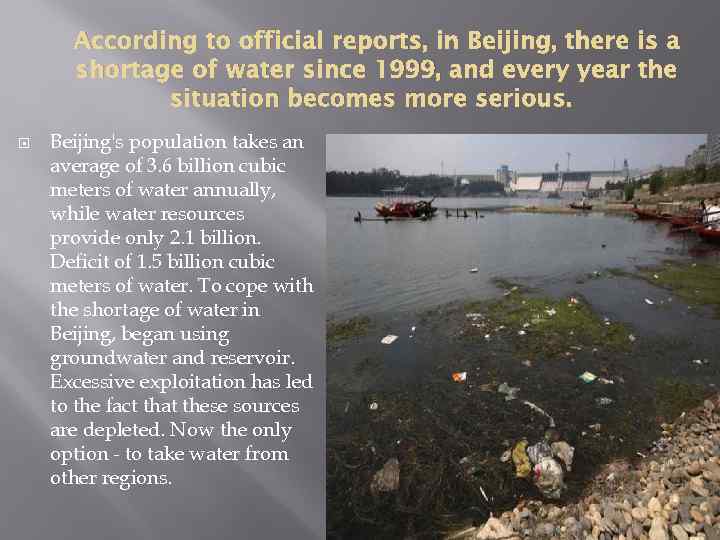
According to official reports, in Beijing, there is a shortage of water since 1999, and every year the situation becomes more serious. Beijing's population takes an average of 3. 6 billion cubic meters of water annually, while water resources provide only 2. 1 billion. Deficit of 1. 5 billion cubic meters of water. To cope with the shortage of water in Beijing, began using groundwater and reservoir. Excessive exploitation has led to the fact that these sources are depleted. Now the only option - to take water from other regions.
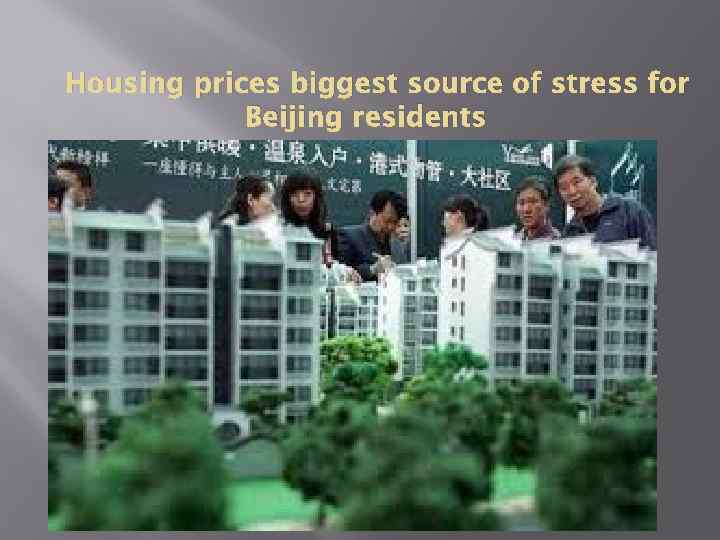
Housing prices biggest source of stress for Beijing residents
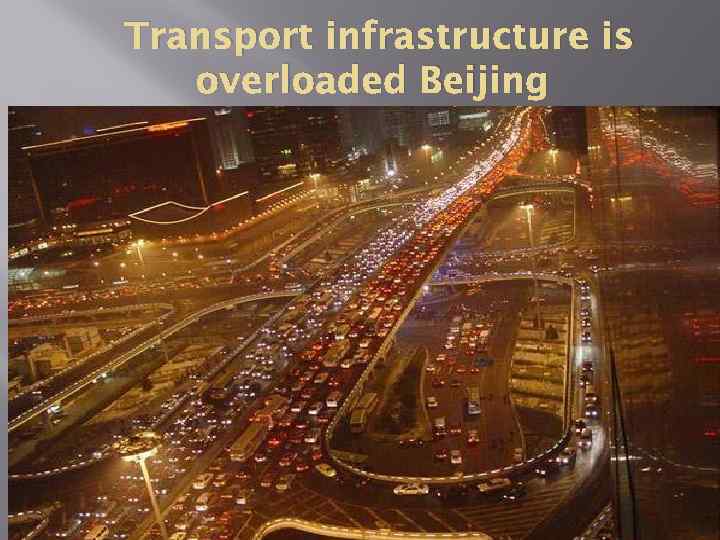
Transport infrastructure is overloaded Beijing
А few years ago to produce cars in China grew at a rate of 40 -50 % per year. Over five years, the number has almost doubled on the roads at the end of 2011 there were already more than 100 million vehicles, of which 80 % belonged to private owners. However, transport infrastructure is not designed for such a busy traffic, so Beijing, Shanghai, Guangzhou and some other major cities were clogged with " plugs " and the exhaust gases exacerbate the already difficult environmental situation. To solve the problem, in late 2010, the Beijing authorities have imposed restrictions on the purchase of cars. Register new rooms became raffle. Original method brought their results : in 2011 the total number of vehicles in the city increased to 173 thousand units, the growth rate decreased by 617 thousand units , or 78 % compared with the previous year
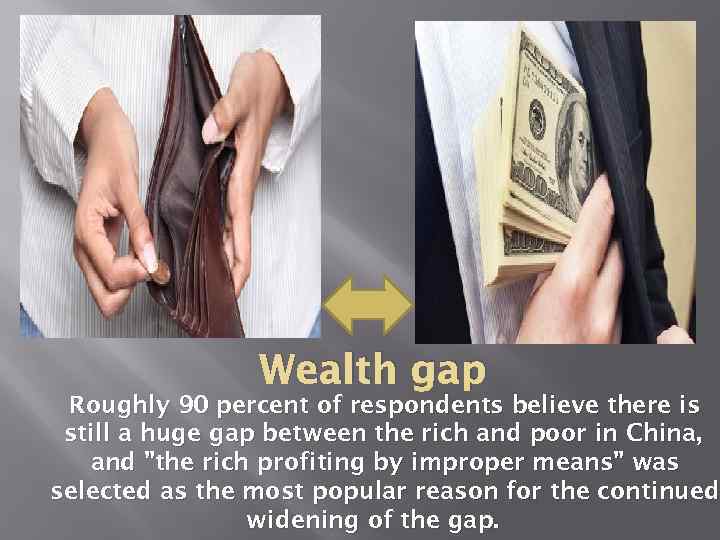
Wealth gap Roughly 90 percent of respondents believe there is still a huge gap between the rich and poor in China, and "the rich profiting by improper means" was selected as the most popular reason for the continued widening of the gap.
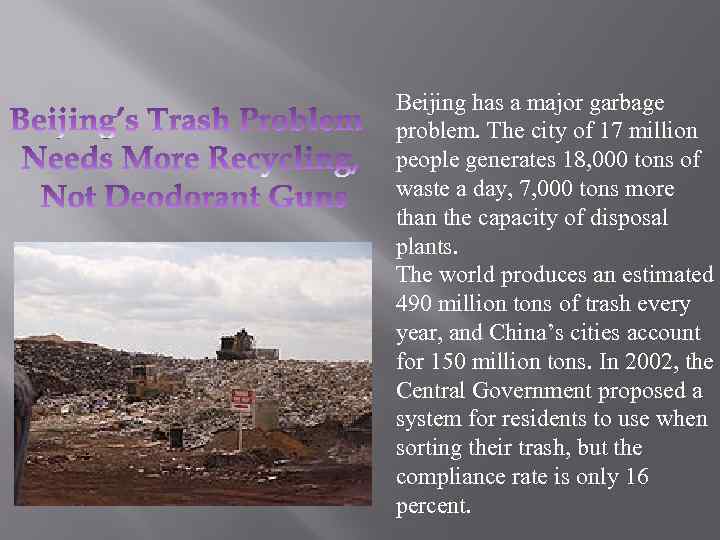
Beijing has a major garbage problem. The city of 17 million people generates 18, 000 tons of waste a day, 7, 000 tons more than the capacity of disposal plants. The world produces an estimated 490 million tons of trash every year, and China’s cities account for 150 million tons. In 2002, the Central Government proposed a system for residents to use when sorting their trash, but the compliance rate is only 16 percent.
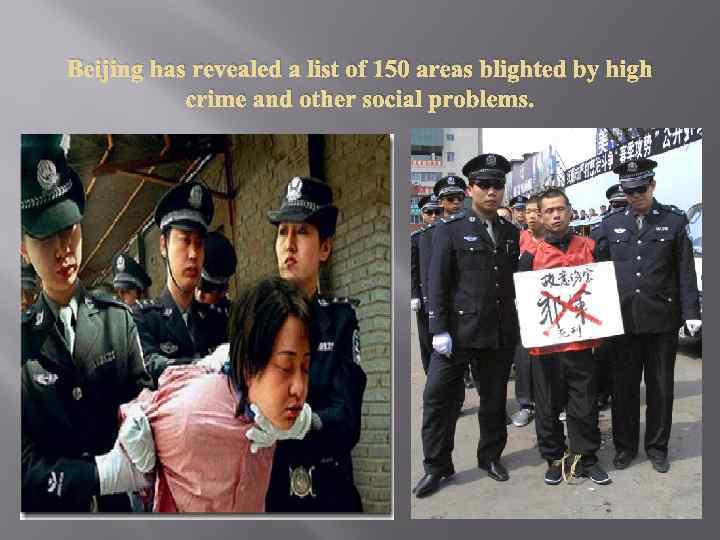
Beijing has revealed a list of 150 areas blighted by high crime and other social problems.
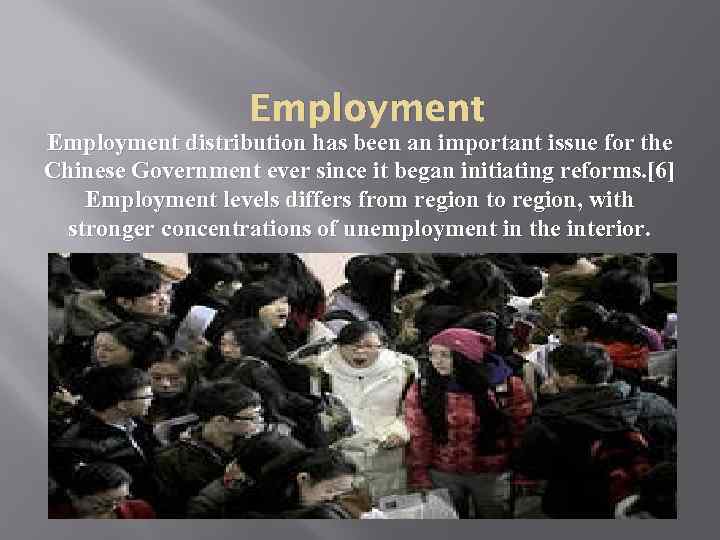
Employment distribution has been an important issue for the Chinese Government ever since it began initiating reforms. [6] Employment levels differs from region to region, with stronger concentrations of unemployment in the interior.
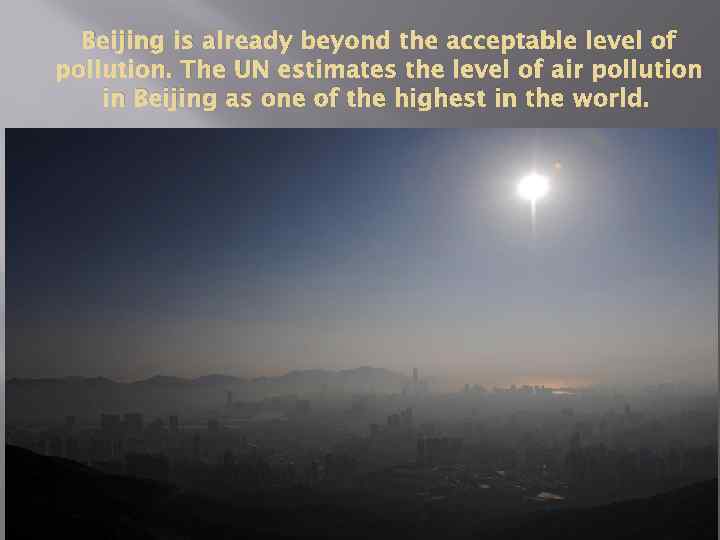
Beijing is already beyond the acceptable level of pollution. The UN estimates the level of air pollution in Beijing as one of the highest in the world.
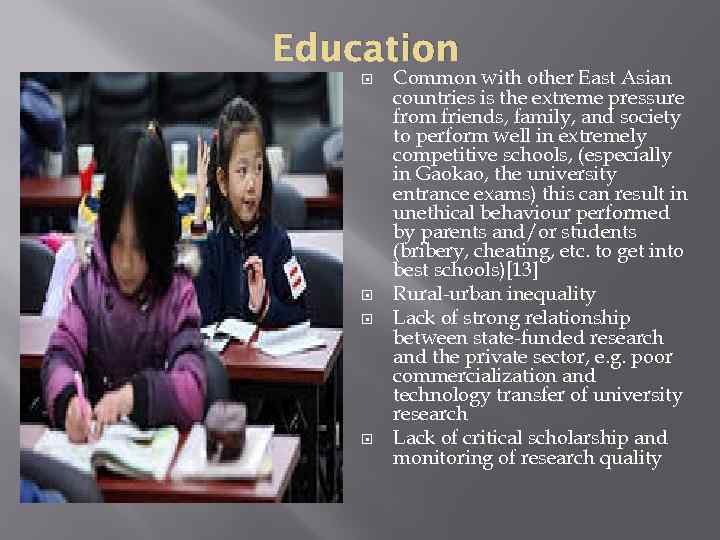
Education Common with other East Asian countries is the extreme pressure from friends, family, and society to perform well in extremely competitive schools, (especially in Gaokao, the university entrance exams) this can result in unethical behaviour performed by parents and/or students (bribery, cheating, etc. to get into best schools)[13] Rural-urban inequality Lack of strong relationship between state-funded research and the private sector, e. g. poor commercialization and technology transfer of university research Lack of critical scholarship and monitoring of research quality
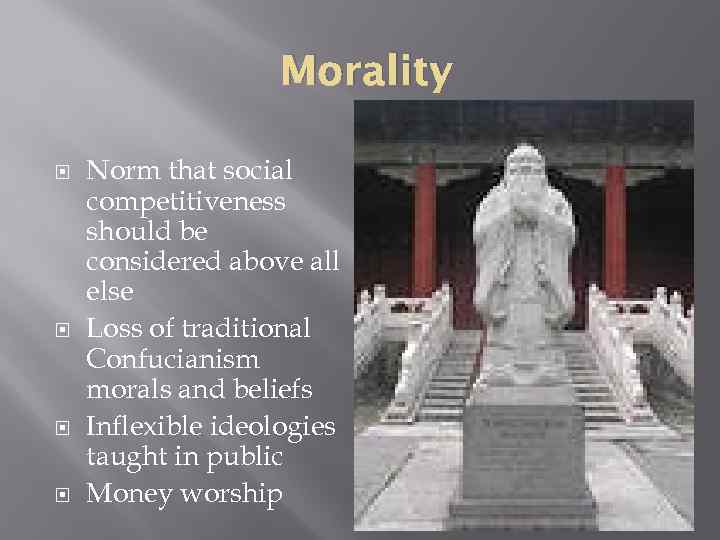
Morality Norm that social competitiveness should be considered above all else Loss of traditional Confucianism morals and beliefs Inflexible ideologies taught in public Money worship
 Скачать презентацию International university of informational technologies SOCIAL PROBLEM OF
Social_problem_of_Beijing.pptx