 Скачать презентацию International Technology Cooperation Adrian Baguley Defence Science and
5d08ffa43ee3e4469cf803cbc10d600d.ppt
- Количество слайдов: 31



International Technology Cooperation Adrian Baguley Defence Science and Technology Counsellor British Embassy UK science|innovation|technology
Outline • UK Ministry of Defence Science and Technology • Why Cooperate? • US/UK Cooperation • The Technical Cooperation Program UK science|innovation|technology
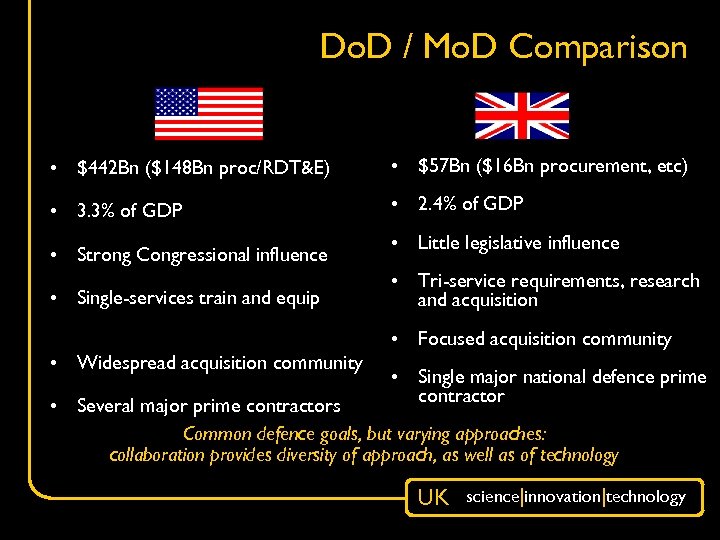
Do. D / Mo. D Comparison • $442 Bn ($148 Bn proc/RDT&E) • $57 Bn ($16 Bn procurement, etc) • 3. 3% of GDP • 2. 4% of GDP • Strong Congressional influence • Single-services train and equip • Little legislative influence • Tri-service requirements, research and acquisition • Focused acquisition community • Widespread acquisition community • Single major national defence prime contractor • Several major prime contractors Common defence goals, but varying approaches: collaboration provides diversity of approach, as well as of technology UK science|innovation|technology
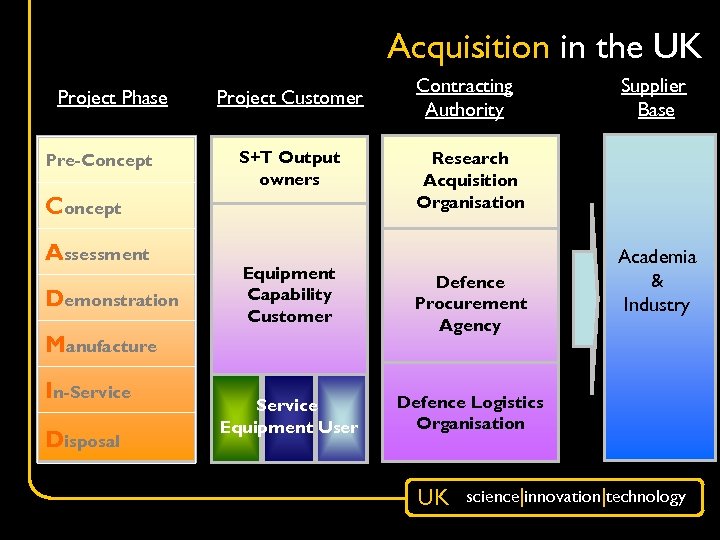
Acquisition in the UK Project Phase Pre-Concept Project Customer S+T Output owners Concept Assessment Demonstration Equipment Capability Customer Manufacture In-Service Disposal Service Equipment User Contracting Authority Supplier Base Research Acquisition Organisation Defence Procurement Agency Academia & Industry Defence Logistics Organisation UK science|innovation|technology
![History of UK Defence Laboratories RAE ARE DRA - Defence Research Establishment [dstl] RARDE](https://present5.com/presentation/5d08ffa43ee3e4469cf803cbc10d600d/image-5.jpg "History of UK Defence Laboratories RAE ARE DRA - Defence Research Establishment [dstl] RARDE")
History of UK Defence Laboratories RAE ARE DRA - Defence Research Establishment [dstl] RARDE RSRE Defence Test & Evaluation Organisation INM APRE DRPS CDRE DOAE Protection & Life Sciences Department Defence Evaluation & Research Agency Qineti. Q Centre for Defence Analysis UK science|innovation|technology
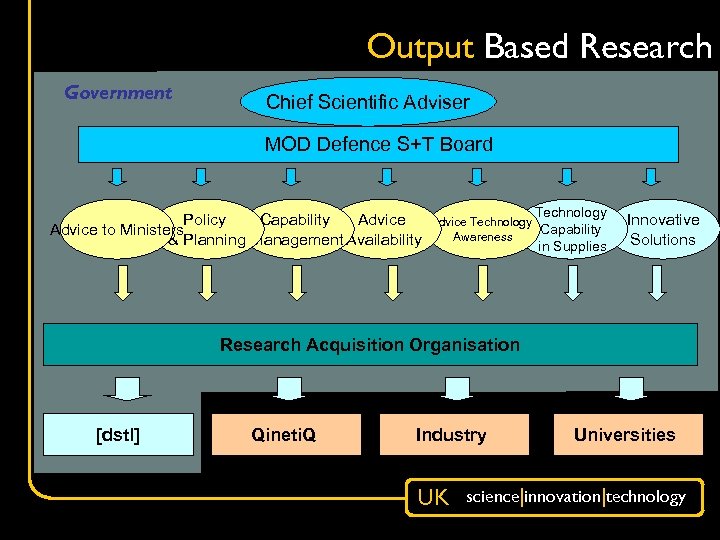
Output Based Research Government Chief Scientific Adviser MOD Defence S+T Board Policy Capability Advice to Ministers & Planning Management Availability Technology Advice Technology Capability Awareness in Supplies Innovative Solutions Research Acquisition Organisation [dstl] Qineti. Q Industry UK Universities science|innovation|technology
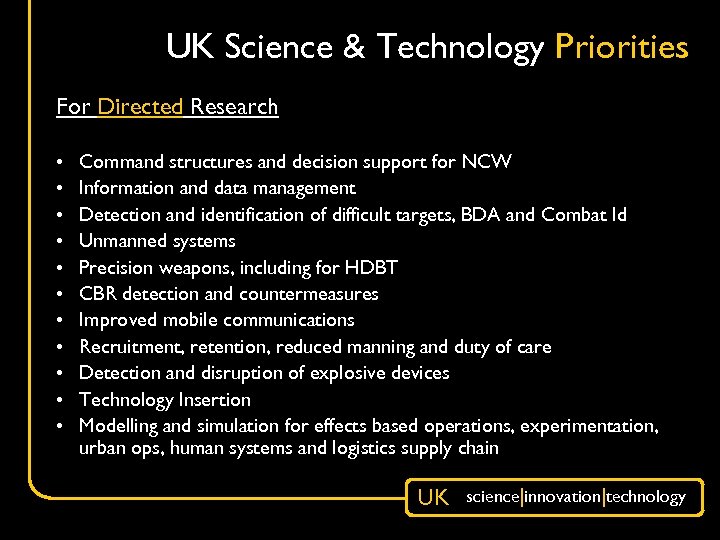
UK Science & Technology Priorities For Directed Research • • • Command structures and decision support for NCW Information and data management Detection and identification of difficult targets, BDA and Combat Id Unmanned systems Precision weapons, including for HDBT CBR detection and countermeasures Improved mobile communications Recruitment, retention, reduced manning and duty of care Detection and disruption of explosive devices Technology Insertion Modelling and simulation for effects based operations, experimentation, urban ops, human systems and logistics supply chain UK science|innovation|technology
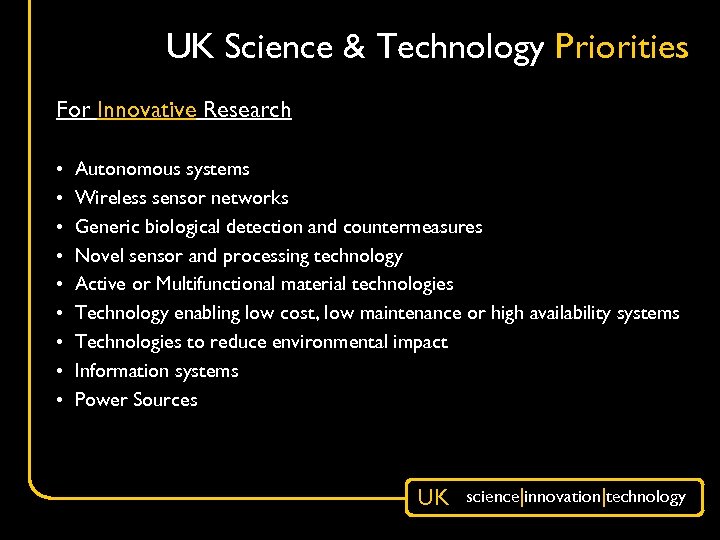
UK Science & Technology Priorities For Innovative Research • • • Autonomous systems Wireless sensor networks Generic biological detection and countermeasures Novel sensor and processing technology Active or Multifunctional material technologies Technology enabling low cost, low maintenance or high availability systems Technologies to reduce environmental impact Information systems Power Sources UK science|innovation|technology
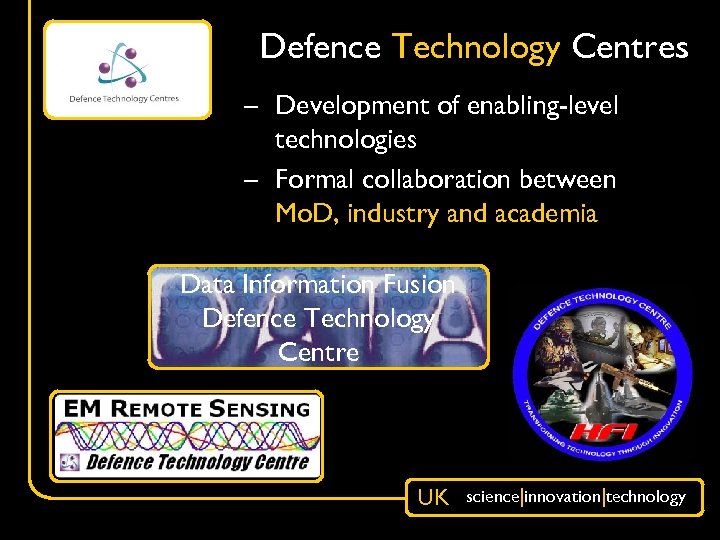
Defence Technology Centres – Development of enabling-level technologies – Formal collaboration between Mo. D, industry and academia Data Information Fusion Defence Technology Centre UK science|innovation|technology
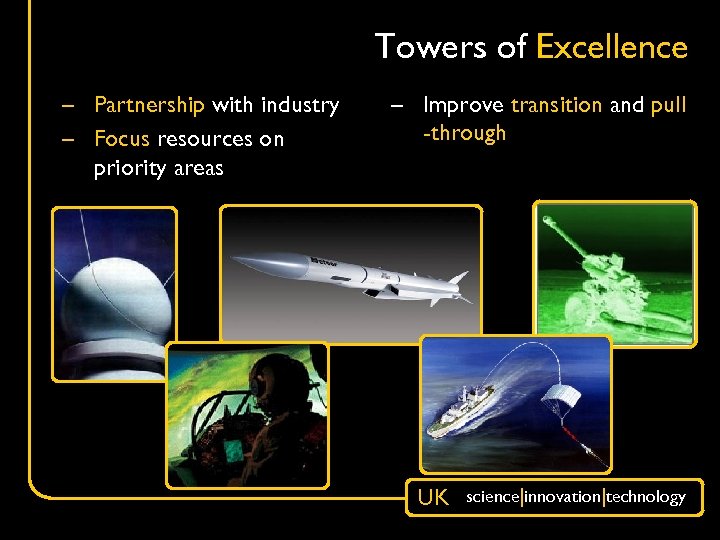
Towers of Excellence – Partnership with industry – Focus resources on priority areas – Improve transition and pull -through • UK science|innovation|technology
Outline • UK Ministry of Defence Science and Technology • Why Cooperate? • US/UK Cooperation • The Technical Cooperation Program UK science|innovation|technology
Why Cooperate? • Military Imperative – Improved interoperability – More capable allies – increased burden-sharing – Lessons identified / learnt • Fiscal Imperative – Reduced research and acquisition costs • Intellectual Imperative – Wider intellectual pool – Peer review • Technology Imperative – Access to unique capabilities – Improved technology access UK science|innovation|technology
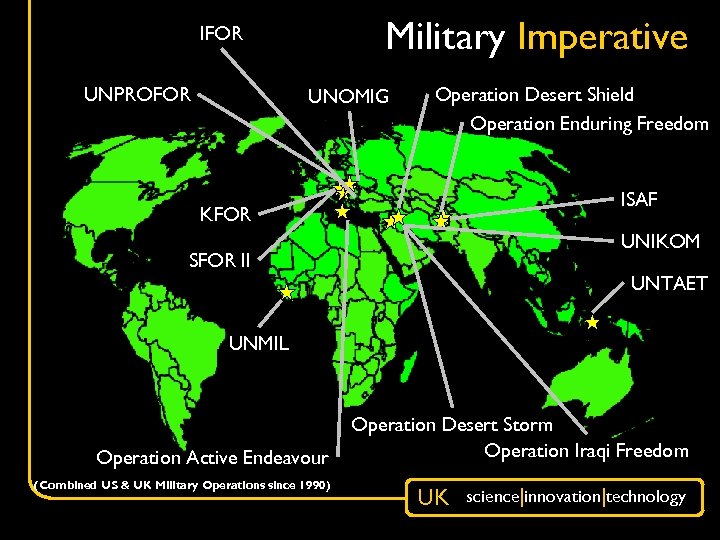
Military Imperative IFOR UNPROFOR UNOMIG Operation Desert Shield Operation Enduring Freedom ISAF KFOR UNIKOM SFOR II UNTAET UNMIL Operation Active Endeavour (Combined US & UK Military Operations since 1990) Operation Desert Storm Operation Iraqi Freedom UK science|innovation|technology
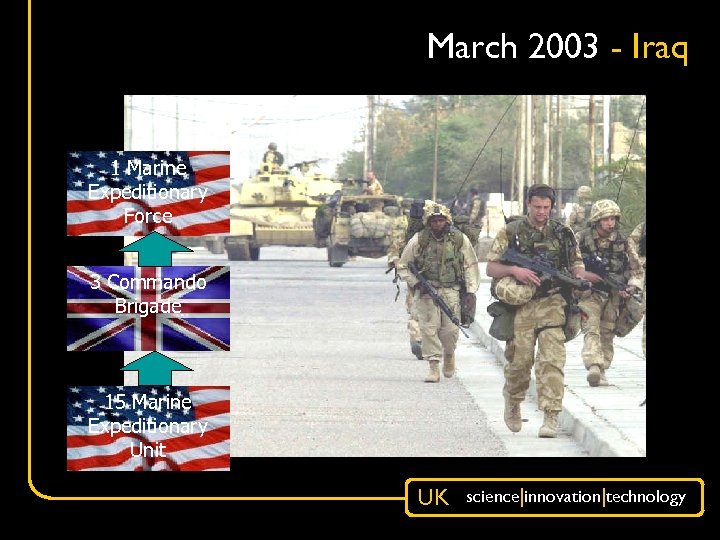
March 2003 - Iraq 1 Marine Expeditionary Force 3 Commando Brigade 15 Marine Expeditionary Unit UK science|innovation|technology
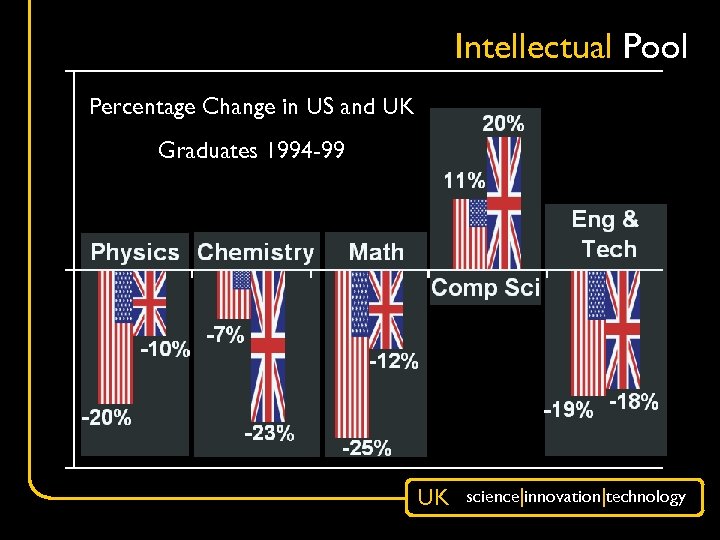
Intellectual Pool Percentage Change in US and UK Graduates 1994 -99 UK science|innovation|technology
Fiscal Pressures • Defence budgets under increasing pressure from other priorities in government spending plans • Within Defence Budgets S+T is under increasing pressure from other priorities (e. g. O&M) – DOD S+T funds requested in 2006 lower than 2005 request – UK Defence S+T budget has seen a steady decline in real terms over the last decade UK science|innovation|technology
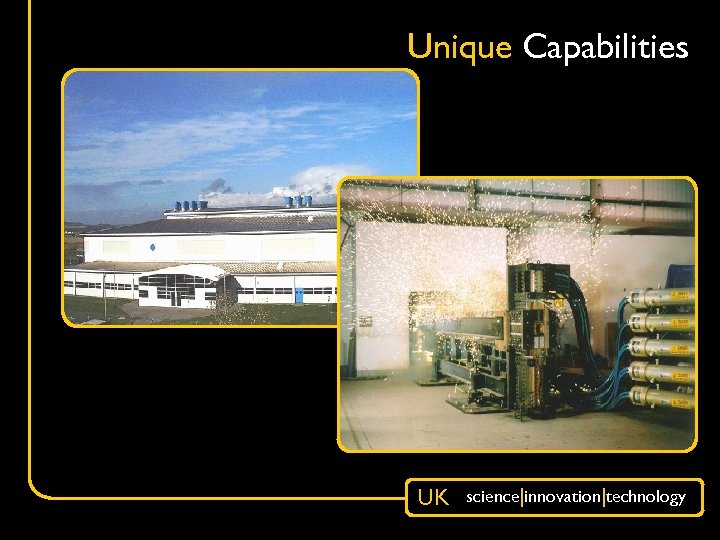
Unique Capabilities UK science|innovation|technology
Outline • UK Ministry of Defence Science and Technology • Why Cooperate? • US/UK Cooperation • The Technical Cooperation Program UK science|innovation|technology
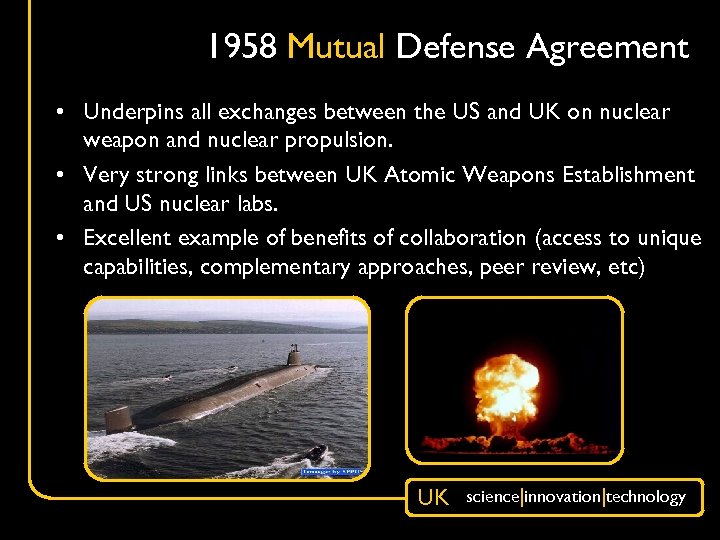
1958 Mutual Defense Agreement • Underpins all exchanges between the US and UK on nuclear weapon and nuclear propulsion. • Very strong links between UK Atomic Weapons Establishment and US nuclear labs. • Excellent example of benefits of collaboration (access to unique capabilities, complementary approaches, peer review, etc) UK science|innovation|technology
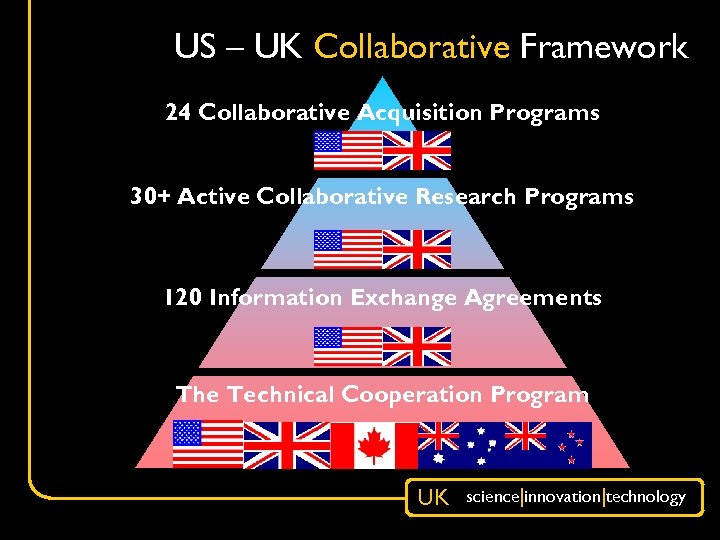
US – UK Collaborative Framework 24 Collaborative Acquisition Programs 30+ Active Collaborative Research Programs 120 Information Exchange Agreements The Technical Cooperation Program UK science|innovation|technology
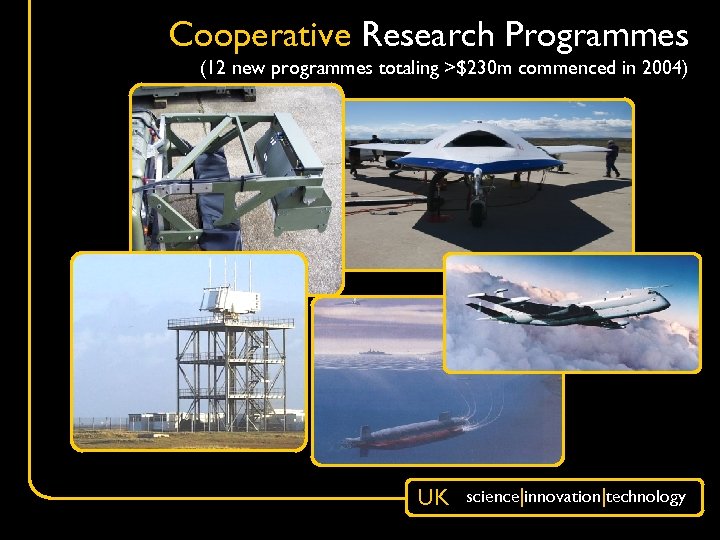
Cooperative Research Programmes (12 new programmes totaling >$230 m commenced in 2004) UK science|innovation|technology
International Technology Alliance • A new model of collaboration • UK/US government, industry and academic partnership • Network & Information Sciences – – Network Theory Security across a system of systems Sensor information processing and delivery Distributed coalition planning and decision making • Competition in progress – ITA begins work early 2006 UK science|innovation|technology
Challenges • Disparity in funding – Need to focus on mutual capabilities and ensure we burden-share • Different approaches to S+T – UK analysis vs US demonstration – can be complimentary • Transitioning cooperative research – Need earlier industry engagement • Export controls – Bilateral Defense Acquisition Committee established by President and Prime Minister to address barriers UK science|innovation|technology
Outline • UK Ministry of Defence Science and Technology • Why Cooperate? • US/UK Cooperation • The Technical Cooperation Program UK science|innovation|technology
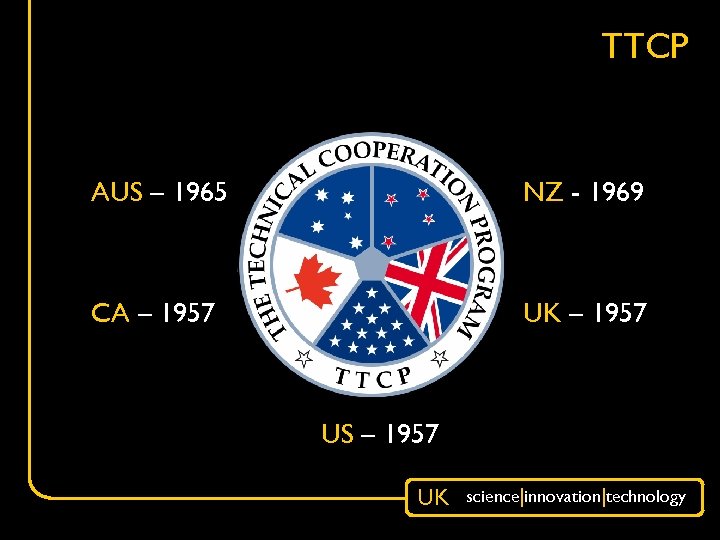
TTCP AUS – 1965 NZ - 1969 CA – 1957 UK – 1957 US – 1957 UK science|innovation|technology
TTCP Aims • Harmonize S&T programmes • avoid duplication • Supplement each nation’s program with knowledge and resources of others • Information exchange • Joint trials and experimentation • Joint projects • Provide best technical information for advice • Enabler for Coalition warfare / interoperability • S&T collaboration a starting point for joint development and interoperability UK science|innovation|technology
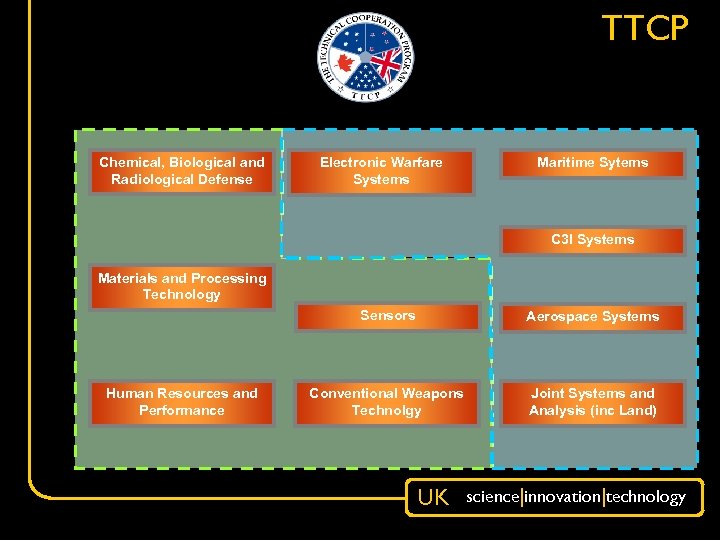
TTCP Chemical, Biological and Radiological Defense Electronic Warfare Systems Maritime Sytems C 3 I Systems Materials and Processing Technology Sensors Human Resources and Performance Aerospace Systems Conventional Weapons Technolgy Joint Systems and Analysis (inc Land) UK science|innovation|technology
TTCP - The Global Laboratory • • 5 Nations 10 Technology and Systems Groups 80 Technical Panels & Action Groups 170 national organisations on 450 sites 300 active TTCP work strands 1, 200 scientists and engineers directly engaged 6, 000 + scientists and engineers accessed Value of working together – Priceless! UK science|innovation|technology
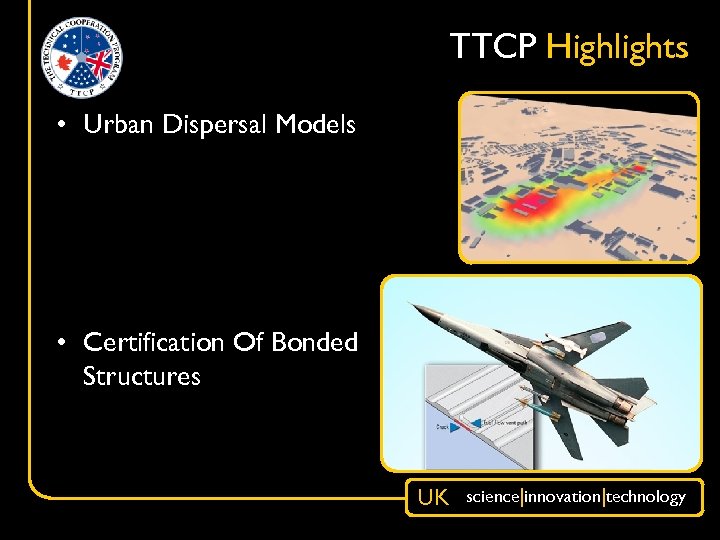
TTCP Highlights • Urban Dispersal Models • Certification Of Bonded Structures UK science|innovation|technology
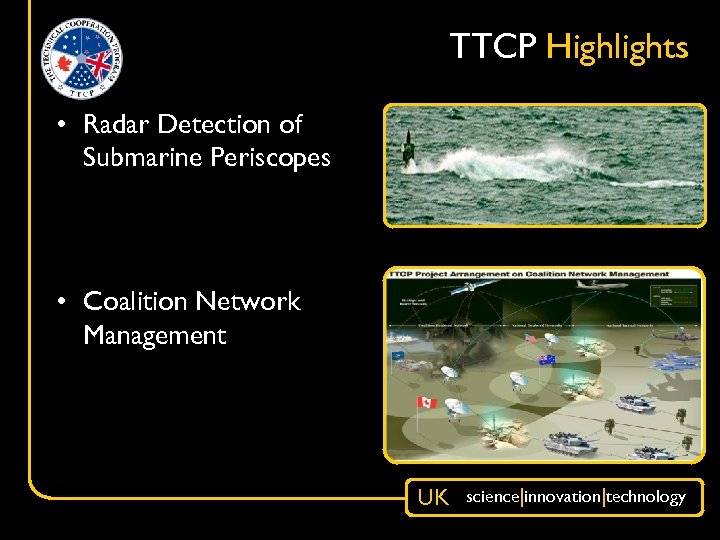
TTCP Highlights • Radar Detection of Submarine Periscopes • Coalition Network Management UK science|innovation|technology
Questions? For further information please contact: : Adrian Baguley Counsellor Defence Science and Technology British Embassy 3100 Massachusetts Avenue, NW Washington DC 20008 adrian. baguley@moduk. org Phone: +1 202 588 6723 UK science|innovation|technology
Скачать презентацию International Technology Cooperation Adrian Baguley Defence Science and
5d08ffa43ee3e4469cf803cbc10d600d.ppt