


 Скачать презентацию International Pellet Watch http www pelletwatch org International
ec4c1def7648df4416703ac516f4a613.ppt
- Количество слайдов: 36
 International Pellet Watch http: //www. pelletwatch. org/ International Pellet Watch Transfer of hazardous chemicals from marine plastics to ecosystem Hideshige TAKADA Laboratory of Organic Geochemistry (LOG) Tokyo University of Agriculture and Technology (TUAT) Japan
 Topics 1. Introduction of International Pellet Watch 2. Transfer of hazardous chemicals from ingested plastics to biological tissue of oceanic seabirds.
 International Pellet Watch To globally monitor persistent organic pollutants (POPs) by using beached plastic resin pellets To understand magnitude and spatial distribution of chemical risk associated with marine plastics. Under cooperation with world NGO established in 2005
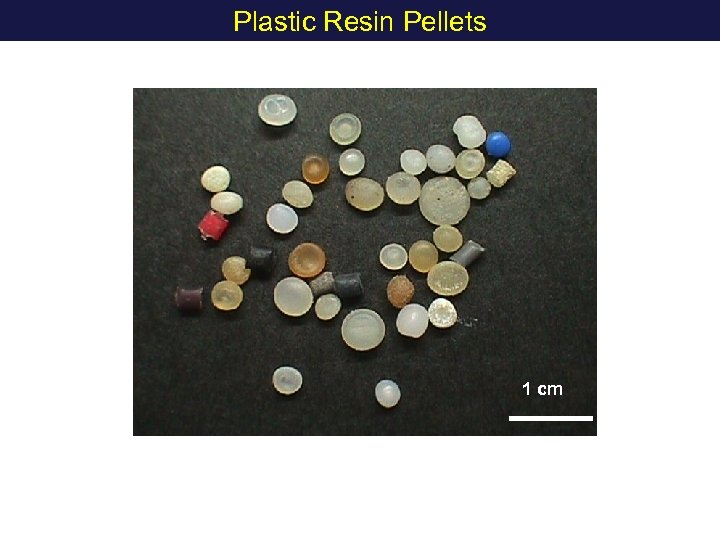 Plastic Resin Pellets 1 cm
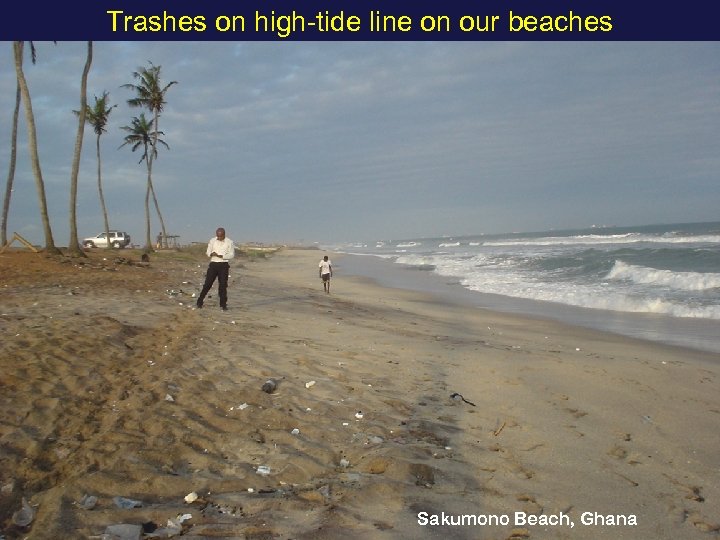 Trashes on high-tide line on our beaches Sakumono Beach, Ghana
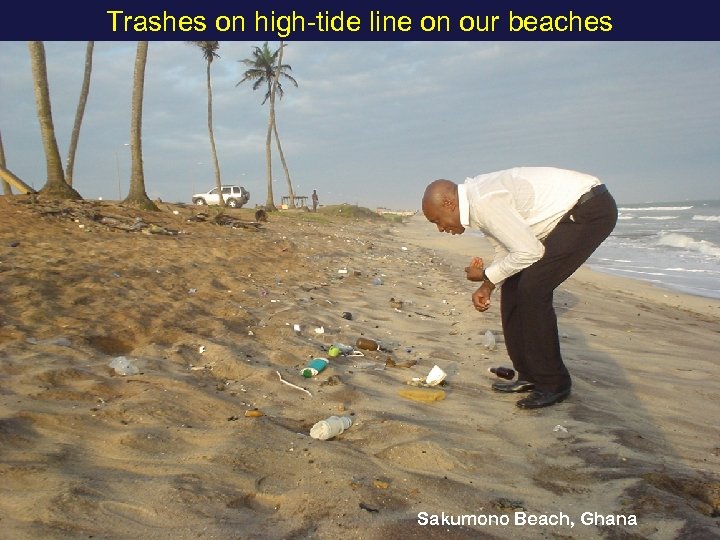 Trashes on high-tide line on our beaches Sakumono Beach, Ghana
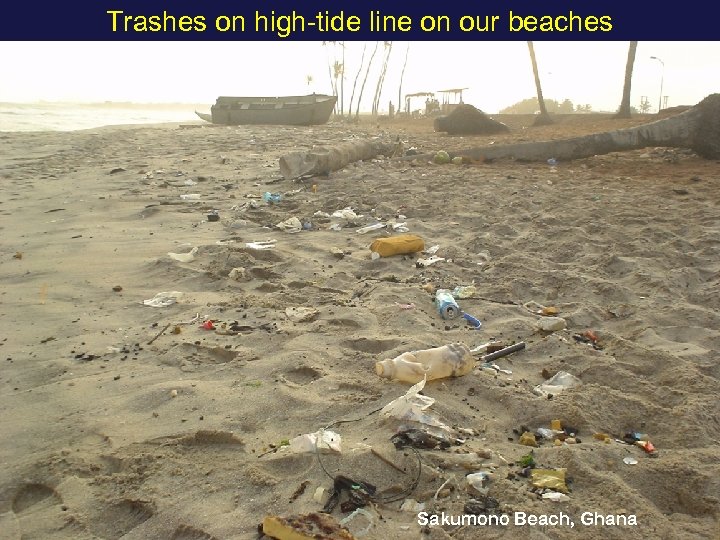 Trashes on high-tide line on our beaches Sakumono Beach, Ghana
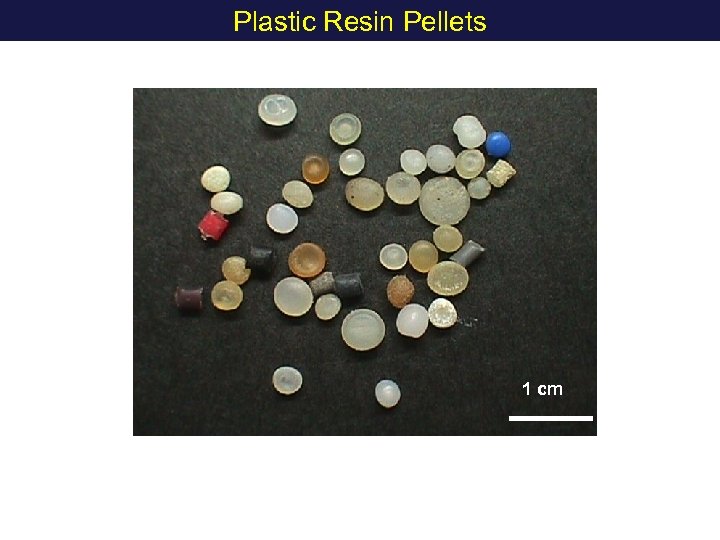 Plastic Resin Pellets 1 cm
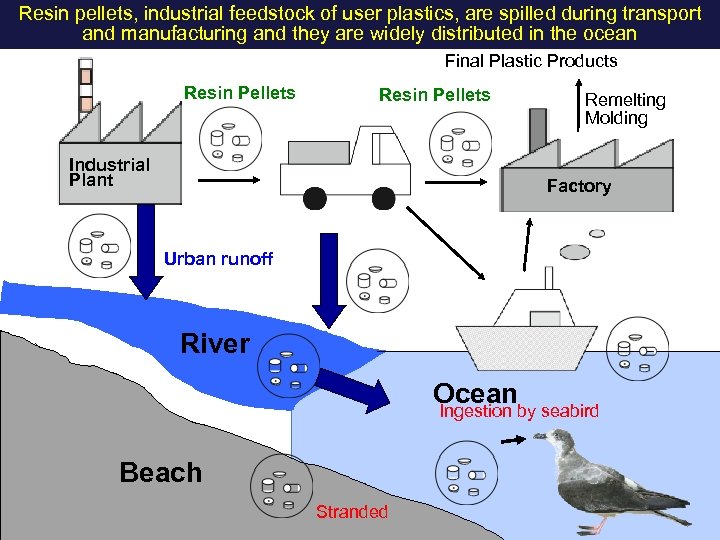 Resin pellets, industrial feedstock of user plastics, are spilled during transport and manufacturing and they are widely distributed in the ocean Final Plastic Products Resin Pellets Industrial Plant Remelting Molding Factory Urban runoff River Ocean Ingestion by seabird Beach Stranded
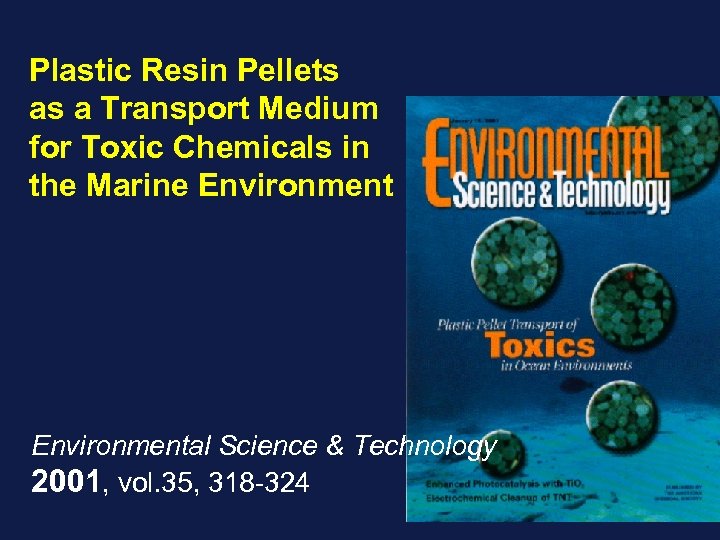 Plastic Resin Pellets as a Transport Medium for Toxic Chemicals in the Marine Environmental Science & Technology 2001, vol. 35, 318 -324
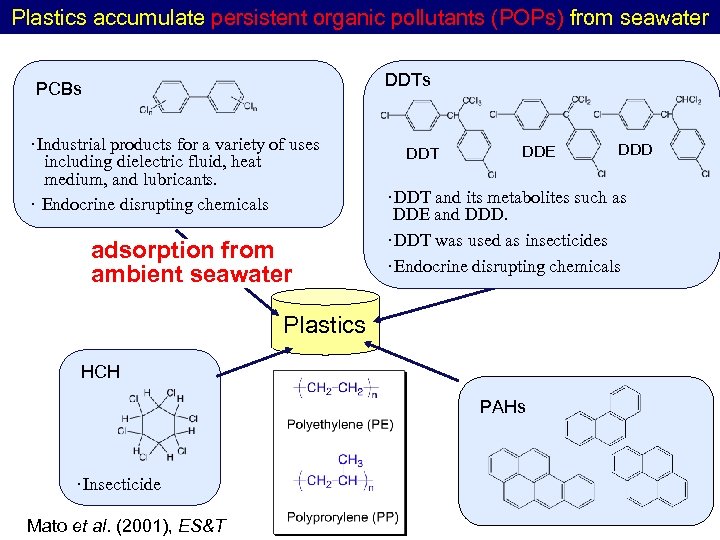 Plastics accumulate persistent organic pollutants (POPs) from seawater DDTs PCBs ・Industrial products for a variety of uses including dielectric fluid, heat medium, and lubricants. ・ Endocrine disrupting chemicals adsorption from ambient seawater DDT DDE ・DDT and its metabolites such as DDE and DDD. ・DDT was used as insecticides ・Endocrine disrupting chemicals Plastics HCH PAHs ・Insecticide Mato et al. (2001), ES&T DDD
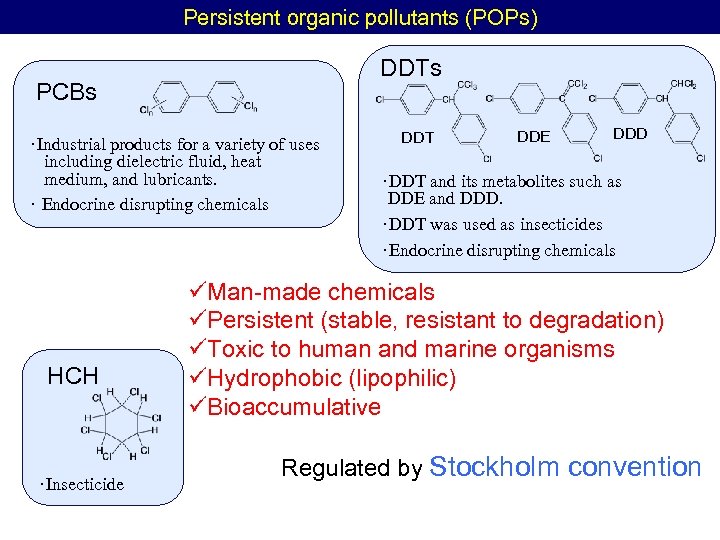 Persistent organic pollutants (POPs) DDTs PCBs ・Industrial products for a variety of uses including dielectric fluid, heat medium, and lubricants. ・ Endocrine disrupting chemicals HCH ・Insecticide DDT DDE DDD ・DDT and its metabolites such as DDE and DDD. ・DDT was used as insecticides ・Endocrine disrupting chemicals üMan-made chemicals üPersistent (stable, resistant to degradation) üToxic to human and marine organisms üHydrophobic (lipophilic) üBioaccumulative Regulated by Stockholm convention
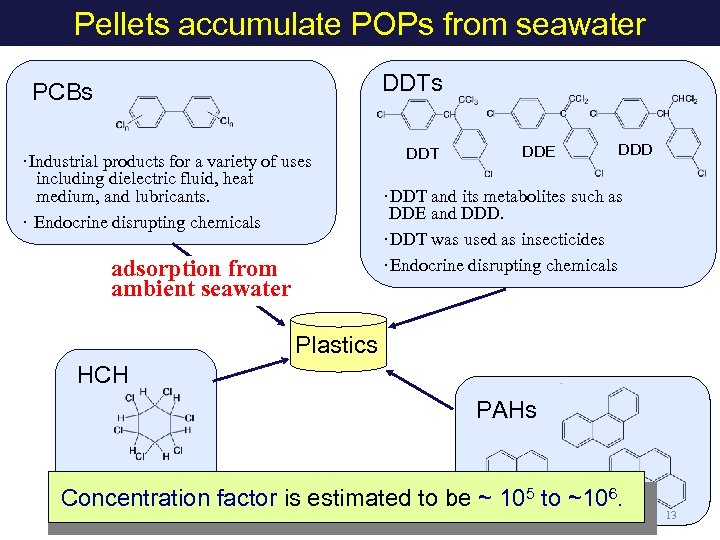 Pellets accumulate POPs from seawater DDTs PCBs ・Industrial products for a variety of uses including dielectric fluid, heat medium, and lubricants. ・ Endocrine disrupting chemicals adsorption from ambient seawater DDT DDE DDD ・DDT and its metabolites such as DDE and DDD. ・DDT was used as insecticides ・Endocrine disrupting chemicals Plastics HCH PAHs ・Insecticide Concentration factor is estimated to be ~ 105 to ~106. 13
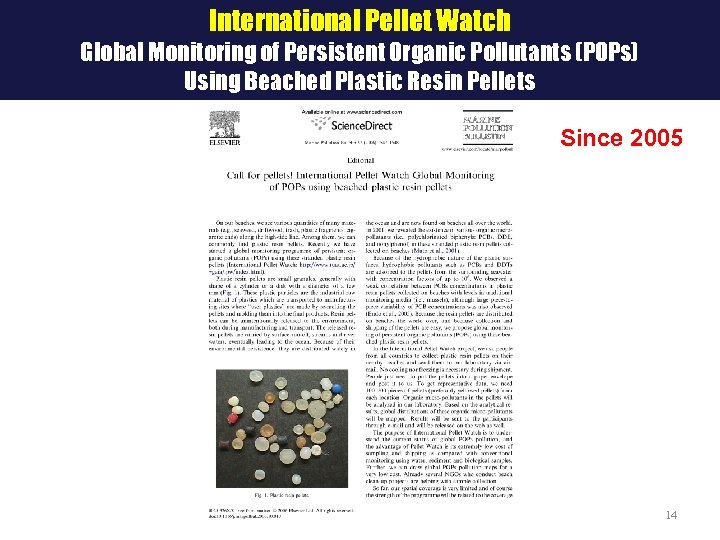 International Pellet Watch Global Monitoring of Persistent Organic Pollutants (POPs) Using Beached Plastic Resin Pellets Since 2005 14
 International Pellet Watch To globally monitor persistent organic pollutants (POPs) by using beached plastic resin pellets To understand magnitude and spatial distribution of chemical risk associated with marine plastics. Under cooperation with world NGO established in 2005
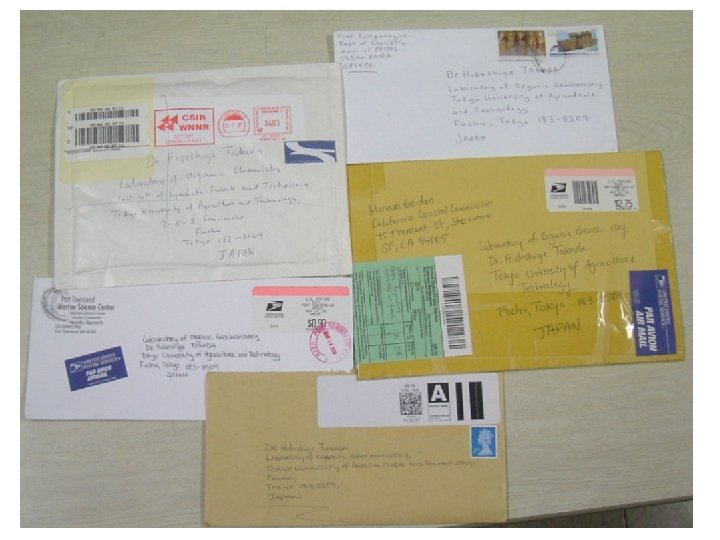
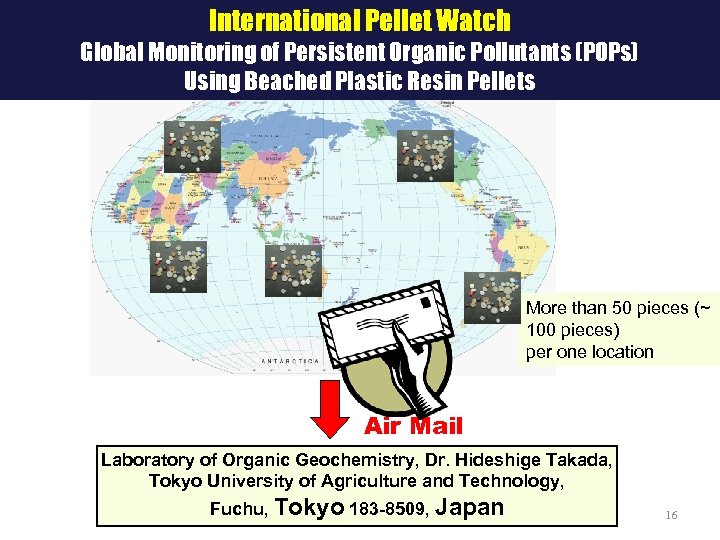 International Pellet Watch Global Monitoring of Persistent Organic Pollutants (POPs) Using Beached Plastic Resin Pellets More than 50 pieces (~ 100 pieces) per one location Air Mail Laboratory of Organic Geochemistry, Dr. Hideshige Takada, Tokyo University of Agriculture and Technology, Fuchu, Tokyo 183 -8509, Japan 16
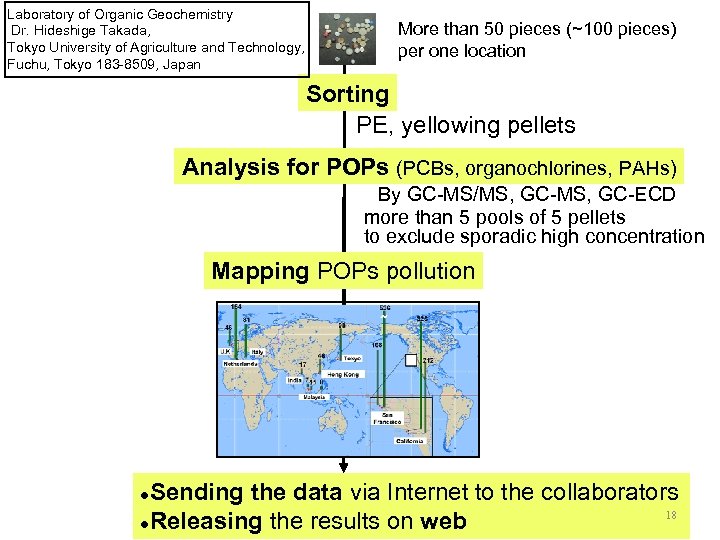 Laboratory of Organic Geochemistry Dr. Hideshige Takada, Tokyo University of Agriculture and Technology, Fuchu, Tokyo 183 -8509, Japan More than 50 pieces (~100 pieces) per one location Sorting PE, yellowing pellets Analysis for POPs (PCBs, organochlorines, PAHs) By GC-MS/MS, GC-ECD more than 5 pools of 5 pellets to exclude sporadic high concentration Mapping POPs pollution Sending the data via Internet to the collaborators 18 l. Releasing the results on web l
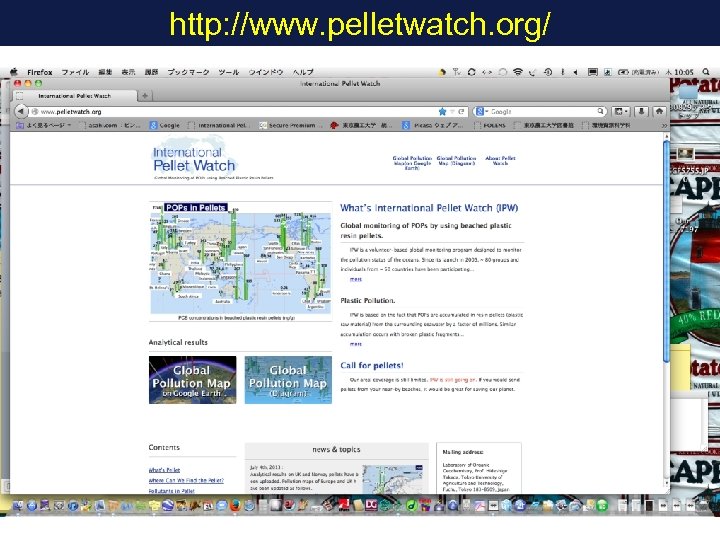 http: //www. pelletwatch. org/
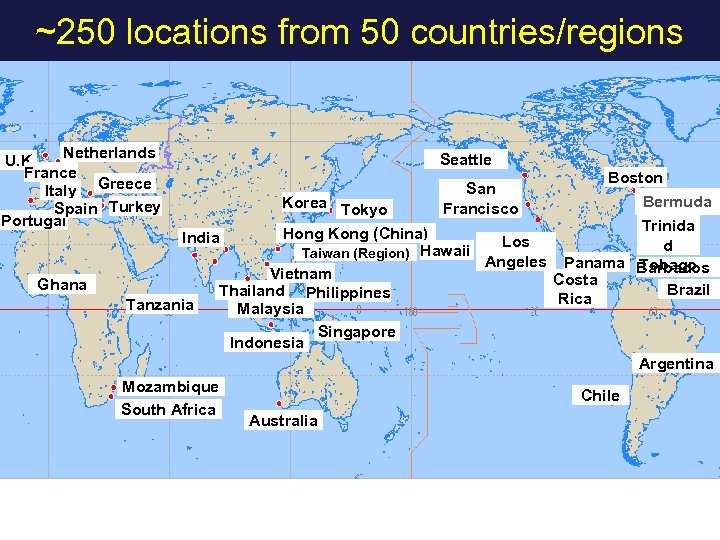 ~250 locations from 50 countries/regions Netherlands U. K France Italy Greece Spain Turkey Portugal Seattle Korea Tokyo Boston Bermuda Trinida Hong Kong (China) Los d Taiwan (Region) Hawaii Angeles Panama Barbados Tobago Vietnam Costa Brazil Thailand Philippines Rica Tanzania Malaysia Singapore Indonesia Argentina Mozambique Chile South Africa Australia India Ghana San Francisco
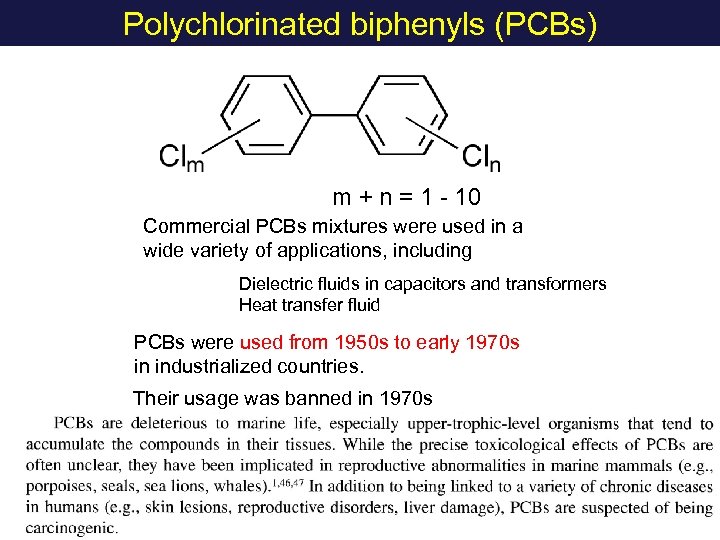 Polychlorinated biphenyls (PCBs) m + n = 1 - 10 Commercial PCBs mixtures were used in a wide variety of applications, including Dielectric fluids in capacitors and transformers Heat transfer fluid PCBs were used from 1950 s to early 1970 s in industrialized countries. Their usage was banned in 1970 s 21
 22
22
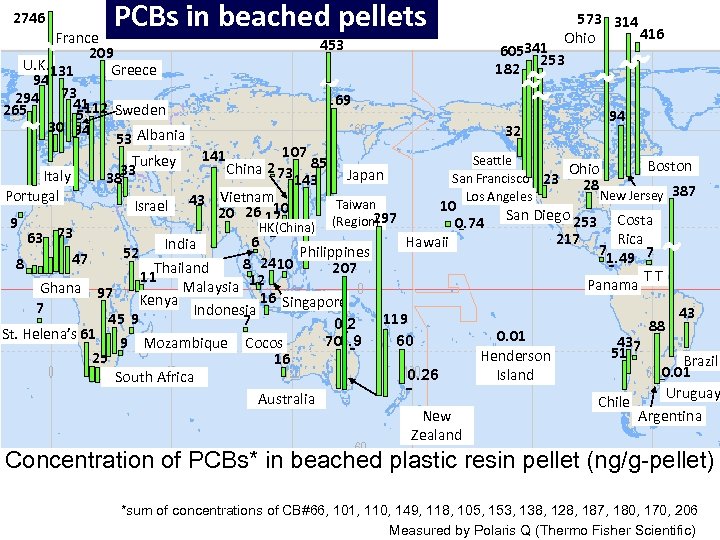 2746 PCBs in beached pellets France 209 U. K. 131 Greece 94 294 73 41 265 5112 Sweden 30 94 53 Albania Italy Portugal 9 63 73 47 8 Turkey 33 38 Israel 573 314 416 Ohio 605341 253 182 453 169 141 107 China 2 73 85 143 43 Vietnam 10 20 26 17 HK(China) Japan Taiwan 297 (Region) Seattle Boston Ohio San Francisco 23 28 New Jersey 387 Los Angeles 10 0. 74 Hawaii 6 India Philippines 8 24 10 207 Thailand 11 12 Malaysia Ghana 97 16 Singapore Kenya 7 Indonesia 45 9 119 7 0. 2 St. Helena’s 61 60 700. 9 9 Mozambique Cocos 25 16 0. 26 South Africa Australia New Zealand 52 94 32 San Diego 253 0. 01 Henderson Island Costa Rica 217 71. 49 7 TT Panama 43 51 7 88 43 Brazil 0. 01 Uruguay Chile Argentina Concentration of PCBs* in beached plastic resin pellet (ng/g-pellet) *sum of concentrations of CB#66, 101, 110, 149, 118, 105, 153, 138, 128, 187, 180, 170, 206 Measured by Polaris Q (Thermo Fisher Scientific)
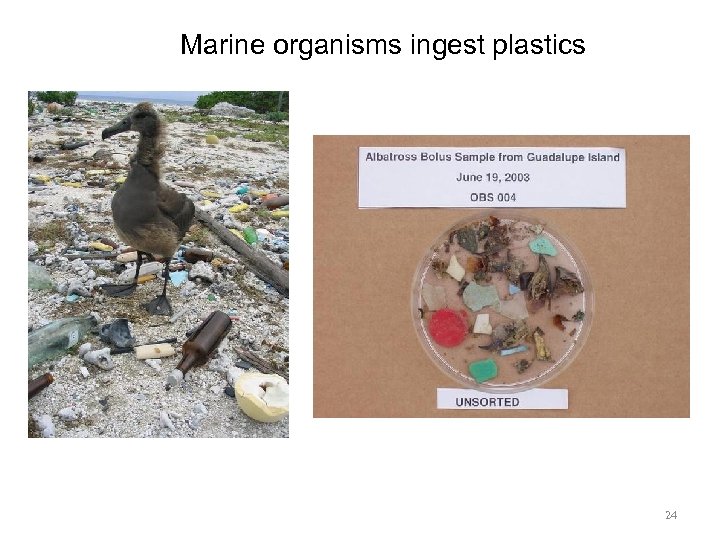 Marine organisms ingest plastics 24
 Faculty of 1000
 Transfer of chemicals from ingested plastics to biological tissue Question to be addressed : Transfer of chemicals from ingested plastics to biological tissue ? ?
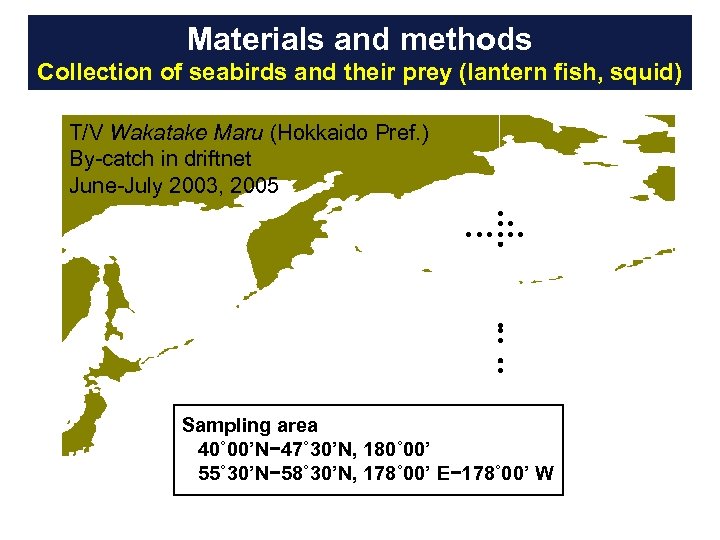 Materials and methods Collection of seabirds and their prey (lantern fish, squid) T/V Wakatake Maru (Hokkaido Pref. ) By-catch in driftnet June-July 2003, 2005 Sampling area 40˚ 00’N− 47˚ 30’N, 180˚ 00’ 55˚ 30’N− 58˚ 30’N, 178˚ 00’ E− 178˚ 00’ W
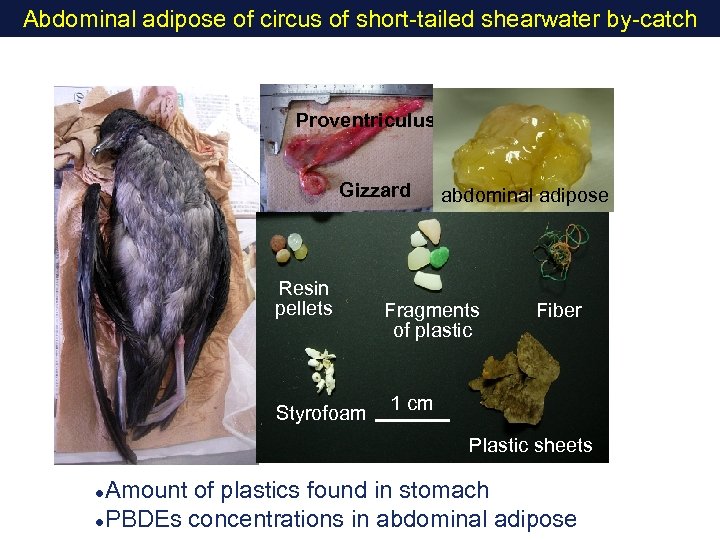 Abdominal adipose of circus of short-tailed shearwater by-catch Proventriculus Gizzard Resin pellets Styrofoam abdominal adipose Fragments of plastic Fiber 1 cm Plastic sheets Amount of plastics found in stomach l. PBDEs concentrations in abdominal adipose l
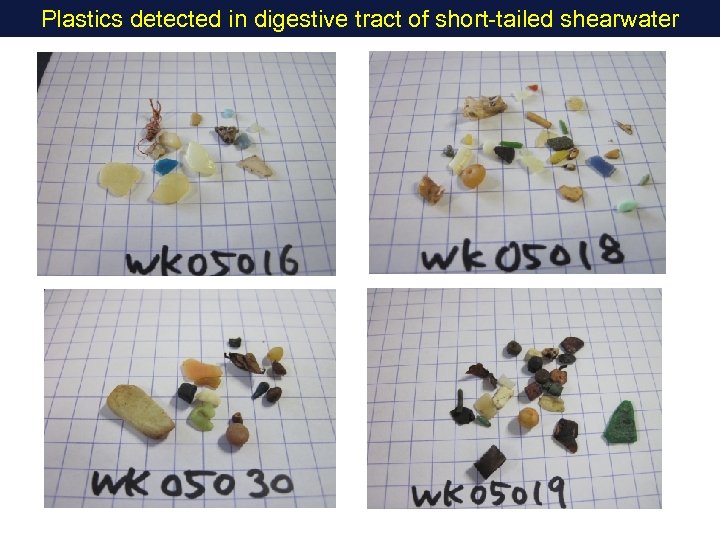 Plastics detected in digestive tract of short-tailed shearwater
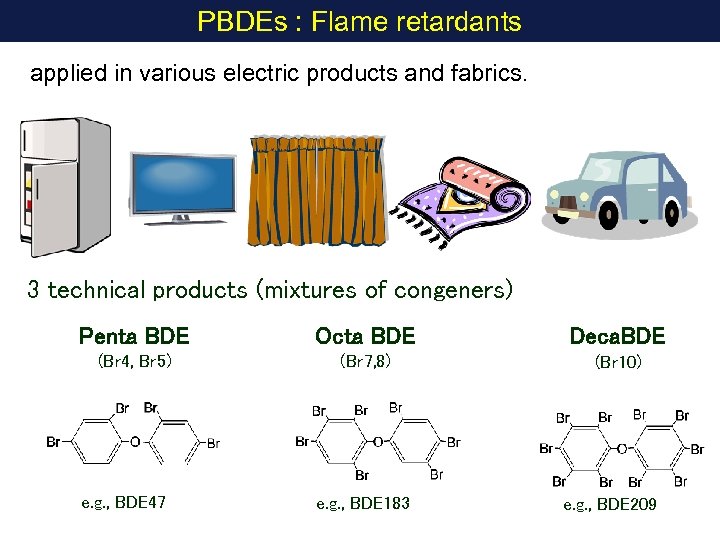 PBDEs : Flame retardants applied in various electric products and fabrics. 3 technical products (mixtures of congeners) Penta BDE Octa BDE Deca. BDE (Br 4, Br 5) (Br 7, 8) (Br 10) e. g. , BDE 47 e. g. , BDE 183 e. g. , BDE 209
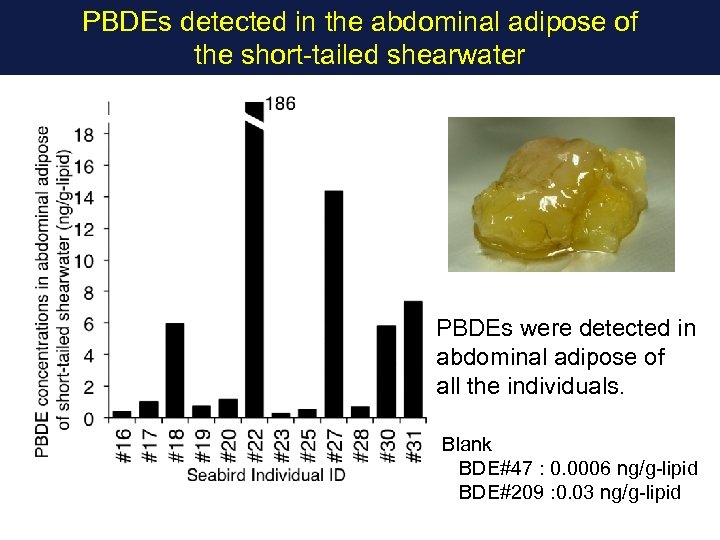 PBDEs detected in the abdominal adipose of the short-tailed shearwater PBDEs were detected in abdominal adipose of all the individuals. Blank BDE#47 : 0. 0006 ng/g-lipid BDE#209 : 0. 03 ng/g-lipid
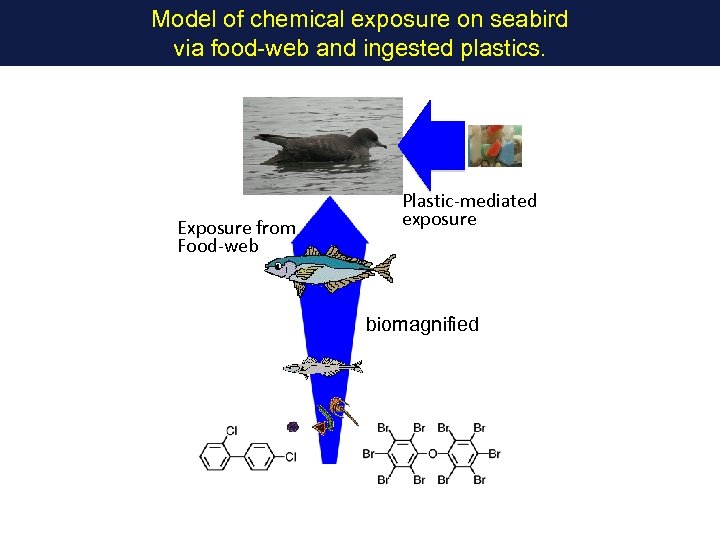 Model of chemical exposure on seabird via food-web and ingested plastics. Exposure from Food-web Plastic-mediated exposure biomagnified
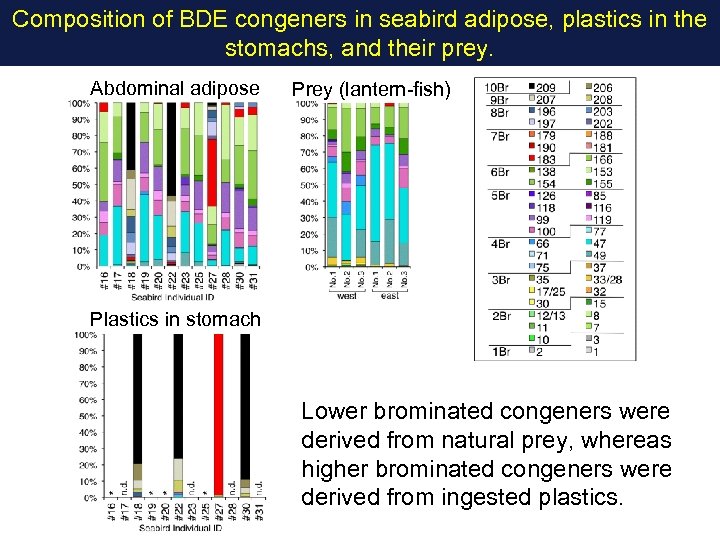 Composition of BDE congeners in seabird adipose, plastics in the stomachs, and their prey. Abdominal adipose Prey (lantern-fish) Plastics in stomach Lower brominated congeners were derived from natural prey, whereas higher brominated congeners were derived from ingested plastics.
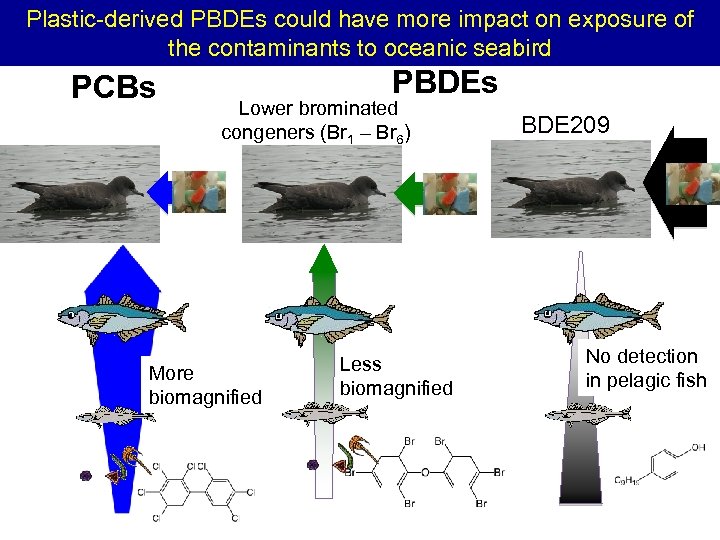 Plastic-derived PBDEs could have more impact on exposure of the contaminants to oceanic seabird PCBs PBDEs Lower brominated congeners (Br 1 – Br 6) More biomagnified Less biomagnified BDE 209 No detection in pelagic fish
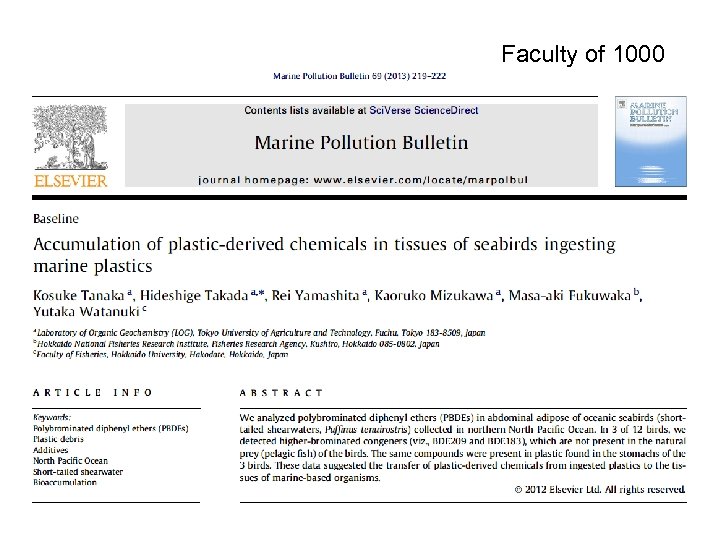
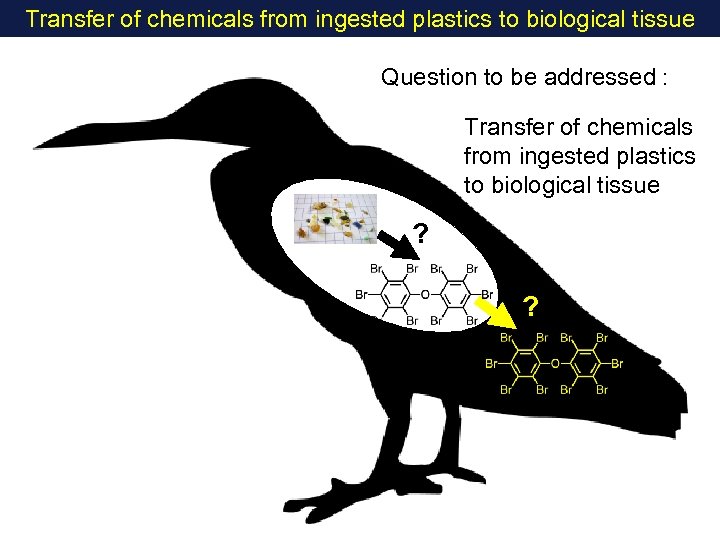
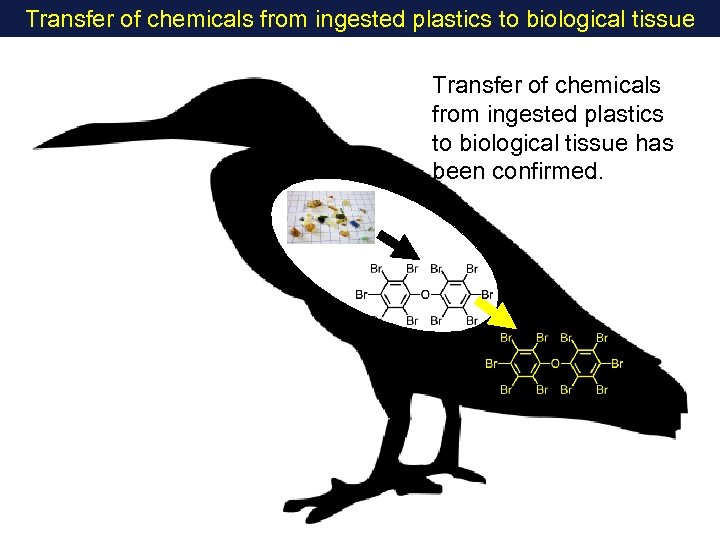 Transfer of chemicals from ingested plastics to biological tissue has been confirmed.
 Conclusion Marine plastics carry hazardous chemicals in marine ecosystem, even to internal tissue of marine biota.