 Скачать презентацию International Monetary Economics Feb 10 2004 Lesson 3
f6f2a985d2f13addc1e1ae7086e1cca3.ppt
- Количество слайдов: 34



International Monetary Economics Feb 10 2004 Lesson 3 By John Kennes
Announcements Feb 10 2004 Class cancelled on Feb 12, 2004. Neil Thygesen is giving a talk at the end of the month. Feb 27
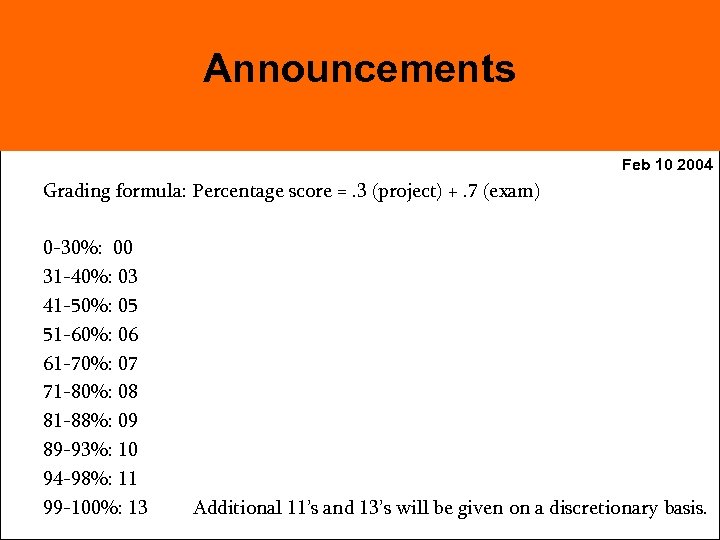
Announcements Feb 10 2004 Grading formula: Percentage score =. 3 (project) +. 7 (exam) 0 -30%: 00 31 -40%: 03 41 -50%: 05 51 -60%: 06 61 -70%: 07 71 -80%: 08 81 -88%: 09 89 -93%: 10 94 -98%: 11 99 -100%: 13 Additional 11’s and 13’s will be given on a discretionary basis.
The Choice of an Exchange Rate Regime Feb 10 2004 What are the choices? What theory is relevant to understanding the choices What are the policy implications?
Two regimes Feb 10 2004 Denmark: fixed exchange rate Canada: flexible exchange rate Why?
Exchange rates and Monetary Policy Feb 10 2004 Long-Run: real and monetary sphere separated Neutrality of money Purchasing power parity Short-Run: real and monetary spheres interfere The interest and exchange rate connection (Money and exchange rate policy can deal with undesirable fluctuations)
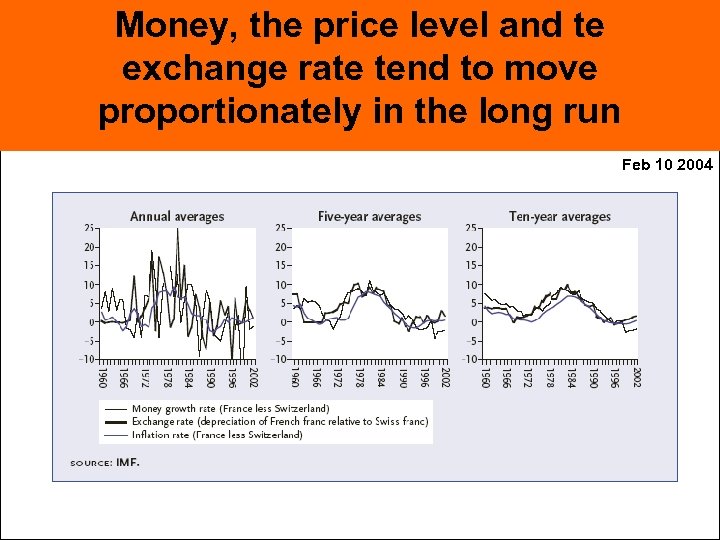
Money, the price level and te exchange rate tend to move proportionately in the long run Feb 10 2004
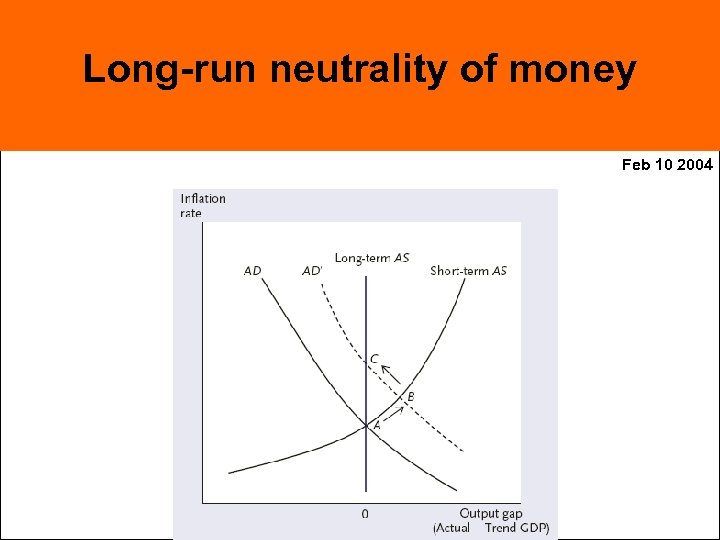
Long-run neutrality of money Feb 10 2004
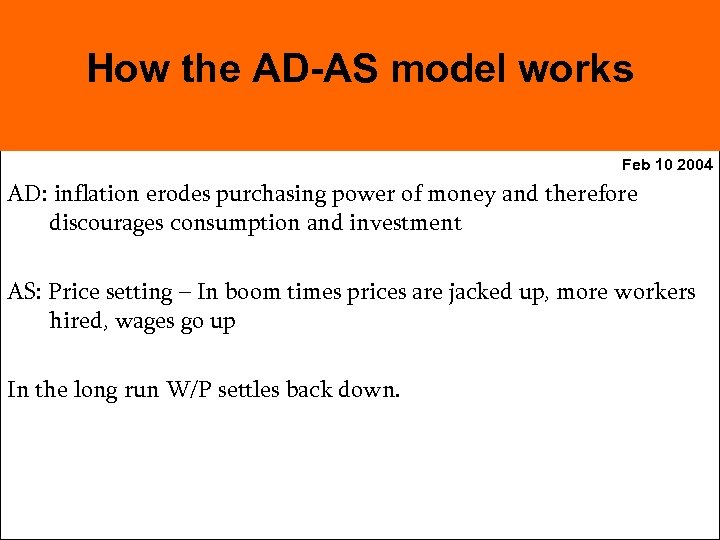
How the AD-AS model works Feb 10 2004 AD: inflation erodes purchasing power of money and therefore discourages consumption and investment AS: Price setting – In boom times prices are jacked up, more workers hired, wages go up In the long run W/P settles back down.
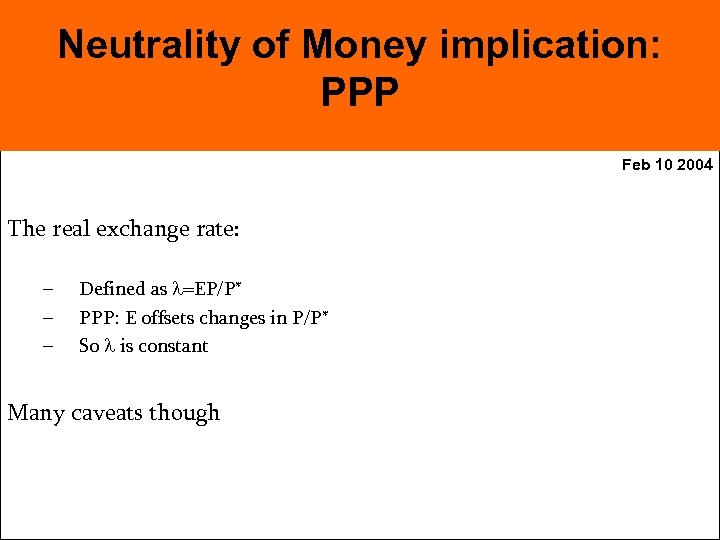
Neutrality of Money implication: PPP Feb 10 2004 The real exchange rate: – – – Defined as l=EP/P* PPP: E offsets changes in P/P* So l is constant Many caveats though
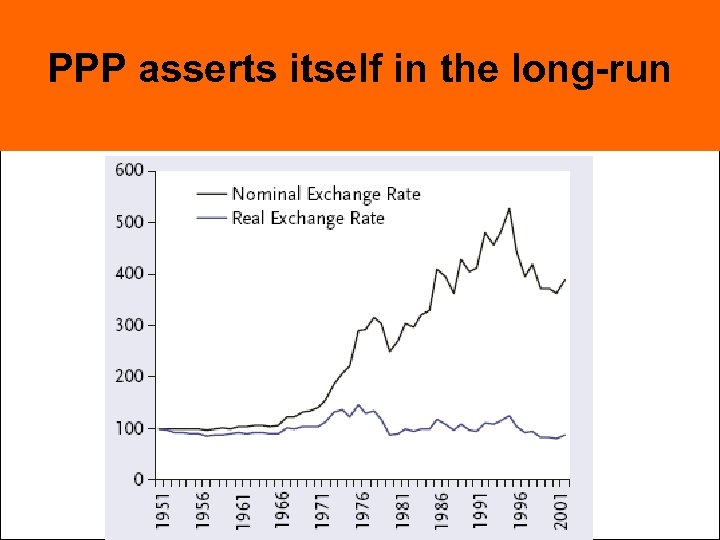
PPP asserts itself in the long-run
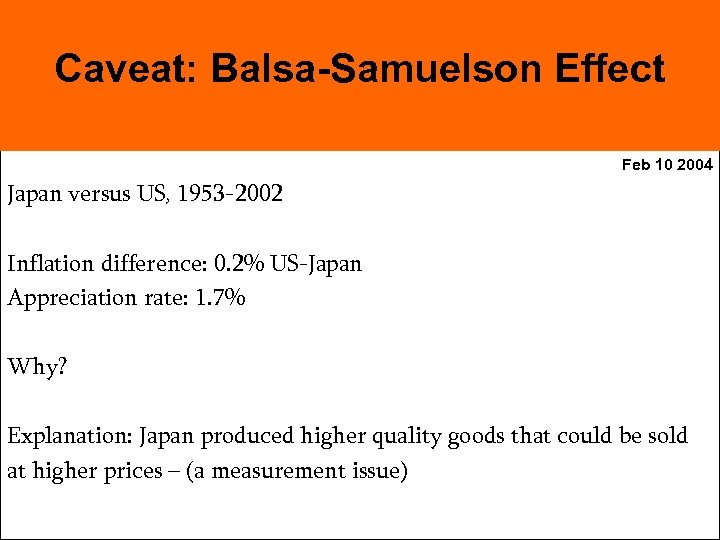
Caveat: Balsa-Samuelson Effect Feb 10 2004 Japan versus US, 1953 -2002 Inflation difference: 0. 2% US-Japan Appreciation rate: 1. 7% Why? Explanation: Japan produced higher quality goods that could be sold at higher prices – (a measurement issue)

Implication of sticky prices Feb 10 2004 Nominal exchange rate volatile Prices are much more sticky What about the real interest rate? Volatile fluctuations in the real exchange rate
Interest and exchange rate connection - effects Feb 10 2004 M increases -> credit abundant - > i falls Domestic Households take advantage of lower interest rates to borrow and spend Firms step up investment (Stock prices also typically increase) International Investors move assets out of the country where yields are more appealing Capital outflow results in a depreciation -> high competitiveness
4 Channels Feb 10 2004 1. 2. 3. 4. The interest rate channel The credit channel Stock market channel Exchange rate channel Expansion fuels inflation (lags of 2 years of more, because prices are sticky)
Effects are radically altered under fixed exchange rates Feb 10 2004 Price increases -> real appreciation -> competiveness declines – trade deficit Central bank is intervening: Selling part of its reserves and buying back its own currency -> reducing (reabsorbing) the money supply Efforts by Central bank to expand the money supply are thwarted by the need to conduct off-setting foreign exchange rate operations
IS-LM Feb 10 2004 IS curve: goods market equilibrium A decline in the interest rate results in more output LM curve: money market equilibrium Higher output gap raises demand for money
IS-LM: An increase in the money supply Feb 10 2004 Interest rates initially lower because LM curve shifts out Capital is flowing out, because of lower interest rates What happens next depends on the exchange rate regime
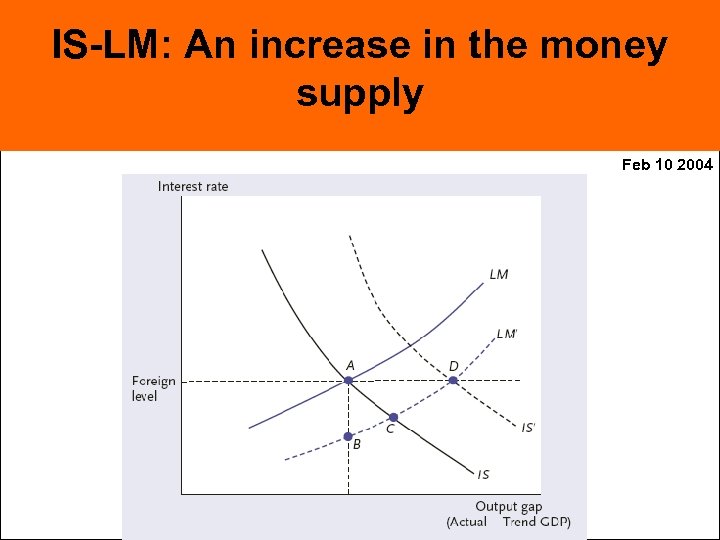
IS-LM: An increase in the money supply Feb 10 2004
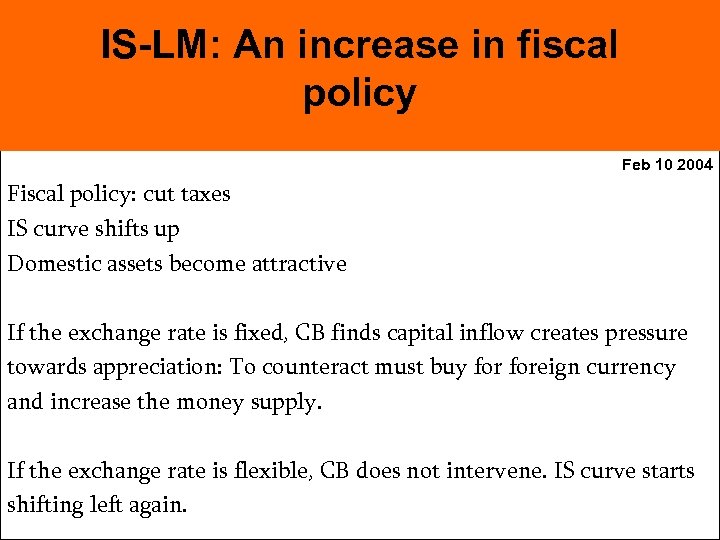
IS-LM: An increase in fiscal policy Feb 10 2004 Fiscal policy: cut taxes IS curve shifts up Domestic assets become attractive If the exchange rate is fixed, CB finds capital inflow creates pressure towards appreciation: To counteract must buy foreign currency and increase the money supply. If the exchange rate is flexible, CB does not intervene. IS curve starts shifting left again.
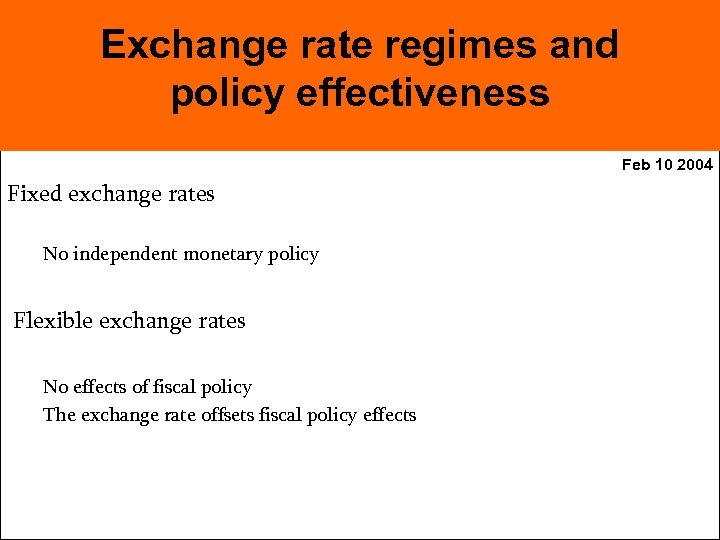
Exchange rate regimes and policy effectiveness Feb 10 2004 Fixed exchange rates No independent monetary policy Flexible exchange rates No effects of fiscal policy The exchange rate offsets fiscal policy effects
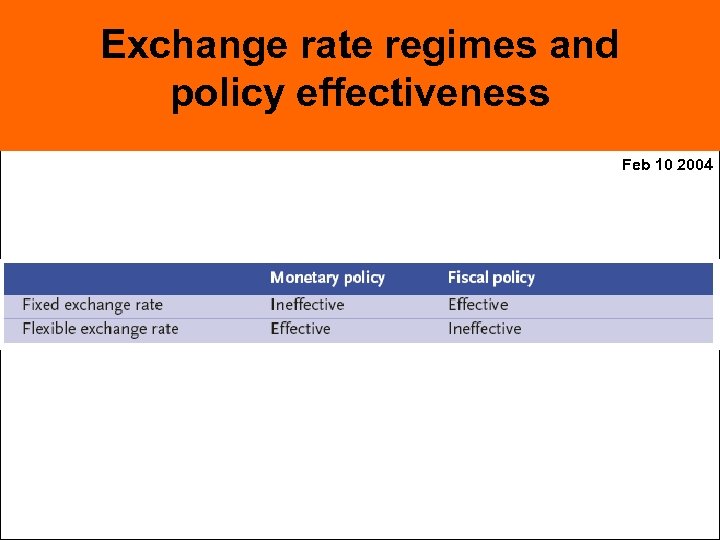
Exchange rate regimes and policy effectiveness Feb 10 2004
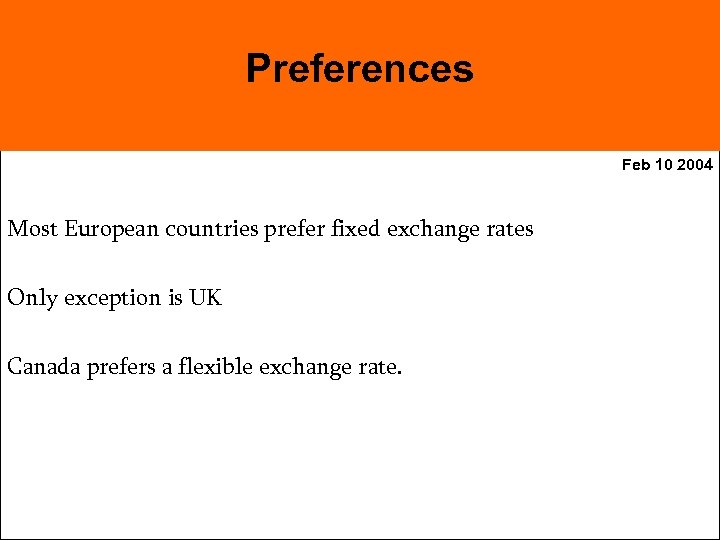
Preferences Feb 10 2004 Most European countries prefer fixed exchange rates Only exception is UK Canada prefers a flexible exchange rate.
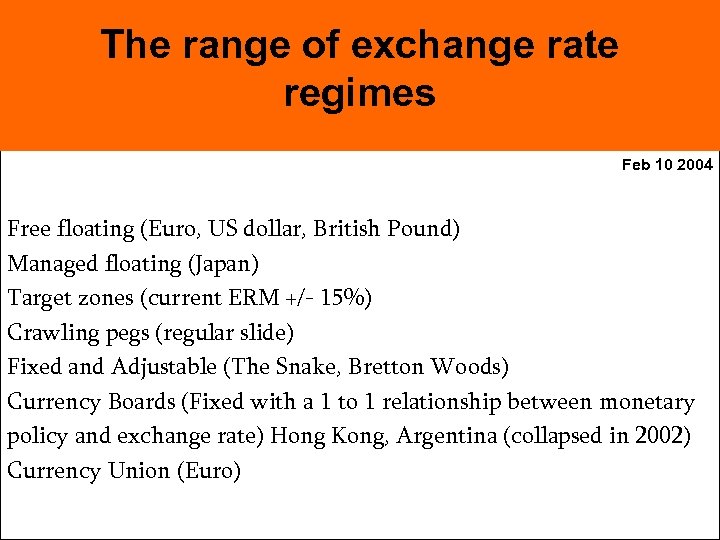
The range of exchange rate regimes Feb 10 2004 Free floating (Euro, US dollar, British Pound) Managed floating (Japan) Target zones (current ERM +/- 15%) Crawling pegs (regular slide) Fixed and Adjustable (The Snake, Bretton Woods) Currency Boards (Fixed with a 1 to 1 relationship between monetary policy and exchange rate) Hong Kong, Argentina (collapsed in 2002) Currency Union (Euro)
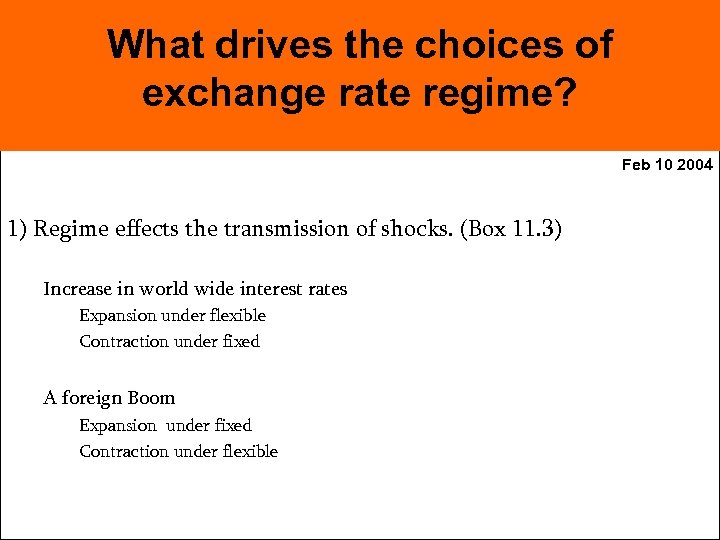
What drives the choices of exchange rate regime? Feb 10 2004 1) Regime effects the transmission of shocks. (Box 11. 3) Increase in world wide interest rates Expansion under flexible Contraction under fixed A foreign Boom Expansion under fixed Contraction under flexible
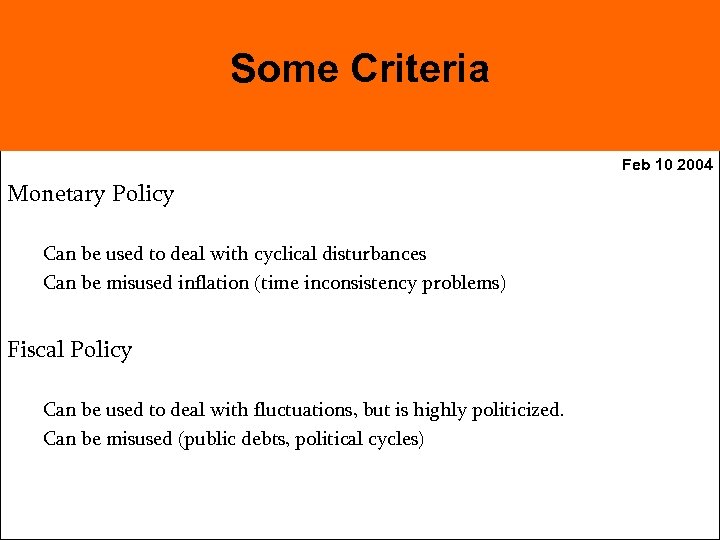
Some Criteria Feb 10 2004 Monetary Policy Can be used to deal with cyclical disturbances Can be misused inflation (time inconsistency problems) Fiscal Policy Can be used to deal with fluctuations, but is highly politicized. Can be misused (public debts, political cycles)
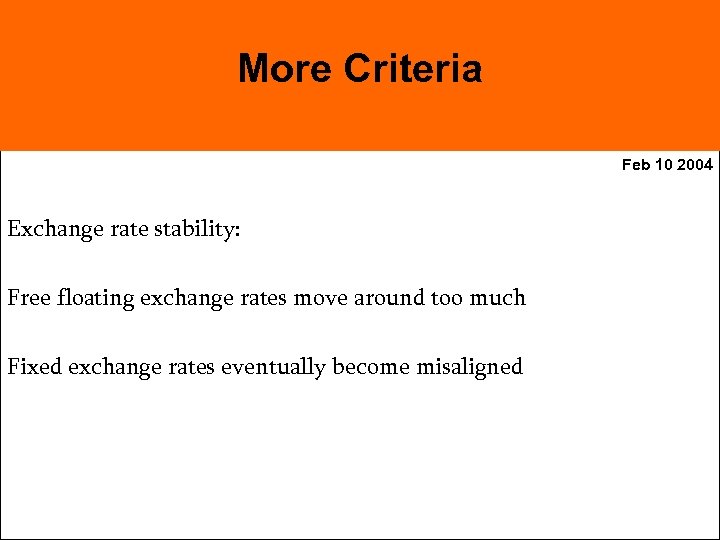
More Criteria Feb 10 2004 Exchange rate stability: Free floating exchange rates move around too much Fixed exchange rates eventually become misaligned
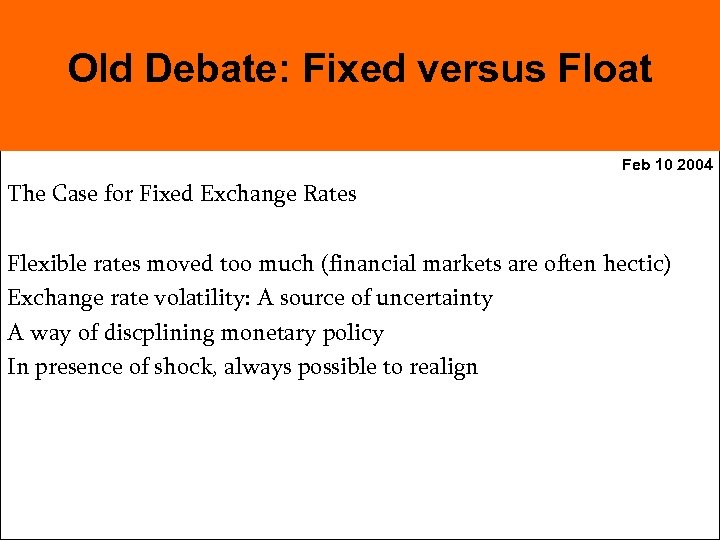
Old Debate: Fixed versus Float Feb 10 2004 The Case for Fixed Exchange Rates Flexible rates moved too much (financial markets are often hectic) Exchange rate volatility: A source of uncertainty A way of discplining monetary policy In presence of shock, always possible to realign
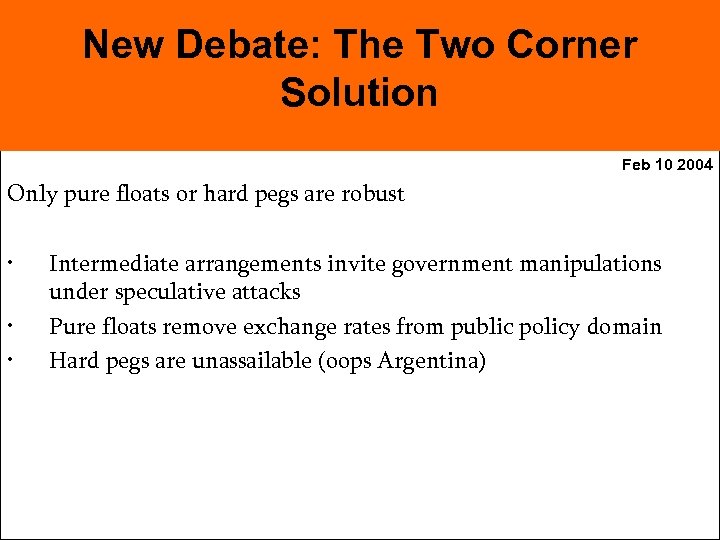
New Debate: The Two Corner Solution Feb 10 2004 Only pure floats or hard pegs are robust • • • Intermediate arrangements invite government manipulations under speculative attacks Pure floats remove exchange rates from public policy domain Hard pegs are unassailable (oops Argentina)
New Debate: The Two Corner Solution Feb 10 2004 In line with theory of time inconsistency • Soft pegs are half hearted monetary commitments, so they ultimately fail.
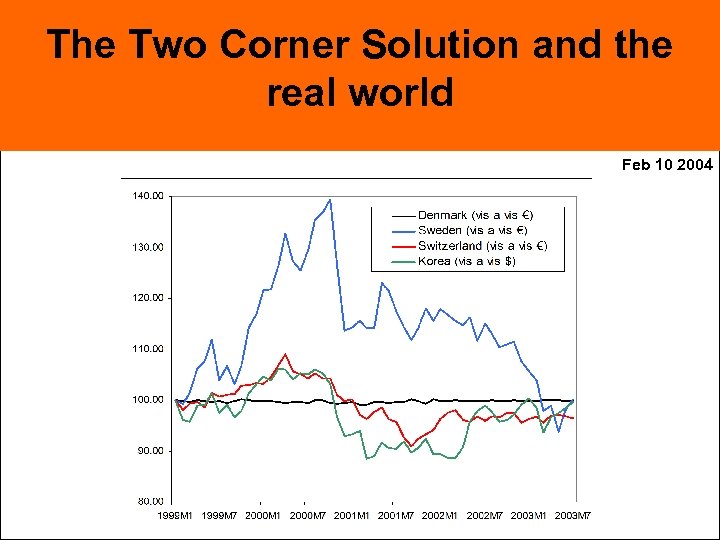
The Two Corner Solution and the real world Feb 10 2004 Fear of Floating: Many countries officially float but in fact intervene quite a bit Fear of Fixing: Many countries declare a peg but let the exchange rate move out of the official bounds.
The Two Corner Solution and the real world Feb 10 2004
The Two Corner Solution and the real world Feb 10 2004 Fear of Floating is deeply ingrained in many European countries Fear of fixing explains disenchantment with the EMS and some reluctance towards the monetary union.
Conclusions Feb 10 2004 • • • A menu is hard to pick: Tradeoffs are everywhere All of this takes the view of a single county Systems involve many countries and rest on agreed rules, including mutual support Since the end of the Bretton Woods, there is no world monetary system This leaves room for regional monetary systems. Enters Europe’s experience.
Скачать презентацию International Monetary Economics Feb 10 2004 Lesson 3
f6f2a985d2f13addc1e1ae7086e1cca3.ppt