


 Скачать презентацию INTERNATIONAL MARKET DEMAND MARKET POTENTIAL LECTURE 2
2 INTERNATIONAL MARKET DEMAND & MARKET POTENTIAL.pptx
- Количество слайдов: 35
 INTERNATIONAL MARKET DEMAND & MARKET POTENTIAL LECTURE 2
 LECTURE KEY POINTS 1. Population Metrics Population and Population Growth 3. Barriers to international market success Population & Poverty Language City Population Non-Verbal Language Private Consumption Religion & Values 2. Economic Metrics Political Instability Gross Domestic Product Laws and Government Regulations Household Expenditures Market Infrastructure International Market Demand International Marketing Attractiveness International Market Potential International Market Development Index Metric
 I. POPULATION METRICS POPULATION, POVERTY, EDUCATION, AGE, HOUSEHOLD INCOME, PRIVATE CONSUMPTION, ETC.
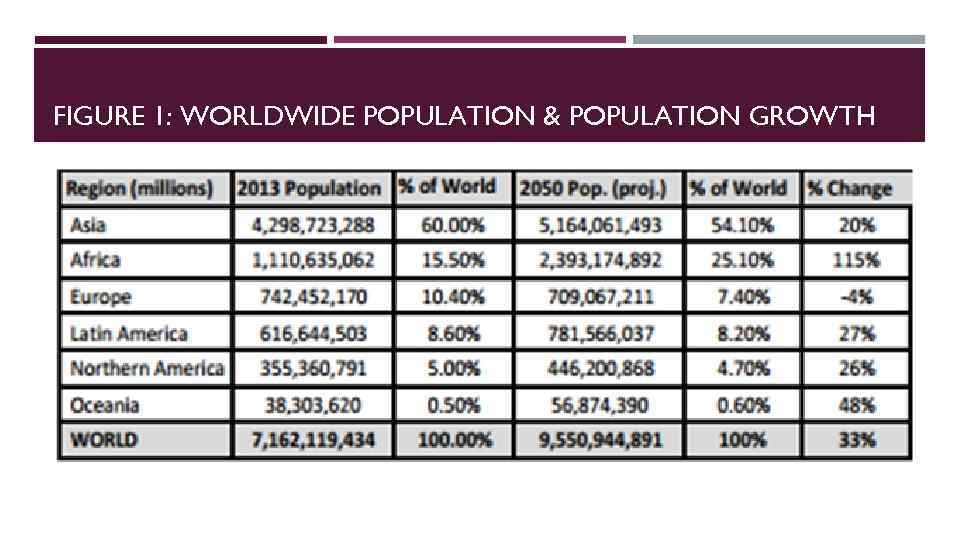 FIGURE 1: WORLDWIDE POPULATION & POPULATION GROWTH
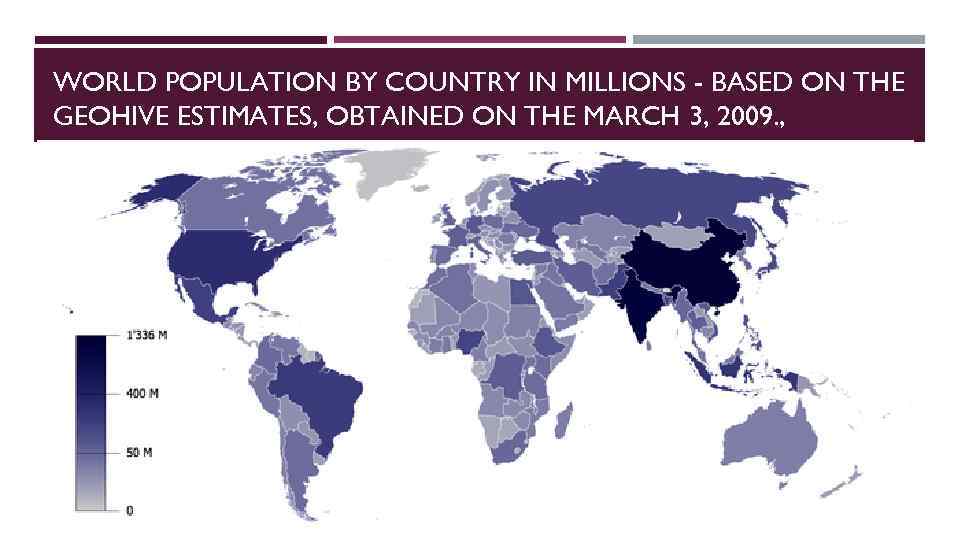 WORLD POPULATION BY COUNTRY IN MILLIONS - BASED ON THE GEOHIVE ESTIMATES, OBTAINED ON THE MARCH 3, 2009. ,
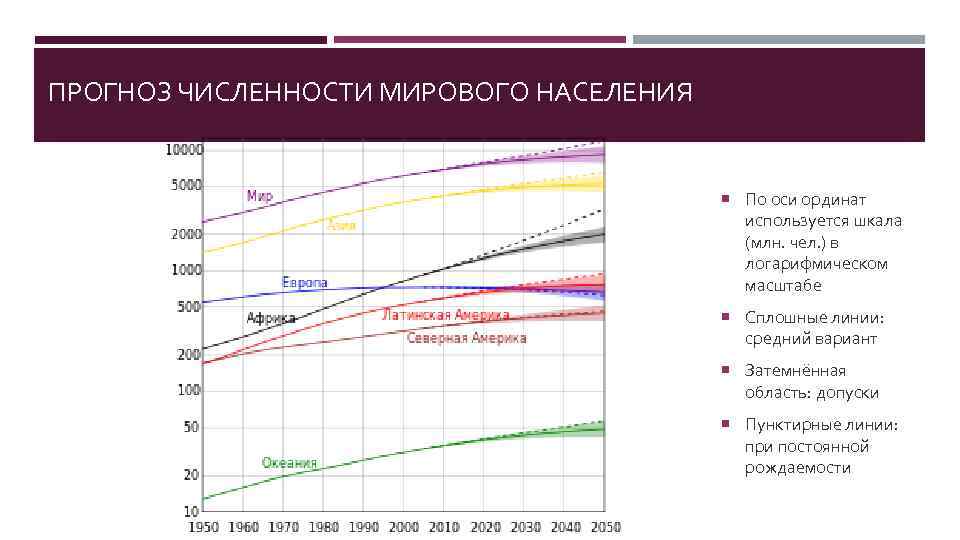 ПРОГНОЗ ЧИСЛЕННОСТИ МИРОВОГО НАСЕЛЕНИЯ По оси ординат используется шкала (млн. чел. ) в логарифмическом масштабе Сплошные линии: средний вариант Затемнённая область: допуски Пунктирные линии: при постоянной рождаемости
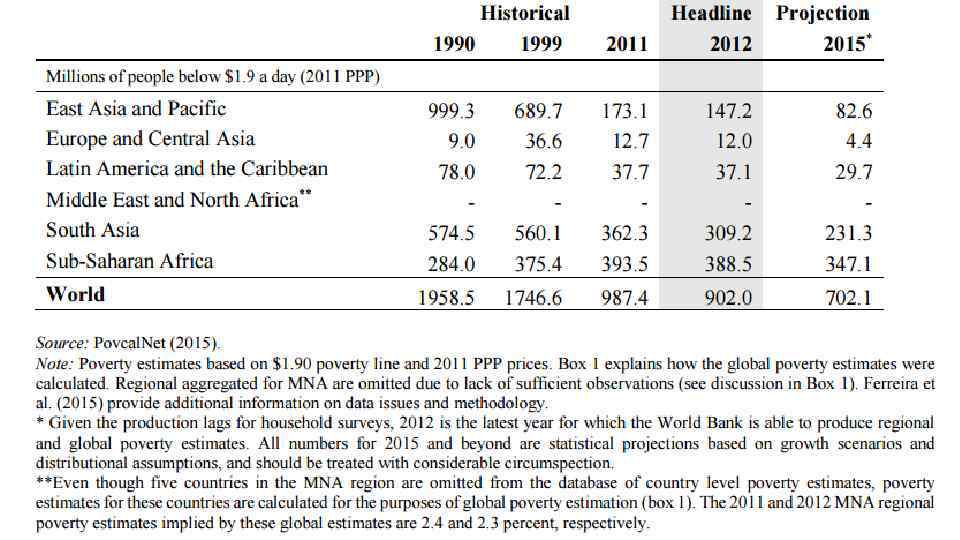
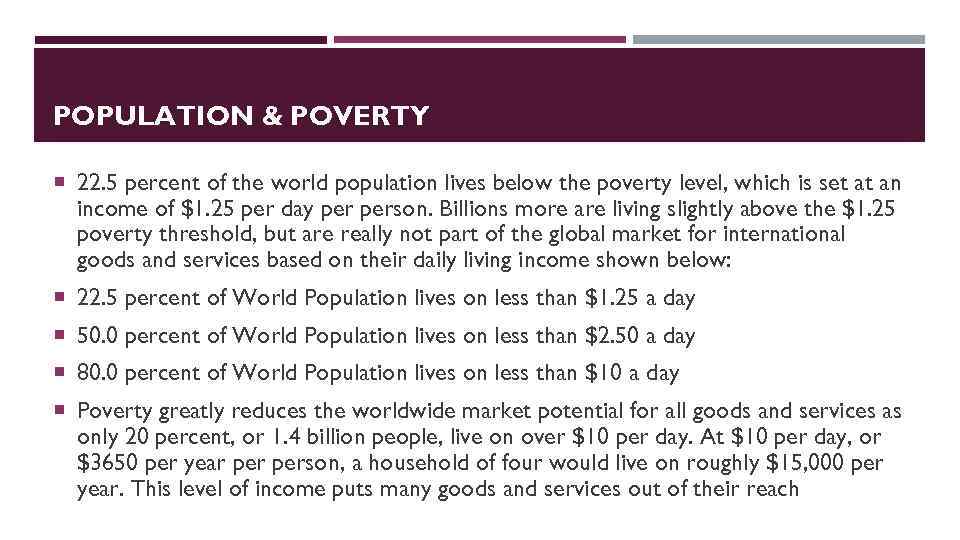 POPULATION & POVERTY 22. 5 percent of the world population lives below the poverty level, which is set at an income of $1. 25 per day person. Billions more are living slightly above the $1. 25 poverty threshold, but are really not part of the global market for international goods and services based on their daily living income shown below: 22. 5 percent of World Population lives on less than $1. 25 a day 50. 0 percent of World Population lives on less than $2. 50 a day 80. 0 percent of World Population lives on less than $10 a day Poverty greatly reduces the worldwide market potential for all goods and services as only 20 percent, or 1. 4 billion people, live on over $10 per day. At $10 per day, or $3650 per year person, a household of four would live on roughly $15, 000 per year. This level of income puts many goods and services out of their reach
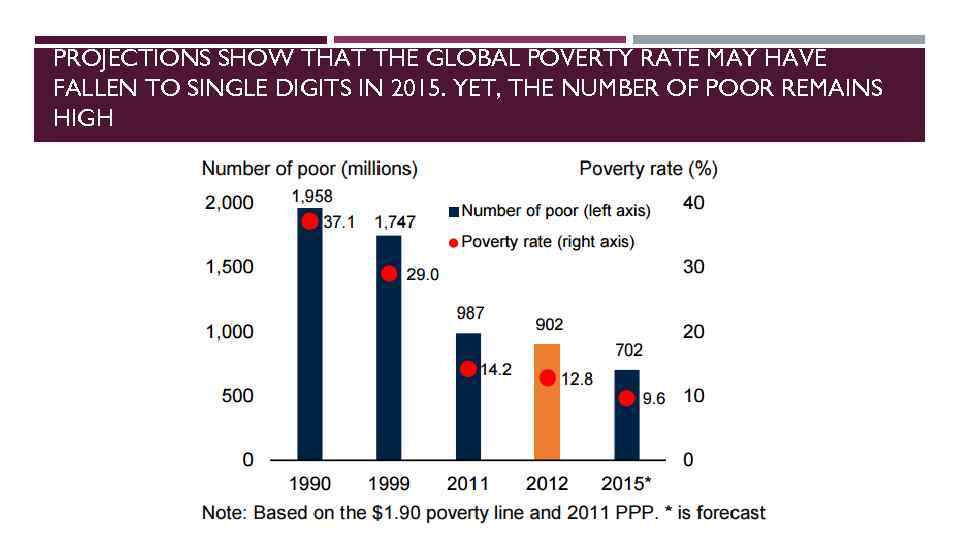 PROJECTIONS SHOW THAT THE GLOBAL POVERTY RATE MAY HAVE FALLEN TO SINGLE DIGITS IN 2015. YET, THE NUMBER OF POOR REMAINS HIGH
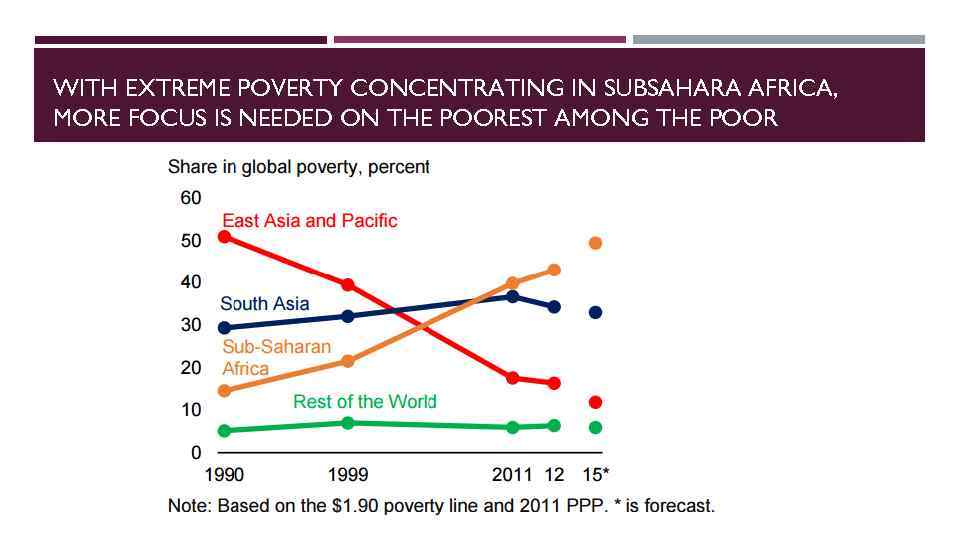 WITH EXTREME POVERTY CONCENTRATING IN SUBSAHARA AFRICA, MORE FOCUS IS NEEDED ON THE POOREST AMONG THE POOR
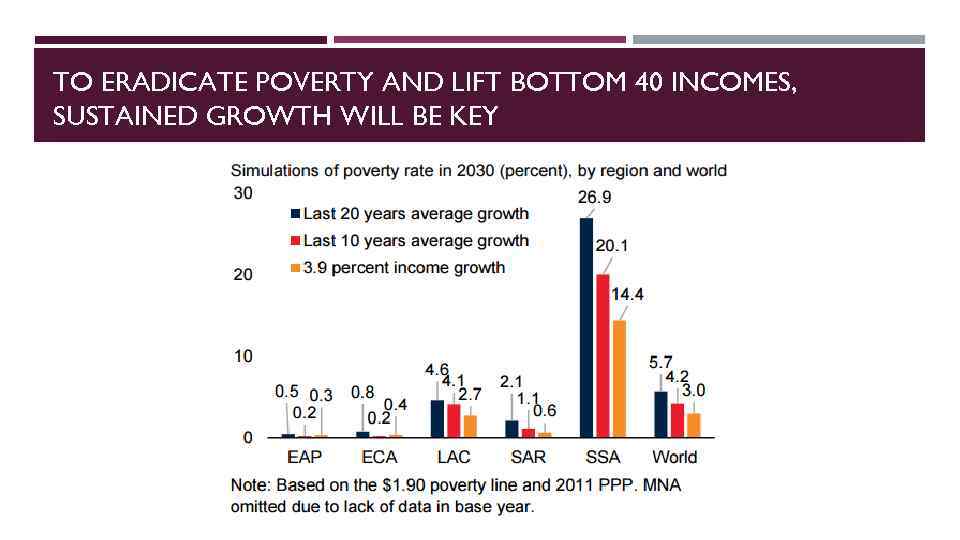 TO ERADICATE POVERTY AND LIFT BOTTOM 40 INCOMES, SUSTAINED GROWTH WILL BE KEY
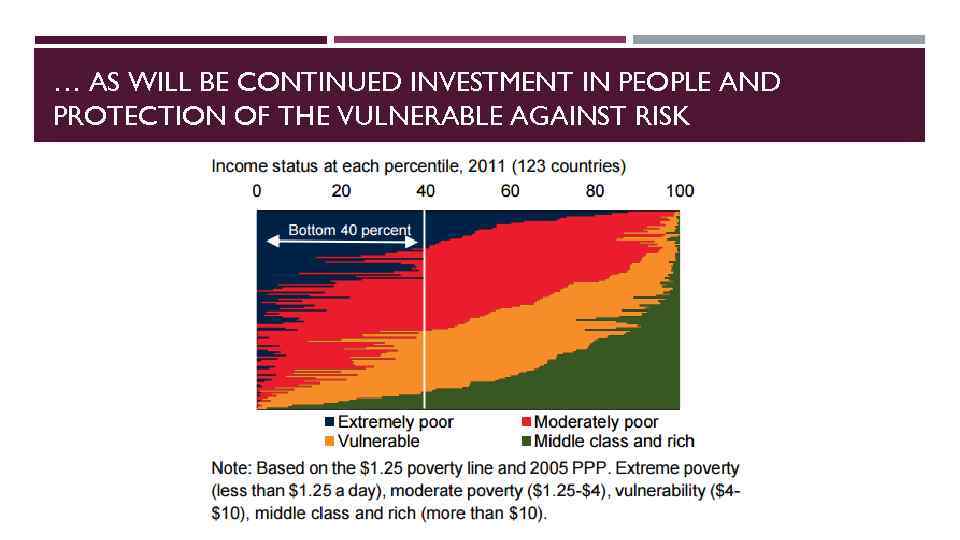 … AS WILL BE CONTINUED INVESTMENT IN PEOPLE AND PROTECTION OF THE VULNERABLE AGAINST RISK
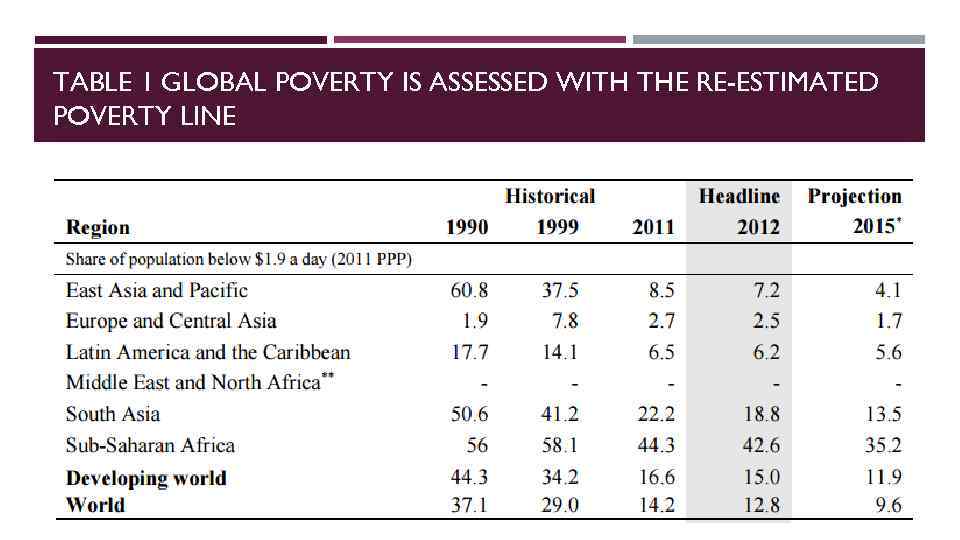 TABLE 1 GLOBAL POVERTY IS ASSESSED WITH THE RE-ESTIMATED POVERTY LINE
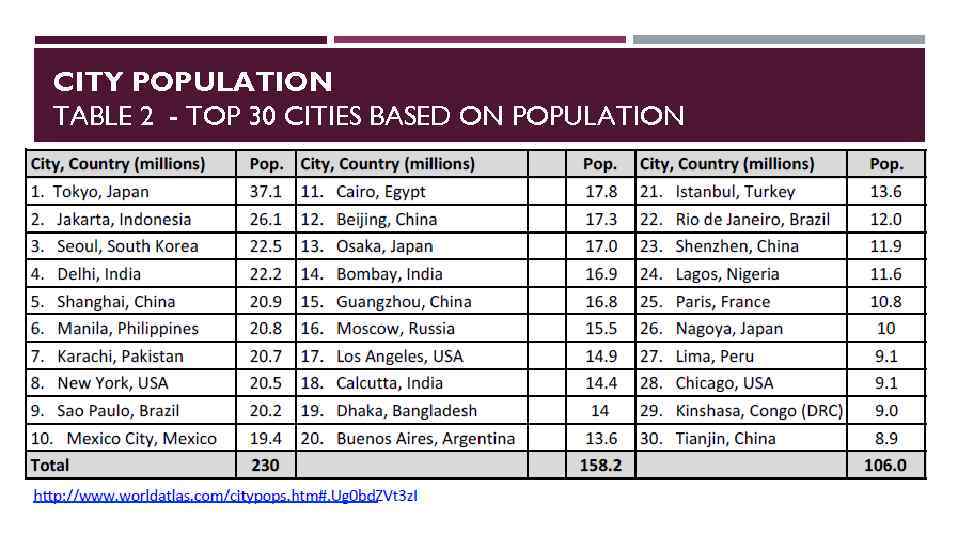 CITY POPULATION TABLE 2 - TOP 30 CITIES BASED ON POPULATION
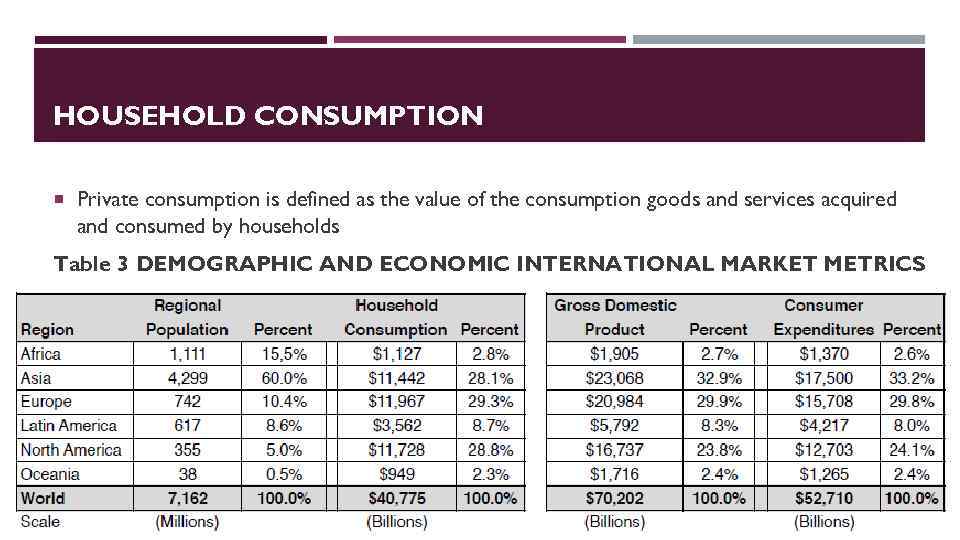 HOUSEHOLD CONSUMPTION Private consumption is defined as the value of the consumption goods and services acquired and consumed by households Table 3 DEMOGRAPHIC AND ECONOMIC INTERNATIONAL MARKET METRICS
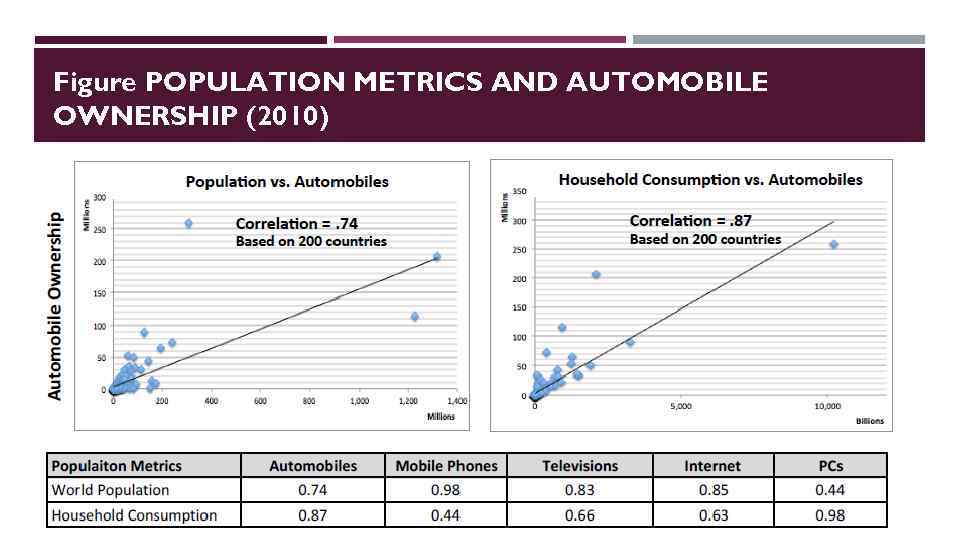 Figure POPULATION METRICS AND AUTOMOBILE OWNERSHIP (2010)
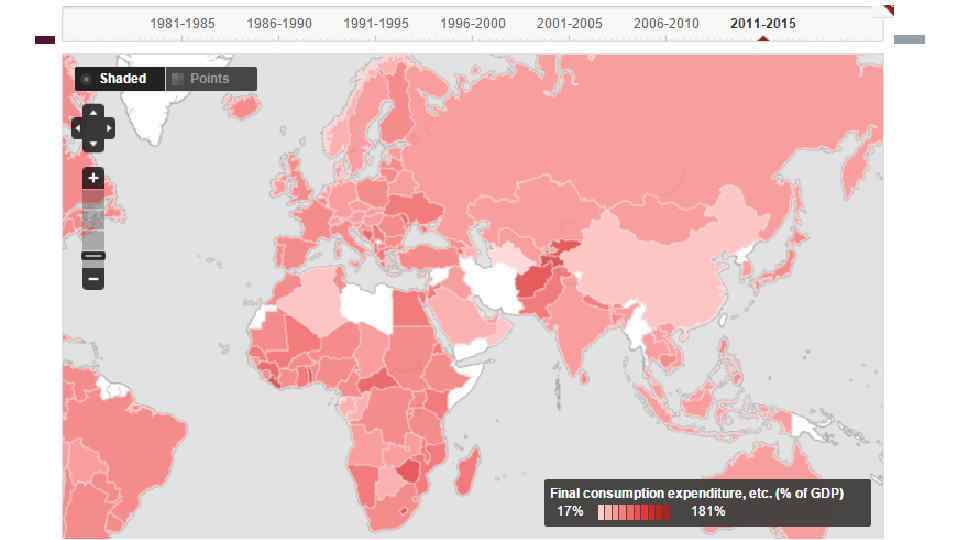
 ECONOMIC METRICS • GROSS DOMESTIC PRODUCT • FINAL CONSUMPTION EXPENDITURES
 GROSS DOMESTIC PRODUCT GDP is an overall measure of the performance of an economy. It is the monetary value of all the finished goods and services produced within a country's borders in a specific time period, though GDP is usually calculated on an annual basis. It includes all of private and public consumption, government outlays, investments and exports less imports that occur within a defined territory
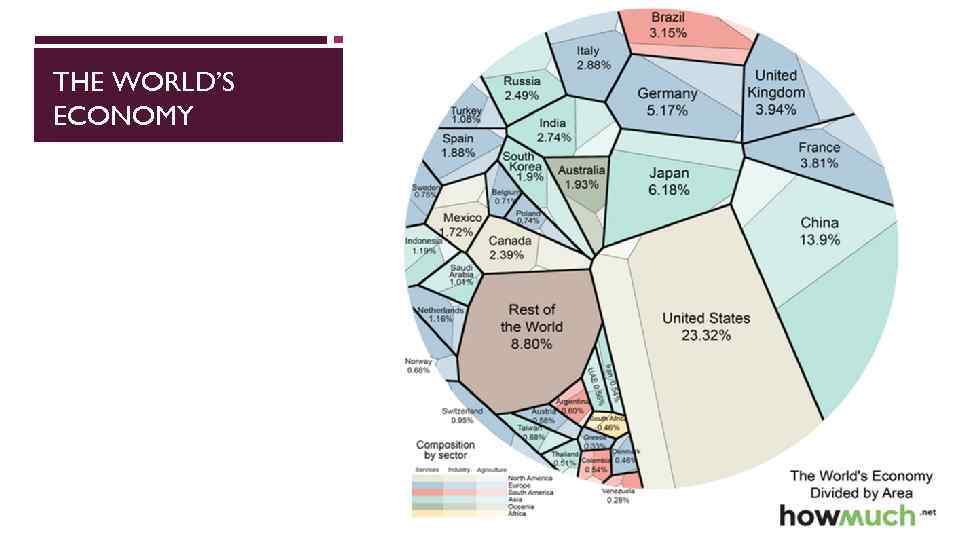 THE WORLD’S ECONOMY
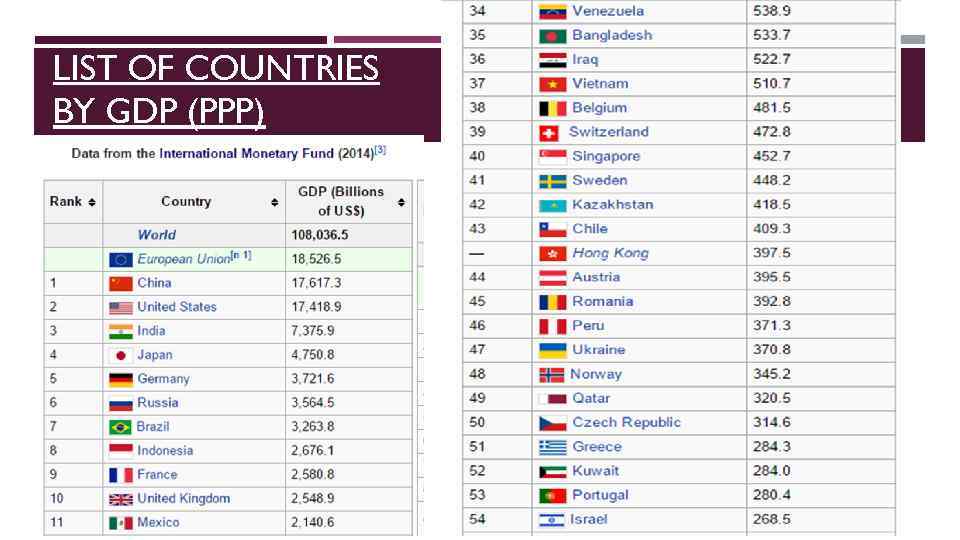 LIST OF COUNTRIES BY GDP (PPP)
 FINAL CONSUMPTION EXPENDITURES A second economic metric we found to have a good correlation with market demand by country is final consumption expenditure. Final consumption expenditures encompasses all domestic costs (by residents and non-residents) for individual needs.
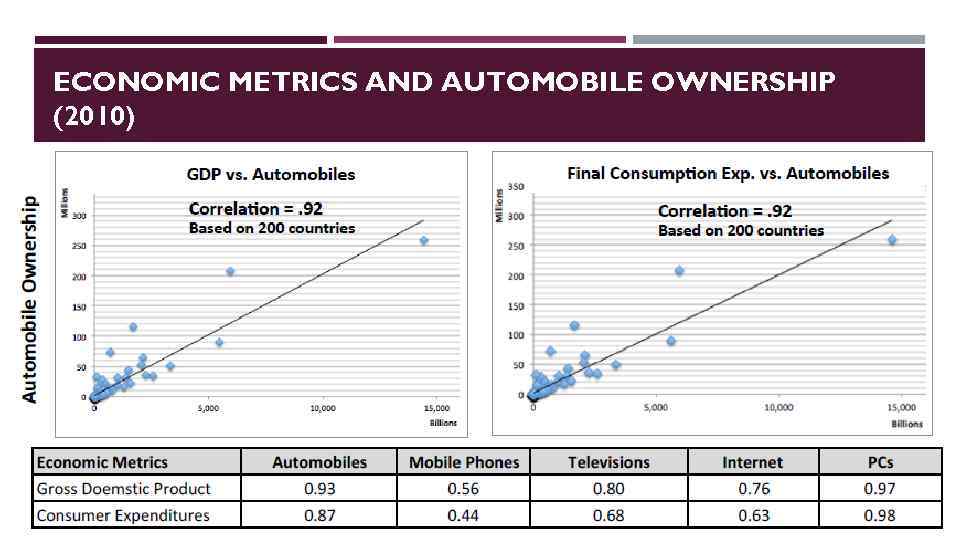 ECONOMIC METRICS AND AUTOMOBILE OWNERSHIP (2010)
 BARRIERS TO INTERNATIONAL MARKET SUCCESS LANGUAGE, NON-VERBAL LANGUAGE, RELIGION & VALUES, POLITICAL INSTABILITY, LAWS AND GOVERNMENT REGULATIONS, MARKET INFRASTRUCTURE, INTERNATIONAL MARKETING ATTRACTIVENESS METRIC
 BARRIERS Language: Does your brand name and advertising translate into meanings that could be embarrassing? Non-Verbal Language: Are any cultural norms violated with respect to numbers, color, and symbols? Religion & Values: Does your brand or advertising offend religious beliefs and/or cultural values? Political Stability: The degree that a country is socially and economically stable. Laws & Regulations: The degree that foreign business regulated and allowed to operate in a country. Market Infrastructure: The degree roads, utilities, transportation, banking, media and retail are in place.
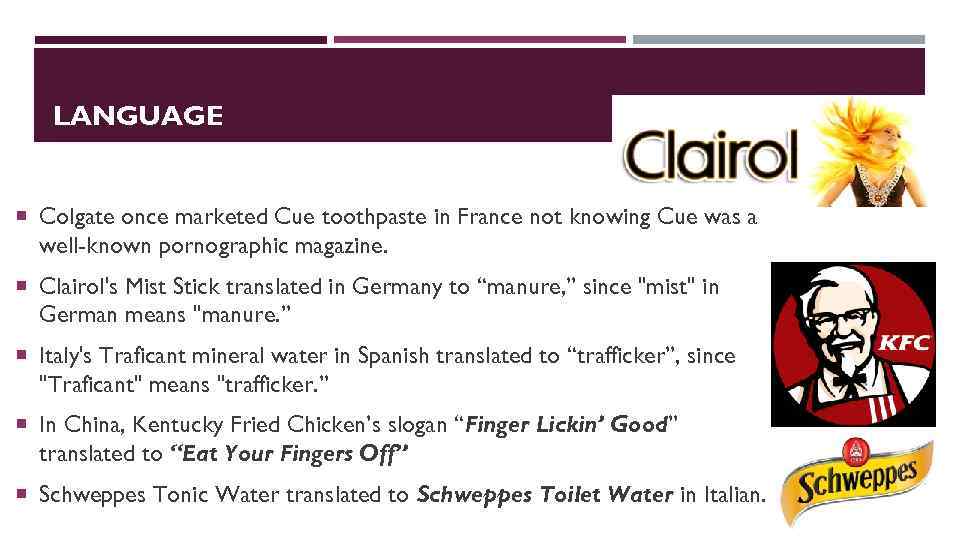 LANGUAGE Colgate once marketed Cue toothpaste in France not knowing Cue was a well-known pornographic magazine. Clairol's Mist Stick translated in Germany to “manure, ” since "mist" in German means "manure. ” Italy's Traficant mineral water in Spanish translated to “trafficker”, since "Traficant" means "trafficker. ” In China, Kentucky Fried Chicken’s slogan “Finger Lickin’ Good” translated to “Eat Your Fingers Off” Schweppes Tonic Water translated to Schweppes Toilet Water in Italian.
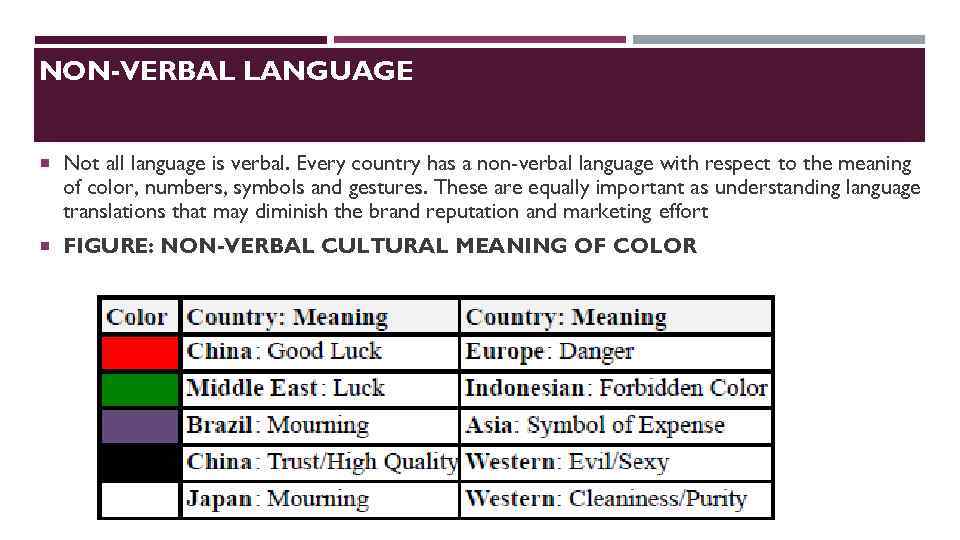 NON-VERBAL LANGUAGE Not all language is verbal. Every country has a non-verbal language with respect to the meaning of color, numbers, symbols and gestures. These are equally important as understanding language translations that may diminish the brand reputation and marketing effort FIGURE: NON-VERBAL CULTURAL MEANING OF COLOR
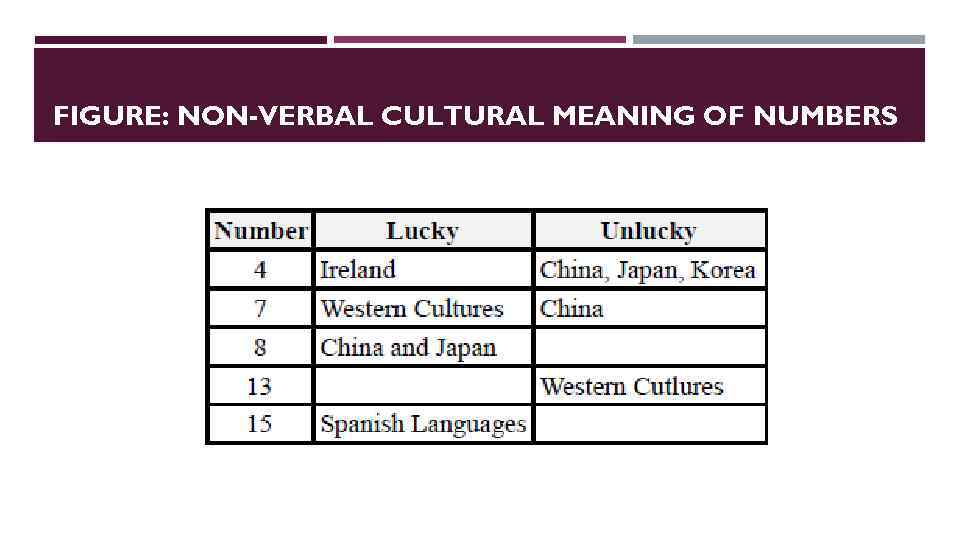 FIGURE: NON-VERBAL CULTURAL MEANING OF NUMBERS
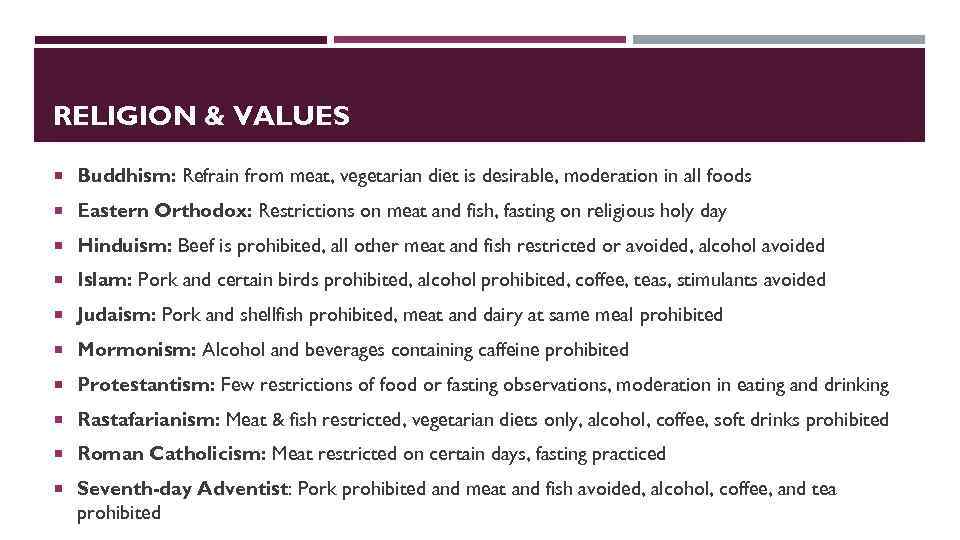 RELIGION & VALUES Buddhism: Refrain from meat, vegetarian diet is desirable, moderation in all foods Eastern Orthodox: Restrictions on meat and fish, fasting on religious holy day Hinduism: Beef is prohibited, all other meat and fish restricted or avoided, alcohol avoided Islam: Pork and certain birds prohibited, alcohol prohibited, coffee, teas, stimulants avoided Judaism: Pork and shellfish prohibited, meat and dairy at same meal prohibited Mormonism: Alcohol and beverages containing caffeine prohibited Protestantism: Few restrictions of food or fasting observations, moderation in eating and drinking Rastafarianism: Meat & fish restricted, vegetarian diets only, alcohol, coffee, soft drinks prohibited Roman Catholicism: Meat restricted on certain days, fasting practiced Seventh-day Adventist: Pork prohibited and meat and fish avoided, alcohol, coffee, and tea prohibited
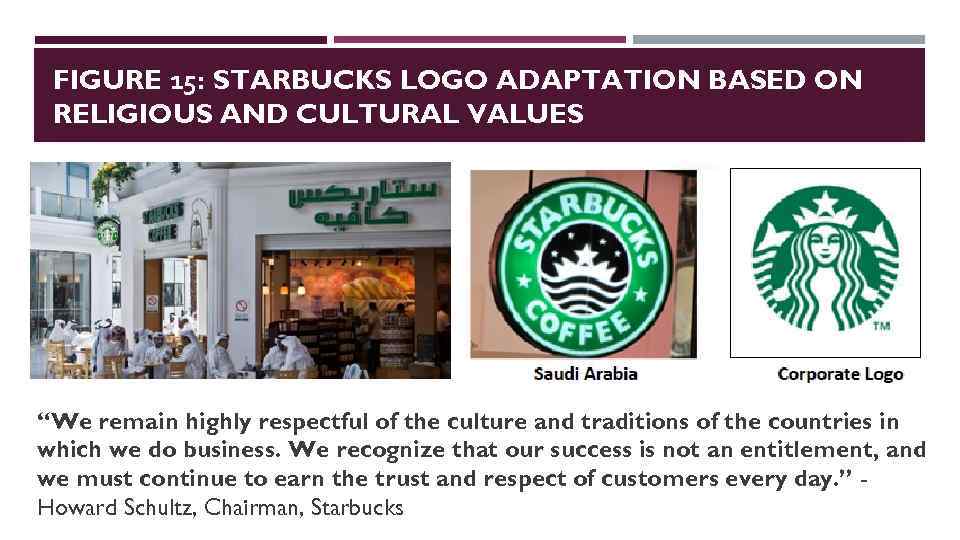 FIGURE 15: STARBUCKS LOGO ADAPTATION BASED ON RELIGIOUS AND CULTURAL VALUES “We remain highly respectful of the culture and traditions of the countries in which we do business. We recognize that our success is not an entitlement, and we must continue to earn the trust and respect of customers every day. ” Howard Schultz, Chairman, Starbucks
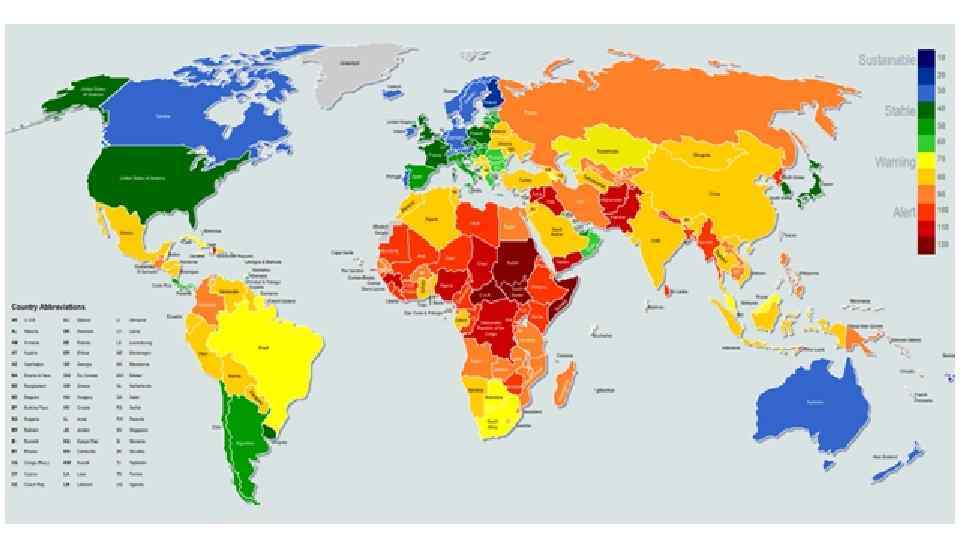
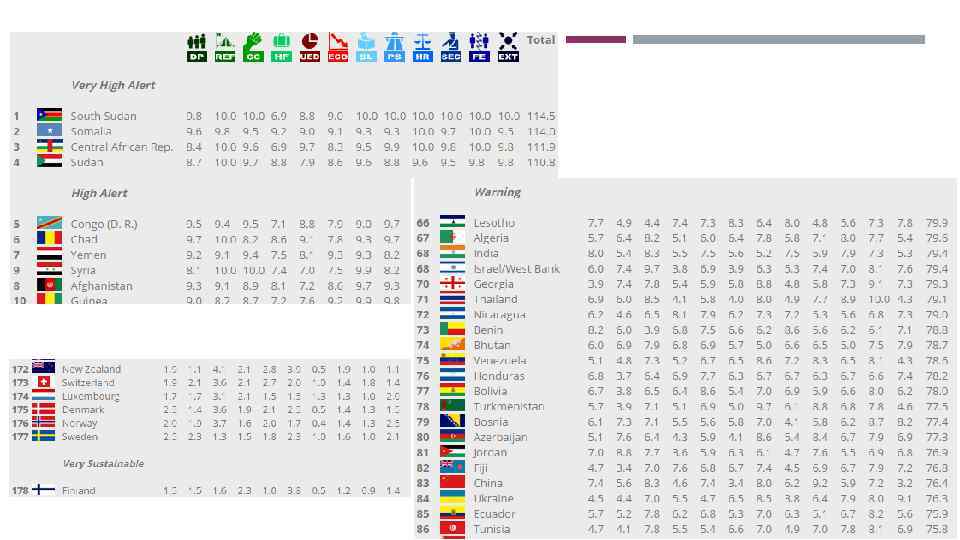
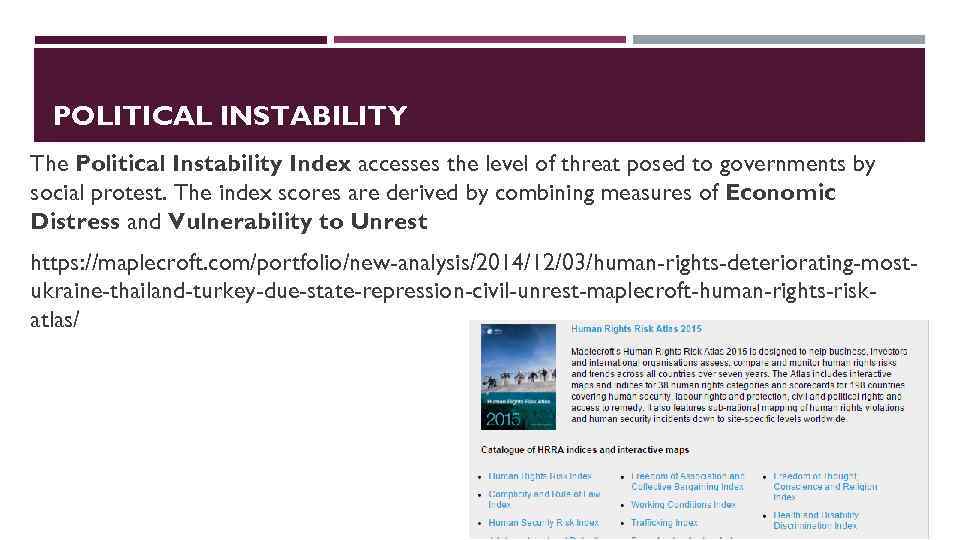 POLITICAL INSTABILITY The Political Instability Index accesses the level of threat posed to governments by social protest. The index scores are derived by combining measures of Economic Distress and Vulnerability to Unrest https: //maplecroft. com/portfolio/new-analysis/2014/12/03/human-rights-deteriorating-mostukraine-thailand-turkey-due-state-repression-civil-unrest-maplecroft-human-rights-riskatlas/
 LAWS AND GOVERNMENT REGULATION Every country is going to have different laws and government regulations with respect to foreign businesses operating within their borders. Listed below are examples of laws and regulations that a business could potentially encounter as they enter into international markets. Import Duties: Fees and duties paid to do business in a country. Customs: Problems with a foreign customs office's documentation and requirements. Trade Barriers: Restrictions on the amount a foreign business can sell in a country. Advertising: Restrictions on what can be portrayed or claimed in advertising. Taxation: Various value-added taxes, sales taxes, employee taxes, and tax rates. Intellectual Property: Illegal infringement of patents, trademarks, or copyrights. Money Transfer: Restrictions on the transfer of money in and out of a country. Foreign Investment: Restrictions or regulations on foreign investments
 MARKET INFRASTRUCTURE The level of infrastructure development in an emerging market is another good indicator of market potential. When engaging in international operations, you will need to rely heavily on services provided in the local market. You are likely to rely heavily on transportation systems, communication systems and energy infrastructure to sell and distribute your products and services. It will be easier and more cost effective to work in countries that already have fully-developed and reliable infrastructures that include mobile devices and internet access. Underdeveloped market infrastructures only have basic utilities and services—that are often unreliable— which limits the ability to operate businesses profitably.