 Скачать презентацию International Hurricane Research Center Cyberinfrastructure Enabled Hurricane
ae64836c05fd89cfc1267116f231e112.ppt
- Количество слайдов: 32



International Hurricane Research Center & Cyberinfrastructure Enabled Hurricane Mitigation Disaster Prediction and Prevention Panel TERENA Networking Conference 2009 Málaga, Spain
Presentation Outline International Hurricane Research Center (IRHC) Hurricane Mitigation* A Research Agenda Aimed at Mitigating Hurricane Hazards Global Cyber. Bridges Hurricane Mitigation Background and Motivation Role of Cyberinfrastructure and Global Cyber. Bridges Hurricane Mitigation Project Overview Project Status Cyberinfrastructure Contributions Conclusion *Slides for IRHC courtesy of Dr. Stephen Letterman, Director
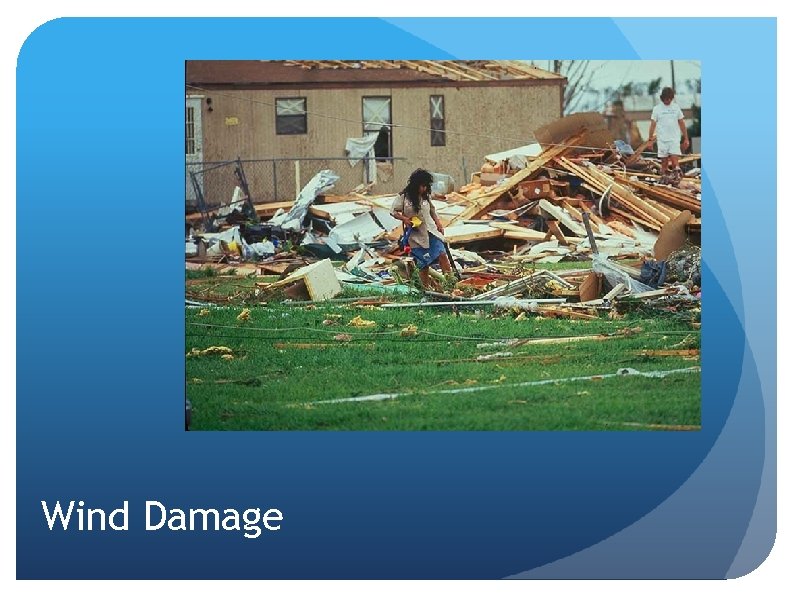
Wind Damage
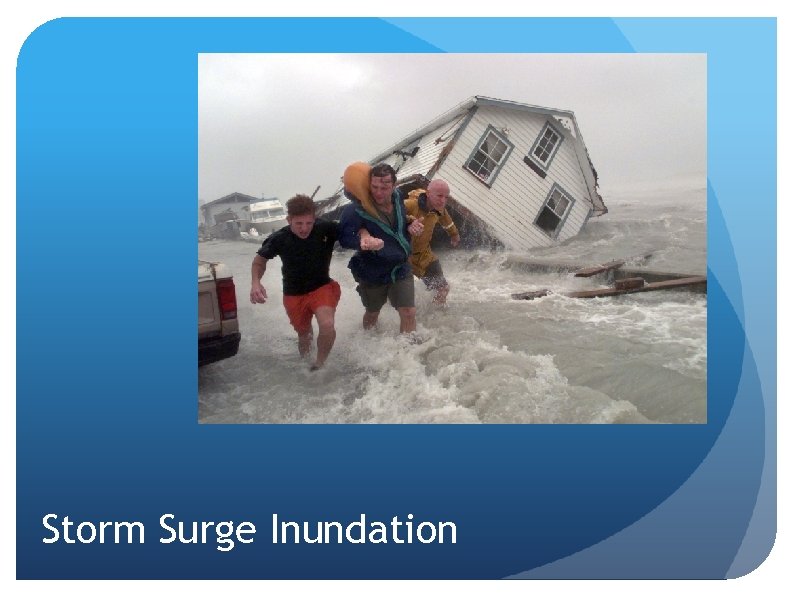
Storm Surge Inundation
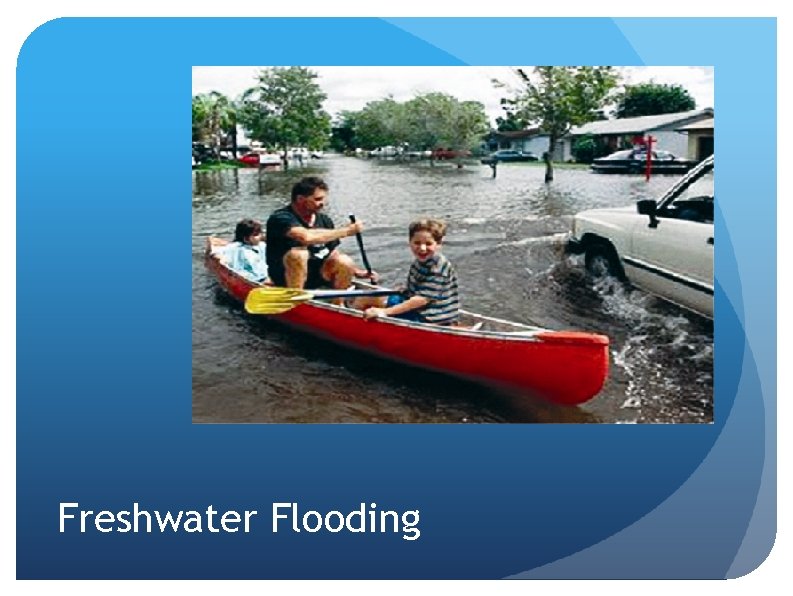
Freshwater Flooding
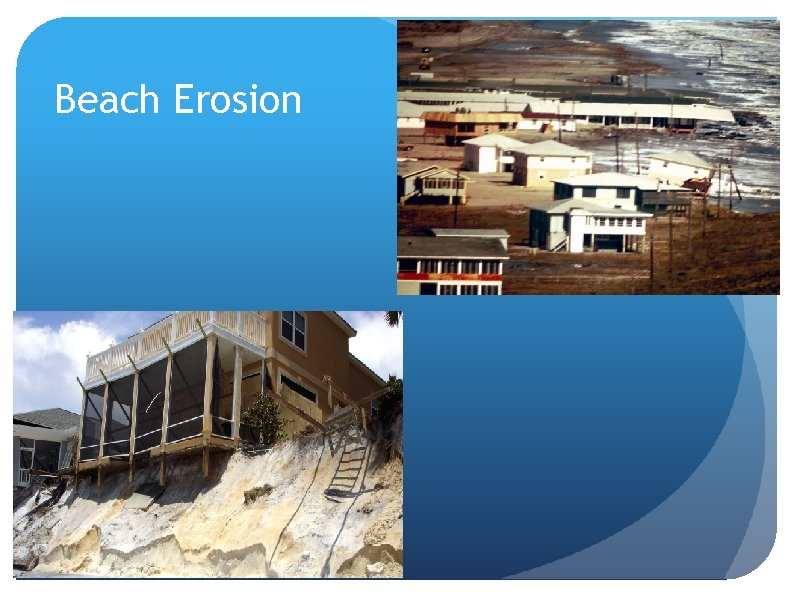
Beach Erosion
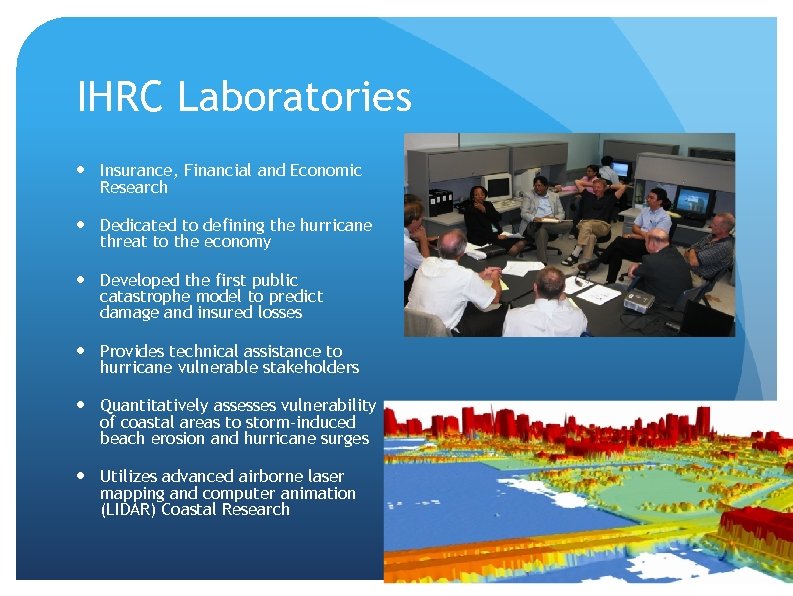
IHRC Laboratories Insurance, Financial and Economic Research Dedicated to defining the hurricane threat to the economy Developed the first public catastrophe model to predict damage and insured losses Provides technical assistance to hurricane vulnerable stakeholders Quantitatively assesses vulnerability of coastal areas to storm-induced beach erosion and hurricane surges Utilizes advanced airborne laser mapping and computer animation (LIDAR) Coastal Research
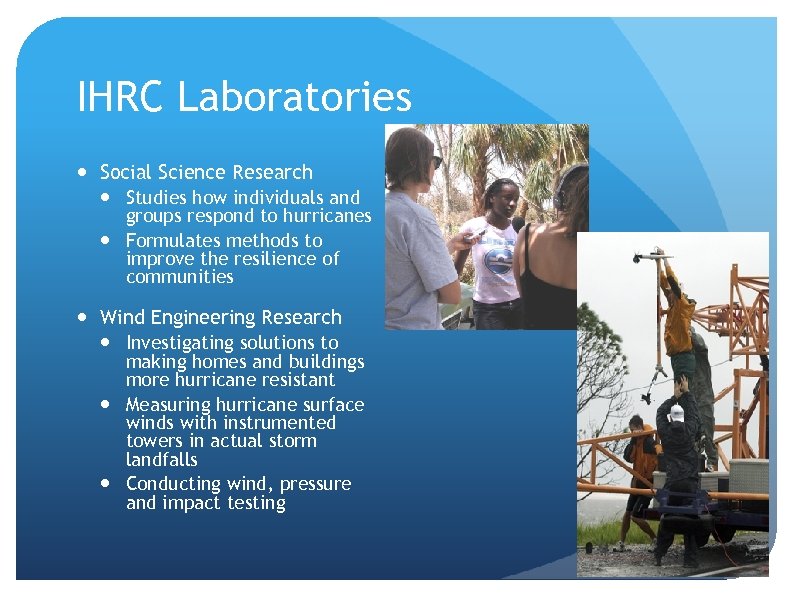
IHRC Laboratories Social Science Research Studies how individuals and groups respond to hurricanes Formulates methods to improve the resilience of communities Wind Engineering Research Investigating solutions to making homes and buildings more hurricane resistant Measuring hurricane surface winds with instrumented towers in actual storm landfalls Conducting wind, pressure and impact testing
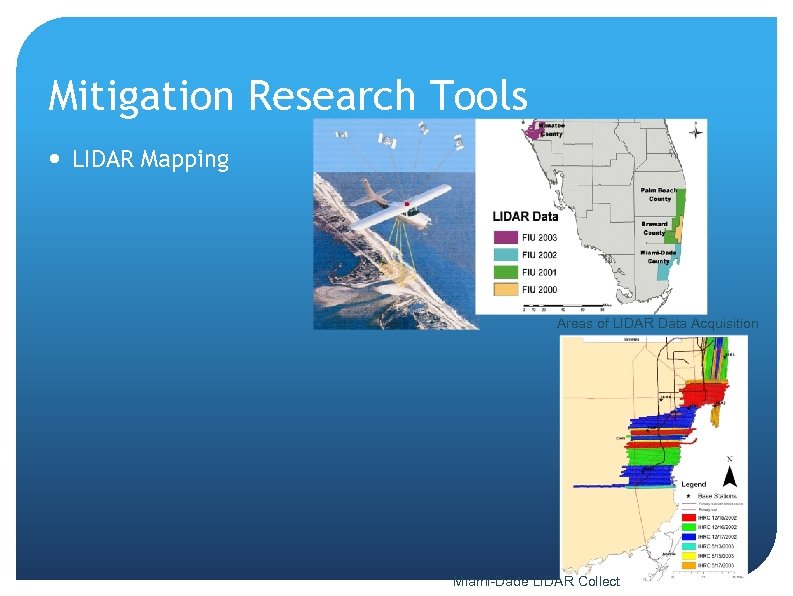
Mitigation Research Tools LIDAR Mapping Areas of LIDAR Data Acquisition Miami Dade LIDAR Collect
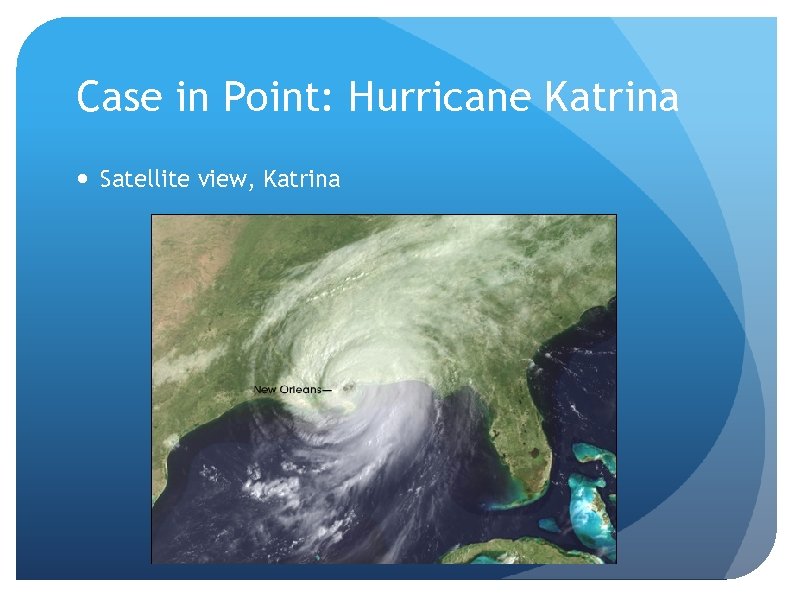
Case in Point: Hurricane Katrina Satellite view, Katrina
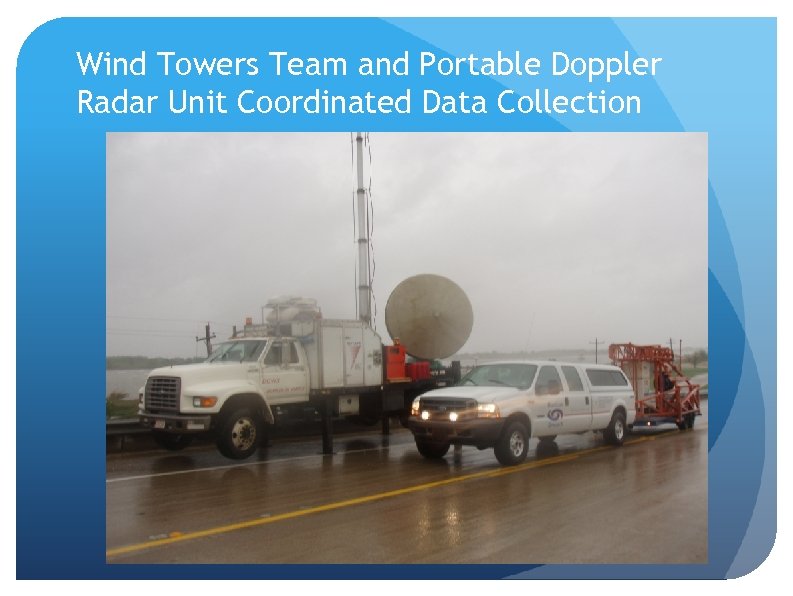
Wind Towers Team and Portable Doppler Radar Unit Coordinated Data Collection
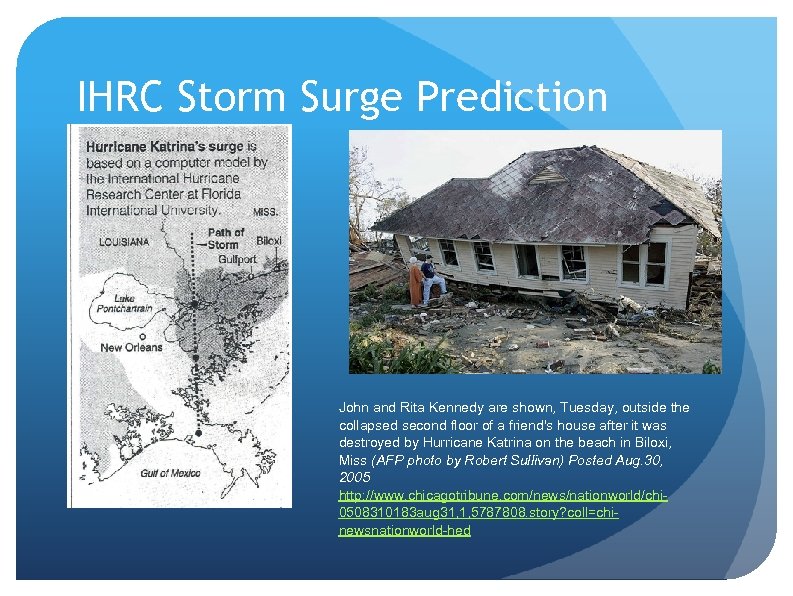
IHRC Storm Surge Prediction John and Rita Kennedy are shown, Tuesday, outside the collapsed second floor of a friend's house after it was destroyed by Hurricane Katrina on the beach in Biloxi, Miss (AFP photo by Robert Sullivan) Posted Aug. 30, 2005 http: //www. chicagotribune. com/news/nationworld/chi 0508310183 aug 31, 1, 5787808. story? coll=chi newsnationworld hed
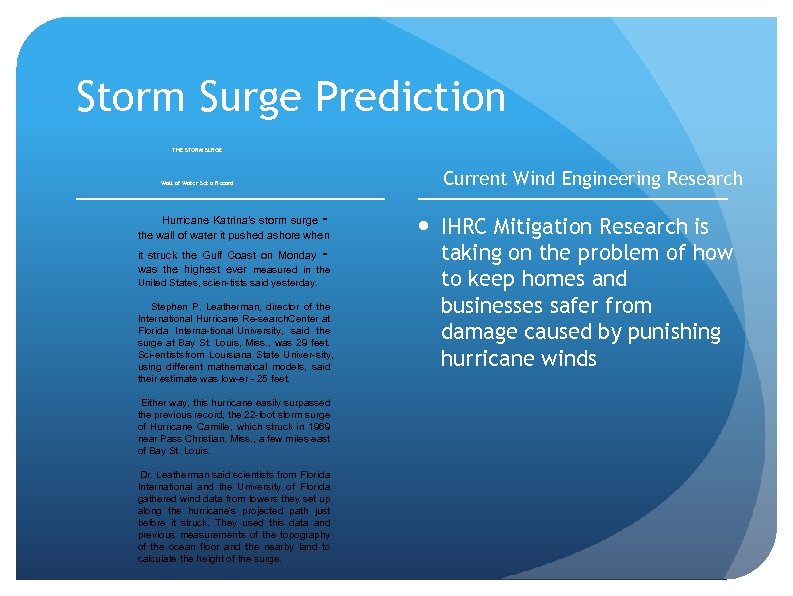
Storm Surge Prediction THE STORM SURGE Current Wind Engineering Research Wall of Water Set a Record Hurricane Katrina's storm surge the wall of water it pushed ashore when it struck the Gulf Coast on Monday was the highest ever measured in the United States, scien tists said yesterday. Stephen P. Leatherman, director of the International Hurricane Re search. Center at Florida Interna tional University, said the surge at Bay St. Louis, Miss. , was 29 feet. Sci entists from Louisiana State Univer sity, using different mathematical models, said their estimate was low er 25 feet. Either way, this hurricane easily surpassed the previous record, the 22 foot storm surge of Hurricane Camille, which struck in 1969 near Pass Christian, Miss. , a few miles east of Bay St. Louis. Dr. Leatherman said scientists from Florida International and the University of Florida gathered wind data from towers they set up along the hurricane's projected path just before it struck. They used this data and previous measurements of the topography of the ocean floor and the nearby land to calculate the height of the surge. IHRC Mitigation Research is taking on the problem of how to keep homes and businesses safer from damage caused by punishing hurricane winds
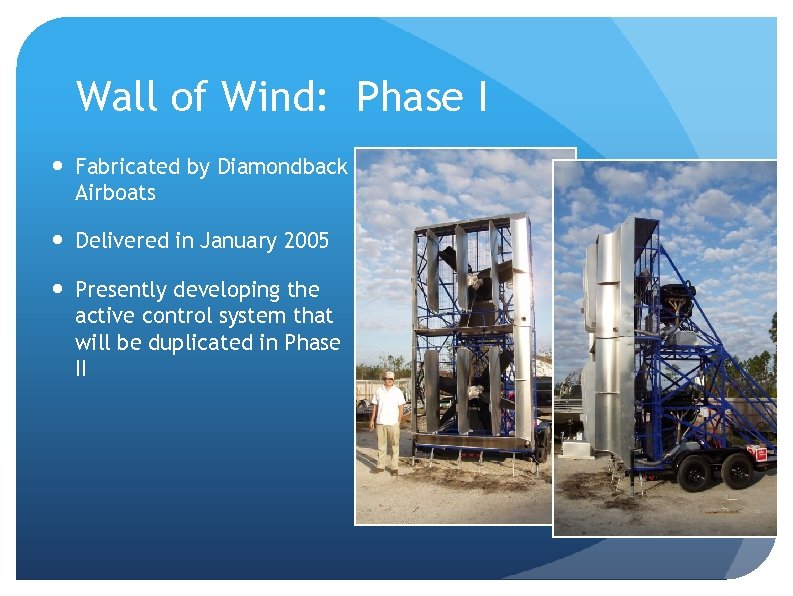
Wall of Wind: Phase I Fabricated by Diamondback Airboats Delivered in January 2005 Presently developing the active control system that will be duplicated in Phase II
What is Global Cyber. Bridges? Cyberinfrastructure Training, Education, Advancement, and Mentoring for Our 21 st Century Workforce (CI-TEAM) Three year award (Oct. 2006 - Dec. 2009) for $765, 000 total to CIARA at FIU The program expands on Cyber. Bridges, which was initiated in 2005 to help FIU scientists and engineers advance their research through cyberinfrastructure (CI).
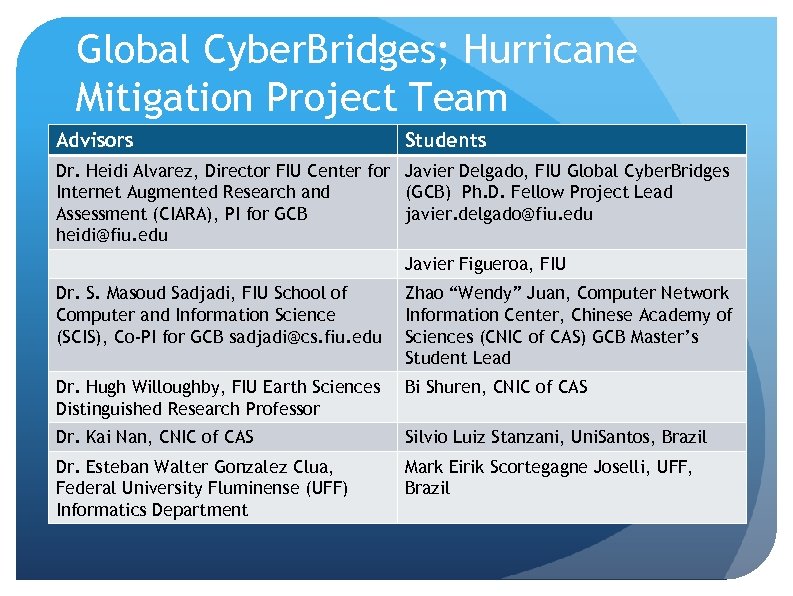
Global Cyber. Bridges; Hurricane Mitigation Project Team Advisors Students Dr. Heidi Alvarez, Director FIU Center for Javier Delgado, FIU Global Cyber. Bridges Internet Augmented Research and (GCB) Ph. D. Fellow Project Lead Assessment (CIARA), PI for GCB javier. delgado@fiu. edu heidi@fiu. edu Javier Figueroa, FIU Dr. S. Masoud Sadjadi, FIU School of Computer and Information Science (SCIS), Co-PI for GCB sadjadi@cs. fiu. edu Zhao “Wendy” Juan, Computer Network Information Center, Chinese Academy of Sciences (CNIC of CAS) GCB Master’s Student Lead Dr. Hugh Willoughby, FIU Earth Sciences Distinguished Research Professor Bi Shuren, CNIC of CAS Dr. Kai Nan, CNIC of CAS Silvio Luiz Stanzani, Uni. Santos, Brazil Dr. Esteban Walter Gonzalez Clua, Federal University Fluminense (UFF) Informatics Department Mark Eirik Scortegagne Joselli, UFF, Brazil
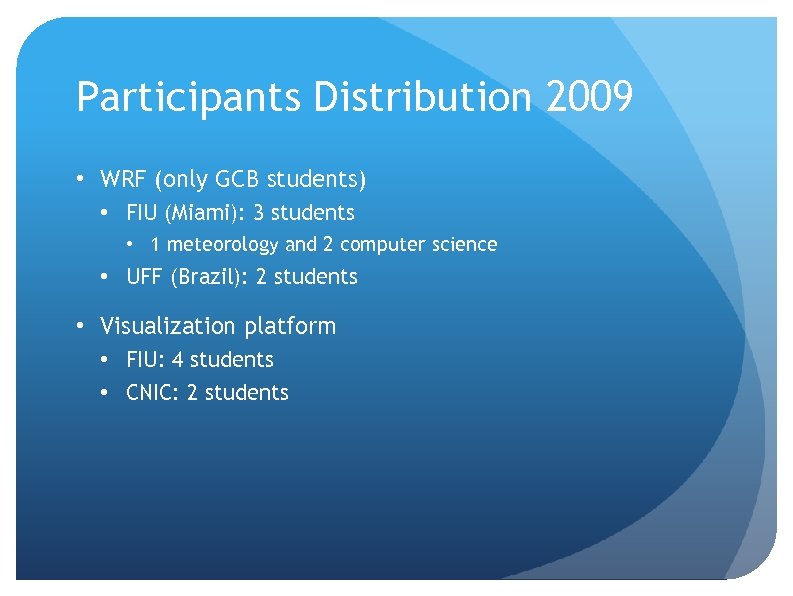
Participants Distribution 2009 • WRF (only GCB students) • FIU (Miami): 3 students • 1 meteorology and 2 computer science • UFF (Brazil): 2 students • Visualization platform • FIU: 4 students • CNIC: 2 students
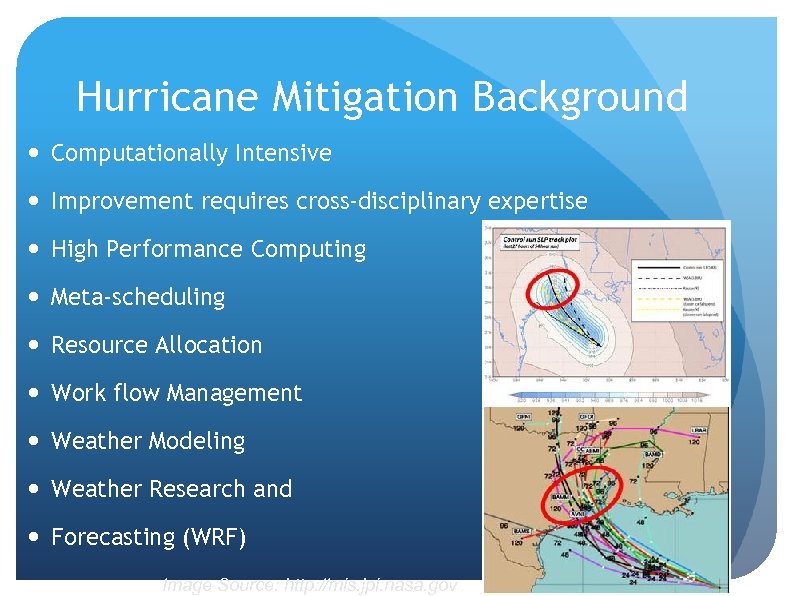
Hurricane Mitigation Background Computationally Intensive Improvement requires cross-disciplinary expertise High Performance Computing Meta-scheduling Resource Allocation Work flow Management Weather Modeling Weather Research and Forecasting (WRF) Image Source: http: //mls. jpl. nasa. gov
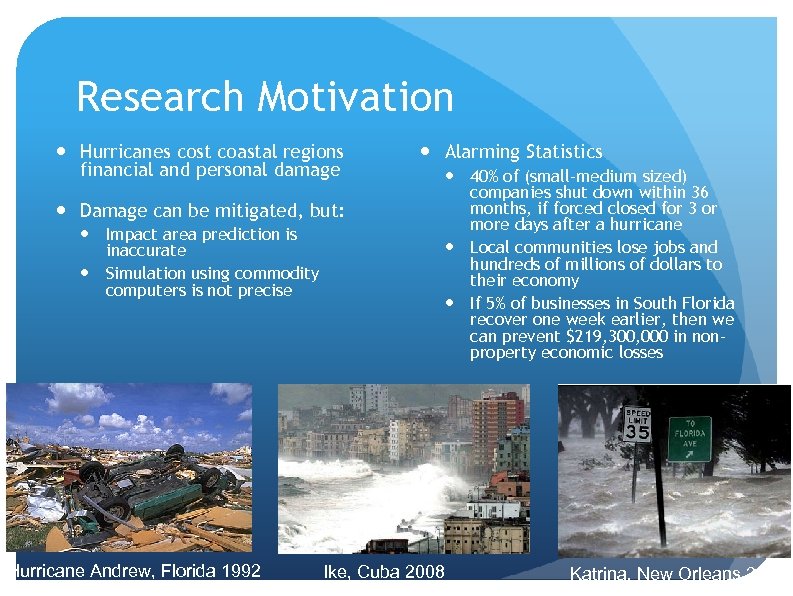
Research Motivation Hurricanes cost coastal regions financial and personal damage Damage can be mitigated, but: Impact area prediction is inaccurate Simulation using commodity computers is not precise Hurricane Andrew, Florida 1992 Alarming Statistics 40% of (small-medium sized) companies shut down within 36 months, if forced closed for 3 or more days after a hurricane Local communities lose jobs and hundreds of millions of dollars to their economy If 5% of businesses in South Florida recover one week earlier, then we can prevent $219, 300, 000 in nonproperty economic losses Ike, Cuba 2008 Katrina, New Orleans 2005
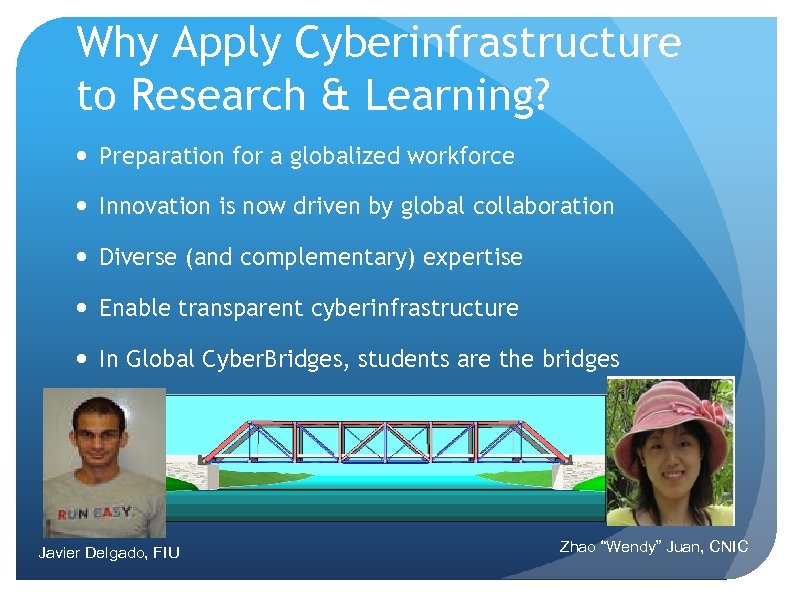
Why Apply Cyberinfrastructure to Research & Learning? Preparation for a globalized workforce Innovation is now driven by global collaboration Diverse (and complementary) expertise Enable transparent cyberinfrastructure In Global Cyber. Bridges, students are the bridges Javier Delgado, FIU Zhao “Wendy” Juan, CNIC
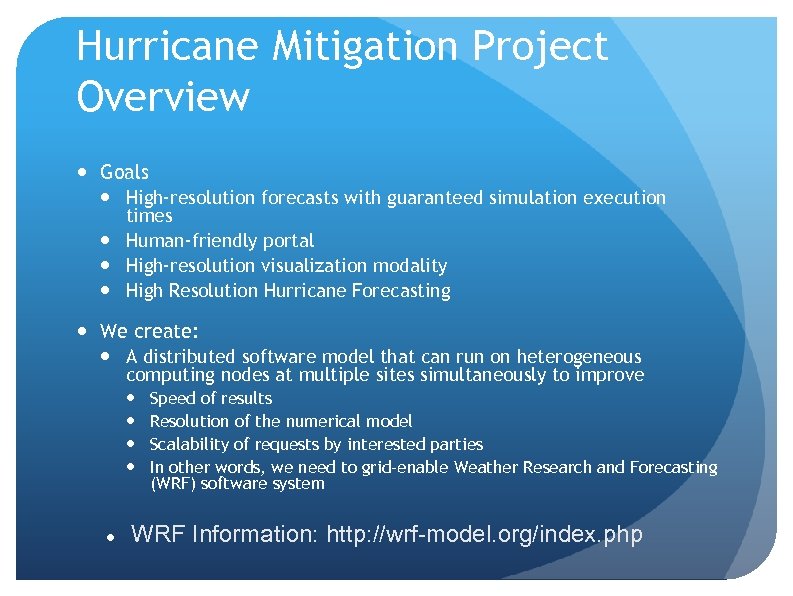
Hurricane Mitigation Project Overview Goals High-resolution forecasts with guaranteed simulation execution times Human-friendly portal High-resolution visualization modality High Resolution Hurricane Forecasting We create: A distributed software model that can run on heterogeneous computing nodes at multiple sites simultaneously to improve Speed of results Resolution of the numerical model Scalability of requests by interested parties In other words, we need to grid-enable Weather Research and Forecasting (WRF) software system WRF Information: http: //wrf model. org/index. php
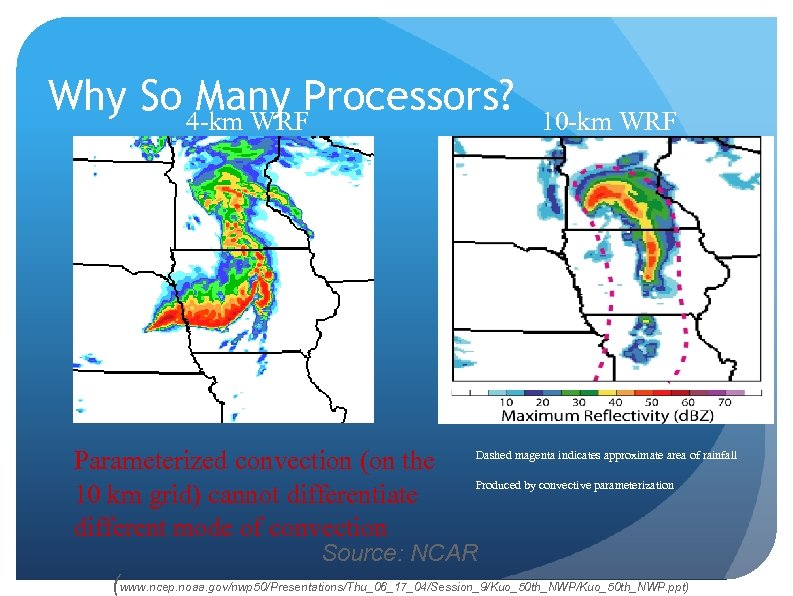
Why So 4 -km WRFProcessors? Many Parameterized convection (on the 10 km grid) cannot differentiate different mode of convection 10 -km WRF Dashed magenta indicates approximate area of rainfall Produced by convective parameterization Source: NCAR (www. ncep. noaa. gov/nwp 50/Presentations/Thu_06_17_04/Session_9/Kuo_50 th_NWP. ppt)
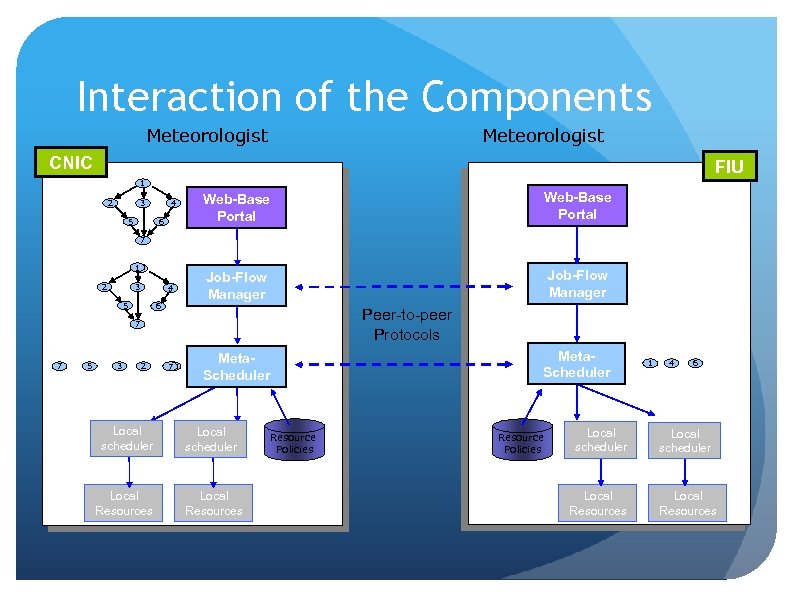
Interaction of the Components Meteorologist CNIC FIU 1 2 3 5 4 6 Web-Base Portal Job-Flow Manager 7 1 1 2 3 4 5 6 Peer to peer Protocols 7 7 5 3 2 1 7 Meta. Scheduler Local scheduler Local Resources Resource Policies Meta. Scheduler Resource Policies 1 4 6 Local scheduler Local Resources
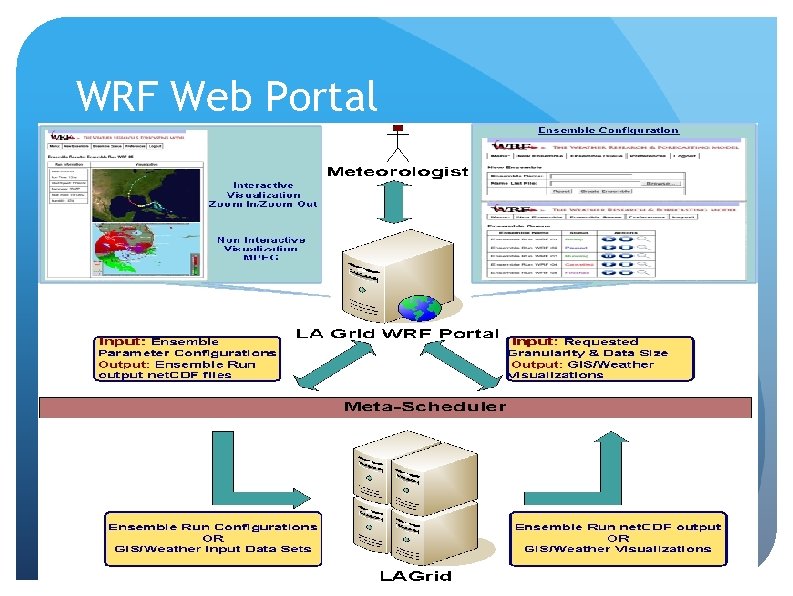
WRF Web Portal
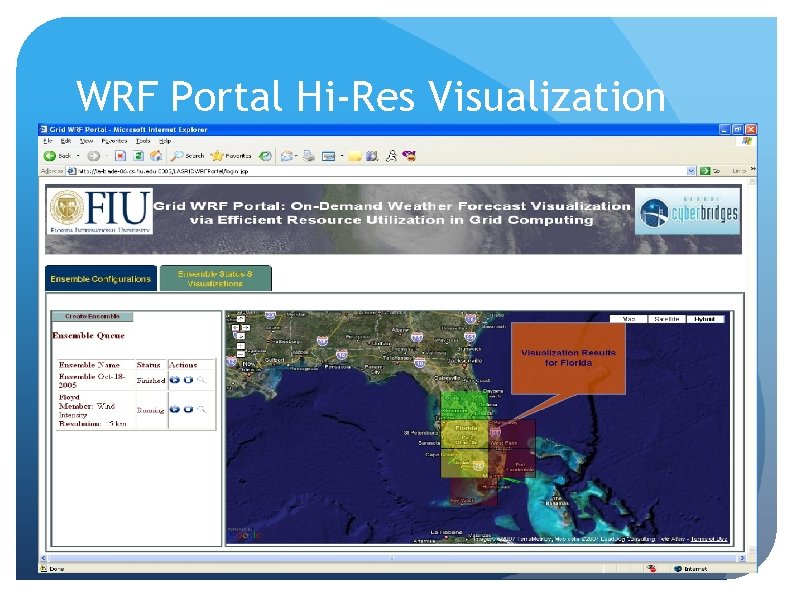
WRF Portal Hi-Res Visualization
Modeling WRF Behavior Paradox of computationally-intensive jobs: Underestimated execution time = killed job Overestimated execution time = prohibitive queue time Grid computing drawbacks Less reliable than cluster computing No built in quality assurance mechanism Hurricane prediction is time-sensitive, so it needs to work around this Meta-scheduler addresses the quality assurance issue To predict execution time, model the software Pick a representative simulation domain Execute it on various platforms with various configurations Devise a model for execution time prediction and implement it in software Test model Adjust until prediction accuracy is within 10 percent
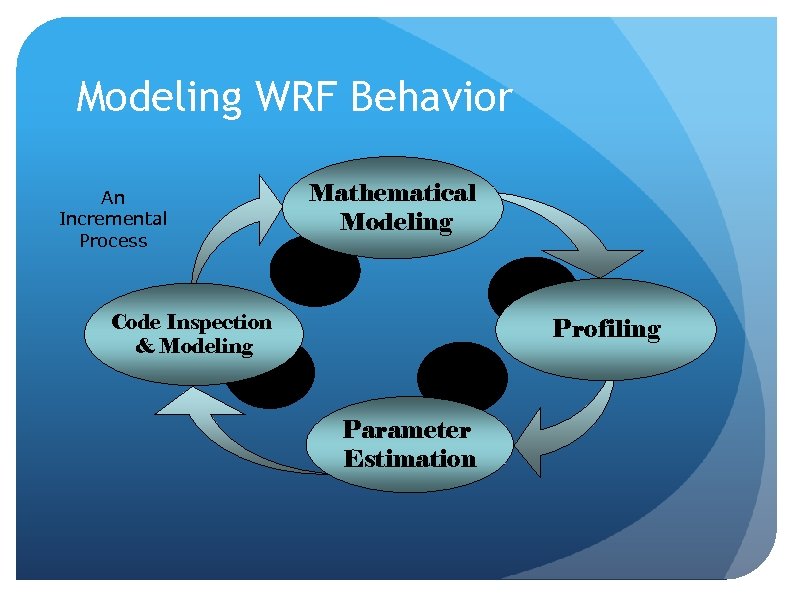
Modeling WRF Behavior An Incremental Process Mathematical Modeling Code Inspection & Modeling Profiling Parameter Estimation
Current Execution Prediction Accuracy Adequate accuracy on multiple platforms Cross-cluster: 8 -node, 32 -bit Intel Cluster 16 -node, 64 -bit Intel Cluster Different (simulated) CPU speed and number-of-node executions Inter-cluster on Mare. Nostrum Supercomputer of Barcelona Supercomputing Center Up to 128 -nodes Mare. Nostrum Info: http: //www. top 500. org/system/8242
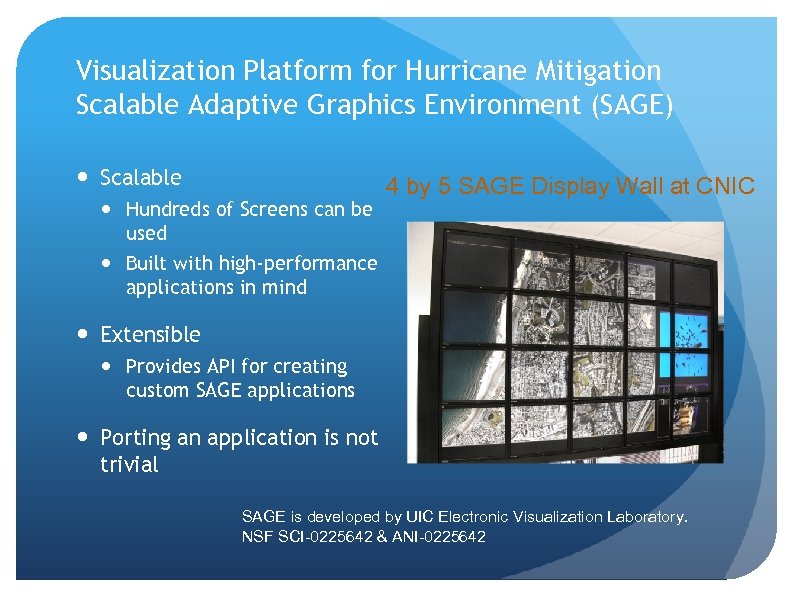
Visualization Platform for Hurricane Mitigation Scalable Adaptive Graphics Environment (SAGE) Scalable Hundreds of Screens can be used Built with high-performance applications in mind 4 by 5 SAGE Display Wall at CNIC Extensible Provides API for creating custom SAGE applications Porting an application is not trivial SAGE is developed by UIC Electronic Visualization Laboratory. NSF SCI 0225642 & ANI 0225642
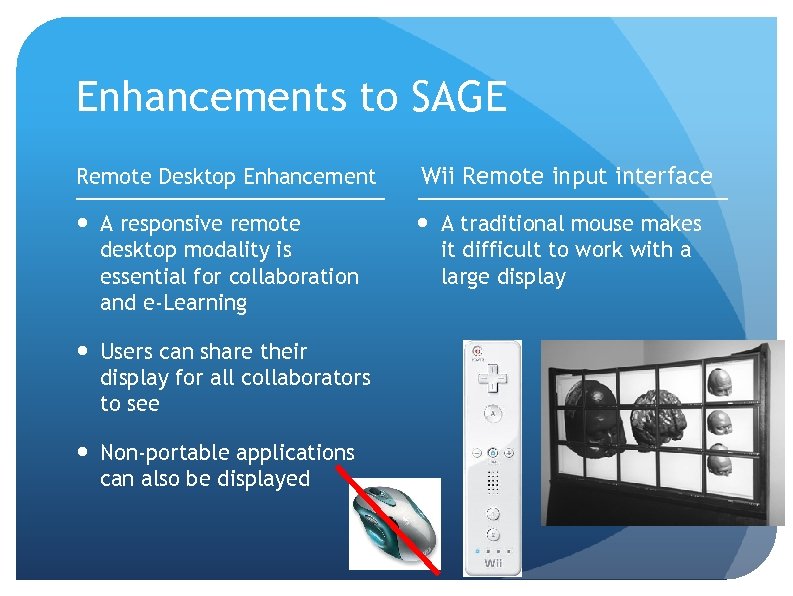
Enhancements to SAGE Remote Desktop Enhancement Wii Remote input interface A responsive remote desktop modality is essential for collaboration and e-Learning A traditional mouse makes it difficult to work with a large display Users can share their display for all collaborators to see Non-portable applications can also be displayed
Global Cyber. Bridges Overall Contributions Weather Forecasting Students in different scientific fields from 3 different continents exposed to the problem through a remote class Grid-computing related methodologies for addressing these problems have been presented Collaborative publications in progress Visualization Based on the difficulties we had in the class, we are trying to implement a cutting-edge e-Learning environment based on SAGE We are working together to publish this work
Acknowledgments Global Cyber. Bridges NSF CI-TEAM OCI-0636031 Mare. Nostrum Supercomputer support NSF-PIRE OISE 0730065 Scalable Adaptive Graphics Environment (SAGE) NSF SCI 0225642, ANI-0225642 NSF research assistance grants: HRD-0833093, CNS 0426125, CNS-052081, CNS-0540592, IIS-0308155 Thank You!
Скачать презентацию International Hurricane Research Center Cyberinfrastructure Enabled Hurricane
ae64836c05fd89cfc1267116f231e112.ppt