 Скачать презентацию International HRM 2015 Block 1 -1 Day 2
3bff1cb59af5b6daf0d87e30d70c1877.ppt
- Количество слайдов: 29



International HRM: 2015 Block 1 -1: Day 2 Contexts of HRM: - performance / value added - development of HRM - strategies - strategic alignment 1

Re-cap … 2
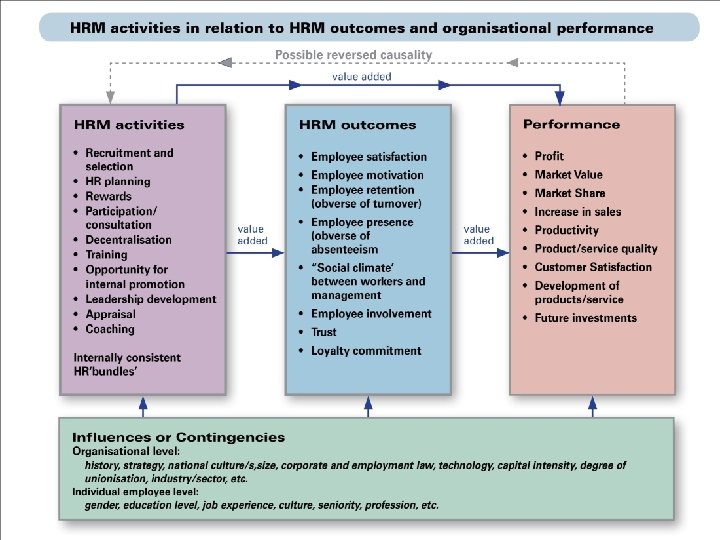
The Development of HRM … 4
Emergence of HRM as a specialism HRM, or “personnel administration” has evolved significantly as a specialism and profession - from providing ad hoc advice on employment matters to employees and managers - to being a strategic business partner adding value through ensuring high performance through people This evolution is summarised on the following slide. • The average ratio of HRM staff to all other direct employees in service sector businesses in the UK is 1: 85. However, this figure varies considerably between nations with, for example, an approximate average of 1: 76 in Germany and 1: 456 in China. How can you explain such differences? ? 5
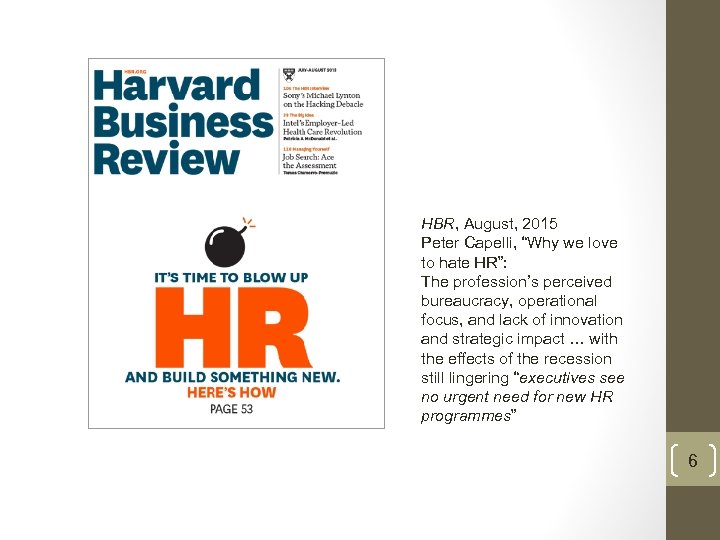
HBR, August, 2015 Peter Capelli, “Why we love to hate HR”: The profession’s perceived bureaucracy, operational focus, and lack of innovation and strategic impact … with the effects of the recession still lingering “executives see no urgent need for new HR programmes” 6
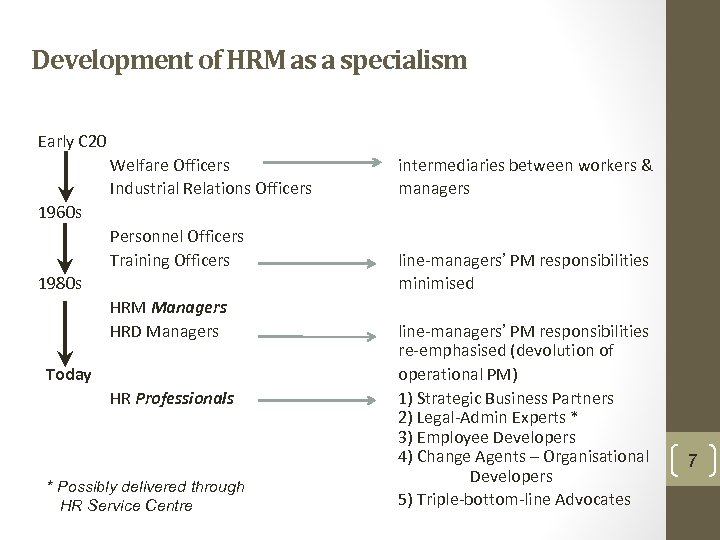
Development of HRM as a specialism Early C 20 Welfare Officers Industrial Relations Officers intermediaries between workers & managers 1960 s Personnel Officers Training Officers 1980 s HRM Managers HRD Managers Today HR Professionals * Possibly delivered through HR Service Centre line-managers’ PM responsibilities minimised line-managers’ PM responsibilities re-emphasised (devolution of operational PM) 1) Strategic Business Partners 2) Legal-Admin Experts * 3) Employee Developers 4) Change Agents – Organisational Developers 5) Triple-bottom-line Advocates 7
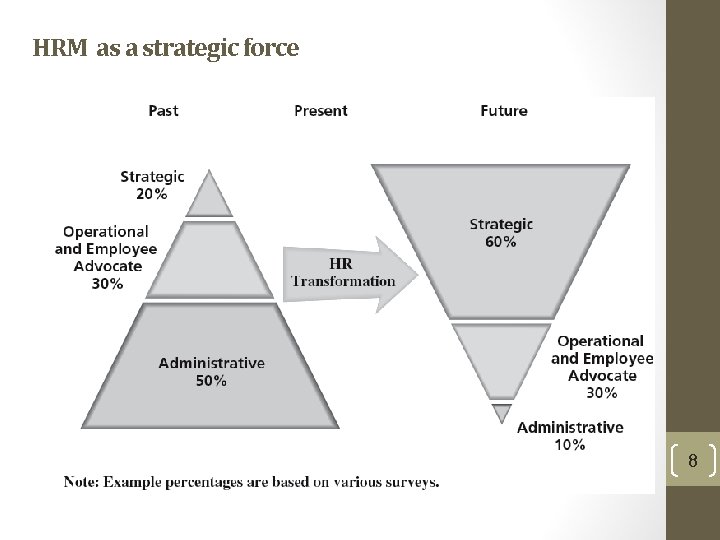
HRM as a strategic force 8
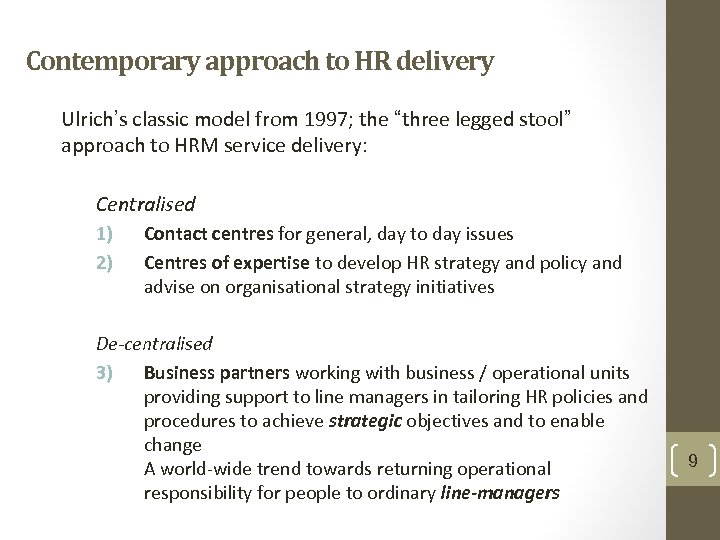
Contemporary approach to HR delivery Ulrich’s classic model from 1997; the “three legged stool” approach to HRM service delivery: Centralised 1) 2) Contact centres for general, day to day issues Centres of expertise to develop HR strategy and policy and advise on organisational strategy initiatives De-centralised 3) Business partners working with business / operational units providing support to line managers in tailoring HR policies and procedures to achieve strategic objectives and to enable change A world-wide trend towards returning operational responsibility for people to ordinary line-managers 9
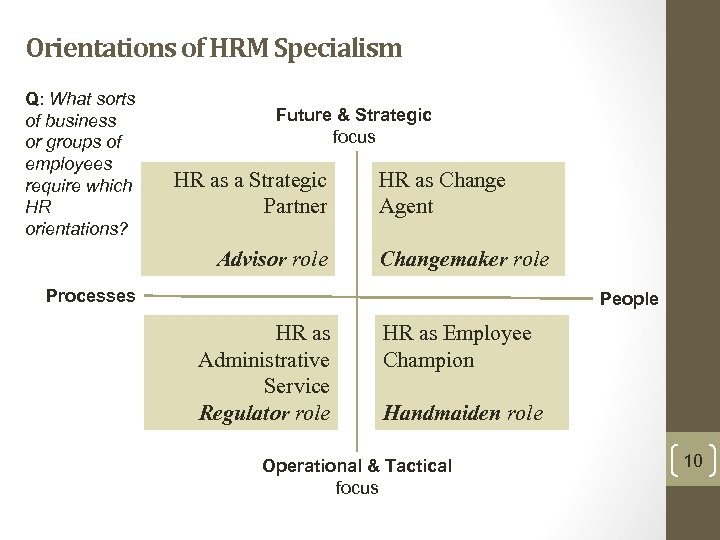
Orientations of HRM Specialism Q: What sorts of business or groups of employees require which HR orientations? Future & Strategic focus HR as a Strategic Partner Advisor role HR as Change Agent Changemaker role Processes People HR as Administrative Service Regulator role HR as Employee Champion Handmaiden role Operational & Tactical focus 10
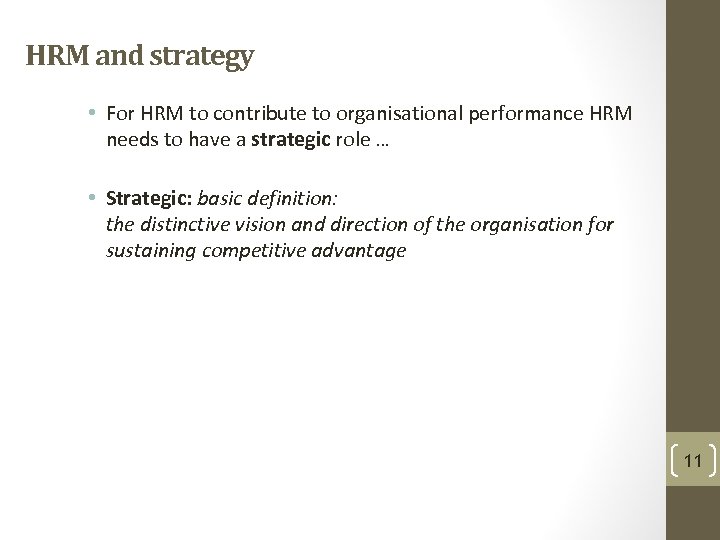
HRM and strategy • For HRM to contribute to organisational performance HRM needs to have a strategic role … • Strategic: basic definition: the distinctive vision and direction of the organisation for sustaining competitive advantage 11
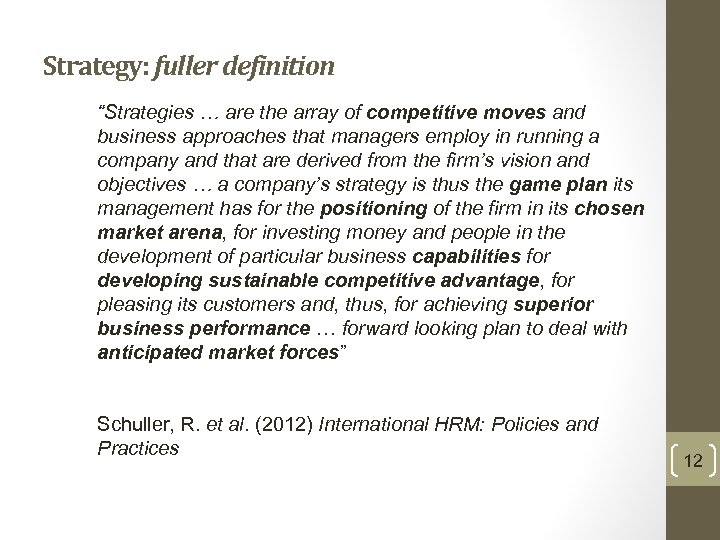
Strategy: fuller definition “Strategies … are the array of competitive moves and business approaches that managers employ in running a company and that are derived from the firm’s vision and objectives … a company’s strategy is thus the game plan its management has for the positioning of the firm in its chosen market arena, for investing money and people in the development of particular business capabilities for developing sustainable competitive advantage, for pleasing its customers and, thus, for achieving superior business performance … forward looking plan to deal with anticipated market forces” Schuller, R. et al. (2012) International HRM: Policies and Practices 12
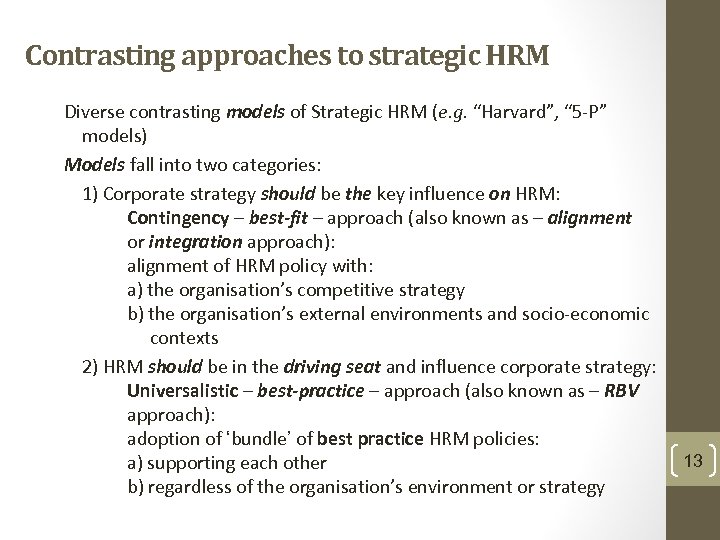
Contrasting approaches to strategic HRM Diverse contrasting models of Strategic HRM (e. g. “Harvard”, “ 5 -P” models) Models fall into two categories: 1) Corporate strategy should be the key influence on HRM: Contingency – best-fit – approach (also known as – alignment or integration approach): alignment of HRM policy with: a) the organisation’s competitive strategy b) the organisation’s external environments and socio-economic contexts 2) HRM should be in the driving seat and influence corporate strategy: Universalistic – best-practice – approach (also known as – RBV approach): adoption of ‘bundle’ of best practice HRM policies: a) supporting each other b) regardless of the organisation’s environment or strategy 13
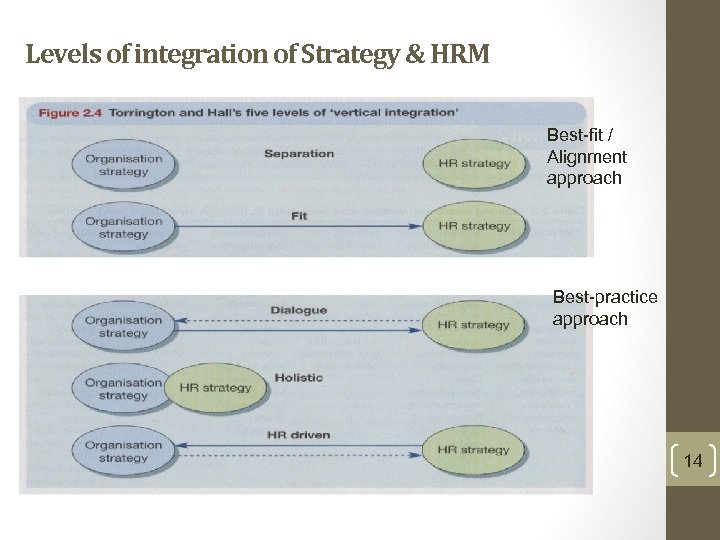
Levels of integration of Strategy & HRM Best-fit / Alignment approach Best-practice approach 14
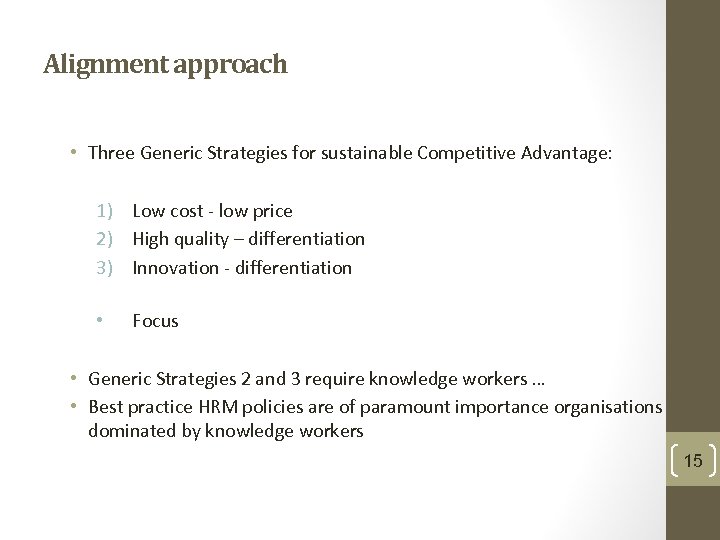
Alignment approach • Three Generic Strategies for sustainable Competitive Advantage: 1) Low cost - low price 2) High quality – differentiation 3) Innovation - differentiation • Focus • Generic Strategies 2 and 3 require knowledge workers … • Best practice HRM policies are of paramount importance organisations dominated by knowledge workers 15
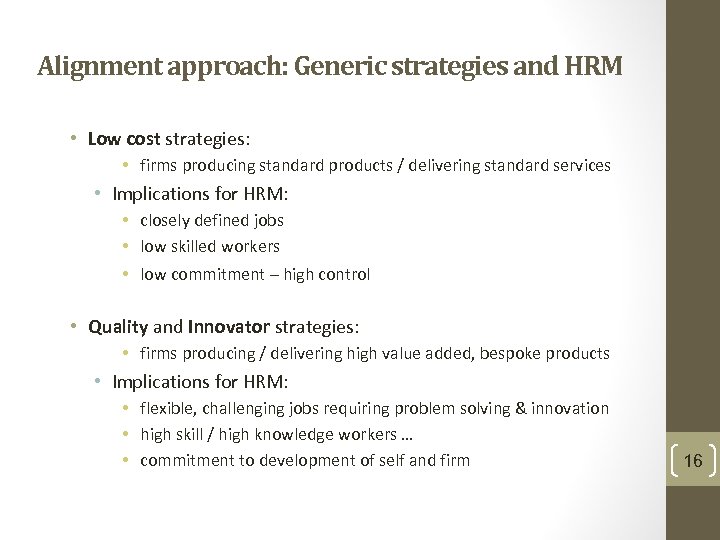
Alignment approach: Generic strategies and HRM • Low cost strategies: • firms producing standard products / delivering standard services • Implications for HRM: • closely defined jobs • low skilled workers • low commitment – high control • Quality and Innovator strategies: • firms producing / delivering high value added, bespoke products • Implications for HRM: • flexible, challenging jobs requiring problem solving & innovation • high skill / high knowledge workers … • commitment to development of self and firm 16
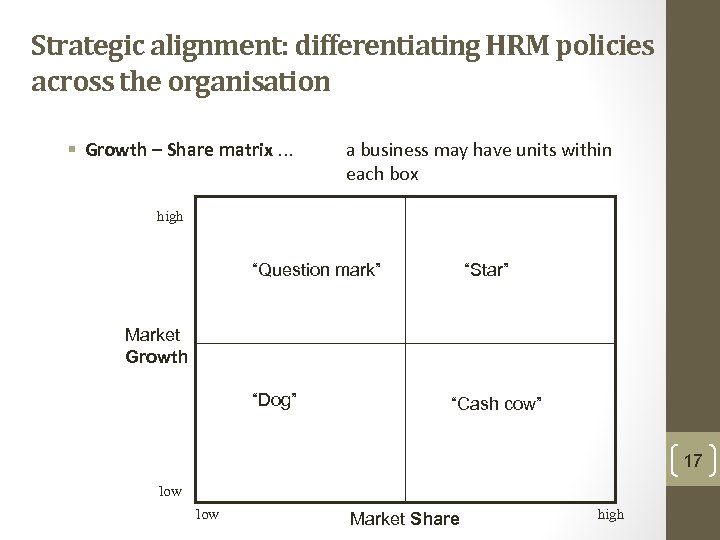
Strategic alignment: differentiating HRM policies across the organisation § Growth – Share matrix. . . a business may have units within each box high “Question mark” “Star” Market Growth “Dog” “Cash cow” 17 low Market Share high
Alignment of HRM with corporate – product life-cycle § The stage of the corporate or product / service life cycle should influence the type of HRM policies § Planning § Initiating § Implementing § Growth § Maturing § Declining § Exit § Different HRM policies should, it is argued, be adopted at each stage to best align with the strategic requirements of the business at that stage 18
Newer understandings of the strategy making process § Traditional understanding of the process of formulating the organisation’s mission and strategies are being replaced by newer understandings that better reflect the reality within most contemporary organisations § “Today, static, top-down strategies that are formulated by a bunch of cloistered executives at a management retreat are being replaced by bottom-up missions and strategies that emerge from the workforce who are constantly interacting with the environment of the marketplace” (Turak, 2013) …… 19
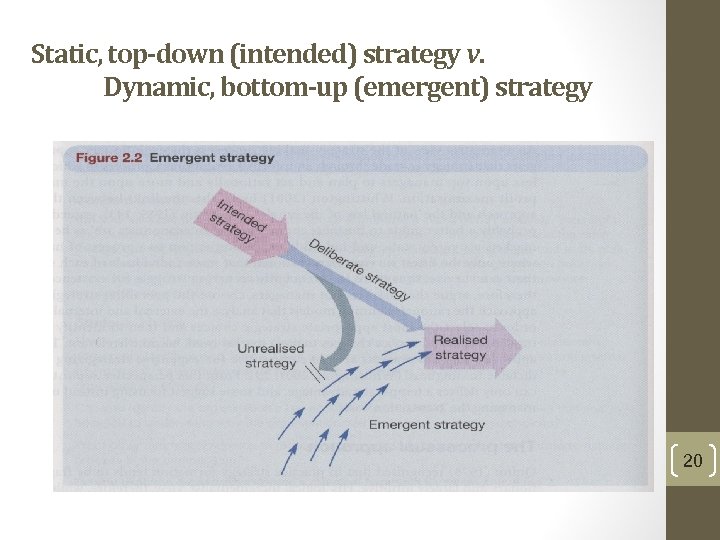
Static, top-down (intended) strategy v. Dynamic, bottom-up (emergent) strategy 20
Implications of newer understandings of the strategy making process for HRM § If the organisation is pursuing an “alignment approach” to strategic HRM it is unlikely that HRM strategies and policies will be able to “keep up” with the dynamic and ever evolving strategy of the organisation as many HRM policies and process only achieve their aims in the medium to long-term (e. g. investment in learning and development) § That realised strategy is more likely to be emergent than intended in the case of many, particularly private sector, organisations has prompted a reappraisal of how HRM can contribute strategically, that is, how HRM can contribute to sustained competitive advantage 21
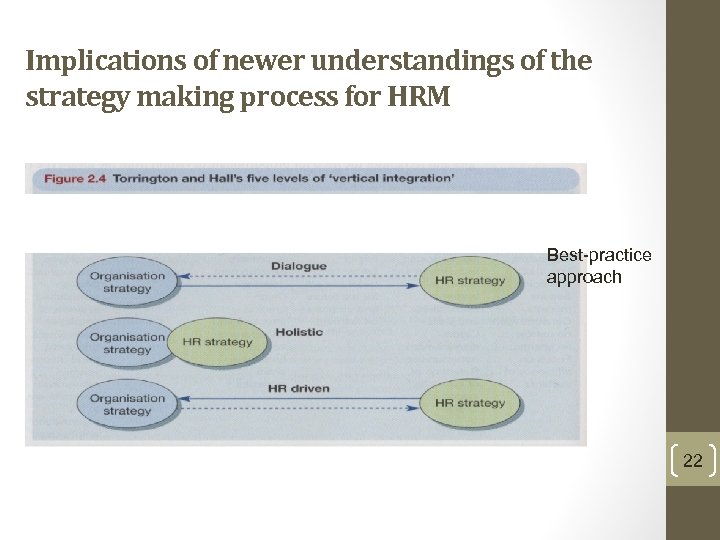
Implications of newer understandings of the strategy making process for HRM Best-practice approach 22
Best Practices in HRM to drive strategy § By contrast to the strategic alignment approach to HRM (the “Best Fit” approach), it is argued that the “Best Practice” approach to people management will, regardless of the influences of contingencies such as the intended corporate strategy, ensure organisational success Also known as the RBV (Resource Based View) of the firm: cultivating the core-capabilities of the firm, particularly its human and social capital, provides inimitable, non-substitutable and sustainable resources for competitive advantage The best practice approach puts HRM in the strategic “driving seat” § Best practices include a ‘bundle’ of the best practices listed below § § 23
“Best Practices” regularly identified include …. • • • • TASK Employment security Drawing upon your own Selectivity in hiring experience, explain why an Higher than average wages organization might not Incentive pay use some of these HRM best practices. Employee ownership Information sharing - high trust Participation and empowerment Self managed teams Training and skill development for all staff Cross utilisation and cross training Symbolic egalitarianism Wage compression Promotion from within Long term perspective on employment Monitoring and evaluation of people management practices All embracing philosophy of people management 24
Best Practice bundles § § The best practices need to be ‘bundled’, that is, the approach will only work if most, if not all, the best practices are in use Empirical research studies show that this situation rarely prevails 25
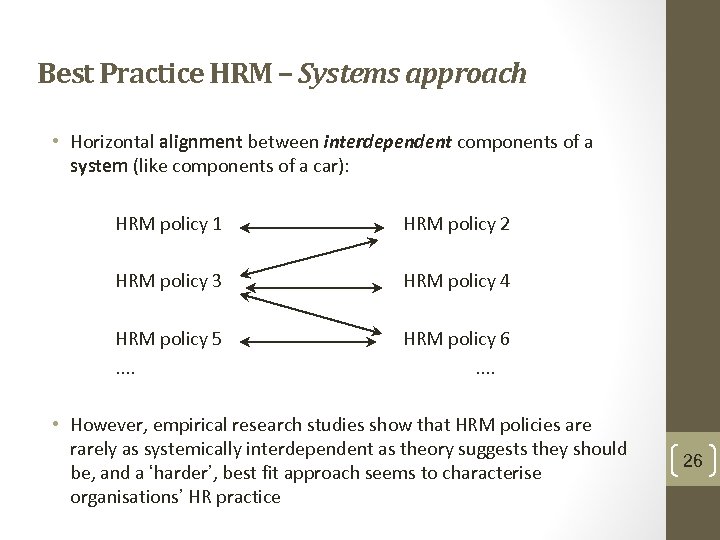
Best Practice HRM – Systems approach • Horizontal alignment between interdependent components of a system (like components of a car): HRM policy 1 HRM policy 2 HRM policy 3 HRM policy 4 HRM policy 5. . HRM policy 6. . • However, empirical research studies show that HRM policies are rarely as systemically interdependent as theory suggests they should be, and a ‘harder’, best fit approach seems to characterise organisations’ HR practice 26
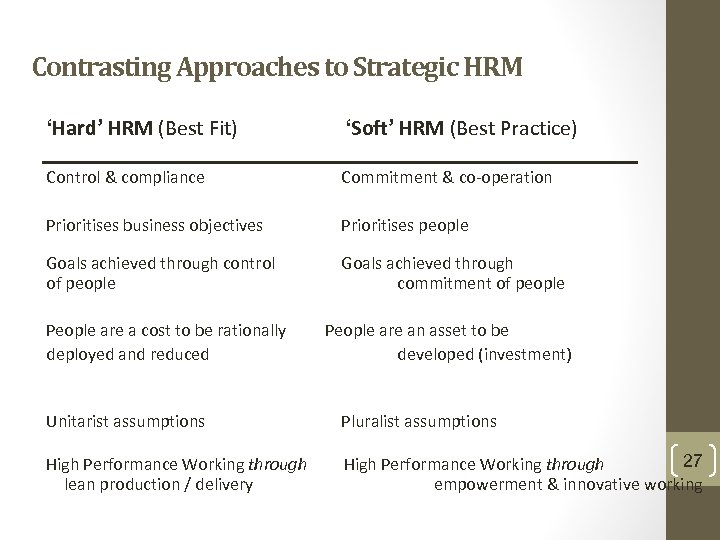
Contrasting Approaches to Strategic HRM ‘Hard’ HRM (Best Fit) ‘Soft’ HRM (Best Practice) Control & compliance Commitment & co-operation Prioritises business objectives Prioritises people Goals achieved through control of people Goals achieved through commitment of people People are a cost to be rationally deployed and reduced People are an asset to be developed (investment) Unitarist assumptions Pluralist assumptions High Performance Working through lean production / delivery 27 High Performance Working through empowerment & innovative working
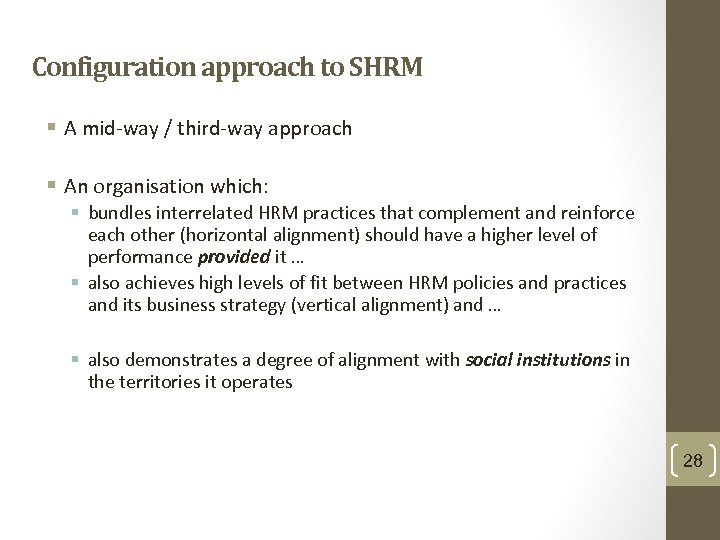
Configuration approach to SHRM § A mid-way / third-way approach § An organisation which: § bundles interrelated HRM practices that complement and reinforce each other (horizontal alignment) should have a higher level of performance provided it … § also achieves high levels of fit between HRM policies and practices and its business strategy (vertical alignment) and … § also demonstrates a degree of alignment with social institutions in the territories it operates 28
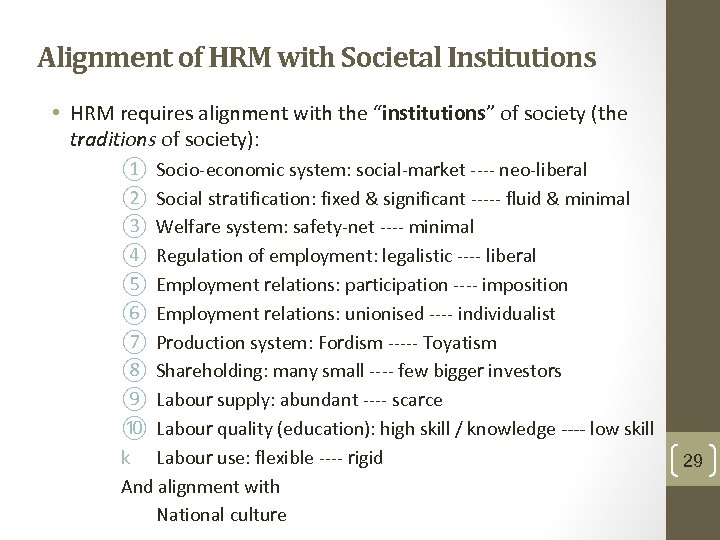
Alignment of HRM with Societal Institutions • HRM requires alignment with the “institutions” of society (the traditions of society): ① Socio-economic system: social-market ---- neo-liberal ② Social stratification: fixed & significant ----- fluid & minimal ③ Welfare system: safety-net ---- minimal ④ Regulation of employment: legalistic ---- liberal ⑤ Employment relations: participation ---- imposition ⑥ Employment relations: unionised ---- individualist ⑦ Production system: Fordism ----- Toyatism ⑧ Shareholding: many small ---- few bigger investors ⑨ Labour supply: abundant ---- scarce ⑩ Labour quality (education): high skill / knowledge ---- low skill k Labour use: flexible ---- rigid And alignment with National culture 29
Скачать презентацию International HRM 2015 Block 1 -1 Day 2
3bff1cb59af5b6daf0d87e30d70c1877.ppt