


 Скачать презентацию International Educational Corporation Handouts Topic 4
4_Sociology_of_social_structure.pptx
- Количество слайдов: 32
 International Educational Corporation Handouts • Topic № 4. Sociology of social structure • Sociology • 2 credits • assoc. professor 2015 -2016 yeas Yerkin Massanov
 The brief content: • 1. Definition’s Social Structure; • 2. Main types of Social Structure; • 3. Classification of Social Life.
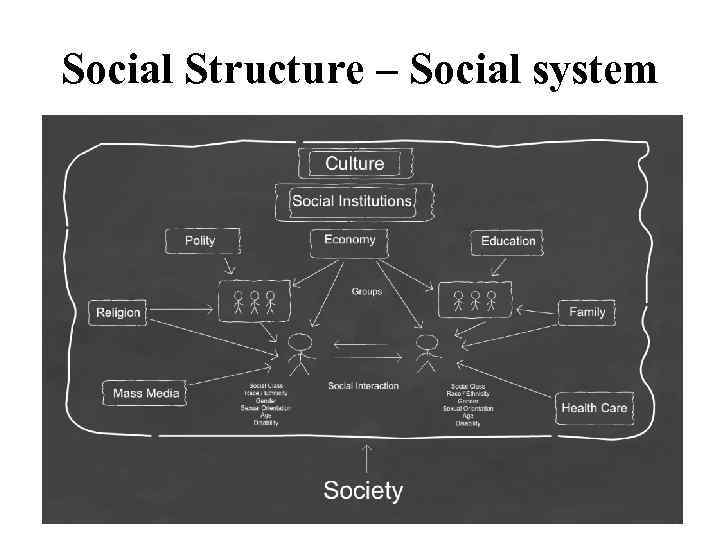 Social Structure – Social system
 Irving Goffman • Social roles and the ‘Definition of the Situation’ • We are always performing social roles – social roles are the expectations about the behavior attached to our social status, i. e. how we are expected to behave.
 Nature of Social Institutions: 1. Institutions generally unplanned, and develop gradually 2. Institutions are inherently conservative and change slowly 3. Society’s institutions are interdependent: a change in one leads to changes in the others 4. The statuses, roles, values, and norms associated with an institution in one society may be very different from those in another society.
 Definition of Social structure • Social structure - in sociology, the distinctive, stable arrangement of institutions whereby human beings in a society interact and live together. • The term structure has been applied to human societies since the 19 th century. Before that time, its use was more common in other fields such as construction or biology.
 Social structure divided 2: • Microstructure is the • Macrostructure is a pattern of relations between most basic between objects that elements of social life, have their own for example, pattern of structure a political relations between social structure individuals in a group. between political parties, as political parties have their own social structure.
 Some common definitions: ü the relationship of definite entities or groups to each other, ü enduring patterns of behaviour by participants in a social system in relation to each other, and ü institutionalised norms or cognitive frameworks that structure the actions of actors in the social system.
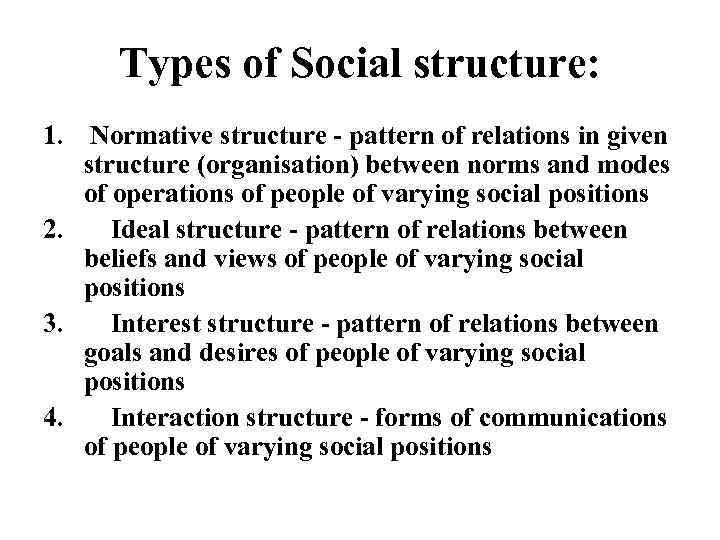 Types of Social structure: 1. Normative structure - pattern of relations in given structure (organisation) between norms and modes of operations of people of varying social positions 2. Ideal structure - pattern of relations between beliefs and views of people of varying social positions 3. Interest structure - pattern of relations between goals and desires of people of varying social positions 4. Interaction structure - forms of communications of people of varying social positions
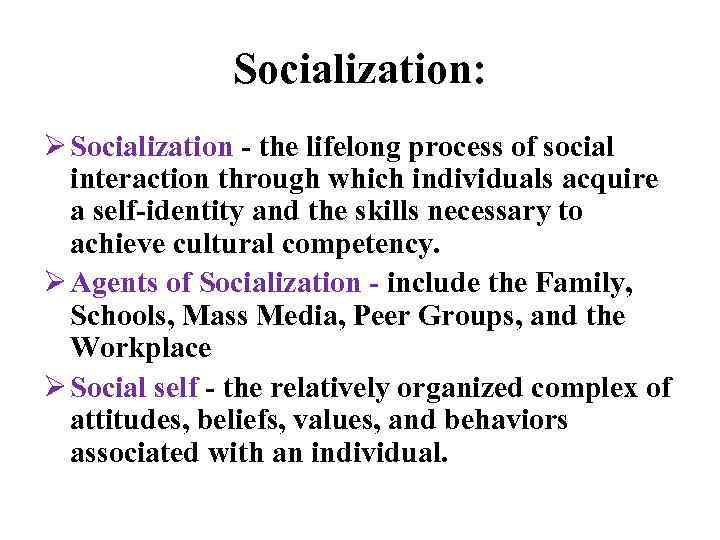 Socialization: Ø Socialization - the lifelong process of social interaction through which individuals acquire a self-identity and the skills necessary to achieve cultural competency. Ø Agents of Socialization - include the Family, Schools, Mass Media, Peer Groups, and the Workplace Ø Social self - the relatively organized complex of attitudes, beliefs, values, and behaviors associated with an individual.
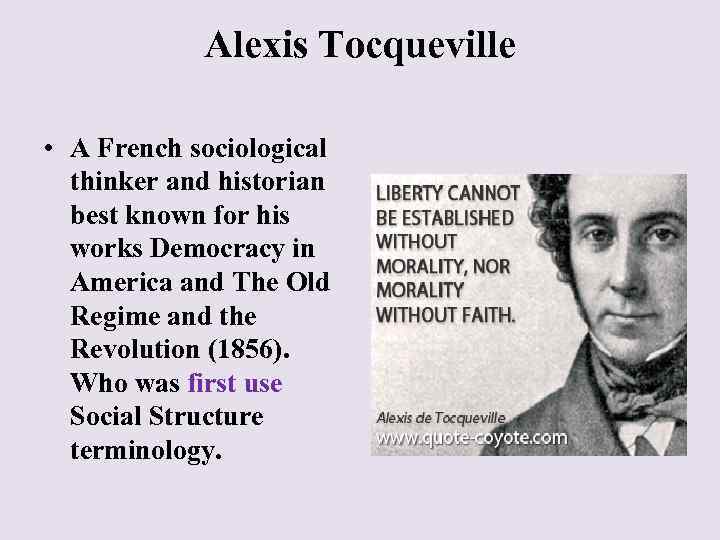 Alexis Tocqueville • A French sociological thinker and historian best known for his works Democracy in America and The Old Regime and the Revolution (1856). Who was first use Social Structure terminology.
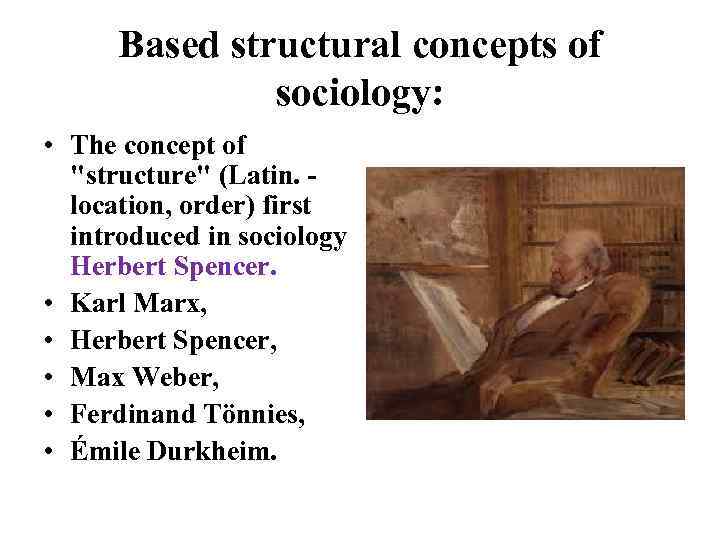 Based structural concepts of sociology: • The concept of "structure" (Latin. location, order) first introduced in sociology Herbert Spencer. • Karl Marx, • Herbert Spencer, • Max Weber, • Ferdinand Tönnies, • Émile Durkheim.
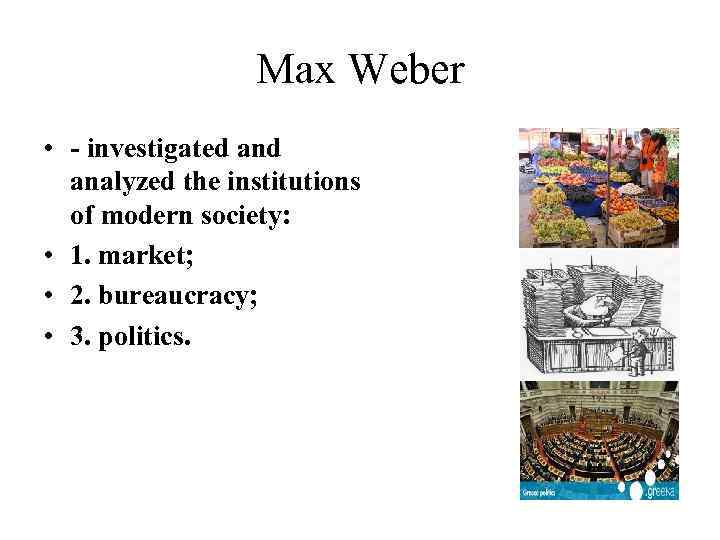 Max Weber • - investigated analyzed the institutions of modern society: • 1. market; • 2. bureaucracy; • 3. politics.
 Talcott Parsons: • Put differently, social behaviour conforms to norms, values, and rules that direct behaviour in specific situations. • These norms vary according to the positions of the individual actors: they define different roles, such as various occupational roles or the roles of husbandfather and wife-mother.
 Social Structures • Social structure is made up of statuses and roles. A status is a position in a social structure, and the role is how we (generally) expect members of a status to behave. • Statuses and Roles exist independently of their ‘incumbents’ or ‘occupants’
 Status: • A social status is a ‘position that a person occupies in a social structure’ • You can think of these are different ways of categorizing people in different situations. • Examples: Family statuses, occupational statuses, social class statuses, demographic statuses, etc.
 • 1. Achieved statuses – positions that are achieved by the individuals for themselves (but not always on purpose); these statuses can change. • 2. Ascribed statuses – statuses given to individuals generally at birth, and from which they cannot escape; these statuses are fixed.
 Social Role • A role is the ‘sum total of expectations about behavior attached to a particular social status’; how we expect occupants of a social status to behave. • ‘Occupants of a social status are expected to perform certain roles’ • Role - the common denominator among all occupants of a status; (i. e. removing all idiosyncracies, what they all have in common) • Example: You have the status of ‘student’; My role is to study.
 Three Problems: 1. Role Strain - Overwhelm, Stress with a single role 2. Status Inconsistency - Ascribed versus achieved statuses 3. Role Conflict - Conflict of interest; clashing expectations between many roles
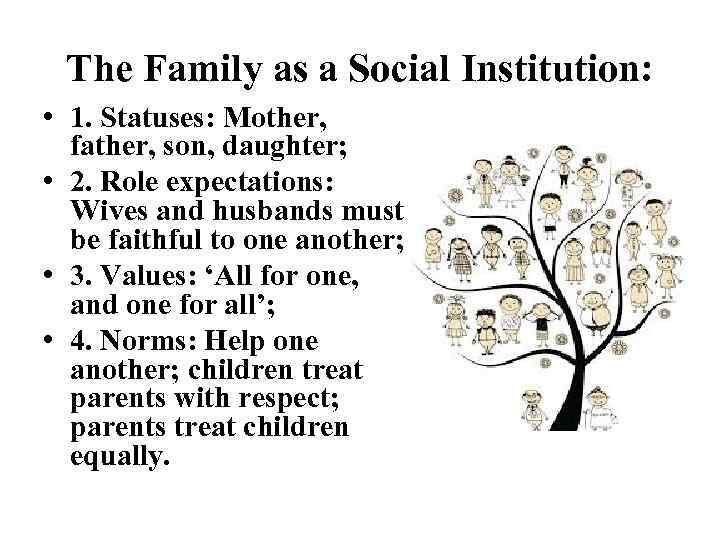 The Family as a Social Institution: • 1. Statuses: Mother, father, son, daughter; • 2. Role expectations: Wives and husbands must be faithful to one another; • 3. Values: ‘All for one, and one for all’; • 4. Norms: Help one another; children treat parents with respect; parents treat children equally.
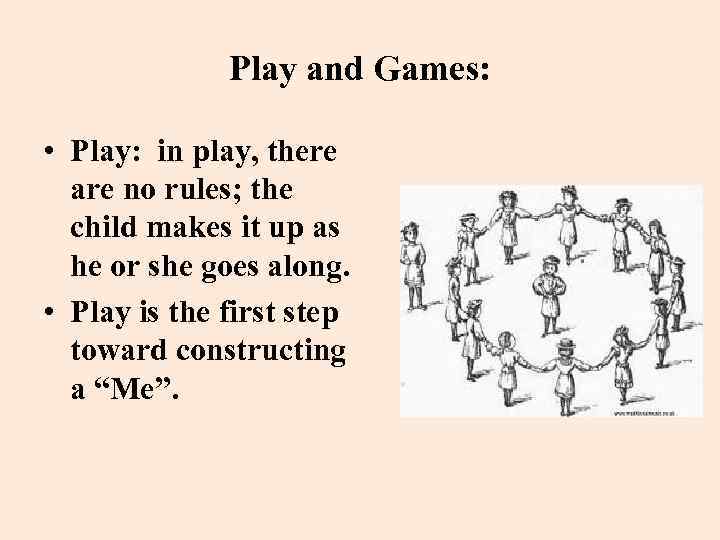 Play and Games: • Play: in play, there are no rules; the child makes it up as he or she goes along. • Play is the first step toward constructing a “Me”.
 Games: • - games have rules and specific roles (e. g. batter, pitcher, catcher, outfielder); the rules specify how the person in each role participates • In Mead’s view, the roles and the rules of games are ‘impersonal’. • Participating in games enhances the ability of children for role-taking, to see other people’s points of view, and to acquire a generalized other
 Types of Influence: • • 1. Force; 2. Manipulation; 3. Persuasion; 4. Authority.
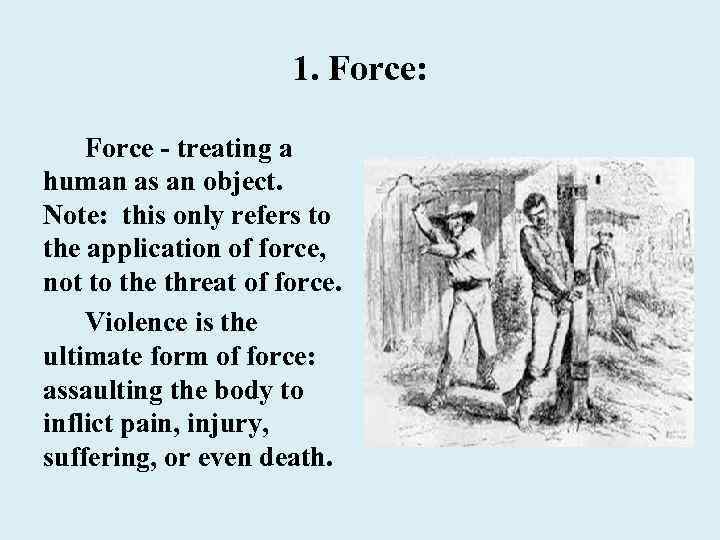 1. Force: Force - treating a human as an object. Note: this only refers to the application of force, not to the threat of force. Violence is the ultimate form of force: assaulting the body to inflict pain, injury, suffering, or even death.
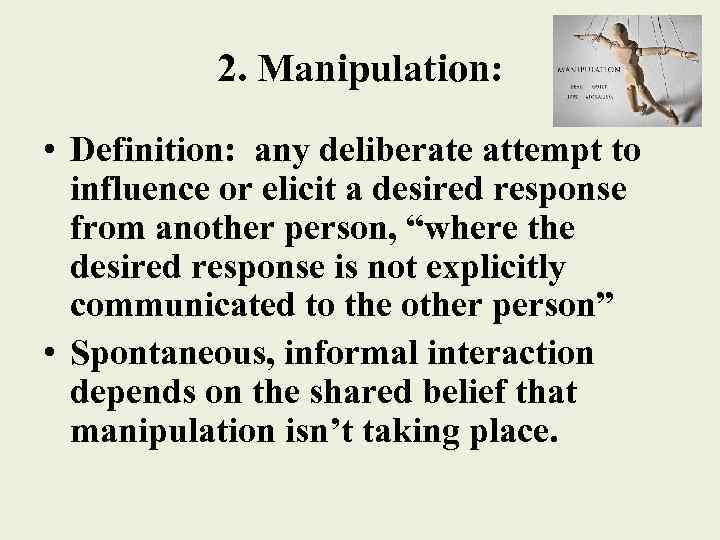 2. Manipulation: • Definition: any deliberate attempt to influence or elicit a desired response from another person, “where the desired response is not explicitly communicated to the other person” • Spontaneous, informal interaction depends on the shared belief that manipulation isn’t taking place.
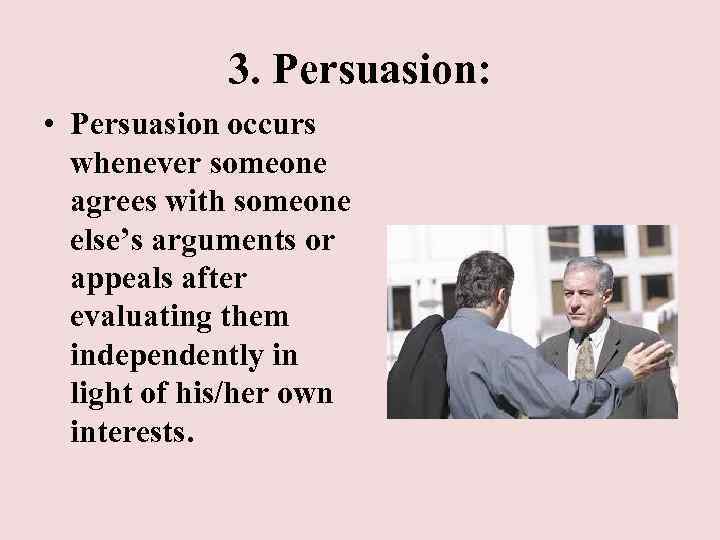 3. Persuasion: • Persuasion occurs whenever someone agrees with someone else’s arguments or appeals after evaluating them independently in light of his/her own interests.
 • Persuasion implies a context of open and free communication, with no anticipation of punishments or rewards, i. e. without any felt need to do what the other wants.
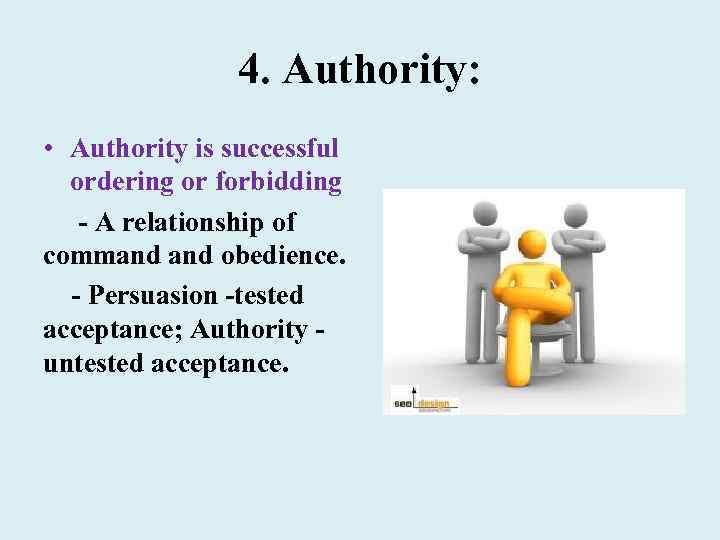 4. Authority: • Authority is successful ordering or forbidding - A relationship of command obedience. - Persuasion -tested acceptance; Authority untested acceptance.
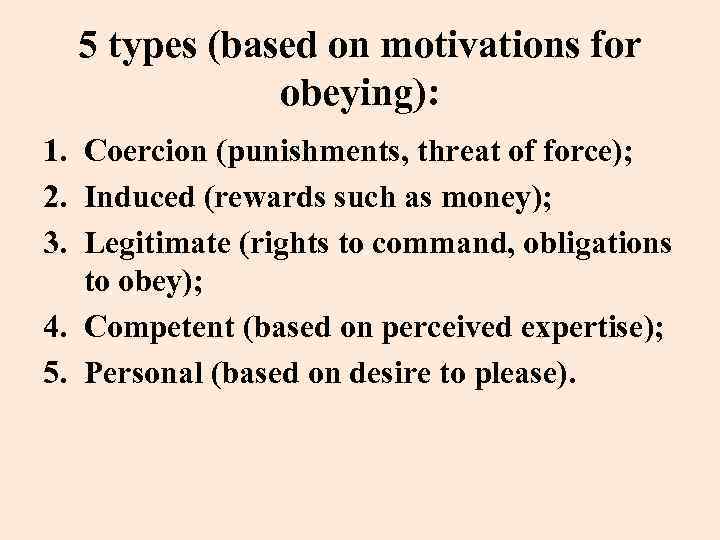 5 types (based on motivations for obeying): 1. Coercion (punishments, threat of force); 2. Induced (rewards such as money); 3. Legitimate (rights to command, obligations to obey); 4. Competent (based on perceived expertise); 5. Personal (based on desire to please).
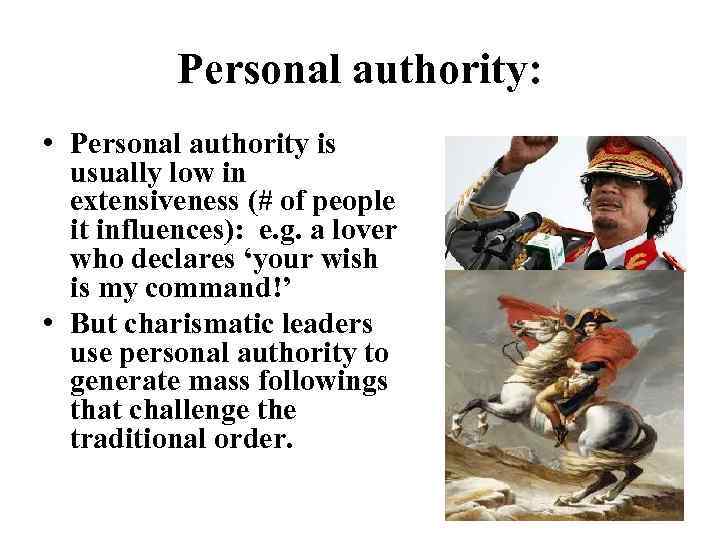 Personal authority: • Personal authority is usually low in extensiveness (# of people it influences): e. g. a lover who declares ‘your wish is my command!’ • But charismatic leaders use personal authority to generate mass followings that challenge the traditional order.
 The control questions: • 1. The main Social Institutions? • 2. Types of Social structure? • 3. Briefly describe: Social Role, Status and Norms?
 • SIW: • 1. Briefly describe Social Structure; • 2. Deference’s between Social Role, Status and Norm (essay 2 -3 pages). • SIWT: • 1. Meaning of types of Social Structure? • 2. Differences between the 4 сclassification of Social Life? (abstract 3 -5 pages)