


 Скачать презентацию International Educational Corporation Active-Handout Topic
5_Sociology_of_Personality.pptx
- Количество слайдов: 19
 International Educational Corporation Active-Handout • • Topic № 5. Sociology of Personality Sociology 2015 -2016 yeas 2 credits assoc. professor Yerkin Massanov
 The brief content: • 1. Introduction to Sociology of Personality; • 2. Theory of Personality; • 3. Three types of personality.
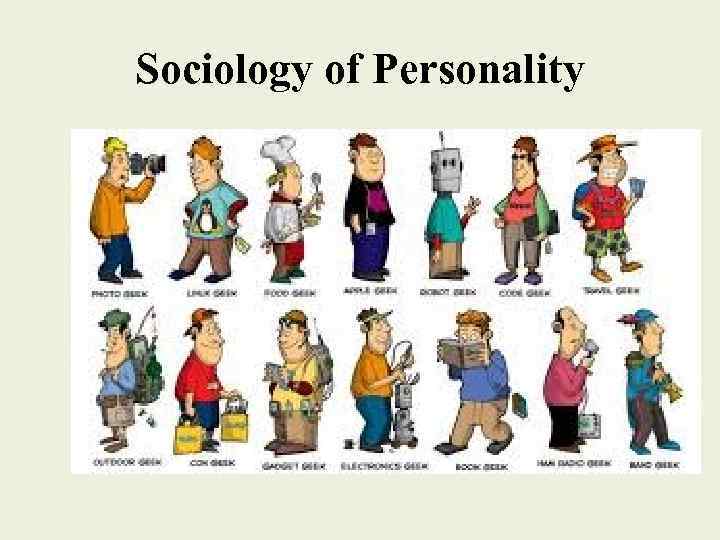 Sociology of Personality
 Etymology: Late 14 c. , "quality or fact of being a person, " from Medieval Latin personalitatem from Late Latin personalis. Sense of "a distinctive character" is first recorded 1795, from French personnaliti. Meaning "person whose character stands out from that of others" is from 1889. Personality cult is attested from 1956.
 BRIEFING: Ø Personality is not related to bodily structure alone. It includes both structure and dynamics. Ø Personality is an indivisible unit. Ø Personality is neither good nor bad. Ø Every personality is unique Ø Personality refers to persistent qualities of the individual. It expresses consistency and regularity. Ø Personality is acquired. Ø Personality is influenced by social interaction. It is defined in terms of behavior.
 Terminology Personality: The term personality is derived from the Latin word persona meaning a mask. Personality is a patterned body of habits, traits, attitudes and ideas of an individual as these are organized externally into roles and statuses and as they relate internally to motivation, goals and various aspects of selfhood.
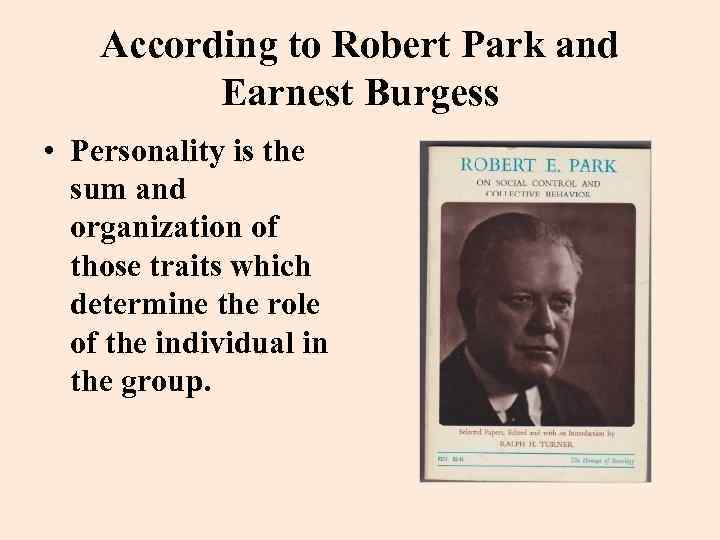 According to Robert Park and Earnest Burgess • Personality is the sum and organization of those traits which determine the role of the individual in the group.
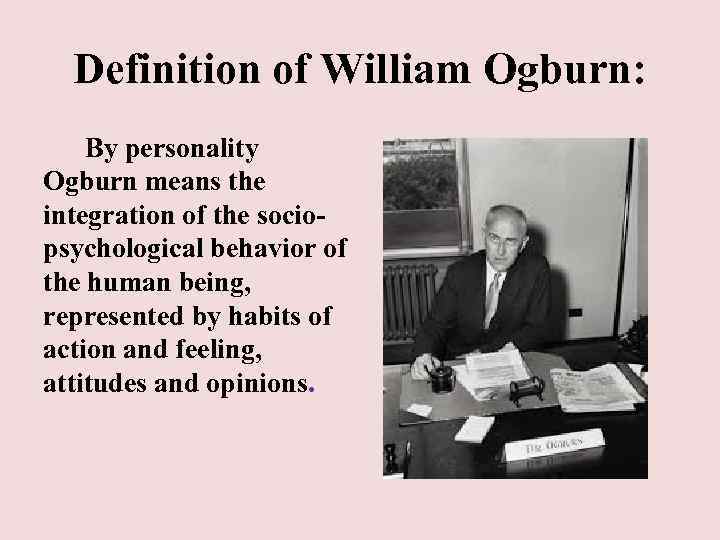 Definition of William Ogburn: By personality Ogburn means the integration of the sociopsychological behavior of the human being, represented by habits of action and feeling, attitudes and opinions.
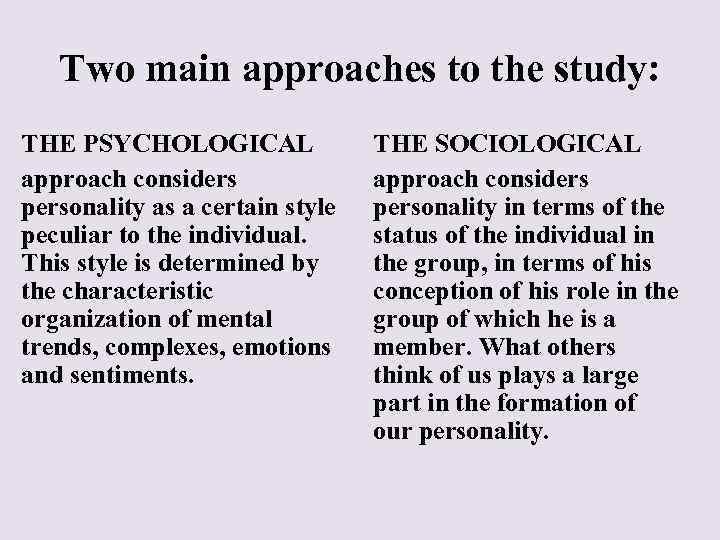 Two main approaches to the study: THE PSYCHOLOGICAL approach considers personality as a certain style peculiar to the individual. This style is determined by the characteristic organization of mental trends, complexes, emotions and sentiments. THE SOCIOLOGICAL approach considers personality in terms of the status of the individual in the group, in terms of his conception of his role in the group of which he is a member. What others think of us plays a large part in the formation of our personality.
 Three types of personality: 1. Extrovert Personality; 2. Introvert Personality; 3. Ambivert Personality.
 1. Extrovert Personality: This type the tendency to live mostly outside the like to live with others. Those individuals are highly socialized and have contact with outside people in the society. They want to join other groups who are more in number.
 2. Introvert Personality: • Introvert is opposite to extrovert. Those people are always live alone in their rooms and don’t want to go outside. They have own imaginary word.
 3. Ambivert Personality: • Between extrovert and introvert personalities there is a third one type called ambivert. People belonging to this type enjoy both the groups and attend them. They have middle mind and want to live in bot parties. Sometimes they join outside people but sometimes they live in their own rooms.
 Determinants of Personality: Personality is a result of the combination of four factors - physical environment, heredity, culture and particular experiences. Geographical environment sometimes determines cultural variability. Man comes to form ideas and attitudes according to the physical environment he lives in.
 Personality Disorganization: Society everywhere demands from its member’s conformity to its folkways and mores, to its values and standards. But often the individual fails to meet the requirements of the society in which he lives. As a result he develops personality problems and becomes disorganized. Such a person is considered mentally unfit incase of mental derangement or abnormality.
 Personality Reorganization: As one may expect, a major personality transformation sets in when the individual enters the adolescent phases of growth and maturation. Stirred up and made possible through the structural maturation within the glandular and neuromuscular systems, the personality reorganization unfolds itself simultaneously in many of its dimensions and facets.
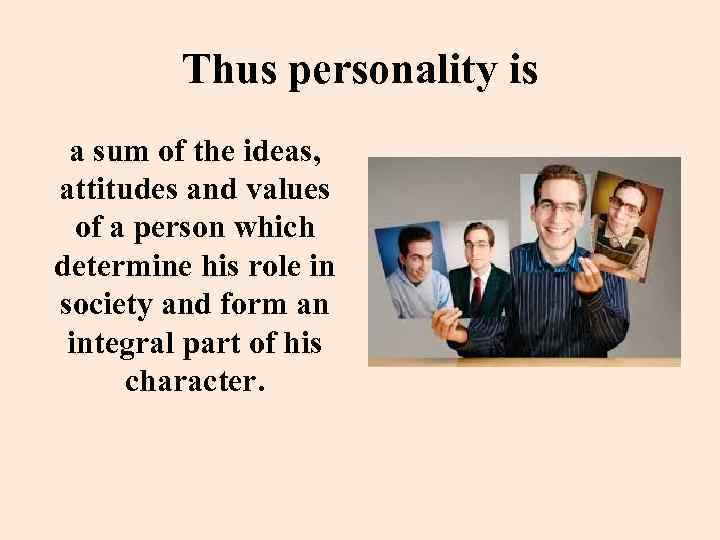 Thus personality is a sum of the ideas, attitudes and values of a person which determine his role in society and form an integral part of his character.
 The control questions: • 1. The main idea of Sociology of Personality? • 2. Three types of personality? • 3. Briefly describe: Personality Disorganization and Reorganization?
 • SIW: • 1. Briefly describe Sociology of Personality; • 2. Deference’s between : Personality Disorganization and Reorganization (essay 2 -3 pages). • SIWT: • 1. Meaning of types of Sociology of Personality? • 2. Differences between the 3 classification? (abstract 3 -5 pages)