


 Скачать презентацию International economics as a field of study in
821578112fed09d2afcf5d8541932d40.ppt
- Количество слайдов: 22
 International economics as a field of study in economics; one may ask: • What makes economic relations among nation states different from economic relations within a nation state?
 Possible answers: · Each country identifies itself by a geographical area over which it claims sovereignty. · Each country has its own government (political system) and its own of rules and regulations. The political systems of most nation states are different. · Activities or transactions leading to movements of people, factors of production (i. e. , labor, capital and raw materials), manufactured goods and services across a county's borders are often controlled or restricted and in some cases are prohibited.
 · Most nation states have their own monies (currencies) and banking systems. · Despite the basic commonalties among all human beings, people of different countries tend to have different cultures, speak different languages, and have different tastes and habits. ==>All of the above have restricting effects on economic interactions among nation states.
 • Since the end of the Second World War the world's international trade has been growing steadily. • Better and less expensive transportation, lower trade barriers, the establishment of international institutions and organizations including trade organizations, reduced levels of international tension, regional economic agreements, and international trade agreements have all contributed to the growth in the in international trade.
 More recent developments: • Trade liberalization ( the establishment of WTO) • Capital market liberalization • Economic integrations European Union NAFTA ASEAN • Emergence of China as an economic force • Globalization developments
 International Economic Relations • Trade » Exports » Imports • International Factor Movements • International Investment » Direct » Portfolio • Unilateral transfers (of goods and services and capital ) • Official transactions
 International Financial Transactions • • Trade-based transactions Investment transactions Unilateral transactions Official transactions • Speculative transactions • Hedging transactions • Trading in FX derivatives
 International Financial Institutions • Markets and exchanges in international financial centers such as London, New York, Paris, Tokyo, Singapore, etc. • International banks and brokerage firms • Central banks • The IMF • The World Bank
 Studying International Economics • Microeconomics: International Trade and Factor Mobility • Macroeconomics: International Finance (Balance of Payments, Exchange Rate, and International Monetary System) • Positive and Normative Analysis
 The United States and the World • From the production possibilities curve analysis we have learned that an economy's output cannot grow beyond its production possibilities unless there an increases in one or more of its economic resources or/and there is an improvement in its technology. • Trading with other countries allows a country's consumers to consume outside the country’s production possibilities area; that means the country can achieve a consumption level not achievable without trade.
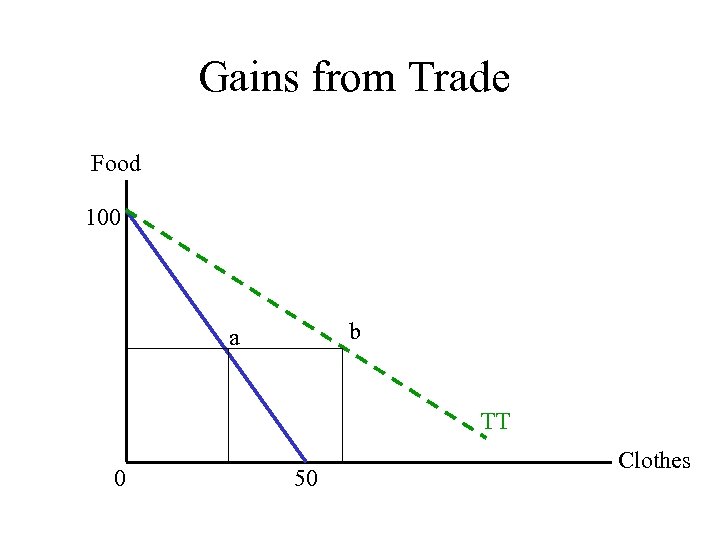 Gains from Trade Food 100 b a TT 0 50 Clothes
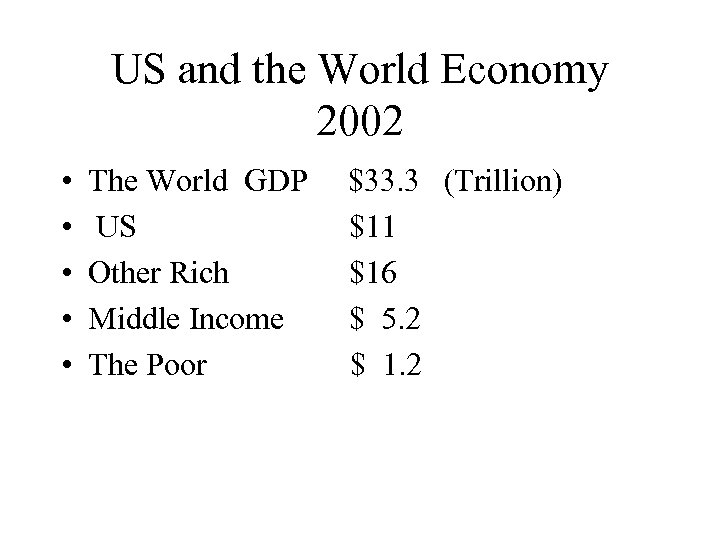 US and the World Economy 2002 • • • The World GDP US Other Rich Middle Income The Poor $33. 3 (Trillion) $11 $16 $ 5. 2 $ 1. 2
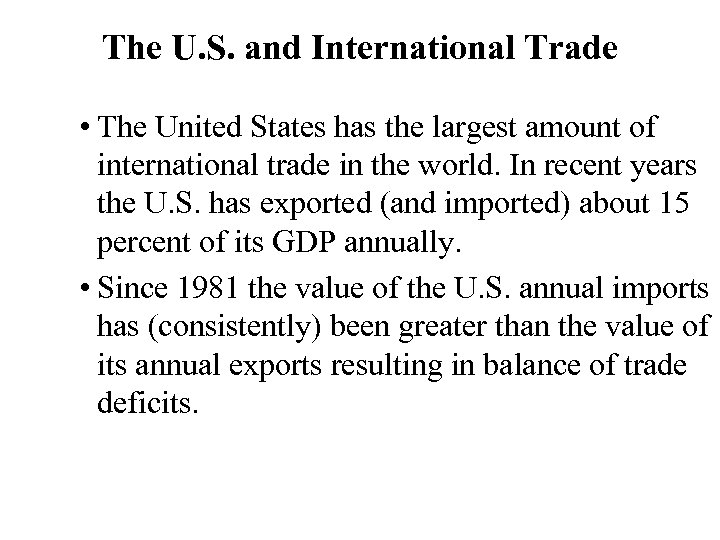 The U. S. and International Trade • The United States has the largest amount of international trade in the world. In recent years the U. S. has exported (and imported) about 15 percent of its GDP annually. • Since 1981 the value of the U. S. annual imports has (consistently) been greater than the value of its annual exports resulting in balance of trade deficits.
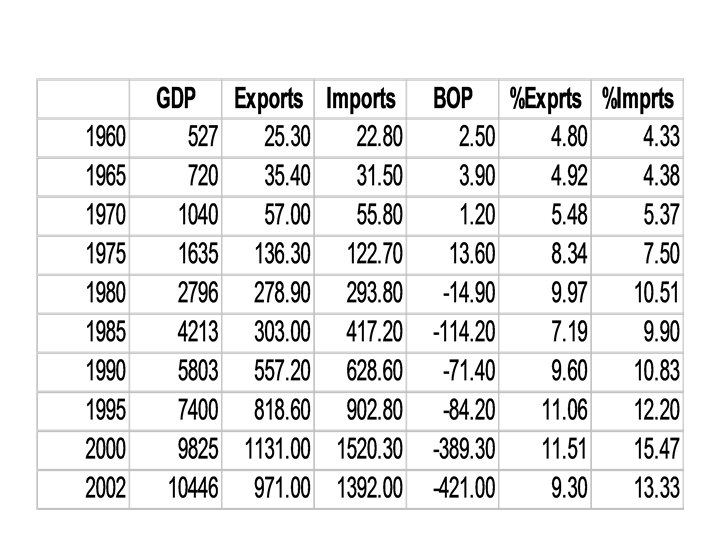
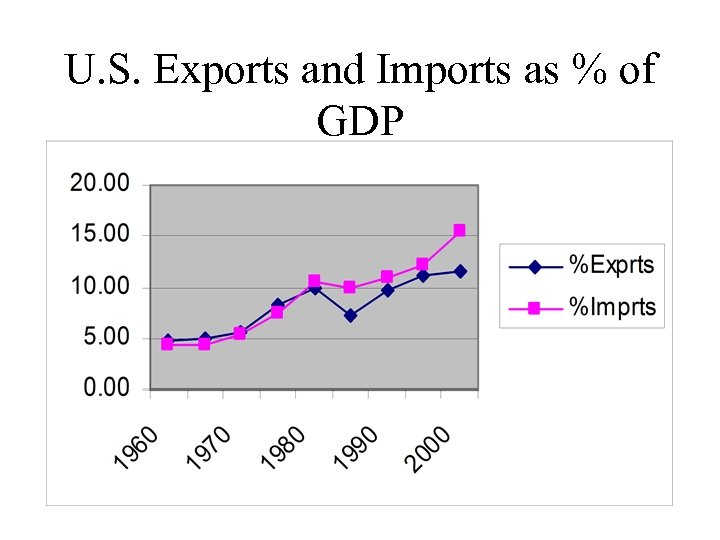 U. S. Exports and Imports as % of GDP
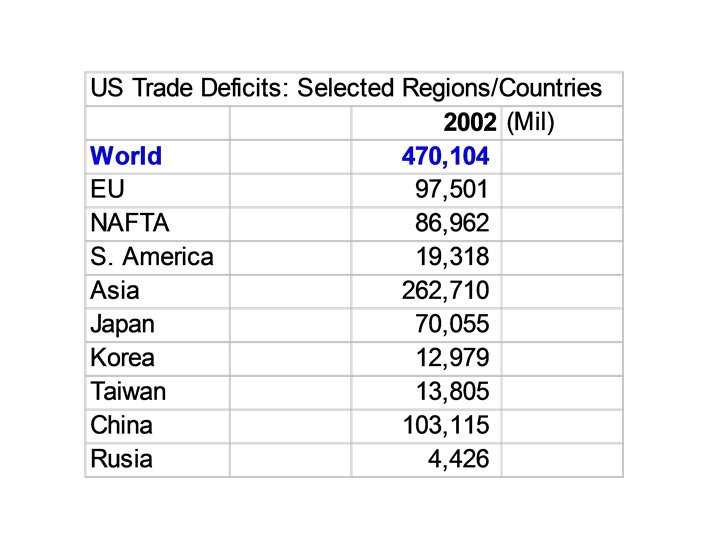
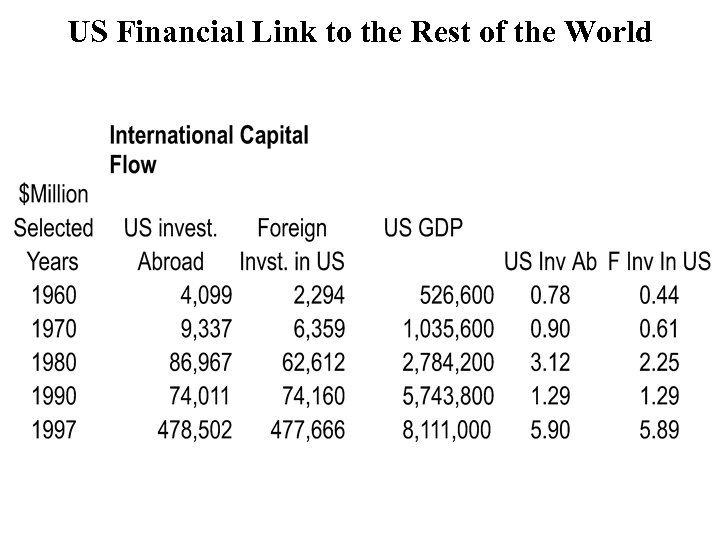 US Financial Link to the Rest of the World
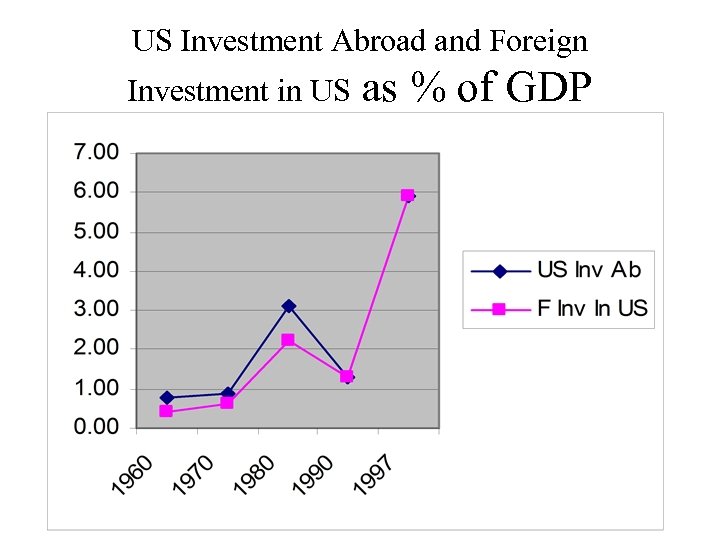 US Investment Abroad and Foreign Investment in US as % of GDP
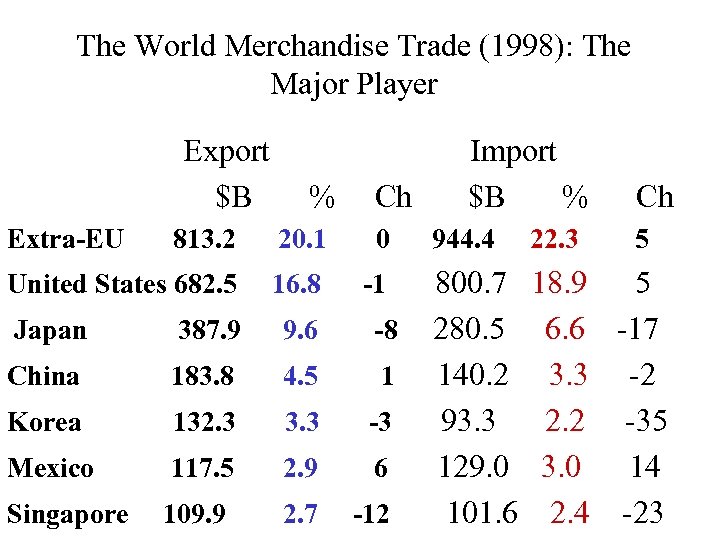 The World Merchandise Trade (1998): The Major Player Export $B Extra-EU % Ch 813. 2 20. 1 0 United States 682. 5 16. 8 -1 Japan 387. 9 9. 6 -8 China 183. 8 4. 5 1 Korea 132. 3 3. 3 -3 Mexico 117. 5 2. 9 6 Singapore 109. 9 2. 7 -12 Import $B % Ch 944. 4 22. 3 5 800. 7 280. 5 140. 2 93. 3 129. 0 101. 6 18. 9 5 6. 6 -17 3. 3 -2 2. 2 -35 3. 0 14 2. 4 -23
 The Basic Theory of Trade • Comparative advantage and the gains from trade • Specialization and trade as a means to economic efficiency • Trade as a way of life • Trade and economic interdependence • Trade and economic growth
 Early Thinking about Trade • Mercantilism • Advocating exports and accumulation of gold and other precious metals • David Hume and the specie-flow mechanism • Accumulation of gold => domestic inflation of exports and increase in imports => decline • Adam Smith (1776) • Trade is beneficial for both trading partners (countries) if each specializes in the production of the good she is more efficient in.