 Скачать презентацию International e-VLBI Experience PFLDnet 2006 Febrary 2 2006
d668b0beae85ebb06459c11c7f84971f.ppt
- Количество слайдов: 10



International e-VLBI Experience PFLDnet 2006 Febrary 2, 2006 Masaki Hirabaru and Yasuhiro Koyama {masaki, koyama}@nict. go. jp 1
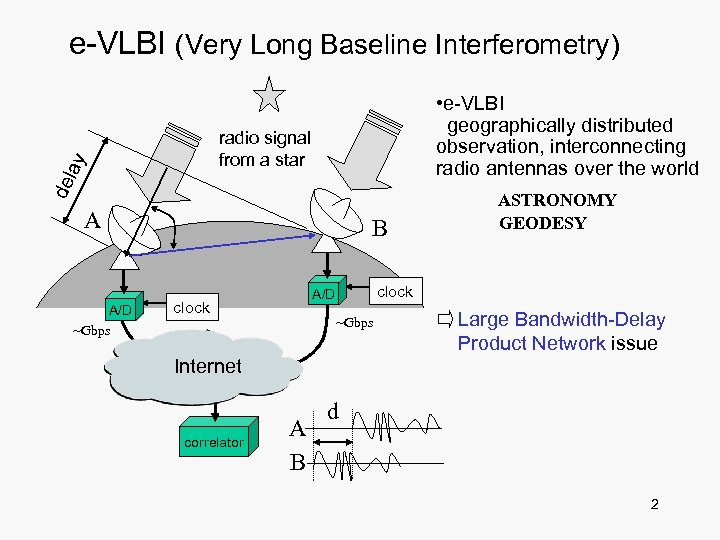
e-VLBI (Very Long Baseline Interferometry) • e-VLBI geographically distributed observation, interconnecting radio antennas over the world del ay radio signal from a star A A/D ~Gbps B clock A/D clock ~Gbps Internet correlator A B ASTRONOMY GEODESY Large Bandwidth-Delay Product Network issue d 2
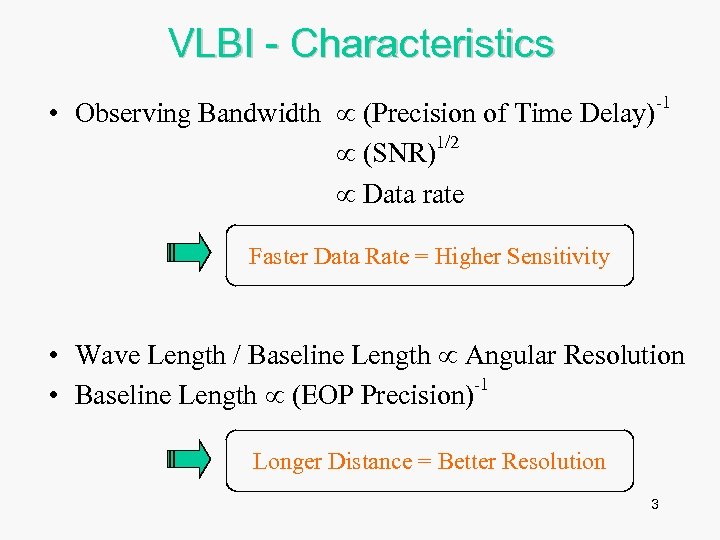
VLBI - Characteristics • Observing Bandwidth (Precision of Time Delay)-1 1/2 (SNR) Data rate Faster Data Rate = Higher Sensitivity • Wave Length / Baseline Length Angular Resolution -1 • Baseline Length (EOP Precision) Longer Distance = Better Resolution 3
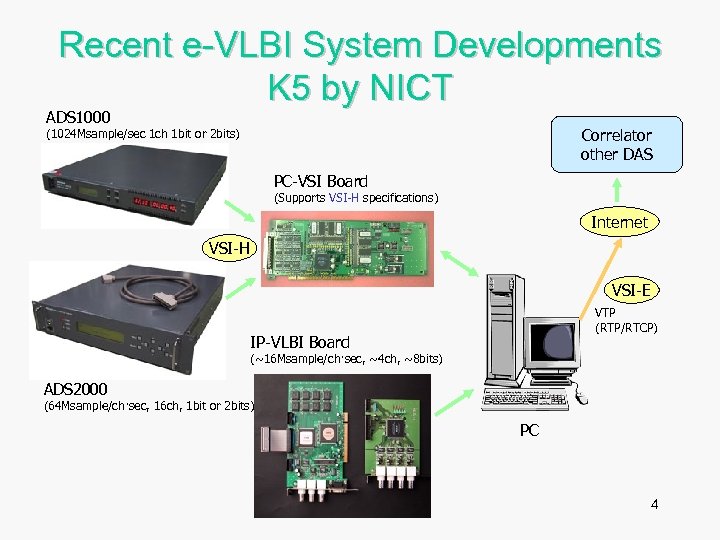
Recent e-VLBI System Developments K 5 by NICT ADS 1000 Correlator other DAS (1024 Msample/sec 1 ch 1 bit or 2 bits) PC-VSI Board (Supports VSI-H specifications) Internet VSI-H VSI-E VTP (RTP/RTCP) IP-VLBI Board (~16 Msample/ch·sec, ~4 ch, ~8 bits) ADS 2000 (64 Msample/ch·sec, 16 ch, 1 bit or 2 bits) PC 4
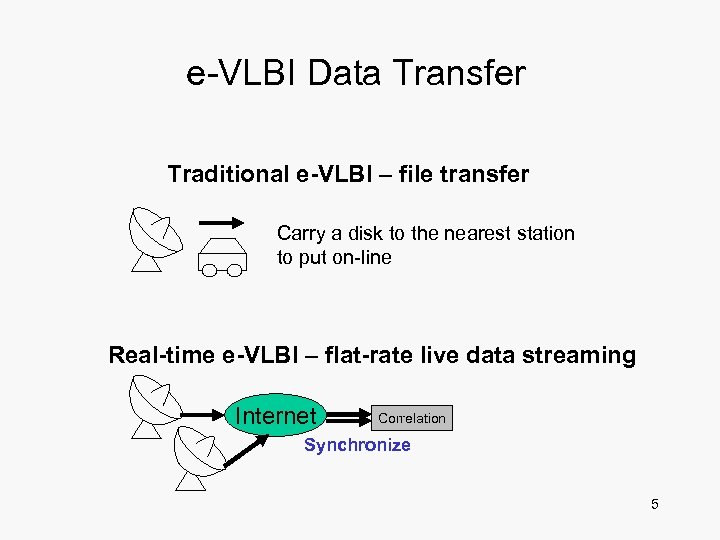
e-VLBI Data Transfer Traditional e-VLBI – file transfer Carry a disk to the nearest station to put on-line Real-time e-VLBI – flat-rate live data streaming Internet Correlation Synchronize 5
Typical Network Usage • Traditional e-VLBI (off-line) - File transfer e. g. 64 Mbps x 24 hours = 691 GB e. g. 512 Mbps x 2 hours = 460 GB • Quasi-Real-time - Turnaround time (observation + transfer + correlation) e. g. 4. 5 hours for UT 1 -UT • Periodical (e. g. once a week) - Utilize available b/w • Real-time - two one-way streaming - loss allowance depending on S/N (~0. 1% OK) - time allowance to retransmit (~ sec? ) - e. g. Huygens tracking 6
Transfer Examples • • • NICT, JP - Haystack, US (Aug. 2003) ~100 Mbps by TCP [parallel] [test] JIVE, NL – NICT, Japan (Dec. 2004) by HUT ~400 Mbps by tsunami CISRO, AU – JIVE, NL (Jan. 2005) by AARNET ~450 Mbps by TCP over UCLP [test] Haystack, US - NICT, JP (Jan. 2005) ~700 Mbps by TCP [no fringe] NICT, JP - Haystack, US (SC 2005) ~512 Mbps by VTP (RTP) via GMPLS 7
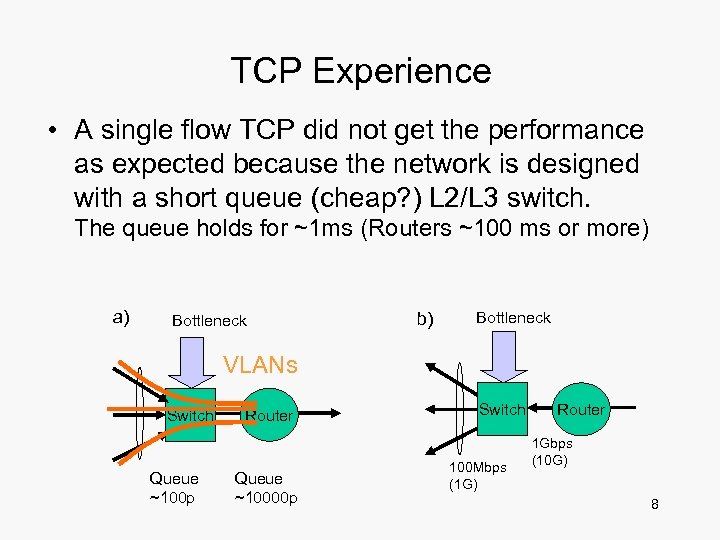
TCP Experience • A single flow TCP did not get the performance as expected because the network is designed with a short queue (cheap? ) L 2/L 3 switch. The queue holds for ~1 ms (Routers ~100 ms or more) a) Bottleneck b) Bottleneck VLANs Switch Queue ~100 p Router Queue ~10000 p Switch 100 Mbps (1 G) Router 1 Gbps (10 G) 8
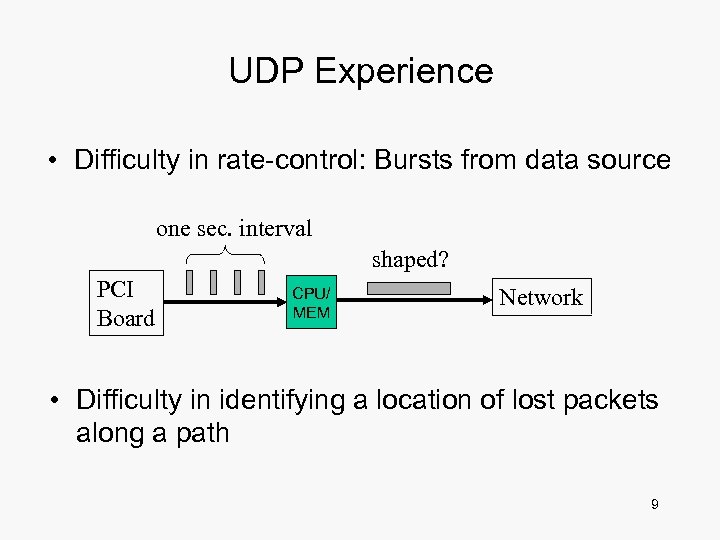
UDP Experience • Difficulty in rate-control: Bursts from data source one sec. interval shaped? PCI Board CPU/ MEM Network • Difficulty in identifying a location of lost packets along a path 9
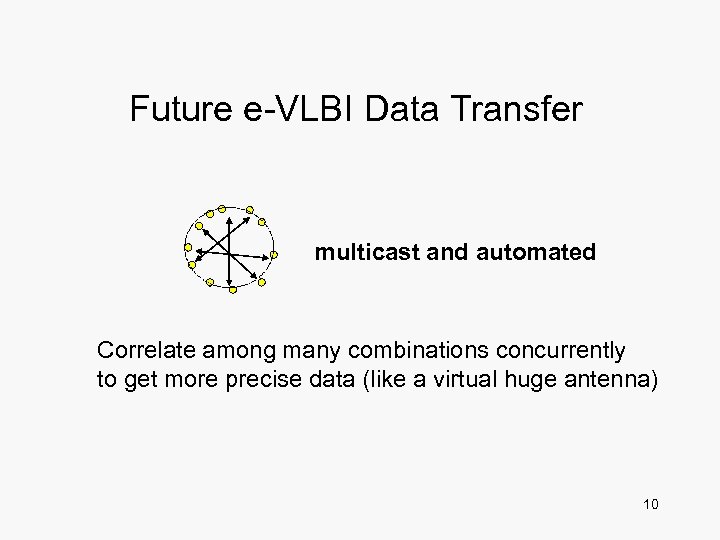
Future e-VLBI Data Transfer multicast and automated Correlate among many combinations concurrently to get more precise data (like a virtual huge antenna) 10
Скачать презентацию International e-VLBI Experience PFLDnet 2006 Febrary 2 2006
d668b0beae85ebb06459c11c7f84971f.ppt