


 Скачать презентацию INTERNATIONAL CONFERENCE ON ENGINEERING DESIGN ICED 07 28
bb092422de08c9921baceccdfa906c7e.ppt
- Количество слайдов: 10
 INTERNATIONAL CONFERENCE ON ENGINEERING DESIGN, ICED’ 07 28 -31 August 2007, CITE DES SCIENCES ET DE L’INDUSTRIE, PARIS Research Seminar – RS-3 Trends and Challenges in Product Family and Platform Design: Research and Practice Olivier de Weck Massachusetts Institute of Technology, USA http: //strategic. mit. edu
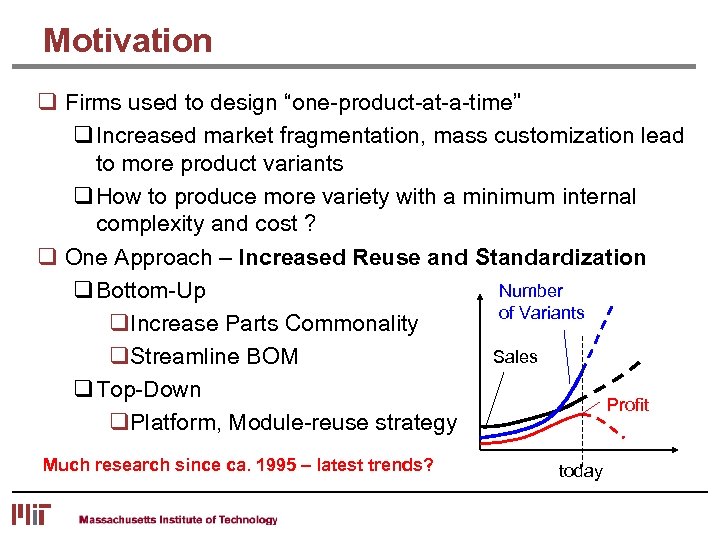 Motivation q Firms used to design “one-product-at-a-time” q Increased market fragmentation, mass customization lead to more product variants q How to produce more variety with a minimum internal complexity and cost ? q One Approach – Increased Reuse and Standardization Number q Bottom-Up of Variants q. Increase Parts Commonality Sales q. Streamline BOM q Top-Down Profit q. Platform, Module-reuse strategy Much research since ca. 1995 – latest trends? today
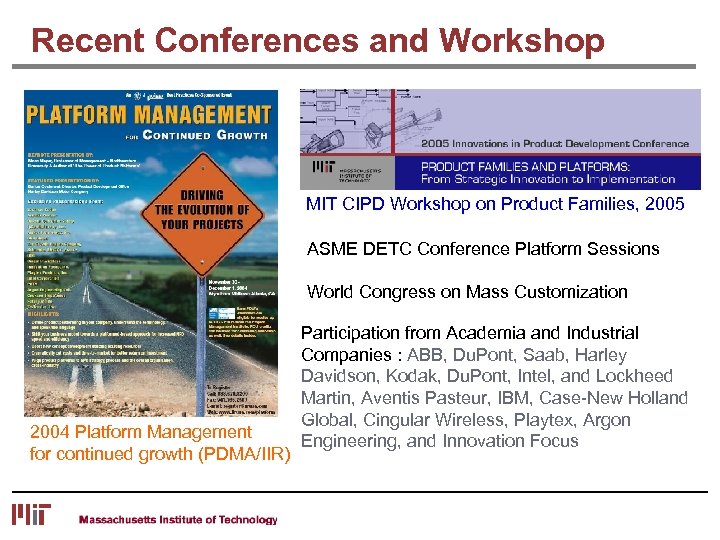 Recent Conferences and Workshop MIT CIPD Workshop on Product Families, 2005 ASME DETC Conference Platform Sessions World Congress on Mass Customization 2004 Platform Management for continued growth (PDMA/IIR) Participation from Academia and Industrial Companies : ABB, Du. Pont, Saab, Harley Davidson, Kodak, Du. Pont, Intel, and Lockheed Martin, Aventis Pasteur, IBM, Case-New Holland Global, Cingular Wireless, Playtex, Argon Engineering, and Innovation Focus
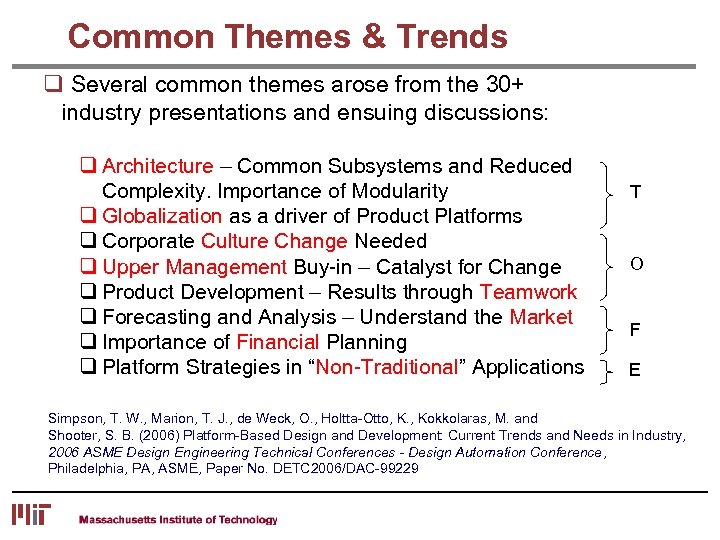 Common Themes & Trends q Several common themes arose from the 30+ industry presentations and ensuing discussions: q Architecture – Common Subsystems and Reduced Complexity. Importance of Modularity q Globalization as a driver of Product Platforms q Corporate Culture Change Needed q Upper Management Buy-in – Catalyst for Change q Product Development – Results through Teamwork q Forecasting and Analysis – Understand the Market q Importance of Financial Planning q Platform Strategies in “Non-Traditional” Applications T O F E Simpson, T. W. , Marion, T. J. , de Weck, O. , Holtta-Otto, K. , Kokkolaras, M. and Shooter, S. B. (2006) Platform-Based Design and Development: Current Trends and Needs in Industry, 2006 ASME Design Engineering Technical Conferences - Design Automation Conference, Philadelphia, PA, ASME, Paper No. DETC 2006/DAC-99229
 Challenge Areas q Technical and Product Architecture q Organizational q Financial q Emerging Domains
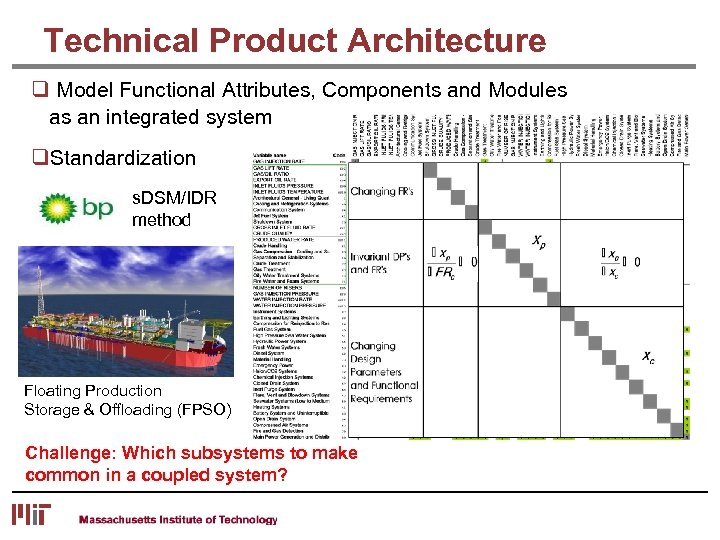 Technical Product Architecture q Model Functional Attributes, Components and Modules as an integrated system q. Standardization s. DSM/IDR method Floating Production Storage & Offloading (FPSO) Challenge: Which subsystems to make common in a coupled system?
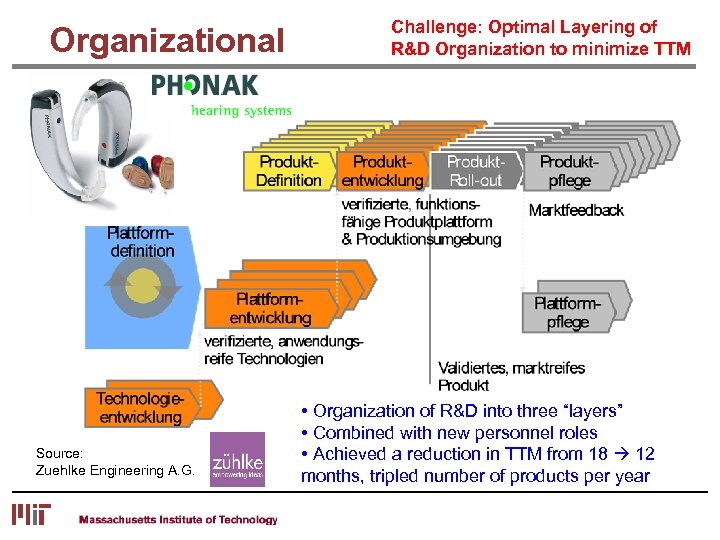 Organizational Source: Zuehlke Engineering A. G. Challenge: Optimal Layering of R&D Organization to minimize TTM • Organization of R&D into three “layers” • Combined with new personnel roles • Achieved a reduction in TTM from 18 12 months, tripled number of products per year
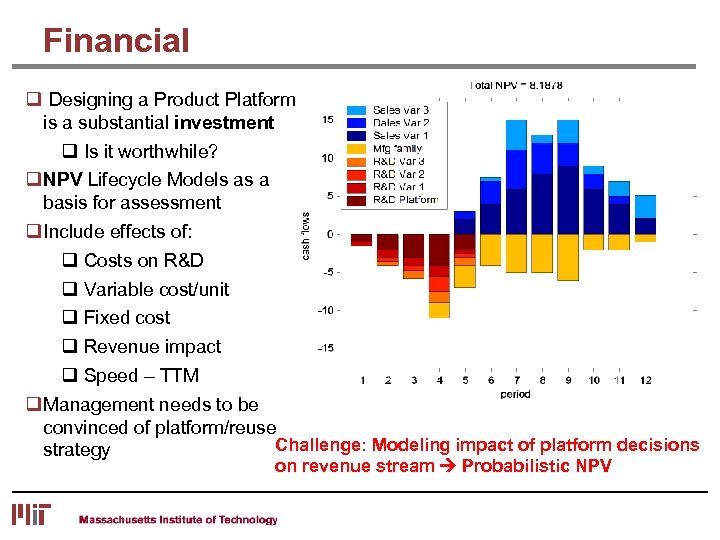 Financial q Designing a Product Platform is a substantial investment q Is it worthwhile? q NPV Lifecycle Models as a basis for assessment q Include effects of: q Costs on R&D q Variable cost/unit q Fixed cost q Revenue impact q Speed – TTM q Management needs to be convinced of platform/reuse Challenge: Modeling impact of platform decisions strategy on revenue stream Probabilistic NPV
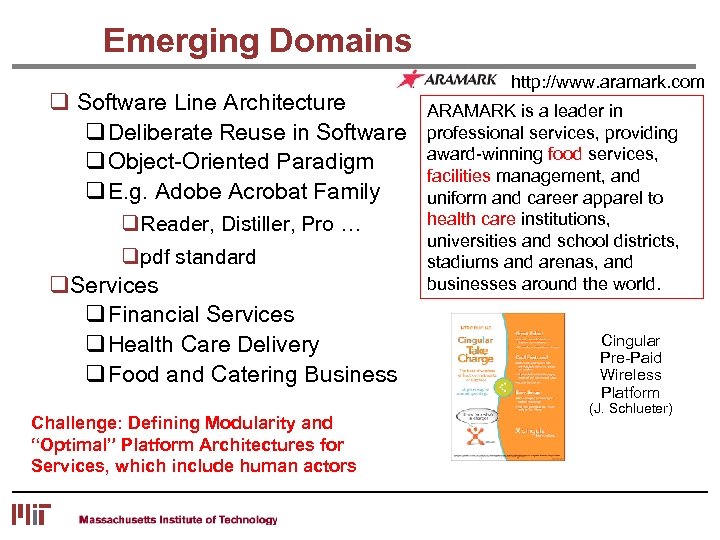 Emerging Domains q Software Line Architecture q Deliberate Reuse in Software q Object-Oriented Paradigm q E. g. Adobe Acrobat Family q. Reader, Distiller, Pro … qpdf standard q. Services q Financial Services q Health Care Delivery q Food and Catering Business Challenge: Defining Modularity and “Optimal” Platform Architectures for Services, which include human actors http: //www. aramark. com ARAMARK is a leader in professional services, providing award-winning food services, facilities management, and uniform and career apparel to health care institutions, universities and school districts, stadiums and arenas, and businesses around the world. Cingular Pre-Paid Wireless Platform (J. Schlueter)
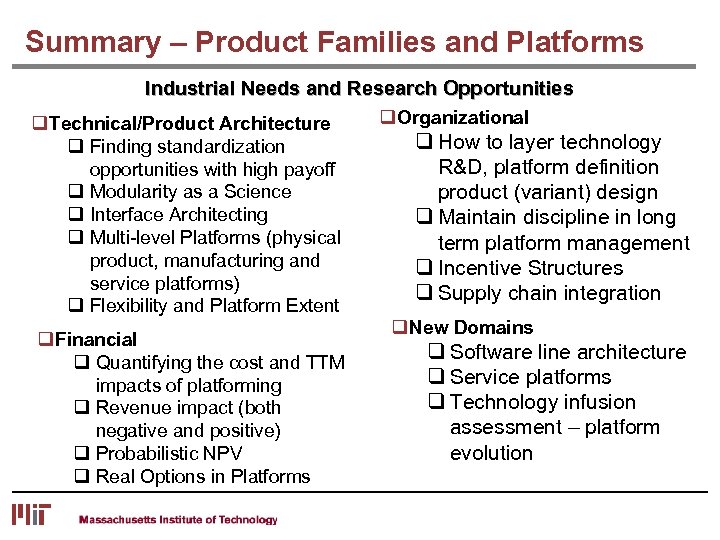 Summary – Product Families and Platforms Industrial Needs and Research Opportunities q Organizational q Technical/Product Architecture q How to layer technology q Finding standardization opportunities with high payoff q Modularity as a Science q Interface Architecting q Multi-level Platforms (physical product, manufacturing and service platforms) q Flexibility and Platform Extent q Financial q Quantifying the cost and TTM impacts of platforming q Revenue impact (both negative and positive) q Probabilistic NPV q Real Options in Platforms R&D, platform definition product (variant) design q Maintain discipline in long term platform management q Incentive Structures q Supply chain integration q New Domains q Software line architecture q Service platforms q Technology infusion assessment – platform evolution