


 Скачать презентацию International Capital Structure or part I of chapter
4f1aa0aa591ed562cd8c5c669d650e86.ppt
- Количество слайдов: 14
 International Capital Structure (or part I of chapter 13)
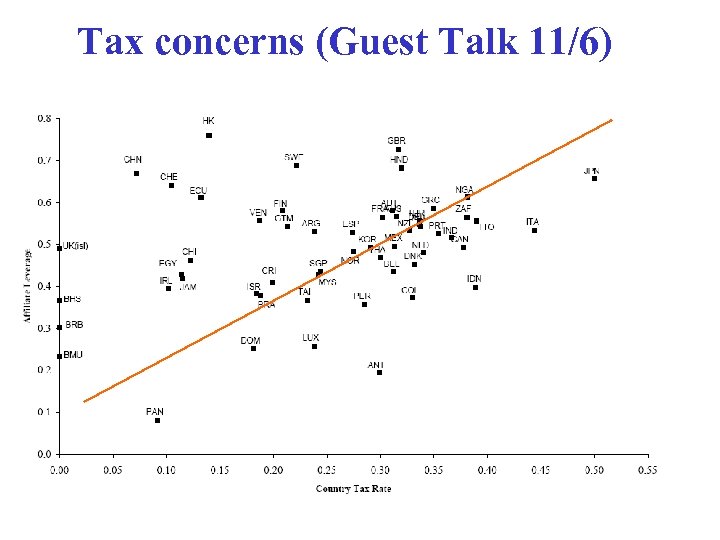
 Agenda § Theories of capital structure. § Why MNE has special financial structure? § Cost of debt & Forex risk § Financial mix of foreign subsidiaries (talk by C. Fritz Foley). § How to finance a foreign subsidiary?
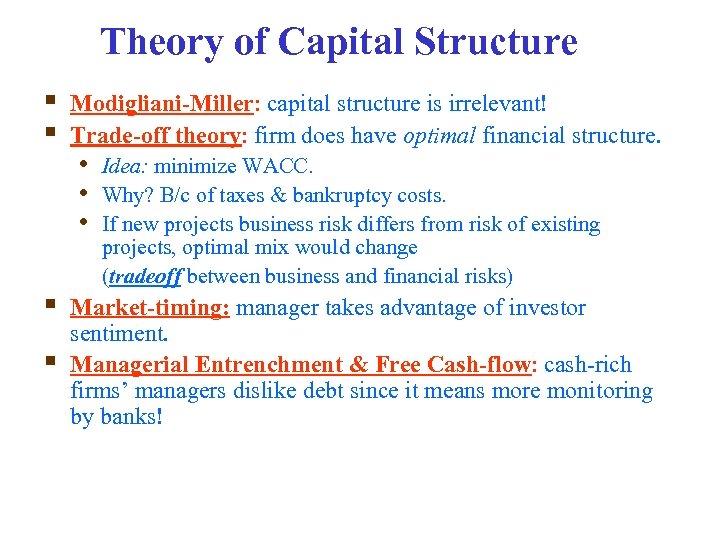 Theory of Capital Structure § § Modigliani-Miller: capital structure is irrelevant! Trade-off theory: firm does have optimal financial structure. • Idea: minimize WACC. • Why? B/c of taxes & bankruptcy costs. • If new projects business risk differs from risk of existing projects, optimal mix would change (tradeoff between business and financial risks) Market-timing: manager takes advantage of investor sentiment. Managerial Entrenchment & Free Cash-flow: cash-rich firms’ managers dislike debt since it means more monitoring by banks!
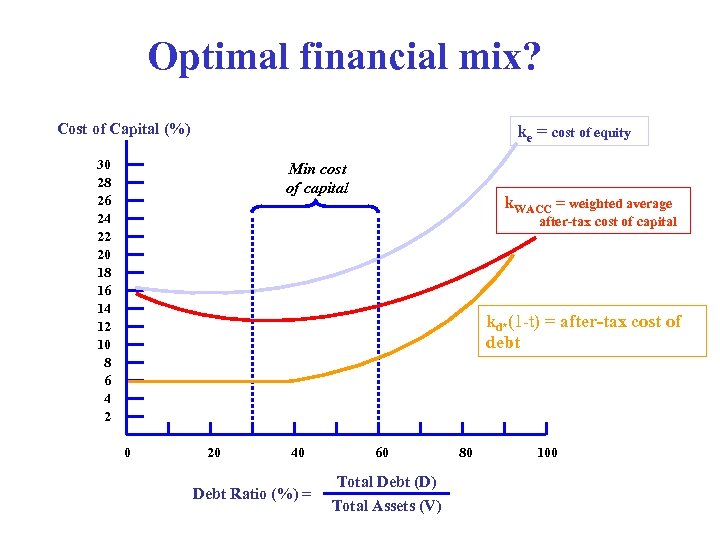 Optimal financial mix? Cost of Capital (%) ke = cost of equity 30 28 26 24 22 20 18 16 14 12 10 8 6 4 2 Min cost of capital k. WACC = weighted average after-tax cost of capital kd*(1 -t) = after-tax cost of debt 0 20 40 Debt Ratio (%) = 60 Total Debt (D) Total Assets (V) 80 100
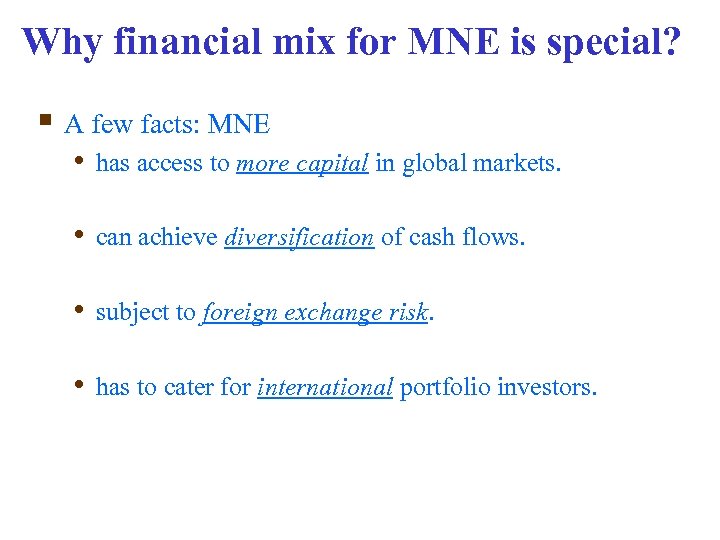 Why financial mix for MNE is special? § A few facts: MNE • has access to more capital in global markets. • can achieve diversification of cash flows. • subject to foreign exchange risk. • has to cater for international portfolio investors.
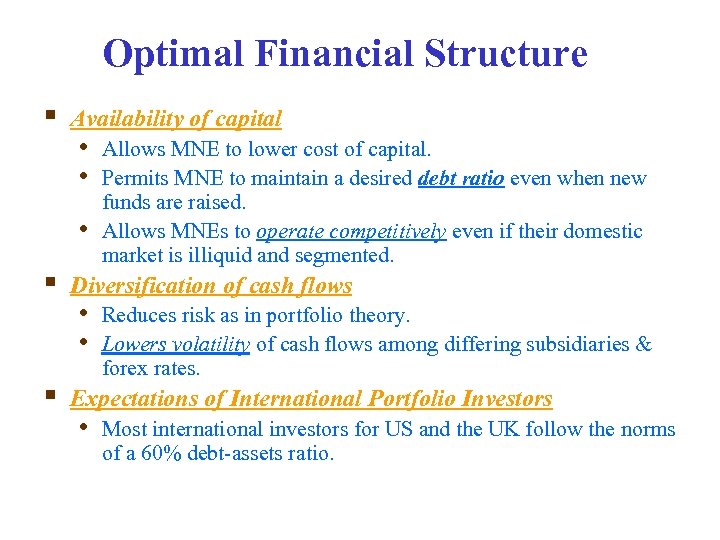 Optimal Financial Structure § Availability of capital • Allows MNE to lower cost of capital. • Permits MNE to maintain a desired debt ratio even when new • § § funds are raised. Allows MNEs to operate competitively even if their domestic market is illiquid and segmented. Diversification of cash flows • Reduces risk as in portfolio theory. • Lowers volatility of cash flows among differing subsidiaries & forex rates. Expectations of International Portfolio Investors • Most international investors for US and the UK follow the norms of a 60% debt-assets ratio.
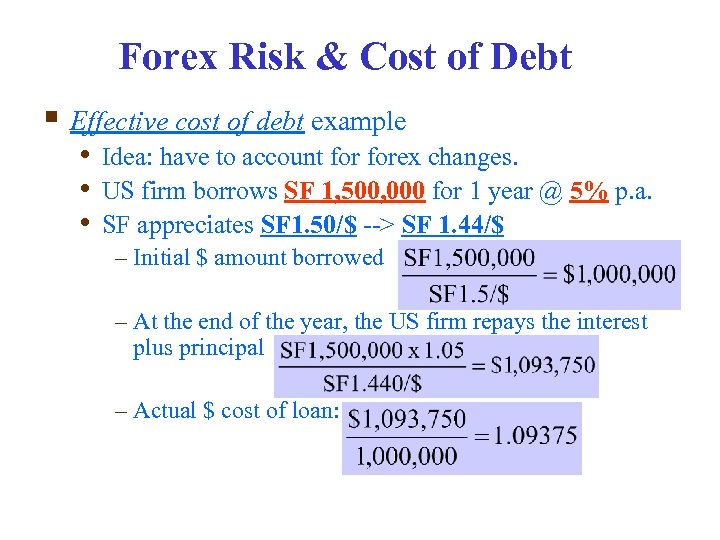 Forex Risk & Cost of Debt § Effective cost of debt example • Idea: have to account forex changes. • US firm borrows SF 1, 500, 000 for 1 year @ 5% p. a. • SF appreciates SF 1. 50/$ --> SF 1. 44/$ – Initial $ amount borrowed – At the end of the year, the US firm repays the interest plus principal – Actual $ cost of loan:
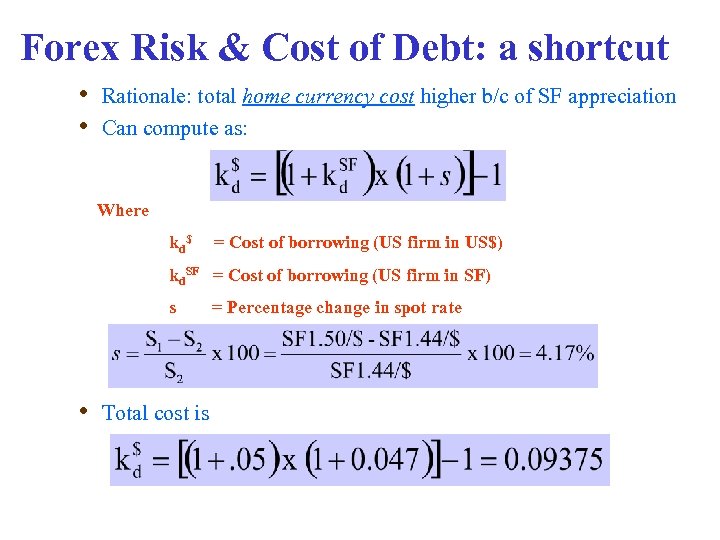 Forex Risk & Cost of Debt: a shortcut • Rationale: total home currency cost higher b/c of SF appreciation • Can compute as: Where kd $ = Cost of borrowing (US firm in US$) kd. SF = Cost of borrowing (US firm in SF) s • Total cost is = Percentage change in spot rate
 Shall MNE localize financial mix? § Pros: • Reduces criticism of subs operating with too much debt. • Helps management evaluate return on equity investment relative to local competitors. § Cons: • MNE has comparative advantage over local firms through better availability of capital • If each subsidiary localizes its financial structure, resulting consolidated balance sheet might show a structure that doesn’t conform with any one country’s norm • Usually subs’ debt is guaranteed by parent => parent won’t allow a default … so subs’ debt ratio is set by parent.
 Financing the Foreign Subsidiary § Internal vs. External Markets • In addition to choosing appropriate financial structure, • managers need to choose alternative sources of funds for financing. Sources of funds can be classified as internal & external to MNE
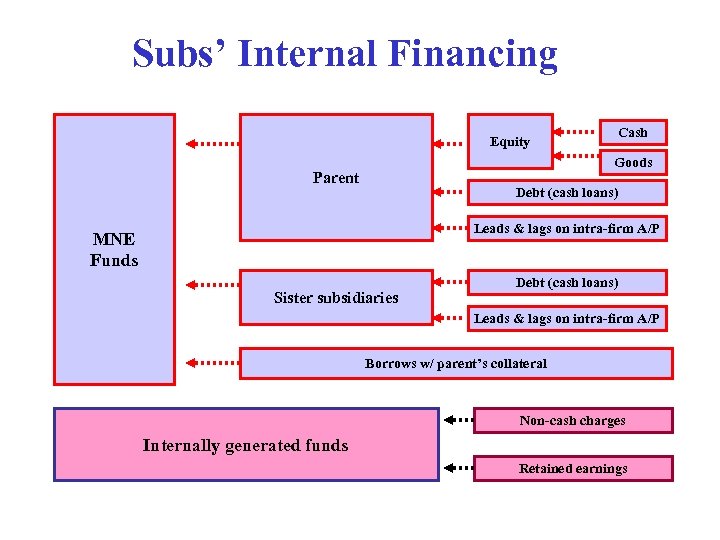 Subs’ Internal Financing Equity Cash Goods Parent Debt (cash loans) Leads & lags on intra-firm A/P MNE Funds Sister subsidiaries Debt (cash loans) Leads & lags on intra-firm A/P Borrows w/ parent’s collateral Non-cash charges Internally generated funds Retained earnings
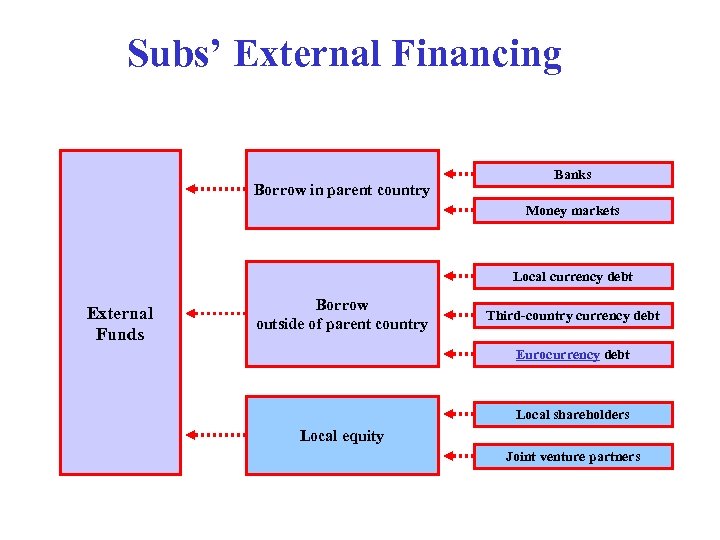 Subs’ External Financing Borrow in parent country Banks Money markets Local currency debt External Funds Borrow outside of parent country Third-country currency debt Eurocurrency debt Local shareholders Local equity Joint venture partners
 Tax concerns (Guest Talk 11/6)
 Things to remember… § Theories of capital structure § Why MNE has special financial structure? § Cost of debt & Forex risk § Financial mix of foreign subsidiaries (talk by Professor C. Fritz Foley) § How to finance a foreign subsidiary?