 Скачать презентацию International Business HEID Simon J Evenett www evenett
c1dcdb37f65934cc96c1cc04f57132cd.ppt
- Количество слайдов: 59




International Business HEID Simon J. Evenett www. evenett. com
This Afternoon's Material • • • Feedback on First Analytical Assignment. – Preparation for Second Analytical Assignment. The Emerging Markets: Towards a realistic assessment of the profitability of operating in emerging markets. • "The Emerging Giants": The overseas expansion strategies of firms from developing countries. – BCG and Khanna/Palepu reports. – Kumar's advice on fighting low cost rivals. 2

Feedback on the First Analytical Assignment
The Learning Challenges of this assignment • The Question: In what ways, if at all, will the potential reform of Europe's "social models" affect the strategies of firms located in Western Europe and their domestic and international competitiveness? Use corporate examples from selected industries and countries to support your argument. • Ultimately this assignment is an example of how to determine the effect of a change in the business environment upon firm strategies. So the principal learning challenge is to demonstrate proficiency in applying corporate strategy tools, taking account of the relevant sectoral and legal circumstances. • 4

How I would have done this assignment 1. 2. 3. 4. 5. 6. 5 Figure out what the European Social Models are and which policies were most important. Be clear about the direction of the policy change and which government unit is responsible for reform. Use each major strategic framework or analytical tool (such as supply and demand curves) to possible changes in firm choices. Think through impact on corporate performance of different reform scenarios. Identify important caveats; think through value-added of your analysis compared to existing analyses. Begin write up of paper.
Steps 1 and 2 1. • • • The policies relevant to the European Social Models are: Employment protection legislation (EPL). Unemployment insurance (UB). Non-wage labour taxes (for pensions, UB, and other elements of welfare state. ) 2. • • • Specifics of reform: Move toward Anglo Saxon model from. . ? Move toward Nordic model from. . ? Reform of UB and EPL is at national level—creates potential for multiple reform scenarios. 6
Step 3: Relevant Analytical Tools 1. Supply and Demand analysis. 2. Porter’s Five Forces plus his wisdom! 3. Ghemawat’s Added Value Score card plus his wisdom! 4. Baron’s 4 I’s. 7
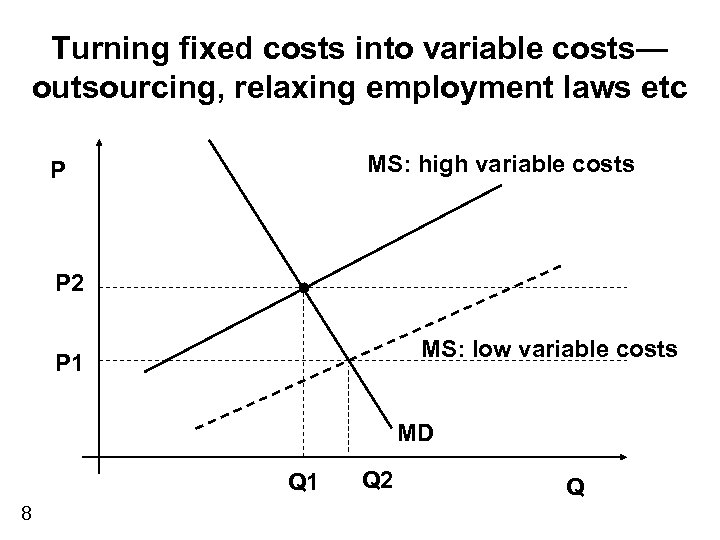
Turning fixed costs into variable costs— outsourcing, relaxing employment laws etc MS: high variable costs P P 2 MS: low variable costs P 1 MD Q 1 8 Q 2 Q
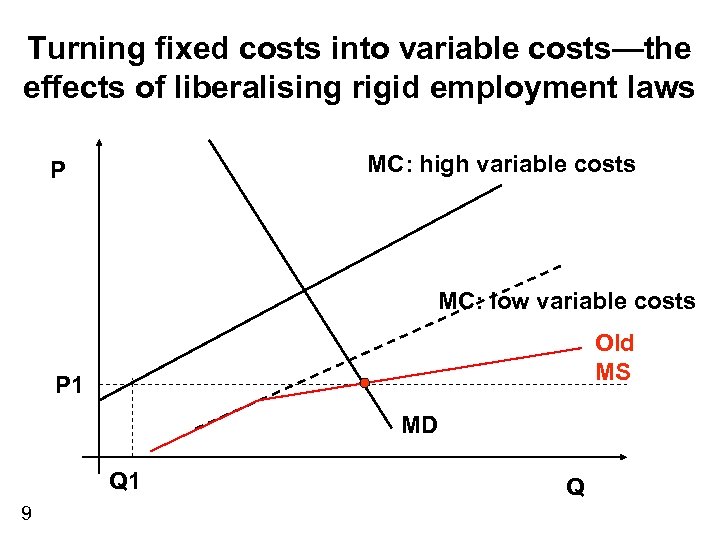
Turning fixed costs into variable costs—the effects of liberalising rigid employment laws MC: high variable costs P MC: low variable costs Old MS P 1 MD Q 1 9 Q
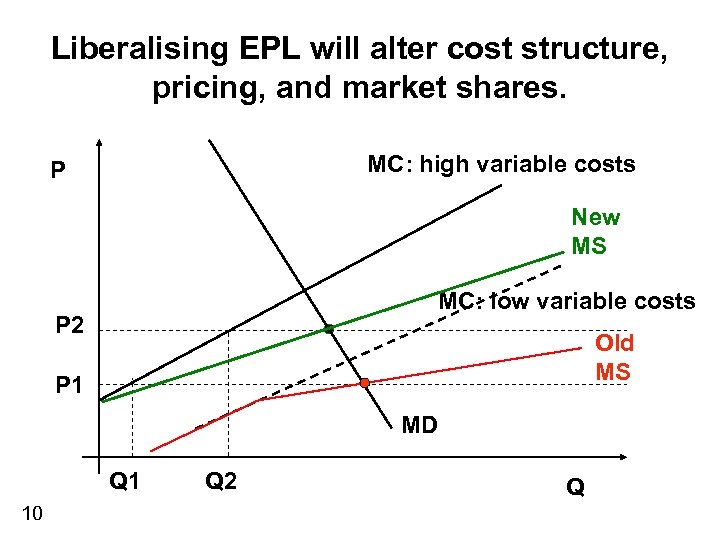
Liberalising EPL will alter cost structure, pricing, and market shares. MC: high variable costs P New MS MC: low variable costs P 2 Old MS P 1 MD Q 1 10 Q 2 Q
Porter’s Five Forces • 1. 2. 3. 4. 5. • • 11 Threats to profitability: Picky customers. More demanding suppliers. New substitutes. New entrants/rivals. Increased rivalry. Use this list to ask what EPL relaxation and UB cuts would do to the potency of each threat and the choices available to managers? Have the relative importance of the threat changed? Have the options for dealing with those threats changed? Are the proposed responses distinctive?
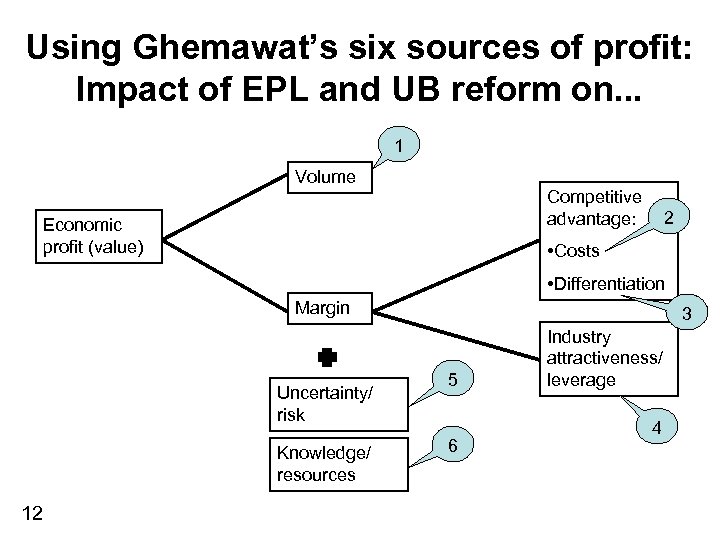
Using Ghemawat’s six sources of profit: Impact of EPL and UB reform on. . . 1 Volume Competitive advantage: Economic profit (value) 2 • Costs • Differentiation Margin Uncertainty/ risk Knowledge/ resources 12 3 5 6 Industry attractiveness/ leverage 4
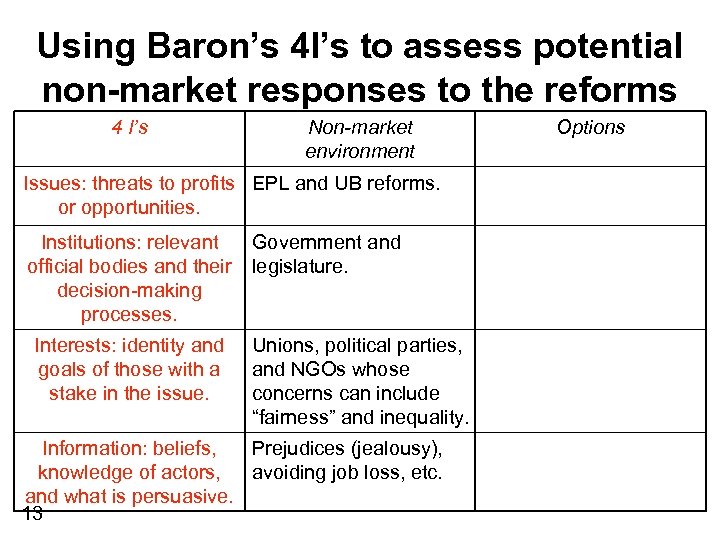
Using Baron’s 4 I’s to assess potential non-market responses to the reforms 4 I’s Non-market environment Issues: threats to profits EPL and UB reforms. or opportunities. Institutions: relevant official bodies and their decision-making processes. Interests: identity and goals of those with a stake in the issue. Government and legislature. Unions, political parties, and NGOs whose concerns can include “fairness” and inequality. Information: beliefs, Prejudices (jealousy), knowledge of actors, avoiding job loss, etc. and what is persuasive. 13 Options
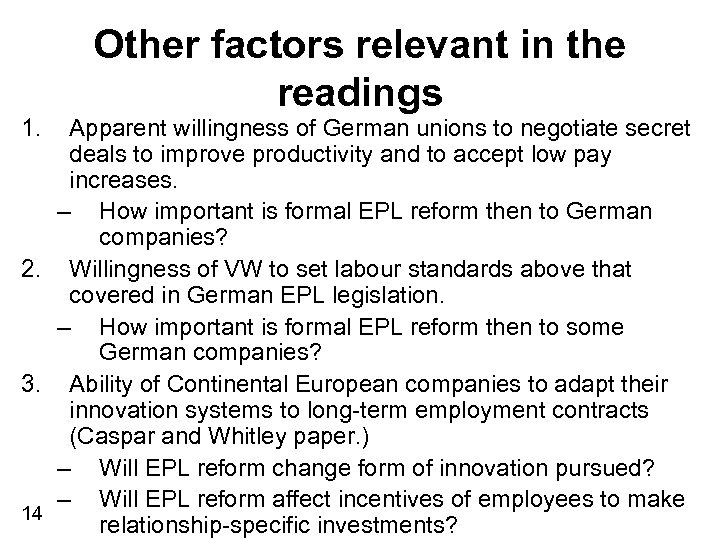
1. Other factors relevant in the readings Apparent willingness of German unions to negotiate secret deals to improve productivity and to accept low pay increases. – How important is formal EPL reform then to German companies? 2. Willingness of VW to set labour standards above that covered in German EPL legislation. – How important is formal EPL reform then to some German companies? 3. Ability of Continental European companies to adapt their innovation systems to long-term employment contracts (Caspar and Whitley paper. ) – Will EPL reform change form of innovation pursued? – Will EPL reform affect incentives of employees to make 14 relationship-specific investments?
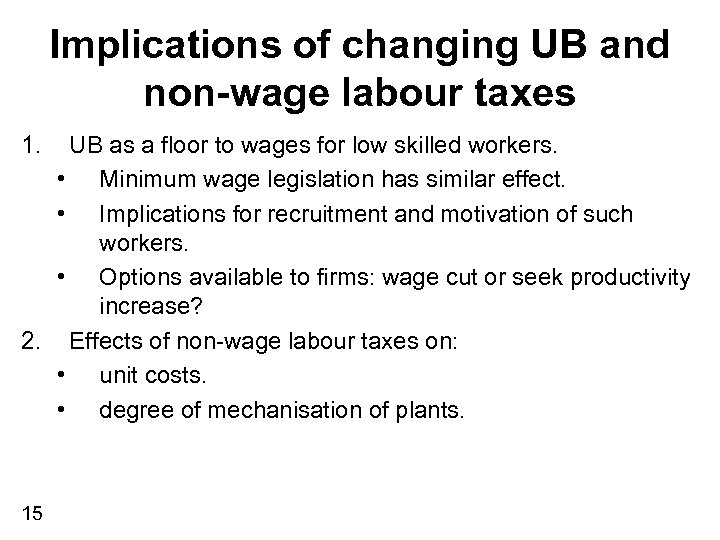
Implications of changing UB and non-wage labour taxes 1. UB as a floor to wages for low skilled workers. • Minimum wage legislation has similar effect. • Implications for recruitment and motivation of such workers. • Options available to firms: wage cut or seek productivity increase? 2. Effects of non-wage labour taxes on: • unit costs. • degree of mechanisation of plants. 15
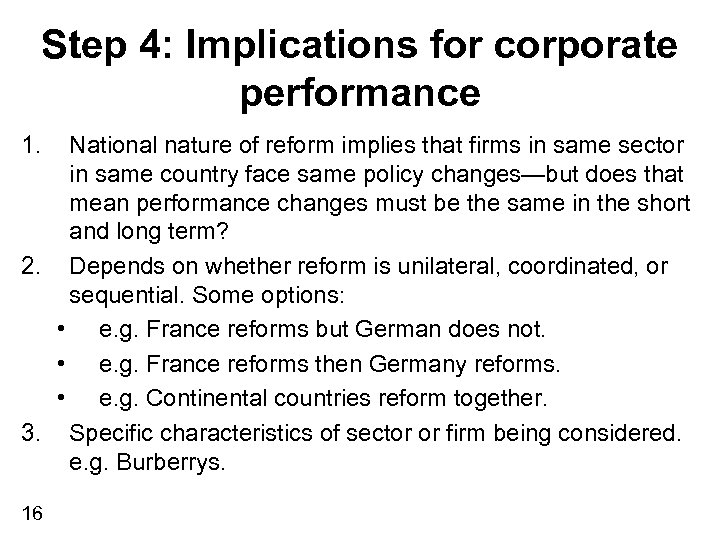
Step 4: Implications for corporate performance 1. National nature of reform implies that firms in same sector in same country face same policy changes—but does that mean performance changes must be the same in the short and long term? 2. Depends on whether reform is unilateral, coordinated, or sequential. Some options: • e. g. France reforms but German does not. • e. g. France reforms then Germany reforms. • e. g. Continental countries reform together. 3. Specific characteristics of sector or firm being considered. e. g. Burberrys. 16
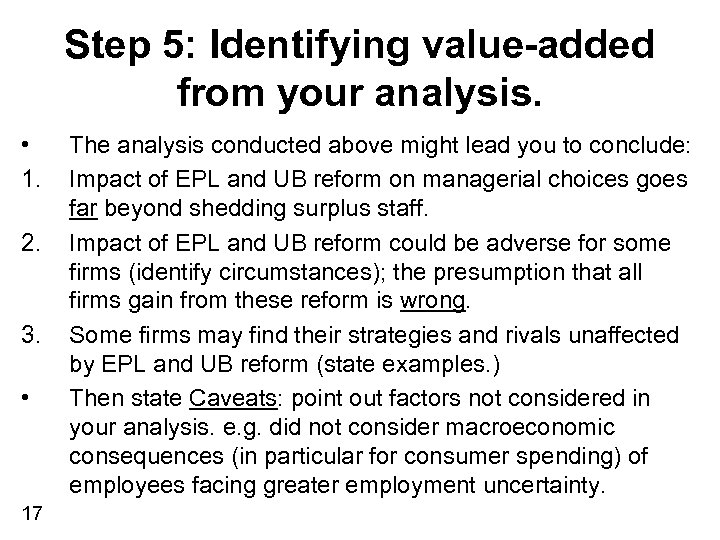
Step 5: Identifying value-added from your analysis. • 1. 2. 3. • 17 The analysis conducted above might lead you to conclude: Impact of EPL and UB reform on managerial choices goes far beyond shedding surplus staff. Impact of EPL and UB reform could be adverse for some firms (identify circumstances); the presumption that all firms gain from these reform is wrong. Some firms may find their strategies and rivals unaffected by EPL and UB reform (state examples. ) Then state Caveats: point out factors not considered in your analysis. e. g. did not consider macroeconomic consequences (in particular for consumer spending) of employees facing greater employment uncertainty.

Possible flawed presumptions in some papers 1. 2. 3. 4. 5. 18 Presumption that flexibility is always good—is commitment always bad? Presumption that fast adjustment is always desirable. Presumption that investing to raise efficiency is always desirable. Presumption that the existing labour force must be changed—what’s wrong with it and didn’t firms’ choose their workers in the first place? Apparent unwillingness to examine how firms coped with tough EPL laws and, in some cases, thrived—Would EPL reform undermine a recipe for success?
Excessive use of vague terms • 1. 2. 3. 4. 5. 6. 7. • 19 Try to write the second assignment without referring to the following vague words or terms: Leveraging. Competitiveness. Flexible, flexibility. Strategic response, strategic investment, strategic decision. . . Better position to compete in. . . Embrace. Strengthen. Avoid using adverbs and the like. e. g. “increasingly impact”

Suggestions for the second analytical assignment. 1. Use this opportunity to demonstrate that you have mastered one or more strategy tool learnt during your Masters courses. • Use the strategy tool creatively and comprehensively. Make sure you identify and evaluate many potential choices that a firm can make. Follow Ghemawat’s advice on applying strategy tools. • Use a strategy tool to help organise your write up. 2. When it comes to writing up the assignment, follow the guidelines for the first assignment. • Write as precisely and specifically as possible. 3. Ask yourself if the introduction and conclusion of your paper are selfexplanatory. • Could someone who has never heard of the assignment understand what your analysis is about, why the analysis is important, and what your findings are and why they are significant? If not, then the ideas have not been well communicated. 20

The Changing Business Climate in Emerging Markets Simon J. Evenett
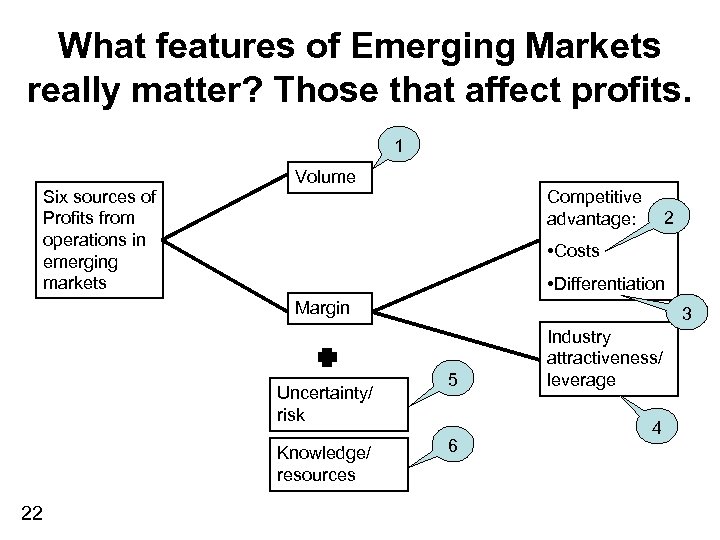
What features of Emerging Markets really matter? Those that affect profits. 1 Six sources of Profits from operations in emerging markets Volume Competitive advantage: 2 • Costs • Differentiation Margin Uncertainty/ risk Knowledge/ resources 22 3 5 6 Industry attractiveness/ leverage 4
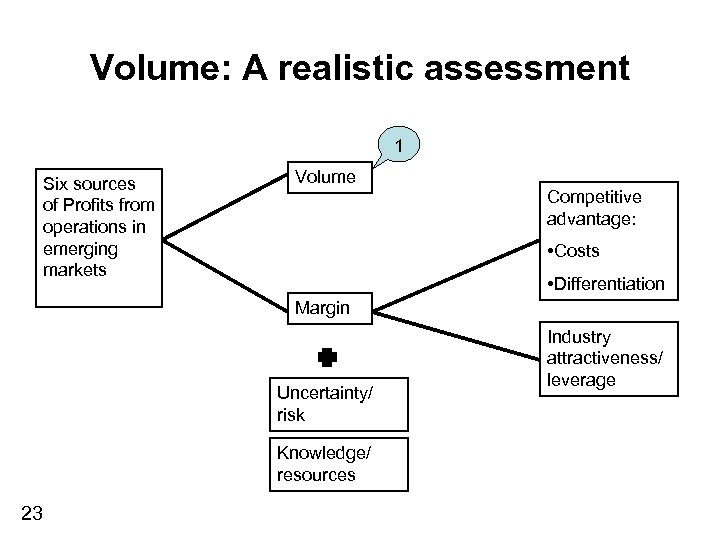
Volume: A realistic assessment 1 Six sources of Profits from operations in emerging markets Volume Competitive advantage: • Costs • Differentiation Margin Uncertainty/ risk Knowledge/ resources 23 Industry attractiveness/ leverage
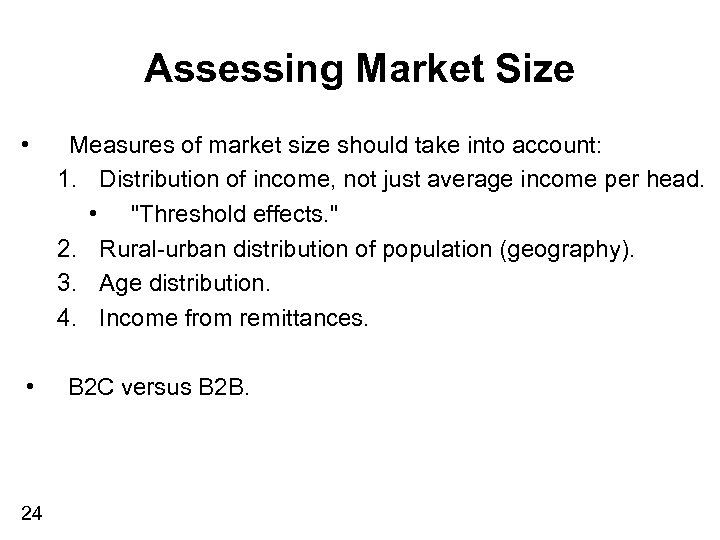
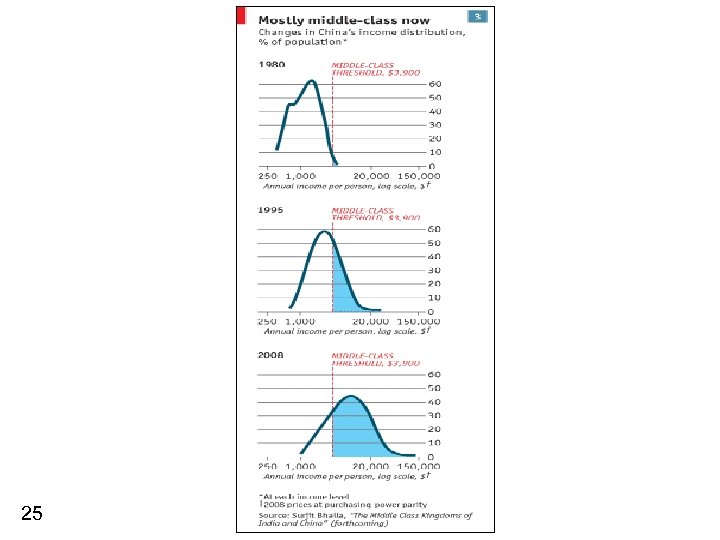
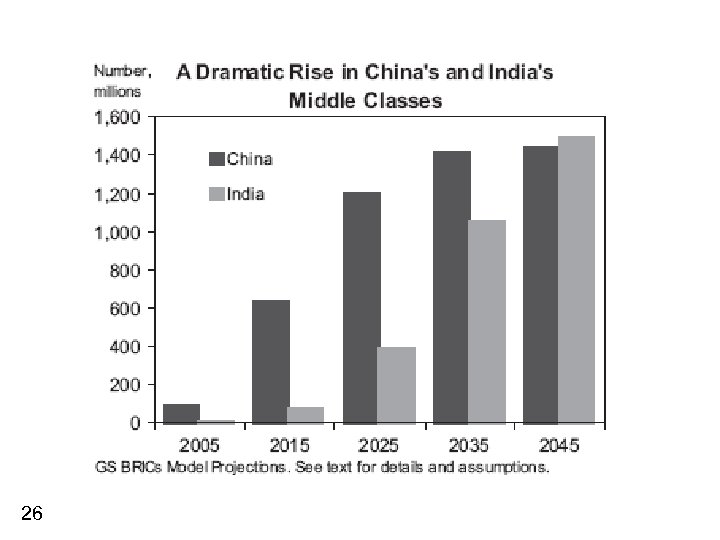
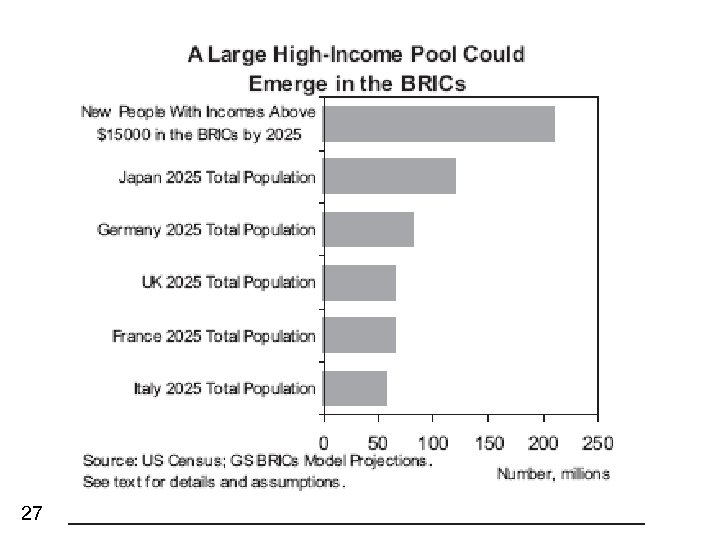
Assessing Market Size • • 24 Measures of market size should take into account: 1. Distribution of income, not just average income per head. • "Threshold effects. " 2. Rural-urban distribution of population (geography). 3. Age distribution. 4. Income from remittances. B 2 C versus B 2 B.
25
26
27
Costs: A realistic assessment Six sources of Profits from operations in emerging markets Volume Competitive advantage: • Costs • Differentiation Margin Uncertainty/ risk Knowledge/ resources 28 2 Industry attractiveness/ leverage
29
30
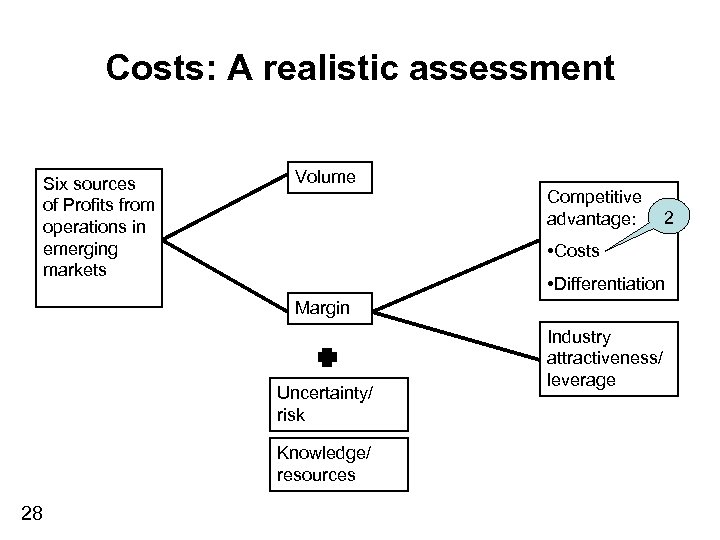
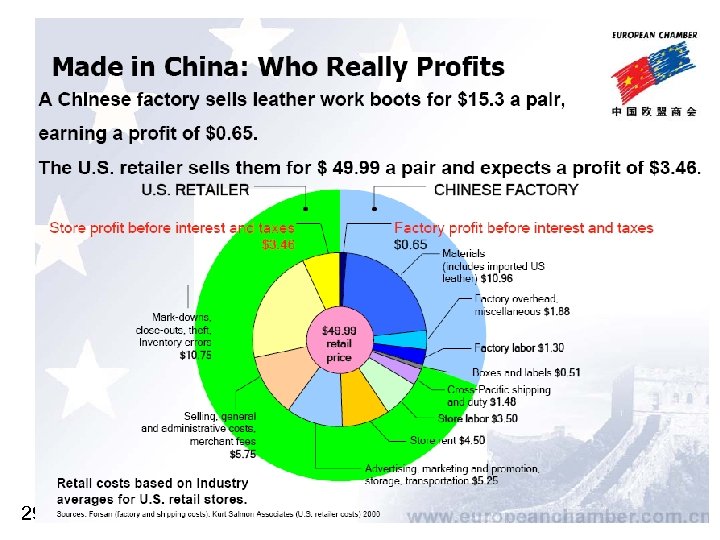
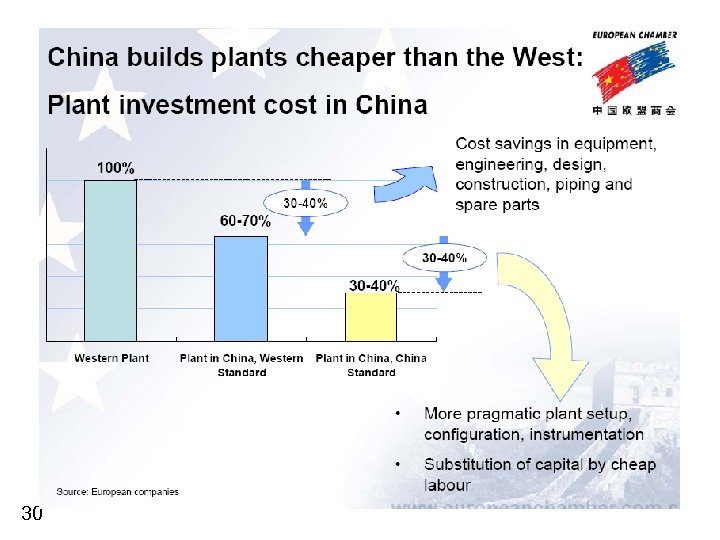
Accurate assessment of costs. • Full accounting of relevant costs. – Excessive focus on wages and labour costs. • Always ask yourself: why are costs in this location so low? – View current prices are the market’s verdict on a location. – Are you missing something? – Durability again. Will the low costs last? For how long? • What financial inducements are available? – From the host country. – From others. 31
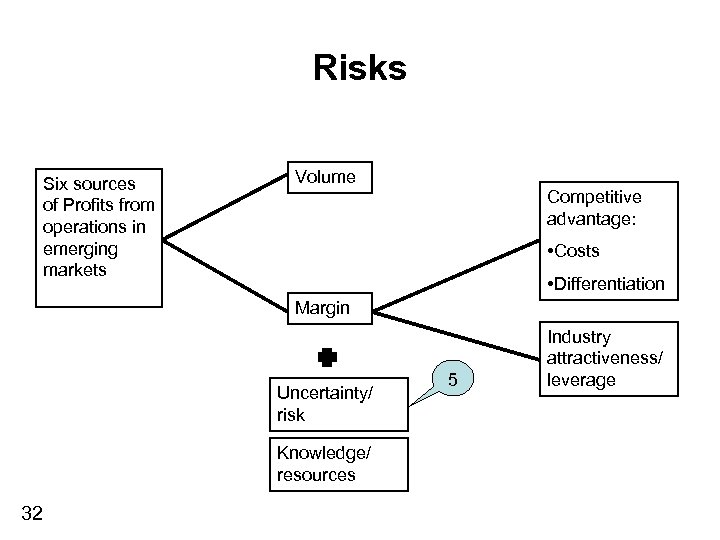
Risks Six sources of Profits from operations in emerging markets Volume Competitive advantage: • Costs • Differentiation Margin Uncertainty/ risk Knowledge/ resources 32 5 Industry attractiveness/ leverage

Simchi-Levi (2008) simulation of an actual US consumer company sourcing patterns with $200/barrel oil 33
Politics. • • • 34 Degree of political stability tends to be more in the extremes in developing countries: – some more stable (entrenched dictators). – some more volatile (revolution, civil war in the extreme cases). Graft and corruption. – “Competitive” versus “Monopoly” corruption. Policies towards business (see also next slide. ) – Broad changes in emphasis over time. – Role of business in policymaking.
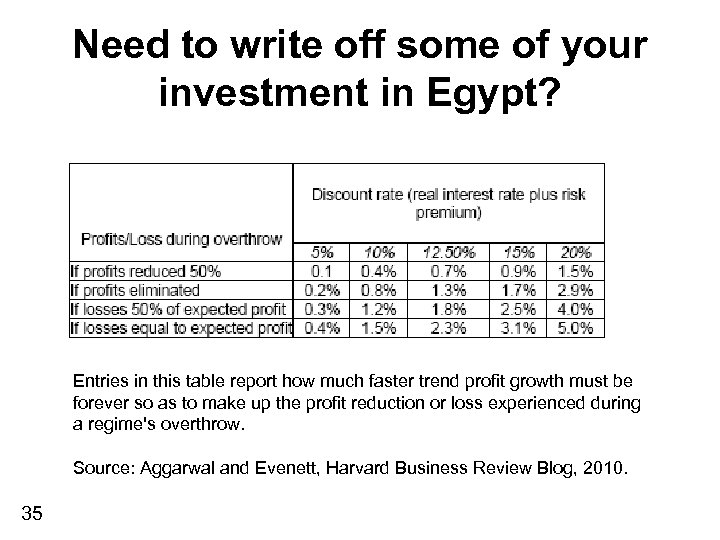
Need to write off some of your investment in Egypt? Entries in this table report how much faster trend profit growth must be forever so as to make up the profit reduction or loss experienced during a regime's overthrow. Source: Aggarwal and Evenett, Harvard Business Review Blog, 2010. 35
Why are the BRICs different from other developing economies? • Implications of their “size”: refers not just to economic might, but to geographic and population size too. 1. Federalism: Baron’s 4 I’s. 2. Have clearer goals for FDI and clout to back this up. 3. Large home market prompts activist industrial policy. – Can be a source of new rivals (more soon!). 4. Prospect of even larger home market and large populations encourages BRICs to participate in global “rule making. ” 36
Key points to take away • Volume, cost, and risk predictions are often the weakest links in firm plans for expansion into emerging markets. • Improving these assessments is possible using: – better data (now more readily available for those who know where to look) – tougher questioning of assumptions (especially as they relate to locational advantages, such as low costs) – scenario planning (to assess how sensitive a strategy is to major changes in the business and political landscape. ) • Don't be overwhelmed by the information available on emerging markets—use your favourite strategy tool to identify which factors really matter and make sure you know everything important about those factors. 37

The Emerging Giants: Overseas Expansion by Leading Firms from Emerging Markets Simon J. Evenett www. evenett. com
Content of this presentation 1. Findings of the BCG study. – Strategies of the “challengers” from emerging markets. – Potential responses by rich country “incumbents”. 2. Digging deeper into the sources of competitive advantage of the emerging giants. – The three sources identified by Khanna and Palepu. – Demystifying the competitive threat from emerging giants. 3. Kumar analysis of How To Fight Off Low Cost Rivals. – Pre-requisites for successful differentiation based strategies. – Dual strategies to cope with cost-based competition. 39
BCG 100 New Global Challengers • Goal of study was to identify the firms from emerging markets most likely to challenge incumbents in the West. – • 1. 2. 3. 40 Use of a previous study by GE. Over 3000 firms from 14 emerging markets were assessed according to the following three criteria and the 100 firms that best met them were designated “challengers”: Company must truly be from an emerging market—not a JV with a Western firm or a subsidiary of the latter. 2006 revenues should exceed US$1 bn—or rapidly approaching US$1 bn. Evaluation of “globalization credentials” of each firm e. g. number of owned subsidiaries abroad, sales networks, manufacturing facilities etc.
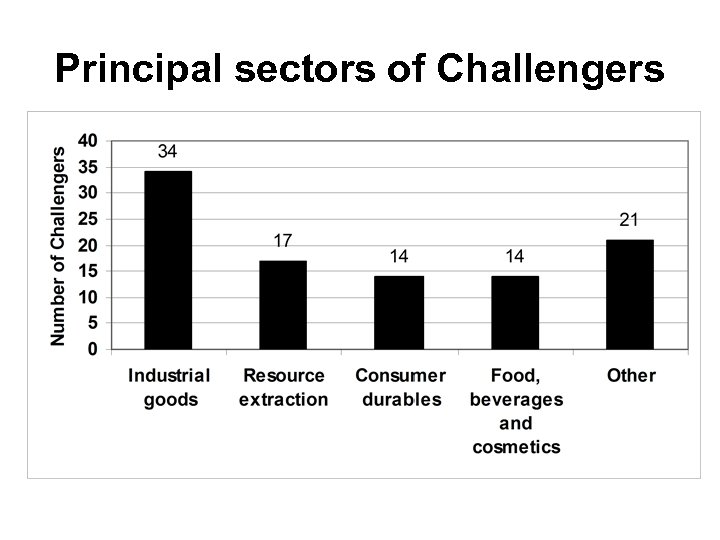
Principal sectors of Challengers
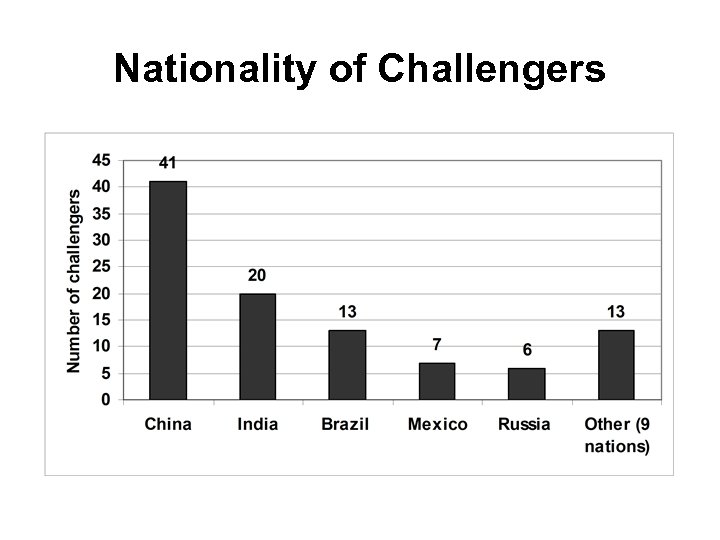
Nationality of Challengers
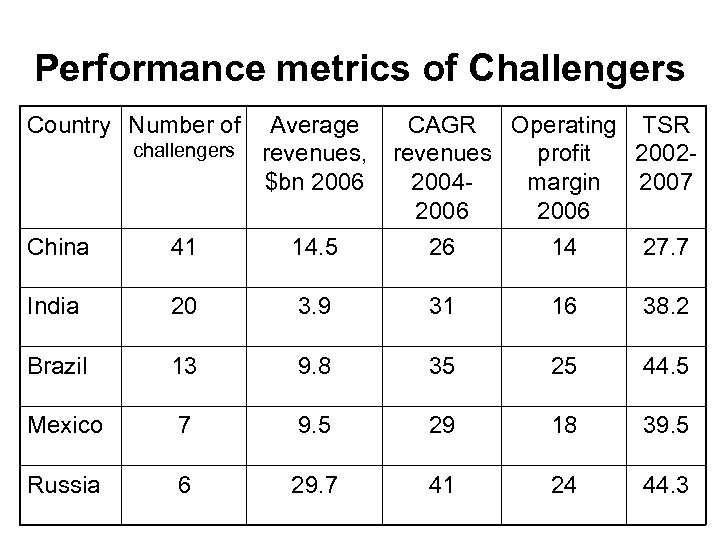
Performance metrics of Challengers Country Number of challengers Average revenues, $bn 2006 CAGR Operating TSR revenues profit 20022004 margin 2007 2006 26 14 27. 7 China 41 14. 5 India 20 3. 9 31 16 38. 2 Brazil 13 9. 8 35 25 44. 5 Mexico 7 9. 5 29 18 39. 5 Russia 6 29. 7 41 24 44. 3
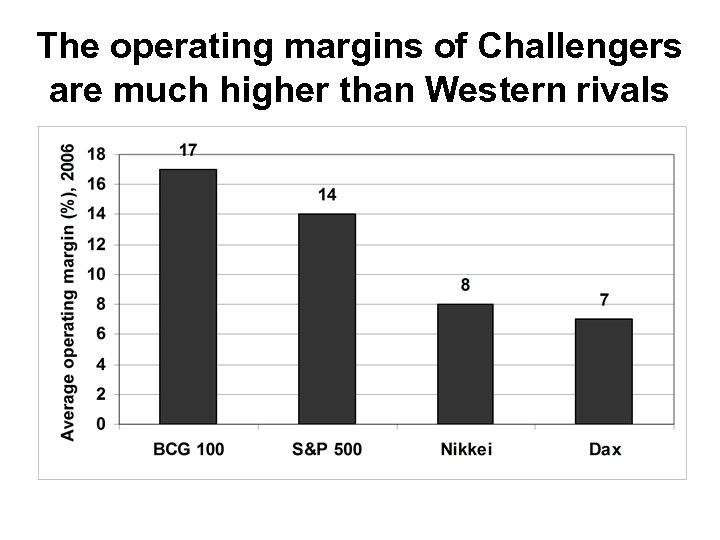
The operating margins of Challengers are much higher than Western rivals
Other key characteristics of challengers performance • • • 45 Challengers as large customers in their own right: BCG estimates that the 100 challengers will buy US$500 bn in 2007. – US$310 -330 bn raw materials and energy. – US$80 -100 bn parts and components. – US$65 -80 bn services. Challengers spend little on R&D but this is changing: Of the 48 challengers that report R&D data, total spending grew 16 percent between 2004 -2006. Challengers have engaged in aggressive M&A activity: 72 transactions completed in 2006; 48% in emerging markets.
Growth is the rationale for Challengers’ overseas expansion • “For the great majority (90) of the BCG 100, access to new growth and profit pools is the overriding rationale for going global. These companies have realized that being big in their home markets is not enough to ensure their long-term viability. They must move abroad in order to continue growing and to attain a scale that will enable them to compete with other global players. ” • What alarm bells should go off when you read this statement? Hint: How would Ghemawat react to this argument? 46
Other rationales for Challengers’ overseas expansion 1. 2. 3. 4. Developing complementary skills e. g. R&D expertise. Acquiring intangible assets, such as brands. Experimenting with new business models. Securing long term access to natural resources (relates to 10 challengers only. ) • These four additional rationales build on the established low cost advantage of the challengers. 47
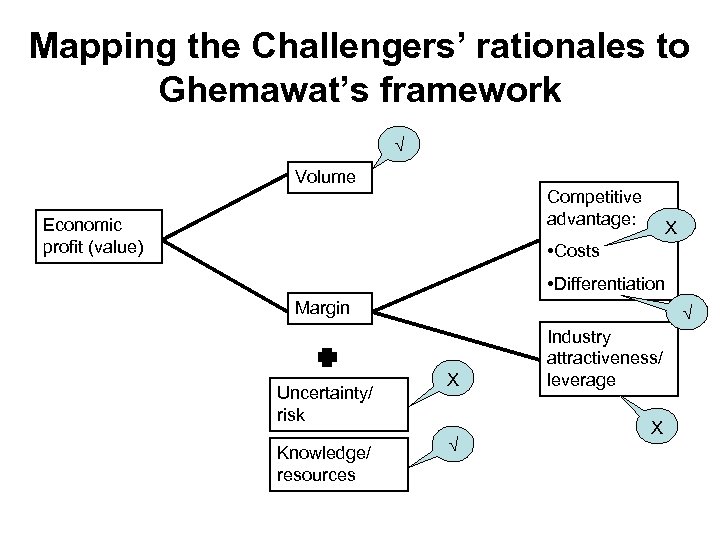
Mapping the Challengers’ rationales to Ghemawat’s framework √ Volume Competitive advantage: Economic profit (value) X • Costs • Differentiation Margin Uncertainty/ risk Knowledge/ resources √ X √ Industry attractiveness/ leverage X
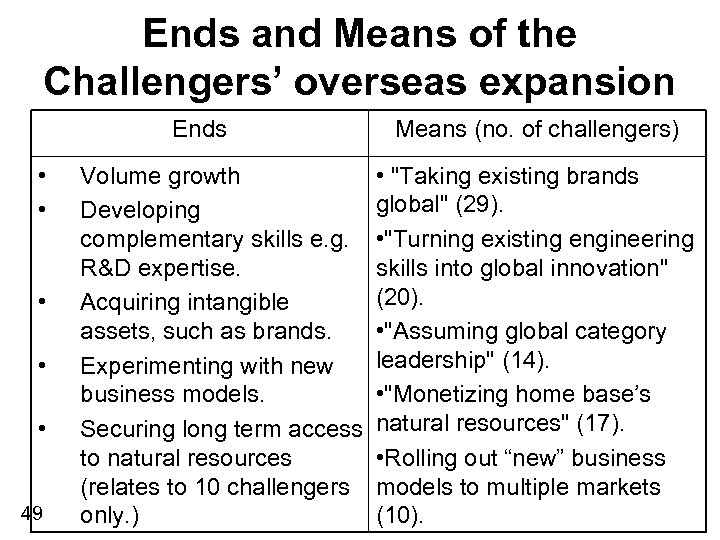
Ends and Means of the Challengers’ overseas expansion Ends • • • 49 Volume growth Developing complementary skills e. g. R&D expertise. Acquiring intangible assets, such as brands. Experimenting with new business models. Securing long term access to natural resources (relates to 10 challengers only. ) Means (no. of challengers) • "Taking existing brands global" (29). • "Turning existing engineering skills into global innovation" (20). • "Assuming global category leadership" (14). • "Monetizing home base’s natural resources" (17). • Rolling out “new” business models to multiple markets (10).
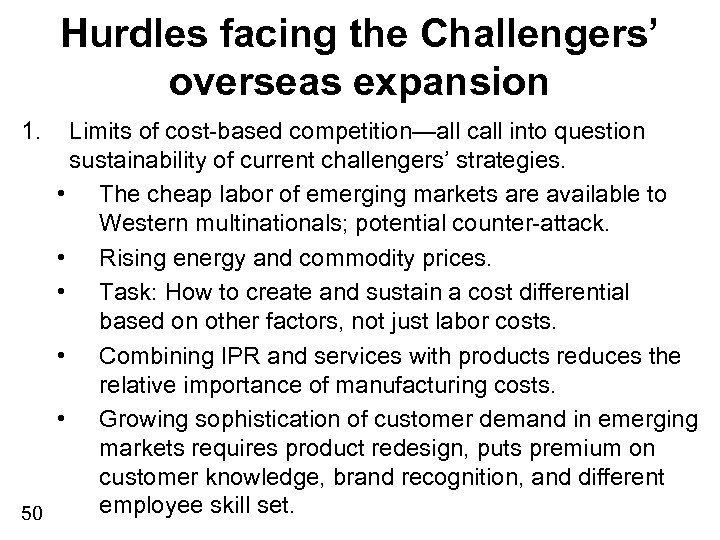
Hurdles facing the Challengers’ overseas expansion 1. Limits of cost-based competition—all call into question sustainability of current challengers’ strategies. • The cheap labor of emerging markets are available to Western multinationals; potential counter-attack. • Rising energy and commodity prices. • Task: How to create and sustain a cost differential based on other factors, not just labor costs. • Combining IPR and services with products reduces the relative importance of manufacturing costs. • Growing sophistication of customer demand in emerging markets requires product redesign, puts premium on customer knowledge, brand recognition, and different employee skill set. 50
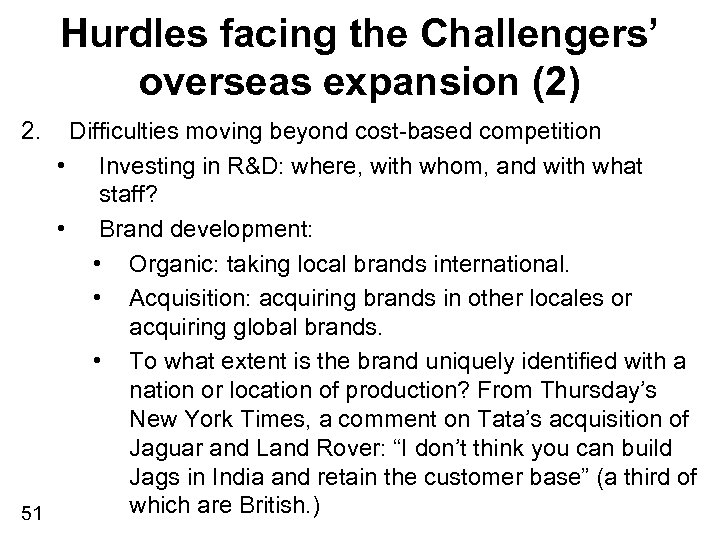
Hurdles facing the Challengers’ overseas expansion (2) 2. Difficulties moving beyond cost-based competition • Investing in R&D: where, with whom, and with what staff? • Brand development: • Organic: taking local brands international. • Acquisition: acquiring brands in other locales or acquiring global brands. • To what extent is the brand uniquely identified with a nation or location of production? From Thursday’s New York Times, a comment on Tata’s acquisition of Jaguar and Land Rover: “I don’t think you can build Jags in India and retain the customer base” (a third of which are British. ) 51
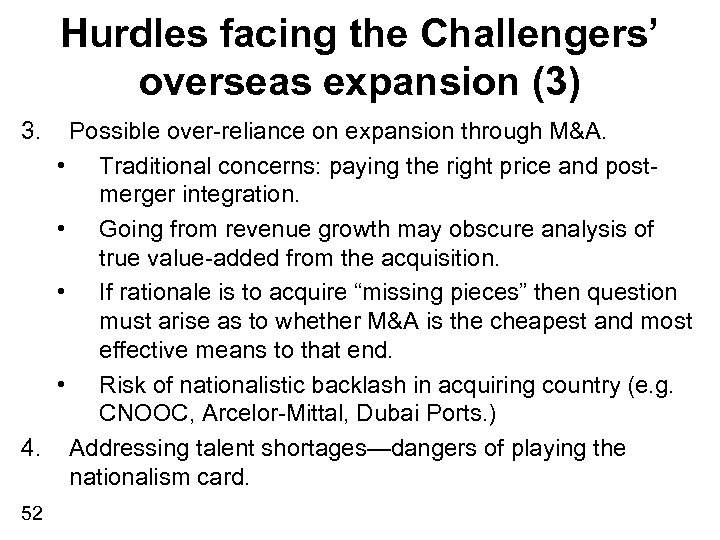
Hurdles facing the Challengers’ overseas expansion (3) 3. Possible over-reliance on expansion through M&A. • Traditional concerns: paying the right price and postmerger integration. • Going from revenue growth may obscure analysis of true value-added from the acquisition. • If rationale is to acquire “missing pieces” then question must arise as to whether M&A is the cheapest and most effective means to that end. • Risk of nationalistic backlash in acquiring country (e. g. CNOOC, Arcelor-Mittal, Dubai Ports. ) 4. Addressing talent shortages—dangers of playing the nationalism card. 52
Hurdles facing the Challengers’ overseas expansion (4) 5. 53 The double-edged nature of receiving state backing. • Many Challengers have received active backing of their governments. This is not just in China (where one state commission controls 155 companies) but elsewhere (e. g. Embrarer in Brazil). • Challengers may receive financial support from the state as an active investor, benefit from infrastructure improvements, cheaper energy, and exports promotion, and funds made available to invest in R&D and training. • But what really matters (product development, intangible assets, talent) and chosen vehicle for much expansion (overseas M&A) state offers little direct help. • And there is the stigma of state-influence that rivals can use in their non-market strategies.
What makes the Challengers successful in home markets? • • • 54 Khanna and Palepu (HBR 2006) identify three reasons why challengers are profitable at home and often able to keep multinational entrants at bay. The starting point is to recognize that there are four tiers of markets in emerging markets (global, glocal, and bottom) and are plagued by “institutional voids”. Multinationals focus on global segment because it involves least product adaption, higher willingness to pay, less information needs, and fewer distribution costs than other segments. – Underlying this insight are three factors that local firms in emerging markets exploit to ensure their profitability.
Three factors underlie the competitive success of Challengers 1. 2. 3. • • 55 Exploit knowledge of local product markets—adapt product offerings to specific characteristics of customers and the business climate at home. Exploit knowledge of local markets for talent and capital. Fill in legal and information-related institutional voids— often acting as intermediaries where information, cultural sensitivity, and connections are important. Notice the national specificity of all three factors—these factors condition at least in the near to medium term how these firms expand abroad and where they expand abroad. Where the challengers have come from defines in large part where they are going; understanding a challenger’s past then is central to any sensible analysis of these rivals.
Kumar’s analysis of Fighting Low Cost Rivals • This careful analysis is very useful for understanding the nature of low cost competition and the difficulties in pursuing product differentiation and other responses to it. • First insight—What low cost rivals do well: 1. Focus on one or a few consumer segments. 2. Deliver a basic product (few thrills or add ons) better than rivals do. 3. Keep prices low by maintaining efficient operations that keep costs down. • Low cost rivals not only appeal to a segment of the customer base that do not want to pay for extras—but also get customers to accept fewer benefits at lower prices. This is one element of their long term success. 56
Kumar’s analysis of Fighting Low Cost Rivals (2) • Second insight—Price wars without substantial cost reduction by incumbents is futile. 1. Higher cost structure makes strategy unprofitable, at least in short run. 2. Rarely drives low cost rival out of business (especially if the rival doesn’t face same performance pressures. ) • Third insight—The pre-reqs for a successful product differentiation strategy are much more onerous than many realize. 1. Combinations of differentiation tactics work better. 2. Customers must be persuaded to pay for benefits. 3. Cost control is still important—must deliver extra benefits at lowest possible cost. 57
Kumar’s analysis of Fighting Low Cost Rivals (3) • • 58 Fourth insight—Successful differentiation strategies can involve switching from selling products to selling customized solutions to clients’ problems. 1. Requires seller to understand customers’ needs—and this requires co-investment by customers which, in turn, raises switching costs. 2. Charging structure can shift from quantity of product supplied to value created by service. Fifth insight—Dual strategies (product differentiation and setting up a low-cost operation) only work if there are complementarities between the two approaches. – Even so, some cannibalization of high-end product should be expected and factored in.
Key points to take away on the Emerging Giants 1. Goal here has been to demystify the Emerging Giants: • Understanding what makes them successful at home • Figuring out their overseas expansion strategies. • Identifying the pros and cons of different responses to their rise. 2. What makes Emerging Giants competitive at home are many national characteristics—not just cheap labor. • Those characteristics don’t necessarily offer the prospect of success in many Western markets; but are probably better recipes for success in other emerging markets. 3. There are tangible options available to Western incumbents—these are not just defensive as the Emerging Giants could become important customers too. 59
Скачать презентацию International Business HEID Simon J Evenett www evenett
c1dcdb37f65934cc96c1cc04f57132cd.ppt