


 Скачать презентацию Intercultural Inclusion in Educational Systems and Society Not
dcf8764969f23c78fa10fe75e149f22a.ppt
- Количество слайдов: 44
 Intercultural Inclusion in Educational Systems and Society: “Not in My Back Yard (NIMBY)”: Ethnic Groups in Israeli Society ". . . In the beginning I was frightened, because Jews and Arabs were together. . . But now I don’t feel that there are Jews and Arabs. . . ” Migration in search of work: Israeli-Palestinian families migrating to Be'er Sheva Tal Meler Ph. D. Zefat Academic College
 Israeli-Palestinian families migrating to Be’er Sheva
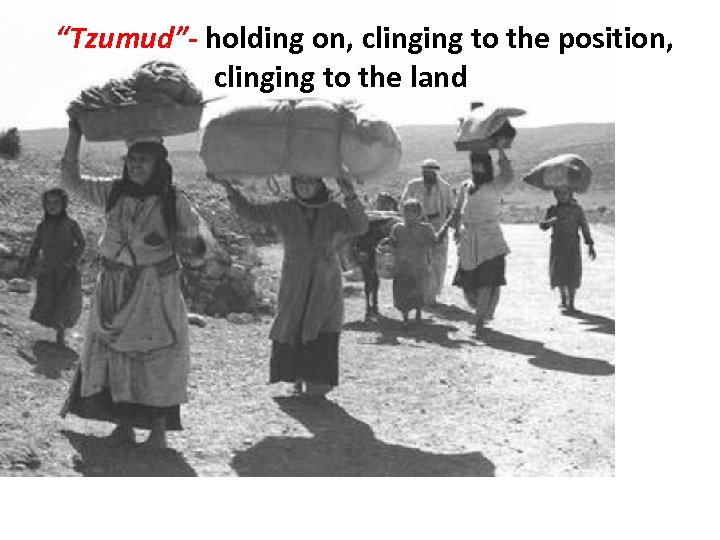 “Tzumud”- holding on, clinging to the position, clinging to the land
 Abou-Tabickh, Lilian. (2008). “Mehagrot betoh aman: Keitsad hanashim hapalestinaot bimdinat yisrael havot et hahagira shelahen im hanisuin. ” Migrants within their Nation: How Palestinian Women in Israel Experience their Migration upon Marriage.
 Relocation: moving because of employment
 Be'er Sheva- The “capital of the Negev”
 Be’er Sheva: 197, 269 Jews and others. 193, 400 Jews 3, 800 Arabs 1. 9% Arabs of the total population negative migration
 For Palestinians who are Israeli citizens, migration to Be'er Sheva provides a solution to their primary problems in the employment and housing fields, and to the repercussions from these difficulties
 • • participation rates in the labor market are lower for male and female Palestinians who are Israeli citizens than for Jews. Israel’s geographic location and spatial segregation The distance from the centers of employment growth The blocks and limitations
 • Shortage of employment in Arab communities • The types of employment
 • The socialization process • The change in lifestyle
 The housing density in the Arab localities difficult for a young couple to independently manage their nuclear unit and conduct independent decision-making processes
 The city Third space
 The Ministry of Education has been encouraging teachers from northern Israel to come and teach in the south, particularly among the Bedouin population
 When is Migration Voluntary?
 This lecture is based on qualitative research I am conducting among Palestinian-Israeli single women and women with families from northern and central Israel who have moved to Be’er Sheva. (I have already interviewed 21 women).
 3 family types: • Uneducated families in rural localities • Educated families in urban areas
 • • Patriarchal control is a central component of their and their daughters’ biography, and reverberates in different contexts: Modes of dress Expected patterns of behavior with others Norms regarding hearing their voice The silence required of them as women in a social setting
 ‘Domesticization’
 Male control infiltrates various areas of life: • Decision-making processes are unequal • The wife is supposed to give in and accept her husband’s position • She must pretend to others that it was her husband’s decision
 The husband’s family also tends to interfere: • Issues linked to the children’s education • The girls’ dress • Wife’s mobility • Leisure time • Fertility (number of children, preference for sons)
 What is the meaning of the migration experience for women’s status? Do they experience mobility? Does migration affect the expanse of female roles and the creation of more equal gender attitudes?
 The ability of women to be autonomous in issues associated with themselves (conduct, expressing opinions, personal choices, fertility, education, employment, dress, recreation, gender relations, and so forth).
 The ability of women to be autonomous in issues associated with their children (their upbringing and education, the girls’ dress, control over the girls’ marriage, and so forth).
 The ability of women to be autonomous in issues associated with the intimate unit and the nuclear family (financial independence, decision-making processes, and gendered division of labor).
 What is the meaning of the struggles they must go through for emigration ? The move to Be'er Sheva gives these women new social connections, and creates mixed cultural arenas for residence, education, and employment with both Jews and Bedouins – how they cope with all of these issues ?
 Rima, a 27 year old mother of a baby who works as a nurse, and whose husband is a social worker, and has lived in Be’er Sheva for five years : “No, it’s not the same atmosphere. For example, here in Be’er Sheva I have independence, as if I’m not emotionally dependant on my family [meaning her extended family] like I am here [in the village, in the north]. I have obligations towards family, parents, and my husband’s family, and I don’t know what… You go out and your husband’s family see where you are going, where you are coming from, and all those things don’t exist there [Be’er Sheva], that’s the difference between Be’er Sheva and my village. If I go out with my daughter, no one checks where I’m going”
 Rima, a 27 year old mother of a baby who works as a nurse, and whose husband is a social worker, and has lived in Be’er Sheva for five years : “For sure, now they [the family] tell me, “don’t come back” because they see how happy I am and feel good there [in Be'er Sheva], and rely on myself, and how there is a bright future for my daughter also”
![Yasmin, aged 27, engaged and a special education teacher: “ It’s clear the [Bedouin]](https://present5.com/presentation/dcf8764969f23c78fa10fe75e149f22a/image-29.jpg "Yasmin, aged 27, engaged and a special education teacher: “ It’s clear the [Bedouin]") Yasmin, aged 27, engaged and a special education teacher: “ It’s clear the [Bedouin] society is different. I don’t look at them the same way I look at people from my area, it’s not to do with nation or race, but rather norms and behavior, and lots of Bedouins interpret our behavior differently”
Yasmin, aged 27, engaged and a special education teacher: “ It’s clear the [Bedouin] society is different. I don’t look at them the same way I look at people from my area, it’s not to do with nation or race, but rather norms and behavior, and lots of Bedouins interpret our behavior differently”
 Yasmin, aged 27, engaged and a special education teacher: “Sure, if I lived with them it would have an influence on me, and their mentality doesn’t suit us [the northerners] either”
 Nur, a 46 year old mother of four, a teacher married to a construction worker: “Yes, the neighborbood was okay, but there is no privacy, like going out to exercise or walk in the street, and I am worried about my girls going outside because they’re pretty, I was always afraid of them going out. . . I don’t know, there are lots of Bedouins there, there are problems with the Bedouins. We heard about lots of girls who had problems with Bedouins, but I have already lived in Be’er Sheva for four years [she lives in the city itself] with my girls, and they are pretty, and we haven’t had any problems, thank God. . . ”
 Racialization
 Nur, a 46 year old mother of four, a teacher married to a construction worker: “Yes, in the city, I am here for four years, it’s good for me, even the Jewish neighbors are very kindhearted, they look after my car for example, we have very good relationships”
 Nur, a 46 year old mother of four, a teacher married to a construction worker “For three years I was the only Arab in the entire neighborhood” • Have the relationships improved over time? “Yes, it’s improved tremendously, I even have a good relationship with Jewish students. Would you believe that when Jewish women baked cakes for their festivals they sent them to me, when I get back from a weekend in the north and I lift lots of bags, our neighbor, even though he’s elderly, he comes straight away to help me, we don’t have any problems with the Jews”
 Mariam, aged 27. 5 and a mother of two who is a special education teacher and counselor married to a teacher: “. . . from the point of view of the Jews, I’ve never encountered racism, we have Jewish neighbors, etc” And she continue: “At the beginning I was afraid for Jews and Arabs to be together, but the [my son’s] teachers are really sweet and now I don’t feel like there are Jews and Arabs, my son is happy there, and I “musaira” (go with the flow, behave diplomatically) with the teachers”
 Mariam, aged 27. 5 and a mother of two who is a special education teacher and counselor married to a teacher: “I almost feel Be’er Sheva belongs to me and I belong to it. My ties with my neighbors, both Jewish and Arab, and even Bedouin, are fine”
 Zali Gurevitch (2007) “The Place” “is an ambivalent site of belonging and foreignness, nearness and farness, lowering and raising, freedom and commitment, realization and abstraction”
 “Where is the place where we are ‘at home’ in the world? ”
 Bauman, Z. (2013) “Culture in a Liquid Modern World” “the art of life with the difference” is the daily life experience for many people living today in the scattered communities.
 The move by Palestinian-Israeli families to Be’er Sheva may challenge the politics of space in Israel which is built on being segregative and exclusionary, blur the accepted lines in the Israeli education system in a manner that will generate a space for new dialog, or alternatively, designate dividing lines and structure new urban and cultural segmentation processes

 Mariam, aged 27. 5 and a mother of two who is a special education teacher and counselor married to a teacher: “[My son’s] friends are Jewish and also Arab, some of his friends are sons of my friends [from the north]”
 Umaya, a 43 year old English teacher with a master’s degree, originally from Taibeh, has lived in Be’er Sheva for around 11 years: “There are from all sides, we have Jewish friends, and also our children because they study with them at school”
 Ranin, aged 24. 5: “The change is for the good, it’s got better, the first year I didn’t know anyone, I didn’t say hi to anyone, I was always alone. Afterwards, especially after I had my daughter, I felt I started to get closer to people thanks to her. I would go downstairs and old women would play with her”