


 Скачать презентацию Intercultural communication Michał Wesołowski Wrocław 02 02 2010 INDEX
intercultural communication.ppt
- Количество слайдов: 18
 Intercultural communication Michał Wesołowski Wrocław, 02/02/2010
 INDEX l l l Introduction; What exactly is the intercultural communication? How we can define it? Non-verbal communication Stereotypes Own identity The concept of time Taste
 ” Culture: ➡ is linked to communication and a wide range of human experience including feelings, identity and sense-making ➡ provides people with different ways of thinking, seeing, hearing and interpreting the world; ➡ involves a number of man-made, collective artefacts and is shared by the members of a social group; ➡ is something that shapes one‘s behaviour or structures one′s perception of the world
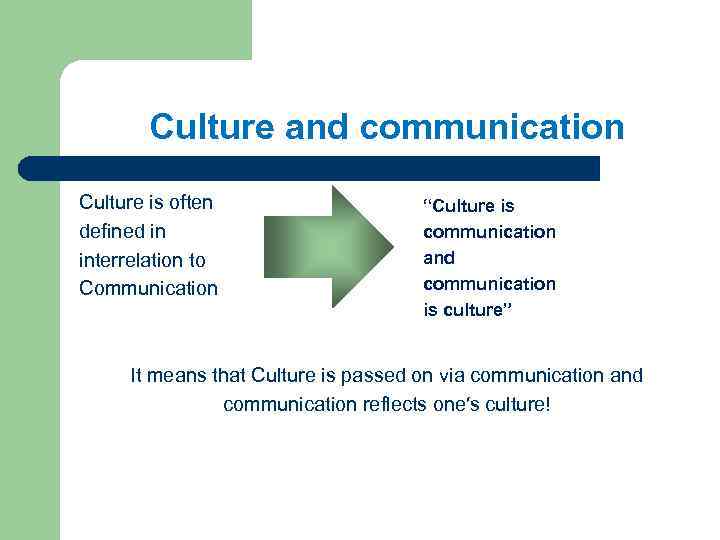 t Scout Law” Culture and communication Culture is often defined in interrelation to Communication “Culture is communication and communication is culture” It means that Culture is passed on via communication and communication reflects one′s culture!
 Intercultural communication “We may say that intercultural communication is the communication among those people who have so different cultural references that they perceive themselves as pertaining to differnent cultures. ” 1 1 Rodrigo Alsina, Miquel: “Comunicación intercultural”, Anthropos Editorial, Barcelona 1999, p. 12
 Non-verbal communication The shortest way between two people is a smile
 Non-verbal communication non-verbal language may have the following basic functions: 1) to communicate attitudes and emotions 2) to support the sense of words 3) substitution of verbal language
 It means that 1) to communicate attitudes and emotions 2) to support the sense of words This may take place in different ways: l completing the sense of the words l controlling synchronisation (among the different speakers of a group) l producing feed back l maintaining the attention
 3) to substitute verbal language l body language, gestures l gaze behaviour l. . . Non-verbal language, depending on authors, makes from 50% to 70% of direct communication among human beings.
 Stereotypes often reflect the differences in socioeconomic status, religion or dialect; ➡ It is important to suspend judgement, avoid misconceptions, narrow perspectives and immature reactions; ➡ Stereotypes often contain a grain of truth, but cannot characterize an entire culture; ➡ Getting the whole picture of culture needs active participation;
 Identity l l l Identity Is the relationship between “the I” and “the other” there is no identity without the “other” so: when talking about the own identity, we also have to consider the foreign identity
 Two kinds of identity 1. Personal identity: based on the culture in which we were socialized 2. Cultural identity founded on the sense of belonging to a community with certain characteristics
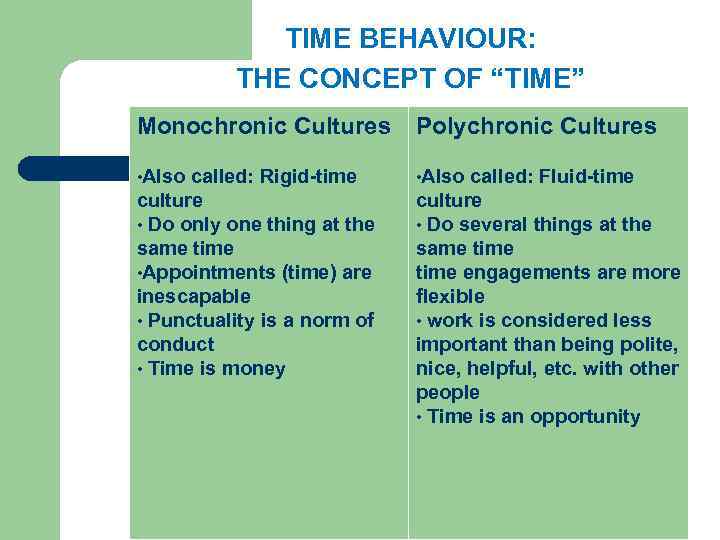 TIME BEHAVIOUR: THE CONCEPT OF “TIME” Monochronic Cultures Polychronic Cultures • Also called: Rigid-time culture • Do only one thing at the same time • Appointments (time) are inescapable • Punctuality is a norm of conduct • Time is money called: Fluid-time culture • Do several things at the same time engagements are more flexible • work is considered less important than being polite, nice, helpful, etc. with other people • Time is an opportunity
 It means that Two people, participating is the same task, one monochronic and the other polychronic: l will consider the whole process from very different points of view l will have different objectives l will have different priorities
 The concept of taste What we have to take into account… l There are no “better” and “worse” tastes l There are different culinary customs l Each culture establishes its culinary order and marks food as “eatable” or “uneatable” l Each culture marks certain food as unacceptable
 The concept of taste l l l Food is an element of cultural identification. (We are what we eat. ) 9 British call French “frogs” Germans call Italian “Spaghettifresser”
 Spend few minutes at the end of this session answering these three reflective questions: !What did you learn today? !Why is that learning important to you? !How can you make use of that learning tomorrow?
 Thanks for your attention!