


 Скачать презентацию Intercountry Adoption and Child Welfare Who Are the
8032b7ca10b73e908caf61bd6926a7d3.ppt
- Количество слайдов: 46
 Intercountry Adoption and Child Welfare: Who Are the Children? The Changing Challenges in International Adoption Dr. Judith K. Eckerle and Dr. Dana E. Johnson University of Minnesota
 Goals n n Describe trends in international adoption over the past 10 years Highlight major changes in the demographics of children who are being considered for adoption Discuss new ways of thinking to: 1)provide for intercountry adoptees and their needs 2) prepare families considering intercountry adoption. Opportunity to familiarize ourselves with medical, developmental and behavioral conditions that we may encounter n n n Alcohol Exposure- FASD spectrum Syndromes, Birthmarks, Complicated Medical History How can current knowledge on the outcome of institutionalized children and international adoptees inform our response to the current orphan crisis?
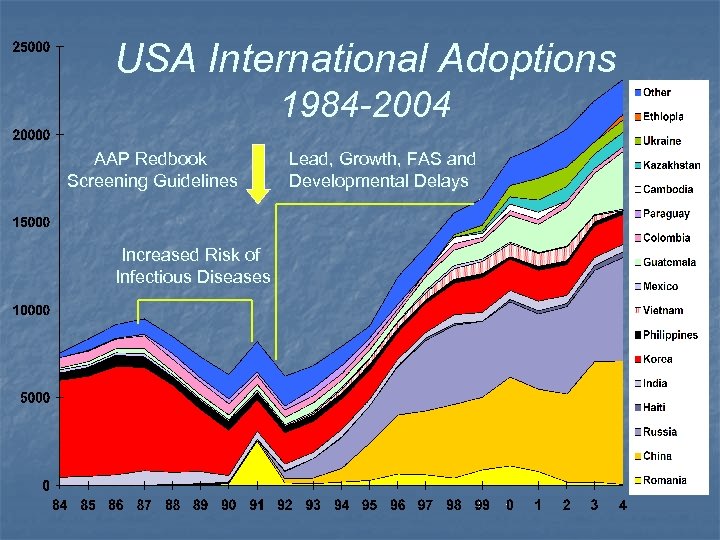
 The Trends: n Korea reducing the number of children available- In 2008, the Minister (MOHFW) and other government officials at the Blue House have discussed a plan to end ICA in 3 years by reducing the quota by 300 every year. n China, Ethiopia and the countries of Eastern Europe have become the source of the majority of children (54%) placed in American families. http: //adoption. state. gov/news/total_chart. html n Ethiopia recently announced a 90% decrease in the number of adoptions that they will participate in starting Mar 9. 2011 n Level of care received by international adoptees prior to arrival in the United States. (Institutional versus Foster Care)
 U of MN IA 10 Year Comparison Project n n 40 children were randomly selected from paper records kept from 1998 of children referred from S. Korea and reviewed at the IAC, U of MN. 40 children were randomly selected from the computerized database from 2008 of children referred from S. Korea and reviewed at the IAC, U of MN.
 IAC 10 Year Comparison Project n The goal of this study was to 1) Examine trends in the type of child referred 10 years ago versus today n 2) Look at risk factors that had decreased or increased in the past 10 years n 3) Examine the risks that parents, social workers and adoption professionals should be made aware of in order to preparents for their potential childs’ needs. n
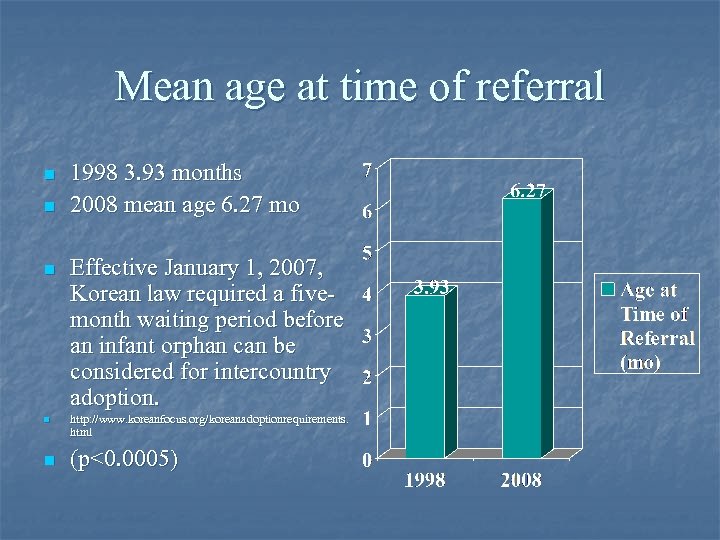 Mean age at time of referral n n n 1998 3. 93 months 2008 mean age 6. 27 mo Effective January 1, 2007, Korean law required a fivemonth waiting period before an infant orphan can be considered for intercountry adoption. http: //www. koreanfocus. org/koreanadoptionrequirements. html (p<0. 0005)
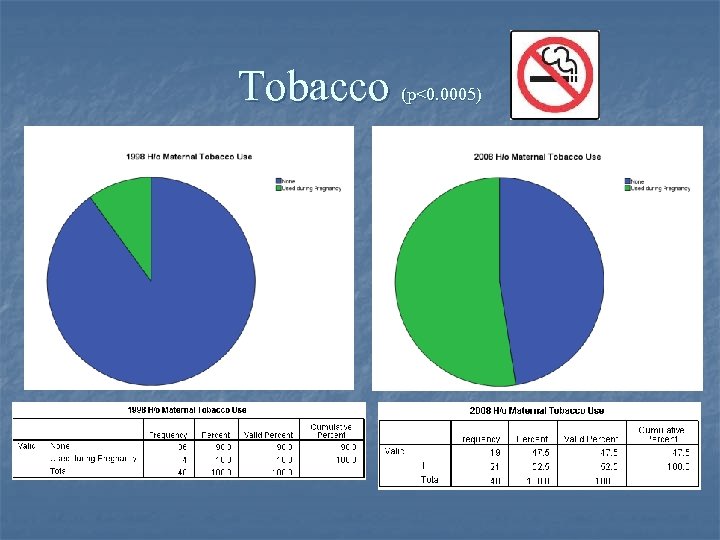 Tobacco (p<0. 0005)
 Tobacco n n Low birth weight and long-term cognitive and behavioral problems including lower intelligence and attention deficit disorder with or without hyperactivity. http: //aappolicy. aappublications. org/cgi/reprint/pediatrics; 107/4/794
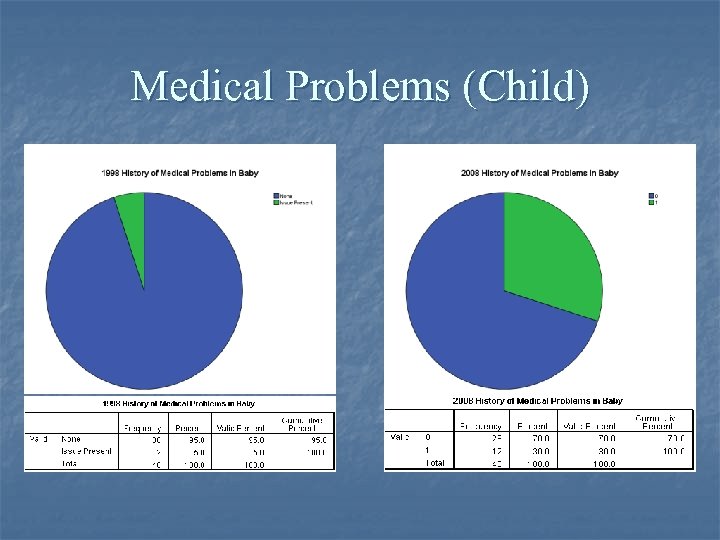 Medical Problems (Child)
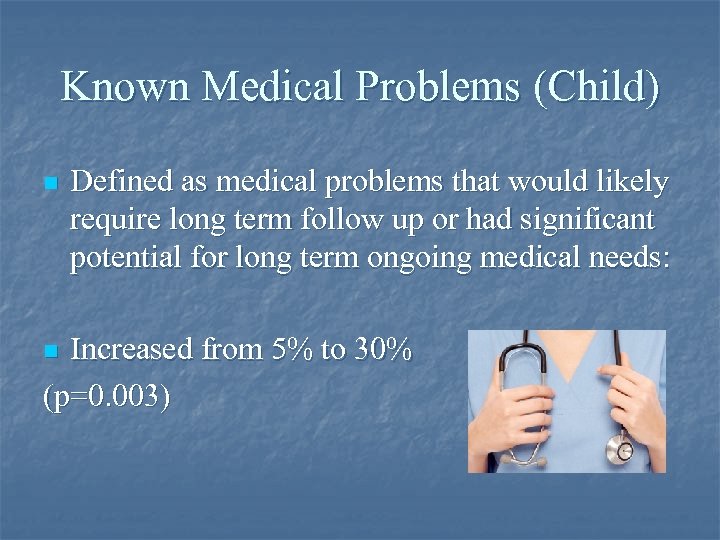 Known Medical Problems (Child) n Defined as medical problems that would likely require long term follow up or had significant potential for long term ongoing medical needs: Increased from 5% to 30% (p=0. 003) n
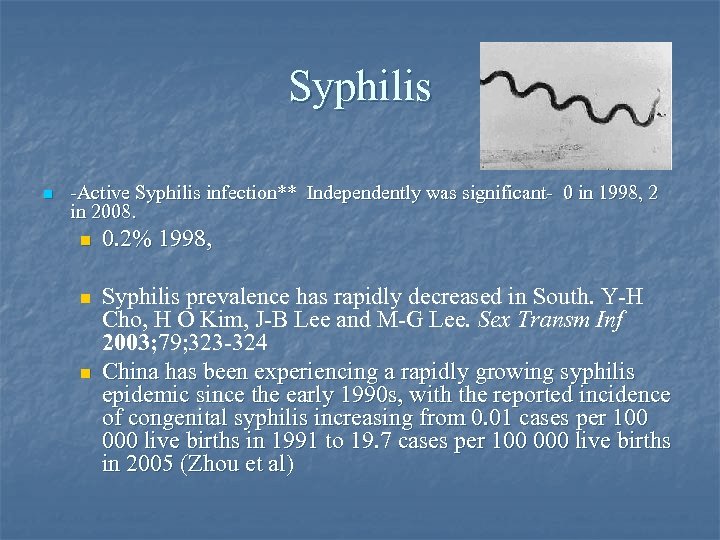 Syphilis n -Active Syphilis infection** Independently was significant- 0 in 1998, 2 in 2008. n 0. 2% 1998, n Syphilis prevalence has rapidly decreased in South. Y-H Cho, H O Kim, J-B Lee and M-G Lee. Sex Transm Inf 2003; 79; 323 -324 China has been experiencing a rapidly growing syphilis epidemic since the early 1990 s, with the reported incidence of congenital syphilis increasing from 0. 01 cases per 100 000 live births in 1991 to 19. 7 cases per 100 000 live births in 2005 (Zhou et al) n
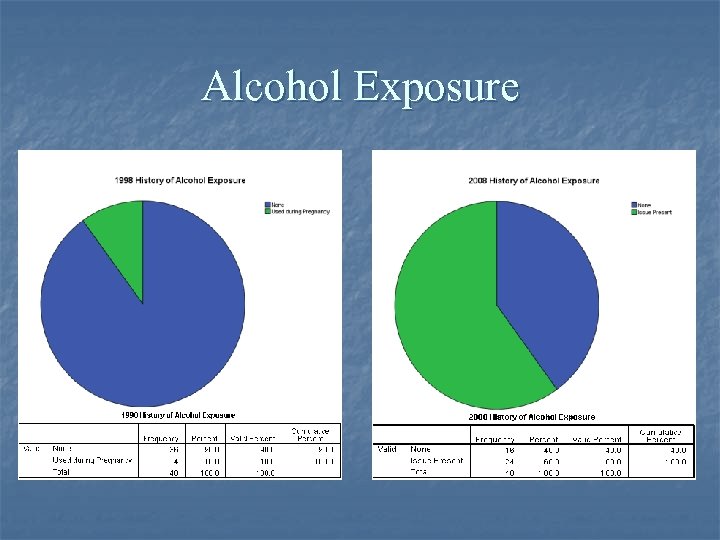 Alcohol Exposure
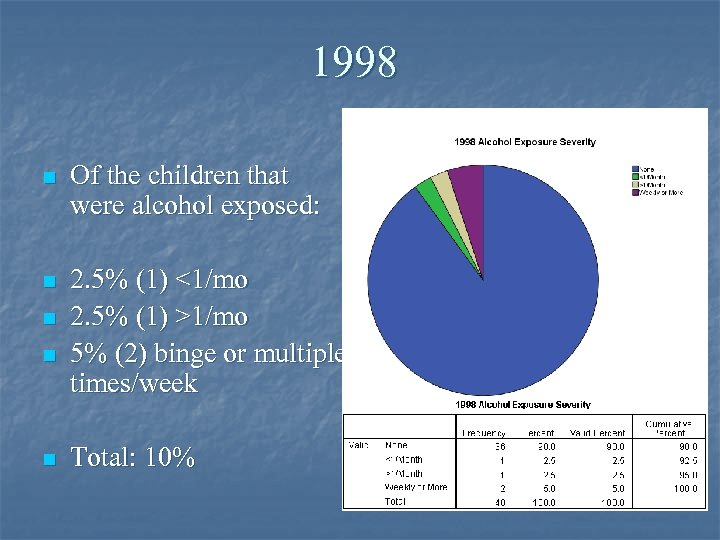 1998 n Of the children that were alcohol exposed: n 2. 5% (1) <1/mo 2. 5% (1) >1/mo 5% (2) binge or multiple times/week n n n Total: 10%
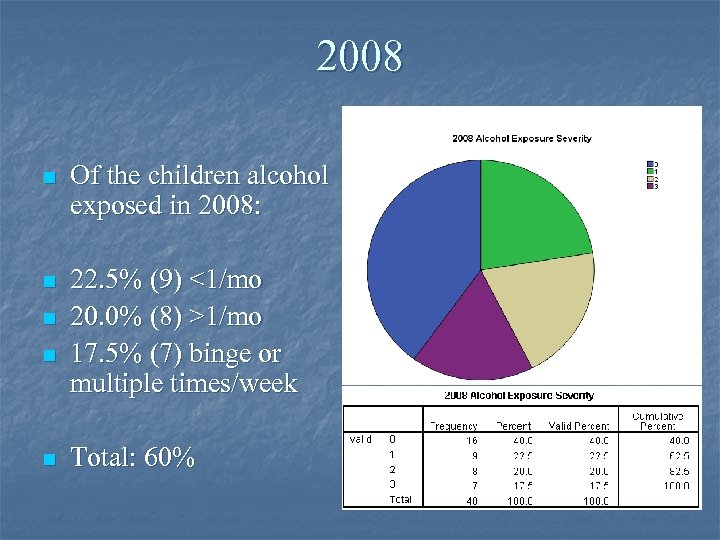 2008 n Of the children alcohol exposed in 2008: n 22. 5% (9) <1/mo 20. 0% (8) >1/mo 17. 5% (7) binge or multiple times/week n n n Total: 60%
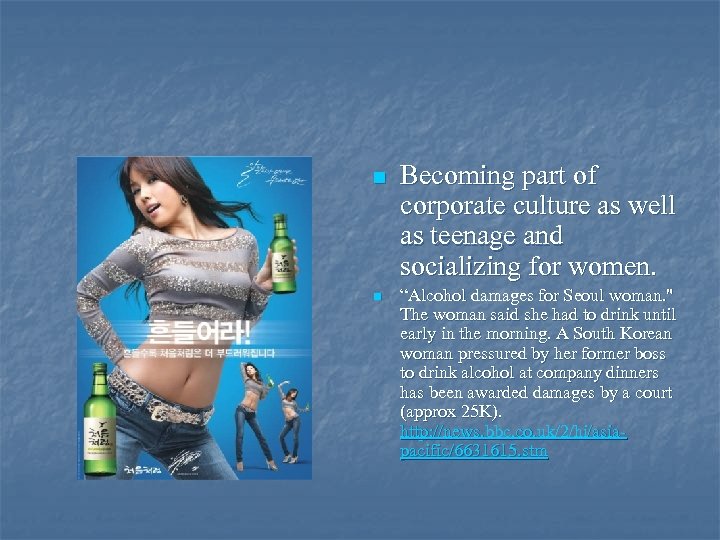 n n Becoming part of corporate culture as well as teenage and socializing for women. “Alcohol damages for Seoul woman. " The woman said she had to drink until early in the morning. A South Korean woman pressured by her former boss to drink alcohol at company dinners has been awarded damages by a court (approx 25 K). http: //news. bbc. co. uk/2/hi/asiapacific/6631615. stm
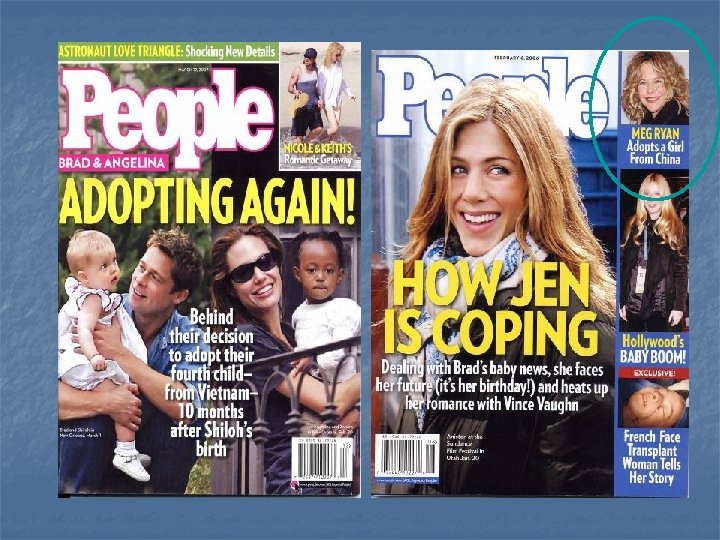
 n Besides the trends and theoretical risks, who are the children, really? ?
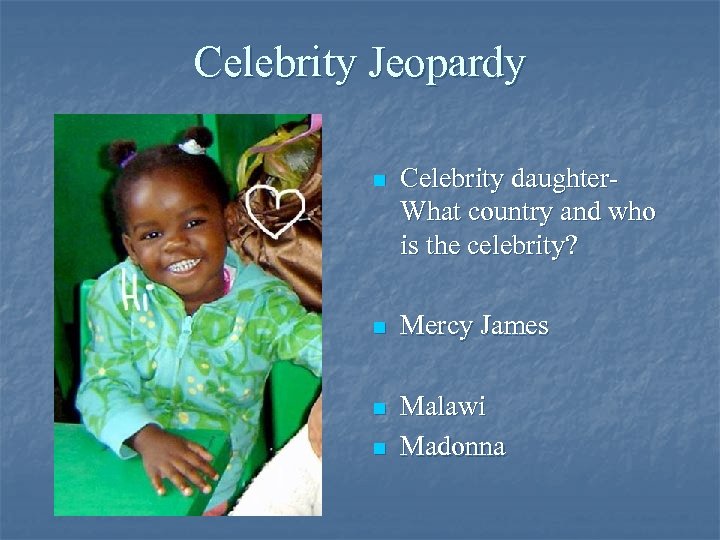 Celebrity Jeopardy n Celebrity daughter- What country and who is the celebrity? n Mercy James n Malawi Madonna n
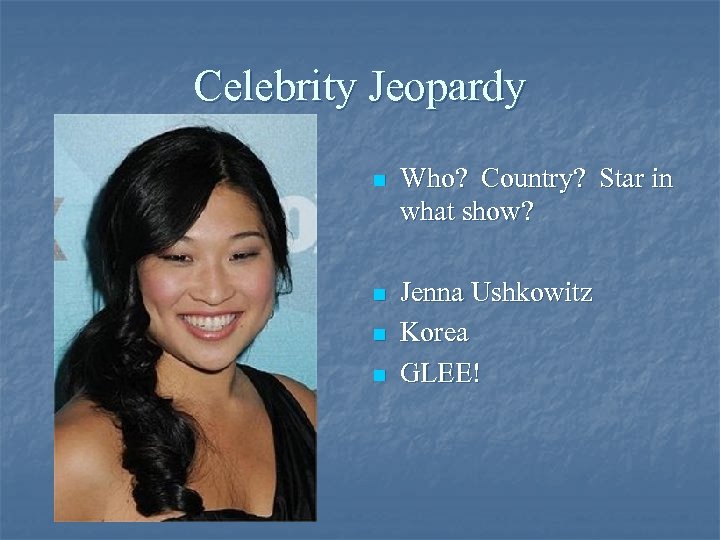 Celebrity Jeopardy n Who? Country? Star in what show? n Jenna Ushkowitz Korea GLEE! n n
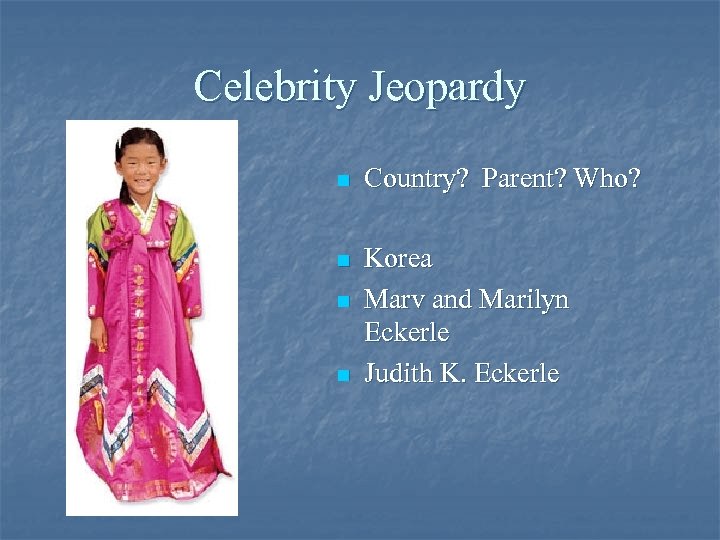 Celebrity Jeopardy n Country? Parent? Who? n Korea Marv and Marilyn Eckerle Judith K. Eckerle n n
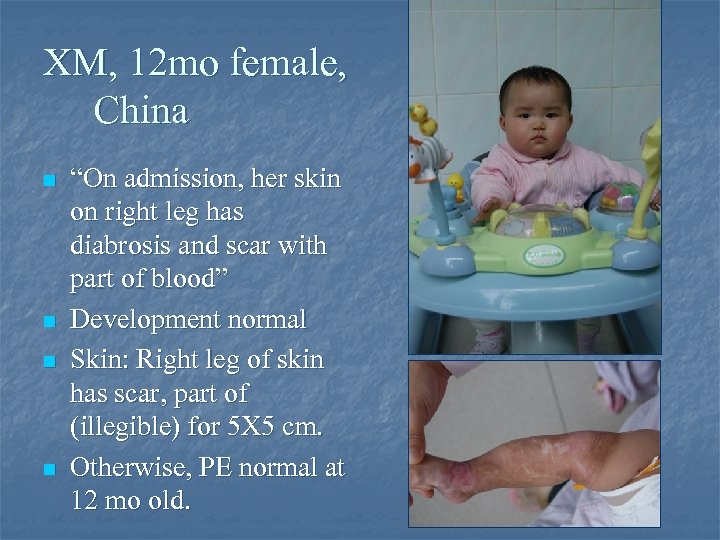 XM, 12 mo female, China n n “On admission, her skin on right leg has diabrosis and scar with part of blood” Development normal Skin: Right leg of skin has scar, part of (illegible) for 5 X 5 cm. Otherwise, PE normal at 12 mo old.
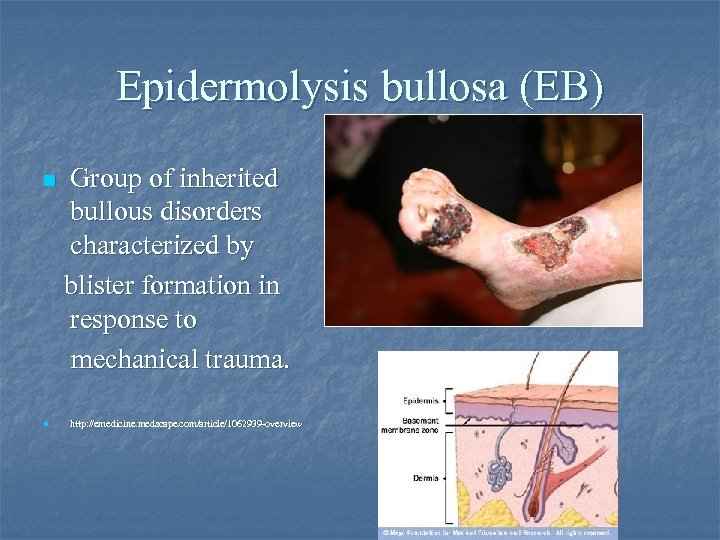 Epidermolysis bullosa (EB) Group of inherited bullous disorders characterized by blister formation in response to mechanical trauma. n n http: //emedicine. medscape. com/article/1062939 -overview
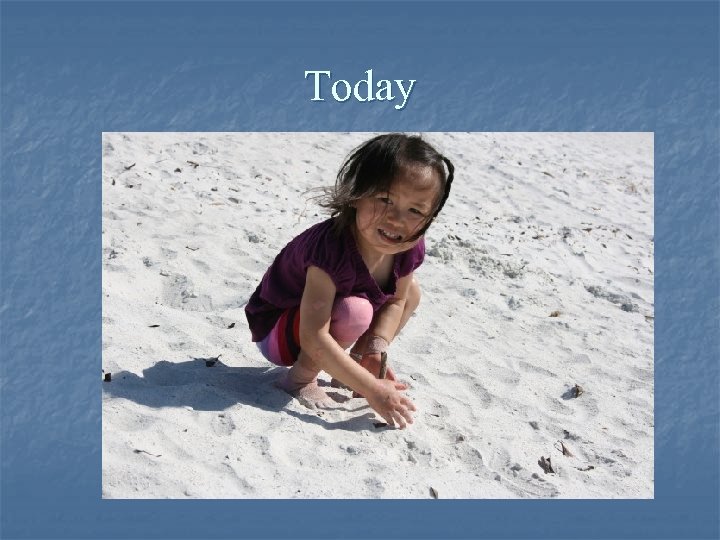 Today
Today
 W. G 10 yo female, Haiti n n n 10 yo female adopted from Haiti with unrelated male from same orphanage. Adoptive family with 6 bio children, stay at home mom and full time employed father W. G. raised in orphanage care since infancy which collapsed around her during earthquake (2010), moved to temporary shelter, then coastal orphanage, then orphanage care at functioning hospice center until she joined her family in the USA.
 W. G. n n n WG had history of severe malnutrition when she entered orphanage care No functional language in Haiti, had never been to school Congenitally totally deaf. n Number of minor medical issues but main issues were severe behavioral outbursts. n LTBI Microcytic anemia Vit D deficiency Parasites (B Hominis, Giardia) Global developmental delays Precocious/Accelerated Puberty n n n
 W. G. n n After a number of emergency discussions with parents, it was decided that inpatient care was best solution after she assaulted one of the other children in the home Inpatient stay went extremely well, communication with sign language interpreters and teachers Mother refused placement back into home after inpatient stay Family in church community (4 bio children, 3 adopted including one child with severe spina bifida) offered to adopt
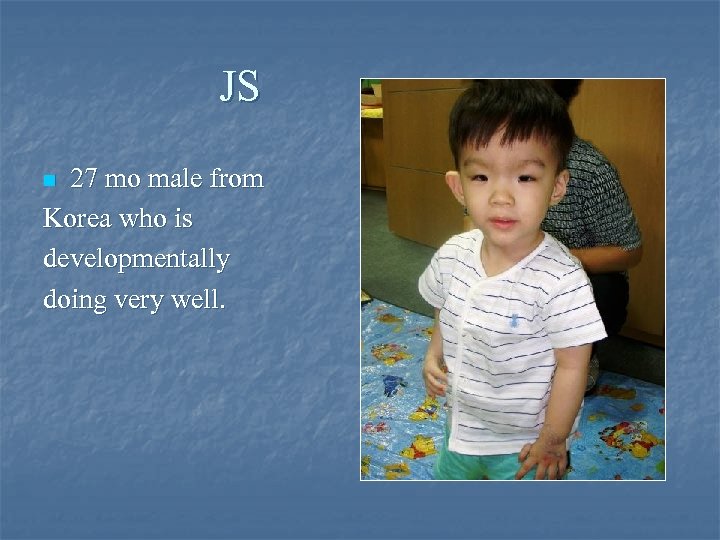 JS 27 mo male from Korea who is developmentally doing very well. n
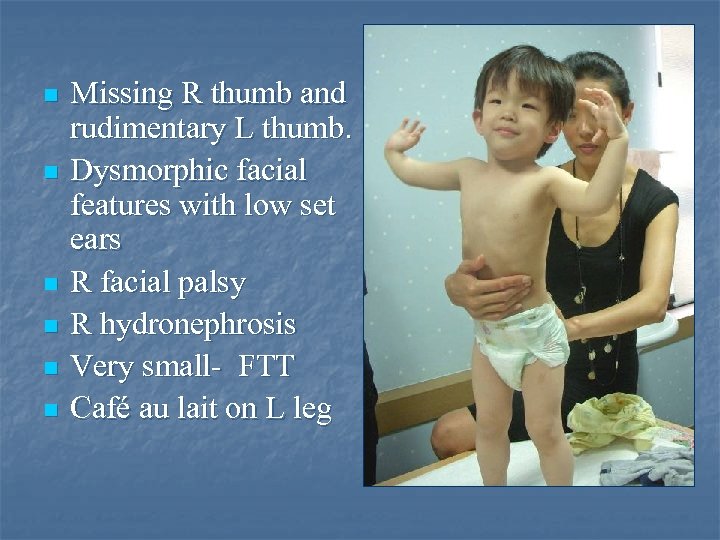 n n n Missing R thumb and rudimentary L thumb. Dysmorphic facial features with low set ears R facial palsy R hydronephrosis Very small- FTT Café au lait on L leg
 Fanconi Anemia n n n Leukemia in ~10% of patients (700 -fold), myelodysplastic syndrome ~ 6% of patients Solid tumors have been reported in close to 10% of patients, - most common tumors are liver adenomas and hepatomas (400 fold) Other types of solid tumors occur in young adults (30%) and primarily involve the head and neck, esophagus, and gynecologic areas (4000 -fold) Oral cancers have been reported in patients with Fanconi anemia who have received bone marrow transplantation . n Median diagnosis 7 yo
 Dr. Dana E. Johnson University of Minnesota
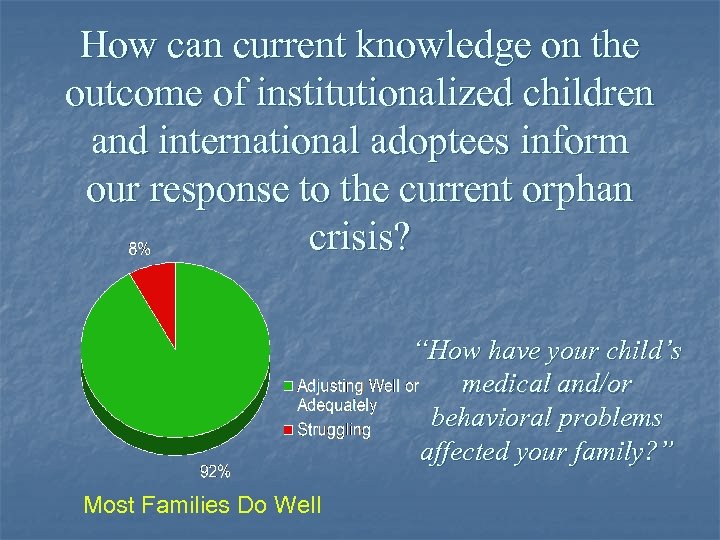 How can current knowledge on the outcome of institutionalized children and international adoptees inform our response to the current orphan crisis? “How have your child’s medical and/or behavioral problems affected your family? ” Most Families Do Well
 USA International Adoptions 1984 -2004 AAP Redbook Screening Guidelines Increased Risk of Infectious Diseases Lead, Growth, FAS and Developmental Delays
 Early Deprivation
 Bayley Scales of Infant Development (MDI-at baseline)
 History of Institutionalization IG/FCG NIG OR Any axis I disorder 45. 5% (N=56) 13. 6% (N=8) 5. 3 (2. 3, 12) (p<. 0001) Any emotional disorder 35. 0% (N=43) 8. 5% (N=5) 5. 8 (2. 2, 16) (p=0. 0005) Any behavioral disorder 28. 5% (N=35) 6. 8% (N=4) 5. 5 (1. 8, 16) (p=0. 002) Axis I includes all the mental health conditions except personality disorders and mental retardation.
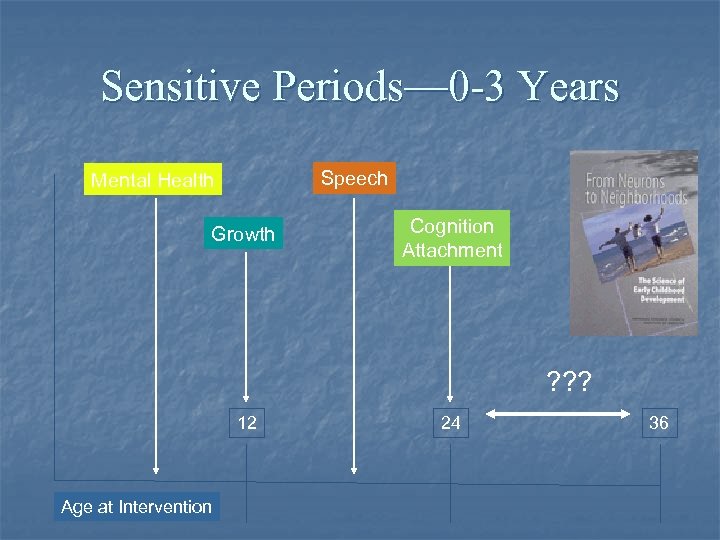 Sensitive Periods— 0 -3 Years Speech Mental Health Growth Cognition Attachment ? ? ? 12 Age at Intervention 24 36
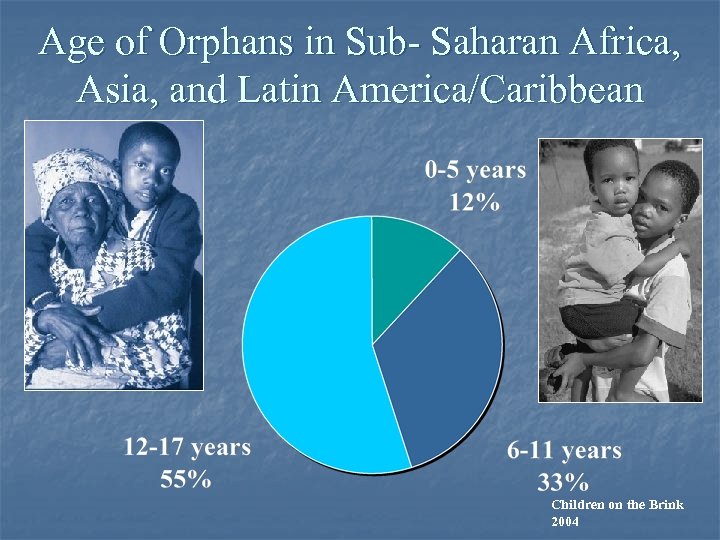 Age of Orphans in Sub- Saharan Africa, Asia, and Latin America/Caribbean Children on the Brink 2004
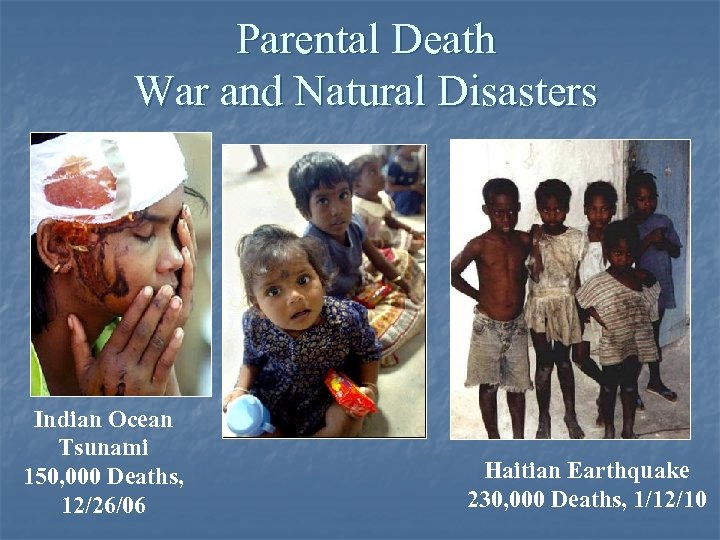 Parental Death War and Natural Disasters Indian Ocean Tsunami 150, 000 Deaths, 12/26/06 Haitian Earthquake 230, 000 Deaths, 1/12/10
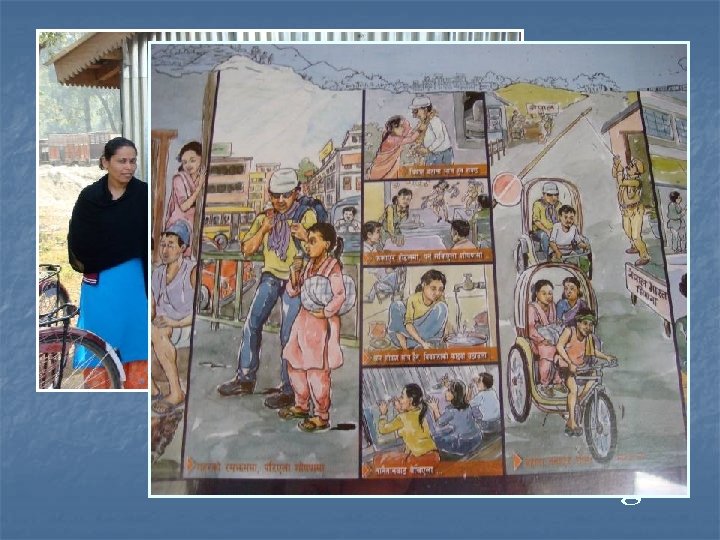 Trafficking
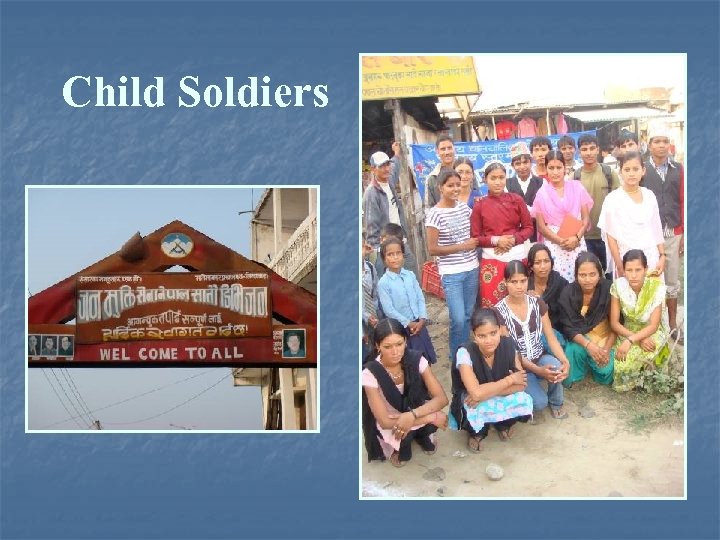 Child Soldiers
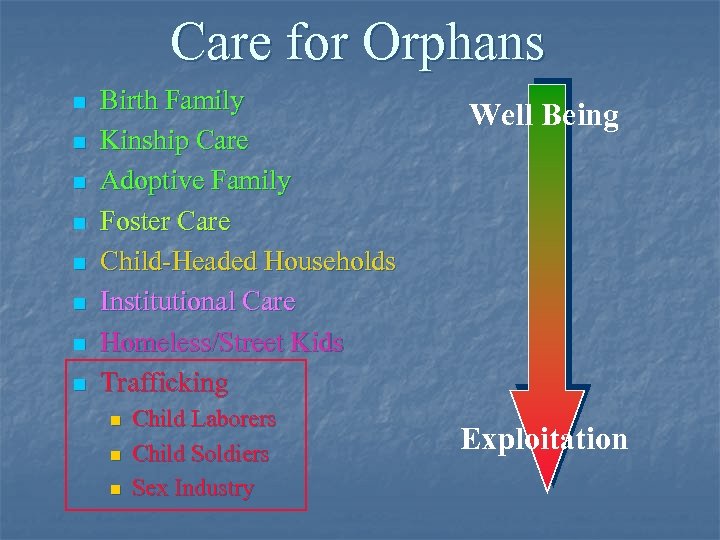 Care for Orphans n n n n Birth Family Kinship Care Adoptive Family Foster Care Child-Headed Households Institutional Care Homeless/Street Kids Trafficking n n n Child Laborers Child Soldiers Sex Industry Well Being Exploitation
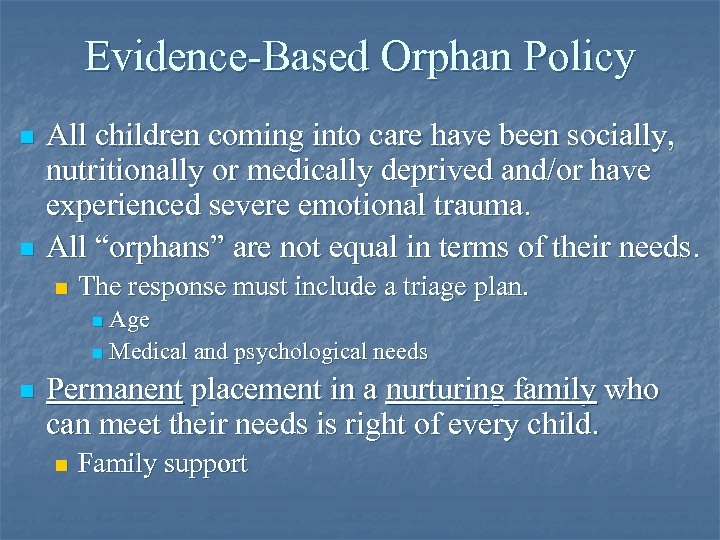 Evidence-Based Orphan Policy n n All children coming into care have been socially, nutritionally or medically deprived and/or have experienced severe emotional trauma. All “orphans” are not equal in terms of their needs. n The response must include a triage plan. Age n Medical and psychological needs n n Permanent placement in a nurturing family who can meet their needs is right of every child. n Family support