


 Скачать презентацию Interact With Guests 1 Housekeeping
38714b32ff2ed5ae2e060068c0d7235b.ppt
- Количество слайдов: 57
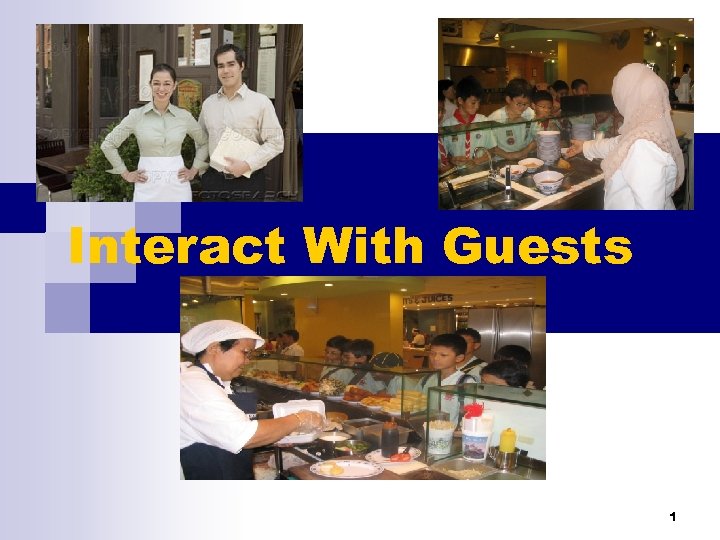 Interact With Guests 1
 Housekeeping! • • • Phones on Silent Sign the attendance Assessment Sign Up Your Assessment Everybody must Participate! 2
 Getting to know you… 3
 Program Overview Interact with guests is the focus of this program. This program will help you to have an in-depth understanding of the service standards, the policy and procedures, guidelines behind these standards. You will therefore be able to identify the lack of these standards, analyze the situation and coach your team achieving the specific goals you have set within your department. With the timely corrective measures and positive reinforcement and encouragement, you will see your team improve, develop and grow. Upon completion of the program, you will need to practice the new skills and behaviour and adapt them to suit the situation for results. 4
 UNIT PURPOSE This unit deals with the interpersonal, communication, and customer skills required by all people working in the tourism and hospitality industries. 5
 CONTENTS n Maintain professional appearance and attitude n Provide quality service n Address concerns 6
 CE 1 – Maintain Professional appearance and attitude 7
 Learning Objective 1. 1 Demonstrate positive attitude 1. 2 Show respect for others 1. 3 Communicate effectively 1. 4 Maintain professional personal presentation 1. 5 Maintain personal hygiene 8
 • • INTERNAL & EXTERNAL CUSTOMERS Internal Customers Colleagues Supervisor External Customers Those who buy things from us Suppliers Anyone who comes to our food stall or food court 9
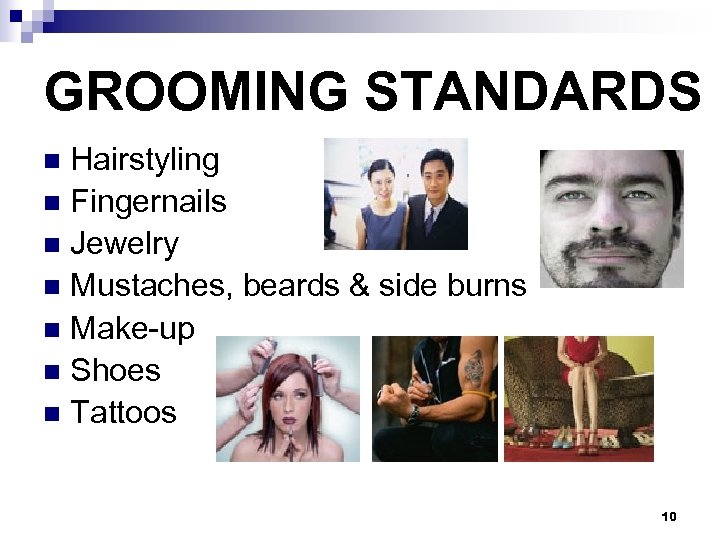 GROOMING STANDARDS Hairstyling n Fingernails n Jewelry n Mustaches, beards & side burns n Make-up n Shoes n Tattoos n 10
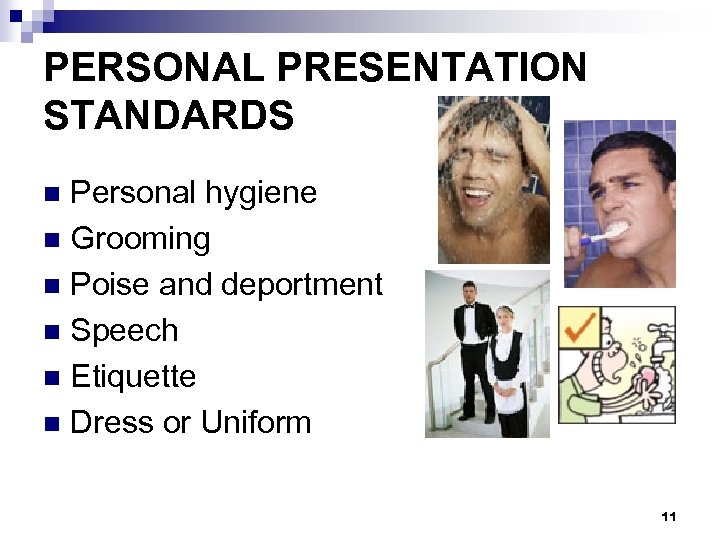 PERSONAL PRESENTATION STANDARDS Personal hygiene n Grooming n Poise and deportment n Speech n Etiquette n Dress or Uniform n 11
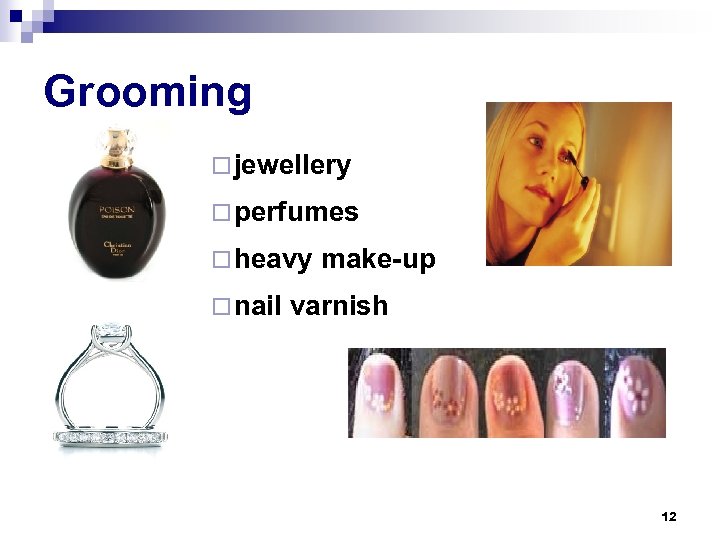 Grooming ¨ jewellery ¨ perfumes ¨ heavy ¨ nail make-up varnish 12
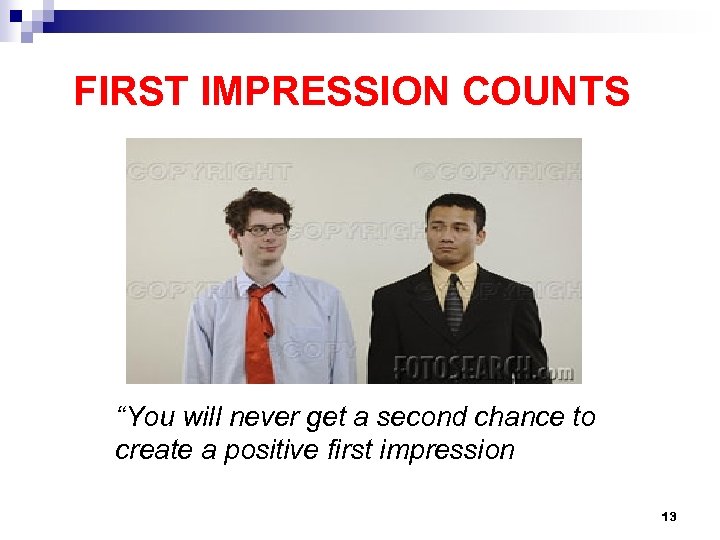 FIRST IMPRESSION COUNTS “You will never get a second chance to create a positive first impression 13
 INTERPERSONAL SKILLS n Outstanding personal appearance n Clear communication skills n Initiative in social interaction 14
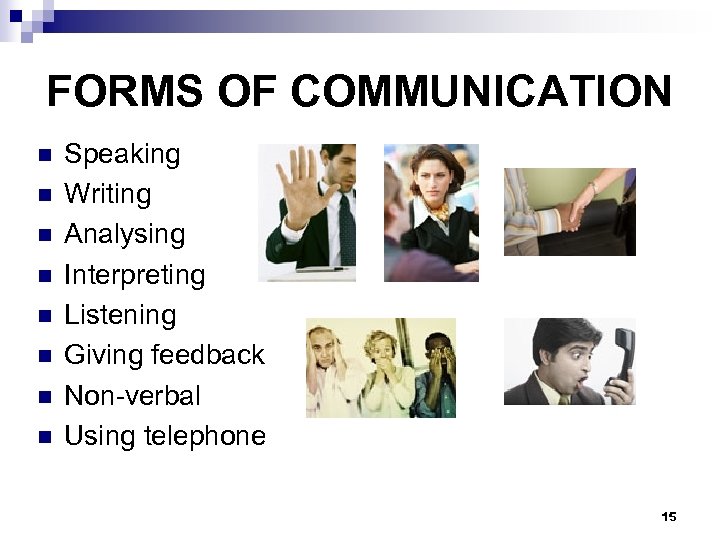 FORMS OF COMMUNICATION n n n n Speaking Writing Analysing Interpreting Listening Giving feedback Non-verbal Using telephone 15
 SPEAKING EFFECTIVELY n Each message communicated must have a purpose n Each message should be planned so that it matches the interests & abilities of the receiver n Unnecessary words in the communication should be eliminated n Words used in the message should be within the experience range of the receiver n Message should be clear & should include correct pronunciation, tone & volume of voice 16
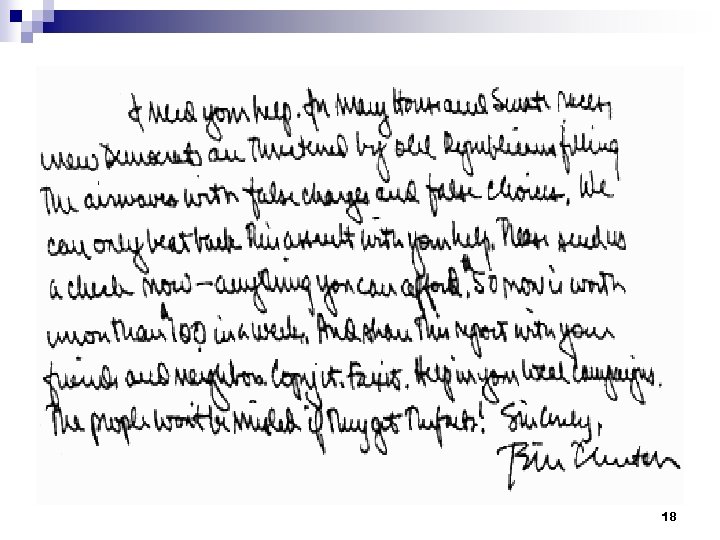
 WRITING EFFECTIVELY n n n n Handwriting must be legible Sentence construction short and simple Jargon must be avoided Technical detail is explained Don't make assumptions Use correct sentence structure Use correct spelling, grammar and punctuation 17
 18
18
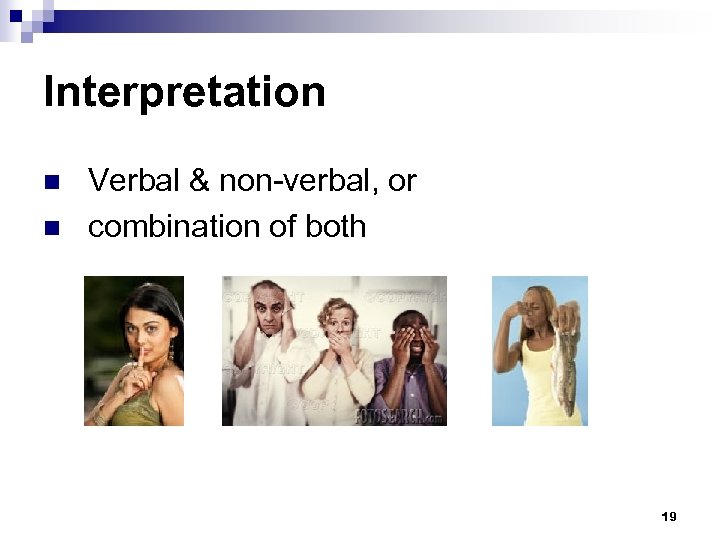 Interpretation Verbal & non-verbal, or n combination of both n 19
 Activity Video 20
 NON-VERBAL COMMUNICATION n Body language – facial expression/body actions n Physical characteristics and appearance n Space – social distance n Environment – physical surrounding n Time – punctuality/lateness 21
 Analysis n continually analysing n make a note to remember information 22
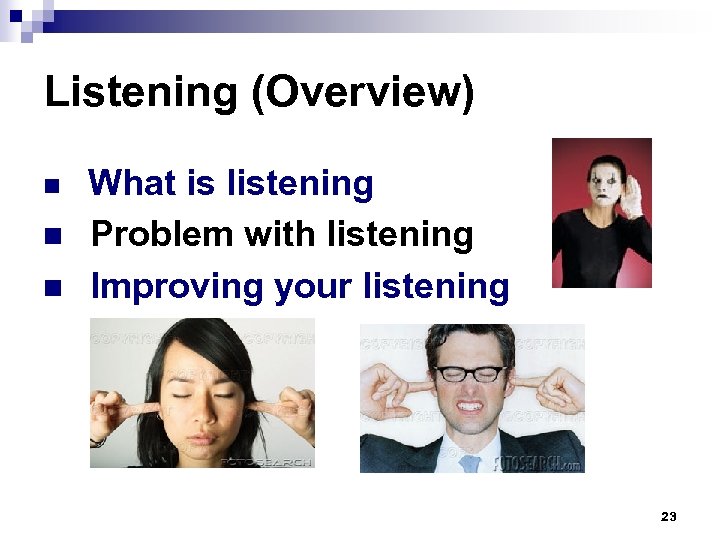 Listening (Overview) n n n What is listening Problem with listening Improving your listening 23
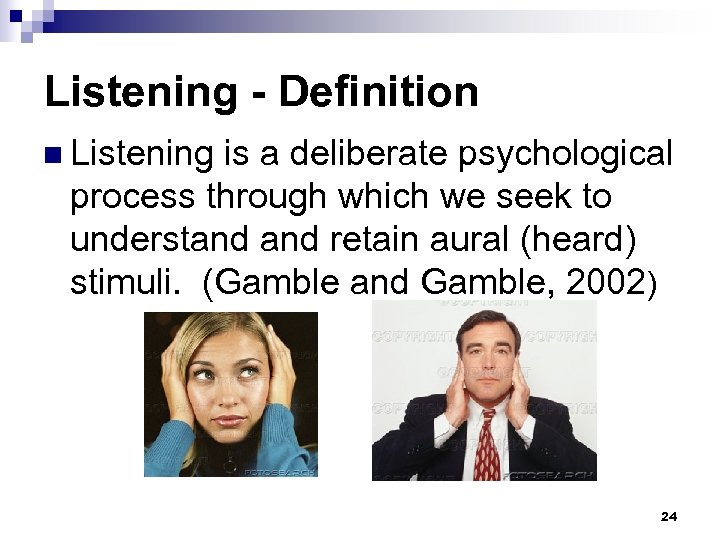 Listening - Definition n Listening is a deliberate psychological process through which we seek to understand retain aural (heard) stimuli. (Gamble and Gamble, 2002) 24
 Ineffective Listening Habits Decide in advance that the subject is uninteresting n Focusing on poor delivery of the speaker n becoming overexcited anxious to make you own point n focusing only on facts n 25
 Effective Listening Focusing your attention n Setting appropriate goals n Listening to understand ideas n Listening to retain information n Listening to analyse and evaluate content n Listening empathically – listen actively n 26
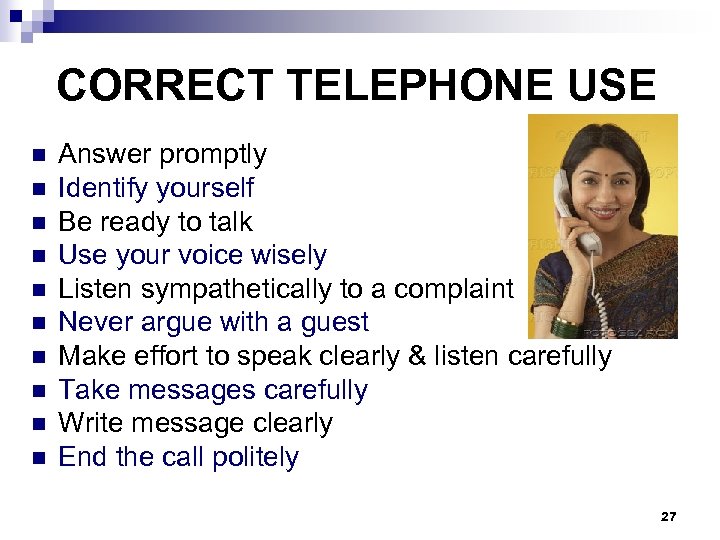 CORRECT TELEPHONE USE n n n n n Answer promptly Identify yourself Be ready to talk Use your voice wisely Listen sympathetically to a complaint Never argue with a guest Make effort to speak clearly & listen carefully Take messages carefully Write message clearly End the call politely 27
 BARRIERS TO COMMUNICATION n n n n n Status – Supervisor vs subordinate Pressure of time – shortage of time Value judgements – right or wrong/true or false Inattention – distraction/lack of interest Jumping to conclusions - assume Physical barriers- hearing disability/noise/fatigue Individual differences – age/gender/education/beliefs Lack of feedback - understanding Emotions – anger/fear/hate Inconsistency – conflicting instructions 28
 OVERCOMING BARRIERS TO COMMUNICATION n Avoid making value judgements n Listen intently to the full story n Recognise feelings & emotions n Review the other person’s position n Questioning with understanding 29
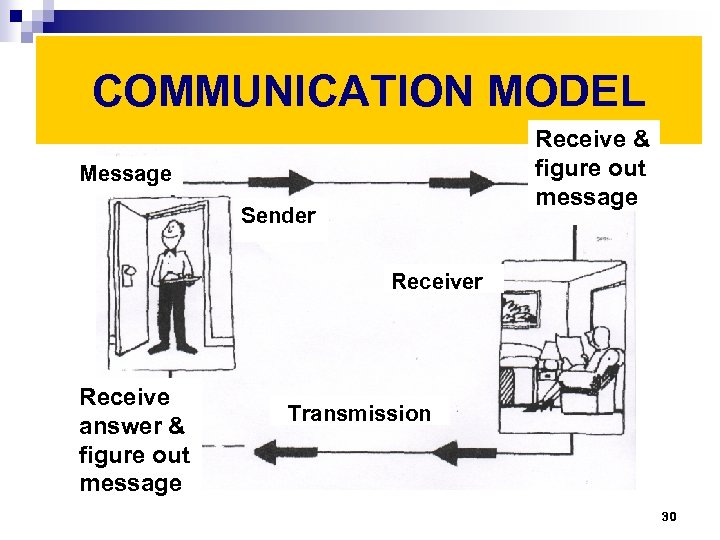 COMMUNICATION MODEL Receive & figure out message Message Sender Receive answer & figure out message Transmission 30
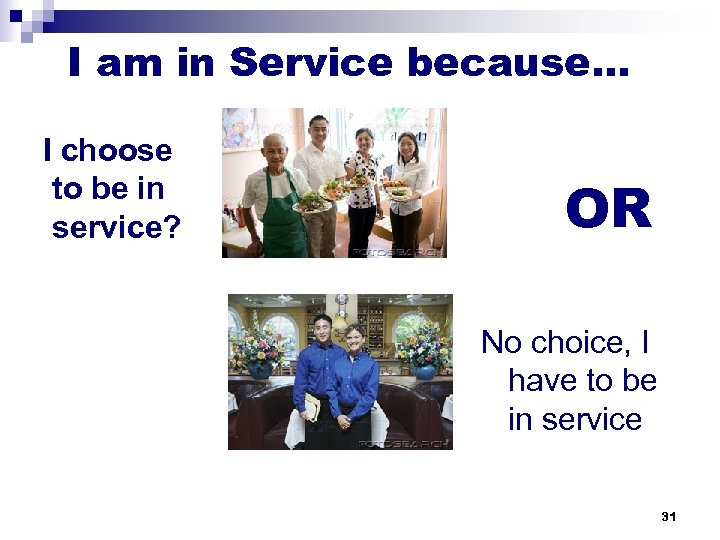 I am in Service because… I choose to be in service? OR No choice, I have to be in service 31
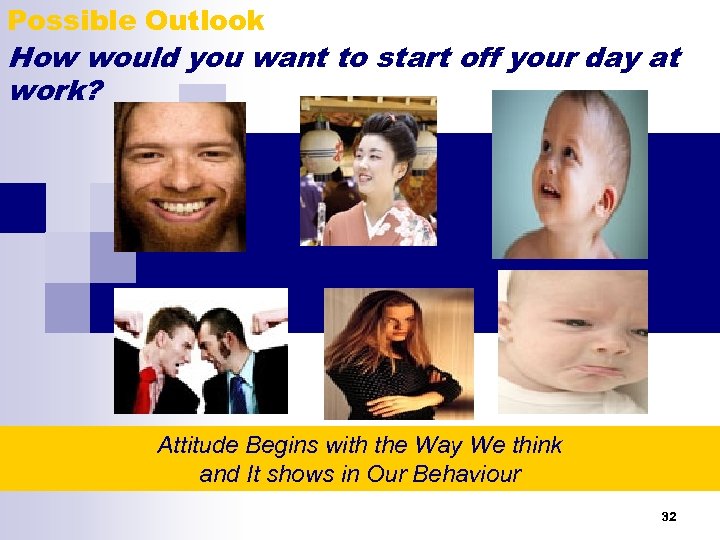 Possible Outlook How would you want to start off your day at work? Attitude Begins with the Way We think and It shows in Our Behaviour 32
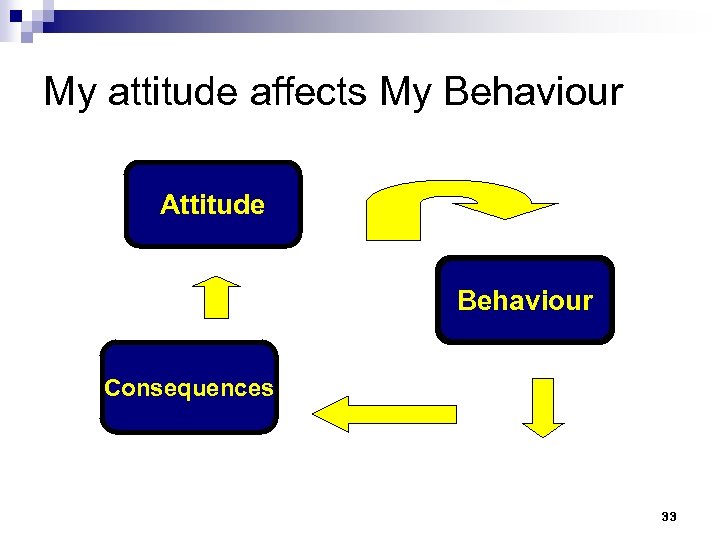 My attitude affects My Behaviour Attitude Behaviour Consequences 33
 Consequences : What happen if I DO NOT provide good service? n Customers will not come back n Company lose customers n Less profits n How does it affect me?
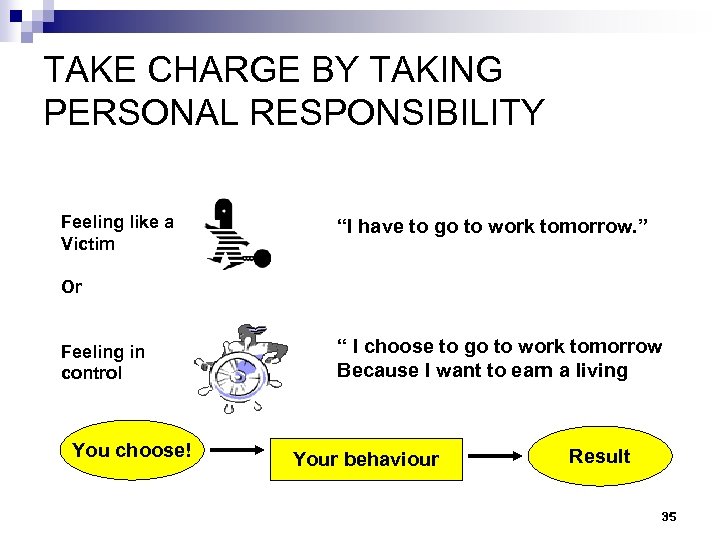 TAKE CHARGE BY TAKING PERSONAL RESPONSIBILITY Feeling like a Victim “I have to go to work tomorrow. ” Or Feeling in control You choose! “ I choose to go to work tomorrow Because I want to earn a living Your behaviour Result 35
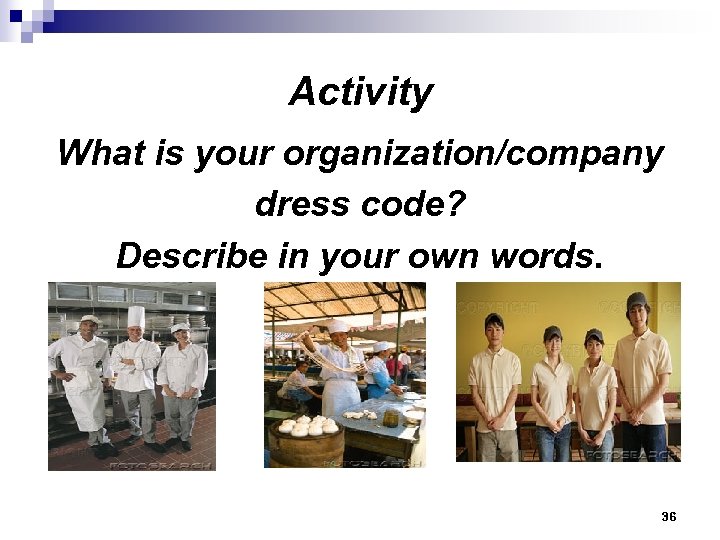 Activity What is your organization/company dress code? Describe in your own words. 36
 CE 2 – Provide Quality Service 37
 Learning Objective 2. 1 Make contact with guests 2. 2 Respond promptly and accurately to guests’ requests 2. 3 Demonstrate positive behaviours to customers 2. 4 Recognise and take advantage of opportunities to provide additional products and services 38
 Moment of Truth In customer service, instance of contact or interaction between a CUSTOMER and a firm (through a product, PERSONNEL, or visit) that gives the customer an opportunity to form (or change) an IMPRESSION about the firm. 39
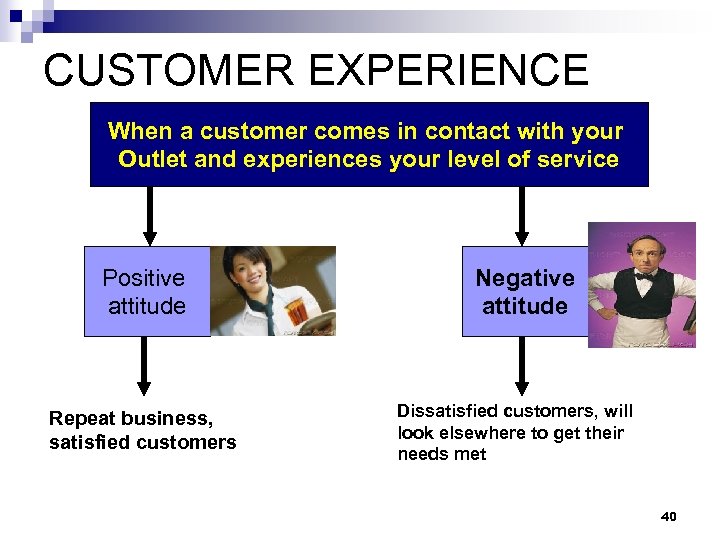 CUSTOMER EXPERIENCE When a customer comes in contact with your Outlet and experiences your level of service Positive attitude Repeat business, satisfied customers Negative attitude Dissatisfied customers, will look elsewhere to get their needs met 40
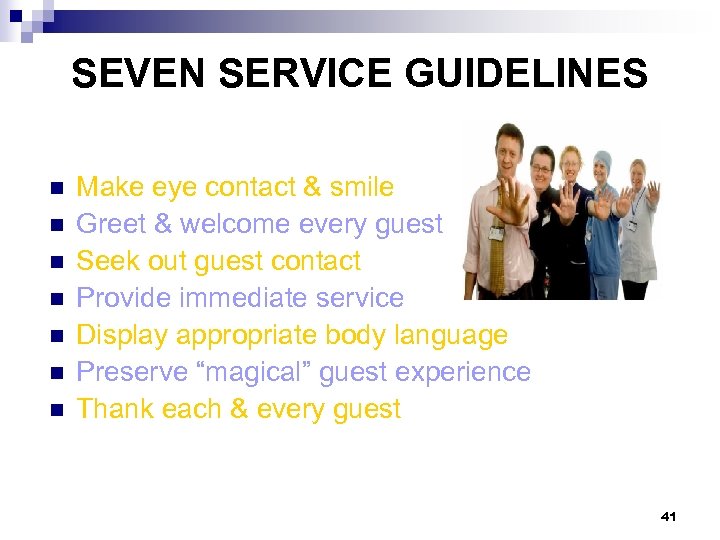 SEVEN SERVICE GUIDELINES n n n n Make eye contact & smile Greet & welcome every guest Seek out guest contact Provide immediate service Display appropriate body language Preserve “magical” guest experience Thank each & every guest 41
 FACTORS OF CUSTOMER NEEDS AND EXPECTIONS n n n n Cultural – language/beliefs/dietary/multiracial Socio-economic – income/spending ability Health – disability/dietary Time – lunch/business/social Age – elderly/teens Personality/mood – extrovert/introvert Areas of interest - themes 42
 CUSTOMER'S EXPECTATIONS Feel welcomed and respected n Be dealt with in a friendly, efficient and courteous manner n Receive help and assistance n Be in clean, comfortable surroundings n Feel recognised and remembered n Be listened to and understood n 43
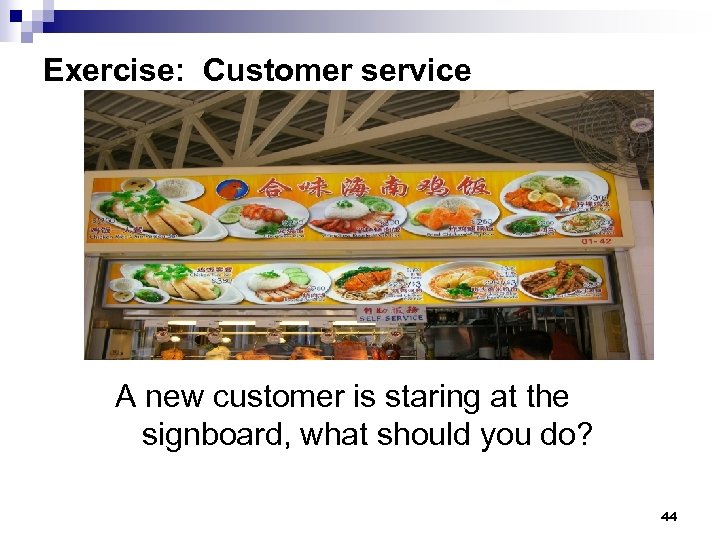 Exercise: Customer service A new customer is staring at the signboard, what should you do? 44
 SELLING TECHNIQUES n Passive selling – merchandise/display n Suggestive selling - verbal n Direct selling - menu n Win-win selling – benefits/service 45
 Activity Group Discussion Why is personal grooming important in service? What are good grooming standards? What is quality service in your view? How can it help in your business? Why is suggestive selling important? 46
 CE 3 – Address Concerns 47
 Learning Objective 3. 1 Identify concerns or problem 3. 2 Convey positive attitude to guests 3. 3 Take action to minimize guests’ dissatisfaction 3. 4 Report or document concerns 48
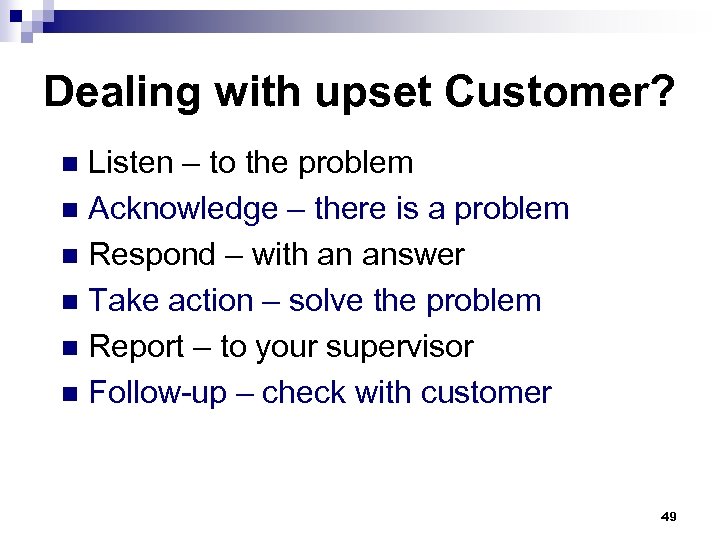 Dealing with upset Customer? Listen – to the problem n Acknowledge – there is a problem n Respond – with an answer n Take action – solve the problem n Report – to your supervisor n Follow-up – check with customer n 49
 Group discussion What if customer do NOT complain and just walk away? What will happen later? If customers give you feedback, what should you said to them? 50
 Exercise Reduce tension between you and customer by… 1. a) blocking out what the customer is saying b) trying to show the customer that he or she is wrong c) allowing the customer to talk 51
 Exercise 2. When a customer is yelling at you, it is best to… a) wait patiently until the yelling ends b) present your argument c) show you are upset 52
 Exercise When the customer asks you what are you going to do about the problem, respond by… a) asking your co-worker to handle it b) pointing out that you are not responsible for that area c) talk to your supervisor about your ideas in solving the problem 3. 53
 Exercise 4. A customer becomes very abusive and uses obscene language. You should … a) try to talk sense with him or her b) get your supervisor or manager c) get another co-worker to handle the situation 54
 Exercise One of your customers continues to yell at you after you have attempted to resolve his or her problem. You should… 5. a) allow it to continue, hoping he or she will run out of steam b) report it to your supervisor c) call security to have him or her removed 55
 6. A customer come to your stall shouting loudly. a. You bring customer to a quiet corner to talk to her b. You let the customer carry on shouting c. You shout back at the customer 56
 Summary - Q&A Pre-Assessment Checklist Course Evaluation MCQ 57