 Скачать презентацию Inter-regional dialog between history and contemporary houses -Resource
cfec651c361befe1fd6d7cd461120112.ppt
- Количество слайдов: 35



Inter-regional dialog between history and contemporary houses -Resource and Disaster. Hideyuki KOBAYASHI, DR. Eng. Research coordinator for housing information system, Resarch center for advanced information technology Ministry of land infrastructure management
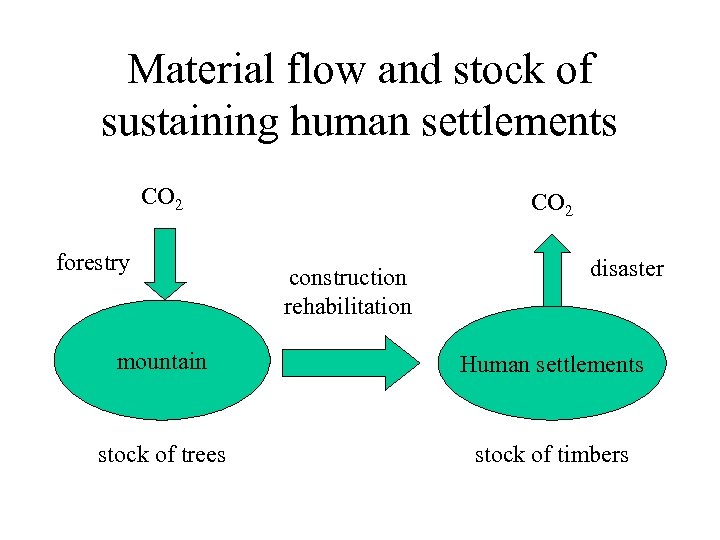
Material flow and stock of sustaining human settlements CO 2 forestry CO 2 construction rehabilitation disaster mountain Human settlements stock of trees stock of timbers
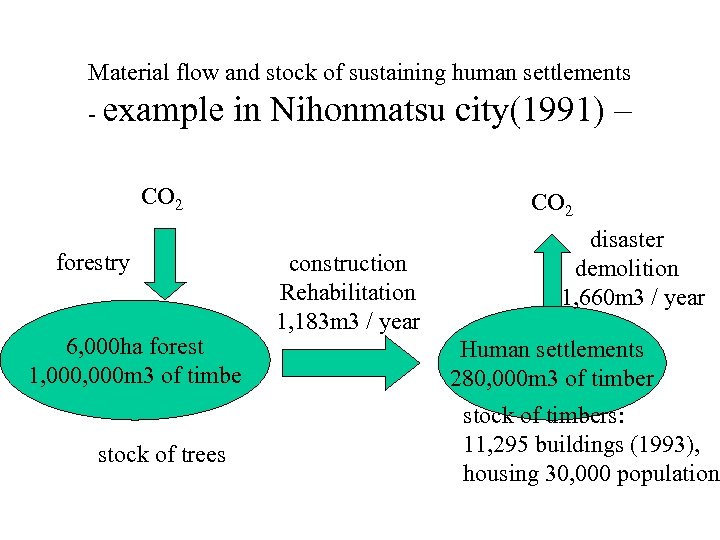
Material flow and stock of sustaining human settlements - example in Nihonmatsu city(1991) – CO 2 forestry 6, 000 ha forest 1, 000 m 3 of timbe stock of trees CO 2 construction Rehabilitation 1, 183 m 3 / year disaster demolition 1, 660 m 3 / year Human settlements 280, 000 m 3 of timber stock of timbers: 11, 295 buildings (1993), housing 30, 000 population
History of disasters : Nihonmatsu-Japan • Until 1918 : frequently burned by big fire (interval : 20 years in average) • After 1918 : modernized fire services and instroduction of fire resistant material (clay wall, and rooftile) preventedn the wide spread of fire.
History of disasters : Japan general • In most cities in Japan, big fire stopped. However, the quite diverse in times: • Earlist cases : several historical cities, like Nara, Imai (early 17 th century) • Latest cases : some cities are famous of urban big fire in modern times : Hakodate (1909), Iida(1947), Tottori(1952), Sakata(1976), etc. • Less frequent earthquakes were usually followed by big fires, causing large number of victims.
Approaches for disaster prevention • Fire proof houses (clay wall, rooftile) • Water channel and fire services (located at the center of streets, until mobil traffic required to cover them) • Spatial arrangement (width of streets, arrangement of greenery)
Modernization • • • Timber brace, metal joint From strengthening to pure truss structure Hiding structural members behind walls Prefabrication, and industrialization Increase of man-poser cost, relatively decreasing material cost => change of low cost solution
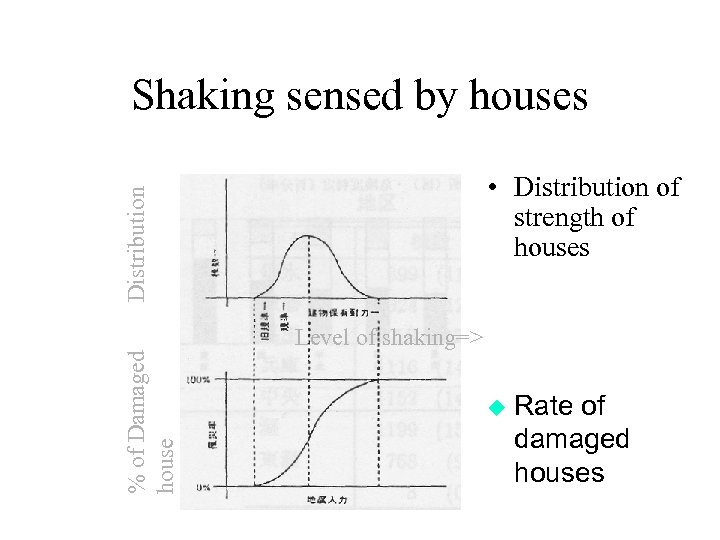
Shaking sensed by houses Distribution • Distribution of strength of houses % of Damaged house Level of shaking=> u Rate of damaged houses
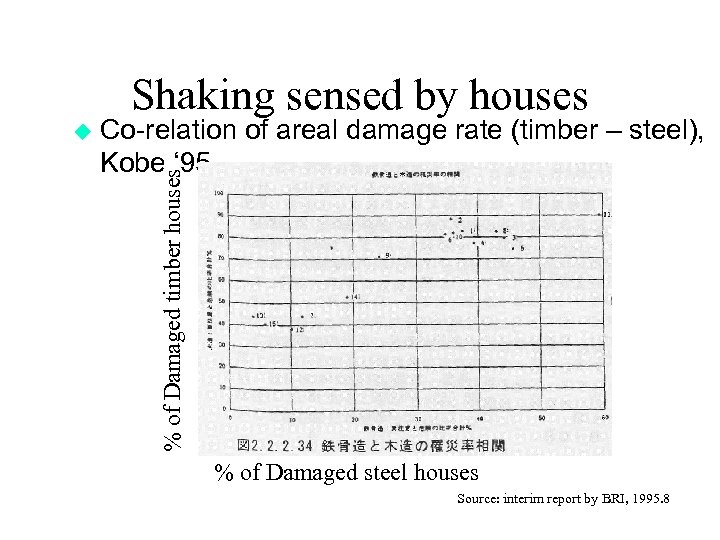
Shaking sensed by houses Co-relation of areal damage rate (timber – steel), Kobe ‘ 95 % of Damaged timber houses u Level of shaking=> % of Damaged steel houses Source: interim report by BRI, 1995. 8
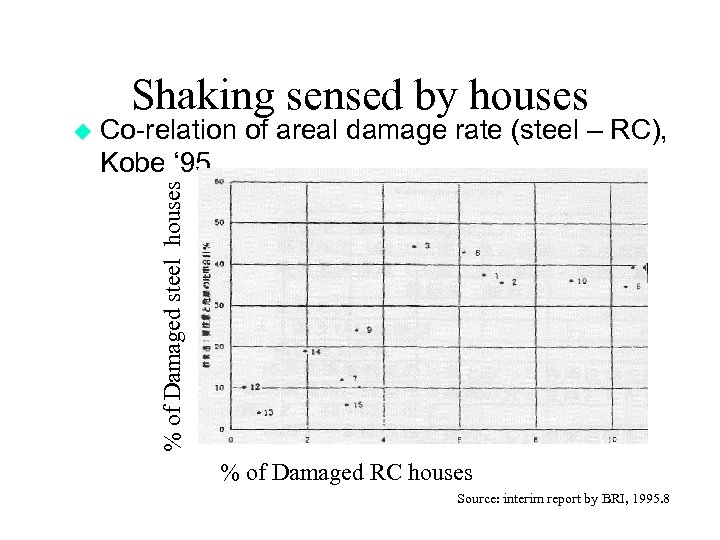
Shaking sensed by houses Co-relation of areal damage rate (steel – RC), Kobe ‘ 95 % of Damaged steel houses u Level of shaking=> % of Damaged RC houses Source: interim report by BRI, 1995. 8
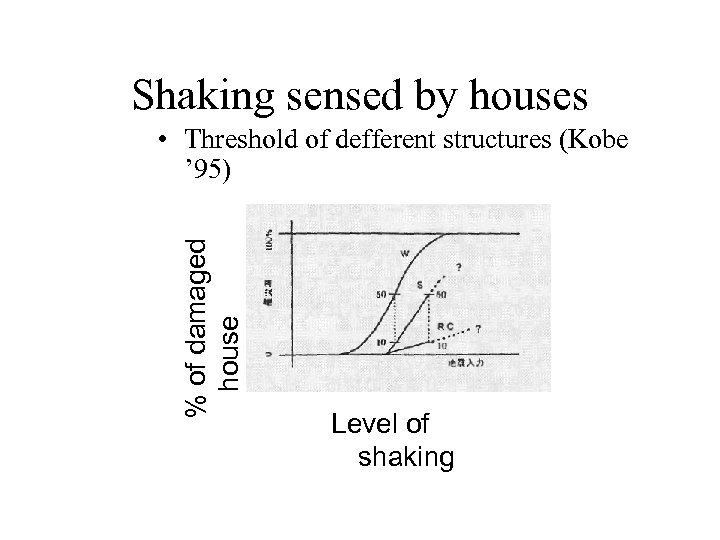
Shaking sensed by houses % of damaged house • Threshold of defferent structures (Kobe ’ 95) Level of shaking=> Level of shaking
Engineering approach: • Design, only considering elements which can be calculated (neglecting traditional elements which are difficult to calculate/explain) • Extension of elements which can be calculated, with more advanced computing capacity (evaluating traditional elements as far as possible)
Traditional & empirical approach: • Over-adaptation, in re-constrcution after damage (similar to rehabilitation of injured human body) • Wholistic way of thinking • Forgetting past disasters in normal reconstruction (if 60 years < interval) • Next disaster will attack after previous one is forgotten
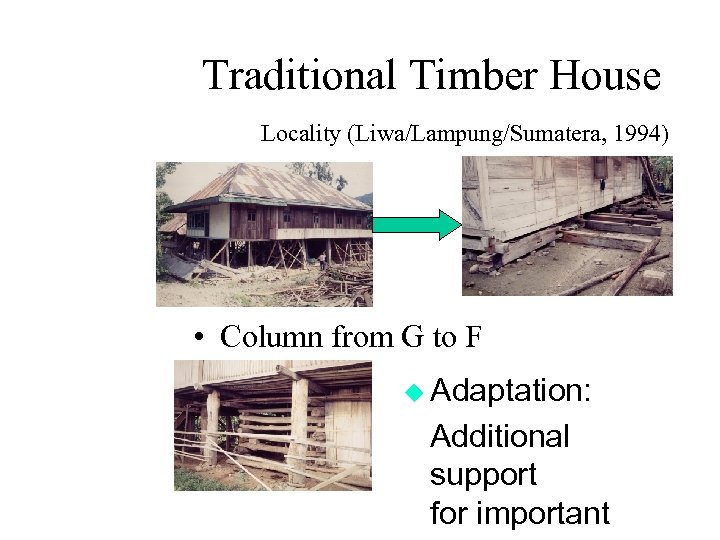
Traditional Timber House Locality (Liwa/Lampung/Sumatera, 1994) • Column from G to F u Adaptation: Additional support for important
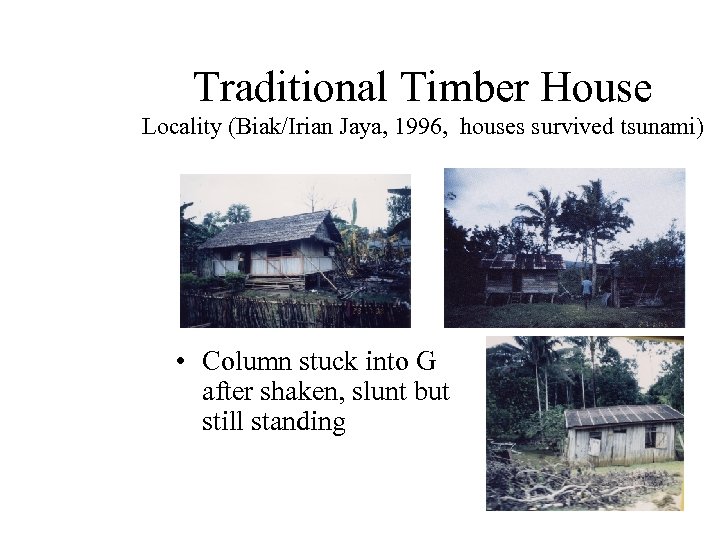
Traditional Timber House Locality (Biak/Irian Jaya, 1996, houses survived tsunami) • Column stuck into G after shaken, slunt but still standing
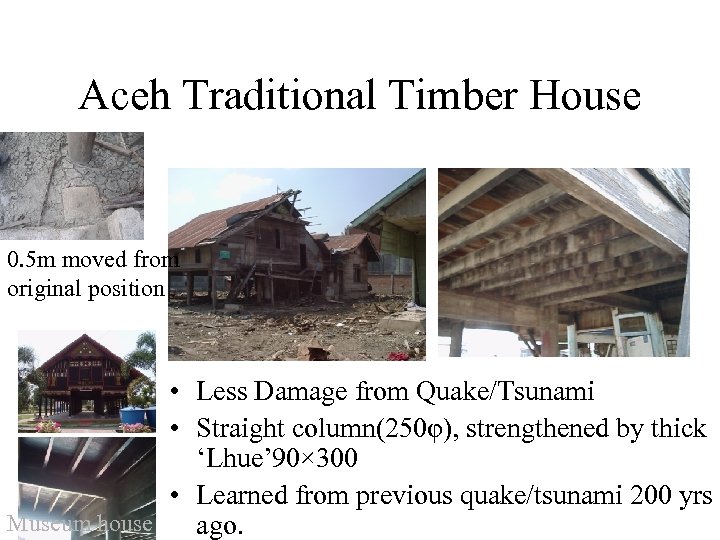
Aceh Traditional Timber House 0. 5 m moved from original position • Less Damage from Quake/Tsunami • Straight column(250φ), strengthened by thick ‘Lhue’ 90× 300 • Learned from previous quake/tsunami 200 yrs Museum house ago.
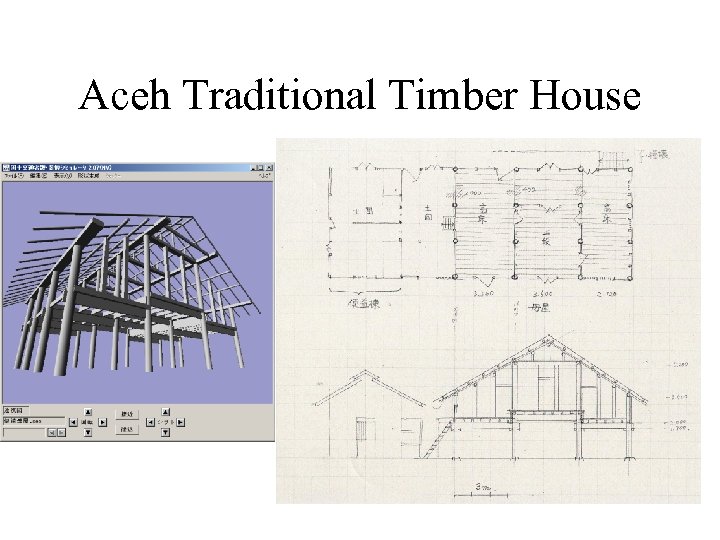
Aceh Traditional Timber House
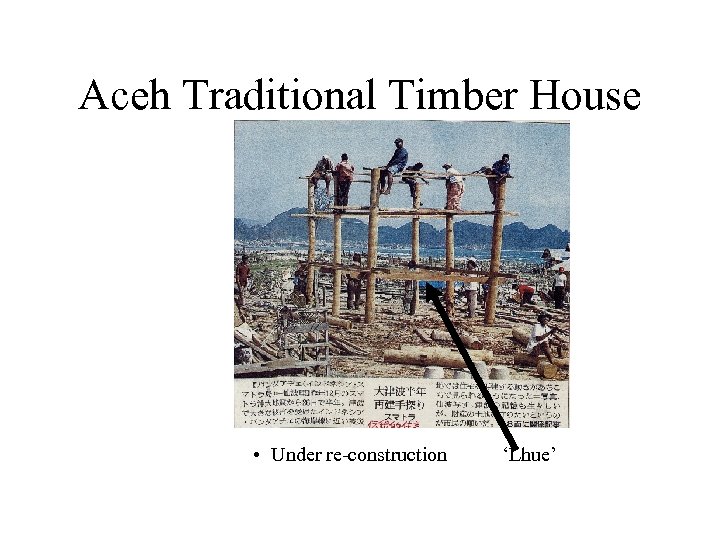
Aceh Traditional Timber House • Under re-construction ‘Lhue’
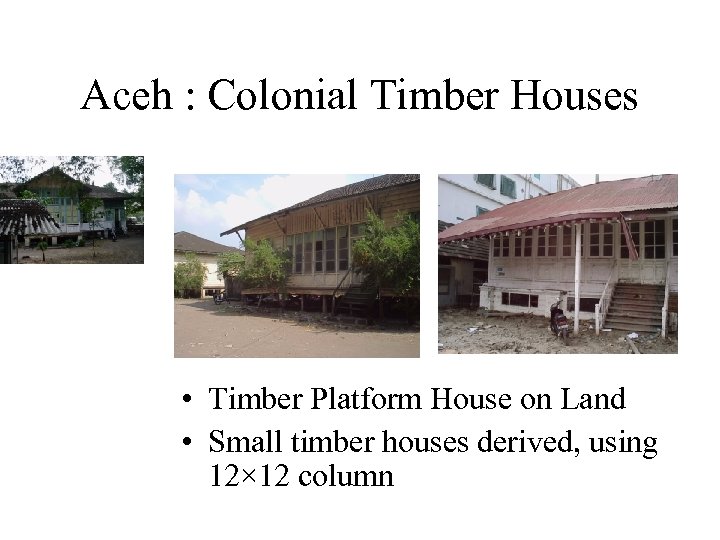
Aceh : Colonial Timber Houses • Timber Platform House on Land • Small timber houses derived, using 12× 12 column
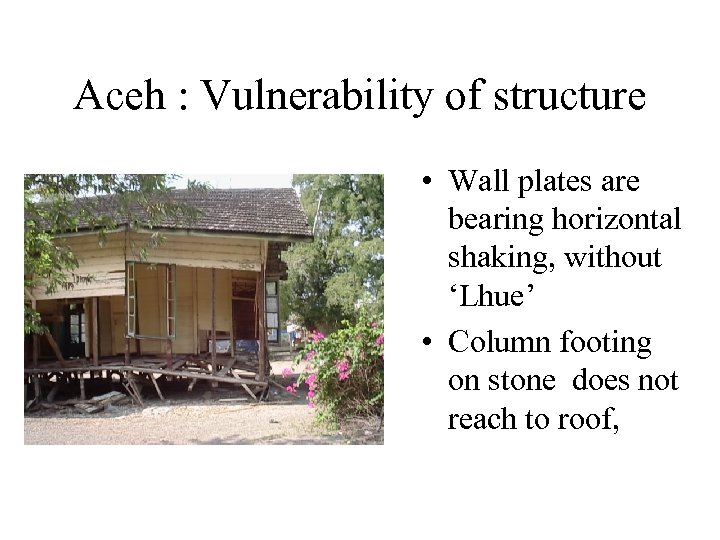
Aceh : Vulnerability of structure • Wall plates are bearing horizontal shaking, without ‘Lhue’ • Column footing on stone does not reach to roof,
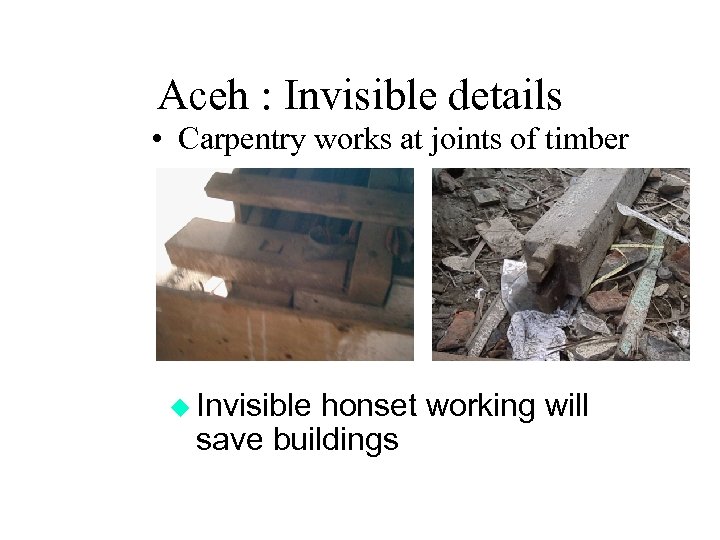
Aceh : Invisible details • Carpentry works at joints of timber u Invisible honset working will save buildings
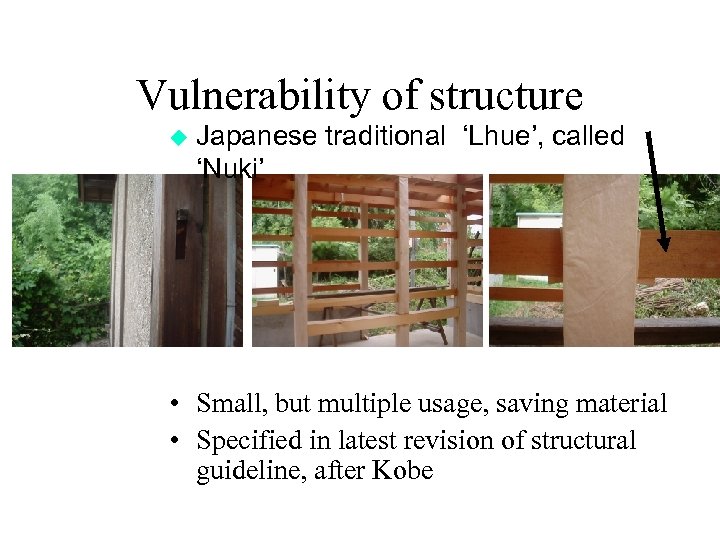
Vulnerability of structure u Japanese traditional ‘Lhue’, called ‘Nuki’ • Small, but multiple usage, saving material • Specified in latest revision of structural guideline, after Kobe
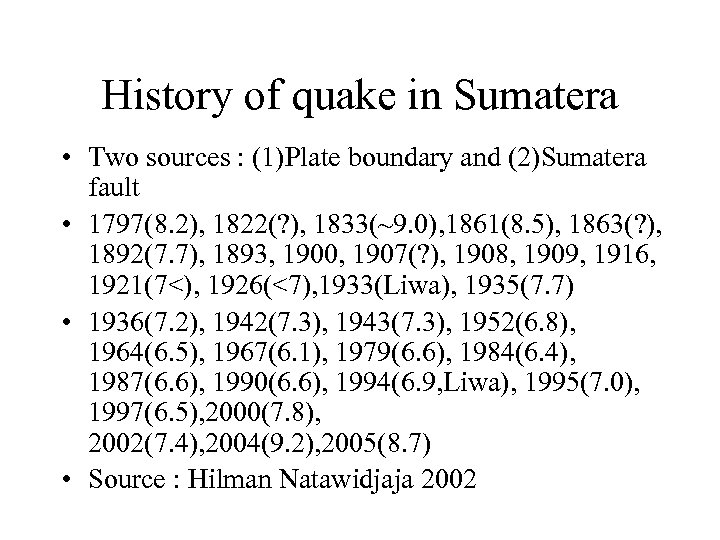
History of quake in Sumatera • Two sources : (1)Plate boundary and (2)Sumatera fault • 1797(8. 2), 1822(? ), 1833(~9. 0), 1861(8. 5), 1863(? ), 1892(7. 7), 1893, 1900, 1907(? ), 1908, 1909, 1916, 1921(7<), 1926(<7), 1933(Liwa), 1935(7. 7) • 1936(7. 2), 1942(7. 3), 1943(7. 3), 1952(6. 8), 1964(6. 5), 1967(6. 1), 1979(6. 6), 1984(6. 4), 1987(6. 6), 1990(6. 6), 1994(6. 9, Liwa), 1995(7. 0), 1997(6. 5), 2000(7. 8), 2002(7. 4), 2004(9. 2), 2005(8. 7) • Source : Hilman Natawidjaja 2002
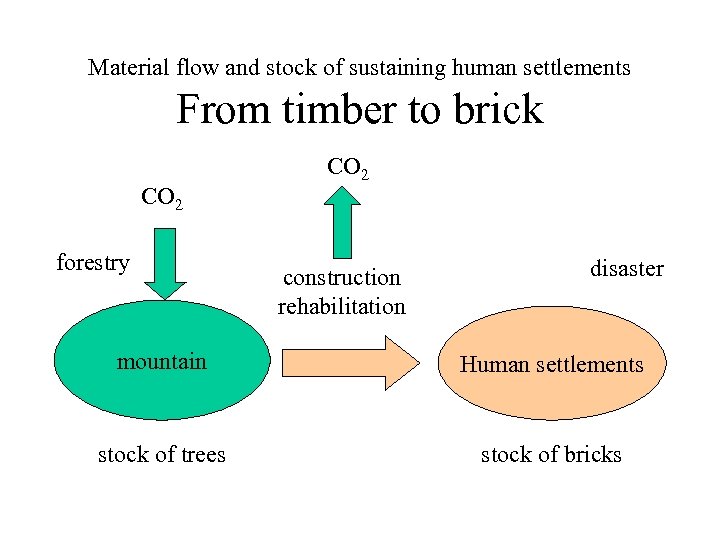
Material flow and stock of sustaining human settlements From timber to brick CO 2 forestry CO 2 construction rehabilitation disaster mountain Human settlements stock of trees stock of bricks
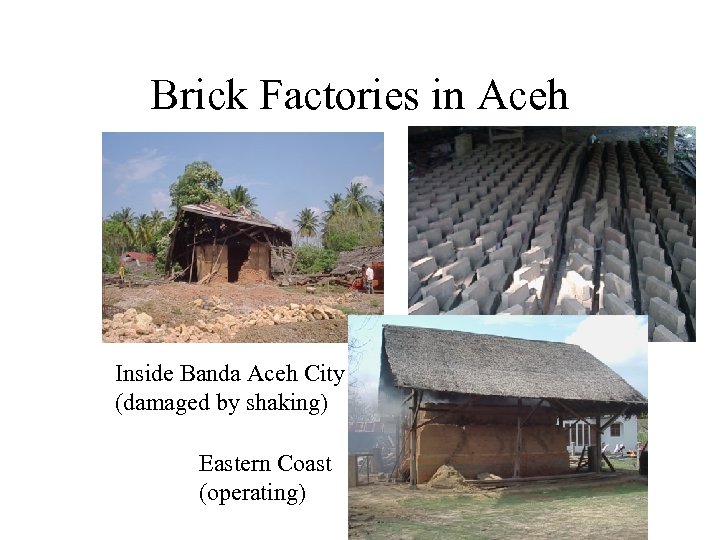
Brick Factories in Aceh Inside Banda Aceh City (damaged by shaking) Eastern Coast (operating)
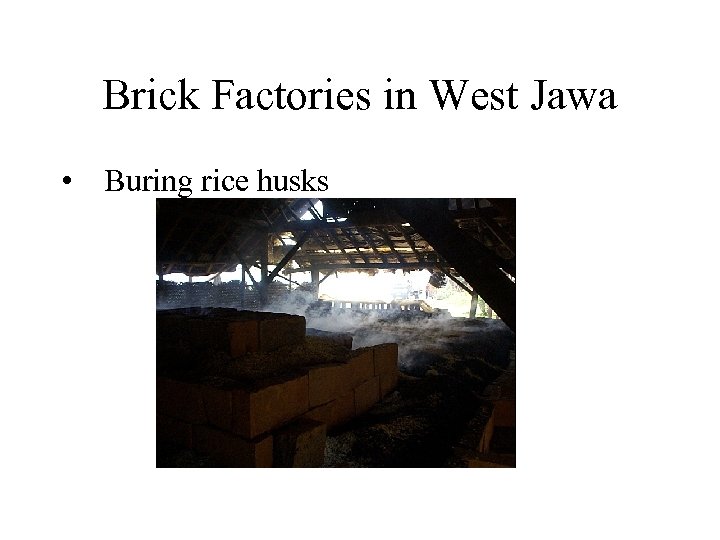
Brick Factories in West Jawa • Buring rice husks
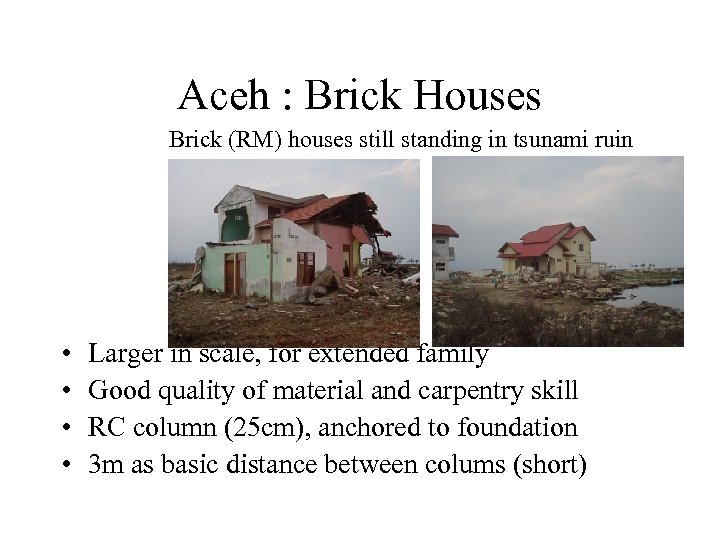
Aceh : Brick Houses Brick (RM) houses still standing in tsunami ruin • • Larger in scale, for extended family Good quality of material and carpentry skill RC column (25 cm), anchored to foundation 3 m as basic distance between colums (short)
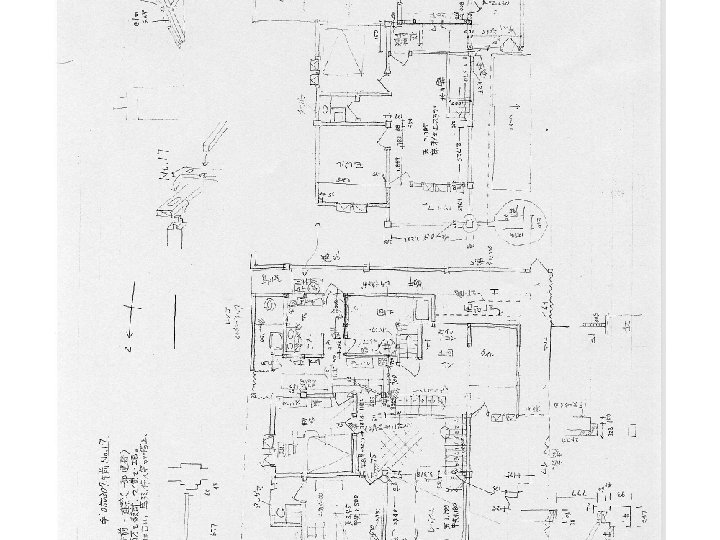
Aceh : Brick House (sample)
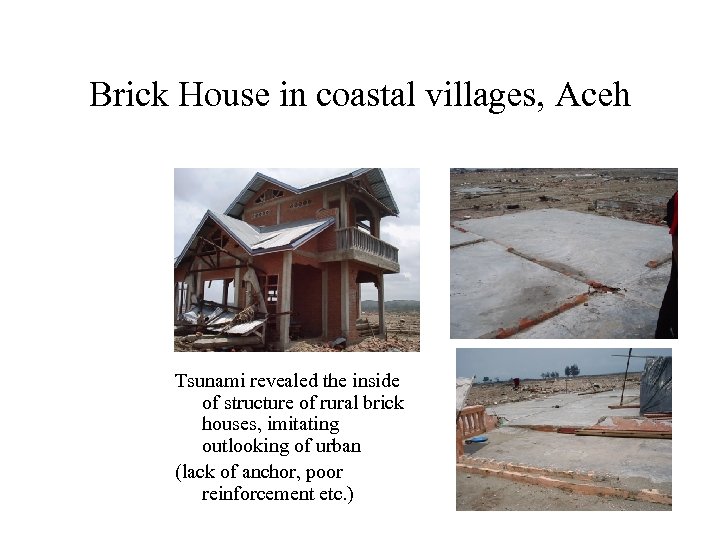
Brick House in coastal villages, Aceh Tsunami revealed the inside of structure of rural brick houses, imitating outlooking of urban (lack of anchor, poor reinforcement etc. )
Strengthening new brick structure • Usage of re-inforced frame, anchored (250 < diameter) • Appropriate % of cement for bonding (1: 3) These have been long disseminated, however sttel bar and cement are determinant items for total construction cost and they tend to reduce.
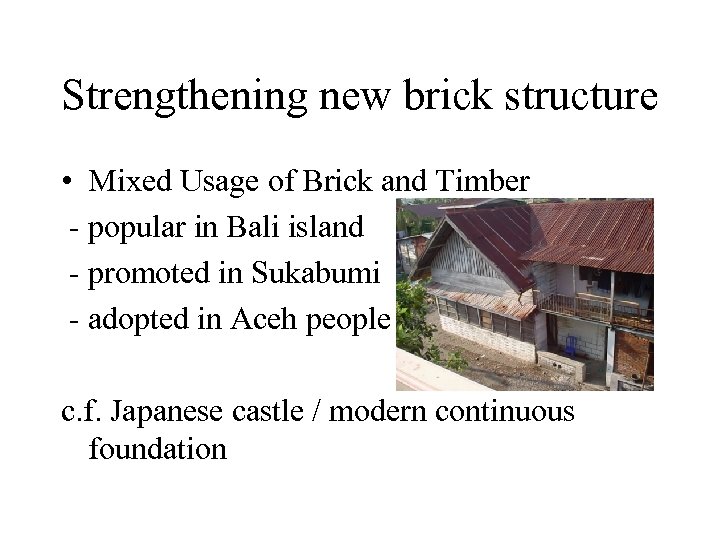
Strengthening new brick structure • Mixed Usage of Brick and Timber - popular in Bali island - promoted in Sukabumi - adopted in Aceh people c. f. Japanese castle / modern continuous foundation
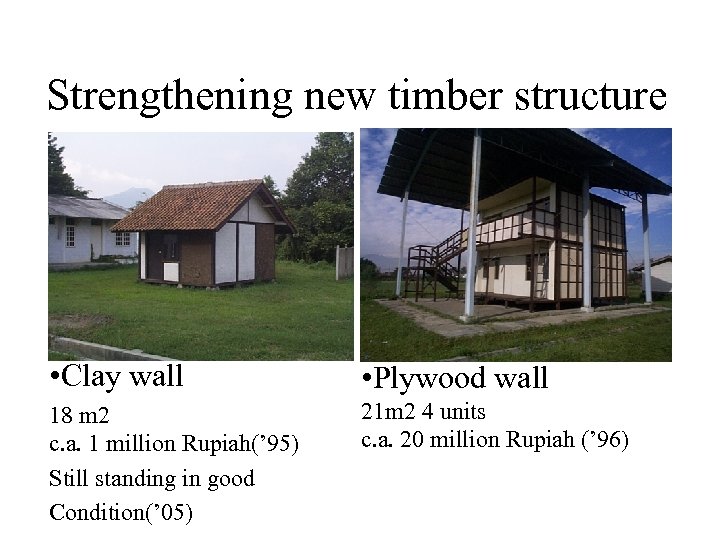
Strengthening new timber structure • Clay wall • Plywood wall 18 m 2 c. a. 1 million Rupiah(’ 95) Still standing in good Condition(’ 05) 21 m 2 4 units c. a. 20 million Rupiah (’ 96)
Strengthening old timber structure • Additional members to regist against horizontal force [Photo : strengthening damaged timber school in Irian Jaya]
Conclusion • Disaster-resistant buildings are needed not only for human safety, but also for global warming issues • Engineering approach (evaluation) to traditional solutions will be worth • Not only contemporary techniques, but also traditional techniques in developed countries are worth to try.
Proposal • Strengthening newly constructed brick/timber houses will be feasible • Strengthening existing timber houses will be feasible • Economical aspect (cost-benefit) of investment for disaster reduction will be studied. - rough estimation for non-engineered house - precise estimation for engineered house, where asset management scheme is applied
Скачать презентацию Inter-regional dialog between history and contemporary houses -Resource
cfec651c361befe1fd6d7cd461120112.ppt