


 Скачать презентацию Inter-comparison of GHG measurement methods Different measurement methods
4d1d10a8bdf7aee87cc13679d68cb41c.ppt
- Количество слайдов: 32
 Inter-comparison of GHG measurement methods “Different measurement methods, different fluxes? ” Petra Kroon (ECN), Dimmie Hendriks (VU), Arina Schrier (WUR)
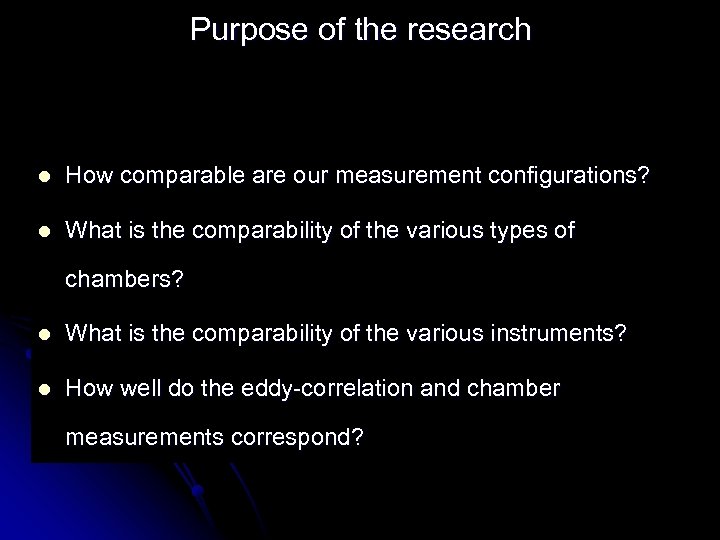 Purpose of the research l How comparable are our measurement configurations? Data collection for: l What is the comparability of the various types of inter-comparisons, up-scaling and modeling chambers? l What is the comparability of the various instruments? l How well do the eddy-correlation and chamber measurements correspond?
 In this talk: 1. Purpose of the research 2. Description of measurement locations, instruments and set-ups 3. Chamber types and their properties 4. Comparing chamber measurements 5. Comparing eddy correlation with chamber measurements 6. Preliminary conclusions
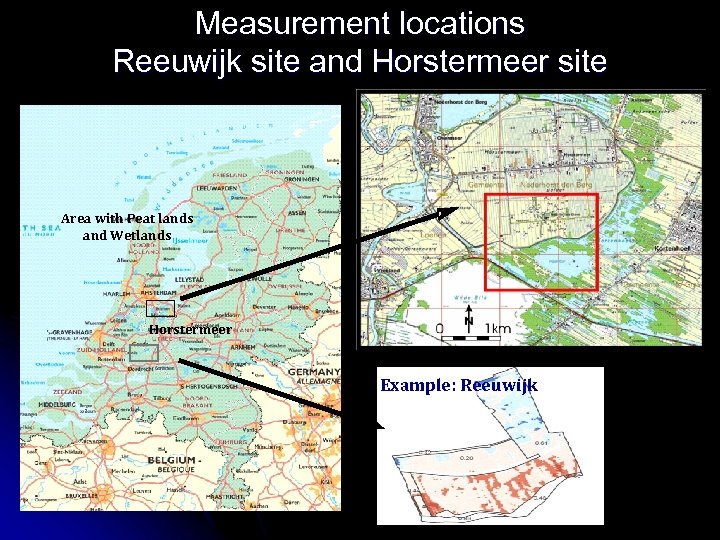 Measurement locations Reeuwijk site and Horstermeer site Area with Peat lands and Wetlands Horstermeer Example: Reeuwijk
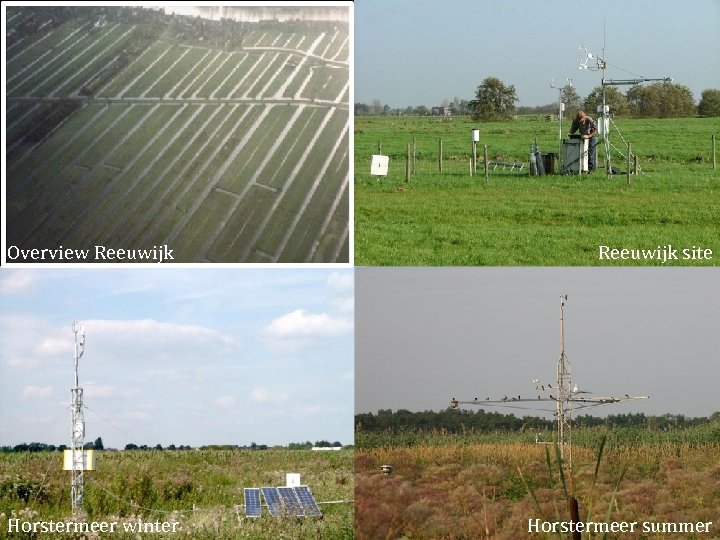 Overview Reeuwijk site Horstermeer winter Horstermeer summer
 Experimental set-up Measurements at Reeuwijk: • 150 measurements taken in 3 days • 7 measurements points • 3 configurations + 1 day comparing static leak free and non leak free Measurements at Horstermeer: • 45 measurements points in 2 days • combining 2 chamber types with 3 instruments
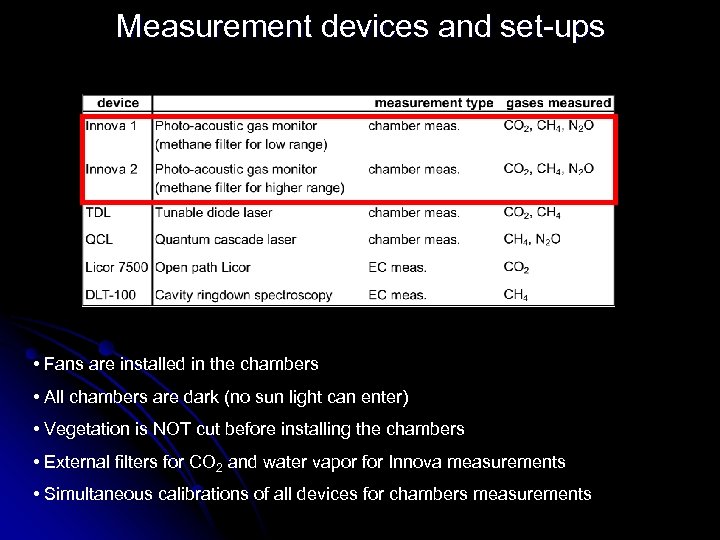 Measurement devices and set-ups • Fans are installed in the chambers • All chambers are dark (no sun light can enter) • Vegetation is NOT cut before installing the chambers • External filters for CO 2 and water vapor for Innova measurements • Simultaneous calibrations of all devices for chambers measurements
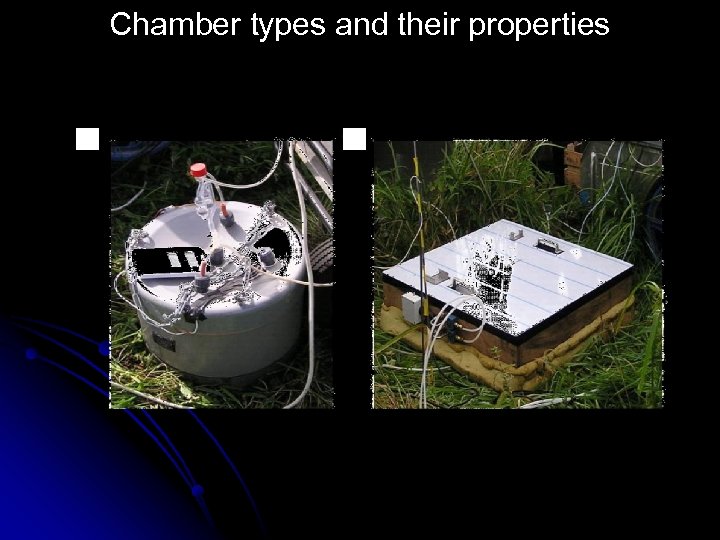 Chamber types and their properties
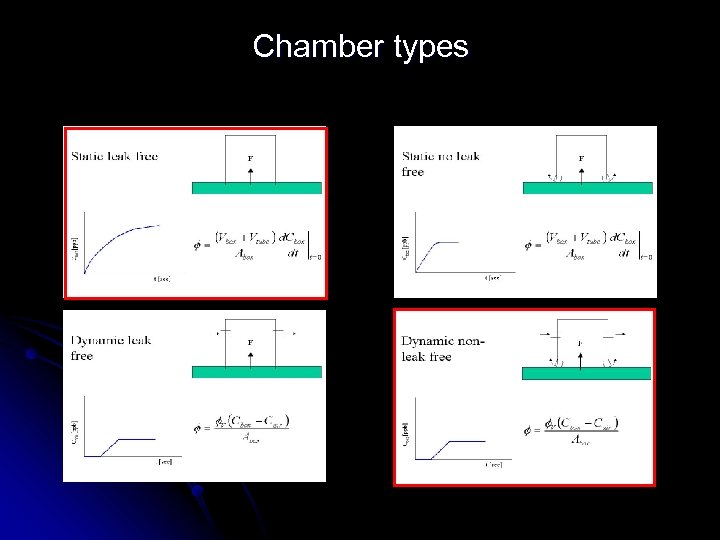 Chamber types
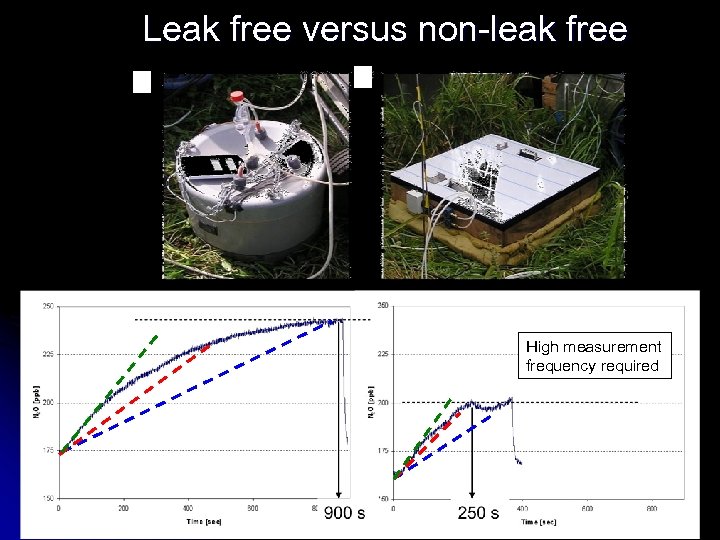 Leak free versus non-leak free High measurement frequency required
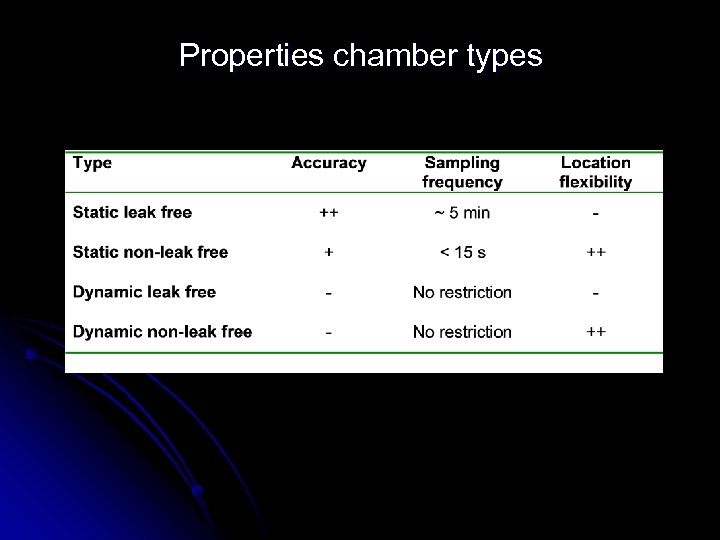 Properties chamber types
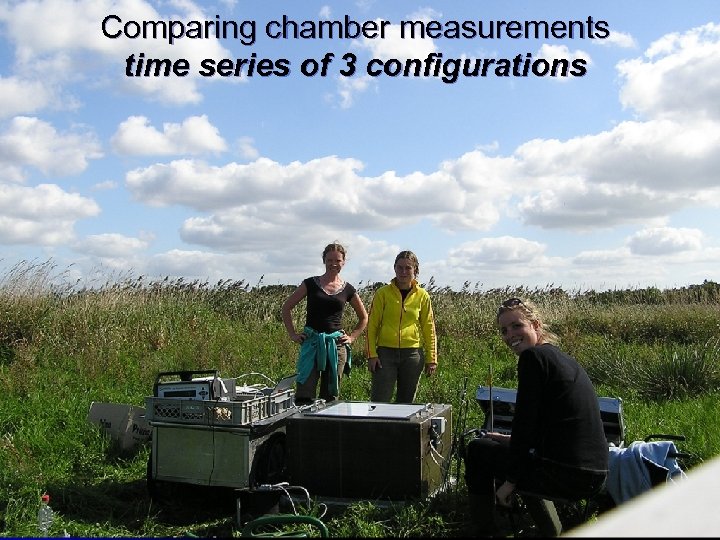 Comparing chamber measurements time series of 3 configurations
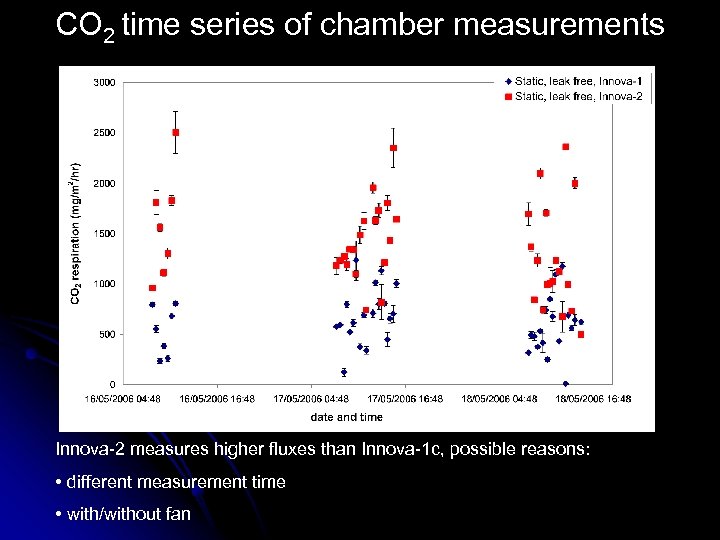 CO 2 time series of chamber measurements Innova-2 measures higher fluxes than Innova-1 c, possible reasons: • different measurement time • with/without fan
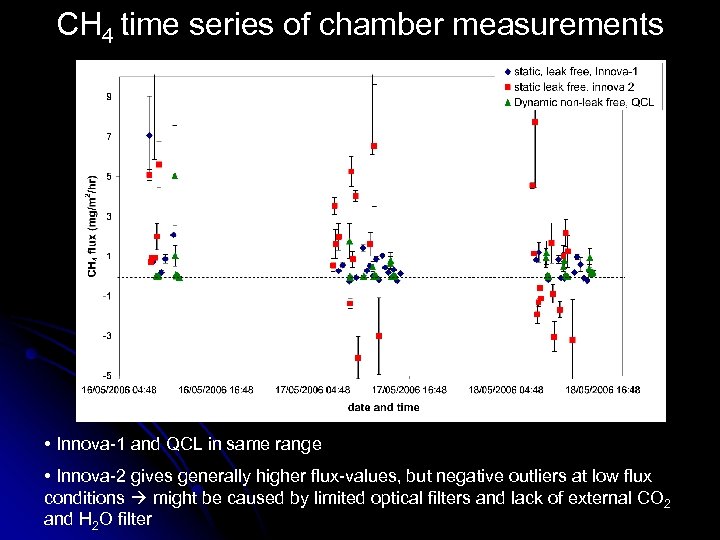 CH 4 time series of chamber measurements • Innova-1 and QCL in same range • Innova-2 gives generally higher flux-values, but negative outliers at low flux conditions might be caused by limited optical filters and lack of external CO 2 and H 2 O filter
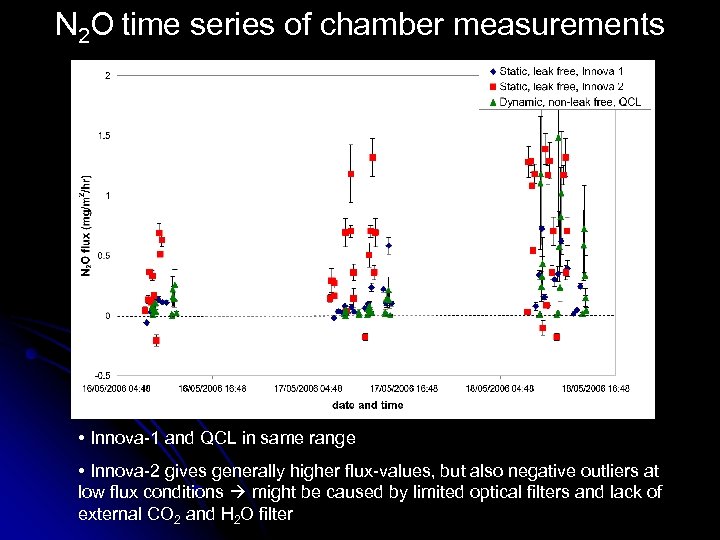 N 2 O time series of chamber measurements • Innova-1 and QCL in same range • Innova-2 gives generally higher flux-values, but also negative outliers at low flux conditions might be caused by limited optical filters and lack of external CO 2 and H 2 O filter
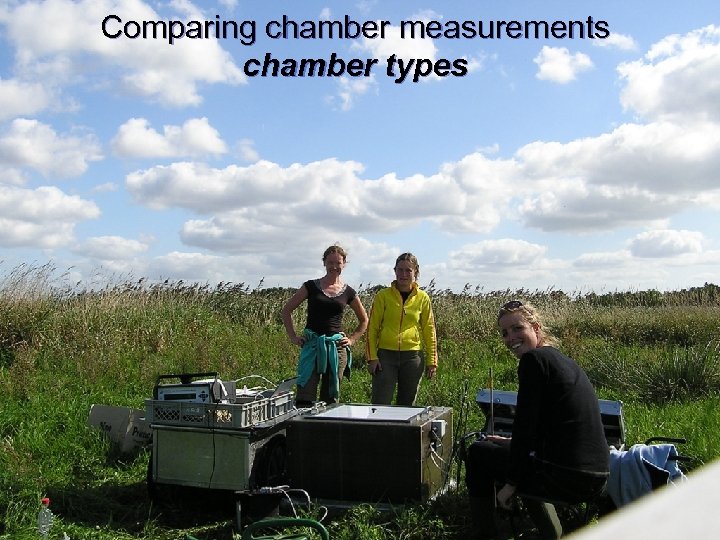 Comparing chamber measurements chamber types
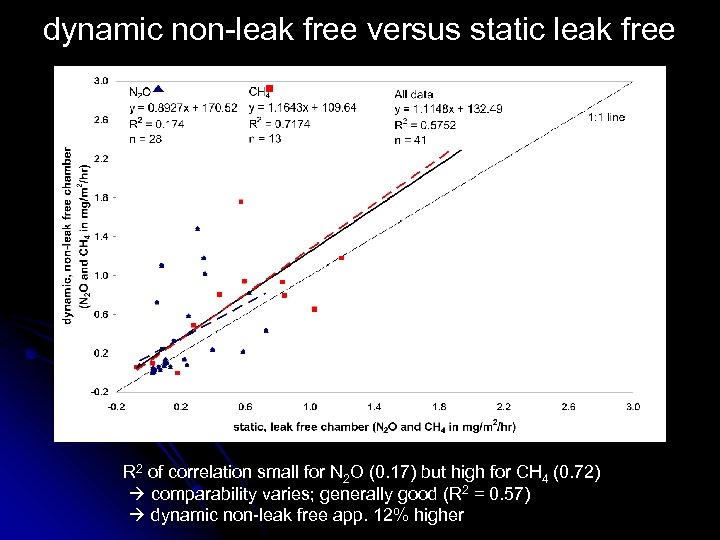 dynamic non-leak free versus static leak free R 2 of correlation small for N 2 O (0. 17) but high for CH 4 (0. 72) comparability varies; generally good (R 2 = 0. 57) dynamic non-leak free app. 12% higher
 Comparing chamber measurements instruments
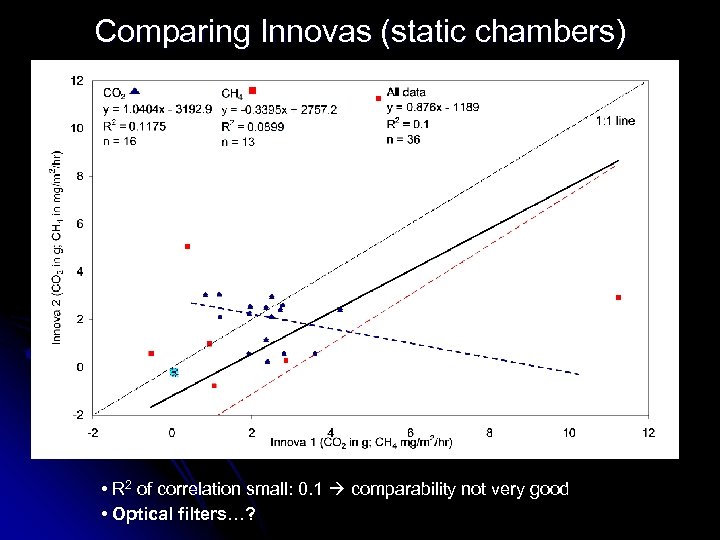 Comparing Innovas (static chambers) • R 2 of correlation small: 0. 1 comparability not very good • Optical filters…?
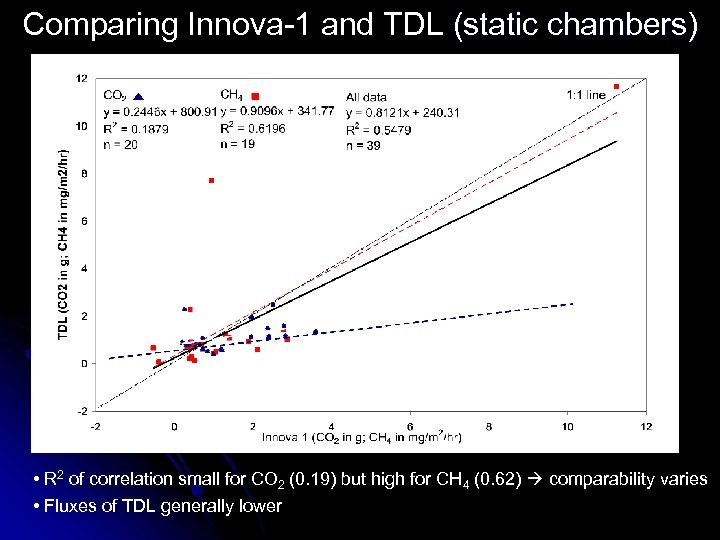 Comparing Innova-1 and TDL (static chambers) • R 2 of correlation small for CO 2 (0. 19) but high for CH 4 (0. 62) comparability varies • Fluxes of TDL generally lower
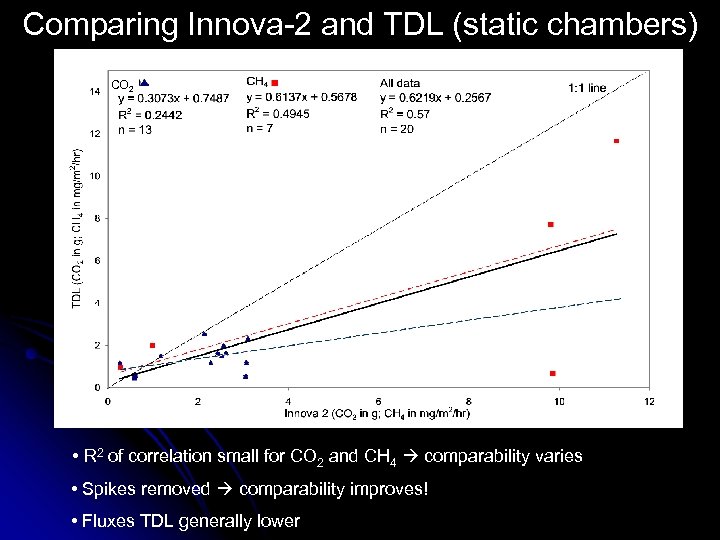 Comparing Innova-2 and TDL (static chambers) CO 2 • R 2 of correlation small for CO 2 and CH 4 comparability varies • Spikes removed comparability improves! • Fluxes TDL generally lower
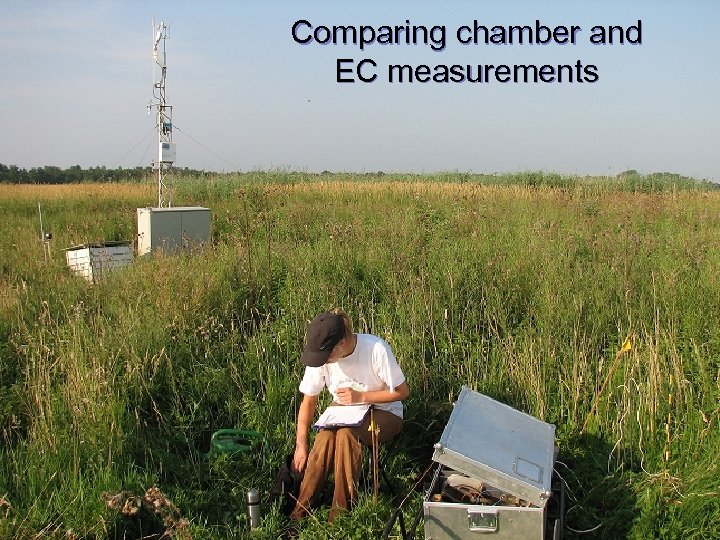 Comparing chamber and EC measurements
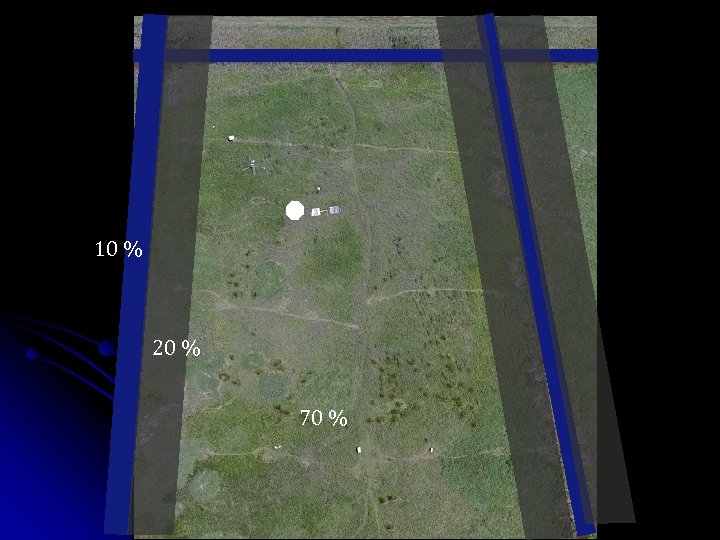 10 % 20 % 70 %
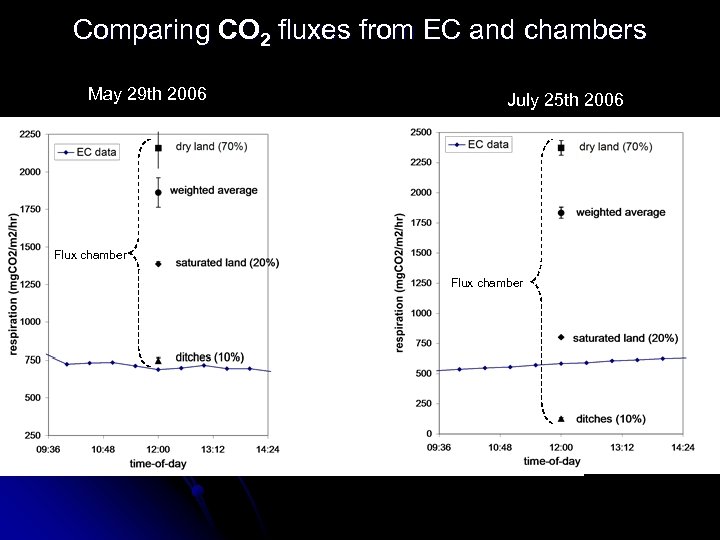 Comparing CO 2 fluxes from EC and chambers May 29 th 2006 July 25 th 2006 Flux chamber
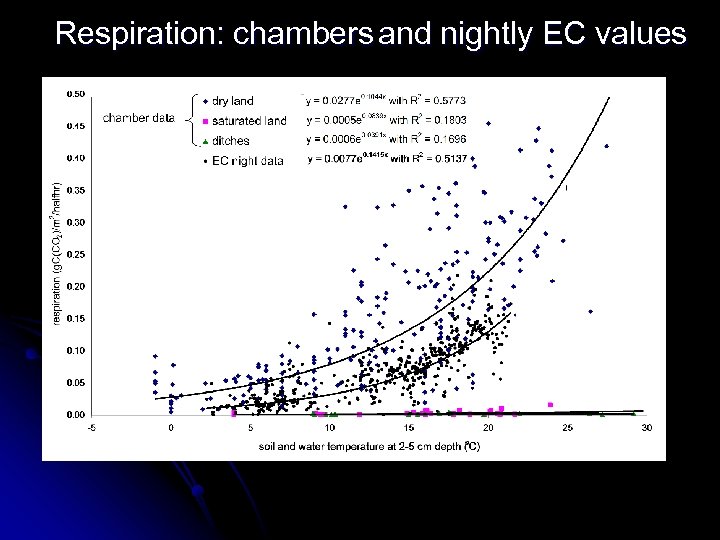 and nightly EC values Respiration: chambers
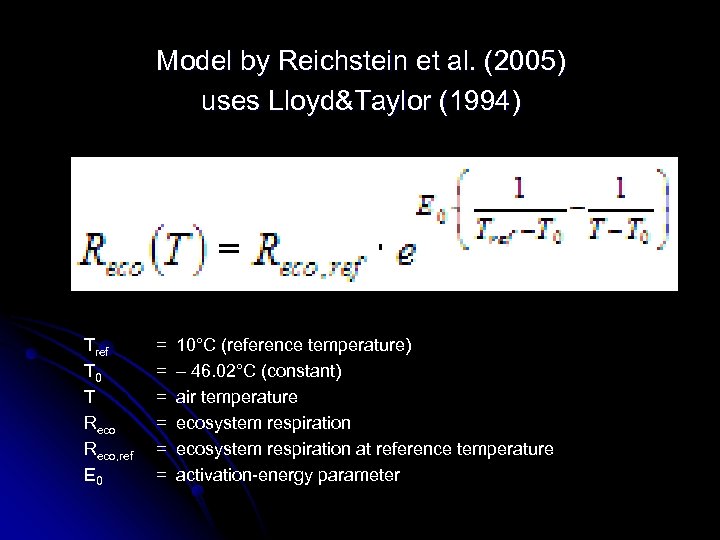 Model by Reichstein et al. (2005) uses Lloyd&Taylor (1994) Tref T 0 T Reco, ref E 0 = 10°C (reference temperature) = – 46. 02°C (constant) = air temperature = ecosystem respiration at reference temperature = activation-energy parameter
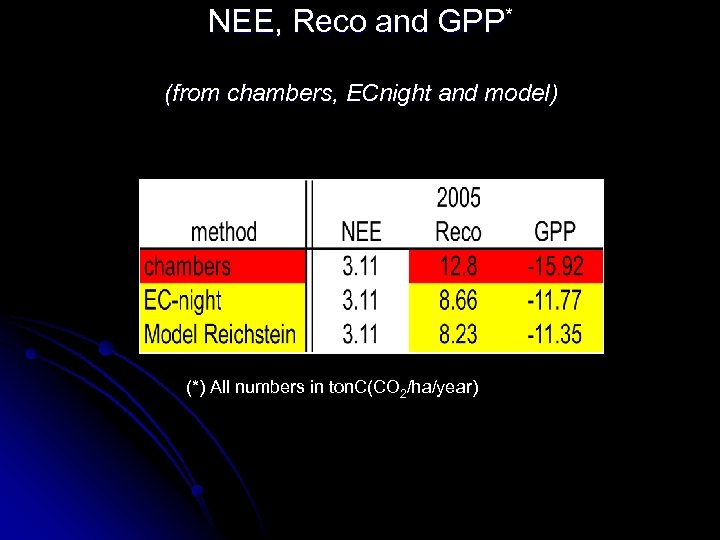 NEE, Reco and GPP* (from chambers, ECnight and model) (*) All numbers in ton. C(CO 2/ha/year)
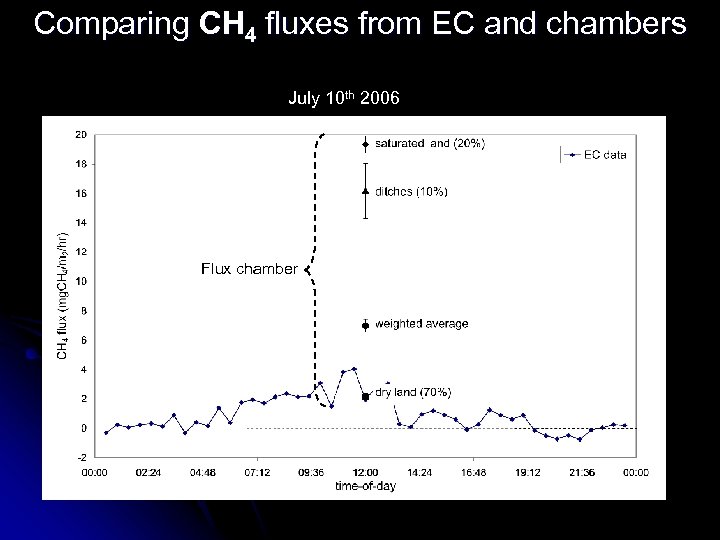 Comparing CH 4 fluxes from EC and chambers July 10 th 2006 Using fast methane analyser (off-axis Integrated Cavity Output Spectroscopy) for eddy correlation measurements Flux chamber
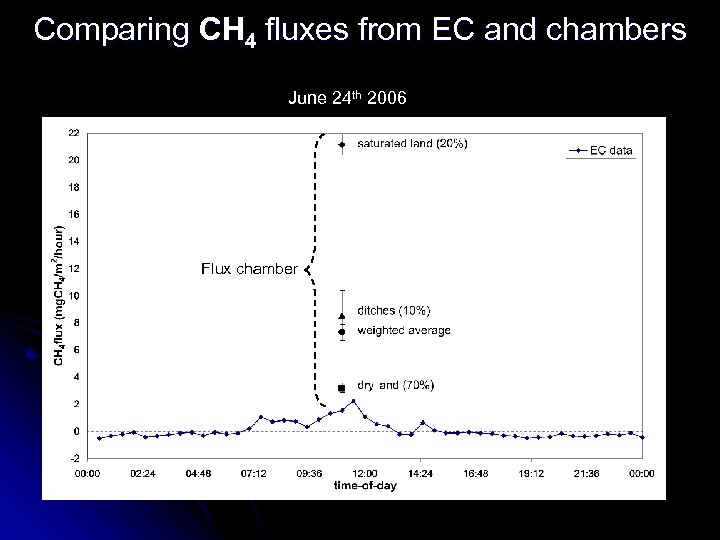 Comparing CH 4 fluxes from EC and chambers June 24 th 2006 Flux chamber
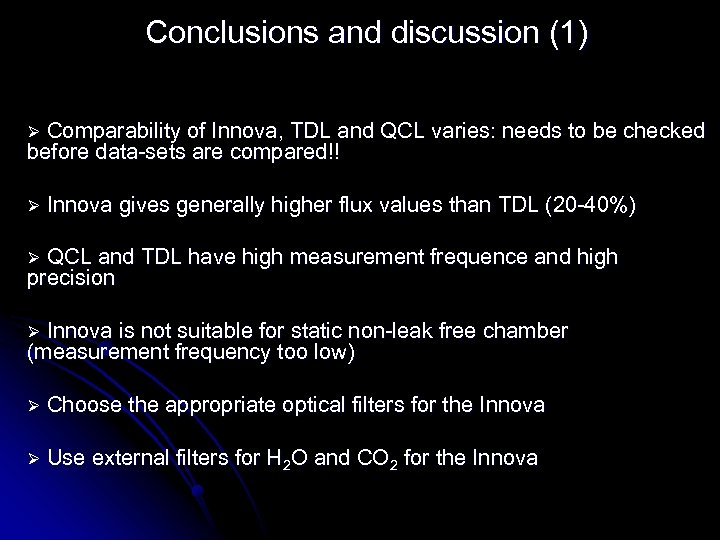 Conclusions and discussion (1) Ø Comparability of Innova, TDL and QCL varies: needs to be checked before data-sets are compared!! Ø Innova gives generally higher flux values than TDL (20 -40%) Ø QCL and TDL have high measurement frequence and high precision Ø Innova is not suitable for static non-leak free chamber (measurement frequency too low) Ø Choose the appropriate optical filters for the Innova Ø Use external filters for H 2 O and CO 2 for the Innova
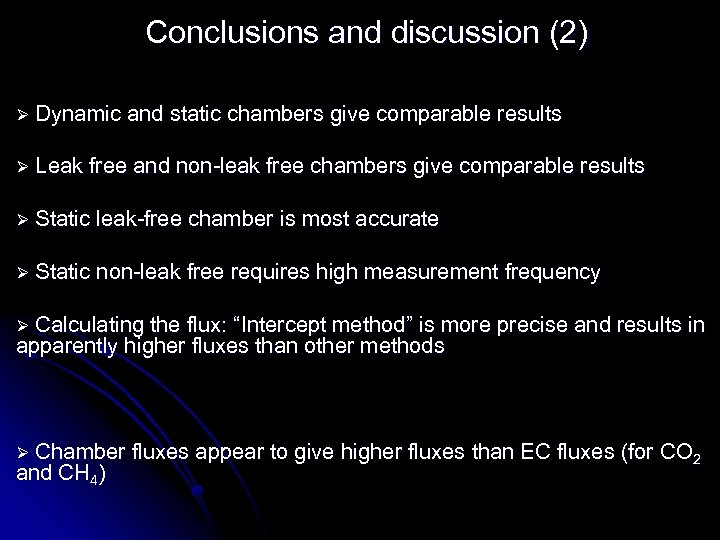 Conclusions and discussion (2) Ø Dynamic and static chambers give comparable results Ø Leak free and non-leak free chambers give comparable results Ø Static leak-free chamber is most accurate Ø Static non-leak free requires high measurement frequency Ø Calculating the flux: “Intercept method” is more precise and results in apparently higher fluxes than other methods Chamber fluxes appear to give higher fluxes than EC fluxes (for CO 2 and CH 4) Ø
 Posters Board 119 l Evaluation of chamber configurations for CH 4 and N 2 O measurements (ECN) l Measuring CH 4 and N 2 O fluxes using quantum cascade laser spectrometry on peat lands (ECN) l Eddy covariance measurements of CH 4 and N 2 O using quantum cascade laser spectrometry (ECN) Board 157 l Full GHG Budget of a Peat Meadow (VUA) l Eddy Correlation set-up for CH 4 Measurements Using off-axis Integrated Cavity Output Spectroscopy (VUA)