


 Скачать презентацию Intensity of Engagement in Foreign Language Lessons SASLI
2aba27b02c4bc134b8531db337ee40fa.ppt
- Количество слайдов: 94
 Intensity of Engagement in Foreign Language Lessons SASLI: June 2007 Benjamin Rifkin Temple University brifkin@ temple. edu
 Time and Participant Roles 1. Time as a factor in foreign language learning 2. Participant roles as a factor in FL lesson planning
 Statistical Consultants David B. Dahl Steven Le. Mire University of Wisconsin-Madison
 What can we expect students to achieve? • Four years of college instruction • Summer immersion programs • Study abroad opportunities
 Learning Outcomes Studies • • Carroll (1967) Magnan (1986) Brecht, Davidson and Ginsberg (1993) Tschirner (1996) Thompson (1996) Davidson (1998, 2002, 2003, ongoing) Rifkin (2003, 2004, 2005)
 Level of Interest: Advanced (2) Minimum working competency is advanced according to federal standards and the experience of private sector (business) practices
 Carroll (1967) After four years of instruction in Russian: advancedhigh level proficiencies* *Proficiency Guidelines not codified yet in 1967: no standardization of testing, poor correlation to today’s standards *No control for instruction before college enrollment, summer immersion, study abroad: but there was virtually no study abroad in Russia anyway. *He found these results disturbingly poor!
 Magnan (1986) After four years of instruction in French: advanced level oral proficiency* *No control for instruction before college enrollment, summer immersion, study abroad. *French is a Category 1 language.
 Brecht, Davidson, Ginsberg (1993) 77% students going on study abroad had preprogram IM or IH oral proficiency; 83% had IM listening proficiency; 44. 5% had IH reading proficiency. * *No control for years of prior instruction, but most had 2 -3 years. *consistent with ongoing ACTR research
 Tschirner (1996) After two years of instruction in German: intermediate-mid oral proficiency* (consistent with Magnan’s findings for 2 nd year French) *No control for instruction before college enrollment, summer immersion, study abroad. *German is a Category 2 language.
 Thompson (1996) U. of Iowa Summer Program (1 st-2 nd year): NM and NH in all modalities Middlebury Summer Program (3 rd-4 th year): IH and A in all modalities (in 1996 no AL/AM distinctions in any modalities) *No control for years of prior instruction except for placement, differences in student populations (Iowa / Middlebury)
 Davidson (2003) Students going on ACTR study abroad for a semester, pre-program testing: 95% intermediate listening proficiency 67% intermediate reading proficiency 81% intermediate oral proficiency (N= over 1200 students)
 Rifkin (2003, 2004, 2005) • Tests piloted in 2000 • Tests administered in 2001 -2003: listening, speaking, reading, writing, grammar • All tests but grammar correlated with proficiency guidelines • Speaking test: small random sample actual OPI, balance — oral exams based on OPI
 Sample Listening Test Items • Novice: What’s your name? • Intermediate: Provide specified details from a weather forecast • Advanced: Summarize radio report about a mailorder bride scam • Superior: Analyze a report about a cultural controversy for rhetoric and logic of argument Students answer in English in writing; tests scored by hand.
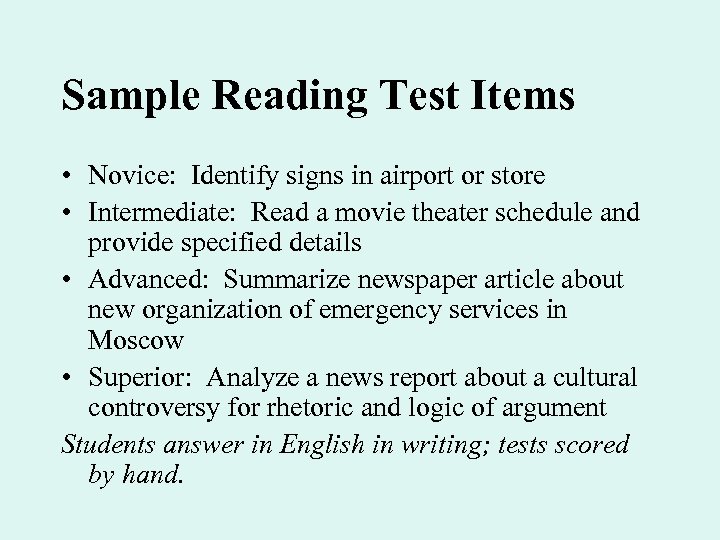 Sample Reading Test Items • Novice: Identify signs in airport or store • Intermediate: Read a movie theater schedule and provide specified details • Advanced: Summarize newspaper article about new organization of emergency services in Moscow • Superior: Analyze a news report about a cultural controversy for rhetoric and logic of argument Students answer in English in writing; tests scored by hand.
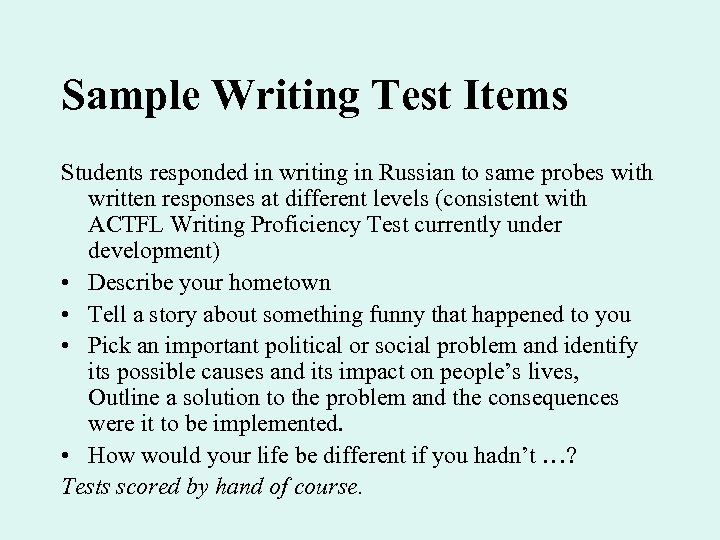 Sample Writing Test Items Students responded in writing in Russian to same probes with written responses at different levels (consistent with ACTFL Writing Proficiency Test currently under development) • Describe your hometown • Tell a story about something funny that happened to you • Pick an important political or social problem and identify its possible causes and its impact on people’s lives, Outline a solution to the problem and the consequences were it to be implemented. • How would your life be different if you hadn’t …? Tests scored by hand of course.
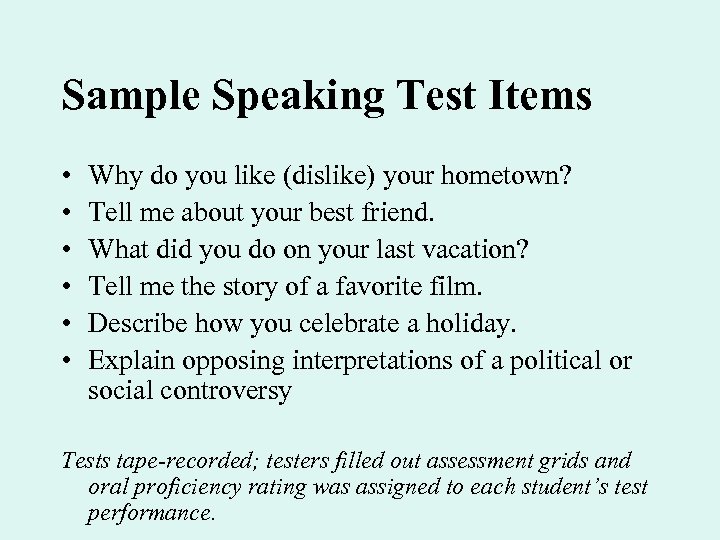 Sample Speaking Test Items • • • Why do you like (dislike) your hometown? Tell me about your best friend. What did you do on your last vacation? Tell me the story of a favorite film. Describe how you celebrate a holiday. Explain opposing interpretations of a political or social controversy Tests tape-recorded; testers filled out assessment grids and oral proficiency rating was assigned to each student’s test performance.
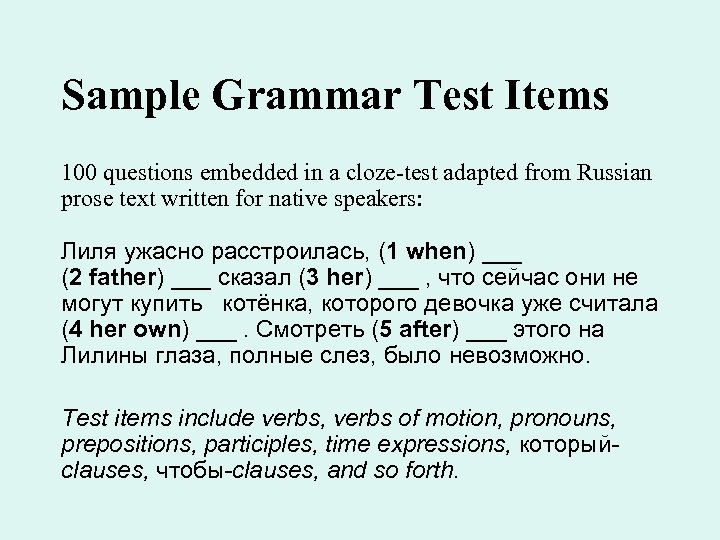 Sample Grammar Test Items 100 questions embedded in a cloze-test adapted from Russian prose text written for native speakers: Лиля ужасно расстроилась, (1 when) ___ (2 father) ___ сказал (3 her) ___ , что сейчас они не могут купить котёнка, которого девочка уже считала (4 her own) ___. Смотреть (5 after) ___ этого на Лилины глаза, полные слез, было невозможно. Test items include verbs, verbs of motion, pronouns, prepositions, participles, time expressions, котoрыйclauses, чтобы-clauses, and so forth.
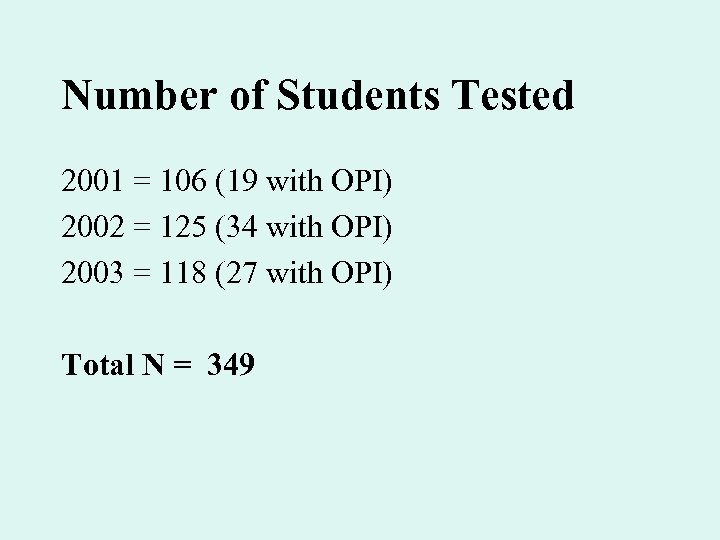
 The Student Sample • Over 300 learners • 3 years of testing • From over 100 institutions across North America, employees from federal agencies and members of the US armed services: a national sample
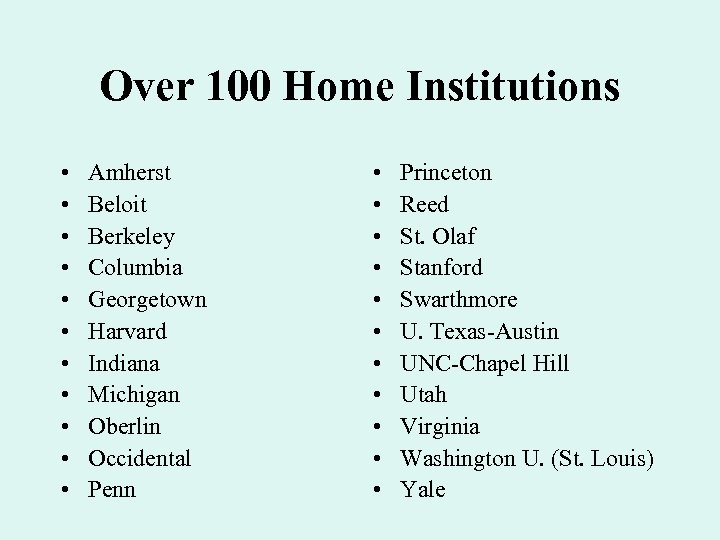 Over 100 Home Institutions • • • Amherst Beloit Berkeley Columbia Georgetown Harvard Indiana Michigan Oberlin Occidental Penn • • • Princeton Reed St. Olaf Stanford Swarthmore U. Texas-Austin UNC-Chapel Hill Utah Virginia Washington U. (St. Louis) Yale
 US Government Employees • • • CIA FBI US Navy US Air Force Future US Government employees in these and other agencies and branches of the armed forces
 Not Typical Learners: They Chose • • Summer intensive study: lost wages Middlebury immersion Isolation from loved ones Language pledge Atypical commitment? Degree of motivation?
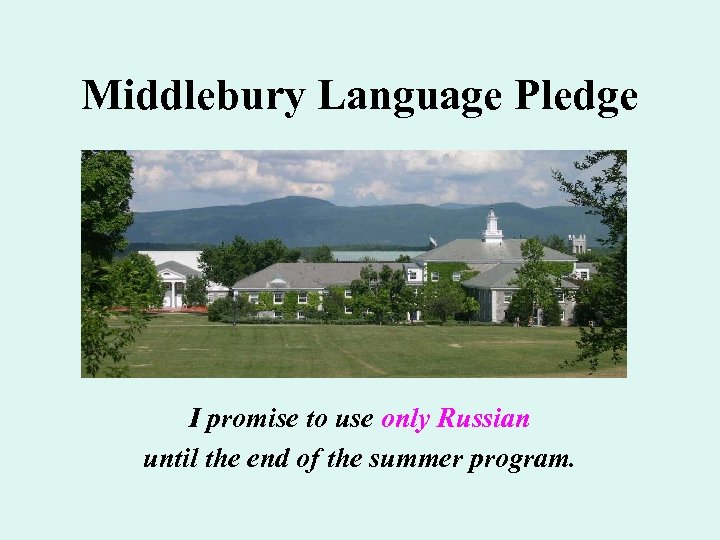 Middlebury Language Pledge I promise to use only Russian until the end of the summer program.
 What does immersion mean at the Middlebury Russian School?
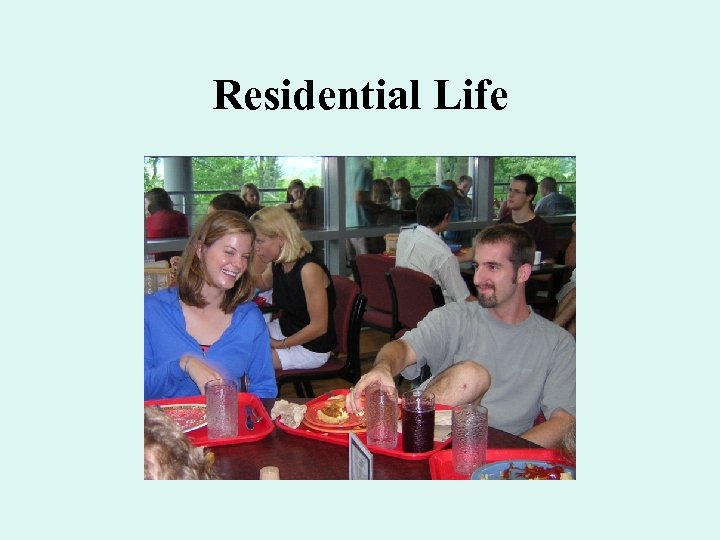 Residential Life
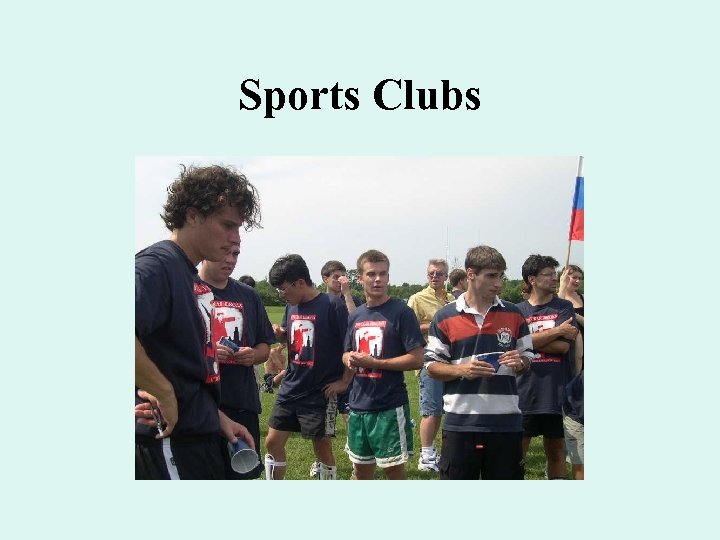 Sports Clubs
 Social Life: Karaoke
 And of course CLASSES!
 Number of Students Tested 2001 = 106 (19 with OPI) 2002 = 125 (34 with OPI) 2003 = 118 (27 with OPI) Total N = 349
 Hours of Prior Instruction 5 hours per day, 5 days per week for 10 weeks = about 250 hours 5 hours per week for one academic year = about 150 hours 4 hours per week for one academic year = about 120 hours 3 hours per week for one academic year = about 90 hours Example: 4 hours per week for 4 years = 480 hours
 Small Surveys (SEELANGS/FLASC) N = 34 (Russian) / 32 (Other Langs) : adjusted for 30 weeks/yr First-year average hours = 4. 48 / 4. 188 Second-year average hours = 4. 06 / 3. 68 Third-year average hours = 3. 09 / 3. 19 Fourth-year average hours = 2. 64 / 3. 00 Total average classroom hours in 4 -year college curriculum = 428. 21 / 421. 74
 Test Correlations Data presented in the following slides were collected in Middlebury RS tests demonstrated earlier. Test correlations: . 75 to. 86 Correlations confirm Brecht, Davidson, Ginsberg’s (1993) finding of importance of grammatical competence for language gain.
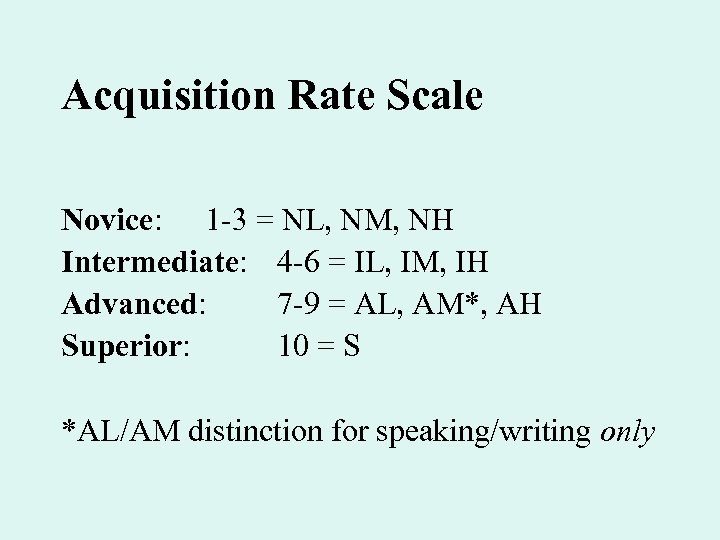 Acquisition Rate Scale Novice: 1 -3 = NL, NM, NH Intermediate: 4 -6 = IL, IM, IH Advanced: 7 -9 = AL, AM*, AH Superior: 10 = S *AL/AM distinction for speaking/writing only
 Oral Acquisition
 Listening Acquisition
 Reading Acquisition
 Writing Acquisition
 Acquisition of Four Skills
 Grammar “Acquisition”
 Robin’s Proficiency Paradox In 1967, the typical Russian major had no proficiency-based instruction, no opportunities for length stays in country, no possibility of homestays, little in the way of strategy instruction …[and] little recourse to authentic … Russian. Yet even with the advent of goal oriented instruction and materials designed to help us meet those goals, … apparent lack of meaningful progress. As we in pedagogy look at outcomes, we can’t help but ask if the last three decades [since the publication of Carroll's study] have been a waste of time (Robin, 2000: 29).
 Proficiency Paradox or Ceiling Effect? • Why Carroll’s study is not a reliable indicator • Progress since 1967 in pedagogy, input access, opportunities for communicative practice But what if there is a ceiling limiting students’ gains in classroom instruction?
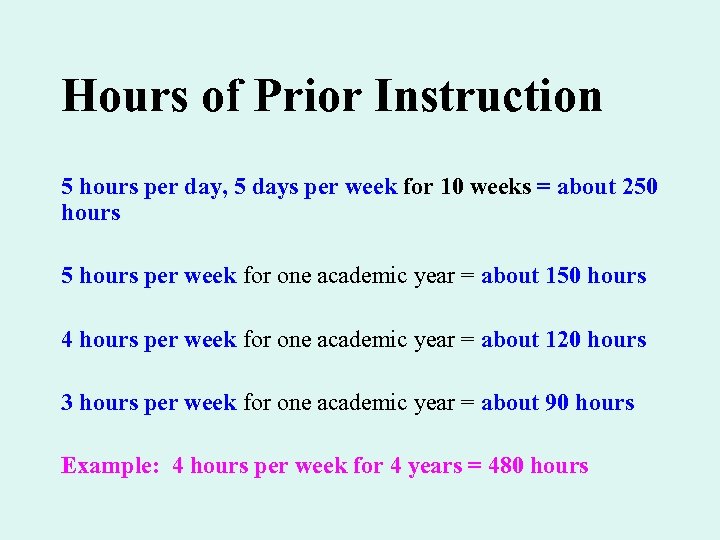
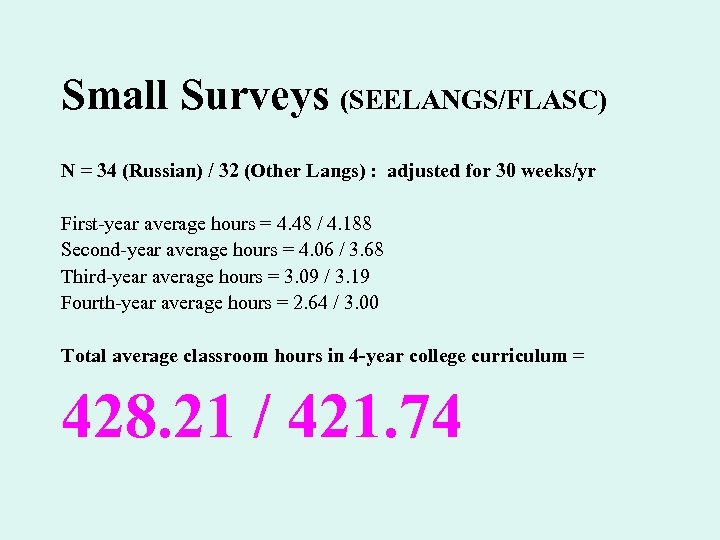
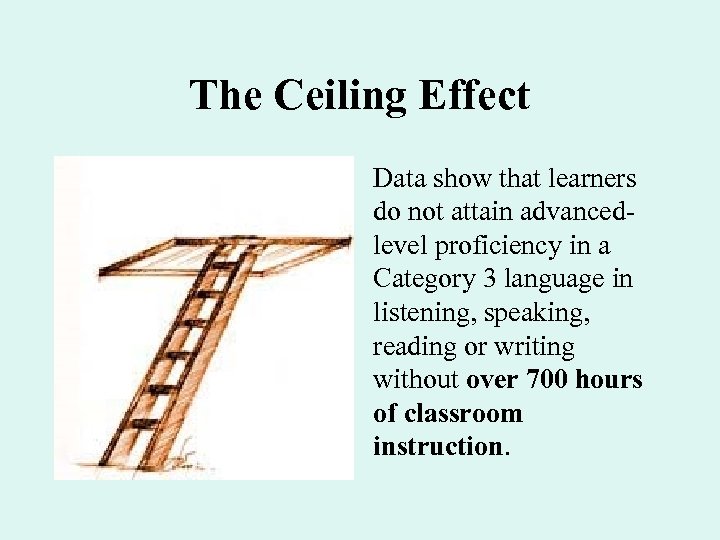 The Ceiling Effect Data show that learners do not attain advancedlevel proficiency in a Category 3 language in listening, speaking, reading or writing without over 700 hours of classroom instruction.
 Oral Acquisition
 Listening Acquisition
 Reading Acquisition
 Writing Acquisition
 Grammar “Acquisition”
 Middlebury / SASLI? • Student motivation • Giving up social support • Giving up potential summer earnings or vacation • Engaging in the study of a foreign or heritage language in unknown (for many) circumstances
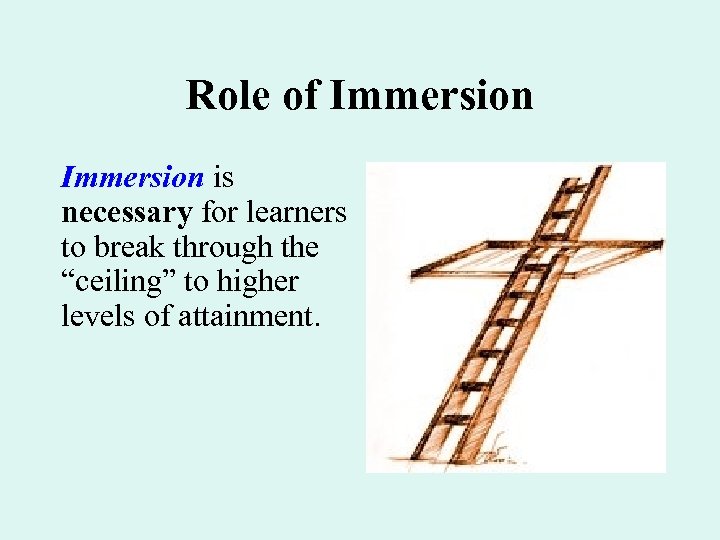 Role of Immersion is necessary for learners to break through the “ceiling” to higher levels of attainment.
 (1) Classroom Instruction Build the intermediate-level foundation: students should be able to ask and answer questions, participate in conversations in predictable contexts, understand simple texts (listening and reading) Build basic lexical and grammatical foundation
 (2) US-Based Immersion Language pledge + Sheltered environment (housing, meals, health, fitness) = Focus of cognitive resources on language Leading to … Development of higher-level proficiencies (Getting the most out of study abroad)
 (3) Immersion in Country Intermediate High or Higher Proficiencies attained in US-Based Immersion Program allow students to absorb the language they hear and read in country Students can talk with target-culture host families about cultural patterns and problems because they have the language skills to do so.
 (4) Re-Entry to US Classroom Learners use advanced proficiencies to undertake sophisticated analysis of important texts (literary, historical, political, economic, etc. ) in a variety of disciplines or fields. Learners are able to use language tools in a variety of analytical contexts.
 Policy Implications (1) • Hold realistic expectations for curricular design • Design curricula for life-long learning • Recognize importance of energizing student interest and motivation for life-long learning • Build support for long sequences of instruction and more classroom hours for communicative practice
 Policy Implications (2) • Teach all four skills and grammar • Build support for immersion experiences here (first) and abroad (second) • Work to eliminate administrative obstacles to immersion experiences and help students locate financial resources for immersion
 Policy Implications (3) • Help students plan for immersions from the beginning of their academic program • Work with parents and community to energize support for immersions • Bring immersion veterans back to the classroom and community to talk about their experiences
 Time in FL Instruction (1) Time on task is clearly a critical factor for language acquisition. Time is not the ONLY condition necessary for acquisition, but it is a necessary condition. As teachers, we must use classroom time wisely!
 Time in FL Instruction (2) What does it mean to use classroom time wisely? We need to use classroom time (and homework / preparation time) as efficiently as possible to keep students actively engaged in meaningful learning: We must maximize our coefficient of time on task.
 Attention to Time on Task • Purposeful communication (all modalities) • Planning for intensity of engagement in all phases of the lesson • Communication with multiple partners in a variety of interaction patterns • Focus on meaning and form, not just exclusive focus on form • Language used in culturally authentic context

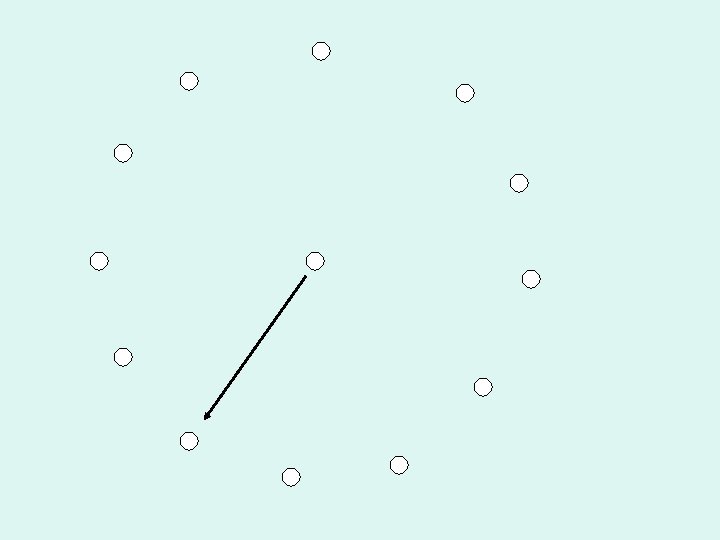
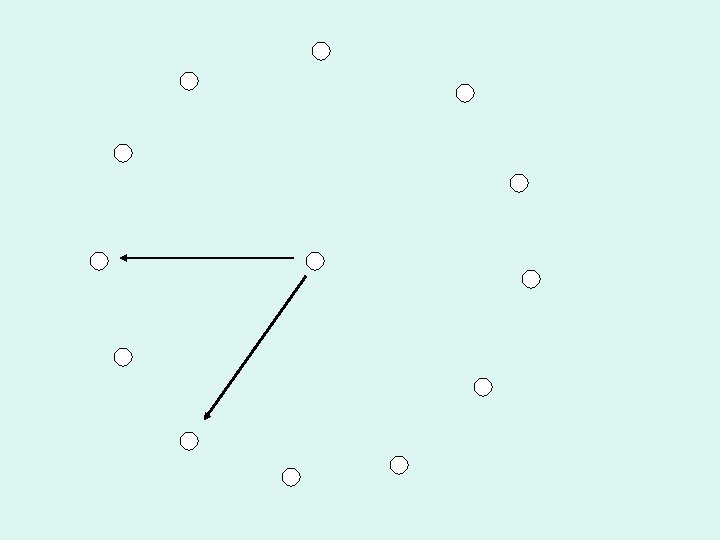
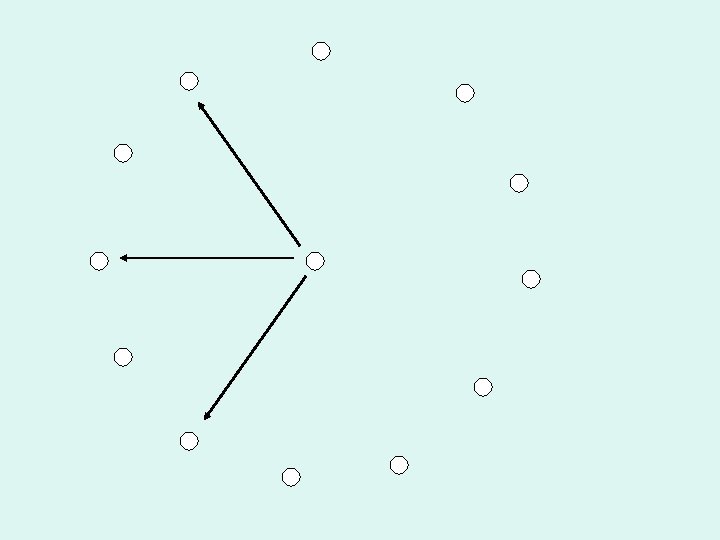
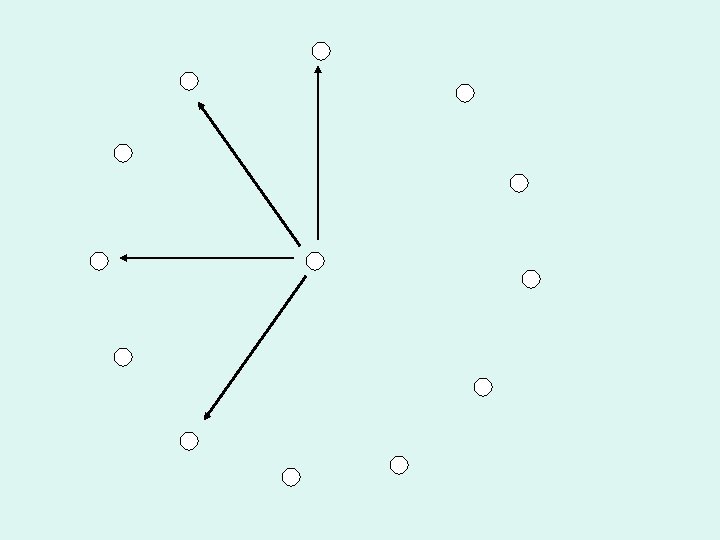
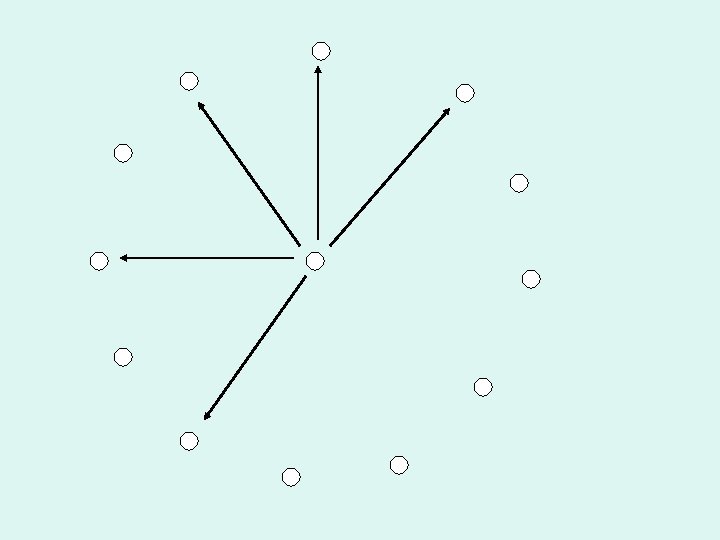
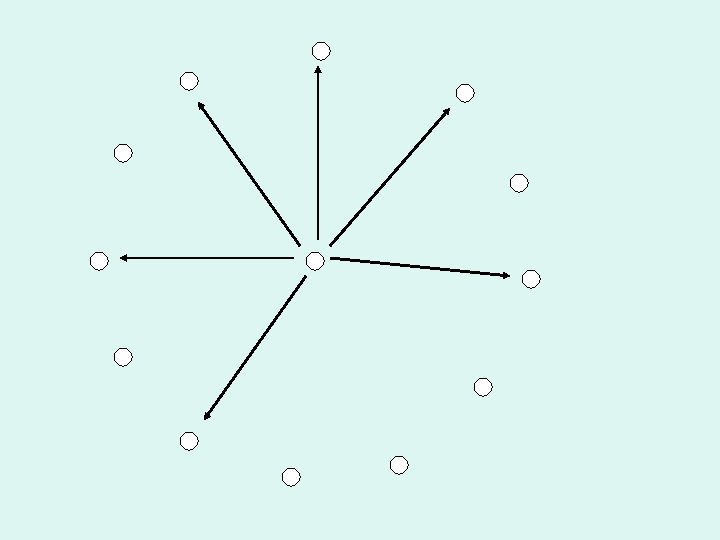
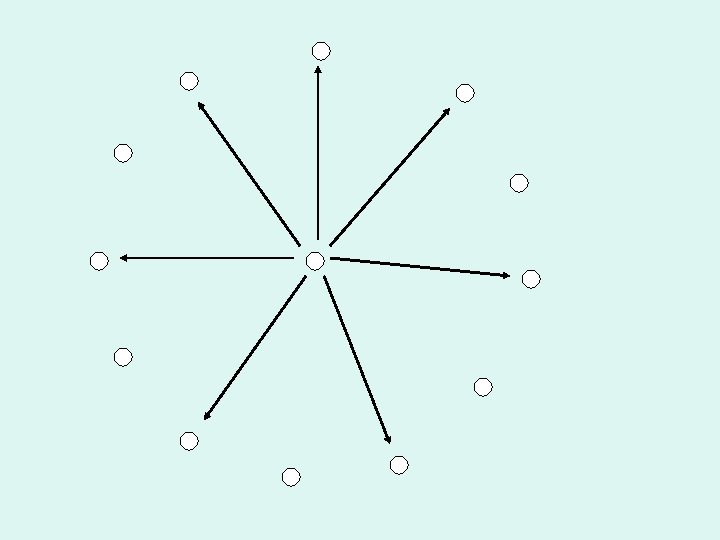

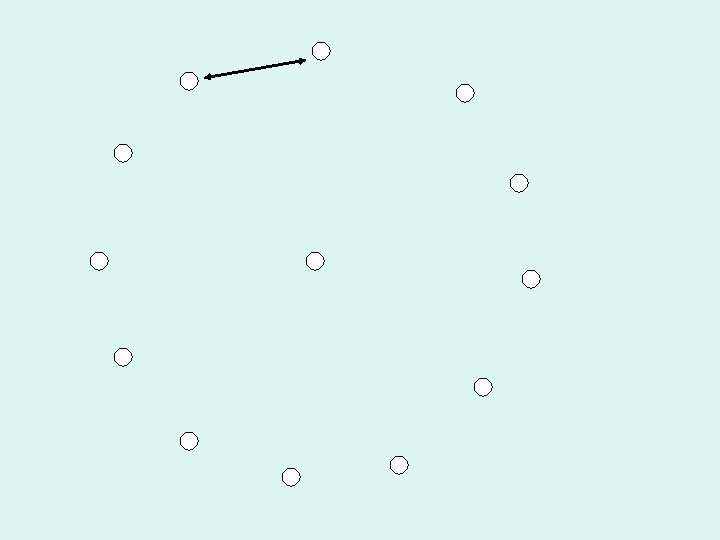
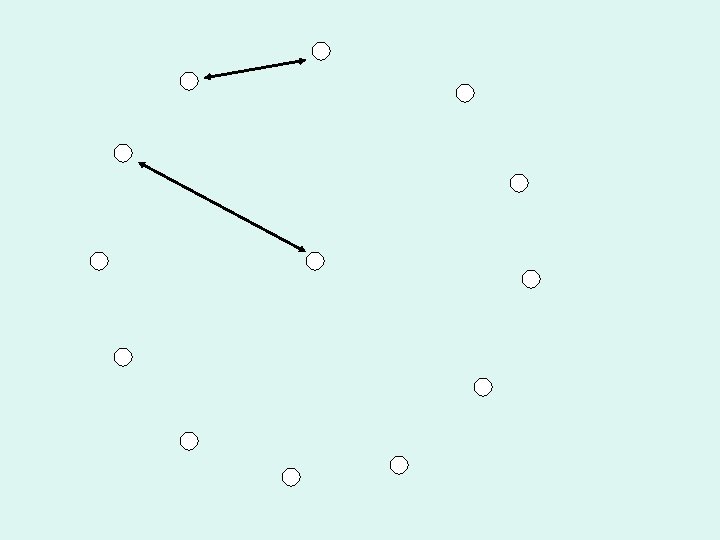

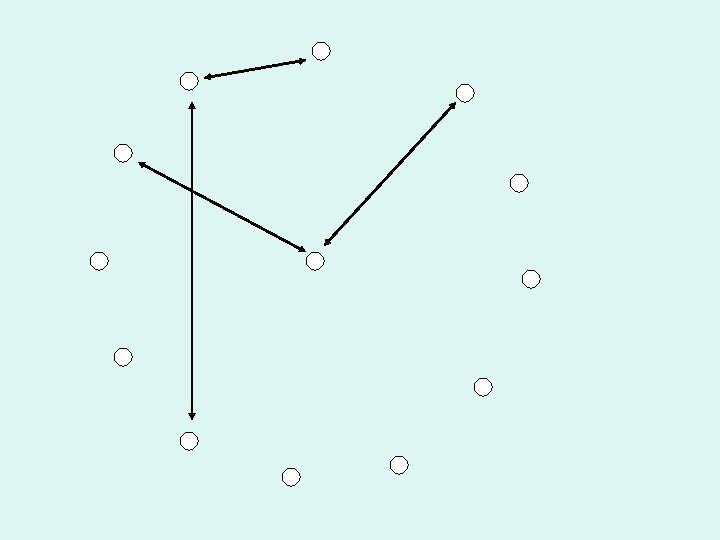
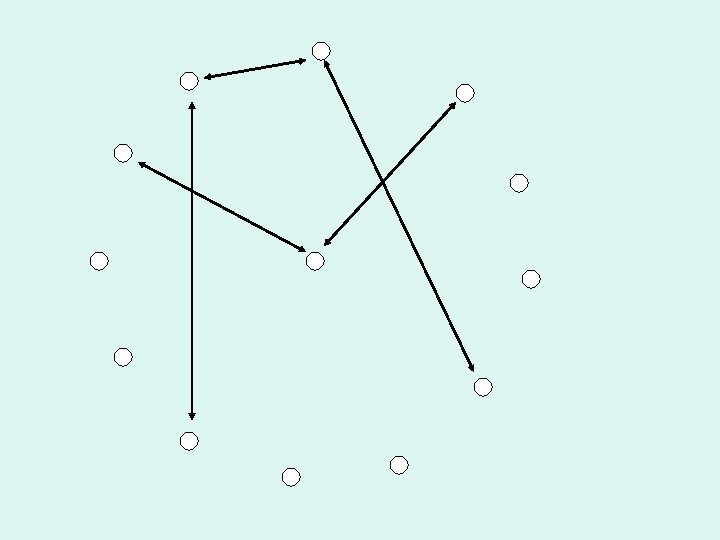
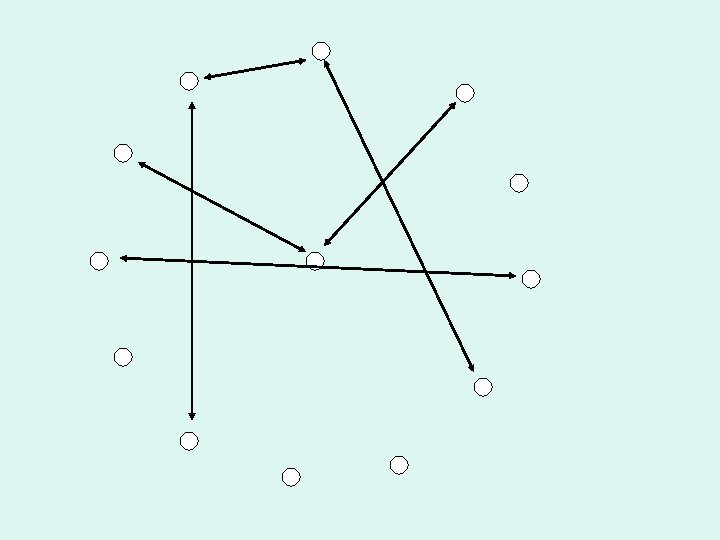
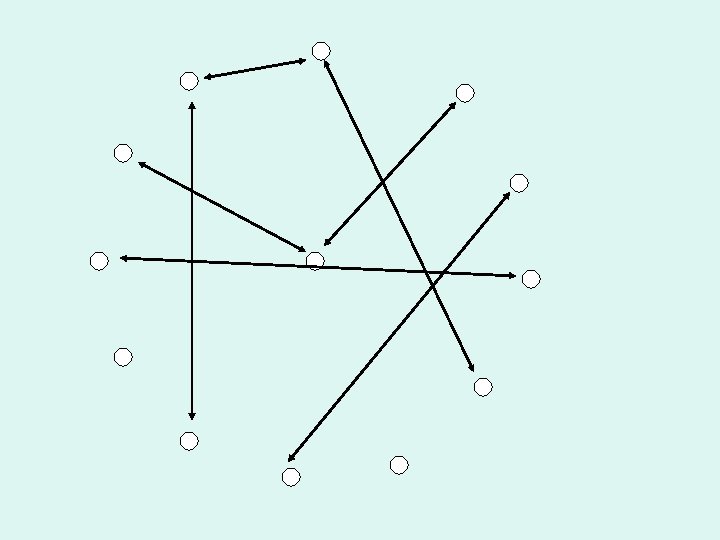
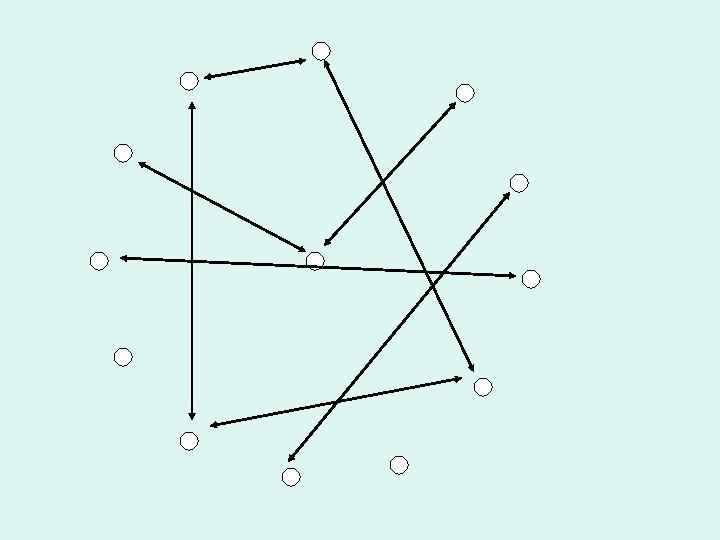
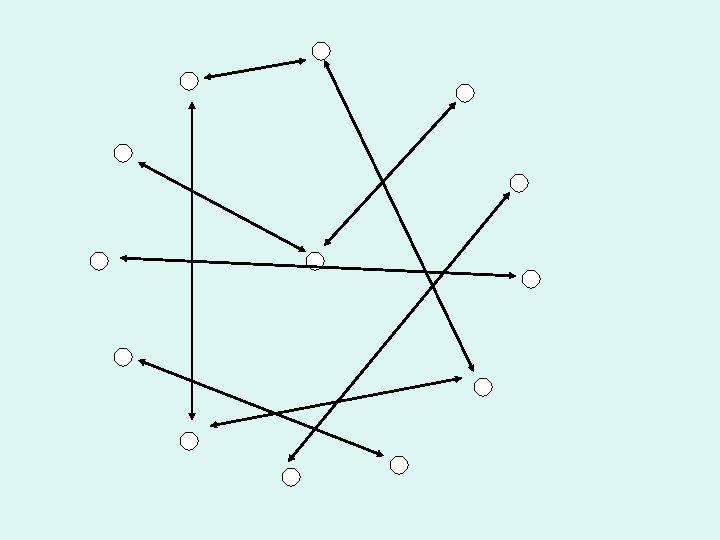
 What the Research Tells Us • Development tied to activities • Multiple interactions - cognitive and psychosocial benefits • Importance of COMMUNITY for COMMUNICATION • Role of Teacher As Planner / Facilitator / Conductor of the Class Orchestra (“Guide on the Side”)
 Intensity of Engagement • When one learner performs, and others are not responsible or accountable for processing language during that student performance, intensity of engagement is low. • When one learner performs, and all others are held accountable for processing language, intensity of engagement is high.
 Illustrative Learning Scenarios • Comparison of low and high intensity of engagement classroom learning scenarios • Each high intensity scenario combines different combinations of language modalities (reading, writing, listening, speaking), some with grammar • Each high intensity scenario is paired with a low intensity scenario based on similar learning goals
 Learning Scenario (1) Class listens as learners, one at a time, make a presentations on the topic of housing (homelessness, gentrification, etc. ) in the target culture; while one student talks, others should be listening, but are dazing off into space. Learners listen in preassigned groups as members of another group present, in turn, on the same topic. Groups must brainstorm questions for the presenter and later will debate in groups or teams on the same topic. (Could be two pairs. )
 Learning Scenario (2) Students work in groups to fill out a grammar worksheet. When a quicker group finishes, group members sit silently and wait or talk in English off-task. Students work in groups to fill out a grammar worksheet. When a quicker group finishes, teachers give the members of the group two different texts from the internet on a similar topic with the challenge of analyzing differences in the texts. (Could be two pairs)
 Learning Scenario (3) Class discusses cultural background in newspaper article. Students are reluctant to participate in the discussion. Teacher winds up lecturing in order to cover the important point of the day. Students of each group read a different newspaper article on the same topic, perhaps from different ideological perspectives. In class, students work in groups to retell the story, discuss differences in authorial treatment. Teacher uses “chain link” activity; follows up with class discussion. (Could be two pairs)
 Learning Scenario (4) All-class discussion of hobbies and interests. Three students dominate the discussion; rest of students are silent. When each student speaks, s/he addresses (looks at) teacher. Students work in groups or pairs to create survey about hobbies and interests. Teacher checks for accuracy. In next class, students mingle and survey one another, create group presentations comparing data and surveybias. Then: discussion! (Need at least 3 pairs)
 Learning Scenario (5) Students listen to teacher’s presentation on geography of the target culture. After presentation, they answer questions. Teacher asks one student at a time, addressing questions to entire class. Teacher gives students questions and list of targetculture search engines or websites with geography info. Students return the next day with notes, print-outs, images, and work in groups or pairs to create student reports. (At least two pairs. )
 Learning Scenario (6) Students read a short story and come to class prepared to discuss it. Teacher asks a few closed questions, gets one-word answers or “I don’t know” and lectures for 45 minutes. Students doodle. Same text: Students come to class assigned to retell the story from the point of view of another character in the story (or of a character in another story). Students retell story to one another; teacher asks how story would have been different had it been told by an American character. What is the national contribution to this text?
 Learning Scenario (7) Product-focused individualized writing assignment: each student writes to the audience of one (teacher) Multi-phase processfocused collaborative writing assignment with public presentation (publication in class journal) and discussion
 Sample Writing Process • • • Reading or listening stimulus Pairs brainstorm lexicon Pairs collaboratively write topic sentences Individuals write essays at home Next day pairs compare essays with same topic sentences: peer editing Collaborative creation of one essay combining best elements of both Essays published in class journal Class discussion Pairs write response or extension
 Importance of Writing Don’t forget writing! It may not be most important on the government’s list of learning goals, but the acquisition of writing skills facilitates the acquisition of listening, reading and speaking.
 High Intensity of Engagement Design Principles • Combination of modalities throughout the lesson • Each learner’s role is clearly defined at all times in each phase of the lesson • No “down time” for any learner: each learner is always “on” • Each learner is kept accountable at each phase of the lesson
 Tips for High Intensity Lesson Design (1) • Be mindful of every learner’s role at each step of lesson design • Do not be satisfied to think of pairs and groups in lesson design • Start with the accountability phase of lesson planning and work backwards: what will each learner be able to do • Maximize peer interactions
 Tips for High Intensity Lesson Design (2) • Build double and triple checks into each phase of the lesson • Consciously plan for other learners’ activities when one learner is performing • Build accountability (every learner / every phase of interaction / every lesson phase) into the lesson plan design from the beginning
 Your Questions?
 Thank you!