


 Скачать презентацию INTENSE PULSED LIGHT IPL IN DERMATOLOGY Dr Ruxandra
fb49b43821087ef537a2414b23a6a57d.ppt
- Количество слайдов: 22
 INTENSE PULSED LIGHT (IPL) IN DERMATOLOGY Dr. Ruxandra Cutus Dr. Razvan Bucur Cabinet SANDERM-Cluj
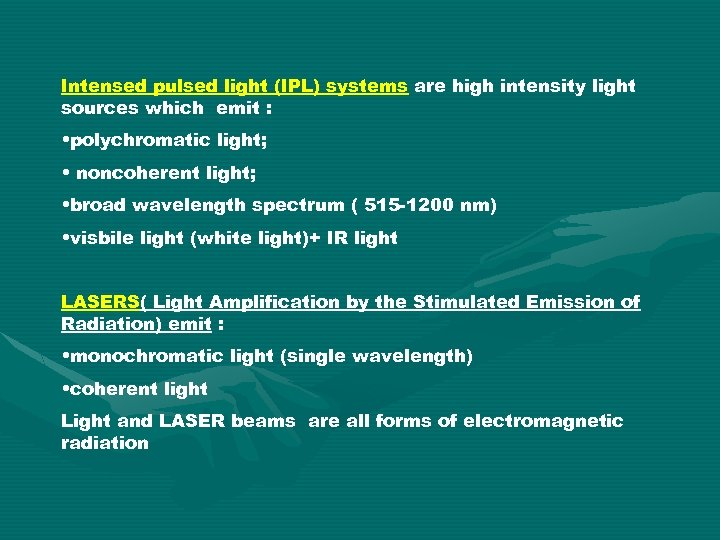 Intensed pulsed light (IPL) systems are high intensity light sources which emit : • polychromatic light; • noncoherent light; • broad wavelength spectrum ( 515 -1200 nm) • visbile light (white light)+ IR light LASERS( Light Amplification by the Stimulated Emission of Radiation) emit : • monochromatic light (single wavelength) • coherent light Light and LASER beams are all forms of electromagnetic radiation
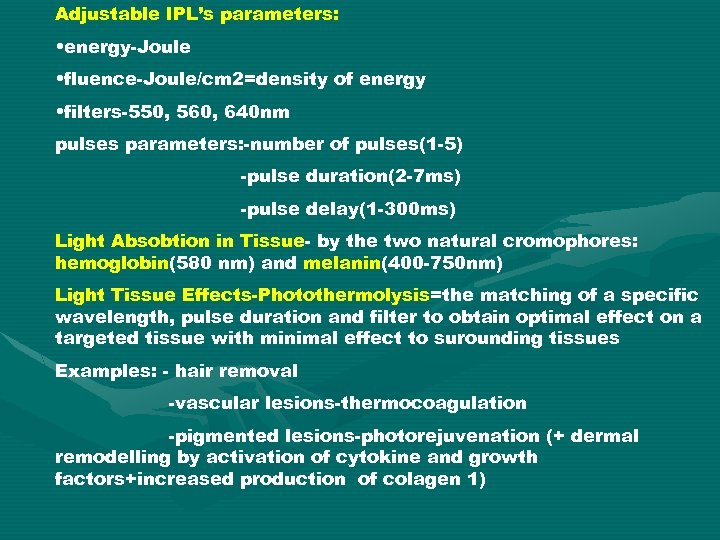 Adjustable IPL’s parameters: • energy-Joule • fluence-Joule/cm 2=density of energy • filters-550, 560, 640 nm pulses parameters: -number of pulses(1 -5) -pulse duration(2 -7 ms) -pulse delay(1 -300 ms) Light Absobtion in Tissue- by the two natural cromophores: hemoglobin(580 nm) and melanin(400 -750 nm) Light Tissue Effects-Photothermolysis=the matching of a specific wavelength, pulse duration and filter to obtain optimal effect on a targeted tissue with minimal effect to surounding tissues Examples: - hair removal -vascular lesions-thermocoagulation -pigmented lesions-photorejuvenation (+ dermal remodelling by activation of cytokine and growth factors+increased production of colagen 1)
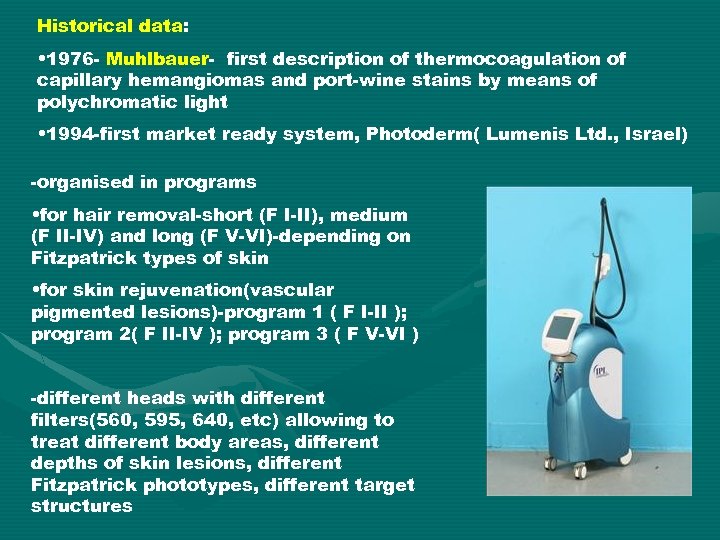 Historical data: • 1976 - Muhlbauer- first description of thermocoagulation of capillary hemangiomas and port-wine stains by means of polychromatic light • 1994 -first market ready system, Photoderm( Lumenis Ltd. , Israel) -organised in programs • for hair removal-short (F I-II), medium (F II-IV) and long (F V-VI)-depending on Fitzpatrick types of skin • for skin rejuvenation(vascular pigmented lesions)-program 1 ( F I-II ); program 2( F II-IV ); program 3 ( F V-VI ) -different heads with different filters(560, 595, 640, etc) allowing to treat different body areas, different depths of skin lesions, different Fitzpatrick phototypes, different target structures
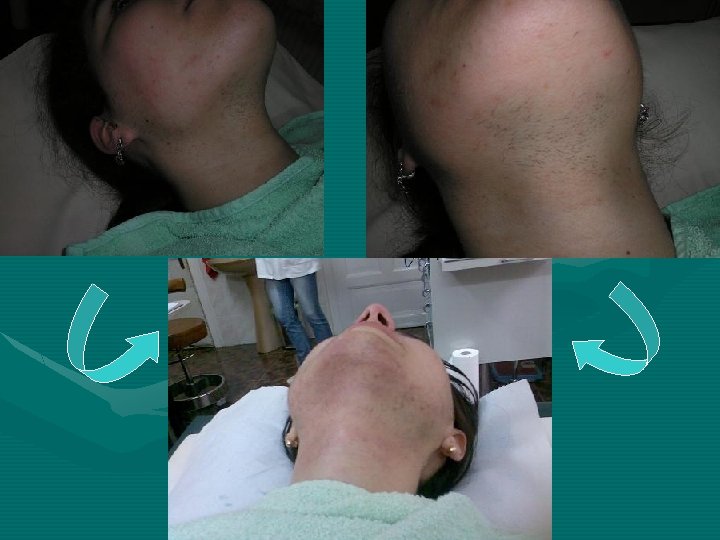
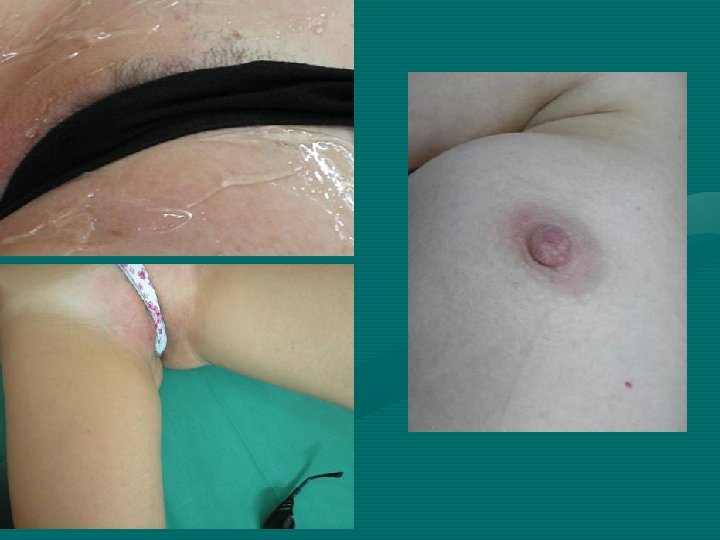
 INDICATIONS: 1. HAIR REMOVAL 2. -one of the most important indications of IPL 3. -photothermolysis induces damage to the hair follicle and hair shaft in anagen phase causing a long term interruption in the hair growth cycle 4. -for localised hypertrychosis; hairy grafts and flaps; hirsutism; aesthethic purposes 5. -6 -8 treatments at 6 weeks interval Advantages: -quick spot size -little pain -efficiency (studies reveal 80 -90% clearance rate after 4 -8 treatments) -safe-few side effects Possible side effects: -transient erythema(2 -48 hours ± oedema -late evanescent erythema -mild pain; purpura-1 -3 days -crust formation; isolated vesicles -transient hyper/hypopigmentation -permanent scars are unlikely
 2. PIGMENTED LESIONS -melasma -café au lait macules -mottled pigmentation -Ota’s, Ito’s naevus -epidermal lentigines -Becker’s and Spillus naevus -ephelides -seborhoeic keratoses -lentigo solaris -actinic keratoses -postinflamatory hyperpigmentation -poikiloderma of Civatte Mechanisms-melanosomes damaged by photothermolysis→melanin aggregates→macrophage transport Advantages: -quick-1 -5 sessions( frequent 1 -3), 3 weeks apart ) -minimal disconfort -lunch-time treatments -efficiency -safety-minimal or no side effects -all facial and non-facial areas can be treated
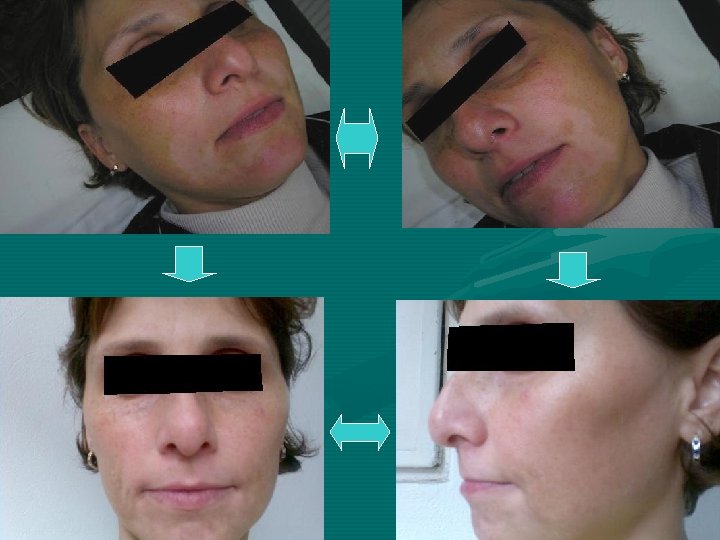
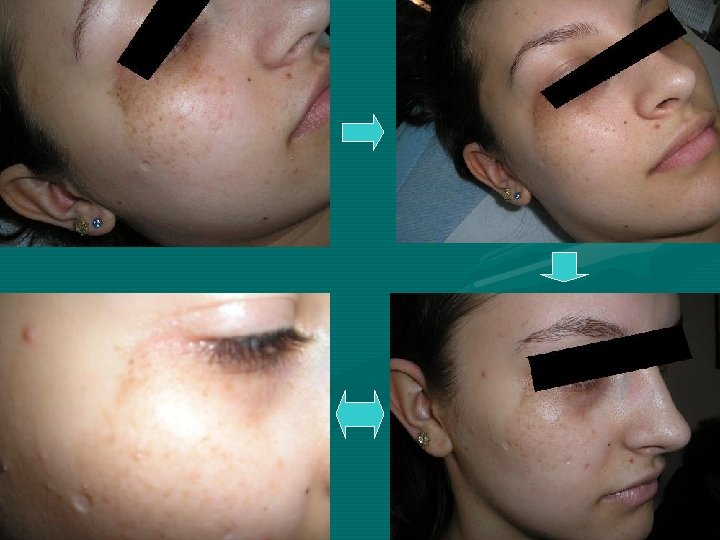
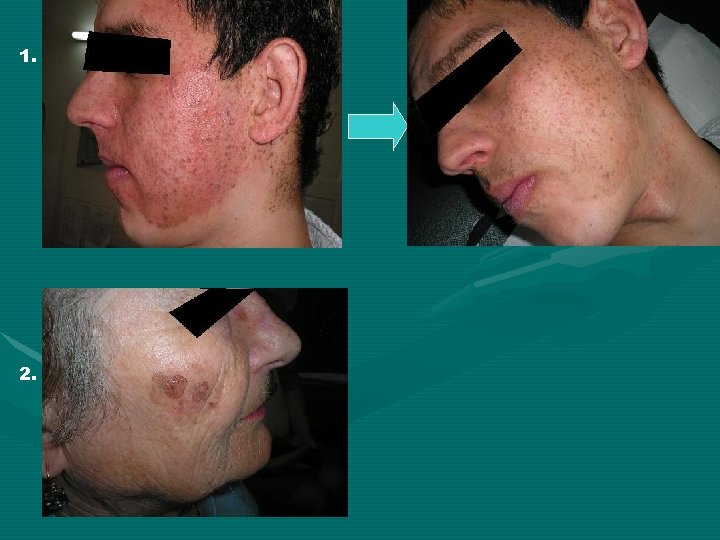 1. 2.
1. 2.
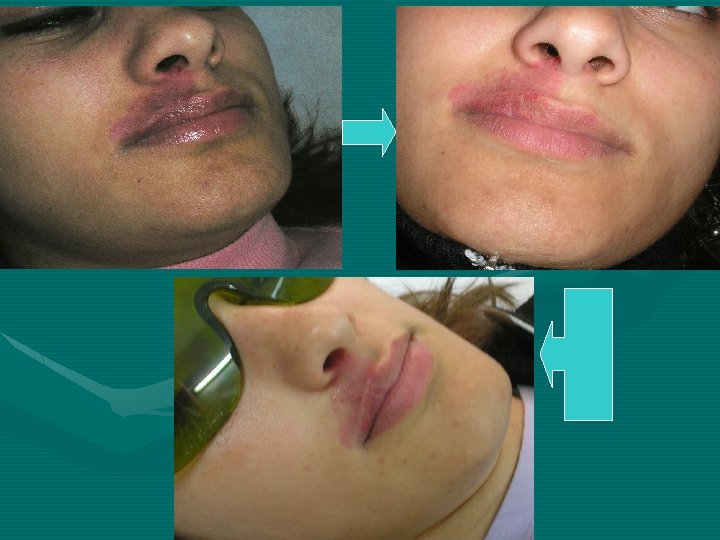
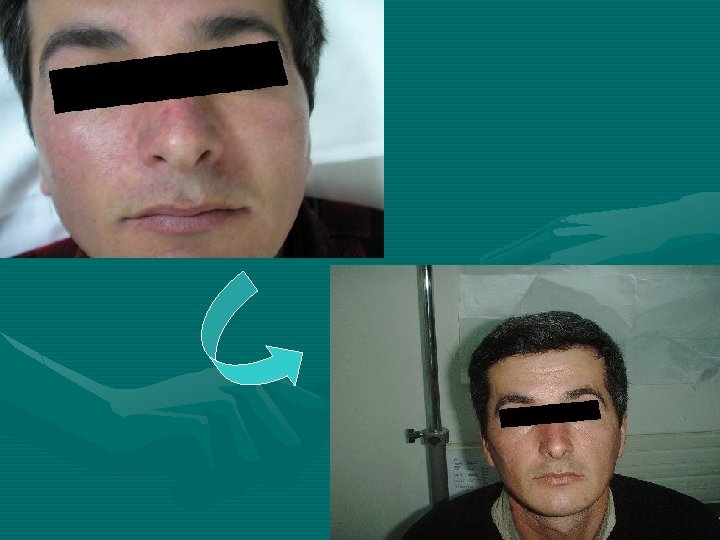
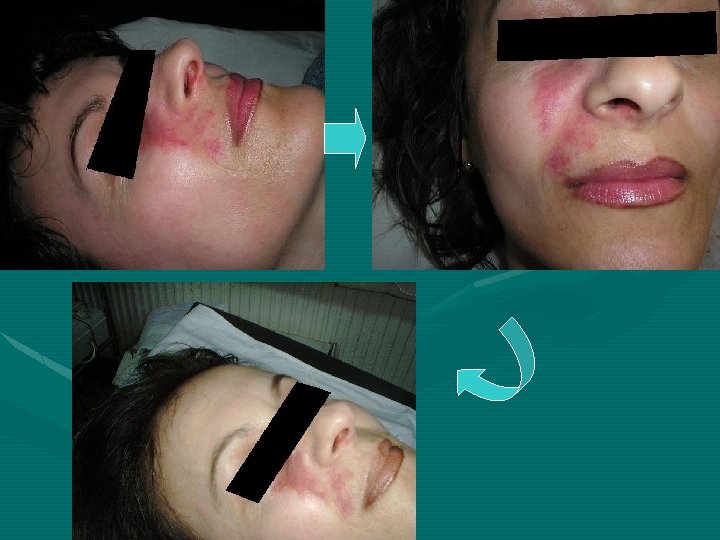
 3. BENIGN VASCULAR LESIONS -cuperosis( eythemato-telangiectatic rosacea ) -rosacea ( papulo-pustulous- demodex destruction ) -acne and erythema associated with acne -essential telangiectasias -hemangiomas -poikiloderma of Civatte -leg telangiectasias ( red, under 1 mm diameter ) -venous malformations (ex. blue rubber bleb naevus) -erythematous stretch-marks
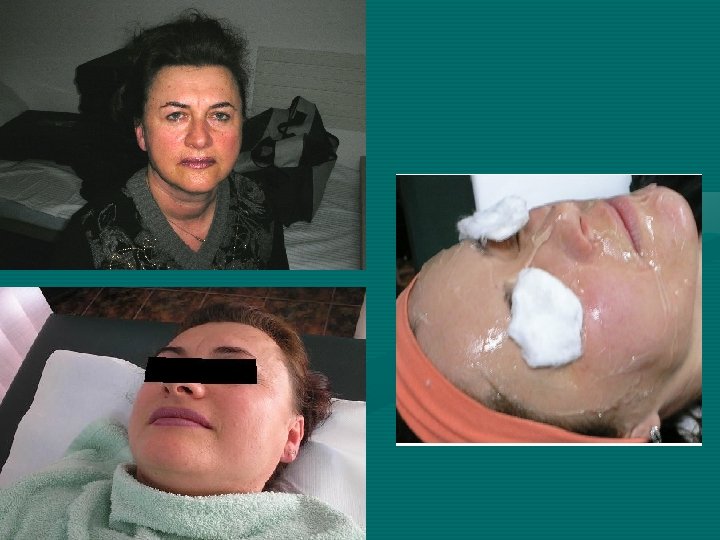
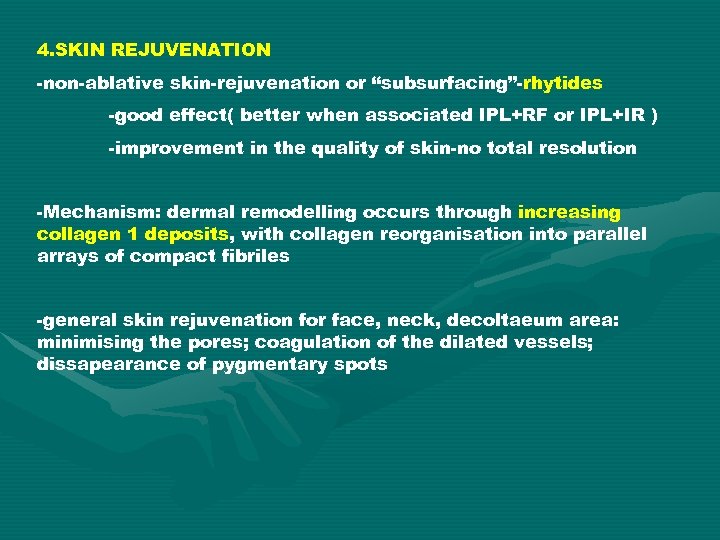 4. SKIN REJUVENATION -non-ablative skin-rejuvenation or “subsurfacing”-rhytides -good effect( better when associated IPL+RF or IPL+IR ) -improvement in the quality of skin-no total resolution -Mechanism: dermal remodelling occurs through increasing collagen 1 deposits, with collagen reorganisation into parallel arrays of compact fibriles -general skin rejuvenation for face, neck, decoltaeum area: minimising the pores; coagulation of the dilated vessels; dissapearance of pygmentary spots
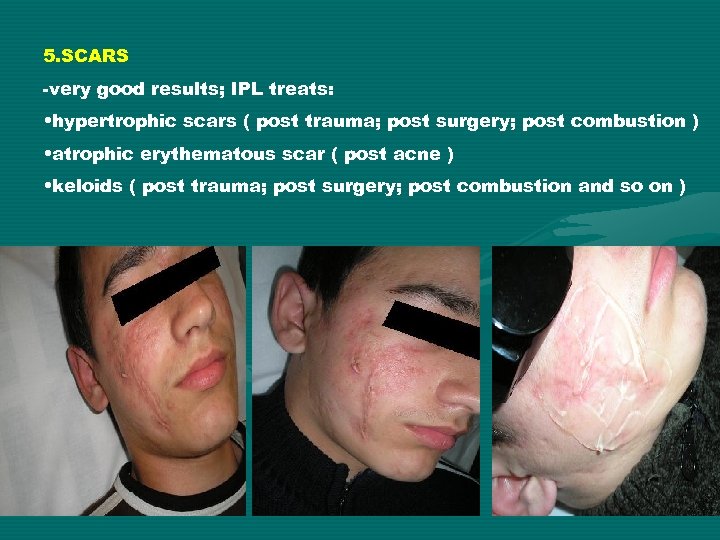 5. SCARS -very good results; IPL treats: • hypertrophic scars ( post trauma; post surgery; post combustion ) • atrophic erythematous scar ( post acne ) • keloids ( post trauma; post surgery; post combustion and so on )
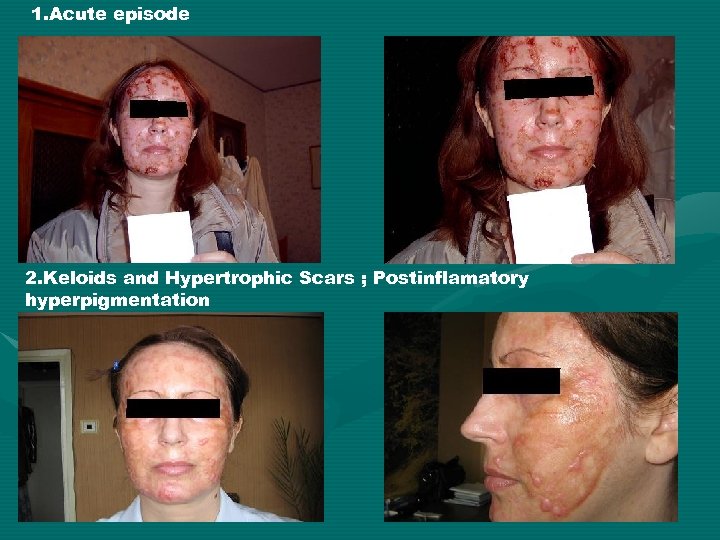 1. Acute episode 2. Keloids and Hypertrophic Scars ; Postinflamatory hyperpigmentation
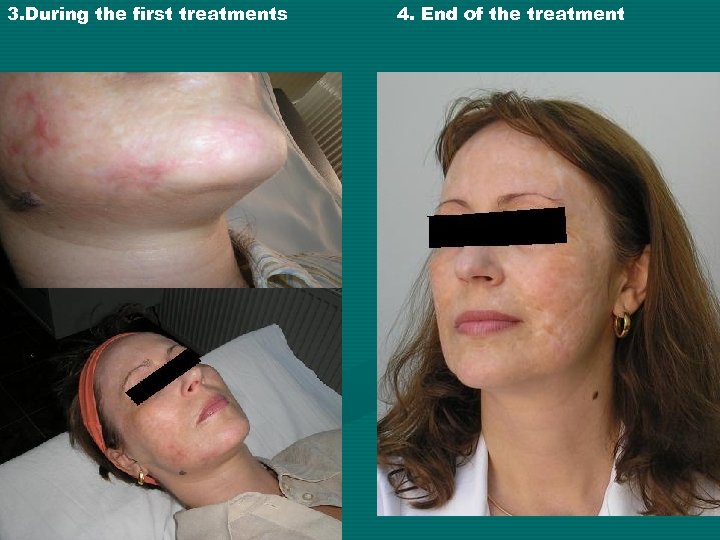 3. During the first treatments 4. End of the treatment
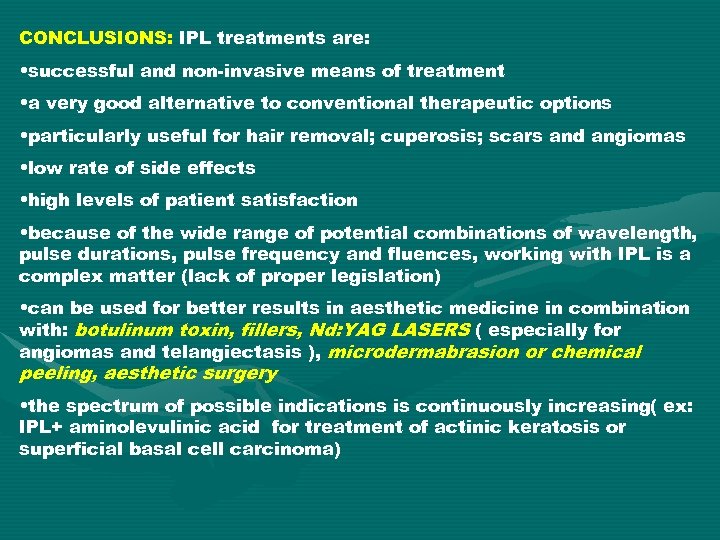 CONCLUSIONS: IPL treatments are: • successful and non-invasive means of treatment • a very good alternative to conventional therapeutic options • particularly useful for hair removal; cuperosis; scars and angiomas • low rate of side effects • high levels of patient satisfaction • because of the wide range of potential combinations of wavelength, pulse durations, pulse frequency and fluences, working with IPL is a complex matter (lack of proper legislation) • can be used for better results in aesthetic medicine in combination with: botulinum toxin, fillers, Nd: YAG LASERS ( especially for angiomas and telangiectasis ), microdermabrasion or chemical peeling, aesthetic surgery • the spectrum of possible indications is continuously increasing( ex: IPL+ aminolevulinic acid for treatment of actinic keratosis or superficial basal cell carcinoma)
 THANK YOU!