


 Скачать презентацию Intellectual Property and the Internet Matt Krusz
3c1dc7e8c6fb26c22dfdd03a87a356a4.ppt
- Количество слайдов: 12
 Intellectual Property and the Internet Matt Krusz
 Outline § History of Intellectual Property § Common Critiques of IP § Court Cases § Conclusion
 Intellectual Property Defined § World Intellectual Property Organization: “creations of the mind: inventions, literary and artistic works, and symbols, names, images, and designs used in commerce” § Categories § Copyright – Literature, Art, Music, Drama § Patent – Inventions § Trademark – Symbols/Names/Designs used to identify Brands or Services § Trade Secret – Privacy of Data, Documents, Formulas, …
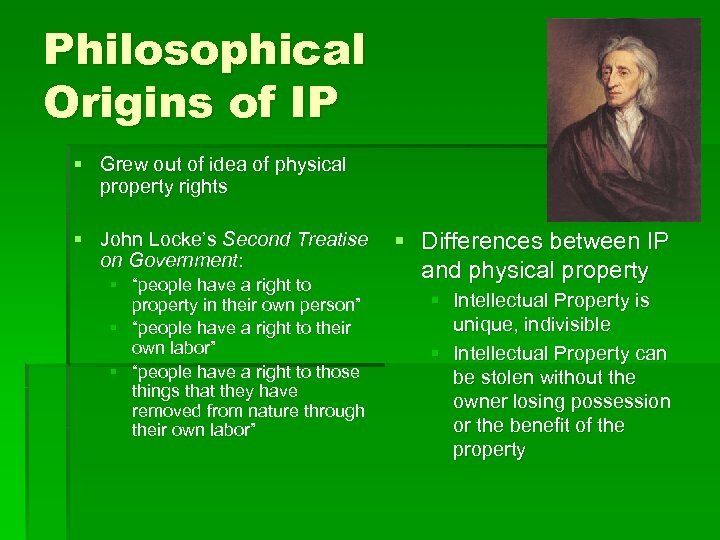 Philosophical Origins of IP § Grew out of idea of physical property rights § John Locke’s Second Treatise on Government: § “people have a right to property in their own person” § “people have a right to their own labor” § “people have a right to those things that they have removed from nature through their own labor” § Differences between IP and physical property § Intellectual Property is unique, indivisible § Intellectual Property can be stolen without the owner losing possession or the benefit of the property
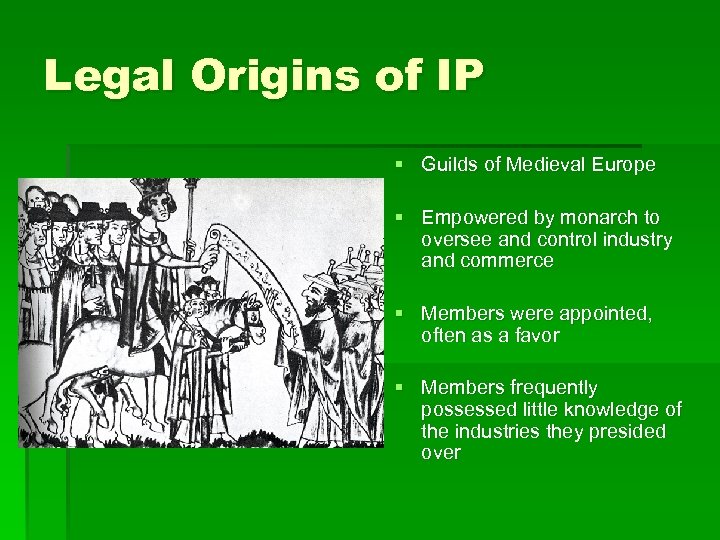 Legal Origins of IP § Guilds of Medieval Europe § Empowered by monarch to oversee and control industry and commerce § Members were appointed, often as a favor § Members frequently possessed little knowledge of the industries they presided over
 Legal Origins of IP § IP law originally driven by political and religious motivations § Stationer’s Company monopoly, 1556 § Response § 1623, Statute of Monopolies – Ended government established monopolies, founded basis for patents § 1710, Statute of Anne – expanded on patent and copyright protection
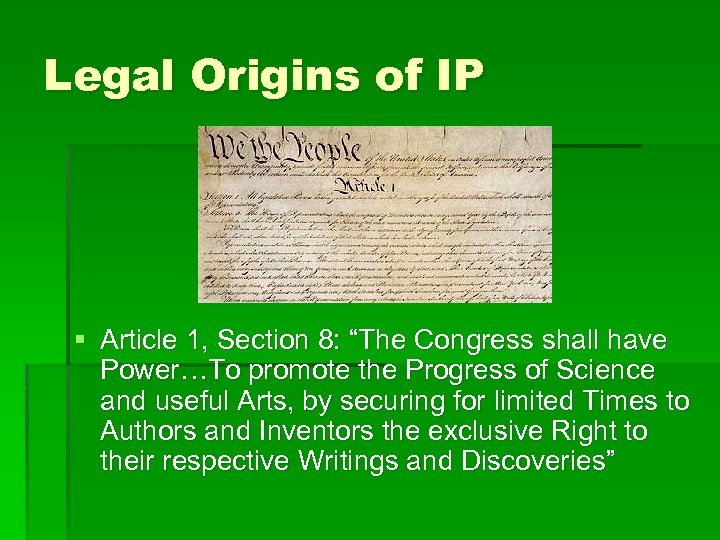 Legal Origins of IP § Article 1, Section 8: “The Congress shall have Power…To promote the Progress of Science and useful Arts, by securing for limited Times to Authors and Inventors the exclusive Right to their respective Writings and Discoveries”
 Criticisms of IP § Ethical problems with socially valuable goods (life-saving medicine) § The term “Intellectual Property” is selfrighteously misused § Lumps together disparate public policy issues into a word with a positive connotation § Benefits of IP protection biased towards concentrated interests
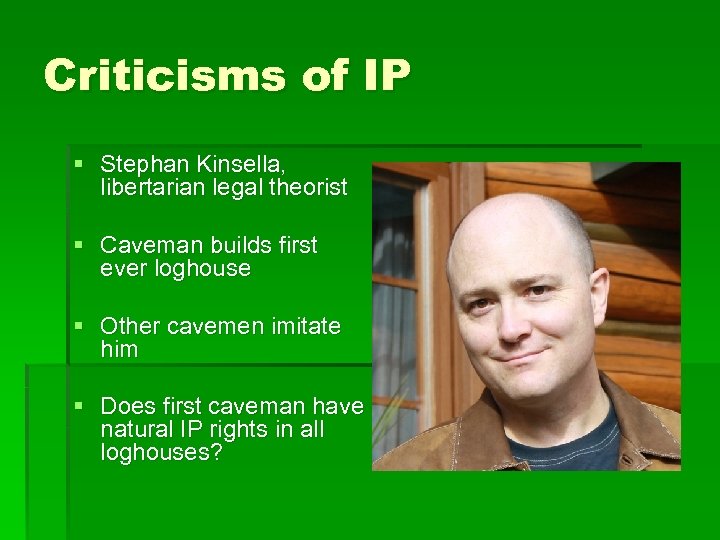 Criticisms of IP § Stephan Kinsella, libertarian legal theorist § Caveman builds first ever loghouse § Other cavemen imitate him § Does first caveman have natural IP rights in all loghouses?
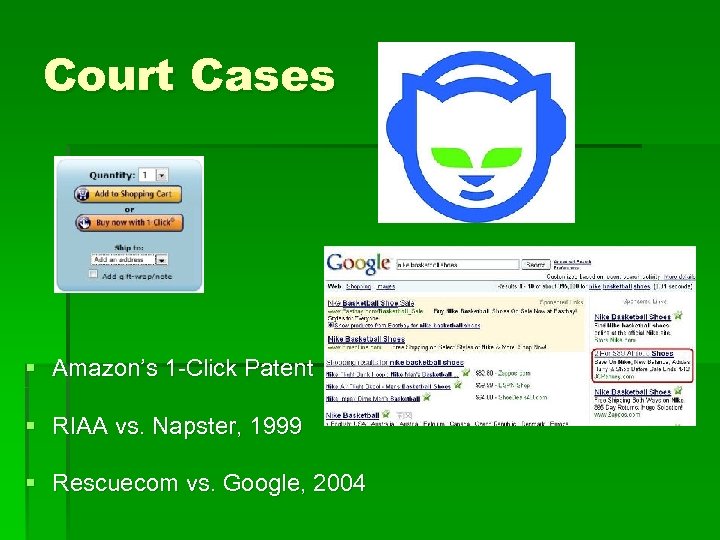 Court Cases § Amazon’s 1 -Click Patent § RIAA vs. Napster, 1999 § Rescuecom vs. Google, 2004
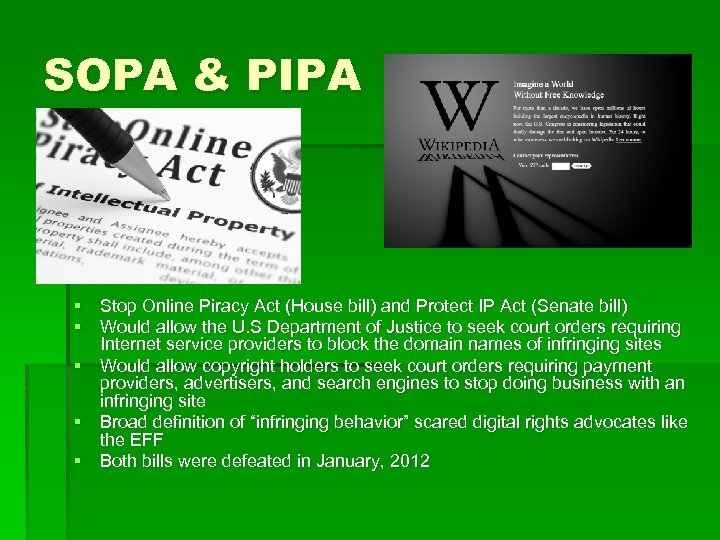 SOPA & PIPA § Stop Online Piracy Act (House bill) and Protect IP Act (Senate bill) § Would allow the U. S Department of Justice to seek court orders requiring Internet service providers to block the domain names of infringing sites § Would allow copyright holders to seek court orders requiring payment providers, advertisers, and search engines to stop doing business with an infringing site § Broad definition of “infringing behavior” scared digital rights advocates like the EFF § Both bills were defeated in January, 2012
 Conclusion § Ownership of Ideas has been an acquired taste, and in many ways we are still acquiring it § First property rights, then intellectual property, then internet freedom § What’s next? § Which virtues will survive?