


 Скачать презентацию INTELLECTUAL PASSION on example of Сhe Сha maths
Хельсинки_28_05_2014.pptx
- Количество слайдов: 37
 INTELLECTUAL PASSION on example of Сhe. Сha maths: affect and problem solving in math education Pavel Shmakov, University of Helsinki & Natalia Slepova, Espoo
 Key terms Humour in studying Mathematics for all 2
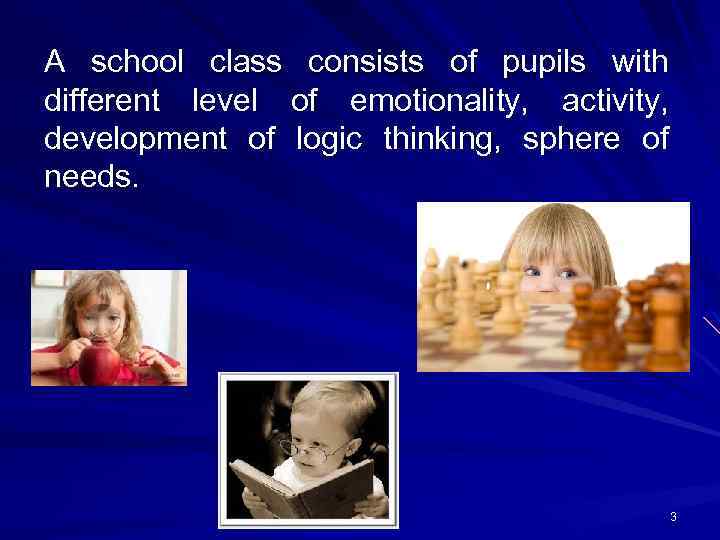 A school class consists of pupils with different level of emotionality, activity, development of logic thinking, sphere of needs. 3
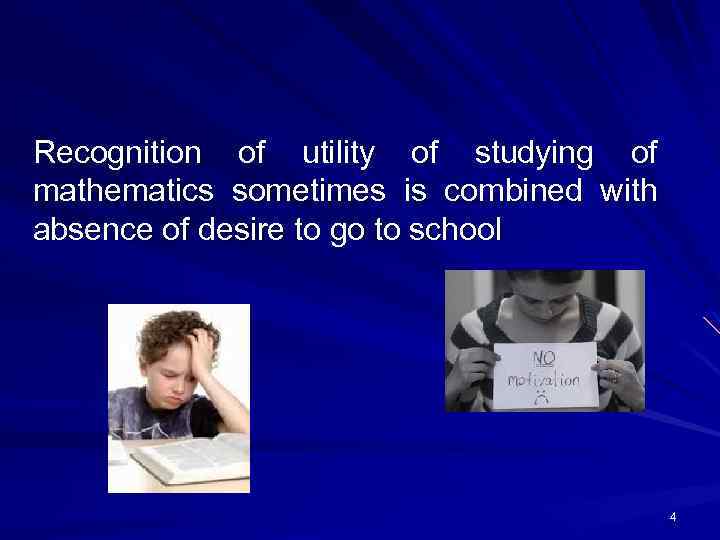 Recognition of utility of studying of mathematics sometimes is combined with absence of desire to go to school 4
 Is it possible to change the situation aside by increasing the pleasure from learning…. What mechanisms for this purpose should be involved? (Possible answer for this question I show in the second part of this presentation) 5
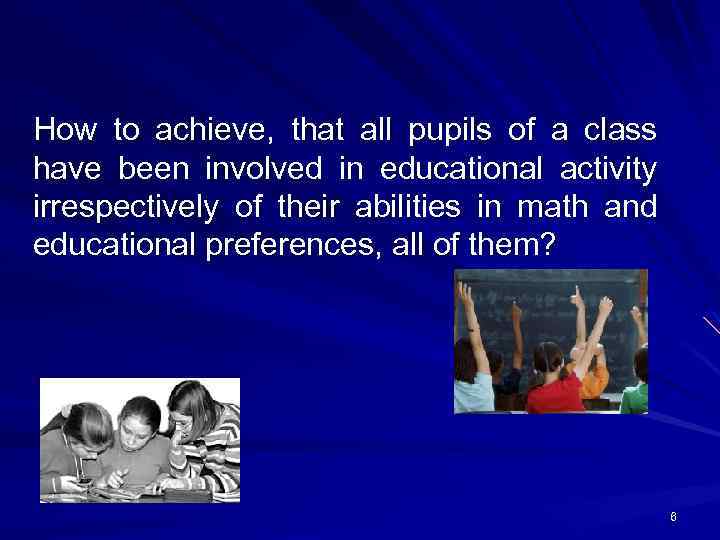 How to achieve, that all pupils of a class have been involved in educational activity irrespectively of their abilities in math and educational preferences, all of them? 6
 Change of a situation in an usual school class is possible at introduction in activity Che. Cha math method. Che. Cha mathematics is a teaching approach that is built around math problems that are Cheerful and Challenging for the pupil at the same time. 7
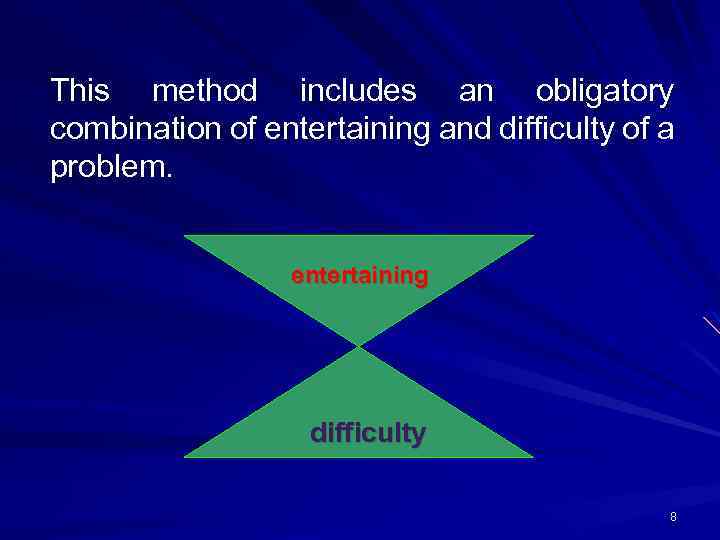 This method includes an obligatory combination of entertaining and difficulty of a problem. entertaining difficulty 8
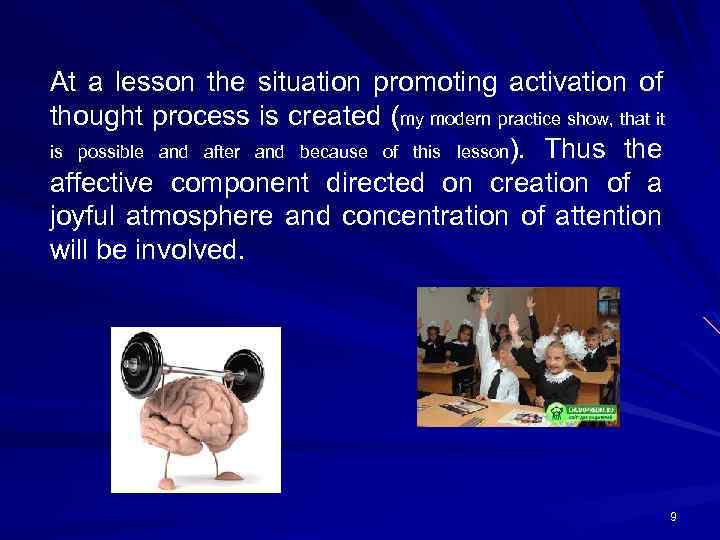 At a lesson the situation promoting activation of thought process is created (my modern practice show, that it is possible and after and because of this lesson). Thus the affective component directed on creation of a joyful atmosphere and concentration of attention will be involved. 9
 What mathematical problems are entertaining from the pupils' point of view?
 DATA COLLECTION AND ANALYSIS In 2007 -2008 surveyed pupils’ preferences of entertaining features in math. The data were collected in two 7 th grade classes and one 8 th grade class (40 pupils) after the introduction into the educational process of inspiring mathematics within 5 months. 11
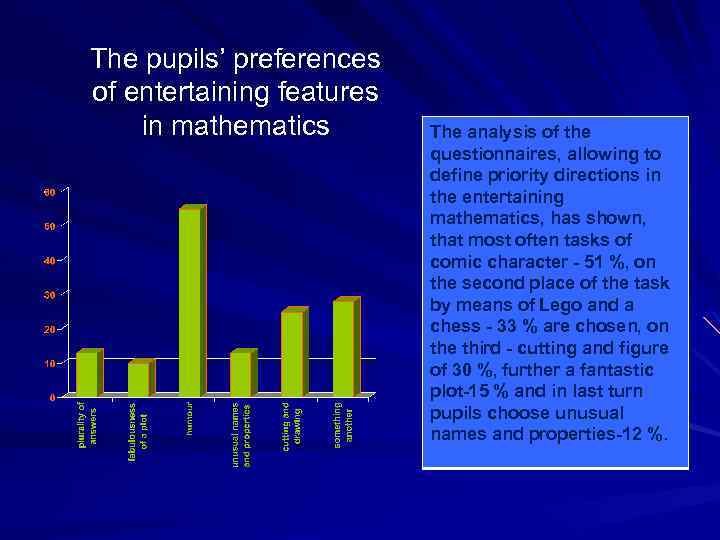 The pupils’ preferences of entertaining features in mathematics The analysis of the questionnaires, allowing to define priority directions in the entertaining mathematics, has shown, that most often tasks of comic character - 51 %, on the second place of the task by means of Lego and a chess - 33 % are chosen, on the third - cutting and figure of 30 %, further a fantastic plot-15 % and in last turn pupils choose unusual names and properties-12 %.
 The technique of construction of Che. Cha problems consists of the certain stages 1. At the initial stage there is a search of "matrix" of a condition or its author's creation. The condition is created "open type" more often and the problem has no unique and final solution. 13
 The technique of construction of Che. Cha problems consists of the certain stages 2. Substantial fullness of a condition of a problem is carried out at a following stage. There is a transformation of a condition which bears in itself entertaining, fabulousness, comic filling or vital situations. Besides are used such constructs as a level of difficulty and plurality of the solutions, allowing to expand a range of participants. 14
 The technique of construction of Che. Cha problems consists of the certain stages 3. The principle of a saturation of the maintenance is observed. It allows to consider age interests of pupils, their specific features and preferences. Substantial fullness of a condition of a problem is carried out at a following stage. There is a transformation of a condition which bears in itself entertaining, fabulousness, comic filling or vital situations. Besides are used a level of difficulty and plurality of the solutions, allowing to expand a range of participants. 15
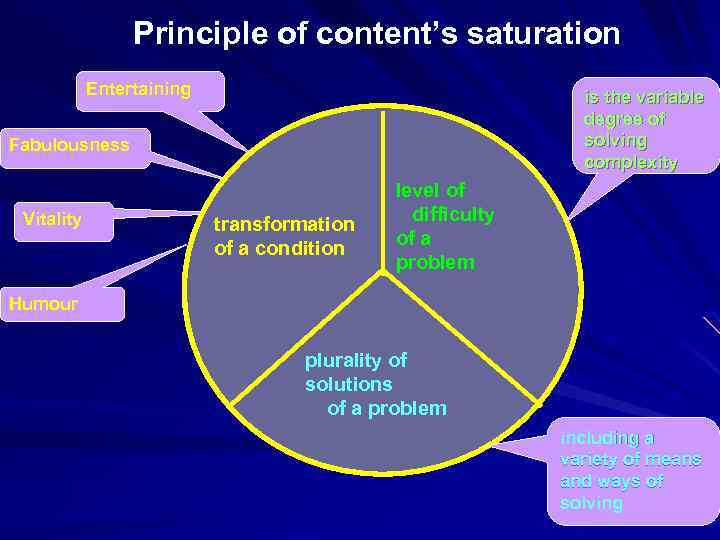 Principle of content’s saturation Entertaining is the variable degree of solving complexity Fabulousness Vitality transformation of a condition level of difficulty of a problem Humour plurality of solutions of a problem including a variety of means and ways of solving 16
 The technique of construction of Che. Cha problems consists of the certain stages 4. We understand entertaining as affective components which are directed on creation of a joyful atmosphere and concentration of attention (appeal, eccentricity, intrigue). 17
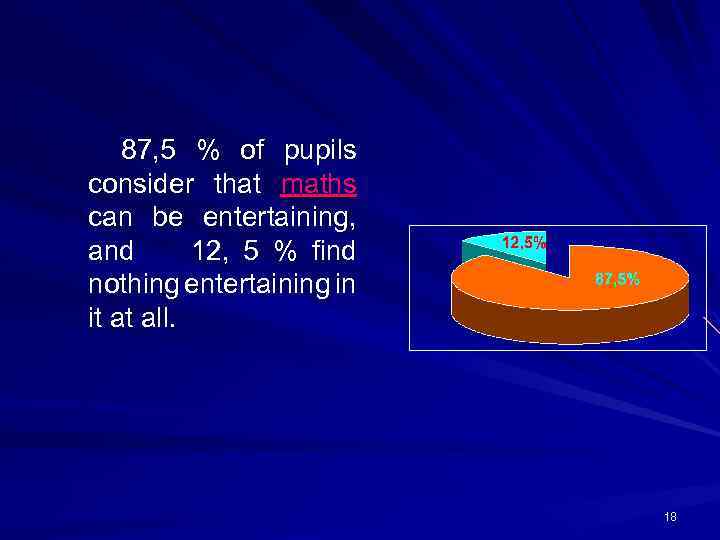 87, 5 % of pupils consider that maths can be entertaining, and 12, 5 % find nothing entertaining in it at all. 18
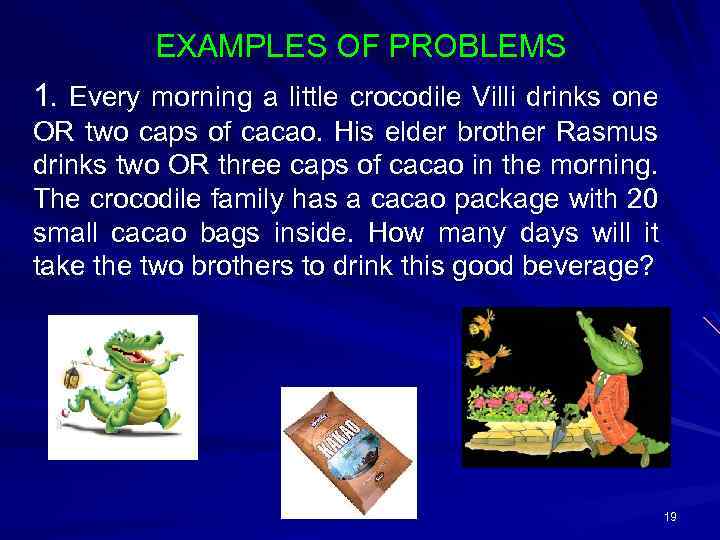 EXAMPLES OF PROBLEMS 1. Every morning a little crocodile Villi drinks one OR two caps of cacao. His elder brother Rasmus drinks two OR three caps of cacao in the morning. The crocodile family has a cacao package with 20 small cacao bags inside. How many days will it take the two brothers to drink this good beverage? 19
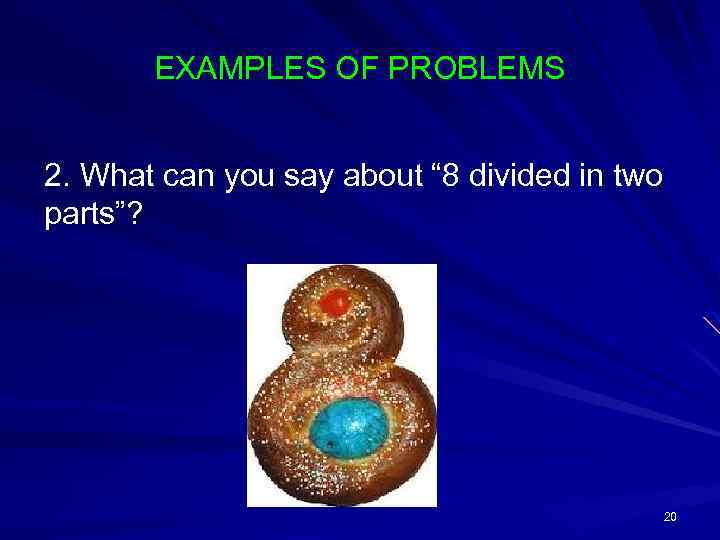 EXAMPLES OF PROBLEMS 2. What can you say about “ 8 divided in two parts”? 20
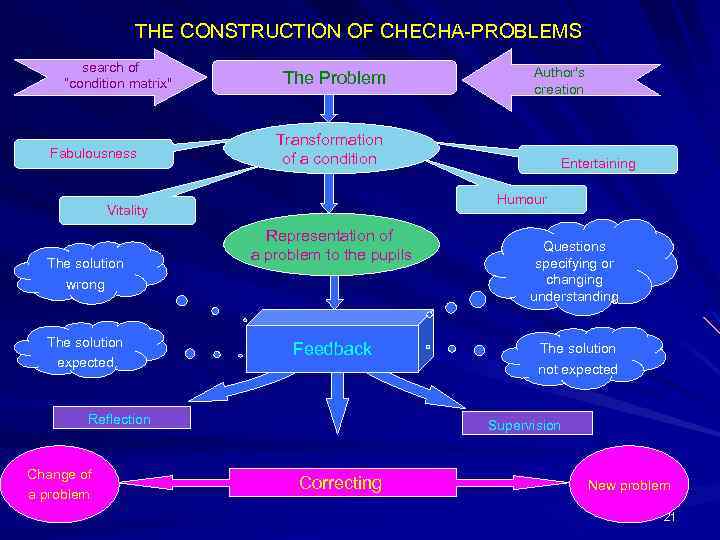 THE CONSTRUCTION OF CHECHA-PROBLEMS search of “condition matrix" Fabulousness The Problem Transformation of a condition The solution expected Representation of a problem to the pupils Feedback Reflection Change of a problem Entertaining Humour Vitality The solution wrong Author's creation Questions specifying or changing understanding The solution not expected Supervision Correcting New problem 21
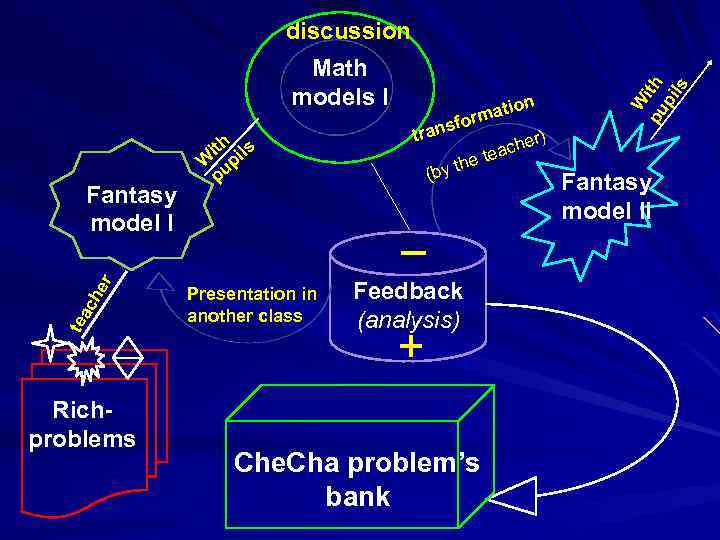 Math models I tea ch er Fantasy model I Richproblems ith ils W up p ion mat or ansf tr r) che tea the (by _ Presentation in another class Feedback (analysis) + Che. Cha problem’s bank W pu ith pi ls discussion Fantasy model II
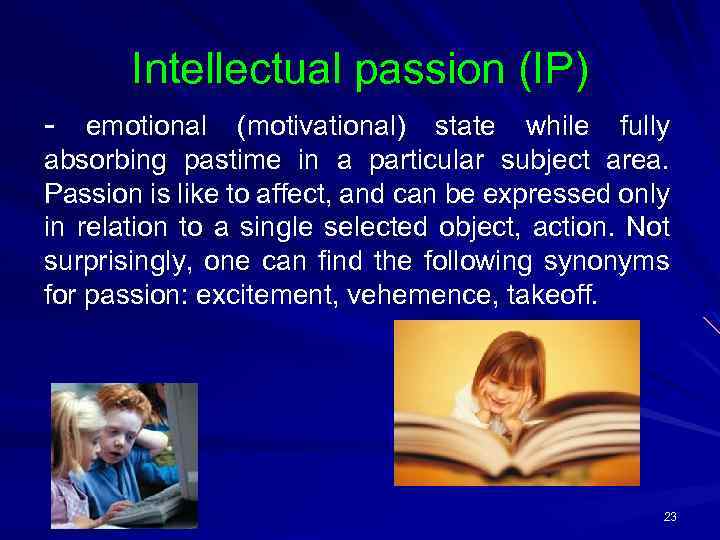 Intellectual passion (IP) - emotional (motivational) state while fully absorbing pastime in a particular subject area. Passion is like to affect, and can be expressed only in relation to a single selected object, action. Not surprisingly, one can find the following synonyms for passion: excitement, vehemence, takeoff. 23
 To distinguish the concepts of IP and interests , consider some of the definitions of interest: «interest - consumerism attitude or motivational state , encourage a cognitive activity unfolding mainly domestically» . 24
 «Interest - the emotional state associated with the implementation of cognitive activity and this activity is characterized by incentive» . 25
 Intellectual work for a rapt pupil turns into a need, it is vital daily celebration parallel awakening enthusiasm, encouragement, inspiration, energy, activity. 26
 The world around the pupil (social environment, school environment, family) is building the basis of their interests, which may be diverse. However, carried away by any one selected direction (business, a certain domain of knowledge), the pupil goes from calm observation to the state of elation and euphoria. 27
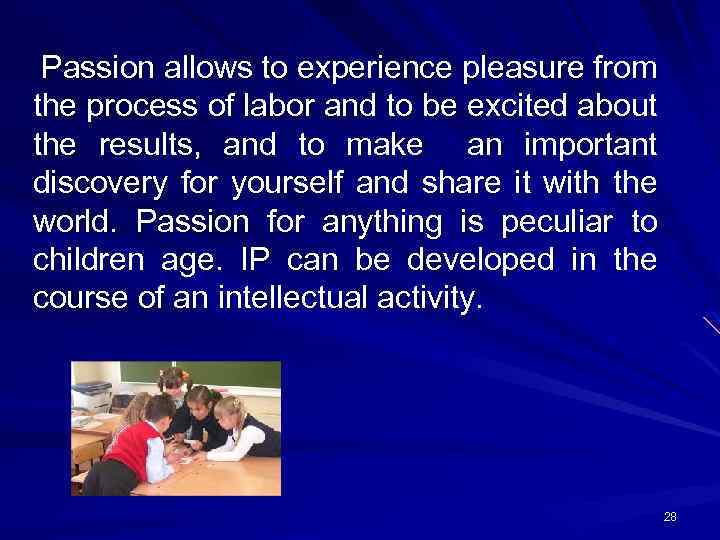 Passion allows to experience pleasure from the process of labor and to be excited about the results, and to make an important discovery for yourself and share it with the world. Passion for anything is peculiar to children age. IP can be developed in the course of an intellectual activity. 28
 Different methods and conditions can be used for the development of IP: 1. Positive emotional and professional support of pupil. Emotionally supportive environment can be created by parents, friends, teachers. Professional support implies professionalism of a supervisor in the intellectual domain, which is selected by pupil himself. 29
 Teachers themselves act in most cases as chief scientists at pupils scientific conferences. It is also important to engage scientists who can recruit students to ”real” research ”today or tomorrow”. 30
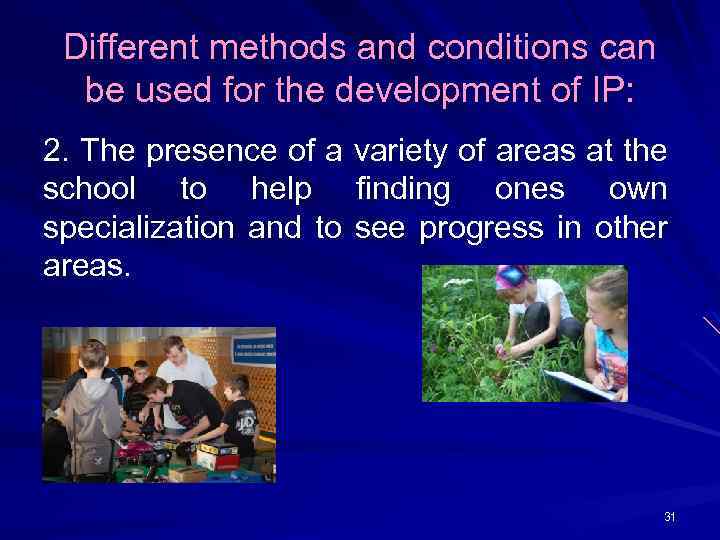 Different methods and conditions can be used for the development of IP: 2. The presence of a variety of areas at the school to help finding ones own specialization and to see progress in other areas. 31
 The presence of an enthusiastic little "mathematician" and enthusiastic little "historian" in the same class makes it possible to create a unifying atmosphere of cognitive activity in the field of history for "mathematician" and in mathematics for "historian". A fascinated and accessible "mathematician" may be able to explain the complexity and inspiration of mathematics to a "historian", and to do it even better than an adult teacher. 32
 3. Usage of publicly available methods, that do not depend on intellectual abilities, and at the same time reveal these opportunities , intellectual techniques developing such passion, such as the inclusion of humor in the subject area or use Cheerful and Challenging mathematical method ("wrapping" mathematical "nuts" in a fabulous wrap , and so that the " nut" has both an easy and a difficult solution). 33
 This is especially important for those students who are not yet interested in the subject, who should be captured by it and needing a joyful atmosphere and creative mood. 34
 It is important that Che. Cha math begins from a teacher, but IP begins from a pupil, and is needed only support. What is Che. Cha + IP? In usual class. . . For ordinary pupil. . . 35
 Thanks to professor Erkki Pehkonen and professor Markku Hannula for ideas, consultations and support 36
 37
37