


 Скачать презентацию Integrity in the Marketplace A Presentation for
5dbde0087f0c474b0262427114b8987a.ppt
- Количество слайдов: 109
 Integrity in the Marketplace
 A Presentation for Focal. Point Wednesday, July 1, 2015
 By Clarence G. Oliver, Jr. , Ed. D. Emeritus Professor, Former Dean Oral Roberts University College of Education and Retired Superintendent of Schools Broken Arrow Public Schools
 Reflections on. . . “Ethics, Values, Trust and Integrity”. . . the way we live and work
 “The world has achieved brilliance without conscience. Ours is a world of nuclear giants and ethical infants. ” — General Omar Bradley Address on Armistice Day 1948
 Integrity is Ancient Topic “Whoever walks in integrity walks securely, but he who makes his ways crooked will be found out. ” — Proverbs 10: 9
 Ancient Business Advice — There are at least 11 references in the Bible in which people are instructed to have accurate and honest weights and measures in business dealings with one another.
 Fair Weights, Measurements “Do not use dishonest standards when measuring length, weight or quantity. Use honest scales and honest weights, an honest ephah and an honest hin. Keep all my decrees and all my laws and follow them. ” — Leviticus 19: 35 -37
 Immeasurable Asset — • The trust that all your employees and others in the community place in your business and in its leadership is an asset of immeasurable value. • Each executive has a personal responsibility to guard this trust, maintain it, and strengthen it.
 Walking the Walk — • Integrity is simply putting Ethics into practice in a daily walk. • It involves moral judgment, character, honesty and leadership values. • Individuals who show integrity in the workplace not only understand right from wrong, but they practice it in all they say and do.
 Internal Values System — • Business and Professional leaders encounter situations—almost on a daily basis—that require personal judgments to be made that involve ethical decisions. • For those decisions to be reached almost automatically, though, one must have internalized a solid legal, moral and ethical values system.
 The Compass Within — • Often, people have a “gut feeling” of what is right or wrong, and speak or act accordingly. • Without that personal compass to keep a person always moving in the right direction, it is easy to stumble. • What follows can be as minor as a slight embarrassment or can reach the level of criminal prosecution and significant punishment.
 Absolute Integrity — • Among the core tenets for Leadership are Integrity, Fairness, Honesty and Trust. • Although there must be a commitment to all the core values, the one among these fundamental principles that rises to a primary position is Integrity. • To that one tenet—Integrity—the commitment must be Absolute.
 Unequivocally Embraced — • As an adjective, “Absolute, ”adds emphasis, meaning that the noun, “Integrity, ” is unequivocally or unconditionally embraced. • The one failure that is unforgivable in a leader’s behavior is a lack of integrity. • Failure to lead with integrity is deplorable. It is virtually unpardonable
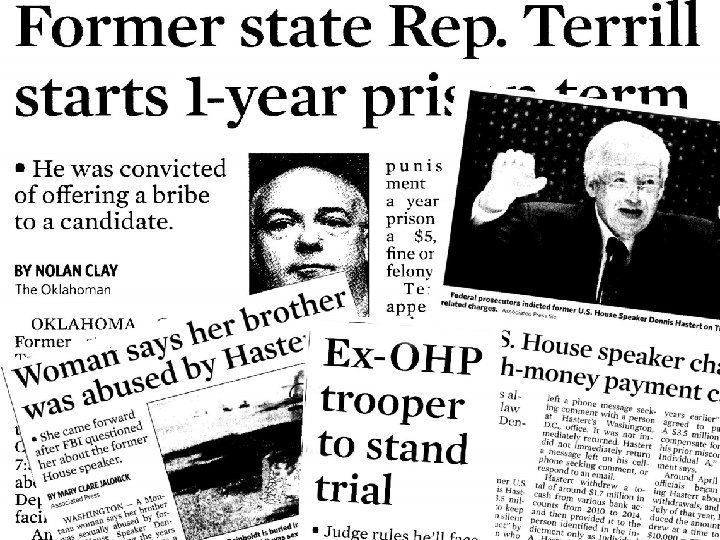
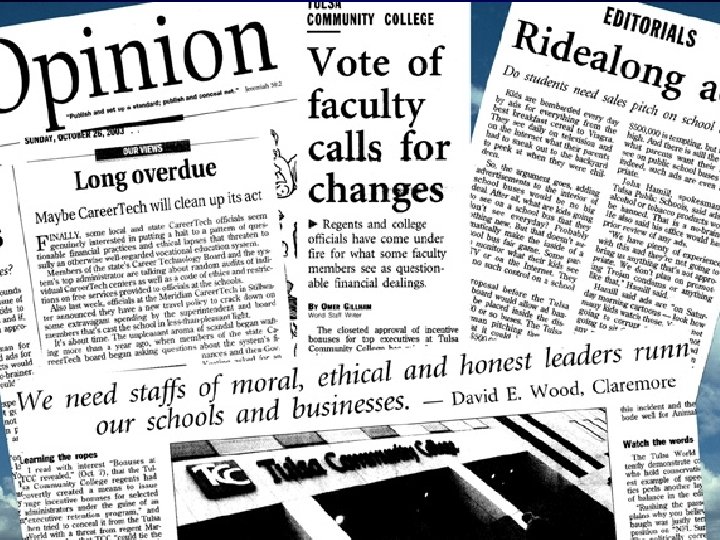
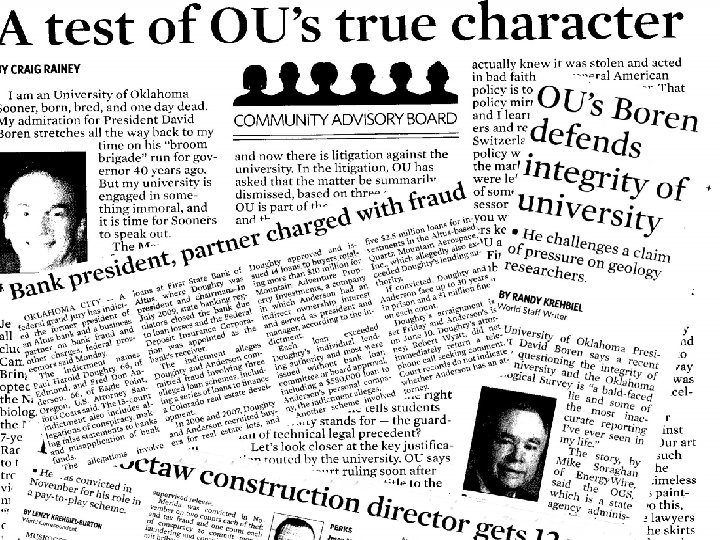
 Failing the Test — • Newspapers and other media sources report almost daily of leaders who have stumbled along the road. • Such behavior brings an end to their careers, embarrasses their families and friends, and creates financial and legal difficulties for the companies they were entrusted to lead

 Seven Generations — • Living in our nation today are at least seven generations of people. • Each generation is different. • Finding cohesion among groups that don’t see eye to eye is a daunting task.

 The Generation Mix — • Business and corporate leaders of today are dealing with a unique and challenging people “mix. ” • Four milestones provide a benchmark to help identify the groups that make up the employees (stakeholders) in most businesses—small or large. • The people in the community include one or two additional Generation groups.
 The Differences — • Each of the generations is different. • There are some similarities, but there are major differences in attitudes, values, vision, philosophy, behavior and a variety of other characteristics. • Those differences exist because people of each generation have been greatly influenced by experiences which are unique to the times in which people of that generation were born, were children and young adults.
 Burned into Minds — Some of the experiences are burned into our mind. . . to the point that virtually every person in the generation can remember precisely where he or she was and what he or she was doing when the event occurred or became known.
 The Benchmarks — If you remember “Pearl Harbor” and “V-J Day, ” you are probably from the “Depression-Era Kids” generation, one of the Senior workers.
 The Benchmarks — If you remember the day President Kennedy was assassinated, you are a “Baby Boomer. ”
 The Benchmarks — If you watched the Challenger disaster on a classroom TV, you are a “Gen Xer. ”
 The Benchmarks — If Columbine and 9/11 are etched in your memory from adolescence, you are a “Millennial. ”
 Interesting Challenges — • Gen Xers, Millennials, Baby Boomers and even a Senior or two are working side by side. • Each group has different values, dress differently, talk differently, and react to authority in different ways.
 The “Tweeters” — • The Gen Xers and Millennials have i. Pods playing in their ears. • They text—even during staff meetings. • They Tweet, have Facebook accounts with hundreds of socalled friends linked to them. • Their dress, jewelry, speech, behavior differs.
 Leader’s Challenge — • These generations clash. • Anyone holding a job in this shaky economy is grateful, but. . . • Gratitude doesn’t make generational clashes less difficult. • The “mix” is difficult to lead and inspire.
 “Boomers” Leading — • America’s businesses are for the most part led by Baby Boomer executives and boards. • Those who grew up in the post. Korean War baby boom will continue to occupy these seats into 2017 and beyond.
 Time Perspective — • Many new employees were born in the 1990 s — the beginning of the new Century 2000 was looming. • Most of us were worrying about the possible Y 2 K electronic collapse. • To those younger employees, that is history. • Their experience base is completely different from the experiences that most executives remember.
 Generation “Z” — • Generation Z is only one name used for the cohort of people who were born after the preceding Millennials. • There is no agreement on the exact dates to identify this Generation. Some sources start it at the late 1990 s to the present day. • This is the generation whose members are still being born. • They most likely will be given another name in time.
 The “Pluralists” — • • • Generation “Z” are the “Plurals” 54% Caucasian, 24% Hispanic, 14% African-American, 4% Asian, and 4% mixed race/other. They are America's last generation to have a Caucasian majority.
 A Must — Today’s business executives must give highest priority to developing quality relationships with all stakeholders— employees, community members, and other colleagues from this Generational mix.
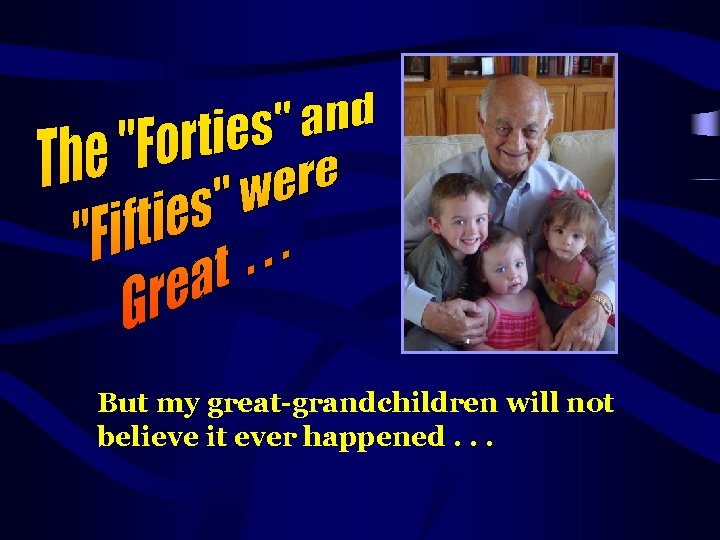 But my great-grandchildren will not believe it ever happened. . .
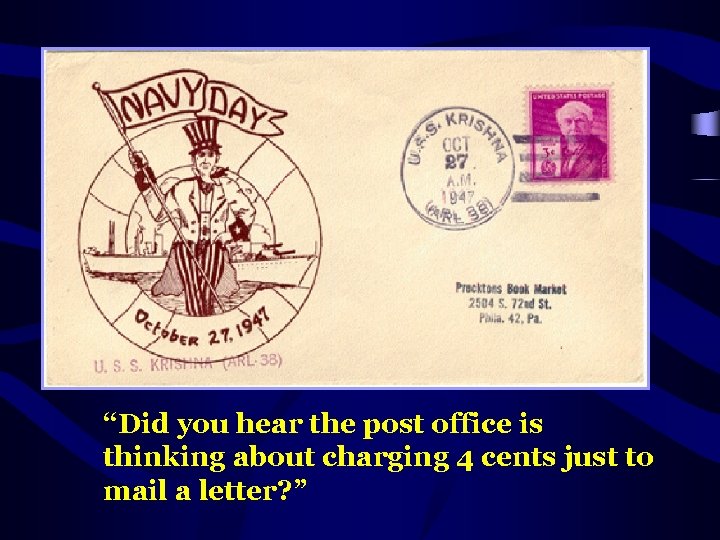 “Did you hear the post office is thinking about charging 4 cents just to mail a letter? ”
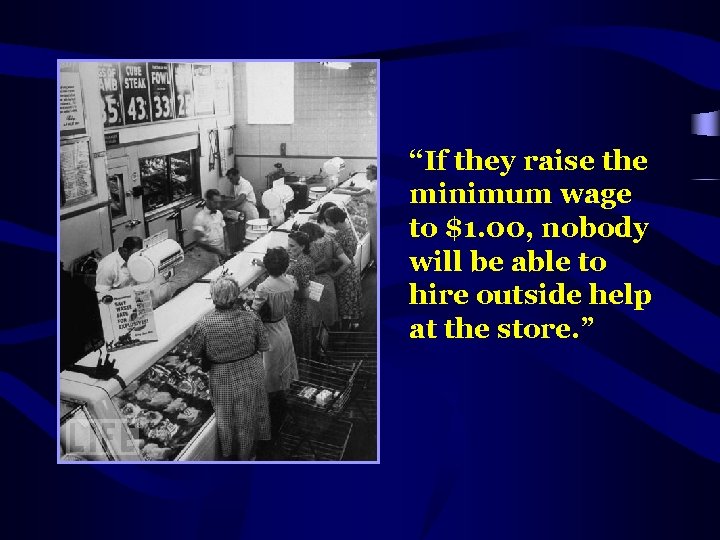 “If they raise the minimum wage to $1. 00, nobody will be able to hire outside help at the store. ”
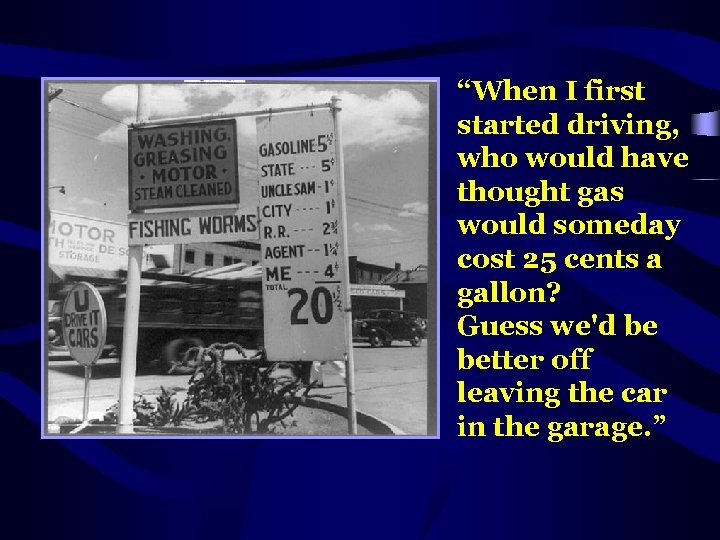 “When I first started driving, who would have thought gas would someday cost 25 cents a gallon? Guess we'd be better off leaving the car in the garage. ”
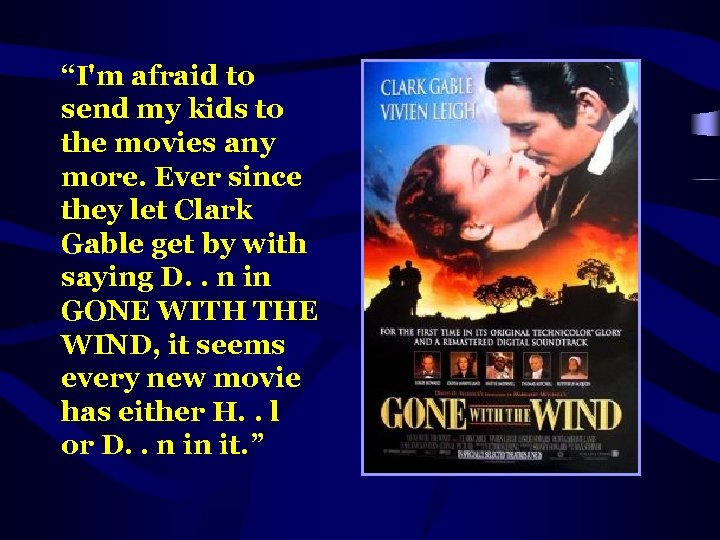 “I'm afraid to send my kids to the movies any more. Ever since they let Clark Gable get by with saying D. . n in GONE WITH THE WIND, it seems every new movie has either H. . l or D. . n in it. ”
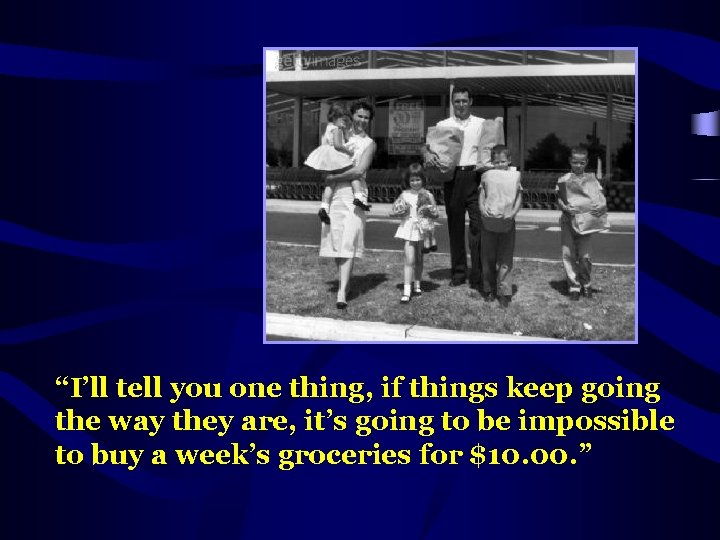 “I’ll tell you one thing, if things keep going the way they are, it’s going to be impossible to buy a week’s groceries for $10. 00. ”
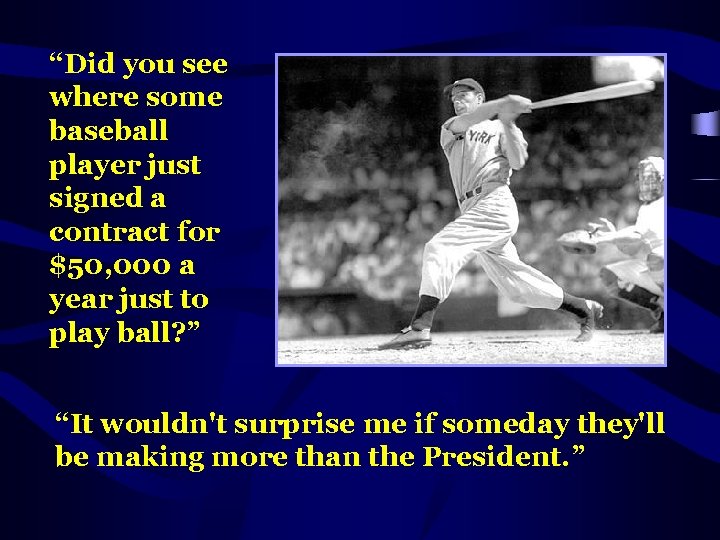 “Did you see where some baseball player just signed a contract for $50, 000 a year just to play ball? ” “It wouldn't surprise me if someday they'll be making more than the President. ”
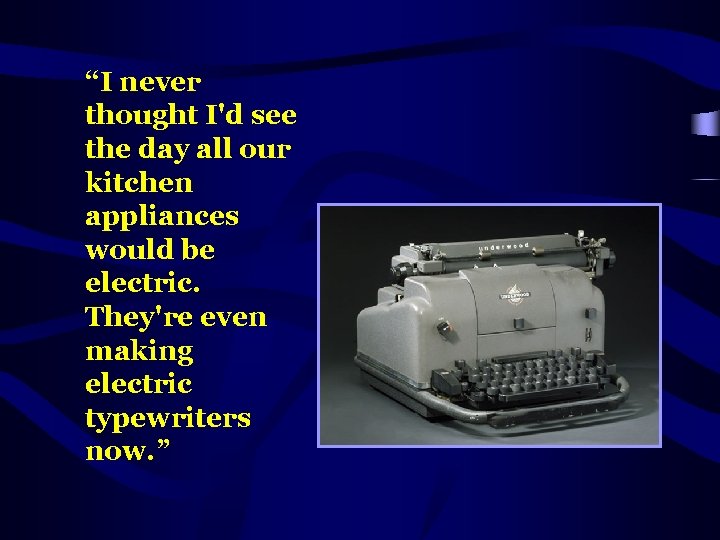 “I never thought I'd see the day all our kitchen appliances would be electric. They're even making electric typewriters now. ”
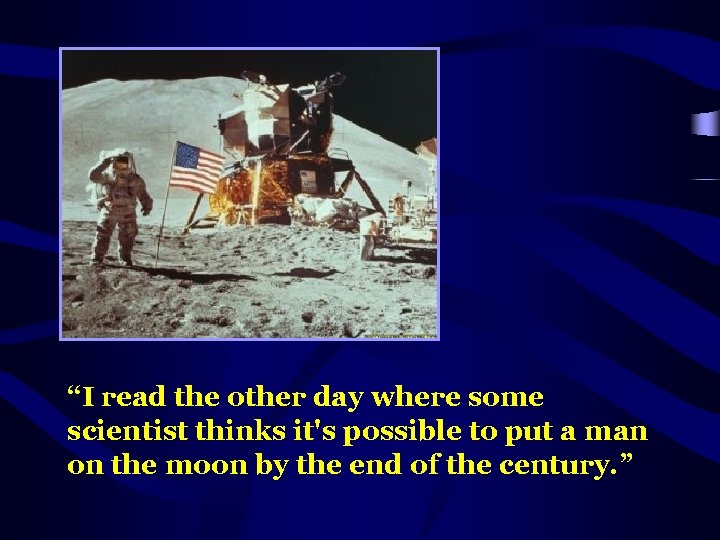 “I read the other day where some scientist thinks it's possible to put a man on the moon by the end of the century. ”
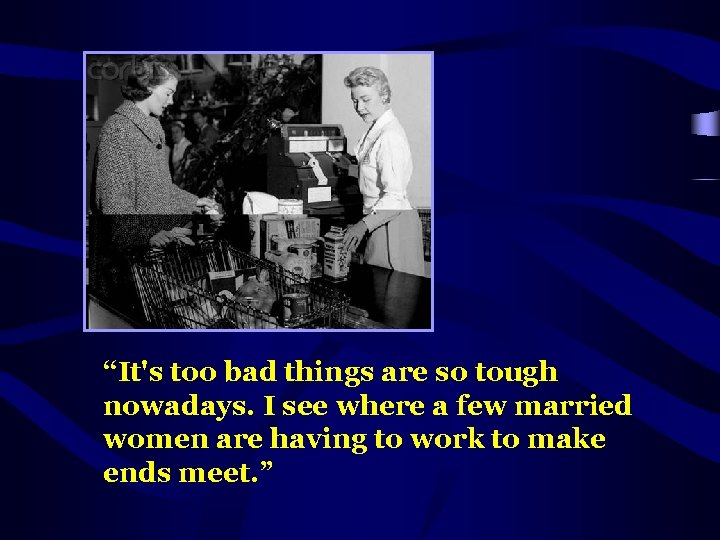 “It's too bad things are so tough nowadays. I see where a few married women are having to work to make ends meet. ”
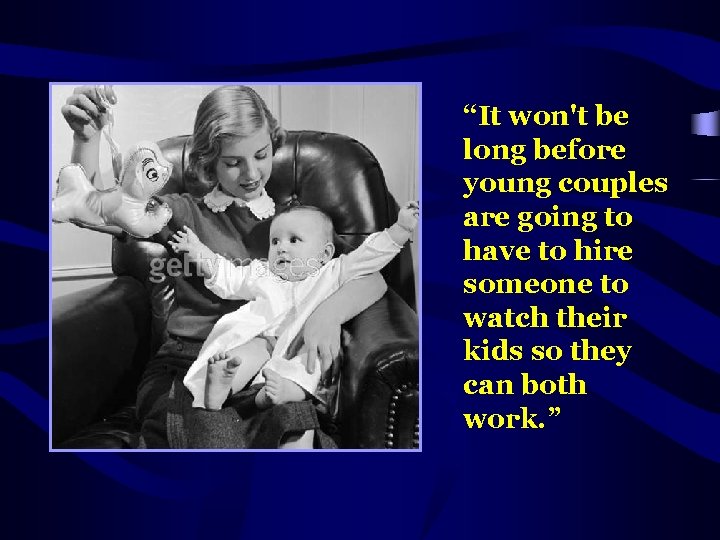 “It won't be long before young couples are going to have to hire someone to watch their kids so they can both work. ”
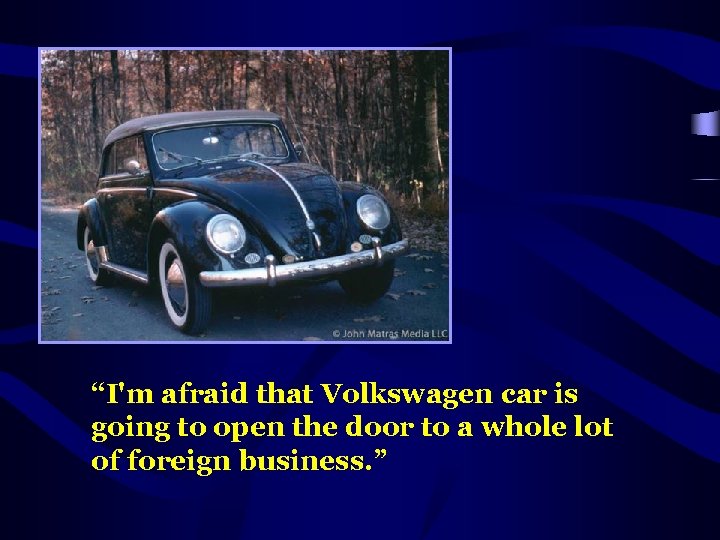 “I'm afraid that Volkswagen car is going to open the door to a whole lot of foreign business. ”
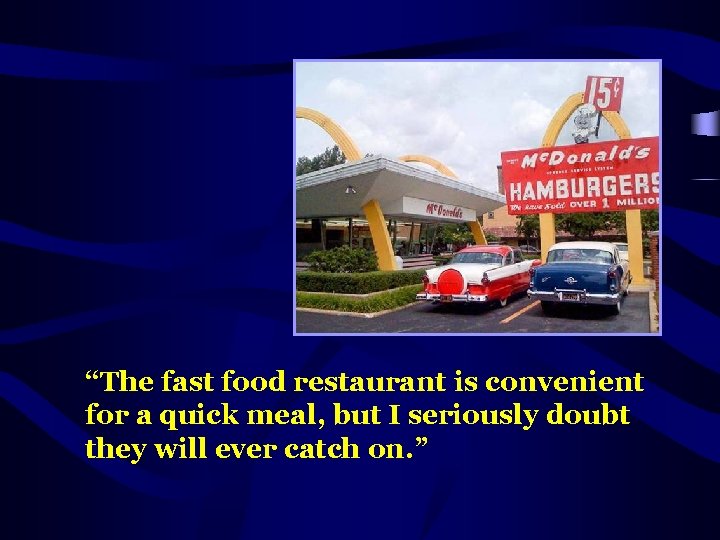 “The fast food restaurant is convenient for a quick meal, but I seriously doubt they will ever catch on. ”
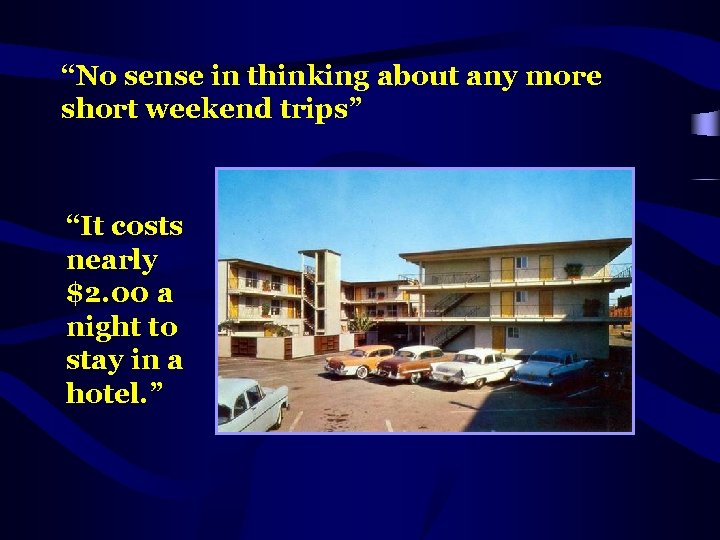 “No sense in thinking about any more short weekend trips” “It costs nearly $2. 00 a night to stay in a hotel. ”
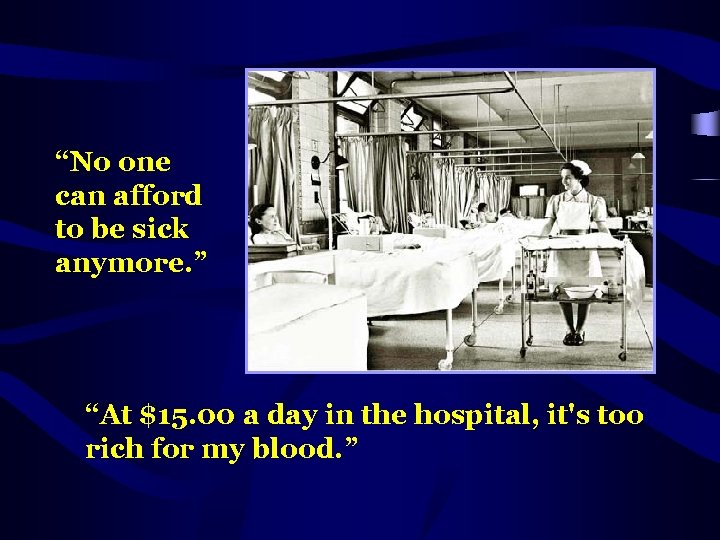 “No one can afford to be sick anymore. ” “At $15. 00 a day in the hospital, it's too rich for my blood. ”
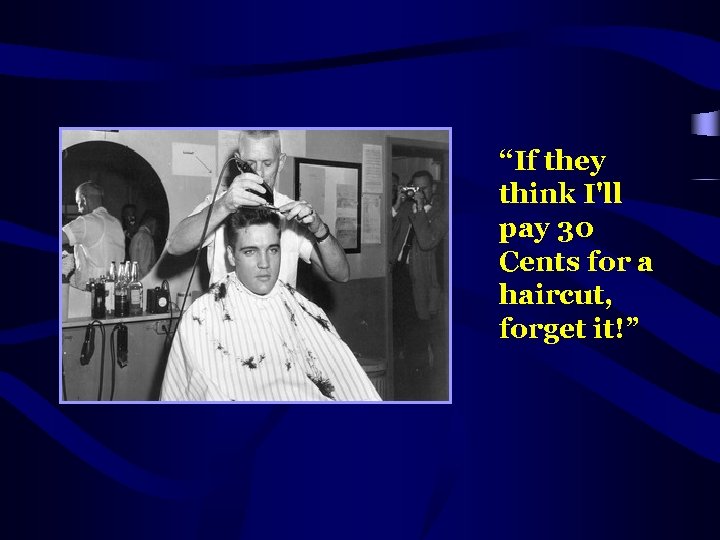 “If they think I'll pay 30 Cents for a haircut, forget it!”
 New Skills Needed — • Executives must be alert and aware of the different behaviors of Generation groups • Be aware of the constantly emerging technology, and • Be aware of the changing skills needed to work with the “Talent” in place and being employed.
 “Always do right. This will gratify some people and astonish the rest. ” —Mark Twain (Samuel Longhorne Clemens) 1835 -1910
 Building Trust — • Trust is strengthened by delivering on our promises. • Trust is eroded any time illegal or unethical behavior comes to light. If there any doubts of these thoughts, just recall recent troubles of several big companies and their leaders—troubles caused by breach of trust.
 Some Leaders Said — Sociologist Raymond Baumhart asked business people that question. Here are some responses — • "Ethics has to do with what my feelings tell me is right or wrong. ” • "Ethics has to do with my religious beliefs. ” • "Being ethical is doing what the law requires. ” • "Ethics consists of the standards of behaviour society accepts. ” • "I don't know what the word means. "
 The Relationship “Values” and “Ethics” • “Values” and “Ethics” are at the core of the work of “Leaders. ” • All that we do is influenced by what we value and our sensitivity to ethical behavior.
 “Values” — • • Define the individual. . . or group Are constant Are internally derived Are concerned with virtue Are general Are stated morally Are judged good or bad Set priorities
 “Ethics” — • • Translate values into action Are changing Are situationally determined Are concerned with justice Are highly specific Are judged present or absent Set boundaries for appropriate behavior
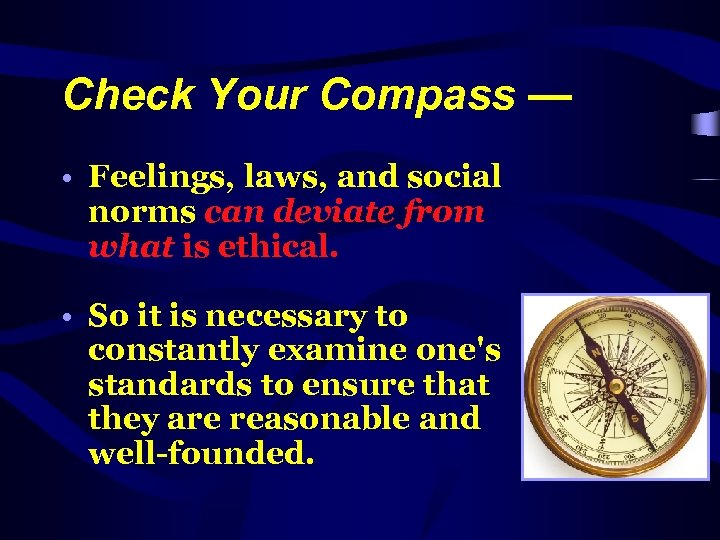 Check Your Compass — • Feelings, laws, and social norms can deviate from what is ethical. • So it is necessary to constantly examine one's standards to ensure that they are reasonable and well-founded.
 What do you value?
 Take a couple of minutes —
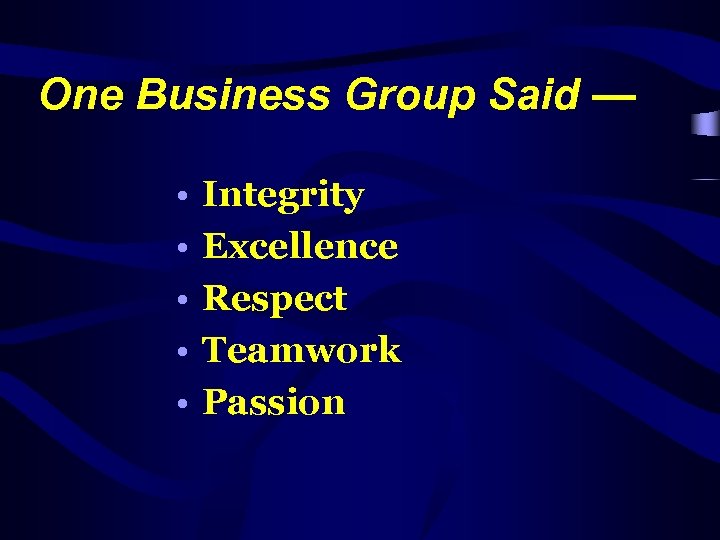 One Business Group Said — • • • Integrity Excellence Respect Teamwork Passion
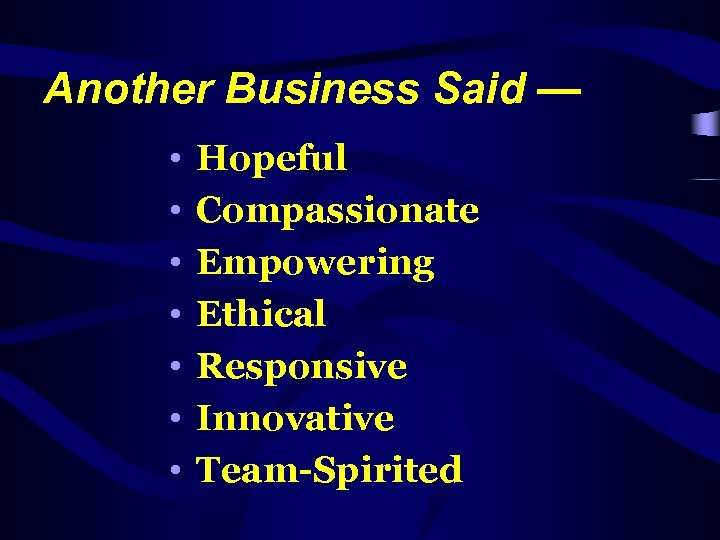 Another Business Said — • • Hopeful Compassionate Empowering Ethical Responsive Innovative Team-Spirited
 “Integrity” and “Ethics are the common values
 Translating “Values” to “Ethics” and “Mission” • Values become the organization’s “Mission. ” • Our commitment to doing the right things for the right reasons is the cornerstone of our success as individuals. • Highly ethical behavior must be part of everything we say and do—every day.
 The Executive’s Role — • Make ethics and ethical practices a part of your everyday job. • Be a role model. • Tone is set at the top. • Help others to make the right decisions.
 How is our Ethical Behaviour? Let’s see how you respond to some routine situations that require making decisions based on our personal ethics and values system.
 Take five minutes —
 Let’s Hear Your Opinions —
 Scenario No. 1 — A Group of Experienced leaders, based on Codes of Ethics, recommend: D. Accept the invitation, but only if you are allowed to pay for your own meal.
 Scenario No. 2 — A Group of Experienced leaders, based on Codes of Ethics, recommend: C. Take the issue to higher level.
 Scenario No. 3 — A Group of Experienced leaders, based on Codes of Ethics, recommend: D. No. It is against company policy (or should be against policy)
 Scenario No. 4 — A Group of Experienced leaders, based on Codes of Ethics, recommend: A. No. An employee should be sure that the reimbursement claim is accurate and complete.
 Scenario No. 5 — A Group of Experienced leaders, based on Codes of Ethics, recommend: B. File the claim for the cost of the rental car only.
 How Do We Compare? In two formal, similar research studies— Executives were asked to respond to borderline ethical dilemmas — typically minor problems of a routine nature — designed to elicit a response or choice of action.
 Executive Responses — • One study recorded 1, 725 ethical responses on the dilemma scenarios out of a possible total of 3, 630, or 47. 3 percent. • Another study (using same criteria) recorded 1, 341 ethical replies out of a possible 2, 790, or 48. 1 percent.
 The Findings — The majority of responses in both surveys were unethical. We have a problem!
 What are Implications? • The results should give cause for concern all across the business community—but especially among chief executives who must “set the tone. ” • Either executives are unaware of the ethical factors raised in the issues they face or they simply do not care.
 The Judgment — It is important to feel good about decisions we make.
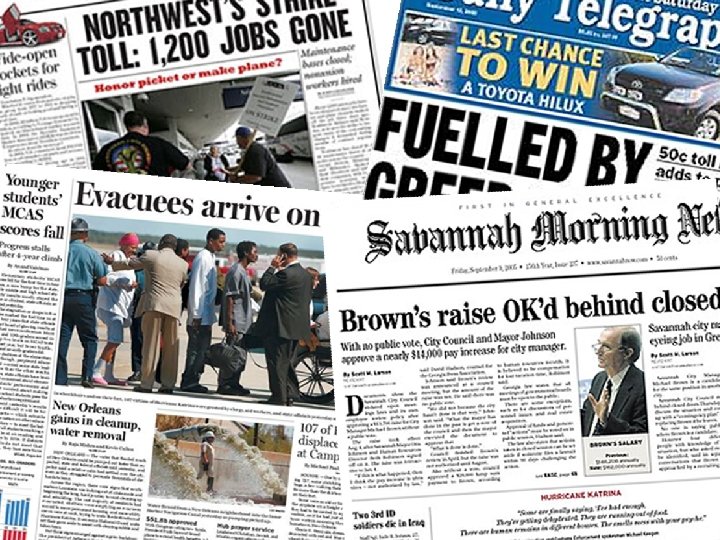
 Ethics Quick Test — • • Is this action LEGAL? Does it comply with our VALUES? If I do it, will I feel BAD? Since I know this is WRONG, I shouldn't do it! • Since I'm not sure, I should ASK someone! • I should keep asking until I get an ANSWER! • How would this look in tomorrow morning's NEWSPAPER?
 Ask Yourself— • Am I being fair and honest? • Will my actions stand the test of time? • Will I sleep soundly tonight? • Would I tell my children to react in the same way?
 Squeaky Clean on Critical Issues — "Skirting" issues or harboring a desire to "slightly bend the rules" can be a temptation when dealing with some of the varied and often controversial topics that are involved in the leadership of any organization.
 A Few Sensitive Areas — • • Nepotism and Conflicts of Interest Personnel Matters Bidding and Business Practices Travel and Conference Expenses Gifts and Hospitality Issues Company Assets and Resources Privileged Communications Collective Bargaining
 Conflicts of Interest — • The confidence of employees or others in the business community is the very foundation for establishing trust. • Even an unfounded appearance of unethical conduct by an executive or other employee can significantly impair the capability of the organization. • Thus, avoiding even the appearance of a conflict of interest forms the basis for good ethical behaviour.
 Personnel Matters — • • Loyalty and Commitment Recruiting a Neighbor’s Staff Honor Thy Contract Employment Gratuities and Rewards • Serving on Corporate Boards of Directors
 Business Practices — • • • A Few Areas of Concern. . . Bidding and Buying Electronic Purchasing Credit Cards Bribery, Gratuities and Rewards
 Bidding and Buying— An executive who seeks to direct purchases to favoured vendors or who seeks to circumvent a competitive bidding process—for whatever reason—is perceived as breaching a trust.
 Watch Out — Any of the following phrases may signal a warning that a situation may be, or may become, an ethical issue.
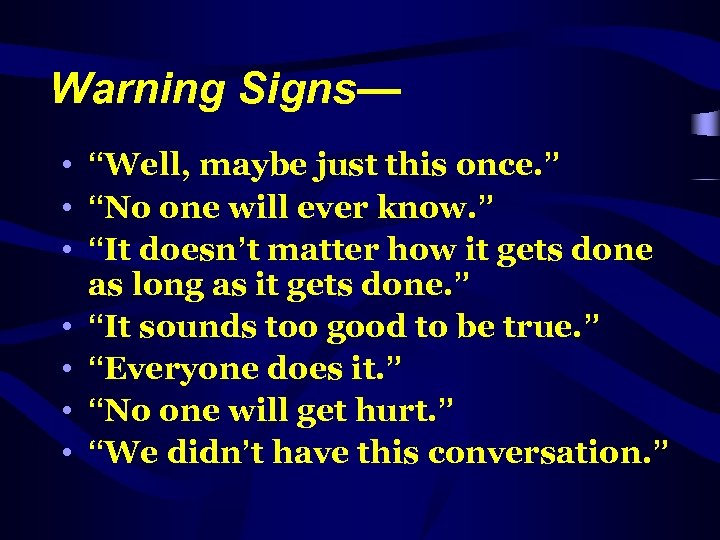 Warning Signs— • “Well, maybe just this once. ” • “No one will ever know. ” • “It doesn’t matter how it gets done as long as it gets done. ” • “It sounds too good to be true. ” • “Everyone does it. ” • “No one will get hurt. ” • “We didn’t have this conversation. ”
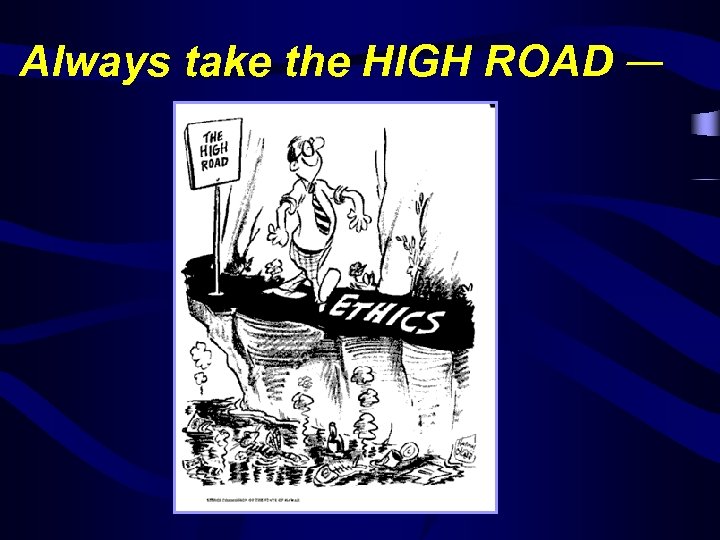 Always take the HIGH ROAD —
 A Few Dangerous Areas
 Travel and Conference Expenses — • Keeping close tabs on expenses related to official travel is difficult. • Some executives are tempted to take advantage of the system and sometimes submit requests for reimbursement of costs that, although they may have occurred while in a travel status as a representative of the company, are simply personal costs.
 Nepotism and Conflicts of Interest — • Favoritism shown or patronage granted to relatives, as in business, is the simplest way to describe Nepotism. • A related matter is that of Conflict of Interest when an executive has the potential for personal gain through some personal action, or through action which the executive leads others to consider.
 The STUFF at Work— • Most people don't give companyowned assets a second thought until they are lost, stolen or broken. Herein lies the problem. • Employees must understand that ethical behavior is demonstrated not only in how they act toward others but also in how they treat property that doesn't belong to them.
 Company Assets and Resources — • Inappropriate use of company-owned equipment, facilities and materials is something that can easily occur unless the executive is constantly alert to the potential problem. • This can be something as complex as the use of a company vehicle for a personal vacation trip, or the use of a company issued credit card to charge personal purchases, lodging and meals.
 Lies on the Resume’ — Studies estimate that as many as one-third of all job seekers provide false or exaggerated information on their resumes. • Men do it more than women • The most common resume lie is about education. • Other common lies include: • Stretching dates to cover employment gaps; enhancing job titles, embellishing job duties and achievements, and inventing employers
 Gifts and Hospitality — The giving and receiving of gifts and gratuities can present some real challenges within a company. • Executives, and stakeholders, should not directly or indirectly solicit any gift, or accept or receive any gift, money, services, loan, travel, entertainment, or hospitality under circumstances in which it could reasonably be inferred that the gift was intended to influence the performance of official duties.
 Bribery, Gratuities and Rewards— An executive who yields to some overwhelming desire for gain and who offers, accepts or agrees to accept some monetary or other benefit of value as consideration for a decision, opinion, recommendation, or other exercise of discretion has succumbed to bribery. Such behaviour is unethical and often illegal.
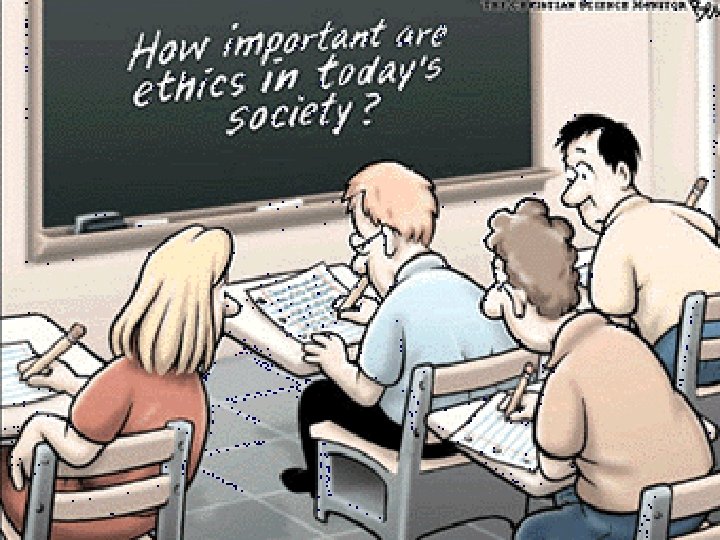
 Our Challenge— • It is absolutely necessary that all business leaders know and conscientiously apply ethical principles in their work and leadership roles. • Otherwise, the alternative will be a gradual degradation of the business profession as a whole.
 Words of Wisdom — “Live so that you wouldn’t be ashamed to sell the family parrot to the town gossip. ” — God’s Little Instruction Book II And, remember— “What you have said in the dark will be heard in the daylight, and what you have whispered in the ear in the inner room will be proclaimed from the roofs. ” — Luke 12: 3
 A Short Parable
 Thanks and Best Wishes! “May the road rise to meet you. May the wind always be at your back. May the sun shine warm upon your face, the rains fall soft upon your fields and, until we meet again, may God hold you in the palm of his hand. ” — Irish Blessing
 May you always “Soar with the Eagles!” — Isaiah 40: 31