Скачать презентацию Integrating rights and protection in value chain and
44b0bd9cfba73aa161eef7965292cbc9.ppt
- Количество слайдов: 54
 Integrating rights and protection in value chain and local development Participatory approaches to improving safety, health and working conditions in grassroots workplaces Tsuyoshi Kawakami ILO Decent Work Technical Support Team for East, and Southeast Asia and the Pacific
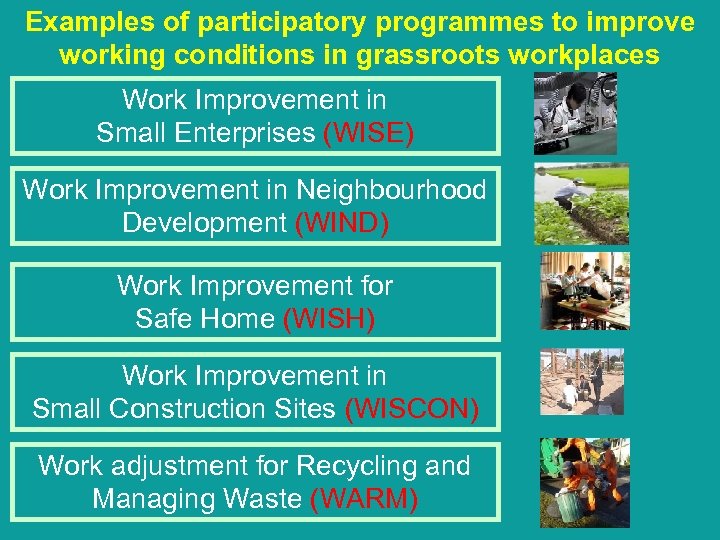 Examples of participatory programmes to improve working conditions in grassroots workplaces Work Improvement in Small Enterprises (WISE) Work Improvement in Neighbourhood Development (WIND) Work Improvement for Safe Home (WISH) Work Improvement in Small Construction Sites (WISCON) Work adjustment for Recycling and Managing Waste (WARM)
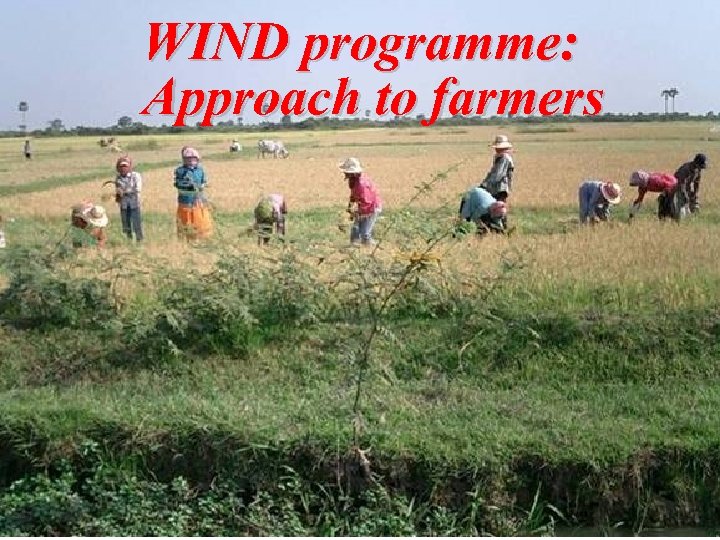 WIND programme: Approach to farmers
 Principles inWIND training programme 1. Learn from local good examples; 2. Start with simple, low-cost improvements; 3. Use easy-to-use training materials; 4. Train farmer trainers; 5. Sustain farmer trainer networks.
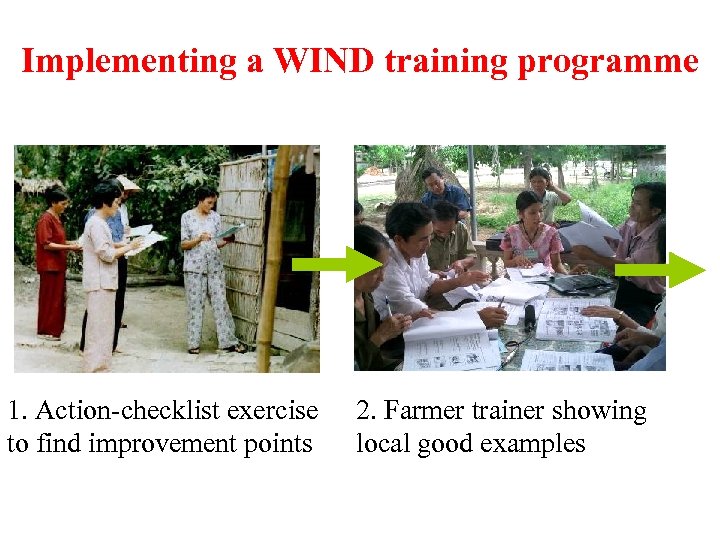 Implementing a WIND training programme 1. Action-checklist exercise to find improvement points 2. Farmer trainer showing local good examples
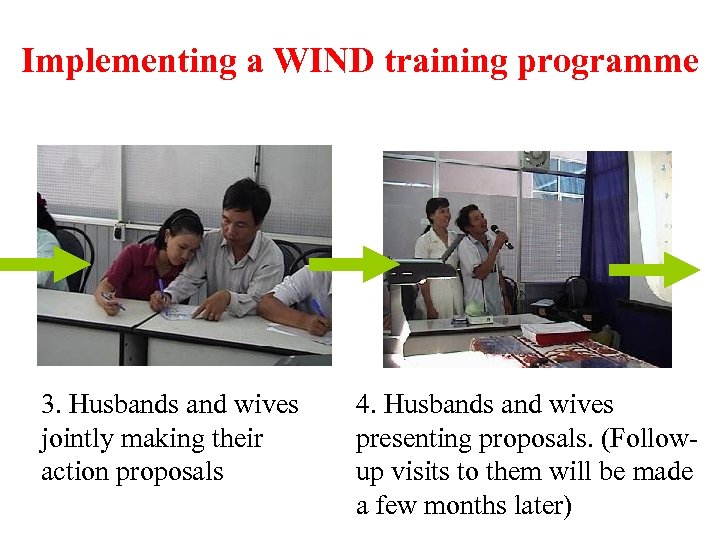 Implementing a WIND training programme 3. Husbands and wives jointly making their action proposals 4. Husbands and wives presenting proposals. (Followup visits to them will be made a few months later)
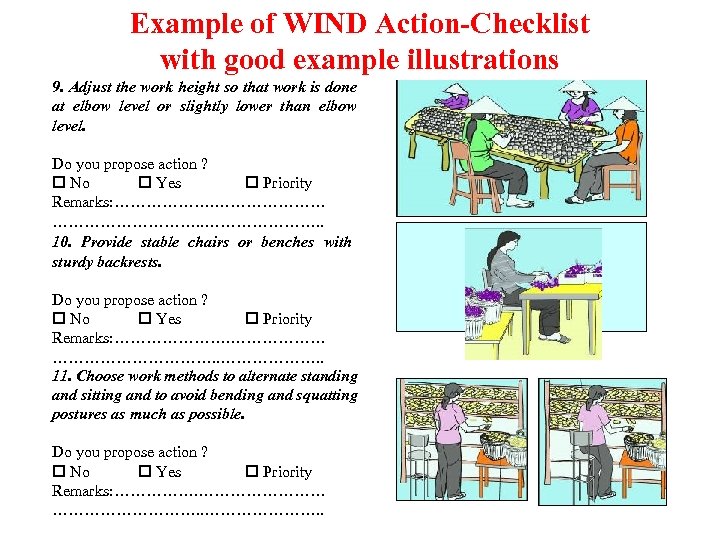 Example of WIND Action-Checklist with good example illustrations Action checklist 9. Adjust the work height so that work is done at elbow level or slightly lower than elbow level. Do you propose action ? No Yes Priority Remarks: ………………………. . 10. Provide stable chairs or benches with sturdy backrests. Do you propose action ? No Yes Priority Remarks: …………………………. . 11. Choose work methods to alternate standing and sitting and to avoid bending and squatting postures as much as possible. Do you propose action ? No Yes Priority Remarks: ………………………. .
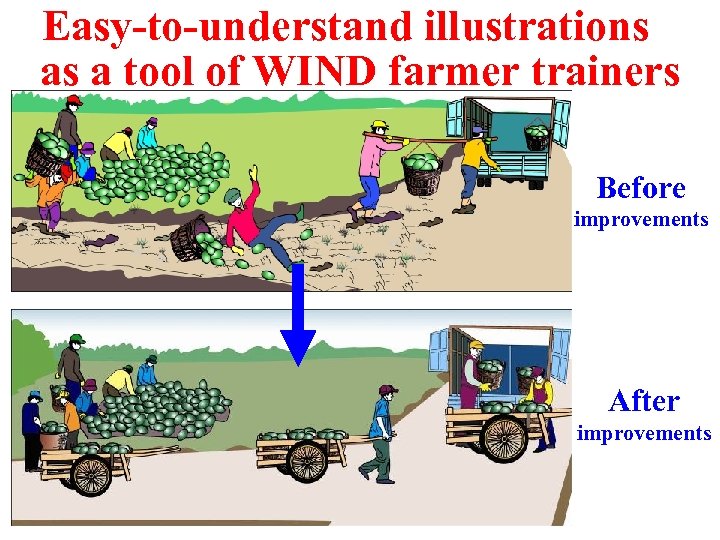 Easy-to-understand illustrations as a tool of WIND farmer trainers Before improvements After improvements
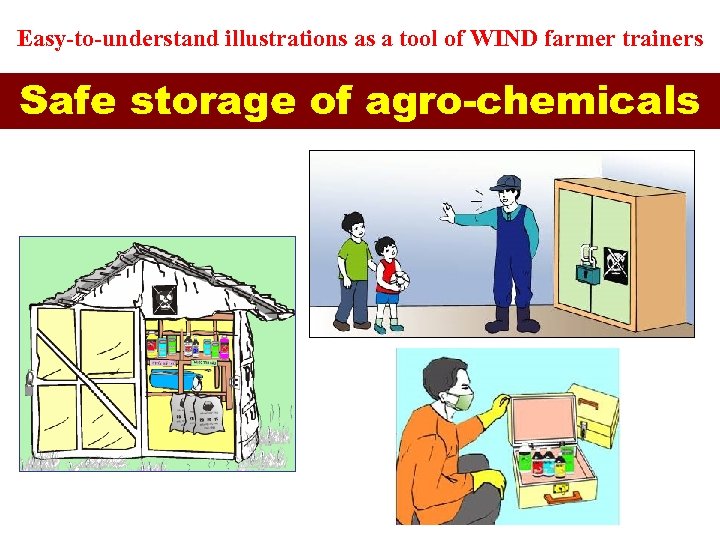 Easy-to-understand illustrations as a tool of WIND farmer trainers Safe storage of agro-chemicals
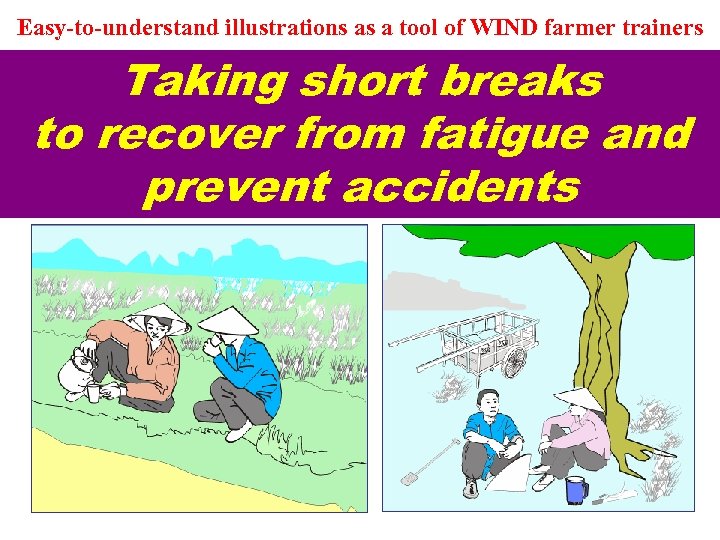 Easy-to-understand illustrations as a tool of WIND farmer trainers Taking short breaks to recover from fatigue and prevent accidents
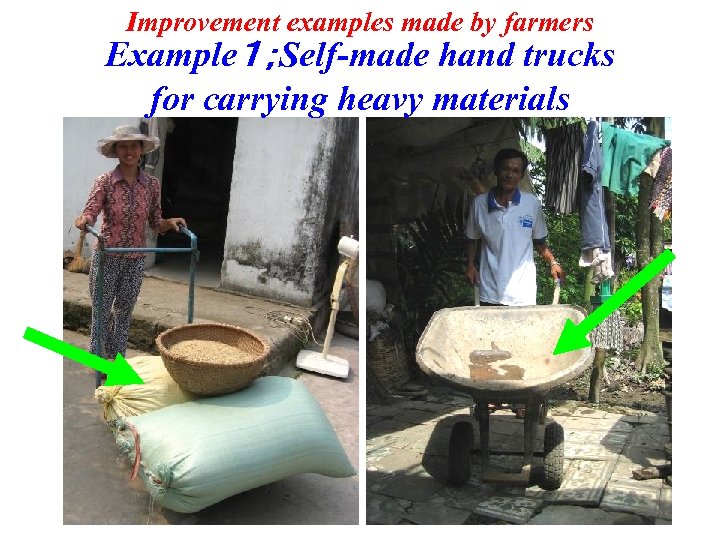 Improvement examples made by farmers Example1;Self-made hand trucks for carrying heavy materials
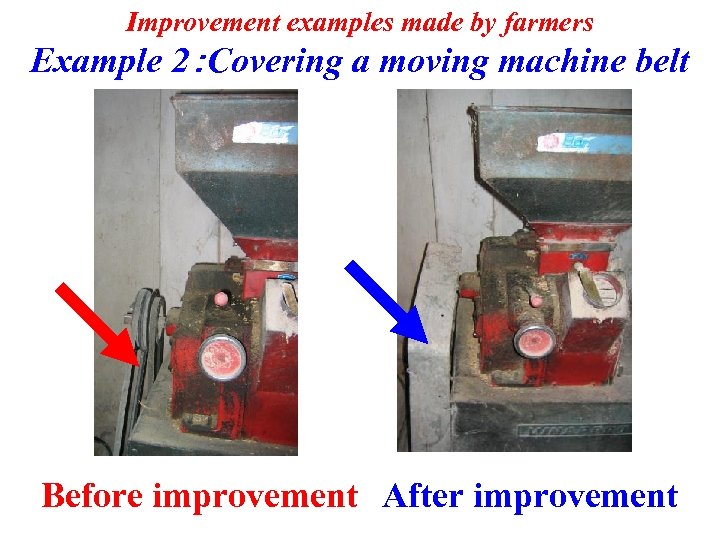 Improvement examples made by farmers Example 2:Covering a moving machine belt Before improvement After improvement
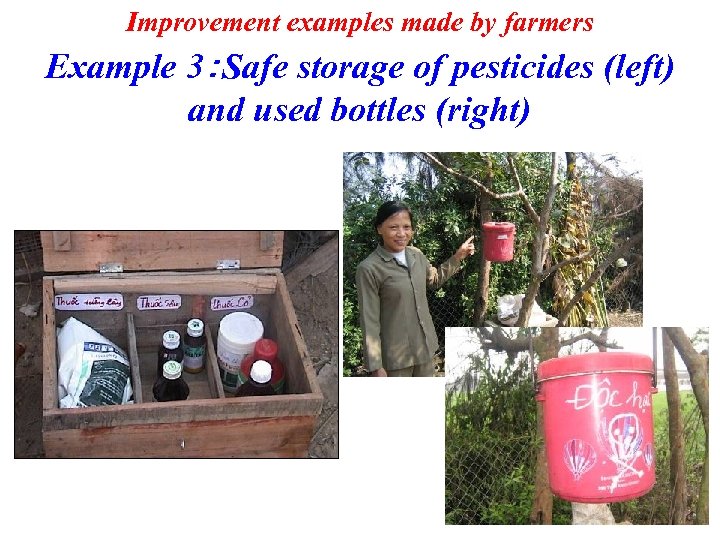 Improvement examples made by farmers Example 3:Safe storage of pesticides (left) and used bottles (right)
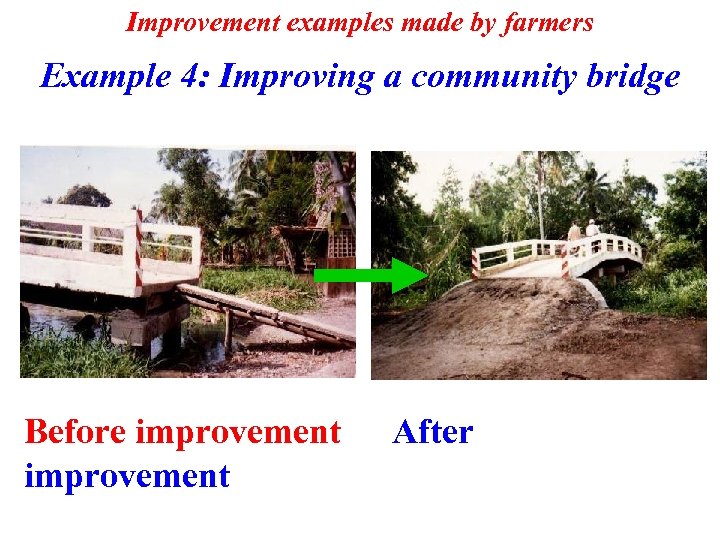 Improvement examples made by farmers Example 4: Improving a community bridge Before improvement After improvement
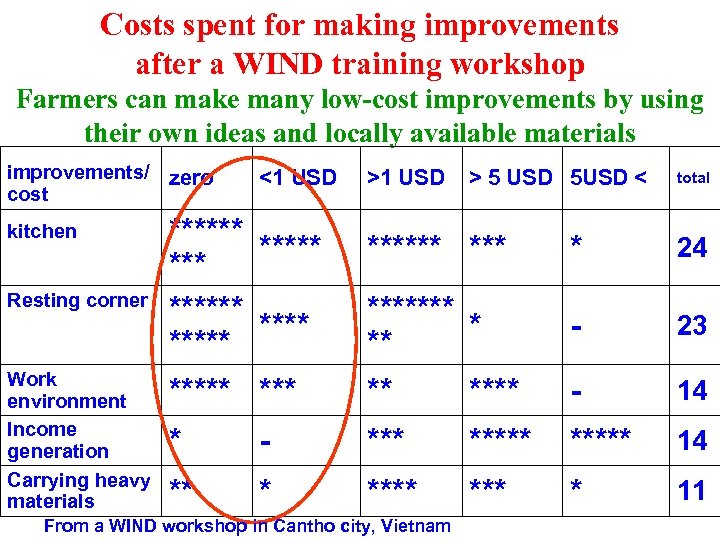 Costs spent for making improvements after a WIND training workshop Farmers can make many low-cost improvements by using their own ideas and locally available materials improvements/ zero cost kitchen Resting corner Work environment Income generation Carrying heavy materials <1 USD ****** ***** *** >1 USD > 5 USD 5 USD < ******* * ** ** **** total * 24 - 23 - 14 * - ***** 14 ** * *** * 11 From a WIND workshop in Cantho city, Vietnam
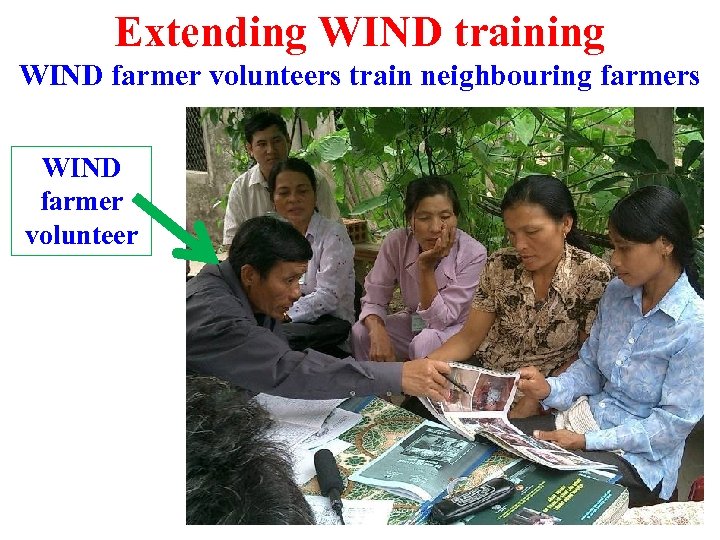 Extending WIND training WIND farmer volunteers train neighbouring farmers WIND farmer volunteer
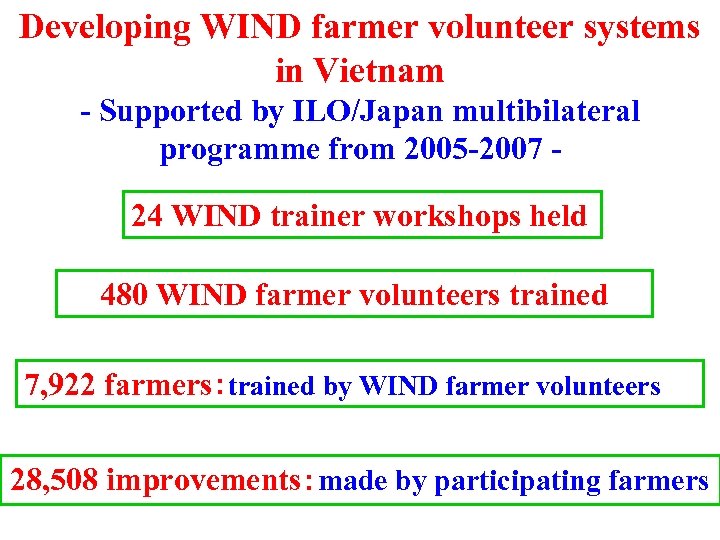 Developing WIND farmer volunteer systems in Vietnam - Supported by ILO/Japan multibilateral programme from 2005 -2007 24 WIND trainer workshops held 480 WIND farmer volunteers trained 7, 922 farmers:trained by WIND farmer volunteers 28, 508 improvements:made by participating farmers
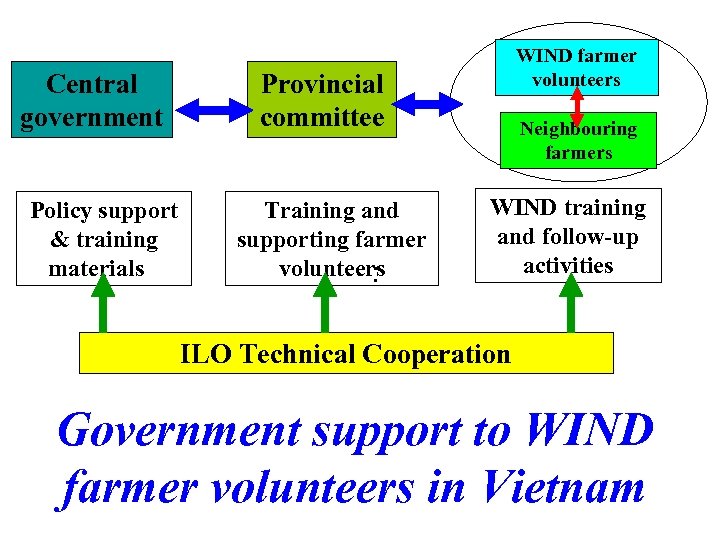 Central government WIND farmer volunteers Provincial committee Policy support Training and & training supporting farmer materials volunteers : Neighbouring farmers WIND training and follow-up activities ILO Technical Cooperation Government support to WIND farmer volunteers in Vietnam
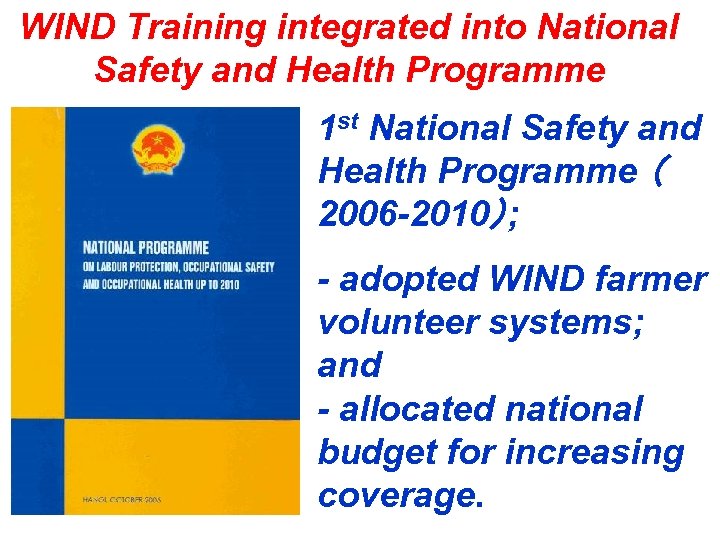 WIND Training integrated into National Safety and Health Programme 1 st National Safety and Health Programme ( 2006 -2010); - adopted WIND farmer volunteer systems; and - allocated national budget for increasing coverage.
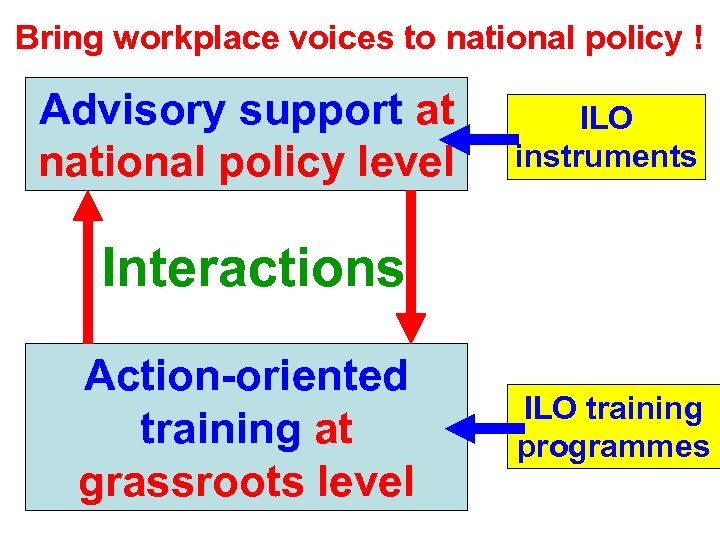 Bring workplace voices to national policy ! Advisory support at national policy level ILO instruments Interactions Action-oriented training at grassroots level ILO training programmes
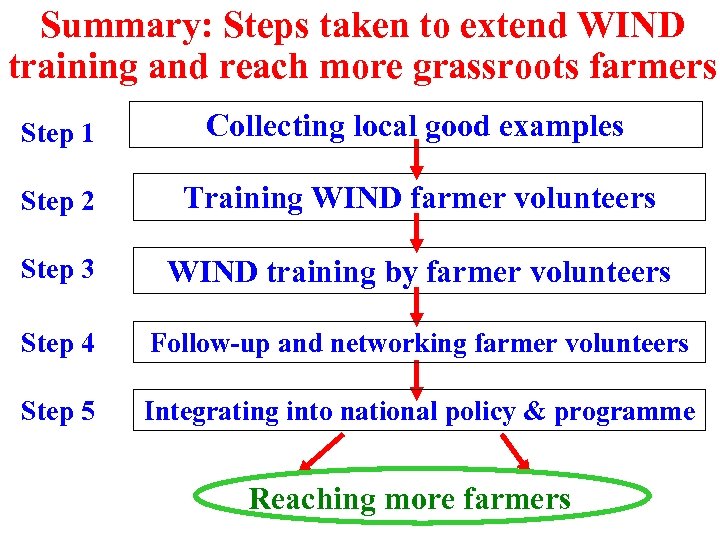 Summary: Steps taken to extend WIND training and reach more grassroots farmers Step 1 Collecting local good examples Step 2 Training WIND farmer volunteers Step 3 WIND training by farmer volunteers Step 4 Follow-up and networking farmer volunteers Step 5 Integrating into national policy & programme Reaching more farmers
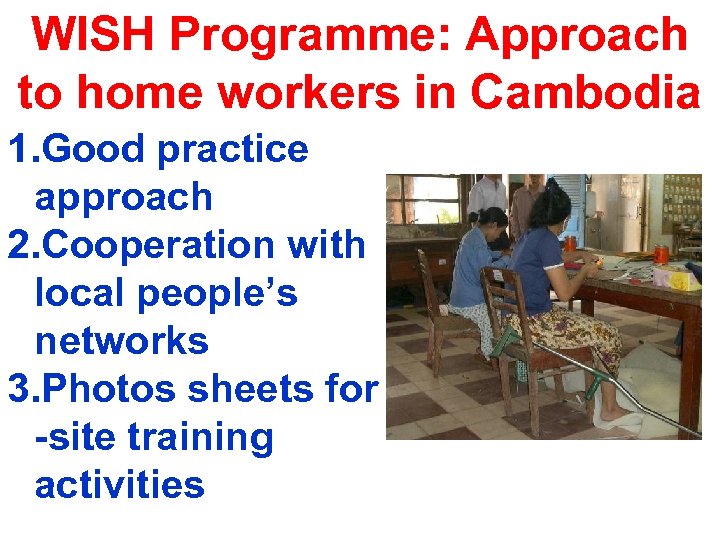 WISH Programme: Approach to home workers in Cambodia 1. Good practice approach 2. Cooperation with local people’s networks 3. Photos sheets for on -site training activities
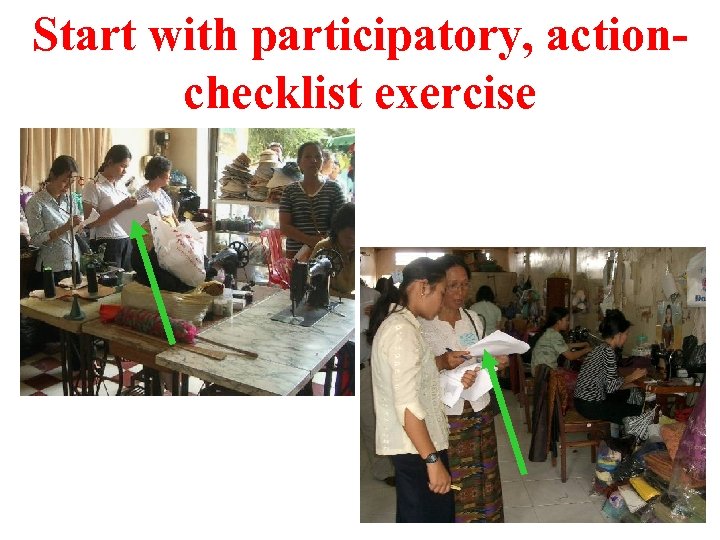 Start with participatory, actionchecklist exercise
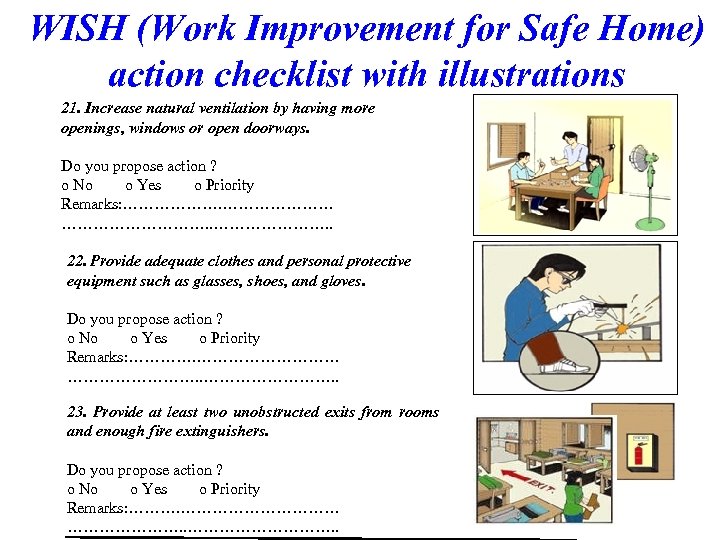 WISH (Work Improvement for Safe Home) action checklist with illustrations 21. Increase natural ventilation by having more openings, windows or open doorways. Do you propose action ? o No o Yes o Priority Remarks: ………………………. . 22. Provide adequate clothes and personal protective equipment such as glasses, shoes, and gloves. Do you propose action ? o No o Yes o Priority Remarks: ……………………. . 23. Provide at least two unobstructed exits from rooms and enough fire extinguishers. Do you propose action ? o No o Yes o Priority Remarks: …………………. .
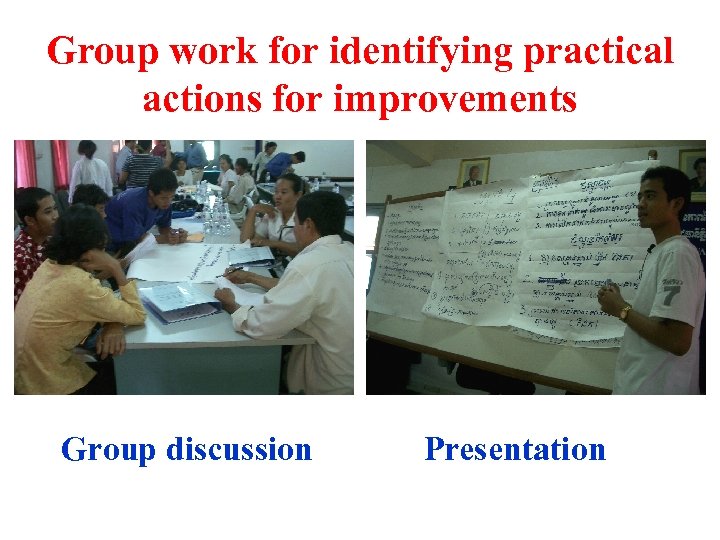 Group work for identifying practical actions for improvements Group discussion Presentation
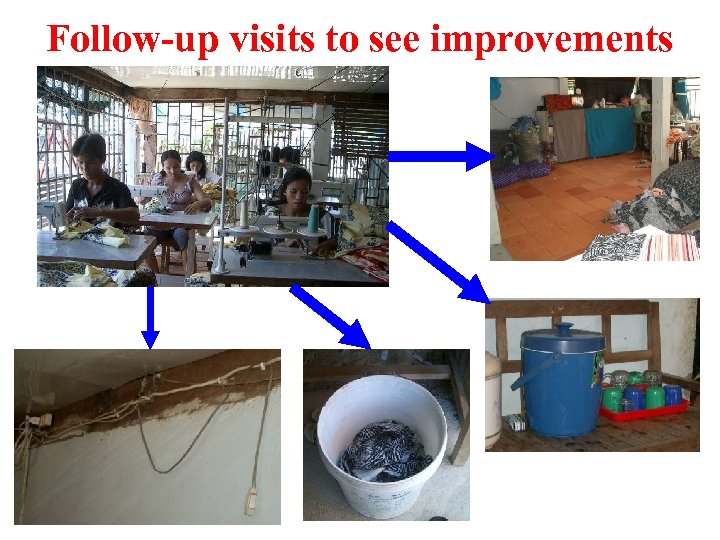 Follow-up visits to see improvements
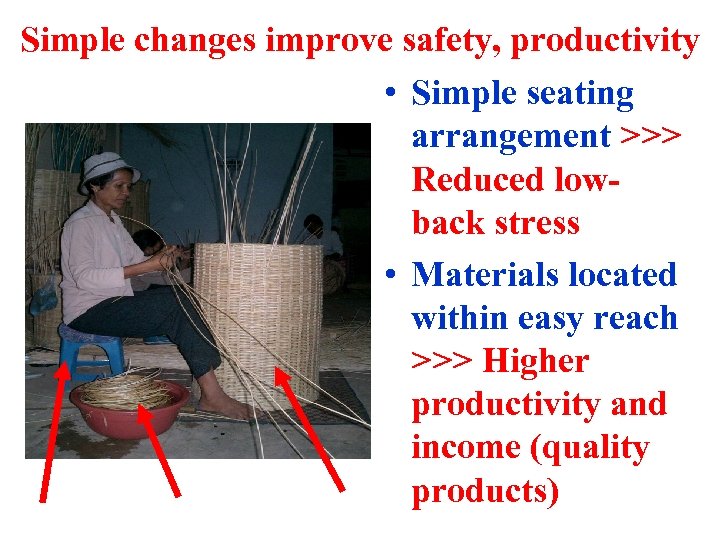 Simple changes improve safety, productivity • Simple seating arrangement >>> Reduced lowback stress • Materials located within easy reach >>> Higher productivity and income (quality products)
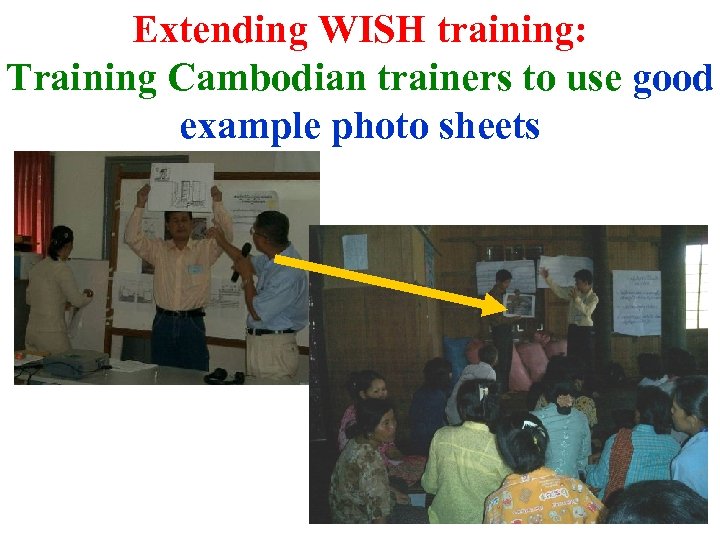 Extending WISH training: Training Cambodian trainers to use good example photo sheets
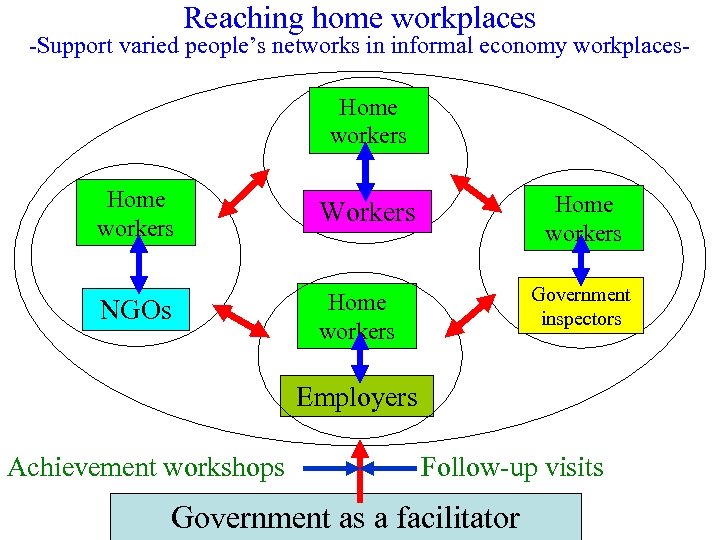 Reaching home workplaces -Support varied people’s networks in informal economy workplaces. Home workers Workers NGOs Home workers Government inspectors Employers Achievement workshops Follow-up visits Government as a facilitator
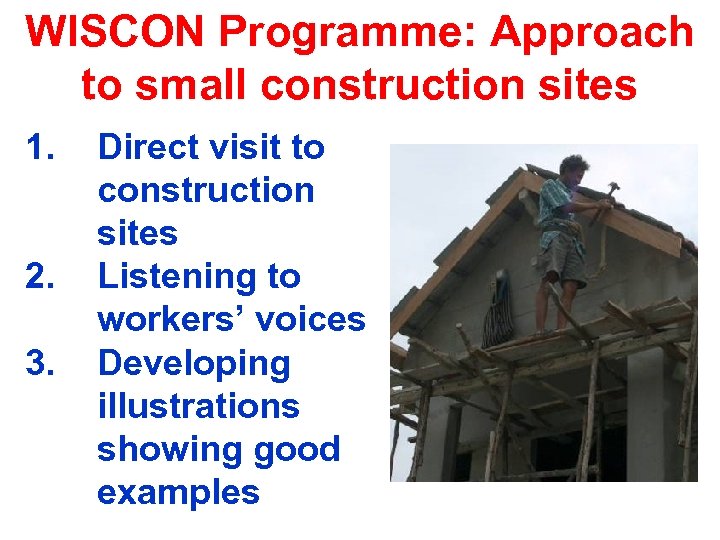 WISCON Programme: Approach to small construction sites 1. 2. 3. Direct visit to construction sites Listening to workers’ voices Developing illustrations showing good examples
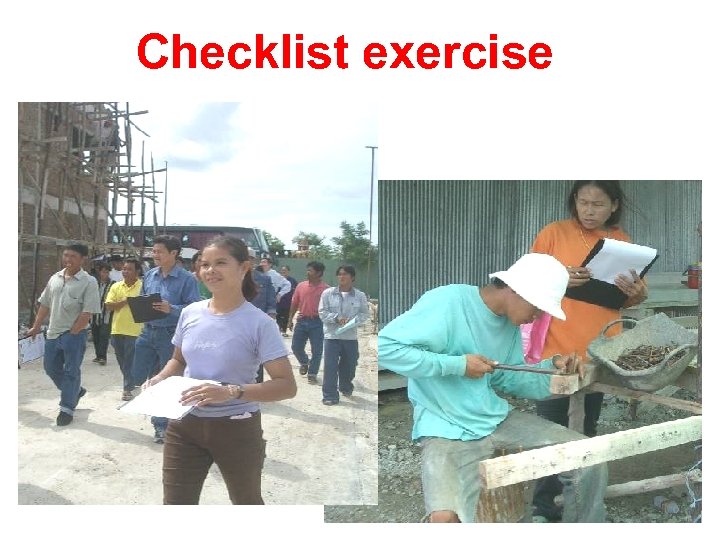 Checklist exercise
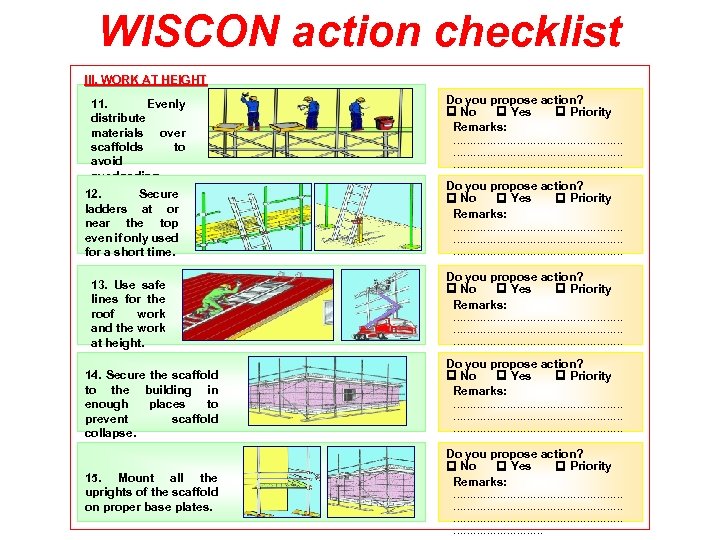 WISCON action checklist III. WORK AT HEIGHT 11. Evenly distribute materials over scaffolds to avoid overloading. 12. Secure ladders at or near the top even if only used for a short time. 13. Use safe lines for the roof work and the work at height. 14. Secure the scaffold to the building in enough places to prevent scaffold collapse. 15. Mount all the uprights of the scaffold on proper base plates. Do you propose action? o No o Yes o Priority Remarks: …………………………………………… …………………………………………… …………………………………………… ……………………… Do you propose action? o No o Yes o Priority Remarks: …………………………………………… ……………
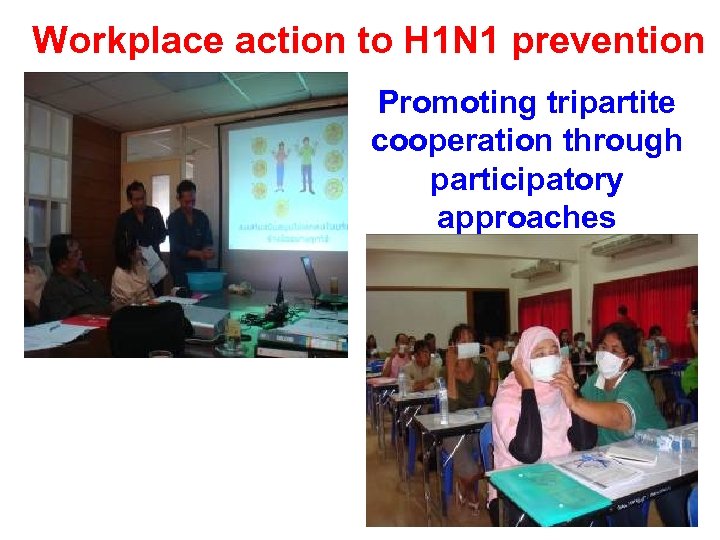 Workplace action to H 1 N 1 prevention Promoting tripartite cooperation through participatory approaches
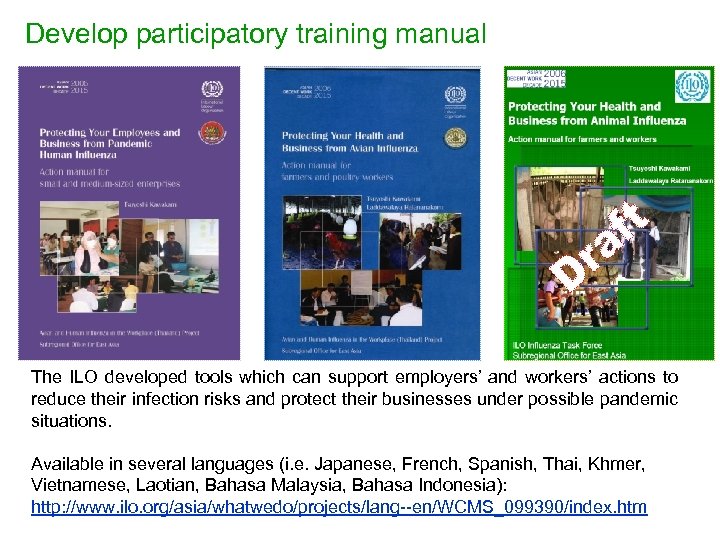 Develop participatory training manual The ILO developed tools which can support employers’ and workers’ actions to reduce their infection risks and protect their businesses under possible pandemic situations. Available in several languages (i. e. Japanese, French, Spanish, Thai, Khmer, Vietnamese, Laotian, Bahasa Malaysia, Bahasa Indonesia): http: //www. ilo. org/asia/whatwedo/projects/lang--en/WCMS_099390/index. htm
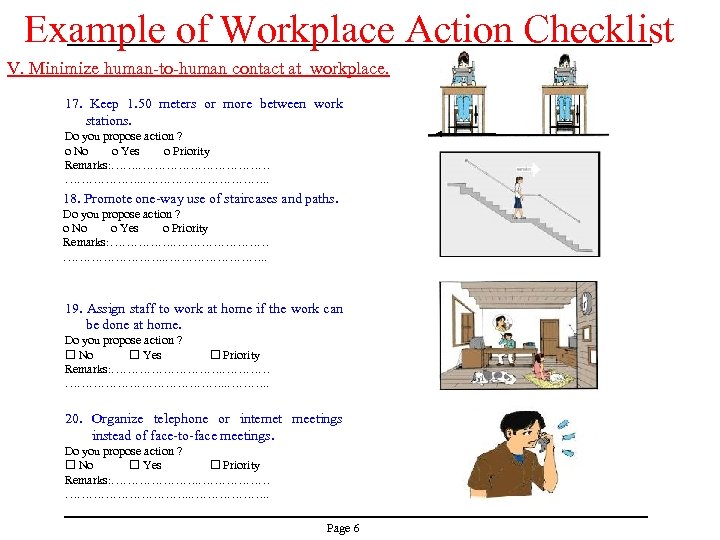 Example of Workplace Action Checklist V. Minimize human-to-human contact at workplace. 17. Keep 1. 50 meters or more between work stations. Do you propose action ? o No o Yes o Priority Remarks: ……. ………………. . 18. Promote one-way use of staircases and paths. Do you propose action ? o No o Yes o Priority Remarks: ……………………. . 19. Assign staff to work at home if the work can be done at home. Do you propose action ? No Yes Priority Remarks: ………………………. . 20. Organize telephone or internet meetings instead of face-to-face meetings. Do you propose action ? No Yes Priority Remarks: …………………………. . Page 6
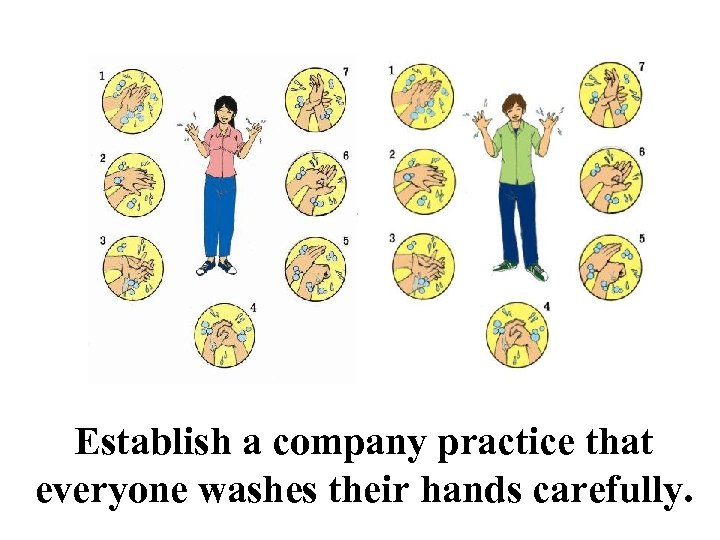 Establish a company practice that everyone washes their hands carefully.
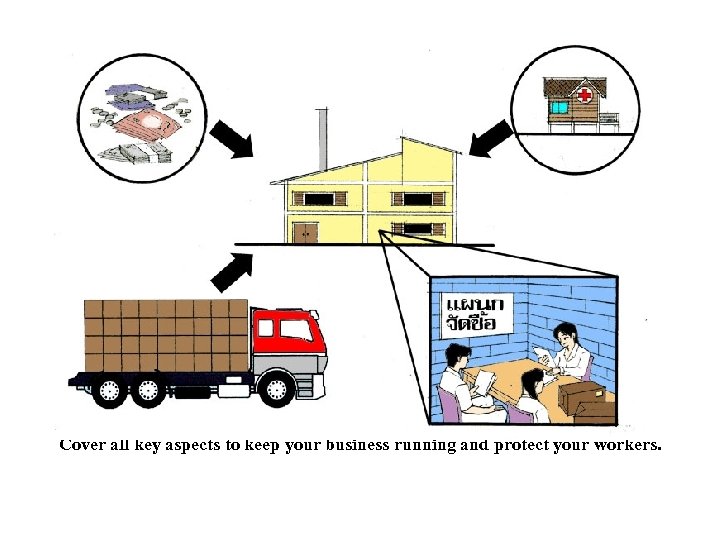 Cover all key aspects to keep your business running and protect your workers.
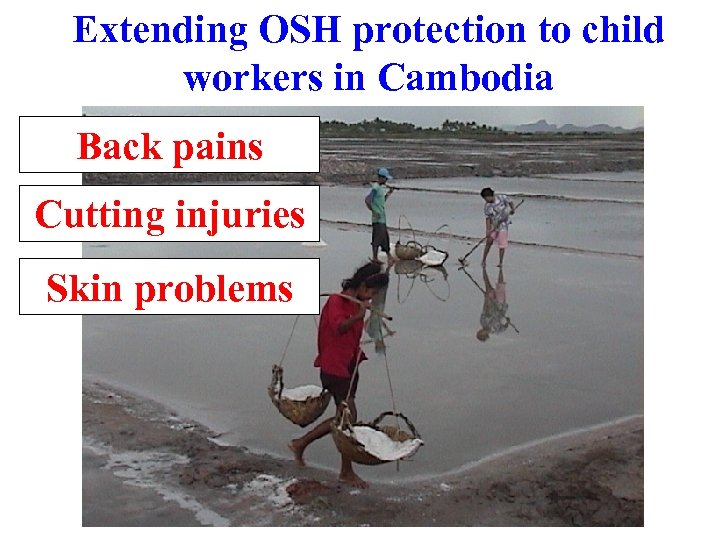 Extending OSH protection to child workers in Cambodia Back pains Cutting injuries Skin problems
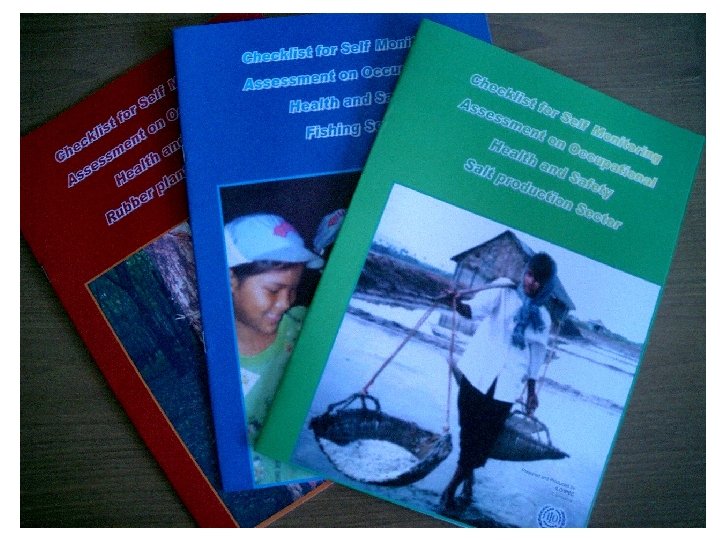
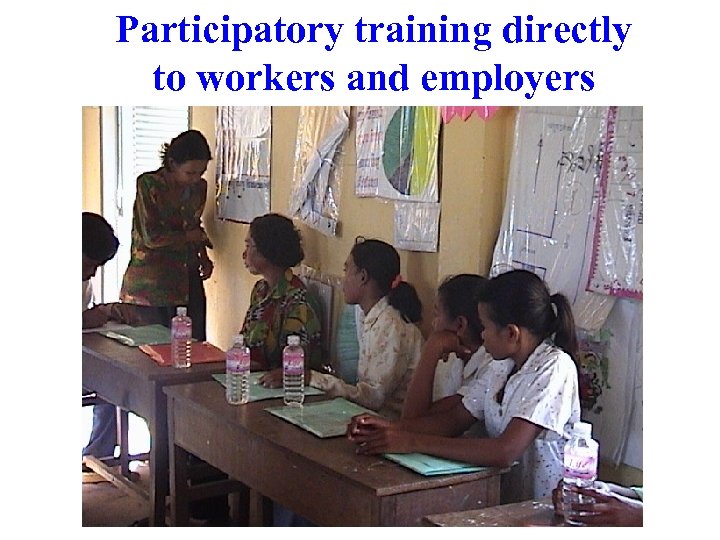 Participatory training directly to workers and employers
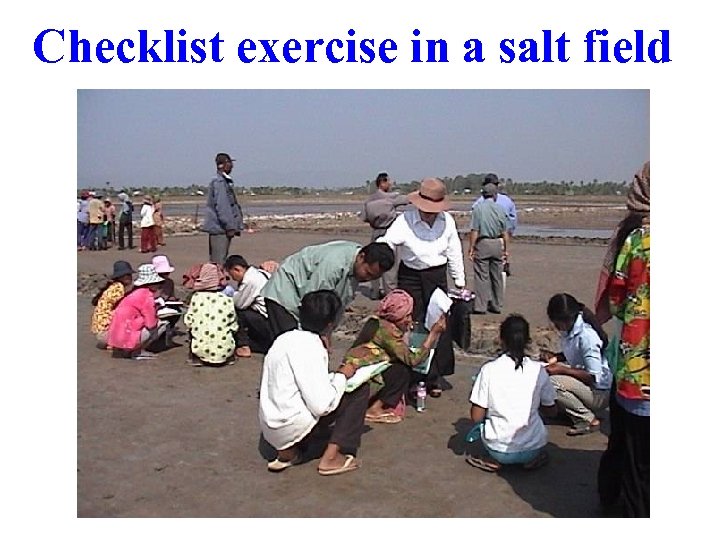 Checklist exercise in a salt field
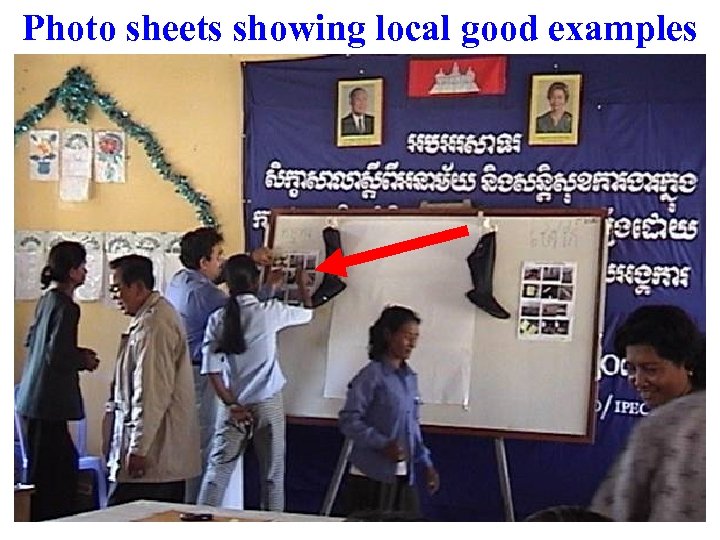 Photo sheets showing local good examples
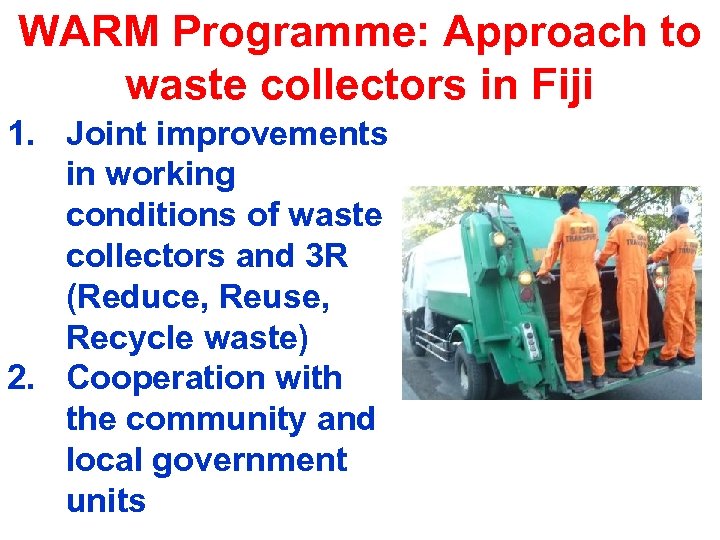 WARM Programme: Approach to waste collectors in Fiji 1. Joint improvements in working conditions of waste collectors and 3 R (Reduce, Reuse, Recycle waste) 2. Cooperation with the community and local government units
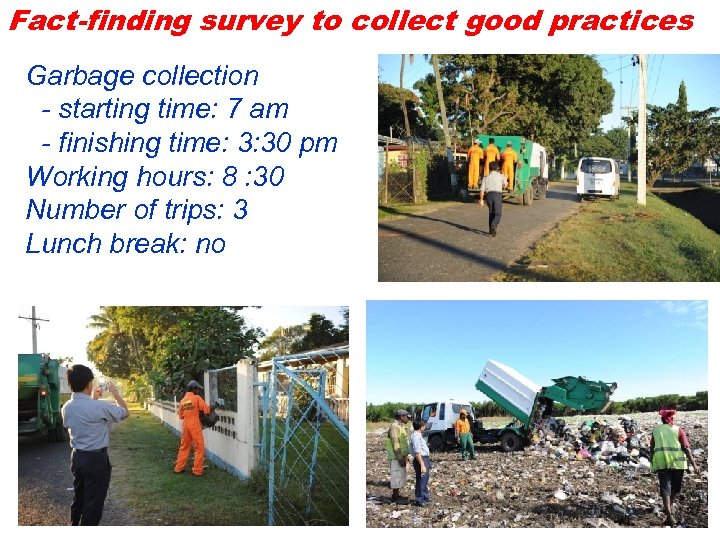 Fact-finding survey to collect good practices Garbage collection - starting time: 7 am - finishing time: 3: 30 pm Working hours: 8 : 30 Number of trips: 3 Lunch break: no
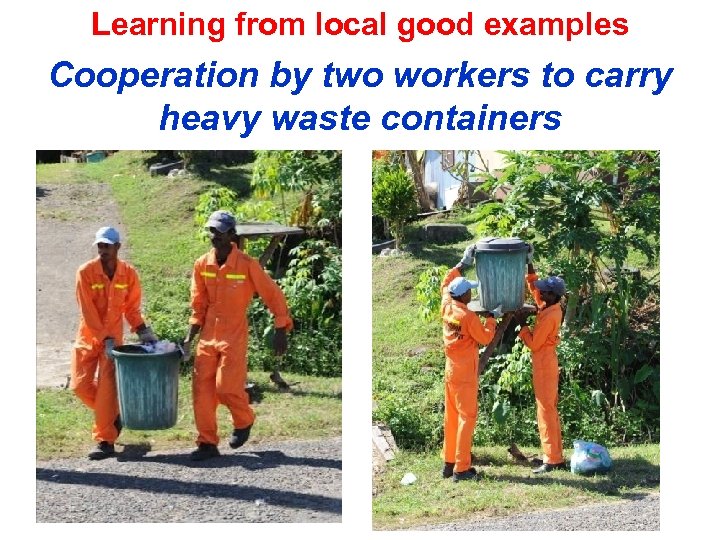 Learning from local good examples Cooperation by two workers to carry heavy waste containers
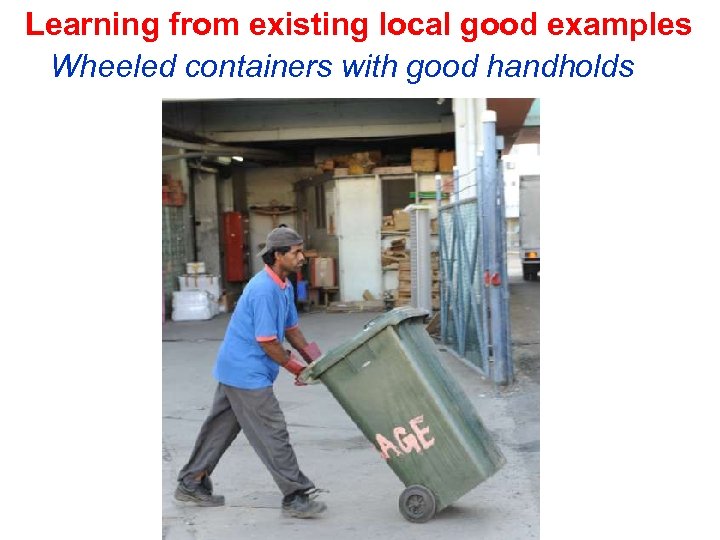 Learning from existing local good examples Wheeled containers with good handholds
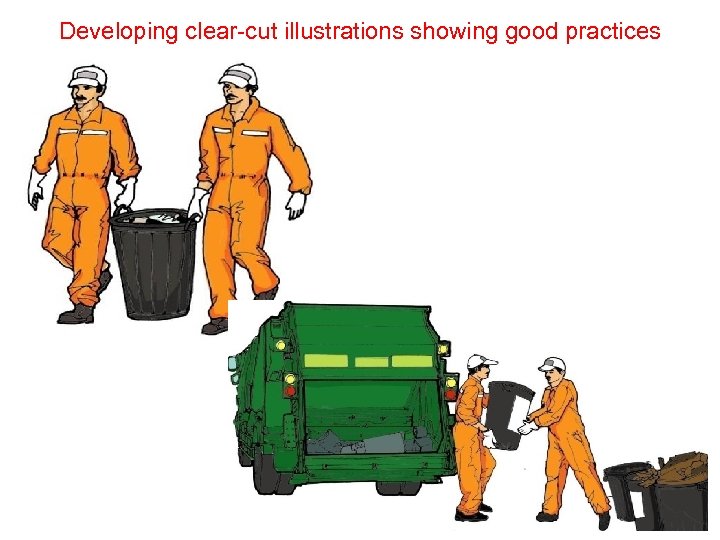 Developing clear-cut illustrations showing good practices
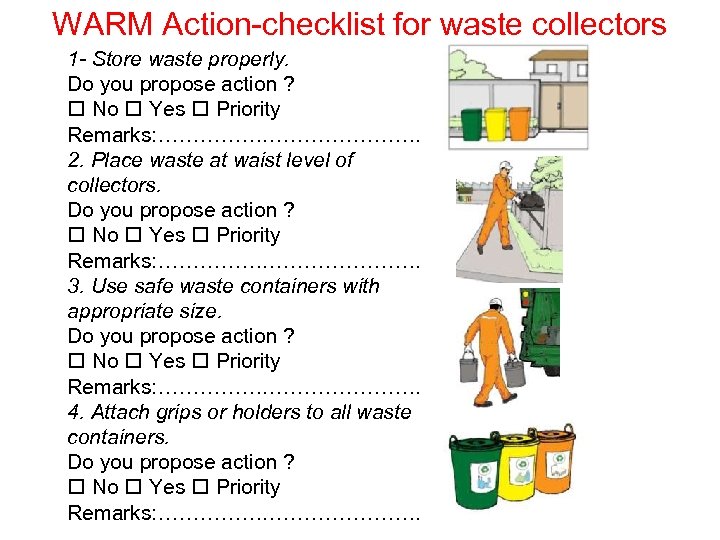 WARM Action-checklist for waste collectors 1 - Store waste properly. Do you propose action ? No Yes Priority Remarks: …………………. 2. Place waste at waist level of collectors. Do you propose action ? No Yes Priority Remarks: …………………. 3. Use safe waste containers with appropriate size. Do you propose action ? No Yes Priority Remarks: …………………. 4. Attach grips or holders to all waste containers. Do you propose action ? No Yes Priority Remarks: ………………….
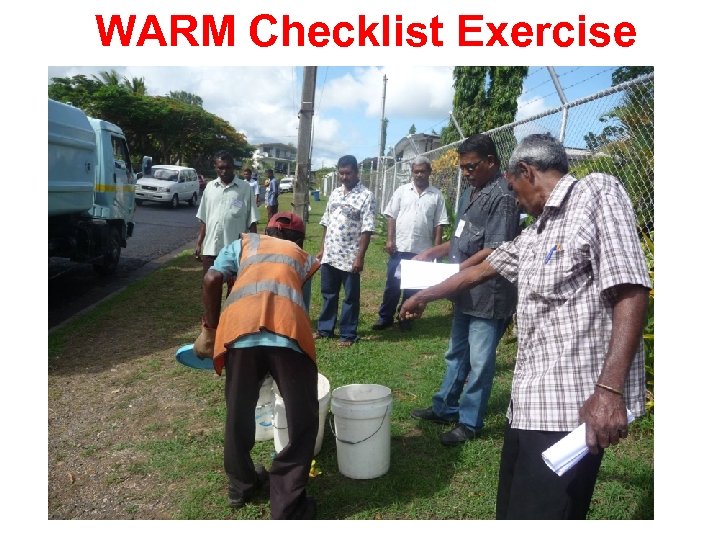 WARM Checklist Exercise
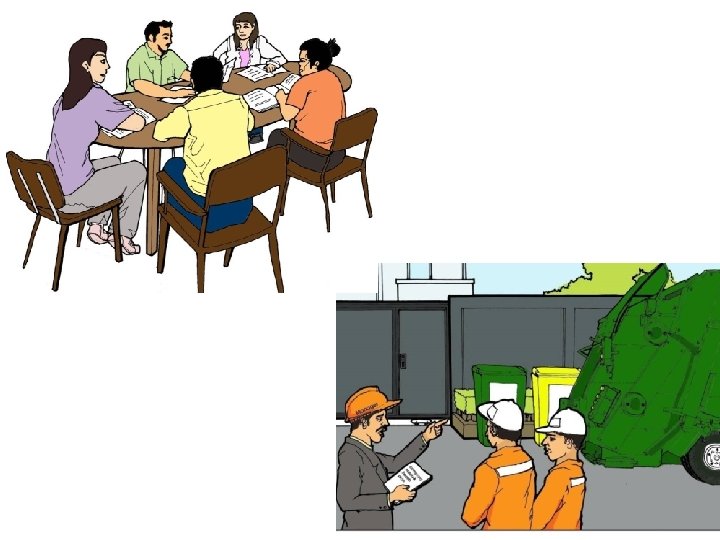
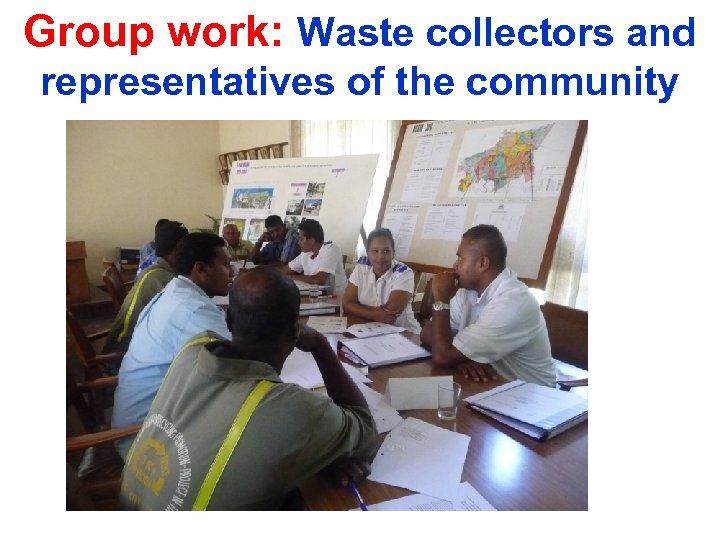 Group work: Waste collectors and representatives of the community
 Conclusion; Participatory training programmes help local people: 1. Take a fresh look at multiple workplace needs; 2. Implement low-cost, practical improvement measures; 3. Gather local wisdom and initiative; 4. Strengthen their networks for practical action.
 Thank you… Occupational Safety and Health, ILO Decent Work Team