 Скачать презентацию Integrating Problem-Based Learning and Technology in Education George
ef385f8aa12e69d2fc1dbe53adcf7049.ppt
- Количество слайдов: 71




Integrating Problem-Based Learning and Technology in Education George Watson ghw@udel. edu with contributions from Deborah Allen, Barbara Duch Susan Groh, and Hal White Institute for Transforming Undergraduate Education University of Delaware PBL 2004, Cancun www. udel. edu/pbl/PBL 2004
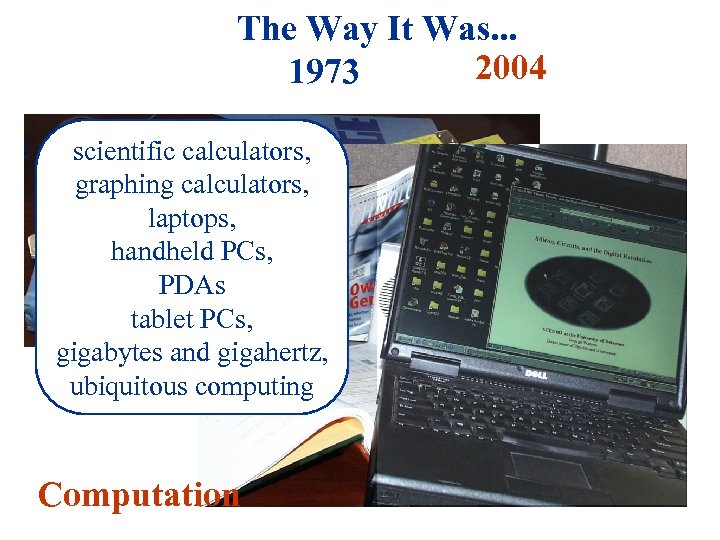
The Way It Was. . . 2004 1973 scientific calculators, graphing calculators, laptops, handheld PCs, PDAs tablet PCs, gigabytes and gigahertz, ubiquitous computing Computation
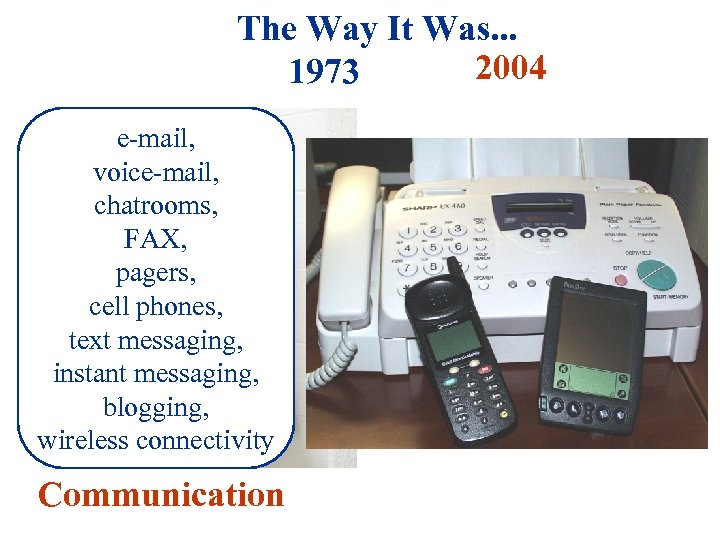
The Way It Was. . . 2004 1973 e-mail, voice-mail, chatrooms, FAX, pagers, cell phones, text messaging, instant messaging, blogging, wireless connectivity Communication
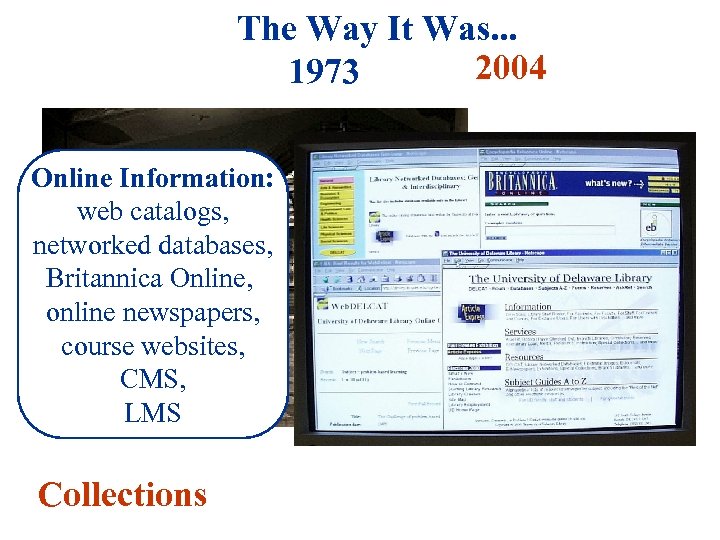
The Way It Was. . . 2004 1973 Online Information: web catalogs, networked databases, Britannica Online, online newspapers, course websites, CMS, LMS Collections
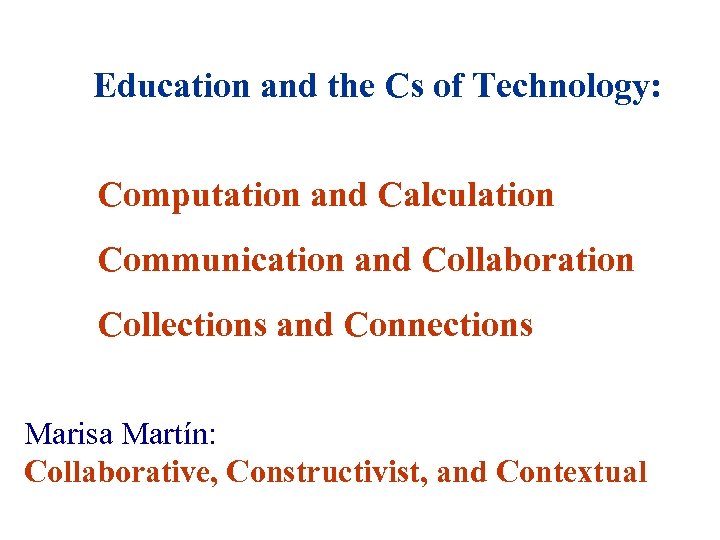
Education and the Cs of Technology: Computation and Calculation Communication and Collaboration Collections and Connections Marisa Martín: Collaborative, Constructivist, and Contextual
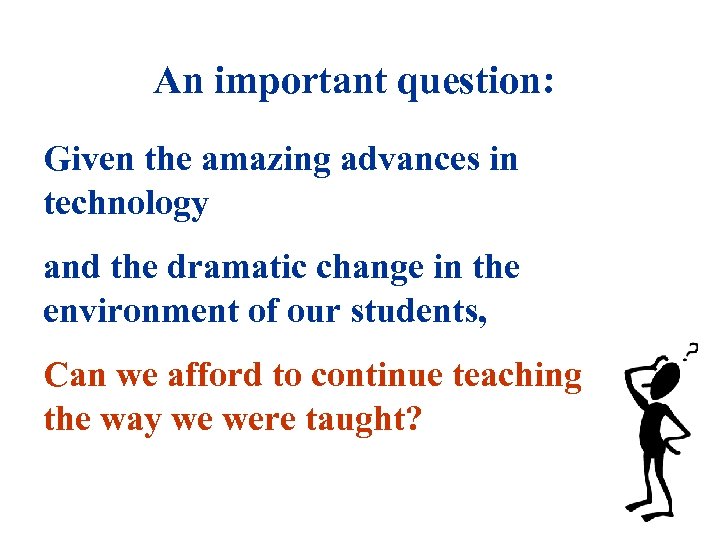
An important question: Given the amazing advances in technology and the dramatic change in the environment of our students, Can we afford to continue teaching the way we were taught?
Integrating Information Technology and PBL
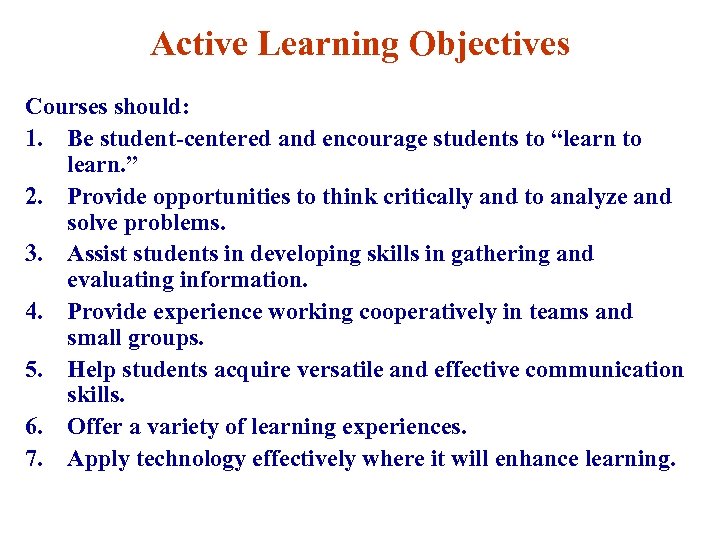
Active Learning Objectives Courses should: 1. Be student-centered and encourage students to “learn to learn. ” 2. Provide opportunities to think critically and to analyze and solve problems. 3. Assist students in developing skills in gathering and evaluating information. 4. Provide experience working cooperatively in teams and small groups. 5. Help students acquire versatile and effective communication skills. 6. Offer a variety of learning experiences. 7. Apply technology effectively where it will enhance learning.
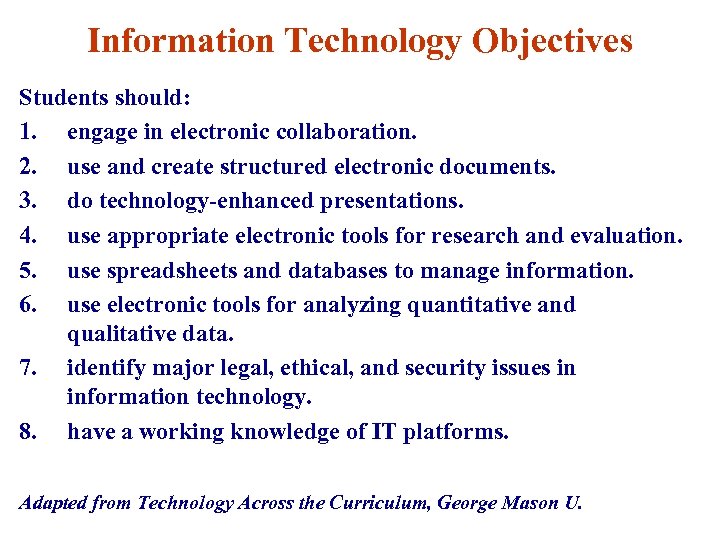
Information Technology Objectives Students should: 1. engage in electronic collaboration. 2. use and create structured electronic documents. 3. do technology-enhanced presentations. 4. use appropriate electronic tools for research and evaluation. 5. use spreadsheets and databases to manage information. 6. use electronic tools for analyzing quantitative and qualitative data. 7. identify major legal, ethical, and security issues in information technology. 8. have a working knowledge of IT platforms. Adapted from Technology Across the Curriculum, George Mason U.
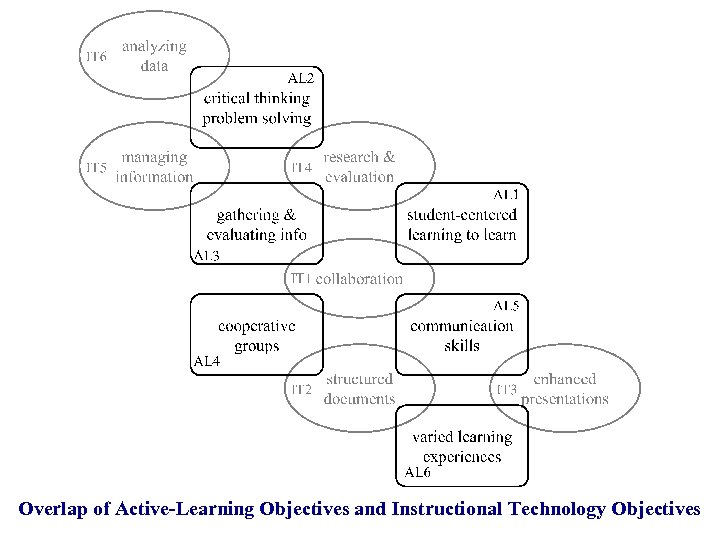
Overlap of Active-Learning Objectives and Instructional Technology Objectives
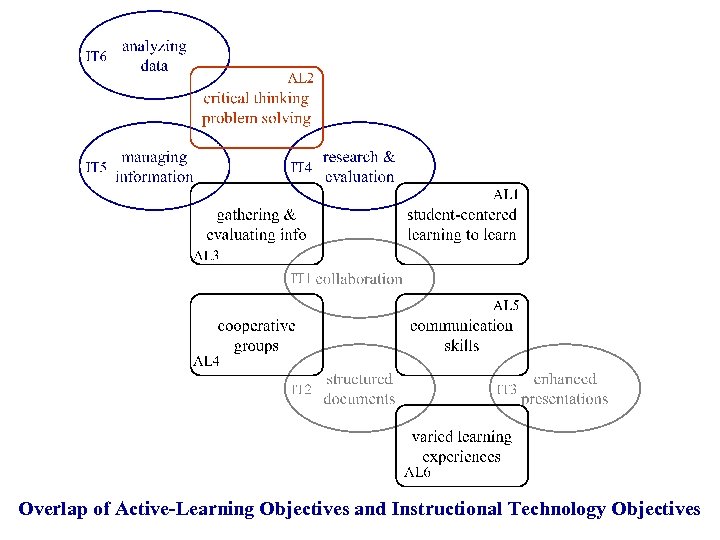
Overlap of Active-Learning Objectives and Instructional Technology Objectives
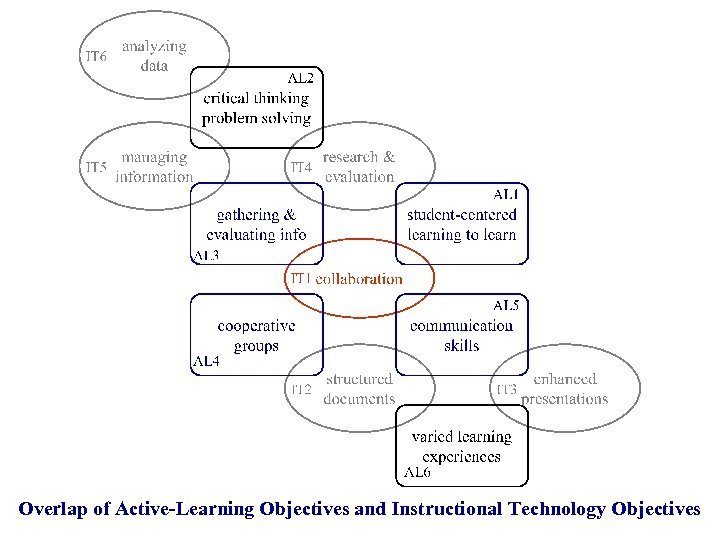
Overlap of Active-Learning Objectives and Instructional Technology Objectives
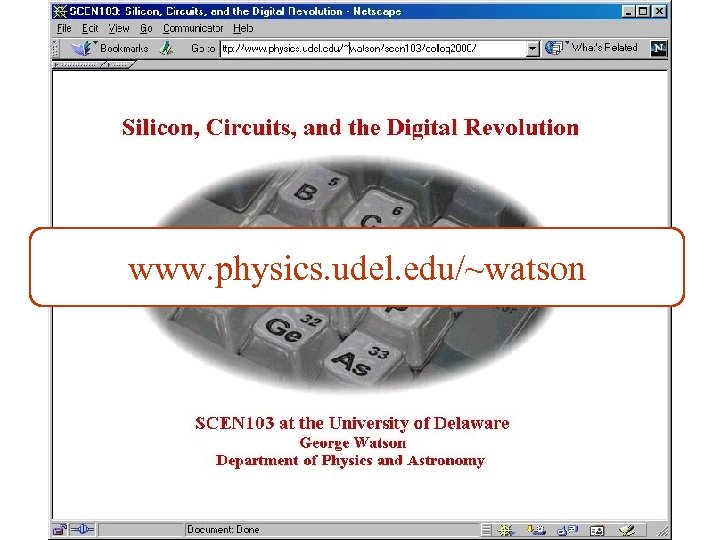
www. physics. udel. edu/~watson

Organizing the Course Utilizing Online Resources
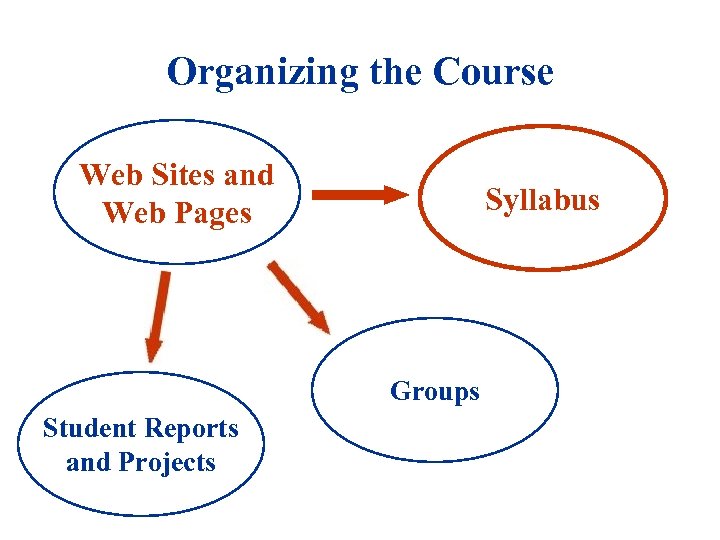
Organizing the Course Web Sites and Web Pages Syllabus Groups Student Reports and Projects
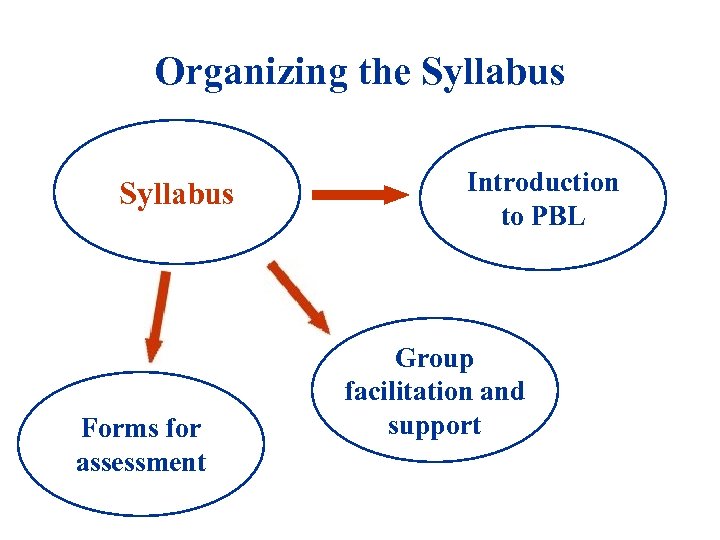
Organizing the Syllabus Forms for assessment Introduction to PBL Group facilitation and support
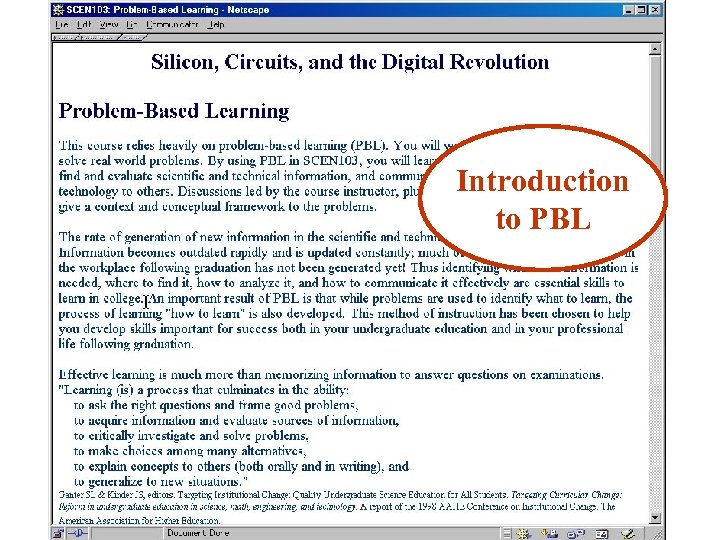
Introduction to PBL
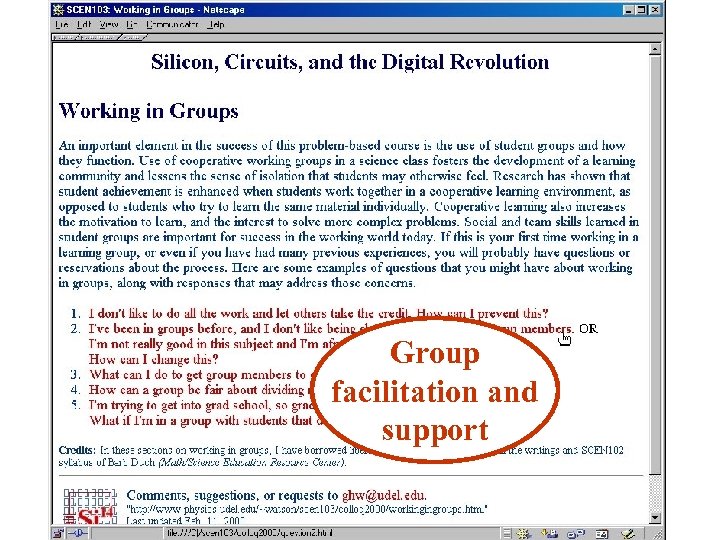
Group facilitation and support
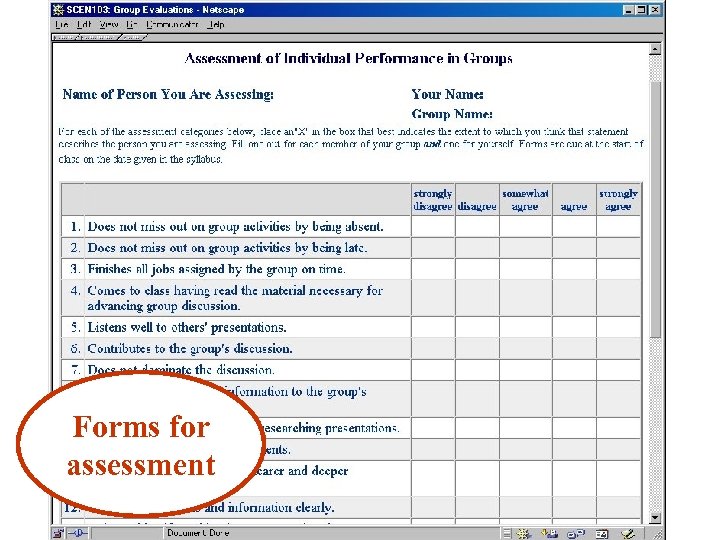
Forms for assessment
Examples of supporting information that can be linked from an online syllabus: 1. 2. 3. 4. 5. 6. Instructor’s instructional philosophy Detailed course objectives (both content and process) General education curriculum goals Motivation and description of PBL Problem solving process and strategies Roles and responsibilities of students, peer tutors, and instructor 7. List of frequently asked questions about PBL and working in groups 8. Forms for assessment of individual performance in groups 9. Some thoughts on grading 10. Anonymous suggestion box and responses to suggestions 11. Academic Services Center 12. Policies on academic dishonesty and responsible computing
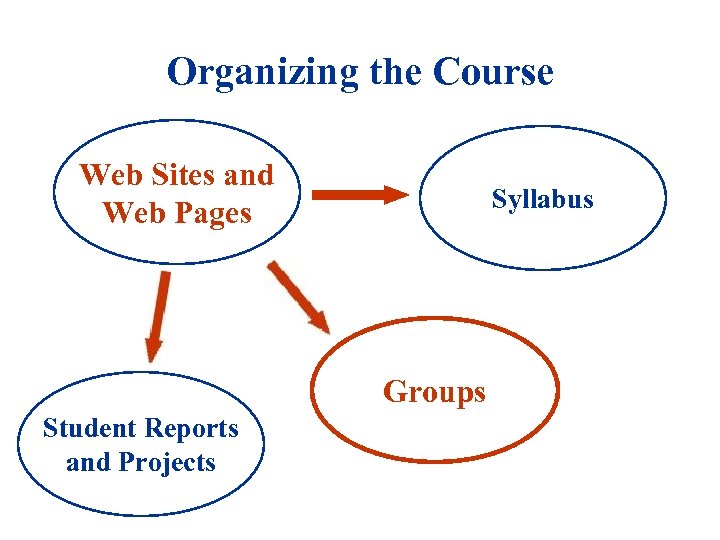
Organizing the Course Web Sites and Web Pages Syllabus Groups Student Reports and Projects
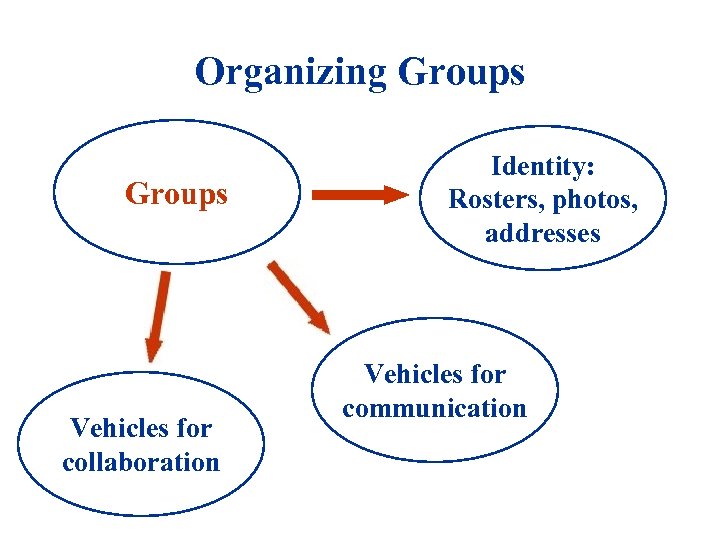
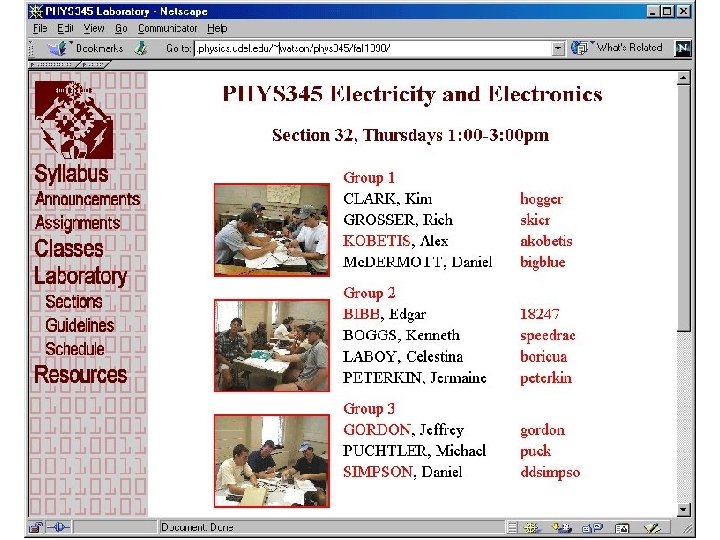
Organizing Groups Vehicles for collaboration Identity: Rosters, photos, addresses Vehicles for communication
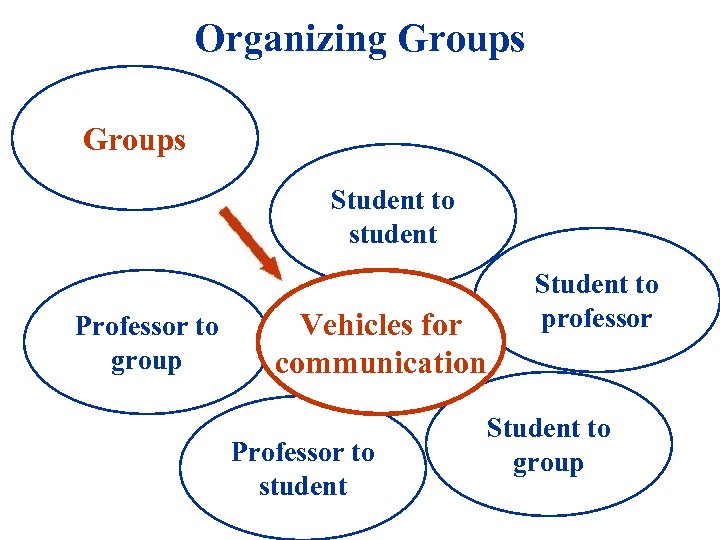
Organizing Groups Student to student Professor to group Vehicles for communication Professor to student Student to professor Student to group
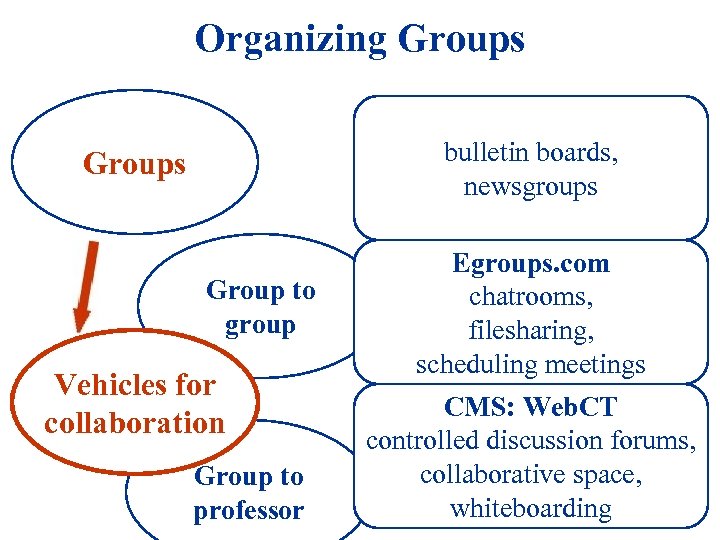
Organizing Groups bulletin boards, newsgroups Group to group Vehicles for collaboration Group to professor Egroups. com chatrooms, filesharing, scheduling meetings CMS: Web. CT controlled discussion forums, collaborative space, whiteboarding

Organizing the Course Utilizing Online Resources
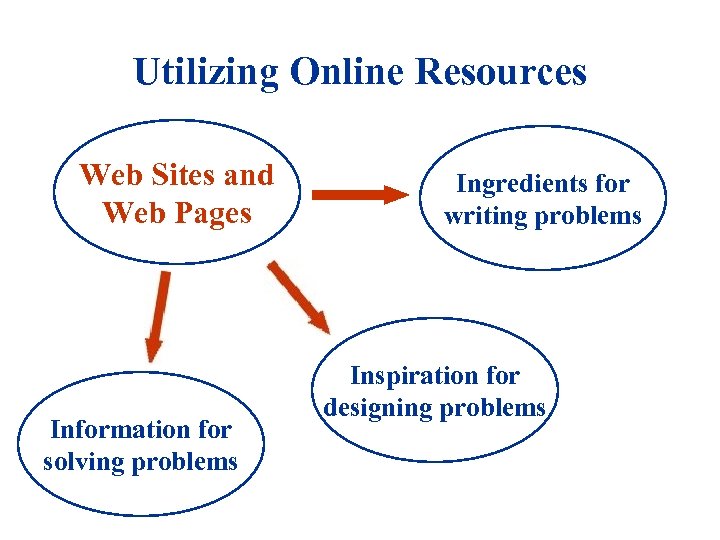
Utilizing Online Resources Web Sites and Web Pages Information for solving problems Ingredients for writing problems Inspiration for designing problems
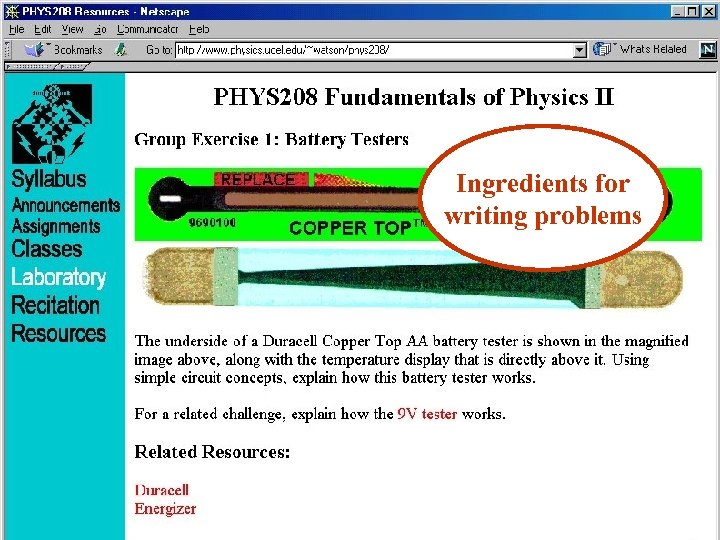
Ingredients for writing problems
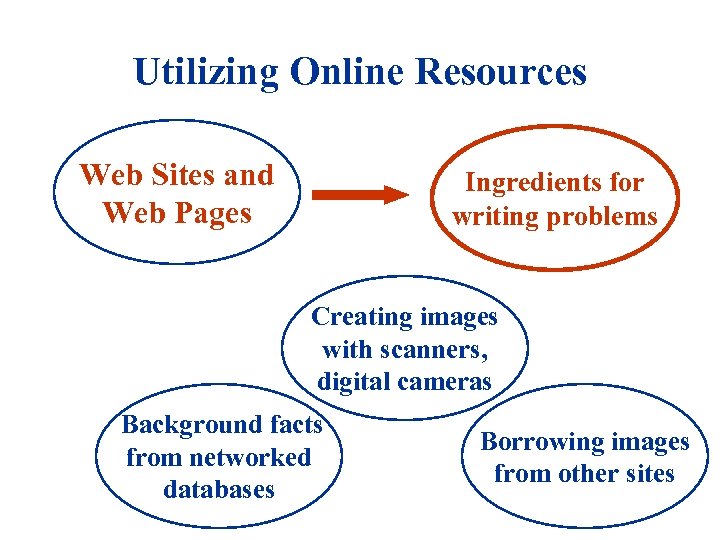
Utilizing Online Resources Web Sites and Web Pages Ingredients for writing problems Creating images with scanners, digital cameras Background facts from networked databases Borrowing images from other sites
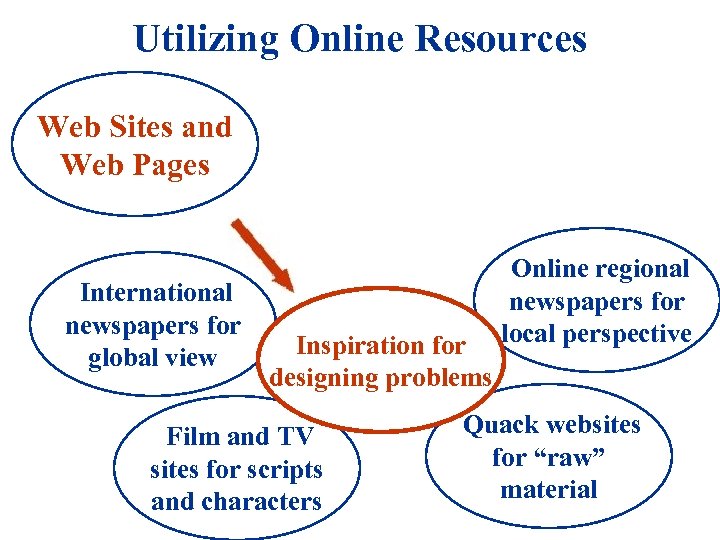
Utilizing Online Resources Web Sites and Web Pages International newspapers for global view Inspiration for designing problems Film and TV sites for scripts and characters Online regional newspapers for local perspective Quack websites for “raw” material
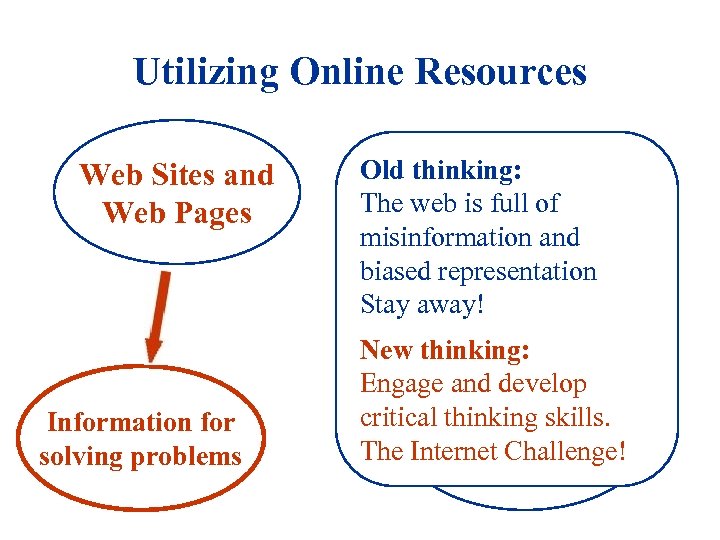
Utilizing Online Resources Web Sites and Web Pages Information for solving problems Old thinking: The web is full of misinformation and Evaluating online biased representation Stay resources critically away! New thinking: Engage and develop critical Executing web thinking skills. The Internet Challenge! searches effectively
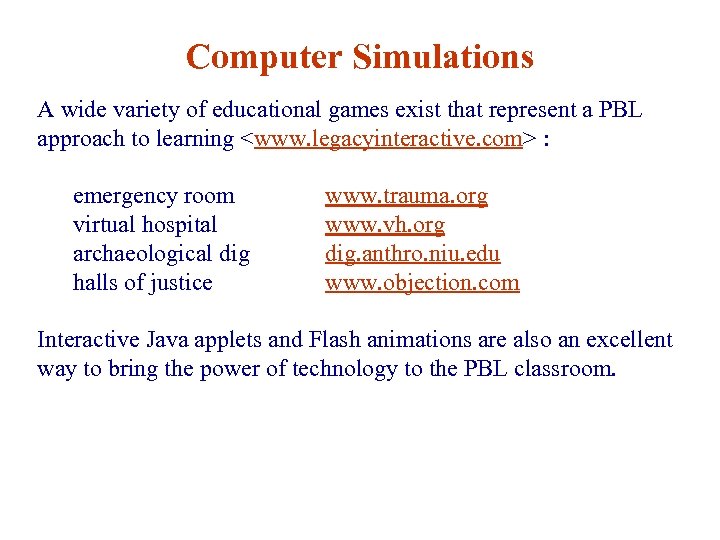
Computer Simulations A wide variety of educational games exist that represent a PBL approach to learning <www. legacyinteractive. com> : emergency room virtual hospital archaeological dig halls of justice www. trauma. org www. vh. org dig. anthro. niu. edu www. objection. com Interactive Java applets and Flash animations are also an excellent way to bring the power of technology to the PBL classroom.
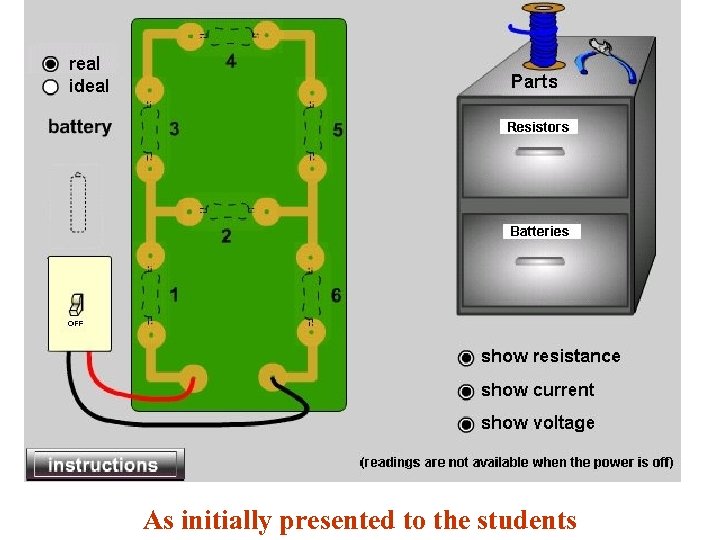
As initially presented to the students
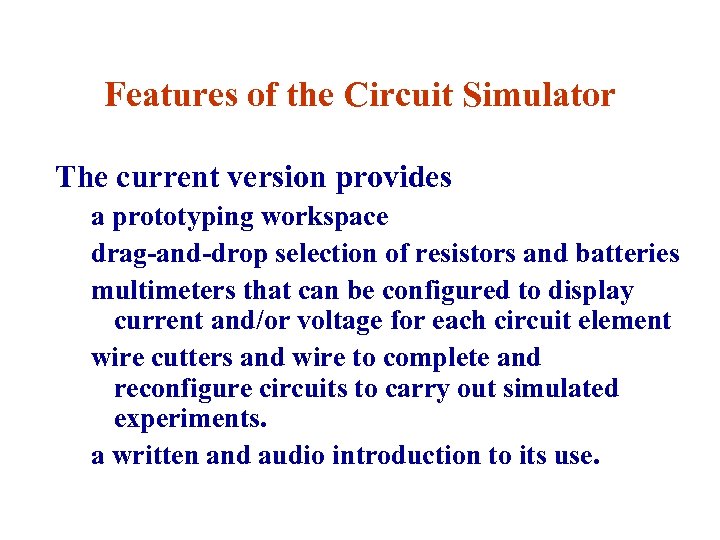
Features of the Circuit Simulator The current version provides a prototyping workspace drag-and-drop selection of resistors and batteries multimeters that can be configured to display current and/or voltage for each circuit element wire cutters and wire to complete and reconfigure circuits to carry out simulated experiments. a written and audio introduction to its use.
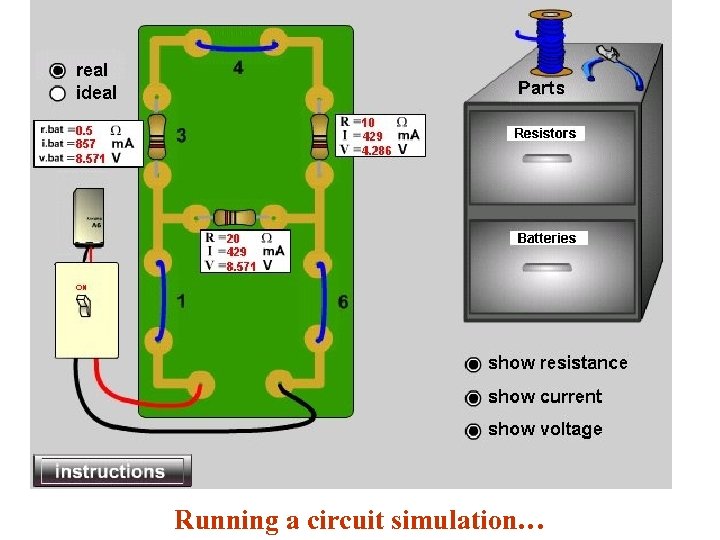
Running a circuit simulation…
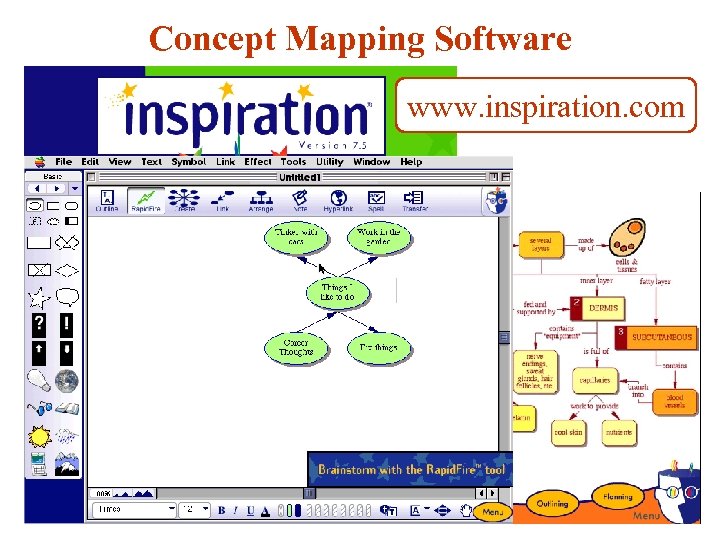
Concept Mapping Software www. inspiration. com
Trends and Directions in PBL and Technology
Facilities for PBL
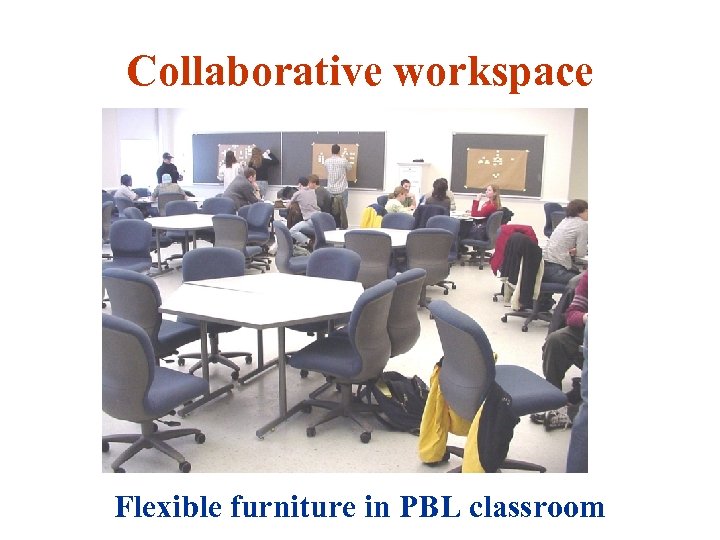
Collaborative workspace Flexible furniture in PBL classroom
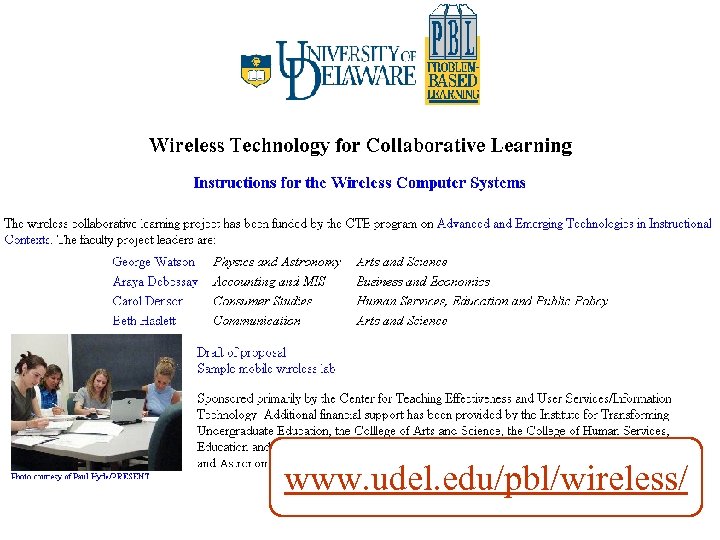
www. udel. edu/pbl/wireless/
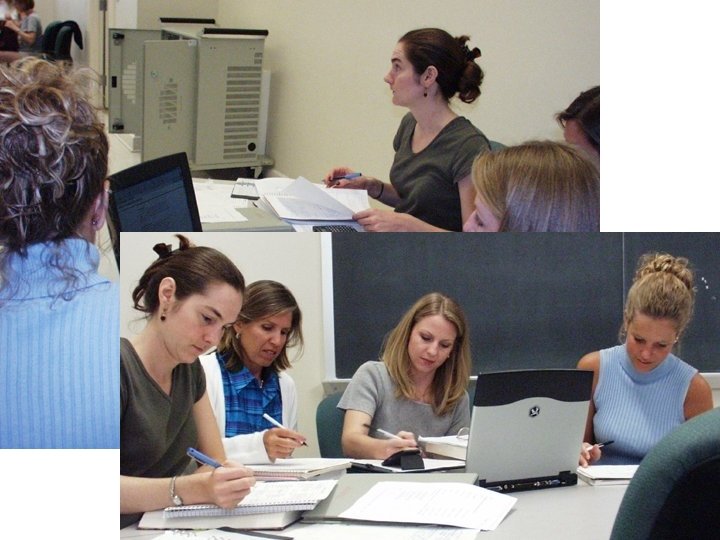

Dissemination of PBL Materials
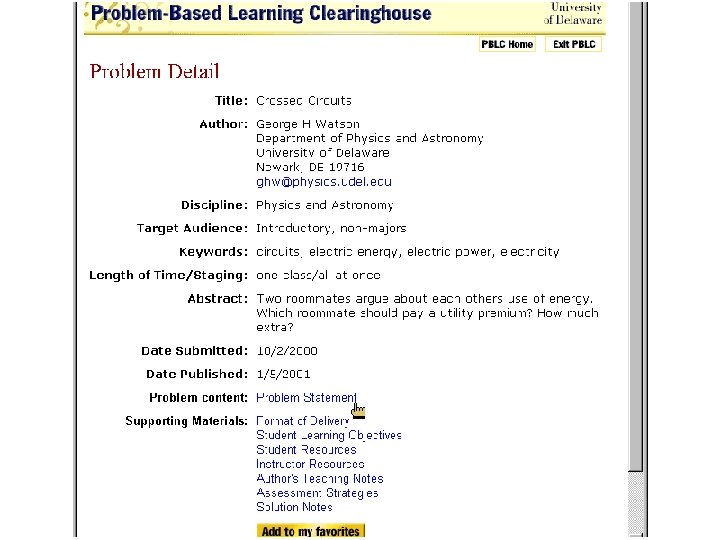
PBL Clearinghouse An online database of PBL articles and problems. All material is peer-reviewed by PBL practitioners for content and pedagogy. All problems are supported by learning objectives and resources, teaching and assessment notes. Holdings are searchable by author, discipline, keywords, or full text. Fully electronic submission, review, and publication cycle. Controlled access by free user subscription, students excluded.
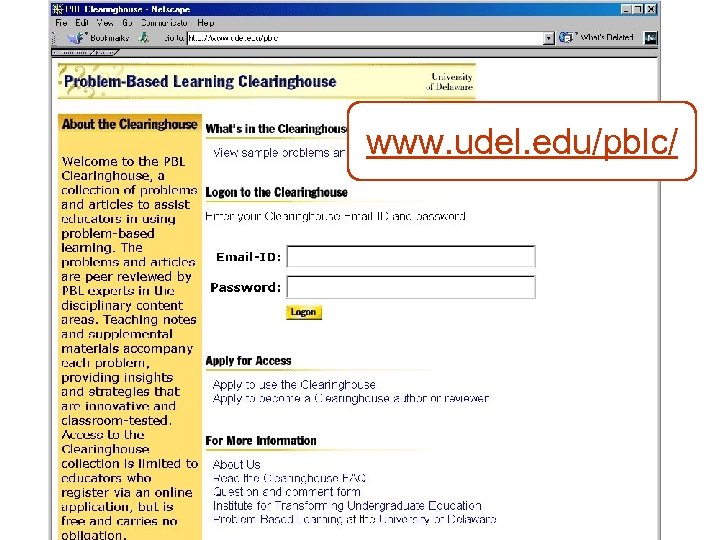
www. udel. edu/pblc/
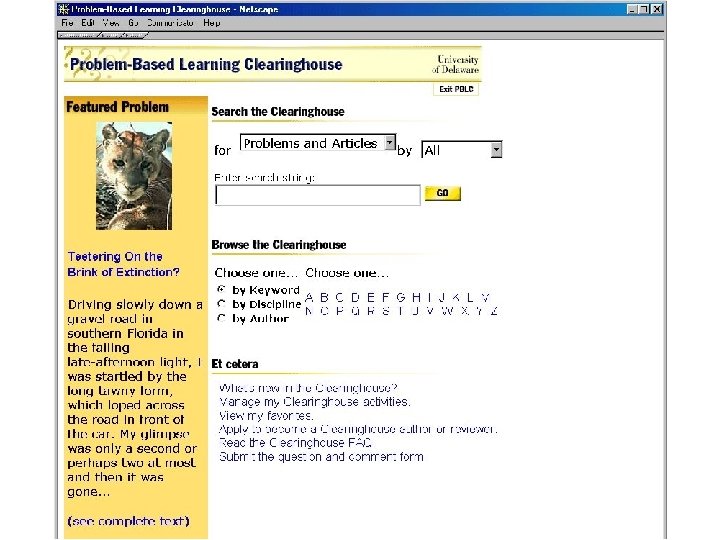
PBL Clearinghouse Currently there are ~7000 registered users and 70 PBL problems. Of the problems available, more than half are in physics, chemistry, and biology, but the number in other disciplines is growing steadily. We are very interested in publishing adaptations of problems to other cultural/geographical contexts. www. udel. edu/pblc
Using Technology to Teach PBL Using PBL to Teach Technology
Problem-Based Learning: From Ideas to Solutions through Communication January 19 -21, 2005 For registration, please visit www. udel. edu/inst/jan 2005 This three-day workshop will demonstrate and model ways that PBL can be used effectively in all disciplines, in upper and lower division courses, and in all size classes. One focus of this program will be writing effective problem-based materials; participants will leave the session with new or revised problems for use in their courses. Another focus will be engaging students in research and communication as part of the process of PBL.
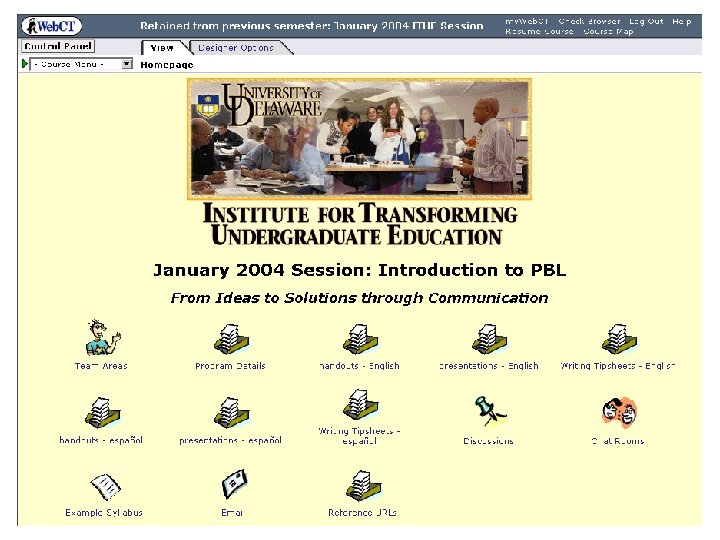
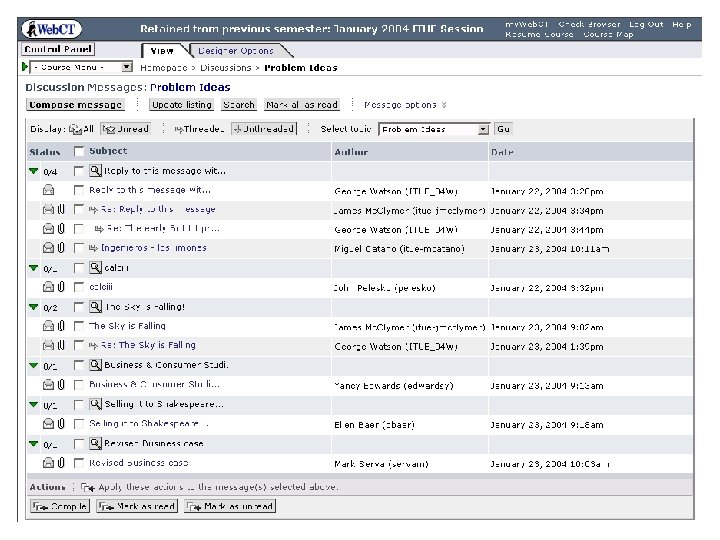
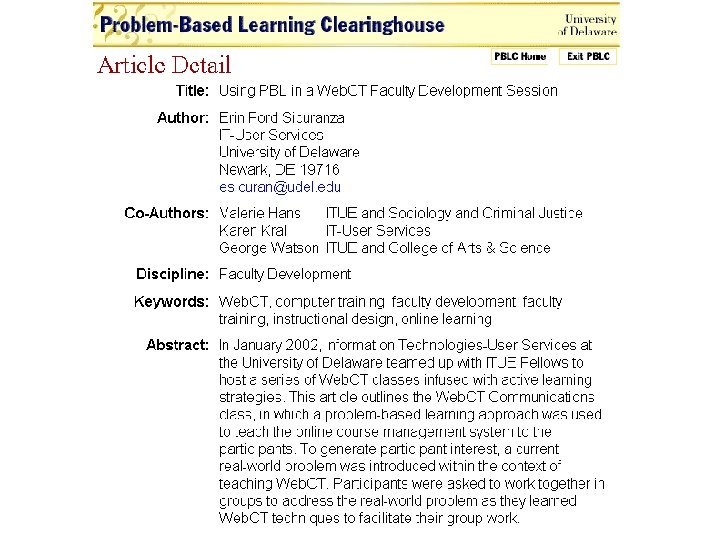
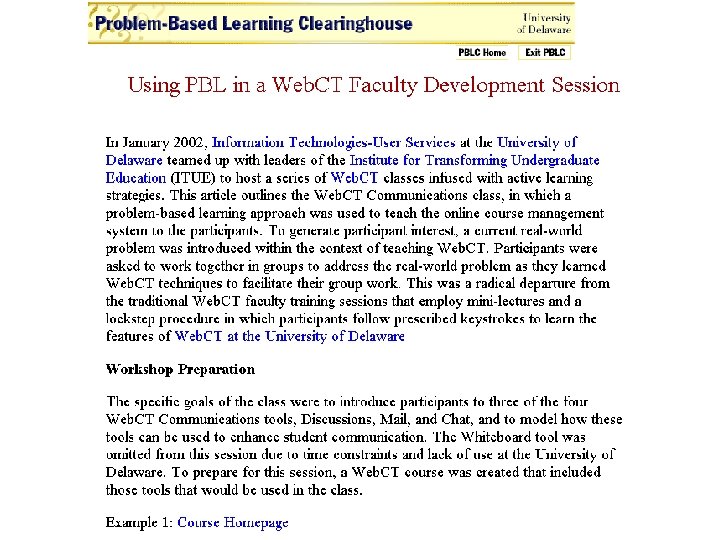
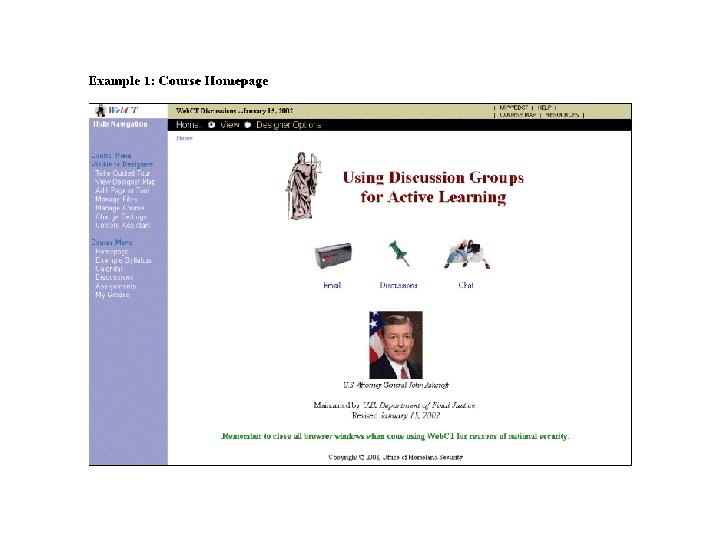
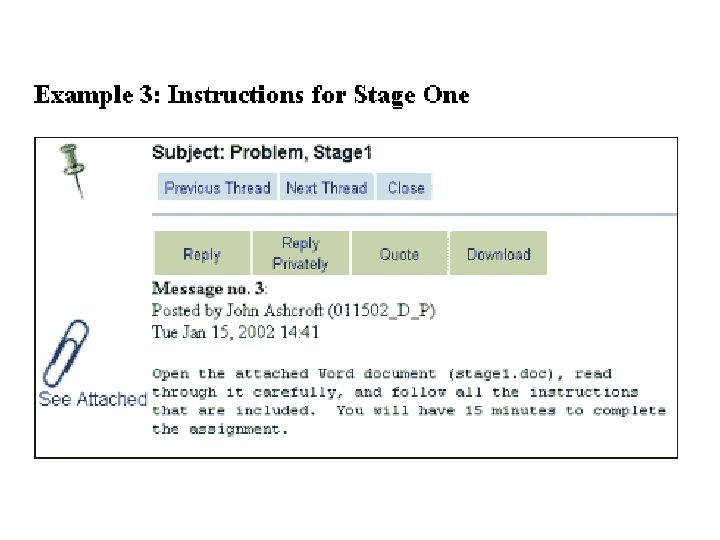

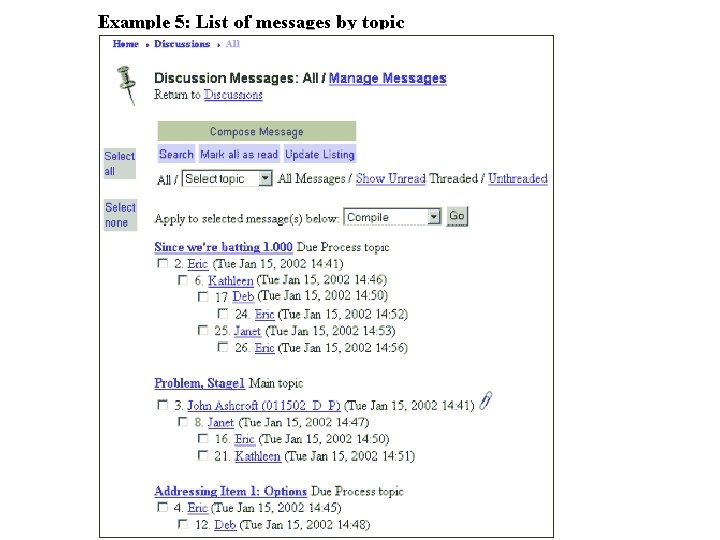
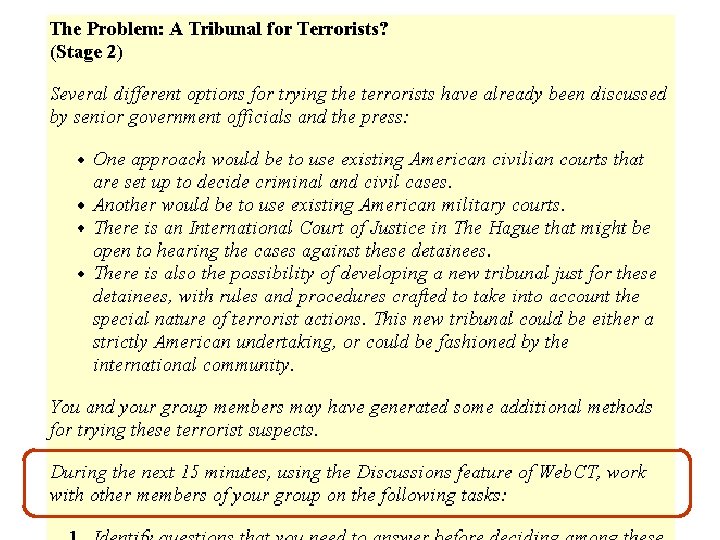
Learning Management Systems adapted to PBL
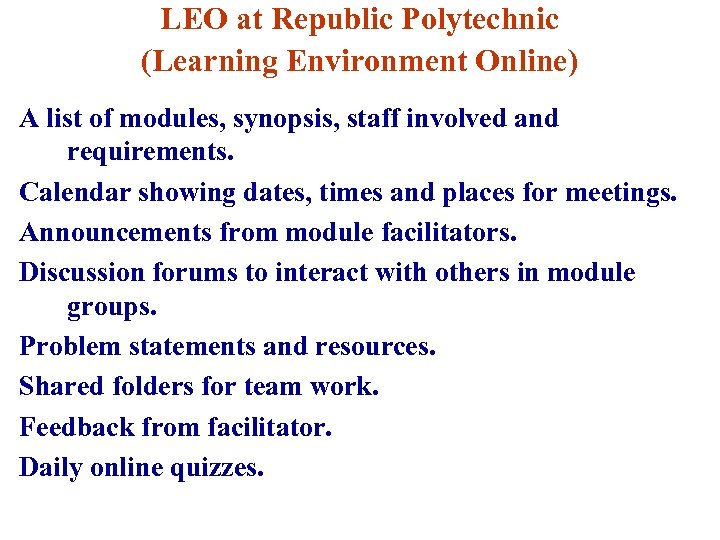
LEO at Republic Polytechnic (Learning Environment Online) A list of modules, synopsis, staff involved and requirements. Calendar showing dates, times and places for meetings. Announcements from module facilitators. Discussion forums to interact with others in module groups. Problem statements and resources. Shared folders for team work. Feedback from facilitator. Daily online quizzes.
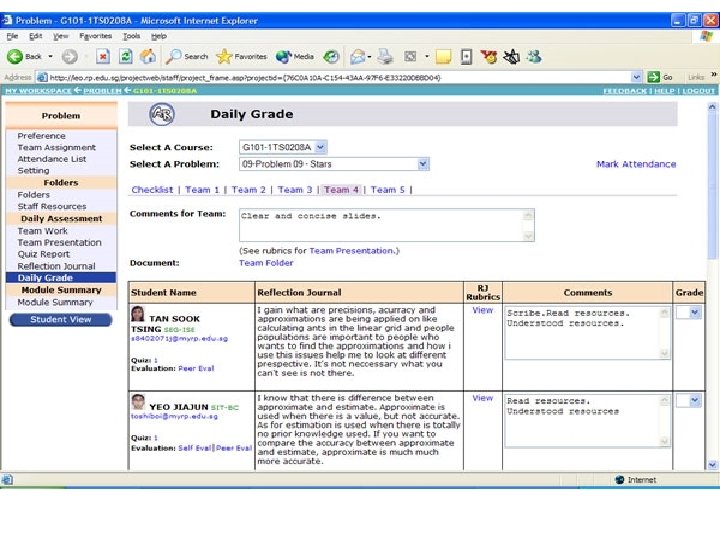
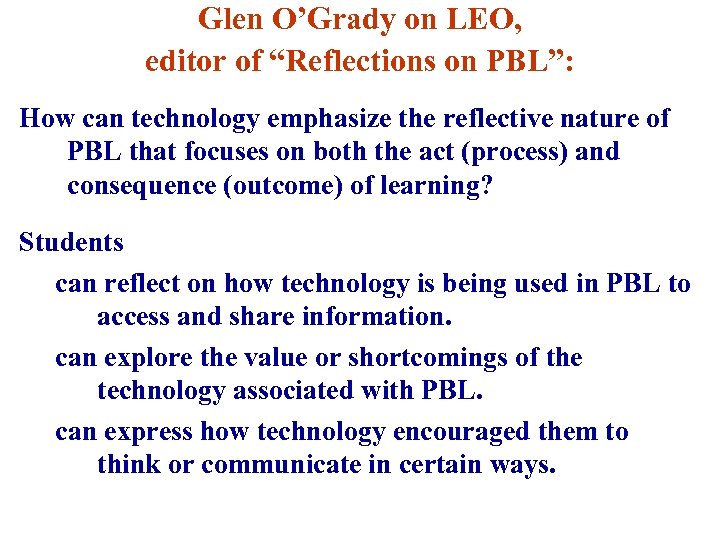
Glen O’Grady on LEO, editor of “Reflections on PBL”: How can technology emphasize the reflective nature of PBL that focuses on both the act (process) and consequence (outcome) of learning? Students can reflect on how technology is being used in PBL to access and share information. can explore the value or shortcomings of the technology associated with PBL. can express how technology encouraged them to think or communicate in certain ways.
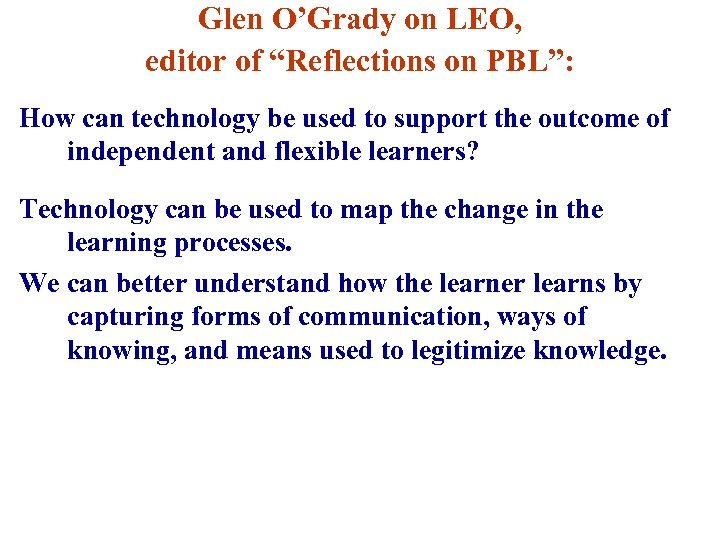
Glen O’Grady on LEO, editor of “Reflections on PBL”: How can technology be used to support the outcome of independent and flexible learners? Technology can be used to map the change in the learning processes. We can better understand how the learner learns by capturing forms of communication, ways of knowing, and means used to legitimize knowledge.

Conclusions
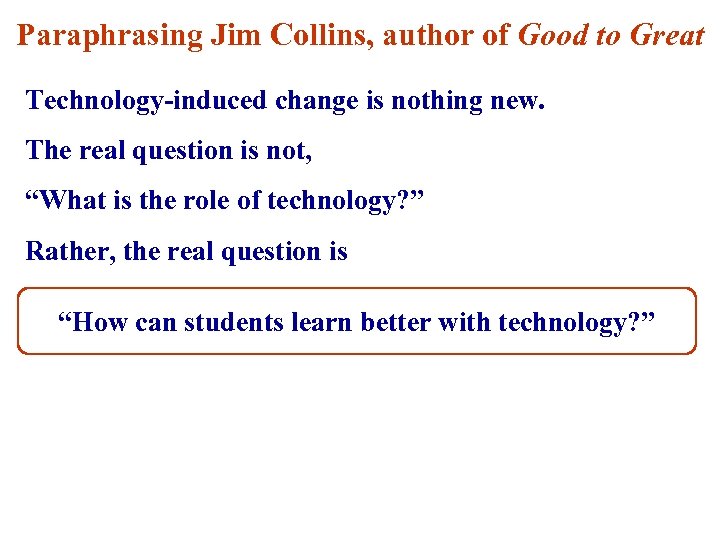
Paraphrasing Jim Collins, author of Good to Great Technology-induced change is nothing new. The real question is not, “What is the role of technology? ” Rather, the real question is “How do good-to-great organizations think differently “How can students about technology? ” learn better with technology? ”
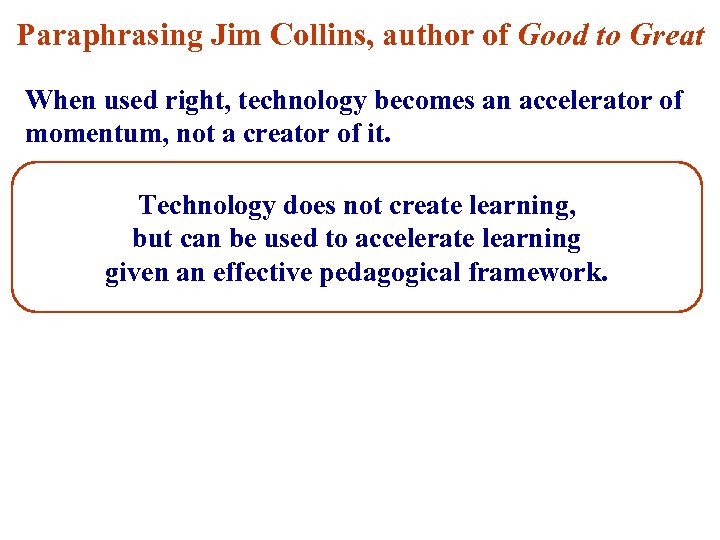
Paraphrasing Jim Collins, author of Good to Great When used right, technology becomes an accelerator of momentum, not a creator of it. Technology does not create learning, but can be used to accelerate learning given an effective pedagogical framework.
The Shifting Sand of Integrating Technology and PBL …like a foolish man who built his house on sand. The rain fell, the floods came, and the winds blew and battered that house, and it collapsed, and its collapse was devastating. …like a wise man who built his house on a rock. The rain fell, the floods came, and the winds blew and beat against that house, but it did not collapse because its foundation was on the rock. Parable of the Two Builders
Скачать презентацию Integrating Problem-Based Learning and Technology in Education George
ef385f8aa12e69d2fc1dbe53adcf7049.ppt