 Скачать презентацию Integrated Wetland Bird Management and Monitoring Initiative A
e29ff8b4e7fd8dedb3f8e06eb97dbc36.ppt
- Количество слайдов: 31



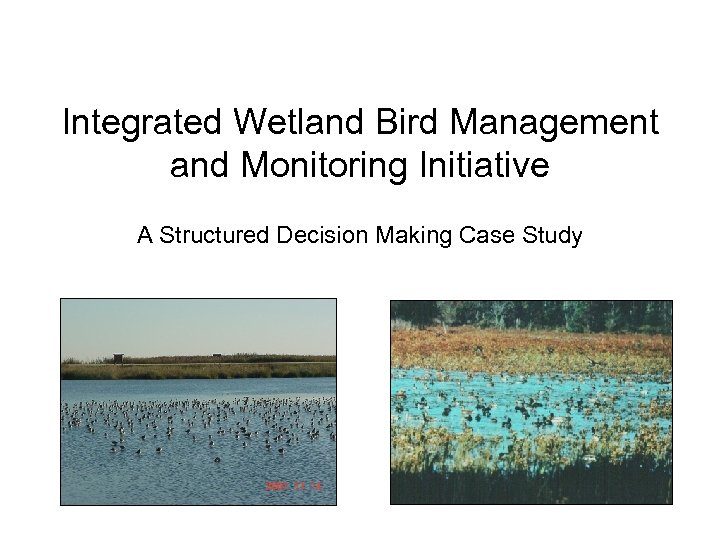
Integrated Wetland Bird Management and Monitoring Initiative A Structured Decision Making Case Study
So…. We in the NWRS Like to Count Ducks and Other Wildlife.
Why do I always do that? • Its our tradition. • We like ducks. • Ducks are important. • We manage lots of places that ducks like. • Its fun.
Current Situation • Wetland management actions are independently conducted at refuges. • Little emphasis on sharing data beyond the local level. • This independent development of numerous waterbird monitoring efforts is inefficient and precludes sharing of data. • Refuge monitoring efforts lack clear objectives.
Current Situation • Waterbirds require quality wetland habitats along their migration route and wintering areas. • Coordinated efforts to determine if habitat requirements are being met to support objective population levels are lacking (Runge et al. 2006). • Refuges believe that better monitoring will lead to effective management and contribute toward larger scale monitoring needs. • Coordination of management actions and appropriate monitoring could result in improved contributions at larger scales.
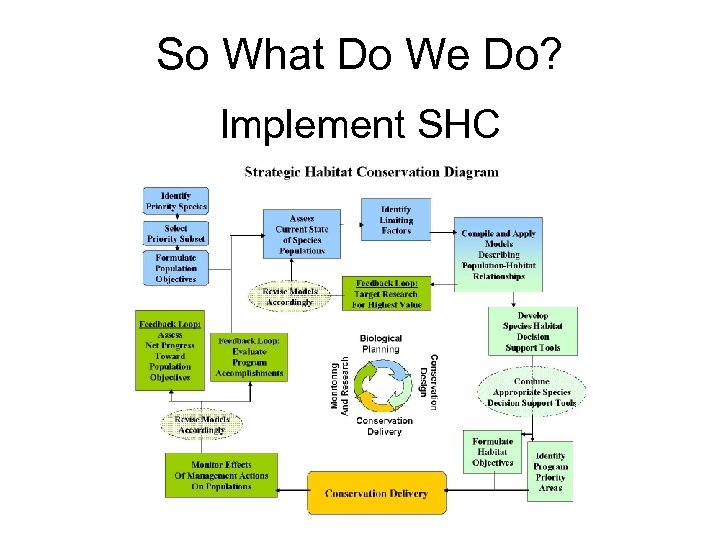
So What Do We Do? Implement SHC
Process • Conducted Internet Questionnaire to identify waterbird monitoring information needs across Regions 3, 4 and 5. – 224 Units – 82 Responses (37% return rate) – 79% of Respondents indicated that they monitor waterbirds
Preparation • Decided to use SDM to address problem. • SDM workshop scheduled. • Regional/Flyway Input – 7 questions were developed to generate input. • Multiple Conference calls to prepare for SDM. – Multi-regional migratory bird program staff – SDM Participants – Regional Chiefs and staff talk biology
Problem Statement We don’t have a monitoring program to guide decisions at multiple spatial scales to sustain migrating and wintering waterbird populations.
Monitoring Issues • Lack of linkage between monitoring and management. • Lack of linkage between local management and landscape/flyway objectives. • Efficiency.
Resolving These Issues Will Allow Us To: • Make all-bird management real. • Improved science-based decisionmaking.
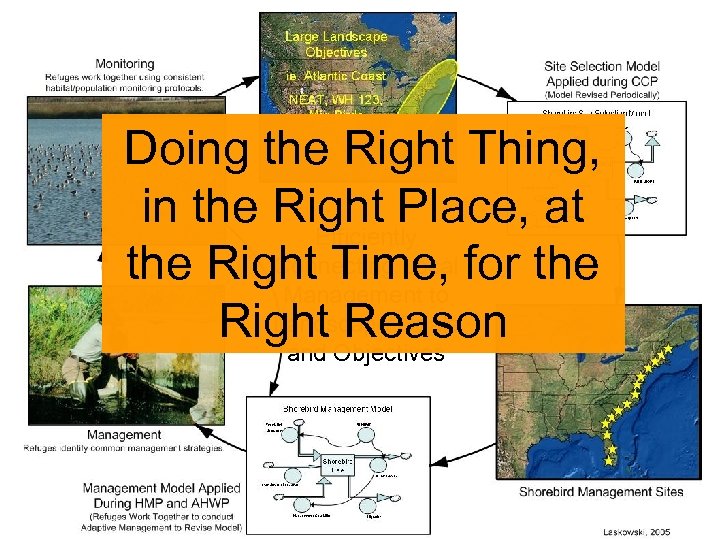
Doing the Right Thing, in the Right Place, at Efficiently Connecting Local the Right Time, for the Management to Landscape Goals Right Objectives Reason and
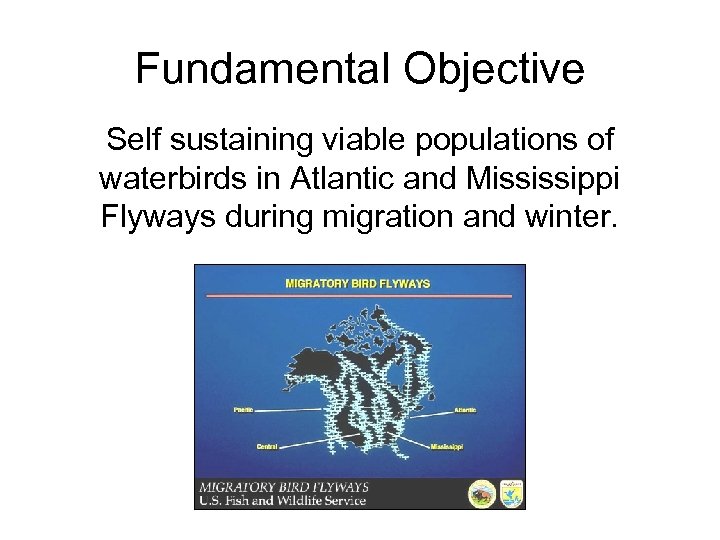
Fundamental Objective Self sustaining viable populations of waterbirds in Atlantic and Mississippi Flyways during migration and winter.
Changing the Monitoring Paradigm
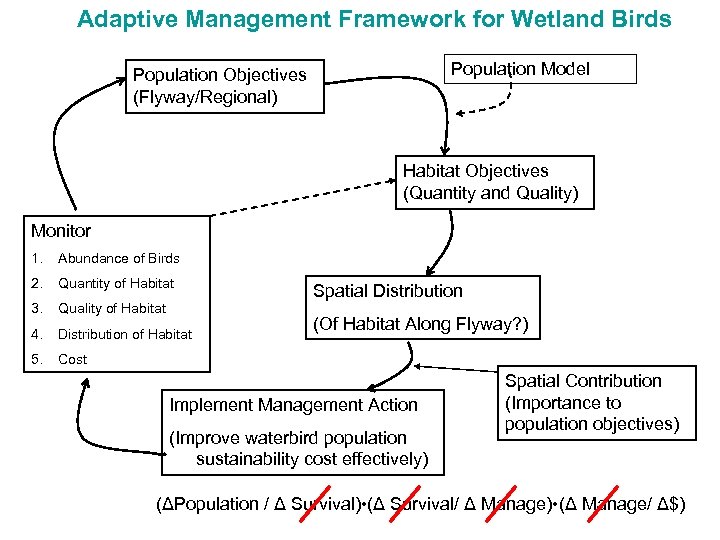
Adaptive Management Framework for Wetland Birds Population Model Population Objectives (Flyway/Regional) Habitat Objectives (Quantity and Quality) Monitor 1. Abundance of Birds 2. Quantity of Habitat 3. Quality of Habitat 4. Distribution of Habitat 5. Cost Spatial Distribution (Of Habitat Along Flyway? ) Implement Management Action (Improve waterbird population sustainability cost effectively) Spatial Contribution (Importance to population objectives) (ΔPopulation / Δ Survival) • (Δ Survival/ Δ Manage) • (Δ Manage/ Δ$)
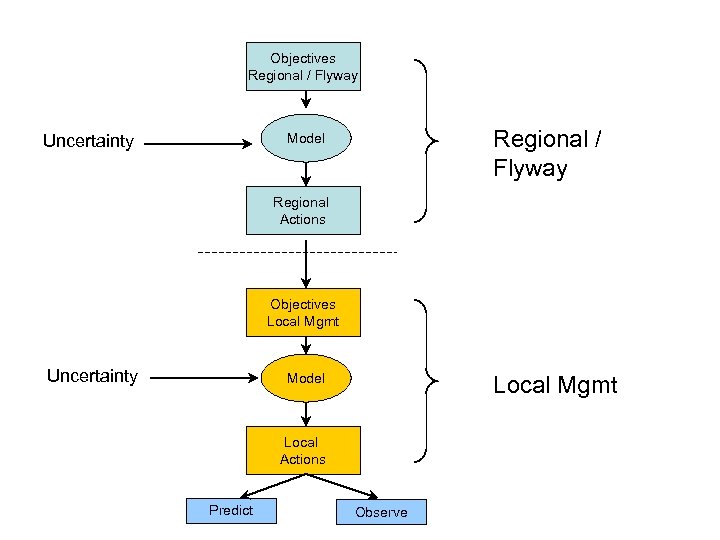
Objectives Regional / Flyway Model Uncertainty Regional Actions Objectives Local Mgmt Uncertainty Model Local Mgmt Local Actions Predict Observe
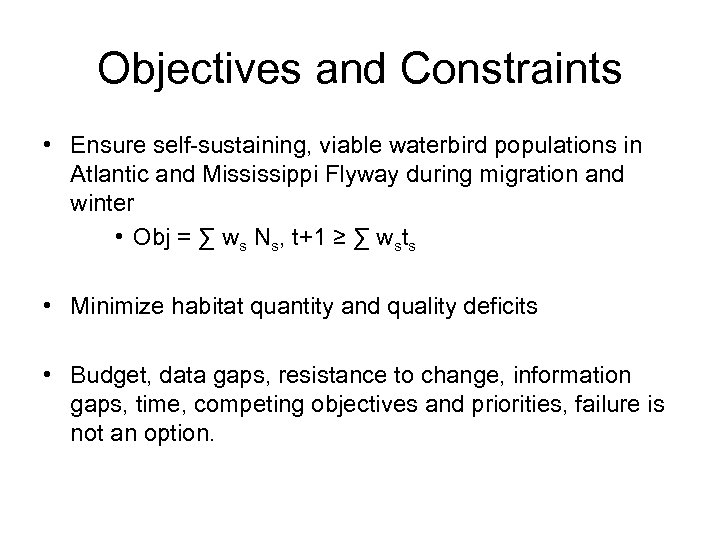
Objectives and Constraints • Ensure self-sustaining, viable waterbird populations in Atlantic and Mississippi Flyway during migration and winter • Obj = ∑ ws Ns, t+1 ≥ ∑ wsts • Minimize habitat quantity and quality deficits • Budget, data gaps, resistance to change, information gaps, time, competing objectives and priorities, failure is not an option.
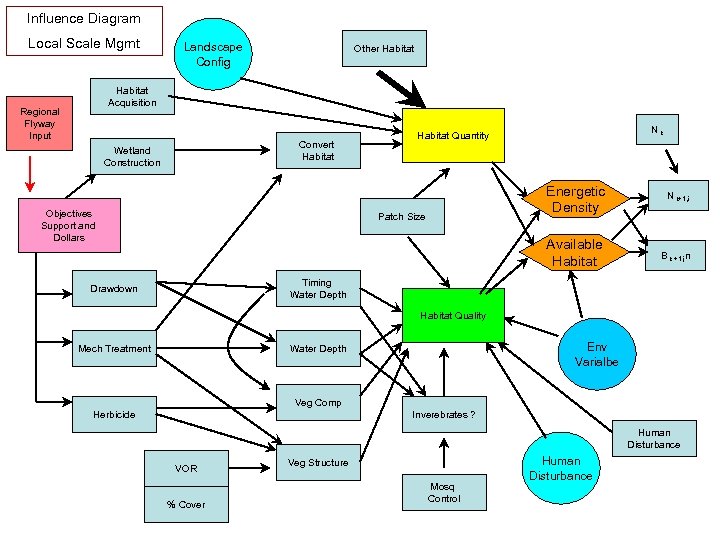
Influence Diagram Local Scale Mgmt Landscape Config Other Habitat Acquisition Regional Flyway Input Convert Habitat Wetland Construction Nt Habitat Quantity Patch Size N t+1, i Available Habitat Objectives Support and Dollars Energetic Density B t +1, in Timing Water Depth Drawdown Habitat Quality Mech Treatment Env Varialbe Water Depth Veg Comp Herbicide Inverebrates ? Human Disturbance VOR % Cover Veg Structure Mosq Control Human Disturbance
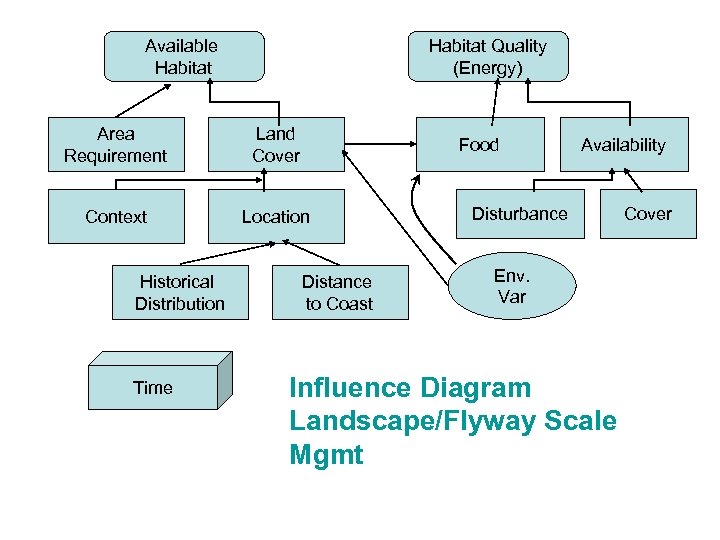
Available Habitat Quality (Energy) Area Requirement Land Cover Context Location Historical Distribution Time Food Distance to Coast Availability Disturbance Env. Var Influence Diagram Landscape/Flyway Scale Mgmt Cover
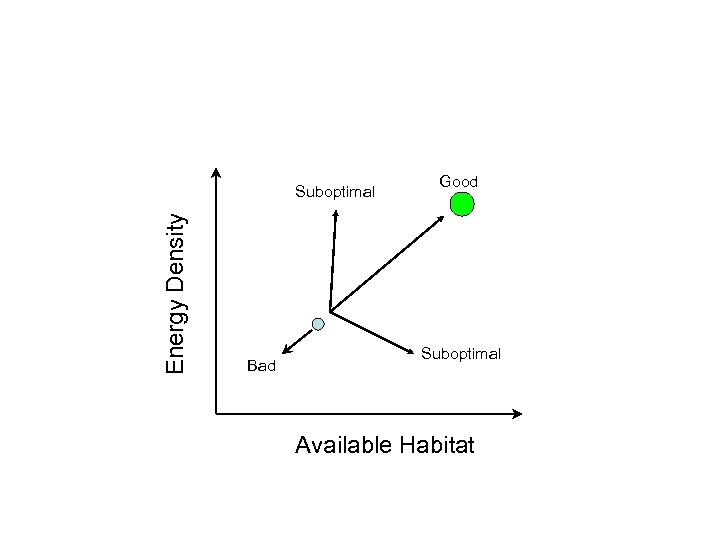
Energy Density Suboptimal Bad Good Suboptimal Available Habitat
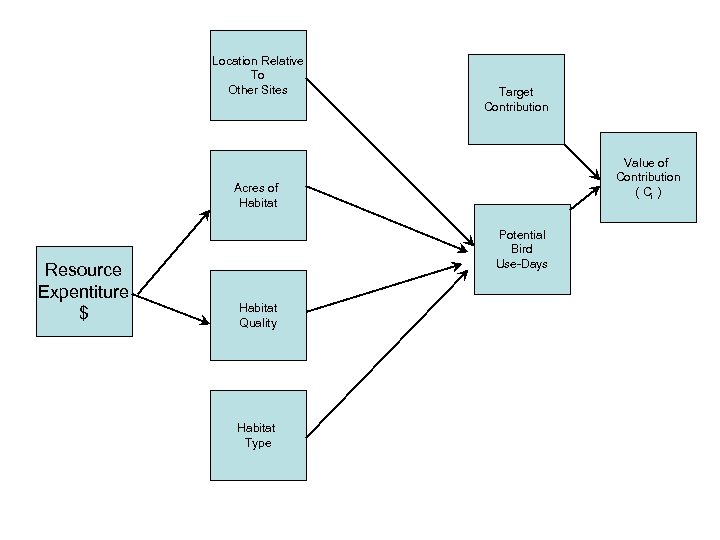
Location Relative To Other Sites Target Contribution Value of Contribution ( Ci ) Acres of Habitat Resource Expentiture $ Potential Bird Use-Days Habitat Quality Habitat Type
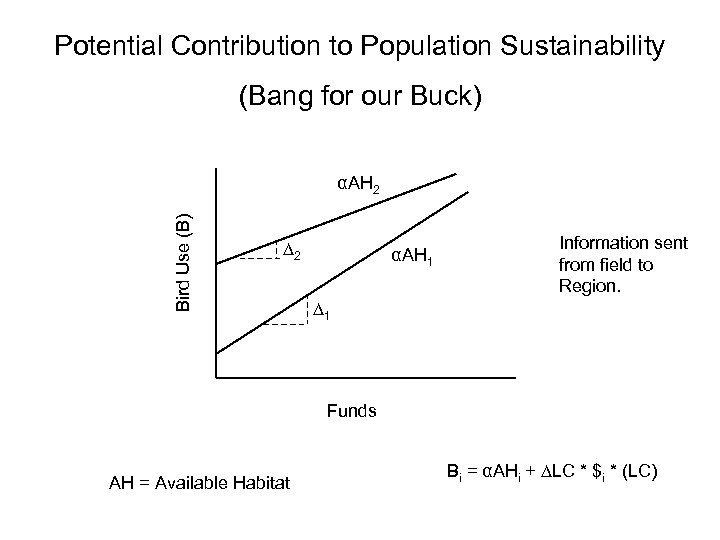
Potential Contribution to Population Sustainability (Bang for our Buck) Bird Use (B) αAH 2 ∆2 αAH 1 Information sent from field to Region. ∆1 Funds AH = Available Habitat Bi = αAHi + ∆LC * $i * (LC)
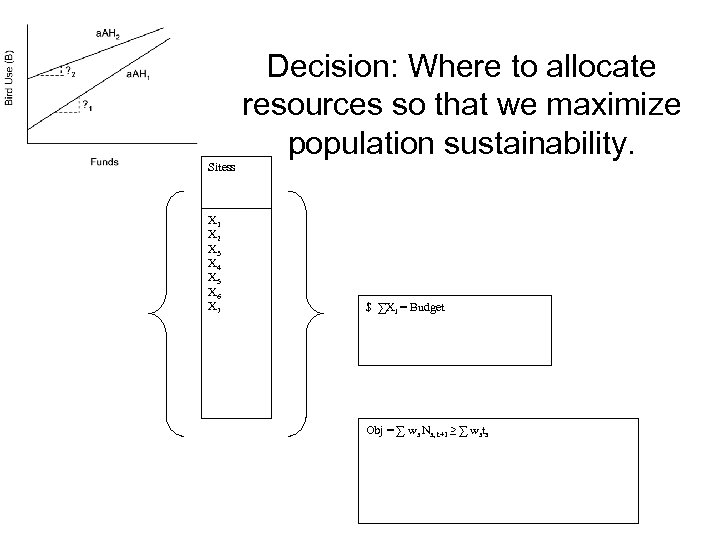
Decision: Where to allocate resources so that we maximize population sustainability. Sitess X 1 X 2 X 3 X 4 X 5 X 6 X 7 $ ∑Xi = Budget Obj = ∑ ws Ns, t+1 ≥ ∑ wsts
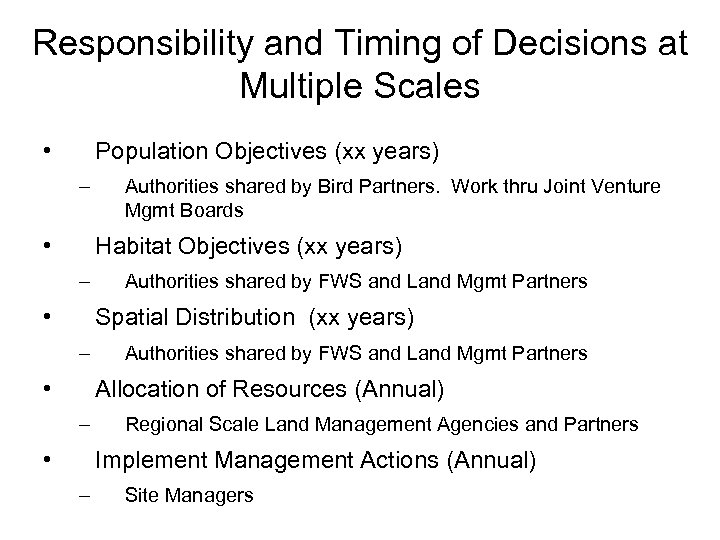
Responsibility and Timing of Decisions at Multiple Scales • Population Objectives (xx years) – • Authorities shared by Bird Partners. Work thru Joint Venture Mgmt Boards Habitat Objectives (xx years) – • Authorities shared by FWS and Land Mgmt Partners Spatial Distribution (xx years) – • Authorities shared by FWS and Land Mgmt Partners Allocation of Resources (Annual) – • Regional Scale Land Management Agencies and Partners Implement Management Actions (Annual) – Site Managers
Regional/Flyway Scale Uncertainty • • Partial Controlability: Budget Partial Observability Estimating parameters within flyway model Biological Uncertainty Process to determine site importance. Environmental Stochasticity Uncertain if all Partners will contribute/participate within entire process.
Local Site Uncertainty • • • Partial Controllability. Partial Observability. Estimating parameters within site model. Biological Uncertainty. Uncertain about proper mix of abiotic and biotic factors. Process to determine site contribution (unsure about shape of curve). • Environmental Stochasticity (lots)
Recommendations for Future Development • Prototype to be evaluated by others, and enhanced. • Teams to develop decision support models for: – Energetics, habitat quality and quantity, distribution of sites, bird abundance. • Development of monitoring protocols/sample designs. • Communication with other decision makers in R 3, 4, 5. • Consult additional stakeholders, locally and ecoregionally • Consult/communicate with Joint Ventures • Move beyond jargonality to awsomality
Thanks • NCTC, Donna and Mike. • All the Coaches, Consultants, Apprentices and Observers. • All Our Team Members. • Special Thanks to Jim and Eric. – (We Apologize. We didn’t really mean to mutiny)
So…. Your done listening to us for Today But We’re Just Beginning
I wonder if there any Questions?
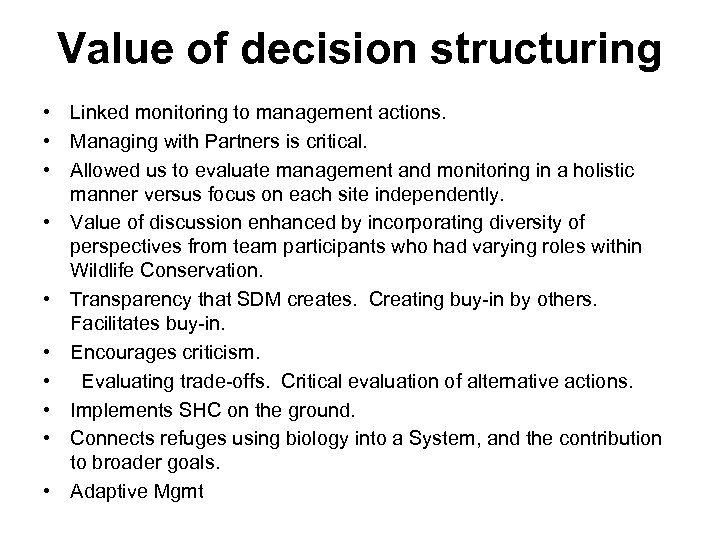
Value of decision structuring • Linked monitoring to management actions. • Managing with Partners is critical. • Allowed us to evaluate management and monitoring in a holistic manner versus focus on each site independently. • Value of discussion enhanced by incorporating diversity of perspectives from team participants who had varying roles within Wildlife Conservation. • Transparency that SDM creates. Creating buy-in by others. Facilitates buy-in. • Encourages criticism. • Evaluating trade-offs. Critical evaluation of alternative actions. • Implements SHC on the ground. • Connects refuges using biology into a System, and the contribution to broader goals. • Adaptive Mgmt
Скачать презентацию Integrated Wetland Bird Management and Monitoring Initiative A
e29ff8b4e7fd8dedb3f8e06eb97dbc36.ppt