 Скачать презентацию Integrated Sustainable Sanitation at Photo JFD
474b998f5f4db5b59803fc8a9e5ef1b0.ppt
- Количество слайдов: 16



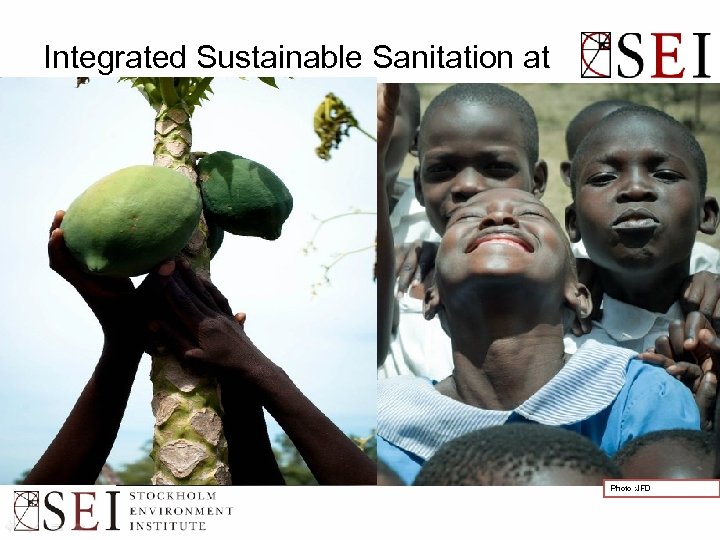
Integrated Sustainable Sanitation at Photo : JFD
Integrated Sustainable Sanitation at SEI Outline Definitions Objective Knowledge nodes Su. San. A Research areas Outcomes Photo JFD
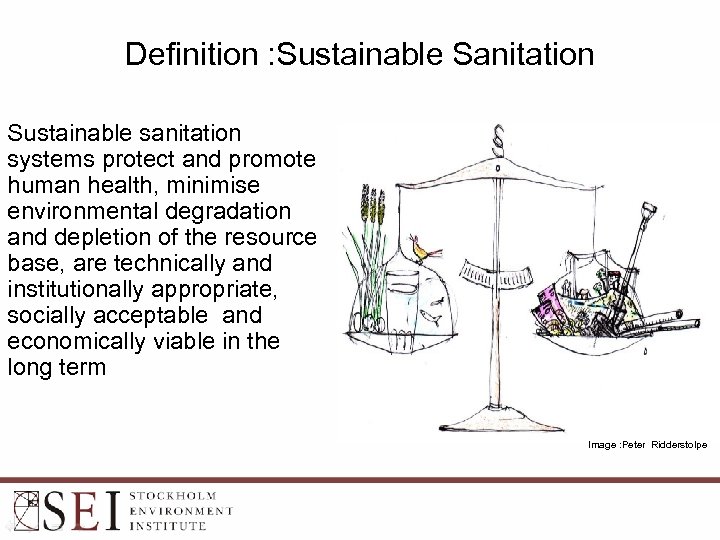
Definition : Sustainable Sanitation Sustainable sanitation systems protect and promote human health, minimise environmental degradation and depletion of the resource base, are technically and institutionally appropriate, socially acceptable and economically viable in the long term Image : Peter Ridderstolpe
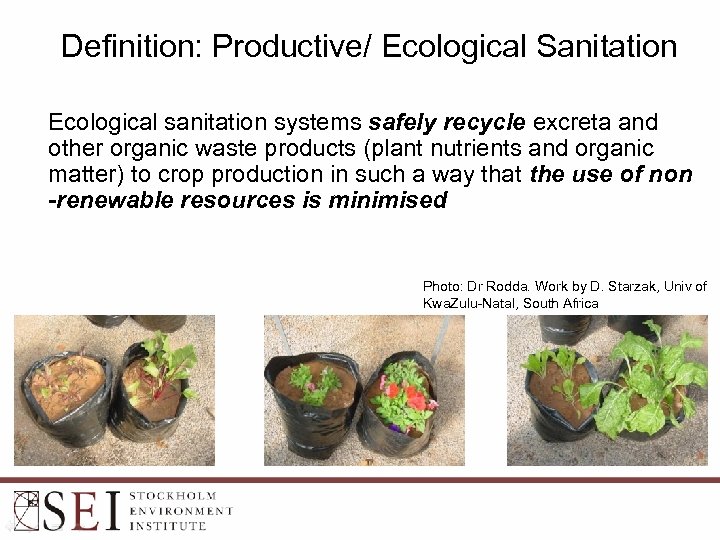
Definition: Productive/ Ecological Sanitation Ecological sanitation systems safely recycle excreta and other organic waste products (plant nutrients and organic matter) to crop production in such a way that the use of non -renewable resources is minimised Photo: Dr Rodda. Work by D. Starzak, Univ of Kwa. Zulu-Natal, South Africa
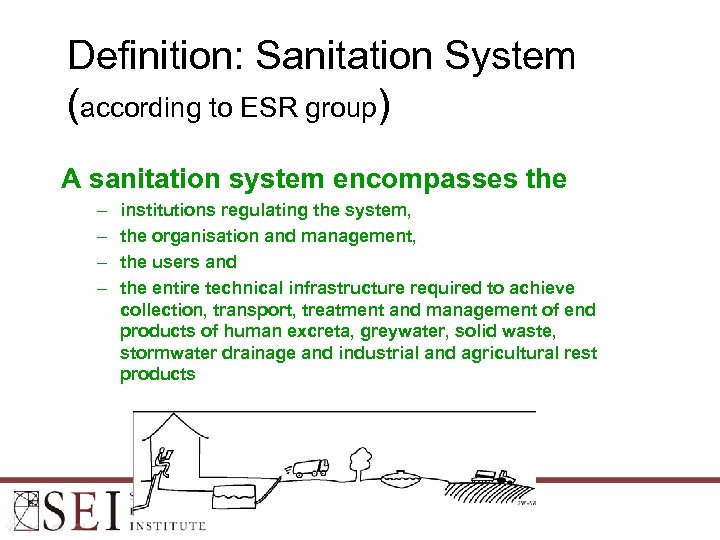
Definition: Sanitation System (according to ESR group) A sanitation system encompasses the – – institutions regulating the system, the organisation and management, the users and the entire technical infrastructure required to achieve collection, transport, treatment and management of end products of human excreta, greywater, solid waste, stormwater drainage and industrial and agricultural rest products
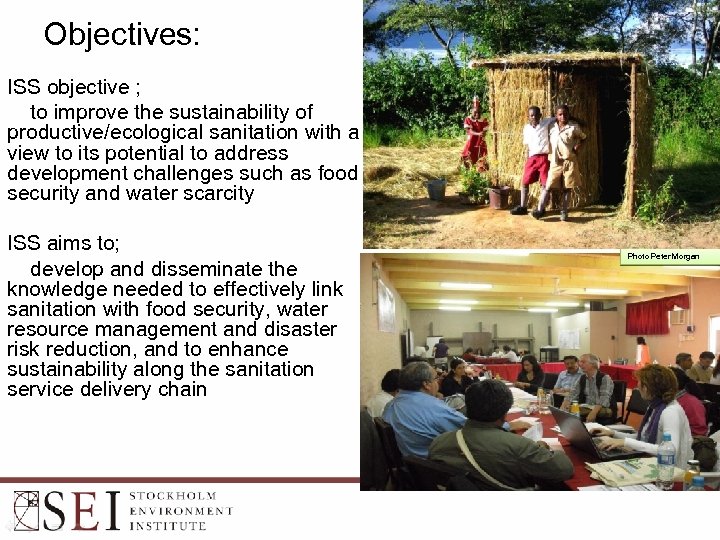
Objectives: ISS objective ; to improve the sustainability of productive/ecological sanitation with a view to its potential to address development challenges such as food security and water scarcity ISS aims to; develop and disseminate the knowledge needed to effectively link sanitation with food security, water resource management and disaster risk reduction, and to enhance sustainability along the sanitation service delivery chain Photo Peter Morgan
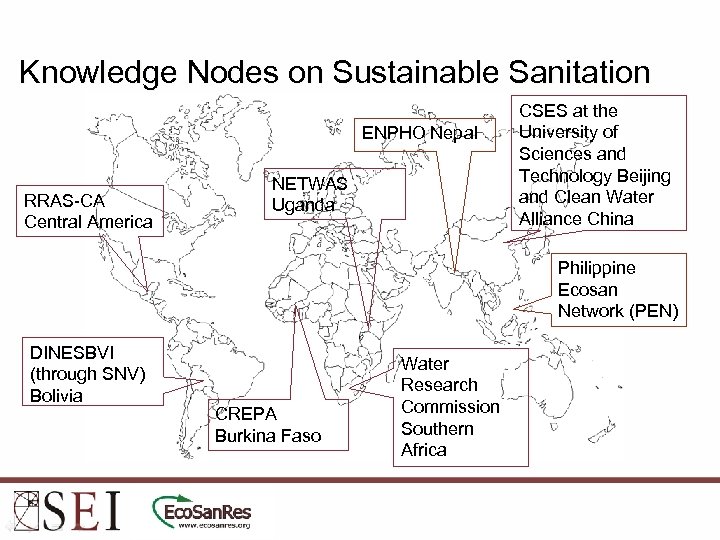
Knowledge Nodes on Sustainable Sanitation ENPHO Nepal RRAS-CA Central America NETWAS Uganda CSES at the University of Sciences and Technology Beijing and Clean Water Alliance China Philippine Ecosan Network (PEN) DINESBVI (through SNV) Bolivia CREPA Burkina Faso Water Research Commission Southern Africa
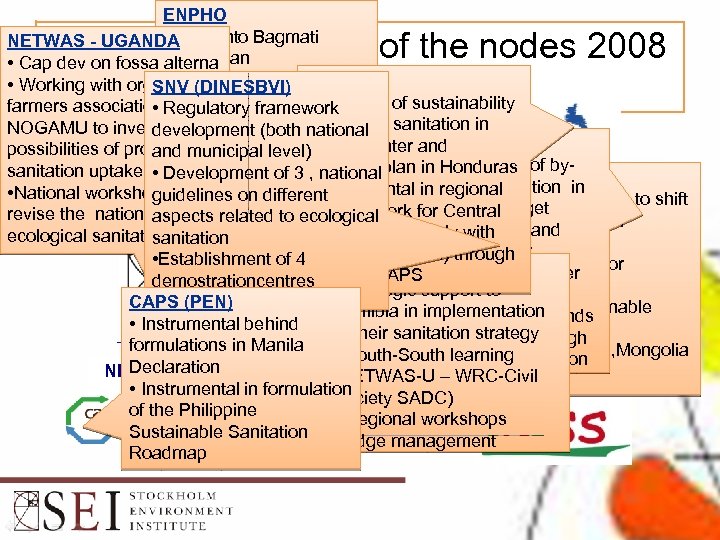
ENPHO • Input into Bagmati NETWAS - UGANDA • Cap dev on fossa action plan alterna • Three resource RRAS-CA • Working with organic (DINESBVI) centers SNV • Inclusion of sustainability farmers associationestablished framework • Regulatory • Open free NOGAMU to investigate defecationconcept of sanitation in development (both national RN villages national possibilities of productive , using ecological sater and CREPA BF and municipal level) Formulation in Honduras of bysanitation uptake • sanitation Development of 3 saniation plan • USTB and CWA , national • Instrumental laws on sanitation in in regional • National workshop to guidelines on different • TV appearances leading to shift one of the strategy work for Central target revise the national aspects related to ecological in choice of tech for other municipalities and America (ultimately with ecological sanitation policy sanitation foundation budget line for national outreach) through • Establishment of 4 WRC • Textbook production for sanitation in another FOCARD-APS demostrationcentres • Strategic support to use university municipality CAPS (PEN) • Access of int’l Sustainable Chinese Forum Namibia in • implementation funds • Instrumental behind Sanitation of their sanitation strategy for sanitation through formulations in Manila • Outreach North Korea , Mongolia • South-South learning improved capacity on Declaration NETWAS Uganda Vietnamn (NETWAS-U – WRC-Civil local level • Instrumental in formulation Society SADC) of the Philippine • Regional workshops Sustainable Sanitation sludge management Roadmap Some achievements of the nodes 2008 -2010
Sustainable Sanitation Alliance and the 5 YD Su. San. A currenlty 136 members
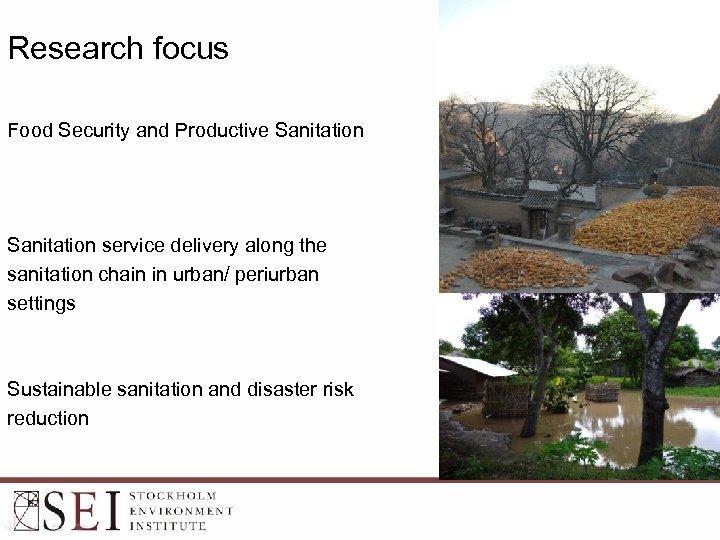
Research focus Food Security and Productive Sanitation service delivery along the sanitation chain in urban/ periurban settings Sustainable sanitation and disaster risk reduction
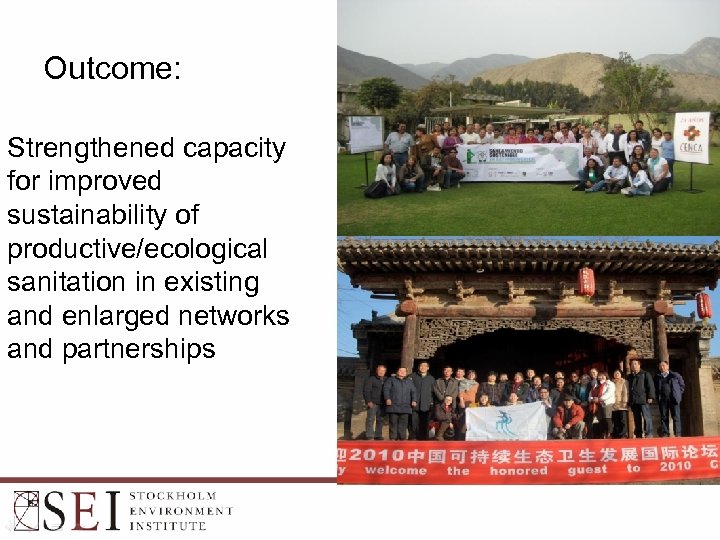
Outcome: Strengthened capacity for improved sustainability of productive/ecological sanitation in existing and enlarged networks and partnerships
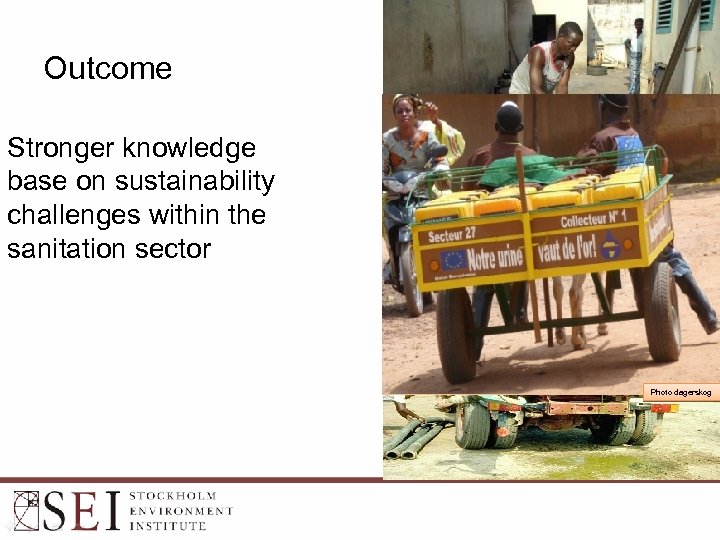
Outcome Stronger knowledge base on sustainability challenges within the sanitation sector Photo dagerskog
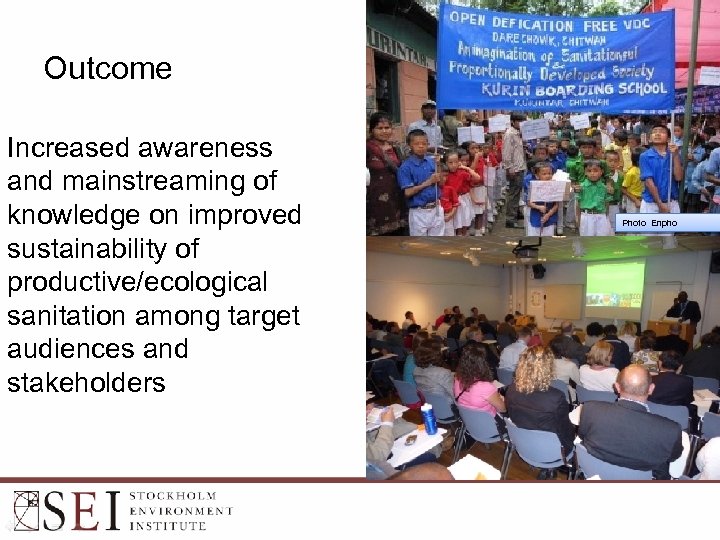
Outcome Increased awareness and mainstreaming of knowledge on improved sustainability of productive/ecological sanitation among target audiences and stakeholders Photo Enpho
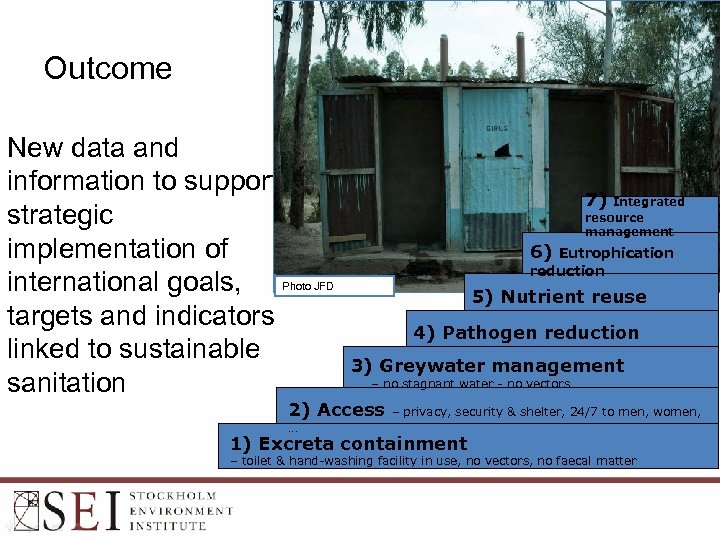
Outcome New data and information to support strategic implementation of international goals, targets and indicators linked to sustainable sanitation 7) Integrated resource management 6) Eutrophication reduction Photo JFD 5) Nutrient reuse 4) Pathogen reduction 3) Greywater management – no stagnant water - no vectors 2) Access – privacy, security & shelter, 24/7 to men, women, … 1) Excreta containment – toilet & hand-washing facility in use, no vectors, no faecal matter
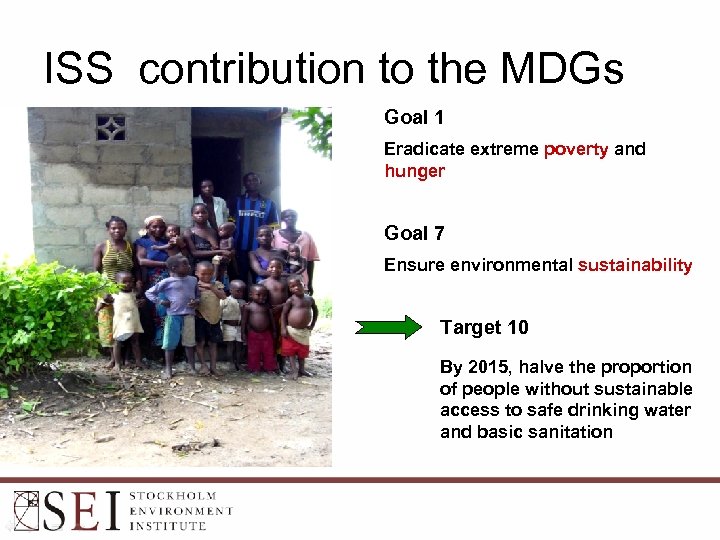
ISS contribution to the MDGs Goal 1 Eradicate extreme poverty and hunger Goal 7 Ensure environmental sustainability Target 10 By 2015, halve the proportion of people without sustainable access to safe drinking water and basic sanitation
Thank you for your attention Photo JFD
Скачать презентацию Integrated Sustainable Sanitation at Photo JFD
474b998f5f4db5b59803fc8a9e5ef1b0.ppt